Four people on death row you can raise your voice for today 
While many countries have moved away from killing people in the name of justice and punishment by abolishing the death penalty, many still continue to have it in place. We must continue to challenge the injustice of the death penalty until every person on earth is safe from this intolerable practice.
Here are 4 actions you can take right now to defend the rights of those in need around the world:
Hoo Yew Wah
In 2005 at just 20 years old, Hoo Yew Wah was arrested in Malaysia due to drug possession and was immediately sentenced to the mandatory death penalty. Now, at 36 years old, he has remained on death row since 2011.
It is over 8 years since Hoo Yew Wah applied for a pardon to the Sultan of Johor State. To date, he has received no reply.
While on death row, Hoo Yew Wah has written about his childhood in a disadvantaged community; leaving school at 11 and later working as a street cook. He understands his past decisions were wrong.
“I have to accept responsibility for my past actions … My friends lived a luxurious lifestyle and I wanted the same”
Hoo Yew Wah’s life continues to remain in limbo. In July 2018, the Malaysian authorities announced a review of the country’s death penalty laws. This is a real chance for Hoo Yew Wah to be given a second chance. Over 100,000 letters, emails and signatures from all over the world have been sent in support for his application for clemency. Call on the Malaysian authorities to immediately quash their death sentences.
4 Journalists in Yemen
Akram, Abdelkhaleq, Hareth and Tawfiq were just doing their job when they were detained and charged with “spying” and “creating several websites on the internet and social media.”
They have been detained along with six other journalists for five years. They have also been held incommunicado at times and subjected to a range of human rights abuses, including enforced disappearance, solitary confinement, beatings and denial of access to health care.
As of July this year, Tawfiq al-Mansouri is being denied urgent health care despite suffering severe health conditions.
“Tawfiq al-Mansouri should never have been detained in the first place, let alone sentenced to death. The Huthis must immediately grant him access to the health care that he so urgently requires.”
Amnesty International’s Acting Deputy Director for the Middle East and North Africa
Over the next few weeks, we must pressure the Houthi authorities to release them and quash their death sentences. Please take action, we will hand over the signatures ahead of the verdict.
Ahmadreza Djalali
In 2016, Swedish-Iranian academic Ahmadreza, a specialist in emergency medicine, was on a regular trip to Iran when he was arrested.
He was tortured and his children were put on the line by interrogators if he did not ‘confess’ to being a ‘spy’ for Sweden and from there was arrested. In November 2020, Ahmadreza’s wife Vida was told that Ahmadreza’s execution would be carried out within a week. In response compassionate people from all around the world spoke out and called for the Iranian authorities to call off the execution.
While this has prevented it temporarily, Ahmadreza is still at risk of execution. Amnesty International’s research shows that, regardless of the Iranian authorities’ initial motivations for arbitrarily detaining Ahmadreza Djalali in April 2016, since at least late 2020, the situation transformed into one of hostage-taking when Asadollah Asadi’s trial in Belgium began.
Vida is calling for people to continue to speak out.
“Ahmadreza has always been devoted to helping others; now he is wasting away in prison for nothing. I ask Amnesty International activists around the world to help bring my husband back to his wife and children, and to the academic world.”
Sign the petition and call on the Iranian authorities to quash Ahmadreza’s death sentence and release him so he can be reunited with Vida and his children.
Sareh Sedighi-Hamadani
Arrested on the 27th of October 2021, Zahra Sedighi-Hamadani, known as Sareh was targeted for speaking out for LGBTQIA+ rights on social media and in a BBC documentary. She was crossing the border and seeking asylum in Turkey when she was arrested.
Sareh was then held in solitary confinement for 53 days where she was abused, insulted for her identity and appearance, and threatened with execution and the removal of custody of her children. As of now, the authorities have sentenced Sareh Sedighi-Hamadani to death for “corruption on earth.”
In Iran LGBTQIA+ individuals face violence, persecution and discimination and those non-conforming to gender are legally required to undergo gender reassignment surgery and sterlisation. The law also criminalises same- sex sexual conduct.
In a video Sareh shared with the Iranian Lesbian and Transgender Network, she spoke of her hope for the future. “I hope to achieve freedom … I hope the day will come when we can all live in freedom in our country.”
Brave people like Sareh stand up for LGBTQIA+ rights despite this discrimination. They shouldn’t face the death penalty for standing up for equality. Take action for Sareh’s freedom now.
Amnesty is calling for countries that still use the death penalty to immediately halt all executions, countries that have stopped executing people to permanently remove this punishment for all crimes, and for all death sentences to be commuted to prison sentences.
The trend towards abolition remains strong but we must continue to challenge injustice by pressuring governments in countries where the death penalty still exists, until universal abolition is realised. Will you join us to take action today?
Australian economist Sean Turnell convicted in Myanmar after ‘sham’ trial
In response to the recent sentencing of Australian citizen Sean Turnell under Myanmar’s Official Secrets Act, Tim O’Connor, Impact Director at Amnesty International Australia, has strongly criticized the lack of fair trial procedures and access to legal representation:
“Sean Turnell, like many others imprisoned following the February 1, 2021, coup in Myanmar, has been deprived of fair trial rights and adequate legal support. The proceedings against him represent a blatant injustice, and Myanmar’s military must release him immediately to reunite with his family in Australia.”
Turnell’s conviction is part of a series of politically motivated cases orchestrated to solidify military control since the coup. Both Turnell and former civilian leader Aung San Suu Kyi, sentenced in a separate case, face baseless charges that Amnesty International Australia regards as unsubstantiated.
Under the oppressive military regime, arbitrary detentions and secretive trials have become commonplace. Amnesty International Australia calls for the immediate release of individuals detained without legitimate legal grounds.
Background:
Sean Turnell, a longstanding economic adviser to Myanmar’s civilian government, was arrested in Yangon shortly after the coup and has been held in various prison facilities since. His conviction, alongside Aung San Suu Kyi, underscores the targeted nature of the military’s crackdown on dissent.
Since the coup, Myanmar’s military has detained over 15,000 individuals and perpetrated violence resulting in the deaths of more than 2,300 people, as reported by the Assistance Association for Political Prisoners.
Human rights WIP: Refugee families resettled, Prisoner of conscience Ahmed is free, #BLM facial recognition lawsuit win, and more
When ordinary people stand up for freedom, equality and justice, we move closer to a world where human rights are enjoyed by all — it’s a work in progress.
Thanks to our supporters, Amnesty International has helped to free the wrongfully imprisoned, rewrite unjust laws and hold the powerful to account.
Whether you help provide lifesaving relief, raise awareness, or put pressure on the governments in charge, every action you take is helping drive our nationwide advocacy campaigns. Small actions from compassionate people like you, really do have big impacts.
Here are just a handful from the past few months:
In Australia
Charges were dropped against a NSW legal observer
In August 2022, the charges against a volunteer Legal Observer were dropped. Under New South Wales’ new and dangerous anti-protest laws, she faced a maximum sentence of 2 years in jail and a $22,000 fine after being arrested alongside 34 protesters.
In recent years, NSW police have cracked down on peaceful protests, restricting everyone’s rights to freedom of expression and peaceful assembly.
“Legal Observers play a vital role in monitoring police & providing legal support to protesters. Thanks to the relentless advocacy from Amnesty International, Legal Observers NSW and Sydney City Crime, my charges have been recently dropped.”
Chloe SiInclair*, Legal Observer
Amnesty made representations to the NSW police, calling on them to respect the right to protest, as well as the human rights of the Legal Observer. Over 30,000 supporters continue to call on the NSW police to protect our right to protest.
What’s next?
- Pledge your support to protect the protest. Without the right to raise our voices in protest, the world would be a very different place. Together, we must protect the right to protest wherever it is restricted, whenever it is at risk.
- Learn more about our Right to Protest campaign work campaign work.
The first families arrived in Australia under the new Community Sponsorship pilot
In August 2022, the first families from Syria, Afghanistan and Myanmar arrived in Australia to begin to build their new lives in safety under the government’s pilot Community Refugee Integration and Settlement Program (CRISP).
As well as the Community Sponsorship pilot – the government also finally agreed to dramatically reduce the cost of Australia’s existing program, making it more accessible for everyday Australians to participate and welcome refugees into their communities.
After years of relentless advocacy, this is proof that our collective voices can pressure our leaders to make meaningful change. 40,000 compassionate people signed our petition calling on the government to improve and expand Australia’s Community Sponsorship Program for refugees.
What’s next?
- Join the call to raise Australia’s refugee and humanitarian intake to at least 30,000 places – ensuring Community Sponsorship efforts are additional in the upcoming October budget.
- Learn more about our Refugee Rights campaign work.
Biloela family finally receive permanent visas
In August 2022, the Nadesalingam family affectionately referred to as the ‘Biloela family’ were granted permanent visas, a long overdue outcome after more than four long years of senseless suffering in detention. They were issued bridging visas in June this year, which allowed them to return to Biloela.
“People power brought this family home, plain and simple. This campaign started as a small group of ordinary people fighting for their friends. And then it became something much, much bigger,” said Angela Fredericks, a young Biloela resident.
Amnesty’s latest research reveals that the majority of Australians support community sponsorship of refugees.
What’s next?
- Join the call to further reform community sponsorship, so that more families can rebuild their lives in safety.
- Learn more about our Refugee Rights campaign work.
Spit hoods banned from watch houses in QLD
In September 2022, the Queensland Police Service announced that spit hoods, which Amnesty recognises as tools of torture, have been operationally banned from all watch houses.
Queensland must follow South Australia’s example in banning spit hoods in legislation, everywhere and for everyone. In doing so, they must consult with local organisations, families, and survivors of spit hoods.
“It is thanks to the advocacy of [the coalitions] and those who have experienced the use of the tools, and their families who continue to advocate for the ban on spit hoods everywhere. Solidarity.”
Maggie Munn, Indigenous Rights Campaigner for Amnesty International
Amnesty is a member of Change the Record and the National Ban Spit Hoods coalitions calling for a legislated ban on spit hoods in every Australian state and territory. We will continue to add our voice to their calls.
Learn more about our Indigenous justice campaign work.
In the world
LGBTQIA+ liberation soared across the globe
In July 2022, with LGBTQIA+ people and their allies at the forefront, Switzerland’s same-sex marriage laws finally came into effect after overwhelming support of its legalisation in a national referendum last year.
In August 2022, the government of Singapore passed historic legislation to end LGBTQIA+ criminalisation.
Shortly after, Vietnamese authorities said that being LGBTQIA+ should not be treated as an illness. The Vietnamese Ministry of Health called on medical professionals to ensure LGBTQIA+ people are not discriminated against, calling for an end to dangerous conversion practices – something over 40,000 supporters in Australia stand in solidarity with and continue to campaign against.
Learn more about our LGBTQIA+ rights campaign work.
Ramiro Gonzalez’ execution in the US was stayed
In July 2022, the Texas Court of Criminal Appeals (TCCA) stayed the execution for Ramiro Gonzales – just 48 hours before it was due to be carried out in Texas.
He was sentenced to death for a murder committed in January 2001, when he was 18-years-old and emerging from a childhood of abuse and neglect. Experts concluded that Ramiro does not pose a threat of future danger to society, due to the passage of time and his significant maturity.
As of April 2021, 108 countries have abolished the death penalty for all crimes, and 144 countries have abolished it in law or practice – all thanks to the power of ordinary people, continuing to stand up for what’s right.
Learn more about our campaign work to end the death penalty.
Scotland is first in the world to make period products free
In August 2022, Scotland made history by becoming the first country in the world to make period products free. This move provides and restores accessibility, dignity and justice for those who menstruate. It’s time for Australia and the world to follow this leadership, and end period poverty for all.
People power freed Ahmed Samir Santawy from prison in Egypt
In August 2022, women’s rights and reproductive rights researcher and prisoner of conscience Ahmed Samir Santawy was finally released from prison after being given a presidential pardon.
Ahmed was arrested in February 2021 for spreading “false news” and sentenced to three years’ imprisonment. He was convicted based solely on social media posts criticising human rights violations in Egypt, and subjected to enforced disappearance for five days.
Over 10,000 people in Australia signed the petition demanding Ahmed’s release, and almost 5,000 people called the Egyptian embassy to put further pressure on authorities – and it worked.
Learn more about our campaign work for individuals at risk.
We sued the NYPD for surveillance of BLM protesters – and won
In August 2022, the New York Police Department were ordered to disclose thousands of records of how they procured and used facial recognition technology against Black Lives Matter protesters, after the New York Supreme Court ruled in favour of Amnesty International and the Surveillance Technology Oversight Project (S.T.O.P.) on their joint Article 78 lawsuit.
This ruling is a significant step in holding the NYPD accountable for its use of discriminatory surveillance.
“A ban on facial recognition for mass surveillance is a much-needed first step towards dismantling racist policing in New York. We all have a right to peacefully protest without fear of surveillance.”
Matt Mahmoudi, Amnesty International’s Researcher on Artificial Intelligence and Human Rights
In New York, facial recognition technology has been used to target people of colour in protests. Back in 2020, we asked the NYPD to publish their data on facial recognition – and they refused. So we mapped their surveillance cameras with the help of 7,000 supporters, filed a lawsuit against them, and won.
Amnesty International is a global movement of 10 million people standing up for justice, freedom and equality. Together, our voices challenge injustice and are powerful enough to change the world.
Find out more about what we do, our impact and our current campaign cases.
Myanmar: Facebook’s systems promoted violence against Rohingya – Meta owes reparations
Facebook owner Meta’s dangerous algorithms and reckless pursuit of profit substantially contributed to the atrocities perpetrated by the Myanmar military against the Rohingya people in 2017, Amnesty International said in a new report published today.
The Social Atrocity: Meta and the right to remedy for the Rohingya, details how Meta knew or should have known that Facebook’s algorithmic systems were supercharging the spread of harmful anti-Rohingya content in Myanmar, but the company still failed to act.
“In 2017, the Rohingya were killed, tortured, raped, and displaced in the thousands as part of the Myanmar security forces’ campaign of ethnic cleansing. In the months and years leading up to the atrocities, Facebook’s algorithms were intensifying a storm of hatred against the Rohingya which contributed to real-world violence,” said Agnès Callamard, Amnesty International’s Secretary General.
“While the Myanmar military was committing crimes against humanity against the Rohingya, Meta was profiting from the echo chamber of hatred created by its hate-spiralling algorithms.
Agnès Callamard, Amnesty International’s Secretary General
“Meta must be held to account. The company now has a responsibility to provide reparations to all those who suffered the violent consequences of their reckless actions.”
Sawyeddollah, a 21-year-old Rohingya refugee, told Amnesty International: “I saw a lot of horrible things on Facebook. And I just thought that the people who posted that were bad… Then I realized that it is not only these people – the posters – but Facebook is also responsible. Facebook is helping them by not taking care of their platform.”
The Rohingya are a predominantly Muslim ethnic minority based in Myanmar’s northern Rakhine State. In August 2017, more than 700,000 Rohingya fled Rakhine when the Myanmar security forces launched a targeted campaign of widespread and systematic murder, rape and burning of homes. The violence followed decades of state-sponsored discrimination, persecution, and oppression against the Rohingya that amounts to apartheid.
An anti-Rohingya echo chamber
Meta uses engagement-based algorithmic systems to power Facebook’s news feed, ranking, recommendation and groups features, shaping what is seen on the platform. Meta profits when Facebook users stay on the platform as long as possible, by selling more targeted advertising. The display of inflammatory content – including that which advocates hatred, constituting incitement to violence, hostility and discrimination – is an effective way of keeping people on the platform longer. As such, the promotion and amplification of this type of content is key to the surveillance-based business model of Facebook.
In the months and years prior to the crackdown, Facebook in Myanmar had become an echo chamber of anti-Rohingya content. Actors linked to the Myanmar military and radical Buddhist nationalist groups flooded the platform with anti-Muslim content, posting disinformation claiming there was going to be an impending Muslim takeover, and portraying the Rohingya as “invaders”.
In one post that was shared more than 1,000 times, a Muslim human rights defender was pictured and described as a “national traitor”. The comments left on the post included threatening and racist messages, including ‘He is a Muslim. Muslims are dogs and need to be shot’, and ‘Don’t leave him alive. Remove his whole race. Time is ticking’.
Content inciting violence and discrimination went to the very top of Myanmar’s military and civilian leadership. Senior General Min Aung Hlaing, the leader of Myanmar’s military, posted on his Facebook page in 2017: “We openly declare that absolutely, our country has no Rohingya race.” He went on to seize power in a coup in February 2021.
In July 2022, the International Court of Justice (ICJ) ruled that it has jurisdiction to proceed with a case against the Myanmar government under the Genocide Convention based on Myanmar’s treatment of the Rohingya. Amnesty International welcomes this vital step towards holding the Myanmar government to account and continues to call for senior members of the Myanmar military to be brought to justice for their role in crimes against the Rohingya.
In 2014, Meta attempted to support an anti-hate initiative known as ‘Panzagar’ or ‘flower speech’ by creating a sticker pack for Facebook users to post in response to content which advocated violence or discrimination. The stickers bore messages such as, ‘Think before you share’ and ‘Don’t be the cause of violence’.
However, activists soon noticed that the stickers were having unintended consequences. Facebook’s algorithms interpreted the use of these stickers as a sign that people were enjoying a post and began promoting them. Instead of diminishing the number of people who saw a post advocating hatred, the stickers actually made the posts more visible.
The UN’s Independent International Fact-Finding Mission on Myanmar ultimately concluded that the “role of social media [was] significant” in the atrocities in a country where “Facebook is the Internet”.
Mohamed Showife, a Rohingya activist, said: “The Rohingya just dream of living in the same way as other people in this world… but you, Facebook, you destroyed our dream.”
Facebook’s failure to act
The report details how Meta repeatedly failed to conduct appropriate human rights due diligence on its operations in Myanmar, despite its responsibility under international standards to do so.
Internal studies dating back to 2012 indicated that Meta knew its algorithms could result in serious real-world harms. In 2016, Meta’s own research clearly acknowledged that “our recommendation systems grow the problem” of extremism.
Meta received repeated communications and visits by local civil society activists between 2012 and 2017 when the company was warned that it risked contributing to extreme violence. In 2014, the Myanmar authorities even temporarily blocked Facebook because of the platform’s role in triggering an outbreak of ethnic violence in Mandalay. However, Meta repeatedly failed to heed the warnings, and also consistently failed to enforce its own policies on hate speech.
Amnesty International’s investigation includes analysis of new evidence from the ‘Facebook Papers’ – a cache of internal documents leaked by whistleblower Frances Haugen.
In one internal document dated August 2019, one Meta employee wrote: “We have evidence from a variety of sources that hate speech, divisive political speech, and misinformation on Facebook… are affecting societies around the world. We also have compelling evidence that our core product mechanics, such as virality, recommendations, and optimizing for engagement, are a significant part of why these types of speech flourish on the platform.”
‘Meta must pay’
Amnesty International is today launching a new campaign calling for Meta Platforms, Inc. to meet the Rohingya’s demands for remediation.
Today marks the first anniversary of the murder of prominent activist Mohib Ullah, chair of the Arakan Rohingya Society for Peace and Human Rights. Mohib was at the forefront of community efforts to hold Meta accountable.
Rohingya refugee groups have made direct requests to Meta to provide remedy by funding a USD $1 million education project in the refugee camp in Cox’s Bazar, Bangladesh. The funding request represents just 0.002% of Meta’s profits of $46.7 billion from 2021. In February 2021, Meta rejected the Rohingya community’s request, stating: “Facebook doesn’t directly engage in philanthropic activities.”
Showkutara, a 22-year-old Rohingya woman and youth activist, told Amnesty International: “Facebook must pay. If they do not, we will go to every court in the world. We will never give up in our struggle.”
There are at least three active complaints seeking remediation for the Rohingya from Meta. Civil legal proceedings were filed against the company in December 2021 in both the United Kingdom and the USA. Rohingya refugee youth groups have also filed an OECD case against Meta which is currently under consideration by the US’ OECD National Contact Point.
“Meta has a responsibility under international human rights standards to remediate the terrible harm suffered by the Rohingya that they contributed to. The findings should raise the alarm that Meta risks contributing to further serious human rights abuses, unless it makes fundamental changes to its business model and algorithms,” said Agnès Callamard.
“Urgent, wide-ranging reforms to their algorithmic systems to prevent abuses and increase transparency are desperately needed to ensure that Meta’s history with the Rohingya does not repeat itself elsewhere in the world, especially where ethnic violence is simmering.”
“Ultimately, States must now help to protect human rights by introducing and enforcing effective legislation to rein in surveillance-based business models across the technology sector. Big Tech has proven itself incapable of doing so when it has such enormous profits at stake.”
On 20 May 2022, Amnesty International wrote to Meta regarding the company’s actions in relation to its business activities in Myanmar before and during the 2017 atrocities. Meta responded that it could not provide information concerning the period leading up to 2017 because the company is “currently engaged in litigation proceedings in relation to related matters”.
On 14 June 2022, Amnesty International again wrote to Meta regarding the relevant allegations contained in the report, and to give the company the opportunity to respond. Meta declined to comment.
Viet Nam: Imprisoned activist ‘beaten and shackled’
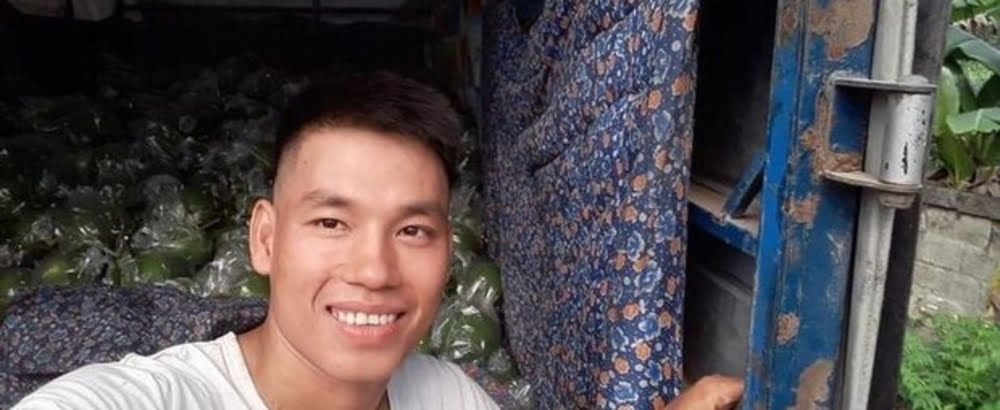
Viet Nam’s government must immediately investigate allegations that prison authorities beat and shackled an activist serving an eight-year prison sentence, Amnesty International said today.
“Being beaten, placed in solitary confinement and shackled for days on end amounts to torture or other ill-treatment. Authorities in Viet Nam must urgently investigate these allegations and any perpetrators must be held accountable,” said Ming Yu Hah, Amnesty International’s Deputy Regional Director for Campaigns.
Activist Trinh Ba Tu was sentenced to eight years in prison in 2021 for spreading propaganda against the state, a part of the criminal code routinely used to suppress dissent. His mother and brother, also activists, received similar sentences under the same charge and are also in prison. The family had used social media to raise awareness about land rights among other issues.
According to information gathered by Amnesty International, Tu said he had been punished for filing a report about conditions in the prison, called No. 6, in Nghe An province.
On 6 September 2022, he was allegedly placed in a room for four to six hours, beaten by prison staff, and held in solitary confinement for 10 days with his feet shackled. He went on a hunger strike to protest his mistreatment.
“No person should ever be subjected to torture or other cruel, inhuman or degrading treatment or punishment. The reports about the state of Trinh Ba Tu’s health are also extremely concerning. Amnesty International calls on authorities in Viet Nam to immediately drop charges against Tu and release him and his family members.
“Vietnamese authorities have a long history of targeting Tu and his family for their peaceful activism and work to expose injustice. They should drop charges against anyone imprisoned for exercising their right to freedom of expression.”
Background:
In May 2021, Trinh Ba Tu and his mother, Can Thi Theu, were both sentenced to eight years’ imprisonment followed by three years’ probation after being convicted by the People’s Court of Hoa Binh province under Article 117 for “making, storing, or spreading information, materials or items for the purpose of opposing the State of the Socialist Republic of Viet Nam.”
In December 2021, his brother, Trinh Ba Phuong, was sentenced to ten years imprisonment followed by five years’ probation under the same charge.
Tu’s mother Can Thi Theu is a well-known land rights activist and human rights defender in Viet Nam. She became an activist after her family’s land was confiscated by the authorities in 2010 and became a leading figure of the land rights movement. His father has also spent time in prison for his activism.
Russia: More than 1,300 protesters detained after Putin’s partial military draft
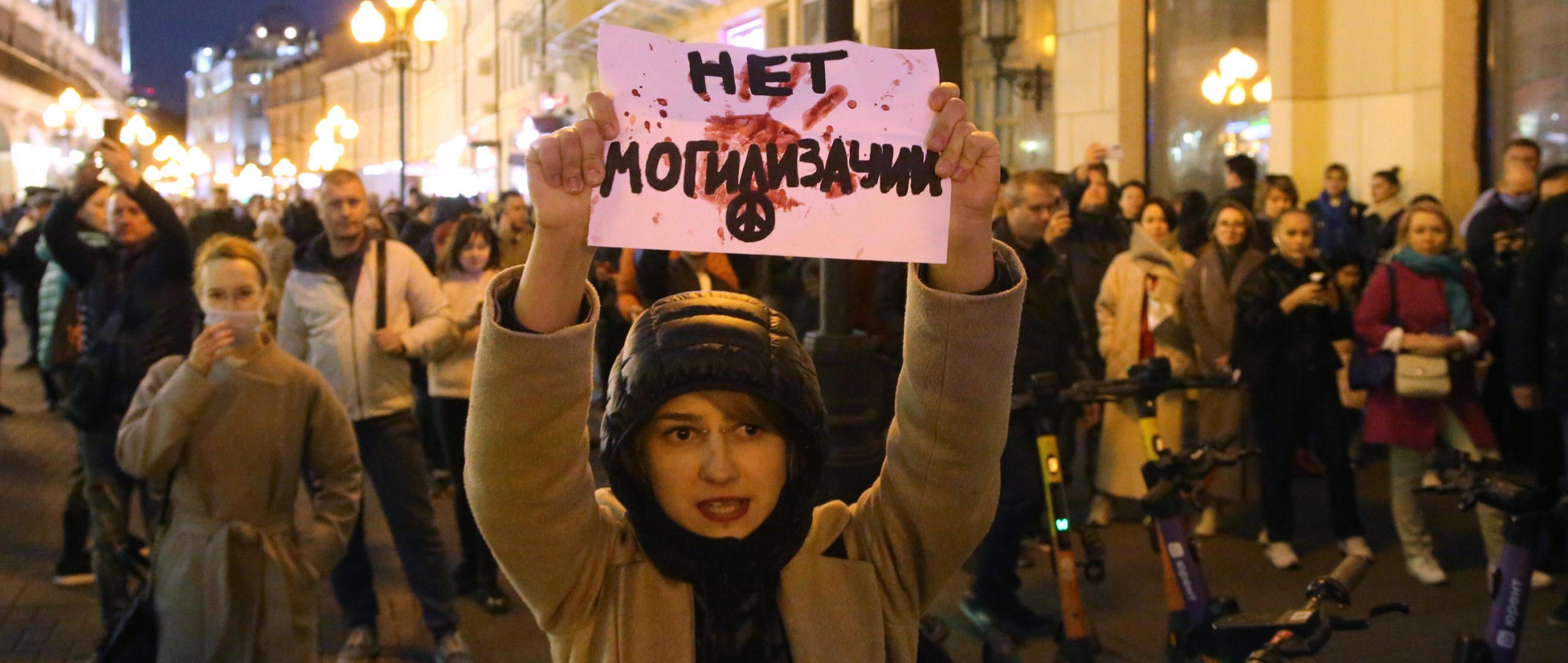
Responding to the detention of at least 1,386 peaceful protesters who took part in rallies across Russia following President Vladimir Putin’s call to mobilize additional troops to fight in Ukraine, Denis Krivosheev, Amnesty International’s Deputy Director for Eastern Europe and Central Asia, said:
“As President Vladimir Putin seeks to boost the dwindling supply of troops for Russia’s invasion of Ukraine, thousands of Russians across the country have peacefully marched on the streets protesting against mobilization and the war. They are raising their voices even amid the stifling of their rights to freedom of expression and peaceful assembly, and as new repressive laws criminalize all forms of anti-war activity.
“Everyone has the right to freely express their opinions and protest peacefully, including in response to Russia’s aggression against Ukraine. All those detained solely for peacefully protesting against mobilization and the war must be immediately and unconditionally released, and all reprisals against dissenting voices in Russia should end.
“The international community must step up its efforts to end Russia’s aggression against Ukraine, including by supporting those who are peacefully protesting against the invasion or conscientiously objecting to participate in the conflict.”
Background
While arresting demonstrators, police officers extensively resorted to unnecessary and excessive force against peaceful protesters, including by beating them with batons and putting them into chokeholds. In Saint Petersburg, one person suffered a broken arm after being beaten by police.
According to the independent human rights organization OVD-Info, police handed summons to enrol at military enlistment centres to several yesterday’s male detainees in Moscow and Voronezh, Central Russia. The detainees are also at risk of administrative or criminal prosecution.
Amnesty International is currently undertaking a global campaign to counter the unprecedented attacks against peaceful protesters across the world. Among other things, the campaign is urging governments to stop misusing the criminal, civil and administrative legal systems to silence and deter protesters.
Iran: Deadly crackdown on protests against Mahsa Amini’s death in custody needs urgent global action
World leaders at the UN General Assembly must support calls for the establishment of an independent international investigative and accountability mechanism to address the prevailing crisis of impunity in Iran. Their urgent need for action was demonstrated most recently by the death in custody of 22-year-old Mahsa (Zhina) Amini, and the barrage of gunfire unleashed on protesters which has left at least eight people dead and hundreds injured, Amnesty International said today.
Iranian security forces are violently quashing largely peaceful protests sparked by Mahsa Amini’s death on 16 September, days after her violent arrest by the “morality police” for not complying with discriminatory compulsory veiling laws. Amnesty International collected evidence on the security forces’ unlawful use of birdshot and other metal pellets, teargas, water cannon, and beatings with batons to disperse protesters.
“The global outpouring of rage and empathy over Mahsa Amini’s death must be followed by concrete steps by the international community to tackle the crisis of systemic impunity that has allowed widespread torture, extrajudicial executions and other unlawful killings by Iranian authorities to continue unabated both behind prison walls and during protests,” said Diana Eltahawy, Deputy Director for the Middle East and North Africa at Amnesty International.
“The Iranian authorities’ latest brutal crackdown on protests coincides with Ebrahim Raisi’s speech at the UN. He has been given a platform on the world stage, despite credible evidence of his involvement in crimes against humanity, in a stark reminder of the devastating impact of the repeated failure of UN member states to tackle impunity for grave crimes in Iran.”
Amnesty International has recorded the deaths of six men, one woman and one child during protests on 19 and 20 September in the provinces of Kurdistan (4), Kermanshah (2) and West Azerbaijan (2). Of these, at least four died from injuries sustained from security forces firing metal pellets at close range.
At least two other people have lost sight in one or both eyes. Hundreds more, including children, have sustained painful injuries amounting to torture or other ill-treatment due to the unlawful use of birdshot and other munitions against them.
Shooting to kill and harm
Amnesty International has gathered eyewitness accounts and analysed images and videos of the protests, which reveal a harrowing pattern of Iranian security forces unlawfully and repeatedly firing metal pellets directly at protesters.
Eyewitnesses reported that at least three men (Fereydoun Mahmoudi in Saqqez, Kurdistan province; Farjad Darvishi in Urumieh, West Azerbaijan province; and an unidentified man in Kermanshah, Kermanshah province) and one woman (Minou Majidi in Kermanshah, Kermanshah province) died from fatal injuries caused by metal pellets during protests on 19 and 20 September. Four other victims, Reza Lotfi and Foad Ghadimi in Dehgolan, Kurdistan province; Mohsen Mohammadi in Divandareh, Kurdistan province; and 16-year-old boy Zakaria Khial in Urumieh were killed. Human rights defenders told Amnesty International that according to their sources on the ground, they were shot by security forces but did not have any additional information on the types of munitions used.
Authorities have confirmed the death of three people in Kurdistan province on 19 September and two people in Kermanshah province on 20 September, but, consistent with widespread patterns of denial and cover-up, they attributed responsibility for their deaths to “enemies of the [the Islamic Republic]”.
Consistent eyewitness accounts and video footage leave no doubt that those firing weapons during the protests belonged to Iran’s security forces. Extensive video evidence indicates that protesters in Kermanshah, Kurdistan and West Azerbaijan provinces, where protester deaths were recorded, were mostly peaceful. In some places, some protesters engaged in stone-throwing and damaged police vehicles.* This in no way justifies the use of metal pellets, which is prohibited under all circumstances.
Horrific injuries inflicted on protesters
According to a primary source interviewed by Amnesty International, on 16 September, the first day of protests, security forces in Saqqez fired birdshot at 18-year-old Nachirvan Maroufi at a distance of about 10 metres, resulting in him losing sight in his right eye. The source said security forces also fired birdshot at another young man, 22-year-old Parsa Sehat, who consequently lost sight in both eyes.
On 19 September, mass protests spread from Saqqez to other cities populated by Iran’s oppressed Kurdish minority including Baneh, Dehgolan, Divandareh, Kamyaran, Mahabad, and Sanandaj. Protesters, victims’ relatives, and journalists on the ground told Amnesty International that on that day alone, security forces injured hundreds of men, women, and children by repeatedly firing metal pellets at their heads and chests at close range, indicating intent to cause maximum harm.
An eyewitness to the crackdown in Kamyaran told Amnesty International: “Riot police were repeatedly firing towards people from about 100 metres away… I myself witnessed at least 10-20 people who were shot with metal pellets… Most of them were injured in their backs as they were running away.”
A protester from Mahabad described a similar pattern. He said: “In response to people chanting ‘Women, Life, Freedom’ and ‘Death to the Dictator’, security forces fired weapons loaded with metal pellets, often from a distance of about 20-30 meters… They particularly targeted people in their head.”
A journalist from Baneh similarly told Amnesty International: “Security forces directly shot people in their stomachs and backs at close range… Many of those initially shot at and injured were women because women stood in the front.”
Eyewitness accounts of the security forces’ extensive use of metal pellets are corroborated by videos and photos reviewed by Amnesty International in which sounds of repeated firing are heard and classic spray patterns of birdshot are seen on injured protesters and bystanders.
Gruesome images and eyewitness testimonies obtained by Amnesty International further indicate that in Divandareh, Saqqez and Dehgolan, security forces also fired unidentified munition, causing gaping wounds on protesters’ legs, chests and abdomens.
They include Zana Karimi, a 17-year-old boy who sustained severe leg injuries after being shot in Divandareh, which may require his leg to be amputated and Ehsan Ghafouri who suffered severe kidney injuries after being shot in Dehgolan.
Amnesty International has learnt that most injured protesters and bystanders are not seeking hospital treatment for fear of arrest, which puts them at risk of infection and other medical complications.
Security forces violently arrested several hundred demonstrators, including children, both during the protests of 19 September and subsequent raids carried out during the night. An eyewitness reported seeing scores of arrested protesters in Kamyaran with fractured heads, noses or arms and bloodied bodies.
“Iran’s security forces will continue to feel emboldened to kill or injure protesters and prisoners, including women arrested for defying abusive compulsory veiling laws, if they are not held accountable. With all avenues for accountability closed at the domestic level, the UN Human Rights Council has a duty to send a strong message to the Iranian authorities that those responsible for crimes under international law will not go unpunished,” said Diana Eltahawy.
Background
On 13 September 2022, Iranian Kurdish woman Mahsa Amini was arrested in Tehran by Iran’s so-called “morality” police, who routinely subject women and girls to arbitrary arrest and detention, torture and other ill-treatment for not complying with the country’s discriminatory veiling laws.
According to eyewitnesses, Mahsa Amini was violently beaten while being forcibly transferred to Vozara detention centre in Tehran. Within hours, she was transferred to Kasra hospital having fallen into a coma. She died three days later. Iranian authorities announced investigations while simultaneously denying any wrongdoing. The promised investigation does not meet the requirements of independence as it is due to be carried out by the Ministry of Interior.
* End Note – This press release is focused on the provinces of Kurdistan, Kermanshah and West Azerbaijan where protesters were killed. Amnesty International is investigating the crackdown of protests that have taken place in other cities across Iran since 19 September including Hamedan, Rasht, Shiraz, Tabriz, and Tehran.
China: UN Human Rights Council must ensure accountability for ongoing atrocities in Xinjiang
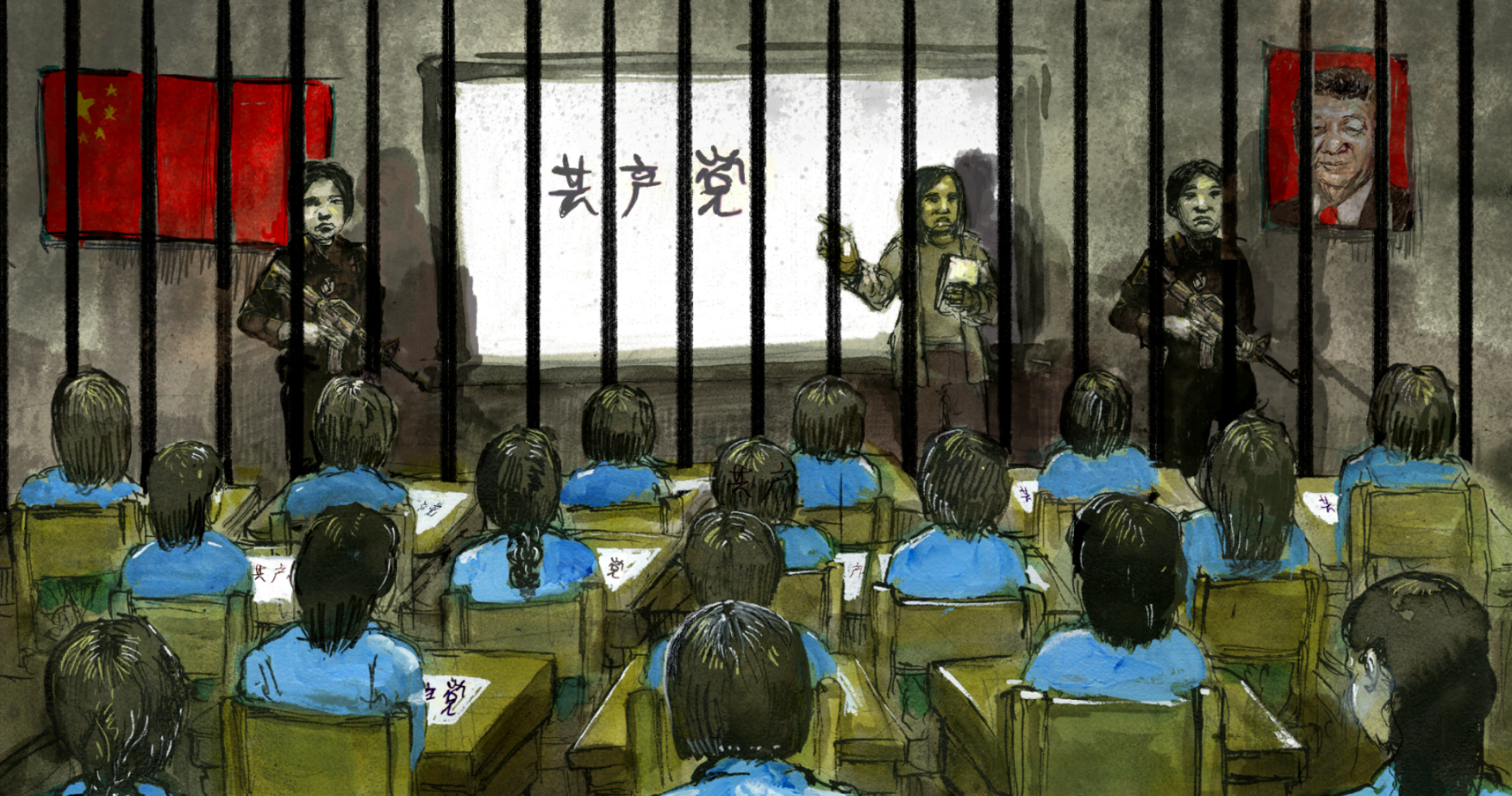
The UN Human Rights Council must end its years of inaction and establish an independent international mechanism to investigate crimes under international law in China’s Xinjiang Uyghur Autonomous Region, Amnesty International said today.
The Council session, which began on 12 September, is the first since the UN High Commissioner’s recent report on government atrocities in Xinjiang. The long-overdue assessment corroborates extensive evidence of serious human rights violations against Uyghur and other predominantly Muslim ethnic minority communities, documented by Amnesty International and other credible organizations.
People who recently fled Xinjiang and family members of detainees continue to tell Amnesty International that people in the region are still being persecuted and arbitrarily detained purely on the basis of their religion and ethnicity.
“The Human Rights Council has consistently failed to protect the human rights of millions of Muslims in Xinjiang who have suffered countless atrocities over the past five years. Many member states of the Council used the former High Commissioner’s long-standing silence to justify their own,” said Amnesty International’s Secretary General Agnès Callamard.
“But the time for half-measures has passed now that the High Commissioner’s office has confirmed that the atrocities documented may constitute crimes against humanity and require immediate attention. The Council must issue a response commensurate with the scale and gravity of the violations.”
Amnesty International is calling on Council members to take concrete steps towards halting the Chinese authorities’ abuses and ensure accountability. The Council must table a resolution during this session and mandate an independent international mechanism to investigate crimes under international law and other serious human rights violations in Xinjiang, with a view to ensuring accountability, including through the identification of suspected perpetrators.
Member states must also, immediately and unequivocally, demand that the Chinese government release all those arbitrarily detained in internment camps, prisons or other facilities, as well as commit to returning no one to China who is at risk of persecution or other serious human rights violations.
China’s cover-up in Xinjiang
Chinese authorities have attempted to block investigations by the High Commissioner for Human Rights and others, and have pressured UN member states to minimize or ignore the evidence available. As a result, UN investigators were not permitted to go to Xinjiang and the scope of the High Commissioner’s investigation was limited.
By speaking to UN or other investigators or journalists, people living in or with family ties to Xinjiang have risked detention, arrest, imprisonment, torture and enforced disappearance, for themselves and their family members.
“Internally, China continues to use severe violence, unlawful restrictions and intimidation, while also employing diplomatic strong-arming on the world stage to cover up its atrocities in Xinjiang. Council members must see China’s attempts to delegitimize the report’s findings for what they are – nothing less than an attempt to hide crimes against humanity and deter criticism,” said Agnès Callamard.
“If Council members fail to act now, they will become complicit in the Chinese government’s cover-up. It would send a dangerous message to Chinese authorities that member states can be bullied into ignoring credible evidence of serious human rights violations, and that powerful states are beyond effective scrutiny.
“This would be an unforgivable betrayal to the millions of victims, survivors and their family members. This includes the many hundreds of thousands of people still believed to be arbitrarily detained.”
People fleeing Xinjiang
Between January and June 2022, Amnesty International visited Central Asia and Turkey to interview people who recently fled Xinjiang and family members of those arbitrarily detained.
Overwhelmingly, those who fled recently were too terrified to speak openly about their experiences, fearing retaliation against family members still in Xinjiang.
However, six people who fled Xinjiang between late 2020 and late 2021 agreed to speak to Amnesty International on the condition of anonymity. They described a life of relentless oppression in Xinjiang, stemming from Chinese policies to severely restrict the freedoms of predominantly Muslim ethnic groups. These include grave violations of the rights to liberty and security of person; to privacy; to freedom of movement; to opinion and expression; to thought, conscience, religion, and belief; to take part in cultural life; to equality and non-discrimination; and to freedom from forced labour.
An ethnic Kazakh man who left Xinjiang in early 2021 told Amnesty International how people in his town were still unable to practice their religion. “The religious restrictions remain [in 2021]… There were five mosques [in my town] – four were destroyed… The remaining one is guarded and monitored… Nobody goes! … Maybe [people pray] in the dark of night with the window closed, in silence,” he said.
Amnesty International interviewed the mother of Erbolat Mukametkali, an ethnic Kazakh man. Erbolat was arrested in March 2017, spent a year in internment camps, and was then given a 17-year prison sentence. Erbolat’s mother believes he was arrested solely because of his religious practices. “I miss my son… I’m old, my dream is to die when my son is with me,” she said.
Amnesty International also interviewed a male relative of Berzat Bolatkhanm, an ethnic Kazakh, who was arrested in April 2017 after being accused of being a “state traitor”. The relative believes that Berzat was arrested because of his ethnicity and because he was planning to move to Kazakhstan. After a year in an internment camp, Berzat was given a 17-year prison sentence. “He was just doing his job. He was a farmer. Suddenly, because he wanted to move to Kazakhstan… police arrested him… He is not an extremist, not a terrorist,” Berzat’s relative told Amnesty International.
Among Amnesty International’s more recent interviewees was a woman who now lives in Turkey. Her sister Muherrem Muhammed Tursun, a primary school teacher, disappeared in August 2021 after posting a video on her WeChat profile about her family celebrating Eid. Her family believes she was detained due to her Uyghur ethnicity and because her son went to Turkey to study religion before going back to Urumqi to study dentistry. He was taken away in early 2017 while Muherrem’s mother, Tajinisa Emin, was taken to an internment camp in 2020. When their relatives in Turkey tried to find out more details, a relative still in the region simply replied: “don’t ask questions, they are gone.”
These individuals are only a fraction of the likely hundreds of thousands of people arbitrarily detained in Xinjiang, 126 of whom Amnesty International has profiled in its Free Xinjiang Detainees campaign. The Council’s failure to act now would be tantamount to abandoning the survivors and families of victims who have jeopardized their safety by speaking out.
“In 2022, Muslim ethnic groups continue to face widespread and systematic persecution in Xinjiang. China’s crimes against humanity and other serious violations violate their basic rights and threaten to erase their religious and cultural identities,” said Agnès Callamard.
“The international community’s failure to take meaningful action has only empowered China to continue the ongoing violations and cover-up. The Council must mandate an international investigative mechanism now, to end the Chinese authorities’ longstanding impunity.”
Campaign update: Australia’s Community Sponsorship Program for refugees
By Zaki Haidari (he/him), Amnesty International Australia Refugee Rights Campaigner
This past month, we’ve seen the first refugee families from Syria, Afghanistan and Myanmar arrive in Australia under the Government’s pilot Community Refugee Integration and Settlement Program (CRISP).
Announced at the end of 2021, CRISP will see 1,500 refugees over a four-year period rebuild their lives in safety in Australia.
It’s an initiative that will save lives, and it wouldn’t have been made possible without our compassionate supporters who took action. 40,000 people called on the Government to improve and expand Australia’s Community Sponsorship Program for refugees.
After years of relentless advocacy, at the end of 2021 the Federal Government not only announced the rollout of the CRISP pilot – they also finally agreed to dramatically reduce the cost of Australia’s existing Community Sponsorship Program, making it more accessible for everyday Australians to participate and welcome refugees into their communities.
But we know that any Community Sponsorship Program, existing or pilot, must be in addition to Australia’s annual Humanitarian intake – and not take places from the existing cap of 13,750 places.
That existing cap is already at its lowest level in many years, at a time when the need for resettlement has never been greater. In contrast, countries such as the United States are committed to resettling 125,000 refugees every year.
If even one place is deducted from Australia’s grossly inadequate humanitarian intake every time a community sponsors a refugee, the Government not only passes on its own obligations to everyday Australians who end up footing the bill – but we don’t end up helping more refugees rebuild their lives in safety.
Together, we are proof that our collective voices really do pressure our leaders to make meaningful change. I hope you will continue to raise yours with me.
Everyday Australians want to do their bit. It’s time for our Government to deliver on its responsibilities, and do the same.
Please join me in calling on the Albanese government to raise Australia’s refugee and humanitarian intake to at least 30,000 places – ensuring Community Sponsorship efforts are additional – in the upcoming October budget.
Amnesty is a movement of everyday people joining together to challenge injustice and defend human rights. For 60 years, we’ve been shining a light in the darkness to expose abuses, ensure accountability, change laws and improve lives.
By the end of 2025, Amnesty’s vision is to raise refugee and humanitarian intake numbers, increase community resettlement, secure the release of those incarcerated on- and off-shore and build safe pathways for refugees into Australia. Learn more about our refugee rights campaign work.