Responding to reports of a “vast offensive” underway to capture Hodeidah city from Huthi control, supported by the Saudi Arabia and UAE-led coalition, and the announcement that the US military will cease refuelling Saudi/UAE-led coalition warplanes involved in the conflict, Amnesty International Australia’s Crisis Campaigns Coordinator Diana Sayed said:
“While any steps to rein in reckless Saudi Arabia and UAE-led coalition air strikes is a step in the right direction, more action is needed. Australia, the US, UK and all other states must immediately stop the irresponsible arms transfers used to fuel human rights abuses in Yemen.
“As a global arms control leader, it is deeply concerning that the Australian Government continues to allow the trade of arms with Saudi Arabia and to its allies in the war in Yemen. Amnesty has repeatedly called on the Australian Government to publicly report the exact nature of these arms transfers, and to cease the authorisation of any future arms transfers while there remains a substantial risk these arms will be used to fuel human rights abuses.
“Australians deserve to know whether we are complicit in enabling war crimes in Yemen, and the Government’s silence so far has been deafening. Amnesty International and others have documented endless examples in Saudi Arabia where the government and its officials have flouted people’s right to life, equality, justice – and many other human rights.
“Despite this, Australia chooses to wilfully ignore all of the human rights violations committed by Saudi Arabia and continue to expand military exports to the Kingdom. Australia has approved 14 military exports to the Kingdom of Saudi Arabia in the last 2 years alone. That is an incredibly alarming trend that needs to stop.”
Civilians in Yemen’s western port city of Hodeidah will pay a terrible price amid the battle engulfing their city unless warring parties act immediately to protect them from the fighting, Amnesty International warned today.
In an extremely worrying development, Huthi fighters arrived at a hospital in Hodeidah and recently took up positions atop a hospital roof, placing numerous civilians inside the building in grave danger.
“This is a stomach-churning development that could have devastating consequences for the hospital’s medical workers and dozens of civilian patients, including many children, being treated there,” said Samah Hadid, Amnesty International’s Middle East Director of Campaigns.
“The presence of Huthi fighters on the hospital’s roof violates international humanitarian law, but this violation does not make the hospital and the patients and medical staff lawful targets for Saudi Arabia and UAE-led Coalition air strikes. The hospital is full of injured civilians who have nowhere else to go for lifesaving medical care. Anyone attacking a hospital under these conditions risks responsibility for war crimes.”
This deliberate militarization of hospitals comes in the context of a war in which the Saudi Arabia and UAE-led Coalition’s relentless and devastating use of air strikes in civilian areas.
Blurring the lines
Local contacts in Hodeidah told Amnesty International that groups of armed Huthi fighters travelling in Toyota pick-up trucks arrived at the hospital in the city’s 22 May district on Friday 2 November. They commandeered a section of the hospital before placing a team of fighters on the roof. Hospital staff confirmed that armed fighters have been coming and going ever since.
The hospital is close to Street 50 in the eastern part of Hodeidah. There has been fierce fighting in the area since the weekend, endangering the hospital and all those inside.
“The laws of war demand that hospitals are not used for military purposes. Placing gunmen on a hospital roof blurs lines which should never be blurred. Hospitals are not a target: the sick and injured have an absolute right to safe medical treatment at all times, and medical workers must be allowed to carry out their lifesaving work,” said Samah Hadid.
Saudi Arabia and UAE-led Coalition air strikes
Amnesty International has documented a series of air strikes carried out by the Saudi Arabia and UAE-led Coalition in the lead-up to the recent escalation in fighting.
The organization interviewed six witnesses and survivors after a Coalition air strike on 13 October hit Jabal Ras in Hodeidah governorate. The strike appeared to target a Huthi checkpoint at a time when civilians were passing in at least two buses and other vehicles. According to those eyewitnesses, the strike may have injured one of the individuals manning the checkpoint, but it also killed at least 11 civilians, with some reports placing the number as high as 17.
One witness told Amnesty International: “We were headed out en route for Umra [pilgrimage], then we were stopped at a checkpoint. He [the person manning the checkpoint] asked for our ID cards, and within a few minutes the strike happened. It landed between our bus and another one next to us. All of a sudden, we were in the middle of an explosion. There were victims everywhere, including my mother who died and one of our neighbours. Some lost their hands, others lost their legs. Everybody was injured.”
According to the witnesses, there were no military vehicles or soldiers in the vicinity at the time – just the checkpoint with a single individual, around 10 metres away from the buses. Targeting a checkpoint in such circumstances would be a disproportionate or otherwise indiscriminate attack, violating international humanitarian law.
Amnesty International has also documented other Coalition air strikes in and around Hodeidah, including one that killed as many as 21 civilians on 24 October when it hit a vegetable market in Beit al Faqih, Hodeidah governorate.
Huthi forces, meanwhile, have responded to the recent military advance on Hodeidah with mortar fire, which is notoriously imprecise and should never be used in populated areas. This tactic is also claiming an increasing number of civilian lives
No escape for trapped civilians
According to the International Organization for Migration, more than half of Hodeidah’s estimated 600,000 residents have managed to leave the city before it becomes engulfed in conflict, but many remain and are effectively trapped.
Ongoing fighting blocks escape routes to the south of the city, and Huthi forces have mined other routes out, leaving only the northern road free to pass. But soaring fuel prices and Yemen’s currency collapse – both of which are symptoms of the conflict – mean this potential escape route is out of reach for many people.
The Saudi Arabia and UAE-led Coalition has failed to follow through on a 24 September pledge to establish three humanitarian corridors out of Hodeidah city.
“Trapped by a cruel combination of changing frontlines, minefields and reports of air strikes targeting those who flee, Hodeidah’s civilians face a life-threatening dilemma while the battle encroaches ever closer,” said Samah Hadid.
“Civilians trapped in Hodeidah are completely powerless and can only stay put to await their fate. Their lives are in the hands of warring parties who have shown little or no regard for their duty to protect civilians.”
In response to an incident at Don Dale Youth Detention Centre in Darwin overnight, Amnesty International’s Indigenous Rights Adviser, Rodney Dillon, said:
“There have been reports for months that the conditions at Don Dale are no better than they were before the Royal Commission into the Protection and Detention of Children in the Northern Territory made its damning findings.
“A case against the government regarding treatment of young people is before the court, allegations have been aired of girls being filmed whilst showering, and now this incident shows that Don Dale is at crisis point.
“Both Alice Springs and Don Dale Detention Centres are at capacity. Don Dale is an old prison that wasn’t considered acceptable for adults, and is clearly not acceptable for children. There are issues around the training and numbers of staff. Lock-down is being used more frequently, and there are concerns about the ongoing use of isolation units.
“We keep getting told that things are improving at Don Dale – we are either being lied to, or authorities don’t actually understand what is going on there.
2021 too long to wait
“The government is saying that the doors of a new Don Dale will be opened in 2021, but that’s far too long for these children to wait. The NT Government needs to act now to address the underlying issues that lead to children being locked up.
“Indigenous leaders in the NT already have the solutions. These incidents will keep happening unless the Government begins working in partnership with Indigenous communities, and funding Indigenous-led programs that support children to thrive in their communities, so they don’t end up in detention in the first place.”
Raise the minimum age to 14 that kids can be locked up
“We know that kids locked up before the age of 14 are three times more likely to reoffend. The Government must urgently raise the minimum age that kids can be locked up to 14. Those 10-13 year olds currently in prison must also be placed in intervention programs that address the underlying issues which lead to offending behaviours.
“Nearly 80% of kids in NT prisons haven’t even been sentenced yet. We have to get kids on remand out of prison and into bail accommodation that keeps them out of the criminalising environment of prison.
“Government needs to focus on these reforms as soon as possible.”
Changing the world isn’t about a single, grandiose act, it’s about the unglamorous, day-to-day stuff. Jessie Mawson gives you 10 small things you can do today to make the world a little better for everyone.
Some corporations do bad stuff. And every time we fork over cash, we’re choosing to either endorse that bad stuff, or say, “Hey, screw you world-ruiners. You don’t get my money.”
I like to know who I’m buying from, but can’t be bothered launching a full-scale research project every time I pop into Woolworths. Hence my love for this handy Shop Ethical app.
Better yet, I skip the middleman where possible and buy direct from the farmer through the likes of Ooooby.
2. Know who’s looking after your money (and what they’re doing with it)
Call your bank and super fund and ask them whether your cash is invested in dodgy stuff (like weapons, tobacco, fossil fuels, etc). Keep asking questions until you’re satisfied.
Warning: This can involve some paperwork. And some effort. But you only need to do it once – and your great great grandchildren will want to high five you for it.
3. Give a percentage of your income to charity every year
Extreme poverty. Climate change. Political prisoners. Civil war. All massive, scary problems.
But it’s hard to know what to do about this stuff, other than feel depressed.
One thing we can all do is commit to giving a set percentage of our annual income to charity (Peter Singer says that between 1% and 10% is about right).
Do some research to help you decide which organisations should receive your donation. Remember to check out Amnesty’s site where you can set up a simple monthly debit.
4. Give blood (and your organs, when you’re done with them)
There are a few reasons why you mightn’t be able to donate blood (full disclosure: I’m on a giving-blood-break after a couple of of fainting incidents) but most people find they can give blood without a problem.
Make an appointment with the lovely folks at the Red Cross Blood Bank. You’ll probably even score a cup of tea and a biscuit for your trouble.
When I’m done with them, I want my organs to give someone else a second shot at life. That’s why I’ve signed up with DonateLife and made sure my family knows how I feel.
Dunno about you, but when I watch this Telstra ad all I can think about is this.
It’s easy to be fooled into thinking you need the newest, shiniest thing. But, the truth is, ditching your phone (or tablet/TV/whatever) for a new one each year is straight-up environmental vandalism. Not to mention expensive.
At age almost-30, I’ve owned three mobile phones. Ever. So do like I do and wear your daggy phone like a badge of honour. (And when you must upgrade, donate/recycle your old gadgets).
That’s why I do everything possible to avoid wasting food. The NSW government has collected some good tips, tricks and recipes on the Love Food Hate Waste website.
And remember – world-changers always use their green bags. (Tim Minchin said it best).
Human rights aren’t just something you should believe in – they’re something you should do. For me, this video from Amnesty Belgium is an amazing reminder to live my values.
It may not get us remembered as a human rights hero like Mandela or Malala – but I reckon it’s stuff like this that really changes the world.
Almost a year-and-a-half after they were first arrested, and still facing absurd charges, Amnesty International Turkey’s Honorary Chair, former Director and nine other human rights defenders must be acquitted, said Amnesty International as their trial resumes tomorrow in Istanbul.
Taner Kılıç, Amnesty Turkey’s Honorary Chair, and İdil Eser, the organisation’s former Turkey Director, are being tried alongside nine other human rights defenders on baseless allegations of ‘membership of a terrorist organisation’.
“Without a shred of credible evidence presented to substantiate the absurd charges made against them, it is now time to end this judicial farce and acquit these women and men who have dedicated their lives to defending the rights of others,” said Kumi Naidoo, Amnesty International’s Secretary General.
“These human rights defenders have cumulatively spent more than three years behind bars. Nothing can bring back that time, but the court can now finally lift the threat of conviction that has needlessly hung over their heads.”
During five previous trial hearings, every aspect of the prosecutor’s case against the human rights defenders has been comprehensively disproven. Yet the Turkish authorities appear willing to drag the case out as far possible.
Taner Kılıç, spent more than 14 months in prison before his release on bail in August. Eight of the Istanbul 10 spent almost four months each behind bars before they were bailed in October 2017.
“Taner and the Istanbul 10 are potent symbols of what is happening under the relentless crackdown in Turkey today,” said Kumi Naidoo.
“Rather than being lauded and supported, human rights defenders spend their days either languishing in jail or living in constant fear of prosecution and imprisonment. The Istanbul 10 and Taner should be acquitted and all those jailed in Turkey merely for defending human rights, must be released.”
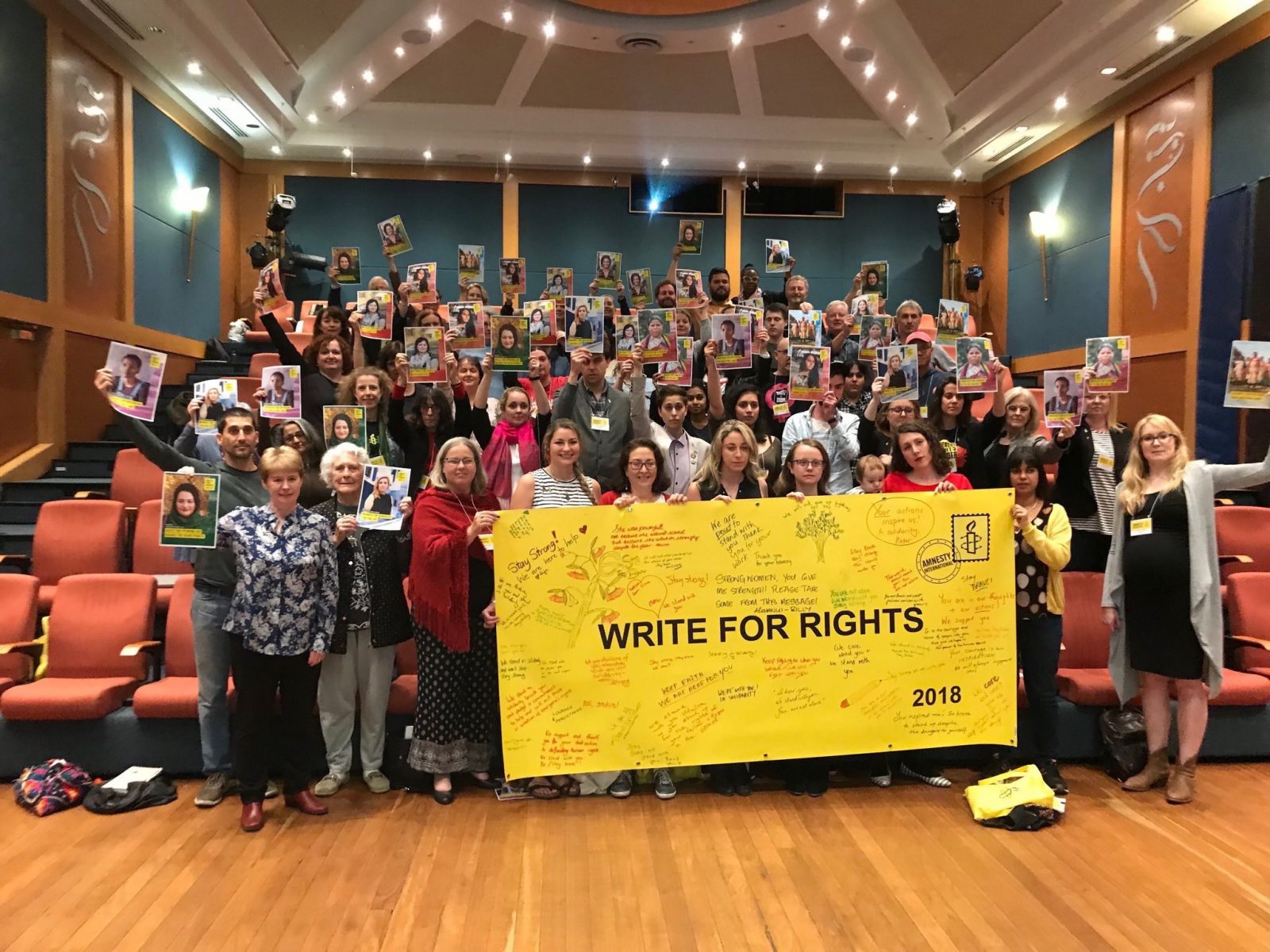
Last weekend’s National Extraordinary General Meeting and National Annual General Meeting (NAGM) was a fantastic success.
Branch presidents from across the country shared the fabulous work that has been happening in their region and action was taken for out Write for Rights cases.
The big news coming out of NAGM is that representatives voted and endorsed a a visionary model that opens up decision making to a far broader group of activists. This new system of governance will make us a bigger and bolder movement of everyday people who do extraordinary things.
This exciting result is the outcome of extensive consultation, deep thinking and lively discussion over the last two years.
This new governance model required changes to be made to our Constitution and delegates voted overwhelmingly in favour of a Special Resolution to adopt the new Constitution, with more than 80% voting in support.
This new structure is designed to ensure human rights outcomes are at the centre of our work and will provide improved infrastructure to build our activism and membership.
For the second year in a row, the Amnesty International (ACT/SNSW) Schools Network Outreach Team held the Asylum Seekers Questions (A.S.Q) Schools Conference. This event was an opportunity for students to engage in Q&A with a special guest panel discussion and engage in interactive workshops. Our goal for this event was for students to walk away with the knowledge and practical skills to become advocates for refugees and asylum seekers in their local communities. For the first time, the event was held at the A.C.T Legislative Assembly.
Participants at ASQ Schools Conference
Over 50 students from across the ACT and Southern NSW heard presentations from Minister Yvette Berry, A.C.T Deputy Chief Minister, Shankar Kasynathan, Amnesty International Australia’s Refugee Campaign Coordinator, John Gunn, Director of Multicultural Youth Employment Services and Benita Bittner, General Manager of ACT Netball. Students also heard from Pema Tenzin from the Canberra Tibetan Community who shared her experiences and journey of coming to Australia.
Participating students got the latest on Amnesty’s My New Neighbour campaign and participated in several workshops to develop their understanding of community sponsorship and map their communities to create change. All students were presented with ASQ Certificates at the conclusion of the day.
Students from the Canberra Girls Grammar School Amnesty Student Group were presented with Student Amnesty International Leadership (SAIL) Certificates in recognition of their amazing work through out the year. Overall the conference received terrific feedback from teachers, students and presenters. Students left feeling engaged and keen to continue to work on My New Neighbour at their schools, and bring more schools on board.
South Australian activists handed over thousands of blood money petitions collected from around Australia, to the Defence Minister Christopher Pyne in Adelaide this week calling on the Australian government to stop funding the Myanmar military who are accused of conducting a systematic ethnic cleansing campaign against the Rohingya people.
In August Amnesty International Australia launched its crisis response campaign calling on the Australian Government to immediately stop funding the Myanmar military and their ongoing campaign of violence against the Rohingya people.
For months Amnesty Activists from around Australia organised events, stalls and hit the streets old school style through blitzing and informing the public that our government was potentially funding the very same military accused of committing crimes against humanity, to collect a grand total of 21, 260 signatures.
On Wednesday the 31st of October, South Australian activists gathered out the front of the Minister of Defense’s office to hand over the blood money petitions and demonstrate that this issue is in fact in the hearts and minds of many Australians. Although Christopher Pyne himself wasn’t available, our stand in Minister Pyne imitator proved to be more than fit for the role attracting both media and public attention.
“It was fantastic to see a mix of new and existing Amnesty activists attend the handover to show their support for the Rohingya People and outrage at the Australian Government’s funding of the Myanmar Military”
said long term activist Sigrid Pfaffle.
Activists from the Ministers’ federal electorate of Sturt presented the blood money petitions in large money bags covered in fake blood to a member of Minister Pyne’s team, who seemed confused at first and then slightly annoyed by the sheer number of petitions and weight of the money bags.
Activist Leader Rajina Dhillon shared
“We have the support of over 21,000 people from across the country whose signatures and objections were passed on to the Defence Minister’s staff. This speaks volumes and is a signal for the government to step up.”
The handover was a huge success, Amnesty activists on behalf of many members of the public sent a clear message to the Defence Minister, Christopher Pyne that Australians say no to blood money!
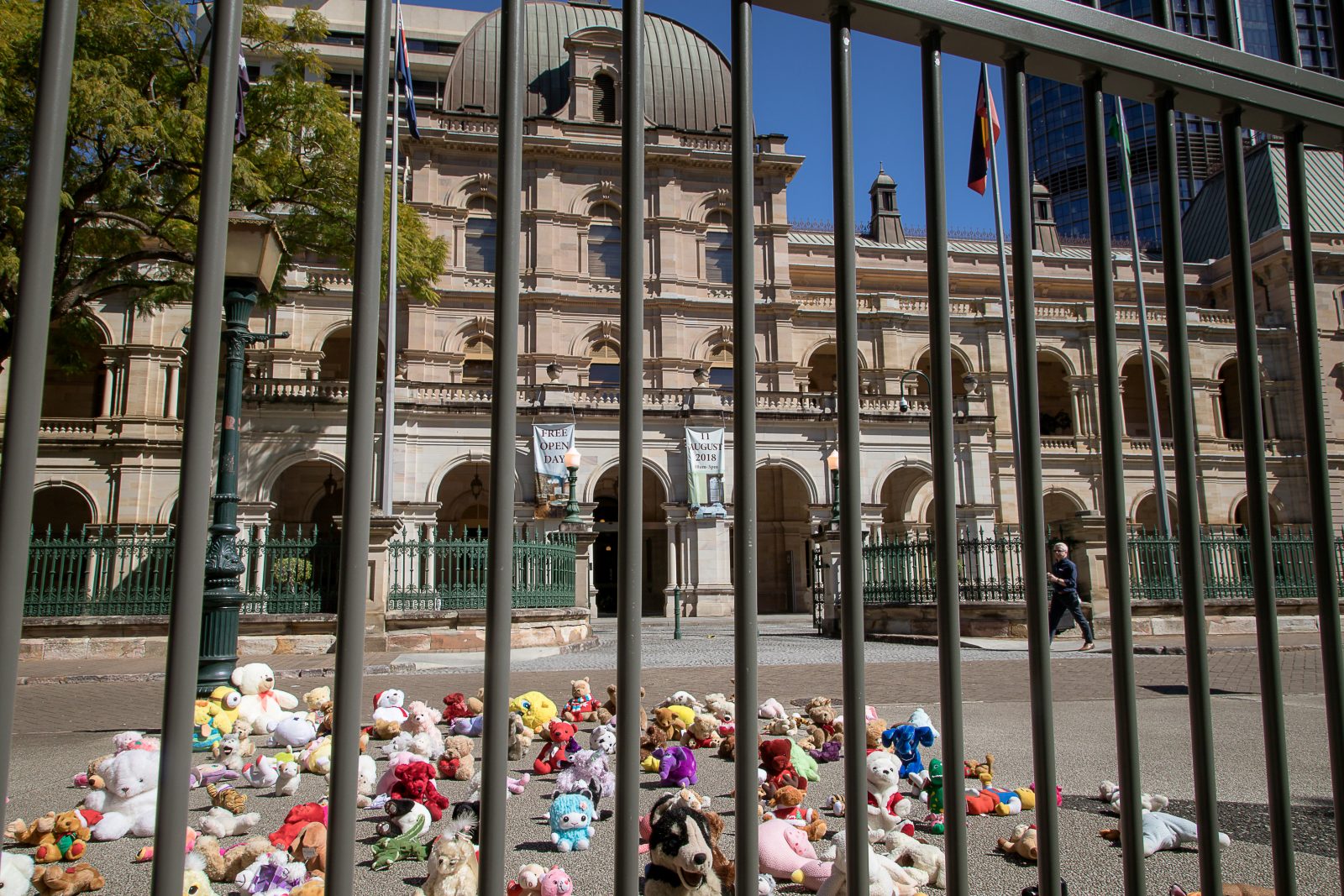
The Queensland Government asked the Queensland Productivity Commission to undertake an inquiry to determine how government resources and policies may be best used to reduce imprisonment and recidivism to improve outcomes for the community.
Amnesty International Australia submitted to the inquiry into imprisonment and recidivism focused on and making recommendations to go towards ending the overrepresentation of Aboriginal and Torres Strait Islander children in the Queensland youth justice system.
The Egyptian authorities have stepped up their onslaught against the human rights community by arresting at least 19 human rights lawyers and activists in a series of raids yesterday, said Amnesty International. So far at least eight women and 11 men were arrested in raids which began in the early hours of the morning.
The arrests prompted the Egyptian Coordination for Rights and Freedoms (ECRF), a prominent human rights organisation that provides legal aid and carries out documentation, to suspend its activities, citing the hostile environment towards civil society in Egypt.
Among those arrested is the 60-year-old prominent human rights lawyer Hoda Abdelmoniem, a former member of the National Council for Human Rights. Security forces broke into her apartment and ransacked it before taking her to an undisclosed location.
“This chilling wave of arrests targeting the human rights community is yet another appalling setback for human rights in Egypt. With these arrests the Egyptian authorities have once more demonstrated their ruthless determination to crush all activism and dismantle the human rights movement in the country. Anyone who dares to speak out about human rights violations in Egypt today is in danger,” said Najia Bounaim Amnesty International’s North Africa Campaigns Director.
“The systematic persecution of human rights workers in Egypt has to stop. Human rights defenders should be allowed to carry out their work without fear of harassment, arrest or imprisonment. All those arrested for their human rights work should be immediately released.”
“The Egyptian authorities have once more demonstrated their ruthless determination to crush all activism and dismantle the human rights movement in the country. Anyone who dares to speak out about human rights violations in Egypt today is in danger” – Najia Bounaim Amnesty International’s North Africa Campaigns Director
ECRF, which documents enforced disappearances and the expanding use of the death penalty, has been hit hard by the crackdown. Another of those arrested in the raids is Mohamed Abu Horira, lawyer and former spokesperson for ECRF, while human rights defender Ezzat Ghoniem, the co-founder of ECRF, and Azzouz Mahgoub, another lawyer at the organisation, have been forcibly disappeared since 14 September. Both were arrested in March 2018 but a court ordered their release on 4 September. However, security forces ignored the court order and instead forcibly disappeared them from prison.
In a statement announcing the suspension of its human rights work, ECRF cited the current climate in Egypt as incompatible with human rights work and demanded intervention by the UN Human Rights Council.
Amnesty International has consistently called on the UN Human Rights Council to comment on the rapidly expanding human rights crisis in Egypt.



 On Wednesday the 31st of October, South Australian activists gathered out the front of the Minister of Defense’s office to hand over the blood money petitions and demonstrate that this issue is in fact in the hearts and minds of many Australians. Although Christopher Pyne himself wasn’t available, our stand in Minister Pyne imitator proved to be more than fit for the role attracting both media and public attention.