Romania: “Yes” vote in homophobic referendum would be a dark day for human rights and equality

A proposed change in the definition of family in Romania’s Constitution could lead to a breach of international human rights law and increase discrimination against LGBTI people in the country, said Amnesty International ahead of a referendum this weekend.

Just 17 years after the country decriminalized same-sex sexual relations, Romanians will vote on whether to make a change the Constitution which, if passed into law, will enshrine the exclusive recognition and protection of only one type of “family”, i.e. a family founded on the marriage between a man and a woman.

“This issue should have not been put for a referendum in the first place. If approved, these changes would mark a dark day for human rights and equality in Romania,” said Barbora Černušáková, Amnesty International’s researcher on Romania.

“This referendum panders to homophobia and if approved and implemented, would not only breach Romania’s obligations under international human rights law and EU law but would also severely impact the lives of families not based on marriage and deny them the right to family life.”

Background

The referendum will ask voters if they agree to change Article 48(1) of the Romanian Constitution so that it defines the family as “freely consented marriage of a man and a woman” rather than “spouses”. Promoters of the initiative are framing this as a vote for the “traditional family”.

Romania currently prohibits same sex marriage and does not have provisions to legally recognize same-sex partnerships.

On 27 September, Romania’s Constitutional Court recognized that same-sex couples have the right to family life. This decision upheld an earlier decision of the European Court of Justice from June 2018, which upheld the right of same-sex couples to family life in the context of freedom of movement within the EU.

A referendum result limiting the definition of the family to a marriage between a man and a woman will be contrary to the guarantee of the right to family life to all people, including same-sex couples.

Peru: Overturning of Fujimori pardon confirms victims’ rights must take priority over political decisions

In response to the decision of the Preparatory Trial Court of the Supreme Court of Justice to overturn the pardon granted to former President Alberto Fujimori on 24 December 2017, Erika Guevara-Rosas, Americas Director at Amnesty International, said:

“The court’s ruling is a victory for the victims of the serious human rights violations that former President Fujimori was sentenced to 25 years in prison for. It is an acknowledgment of the historic struggle of the families of the victims, who have for decades been defending their rights to truth, justice and reparation.

“This decision sends a clear message that crimes against humanity cannot go unpunished”.

“The Supreme Court clearly followed the path laid out by the Inter-American Court of Human Rights affirming that the pardon granted to former President Fujimori is incompatible with the international obligations of the Peruvian state.

“Amnesty International welcomes this decision and stands in solidarity with the victims, who expect full compliance with the sentences passed”.

Marina Navarro, Executive Director of Amnesty International Peru, said:

“The overturning of the Fujimori pardon is a triumph for the families of the victims, who have taken to the streets to demand respect for their rights to truth, justice and reparation.

“The Peruvian judicial authorities have sent a clear message in favour of the victims of serious human rights violations today”.

Australians are unaware their taxes support Myanmar’s crimes against humanity: poll

Only a minority of Australians are aware of the biggest human rights catastrophe in our region – the Myanmar military’s ethnic cleansing of the country’s Rohingya population – and even fewer know that Australia is helping to prop up the murderous regime perpetrating it, a new poll carried out on behalf of Amnesty International has found.

The poll results coincide with Foreign Affairs Minister Marise Payne’s meeting with US Secretary of State Mike Pompeo this week, at which they were expected to discuss his pending release of the final conclusions of the damning US inquiry into the crisis.

The poll found that, of the Australians who do know about this crisis on our doorstep, more than half of them (54%) disapprove of the Australian Government’s ongoing support and training of the Myanmar military.

However, more than half of Australians (53%) are unaware of the Myanmar military’s campaign of crimes against humanity. This includes about 6 in 10  women (59%, compared to 46% of men), despite the gendered nature of the military’s horrific tactic of widespread rape of women and girls, as well as its brutal, systematic murder of babies, children and adults.

“This poll shows that the majority of Australians do not know their taxpayer dollars are supporting a regime perpetrating a deliberate, brutal campaign against hundreds of thousands of innocent men, women and children,” said Amnesty International Australia’s Crisis Campaigner Diana Sayed.

“The results also show that once Australians do know about this crisis, they are inclined to disapprove of the Australian Government’s continued provision of support and training to the Myanmar military.

“Amnesty International’s message on this is very clear – governments who continue to train Myanmar’s military are propping up a force that has been carrying out a vicious campaign of violence against the Rohingya that amounts to crimes against humanity.

“There is no evidence that backdoor diplomacy works with that regime. Australia is out of step with its allies – including the UK, the US and the EU – as the only Western democracy providing training and support to the Myanmar military. This is inexcusable and it has to stop.”

Background

Amnesty International has has gathered extensive, credible evidence implicating Myanmar’s military Commander-in-Chief, Senior General Min Aung Hlaing, and 12 other named individuals in crimes against humanity committed during the ethnic cleansing of the Rohingya population in northern Rakhine State. It has documented in detail how the Myanmar military’s vicious campaign came in the context of long-standing institutionalised discrimination and segregation amounting to apartheid and was marked by crimes under international law including murder, rape, torture, targeted large-scale burning of villages, the use of landmines, forced starvation, mass deportation and other serious human rights violations.

Essential Research carried out a statistically valid poll of Australian adults between 19-23 September 2018, claiming poll-result accuracy within +/- 3 percentage points. The regular survey to which these questions (see below) were added is available here, with its methodology detailed on page 13.

The questions polled on behalf of Amnesty International were:

  1. “Are you aware the Myanmar military has conducted a campaign of ethnic cleansing against the Rohingya people over the past year, causing more than 700,000 to flee to refugee camps in Bangladesh?” and,
  2. “The Australian Government is the only Western democracy to be providing training and support to the Myanmar military while it is carrying out this campaign against the Rohingya. Do you approve or disapprove of this?”

More than 15,000 Australians have signed the Amnesty International petition calling on Australia to cease its support of the Myanmar military.

Iran: Victim of domestic and sexual violence, arrested as a child, is executed after unfair trial

Responding to the horrific news that 24-year-old Iranian Kurdish woman Zeinab Sekaanvand was executed early this morning in Urumieh central prison, West Azerbaijan province, Philip Luther, Amnesty International’s Research and Advocacy Director for the Middle East and North Africa, said:

“The execution of Zeinab Sekaanvand is a sickening demonstration of the Iranian authorities’ disregard for the principles of juvenile justice and international human rights law. Zeinab was just 17 years old at the time of her arrest.”

“The execution of Zeinab Sekaanvand is a sickening demonstration of the Iranian authorities’ disregard for the principles of juvenile justice and international human rights law. Zeinab was just 17 years old at the time of her arrest. Her execution is profoundly unjust and shows the Iranian authorities’ contempt for the right of children to life. The fact that her death sentence followed a grossly unfair trial makes her execution even more outrageous.

“Zeinab Sekaanvand said that, soon after she was married at 15, she sought help many times from the authorities about her violent husband and alleged that her brother-in-law had raped her repeatedly. Instead of investigating these allegations, however, the authorities consistently ignored her and failed to provide her with any support as a victim of domestic and sexual violence.

“After the murder of her husband, Zeinab Sekaanvand said she was interrogated under torture by male police officers without a lawyer present. During her final trial session, where she was allowed a lawyer for the first time, she retracted her earlier ‘confession’ that she had murdered her husband, saying that she had been coerced to make it. Despite this, the judge refused to order a further investigation and instead sentenced her to death.

“It appears the Iranian authorities are increasingly scheduling the execution of people who were children at the time of the crime at very short notice to minimize the possibility of effective public and private interventions.”

“It appears the Iranian authorities are increasingly scheduling the execution of people who were children at the time of the crime at very short notice to minimize the possibility of effective public and private interventions. We are horrified by their continuous use of the death penalty against people who were under the age of 18 at the time of the crime, which is a violation of international human rights law. This is the fifth execution of a juvenile offender that we have recorded this year and we fear that it will not be the last unless urgent action is taken by the international community.

“We continue to urge the Iranian authorities to immediately establish an official moratorium on executions, commute all death sentences with a view to abolishing the death penalty, and prohibit the use of the death penalty against people below the age of 18 at the time of the crime.”

Background

Zeinab Sekaanvand’s execution breaches Iran’s obligations under the International Covenant on Civil and Political Rights and the Convention on the Rights of the Child, both of which Iran has ratified, and both of which strictly prohibit the imposition of the death penalty on people under the age of 18 at the time of the crime.

Zeinab Sekaanvand was moved out of her cell on 1 October and taken to solitary confinement in preparation for her execution. On 29 September, she was taken to the prison’s medical clinic where staff performed a pregnancy test on her. The test result came back as negative on 30 September. Subsequently, Zeinab Sekaanvand’s family were contacted by prison authorities and told to go to the prison on 1 October for a final visit, when they were informed that she was scheduled for execution on 2 October.

Zeinab Sekaanvand was sentenced to death under qesas (retribution in kind) in October 2014 after a grossly unfair trial before a criminal court in West Azerbaijan province, which convicted her of the murder of her husband.

She was arrested in February 2012 at a police station where she “confessed” to the murder of her husband. She was held in the police station for the next 20 days where she said she was tortured by male police officers through beatings all over her body.

She “confessed” that she stabbed her husband after he had subjected her to months of physical and verbal abuse and had refused her requests for divorce. She was only provided with a state-appointed lawyer at her final trial session, at which point she retracted her “confession”, telling the judge that her husband’s brother, whom she said had raped her several times, had committed the murder. She said that he told her that, if she accepted responsibility, he would pardon her (under Islamic law, murder victims’ relatives have the power to pardon the offender and accept financial compensation instead).

The court failed to investigate Zeinab Sekaanvand’s statements and, instead, relied on “confessions” she had made without a lawyer present to issue a death sentence.

Although she was under 18 years old at the time of the crime, the court did not even apply the juvenile sentencing provisions of Iran’s own 2013 Islamic Penal Code, which gives judges the discretion to replace the death penalty with an alternative punishment if they determine that the juvenile offender did not understand the nature of the crime or its consequences, or that there were doubts about his or her “mental growth and maturity” at the time of the crime.

Zeinab Sekaanvand came from a poor and conservative family and ran away from home when she was 15 years old to marry Hossein Sarmadi, who was four years older than her. She said that she saw her marriage to Hossein Sarmadi as the only opportunity she had for a better life. However, not long after the couple were married, she said her husband started abusing her verbally and physically, beating her regularly. She requested a divorce from him several times, but he refused. She registered many complaints with the police about the abuse, but the police consistently failed to conduct any investigation into her complaints. She also tried to return to her family but was disowned by them after she ran away.

Amnesty International opposes the death penalty in all cases without exception regardless of the nature of the crime, the characteristics of the offender, or the method used by the state to kill the prisoner.

Submission: Human Rights of People Born with Variation in Sex Characteristics

Amnesty International has submitted to the Australian Human Rights Commission’s consultation into protecting the human rights of people born with variations in sex characteristics in the context of medical interventions.

READ OUR SUBMISSION

People with variations in sex characteristics in Australia are routinely subject to medical interventions without free, prior informed consent, typically in infancy, childhood or adolescence

Amnesty International Australia calls on Australia to end non-emergency, invasive and irreversible medical interventions on infants and children with variations in sex characteristics to ensure the full enjoyment of the rights of persons with variations in sex characteristics. Normalising surgery should never take place without personal informed consent.

The Yogyakarta Principles, the Darlington Statement and the Malta Statement are important guiding documents that Amnesty has used to make ten recommendations to this consultation.

There is more to sex than just male or female

‘Boy or girl?’ is often the first question people ask parents about their baby. It’s a question based on the assumption that the world is divided into two groups of people, male and female. But that’s not always the case.

Worldwide, every year, an estimated 1.7% of children are born with variations of sex characteristics. Intersex people are born with physical sex characteristics (genitals, gonads, hormones, chromosomes or reproductive organs) that don’t fit medical and social norms for female or male bodies.

Being intersex is about biological features and not gender identity per se. It’s not about sexual orientation either – intersex people have many sexual orientations.

Many of these intersex children undergo surgery in an effort to ‘normalise’ them, despite the fact that these interventions are often invasive, irreversible and not emergency-driven. These children are too young to consent at the time of the intervention and their parents are often not given adequate information and support to make an informed decision about what is best for their child. Such practices can constitute gross violations of their human rights.

Here, four people tell us about their experiences of being intersex:

Ditte’s story

I was born in 1962. In some of my earliest memories I knew that I was not the same as other boys. At 25, I decided that I had to do something about it. I had had several blood tests over the years, with doctors always concluding there was nothing wrong. When I was 39 I met a physician who told me that my scars were the result of surgical intervention during childhood.

When my parents had both passed away I found out I had a much older half-sibling, who said that when I was a child our father had explained that “nature had made a mistake with me” and that “I had physically been born with both sexes”.

…when I was a child our father had explained that “nature had made a mistake with me” and that “I had physically been born with both sexes”.

Everybody should be entitled to get access to their medical journals. I’ve asked the authorities for information on what happened to me, but medical journals from the first ten years of my life suddenly disappeared. Instead I was told to accept myself as the gender I was recorded as, and as a transsexual who was applying for sex reassignment surgery.

I did not submit to this and consequently I was stigmatised as mentally ill, I lost my career and experienced a severe loss of income. The authorities are still labelling me a transsexual.

I am of course furious about what has happened to me. They should have waited until I was old enough to make my own decisions based on informed consultation.

Sandrao’s story

I only found out about my situation two years ago and I am still struggling to accept it. I have completely forgotten my first 11 years and am trying to figure out what happened to me. I know that I had surgery to remove testicles when I was five, as well as other genital operations. I knew I was different; I thought I was some kind of monster.

It was painful to have sex with men and I thought this was normal. I was pressed into the female role; I had to wear skirts, I had to have long hair. I have been miserable for 34 years.

I was pressed into the female role; I had to wear skirts, I had to have long hair. I have been miserable for 34 years.

This kind of surgery is still being performed and physicians don’t give enough information to parents. Instead of saying that your child is normal and will grow up healthily, they say something is wrong and it can be fixed with surgery.

There is a third gender option and I do not mind what name they will give this, as long as children will not feel that they don’t fit in. I know that I cannot change my life but I really want to advocate to prevent these surgeries being performed on others.

Stephanie’s story

From an early age I identified as a girl but as a teenager my body started developing in both male and female directions. I grew a lot taller, while developing female breast tissue. I tried to hide my body, I was binding my breasts with elasticated bandages. I gained weight to disguise my breasts as fat.

Once when my parents were out I prepared to cut [my genitalia] off, but I stopped myself at the last minute. I feared that I would bleed to death. I convinced myself that I would have to be as boy-like as possible, which became a lot easier at 17 when my beard started to grow. I didn’t like this, but it upheld the mirage. I stopped looking at myself in the mirror.

Once when my parents were out I prepared to cut [my genitalia] off, but I stopped myself at the last minute. I feared that I would bleed to death.

Around 21-years-old, I had a mental breakdown. I asked to be referred to a sexology clinic but my GP sent me for psychiatric examination instead. After a year I decided to end the psychiatric sessions and my GP referred me to a sexology clinic, but eventually they said that I didn’t fit the trans diagnosis.

Later on I was institutionalised for about a year to a year and a half. After a while I left and moved in with my then-girlfriend, but eventually I broke it to her that I wasn’t able to keep living as a stereotypical family guy. We broke up, but maintained a friendship.

I got into contact with a gynaecologist who discussed the possibility of treating me with oestrogens and testosterone-suppressors. He suggested I contact an endocrinologist, who then referred me to an expert, but the only thing he was able to offer me was testosterone treatment ‘to make a man out of me’ and to have my breasts cut off.

This was 5 years ago and I’m now trying to get coverage through the public healthcare system, again.

Steffi’s story

I’m forty years old and I was born “ambiguous”. I found out about my diagnosis at 11, by chance. During an annual routine check-up, it was said that ‘everything had healed well after the ovaries had been removed’.  The subsequent conversation with my mother was crushing, a turning point. From one second to the next I was no longer a child.

My uterus was also removed – this should have been left. I was just told: “these pills will help you develop in a female manner…”

The doctor said this condition was so rare that I should not search for other affected people. I believed him. Until I was 28 I repressed everything. I played the happy girl and woman. No one knew how things looked inside me.

My education happened through a self-help group. It was a big support for me psychologically to see how others deal with it. People who support you, people who are there for you.

I am certified as severely disabled. I’ve received endocrinological treatment for the past twelve years. In 2011 I went to court because my appeal for compensation was rejected. But the case was also rejected because, according to the court, the expert (who had operated on me) had provided a ‘sound diagnosis’.

The judgment was crushing. I feel abandoned by the justice system. But I don’t want to let this expert opinion stand; I have to appeal. I don’t know how this will end.

More information

We encourage you to read the Darlington Statement, a joint consensus statement by Australian and Aotearoa/New Zealand intersex organisations and independent advocates.

Read Amnesty’s recent report First, do no harm: Ensuring the rights of children born intersex.

Egypt: Human rights defender and sexual harassment survivor, Amal Fathy, sentenced for speaking out

Following the sentencing of an Egyptian woman human rights defender, Amal Fathy, who has already spent 141 days in prison after being arbitrarily arrested for posting a Facebook video decrying sexual harassment and criticising the Egyptian authorities for failing to protect women, to a two years suspended prison sentence with a bail of 20,000 EGP (1,120 USD) and a fine of 10,000 EGP (560 USD),  Najia Bounaim, Amnesty International’s North Africa Campaigns Director, said:

“Amal Fathy is now facing a disgraceful sentence simply for her courage to speak out against sexual harassment. This is an outrageous case of injustice, where the survivor is sentenced while the abuser remains at large. She is a human rights defender and sexual harassment survivor, who told her truth to the world and highlighted the vital issue of women’s safety in Egypt. She is not a criminal and should not be punished for her bravery.

 “We are once again calling on the Egyptian authorities to immediately and unconditionally release Amal Fathy and drop all charges against her. Her imprisonment for peacefully expressing her opinions is an affront to the right to freedom of expression guaranteed by Egypt’s own constitution and its international obligations, as well as Egypt’s repeated commitments to combat sexual harassment.

“It is currently more dangerous to criticise the government in Egypt than at any time in the country’s recent history. Egyptians living under President al-Sisi are treated as criminals simply for peacefully expressing their opinions.”

Background

Amal Fathy is an Egyptian woman human rights defender who focuses mostly on democracy issues. She has been vocal about human rights violations in Egypt, especially the arbitrary detention of activists and human rights defenders.  She is currently in pre-trial detention in another case and is facing charges of “belonging to a terrorist group”, “broadcasting ideas calling for terrorist acts”, and “publishing false news”. The State Security prosecutor will decide on renewing her detention for 15 more days on 14 October.

Egyptian police forces arrested Amal Fathy in the early hours of 11 May, along with her husband Mohamed Lotfy, a former Amnesty International researcher and the current director of the Egyptian Commission for Rights and Freedoms, an Egyptian human rights NGO. Police raided the couple’s home in Cairo and brought them both to the Maadi police station, along with their three-year-old child.

Digitally dissecting atrocities – Amnesty International’s open source investigations

By Conor Fortune, Senior Crisis Response Communications Adviser

Open-source investigators are collaborating online to verify and expose human rights abuses. Here’s how.

A grisly video showing a heinous act of violence quickly went viral after it was posted on 10 July 2018. Men dressed in army fatigues and wielding military-grade rifles brutally marched women and young children – including a baby strapped to his mother’s back – to a rural location before blindfolding and executing them in a hail of bullets.

As the video spread on social media, so did the rumours. Was this in Mali or Cameroon? Were they government armed forces or Boko Haram fighters masquerading as soldiers? Was it real or staged?

In situations like this, the “truth” can appear malleable, with those in power sometimes taking advantage of the confusion to peddle false narratives. That’s precisely what the government of Cameroon initially did. Fearing a backlash if the real story came out, on 12 July Cameroon’s Minister of Communication held a press conference where he attempted to dismiss the video as “fake news”.

But even if what is perceived as “truth” is malleable, the facts are not. The same day as the Minister’s press conference, Amnesty International’s forensic analysis of the video began to establish the facts of what happened. Our research followed meticulous open source investigation methodologies and the findings were corroborated by testimonies from the ground.

Relying on multiple strands of evidence – including geolocation of the video, expert analysis of the uniforms and weapons used, and linguistic and other contextual clues in the speech that gave away the identities and ranks of the soldiers – the organization was able to begin to build a case to counter the official narrative. The evidence strongly suggested that Cameroonian soldiers were the ones extrajudicially executing civilians in the video.

Subsequent research by Amnesty International bore this out, and a community of open source investigators collaborating on the case pin-pointed the exact location near the town of Zelevet and narrowed down the date to sometime in late March or early April 2015.

On 10 August, when another horrific video surfaced showing more military executions, the government of Cameroon backed down from its denials and announced that seven soldiers had been arrested and were under investigation for the Zelevet killings. A subsequent BBC Africa Eye documentary, Anatomy of a Killing – released on 24 September with support from Amnesty International and other open source investigators – detailed how those arrested included three soldiers who appear in the viral video.

“The Zelevet video fitted a wider pattern we had documented of the Cameroonian security forces committing egregious violations against civilians,” said Ilaria Allegrozzi, Amnesty International’s Lake Chad Researcher.

“Since we didn’t have direct access to the area around Zelevet to verify this in person immediately, our open source investigation allowed us to confidently nail down this incident as part of that same pattern, and call for those responsible to be investigated.”

Getting to the truth

Following massacres, bombings and other despicable acts of violence against civilians, those responsible often seek to evade justice. But the wealth of content now posted online by citizen journalists, activists or others means that more evidence is available to stop them in their tracks and mount a case against them.

“When inconvenient truths prompt public officials to cry ‘fake news’, or when content posted on social media purports to show something it doesn’t, we’re ready to respond, based on rigorous, methodical research and verification methods,” said Sam Dubberley, Manager of Amnesty International’s Digital Verification Corps.

“When powerful people control what people read, see and hear, it’s easy to manipulate the official story and maintain impunity for serious violations. But when footage of the facts on the ground pokes holes in that narrative, it can make a stronger case for prosecution and the delivery of justice.”

A key part of this work is Amnesty International’s Digital Verification Corps – a network of more than 100 volunteers at six global universities, who the organization has trained in verification skills.

Amnesty International has used verified videos and photographs to help prove the burning of Rohingya villages in Myanmar, tactics of unlawful sieges and bombardment of civilian populations in Syria, and governments endangering the lives of refugees in Papua New Guinea.  

“We have to do this to help people tell their stories. But we go to great pains to carefully verify their information. When we are not on the ground to witness these events as they happen, the onus is on us to prove beyond a shadow of a doubt that they really did happen,” said Sam Dubberley.

Shooting on Manus Island

On 14 April 2017, a shooting occurred at the Manus Island Detention Centre in Papua New Guinea, where the Australian government detains more than 800 refugees and asylum seekers.

In the immediate aftermath, Manus Province police commissioner David Yapu tried to downplay media reports about the shots endangering the detainees’ lives. “The soldiers fired several gunshots in the air, causing great fear and threats to the local and international community serving at the centre,” he said.

Amnesty International carried out an open source investigation into 21 images and six videos captured by refugees near the scene of the 14 April shooting, and published a detailed report of its findings on 15 May.

Hours after the report came out, Commissioner Yapu changed his position. “Some of the shots were fired through the compound and some of the bullets penetrated through the walls”, he conceded the same day. An official inquiry was later launched into the incident.

Criminal investigations

Inevitably, some governments try to protect those among their ranks who are responsible for crimes under international law. In other cases, the national criminal justice system is too politicized, broken or flawed to bring perpetrators to justice in fair trials.

In these cases, where governments are unable or unwilling to bring suspected war criminals and other serious offenders to justice, the International Criminal Court can open an investigation – if it has jurisdiction. But even where the ICC has jurisdiction, it is rare for the Court to issue an arrest warrant on the basis, at least in part, of evidence found on social media networks like Facebook and YouTube.

That is why it was such a watershed moment for open source investigations when the ICC issued an arrest warrant for Mahmoud al-Werfelli in August 2017, for the war crime of murder in Libya. Videos shared on social media – which the Court thoroughly analysed and verified using the same stringent methodology that Amnesty International employs – were a significant factor in the decision to order his arrest.

“The al-Werfelli case shows how crucial digital verification has become in forging a path to justice for the world’s worst crimes,” said Sam Dubberley.

“Open source investigators have done ground-breaking work to cut through the noise and expose the facts behind other grave abuses including Bellingcat’s exposé on the downing of flight MH17 over eastern Ukraine, or the New York Times’ work on the use of chemical weapons by Syrian forces in Douma and Khan Sheikhoun.”

Just as in journalism and criminal investigations, tackling misinformation and getting to the truth matters more than ever in the field of human rights research. Amnesty International has pioneered using open source investigations to bolster its traditional testimonial research to expose human rights violations, change the official narrative and pave the way for justice.

To find out more about Amnesty International’s work on open source investigations and digital verification, visit the Citizen Evidence Lab: https://citizenevidence.org/
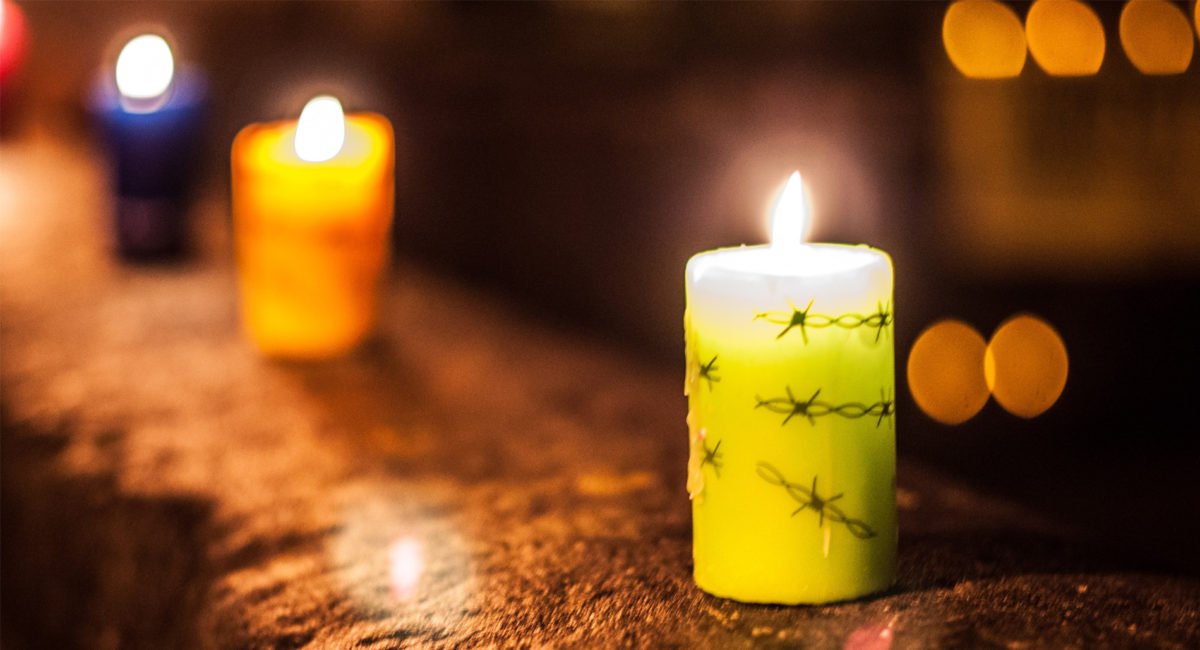
Australia: Vote at UNHRC for justice for the Rohingya, accountability of Myanmar military, welcome

Following the Australian Government’s vote at the United Nations Human Rights Council in Geneva overnight in support of creating a new evidence-collection and case-building body to hold the Myanmar military accountable for crimes against the Rohingya population, Diana Sayed, Amnesty International Australia’s Rohingya Rights Campaigner, said:

“We welcome the Australian Government’s vote in support of the resolution to establish an accountability mechanism to collect and preserve evidence of the Myanmar military’s crimes against the Rohingya population and build cases for future prosecutions.

“This is an important step on the road to justice – a decision that takes us one step closer to bringing the perpetrators to justice.

“It is a victory for our supporters, our movement and most importantly the people of Myanmar – including the Rohingya, Kachin, Shan and Ta’ang ethnic minorities – who have suffered at the hands of the Myanmar military.

“Although it will not in any way compensate for the atrocities victims and survivors have experienced, they will at least know a process towards justice has begun.

“Although it will not in any way compensate for the atrocities victims and survivors have experienced, they will at least know a process towards justice has begun”– Diana Sayed, Amnesty International Australia’s Rohingya Rights Campaigner

“This comes off the back of Foreign Minister Marise Payne’s positive words last week indicating Australia is considering sanctions being imposed on the Myamnar officials responsible for crimes against humanity.”

Amnesty International’s Crisis Response Director, Tirana Hassan, added:

“While the UN Security Council remains bogged down by politics, the Human Rights Council has stepped up to the challenge with this serious and constructive approach to pave the way for justice. It sends a clear message of solidarity to the victims and survivors, as well as a stark warning to Myanmar’s military that their crimes will be punished.”

“China’s attempt to block the resolution was stopped – with 35 states voting to adopt, three voting against and seven abstaining.

“It is deeply disturbing that China sought to shield perpetrators from justice and accountability by calling a vote on this resolution. This move to block justice and accountability for Rohingya and other minorities comes at a time when China is committing serious human rights violations against Uighurs and other Muslim minorities within its borders. History will judge China’s leaders harshly for their blatant contempt for justice.

“While the UN’s Human Rights Council has today taken meaningful action in the fight for justice in Myanmar, more work remains to be done. The UN Security Council has a clear responsibility to refer the situation to the International Criminal Court. Its ongoing failure to do so is a stain on its credibility as the global body tasked with maintaining international peace and security.”

Background

More than 725,000 Rohingya women, men, and children fled northern Rakhine State to neighbouring Bangladesh after 25 August 2017, when the Myanmar security forces launched a widespread and systematic assault on hundreds of Rohingya villages. The onslaught came in the wake of a series of attacks on security posts by a Rohingya armed group, the Arakan Rohingya Salvation Army (ARSA).

Amnesty International has documented extensively the military’s atrocities,  including targeted burning of Rohingya villages, the use of landmines and the commission of other crimes against humanity including murder, rape, torture, forced starvation and forced deportation as well as other serious human rights violations against the Rohingya. The organisation has also documented war crimes against ethnic minorities in Kachin and northern Shan States, where violations are ongoing.

On 18 September 2018, the UN Fact-Finding Mission on Myanmar presented its final report to the Human Rights Council, providing yet more evidence of the military’s crimes in Myanmar. The Fact-Finding Mission called for senior military officials and other suspected perpetrators to be investigated and prosecuted for crimes against humanity, war crimes and genocide.

Earlier this week, Amnesty International delivered more than 90,000 signatures from people around the world to members of the UN Human Rights Council in Geneva, calling for the establishment of an accountability mechanism for atrocities in Myanmar. The organisation also called on world leaders at the General Assembly to hold Myanmar’s military leaders to account.

Understanding the ‘I’ in LGBTQI

Do you know what the term intersex means? If the answer is no, you’re not the only one. Many people couldn’t tell you; nor could they say what issues intersex people face.

As well as stigma and discrimination, many children who are born intersex face unnecessary medical surgeries in their early years, which irrevocably shape their lives before they are even able to express their opinion.

We’ve been catching up with leading intersex activist Kitty Anderson, who has dedicated her time to fighting for the rights of intersex people for the past two-and-a-half years.

What does it mean to be intersex?

Intersex is an umbrella term used to cover a broad group of people who have sex characteristics that fall outside typical, binary “norms” of male or female. These can include primary sex characteristics such as internal and external genitalia, reproductive systems, hormone levels and sex chromosomes, or secondary sex characteristics which become apparent at puberty.

Being intersex is about biological features and not your gender identity per se. It’s not about your sexual orientation either – intersex people have many sexual orientations.

How did you find out that you are intersex?

When I found out I was 13 and I completely freaked out. There can be a lot of secrecy and stigma related to being intersex and it was something that had been kept from me. But when my cousin – who is also intersex – was born a couple of years later, my family didn’t keep it a secret and it was a healing process for all of us.

It took a long time to get over feeling that this was something I should not mention, which affects your social life. When topics like menstruation or having kids came up, I would just nod and go along with the conversation because that was what was expected. But I didn’t want to.

I first started talking about being intersex when I went on exchange to Australia; I thought to myself, “I’m in another country, I’ll just try it out here”. So when I met new people I made being intersex a part of who I am and I didn’t have any trouble or problems with it – a couple of people made weird or inappropriate comments but it wasn’t the norm.

It doesn’t really matter if they’re an intersex kid or not – all of our children deserve to grow up in a world where their human rights are respected

When I came back home to Iceland at 19 I started talking about it more. I wasn’t running around yelling “Hi, I am intersex!” but I came to a point where I could talk about it and it was fine. Now it’s just a part of me and it just comes up in conversations because I stopped moderating what I say. Being intersex has been so hidden and under the radar that a lot of people actually miss out on the chance to meet other intersex people, which has hampered community building.

What human rights issues do intersex people face?

In order to ‘normalise’ people who are born intersex, so that they fit into a traditional male or female appearance, medical interventions are carried out on some very young children.

Most early interventions are surgeries on cosmetic or social grounds that serve to make the appearance of a child’s genitalia normative. These procedures include clitoral reductions, which is when tissue that is full of nerve endings is removed to make the appearance of the clitoris seem smaller, or surgeries to remove internal gonads (ovaries or testes), surgeries to create a new vagina or surgeries to normalise the appearance of the penis.

These invasive and life-changing interventions take place before the child can even voice their opinion on what is being done to them.

Generally surgical interventions today take place with the consent of parents. But what information is given to the parents about the surgeries – or the consequences – is usually questionable. Parents are expected to consent to treatments that may have long-term health consequences, which can include life-long needs for hormonal treatments. But really these children should have the right to make such major choices about their own bodies themselves.

So what changes do you want to see?

Our goal is to end all medically unnecessary interventions on children that are based on cosmetic or social grounds. We also need to educate people and raise awareness to overcome stigma, as well as provide more psychological support for parents, so that intersex children do not feel isolated or alone and can get easy access to support and peer networks.

We need to move towards a psycho-social framework which accepts intersex people, because the problem isn’t with intersex kids, it’s with society expecting them to conform to their ideals. It doesn’t really matter if it’s an intersex kid or not – all of our children deserve to grow up in a world where their human rights are respected.

There have already been a number of positive developments. In 2015, Malta outlawed surgeries based on social grounds on intersex children (this actually happened on April 1, which did initially lead to a sneaking suspicion that it was an April Fool’s joke!).

Colombia has also set up a system so that surgeries of this nature have to go through the court system. The United Nations Committee against Torture and Committee on Children’s Rights have issued recommendations to several countries to stop medically-unnecessary surgical interventions on intersex children.

These children should have the right to make such major choices about their own bodies themselves.

But there is still work to do. If we don’t raise awareness, current practices will continue. What history has shown us is that the main focus of interest is in creating better techniques for surgeries of this nature, rather than protecting the rights of children and their bodily autonomy and integrity.

It was society that created this paradigm, and without society now demanding that children’s rights be respected, it is always going to be easy to sweep these issues under the carpet.

Until people who are scared to speak out see that there is a shift in societal perception and support, it is going to be a lot harder for them to raise their voices and join the broader movement which so desperately needs them.