Amnesty International Annual Report: Australia continues to be a global laggard on refugees, First Nations justice and climate

Australia’s continued incarceration of children as young as 10 years old, ongoing brutal treatment of refugees and asylum seekers and failure to adopt carbon emission reduction targets were just some of the human rights issues raised in Amnesty International’s 2021-22 annual report.

Amnesty International Australia National Director, Sam Klintworth, said the report highlighted that there is still a long way to go in ensuring that the human rights of all individuals are protected and supported in Australia.

“There are still too many people who are unable to access their basic human rights in Australia. The continued failure of members of society including refugees, asylum seekers and First Nations People to access their rights, demonstrates the urgent need for the government to implement an overarching single Human Rights Act that defends and protects the rights of all people.”

The report highlighted the Australian Government’s continued detainment of children as young as 10 years. Whilst there was some progress in the nation’s capital with the ACT Government committing to increase the minimum age of criminal responsibility to 14, no other states are yet to follow suit.

“The Australian Government is still choosing to ignore the overwhelming evidence from health experts, social workers, Indigenous leaders, legal experts and human rights organisations, that forcing children through a criminal legal process significantly harms their health, wellbeing and future. Sending children to prison is not the answer.” 

The urgent need for the government to increase its humanitarian intake was stressed in the report, with the number of refugees accepted for resettlement in Australia decreasing from 18,750 in 2020 to 13,750 in 2021. Although the government announced an end to offshore processing in Papua New Guinea by the end of the year, the indefinite and arbitrary detention of refugees and asylum seekers continued.

“While last week’s announcement of the deal to settle refugees in New Zealand is very welcome, it doesn’t address the decline in our humanitarian intake, nor does it do anything to dismantle the brutal offshore processing regime,” Klintworth said.

Australia’s lack of climate action was also highlighted in the report with the government continuing to fund coal and gas development projects, often in violation of Indigenous people’s rights. Further, Australia failed to adopt carbon emission reduction targets consistent with its obligations under the Paris Agreement and human rights law.  

Attacks on the LGBTI community also continued as the government announced plans to introduce a revised Bill on Religious Freedom. Further, the government’s lack of action towards tackling issues surrounding sexual and gender-based violence was also criticised in the report, with recommendations for legislative reforms made by the Australian Human Rights Commission in 2020 following its inquiry into sexual harassment in the workplace still not fully implemented by the end of the year.

Deal to settle refugees in New Zealand comes not a moment too soon for those suffering in immigration limbo

Amnesty International Australia today welcomed the news that people suffering in Australia’s cruel offshore processing regime will finally be allowed to move on with their lives in New Zealand.

Dr Graham Thom, Amnesty International Australia Refugee Advisor, said:

“So many of us have been working for years towards this day. There are 112 people remaining on Nauru, with a further 1,168, so-called transitory people here in Australia for medical treatment. This provides hope to refugees trapped in limbo, both here and offshore”

“We’re excited, with the US deal coming to an end, that for people who have suffered cruelty upon cruelty in Australia’s inhuman offshore processing system there will still be a possible solution. 

“Sadly the 104 people still trapped on PNG fall outside the scope of this deal and solutions will still need to be found for them 

“We also can’t forget to acknowledge this important step that people have had years of their lives taken from them pointlessly. The government could have taken up this offer eight years ago and spared these people ongoing and arbitrary detention and the trauma of that experience”

Refugee advocate Craig Foster said:

“My visit to Papua New Guinea with Amnesty showed me the humanity of the people seeking safety and the destruction of lives perpetrated by Australia.  This agreement is another small step to recovering Australia’s humanity and there is much work ahead. I thank everyone raising their voice around Australia for a commitment to basic decency, our high profile ambassadors, Jacinda Ardern and say well done to Scott Morrison on finally taking the right action. It’s just the start, Scott, there are many more steps required to dismantle this beastly system.” 

Mostafa (Moz) Azimitabar who was held in both Papua New Guinea and then in the Park Hotel alternative place of detention (APOD) in Melbourne where he was evacuated for medical care said:

“Today is an incredible victory for human rights, and the best birthday present ever. This is the news we’ve been hoping for – I hope this means the government will make sure that everyone held in APODs in Australia can also be resettled in New Zealand so their torture can finally end. They must be released now”.

Refugee advocate and sporting icon Sonny Bill Williams said:

“New Zealand has generously offered to resettle these refugees for years, I am thrilled that the Australian Prime Minister has responded to our calls and will make it possible for people fleeing their home countries to begin rebuilding their lives in safety in New Zealand.”

The current deal will see 150 refugees per year for three years being resettled, leaving a shortfall of approximately 500 people who will still require permanent resettlement solutions. The Government must commit to ensuring their safety consistent with our obligation under international law.

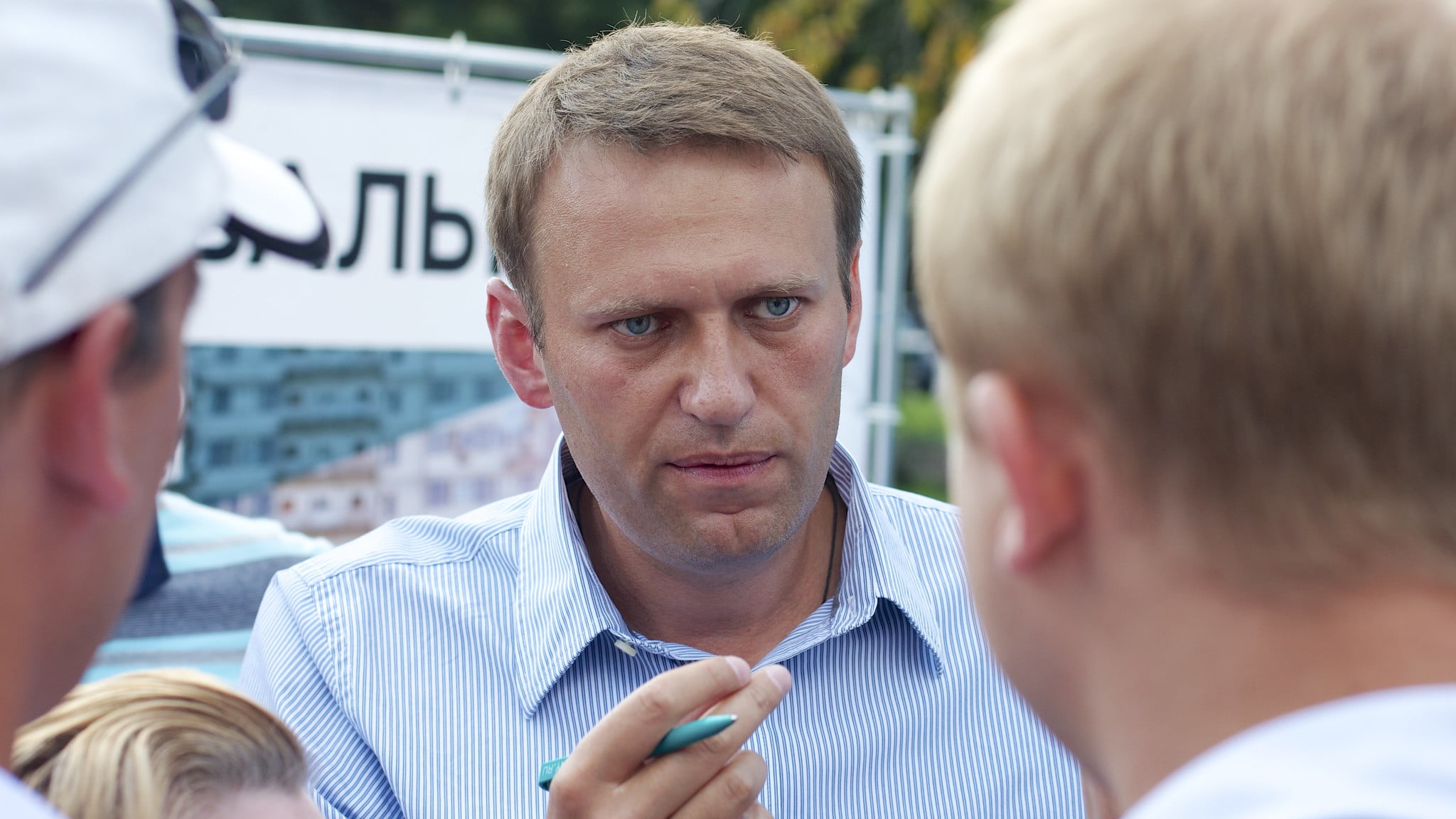
Russia: Opposition leader Aleksei Navalny sentenced to nine years in prison in cynical deprivation of his human rights 

Responding to the news that Russian opposition leader and prisoner of conscience Aleksei Navalny has been sentenced to nine years in prison for his overt criticism of Vladimir Putin and peaceful political activism, Amnesty International’s Director for Eastern Europe and Central Asia, Marie Struthers, said: 

“Navalny faces nine years in prison for calling out the Russian elite for corruption and abuse of power. This sentence is predictable but nonetheless shocking. The world must not overlook this sentence and its significance amid the horrific human rights violations we have seen as a result of Russian aggression against Ukraine.  

“After surviving an assassination attempt, Navalny was swiftly imprisoned, and his organization was declared extremist in a mockery of justice. Against the backdrop of the Russian authorities’ blatant disregard for international, European and its own laws, many more may face similar injustice.

“I applaud Navalny’s commitment to challenging corruption and other abuses, even in the face of years behind bars. He used the court room to speak against Russia’s aggression in Ukraine, likely risking additional charges.”
 

Background 

On 22 March, the Lefortovo District Court of Moscow delivered its verdict at a hearing held in penal colony IK-2 in Pokrov, Vladimir Region, where Aleksei Navalny is serving his previous, arbitrary 2.5-year sentence. The court found him guilty of “fraud on an especially large scale” and “contempt of court”. The politician has been accused of siphoning off approximately US$ 25,000 from donations to organizations he founded. 

Amnesty International analyzed his case and concluded that this prosecution was politically motivated and based on the arbitrary application of law which wrongfully criminalized Aleksei Navalny.  

Aleksei Navalny faces further reprisals from the Russian state. In September 2021 the authorities opened a new criminal case against him and his associates under the trumped-up charge of creating an “extremist association.” The Anti-Corruption Foundation and the Citizens’ Rights Protection Foundation, both founded by Navalny, were arbitrarily officially labelled “extremist” and banned in June 2021. 

Explainer: How Amnesty verifies military attacks in Ukraine

Amnesty International’s Crisis Evidence Lab is a multidisciplinary team that uses cutting-edge digital investigation tools to document human rights violations remotely. It helps to ensure that information emerging from conflict areas is timely, accurate and meets the needs of human rights work in crises situations. 

This is particularly important in situations where it is dangerous for researchers to be on the ground, and in an era when disinformation and misinformation can spread rapidly.  

How does the Evidence Lab work on Ukraine? 

The Evidence Lab has been working hard to identify and verify the details of possible unlawful attacks which have killed or injured civilians, and destroyed or damaged civilian infrastructure in Ukraine. This documentation provides essential evidence which can later be used to hold perpetrators of violations accountable.

The Evidence Lab collects audio-visual material and analyzes it for evidence of violations of international law. This material includes satellite imagery, video footage and photos of air strikes and other attacks, and of the aftermath of these attacks, as well as images of weapons remnants. Where possible, evidence is corroborated by interviewing witnesses to the attacks.

Below is a list of attacks by Russian forces in Ukraine which the Evidence Lab has verified to date. Some of these – including strikes on hospitals and schools, indiscriminate attacks which killed or injured civilians, and the use of banned cluster munitions – may constitute war crimes under international law.

List of Amnesty-verified attacks to date

What is the Evidence Lab? 

Part of Amnesty’s Crisis Response Programme, the Evidence Lab brings together open source and visual investigators, remote sensing experts, weapons analysts, data scientists, developers and other experts to conduct digital investigations and tell the stories of people most affected by conflict.

The Evidence Lab website provides an online space to share best practices, new techniques, resources and guides, helping human rights investigators to take advantage of the vast amount of information which is shared online every day.

Find out more about their work here.

How does the Evidence Lab identify attacks to investigate in Ukraine?

The Evidence Lab receives information from a variety of sources, including what is known as “citizen evidence” - material that has been collected by someone other than an established human rights investigator.

This sort of documentation is frequently shared publicly through social media networks such as Twitter, Facebook and YouTube, and often exposes in great detail abuses which might have otherwise gone unnoticed. The Lab also receives evidence directly from witnesses on the ground.

How does the Evidence Lab verify attacks?

Depending on what they are looking for, Evidence Lab researchers use a range of verification methods. These include:

Geo and chrono-location

Confirming where and when a video or photo was taken. This can be done by cross-checking the material with satellite imagery, ground level photography and other publicly available information. A researcher can look at the landscape, trees, buildings, and streets in the images, and check if they match with street views or other photos from a known location.

The researchers can also analyze weather patterns and shadows to see if they match the conditions that prevailed when the photo or video was claimed to have been taken.

Remote sensing

The researchers use satellite imagery and other sensors such as Radar and LiDAR to look for tell-tale signs of attacks like destroyed buildings, craters, debris, troop or weapon movements.  A bird’s eye view is also important to cross-check and verify potential targets and understand the dynamics of these attacks.

Weapons identification

Amnesty International’s arms experts analyze photos, videos and other data to verify which weapons are being used and if they lead to human rights violations. This could include studying the shape of a crater left by a missile, watching footage of air strikes, or examining photos of weapons remnants. The researchers also analyze weapons trade data to understand ownerships of these weapons.

Eyewitnesses

Importantly, the Evidence Lab works with researchers who interview eyewitnesses to attacks and collect testimonies that might corroborate the digital evidence.

Preservation

The Evidence Lab catalogues and preserves all the original evidence, together with all its verification and analysis for accountability and justice mechanisms. We aim to support relevant justice actors, and hand over our evidence to ensure perpetrators are held to account.

Why is it important to verify attacks?

The Evidence Lab works both intensively, documenting individual attacks in great detail, and in a big picture way, looking for broad patterns of violations and building a detailed timeline of events. A key goal is to provide an accurate account of events, combating the misinformation and disinformation that is often rampant during conflicts and other crisis situations.

These documentation efforts are also useful in compiling a log of reliable evidence that could later be used to hold perpetrators of human rights violations to account.

More broadly, we help to tell the stories of people who are directly affected by these crises and to give them a voice.

Amnesty International's Crisis Evidence Lab is an example of how we shine a light on great wrongs by exposing the facts others try to suppress. We are a global movement of 10 million people standing up for justice, freedom and equality. Together, our voices challenge injustice and are powerful enough to change the world. Find out more about what we do and our crisis response work.

Myanmar: Momentum for justice as US to label Rohingya crackdown genocide 

Responding to reports that the US Secretary of State Antony Blinken is set to announce that Myanmar’s military has committed genocide and crimes against humanity during its violent campaign against the Rohingya minority, Erwin van der Borght, Amnesty International’s Interim Regional Director, said: 

“Nearly five years after 740,000 people were driven from their homes at gunpoint in 2017, Rohingya families and survivors have yet to receive justice for the unimaginable horrors inflicted upon them. Momentum for international justice must be accelerated to end the rampant culture of impunity in Myanmar, where no senior figures have ever faced the consequences of their appalling campaign against the Rohingya people.

“Without accountability, Myanmar’s military will continue to believe it has a blank check to murder innocent people, bomb their homes, and destroy their families. Amnesty International supports the call for the investigation and prosecution of senior military officials for crimes under international law in Myanmar, which include crimes against humanity, war crimes and genocide. 

“The same generals who implemented the authorities’ brazen campaign of bloodshed against the Rohingya seized power in a 2021 coup. In response to a nationwide protest movement, they then turned their weapons on youth protesters in Myanmar’s biggest cities, deploying violent tactics previously used to target ethnic minorities for decades.” 

Background:
 

The administration of US President Joe Biden is set to formally declare on 21 March that the Myanmar military’s 2017 campaign against the Rohingya amounted to genocide and crimes against humanity. Secretary of State Antony Blinken is expected to make the announcement at the US Holocaust Memorial Museum. 

Myanmar’s military drove out more than 740,000 Rohingya from Rakhine State into Bangladesh in a brutal campaign of extrajudicial killings, arson and sexual assault. An estimated one million Rohingya refugees now live in Bangladesh, and many of their homes back in Rakhine State have been wiped from the map. 

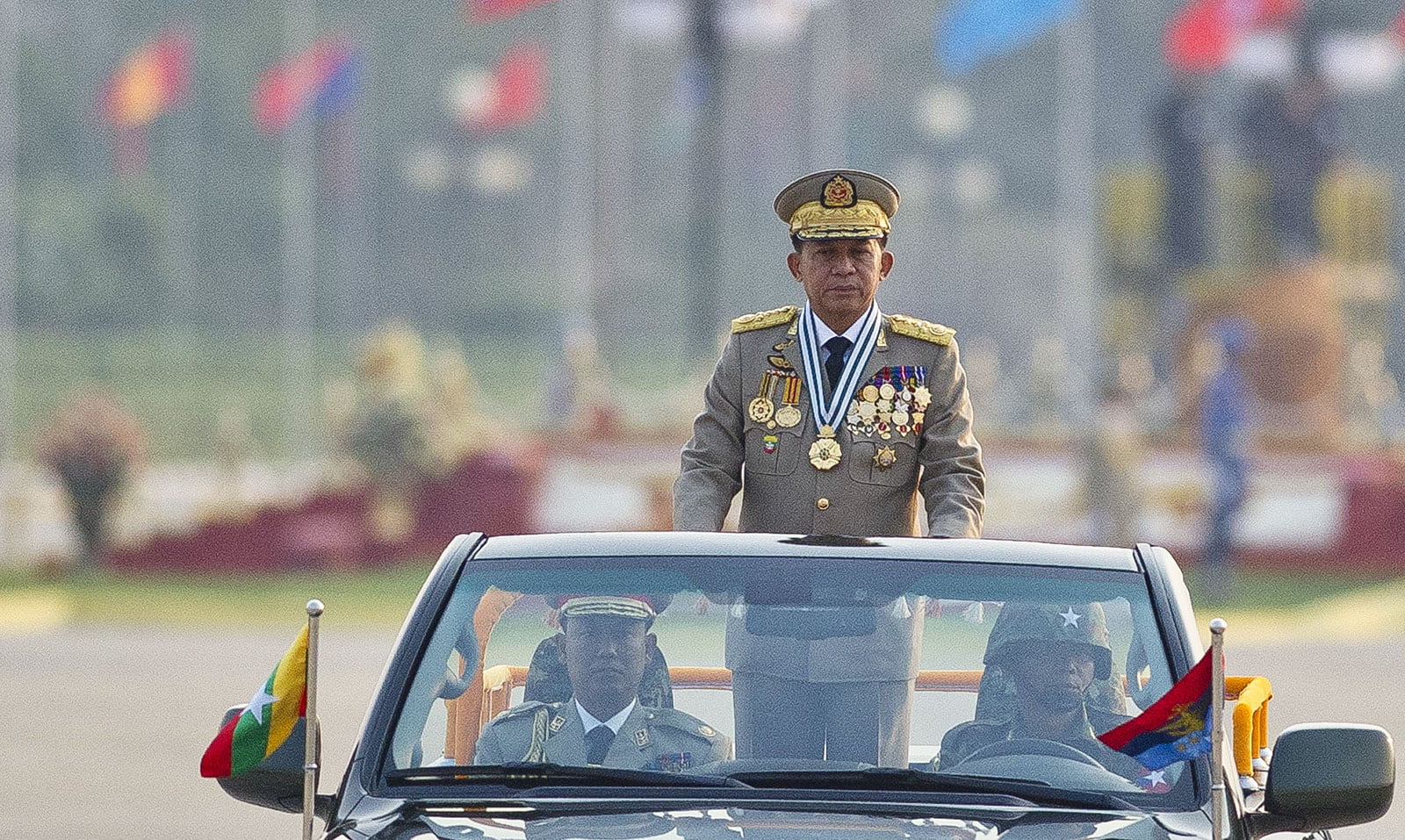
The UN Fact-Finding Mission on Myanmar previously called for Senior General Min Aung Hlaing and other senior officials to be investigated and prosecuted for war crimes, crimes against humanity, and genocide. Min Aung Hlaing seized power in a coup in the early hours of 1 Feb. 2021.  

There are multiple international efforts to provide justice to the Rohingya people, including a genocide case brought by The Gambia against Myanmar in the International Court of Justice (ICJ). A separate case is ongoing in Argentina under the concept of universal jurisdiction. 

Amnesty International has called on the UN Security Council to refer the situation in Myanmar to the International Criminal Court. 

In 2017, Amnesty International’s research in Rakhine State detailed a vicious system of institutionalized discrimination and segregation that severely restricted the human rights of the minority Rohingya Muslims. This system – amounting to apartheid – threatens and undermines freedom of movement, ability to access adequate food and healthcare, and right to an education. 

Anti-racism statement and commitments

Individuals, communities and organisations right around the world are facing a reckoning on the issue of racism, Amnesty International included. From streets, to schools, to boardrooms, to parliaments, racism is being called out as a scourge and an injustice that can not be ignored. 

Human rights are premised on a foundation of rights and equality for all people, but even organisations such as Amnesty International have shown ourselves vulnerable to perpetrating the same biases, inequalities and injustices that we call out every day.

Amnesty International Australia (AIA), including our board, staff, and activists, pledge our continued commitment to creating an anti-racist organisation that is committed to eliminating the institutional and societal structures that perpetuate racism, racist ideologies, discriminatory behaviours, prejudiced attitudes, inequality and white supremacy and privilege.

The Australian context 

In Australia, racism and its inevitable inequities have its foundations from the colonisation and dispossession of Aboriginal and Torres Strait Islander peoples and continues with their ongoing experiences of discrimination and marginalisation. 

In response to the waves of migration, Australia’s immigration policy was dominated by the discriminatory White Australia Policy. Since this time, Australia has been punctuated by multiple pieces of racist legislation, policies and practices.   

Racism continues to manifest itself through the ongoing oppression, discrimination and marginalisation of minoritised racial, ethnic, cultural and linguistic groups. 

Racism results in inequities that can be seen through structural disparities in economic, education, health, housing and criminal justice experiences, outcomes, representation and participation. At an individual level, racism manifests itself in racially motivated violence, racial slurs, bullying, exclusion, benevolent racism and microaggressions.

As a human rights organisation, AIA recognises the value of all people and the importance of each person’s rights and identity to be protected and respected. We continue to struggle to overcome our foundational history and to decolonise human rights and become a movement led and informed by the people who are most directly impacted by racism, discrimination and other human rights abuses.

We are sorry

AIA is not immune from racism. Our structures, systems, policies, practices and people have played a part in perpetuating racism. We recognise this, and we commit to addressing not just the historical legacies of racism on different communities, but to decolonising our organisation internally.

At AIA, our people have spoken out bravely and generously shared their experiences of racism, underscoring the work we have to do. 

We apologise with humility and without reservation to our colleagues, including staff and volunteers, past and present, who have experienced the pain caused by racism within our organisation. We also extend our gratitude to colleagues who have held us to account and demanded our organisation live up to its values.

AIA recognises we have made mistakes that have harmed people. We need to change and defend human rights inclusively. Positive change does not come without action and self-critique, and we pledge to continue to address and correct our own institutional legacies, practices, and unconscious biases that perpetuate institutional racism. We will make mistakes on this journey, and recognise that these mistakes have consequences. As an organisation and as individuals we will own those mistakes and ensure we address them. 

So, what will be different?

In taking this action to be an anti-racist organisation, we will be a stronger and better organisation, more effective in delivering human rights for all.

AIA makes the following commitments:

  • We commit to addressing structural racism through a review of our policies, systems, processes, recruitment, representation in senior roles and the way we do our work.
  • We commit to tackling overt and covert forms of racism at AIA including discrimination, inequality, representation and microaggressions through the introduction of a culturally-competent hotline to report, and seek support for, experiences of racism within the workplace.
  • We commit to reviewing and improving the workplace experience for diverse racial, ethnic and cultural groups to ensure it is culturally safe and inclusive. 
  • We commit to creating a more diverse workplace including  developing an attraction, retention and progression policy and procedure and expanding identified positions across the organisation.
  • We commit to educating ourselves, reflecting on and addressing our own behaviours and privilege, and not placing an onus on Aboriginal and Torres Strait Islander peoples, People with diverse cultural identities, and People of Colour to educate us. We recognise that tackling racism and being anti-racist compounds a heavy burden on those with lived experience and will strive to ensure that this responsibility is shared. As an organisation we will provide educational tools, training and resources for all our staff and activists to support them on this journey.
  • We commit to holding ourselves accountable on issues of racism in our organisation by reporting annually on incidents and how we have addressed them. 

There is much more we can do and we make a commitment to continue to listen and learn from our staff, activists and the communities we work with and strive to be a better, stronger, and safer movement through this work.

We will remain engaged with, and contribute meaningfully to, Amnesty International becoming a truly anti-racist global movement.

Amnesty International is a global movement of 10 million people standing up for justice, freedom and equality. Together, our voices challenge injustice and are powerful enough to change the world. Learn more about our anti-racism campaign: it’s time to end racism in Australia in all its forms.

Indonesia: Proposed gold mine is ‘recipe for disaster’ amid repression of Indigenous Papuans

Indonesia: Proposed gold mine is ‘recipe for disaster’ amid repression of Indigenous Papuans 

  • Unlawful killings, buildup of security forces in vicinity of a planned gold mine concession 
  • Authorities restrict daily life of Indigenous Papuans, including hairstyle  
  • Lack of consultation with communities affected by gold mine plans   
     

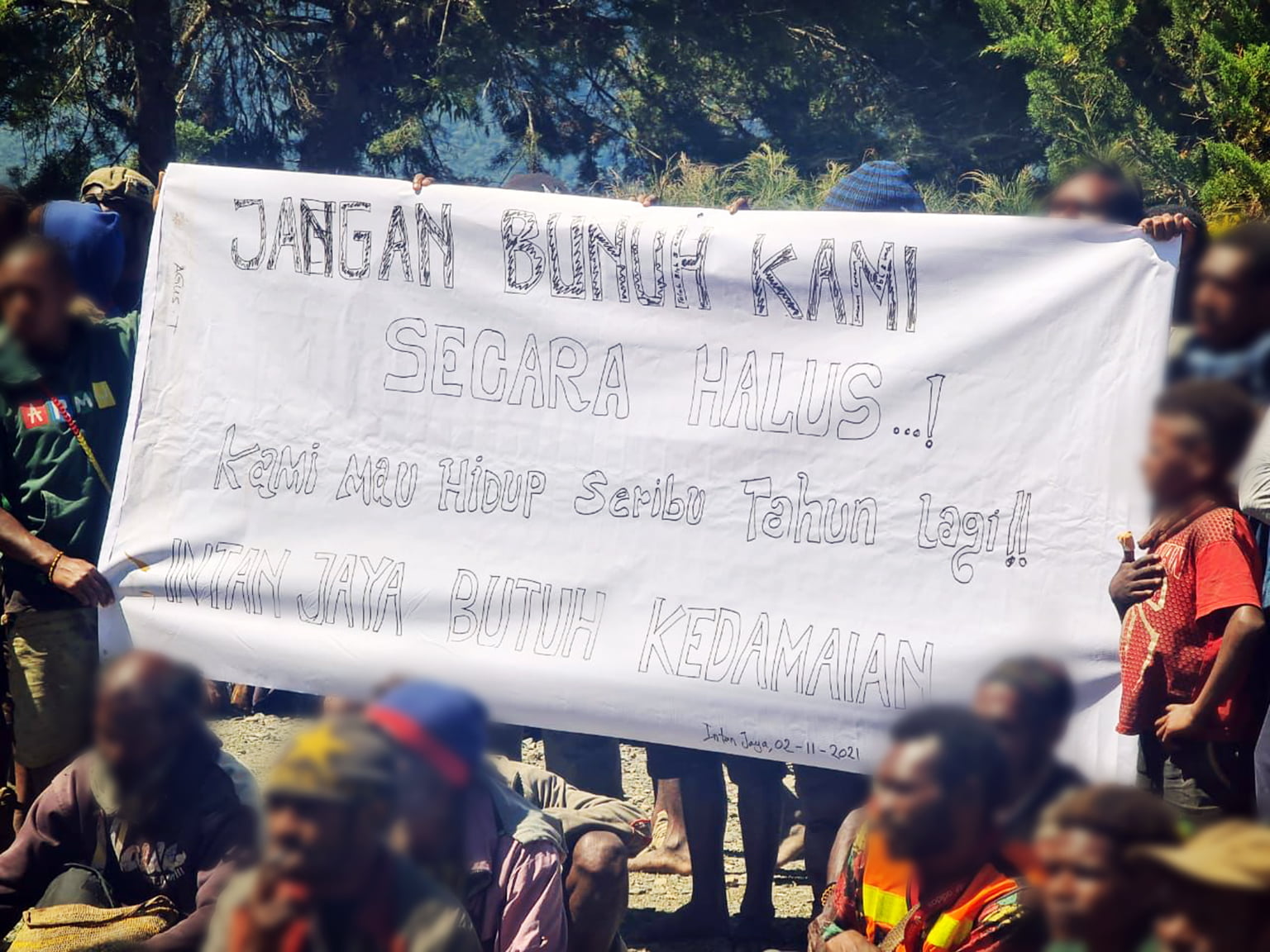
Indonesian authorities should immediately halt plans to develop a sprawling gold mine the size of the city of Jakarta in volatile Papua Province, where it risks fueling conflict and violating the land rights of Indigenous Papuans, Amnesty International said in a new briefing published today.  

Intan Jaya Regency, where the gold ore deposit known as Wabu Block is located, has become a hotspot of conflict between Indonesian security forces and Papuan independence groups in recent years.  

In the briefing, Amnesty International documents how there has been an alarming build-up of security forces in the area since 2019, with 12 suspected cases of unlawful killings carried out by security forces, and Indigenous Papuans subjected to increasing restrictions on freedom of movement as well as routine beatings and arrests. 

Residents of Intan Jaya told Amnesty International that they use the proposed mining area for cultivating crops, hunting animals and collecting timber.  

“By disregarding the needs, desires and traditions of Indigenous Papuans, the planned development of Wabu Block risks aggravating a rapidly deteriorating human rights situation,” said Usman Hamid, Executive Director of Amnesty International Indonesia. “People in Intan Jaya are living under an increasingly harsh and violent security apparatus that exerts control over many aspects of their daily lives, and now their livelihoods are under threat from this ill-conceived project. Simply put, Wabu Block could be a recipe for disaster.” 

From March 2021 to January 2022, Amnesty International carried out remote interviews with 31 people about the situation in Intan Jaya Regency, including Indigenous Papuans, local authorities, human rights defenders and representatives of civil society and religious organizations. They described how armed clashes and human rights violations have risen dramatically over the last two years. 

Threats to way of life 

Since at least February 2020, there have been official plans to develop mining activities in Wabu Block. Located south of Sugapa district, the capital of Intan Jaya Regency, Wabu Block holds approximately 8.1 million ounces of gold, making it one of Indonesia’s five largest known gold reserves. 

Wabu Block is currently under the licensing process of the Indonesian Ministry of Energy and Mineral Resources. According to official documents obtained by Amnesty International, the proposed mining area covers 69,118 hectares – about the size of Indonesia’s capital city Jakarta. 

Indigenous Papuans said they fear loss of lands and livelihood as well as environmental pollution. 

“If there is mining, we will have no land for gardening; livestock will not get fresh fruit directly from the forest, and even our grandchildren will lose customary land,” Lian, a local Indigenous man, told Amnesty International. 

In September 2020, a senior Indonesian official expressed his intention to let state-owned mining company PT Aneka Tambang Tbk, also known as ANTAM, develop mining activities in Wabu Block. In letters sent to ANTAM and to the Indonesian Ministry of Energy and Natural Resources in February 2022, Amnesty International laid out human rights concerns about the project and posed several questions. At the time of publication, neither the government nor the company has responded. 

While Amnesty International has not found any evidence that either ANTAM or the Ministry of Energy and Mineral Resources are directly involved in the conflict in Intan Jaya, it is concerned about the potential human rights and environmental impacts of mining in Wabu Block in the context of the existing conflict. 

“The government has an obligation to obtain the free, prior and informed consent of Indigenous Papuans likely to be affected by the mine. But in a climate of violence and intimidation, it is hard to imagine how such a consultation process could meet international standards,” said Usman Hamid. 

“The first step is to ascertain whether a full and effective consultation is even feasible under the existing circumstances. In the meantime, Indonesia should press pause on Wabu Block.” 

Burned bodies 

Conflict between Papuan pro-independence groups and Indonesian security forces has existed for decades. But Intan Jaya Regency emerged as a new hotspot in Papua after October 2019, when members of an armed pro-independence group killed three motorcycle taxi drivers, whom they accused of being spies. 

As part of the new research, Amnesty International has identified 17 posts occupied by security forces in Sugapa district, capital of Intan Jaya. According to interviews, only two out of the 17 posts existed before October 2019. The growth of the security force presence has been accompanied by an increase in unlawful killings, raids and beatings.  

The briefing documents 12 suspected unlawful killings carried out by members of Indonesian security forces in Intan Jaya in 2020 and 2021. 

These account for over a quarter of the total number of suspected unlawful killings carried out by security officers across 42 regencies and cities in Papua and West Papua provinces documented by Amnesty International in the same period.  

The cases include two brothers, Apianus and Luter Zanambani, whose bodies were burned by security forces after they were detained during an April 2020 raid in Sugapa district.  

Cases of unlawful killings by security forces are common in Papua but accountability is rare, as documented by Amnesty International in the 2018 report ‘Don’t bother, just let him die’.  

Indigenous Papuans also described to Amnesty International incidents in which members of security forces had beaten residents of Intan Jaya. 

“Indonesian authorities have long failed to adequately investigate suspected cases of unlawful killings and other reports of human rights violations committed by security forces in Papua,” said Joanne Mariner, Director of Amnesty International’s Crisis Response Programme.  

“Investigating such cases and holding perpetrators accountable are key to upholding human rights and achieving peace in Papua.” 

Restrictions on movement, appearances  

Amnesty International’s research has revealed that severe restrictions on the freedom of movement of local residents have accompanied the security build up and escalating conflict. Residents said they had to ask permission from Indonesian security forces to carry out mundane activities such as gardening, shopping, or visiting another village. 

Lian said: “When we go to town for shopping, we are asked where we go, which village we are coming from, where we live. Then after shopping, while we are going home, our stuff is checked. Even our bags have to be checked every day by the security apparatus.” 

Security forces also restrict the use of electronic devices such as mobile phones and cameras, according to interviewees who also alleged that, on occasion, Indonesian security forces have detained them for their hairstyles, which authorities sweepingly associate with pro-independence fighters.  

“Our people like to have long hair; it is part of our culture, not only in Papua, but in Melanesia. I have been asked more than 10 times about my hair and moustache. They arrest many people for having long hair and moustache. They get asked, hit,” Gema, a local resident, said. 

Background 

Amnesty International takes no position on the political status of any province of Indonesia, including with respect to calls for independence. The organization documents human rights violations whatever the political context in which they are committed. 
 
Note to Editors: *Names have been changed for security reasons.  
Leaked proposal on WTO COVID-19 monopolies a small step but more needed for equitable global access to vaccines and treatments, say advocates

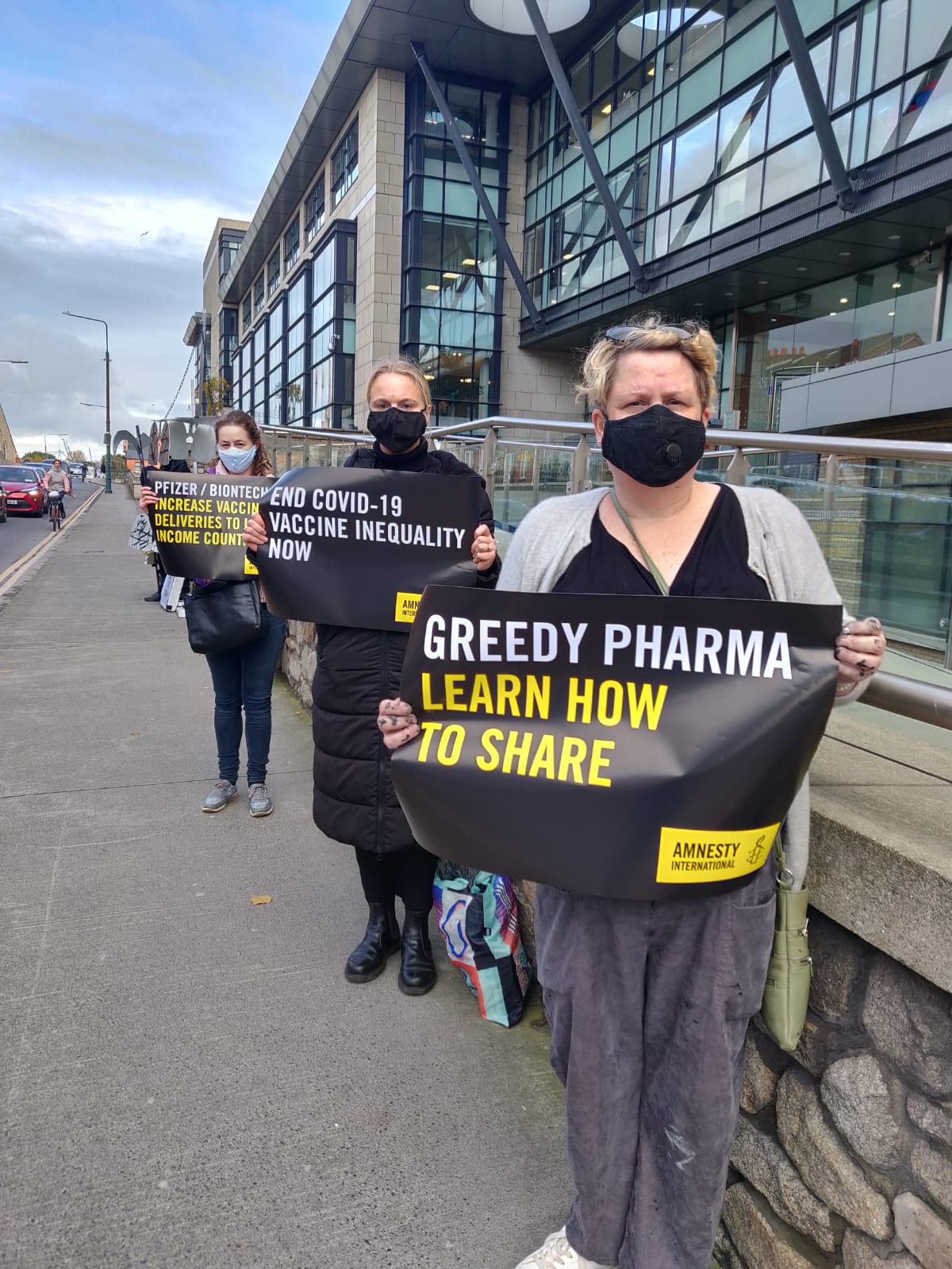
After 18 months of talks, a  leaked document proposing a deal between the United States, the European Union, South Africa and India that claims to increase access to COVID-19 vaccines for developing countries reveals some positive steps. But advocates say more is needed to address the inequity resulting in only 4% of people in low -income countries having had two vaccine doses, and even less access to new  treatments. Under the leaked proposal, access to treatments and tests would not be included, but would be considered only after another six months’ delay.

Under World Trade Organisation (WTO) intellectual property rules, a few pharmaceutical companies control the supplies and prices of these lifesaving medicines, and have sold most vaccines and treatments to rich countries.

The original proposal from India and South Africa, supported by 100 of 164 WTO member governments, would temporarily waive WTO rules for all intellectual property monopolies on COVID19 vaccines, treatments and tests. This would enable a vast increase in production at affordable prices that is needed to triple-vaccinate the world, treat those with the disease, and prevent the spread of new variants. This has been strongly opposed by the EU, while the US has supported a waiver for vaccines only.

The proposed compromise is not yet a done deal as it must be approved by the WTO Intellectual Property Rights Council and the WTO General Council. Advocates have welcomed the acknowledgement that some WTO patent rules need to change. But they want more change to ensure that global access to both vaccines and treatments is achieved in practice.

They will write to the Australian government in more detail to ask that it support

  • Inclusion of treatments and tests in addition to vaccines
  • The waiver should apply to not only to patents, but to all knowledge and technology transfer need to enable increased production in developing countries

Dr Patricia Ranald, Convener of the Australian Fair Trade and Investment Network (AFTINET), said: “We welcome the admission that WTO rules need to change. But these are baby steps which still protect the interests of pharmaceutical companies rather than saving lives. Three million have died since Omicron variant, and millions more will die unless the Australian and other governments insist on a full waiver for vaccines, tests and treatments.”

Associate Professor Deborah Gleeson, spokesperson for the Public Health Association of Australia (PHAA), said: “Finally some progress seems to have been made at the WTO after almost 18 months of inaction. But the proposed compromise is so limited and flawed that it risks being completely unworkable. To get the pandemic under control, we need a waiver of monopoly rights that can be used by any country, for any health product and technology and for all types of intellectual property that can prevent access. It’s well past time to get this right.”

Tom Reddington, Subregional Secretary for Public Services International (Oceania), said: “Frontline health workers in Vanuatu are gravely concerned about the arrival of COVID-19 community transmission over the last week.  They lack basic consumables, personal protective equipment, tests, and treatments.  Australia must stop dragging its feet and support a meaningful TRIPS waiver at the WTO to suspend intellectual property rules on COVID-19 vaccines, diagnostics, and treatments to increase global supply. Yesterday’s proposal won’t help health workers in Pacific Island countries.”

Katherine Tu, Head of Policy and Campaigns at ActionAid Australia, said: “It has been two years since the beginning of the pandemic. We have another new COVID-19 Omicron BA.2 subvariant, and these will keep coming if rich countries keep stalling on a comprehensive waiver that goes beyond vaccines. Women and communities in developing countries are urgently counting on countries like Australia to show global leadership. We can’t keep failing them.”

Ry AtkinsonStrategic Campaigner at Amnesty International Australia said: “This compromise is an acknowledgement that despite the lies continuously peddled by big pharma, business as usual isn’t going to get us out of this crisis. But it is a compromise, and the reality is that it doesn’t go far enough. We need a waiver that includes technology transfers and treatments, as the co-sponsors of the original waiver intended. Governments advocating for anything less are selling the world short.” 

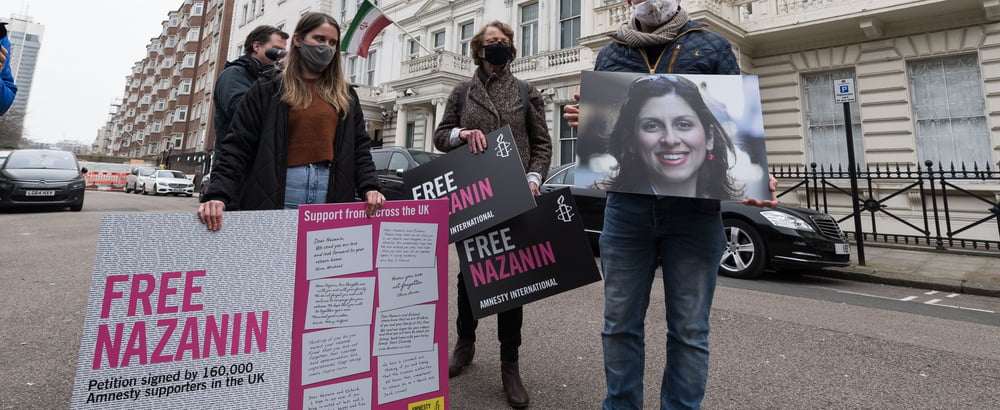
UK: The release Nazanin Zaghari-Ratcliffe and Anoosheh Ashoori hasn’t come a moment too soon

In response to reports that Nazanin Zaghari-Ratcliffe and Anoosheh Ashoori have been released from detention in Iran and are about to leave the country, Sacha Deshmukh, Amnesty International UK’s CEO, said:

“This is fantastic news, but it hasn’t come a moment too soon.    

“Nazanin and Anoosheh should never have been detained in the first place – they were both jailed on trumped-up national security charges, a familiar tactic in Iran.

“Nazanin and Anoosheh have unquestionably been used as political pawns by the Iranian authorities – and the Iranian authorities have acted with calculated cruelty, seeking to wring the maximum diplomatic value out of their captivity.

“The Government needs to follow up on Nazanin and Anoosheh’s release by immediately renewing its calls for the release of the UK nationals Morad Tahbaz and Mehran Raoof, both of whom are still going through an ordeal all too similar to Nazanin and Anoosheh’s. 

“It’s been clear for years that the Iranian authorities are targeting foreign nationals with spurious national security-related charges to exert diplomatic pressure, and it’s more important than ever that Britain works multilaterally to combat this insidious practice.” 

Russia: Journalist who protested during live TV news bulletin committed no crime

Channel One TV news editor Marina Ovsyannikova is reportedly facing a criminal investigation

‘Her defiant protest shines a light where the Russian authorities have attempted to impose total darkness’ – Marie Struthers

Responding to the arrest of Marina Ovsyannikova, an editor at the Russian state-controlled Channel One TV who interrupted a live news broadcast yesterday to protest against the invasion of Ukraine, Marie Struthers, Amnesty International’s Eastern Europe and Central Asia Director, said: 

“Marina Ovsyannikova committed no crime. Her defiant protest shines a light where the Russian authorities have attempted to impose total darkness.

“No one should be detained solely for expressing their opinions, let alone be kept without contact with the outside world.

“Marina Ovsyannikova has shown that the courage to stand up for justice remains stronger than the state’s propaganda, even among those employed to broadcast it. She has given a striking example of how far people are willing to go to speak truth to power amid the brutal repression seen in today’s Russia.”

‘Don’t believe the propaganda’

Yesterday, Marina Ovsyannikova burst onto camera during a live Channel One news bulletin holding a sign saying “Don’t believe the propaganda. They’re lying to you here”, shouting “Stop the war!”

According to OVD-Info, a police watchdog NGO in Russia, Ovsyannikova was quickly arrested and taken away. Overnight, the police provided no details about her fate and whereabouts, and refused to even confirm whether she was in detention. Russian media have today reported that she has been accused of the “organisation of an unauthorised public event”. Russian media have also reported that the authorities are considering opening a criminal investigation against her.