Fanny Cochrane Smith #Because of Her We Can

To mark NAIDOC Week and the theme #Because of Her We can we would like to pay tribute to Fanny Cochrane Smith, an extraordinary Aboriginal woman from Tasmania and great, great grandmother of Rodney Dillon, our Indigenous Rights Advisor.

Fanny Cochrane Smith (1834-1905) was a proud Aboriginal woman who practiced her culture throughout her life. Hunting and gathering food, making necklaces and weaving baskets from plants. Fanny’s mother passed her culture down to Fanny and Fanny passed it down to own her children, and it’s still being kept alive by her descendants.

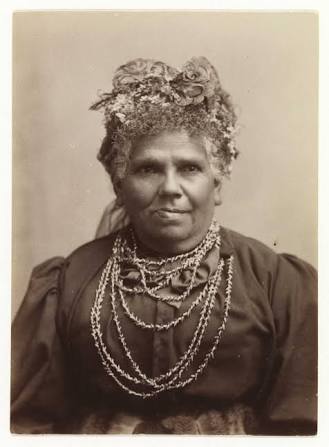
Sepia vintage photo of Fanny Cochrane Smith, Fanny Cochrane Smith wearing wattle in her hair and traditional shell necklace.
#BecauseofHerWeCan Fanny Cochrane Smith wearing wattle in her hair and a traditional shell necklace.

In Fanny’s early days as a vulnerable child she was taken away from her parents at the age of five. She was orphaned at the Queen’s Orphanage in Hobart. Then Fanny was moved to the convict station at Oyster Cove (Putalina).

Fanny spent her childhood in domestic service. Those years were harsh ones; and to survive, she had to develop an indomitable spirit. Once Fanny gained her freedom, it became apparent that she also had an entrepreneurial flair.

Fanny married her English sawyer husband, William, at the age of 20, and they had 11 children – 6 boys and 5 girls. Fanny established a boarding house in Hobart and, with husband William, built a business cutting and selling timber. Fanny would work for days at a time in the bush splitting shingles, carrying them out herself and walking up to 50kms for supplies.

Fanny was a successful business woman in colonial society. However, she always kept her Aboriginal culture close to her heart, passed on to her by her mother.  A rich treasury of cultural knowledge and practices were passed on including bush foods and medicines, shell necklace and basket making. Fanny also kept close ties with her people, including Truganini, who taught her bush craft from her country on Bruny Island and with whom Fanny would fish, hunt and collect bush tucker medicine and Aboriginal ceremony.

After a few years Fanny and her family moved to Irishtown (now Nichols Rivulet).

Fanny and William were early converts to Methodist Church in their area and one of their sons became a lay preacher. Fanny donated land for a church to be built on. Until the church was built however, services were held in Fanny’s kitchen.

Fanny was well known for her cooking skills, she was an active fund-raiser and hosted the annual Methodist picnic. People travelled long distances to sample her cooking and to see her perform Aboriginal songs and dances.

After Truganini’s death in 1876 Fanny renewed her claim to be the last surviving Tasmanian Aboriginal. In recognition of the claim, parliament increased her annuity to £50, and in 1889 gave her a free grant of 300 acres (121 ha). She established a home and farm.

The first Aboriginal recording artist

However, it was as a performer that she established herself as a Hobart celebrity. Fanny Cochrane-Smith trod the boards twice at the Theatre Royal, returning for another performance in 1903. By this time, her fame had spread. Horace Watson, a Hobart industrialist who made his fortune with his famous Keen’s Curry, attended one of her performances and was so impressed that he arranged for her songs to be recorded on the newly–developed Edison wax phonograph.

Fanny Cochrane Smith’s songs are amongst the earliest musical recordings ever created and the only recordings ever made of Tasmanian Aboriginal song and speech. Fanny was Australia’s first Aboriginal recording artist, and an influential matriarch for her family members who maintain those traditions to this day.

Fanny’s church left now a living legacy 

After Fanny’s death in 1905 the church, built on Melukerdee Country, gradually fell into disuse and was sold off. Even though her descendants kept watch on it, it became the target for thieves and minor vandalism until 1998, when Rodney Dillon, then the Tasmanian Commissioner for the Aboriginal and Torres Strait Islander Commission (ATSIC), sought funds to purchase the church and the surrounding land.

The South East Tasmanian Aboriginal Corporation (SETAC) restored the building and it is now the Living History Museum of Aboriginal Cultural Heritage.

Today this museum is dedicated to Fanny’s memory and run by the local Aboriginal community. If you find yourself in Cygnet, Tasmania drop by and learn more about Tasmania’s Aboriginal cultural heritage.

This story was shared with us by Rodney Dillon, our Indigenous Rights Advisor. It is about one of the many strong women in his family and in his life. It’s adapted from a speech Rodney’s daughter, Bronwen McAnally, gave during NAIDOC Week 2018 in the church that Rodney’s Great, Great Grandmother built in Nicholls Rivulet, Tasmania. Thank you to Rodney and Bronwen for sharing their story of their strong proud matriarch.

How we can draw inspiration from Mandela in 2018

In celebration of the centenary of Nelson Mandela’s birth, writer and poet Magan Magan explains how we can draw inspiration from the South African revolutionary’s legacy, work and philosophy in our current fight for human rights.

Today marks 100 years since the birth of Nelson Rolihlahla Mandela. He was a South African hero, human rights campaigner, and survivor of racial oppression. He led an extraordinary life and his story became a powerful lesson in hope and the importance of courageously speaking truth to power, as tools to fight against injustice.

Hope is an essential power in the fight for justice and becomes especially crucial in the direst of times. Hope gives us the power to see beyond ourselves and take steps towards overcoming injustice when we see it.

Through radical self-preservation and courageous inward reflection, Mandela was able to maintain hope throughout his 27-year prison sentence. In a 1969 letter to his wife at the time, Winnie Mandela, he emphasised the power of hope and our open access to that power: ‘Hope is a powerful weapon and no one power on earth can deprive you of.’

Nelson Mandela revisits his prison cell on Robben Island, where he spent eighteen of his twenty-seven years in prison, South Africa, 1994.
Nelson Mandela revisits his prison cell on Robben Island, where he spent eighteen of his twenty-seven years in prison, South Africa, 1994 © Jurgen Schadeberg (www.jurgenschadeberg.com)

Truth to power

Without speaking truth to power, hope is empty, and truth-speaking without hope murders the soul. Mandela spoke truth to power in June 1990 at Detroit’s Tiger Stadium, when he addressed thousands of people on the issue of racial equality and drew connections between the African American struggle for justice and issues facing black South Africans back home. Mandela emphasised the importance of being unapologetic in the pursuit of justice and equality.

He is still a powerful figure of hope and social justice and there is much we can learn from his legacy to further our fight for human rights. He not only believed in freedom for the individual, but for everyone: ‘For to be free is not merely to cast off one’s chains, but to live in a way that respects and enhances the freedom of others.’

Injustice in Australia

Australia’s own issues of grave injustice toward its Indigenous people highlights our country’s need for a stronger commitment to social justice. Across Australia, children as young as 10 are being charged, brought before a court, sentenced and locked up behind bars.

Silhouette of Indigenous children sitting on a fence
© AI / Rusty Stewart

Mandela left a legacy of profound wisdom about the inner world of human beings and the role it plays in helping us survive and inequality. Inner transformation without outward action means nothing. Dismantling notions and modes of being that are rooted in injustice is difficult and complicated but achievable nonetheless. As Mandela said: ‘It always seems impossible until it’s done.’

Syria: Putin takes hypocrisy to a new level with remarks on Raqqa civilian deaths

In an interview with Fox News following the Helsinki Summit on 16 July, Russian President Vladimir Putin emphasised the high civilian death toll from the US-led Coalition’s aerial bombardment of Raqqa, Syria.

Amnesty International’s Middle East Research Director Lynn Maalouf responded:

“The US-led Coalition should absolutely face heightened scrutiny for its conduct in last year’s four-month Raqqa offensive. Our field investigations in the bombed-out city revealed hundreds of civilians were killed and thousands injured in the battle to oust the armed group calling itself Islamic State. The Coalition must own up to its record on civilian casualties and pave the way for meaningful investigations and reparations – unless it learns from its mistakes, it will be doomed to repeat them.

“But it’s beyond cynical for President Putin to use civilian deaths in Raqqa to deflect attention from Russia’s own role in horrific violations contributing to the deaths of tens of thousands of civilians and the displacement of millions during Syria’s war.

“Amnesty International has repeatedly documented both Russian and Syrian forces committing widespread and egregious violations of international humanitarian law, many amounting to war crimes, including bombing hospitals and using internationally banned cluster munitions. And, of course, Russia has been instrumental in obstructing accountability for such crimes and in hampering independent investigations into chemical weapons attacks.

“President Putin’s deflections will do nothing to save lives in Syria. What could prevent more civilian bloodshed is for Russian forces and authorities to abide by the rules of war, ensure humanitarian access to civilians in need, and stop hampering international efforts to investigate and prosecute crimes under international law.”

Syria: US-led Coalition ‘deeply in denial’ about civilian casualties in Raqqa

  • Evidence on the ground contradicts Coalition’s artificially low civilian casualty figures
  • Coalition’s reporting is inadequate, vague and dismisses almost all civilian casualty allegations as “non-credible”
  • Ground forces point to “mistakes” and “unsuccessful air strikes” resulting in “huge human and material losses”
  • The Australian Government must be open and transparent about the extent to which Australia provided support to the US-led Coalition missions that led to  the enormous suffering and high civilian casualties in Raqqa.

The US-led Coalition’s flurry of responses rejecting the findings of a recent Amnesty International report on the devastation wrought by their aerial bombardment of Raqqa last year demonstrates how deeply in denial they are about the large number of civilians killed and injured by Coalition strikes, the organisation said.

Since the publication of “War of annihilation”: Devastating Toll on Civilians, Raqqa – Syria on 5 June, senior figures in the Coalition and its member governments have taken to social media, the airwaves and even the UK Parliament in a bid to dismiss the report’s findings that there was prima facie evidence that several Coalition attacks which killed and injured civilians violated international humanitarian law.

“The Coalition’s knee-jerk reactions are long on rhetoric and short on detail. They lay bare how deeply in denial the Coalition leadership is about its failure to protect civilians caught in conflict,” said Donatella Rovera, Senior Crisis Response Adviser at Amnesty International.


“Unless the Coalition learns from its mistakes in Raqqa – and Mosul beforehand – it will be doomed to repeat them, with civilians again paying a devastating price.”

The Coalition claims to be “transparent” and to have “meticulous processes” in place to ensure everything possible is done to avoid civilian casualties. But they consistently fail to demonstrate that this is in fact the case.

Its monthly reports on civilian casualties across Iraq and Syria rely on vague descriptions and dismiss the vast majority of allegations as “non-credible”. The Coalition has acknowledged a mere 23 civilian deaths resulting from the more than 30,000 artillery rounds and several thousand air strikes it launched into Raqqa city during its four-month military campaign from June to October 2017 which left the city in ruins. This figure is neither accurate, credible, nor serious.

The Coalition has acknowledged a mere 23 civilian deaths resulting from the more than 30,000 artillery rounds and several thousand air strikes it launched into Raqqa city during its four-month military campaign from June to October 2017 which left the city in ruins. This figure is neither accurate, credible, nor serious.

The only Coalition partner on the ground in Raqqa in the aftermath of the military offensive – the Kurdish-led Syrian Defence Forces (SDF) – has demonstrated a rather different understanding of events during the offensive. In a letter to Amnesty International at the end of June 2018, the SDF pointed to Coalition “mistakes” and “unsuccessful air strikes” resulting in “huge human and material losses” on the ground.

Amnesty International spent weeks in Raqqa conducting field investigations – something the Coalition has failed to do – leaving no doubt that the Coalition killed hundreds and injured thousands of civilians during its offensive. In just four cases the organization investigated for its June report, Coalition air strikes killed 70 civilians, mostly women and children – including 39 members of a single family.

The artificially low number of civilian casualties the Coalition acknowledges stems in part from poor investigation procedures that fail even to involve on-the-ground research.

“Visiting strike sites and interviewing survivors and witnesses are crucial elements of any investigation. Without them, the Coalition’s investigations are simply not credible by any stretch of the imagination,” said Benjamin Walsby, Middle East Researcher at Amnesty International.

“Both strike sites and survivors and witnesses are easily accessible, as Raqqa and Mosul are now under the control of Coalition partners. Coalition officials and Western politicians have recently travelled there, so there is no reason for the Coalition not to carry out investigations that are worthy of the term, as promised in its own methodology.”

Since early 2017, Amnesty International has engaged in numerous advocacy meetings with Coalition officials, written repeatedly to defence officials in the USA, UK and France and published four reports on the civilian casualties caused by the Coalition’s operations in Mosul and Raqqa. However, in all this time, the Coalition has either failed to respond to requests for further information, or has attempted to dismiss Amnesty International’s findings.

The Coalition and some of its members have occasionally admitted to causing civilian casualties after Amnesty International and other human rights organisations have publicised particular cases. At the end of June 2018 the Coalition announced that, in light of new evidence from Amnesty International, it would re-evaluate four previously closed cases and examine one new case.

“The blustery denials we’ve repeatedly seen and heard from senior Coalition officials are contradicted by the lived reality of the hundreds of civilians we’ve interviewed for our investigations in Raqqa and Mosul. They’re even contradicted by their own partners on the ground,” said Donatella Rovera.

“We are asking the Coalition to live up to their own standards when it comes to reporting on civilian casualties in conflict, to investigate allegations of violations and offer redress to victims and their families. We very much hope that the announcement to evaluate our findings marks the first step towards this.”

Questions over Australia’s role

Australia, as a coalition partner that assisted in the ‘liberation’ of Raqqa, also has questions to answer. Amnesty International Australia’s Crisis Campaigns Coordinator Diana Sayed said today:

We call on the government to be open and transparent with the Australian people about the extent to which Australia provided support to the US-led Coalition missions that led to  the enormous suffering and high civilian casualties in Raqqa.

“We need the Australian government to tell us whether it has investigated the possibility of civilian casualties implicating the Australian Defence Force as part of the US-led Coalition, and to release any findings publicly and quickly.

“It’s the Australian Government’s responsibility as a coalition partner to come clean with the Australian public about what went on in Raqqa. Instead, it has been left up to the Kurdish-led Syrian Defence Force (SDF) – a key partner in the coalition – to blow the whistle about the horrendous civilian death toll.”

“The failure to come clean about the true extent of civilian casualties in Raqqa can only make the Australian public wonder what else the US-led Coalition Forces are hiding.

To read the 5 June Amnesty International report, “War of annihilation”: Devastating Toll on Civilians, Raqqa – Syria, please visit:

https://www.amnesty.org/en/documents/mde24/8367/2018/en/

For more detailed information on the Coalition’s responses to the report, please visit:

https://www.amnesty.org/en/documents/mde24/8801/2018/en/

Russia & USA must use Putin-Trump summit to show they are responsible international players

Vladimir Putin and Donald Trump must use their upcoming summit in Helsinki to tackle the world’s most urgent human rights issues and restore their nations’ credibility as responsible international players, Amnesty International said ahead of the meeting between the Russian and US presidents in Finland’s capital on Monday.

The organisation calls on the two leaders to put the international refugee situation and the war in Syria at the top of their agenda during the summit, as well as violations taking place in their own countries.

“Presidents Putin and Trump have been toxic for human rights. Their respective policies have resulted in broken families, children being held in cages, continuing atrocities in a prolonged war in Syria and the torture and killing of LGBTI people in Chechnya, to name just a few of the horrors that have unfolded under their watch,” said Anna Neistat, Amnesty International’s Senior Director of Research.

“But both presidents still have time to change the course of history and make a difference, and this summit is an opportunity to act as leaders of compassion and fairness. They can start by addressing the forced displacement of over 12 million people as a result of the war in Syria – a situation that both men have wilfully ignored until now.”

“Presidents Putin and Trump have been toxic for human rights… [But they] still have time to change the course of history and make a difference, and this summit is an opportunity to act as leaders of compassion and fairness” – Anna Neistat, Amnesty International’s Senior Director of Research

Russia has made it almost impossible for Syrians to be recognised as refugees in the country, granting refugee status to only two Syrian nationals since 2011, while the Trump administration has just set the USA’s lowest refugee admissions bar in years.

Meanwhile, both Presidents Putin and Trump have been responsible for deaths of civilians in Syria. Russia continues to assist the Syrian government in committing war crimes and the US-led coalition has failed to acknowledge the extent of the killing and injury of civilians it has caused in Raqqa.

The leaders have also inflicted suffering at home. Under President Putin’s watch there has been a dramatic clampdown on human rights, including torture in police stations and prisons, state-sponsored homophobia and extreme violence towards LGBTI people in Chechnya.

Russia is also responsible for numerous human rights violations in Ukraine, such as the continued imprisonment of Oleg Sentsov, the film director from Russian-occupied Crimea who has been on hunger strike for the past two months in protest against the politically motivated jailing of dozens of Ukrainians in Russia.   

President Trump, meanwhile, has overseen the forcible separation of thousands of children from their families trying to cross the US/Mexico border after fleeing violence and persecution in Central America.

“Putin and Trump have a choice: they can help end bloodshed in Syria and protect the rights of their own citizens, or they can choose to look away from the human suffering their policies have either caused or exacerbated,” said Anna Neistat.

“But failure to act with humanity and accountability will deepen the indelible stain on the record of both leaders.”

In the first six months of 2018, 100 hate crimes have allegedly been committed against people from marginalised groups, said Amnesty International India, as it released data recorded on its interactive website, ‘Halt the Hate’.

The term ‘hate crime’ is applied to criminal acts against people based on their real or perceived membership of a particular group, such as caste, religion or ethnicity.

“The first step to ensuring justice and ending impunity for hate crimes is to highlight their occurrence. Our website seeks to draw attention to these alleged hate crimes by tracking and recording them. Many of these incidents are deeply disturbing. Dalits have been attacked for merely riding horses, Muslims lynched on rumours of cattle-slaughter and Dalit women raped and burnt to death,” said Aakar Patel, Executive Director, Amnesty International India.

“Hate crimes are different from other crimes because there is an underlying discriminatory motive behind these crimes. However, the law – with some exceptions – does not recognise hate crimes as separate offences. This means that even today, the extent of hate crimes in India is unknown. Police need to unmask any potentially discriminatory motives during investigation and duly record them.”

“Many of these incidents are deeply disturbing. Dalits have been attacked for merely riding horses, Muslims lynched on rumours of cattle-slaughter and Dalit women raped and burnt to death” – Aakar Patel, Executive Director, Amnesty International India

The ‘Halt the Hate website documents hate crimes allegedly committed against Dalits, Adivasis, members of racial or religious minority groups, transgender people, and other marginalised people, reported in mainstream English and Hindi media. In just the first six months of 2018, 67 incidents of alleged hate crimes against Dalits and 22 against Muslims were recorded. 42 incidents involved killings and 10 involved sexual violence against women from marginalised groups.

The website documents these crimes from September 2015, when Mohammad Akhlaq was killed in Dadri, Uttar Pradesh, for allegedly killing a cow. Since that day, a disturbing 603 incidents have been recorded on the website. Cow-related violence and so-called ‘honour’ killings were among the most common instances of alleged hate crimes. Previously, in 2016 and 2017, Uttar Pradesh recorded the highest number of alleged hate crimes. This time too, the highest number was from Uttar Pradesh. Gujarat, Rajasthan, Tamil Nadu and Bihar also recorded a high number of incidents.

“The data on our website is just a snapshot of alleged hate crimes in India. Many incidents are not reported in the media. While criminal investigations have been initiated in some cases, too many have gone unpunished. Authorities need to do much more to ensure justice for victims and their families”, said Aakar Patel, Executive Director, Amnesty International India.

“Victims and their families should be provided with the necessary legal, medical and psychological support. They must be adequately compensated and rehabilitated, and protected against threats, harassment, intimidation and attacks.”

The ‘Halt the Hate’ website was designed by the Srishti Institute of Art, Design and Technology, Bengaluru.

QLD Government cannot ignore the overrepresentation of Indigenous kids in prison and must immediately raise the age to 14

Amnesty International welcomes the recommendation put forward from a review of Queensland’s youth justice system that the focus must be on prevention and diversion programs, but calls on the QLD government to recognise and address the overrepresentation of Indigenous kids in the system and raise the age of criminal responsibility to 14.

The review was led by former police commissioner Bob Atkinson, who today released his recommendations. In response Amnesty International Indigenous Rights Campaigner Belinda Lowe said:

“Former Commissioner Atkinson has hit the nail on the head – we must keep kids out of prisons.”

“Former Commissioner Atkinson has hit the nail on the head – we must keep kids out of prisons.”

“Queensland’s youth prisons are overflowing, more than 80% of kids locked up haven’t even been sentenced yet and Indigenous kids are 30 times more likely to be locked up than their non-Indigenous peers – it’s outrageous.

“It’s great to see Bob Atkinson call on the QLD Government to catch up with the rest of the world and raise the minimum age that kids can be put behind bars. However, Australian medical, legal and human rights experts are calling for the age to be raised to at least 14 in line with the international median age and recommendations from the UN Committee on the Rights of the Child. Small children under the age of fourteen belong in the community, not in prison. The age must be raised to 14 as soon as possible.

“Small children under the age of fourteen belong in the community, not in prison. The age must be raised to 14 as soon as possible.”

“Amnesty International strongly welcomes the key recommendation for the Queensland Government as a whole to adopt four pillars: intervene early, keep children out of court, keep children out of custody, and reduce reoffending. However given the overrepresentation of Indigenous kids there isn’t enough focus on Indigenous solutions and the leadership of Indigenous people and organisations in the reform.

“We know that programs that provide the care and support kids need to grow up strong and healthy, not behind bars, are the clear alternative, particularly for Indigenous children.

“The government needs to support the Indigenous leaders in the community with these ideas, and ensure they get the funding they need to make a difference in the lives of these kids.”

“The new Youth Justice Strategy is an opportunity for the Queensland Government to make a significant impact in the lives of thousands of children, and in particular, end the overrepresentation of Indigenous kids in prison.

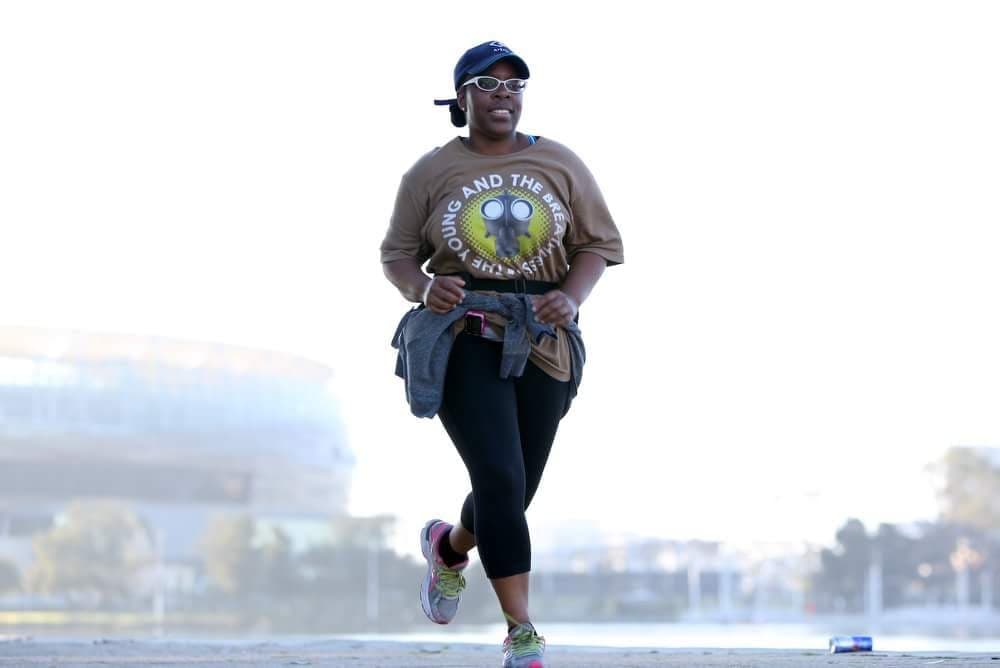
Amnesty WA’s The Young & The Breathless

This winter, the WA Branch Committee are tackling the Perth City 2 Surf to raise funds for Amnesty International, running under the banner of Amnesty WA’s The Young & The Breathless. Team captains Aidan Yuen and Marsha Reid saw this as the perfect opportunity to combine their passions for running and human rights, which was too good to pass up.

“As activists we’re really passionate about human rights and social justice, whether it’s at the grassroots level or large scale international campaigns, and so we feel strongly about supporting the work that Amnesty does to ensure the rights of all individuals from all walks of life,” Marsha said.

“At the same time, we also enjoy the freedom to live healthy active lives in our communities, and so City 2 Surf enabled us to enjoy the best of both worlds,” Aidan noted.  “So we’re looking forward to running for a great cause.”

By putting the “activ” in “activism”, Aidan and Marsha are not only hoping to raise funds, but also illustrate the multitude of ways in which activists can fundraise for Amnesty beyond the conventional bake sales or Amnes-tea events.  In fact, City 2 Surf is the first of what will be a number of fun-runs over the coming year that Aidan and Marsha, with the support of the WA BC, will be participating in.  Perhaps a full marathon is in their futures.

They are currently on track to meet their target, but they need your support! To help them in their mission, you can make a donation by clicking here. And if you’re on a shoestring – don’t worry! You can also support them by spreading the word with family and friends, and sharing their page on social media!

Better yet, you can sign up to run/walk alongside them! To register, please click here, and make sure you apply the following discount code to receive a 15% discount:

CHAMNESTY


And just to jog your memory, this year’s event will be held on Sunday 26th August, with distances of 4k, 12k, 21k and 42k. For more information, please contact Aidan at wabranchtreasurer@amnesty. org.au. Please also feel free to share this with your fellow activists, volunteers and members – the more the merrier!!!

Sri Lanka: The death penalty is a cruel and irreversible punishment

Sri Lanka must pull back from any plans to implement the death penalty and preserve its longstanding positive record on shunning this cruel and irreversible punishment, Amnesty International said.

The Sri Lankan President, Maithripala Srisena, is reportedly pressing ahead with plans to execute 19 death row prisoners convicted of drug-related offences.

“By resuming executions after more than 40 years, Sri Lanka will do immense damage to its reputation. The government must immediately halt plans to carry out any executions, commute all death sentences, and establish an official moratorium on the implementation of the death penalty as a first step towards its full abolition.”

Dinushika Dissanayake, Deputy Director for South Asia at Amnesty International.

“By resuming executions after more than 40 years, Sri Lanka will do immense damage to its reputation. The government must immediately halt plans to carry out any executions, commute all death sentences, and establish an official moratorium on the implementation of the death penalty as a first step towards its full abolition,” said Dinushika Dissanayake, Deputy Director for South Asia at Amnesty International.

“Sri Lanka has been a leader in the region, with an enviable record of shunning this cruel and irreversible punishment at a time when many other countries persisted with it. Now, when most of the world has turned its back on the death penalty, it risks heading in the wrong direction and joining a shrinking minority of states that persist with this horrific practice.”

Amnesty International is absolutely opposed to the death penalty in all circumstances, regardless of the crime or the method of execution.

Executing people for drug-related crimes is a violation of international law – which says the death penalty can only be imposed in countries that are yet to abolish it for the “most serious crimes”, meaning intentional killing– and would brazenly defy Sri Lanka’s international commitments, including its repeated votes in favour of a moratorium on the implementation of the death penalty at the UN General Assembly, including most recently in 2016.

Sri Lanka carried out its last execution in 1976.

“There is no evidence that the death penalty has a unique deterrent effect against crime. Executions are never the solution and, for drug-related offences, constitute a violation of international law. Sri Lanka should choose a more humane and just path,” said Dinushika Dissanayake.

Background

As of today, 142 countries have abolished the death penalty in law or practice. In the Asia-Pacific region, 19 countries have abolished the death penalty for all crimes and a further seven are abolitionist in practice.

In 2017, as recorded by Amnesty International, executions were carried out in an isolated minority of countries (23), and only 11 of these – or 6% of the world’s total –carried out executions every year in the past five years.

Yemen: Disappearances and torture in detention facilities must be investigated as war crimes

Justice remains elusive a year after a network of secret prisons was first exposed in southern Yemen, Amnesty International said in a new report documenting egregious unchecked violations, including systemic disappearances and torture as well as other ill-treatment amounting to war crimes.

“God only knows if he’s alive” details how scores of men have been subjected to enforced disappearance after being arbitrarily arrested and detained by United Arab Emirates (UAE) and Yemeni forces operating outside the command of their own government. Many have been tortured, with some feared to have died in custody.

“The families of these detainees find themselves in an endless nightmare where their loved ones have been forcibly disappeared by UAE-backed forces. When they demand to know where their loved ones are held, or if they are even still alive, their requests are met with silence or intimidation,” said Tirana Hassan, Crisis Response Director at Amnesty International.

“Scores of detainees have been released in recent weeks, including a few of the disappeared. But this comes after extended periods of being held without charges, in some cases up to two years, highlighting the need for holding perpetrators to account and ensuring remedy for the victims.”

Since joining the conflict in March 2015, the UAE has created, trained, equipped and financed various local security forces known as the Security Belt and Elite Forces. It has also built alliances with Yemeni security officials, bypassing their leadership in the Yemeni government.

Amnesty International investigated the cases of 51 men detained by these forces between March 2016 and May 2018 in Aden, Lahj, Abyan, Hadramawt, and Shabwa governorates. Most of the cases involved enforced disappearance, and 19 of these men remain missing. The organisation interviewed 75 people, including former detainees, relatives of those still missing, activists, and government officials.

Families of the detained search in vain

Families of the detainees told Amnesty International about their desperate search for information. Mothers, wives, and sisters of those forcibly disappeared have been holding protests for nearly two years now, making the rounds between government and prosecution offices, security departments, prisons, coalition bases, and various entities handling human rights complaints.

The sister of a 44-year-old man who was arrested in Aden in late 2016 told Amnesty International:

“We have no idea where he is, God only knows if he’s alive. Our father died of a broken heart a month ago. He died not knowing where his son is.

“We just want to know our brother’s fate. We just want to hear his voice and know where he is. If he’s done something, aren’t there courts to try them? At least put them on trial, let us visit them. What is the point of courts? Why disappear them like this?”

Some families said they were approached by individuals who told them their relatives had died in custody, only for this to be denied when they checked with the leadership of the UAE-backed Yemeni forces.

“If they would just confirm to us that my brother is alive, if they would just let us see him, that’s all we want. But we can’t get anyone to give us any confirmation. My mother dies a hundred times every day. They don’t know what that is like,” said the sister of a detainee who was forcibly disappeared after his arrest in September 2016 and who is widely rumoured to be among those who died in custody.

Torture of detainees by UAE-backed forces

Amnesty International’s report documents the widespread use of torture and other ill-treatment in Yemeni and Emirati facilities.

Current and former detainees and families gave horrific accounts of abuse including beatings, use of electric shocks and sexual violence. One said he saw a fellow detainee being carried away in a body bag after being repeatedly tortured.

“I saw things I do not want to see again. In that place, you do not even see the sun,” said a former detainee who was held at Waddah Hall, a notorious informal detention facility in Aden operated by a local counter-terrorism unit. “They were making all sorts of accusations [against me]. They started beating me… Then one day, they released me at night, they said they had me confused with someone else … ‘It was a mistaken identity, sorry.’ It was as if they had done nothing after all the suffering I endured from electric shocks.”

“The UAE, operating in shadowy conditions in southern Yemen, appears to have created a parallel security structure outside the law, where egregious violations continue to go unchecked” – Amnesty international’s crisis response director Tirana Hassan


Another former detainee said UAE soldiers at a coalition base in Aden repeatedly inserted an object into his anus until he bled. He said he was also kept in a hole in the ground with only his head above the surface and left to defecate and urinate on himself in that position.

“We used to hear about torture and say, ‘There is no way this stuff happens,’ until I actually experienced it,” he said.

Amnesty International also documented the case of a man who was arrested from his house by the UAE-backed Shabwani Elite Forces and then dumped next to his family’s house a few hours later, in a critical condition and with visible marks of torture. He died shortly after being taken to hospital.

“The UAE, operating in shadowy conditions in southern Yemen, appears to have created a parallel security structure outside the law, where egregious violations continue to go unchecked,” said Tirana Hassan.

“This vacuum of accountability makes it even harder for families to challenge the lawfulness of detentions. Even after Yemeni prosecutors have tried to assert their control over some prisons, UAE forces have ignored or severely delayed their release orders on several occasions.”

Opponents targeted under pretext of fighting terrorism

The UAE is a key member in the Saudi Arabia-led coalition that has been involved in Yemen’s armed conflict since March 2015.

Its involvement with the Security Belt and Elite Forces has the ostensible aim of combating ‘terrorism’, including by rounding up members of al-Qa’ida in the Arabian Peninsula (AQAP) and the armed group calling itself Islamic State (IS).

However, critics say many arrests are based on unfounded suspicions and personal vendettas.

Critics of the coalition and the practices of UAE-backed security forces have been among those rounded up, including community figures, activists and journalists, as well as sympathisers and members of the al-Islah Party, Yemen’s Muslim Brotherhood branch.

Relatives of suspected AQAP and IS members, as well as men who initially helped the coalition fight the Huthis but are now seen as a threat, have also been targeted.

Witnesses described how detainees were dragged from workplaces or the street, in some cases being beaten to the point of losing consciousness. Others were seized in terrifying late-night raids on their homes by balaclava-clad, gun-toting security forces referred to as “the masked ones”.

The authorities intimidated and even attacked female relatives of detainees and the disappeared who have been holding protests in Aden and al-Mukalla for the past two years.

The UAE has repeatedly denied it is involved in unlawful detention practices in Yemen, despite all the evidence to the contrary. Meanwhile the Yemeni government has stated to a UN panel of experts that it does not have control over the security forces trained and backed by the UAE.

“Ultimately these violations, which are taking place in the context of Yemen’s armed conflict, should be investigated as war crimes. Both the Yemeni and UAE governments should take immediate steps to end them and provide answers to the families whose husbands, fathers, brothers and sons are missing,” said Tirana Hassan.

“The UAE’s counter-terrorism partners, including the USA, must also take a stand against allegations of torture, including by investigating the role of US personnel in detention-related abuses in Yemen, and by refusing to use information that was likely obtained through torture or other ill-treatment.”