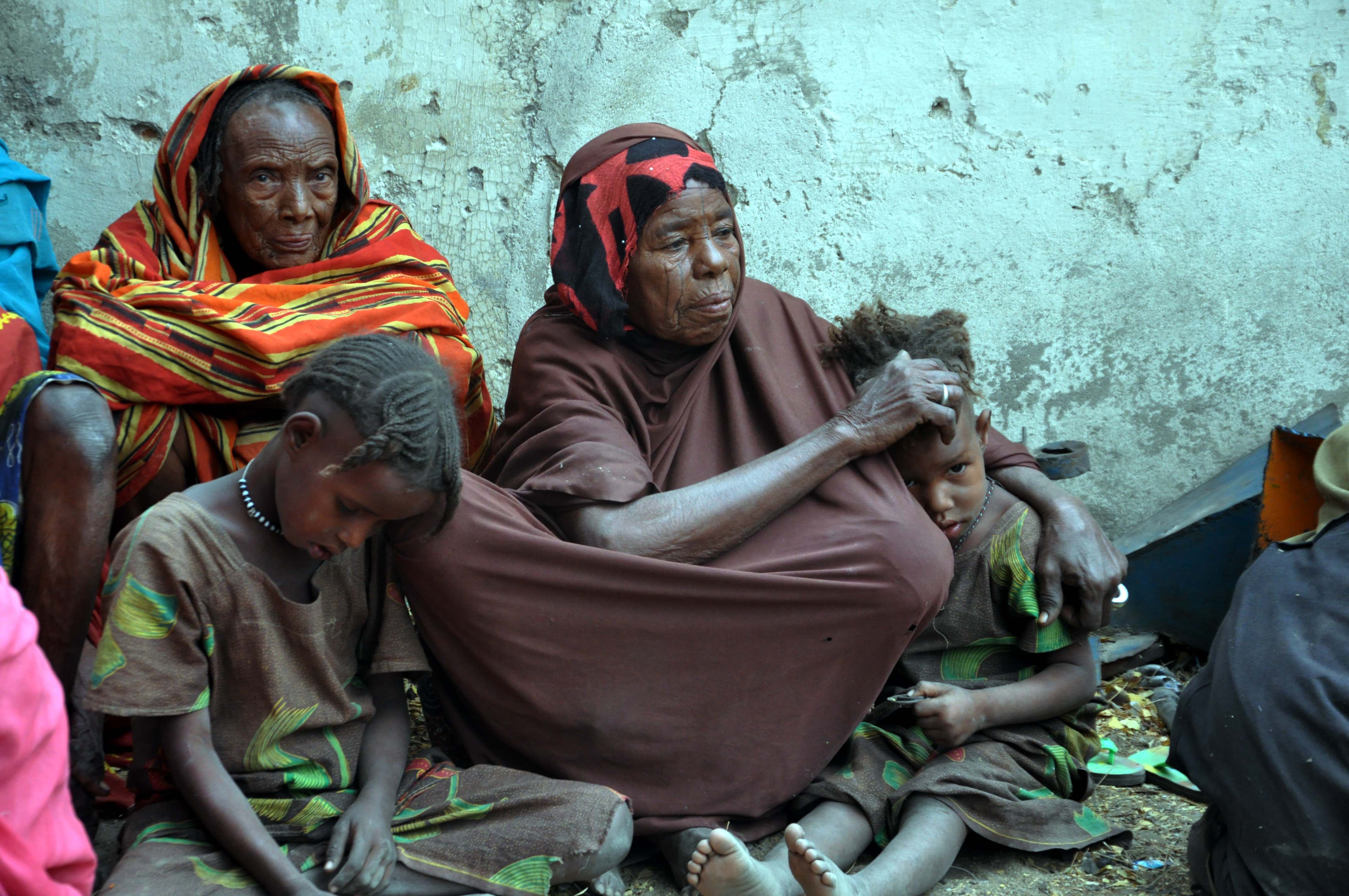
Syria: Raqqa in ruins and civilians devastated after US-led ‘war of annihilation’


  • Amnesty International carried out field investigations in the destroyed city
  • US-led Coalition fired vast number of imprecise explosive weapons in populated civilian areas
  • Even Coalition precision bombs took a horrendous toll on civilians
  • Hundreds of civilians killed and then ‘Islamic State’ fighters allowed to leave

From amid the rubble of Raqqa, civilians are asking why US-led Coalition forces destroyed the city, killing hundreds of civilians in the process of “liberating” them from the armed group calling itself “Islamic State” (IS), Amnesty International said in a new report ahead of the offensive’s anniversary.

Amnesty International researchers visited 42 Coalition air strike sites across the ruined city and interviewed 112 civilian residents who had survived the carnage and lost loved ones.

The accounts detailed in the report, War of annihilation’: Devastating Toll on Civilians, Raqqa – Syria, leave gaping holes in the Coalition’s insistence that their forces did enough to minimise civilian harm. The report details four emblematic cases of civilian families who were brutally impacted by the relentless aerial bombardment. Between them, they lost 90 relatives and neighbours – 39 from a single family – almost all of them killed by Coalition air strikes.

They are part of a wider pattern and provide a strong prima facie case that many Coalition attacks that killed and injured civilians and destroyed homes and infrastructure violated international humanitarian law.

“When so many civilians are killed in attack after attack, something is clearly wrong, and to make this tragedy worse, so many months later the incidents have not been investigated. The victims deserve justice,” said Donatella Rovera, Senior Crisis Response Adviser at Amnesty International.   

“The Coalition’s claims that its precision air campaign allowed it to bomb IS out of Raqqa while causing very few civilian casualties do not stand up to scrutiny. On the ground in Raqqa we witnessed a level of destruction comparable to anything we’ve seen in decades of covering the impact of wars.

“IS’s brutal four-year rule in Raqqa was rife with war crimes. But the violations of IS, including the use of civilians as human shields, do not relieve the Coalition of their obligations to take all feasible precautions to minimise harm to civilians. What levelled the city and killed and injured so many civilians was the US-led Coalition’s repeated use of explosive weapons in populated areas where they knew civilians were trapped. Even precision weapons are only as precise as their choice of targets.”

In relation to Australia’s involvement in the offensive on Raqqa, Amnesty International Australia’s Crisis Campaigns Coordinator Diana Sayed said,

It was reported that Australian Foreign Minister Julie Bishop said in November 2017 that Raqqa had been liberated with the help of Australia. We call on the government to be open and transparent with the Australian people about the extent to which Australia provided help to the US-led Coalition and any role Australia played in the civilian casualties and suffering in Raqqa.

“Furthermore, it has been reported that in June 2017 Australia had six fighter jets based in the United Arab Emirates for strikes in Syria and that Australia, as a US-led Coalition member in the battle for Raqqa, was providing air and ground support for allied Syrian Democratic Forces (SDF). We need the Australian government to tell us whether it has investigated the possibility of civilian casualties implicating the Australian Defence Force as part of the US-led Coalition, and to release any findings publicly and quickly.”

‘War of annihilation’

Shortly before the military campaign, US Defence Secretary James Mattis promised a “war of annihilation” against IS.

From 6 June to 12 October 2017, the US-led Coalition operation to oust IS from its so-called “capital” Raqqa killed and injured thousands of civilians and destroyed much of the city. Homes, private and public buildings and infrastructure were reduced to rubble or damaged beyond repair.

Residents were trapped as fighting raged in Raqqa’s streets between IS militants and Kurdish-led Syrian Democratic Forces (SDF) fighters, supported by the Coalition’s relentless air and artillery strikes. IS mined the escape routes and shot at civilians trying to flee. Hundreds of civilians were killed: some in their homes; some in the very places where they had sought refuge; and others as they tried to flee.

US, British and French Coalition forces carried out tens of thousands of air strikes and US forces admitted to firing 30,000 artillery rounds during the offensive on Raqqa. US forces were responsible for more than 90% of the air strikes.

“A senior US military official said that more artillery shells were launched into Raqqa than anywhere since the Viet Nam war. Given that artillery shells have margin of error of over 100 metres, it is no surprise that the result was mass civilian casualties,” said Donatella Rovera.

Civilian carnage

The victims highlighted in the report cut across the city’s socio-economic spectrum and range in age from a beloved one-year-old baby girl to a respected elder in his 80s. Some were forced to stay in the city as they were too poor to pay smugglers to get them out; others stayed because, having worked all their lives, they had too much to lose by leaving their homes and businesses behind.

Their harrowing stories and immense losses stand in stark contrast to the Coalition’s repeated claims that they took great pains to minimise civilian casualties. In September 2017, at the height of the conflict, Coalition commander US Lt. Gen. Stephen Townsend wrote that “…there has never been a more precise air campaign in the history of armed conflict”.

Raqqa residents, such as air strike survivor Munira Hashish, tell a different story: “Those who stayed died and those who tried to run away died. We couldn’t afford to pay the smugglers; we were trapped.” She and her children eventually managed to escape through a minefield “by walking over the blood of those who were blown up as they tried to flee ahead of us.”

All four families featured in the report suffered horrific ordeals.

The Aswads were a family of traders who had worked hard all their lives to construct a home in Raqqa. Some of them stayed behind to protect their belongings from looting, seeking shelter in their basement. But, on 28 June a Coalition air strike destroyed the building, killing eight civilians, mostly children. Another family member lost his life when he stepped on an IS mine when he returned to the city to try to recover the bodies days later.

Despite repeated attempts to flee, the Hashish family lost 18 members, mostly women and children, over a two-week period in August. A Coalition air strike killed nine, seven died as they tried to flee via a road which had been mined by IS, and two others were killed by a mortar launched by SDF.

The case of the Badran family perhaps best illustrates how dire the situation became for civilians trapped in Raqqa. Over the course of several weeks, 39 family members were killed in four separate Coalition air strikes as they moved from place to place inside the city, desperately trying to avoid rapidly shifting frontlines.

“We thought the forces who came to evict Daesh [IS] would know their business and would target Daesh and leave the civilians alone. We were naïve. By the time we had realised how dangerous it had become everywhere, it was too late; we were trapped,” Rasha Badran told Amnesty International. After several attempts to flee, she and her husband finally managed to escape, having lost their entire family, including their only child, a one-year-old girl named Tulip, whose tiny body they buried near a tree.

Finally, the Fayad case illustrates how a Coalition blitz during the final hours of the battle wiped out entire families in the Harat al-Badu area of central Raqqa, where IS fighters were known to be using civilians as human shields. The deaths of Mohammed “Abu Saif” Fayad and 15 family members and neighbours in Coalition air strikes early on 12 October seem all the more senseless because, just hours later, the SDF and the Coalition agreed a deal with IS, granting remaining IS fighters  safe passage out of Raqqa.

“If the coalition and their SDF allies were ultimately going to grant IS fighters safe passage and impunity, what possible military advantage was there in destroying practically an entire city and killing so many civilians?” said Benjamin Walsby, Middle East Researcher at Amnesty International.

Potential war crimes

The Coalition strikes detailed in the report are examples of wider patterns. There is strong evidence that Coalition air and artillery strikes killed and injured thousands of civilians, including in disproportionate or indiscriminate attacks that violated international humanitarian law and are potential war crimes.

Amnesty International has written to defence officials in the USA, UK and France – whose forces carried out the air strikes over Raqqa – seeking additional information about these cases and about other attacks. The organisation asked about Coalition tactics, specific means and methods of attack, choice of targets, and precautions taken in planning and execution of attacks and about any investigations carried out so far.

Amnesty International is urging Coalition members to investigate impartially and thoroughly allegations of violations and civilian casualties, and to publicly acknowledge the scale and gravity of the loss of civilian lives and destruction of civilian property in Raqqa.

They must disclose the findings of their investigations, as well as key information about the strikes necessary for assessing their compliance with international humanitarian law. They must review the procedures by which they decide the credibility of civilian casualty allegations and they must ensure justice and reparation for victims of violations. They also have a responsibility to assist with gruelling demining and reconstruction work under way in Raqqa in a more meaningful way than at present.

“Raqqa’s civilians are returning home to ruins, pulling loved ones out of rubble, and facing death or injury from mines, IEDs and unexploded ordnance. The Coalition’s refusal to acknowledge its role in creating this catastrophic situation adds insult to injury,” said Benjamin Walsby.

Brave Update

Activists from around the country came together in Melbourne last weekend. They discussed our collective challenges and ideas for creating better support, materials, tactics and strategies to develop our Individuals at Risk case work.

Individuals at Risk Leadership Network

#FreeTaner

Stunts and activities are happening all around the country this week in support of Taner Kilic. Have fun and be sure to share your photos with us at activism@amnesty.org.au

In the weeks after we will be delivering your petitions to the Turkish embassy in Australia and talking with Julie Bishop, Minister for Foreign Affairs with the aim of having him released at his trial on 21st June.

With this in mind the deadline to return your petitions is COB 19th June. This is so we have time to present them to the Turkish Embassy before his trial. Remember you can take a photo of your completed petitions and email them to: activism@amnesty.org.au this means we get them straight away so no waiting for the post.

Campaigning for Taner’s case will continue following this date but if we can get as many petitions back before 19 June we can demonstrate the support we have already received.

Planning for Arash and Golrokh

The next key date is set for 21st August to take action for the two young women imprisoned for their peaceful activism in Iran. The date marks one year since the verdict against Arash Sadeghi and Golrokh Ebramimi Iaree. Plan your events around this date to draw attention to their case. Read more here about their case and plan your activities.

Brave Catch Up July 2nd

Don’t forget to RSVP and join us for the next Brave catch up. You will find out all the latest info on the cases, get an update on Taner, be able to ask questions about the cases or your activities and hear from your activist colleagues around the country about what they’re planning for the rest of the year.

Cases, Petitions, Materials and Info

All your Brave materials, guides and information is still available and kept up to date on the Brave Activist webpage.


National roundtable says Australia lags behind world in locking up 10 year olds

Australia is lagging far behind the rest of the world in locking up little children as young as 10 years old, said health, legal, Indigenous and children’s experts at a roundtable with Shadow Assistant for Indigenous Affairs Senator Pat Dodson and Shadow Attorney General Mark Dreyfus in Canberra today.

The Australian Indigenous Doctors’ Association, National Congress of Australia’s First Peoples, UNICEF, Amnesty International, Human Rights Law Centre and National Aboriginal and Torres Strait Islander Legal Services were among those today calling on the ALP to commit to raising the minimum age of criminality to at least 14.

Across Australia, children as young as 10 are charged, brought before a court, sentenced and imprisoned. This is in stark contrast with the international community, which has a median age of criminality of 14 years old.

China, Russia, Germany, Spain, Italy, Japan, Viet Nam, Argentina, Colombia, Laos, Kazakhstan, Sierra Leone, Azerbaijan, Cambodia and Rwanda are some of the many countries with a minimum age of 14 or older.

Locking up kids increases offending

Research shows that children’s brains are still developing, especially the parts that regulate judgement, decision-making and impulse control. Children are not able to foresee the consequences of any action, and cannot fully understand the criminal nature of their behaviour.

Applying criminal penalties to young children increases the likelihood they will offend later in life, with children arrested before the age of 14 three times more likely to commit offences as adults than children arrested after 14. Many children entering the criminal justice system become trapped, and are less likely to complete their education and find employment.

“All children deserve the best chance at leading a fulfilling and long life. Contact with the adult criminal justice system at an age as young as 10 obviously disrupts this chance. AIDA is committed to culturally strong community-led solutions, justice reinvestment and using the law to uphold the safety and wellbeing of Aboriginal and Torres Strait Islander children and families. We see this as an essential component of Closing the Gap and breaking the cycle of systemic disadvantage that impacts on our people and communities, in particular our children,” said Craig Dukes, Australian Indigenous Doctors’ Association CEO.

Community support is the answer

“As the Northern Territory Royal Commission found, locking up vulnerable children as young as 10 causes them serious harm at a crucial time of development, when they are being shaped into the adults they will become,” said Alison Gibbins, Amnesty International Australia’s Deputy National Director.

The Royal Commission identified that most children did not reoffend when they received the support and services they needed through community-based alternatives, in particular diversion.

“Children need the guidance and support of their families and communities to grow and thrive, so they don’t get stuck in the quicksand of the justice system for life”, said Cheryl Axleby, Co-Chair of NATSILS.

Background

In 2016-2017, almost 9,000 children aged 10 to 13 were dealt with in the criminal justice system, and around 600 were locked up in children’s prisons.

Indigenous children are most affected by Australia’s punitive approach, being 25 times more likely to be locked up than non-Indigenous children. In 2016-2017, two thirds of the 10-13 year olds in detention during the year were Indigenous.

Disadvantaged children are vastly more likely to come into contact with the justice system at a young age. In 2014-15, 60% of those aged 10 at their first youth justice supervision were also in child protection, compared with only 9.4% of those aged 17.

The UN Committee on the Rights of the Child has consistently advocated for a minimum age of 14 or older, and, along with the Committee on the Elimination of Racial Discrimination, has criticised Australia for imprisoning such young children.

The organisations and experts represented in Canberra today included:

  • Amnesty International
  • Australian Indigenous Doctors’ Association
  • Chris Cunneen, Professor of Criminology, University of Technology, Sydney
  • Human Rights Law Centre
  • Justin Mohamed, Commissioner for Aboriginal Children & Young People, at the Victorian Commission for Children & Young People.
  • National Aboriginal Community Controlled Health Organisations
  • National Aboriginal and Torres Strait Islander Legal Services
  • National Congress of Australia’s First Peoples
  • Oxfam Australia
  • SNAICC – National Voice for our Children
  • UNICEF

Six books for National Reconciliation Week

By Helen Carrick
Founder of Reading for Reconciliation

In a Brisbane suburban lounge room in 2004, a diverse group aged from their 20s to 70s gathered to discuss Ros Kidd’s ‘The way we civilize’, which Professor Marcia Langton has described as a “ground-breaking history in the lives of Aboriginal people.”

Some participants belonged to social justice groups, several had tertiary qualifications (even majors in History), but all wished to learn more about Australia’s shared history – all regretted this hadn’t been learned at school. Thus, Reading for Reconciliation (R4R) came into being.

It is a specialised book club, whose goal is a better knowledge and understanding of current issues impacting on Australia’s First Peoples: gained in a friendly, informal setting. Without understanding the past, we believe it’s impossible to comprehend the present situation.

A particular source of inspiration was encapsulated in the title of the bestseller by Henry Reynolds: ‘Why weren’t we told?’. ‘Being told’ was made easier by the flourishing publication of suitable titles — especially by Aboriginal and Torres Strait Islander authors.

We continued to meet in the same lounge room, but it was evident that Kenmore, Queensland, on a Friday evening was not really the optimum location or time. In 2006, kuril dhagun – the educational Indigenous space within the Queensland State Library — opened in a central location and we were able to meet there on Sunday mornings at approximately six-weekly intervals.

We relocated to a meeting room in Parliament House when kuril dhagun was renovated, and most recently have found a home in Brisbane City Council’s (BCC) Brisbane Square Library. This expands the support provided by BCC for many years. When our reading list for each following year is decided, we submit it to BCC, who then ensure 10 copies of each are available in BCC Public Libraries. Further support includes advertising our meetings in BCC’s ‘What’s On?’ program, and active support to establish spin-off R4R groups at BCC branch libraries. This year, Zillmere Library started its own R4R group.

Highlights of R4R

Becoming a finalist in the Queensland Reconciliation Awards (2012)

  • Establishing our website
  • Having authors of the titles we’re reading come to speak with us about their work
  • Encouragement of participants to nominate a title on which they wish to lead discussion — this normally involves them doing some extra research on the work
  • As well as in BCC Libraries, R4R groups have started up in Logan City Central Library and over the border in Lismore, NSW

The cumulative list of titles on our website is also valued by many individuals and organisations (including those based in NSW, VIC and ACT) who are seldom or never able to attend our meetings.

Though I have stepped down from the role of Convenor of R4R, I remain happy to try to assist the Reconciliation process by meeting with and giving advice to those interested to share our experiences.

Some recommended titles

Find out our meeting dates and titles for 2018.

Egyptian women break silence around sexual violence

Movements like Me Too and Time’s Up have put women’s rights firmly back on the agenda. But away from the spotlight, there are many other girls and women who are risking their lives to demand an end to sexual violence, harassment and inequality. Just recently, Egyptian activist Amal Fathy was arrested for posting a Facebook video in which she shared her experiences of sexual harassment.

But women in Egypt refuse to be silenced. One of these unsung heroes is lawyer and founder of the Center for Egyptian Women’s Legal Assistance Azza Soliman. Azza risks her own safety and freedom to defend survivors of sexual violence in Egypt.

I’ve been arrested and interrogated for doing my job: defending survivors of abuse in Egypt.

There is no comprehensive law covering all forms of sexual violence in Egypt. Many people believe that the blame lies with the girls and women involved, rather than the perpetrator, and survivors face shame and stigma.

The lack of clarity around what constitutes harassment or assault has created a culture where girls and women are afraid to speak out. With female police officers few and far between in Egypt, women’s experiences often stay shrouded in silence – the idea of reporting harassment or rape to a male officer is too intimidating for many women.

They’ve even created an Egyptian equivalent to #MeToo on social media called “Ana Kaman”, a direct translation. Women, in Egypt and elsewhere, felt that they are not alone and that they are strong.

Now, the global #MeToo and Time’s Up campaigns are slowly changing the way girls and women speak out about violence in Egypt, and helping women break the silence. Witnessing women from different backgrounds, countries, and statuses speak out has given many Egyptians the courage to slowly share their experiences anonymously or under their names. They’ve even created an Egyptian equivalent to #MeToo on social media called “Ana Kaman”, a direct translation. Women, in Egypt and elsewhere, felt that they are not alone and that they are strong.

However, if we want to ensure this movement truly makes a long-lasting difference, we have to invest in it. We need to make it easier and safer for women to report incidents of sexual violence. Tools need to be put in place to ensure that allegations are impartially and effectively investigated, and that those reporting them are protected.

As a lawyer, and as a woman committed to defending human rights, I want to make sure girls and women have a safe space to speak out.

As a lawyer, and as a woman committed to defending human rights, I want to make sure girls and women have a safe space to speak out. It’s an issue I’ve been working on for many years. Believe me when I say, it’s not been an easy fight and, for me, it’s one that’s had difficult repercussions.

I have been defamed by the media. I’ve faced criminal charges. I was accused of damaging the image of Egypt by spreading “false news” of sexual harassment and rape. I had my picture published in a state-affiliated newspaper attacking my marital status and accusing me of “encouraging women to know their rights and seek divorce.”

I’m currently under a travel ban and I’ve had my assets frozen, as I’ve been accused of receiving foreign funds that will harm the image of Egypt and the national interest of my country. Yet I refuse to give up hope, because there’s still plenty of work to be done.

A mother (Amal Fathy) holding her child at a restaurant. They are blowing out candles on a birthday cake.
Amal Fathy, an Egyptian women’s rights defender, with her child. Amal is currently in detention for criticising the Egyptian government for failing to address sexual harassment. Take action for Amal below.

I want to see more conversations about how to combat harassment in the workplace, particularly workplaces dominated by men. I want to see women’s rights placed firmly on the political agenda. And I want to see more women rise up to the positions of power they deserve.

Going forward, I hope survivors of violence will be able to safely report crimes with the knowledge they will be protected by the state. We also need specific laws to be put in place to combat domestic violence in Egypt.

The struggle to enhance and support women and human rights is long and tiring, but I refuse to give up the fight. I know I am not alone. During some of my most difficult moments, I’ve been encouraged to keep going. Through Amnesty International’s Write for Rights campaign, I received hundreds of letters of support.

We all have the same goal, to support women and girls in Egypt and build our dream of a fair and equal society, free from violence, so it’s inspiring to see new generations taking the torch and leading the way to a better future. There’s power in people, and with the support of so many, I know change is possible.

This piece was originally published by TIME.

Nigeria: Starving women raped by soldiers and militia who claim to be rescuing them

Thousands of women and girls who survived the brutal rule of the Boko Haram armed group have since been further abused by the Nigerian security forces who claim to be rescuing them, said Amnesty International in a new report released today.

“They betrayed us” reveals how the Nigerian military and Civilian Joint Task Force (Civilian JTF) a militia who work alongside them have separated women from their husbands and confined them in remote “satellite camps” where they have been raped, sometimes in exchange for food. Amnesty International has collected evidence that thousands of people have starved to death in the camps in Borno state, north-east Nigeria, since 2015.

“It is absolutely shocking that people who had already suffered so much under Boko Haram have been condemned to further horrendous abuse by the Nigerian military,” said Osai Ojigho, Director of Amnesty International Nigeria.

“Instead of receiving protection from the authorities, women and girls have been forced to succumb to rape in order to avoid starvation or hunger.”

Osai Ojigho, Director of Amnesty International Nigeria

“Instead of receiving protection from the authorities, women and girls have been forced to succumb to rape in order to avoid starvation or hunger.”

In some cases, the abuse appears to be part of a pattern of persecution of anyone perceived to have a connection to Boko Haram. Women reported being beaten and called “Boko Haram wives” by the security officials when they complained about their treatment.

As Nigeria’s military recovered territory from the armed group in 2015, it ordered people living in rural villages to the satellite camps, in some cases indiscriminately killing those who remained in their homes. Hundreds of thousands of people have fled or were forced from these areas.

The military screened everyone arriving to the satellite camps, and in some locations detained most men and boys aged between 14 and 40 as well as women who travelled unaccompanied by their husbands. The detention of so many men has left women to care for their families alone.

Rape of starving women and sexual exploitation

Scores of women described how soldiers and Civilian JTF members have used force and threats to rape women in satellite camps, including by taking advantage of hunger to coerce women to become their “girlfriends”, which involved being available for sex on an ongoing basis.

Five women told Amnesty International that they were raped in late 2015 and early 2016 in Bama Hospital camp as famine-like conditions prevailed.

Ama (not her real name), 20, said: “They will give you food but in the night they will come back around 5pm or 6pm and they will tell you to come with them… One [Civilian JTF] man came and brought food to me. The next day he said I should take water from his place [and I went]. He then closed the tent door behind me and raped me. He said I gave you these things, if you want them we have to be husband and wife”.

Ten others in the same camp said that they were also coerced into becoming “girlfriends” of security officials to save themselves from starvation. Most of these women had already lost children or other relatives due to lack of food, water and healthcare in the camp. The sexual exploitation continues at an alarming level as women remain desperate to access sufficient food and livelihood opportunities.

Women said the sexual exploitation follows an organized system, with soldiers openly coming into the camp for sex and Civilian JTF members choosing the “very beautiful” women and girls to take to the soldiers outside. Women reported they were too afraid to refuse demands for sex.

“Sex in these highly coercive circumstances is always rape, even when physical force is not used, and Nigerian soldiers and Civilian JTF members have been getting away it. They act like they don’t risk sanction, but the perpetrators and their superiors who have allowed this to go unchallenged have committed crimes under international law and must be held to account,” said Osai Ojigho.

Deaths as a result of hunger

People confined in the satellite camps faced an acute food shortage from early 2015 until mid-2016, when humanitarian assistance was increased.

At least hundreds, and possibly thousands, died in Bama Hospital camp alone during this time. Those interviewed consistently reported that 15 to 30 people died each day from hunger and sickness during these months. Satellite images, showing how the graveyard inside the camp expanded quickly during this time, confirm their testimonies. There were also daily deaths in other satellite camps such as those in Banki and Dikwa.

From June 2016, the UN and other humanitarian agencies scaled up assistance in the satellite camps. Despite this, many women reported continued barriers to accessing adequate food, exacerbated by restrictions on their ability to leave the camps.

A number of women who arrived in satellite camps in Dikwa town in mid-2017 have not received any food assistance since they arrived and described ongoing hunger, sickness and deaths within their camps.

Yanna (not her real name), who arrived in Dikwa in late-2017 and lived in Fulatari camp, told Amnesty International: “People are dying, [always there is a] burial, burial, burial. I was thinking maybe one day it will be my own.”

Even where government and international NGOs distribute food, large-scale corruption has prevented many people from accessing it.

“Confining people to camps without enough food, despite the fact that those administering the camps knew the conditions were leading to deaths, violates human rights and international humanitarian law. Those who allowed this to happen may be guilty of murder,” said Osai Ojigho.

Women detained in Giwa barracks

Amnesty International’s research further reveals that hundreds of women along with their children have been held in the notorious Giwa Barracks detention centre since 2015. While most have been released, an unknown number remain in military detention.

Many of those detained since 2015 had been victims of abductions or forced marriages by Boko Haram and were detained by the military for being so-called “Boko Haram wives” instead of being rescued.

Amnesty International received five reports about sexual violence in Giwa barracks, while seven women said they gave birth inside their dirty, overcrowded cells without any medical assistance. At least 32 babies and children, and five women, have died in detention since 2016.

“The detention of women and girls on the basis that they were allegedly married to Boko Haram members is unlawful under international human rights law and Nigerian law, and is discriminatory,” said Osai Ojigho.

Boko Haram abuses

Women interviewed often spent months or years living under the repressive rule of Boko Haram. Some reported being forced into marriages with Boko Haram members or being flogged when caught breaking the armed group’s strict rules. Seven said they witnessed the executions of family members or neighbours after unsuccessful attempts to escape.

Time for action                       

Since 2015, various NGOs and humanitarian organizations have reported sexual violence and deaths in camps for internally displaced people in north-east Nigeria. While the authorities frequently promised to investigate such reports, there has been no tangible action to address the problem and no one appears to have been brought to justice. It is not always clear if these investigations were carried out as no reports have been made public.

In August 2017, the Acting President of Nigeria Yemi Osinbajo established the Presidential Investigation Panel to review the military’s compliance with its human rights obligations. Many women testified before the Panel, which submitted its report to President Muhammadu Buhari in February 2018.

“Now is the time for President Buhari to demonstrate his frequently expressed commitment to protect the human rights of displaced people in north-east Nigeria. The only way to end these horrific violations is by ending the climate of impunity in the region and ensuring that no one can get away with rape or murder,” said Osai Ojigho.

“The Nigerian authorities must investigate – or make public their previous investigations – on war crimes and crimes against humanity in the north-east. They must also urgently ensure, with the support of donor governments, that people living in the satellite camps receive adequate food, and that those arbitrarily detained in military detention facilities are released.”

Amnesty International’s report is the result of an extensive investigation involving more than 250 interviews and covers satellite camps established by the military in seven towns in Borno state, including Bama, Banki, Rann and Dikwa. It also includes interviews with 48 women and girls released from detention and the review of video, photographic and satellite imagery.

Amnesty International shared its findings with the Nigerian authorities but, at time of publication, no response has been received.

Saudi Arabia: More activists arrested in continuing crackdown

Responding to news reports that more people have been detained in Saudi Arabia – bringing to 11 the number imprisoned since last week – Samah Hadid, Amnesty International’s Middle East Director of Campaigns, said:

“Amnesty International is extremely concerned following reports that yet more individuals and activists have been arrested in Saudi Arabia.

“Despite the international outcry at last week’s arrests, authorities have responded with even more repression in a desperate attempt to silence dissent and feminist voices speaking up for human rights.

“Crown Prince Mohammad bin Salman presents himself as a ‘reformer’, but his promises are meaningless if those who fought for women’s right to drive are now all behind bars for peacefully campaigning for freedom of movement and equality.

“We call on the authorities to reveal the whereabouts of these individuals and either charge them with a recognisable offence – or release them immediately.”

Background

Many of the women’s rights defenders detained have campaigned against the long-standing ban on women drivers in Saudi Arabia. The ban is due to be lifted next month, with licenses being issued from 24 June.

Last week, Amnesty International identified six of those detained and called for their release following a chilling smear campaign orchestrated by the government to discredit them as “traitors”. In total, 11 people are now believed to have been detained.

Thanks to our Volunteers

Amnesty International Australia is an organisation founded on volunteers. Without these passionate, dedicated individuals, we would be unable to achieve human rights impact across Australia and around the globe. We would cease to exist.

https://www.youtube.com/watch?v=sk4bafQ8SKM

We would like to take this opportunity to thank the vital work of our volunteers. Whether you give an hour a month or a day a week we are grateful to you and your important contribution to human rights impact. 

Where are these volunteers?

We have 7 Amnesty International action centres around Australia where volunteers contribute over 16,000 hours each year. They perform a range of roles in the action centres from creating social media content, to supporting event logistics, sending promotional emails, helping with data entry or responding to general enquiries.

Become an activist or volunteer today

In addition, we have 180 action groups and networks across the country in local communities and on campus. Here activists meet regularly to develop strategy, use their skills, resources and networks to create activities in their community, raise awareness about human rights issues and take their concerns to local politicians.

Our activists and volunteers do this work on top of their paid jobs, study and family commitments. They do this because they stand against injustice and inequality and they want to contribute to human rights impact in their communities, their country and around the world.

Who are these volunteers? 

We would like to recognise two outstanding individuals who have contributed immensely to Amnesty International Australia’s governance and activism over many years.

Carol King

Carol has been NSW Branch Committee member from 2007, Branch President from 2014 and prior to this was active in the Newcastle Amnesty Group. Carol has been a dedicated activist, passionate about individuals at risk, committed to enabling those around her and ensuring that Amnesty is an inclusive and effective organisation. Her husband Peter would drive her from Newcastle to Sydney every month to ensure that she could participate in planning and evaluation for NSW activism and governance. 

Paul Toner

Paul has been part of Amnesty for 30 years! From student activist at University of Newcastle in the 1990s, to Newcastle Group convener, he was involved in the NSW Branch Committee for 2 years before moving to Brisbane. He set up the Brisbane City Letter Writing Group, a group that still write letters today. He then joined the QLD/NNSW Branch Committee in 2009 and held the role of Vice President then Branch President from 2011 to 2012, then again from 2014 to 2018!

Paul’s unwavering dedication to human rights is inspirational. He has supported and mentored countless activists and volunteers, been part of countless events and continues to help shape our movement.

A big thank you to Paul and Carol and the thousands of other volunteer who contribute to our branches, our offices, our local activism and our human rights impact.

The addition of your activities and your voices cannot be ignored.

“Individually, we are one drop. Together, we are an ocean.” – Ryunosuke Satoro

Myanmar: New evidence reveals Rohingya armed group massacred scores in Rakhine State

  • New evidence gathered inside Rakhine State points to gruesome massacre of Hindus
  • Men, women and children rounded up and killed, execution-style
  • Access for UN, independent investigators urgently needed

A Rohingya armed group brandishing guns and swords is responsible for at least one, and potentially a second, massacre of up to 99 Hindu women, men, and children as well as additional unlawful killings and abductions of Hindu villagers in August 2017, Amnesty International revealed today after carrying out a detailed investigation inside Myanmar’s Rakhine State.

Based on dozens of interviews conducted there and across the border in Bangladesh, as well as photographic evidence analyzed by forensic pathologists, the organisation revealed how Arakan Rohingya Salvation Army (ARSA) fighters sowed fear among Hindus and other ethnic communities with these brutal attacks.

“Our latest investigation on the ground sheds much-needed light on the largely under-reported human rights abuses by ARSA during northern Rakhine State’s unspeakably dark recent history,” said Tirana Hassan, Crisis Response Director at Amnesty International.

“It’s hard to ignore the sheer brutality of ARSA’s actions, which have left an indelible impression on the survivors we’ve spoken to. Accountability for these atrocities is every bit as crucial as it is for the crimes against humanity carried out by Myanmar’s security forces in northern Rakhine State.”

Massacre in Kha Maung Seik

At around 8am on 25 August 2017, ARSA attacked the Hindu community in the village of Ah Nauk Kha Maung Seik, in a cluster of villages known as Kha Maung Seik in northern Maungdaw Township. At the time of the attack, the Hindu villagers lived in close proximity to Rohingya villagers, who are predominantly Muslim. Rakhine villagers, who are predominantly Buddhist, also lived in the same area.

Armed men dressed in black and local Rohingya villagers in plain clothes rounded up dozens of Hindu women, men and children. They robbed, bound, and blindfolded them before marching them to the outskirts of the village, where they separated the men from the women and young children. A few hours later, the ARSA fighters killed 53 of the Hindus, execution-style, starting with the men.

Eight Hindu women and eight of their children were abducted and spared, after ARSA fighters forced the women to agree to “convert” to Islam. The survivors were forced to flee with the fighters to Bangladesh several days later, before being repatriated to Myanmar in October 2017 with the support of the Bangladeshi and Myanmar authorities.

Bina Bala, a 22-year-old woman who survived the massacre, told Amnesty International:

“[The men] held knives and long iron rods. They tied our hands behind our backs and blindfolded us. I asked what they were doing. One of them replied, ‘You and Rakhine are the same, you have a different religion, you can’t live here. He spoke the [Rohingya] language. They asked what belongings we had, then they beat us. Eventually I gave them my gold and money.”

All eight survivors interviewed by Amnesty International said they either saw Hindu relatives being killed or heard their screams. Raj Kumari, 18, said: “They slaughtered the men. We were told not to look at them … They had knives. They also had some spades and iron rods. … We hid ourselves in the shrubs there and were able to see a little … My uncle, my father, my brother – they were all slaughtered.”

Formila, around 20, told Amnesty International that she did not see when the Hindu men were killed, but that the fighters “came back with blood on their swords, and blood on their hands” and told the women the men had been killed. Later, as Formila and the other seven abducted women were being marched away, she turned back and saw ARSA fighters kill the other women and children. “I saw men holding the heads and hair [of the women] and others were holding knives. And then they cut their throats,” she said.

According to a detailed list of the dead, given to Amnesty International, the victims from Ah Nauk Kha Maung Seik include 20 men, 10 women, and 23 children, 14 of whom were under the age of eight. This is consistent with multiple testimonies the organization gathered in both Bangladesh and Myanmar, from survivors and witnesses as well as Hindu community leaders.

The same day, all of the 46 Hindu men, women, and children in the neighbouring village of Ye Bauk Kyar disappeared. Members of the Hindu community in northern Rakhine State presume the community was killed by the same ARSA fighters. Combined with those from Ah Nauk Kha Maung Seik, the total death toll is believed to be 99.   

The bodies of 45 people from Ah Nauk Kha Maung Seik were unearthed in four mass graves in late September 2017. The remains of the rest of the victims from that village, as well as all 46 from Ye Bauk Kyar, have not been found to date.

“In this brutal and senseless act, members of ARSA captured scores of Hindu women, men, and children and terrorised them before slaughtering them outside their own villages. The perpetrators of this heinous crime must be held to account,” said Tirana Hassan.

ARSA’s other unlawful killings of Hindus

Amnesty International has also documented ARSA’s involvement in other killings and violent attacks against members of other ethnic and religious communities.

On 26 August 2017, ARSA members killed six Hindus – two women, a man, and three children – and injured another Hindu woman on the outskirts of Maungdaw town, near Myo Thu Gyi village.

Kor Mor La, 25, was one of two women who survived the attack, along with four children. Her husband Na Ra Yan, 30, and five-year-old daughter Shu Nan Daw were both killed. “The people who shot us were dressed in black. … I couldn’t see their faces, only their eyes. … They had long guns and swords,” Kor Mor Lar said. “My husband was shot next to me. I was shot [in the chest]. After that I was barely conscious.”

The killings came just days after ARSA fighters unleashed a series of attacks on around 30 Myanmar security posts on 25 August 2017, prompting an unlawful and grossly disproportionate campaign of violence by Myanmar’s security forces. Amnesty International and others have documented in detail how this campaign was marked by killings, rape and other sexual violence, torture, village burning,forced starvation tactics, and other violations which constitute crimes against humanity under international law. More than 693,000 Rohingya people were forced to flee to Bangladesh, where they still remain.

Tens of thousands of people from other ethnic and religious communities were also displaced within Rakhine State during the violence. Although most have returned to their homes, some continue to live in temporary shelters, either because their homes were destroyed or because they fear further ARSA attacks if they return to their villages.

Independent investigations needed

“ARSA’s appalling attacks were followed by the Myanmar military’s ethnic cleansing campaign against the Rohingya population as a whole. Both must be condemned – human rights violations or abuses by one side never justify abuses or violations by the other,” said Tirana Hassan.

“All the survivors and victims’ families have the right to justice, truth, and reparation for the immense harm they have suffered.”

At a UN Security Council meeting last week, Myanmar’s permanent representative criticised some in the UN for only listening to “one side” of the story and failing to acknowledge abuses committed byARSA.

“The Myanmar government cannot criticise the international community as being one-sided while at the same time denying access to northern Rakhine State. The full extent of ARSA’s abuses and the Myanmar military’s violations will not be known until independent human rights investigators, including the UN Fact-Finding mission, are given full and unfettered access to Rakhine State,” said Tirana Hassan.

Another tragic Manus Island death that should have been prevented

Responding to the news that a Rohingya refugee has reportedly died on Manus Island, Kate Schuetze, Refugee Researcher at Amnesty International said:

“This is extremely sad and heartbreaking news. Amnesty International is extending our sincere condolences to the man’s family and friends.”

“This tragic and avoidable death is the seventh death of a refugee on Manus Island and the tenth in connection with offshore processing centres on both Manus and Nauru. Australia’s reckless and cruel refugee policies continue to endanger lives and must end immediately.

“The Australian Government knowingly sends refugees and asylum seekers to places that are unsafe and unsustainable. Enough is enough, offshore processing must end now before further lives are lost.

“There must be an independent, impartial, prompt and effective investigation into his death, and the other two untimely deaths which happened in August and October last year. The Australian government must bring all refugees and people seeking asylum to Australia immediately, or to a safe third country, and offer them the protection they need and deserve.”