Ukraine: Cluster munitions kill child and two other civilians taking shelter at a preschool

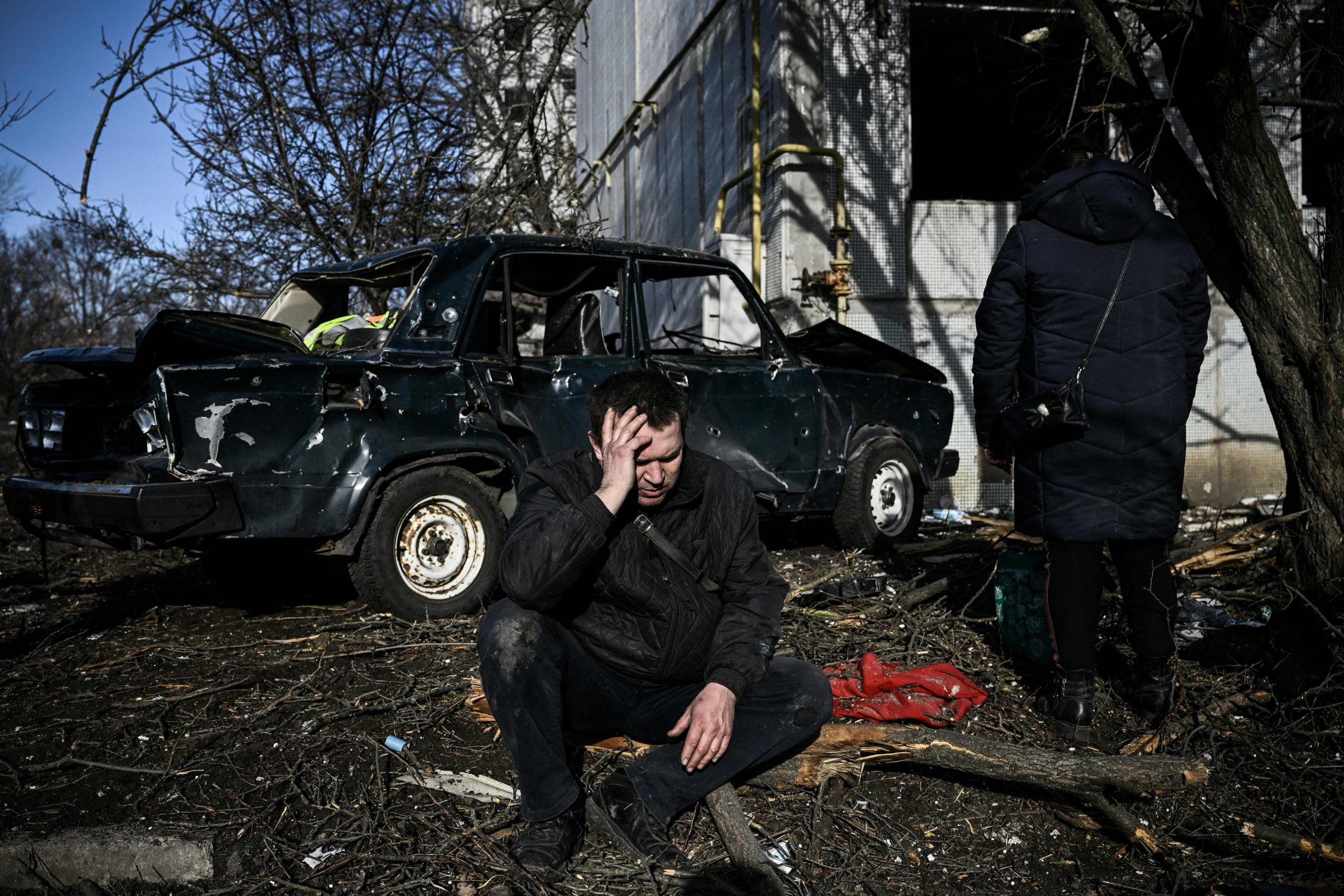
A preschool in north-eastern Ukraine was hit on the morning of 25 February with widely-banned cluster munitions while civilians took shelter inside, killing three of them, including a child, and wounding another child, Amnesty International said today. The attack appears to have been carried out by Russian forces, which were operating nearby, and which have a shameful record of using cluster munitions in populated areas. 

Amnesty International has confirmed that a 220mm Uragan rocket dropped cluster munitions on the Sonechko nursery and kindergarten in the town of Okhtyrka in Sumy Oblast, where local people were seeking safety from the fighting. The strike may constitute a war crime.  

“There is no possible justification for dropping cluster munitions in populated areas, let alone near a school,” said Agnès Callamard, Secretary-General of Amnesty International. “This attack bears all the hallmarks of Russia’s use of this inherently indiscriminate and internationally-banned weapon, and shows flagrant disregard for civilian life.” 

The strike violates the prohibition on indiscriminate attacks and damaged a school, a structure legally entitled to special protection. Under the 2008 Convention on Cluster Munitions — a treaty backed by more than 100 states, but which Ukraine and Russia have not joined — the use, development, production, acquisition, stockpiling and transfer of cluster munitions is prohibited under all circumstances. Customary international humanitarian law prohibits the use of inherently indiscriminate weapons such as cluster munitions. Launching indiscriminate attacks that kill or injure civilians constitutes a war crime. 

Drone video footage taken from the scene shows that cluster munitions struck at least seven locations on or near the building, four on the roof and three on the pavement immediately outside the school. Two injured or dead civilians are also visible in the footage, as are pools of blood. An additional 65 photos and videos that Amnesty International acquired from a local source shows more details of the scene, the victims and their family members, and the damage to the school. 

“While I was walking down [with] my wife, there were immediate explosions,” an older man told a contact working with Amnesty International. “You see, everyone is covered with blood, everything. Look at it…[expletive], it kills me the fact it’s a kindergarten. What’s this they shoot at? At military objects? Where are those?” 

The 220mm Uragan rocket, either a 9M27K or 9M27K1, carries 30 9N210 or 9N235 cluster munitions, which are nearly identical and differ only in the length of the time delay of their self-destruct feature. The seven impacts on and near the school show damage, including distinctive spalling on the ground, consistent with the expected damage from 9N210/9N235 cluster munitions. 

As first reported by the open source investigation organization Bellingcat, the remains of the nose cone and cargo compartment of the 9M27K rocket were discovered 200 metres to the east. Open source reports indicate there were Russian forces to the west of Okhtyrka, the source of the rocket launch based upon the flight trajectory, at the time of the attack. A logistics storage yard 300 metres north of the school may have been the target of the attack. However, Multiple Launch Rocket Systems (MLRS), like the 220mm Uragan rockets used in this attack, are unguided and notoriously inaccurate, and should never be used in civilian populated areas.  

In addition, because they scatter munitions over a wide area and have an extremely high dud rate of up to 20% — and because of the consequent threat they pose to civilians — cluster munitions are inherently indiscriminate weapons that are internationally banned by a treaty backed by more than 100 states. The use of these weapons violates the prohibition on indiscriminate attacks.

Attacks on schools 

This is the fourth attack in this conflict that has struck a school that Amnesty International has verified.  

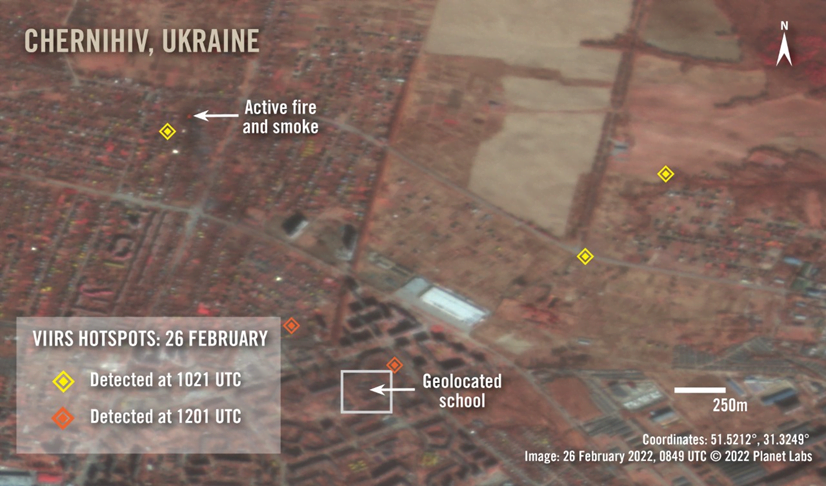
On 17 February, during increased shelling along the line of control, Russian-backed forces struck a kindergarten in the town of Stanytsia Luhanska, wounding three civilians. On the evening of 25 February, a missile damaged School No. 48 in Mariupol, blowing in windows and pockmarking the walls with metal fragments. And, on 26 February, an explosive weapon, most likely an artillery shell, hit the second story of a kindergarten in Chernihiv, starting a fire that was likely detected by VIIRS environmental satellite sensors. 

Under international humanitarian law, educational facilities are entitled to heightened protections as long as they are not used for military purposes. (None of the schools damaged in the incidents documented by Amnesty International appear to have been used for military purposes.) Parties to a conflict are required to take special care to avoid destroying or damaging them, a requirement that Russian forces do not appear to be meeting, judging from the growing number of attacks.  

In 2019, Ukraine endorsed the Safe Schools Declaration, which includes commitments to strengthen the protection of schools during armed conflict and to restrict their use for military purposes. All parties to the current conflict should respect the Safe Schools Declaration and its Guidelines.  

“It is stomach turning to see an indiscriminate attack on a nursery and kindergarten where civilians are seeking safe-haven. Plain and simple, this should be investigated as a war crime,” said Agnès Callamard. 

“As this human tragedy unfolds in Ukraine, any person who commits war crimes should be held individually accountable before the International Criminal Court (ICC) or another international criminal justice process at the national or international level. It is imperative that UN member states and the ICC urgently consider how to ensure the timely and effective collection and preservation of evidence of any crimes under international law committed in Ukraine.” 

While Russia and Ukraine are not parties to the ICC, in 2015 Ukraine accepted the court’s jurisdiction over alleged crimes committed on its territory from 20 February 2014.  
National Plan lacks detail on key areas for gender-based violence

Amnesty International Australia today expressed serious concerns about the draft National Plan to End Violence against Women and Children, including its failure to address gender-based violence as an abuse of women’s human rights, as recognised in the United Nations Declaration on the Elimination of Violence against Women. 

Submissions on the draft plan closed on Friday. 

“Amnesty is concerned the draft as it stands overlooks the Internet as a channel for gender-based violence. The UN has recently found that online abuse has been rapidly increasing in recent years,” Amnesty International Australia campaigner Nikita White said.

“The draft plan also acknowledges the need for a dedicated plan for First Nations peoples, but does not commit to the implementation of such a plan. The government has failed to listen and consult with First Nations communities who have called out for a self-determined, dedicated National Plan,” White said.

Other areas of concerns outlined in Amnesty International Australia’s submission on the plan include a lack of specificity of the “unique challenges” faced by people living with disabilities and how these challenges would be addressed. Although the draft acknowledges these challenges exist, it fails to expand on them, or address them. 

There are also no targets reflecting the experiences of diverse communities, aside from children, despite intersectionality being a Foundation Principle of the draft Plan. The plan should include targets that address the violence experienced by diverse communities.

The needs and experiences of migrant and refugee women, LGBTQIA+ people, older women, and women in rural, regional, and remote communities are all mentioned in a box-ticking manner. 

“The draft plan is deeply flawed – the consultation reports were never released so it is difficult to comment on whether the draft Plan reflects stakeholder consultation. More importantly, the draft lacks concrete plans to achieve the plan’s goals. This includes references to how these plans will be funded and resourced,” White said. 

“Stakeholders and survivors have been calling for greater funding for years, particularly since the beginning of the COVID-19 pandemic. These stakeholders and survivors already have many of the solutions to end gender-based violence. The government now needs to ensure their solutions are included in the final Plan, and fully funded.”

Use of spit hoods can amount to torture in youth detention or anywhere else

Amnesty International Australia today joined calls from Aboriginal health and rights groups to end the use of spit hoods in detention.

“We have written to Northern Territory Chief Minister Michael Gunner to ask him to respect the recommendations of the 2017 Royal Commission into the Protection and Detention of Children in the NT and end the use of these horrific tools of torture,” Amnesty International Australia Indigenous Rights campaigner Maggie Munn said.

“A spit hood is a tool of torture. Whether used in youth detention or in watchhouses is really a matter of semantics only – the profound damage and trauma the use of spit hoods can wreak can not be overstated.”

Amnesty International along with the Omega Foundation made a submission in December 2021 to the Group of Government Experts on torture free trade and singled out spit hoods (or spit guards) for particular mention as law enforcement equipment that can be misused for torture or other ill treatment, noting they should be controlled.

“The data released shows a 12-year-old child was restrained using a spit hood. It’s heartbreaking to think that the lives of young children are valued so little that we allow designated tools of torture to be used against them,” Munn said.

“People have the right to workplace safety, but Amnesty International has serious questions about the appropriateness of this kind of response.

“The Royal Commission had extensive recommendations regarding the safety of officers none of which included spit hoods, so we encourage Territory Police and the Government to review the report again for alternatives, such as protective personal equipment.”

In 2017 when the Royal Commission report was handed down, Chief Minister Gunner told Territory Parliament it would precipitate “the most comprehensive overhaul of youth justice and child protection in NT history.”

“We cannot let this report sit on the shelf gathering dust like so many that have come before, and turning our expert advice into practical, meaningful, on-the-ground change will require the full support and partnership of the Commonwealth Government,” Gunner said.

Amnesty launches emergency fund for Ukraine

Responding to the crisis emerging in Ukraine, Amnesty International Australia today launched a Global Emergency Fund to assist in protecting and defending human rights.

“Right now, brutal war is breaking out in the centre of Europe. Russian soldiers have crossed the border into Ukraine. Cities are being bombed, and lives have already been lost,” Amnesty International Australia National Director, Sam Klintworth, said.

“We must protect the millions of people at risk.The consequences for human rights could be devastating.

“Russia has a long history of causing harm to civilians. That’s why we need researchers working around the clock monitoring the conflict and exposing human rights abuses to the world, so we can pressure leaders to act and stop the bloodshed.”

Amnesty is also calling on the Australian government to immediately increase its humanitarian intake to assist with the flight of thousands of people from their homes in Ukraine.

Donations to Amnesty International’s Global Emergency Fund for Ukraine can be made here

Soaring concern for human rights and human lives as Russia invades Ukraine 

Amnesty International calls for unerring respect for international human rights and humanitarian law, following Russia’s multi-pronged attack on Ukraine.  

“Our worst fears have been realized. After weeks of escalation, a Russian invasion that is likely to lead to the most horrific consequences for human lives and human rights has begun,” said Amnesty International’s Secretary General Agnès Callamard. 

“As bombs and rockets are falling on Ukrainian military bases, and the first reports are coming in of the use of indiscriminate weapons by the Russian army, Amnesty International re-iterates its call on all parties to adhere strictly to international humanitarian law and international human rights law. Civilian lives, homes and infrastructure must be protected; indiscriminate attacks and the use of prohibited weapons such as cluster munitions must not take place. We also repeat our call to allow and facilitate access for humanitarian agencies to provide assistance to civilians affected by the hostilities. 

“Amnesty International will be monitoring the situation closely to expose violations of international law by all parties.” See: how Amnesty verifies military attacks in Ukraine.

Expanded armed conflict between the two countries erupted in the early morning on 24 February with the Russian army subjecting Ukrainian military and air bases to heavy shelling, rocket artillery, and missile attacks. Meanwhile tank columns invaded Ukraine’s territory along the entire length of the border. 

Background 

Early in the morning of 24 February, Russia launched an invasion on Ukraine, with reports of troops crossing the border to the north and south, explosions in multiple cities including the capital Kyiv. On at least one occasion, in Kharkiv, video footage shows the tail section of a rocket fired from a Smerch heavy multiple rocket launcher left sticking out of the pavement. Deliberate attacks on civilians and civilian property, and indiscriminate attacks that kill or injure civilians constitute war crimes.

Amnesty International has previously warned of the devastating human rights risks of further armed conflict between Russia and Ukraine, including threats to civilian lives, livelihoods and infrastructure, and potential acute food shortages and mass displacement. The organization has documented the severe human rights toll of the 2014-2015 conflict in eastern Ukraine, in which war crimes and crimes against humanity were committed.

Russia/Ukraine: Amnesty International calls for respect for international humanitarian and human rights law as prospect for expanded armed conflict escalates

Responding to news that President Vladimir Putin has ordered “peacekeeping operations” to the so called “Donetsk People’s Republic” and “Luhansk People’s Republic” in eastern Ukraine, Agnès Callamard Amnesty International’s Secretary General said:

“After weeks of fruitless negotiations, the protection of civilians in Ukraine must now be the absolute priority. While the potential for full-blown conflict is now a devastating reality, every effort must be made to minimize civilian suffering and prioritise humanity in this crisis. It is a legal obligation of all parties to do so.

“We urge all parties to adhere strictly to international humanitarian and human rights law. They must ensure the protection of civilian lives and refrain from indiscriminate attacks and the use of prohibited weapons such as cluster munitions. We also call on all parties to allow and facilitate access of humanitarian agencies to provide assistance to civilians affected by hostilities.

“Amnesty International will be monitoring the situation closely to expose violations of international law by all parties.”

Background

Amnesty International has previously warned of the devastating human rights risks of further armed conflict between Russia and Ukraine, including threats to civilian lives, livelihoods and infrastructure, and potential acute food shortages and mass displacement. The organization has documented the severe human rights toll of the 2014-2015 conflict in eastern Ukraine, in which war crimes and crimes against humanity were committed.

Ethiopia: New wave of atrocities in Western Tigray

Amhara security forces are responsible for a surge of mass detentions, killings and forced expulsions of ethnic Tigrayans in the Western Tigray territory of northern Ethiopia, Amnesty International and Human Rights Watch said today.

Tigrayan civilians attempting to escape the new wave of violence have been attacked and killed. Scores in detention face life-threatening conditions including torture, starvation, and denial of medical care.

“The new onslaught of abuses by Amhara forces against Tigrayan civilians remaining in several towns in Western Tigray should ring alarm bells,” said Joanne Mariner, Amnesty International’s Director of Crisis Response.

“Without urgent international action to prevent further atrocities, Tigrayans, particularly those in detention, are at grave risk.”

Since armed conflict began in November 2020, Western Tigray, a disputed administrative territory, has been the site of some of the worst atrocities, including massacres, indiscriminate shelling, and large-scale forced displacement of the Tigrayan population.

On 2 December, 2021, the United Nations Office for the Coordination of Humanitarian Affairs (OCHA) reported that 1.2 million people have been displaced from Western Tigray since the beginning of the conflict. A 9 December UN report found that between 25 November and 1 December, over 10,000 Tigrayans were newly displaced from Western Tigray. It also stated that Western Tigray remained inaccessible to aid agencies due to security concerns.

In November and December, Amnesty International and Human Rights Watch conducted phone interviews with 31 people, including 25 witnesses and survivors as well as relatives of those detained and expelled, about abuses by Amhara militias and regional security forces against Tigrayan civilians in the towns of Adebai, Humera, and Rawyan.

Since early November, Amhara regional police forces and militias, including militia groups known as Fanos, have systematically rounded up Tigrayans in Adebai, Humera, and Rawyan. These forces separated families, arrested teenagers age 15 and older and men and women civilians. They have forcibly expelled women and younger children, as well as sick and older people from the area. Some of those expelled have since arrived in Central Tigray, while others remain unaccounted for.

“Tigrayans, regardless of [their] sex and age, were taken to a school,” said one man in Rawyan who witnessed the house-to-house roundups of Tigrayans by Fano militia. “They separated the old from the young, took their money and other possessions. … Older people, parents were loaded on big trucks [going] east. They let them go with nothing, while the young remained behind.”

Following roundups in Humera on 20 and 21 November, two witnesses described seeing as many as 20 trucks full of people leaving on those days toward Central Tigray.

Six witnesses said Amhara forces shot at Tigrayans seeking to flee the roundups in Adebai and attacked them with sticks and sharp objects. An unknown number were killed. “They started shooting whoever was in range running,” said a 34-year-old farmer from Adebai, who ran to nearby fields from Fano militias attacking him and others. “When the people tried to escape… [the Fano] attacked them with machetes and axes so no one could escape…We were passing bodies and we were all in shock… After we calmed down, we noticed that there were more bodies there too. Everywhere you turned, there would be five, 10 bodies.” Four witnesses said armed elements also shot at Tigrayans crossing into Sudan.

Satellite imagery captured between 19 November and 5 December shows significant activity in Adebai, including moving vehicles, groups of people around a makeshift detention site, large amounts of debris on the main road, and burned structures. Imagery taken on 5 December in Humera shows 16 open-back trucks near the town’s central roundabout.

Three former detainees held in Humera prison, some of whom had been held for as long as five months before they escaped in November, said that Amhara authorities kept them in extremely overcrowded cells for extended periods. Guards denied them food and medical treatment and tortured and beat detainees whose hands and feet had been tied with sticks and rifles. One former detainee arrested on 19 July escaped around 13 November while loading corpses of fellow detainees onto a tractor. He said he knew of 30 people who died while he was held there, including seven of the 200 men in his cell: ““All of us have gone through it [the beatings] but the most vulnerable ones were the [older men],” he said. “They couldn’t handle the torture, that’s why they were dying.” He said that the Fano militia members beating them threatened all Tigrayans with death.

The roundups, abusive detentions, and forced expulsions separated families and left communities from the three towns desperate for news about the safety and whereabouts of their loved ones, many of whom were put on trucks and remain unaccounted for. One man who fled Adebai in late November said: “My wife and my mother called me four days ago, told me they had put them in vehicles, and they don’t know where they are taking them. After that I have never heard from them.”

The Ethiopian authorities should immediately cease attacks on civilians, secure the release of those arbitrarily detained, and urgently provide unimpeded access to Western Tigray for aid agencies and organizations with a mandate to visit detention sites, Amnesty International and Human Rights Watch said.

Given the gravity of the ongoing abuses, the UN Human Rights Council should urgently establish an independent international mechanism to investigate abuses in the Tigray conflict, including serious violations of international humanitarian law (the laws of war), identify those responsible at all levels, and preserve evidence for future accountability.

Forced displacement and deliberate attacks on the civilian population violate the laws of war. Everyone in custody has the right to be treated humanely and with respect for their inherent dignity, including having access to adequate food and medical care. Ordering civilians displaced for reasons not required for their security or imperative military necessity, attacking civilians who are not directly participating in hostilities, and torturing or otherwise mistreating detainees, are war crimes.

“The global paralysis on Ethiopia’s armed conflict has emboldened human rights abusers to act with impunity and left communities at risk feeling abandoned,” said Laetitia Bader, Horn of Africa director at Human Rights Watch.

“As evidence of atrocities mounts, world leaders should support the creation of an international investigative mechanism and the UN Security Council should put Ethiopia on its formal agenda.”

Confirmation of NZ deal welcome: time to get it done

Amnesty International Australia today welcomes confirmation in Senate Estimates that a  deal with New Zealand to settle 150 refugees per year from Australia’s offshore detention regime has been agreed to ‘in principle’.

It was stated in Estimates that the agreement is currently with the NewZealand Cabinet for final approval.

“New Zealand’s generous offer has been on the table since 2013 – it’s encouraging to hear it’s so close to being finalised, but now the Government has to act and get it done,” Amnesty International Australia Refugee Advisor, Dr Graham Thom, said.

“Too many people have been traumatised and lost years of their lives in our cruel immigration system and it’s past time they’re given a chance to rebuild their lives in safety and freedom.”

Refugee advocate Craig Foster also welcomed the potential deal could be done within weeks.

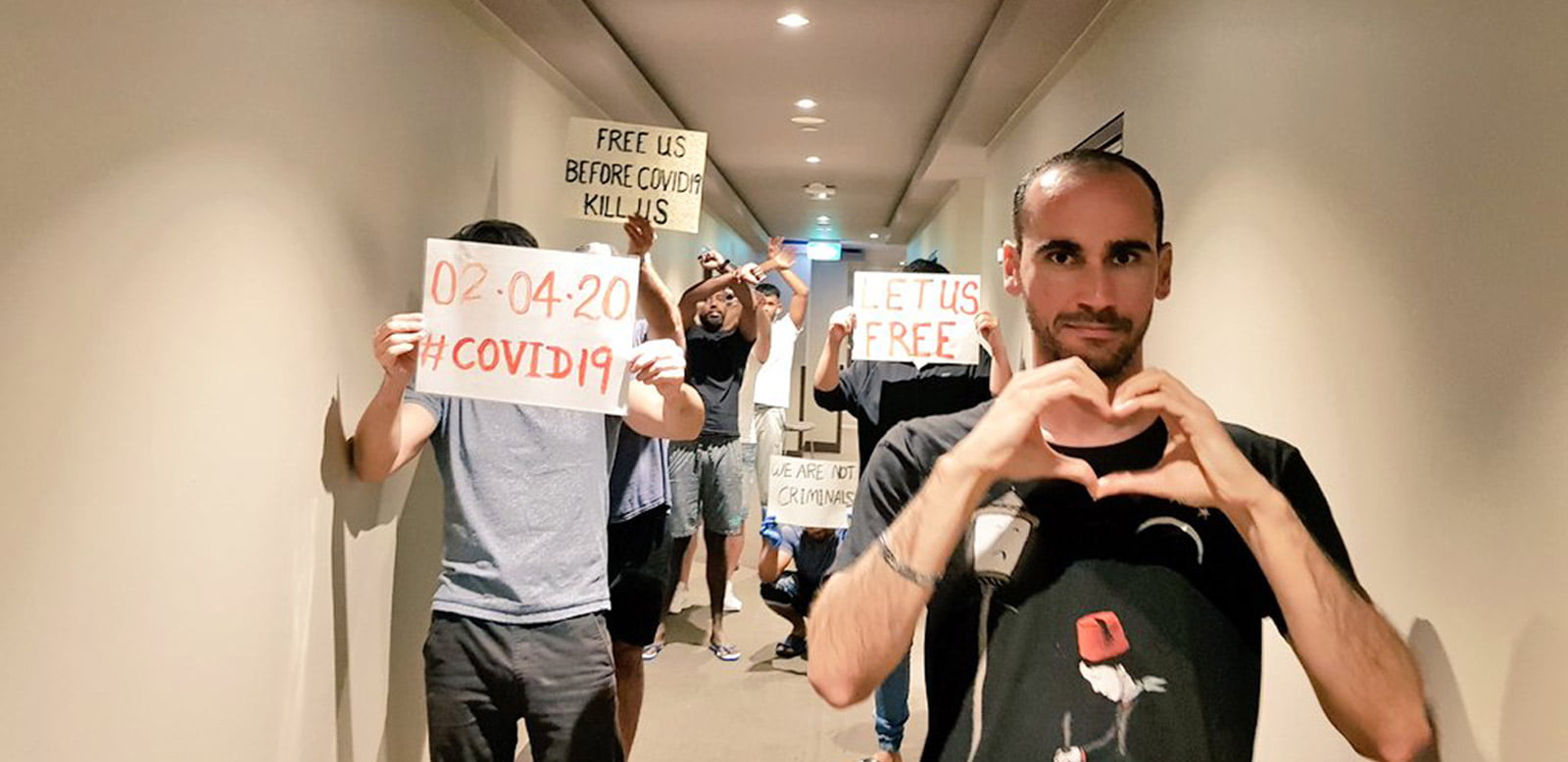
“All people deserve safety and a bright future: Australians won’t stand by any longer while politicians turn a blind eye to the suffering of people warehoused offshore and in places like the Park Hotel. It’s time to call ‘Game Over’ and get these people to safety so they can rebuild their lives.”

Mostafa (Moz) Azimitabar who was held in both Papua New Guinea and then in the Park Hotel APOD in Melbourne where he was evacuated for medical care said:

“This is absolutely a historical moment in Australia. The power of people is stronger than politicians. The government couldn’t resist this powerful pressure. Our consistency made this happen.”

The Religious Discrimination Bill might be off the agenda, but the damaging ‘debates’ continue

CONTENT WARNNG: Contains discussion of suicide and mental health

During the height of the marriage equality debate, a close friend of mine took his life. The grief, the shock, the guilt, the pain, the heartbreak was something I had never felt before. He was my girlfriend’s best friend, and she was broken. The next few months were the worst we had experienced in our lives.

And while we suffered in our private agony, we endured a national “debate” on  whether or not we were entitled to the same rights as everyone else in the country. 

It felt like a body blow to be reminded constantly that not only did many people believe we weren’t equal, but that they would be allowed a vote on it.

I will never forget less than 48 hours after he died, dragging ourselves to a Marriage Equality rally, puffy faces, stinging eyes, tears streaming, in a haze of grief and disbelief, feeling obliged to be there because it was our last chance to plead and scream at the top of our lungs that we mattered.

I’ll never forget walking down the street holding hands one night, feeling so hollow with grief, and being confronted by  a group of men yelling at us, laughing: “Oi, tell us why we should vote for you, you have to convince us”. 

I’ll never forget coming into work at my previous job the day the vote results were announced and seeing that the colleague I shared an office with had already thrown the “Yes” poster in the bin. The same colleague who had, despite knowing I was queer, unabashedly shared with me multiple times throughout the campaign why she would be voting no, as if it were a casual conversation topic. 

I felt nothing but numbness and sadness when I heard the results. I was unable to bring myself to celebrate or feel any joy. We just had to defend our existence in a postal plebiscite. Only two thirds of Australia had voted in favour of our rights. Was that a win? It didn’t feel like it.

We just had to defend our existence in a postal plebiscite. Only two thirds of Australia had voted in favour of our rights. Was that a win? It didn’t feel like it.

I am still so angry that some of the worst days of our lives were made unnecessarily more difficult by the people who were supposed to be the leaders of our country. 

And I am so unbelievably furious that, with the Religious Discrimination Bill, we find ourselves here yet again, with our rights back up for debate.

But I feel like this is not the end of either the Bill or the debates, but the beginning of a long and unpleasant feature of the imminent election campaign.

The fact is these debates don’t happen in a vacuum. They spill out everywhere; on the news, social media, in casual conversations, in the workplace, around dinner tables and in schools.  We become surrounded as they infiltrate every part of our lives. They cause real harm to a community in which mental health issues are well above the national average

I am fiercely proud of being queer, but these debates still affect me. I shudder to think about the effects they would have had on me if they had happened when I was a teenager. When I couldn’t say the words “I am gay” without crying. Trying to work up the courage to reveal my deep dark secret. Worrying every day about how my friends and family’s perception of me would change when they found out who I really was. Not knowing if I would ever find other people who were like me. Trying desperately to push down the shame and the fear, to convince myself that who I was was okay.

It both terrifies and infuriates me to think about the effect these debates are having on people, especially children, who have not yet come to terms with their gender and sexuality – trans and gender diverse kids, kids who don’t know yet that there is absolutely nothing wrong with the person they are, kids who are listening to people question their validity and internalising the message that they are not worthy, kids who don’t feel safe at home or at school, kids who are terrified someone will find them out, and those who just can’t take it anymore. The hate, shame and fear these debates stoke is dangerous. 

If you are part of the dominant culture which takes for granted the right to exist precisely how you are on your own terms, it can be hard to relate. But I would ask you to consider my experience of trying to come to terms with losing a dear friend, while having my agency removed in a national debate about what I can and can’t do with my life.

We are exhausted. We are tired of spending our time and energy defending ourselves. We are worn out from feeling the burden of responsibility to stand up and speak out, to protect those who are more vulnerable than us. We are sick with worry about the harm being inflicted on our community and the effects it will have on people’s mental health, safety and sense of worth. 

We don’t need a bill to address religious discrimination, but we do need a Federal Human Rights Act which would effectively balance the tensions between rights and stop these damaging “debates”.

Lucy Kenny is a campaigner at Amnesty International Australia

Explainer: Ukraine and the mounting threat of Russian invasion

European allies are trying to deter a potential invasion of Ukraine by Russian forces which are currently massed at the border, as a result tensions between the North Atlantic Treaty Organisation (NATO) and Russia have risen to their highest level in years. 

Russia currently has approximately 130,000 troops on the Ukraine border. Russia has not confirmed that it will launch an attack however, based on the lack of respect for international law by Russian troops in other settings in recent years, Amnesty International is extremely concerned about the likelihood of history repeating itself.  

“The threat of the use of military force by Russia is already affecting the human rights of millions of people in Ukraine and beyond,” said Agnès Callamard, Amnesty International’s Secretary General. 

“The consequences of actual military force are likely to be devastating. Ukraine’s recent history is punctuated by conflicts involving Russian troops in Donbas and the illegal annexation of Crimea. These episodes have torn communities and lives apart, as military forces have trampled on the rights of civilians with impunity; it’s time to break that vicious cycle.”   

What is the history between Russia and Ukraine? 

Ukraine was part of Russia for centuries before becoming a Soviet Republic. Ukraine won independence when the Union of Soviet Socialist Republic broke up in 1991, becoming its own country and moving away from Russian identity. 

A decision by previous Ukrainian President, Viktor Yanukovych, to reject having closer connection to Europe through the European Union, and instead favour a closer relationship with Russia, led to large protests in Ukraine. This resulted in Viktor Yanukovych being removed as president in 2014, which led to Russia invading Ukraine’s Crimean Peninsula causing rebellion and unrest. 

“The history of Russia’s military interventions – be it in Ukraine or Syria, or its military campaign at home in Chechnya – is tainted with blatant disregard for international humanitarian law. The Russian military repeatedly flouted the laws of war by failing to protect civilians and even attacking them directly. Russian forces have launched indiscriminate attacks, used banned weapons and sometimes apparently deliberately targeted civilians and civilian objects – a war crime,” said Agnès Callamard.  

What are the potential implications on human rights?

Amnesty International is concerned that the escalation of existing conflict in Ukraine will have devastating human rights consequences including threat to civilian livelihoods and infrastructure, mass displacement and acute food shortages. 

Economic and social rights have already been negatively impacted. Rising prices for basic foods and goods, including medical supplies, are affecting Ukrainian people’s right to healthcare and to an adequate standard of living. Vulnerable people, including the elderly and those on low incomes, are particularly impacted. The right to education has also been impacted with schools closing intermittently over the past two weeks amid security concerns. 

Further, wider Europe relies on Russian gas passing through Ukrainian territory. Ongoing guerrilla warfare in Ukraine and an overall increase in violence and impunity, could have devastating economic impacts and repercussions for the region. 

The conflict in Ukraine also has potential to escalate into a mass refugee crisis. The conflict in 2014-2015 saw millions of people forced to leave their homes. Hundreds of individuals who returned or remained in the conflict zone were subject to extrajudicial executions and other unlawful killings, torture, abductions, enforced disappearances and arbitrary detentions.

According to the Ministry of Social Policy of Ukraine, approximately 1.45 million people are still internally displaced in Ukraine. If Russia uses military force against Ukraine, people seeking refuge in Ukraine will be forced to seek refuge in other countries.  

What is Amnesty International doing? 

During the 2014-2015 conflict in Eastern Ukraine, all sides violated international humanitarian law leading to the displacement of over a million people. More than 13,000 people died and the toll is still rising. In military conflict, civilians must be protected and anyone who commits abuses must be held to account. Amnesty International will be monitoring the situation closely to expose violations of international humanitarian law (the laws of war) and international human rights law by all parties. 

How you can help

Right now, Ukrainians are fleeing their homes, and everything they have ever known, to escape these horrors. As of March 2022, the Australian Government has promised 5,000 temporary humanitarian visas for Ukrainian refugees. The government’s announcement is welcome, but they also must commit to providing essential support services to these people and to reunite them with their families. Find out more here.