Yemen: USA, UK, France risk complicity in collective punishment of civilians

The USA, UK and France must immediately cease supplying arms to the Saudi Arabia-led coalition fighting in Yemen, which is impeding humanitarian assistance, including items indispensable to the survival of civilians.

According to the UN and humanitarian agencies food and medicine are being blocked and vital supplies will run out in a matter of weeks.

Since the Saudi Arabia-led coalition tightened the blockade after a missile was fired at Riyadh, 29 ships carrying essential supplies have been prevented by the coalition from reaching Hodeidah port.

Mitigating measures announced by the coalition, such as opening Aden’s port, are woefully inadequate to meet humanitarian needs. More than 20 million people are now living in dire need of assistance.

Looming famine

“The looming prospect of famine is becoming a reality because of the new restrictions by the Saudi Arabia-led coalition, which appear to amount to collective punishment of Yemen’s civilians,” said Philip Luther, Research and Advocacy Director for the Middle East and North Africa at Amnesty International.

“Countries such as the USA, UK and France, which continue to supply coalition members with arms, are allowing Saudi Arabia and its allies to flagrantly flout international law and risk being complicit in grave violations, including war crimes.

“All countries must immediately halt the flow of arms and military assistance to members of the Saudi-led collation for use in Yemen. This includes any equipment or logistical support being used to maintain this blockade.”

Background

As of 15 November, the blockade has prevented nearly 500,000 metric tons of food and fuel on 29 vessels from reaching Hodeidah port, according to the UN.

Since 2015, all parties to the conflict in Yemen have committed serious violations of international humanitarian law and grave human rights abuses. The lives of civilians have been devastated by indiscriminate bombing and shelling, arbitrary detentions and enforced disappearances.

PM Turnbull must live up to today’s promise on youth justice leadership

Amnesty International welcomes the Federal Government’s commitment to show national leadership on the issue of youth justice across Australia, and urges Prime Minister Turnbull to oversee nationwide reform of the youth justice system.

Indigenous Affairs Minister Nigel Scullion said this morning that “every other jurisdiction will be looking to the NT and Commonwealth for leadership; Chief Minister Michael Gunner and I are committed to providing that leadership.” The comment was in response to the report by the Royal Commission into the Protection and Detention of Children in the Northern Territory.

A ReachTEL poll released by Amnesty International this morning found two out of three Australians think the Turnbull Government should take the lead on reforming youth justice across the country.

“We welcome the final report of the Royal Commission – now the NT and Federal Government must listen and work with local communities and Aboriginal and Torres Strait Islander organisations to take these important findings and recommendations by the Royal Commission forward. This is one of the key calls by Aboriginal Peak Organisations Northern Territory,” said Roxanne Moore, Indigenous Rights Campaigner at Amnesty International Australia.

“But the reform must not stop there. The Federal Government has said today that many of the recommendations have wider implications for all jurisdictions, and it has committed to providing leadership for all jurisdictions.”

“We know the overrepresentation of Indigenous children and their abuse in children’s prisons are problems not only for the NT but every state and territory.”

“That’s why PM Turnbull must now commit to and lead national reform of the youth ‘injustice’ system across the country.”

15 big wins for Write for Rights

It started in Poland with a young man trying to impress a young woman. He met her at a festival and she told him about 24-hour events she’d been to in Africa, where people wrote letters of protest to governments. Inspired by her story – and wanting to see her again – he invited her to his local Amnesty group where they decided to do the same thing.

The idea caught on and within a year, Write for Rights grew into a global letter-writing phenomenon. That was 2002. Today, Write for Rights is the world’s biggest human rights event, and with good cause. Over the years, the campaign has helped free at least 48 people from wrongful imprisonment. That’s 48 lives renewed and transformed – thanks to millions of actions by people like you in almost every part of the world.

Here are just 15 highlights from the last 15 years – reason, if any, to get writing for rights this year.

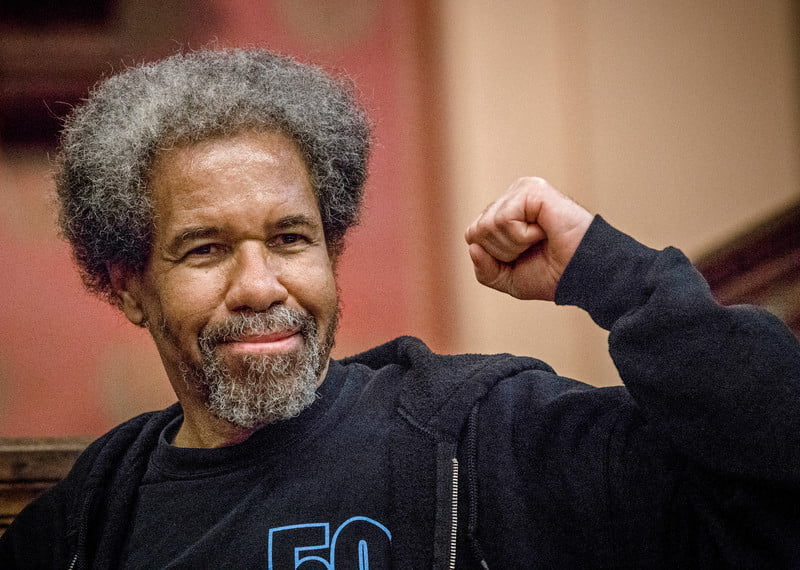
1. Albert Woodfox, USA

The last imprisoned member of the Angola 3, Albert Woodfox was finally released in February 2016. He had spent 43 years and 10 months in solitary confinement in a Louisiana state prison – believed to be the longest anyone has survived in solitary in the USA. “I can’t emphasise enough how important getting letters from people around the world is,” said Albert. “It gave me a sense of worth. It gave me strength – convinced me that what I was doing was right.” Supporters took more than 650,000 actions for his release as part of Write for Rights. © Pierre-Yves Brunaud / Picturetank


2. Ales Bialiatski, Belarus

Prominent human rights defender, Ales Bialiatski was freed from a labour camp in Belarus in 2014. Featured in Write for Rights 2012, he received 40,000 letters from Amnesty supporters. “I want to thank you especially for the moral support,” he said on his release. “The thing that made a real difference were the letters I got from ordinary people, and I want you to say a special thank you to your activists for that.”  © Amnesty International Czech Republic


3. Birtukan Mideksa, Ethiopia

Ethiopian opposition leader Birtukan Mideksa was released from jail in October 2010 after featuring in Write for Rights the year before. Speaking to us in 2013, she said: “The pressure you guys were exerting on the Ethiopian government was very instrumental in securing my release.” © Amnesty International


4. Chelsea Manning, USA

US whistle-blower Chelsea Manning walked free in May 2017, after her 35-year prison sentence was cut short by outgoing President Barack Obama. In 2015 more than a quarter of a million people wrote for her release. She said: “I wish I had the time and ability to thank each one of you for giving me a little bit of joy with each letter and card.”


5. Yorm Bopha, Cambodia

Housing rights activist Yorm Bopha was released in November 2013. She led vocal protests against efforts to throw her community off their land, and was eventually imprisoned on bogus charges. Although the charges against her were never dropped, she was able to return home. “Thank you to Amnesty International’s supporters!” she said. “Your campaign has been successful, as my release shows!” © LICADHO

6. Fred Bauma & Yves Makwamba, DRC

Youth activists Fred and Yves were released at the end of August 2016 in the Democratic Republic of Congo. An amazing 170,000 people took action for the pair as part of Write for Rights. “Every letter, every visit, every word has strengthened us and reinforced our determination in this long but just struggle for freedom and democracy,” said Yves. Ten of their fellow activists, all members of the LUCHA youth movement, were also released in 2016. © Private

7. Jabbar Savalan, Azerbaijan

A youth activist jailed in Azerbaijan, Jabbar Savalan was pardoned and released in 2011 within days of supporters’ letters arriving in the country. He had been jailed on false drug charges after he dared to call for peaceful protests against the government. “The support I received was so great that I did not feel like I was imprisoned,” he said. © IRFS

8. Jabeur Mejri, Tunisia

Jabeur Mejri was pardoned in 2014 and provisionally released, following global pressure from Amnesty supporters who joined Write for Rights 2013. Jabeur had spent two years in prison for Facebook posts deemed offensive to Islam. “Things got better when there was more attention on my case and some activists and lawyers came to visit me in prison,” said Jabeur. “Amnesty International’s support had a great impact, I’m very happy you raised awareness about my case, not just with your activists but amongst the Tunisian public as well.” © Private

9. Jeanette Solstad Remø, Norway

June 2016 marked the end of Jeanette Solstad Remø’s fight to have her right to be recognised as a woman, without compromising her dignity and human rights. Norway passed a new law giving transgender people access to legal gender recognition through a quick, accessible and transparent procedure. Through Write for Rights 2014, thousands of people supported Jeanette’s campaign, leading to a historic legal change that has done away with Norway’s shameful legacy of invasive procedures that violate human rights. © KRB/AI

10. Jerryme Corre, Philippines

Jerryme Corre spent four years in prison after being seized by police in 2012 and tortured into confessing to a crime he didn’t commit. Featured in Write for Rights 2014, his case prompted the support of 70,000 people worldwide, leading the Philippines authorities to open an investigation into Jerryme’s allegations of torture against one of the police officers. In March 2016, police officer Jerick Dee Jimenez was convicted of torture and sentenced to a prison term. He was also made to pay Jerryme damages. It was a historic ruling on police torture in the Philippines, which saw the first conviction under the country’s 2009 Anti-Torture Act following years of steadfast campaigning by Amnesty activists. © Amnesty International

11. Moses Akatugba, Nigeria

After 10 years in jail and more than 800,000 messages from activists around the world, Moses Akatugba’s life was spared in June 2015. Falsely accused of stealing three mobile phones, he had been tortured and wrongfully sentenced to death when he was 16. He was granted a full pardon after pressure from Amnesty supporters during Write for Rights 2014 and our Stop Torture campaign. “Amnesty International members and activists are my heroes,” Moses said. “I promise to be a human rights activist – to fight for others.” © Miikka Pirinen / Amnesty Finland


12. Muhammad Bekzhanov, Uzbekistan

Journalist Muhammad Bekzhanov was released in February 2017 after spending 17 years in prison. One of the world’s longest held journalists, he was supported by thousands around the world as part of Write for Rights 2015 and our Stop Torture campaign.


13. Dr Tun Aung, Myanmar

Prisoner of conscience Dr Tun Aung was released in January 2015. The Muslim community leader had been sentenced to 17 years in jail in 2012 for trying to calm a riot between Buddhist and Rohingya communities in Rakhine State. Thousands worldwide wrote for his freedom as part of Write for Rights 2013. Today, Dr Tun Aung is now an Amnesty member. He says: “I will never forget I myself was one of those for whom so many kind people participated in Write for Rights. It contributed significantly to my eventual release. Now I write for those still in prison for speaking out against human right violations.” © Private


14. Valentina Rosendo Cantú & Inés Fernández Ortega

Mexico’s government finally accepted responsibility for the rape by soldiers of Valentina Rosendo Cantú and Inés Fernández Ortega. The two women had been raped by soldiers in the Mexican Army in 2002. Since then, they embarked on a tireless campaign for justice. Amnesty amplified their calls through Write for Rights 2011. “Without your letters, your action and your solidarity, we would have not achieved this moment,” Valentina said. © Centro de Derechos Humanos de la Montaña de Tlachinollan


15. Yecenia Armenta, Mexico

Yecenia Armenta was freed from prison in June 2016. Detained on 10 July 2012, she was beaten, near-asphyxiated and raped during 15 hours of torture until she was forced to “confess” to being involved in her husband’s murder. Amnesty supporters took some 300,000 actions for her as part of our Stop Torture and Write for Rights campaigns. “When I receive all these letters saying that I’m not alone,” she said, “it makes me feel great. And I think: ‘Yes, it’s true, I’m not alone.”

Be a part of Write for Rights 2017 – write a letter, change a life

Philippines: ‘Battle of Marawi’ leaves trail of death and destruction


Civilians on the island of Mindanao paid a high price – with dozens killed and widespread destruction of homes and property – amid the ‘battle of Marawi’ that pitted the Philippine military against militants allied to the armed group calling itself Islamic State (IS) between May and October this year, Amnesty International said in a report today.

The ‘Battle of Marawi’: Death and destruction in the Philippines is the first detailed human rights analysis of the conflict, based on a research trip to Lanao del Sur, Mindanao in September. It documents how IS-allied militants targeted Christian civilians for the worst of the abuses, including at least 25 extrajudicial killings, mass hostage-taking, and extensive looting of civilian property.

Philippine armed forces, meanwhile, detained and ill-treated fleeing civilians, and also engaged in looting. Their extensive bombing of militant-held areas of Marawi city wiped out entire neighbourhoods and killed civilians, highlighting the need for an investigation into its compliance with international humanitarian law.  

“Marawi’s civilian population has suffered immensely amid one of the Philippine military’s most intensive operations in decades. Displaced en masse when the fighting began in May, thousands of people are now returning to a city that has been utterly destroyed in places, where civilians have been slaughtered by militants, and both sides have committed abuses,” said Tirana Hassan, Crisis Response Director at Amnesty International.

“The IS-linked militants’ bloody, months-long siege of Marawi took a heavy toll on civilians, with Christians in particular singled out for brutal attacks, including grisly extrajudicial killings.”

Civilians targeted in reign of terror

Amnesty International interviewed 48 survivors and witnesses, and many described how IS-linked militants regularly targeted civilians and carried out extrajudicial killings in Marawi city.

Multiple witnesses described 10 separate incidents where militants killed a total of at least 25 civilians by shooting them or slitting their throats. Most were targeted because they were Christians, and some were killed as they attempted to flee to safety. It is a war crime to murder civilians.

During the morning of 23 May, Adam, in his forties, was in the car park of the Amai Pakpak Medical Hospital when he saw three militants hijack the hospital’s ambulance and execute the driver:

“I saw them stop the ambulance. They asked [the driver] to say the Shahada [an expression of Muslim faith], but the driver was not able to answer so they shot him… Then they came to me and asked me to recite the Shahada [and I did], and they let me live.”

Although the vast majority of civilians fled Marawi city in the first week of the conflict, hundreds or possibly even thousands remained trapped inside amid the ongoing fighting.

A group of six painters, all Christian, hid in their employer’s house for five days after fighting broke out before attempting to escape. After being chased and fired at by militants, they took cover in a canal that led them to Lake Lanao.

Amnesty International interviewed two of the men. One of them said:

“When I was about to [swim across] the lake I saw ISIS [fighters] near… we were six that were supposed to cross the lake but three of our friends were shot… We saw the person shooting, he was [dressed] all in black with long hair and a beard.”

Survivors and witnesses told Amnesty International how militants also captured a large number of civilians as hostages. The militants subjected them to forced labour and used them as human shields. At least one hostage was summarily executed, and many were physically abused.

A construction worker in his twenties who was held hostage for several weeks along with dozens of other Christians told Amnesty International:

“[After they captured us] they brought us to a mansion where they kept us hostage… In the mansion we were used as slaves, following their orders. We cooked, prepared food… If [we] didn’t follow their commands, they would hit us. Once they fired [a bullet] near my head.”

The same hostage was later transferred to two other locations, each of which had many more hostages. One of those locations, a large building with more than 100 other hostages, was hit by an airstrike, killing 10 civilians.

Escape to detention and ill-treatment

In some instances, members of the Philippine military treated civilians who escaped militant-controlled areas with suspicion, detaining them and subjecting them to torture or other ill-treatment.

Amnesty International interviewed eight victims of such abuse at the hands of the Philippine armed forces. Seven of them were Christian construction workers who had been trapped in Marawi city because they feared being captured or killed by militants if they tried to escape.

One of the construction workers, a man in his forties, was shot at by militants on his first attempt to escape Marawi city, an attack which he believes killed three of his colleagues. On the second attempt, he and his companions were crossing a bridge to flee the militant-controlled area of the city when Philippine Marines confronted and detained them. He told Amnesty International:

“We thought that we were safe. But then the master sergeant arrived. Then they told us that we were ISIS…They beat us…I was punched and kicked…My companion showed his ID, but the military said he was a sniper for ISIS… I was beaten with an Armalite [rifle]… They tied our hands and feet with electrical wire. I was crying and they would not listen… The military was very angry because 13 of their men were killed.”

The Philippine armed forces detained another escaped civilian who was beaten severely all over his body, had the butt of a rifle smashed on his hands and back, and had burning-hot liquid poured all over his body. The pain eventually caused him to pass out and he was later handed over to the Red Cross.

Trapped under fire

Although the vast majority of civilians fled Marawi city in the first week of the conflict, hundreds or possibly even thousands remained trapped inside amid the ongoing fighting. On 29 May, the UN reported that 2,300 people remained in the city, dropping to fewer than 300 by late August, as many had managed to escape by then.

Many of the civilians trapped for extended periods were workers who were living in a state of fear, at risk of being found by militants and hit by bombs or bullets. An unknown number were reportedly killed by the government’s aerial bombardment.

A married couple from Iligan who were trapped in Marawi city for more than five weeks told Amnesty International:

“We were not able to sleep because of the airstrikes and gunfire… For 38 days we drank rain water… I tried to escape but bombs were falling near our building… When we did finally leave, we saw dead bodies decaying in the street… When we arrived at the bridge … we were rescued by the military [and] were turned over to the police.”

Many of the civilians trapped for extended periods were workers who were living in a state of fear, at risk of being found by militants and hit by bombs or bullets. An unknown number were reportedly killed by the government’s aerial bombardment.

Due to restrictions on access to Marawi city itself, Amnesty International was unable to determine whether the Philippine armed forces’ use of artillery and airstrikes breached their international humanitarian law obligations. Further independent investigation is needed to determine whether the infrastructure damage and the loss of civilian life was militarily necessary and proportional to the threat posed by the militants.

“The Philippine authorities must bring those responsible for torture and other violations to justice and ensure that the victims receive adequate reparations. They must also initiate a prompt, effective and impartial investigation into whether its bombing of civilian neighbourhoods was proportional under international humanitarian law,” said Tirana Hassan.

The Philippine authorities seem to be responding to concerns about looting by members of the security forces, with investigations and charges under way. They must also follow through on promises of compensation.

Background

On 23 May 2017, a firefight broke out between Philippine government forces and an alliance of IS-aligned militants in Marawi – a city of 200,000 in the Autonomous Region in Muslim Mindanao, in the southern Philippines.

The militants, including the Maute group and the Abu Sayyaf group, quickly took control of large areas of the city, prompting Philippine President Rodrigo Duterte to impose martial law and suspend the writ of habeas corpus on the entire island of Mindanao.

Within a month, the conflict displaced 360,000 people in Marawi and surrounding areas. Hundreds, if not thousands, of civilians remained in the besieged city for weeks or months, either as hostages or trapped in the crossfire.

The battle lasted for five months, and resulted in the mass displacement of civilians, the widespread destruction of civilian infrastructure, and the loss of civilian lives.

According to official figures, 920 militants, 165 soldiers and 47 civilians were killed in the fighting, and more than 1,780 hostages were rescued from the IS-linked militants. But restrictions on access to Marawi during the conflict have precluded any independent corroboration of these numbers.  

New poll: Only one in three say Turnbull Government doing enough to protect kids in prison from abuse

Only around one in three Australians (36%) think the Turnbull Government is doing enough to protect kids in children’s prisons from abuse. This is the finding of a ReachTEL poll commissioned by Amnesty International, ahead of Friday’s release of the Royal Commission into the Protection and Detention of Children in the Northern Territory report.

The poll also revealed that two thirds of Australians believe the Federal Government has an overarching responsibility for the crisis of soaring overrepresentation of Aboriginal and Torres Strait Islander children in the criminal justice system, and should lead national action to end this.

“Prime Minister Turnbull’s government has been passing the buck to the states and territories, claiming youth justice is not a Federal issue – despite Indigenous children being 25 times more likely to be locked up than non-Indigenous kids, and abuses being revealed in children’s prisons across Australia.” said Roxanne Moore, Indigenous Rights Campaigner at Amnesty International Australia.

“But now the results are in: according to this poll, Australians can see the youth justice system has an unfair impact on Indigenous kids, and they want the Federal Government to lead national change.”

Unfair, abusive system

In the ReachTEL poll, only 35.6% of respondents agreed with the question, “Do you agree or disagree that the Federal government is doing enough to address the abuse of children in prison?”

However, 62% of respondents agreed with the question, “Do you agree or disagree that the Federal Government has an (overarching) responsibility to address the overrepresentation of Aboriginal and Torres Strait Islander children in the criminal justice system?” And 63% agreed with “Do you agree or disagree that the Federal Government should lead national action to end the overrepresentation of Aboriginal and Torres Strait Islander children in the criminal justice system?”

“The Change The Record coalition and Indigenous leaders have long been calling for reform of this unfair and abusive youth justice system, not only in the NT but all over the country. It is up to Prime Minister Turnbull to work with the states and territories to overhaul it,” said Roxanne Moore.

Australians support Indigenous-led programs

The poll revealed that two thirds of Australians also believe the Government should fund more prevention and rehabilitation programs for Aboriginal and Torres Strait Islander children, run by Indigenous people.

“Here in the NT, Indigenous-led programs like BushMob are having impressive results in supporting Aboriginal and Torres Strait Islander children and their families. Indigenous-led programs like these all over Australia need Government funding so they can keep making progress with their kids and communities.”

“Locking up kids as young as 10 in harsh prisons only traumatises them at a young and vulnerable age. Our children should be supported to live up to their potential – with their families, in their communities.”

Key findings

The research, carried out by ReachTEL, surveyed 2,289 respondents. Other key results were:

*An overwhelming majority, over 77%, agreed there should be independent inspectors in all states and territories with full access to children’s prisons, who can monitor and report on abuses. Amnesty International is calling for this as part of the ratification of the Optional Protocol on the Convention Against Torture, which the Federal Government has committed to ratifying by the end of this year.

*70% of respondents agreed that Indigenous children are overrepresented in prison compared with non-Indigenous children, because while they make up only 6% of the total population of kids, over half of all kids in prison are Indigenous.

*44% of respondents thought the Federal Government is not doing enough to address the overrepresentation of Aboriginal and Torres Strait Islander children in the criminal justice system, compared to 41% who thought enough is being done. However, in answering a subsequent question, 63% of respondents agreed the Federal Government should lead national action to end the overrepresentation of Aboriginal and Torres Strait Islander children in the criminal justice system.

Background


The survey was conducted by ReachTEL on the night of 30 October 2017 on behalf of Amnesty International (Australia) using an automated telephone based survey system among 2,289 respondents. The data has been weighted to reflect the population age and gender distribution as provided by the ABS. Telephone numbers and the person within the household were selected at random. The margin of error is +/- 3.4%.


Marriage Equality: Now the Yes is in, Malcolm Turnbull must deliver equality before Christmas

Amnesty International warmly welcomes this morning’s announcement that a majority of Australians who participated in the Australian Marriage Law Postal Survey said yes to equality, love, fairness and family.

“Marriage Equality is a human right and all Australians have the right to equal treatment under the law. LGBTQI couples have waited long enough for marriage equality and we’re thrilled to see Australia take a step closer to achieving this,” said Amnesty International Australia’s Marriage Equality Campaign Coordinator Naomi Vaughan.

“The Government wanted this survey to take the temperature of Australia’s mood in relation to this issue. Well, Australia has spoken loud and clear. The Government must now act to deliver marriage equality to all Australians by the end of 2017.

“Australians have said YES, now it’s time for Parliament to do the same. Marriage equality matters to Australians. There are 23 days until the end of the parliamentary year, Prime Minister Turnbull – let’s get this done,” Naomi Vaughan said.


Five things you can do to welcome refugees

We can all do something – however small – to welcome refugees. Here are some ideas.

1. Take action

All countries should do their bit to protect refugees, but in reality many countries – including Australia – do very little. To play its part in making our world a better place, Australia must have a better plan to shoulder its fair share of responsibility. Locking up people on Manus Island and Nauru or pushing people back to harm doesn’t face up to the challenges we and other countries must deal with.

Send a message of solidarity to refugees on Manus

2. Donate good quality things

Many amazing organisations working with refugees depend on generous donations, including food, gift cards, quality second-hand clothing, toys and furniture. Check out these handy guides from the Asylum Seeker Resource Centre and the Refugee Council of Australia on the most useful things to donate and where to take them. You could also encourage friends, family and neighbours to contribute – particularly before and after birthdays or other celebrations.

A man and woman at a rally in London to welcome refugees. They smile into the camera holding signs bearing the Amnesty International logo that say 'Refugees welcome'.
© Marie-Anne Ventoura / Amnesty International

3. Offer a safe place

If you have a spare room, or you’re a landlord with a place to let, look online for organisations that match emergency, temporary or permanent homes with asylum seekers and refugees. Enough Room is a grass roots initiative that aims to connect asylum seekers with Australians who have the space to accommodate them. If you have a spare, furnished bedroom, a granny flat or even a whole house you are willing to offer to an asylum seeker, for a minimum of four weeks, then you can make a difference.

4. Volunteer

Organisations working with refugees often need volunteers to help as companions, language teachers, career or legal advisers and mentors. Volunteering can be a great way to get to know newcomers to your area and help them integrate. The Refugee Council of Australia gives tips for ways you can work with refugees and asylum seekers.

Find out how to volunteer with Amnesty

5. Join or start a group

If you’re not already part of a local group, find out how you can get involved with Amnesty in your area and start using your skills to take action. You can also join one of our refugee networks in New South Wales, South Australia, Western Australia or Victoria. Whether you’re interested in fundraising, organising events or raising awareness, there are so many ways to get involved.

Myanmar: Military attempts to whitewash crimes against humanity targeting Rohingya


  • Amnesty International is calling on Australia to cut ties with the Myanmar military.


In response to findings released overnight after the Myanmar military’s internal investigation into violence in northern Rakhine State since 25 August, James Gomez, Amnesty International’s Regional Director for Southeast Asia and the Pacific, said:

“Once again, Myanmar’s military is trying to sweep serious violations against the Rohingya under the carpet.

“With more than 600,000 women, men and children having fled Rakhine State in recent months fearing for their lives, there is overwhelming evidence that the military has murdered and raped Rohingya and burned their villages to the ground. After recording countless stories of horror and using satellite analysis to track the growing devastation, we can only reach one conclusion: these attacks amount to crimes against humanity.

“The Myanmar military has made clear it has no intention of ensuring accountability; it’s now up to the international community to step up to ensure these appalling abuses do not go unpunished.

“The full extent of the violations against the Rohingya and other ethnic minorities will not be known until the UN Fact-Finding Mission and other independent observers are given unfettered access to Myanmar, and in particular Rakhine State.”

Meanwhile, Amnesty International is calling on Australia to cut ties with the Myanmar military.

“While a campaign of ethnic cleansing is being committed against the Rohingya people, the Australian Government must suspend all forms of support to Myanmar’s military,” Amnesty International Australia’s Crisis Campaigner Diana Sayed said.

“What will it take for our Government to draw a line in the sand with the Myanmar military so as not be complicit in crimes against humanity in our region?”

For more of Amnesty International’s work on the situation in Myanmar’s northern Rakhine State, please see:

Abuse highlighted in NT Royal Commission demands a national response

The Federal Government must seize the opportunity presented by the forthcoming release of the report of the Royal Commission into the Protection and Detention of Children in the Northern Territory to take national action on youth justice issues through the development of a National Youth Justice Action Plan, according to the Change the Record Coalition.

“Last year the revelations of abuses in Don Dale shocked a nation and led to Federal Government announcing a Royal Commission in the Northern Territory,” said Cheryl Axleby, Co-Chair of the Change the Record Coalition. “However, the abuse of children in prisons is not confined to the Northern Territory. Since the Royal Commission was announced, there have been countless reports and investigations into mistreatment and torture of children in prisons in almost every jurisdiction”, said Ms Axleby.

“This is a national crisis that demands a national response.”

Antoinette Braybrook, Co-Chair of the Change the Record Coalition.

“This is a national crisis that demands a national response,” said Antoinette Braybrook, Co-Chair of the Change the Record Coalition. “The system needs to be completely overhauled. There needs to be a co‑ordinated plan for action across the country, so that every State and Territory government is held accountable for making sure we are improving children’s lives, rather than destroying them,” said Ms Braybrook.

Aboriginal and Torres Strait Islander children make up less than 6 per cent of children aged 10-17 years, but they make up 54 per cent of children in prison in Australia.

“With the release of the Royal Commission’s report this week, the Federal Government has an historic opportunity to show national leadership to address this crisis and demonstrate that the safety of all children is a national priority,” said Ms Axleby. “The revelations of abuse and mistreatment of children in prisons across Australia demands national action, involving COAG and our communities, to make a difference to the lives and future opportunities of all of our children.”

“This is an historic opportunity to turn things around for Aboriginal and Torres Strait Islander children,” said Ms Braybrook. “The punitive approach to youth justice is failing. We need the Federal Government to lead action on a new way forward.”

“International human rights bodies have put Australia on notice to improve. The United Nations Special Rapporteur on the Rights of Indigenous Peoples, Ms Victoria Tauli-Corpuz, found ‘the routine detention of young indigenous children the most distressing aspect of [her] visit’ when she visited Australia in March 2017,” said Ms Axleby. “It is time the Federal Government took action.”


About Change the Record

Change the Record is an unprecedented coalition of leading Aboriginal and Torres Strait Islander, human rights, legal and community organisations calling for urgent and coordinated national action to close the gap in imprisonment rates of Aboriginal and Torres Strait Islander people and cut disproportionate rates of violence experienced by Aboriginal and Torres Strait Islander people, particularly women and children.

Change the Record is overseen by a Steering Committee, made up of leading Aboriginal and Torres Strait Islander, human rights and community organisations, including:

  • ANTaR
  • Amnesty International
  • Australian Council of Social Service
  • Federation of Community Legal Centres (Vic)
  • First Peoples Disability Network (Australia)
  • Human Rights Law Centre
  • Law Council of Australia
  • National Aboriginal Community Controlled Health Organisations
  • National Aboriginal and Torres Strait Islander Legal Services
  • National Aboriginal and Torres Strait Islander Women’s Alliance
  • National Association of Community Legal Centres
  • National Congress of Australia’s First Peoples
  • National Family Violence Prevention Legal Services Forum
  • Oxfam Australia
  • SNAICC – National Voice for Our Children
  • Sisters Inside
  • Victorian Commissioner for Aboriginal Children and Young People, Andrew Jackomos
  • Aboriginal and Torres Strait Islander Social Justice Commissioner, Australian Human Rights Commission

Syria: ‘Surrender or starve’ strategy displacing thousands amounts to crimes against humanity

Whole civilian populations who have suffered horrific sieges and been subjected to intensive bombardments have been given no choice but to leave or die under so-called “reconciliation” agreements between the Syrian government and armed opposition groups, said Amnesty International in a comprehensive new report published today.

The government’s campaign of sieges, unlawful killings and forced displacement, which has uprooted thousands of civilians and forced them to live in dire conditions, constitutes crimes against humanity.

“We leave or we die”: Forced displacement under Syria’s ‘reconciliation’ agreements examines four of these local pacts, and documents associated violations dating back to 2012. Reached between August 2016 and March 2017, the agreements led to the displacement of thousands of residents from six besieged areas: Daraya, eastern Aleppo city, al-Waer, Madaya, Kefraya and Foua.

The Syrian government and, to a lesser extent, armed opposition groups have unlawfully besieged civilians, depriving them of food, medicine and other basic necessities, and carried out unlawful attacks on densely populated areas.

“While the Syrian government’s stated aim has been to vanquish opposition fighters, its cynical use of ‘surrender or starve’ tactics has involved a devastating combination of sieges and bombardments. These have been part of a systematic, as well as widespread, attack on civilians that amounts to crimes against humanity,” said Philip Luther, Research and Advocacy Director for the Middle East and North Africa at Amnesty International.

“All states should co-operate to bring an end to the dark stain on the world’s conscience that ongoing impunity for such crimes represents. There is no simpler way for them to do so than to provide support and resources to the International, Impartial and Independent Mechanism recently established by the UN to assist in investigating and prosecuting those responsible.”

People subjected to these horrific violations had no choice but to leave their homes en masse. As a result, thousands of families are now living in makeshift camps with limited access to aid and other basic necessities and scant opportunities to make a living.

“If the Syrian government, as well as armed opposition groups, are serious about reconciliation, they must immediately put an end to these unlawful practices, lift sieges and end attacks on the thousands of civilians who remain besieged across Syria” – Philip Luther

“If the Syrian government, as well as armed opposition groups such as the Ahrar al-Sham Islamic Movement and Hay’at Tahrir al-Sham, are serious about reconciliation, they must immediately put an end to these unlawful practices, lift sieges and end attacks on the thousands of civilians who remain besieged across Syria,” said Philip Luther.

The report is based on interviews with 134 people conducted between April and September 2017, including displaced residents who lived through sieges and attacks, humanitarian workers and experts, journalists and UN officials. Amnesty International also reviewed dozens of videos and analysed satellite imagery to corroborate witness accounts. It sought comments on its findings from the Syrian and Russian authorities, which did not reply, and from the Ahrar al-Sham Islamic Movement, which did.

Conditions under siege

Since the beginning of the armed conflict in Syria, the Syrian government has imposed sieges on populated civilian areas, using starvation as a method of warfare, and blocking or arbitrarily restricting access to basic necessities, including food, water, medicine, electricity, fuel, and communications. It has also blocked aid organisations from entering besieged areas.

The effects have been devastating, pushing populations to the brink of starvation and causing people to die from otherwise treatable conditions. A former medic in Daraya told Amnesty International:

“When we got cases of kidney failure, there was nothing we could do about it because we did not have dialysis machines. So we would watch the patients die in front of our eyes and we could not offer them anything.”

Mothers who gave birth under the siege told Amnesty International how their infants suffered due to insufficient breast milk and lack of baby formula. In a testimony echoed by other women, a 30-year-old mother from Daraya who gave birth in March 2016 said her daughter was born small and weak:

“I would breastfeed her, but it was not filling; she was very frail and there was nothing I could do. We had no other alternatives so she would cry a lot and I couldn’t do anything… How could someone who had just given birth and was breastfeeding sustain themselves on soup?”

The Syrian government and armed opposition groups have restricted and blocked access to humanitarian and medical aid crucial for survival, especially when people could not afford the inflated prices of goods and medicine. As a result, residents have had to survive on one meal per day.

The Syrian government and armed opposition groups have restricted and blocked access to humanitarian and medical aid crucial for survival, especially when people could not afford the inflated prices of goods and medicine. As a result, residents have had to survive on one meal per day.

A mother of three who became the sole carer of her grandson after his parents were killed in two separate attacks in 2015 in eastern Aleppo city told Amnesty International:

“The siege was horrible for people who had no income such as my family. The humanitarian aid organisations were not able to continue their work due to the relentless attacks including on their warehouses… It was very difficult to provide the basic needs for children such as nappies and milk. The price of vegetables was so high that it was impossible for me to afford it. The siege didn’t affect me as much as it affected the children. My grandson, almost two years old, was deprived of baby milk and other necessary nutrients because I either couldn’t afford it or humanitarian aid organisations no longer had it.”

The Syrian government and allied militias destroyed local food supplies by burning agricultural fields in Daraya and Madaya. Amnesty International’s analysis of satellite imagery shows the massive decrease in agriculture over the years and an obvious dead zone around Daraya.

“The government and Hezbollah forces burned the agricultural fields, just as a form of punishment, even though we couldn’t access them,” a former teacher in Madaya told Amnesty International.

Evidence also shows that armed opposition groups, in particular Hay’at Tahrir al-Sham and the Ahrar al-Sham Islamic Movement, unlawfully besieged Kefraya and Foua, restricted and confiscated humanitarian aid and shelled agricultural fields.

Relentless attacks on civilians

In addition to the immense suffering caused by siege tactics, deliberate attacks on civilians and civilian objects caused unimaginable misery.

Civilians said government forces particularly intensified their attacks shortly before they were pushed out, to speed up the surrender of these areas. The Syrian government stepped up the assault on al-Waer on 7 February 2017, pushing it toward surrender a month later. Daraya’s sole hospital was attacked and burned several times, rendering it unusable shortly before the city was depopulated.

For the residents of eastern Aleppo, the worst suffering was caused by the Syrian and Russian forces’ brutal and calculated campaign of unlawful aerial attacks, where civilians, homes and hospitals were deliberately targeted and whole neighbourhoods indiscriminately attacked by shelling and air-strikes, including with internationally banned cluster munitions, “barrel bombs” and incendiary weapons.

“You need months before you die of starvation. The air-strike attacks were a different story. You could die from a piece of shrapnel in a fraction of a second. Nobody was protected from the air-strikes and shelling. Civilians, rebels, buildings, cars, bridges, trees, gardens etc. were all a target,” one Aleppo resident told Amnesty International.

The report covers 10 attacks on civilian neighbourhoods in Aleppo city between July and December 2016. The organisation’s analysis of satellite imagery shows how the attacks were carried out far from the front lines and with no apparent military objectives close by, destroying hundreds of structures including residential buildings, a market and hospitals.

Armed opposition groups also killed and injured hundreds of civilians when they indiscriminately shelled the besieged towns of Kefraya and Foua using explosive weapons with wide area effects. These attacks violated international humanitarian law and, in many cases, amounted to war crimes.

“We were scared to send our two children to school because of the shelling, as well as the snipers who shot at the children when they saw them dressed in blue uniforms on their way to school. We found ways to get the students safely to school but it was still dangerous because the shelling was unpredictable,” a former taxi driver from Kefraya told Amnesty International.

Forced displacement

In Daraya, al-Waer, eastern Aleppo city, Kefraya and Foua, thousands of people trapped under siege were ultimately forced to leave their homes behind under the “reconciliation” deals.

Describing the final days under siege before an agreement was reached, a lawyer from Aleppo told Amnesty International:

“The last 10 days before the evacuation were a nightmare. The amount of shelling was a clear signal that the government wanted us to leave… and the last five months of the shelling were equal to the past five years of airstrikes and ground attacks… That was enough for me to make me want to leave. Also, how will civilians stay if there is no infrastructure, no hospitals, electricity or water? The government made its objective to destroy everything and leave us with nothing to stay behind for.”

A man who was part of a negotiations committee in Daraya told Amnesty International how the local reconciliation deal was reached:

“The regime would offer a truce or settlement and continue to place military pressure to force us to acquiesce. This was the concept. After we received an offer from these intermediaries, the following day there would be a military escalation to strike fear in people’s hearts and make them plead for a solution.”

In the past year, especially since April 2017, parts of the international community such as the European Union and Russia have expressed their wish to support reconstruction efforts in Syria. However, it is unclear what measures the Syrian government will take to ensure that the displaced can return safely and voluntarily to reclaim their homes.

“As the international community shifts its focus to reconstruction efforts in Syria, Amnesty International is calling on all those with influence, in particular Russia and China, to ensure that any financial assistance to areas affected by forced displacement uphold the victims’ right to restitution of their housing, land and property, as well as the right to voluntary return in safety and dignity,” said Philip Luther.

To view an interactive map showing the areas affected by forced displacement, please visit: https://syriadisplaced.amnesty.org/