Indigenous Mums you need to know about

In 2016, #IndigenousDads and their children took to Twitter to combat racism against Indigenous fathers, and to share fond memories of their childhood. This Mother’s Day, Amnesty is handing the spotlight over to the much-deserving, hardworking #IndigenousMums.

We chat to 10 inspiring Indigenous women – who are achieving amazing things in their communities while simultaneously raising a family – who deserve an extra-special shout-out today, this day of celebrating our mums.

1. Nova Peris

Nova Peris and her children

Nova Peris OAM, a descendent of the Gidja, Yawuru and Iwatja peoples, describes herself as a proud ‘Kimberley Top End Girl’. She is a devoted mum of three children — Jessica, 27, Destiny, 15 and Jack, 13 — and has a grandson Isaac, who is 8.

A dual-Olympian, Nova became the first Aboriginal athlete to win a Gold medal (at the 1996 Olympics) and was crowned Young Australian of the Year in 1997. In 2013, Nova was also the first Aboriginal woman to enter the Australian Federal Parliament.

In 2016, Nova announced her retirement from politics and now dedicates her time to supporting Victorian Aboriginal youth in sport and coaching her son Jack, who is an elite athlete. “I feel immense pride with Jack,” she says. “When Jack won the national 400m title, I was so choked up crying, I had to take five minutes to myself. The tears kept flowing. I knew he could win it. When you share a dream and belief with your children, it is really powerful.”

2. Daniella Borg

Danielle and her nine girls

Ballardong / Noongar woman and ‘The Matriarch’ from hit NITV series Family Rules, Daniella Borg is the sole parent of 9 girls (yes, 9!) – Angela, 30, Shenika, 28, Helen, 26, Kelly, 24, Kiara, 22, Sharna, 20, Aleisha, 18, Jessica, 15 and Hannah, 13. Tragically, when Daniella’s youngest daughter was just a few weeks old, her partner passed away after a one-punch attack.

Left to raise their daughters alone, Daniella says there were days she wanted to give up, but the constant support and love of her family gave her the strength she needed. “I remember finally giving myself permission to laugh,” she says, “and not just a giggle, a big laugh! It made such a difference to my girls.”

Now Family Rules has come to an end Daniella says, “[Family Rules] gave me an opportunity to reflect and I hope to continue to inspire and motivate other women. As a family we will continue to live our lives doing what we do best – and that is supporting each other.”  

3. Sasha Houthuysen

Sasha is a Yamatji / Nyoongar woman, who provides care and support for women experiencing trauma and significant disadvantage in Adelaide. She’s a sole parent of the adorable Sienna, 4, and Connor, 9 months, and also the founder of Sasha Hill Aboriginal Fine Arts, where she creates art and jewelry and runs social groups for the Aboriginal community.

Sasha cherishes most her moments of laughing and playing with her kids. “My favourite time of the day is cuddling in bed reading books and talking about what we did and plans for the weekends,” she says. “My kids will know that their mother has worked hard to provide everything they need and that my job is to build a stronger and safer community for them.”

4. Ashlee Donohue

Ashlee Donohue is a Dunghutti woman born and raised in Kempsey, who now resides in Sydney. A proud mother and grandmother, Ashlee works to turn people’s lives around as a domestic violence and sexual assault advocate and CEO of Miss Ashlee Enterprise. “By using my own experiences, I can help empower all people to work towards ending violence in all its forms,” she says.

When reflecting on cherished moments with her children, Ashlee says, “I have many, but one that is really significant is when my son and his partner gave birth to my first grand-daughter – the emotion and pride of seeing my son cut the umbilical cord was overwhelming.

“It was significant simply because I never knew my father and my son’s father was not present for his birth either, so watching Joel cut the cord was literally cutting the cycle of fathers not being present. It still makes me want to cry just remembering it.”

5. Sandra Creamer

Sandra Creamer and her children

Sandra Creamer is a Wannyi / Kalkadoon woman from Mount Isa with a long history of advocating for Indigenous people. Sandra, an academic, lawyer and Amnesty International Australia Board member, is a mother of four and (a grandmother of six) and says she owes her successful career to the support of her children.

“I graduated as a mature age student and it opened the door to the international arena for me,” she says. “I managed to do this as a single parent without the support of anyone but my children and a few friends. It was my children who became the backbone of where I am today. We all could have thrown in the towel at times, but none of us did. We all believed in ourselves, each other and had faith, hope and dreams to achieve.”

6. Angela Sammon

Angela and her children with Indigenous Rights Campaigner, Roxy

Jingili Mudburra woman and mother of four, Angela Sammon is truly an inspiration. She is a director of the Mona Aboriginal Corporation and co-founder of their Cultural Horsemanship Program, which provides culturally-appropriate healing programs for Indigenous youth in Mount Isa in Queensland, and dedicates her life to helping young people.

Growing up herself in foster care, Angela has been a foster parent to over 25 children in the region in the last 20 years.

“I am self-motivated with a passion to improve children’s lives, confident that respect and a gentle hand of kindness often help with their grief, loss and traumatic traumas,” she says. “I am always encouraging and trying to improve the mental health and wellbeing of our young people and families to engage with cultural activities on country, sports and community.”

7. Narelda Jacobs

“My daughter, Jade, is 22 and I’m immensely proud of her,” says Channel 10 presenter Narelda Jacobs. “I will always cherish those long, squeezy hugs she could never escape from. Jade was the most gorgeous, vibrant little girl with huge cheeks I had to kiss.”

And we’re sure Jade is proud of her mum too. Narelda, who was born to a British mum and Whadjuk Noongar dad, was the first Aboriginal or Torres Strait Islander woman to anchor a leading Australian news channel. She also finds the time to mentor Indigenous youth, be a patron of the Motor Neurone Disease Association WA and an Ambassador for the David Wirrpanda Foundation, Breast Cancer Care WA and the Disability Services Commission.

8. Amy McGuire

This Mother’s Day, young mum Amy McGuire, a Darumbal woman from central Queensland, will be doting on her 15-month old daughter and her nine-month-old niece. As a journalist, Amy helps raise awareness of Indigenous justice issues.

“The overincarceration of our people has had a devastating impact on Aboriginal families,” she says. “We need to look at the role of prisons in our society as a whole, and begin looking at a different form of justice.”

Amy recently moved back to her hometown to be closer to her family while she continues to write and raise her daughter. “I love watching my daughter grow and learning new things, but I especially love watching her dance,” says Amy. “She is so intuitive and she has so much rhythm already… much more than I’ll ever have!”

9. Colleen Lavelle

Colleen, Wakka Wakka woman and mum of Bindi, 32, Toby, 22, Bizzy, 20, and Ashley, 16, jokes, “They are loud and annoying but a lot of fun. They fuss and fight sometimes but are a really strong, united team, they have been through a lot over the years, and they have learnt to rely on each other.”

Colleen, who has raised her children as a sole parent for 16 years, was diagnosed with an inoperable brain tumour in 2010 and has become an advocate for Aboriginal health and a support to others affected by cancer. “I found Aboriginal cancer is a void,” says Colleen. “No one gives you extra information, no one is there to help our mob with dealing with the problems that arise…  I help with appointments, sit while people do chemo, listen and try to get the assistance that people need when cancer puts its claws in.”

10. Priscilla Collins

Priscilla and her partner If there’s one person who deserves a shout-out for her amazing dedication to a cause, whilst running a (very) large family this Mother’s Day, it’s Eastern Arrernte woman Priscilla Collins.

Priscilla is a lawyer and the CEO of North Australian Aboriginal Justice Society (NAAJA), an organisation which provides culturally-appropriate legal and justice-related services to Aboriginal people in the top end of the Northern Territory. Oh, and Priscilla and her partner have 10 children between the ages of 7 and 26 and seven grandchildren (and are looking forward to the arrival of the eighth!). “My life is pretty busy with work, kids and their sports, but I love every day of it,” says Priscilla.
 

Please share your own stories below, or jump on twitter with the hashtag #IndigenousMums

Environmental defender allowed to stand her ground in Peru

In a landmark decision for environmental defenders in Peru, a Supreme Court ruling on 3 May 2017 marked an end of the trial for land invasion against human rights defender Máxima Acuña Atalaya.

What happened?

In August 2011, peasant farmer and human rights defender, Máxima Acuña Atalaya, and members of her family were accused of land invasion.

After almost five years of proceedings in relation to the unfounded criminal charges of land invasion, the Supreme Court of Justice has ruled that there was no reason to pursue the groundless trial of Máxima.

The public prosecutor brought the charge against Máxima and her family in response to allegations that they had used “violence” and “threats” to evict the Yanacocha mining company from the plot of land which Máxima and her family were living on known as Tragadero Grande. The company argued that this land was part of the property it acquired in 2001 from the Minas Conga company. The issue of the ownership of the land is still awaiting legal resolution.

Despite a lack of any evidence against Máxima since the beginning of the criminal proceedings in 2011, the Peruvian Attorney General’s office decided to continue with the criminal investigation and take the case to court.

How did Amnesty respond?

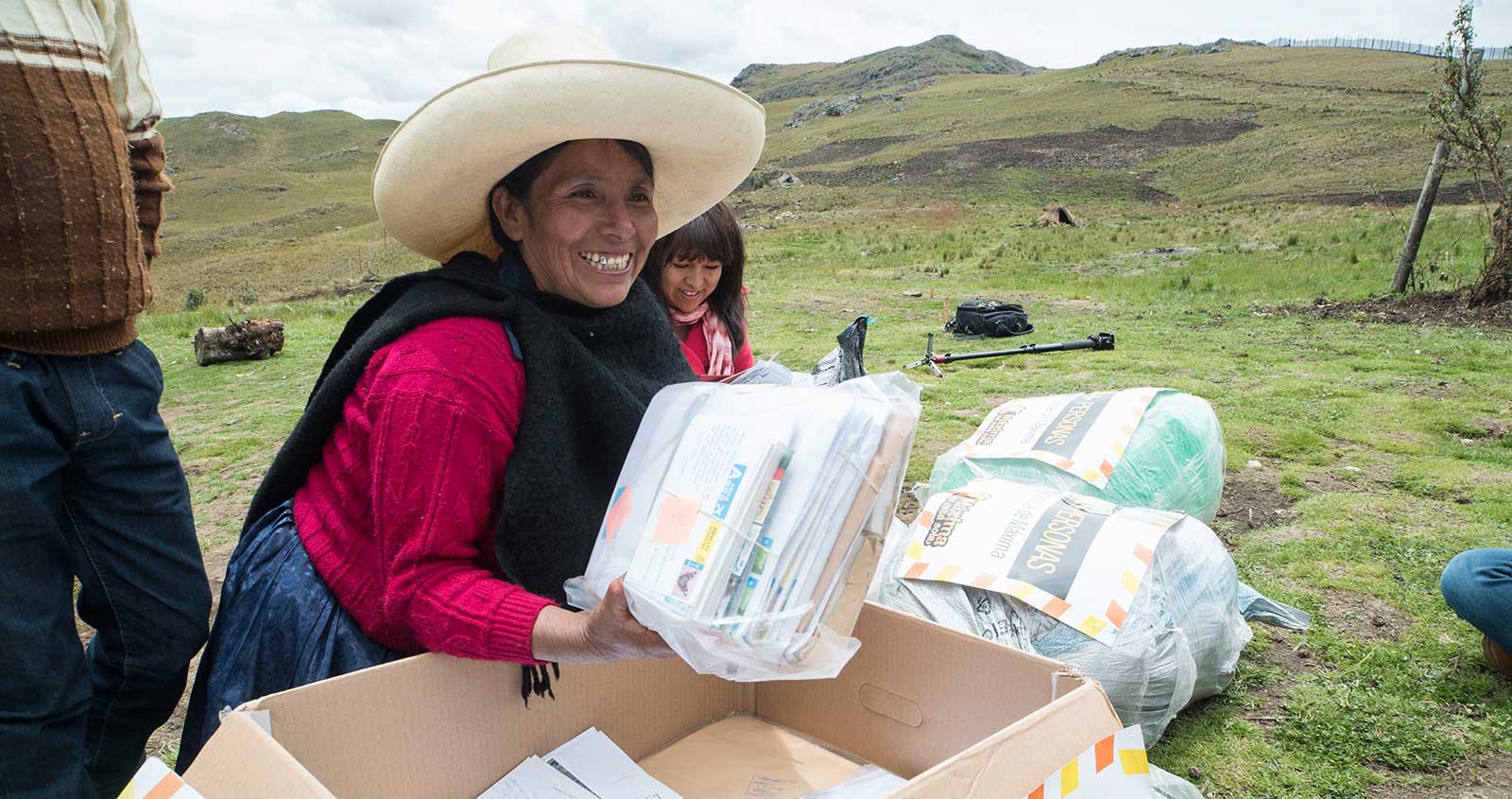
Máxima Acuña receives over 150 thousand letters from all over the world
Máxima Acuña receives over 150 thousand letters from all over the world © Amnesty International

Amnesty issued several Urgent Actions for Máxima and her family, sending them through our global network of activists. Her case was also featured in Write for Rights 2016, where over 300,000 letters, emails, petitions, and tweets were taken on her behalf, targeting the Peruvian authorities.

On 14 February this year, an Amnesty International delegation visited Máxima and her family to deliver over 150,000 messages of support and solidarity collected from around the world, calling on the Peruvian government to protect her from any attack or act of harassment or intimidation.

The issue in depth

Like Máxima, many environmental defenders in Peru have faced groundless criminal proceedings which seek to prevent them from defending human rights by exhausting their physical and emotional strength and their limited resources and publicly portraying them as criminals.

The stigmatisation and criminalisation of human rights defenders also affects the social movements and organisations to which they belong. It projects a public image that human rights defenders are “criminals” and removes the legitimacy of the important work they do. It also creates a hostile environment for promoting and defend human rights, which, in turn, allows for physical assaults against human rights defenders and even murder.

What’s next?

Amnesty will continue to demand an end to the harassment, intimidation, stigmatisation and further attacks that Máxima may face, and for the authorities to publicly recognise her legitimate and important work as an environmental and human rights defender.

You can keep working for Maxima at this important time by downloading our resources.

China: Human rights lawyer released on bail amid relentless crackdown

The release of human rights lawyer Xie Yang on bail does not represent a break in China’s relentless crackdown against human rights lawyers.

Xie Yang was tried in Changsha City Intermediate People’s Court in southern China on 8 May for “inciting subversion of state power” and “disrupting court order” and apparently released on bail even though a verdict has not been announced.

“This unusual sequence of events does nothing to alleviate the concerns about torture in this case,” said Patrick Poon, China Researcher at Amnesty International. “While it is a relief that Xie Yang is no longer in detention, it doesn’t diminish the fact that he should never have been arrested in the first place.”

While on bail, Xie Yang is likely to experience constant surveillance and severe restrictions to his freedom of movement

“While on bail, Xie Yang is likely to experience constant surveillance and severe restrictions to his freedom of movement as we have witnessed in other such cases,” said Patrick Poon. “Such tactics appear to be the authorities’ modus operandi against those defending human rights.”

The court announced the trial would be broadcast on Weibo, a Chinese social media platform, only approximately 20 minutes before it began.

At the trial Xie Yang said that he was not tortured, contradicting what he told his lawyers in January when he recounted prolonged torture he had suffered during his detention, including lengthy interrogations, beatings, and deprivation of water and sleep.

Xie Yang is one of almost 250 lawyers and activists targeted in an unprecedented crackdown by the Chinese government which started in July 2015.

Tortured

After accounts of Xie Yang’s torture were made public by his lawyers in January 2017, the authorities have rejected any further requests from his lawyers to meet with their client. Another detained human rights lawyer Jiang Tianyong, was seen “confessing” on mainland media in March 2017 to fabricating the evidence of Xie Yang’s torture.

Xie Yang’s family had also been threatened in an attempt to coerce him to “confess” and provide incriminating statements against other human rights defenders.

Xie Yang was represented at the trial by court-appointed lawyers after those hired by his family were removed from the case by the authorities.

The authorities have repeatedly warned Chen Jiangang, one of Xie Yang’s original defence lawyers, to stop discussing the case with international media and initiated an investigation into Chen’s own eligibility to practice law.

Chen Jiangang and his family and activist Zhang Baocheng and Zhang’s wife, Liu Juefan, were taken away by police in Yunnan when they were travelling there on 3 May. After they were released, Chen had to drive back to Beijing from Yunnan, escorted by public security officers while Chen’s wife and their two young children were allowed to take a flight back to Beijing.

“The charges against Xie Yang are baseless. The authorities know it and that is why they have resorted to torture and other forms of coercion against him and his family” said Patrick Poon.

Relentless crackdown

The detention of lawyer Wang Yu and her family on 9 July 2015 marked the beginning of an unprecedented government crackdown on human rights lawyers and other activists. Over the following weeks, almost 250 lawyers and activists were questioned or detained state security agents, and many of their offices and homes were raided.

Apart from Xie Yang, another five have been convicted of “subverting state power”. In August 2016, activists Zhai Yanmin and Gou Hongguo, aka Ge Ping, were given suspended prison sentences. Activist Hu Shigen and lawyer Zhou Shifeng were sentenced to seven and a half years and seven years’ imprisonment respectively. Lawyer Li Heping was tried in Tianjin on 25 April and then sentenced to three years imprisonment, suspended for four years, on 28 April. His whereabouts remained unknown after the verdict until he returned home on 9 May, although images show he has lost weight and his hair has turned noticeably grey.

Three others remain in detention and are awaiting trial dates or verdicts. The trial date of human rights lawyer Wang Quanzhang still has not been set. Activists Yin Xu’an and Wang Fang are still waiting for their verdicts after appearing in court in September last year and in February this year respectively.

“I will never forget the day they told us we couldn’t go to the US”

For weeks, Suzanne Khoja had Monday January 30 etched on her mind. She had been thinking of little else since finding out it would be the date she and her family would finally land in the US after a gruelling three-year asylum application process. That process had started after the family had fled the ongoing violence in their hometown of Aleppo, Syria, and slipped across the border to Turkey, stopping to spend the night among other refugees at the sprawling tent city on the border.

For more than three years, the family lived and sought work in Turkey, but opportunities for refugees are scarce, and they regularly faced discrimination because of their immigration status and ethnicity, said Suzanne, 28.

“Life in Turkey was so tough and it taught us a lot,” she told Amnesty International. “We were just a number. You don’t have any rights, you can’t do anything.”

When the family finally received word they would be allowed to resettle in the US, they were elated. “It was a dream for us to come and live our lives — maybe even like our [former] lives in Syria. We were really relieved,” Suzanne said.

Migrants and refugees, mainly from Syria, wait for security check at a border crossing © ARMEND NIMANI/AFP/Getty Images

Trump’s immigration order

In the days leading up to January 30, Suzanne, her parents and five siblings ranging in age from 12-30, had packed their belongings and disconnected the electricity and water from their small rented apartment in Istanbul. The government had even invalidated their identity cards, which allowed them to do everything – from being employed to visiting the hospital, or attending school in Turkey. But just 48 hours before their flight, Suzanne received a crushing phone call.

President Donald Trump had, the evening before, handed down his executive order on immigration that barred Syrian immigrants – like Suzanne’s family – along with nationals from Iraq, Iran, Libya, Somalia, Sudan, Syria and Yemen, from entering the US for 90 days. It also suspended the refugee resettlement for 120 days. The family would no longer be allowed to travel.

“I will never forget the day they told us we couldn’t go to the US,” said Suzanne. “I didn’t believe it. It was like American people said to us” ‘you are different, you’re not like us, so you can’t be here’.”

“I didn’t believe it. It was like American people said to us” ‘you are different, you’re not like us, so you can’t be here’”

Suzanne Khoja

The following 10 days for the family mirrored the chaos that erupted at ports of entry across the US, as visitors, refugees, students, and even permanent residents alike were detained and stopped from boarding flights or taken off planes abroad.

Protesters swarmed airports and legal advocates worked round the clock to free detained clients and file suits to block the executive order, by now dubbed the “Muslim ban”. Meanwhile, a small group of volunteers at Rutgers Presbyterian Church, who were providing resettlement assistance to Suzanne’s family, were working equally hard to find a way to help.

“We were doing everything we could think of,” said David Mammen, the coordinator for the Church’s refugee task force. “We were calling senators and congressman — someone knew Justin Trudeau and sent him an email to ask if they could go to Canada.”

As events unfolded, Dave reached out to Suzanne by phone to keep her updated on the latest developments. That small gesture was enough to sustain the family through the next few days, she said.

Suzanne Khoja and Dave Mammen. Photos by Liz Fields/Amnesty International Australia

“After the executive order, we were out of hope,” Suzanne recalls. “If you live in Turkey and Syria and go through this whole situation, you feel like nobody cares about you, if you live or die, or if you’re starving. But when somebody just calls you and says ‘hi’. Hi is enough, you know?”

In the end, it was a federal judge in Seattle that enabled the family to resettle. On February 3, US District Court Judge James L. Robart issued a temporary restraining order stopping officials from enforcing the immigration ban nationwide, until more hearings could be held. The Khoja family received the news and quickly took advantage of the opening, getting on a plane the following Tuesday, some 10 days after the executive order was issued.

They arrived at New York’s JFK airport to a group of reporters and around 50 volunteers from Rutgers and its partners at three other churches and synagogues.

“We were so tired. I was shocked, but so happy to be [in the US],” said Suzanne.

Life in the US

In the last two months since their arrival, the entire family has been busy learning English. Suzanne, who worked as an English teacher in Syria, has begun looking for work.

“I’m waiting to start a job, to be an American citizen, maybe go on some journeys or an adventure,” she said. “[But] I hope I can go back [to Syria]. It’s my homeland. I’d love to go there and to see the land. I miss everything.”

On March 6, Trump released an amended travel ban that, among other changes, excluded Iraqi citizens and immigrants who had already been granted green cards or valid visas. However, the revised ban was also immediately halted by two different courts before it could be enforced. The legal battle over the executive order is currently being played out in cases before two different appeals courts. One case originating in Hawaii would stop the government from implementing the 90-day travel ban on nationals from the six Muslim-majority countries, and the 120-day suspension of the US Refugee Admissions Program. Another case originating in Maryland seeks to block only the travel ban portion.

“The Executive Order, by its plain language, authorises Trump to add more countries to the list and to extend the ban on entry basically as long as the President wants”

Patrick Taurel

Trump, meanwhile has said that his executive order is necessary for national security and has vowed to take the fight all the way to the Supreme Court, if necessary. Patrick Taurel, an immigration lawyer with Washington DC law firm Clark Hill, says that a battle in the high court could potentially “decide what America looks like for years to come,” and have broader implications for immigration to the US.

“If Trump wins this case, the ban will not be limited to 90 days and the six named countries,” Taurel said. “The Executive Order, by its plain language, authorises Trump to add more countries to the list and to extend the ban on entry basically as long as the President wants. The stakes in this case are very high.”

US President Trump has cruelly slammed the door on tens of thousands of vulnerable people. We can step up and provide safety to those in need.

Indonesia: Ahok blasphemy conviction is an injustice

The conviction and imprisonment of Jakarta Governor Basuki Tjahaja Purnama, better known as “Ahok”, will tarnish Indonesia’s reputation for tolerance.

“This verdict demonstrates the inherent injustice of Indonesia’s blasphemy law, which should be repealed immediately,” said Champa Patel, Amnesty International’s Director for Southeast Asia and the Pacific.

“Despite protests of his innocence and evidence that his words were manipulated for political purposes, he has been sentenced to two years in jail. The verdict will tarnish Indonesia’s reputation as a tolerant nation.”

Amnesty International calls the Indonesian authorities to repeal blasphemy laws, including Articles 156 and 156(a) of the Criminal Code that have been used to prosecute and imprison people may be imprisoned for “defamation” of religion for as long as five years simply because they have peacefully exercised their right to freedom of expression or to freedom of thought, conscience or religion, which are protected under international human rights law.

Background

The prosecutor demanded the judges sentence Ahok for one year’s imprisonment during two years of probation and charged him for “insulting or making hostility” towards a certain group in public under Article 156 of the Criminal Code and dropped the blasphemy charges. However, the North Jakarta District Court convicted Ahok of blasphemy under Article 156(a) of the Criminal Code and sentenced him to two years imprisonment. Ahok is now being imprisoned at the Cipinang Detention Facility.

Although the blasphemy law (Presidential Decree No. 1/PNPS/1965) and Article 156(a) of the Criminal Code were enacted in 1965, they were used to prosecute only around 10 individuals between 1965 and 1998, when former President Suharto was in power, during which time the right to freedom of expression was severely curtailed. Between 2005 and 2014 Amnesty International has recorded at least 106 individuals who have been prosecuted and convicted under blasphemy laws.

Win for Queensland kids: Government adopts Youth Detention Review recommendations

In the wake of a swathe of human rights abuses at Queensland youth detention centres, the Queensland government has announced it will adopt all 83 recommendations from the Independent Review into Youth Detention.

What happened?

Last year, Amnesty exposed human rights abuses in Queensland’s youth detention centres after receiving over 1000 pages of evidence through a Freedom of Information request.

This included staff stripping children at risk of self-harm naked, prolonged isolation of kids (including eight Aboriginal kids held up to 22 hours a day for 10 days), handcuffing kids during exercise and family visits, the use of force resulting in injury and using dogs to frighten and intimidate children.

Many of these abuses happened at Cleveland Youth Detention Centre in Townsville, which is predominantly 90 per cent Aboriginal and Torres Strait Islander children.

Queensland steps up

In response, the Queensland government announced an Independent Review into Youth Detention.The government released the review’s 620-page report this month, as well as its response.

The Queensland government announced it will adopt all of the report’s recommendations, in full or in principle. The recommendations map a path for a more rehabilitative youth justice system including:

  • establishing an independent inspectorate of custodial services
  • implementing justice reinvestment in Queensland
  • investing in community and Indigenous-designed and led early intervention and diversion services that deal with the underlying issues of offending
  • ending the use of dogs, limiting the use of solitary confinement and restraints, and ensuring use of force is a last resort
  • improving training of detention staff to deal with children with mental health conditions

The government has announced $6.2m to implement the recommendations and is already starting a project to explore justice reinvestment in Cherbourg.

These recommendations are particularly important for Indigenous children in Queensland, who are far more likely to be sent to detention than non-Indigenous children.

How did Amnesty respond?

In August 2016, after receiving over 1000 pages of evidence from the Youth Detention Inspectorate through a freedom of information request, Amnesty wrote to the Queensland Attorney General outlining human rights concerns for children in detention.

Amnesty then exposed the horrific treatment of children in Queensland’s youth detention centres in the ABC 7:30 Report and our Queensland research report Heads Held High report. The following day, the Queensland government announced an Independent Review into Youth Detention. Amnesty International’s report formed part of the review’s terms of reference.

Since then, our activists have met with their MPs about these serious issues. Over 41,000 of our supporters signed our petition to call on the Federal government to ratify the Optional Protocol on the Convention against Torture  – which includes fighting for protections such as independent inspectors in all States and Territories.

The Queensland government heard your concerns! It’s thanks to our activists and supporters that we achieved this change.  

What’s next?

We still do not have a complete picture of the human rights abuses covered by the Youth Detention Review as around 250 pages have been kept from the public, including details about children being ‘hog-tied’. The Queensland government has a responsibility to reveal this information, de-identified, under their human rights obligations and in the public interest, especially for those families and communities who have children in detention.

In addition, a number of new human rights violations have been revealed, including concerns about CCTV footage, the use of dogs to discipline children and fundamental rights being denied to children under Behaviour Development Plans.

Amnesty still has not received clear answers to the questions about human rights abuses that we sent to the Queensland government in August last year. We will continue to seek answers and call for all perpetrators of abuses on children to be held to account, and for all children who have been victim of human rights abuses to have access to a remedy.

Amnesty International will be working with the Queensland government to ensure that the recommendations are implemented quickly and in line with human rights obligations.

We know that a tough, harsh way of dealing with kids in the justice system only hurts kids and violates their human rights. The better approach is for governments to listen to the community, who know what their kids need to help them get on a better path for the future, and invest in Indigenous-led early intervention and diversion programs.

Young Iranian man walks free from death row

Salar Shadizadi, who was sentenced to death for a crime he committed when a child, was released after 10 years from Rasht prison in northern Iran.

© Private

Salar, now 25, had faced imminent execution several times in connection with a murder that took place when he was just 15 years old.

In a letter from prison in 2015, Salar explained that he “unintentionally” caused the “catastrophic” death of his childhood friend by stabbing a moving object under a cloth during a “silly game” in the dark. His friend had dared him to go into the garden at night, knowing that Salar was very afraid. Salar said he had only realised it was his friend after he had stabbed the object.

Salar had said that he was tortured and otherwise ill-treated in the investigation stage of his case and was not granted access to a lawyer until his case was sent to court for trial. In December 2007, he was sentenced to death, a sentence which the Supreme Court later upheld. He was granted a retrial in early 2016 after a global outcry but was re-sentenced to by hung in November 2016.

In February 2017, the family of the deceased agreed to grant him a pardon in exchange for “blood money” (diyah) and he was released on 25 April 2017. According to Iranian law, those sentenced to ‘Qesas’ (retribution), can only be spared the death penalty if the family of the victim agrees to accept a payment.

How did Amnesty respond?

In In January 2016, the Australian section of Amnesty created an online petition for the then-49 people sentenced to death in Iran for crimes committed when they were children, including Salar.  Over 12,000 people signed the petition, which was then sent to the Iranian authorities.

Urgent actions were issued to the global movement and thanks to intense advocacy and campaigning efforts spearheaded by Amnesty, all his scheduled executions were halted – often at the last minute.

The issue in depth

At least 78 juvenile offenders remained on death row in 2016 and least two juvenile offenders were executed in Iran in 2016. Amnesty International received reports that five other juvenile offenders were among those executed, but was unable to verify the age of those individuals at the time of the crime.

Scores of people who were below 18 years of age when the crime was committed were granted retrials, based on the juvenile sentencing provisions in the 2013 Islamic Penal Code, but were sentenced to death again after the courts concluded that they had attained sufficient “mental maturity” at the time of the crime. Among these people were Salar Shadizadi, as well as Himan Uraminejad, Hamid Ahmadi, Sajad Sanjari, Alireza Tajiki and Amanj Veisee.

Overall, Iran carried out at least 567 executions in 2016, including at least eight women. However the authorities only announced 242 of those executions through official and semi-official sources. At least 33 executions were carried out in public.

What’s next?

International human rights treaties prohibit courts sentencing to death or executing anyone who was under the age of 18 at the time the crime was committed. But a small number of countries, including Iran, continue to sentence  child offenders to death.

Amnesty International will continue to campaign for the abolition of the death penalty globally in the handful of countries still sentencing children and adults alike to execution. In an unprecedented step, one country is trying to reinstate the death penalty – The Philippines. We need to take action, before this happens.

Syria: Refugees risk mass returns to war following Astana ‘de-escalation’ proposal

In response to news of a Russian-brokered proposal for “de-escalation zones” in Syria signed by Turkey and Iran and welcomed by the Syrian government, Amnesty International’s Lynn Maalouf, Director of Research at the Beirut regional office said:

“Countries hosting Syrian refugees must not mistake this proposal for an opportunity to return those seeking refuge on their territories back into Syria.”

“The conflict in Syria continues to rage on, and people continue to be killed, tortured and arbitrarily detained every day.”

Lynn Maalouf, Director of Research at the Beirut regional office

“The conflict in Syria continues to rage on, and people continue to be killed, tortured and arbitrarily detained every day. Refugees have a right under international law to be protected from being forcibly returned to their country for as long as they are genuinely at risk of serious human rights violations. States hosting refugees have an obligation not to forcibly return Syrian refugees to Syria where their lives and freedoms would be at risk.”

“Nor should the “de-escalation zones” be used to justify countries closing their borders and denying people fleeing conflict and persecution the right to seek asylum.”

The proposal, first announced on 3 May, was refused by the Syrian opposition who consequently pulled out of the Russian-brokered peace talks in Astana, Kazakhstan.

Bangladesh: Dissenting voices trapped between fear and repression

The Bangladeshi government has not only failed to protect dissenting voices or hold accountable the armed groups that threaten them, it has also stifled freedom of expression through a slew of repressive tactics and new laws, according to a new Amnesty International report.

The report, Caught between fear and repression: Attacks on freedom of expression in Bangladesh, documents how armed groups have thrived in a climate of impunity, carrying out a high-profile spate of killings of secular bloggers with few consequences. In four years, only a single case has resulted in convictions.

Activists also regularly receive death threats, forcing some of them to leave the country for their own safety, while the authorities have refused to offer them protection.

Over the last year, the Bangladeshi government has also intensified its crackdown on public debate and criticism, harassing media workers, interfering with their work, and bringing criminal charges against them under draconian laws.

“Between the violence of armed groups and state repression of the state, secular voices in Bangladesh are being consistently silenced. Not only is the government failing to protect people’s freedom of expression, it has been blaming them for the threats they face and criminalizing the work of bloggers and journalists through a slew of repressive laws,” said Olof Blomqvist, Amnesty International’s Bangladesh researcher.

Blaming the victims

After the online activist Nazimuddin Samad was hacked to death near his university campus in Dhaka in April 2016, the government sought to blame the tragedy on him. The Home Minister Asaduzzaman Khan Kamal said the police would scrutinise his writings for “objectionable” content. Meanwhile, Prime Minister Sheikh Hasina denounced the work of secular writers as “filthy words”.

In several other cases, activists told Amnesty International the police refused to register their complaints about threats they received. In other instances, the police suggested the victims should leave the country, or even began harassing them for writing on “secular topics”.

One secular blogger, who received more than a dozen death threats by phone and on social media, told Amnesty International: “I made several attempts to get some help, but [to] my face they refused to help me.”

Meanwhile their attackers have been able to enjoy almost complete impunity. Since the Awami League government was re-elected in 2014, only one case resulted in convictions – eight alleged members of Ansar al-Islam were found guilty in December 2015 for their role in an attack.

This has brought a climate of fear in Bangladesh’s once-vibrant civil society, who now resort to self-censorship.

There are now “red lines” that journalists are careful not to cross. Few dare publish reports that may be deemed critical of Prime Minister Sheikh Hasina or her family, knowing that they could be shut down without explanation or have pressure brought to bear on their advertisers.

Speaking to Amnesty International, journalists described the repression as the worst they’ve endured since Bangladesh returned to civilian rule in 1991. There are now “red lines” that journalists are careful not to cross. Few dare publish reports that may be deemed critical of Prime Minister Sheikh Hasina or her family, knowing that they could be shut down without explanation or have pressure brought to bear on their advertisers.

“The Bangladeshi government treats journalism as if it were a crime. Through imprisonment, threats, intimidation, and constant interference in their work, Bangladesh’s government has done all it can to silence critical voices in the media,” said Olof Blomqvist.

Repressive laws

The 2006 Information and Communications Technology (ICT) Act, which carries a minimum sentence of seven years, is seen as the principal instrument to muzzle critical voices in the country. Its vaguely worded clauses empower the authorities to prosecute people “in the interest of sovereignty, integrity or security of Bangladesh” or if they are deemed to “prejudice the image of the State” or “hurt religious belief”.

The government has used the draconian law to silence criticism in the media by bringing criminal charges against journalists for simply doing their work. In December 2016, Nazmul Huda, a print and television journalist, was arrested, viciously beaten in custody and then charged under the ICT Act for covering protests by garment workers outside Dhaka.

The government has used the draconian law to silence criticism in the media by bringing criminal charges against journalists for simply doing their work. In December 2016, Nazmul Huda, a print and television journalist, was arrested, viciously beaten in custody and then charged under the ICT Act for covering protests by garment workers outside Dhaka.

In 2013, the government also used the ICT to bring criminal charges against four secular bloggers for allegedly “hurting religious sentiments”.

Since 2013, several high-profile journalists and editors have been subjected to politically-motivated criminal charges. Most of them have been associated with media outlets that are critical of the government or supportive of the political opposition.

One journalist told Amnesty International: “The government has picked a few individuals to make examples out of. This has been to instil fear in other media, to show what happens when you cross the line.”

In one instance, Awami League supporters filed a flurry of 83 politically motivated cases against Mahfuz Anam, editor of Bangladesh’s The Daily Star newspaper.

Shafik Rahman, an elderly opposition supporter and the editor of the weekly Mouchake Dil magazine, was held in solitary confinement for over three weeks on a trumped-up charge of “conspiring to abduct and assassinate” ruling party politician Sajib Wazed Joy.

Bangladesh’s authorities have frequently invoked archaic, colonial-era criminal defamation and sedition laws against critical journalists.

The authorities are also now proposing new laws, such as a Digital Security Act and Liberation War Denial Crimes Act. If enacted, these laws would impose further restrictions on freedom of expression by creating new criminal offences, sometimes using national security as a cover.

“The crackdown on dissent and secular thought in Bangladesh must end. The very first steps must include providing protection to those who are threatened for raising their voices, and to repeal or reform the draconian laws that are used to punish anyone voicing inconvenient opinions,” said Olof Blomqvist.

Turkey: 250,000 demand release of jailed journalists on World Press Freedom Day

On World Press Freedom Day, top journalists including Australian Peter Greste, cartoonists and world-renowned artists are calling for the release of more than 120 journalists jailed in Turkey as part of a ruthless crackdown on freedom of the press.

The #FreeTurkeyMedia campaign has attracted 250,000 supporters since February.

As part of the campaign today Amnesty International has released a new report, Journalism is not a crime: Crackdown on media freedom, which reveals the brutal truth about the state of press freedom in Turkey.

“A large swathe of Turkey’s independent journalists are languishing behind bars, held for months on end without trial, or facing prosecution on the basis of vague anti-terrorism laws,” said Salil Shetty, Amnesty International’s Secretary General.

“Today our thoughts are with all journalists who are imprisoned or facing threats and reprisals, but our particular focus is on Turkey where free expression is being ruthlessly muzzled. We call on Turkey’s authorities to immediately and unconditionally release all journalists jailed simply for doing their job.”

“Today our thoughts are with all journalists who are imprisoned or facing threats and reprisals, but our particular focus is on Turkey where free expression is being ruthlessly muzzled. We call on Turkey’s authorities to immediately and unconditionally release all journalists jailed simply for doing their job.”

Since the failed coup attempt in July 2016, at least 156 media outlets have been shut down and an estimated 2,500 journalists and other media workers have lost their jobs. Journalists have been arrested and charged with terrorism offences as a result of posts they have shared on Twitter, cartoons they have drawn or opinions they expressed. This is taking place within the context of a wider crackdown against perceived government critics which has seen 47,000 people remanded in prison and more than 100,000 public sector employees summarily dismissed.

More than 250,000 people have signed an online petition calling for the release of Turkey’s journalists and over the last month thousands have supported the #FreeTurkeyMedia campaign. Run by Amnesty International with the support of numerous other organisations, the campaign encourages people to post a ‘solidarity selfie’ on Twitter.

Among those that have already backed the movement are artist Ai Weiwei, while dozens of cartoonists around the world are submitting work which will be judged by a panel including cartoonists Zunar, Steve Bell and Martin Rowson. Peter Greste, Mohamed Fahmy and Baher Mohamed, the three Al Jazeera journalists imprisoned in 2013 in Egypt for more than 400 days, are also supporting the campaign.

“For more than 400 days in Egypt, it was the knowledge that people around the world were campaigning for our release that kept us strong,” wrote Peter Greste and Mohamed Fahmy in an article published in newspapers around the world today.

“If it was right to speak out for us and demand #FreeAJStaff, it is right to speak up for all journalists jailed simply for doing the their jobs. That is why we have joined the call to #FreeTurkeyMedia.”

Australia

Amnesty International is also highlighting the importance of press freedom in Australia today.

“World Press Freedom Day is an opportunity for Australia to reflect on the strength of press freedom in this country”, said Amnesty International’s Campaign Manager, Michael Hayworth.

“We are concerned about laws in Australia that criminalise whistleblowers and make it harder for the public to access vital information.”

“Under the Border Force Act detention centre workers can be given a two-year jail term for speaking out about what goes on in offshore detention on Nauru and Manus Island. And under the ASIO Act journalists can be sentenced to 5 or 10 years for reporting on a special intelligence operation.

“Under Australia’s mass metadata surveillance laws and arrangements, journalists’ sources have been targeted, as was revealed again this week by the AFP. This all has a chilling effect on Australian press freedom.

“If Australia is serious about protecting press freedom these laws should be repealed,” said Michael Hayworth.

Background: Journalists under attack in Turkey

Journalist Mahir Kanaat was arrested with six colleagues on Christmas day. “My hands were tied behind my back and a ‘special team’ [police officer] was on top of me. I shouted ‘my wife is nine months pregnant, why are you making her lay down’ and tried to get up. There was a scuffle, I was kicked in the face.” Mahir Kanaat’s wife gave birth to their son while he was in detention. He is still in prison awaiting trial.

Lengthy periods of pre-trial detention have become routine. Charges levelled against media workers are often trumped up, sometimes patently absurd or wholly lacking any evidence of an actual criminal offence.

Former newspaper editor Ahmet Altan was detained in September 2016 along with his brother, academic Mehmet Altan. They were accused of ‘sending subliminal messages’ to the coup plotters during a TV panel discussion on the eve of the coup attempt. The programme’s presenter, Nazlı Ilıcak, was also arrested and remains in pre-trial detention.

Investigative journalist, Ahmet Şik, has been remanded in custody since December. In the indictment against him, eight tweets, two interviews and an article were listed as evidence of his aiding three separate proscribed groups, all of which have totally different, often opposing, agendas. His wife Yonca told Amnesty International: “Ahmet’s imprisonment is a message to others: ‘Speak out if you dare’.”

Information about the cartoon competition can be viewed here https://www.amnesty.org/en/latest/campaigns/2017/04/cartoonists-use-drawings-to-demand-the-release-of-colleagues-in-turkey/ and on Twitter at @freeturkeymedia

Find out more about the campaign here:
https://www.amnesty.org/en/latest/campaigns/2017/04/free-turkey-media/