Australia/PNG: Shooting incident at Manus Island centre exemplifies the failure of offshore processing

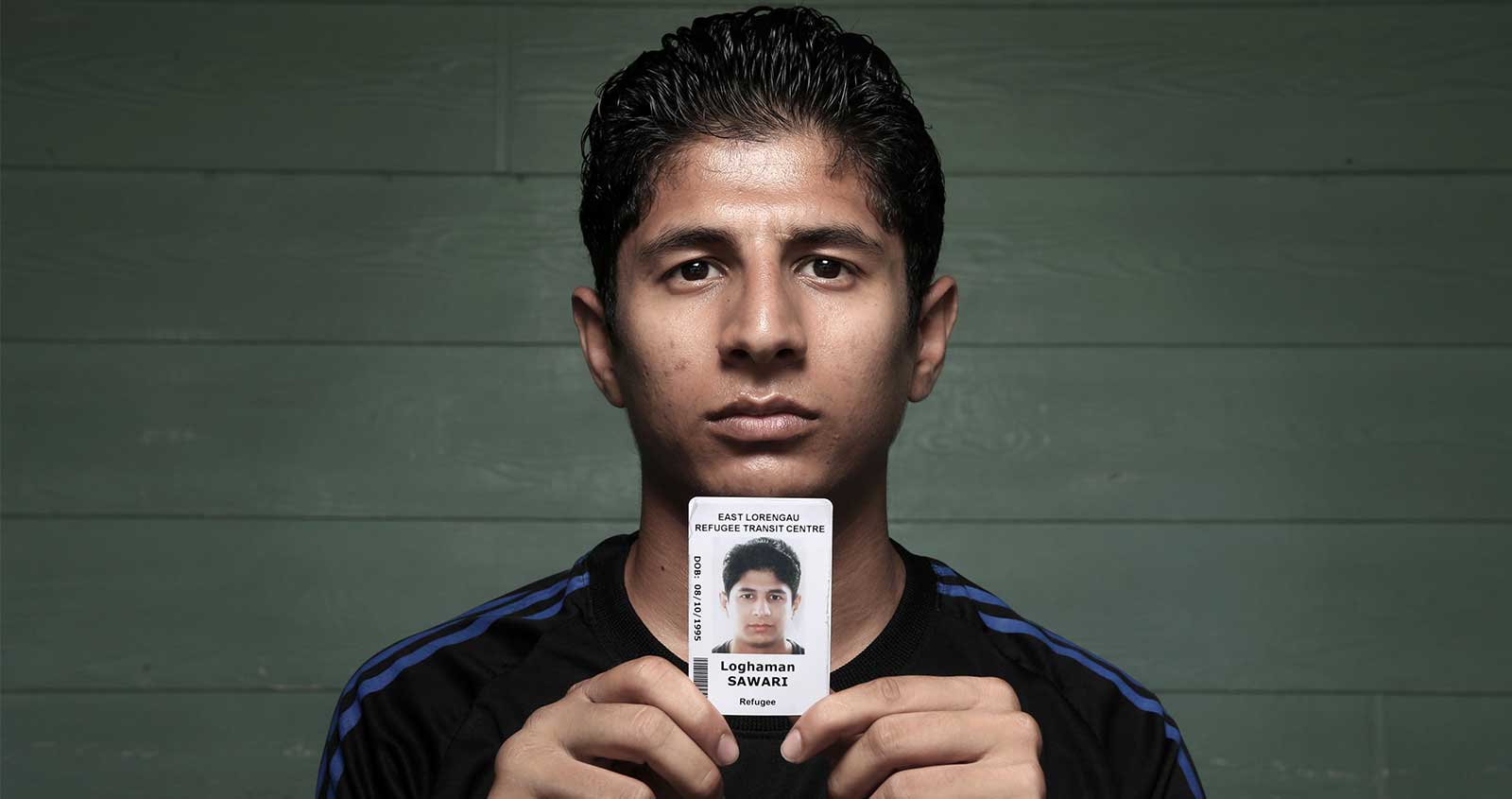
Amnesty International calls for refugees and asylum seekers trapped on Manus Island to be brought to safety in the wake of Friday’s shocking shooting incident at the Manus Island detention centre.

Reacting to Friday’s shooting incident in the Australian Government-run refugee detention centre on Manus Island, Anna Neistat, Amnesty International’s Senior Director for Research, said:

“Today’s shooting serves as just another example that Manus island detention facility is not a safe place for asylum seekers. More incidences like this are inevitable unless the refugees and asylum seekers are relocated to safety.”

“We call for measures to ensure the immediate safety and wellbeing of all asylum seekers and refugees, including adequate medical care to those who may have suffered from damage or injury, and a prompt and independent investigation of this incident.”

“Amnesty International reiterates its call on Australian authorities to immediately halt its unlawful policy of offshore processing. Those trapped on Manus Island and on Nauru must be brought to Australia, or a third country where their rights and safety can be assured.”

According to witnesses, members of the PNG Defence Force stationed at the Lombrum Naval Base, next to the detention centre, opened fire at 6:30 pm after the camp came under attack by locals following an altercation between a refugee and a local man. Multiple shots were fired, but it is unclear how many people may have been injured.

In 2016, Amnesty International investigated conditions in Nauru and in November 2013 our team of investigators visited Manus Island. We found patterns of deliberate abuse at the hands of the Australian Government.

The Australian authorities promised to close Manus Island detention before end of October, but it is unclear what this means for the 888 refugees and asylum seekers in Papua New Guinea.

Alicia Keys and the Indigenous rights movement in Canada honoured with top Amnesty International award

Celebrated global music artist and activist Alicia Keys and the inspirational movement of Indigenous Peoples fighting for their rights in Canada have been honoured with Amnesty International’s Ambassador of Conscience Award for 2017.

The award will be officially presented at a ceremony in Montréal, Canada, on 27 May.

Accepting the award recognising the Indigenous rights movement of Canada will be six individuals representing the strength and diversity of the movement, which has bravely fought to end discrimination and ensure the safety and well-being of Indigenous families and communities. They are Cindy Blackstock, Delilah Saunders, Melanie Morrison, Senator Murray Sinclair, Melissa Mollen Dupuis and Widia Larivière.

“The Ambassador of Conscience Award is Amnesty International’s highest honour, celebrating those who have shown exceptional leadership and courage in championing human rights,” said Salil Shetty, Amnesty International’s Secretary General.

“Both Alicia Keys and the Indigenous rights movement of Canada have in their own ways made inspirational and meaningful contributions to advancing human rights and towards ensuring brighter possibilities for future generations.”

Salil Shetty, Amnesty International’s Secretary General

“Both Alicia Keys and the Indigenous rights movement of Canada have in their own ways made inspirational and meaningful contributions to advancing human rights and towards ensuring brighter possibilities for future generations. Crucially, they remind us never to underestimate how far passion and creativity can take us in fighting injustice.”

Alicia Keys: From music to activism

Alicia Keys has used her career and platform as a 15-time Grammy award-winning artist to inspire and campaign for change.

“To be given this great honour, and to be in the presence of the Indigenous rights movement is a humbling experience.”

Alicia Keys.

“To be given this great honour, and to be in the presence of the Indigenous rights movement is a humbling experience,” said Alicia Keys. “It encourages me to continue to speak out against injustice and use my platform to draw attention to the issues that matter to me.”

Often referred to as the “Queen of R&B”, Ms. Keys has increasingly interwoven her activism with her art. Her extensive philanthropic work includes co-founding Keep a Child Alive (KCA), a non-profit organisation providing treatment and care to children and families affected by HIV in Africa and India. KCA identifies and partners with local leaders in grassroots organisations to design, implement and share innovative solutions to some of the most pressing challenges in the fight against AIDS. KCA has raised more than $60 million to provide AIDS care to hundreds of thousands of children and their families, as well as advocate for more understanding and support.

In 2014, she co-founded the We Are Here Movement to encourage young people to mobilize for change, asking the question “Why are you here?” as a call to action. Through the movement she has sought to galvanize her audience to take action on issues such as criminal justice reform and ending gun violence.

Stunned by the fact that there are now more refugees in the world today than at any other point in history, the musician helped create and appeared in a short film entitled “Let Me In” to mark last year’s World Refugee Day. With her song, “Hallelujah” at its center, the film brings the issue of the refugee crisis home to viewers by telling the powerful story of a young American family forced to flee to the US-Mexico border.

“Our conscience is something we are all gifted with at birth, no matter who we are,” said Alicia Keys. “That little voice that speaks to you and tells you when something is not right, I always use as my guide. Since I was a small girl my inner voice would yell at me! Now I just say, okay, what can I do? That is a question we can ask ourselves and then act upon.”

Shining a light for the rights of Indigenous Peoples in Canada

Despite living in one of the world’s wealthiest countries, Indigenous women, men and children are consistently among the most marginalized members of society in Canada. Now, after decades of public silence and apathy, a vibrant and diverse movement of Indigenous activists has captured the public attention.

This year the Ambassador of Conscience Award will be shared between leaders and activists from the movement who have shown remarkable courage in leading important legal equality rights battles, defending land rights and inspiring non-Indigenous and Indigenous people to action.

Since December 2012, the grassroots “Idle No More” movement has helped to shine a light on Indigenous peoples’ ongoing struggle to be able to make their own decisions about their lands, resources and environment. At the forefront of this protest were Melissa Mollen Dupuis and Widia Larivière, the co-founders of the movement in Québec.

Mainly led by women, the movement represents a new wave of Indigenous mobilization that gives a platform for grassroots activists, fosters the cultural pride of Indigenous youth and brings Indigenous and non-Indigenous people in Canada closer together on common issues such as the environment and the economy.

On learning of the announcement, Melissa Mollen Dupuis and Widia Larivière said in a joint statement: “Receiving such a prestigious international award is an acknowledgement of the work done by thousands of people who have, in their own way, stood up every day for the rights of Indigenous Peoples in a spontaneous and peaceful citizens’ movement.

“In a society that encourages the pursuit of power and profit over the well-being of the community as a whole, the words and actions of the community – and of the members of it who are most at risk of experiencing social injustice and discrimination – are one of the most effective tools we have in combatting the effects of colonization in Canada.”

Cindy Blackstock hopes that the award will help to focus global attention on the injustices still prevalent in Canada today.

As head of the First Nations Child and Family Caring Society, she led a decade-long legal battle against the underfunding of social services for First Nations children. In 2016, the Canadian Human Rights Tribunal issued a landmark ruling calling on the federal government to take immediate action to end its discriminatory practices.

However the Canadian government has continued to drag its feet in fully complying with the ruling, meaning that First Nations children are still suffering discrimination.

“The conscience of the people is awakening to the Canadian government’s ongoing racial discrimination towards First Nations children and their families,” said Cindy Blackstock. “Now the question is: What are we going to do about it? Are we going to allow Canada to celebrate its 150th birthday while it bathes in racism, or will we speak up and demand the discrimination stops?”

Activists get inspired at skillshare in WA!

Activists at the WA skillshare in March 2017. © Private

On the 18 March, 30 of Western Australia’s most dedicated activists came together for the first activist skill share of 2017 — and they had a blast.

The first activist skillshare in WA kicked off at the end of 2015, and these gatherings have quickly grown from workshops presented by staff, activists and guest speakers into full days of sessions designed and ran by activists. Now, activists are not only identifying the skills they want to develop, but are designing and creating their own content and sharing it with their fellow activists.

A phenomenal amount of hard work goes into these sessions, and the March skillshare covered a wide range of topics like how to market your group, planning for impact and handling objections.

Activists at the WA skillshare in March 2017. © Private

“Such an awesome day! The presenters were all fantastic and knowledgeable and each session was really interesting. The session on marketing was super insightful – I left the session feeling invigorated, inspired and well-equipped to help continue to move my group forward.”

Bhaval Chandaria Joondalup, Group Convener

Every skillshare just gets better and better. Spending a whole day in the company of other passionate and committed activists provides gives us such a great opportunity to not only hone skills and learn from each other, but also to build solid relationships, look for opportunities to work together and create a solid community of activists in WA.

“It was particularly valuable for me to see what each individual activist could bring to the table and how we differ, as well as what we share in terms of our passion for justice. In a sometimes troubling and difficult world, it was really inspiring to unite with others fighting the good fight, and to learn how to encourage others to do the same.”

JASMINE RUSCOE, REFUGEE GROUP MEMBER

Big things are coming for the next skillshare that we’re planning for later in the year, with activists already thinking about what should be included. If you’re in WA and you want to be part of the WA Famnesty, make sure you’re on our mailing list by getting in touch with waaia@amnesty.org.au . Don’t miss out on your opportunity to be a changemaker.

To get up to date with our latest priority campaigns — Community is Everything, refugees and child labour in the palm oil industry — join our next national briefing webinar at 7.30pm AEST on Tuesday April 18. And make sure to check out our Skill Up page for the latest activist training modules.

Register for the webinar

get skilled up

‘The big companies cashing in on cruelty of the vulnerable’: Dr Sid French

Dr Sid French is a structural engineer with long experience in the international infrastructure industry. He is also a member of Amnesty International Australia’s 20/20 Council and believes in the humane treatment of refugees.

Franco Belgiorno-Nettis personified the Australia of the fair go. Having immigrated to Australia to escape poverty in early 1950s Italy, he and fellow migrant Carlo Salteri founded Transfield Pty Ltd, which went on to become the largest engineering and construction company in the Southern Hemisphere. It was a company known to openly celebrate its migrant heritage by encouraging the employment of migrants.

Transfield Services*, an offshoot of the original company, was the head contract holder at Australia’s Refugee Processing Centre (RPC) on Nauru from September 2012. It changed its name to ‘Broadspectrum’ in 2015.  

Today Broadspectrum continues** to carry out, on a day-to-day basis, the dirty work of the Australian Government’s abusive offshore detention policies. Broadspectrum enables a system of abuse on some of the world’s most vulnerable people, people who travelled to Australia hoping to rebuild their lives in safety.

It is the Australian government that has laid the blueprint for cruelty and abuse, creating these islands of despair for the men, women and children who have languished there for almost four years. But for former owners including Transfield Holdings, and Broadspectrum’s current owner – Spanish corporate giant Ferrovial  – Nauru and Manus have become islands of profit.

Last Wednesday, in Spain to a room full of investors and stakeholders, a message was delivered. It was not the message those attending Ferrovial’s Annual General Meeting in Spain expected to hear, but it is certainly one they needed to hear.  It came from Amnesty International, who had attended the meeting and came with a clear warning:

‘If your business is willing not only to turn a blind eye to abuse but to reap vast profits from the suffering of others, you will be named and shamed and you will be held to account’.

“Broadspectrum now enables a system of abuse on some of the world’s most vulnerable people, people who travelled to Australia hoping to rebuild their lives in safety”

Amnesty launched its Treasure I$land report last week, putting on notice any company or organisation considering taking over once Ferrovial’s contract that ends this October: “You will be complicit in an intentionally and inherently abusive and cruel system. You will be acting in direct contravention of your human rights responsibilities and you will be exposing yourself to potential legal liability.”

Australia’s “offshore processing” system on Nauru and Manus Island is so fundamentally at odds with even basic human dignity that it would be impossible to provide core services at the Refugee Processing Centres (RPCs) without causing or contributing to serious human rights abuses.

The part of Broadspectrum’s business that runs its operations on Nauru and Manus Island in Papua New Guinea, contributed AUD$1.646 billion in the 2016 financial year – an astonishing 45% of the company’s total operating revenues. Meanwhile, Ferrovial has raked in 1.4 billion euros in revenues from Broadspectrum since acquiring the company, a substantial portion of which comes from operations on Nauru and Manus Island. I find it shameful that our taxpayer’s money is funding deliberate human suffering, let alone finding its way into the pockets of these companies profiting from it.

“This is business at its worst. No company or organisation should profit from the abuse of people fleeing conflict and persecution”

On Wednesday as global headlines from the UK to Italy and Australia to Brazil named and shamed Ferrovial (a household name in Spain) and millions of people read about the company’s complicity in abuse, surely their investors started weighing up the true cost?

These businesses are making millions running Nauru refugee detention centre – they will regret it” – International Business Times UK

Amnistía Internacional acusa al Ferrovial de maltrato a inmigrantes en el Pacífico” (“Amnesty International accuses Ferrovial of mistreating immigrants in the Pacific) – La Informacion.com

Ferrovial has repeatedly maintained the line that  “…immediately after acquiring Australian company Broadspectrum, that it would not bid for the contracts when they come up for renewal in October 2017 as they are not part of its strategic business portfolio.”

But does this allow them to turn a blind eye to people such as “Yasmin” who is from Iran and whose mental health has deteriorated to such a point during her time in the centre that she has repeatedly tried to commit suicide? Will she survive another five months, and will others?

Business at its worst

Proper corporate governance, based on internationally-endorsed standards of conduct and requiring respect for all human rights, would have identified the insupportable activities of Broadspectrum and abandoned the purchase. Yet Ferrovial acquired Broadspectrum in full knowledge of the extent of the human rights abuses on Nauru and Manus. and the level of profit that Broadspectrum makes on the back of this immense suffering.

“With hundreds of millions being made from the blood and suffering of these two thousand men, women and children, even babies, would the original founders… recognise this company now?”

This is business at its worst. No company or organisation should profit from the abuse of people fleeing conflict and persecution. No one should benefit from a system that is so deliberately cruel and abusive that Amnesty International says in the case of Nauru, amounts to torture.

You should not make money from subjecting people to abuse, it’s as simple as that.

Ferrovial and Broadspectrum are mistaken to think they can simply walk away with their pockets full once the contract ends in October.  This isn’t just about damage to reputation – these companies have exposed themselves to liability under civil and criminal law. In February this year, 17 international criminal law and refugee law academics submitted a case for investigation by the International Criminal Court, outlining the potential legal liability of Australian officials and directors of Ferrovial for crimes against humanity.

With hundreds of millions being made from the blood and suffering of these two thousand men, women and children, even babies, would the original founders of Transfield Franco Belgiorno-Nettis and Carlo Salteri celebrate this descendent of their original company or would they turn in their graves?


* In 2001 the descendent of the original Transfield, Transfield Holdings, set up Transfield Services Ltd. In September 2014 Transfield Holdings divested its interests in Transfield Services, which went on to change its name to Broadspectrum.

**The Australian Senate’s 2015 inquiry into conditions in the RPC on Nauru reported that in early 2014 Transfield Services assumed management of the complaints process for people seeking asylum held in the RPC.  725 complaints in relation to staff were received from February 2014 to April 2015, of these 96 were related to Transfield Services employees or services.  The Senate Committee found that “The incidents and complaints recorded by Transfield [Services] since 2012 included some 45 allegations of child abuse and sexual assault.  The committee is very deeply concerned about a situation in which this level of reported misconduct can occur and, at least until brought to light by the [2015] Moss Review, apparently be accepted.”  

This article was amended on 21 April 2017 to clarify details of the corporate history of the companies mentioned.

Egypt: Authorities must address sectarian violence, not abuse emergency powers

Emergency measures included in a declaration of a state of emergency by President Abdelfattah al-Sissi in the aftermath of three deplorable church bombings in Egypt will do little to resolve the root causes of sectarian attacks against Copts in Egypt and are likely to lead to a further deterioration in human rights, Amnesty International said this week.

The Islamic State armed group (IS) claimed responsibility for the synchronized bombings in Tanta and another two in Alexandria which targeted Palm Sunday church services and left at least 44 dead.

“The deadly church attacks demonstrate an appalling disregard for human life and must be utterly condemned. Nothing can justify a horrifying attack on ordinary citizens attending a place of worship,” said Najia Bounaim, North Africa Campaigns Director at Amnesty International.

“It is the duty of the Egyptian authorities to protect the lives and safety of its population, but the solution is not to continue and intensify curtailing what little freedoms remain in Egypt. Addressing sectarian violence requires genuine political will to end impunity and provide protection.

“Egypt has a decades-long history of relying on emergency measures which grant security forces sweeping powers to commit human rights violations unchecked, leading to arbitrary detention, torture and other serious violations.”

State of emergency in Egypt

A state of emergency was last imposed in Egypt in August 2013 for a period of three months after the violent dispersal of the Rabaa and Al-Nahda sit-ins.

Prior to this, under former President Hosni Mubarak, Egypt was under a state of emergency for 31 years which ended in 2012, facilitating systematic violations and giving Egypt’s security forces the power to detain thousands of people for years in administrative detention without respecting procedural guarantees intended to ensure fair administration of justice. In 2013, the Constitutional Court struck down the provision allowing for administrative detention under the Emergency Law (law 162 of 1958).

Since the state of emergency was lifted, the Egyptian authorities have relied on the regular criminal justice system for long-term pre-trial detention and special terrorism chambers for mass trials that have led to the sentencing of hundreds to death or life imprisonment after unfair trials.

Most worryingly however, the Emergency Law allows the authorities to try individuals before the flagrantly unfair Emergency State Security Courts which do not allow for the right to an appeal.

“States of emergency can never be allowed to excuse violations of non-derogable rights. Torture, unlawful killings, enforced disappearances, and arbitrary detention cannot be made lawful by declaring an emergency,” said Najia Bounaim.

Egypt’s President Abdel Fattah al-Sisi has also signed and approved Counter-terrorism Law (law no. 94 of 2015) granting the authorities sweeping powers that would usually only be invoked during a state of emergency, effectively arbitrarily restricting the rights to freedom of expression, peaceful assembly and association.

For decades previously, Egyptian authorities used the state of emergency as a pretext to crack down on dissent, violating the rights to freedoms of expression, peaceful assembly and association, referring individuals to military and emergency courts, and detaining them without judicial order.

“States of emergency can never be allowed to excuse violations of non-derogable rights. Torture, unlawful killings, enforced disappearances, and arbitrary detention cannot be made lawful by declaring an emergency”

The Emergency Law’s vaguely worded provisions grant the president the authority to restrict freedom of movement and liberty. It also gives the authorities broad powers to carry out surveillance violating the right to privacy, and prior censorship of the media. Albawaba newspaper, an Egyptian daily newspaper, stated that an hour after the state of emergency was declared the authorities confiscated its Monday edition due to its coverage of the church attacks.

According to the Egyptian constitution the President has the power to declare a state of emergency after consulting the cabinet. The decision must then be approved by parliament within seven days.

Given the history of gross violations associated with prolonged states of emergency in Egypt, Amnesty International urges Egypt’s parliament, which is due to discuss the state of emergency tomorrow, to carefully scrutinize the government’s justification for the state of emergency. The parliament must ensure that the stated public emergency reaches the very high threshold required under international human rights law and that all proposed emergency measures are strictly required to confront that stated public emergency.

This should include evidence demonstrating that only the proposed emergency measures – rather than correctly applying existing laws – can effectively address that threat. This should include careful consideration of the strict necessity and proportionality of such measures,

Although Egypt’s constitution restricts the length of a state of emergency to a three month period renewable once, the Egyptian authorities have been circumventing these constitutional restrictions by renewing the state of emergency in North Sinai since 2014 every three months, contributing to serious violations including enforced disappearances, arbitrary detention and unlawful killings.

Background on sectarian attacks

Attacks against the Egyptian Coptic Christian religious minority have escalated since the ouster of former President Mohamed Morsi in July 2013. Coptic churches and homes have been set on fire, members of the Coptic minority have been physically attacked, and their property has been looted. Over the past three years there have been 400 sectarian incidents according to the Tahrir Institute’s tally. The Egyptian Initiative for Personal Rights has documented at least 64 sectarian incidents between 2011 and 2016 where the authorities resorted to reconciliation instead of applying the law.

The government’s persistent failure to protect Coptic Christians from sectarian violence is alarming. In December 2016 a bombing of a Cairo church killed at least 25. After the killings of seven individuals in North Sinai between 30 January and 23 February 2017, a Sinai affiliate of IS announced more violent attacks against Copts were planned. In Tanta, a week earlier a police officer was killed and 15 were injured as a result of bombing one of the training centers run by the Ministry of interior

The Egyptian authorities have consistently failed to prosecute those responsible for sectarian attacks against Christians, resorting instead to state-sponsored reconciliation agreements which sometimes involve financial agreements or even the forced eviction of Christian families from their homes. As a result, there has been no punishment of the instigators of sectarian violence against Christians.

Community is Everything update: April 2017

A lot of hard work is going on behind the scenes to keep up momentum for the Community is Everything campaign in the wake of the release of an interim report by the NT Royal Commission into Youth Detention, and a visit to Australia by the UN Special Rapporteur on the Rights of Indigenous Peoples. Here’s an update from our Indigenous Rights team.

NT Royal Commission into youth detention

The Northern Territory Royal Commission, which was called after the horrifying scenes at Don Dale, released its interim report into youth justice on 31 March. After weeks of horrific testimony from children and guards including footage of a guard ‘jokingly’ asking teenage inmates for oral sex, the Commissioners found that children are being failed by a detention system that focuses on punishment rather than healing and rehabilitation. Many children are leaving detention more damaged than when they entered.

Indigenous Rights Campaigner Roxanne Moore with the UN Special Rapporteur on the Rights of Indigenous Peoples, Victoria Tauli-Corpuz, holding the Community is Everything ‘Heads Held High’ report. © AIA 2017

Amnesty International highlighted that this finding could be applied to just about every state and territory in Australia. We also joined with over 100 organisations calling on the Prime Minister to work in partnership with the States and Territories to immediately act to improve Australia’s youth justice system and end the over-representation of Aboriginal and Torres Strait Islander young people in detention.

On the very same day as the interim report release, another report was released that found that Aboriginal and Torres Strait Islander children are now 25 times as likely to be imprisoned as their non-Indigenous peers.

The final report from the NT Royal Commission will be released on 1 August. From that date, we’ll be mobilising around the country to secure a national strategy to close the justice gap, so keep an eye out for more details on how you can take action coming shortly.

Visit by UN Special Rapporteur on the Rights of Indigenous Peoples

The United Nations Special Rapporteur on the Rights of Indigenous Peoples, Victoria Tauli-Corpuz, recently finished her official visit to Australia. During her two week visit, she visited the Cleveland Youth Detention Centre in Townsville and was shocked at the over-representation of Aboriginal and Torres Strait Islander children in detention.

“It is completely inappropriate to detain these children in punitive, rather than rehabilitative, conditions. They are essentially being punished for being poor and in most cases, prison will only aggravate the cycle of violence, poverty and crime… I found meeting young children, some only twelve years old, in detention the most disturbing element of my visit.”

Victoria Tauli-Corpuz, UN Special Rapporteur on the Rights of Indigenous Peoples

Amnesty International provided information to the Special Rapporteur and her advisors, and members of our Indigenous Rights Team attended meetings with her in Perth, Melbourne and Sydney.

In line with Amnesty’s Community is Everything Campaign, the Special Rapporteur urged the Government to raise the minimum age of criminal responsibility to 12 years of age, move away from detention and punishment towards rehabilitation, and to support Indigenous-led prevention and diversion programs. She welcomed the Government’s recent announcement that Australia will ratify the Optional Protocol to the Convention against Torture before the end of this year, and recommended that Prime Minister Turnbull adopt justice targets and develops and implements a national plan of action to address the over-representation of Indigenous kids in the justice system.

You can read the Special Rapporteur’s full statement here.

If you’d like to find out more about the progress of the campaign, we’re holding a national briefing via webinar on Tuesday April 18 at 7:30pm AEST. The briefing will have updates on all of our current priority campaigns: Refugees, Community is Everything and Child Labour in the palm oil industry.

join the webinar

#FreeNazanin: A letter to my sweet daughter

Last year, 37-year-old charity worker Nazanin and her two-year-old daughter Gabriella were holidaying in Iran to visit her parents. While on their way home, Nazanin was arrested at the airport check-in desk. Her daughter had her British passport confiscated, and is now stranded in Iran with her grandparents.

On Change.org, Nazanin’s husband shared a touching letter that Nazanin wrote in prison to Gabriella (Gisou is her Farsi name). “It was published by an Iranian human rights organisation, who notified me just before it went up,” he wrote. “The letter can be found here: For those of you (like me) who can’t read Farsi, a friend has translated Nazanin’s words.”

My Gisou, my sweet daughter,

Forgive me for the distance and for all the moments of loneliness that both of us, or rather, the three of us endured. Forgive me for all the nights I was not by your side to hold your warm, little hand till you fall asleep. Forgive me for all those moments you missed the bosom of your mother, for all those teething fever nights that I was not there for you; forgive me.

My golden Gisou, forgive me for that first week of our separation, when neither of us knew what was happening, and when you were burning in fever as your way of protesting separation from your mother’s bosom. Forgive me for they took you away not just from your mother, but from your father too.

Believe me, I could never imagine you would experience such anguish in a country where your mother came into this world and grew. Had I known, I would never have hurried to pack our suitcase for that two week trip to Tehran last March. That moment of farewell to your father at Gatwick, that cold day of reluctant spring, when you sweetly and naughtily gave him a hug and a kiss on his check, how could I even imagine destiny would strike us separate so long?

The day they, unfairly and unjustly, took you away from my bosom, when I’d been breastfeeding you until only a few days before. That day they promised freedom the following morning. I did not know or imagine in what faith or school of ethics, such injustice to a mother and her little child is acceptable. That day that morning hope of freedom was nothing but a lie.

My sweet girl, the sound of your laughter, has been ringing in my ears these past months, becoming one with me. Caressing your hair and listening to your velvety voice have been denied to me for many days become months. As those moments piled up, they have turned into giant black clouds pouring every night and every day like Monsoon rain, constantly with no power in me to stop.

Did they not hear long nightly whimpers of a mother? – those who issued a guilty verdict and to achieve their ends accused me, reproached me and locked me up in solitary confinement? The calls that have reached the ears of thousands and thousands of people throughout the world have not been heard here, in the country where I was born.

It is a story that people, far beyond borders that surround us, listened to, cried over and protested at the injustice we have been put through. Yet silence is the response of those who rule in my country.

“Believe me, I could never imagine you would experience such anguish in a country where your mother came into this world and grew”

My beautiful girl, on that warm day in June 2014, when you opened your eyes to this world for the first time, I could not know you, so young, would soon be subjected to a big lesson, a lesson of pain and suffering. Humans are born with pain and life is not what we always expect it to be. Yet patience is a legacy passed on from one generation. Ours never runs out.

Throughout the past ten months, I woke up every morning with the hope of returning home and holding you to my heart. I went to sleep every night with the dream of freedom in the morning. Still there is a flame in me that fires every night with hope of inhaling your warm breath and fades every morning in the hope of seeing and embracing you.

The day that I passed you on to the loving arms of my parents, you were too young and unable to comprehend dark reality of separation. You still don’t. Who does understand a reality that would separate you, me and your father from one another for months, maybe years.

My darling, with every new tooth you grew, every new word you learned, every step your climbed without help, every centimeter you grew, and the day you put on your dress by yourself, ate your meal without help, learned your first poem, drew your first drawing, learned colours in two languages, I was happy. But I also cried. My heart burned in this injustice. I had missed days that would not return and I was powerless as they went. I had to accept and surrender to reality as it was.

“Still there is a flame in me that fires every night with hope of inhaling your warm breath and fades every morning in the hope of seeing and embracing you”

My Gisou, forgive me for not being with you on your second birthday, for not being granted a brief phone call. But I know although you were denied my warm hug, your father arranged a big birthday party for you there with our friends and family. A celebration that neither of your parents could join with you, but I’m happy that at least your grandfather, grandmother, aunts and uncle in Tehran tried to fill for you the empty places of your father and me.

I will wait more, a little more. But one day you must listen to all I have to say. One day I will tell you the story of all these lonely days, the story of pain and separation. There will come a day when we will throw away all these bitter and old memories, all that is decayable and only keep the lessons we learned from them. You, I and your father will never succumb to this hurricane of fate. The love we share knows no boundaries and walls. It is our life. There will come a day that we will be able to live fresh all the days of our lives. Life can be separated into tiny pieces, each being life by itself, living again going to the park, drawing, making shapes with play dough, reading a story, eating ice cream, even laughing out loud from the top of a slide…

There will come a day when I will learn if strawberries and blueberries are still your favourite fruit, if orange is still your favourite colour. Maybe they are no longer.

My darling, do not sulk at separation. As happiness is not forever, sorrow and separation do not last either. Nader Ebrahimi says in A Gentle Love Song: Good and bad are moral values, not historical ones. We get all our senses – of good and evil, tyranny or justice, decadence or piety, hate or love toward other humans, not from history, but from the spring of our moral beliefs, conceived before history records.

My daughter, never think about passage of time. Only the defeated lament at the cruel plunder of time. We will defeat time, faith and hope are a sword in its stone heart.

My Gisou, there will come a day that we will be together again and tenderly hold one another’s loving hands. If time has deprived us of these days of togetherness and denied your father and me these days of your childhood, we do not fear. They can’t take away from us our memories. They can’t take our dreams for future.

Injustice will not remain unaccounted. But it is love that kept us together in these most difficult times, and love will bring us together again.

Nazanin Zaghari-Ratcliffe, Evin Prison, 24 January 2017

The current state of the death penalty around the world

Amnesty International released its 2016 global review of the death penalty today. Here is a snapshot of executions around the world in the last year.

Global figures

  • At least 1,032 people were executed in 23 countries in 2016. In 2015 Amnesty International recorded 1,634 executions in 25 countries worldwide – a historical spike unmatched since 1989
  • Most executions took place in China, Iran, Saudi Arabia, Iraq and Pakistan – in that order
  • China remained the world’s top executioner – but the true extent of the use of the death penalty in China is unknown as this data is considered a state secret; the global figure of at least 1,032 excludes the thousands of executions believed to have been carried out in China
  • Excluding China, 87% of all executions took place in just four countries – Iran, Saudi Arabia, Iraq and Pakistan.
  • For the first time since 2006, the USA was not one of the five biggest executioners, falling to seventh behind Egypt. The 20 executions in the USA was the lowest in the country since 1991.
  • During 2016, 23 countries  – about one in eight of all countries worldwide  – are known to have carried out executions. This number has decreased significantly from twenty years ago (40 countries carried out executions in 1997).
  • 141 countries worldwide, more than two-thirds, are abolitionist in law or practice.

Death penalty around the globe

Death penalty in numbers

  • Amnesty International recorded 3,117 death sentences in 55 countries in 2016, a significant increase on the total for 2015 (1,998 sentences in 61 countries).
  • At least 18,848 people were on death row at the end of 2016.
  • The following methods of execution were used across the world: beheading, hanging, lethal injection and shooting. Public executions were carried out in Iran (at least 33) and North Korea.
  • Reports indicated that at least two people who were under 18 at the time of the crime for which they were sentenced to death were executed in 2016 in Iran.
  • In many countries where people were sentenced to death or executed, the proceedings did not meet international fair trial standards. In some cases this included the extraction of “confessions” through torture or other ill-treatment, including in Bahrain, China, Iran, Iraq, North Korea and Saudi Arabia.

Death Penalty: China must come clean about ‘grotesque’ level of capital punishment

  • 1,032 executions worldwide in 2016, down 37% from 2015 (1,634)
  • Iran, Saudi Arabia, Iraq and Pakistan join China as world’s top five executioners
  • USA not among top five for first time since 2006, with lowest number of executions since 1991
  • China investigation discredits claims of openness
  • Vietnam state killing spree revealed

China’s horrifying use of the death penalty remains one of the country’s deadly secrets, as the authorities continue to execute thousands of people each year, Amnesty International said in its 2016 global review of the death penalty, published today.

Read the report


A new in-depth investigation by Amnesty International, also published today, shows that the Chinese authorities enforce an elaborate secrecy system to obscure the shocking scale of executions in the country, despite repeated claims it is making progress towards judicial transparency.

Excluding China, states around the world executed 1,032 people in 2016. China executed more than all other countries in the world put together, while the USA reached a historic low in its use of the death penalty in 2016.

“China wants to be a leader on the world stage, but when it comes to the death penalty it is leading in the worst possible way  – executing more people annually than any other country in the world”

Salil Shetty, Secretary General, Amnesty International

“China wants to be a leader on the world stage, but when it comes to the death penalty it is leading in the worst possible way – executing more people annually than any other country in the world,” said Salil Shetty, Secretary General, Amnesty International.

“The Chinese government has recognised it is a laggard in terms of openness and judicial transparency, but it persists in actively concealing the true scale of executions. It is high time for China to lift the veil on this deadly secret and finally come clean about its death penalty system.”

“Just a handful of countries are still executing people on a large scale. The majority of states no longer condone the state taking human life. With just four countries responsible for 87% of all recorded executions – the death penalty is itself living on borrowed time.”

China transparency claims “misleading”

Amnesty International’s investigation exposes that hundreds of documented death penalty cases are missing from a national online court database that was initially touted as a “crucial step towards openness” and is regularly heralded as evidence that the country’s judicial system has nothing to hide.

China’s database contains only a tiny fraction of the thousands of death sentences that Amnesty International estimates are handed out every year in China, reflecting the fact that the Chinese government continues to maintain almost total secrecy over the number of people sentenced to death and executed in the country.

China classifies most information related to the death penalty as “state secrets” and in any case virtually any information can be classified as a state secret under China’s overbroad secrecy laws.

Amnesty International found public news reports of at least 931 individuals executed between 2014 and 2016 (only a fraction of the total executions), but only 85 of them are in the state database.

The database also omits foreign nationals given death sentences for drug-related crimes -despite media reports of at least 11 executions of foreign nationals. Numerous cases related to “terrorism” and drug-related offences are also absent.

“The Chinese government uses partial disclosures and unverifiable assertions to claim progress in reducing the number of executions yet at the same time maintains near absolute secrecy. This is deliberately misleading.” said Salil Shetty.

“China is a complete outlier in the world community when it comes to the death penalty, out of step with international legal standards and in contravention with repeated UN requests to report how many people it executes.”

Over the past few years the risk of people being executed for crimes they did not commit has caused increasing alarm among the public in China. In December 2016, the Supreme People’s Court overturned the wrongful conviction of one of the most prominent case of miscarriage of justice and wrongful execution, Nie Shubin. He had been executed 21 years earlier, at the age of 20. In 2016 Chinese courts decided four people facing the death penalty were innocent and quashed their death sentences.

Shocking extent of Vietnam executions uncovered

In Malaysia and Vietnam, new disclosures reveal that the scale of the executions in those countries was even higher than thought.

Information from Vietnam, published in Vietnamese media for the first time in February 2017, shows that the country has secretly been the world’s third biggest executioner over the last three years, executing 429 people between 6 August 2013 and 30 June 2016. Only China and Iran executed more people during that period. The report from Vietnam’s Ministry of Public Security does not contain a breakdown of figures for 2016.

“The magnitude of executions in Vietnam in recent years is truly shocking. This conveyor belt of executions completely overshadows recent death penalty reforms. You have to wonder how many more people have faced the death penalty without the world knowing it,” said Salil Shetty.

Similar secrecy reigns in Malaysia, where parliamentary pressure in 2016 led to revelations that more than a thousand people are on death row, with nine people executed in 2016 alone- much more than previously thought.

Meanwhile, the idea that crimes warrant the death penalty continue to take root elsewhere in the region, with the Philippines seeking to reinstate the death penalty (last abolished in 2006) and Maldives threatening to resume executions after more than 60 years.

USA drops off top five for first time since 2006

For the first time since 2006, and only the second time since 1991, the USA is not among the world’s five biggest executioners.

The number of executions (20) in 2016 reached the lowest level recorded in any year since 1991, half what it was in 1996, and almost five times lower than in 1999. The number of executions has fallen every year since 2009, except 2012 when it stayed the same).

The number of death sentences (32) was the lowest since 1973, a clear sign that judges, prosecutors and juries are turning their back on the death penalty as a means of administering justice. However, 2,832 people are still on death row in the USA.

“Use of the death penalty in the USA is at its lowest since the early 1990s. But we have to fight to keep it that way”

SALIL SHETTY, SECRETARY GENERAL, AMNESTY INTERNATIONAL

While the debate is clearly shifting, the fall in executions was due partly to litigation on lethal injection protocols and challenges in sourcing chemicals in several states. However, the possible resolution of some lethal injection challenges could see the level of executions start to take off again in 2017, starting with Arkansas this April.

Only five US states executed people in 2016: Alabama (2), Florida (1), Georgia (9), Missouri (1), Texas (7), with Texas and Georgia, accounting for 80% of the country’s executions in 2016. Meanwhile, 12 states, including Arkansas, yet to abolish the death penalty have not executed anyone for at least 10 years.

“Use of the death penalty in the USA is at its lowest since the early 1990s. But we have to fight to keep it that way. Executions could return with a vengeance in 2017. The shocking number of executions scheduled over a ten-day period in Arkansas this April is a clear example of how quickly the picture can change,” said Salil Shetty.

“The steady decline in the use of the death penalty in the USA is a sign of hope for activists who have long campaigned for an end to capital punishment. The debate is clearly shifting. Politicians should steer clear of the ugly ‘tough on crime’ rhetoric that helped drive a spike in executions in the 1980s and 1990s. The death penalty is not going to make anyone any safer.

“The five isolated states that carried out executions last year are behind the times. Not only are they against a national trend, but also a regional one. For eight years now the USA has had the shameful distinction of being the only country in the Americas that carries out executions.”

Key trends in 2016

  • The fall in executions worldwide is largely driven by drops in Iran (down 42% from at least 977 to at least 567) and Pakistan (73%, from 326 to 87).
  • In sub-Saharan Africa fewer executions were recorded but the number of death sentences more than doubled, largely due to a steep rise in Nigeria.
  • In the Middle East and North Africa the number of executions decreased by 28%, but Iran and Saudi Arabia remained among the top executioners
  • Two countries abolished the death penalty for all crimes (Benin and Nauru); Guinea abolished the death penalty for ordinary crimes only.

Report: Death Sentences and Executions 2016

Amnesty International released its 2016 global review of the death penalty today. Excluding China, states around the world executed 1,032 people in 2016. China executed more than all other countries in the world put together, while the USA reached a historic low in its use of the death penalty in 2016.

Read the report

Key stats

  • The fall in executions worldwide is largely driven by drops in Iran (down 42% from at least 977 to at least 567) and Pakistan (73%, from 326 to 87).
  • In sub-Saharan Africa fewer executions were recorded but the number of death sentences more than doubled, largely due to a steep rise in Nigeria.
  • In the Middle East and North Africa the number of executions decreased by 28%, but Iran and Saudi Arabia remained among the top executioners
  • Two countries abolished the death penalty for all crimes (Benin and Nauru); Guinea abolished the death penalty for ordinary crimes only.

China’s ‘Deadly Secrets’

A new in-depth investigation by Amnesty International, also published today, shows that the Chinese authorities enforce an elaborate secrecy system to obscure the shocking scale of executions in the country, despite repeated claims it is making progress towards judicial transparency.

Amnesty International’s investigation exposes that hundreds of documented death penalty cases are missing from a national online court database that was initially touted as a “crucial step towards openness” and is regularly heralded as evidence that the country’s judicial system has nothing to hide.

Amnesty International found public news reports of at least 931 individuals executed between 2014 and 2016 (only a fraction of the total executions), but only 85 of them are in the state database.

Read the report