Prime Minister: It’s time for national leadership on youth justice

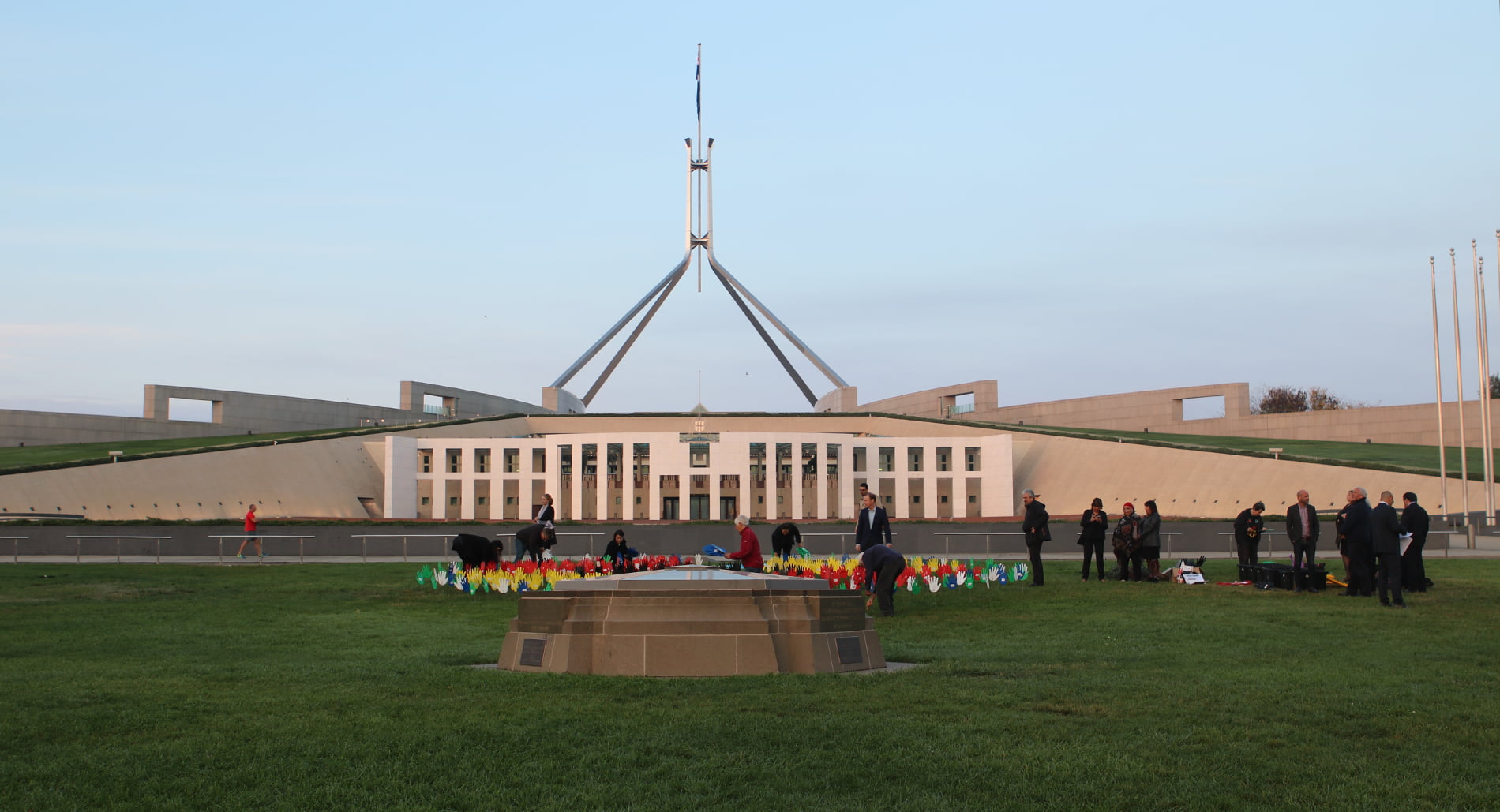
Today as the Royal Commission into the Protection and Detention of Children in the Northern Territory hands down its interim report, Amnesty International Australia joins more than 100 organisations in an open letter to Prime Minister Malcolm Turnbull, calling on him to develop a national action plan on youth justice.

Dear Prime Minister Turnbull,

Today the Royal Commission into the Protection and Detention of Children in the Northern Territory will hand down its interim report. To date, the public hearings of the Royal Commission have revealed countless stories of systemic cruel, inhumane and degrading mistreatment of children, the vast majority being Aboriginal and Torres Strait Islander children.

The issue of over-incarceration of Aboriginal and Torres Strait Islander young people remains a national crisis. Nationally, Aboriginal and Torres Strait Islander children and young people are 25 times more likely to be sent to youth detention than their non-Indigenous counterparts, yet they make up just 5% of the national youth population.

The abuse and mistreatment of youth detainees is not just isolated to the Northern Territory, but has occurred in other detention centres across Australia. In the past six months we have heard damning reports, highlighting shocking allegations of abuse in Queensland youth detention facilities, the disturbing use of isolation, separation and lock downs of children in Victoria’s youth detention centres and similarly awful reports from Cobham Youth Detention Centre in Sydney. A recent report by the Commissioner for Children and Young People in Victoria found that Koori kids were disproportionately subject to isolation whilst in detention.

This is a national crisis, which demands an immediate national response.

a map of Australia with pinpoints of incidents of abuse in each state and territory. © AI

Just last year a Vote Compass survey found that two-thirds of Australians want our federal government to commit to reducing the rates of Aboriginal and Torres Strait Islander people being imprisoned.

Our kids don’t belong in prison. Instead we should be supporting young people at risk to maximise their chances of achieving their full potential and making a meaningful contribution to society.

We, the undersigned, call on you and your government to work in partnership with the States and Territories to immediately take action to improve Australia’s youth justice system and end the over-representation of Aboriginal and Torres Strait Islander young people in detention.

We urge you to play a leadership role and work in partnership with Aboriginal and Torres Strait Islander communities, their organisations and representative bodies to:

  • Set meaningful National Justice Targets through the Council of Australian Governments (COAG) ‘Closing the Gap’ framework;
  • Develop, through COAG, a fully-resourced national plan of action on youth justice, drawing on the recommendations of the Change the Record Coalition’s Blueprint for Change;
  • Invest in effective community-led early intervention, prevention and diversion programs, to ensure detention of children is a last resort; and
  • Design and implement a national preventative mechanism against torture and mistreatment indetention as soon as possible, in line with your Government’s commitment to ratify the Optional Protocol to the Convention Against Torture (OPCAT).


Yours Sincerely,

Aboriginal Child, Family and Community Care State Secretariat (AbSec); ACOSS; ACTCOSS; ACTU; Amnesty International Australia; Anglican Social Responsibilities Commission, Diocese of Perth; Anglicare NT; ANTaR; APO NT; ARC Justice; Arthur Bolkas Consultancy; Association of Alcohol and other Drug Agencies NT; Australian College of Midwives; Australian Health Promotion Association; Australian Indigenous Alpine Sport Foundation; Australian Lawyers for Human Rights; Australian Physiotherapy Association; AYAC; Berry Street; CatholicCare NT; Centre for Excellence in Child and Family Welfare; Cohealth; Common Grace; Community Legal Centres NSW; Community Legal Centres Queensland; CRANAplus; CREATE Foundation; Criminal Lawyers Association of the Northern Territory (CLANT; Dawn House; Disabled Peoples Organisations Australia; Drummond Street Services; Elizabeth Evatt Community Legal Centre; Families ACT; Federation of Community Legal Centres (Vic); First Peoples Disability Network; Fitzroy Legal Service Inc; Flemington & Kensington Community Legal Centre; FVPLS Victoria; Gippsland Community Legal Service; Human Rights Law Centre; Hunter Community Legal Centre; IARC Immigration Advice & Rights Centre; Illawarra Legal Centre; Indigenous Allied Health Australia; Indigenous Eye Health; Jesuit Social Services; Just Reinvest NSW; Justice Reinvestment SA; Kingsford Legal Centre; Koorie Youth Council; Law Council of Australia; Law Institute of Victoria; Life Without Barriers; Making Justice Work; Melbourne City Mission; NACCHO; NACLC; National Aboriginal and Torres Strait Islander Legal Services; National Congress of Australia’s First Peoples; National Ethnic Disability Alliance; National FVPLS Forum; Northern Territory Legal Aid Commission; NSW Reconciliation Council; NTCOSS; Organisation; Oxfam Australia; People with Disability Australia; PIAC; Plan International Australia; Prison Songs Impact Campaign; Protect All Children Today Inc.; Public Health Association of Australia; QATSICPP; Queensland Advocacy Inc; Reconciliation Australia; Reconciliation South Australia; Reconciliation Victoria; Redfern Legal Centre; SACOSS; Sacred Heart Conference; Save the Children; Shopfront; Show Me The Way Incorporated Association; Sisters Inside; Smart Justice for Young People; SNAICC – National Voice for Our Children; Social Determinants of Health Alliance; South Sudanese Community Association In Victoria.; South West Sydney Legal Centre; Southern Aboriginal Corporation; Tasmanian Aboriginal Corporation; The Bridge of Hope Foundation Inc; The Kimberley Foundation; The Royal Australasian College of Physicians; The Valuing Children Initiative; UNICEF Australia; VCOSS; WACOSS; WEAVE; WEstjustice; White Lion; Winnunga Nimmityjah Aboriginal Health Service; Women with Disabilities Australia; Youth Action; Youth Advocacy Centre Inc; Youth Affairs Council of Victoria; Youth Affairs Council of Western Australia; Youth Coalition of the ACT; Youth Network of Tasmania; Youthlaw

Senate stands against racial hatred – now PM Turnbull must do the same

Bucking the trend of rising racial hatred around the world, the Australian Senate tonight took a stand against racism in Australia by voting down proposed harmful changes to section 18C of the Racial Discrimination Act.

“This vote shows that Australia is ready to move on from this divisive debate. It follows last month’s decision by the bipartisan Freedom of Speech inquiry not to recommend any changes to race hate laws. The message to Prime Minister Turnbull is clear: this conversation is over. He needs to get on the right side of history, and firmly put an end to the debate around racist hate speech,said Tammy Solonec, Indigenous Rights Manager at Amnesty International Australia.

The proposed Bill would have changed prohibited conduct from that which causes insult, offence or humiliation on the basis of race or ethnicity, to only conduct that harasses or intimidates someone on that basis.

The Bill also proposed that conduct be judged according to the standards of a member of the general Australian community, rather than by the standards of the group experiencing racism.

No green light for race-hate speech

“The proposed changes would have given the green light to race-hate speech in Australia, causing untold harm to Aboriginal and Torres Strait Islander and culturally diverse communities. Instead, the Senate has protected the right of these communities to live in safety and in dignity, free from racist hate speech.”

One in five Australians experience racism, which has devastating impacts on mental health, physical safety, and the ability to participate in school and work.

“As politicians around the world whip up fear and race hate, Prime Minister Turnbull should instead bring Australians together to build a compassionate, strong and diverse society that we can be proud of. Diversity is a strength in this country, and we need to celebrate that rather than tearing communities apart.”

Amnesty International applauds those Senators who voted for an Australia that is accepting, that is diverse, and that does not tolerate racist hate speech.

PM Turnbull must become leader on race issues

“The eyes of the international community are on Australia’s Indigenous rights record – and that record is looking very tarnished indeed,” said Tammy Solonec.

“The UN Special Rapporteur on the Rights of Indigenous Peoples is currently investigating the situation here in Australia, and in just a few months UN members will vote on whether Australia is successful in its bid for a seat on the Human Rights Council. Now that the issue of race-hate speech in Australia is put to bed, Prime Minister Turnbull needs to step up on the international stage and show himself to be a leader on race issues in Australia.”

Good news: Belén acquitted of all charges

On 27 March 2017, the Supreme Court of the Province of Tucuman in northern Argentina unanimously decided to acquit Belén, a 27-year-old woman who was sentenced to 8 years in prison after suffering a miscarriage in a public hospital.

What happened?

In March 2014, Belén went to the public hospital in her province complaining of abdominal pain.

She was referred to a gynecologist as she was bleeding heavily. The doctor informed her that she was having a miscarriage of a foetus of about 22 weeks. Belén said she was unaware that she was pregnant.

Hospital staff later found a foetus in the bathroom and referred Belén to the police, claiming it was Belén’s “son” without any evidence or DNA analysis.

When Belén woke up in her bed after surgery, several police officers were surrounding her and she was subjected to a degrading examination “in private parts of her body”. Medical personnel and police officials violated her right to privacy and mistreated her.

Belén was accused of self-inducing an abortion (a crime in Argentina) and held in pre-trial detention for over two years. The prosecutor then changed the accusation from abortion to aggravated murder, and on 19 April 2016 Belén was sentenced to eight years in prison.

Amnesty International delivered 120,000 signatures to authorities calling for the immediate release of Belén. © Amnistía Internacional Argentina

How did Amnesty respond?

Belén was the subject of an Amnesty International Urgent Action which was sent out globally in May 2016.  More than 120,000 petitions from around the world urging for Belén to be released were collected and handed over to local authorities in July 2016. Of these, over 8,000 signatures came from Australia.

Amnesty also took the chance to meet with Belén in jail and deliver solidarity letters to her, and assisted the Supreme Court  by presenting additional information relevant to her case.

Belén was released from pre-trial detention in August. Thank you to everyone who helped Belén.

What’s next?

Belén is now free of a horrendous situation that never should have happened in the first place, however there are other people who still need your help today.

Act now for individuals at risk


Background information

A person who causes an abortion can face prison for up to four years in Argentina. The law permits abortion when the life or health of a pregnant woman is at risk or when the pregnancy is the result of rape. Miscarriages or other complications during pregnancy are not criminalised.

International human rights bodies have called on countries to decriminalise abortion in all circumstances and ensure access to safe and legal abortion. Regardless of the legal status of abortion, countries have an obligation to ensure access to quality and confidential health services for the treatment of complications arising from unsafe abortions and miscarriages. This treatment must be free from discrimination, coercion and violence.

Sexual and reproductive rights are protected under international and regional human rights law. People have the right to make informed decisions about their sexual and reproductive lives, free from violence, coercion or discrimination and to ensure that those decisions are respected. These include the right to health, personal integrity, autonomy and equality, among others.

‘Transgender people face casual discrimination up to 60 times a day’

Transgender rights have come under the spotlight in recent years, thanks to a growing resistance against discriminatory laws and the rise of high-profile icons like young activist Jazz Jennings and actress Laverne Cox.

But while momentum for trans activism continues to soar, how many of us are aware of the stigma — or everyday discrimination — still faced by transgender people? And how do we become better allies?

We speak with Mill O’Sull, 24, Head of Trans and Gender Diverse Outreach at Minus18, on what it means to be trans or gender diverse today.

Q. What does the term transgender mean?

A. The term transgender or gender diverse refers to someone whose gender identity doesn’t match the gender they were assigned at birth.

While the two umbrella terms have similar meaning, the word transgender historically carries a more ‘binary-driven’, or masculine-feminine connotation. Whereas the term gender diverse is often used by those who want more flexibility in their identity.

Q. How did you find out you are gender diverse?

A. It’s important to understand with trans identities that there is no one story, it happens very differently for different people. I first started becoming aware of my gender identity at around three to four years old. I grew up with lots of brothers, cut my hair really short, and I was adamant that people call me a boy. For me, it’s less about having complications with my body or dysphoria. It was more that from a very young age I was acutely aware that I didn’t fit other people’s expectations of who I should be.

My primary school was very accepting. Then I went to a very conservative private Catholic girls college and that’s when the complications became obvious and damaging. To be a part of that school was to intrinsically feel your gender stereotype and femininity — it was a very lonely and isolating time.

“For me, it’s less about having complications with my body or dysphoria. It was more that from a very young age I was acutely aware that I didn’t fit other people’s expectations of who I should be.”

At 21, I came across the term ‘gender fluid‘, which I’d never heard before. When I told my partner at the time that I thought I might be trans, she responded point blank: “Look, it doesn’t work for me.” That was my first experience of speaking out about it.

It was very hurtful. I went straight back inside myself and didn’t talk about it again for another two years. In hindsight, I don’t blame her. The problem is, there was no discourse around what it means to be transgender. It took me three to four years of research to understand my identity. I have an incredibly supportive partner now, who has allowed me so much space and support to explore myself completely.

With my family, it is an ongoing conversation. My mum used to always call up and say, “Hello, my lovely daughter.”  And recently she asked, “What do I call you again?” I told her to think of Guns N’ Roses’s ‘Sweet Child O’ Mine’. So every time she calls me now, she says, “Hey, sweet child of mine.”

Mill O'Sull
Mill O’Sull © Private

Q. What human rights issues do transgender people face?

A. The biggest human rights issue facing the trans and gender diverse community is safety. Hundreds of transgender people are killed around the world each year, and there are still a number of countries where gender diversity is treated as a crime.

Some of the greatest barriers for transgender people come from discriminatory policies and laws. Bathroom access is a good example. In the US, bathroom legislation has turned into a political battleground for conservative politicians. In states like Alabama and North Carolina, toilet usage is restricted to a person’s gender assigned at birth, exposing trans women to greater risks of physical and sexual violence.

For a lot of trans feminine people, especially trans women of colour, it’s common to feel a pressure to “pass” (ie. be perceived as the gender they identify with) in order to avoid transphobic attacks.

Statistically, there are very few safe spaces for trans people. A recent report by Beyondblue and La Trobe University found 43 percent of trans and gender diverse people don’t feel safe on the street and 32 percent don’t feel safe on public transport.

“A recent report found 43 percent of trans and gender diverse people don’t feel safe on the street and 32 percent don’t feel safe on public transport.”

Better city planning is crucial. Essentially, we need to ask: how can we create safer public spaces for trans and gender diverse people, so that they can actually be a part of life?

What most people don’t realise is transgender people can face up to 50 to 60 instances of micro-aggression (casual discrimination) a day — which takes a huge psychological toll. This ranges from deliberate exclusion to misgendering (using incorrect gender pronouns) and being asked invasive questions that might be seen as ‘harmless’. Watch this powerful video by transgender film director Jake Graf, which highlights the invisible damage caused by these everyday slights:

So, where to from here?

Australia currently ranks 8th out of 23 countries in attitudes on transgender rights, according to a 2016 survey. On a state level, there have been a number of positive developments for the trans community in recent months. A new policy in South Australia now allows students to wear the uniforms and access bathrooms of the gender they identify with. In Victoria, senior high school students are given the choice of identifying as having an ‘undefined gender’ in official exams and documents.

But when it comes to birth certificate laws and healthcare access, Transgender Victoria Executive Director Sally Goldner thinks we still have some catching up to do.

“Currently, in six out of eight Australian states and territories, [changes in birth certificates] is surgery-based, we want it to be based on affirmed identity,” Goldner tells Amnesty. “In addition, there are no provisions for minors to change their birth certificates, even with parental approval. Transgender people need to be able to have their gender recorded accurately, and we want the process to be as respectful as possible.”

Australia is also the only country in the world where children under 18 have to go through the Family Court system to access ‘stage two’ hormone treatments — the ingestion of oestrogen or testosterones. (‘Stage one’ being puberty blockers, which can be prescribed by doctors without court approval).

“I think we are so heavily oppressed that for now, we need to not only acknowledge that trans and gender diverse people are discriminated against, but take active steps to empower and elevate these voices”

16-year-old Georgie Stones is campaigning to put an end to the painful legal red tape. In March, Stones submitted a petition about the issue to the Federal Parliament with over 15,000 signatures of support. Stone won a landmark case in 2013, which successfully challenged the need for court orders to access stage-one treatments — a victory that many hope is a sign of better things to come for young trans people.

Mill concludes: “I think we are so heavily oppressed that for now, we need to not only acknowledge that trans and gender diverse people are discriminated against, but take active steps to empower and elevate these voices. This means creating jobs, community movements, grants, things that are actively saying, ‘We hear you, we want to elevate your voices by creating these opportunities for you.'”

If this article has raised concerns for you or someone you know, please access support:

Iraq: Civilians killed by airstrikes in their homes after they were told not to flee Mosul

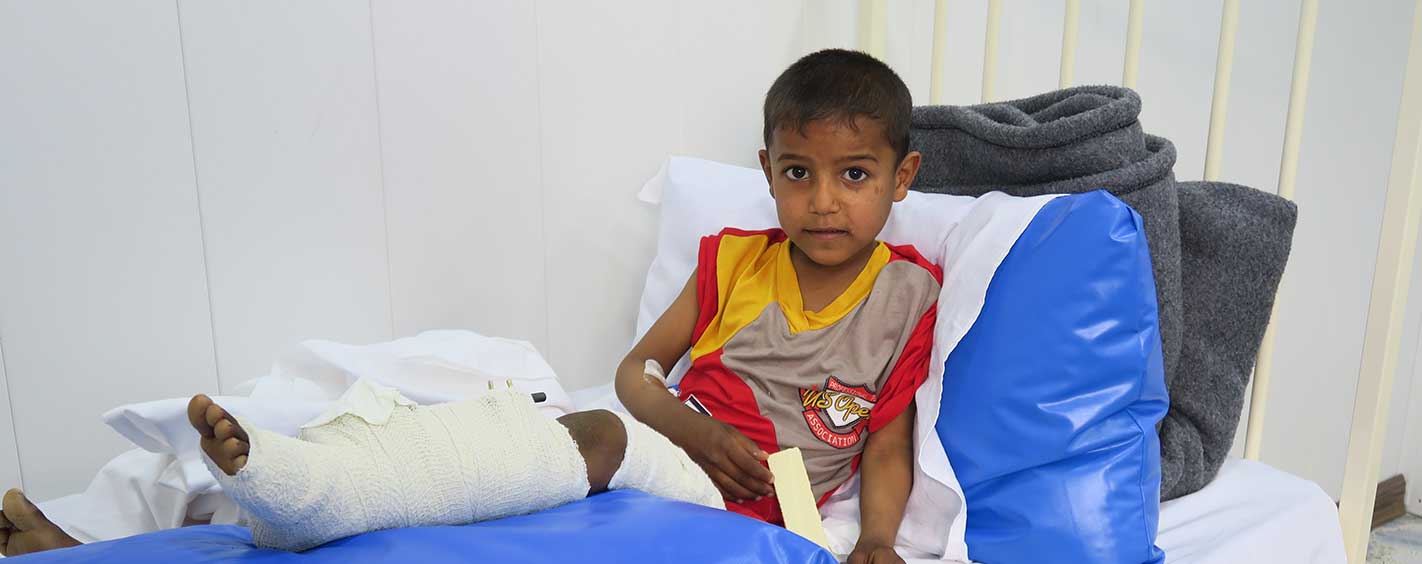
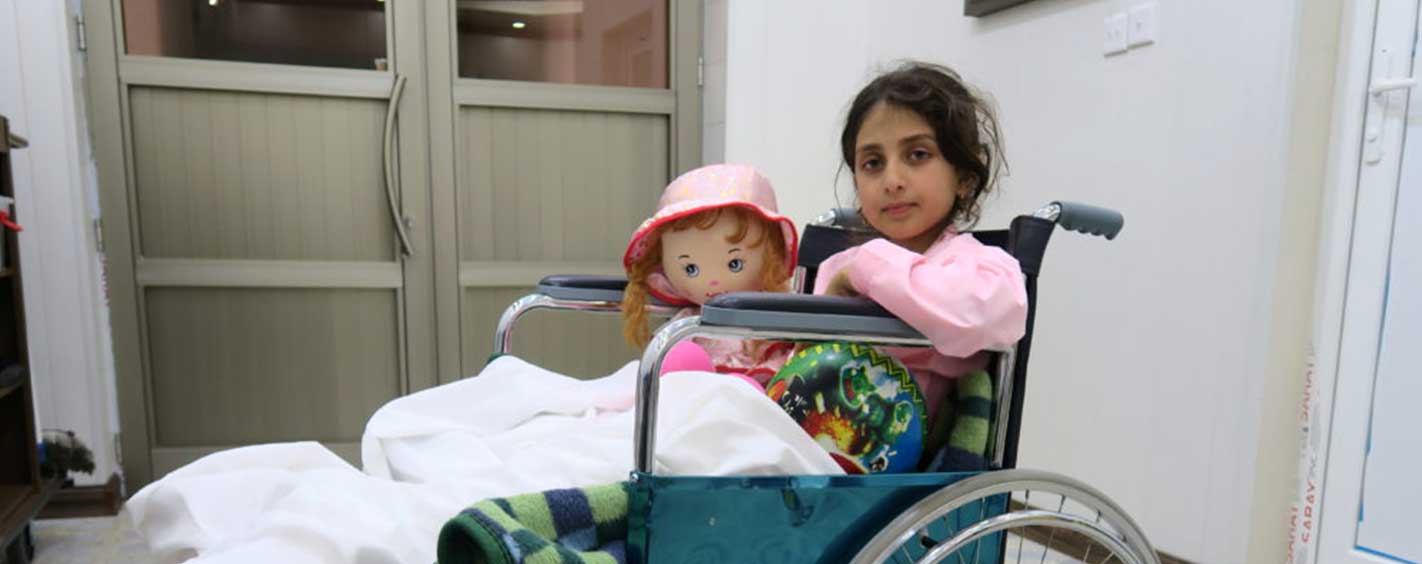
Hundreds of civilians have been killed by airstrikes inside their homes or in places where they sought refuge after following Iraqi government advice not to leave during the offensive to recapture the city of Mosul from the armed group calling itself Islamic State (IS). Survivors and eyewitnesses in East Mosul said they did not try to flee as the battle got underway because they received repeated instructions from the Iraqi authorities to remain in their homes.

The shocking spike in civilian casualties from both US-led coalition airstrikes and ground fighting between the Iraqi military and IS fighters in recent months has also raised serious questions about the lawfulness of these attacks. In one of the deadliest strikes in years just days ago on 17 March 2017, up to 150 people were reported killed in a coalition airstrike in the Jadida neighbourhood of West Mosul, eventually leading the coalition to announce that it is investigating the incident.

“Evidence gathered on the ground in East Mosul points to an alarming pattern of US-led coalition airstrikes which have destroyed whole houses with entire families inside. The high civilian toll suggests that coalition forces leading the offensive in Mosul have failed to take adequate precautions to prevent civilian deaths, in flagrant violation of international humanitarian law,” said Donatella Rovera, Senior Crisis Response Adviser at Amnesty International, who carried out field investigations in Mosul.

“The fact that Iraqi authorities repeatedly advised civilians to remain at home instead of fleeing the area, indicates that coalition forces should have known that these strikes were likely to result in a significant numbers of civilian casualties. Disproportionate attacks and indiscriminate attacks violate international humanitarian law and can constitute war crimes.

“The Iraqi government and the US-led coalition, must immediately launch an independent and impartial investigation into the appalling civilian death toll resulting from the Mosul operation.”

Killed trying to flee

Fleeing the city ahead of the fighting was also extremely difficult for residents of Mosul, as IS militants routinely punished and at times killed those caught trying to leave. Wa’ad Ahmad al-Tai, a resident of the al-Zahra neighbourhood of East Mosul, was among many civilians who followed Iraqi government advice to stay put.

“We followed the instructions of the government who told us ‘stay in our homes and avoid displacement’.  According to the instructions, residents who had nothing to do with Daesh [IS, in Arabic] should stay in their homes… We heard these instructions on the radio… Also leaflets were dropped by planes. This is why we stayed in our homes,” he said.

As the fighting intensified Wa’ad Ahmad al-Tai, his brother Mahmoud and their families sought shelter at their other brother’s two-storey home hoping it would offer them more protection.

“We were all huddled in one room at the back of the house, 18 of us, three families. But when the house next door was bombed, it collapsed on us, precisely over the room we were sheltering in. My son Yusef, nine, and my daughter Shahad, three, were killed, together with my brother Mahmoud, his wife Manaya and their nine-year-old son Aws, and my niece Hanan. She was cradling her five-month-old daughter, who survived, thank God,” he said.

“We were sleeping when the house literally collapsed on us. It was a miracle none of us was killed. We ran to my uncle’s house nearby. At about 2pm that house too was bombed and collapsed on us… almost everyone in the house was killed – 11 people”

Hind Amir Ahmad, a 23-year-old woman who lost 11 relatives, including her parents, grand-parents and four young siblings, in a coalition airstrike in East Mosul, described the fatal attack on 13 December 2016 to Amnesty International:

“We were sleeping when the house literally collapsed on us. It was a miracle none of us was killed. We ran to my uncle’s house nearby. At about 2pm that house too was bombed and collapsed on us… almost everyone in the house was killed – 11 people. My cousin, two aunts and I were the only ones who survived. Everyone else died. It took us six days to find only pieces of their bodies, which we buried in a mass grave in a field nearby… I don’t know why we were bombed. All I know is that I have lost everyone who was dearest to me.”

Family targeted by all sides

In another air strike, 16 people were killed in three adjacent houses in the Hay al-Mazaraa district of East Mosul on 6 January 2017.  Survivors and neighbours told Amnesty International that in so far as they knew, no IS fighters had been present in or around the house. Among the victims were the three children and the mother of Shaima’ Qadhem, who had been arrested and killed by IS the previous year. Ahmad, a relative of the victims, told Amnesty International:

“This family was targeted by all sides. Last year Daesh arrested and executed the children’s mother and now the children themselves were killed by a coalition bombing. Civilians got trapped in this war and no one helped them. When I tried to leave Mosul with my family, we were caught by Daesh. They were going to pour petrol over us and burn us. In the end we managed to escape death by paying a heavy fine.  Others were not so lucky and were executed… Did the government, the coalition think how to protect the civilians in this war?  It doesn’t seem so.”

International humanitarian law (also called the laws of war) demands that all feasible precautions must be taken by warring parties to a conflict to minimize harm to civilians, and that attacks must not cause disproportionate harm to civilians – that is, damage which would be excessive in relation to the concrete and direct military advantage anticipated.

IS use of civilians as human shields

In many of the cases investigated by Amnesty International where civilians were killed in coalition airstrikes, surviving residents and neighbours told the organization that IS fighters had been present in or around the targeted houses – usually on the roof or in the garden – as well as in or around other nearby houses which were not targeted. In all the cases the air strikes destroyed entire houses, often also destroying or severely damaging nearby houses and properties.

“IS shamefully resorts to using civilians as human shields, a serious violation of the laws of war that amounts to a war crime. In a densely populated residential area, the risks for the civilian population become enormous. However, the IS’s use of human shields does not absolve Iraqi and coalition forces from their obligation not to launch disproportionate attacks,” said Donatella Rovera.

“The Dawa’ish (IS militants) were everywhere and there was absolutely nothing we could do about it. If you challenged them they would kill you”

Mohammed, a resident of the Hay al-Dhubbat district of East Mosul who lost several relatives in a coalition air strike, told Amnesty International:

“The Dawa’ish (IS militants) were everywhere and there was absolutely nothing we could do about it. If you challenged them they would kill you. They ran this city for two and a half years and they were rarely targeted during all that time… Why now [are they] destroying our homes with our families inside, just to eliminate two or three Dawa’ish on the roof?”

Five family members killed, fighters unharmed

In one case, five members of one family and their neighbour were killed and several others injured when three houses in the Hay al-Salam district of East Mosul were destroyed by coalition strikes on 5 January 2017. Survivors and neighbours told Amnesty International that IS fighters were present in a room inside the house, but were unharmed by the strike. The IS fighters were later killed by Iraqi forces who eventually reached the house.

Na’el Tawfiq AbdelHafez, whose 23-year-old son Mos’ab was killed in the strike, told Amnesty International that for months before the attack they were surrounded by fighting, with IS snipers on rooftops firing and Iraqi soldiers firing mortars into the neighbourhood.

“There was nothing we could do, we are civilians; we could not stop Daesh. When they entered my home, shortly before the strike, I tried to challenge them, to plead with them; I told them ‘what are you doing, I have a family here’. They left but as they were leaving, the house was bombed. My son was killed and the rest of us were injured. My daughter Bara’ lost an eye. But the Dawa’ish were still alive.”

Next door, Muthar Dhannun, whose sister, husband and three children were killed in the same strike, said: “Everybody knows that Daesh uses civilians as human shields, so why kill these civilians who did nothing wrong?  Civilians were made to pay the price for the crimes of Daesh. This is unfair.”

Heightened risk for civilians from ground fighting

Residents also told Amnesty International that civilians were killed and injured by indiscriminate mortar-fire launched by both IS fighters and Iraqi forces in populated residential areas.

Ali, a resident of the Hay al-Salam district of East Mosul told Amnesty International: “Mortars and bullets from both sides were flying over our heads all the time… I tried to keep my children and my family in the most inner-room in the house in the hope that if a mortar struck our home it wouldn’t get through several walls. Neighbours were killed by mortars while they were outside but in some cases also inside their homes.”

Some residents said Iraqi forces used mostly 60mm and 82mm mortars and, less frequently, 120mm mortars, whereas IS fighters mostly used 120mm mortars.

“Neighbours were killed by mortars while they were outside but in some cases also inside their homes”

Mortars cannot be accurately directed at a military target. They are designed for battlefield use and should never be used in densely populated civilian neighbourhoods. They have varying margins of error (which can be reduced in 120mm mortars if they are fitted with laser-guided precision systems) and a blast radius ranging from some 20-25 meters for 60mm mortars to some 75 meters for 120mm mortars.

In a residential environment, where streets are only a few meters wide, the mortars’ margin of error and blast radius mean that they are highly likely to cause civilian casualties in the areas around the intended target.

Killed while playing with a toy car

In the Hay al-Zahra district of East Mosul two children, five-year-old Ahmad Samir Jumaa and seven-year-old Yousef Ammar Ahmad, were both killed while playing near their homes on the afternoon of 4 December 2016.  Ahmad’s father described how he had been playing with a toy car inside the courtyard when he was struck by shrapnel all over. “His head was almost completely severed. He died instantly,” he said.

The mortar landed in the middle of a residential street less than 10 meters wide, spraying deadly shrapnel onto surrounding houses. The thick metal door leading to the courtyard where Ahmad was playing was left full of holes from the blast. The other child, Yousef, was playing in the street, much closer to the point where the mortar landed. He too was killed on the spot. Neighbours said that he was torn to shreds.

In another mortar strike on Hay al-Salam, six members of a family – four children and their parents – were killed as they sheltered in a small room at the back of their house on 7 November 2016. Only two children from the family survived, both sustaining horrific injuries as the mortar struck a fuel tank in the back yard and the whole house was engulfed with flames.

In Hay al-Shuhada in West Mosul two mortars struck near a house where 38-year-old Garha Nawaf Sallal was sheltering with her family. Her seven-year-old granddaughter was struck by shrapnel in the head, the rest of the family was also injured.

In all three cases, IS fighters were in control of the areas at the times of the mortar attacks, suggesting that the mortars were likely launched by Iraqi forces seeking to target IS fighters in the area. It is also possible, though less likely, that they were launched by IS fighters seeking to target Iraqi forces in other areas, but malfunctioned and landed short of their aim. Neighbours and witnesses to these incidents told Amnesty International that IS fighters were in the neighbourhood, but none were at or near the specific properties at the time of the strikes.

Military positions endangered civilians

In areas recaptured by Iraqi forces, military positions were also set up in residential areas endangering civilians. Isra’ Ali, 29, told Amnesty International that her 18-month-old daughter Razan was killed when a mortar struck the courtyard of her home in the Hay al Josaq district of West Mosul. She said a Federal Police post opposite her home may have been the intended target.

“Instead of evacuating civilians from newly recaptured areas so as to minimize the risk of them being harmed in attacks, Iraqi forces appear to have endangered them further by encouraging them to remain at home and setting up military positions nearby”

Other families said that their relatives and neighbours had been killed and injured by suicide car bombs and mortars which targeted Iraqi forces in newly recaptured residential areas. Ramy, whose 10-year-old son was killed in one such mortar strike, said he was relieved when Iraqi soldiers arrived in his street. Shortly afterwards they came under attack:  “The soldiers set up positions around us and mortars from Daesh started to rain down on us. My boy was by the door which leads from the kitchen to the garage when he was hit. He was killed on the spot.”

Rawda, an elderly woman from East Mosul showed Amnesty International around her daughter’s apartment, on the top floor of the building, which was used as a sniper position first by IS fighters and later by Iraqi forces. The building sustained serious damage as a result. “Now everything is ruined. My daughter doesn’t have a home to come back to anymore and our own home is badly damaged,” she said.

“Instead of evacuating civilians from newly recaptured areas so as to minimize the risk of them being harmed in attacks, Iraqi forces appear to have endangered them further by encouraging them to remain at home and setting up military positions nearby,” said Donatella Rovera.

“All parties to the conflict must refrain from the use of mortars and other imprecise explosive weapons in the densely populated neighbourhoods of Mosul. The civilian population has borne the brunt of the battle to recapture Mosul, with all sides displaying a chilling indifference to the devastating suffering caused to the city’s civilians.”

Submission: Inquiry into the Human Rights Legislation Amendment Bill 2017

On the International Day of the Elimination of Racial Discrimination (and Harmony Day), the Federal Government announced it would push forward with a bill to water down the Racial Discrimination Act (RDA).

Our submission outlines why Amnesty International is calling on the Parliament to reject the changes to the Racial Discrimination Act proposed by the Australian Government.

We are concerned that amending the Act in the way proposed by the Government will give a license to further racism in Australia, which has significant consequences for cultural diverse communities. We also have a number of concerns about the ways in which this bill could make it more difficult for Australians who have suffered discrimination to access justice.

 Read our submission

Families killed by airstrikes in their homes after being told not to flee

In one of the deadliest strikes in Iraq in years, hundreds of civilians have been killed by airstrikes in Mosul after following Iraqi government advice to stay put. Survivors of the attack in East Mosul said they did not try to flee as they received repeated instructions from the Iraqi authorities to remain in their homes.

On 17 March, up to 150 people were reported killed in a coalition airstrike in the Jadida neighbourhood of West Mosul during the offensive to recapture the city from the armed group Islamic State (IS)

Wa’ad Ahmad al-Tai, a resident of the al-Zahra neighbourhood of East Mosul, was among many civilians who followed Iraqi government advice to stay put.

“According to the instructions, residents who had nothing to do with Daesh [IS, in Arabic] should stay in their homes… We heard these instructions on the radio… Also leaflets were dropped by planes. This is why we stayed in our homes,” he said.

As the fighting intensified, Wa’ad Ahmad al-Tai, his brother Mahmoud and their families sought shelter at their other brother’s two-storey home, hoping it would offer them more protection.

“We were all huddled in one room at the back of the house  – 18 of us, three families. But when the house next door was bombed, it collapsed on us, precisely over the room we were sheltering in.

“My son Yusef, nine, and my daughter Shahad, three, were killed, together with my brother Mahmoud, his wife Manaya and their nine-year-old son Aws, and my niece Hanan. She was cradling her five-month-old daughter, who survived, thank God,” he said.

“My son Yusef, nine, and my daughter Shahad, three, were killed, together with my brother Mahmoud… and my niece Hanan. She was cradling her five-month-old daughter, who survived, thank God”

Donatella Rovera, Senior Crisis Response Adviser at Amnesty International, who carried out field investigations in Mosul, said:

“Evidence gathered on the ground in East Mosul points to an alarming pattern of US-led coalition airstrikes, which have destroyed whole houses with entire families inside.

“The high civilian toll suggests that coalition forces leading the offensive in Mosul have failed to take adequate precautions to prevent civilian deaths, in flagrant violation of international humanitarian law.”

Five family members killed, fighters unharmed

The shocking spike in civilian casualties from both US-led coalition airstrikes and ground fighting between the Iraqi military and IS fighters in recent months has raised serious questions about the lawfulness of these attacks.

In one case, five members of one family and their neighbour were killed and several others injured when three houses in the Hay al-Salam district of East Mosul were destroyed by coalition strikes on 5 January. Survivors and neighbours told Amnesty International that IS fighters were present in a room inside the house, but were unharmed by the strike. The IS fighters were later killed by Iraqi forces who eventually reached the house.

“My son was killed and the rest of us were injured. My daughter Bara lost an eye. But the Dawa’ish were still alive”

Na’el Tawfiq AbdelHafez, whose 23-year-old son Mos’ab was killed in the strike, said that for months before the attack they were surrounded by fighting, with IS snipers on rooftops firing and Iraqi soldiers firing mortars into the neighbourhood.

“There was nothing we could do, we are civilians; we could not stop Daesh. When they entered my home, shortly before the strike, I tried to challenge them, to plead with them; I told them ‘what are you doing, I have a family here’. They left but as they were leaving, the house was bombed. My son was killed and the rest of us were injured. My daughter Bara lost an eye. But the Dawa’ish were still alive.”

Donatella says it’s vital that all parties to the conflict refrain from the use of mortars and other imprecise explosive weapons in the densely populated neighbourhoods of Mosul.

“The civilian population has borne the brunt of the battle to recapture Mosul, with all sides displaying a chilling indifference to the devastating suffering caused to the city’s civilians,” she said.

Senate must stand firm against racism and vote down 18C changes

The Senate must stand firm against racism and vote down proposed changes to section 18C of the Racial Discrimination Act when it meets today, said Amnesty International, and Prime Minister Turnbull should definitively put the harmful debate to rest.

“The overwhelming message from eight out of 10 Australian voters and from the bipartisan Freedom of Speech Inquiry is that our race-hate protections should stay as they are. Prime Minister Turnbull must heed this message and put this issue to bed once and for all,” said Roxanne Moore, Indigenous Rights Campaigner at Amnesty International Australia.

A new Fairfax-Ipsos poll today has found that 78% of voters do not want to legalise speech that offends, insults or humiliates on the basis of race or ethnicity.

Last month the bipartisan Freedom of Speech Inquiry, after a thorough process that received thousands of submissions, did not recommend any changes to sections 18C and 18D of the Racial Discrimination Act.

“The message is clear from voters of all stripes: racism is not wanted here,” said Roxanne Moore.

“Now it’s time to stop tearing communities apart, and move forward together as a nation.”

Chilling effect


Changes which must be rejected by the Senate include a proposed new standard of “reasonableness”.

Currently, conduct is judged as insulting, offensive, humiliating or threatening according to the standard of a reasonable or average person of the particular cultural or ethnic group being targeted.

The government has proposed replacing this test with one where the reasonable person is a member of the general Australian community – a community which for the majority does not suffer the impacts of racism.

Amnesty International also is concerned that changes to costs could have a chilling effect on persons affected by any form of unlawful discrimination from engaging in the conciliation process and bringing claims in court for unlawful discrimination.

For example, Aboriginal and Torres Strait Islander communities are deeply impacted by racism but also experience severe financial disadvantage. These changes could limit access to justice for disadvantaged communities who experience racism, or discrimination based on their age, sex or disability.

Limiting access to justice

Senators should also be concerned about proposed time limitations on complaints limiting access to justice for people who experience unlawful discrimination.

The proposed six month time limitation, down from 12 months, could significantly impact vulnerable communities who need the most assistance in both understanding and exercising their legal rights and obtaining legal representation.

These include such as linguistically diverse communities, people with disabilities, Indigenous people in remote communities and financially disadvantaged communities.

Drop charges against The Fiji Times

The Fijian authorities must immediately drop politically-motivated sedition charges against The Fiji Times newspaper group.

“By charging the Fiji Times with sedition, the Fijian authorities are using a crude tactic to intimidate and silence one of the few independent media outlets left in the country,” said Josef Benedict, Amnesty International’s Deputy Director for Southeast Asia and the Pacific.

“Journalists and media houses should be allowed to do their legitimate work freely and without fear of reprisals. The dark days when official censors roamed Fijian newsrooms, telling them what they can and cannot print, are best left in the past.”

Fijian prosecutors amended charges in an ongoing case against The Fiji Times Limited to sedition on Friday, putting the newspaper group’s publisher Hank Arts, editors Fred Wesley and Anare Ravula, and a letter writer at risk of a maximum seven years’ imprisonment. If they are imprisoned, Amnesty International would consider them prisoners of conscience.

The sedition charge will be heard in court today, Tuesday 28 March, in Fiji’s capital, Suva.

The Fiji Times Limited is one of the world’s oldest newspaper groups. It publishes the English-language daily, The Fiji Times, founded in 1869, and the weekly iTaukei vernacular newspaper, Nai Lalakai.

The prosecutors were initially pursuing charges of inciting “communal antagonism” against The Fiji Times Limited in response to a reader’s letter published in the group’s iTaukei-language daily, Nai Lalakai, on 27 April 2016.

The letter contained controversial views about Muslims. It was not written by any member of The Fiji Times Limited, but by a member of the public and published in the readers’ letters section, without the newspaper endorsing the views contained in it.

“The letter was distasteful, but its author has a right to their views, as long as they do not incite violence. The authorities are failing on their obligation to respect the right to freedom of expression under international law. It is the job of a newspaper to be a forum for different views, even if it may cause some offence,” said Josef Benedict.

“The fact that the authorities have seized on this one letter to bring charges against editors and publisher who did not write it, makes clear that the case is politically-motivated. The Fiji Times has a strong record of journalistic independence, a tradition that is now imperilled by these charges.”

Background

Since Fiji’s current Prime Minister, Frank Bainimarama, came to power in a 2006 military coup, the Fiji Times has often been a target of the authorities. For several years, a regime of heavy censorship was in place, where officially appointed censors roamed newsrooms, deciding what could and could not be published in the next day’s paper. The Fiji Times was one of the few news outlets to stoically refuse to print censored articles, leaving blank spaces on the page instead.

At the time, Frank Bainimarama justified the censorship regime by saying, “They can print whatever they want. But irresponsible journalism is not going to be tolerated.”

In 2012, Fiji Times Limited, and its editor, Fred Wesley, were found guilty of contempt of court for reprinting a sports article that was first published in New Zealand which contained criticisms of Fiji’s judiciary. The newspaper was fined US$ 170,000 and its editor received a two year-suspended sentence.

In 2010, the Fijian government introduced a Media Decree that imposed excessive restrictions on the right to freedom of expression and limited foreign investors from owning more than 10% of a Fijian media outlet – a measure that appeared to single out The Fiji Times, then 90% owned by Rupert Murdoch’s News Limited.

Under the new regulations, the newspaper has come under Fijian ownership and sustains its journalism without any government advertising.

Turnbull Government denies Indigenous people’s freedom of speech over section 18C

The Turnbull Government is silencing the freedom of speech of Aboriginal and Torres Strait Islander people, said Amnesty International, as the organisation made a submission to the Senate Committee inquiry into a Bill to change section 18C of the Racial Discrimination Act.


In an affront to Aboriginal and Torres Strait Islander people, no Indigenous representatives or organisations were allowed to speak at the last minute hearing into the controversial Human Rights Legislation Amendment Bill 2017 on Friday. Despite the Aboriginal Legal Service being present, the ALS was literally silenced from speaking about a Bill that would lead to more racism being directed towards the community it advocates for.


The Turnbull Government has also showed unusual haste in rushing through the Bill’s committee process, allowing a mere three days for the Australian people and civil society to make written submissions. While the Government has given no explanation for this haste, the effect has been to exclude some Aboriginal and Torres Strait Islander organisations from being able to comment on a Bill that, if passed, would greatly impact upon their communities.


Voices silenced


“At the beginning of his term, Prime Minister Malcolm Turnbull called on the Government to do things with Aboriginal people and not to them. Yet now we’re seeing Aboriginal and Torres Strait Islander voices silenced when they try to speak out against laws that would bring more racism onto their communities,” said Roxanne Moore, Indigenous Rights Campaigner at Amnesty International Australia.


“Prime Minister Turnbull must listen to those who would most suffer from any changes to the Racial Discrimination Act. The changes before parliament would give a green light to racism, which is devastating for people’s mental health, for participation in education and employment, and for their physical safety. It is vital that Aboriginal and Torres Strait Islander people are part of this conversation,” said Roxanne Moore.


No changes recommended


Amnesty International’s submission noted that the bipartisan Freedom of Speech Inquiry, which received thousands of submissions, did not recommend any changes to sections 18C and 18D.


Amnesty International opposes the proposed amendments to section 18C of the Racial Discrimination Act, which removes the words “offend, insult, humiliate” and substitutes them with “harass.”


The proposed new standard of “reasonableness” is also of concern, as it states that a reasonable person is a member of the general Australian community, rather than a member of the group experiencing racism. These changes will weaken the current legal protections which exist against racial vilification in Australia.