National Board report: February

The National Board held its first meeting for 2017 on 25 and 26 February. This meeting covered national and international issues, and the Board took some key decisions in order to meet our 2020 Vision.

National Director Claire Mallinson provided the board with a review of our work in 2016. Some of the key highlights from the year included:

  • Significant wins from our Community is Everything campaign, including the QLD Government passing a Bill to remove 17-year-old children from adult prisons.
  • 10 000 Iraqi and Syrian refugees resettled
  • 650 individuals at risk were protected by Amnesty activists around the world
  • Key legislative changes across the world, including a commitment from the government of Burkina Faso to raise the legal age of marriage for girls to 18 years and to ensure that forced marriage is clearly defined in Burkina Faso’s criminal code.
A woman plays with her child outside a shelter in Burkina Faso, which has the 7th highest rate of child marriage in the world.
A woman with her child outside a shelter in Burkina Faso, which has the 7th highest rate of child marriage in the world. © Sophie Garcia/Amnesty International

The annual review will be covered in more detail at the upcoming Branch Annual General Meetings, which will be held on 20 May. Keep a look out for the notice of meetings which will come out to members in the last week of April.

For a number of months the National Board has being considering the best models of governance that will allow AIA to meet the goals of our 2020 Vision.  In order to protect and defend more lives; be an unstoppable movement and inspire outstanding passion and commitment, the Board felt that it was time to take a look at our Board composition and other governance structures, and examine if they are fit for purpose for our future.

As part of this process, the Board engaged the Australian Institute of Company Directors (AICD) to investigate our current governance arrangements, and deliver a report. AICD delivered its draft report to our February Board meeting. The report has posed some interesting questions for us to consider around how best to structure and facilitate governance across AIA. A working group was established by the Board and will communicate further about how this project will move forward over the next few months. If you would like more detail at this time please contact the National Secretary, Ian Gibson, at ian.gibson@amnesty.org.au.

The Board took the decision to join the Diversity Council of Australia. This is an exciting step as membership will provide us with tools and support to improve our approach to diversity. The Board also approved our new Reconciliation Action Plan, which was then sent to Reconciliation Australia for their review.

We were privileged to be joined by friends and family of AIA supporters who have passed away, and to hear stories of their passion for human rights.

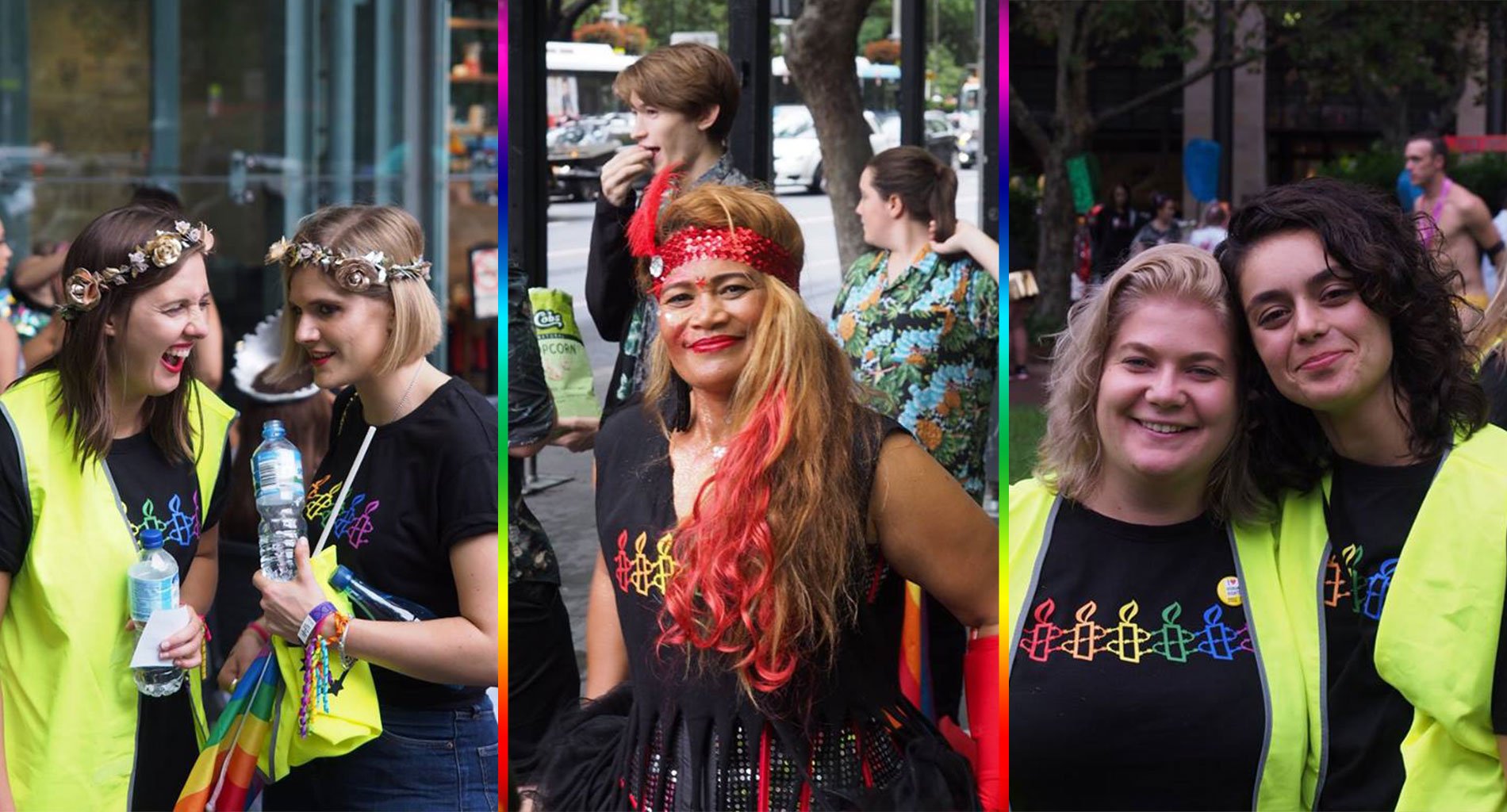
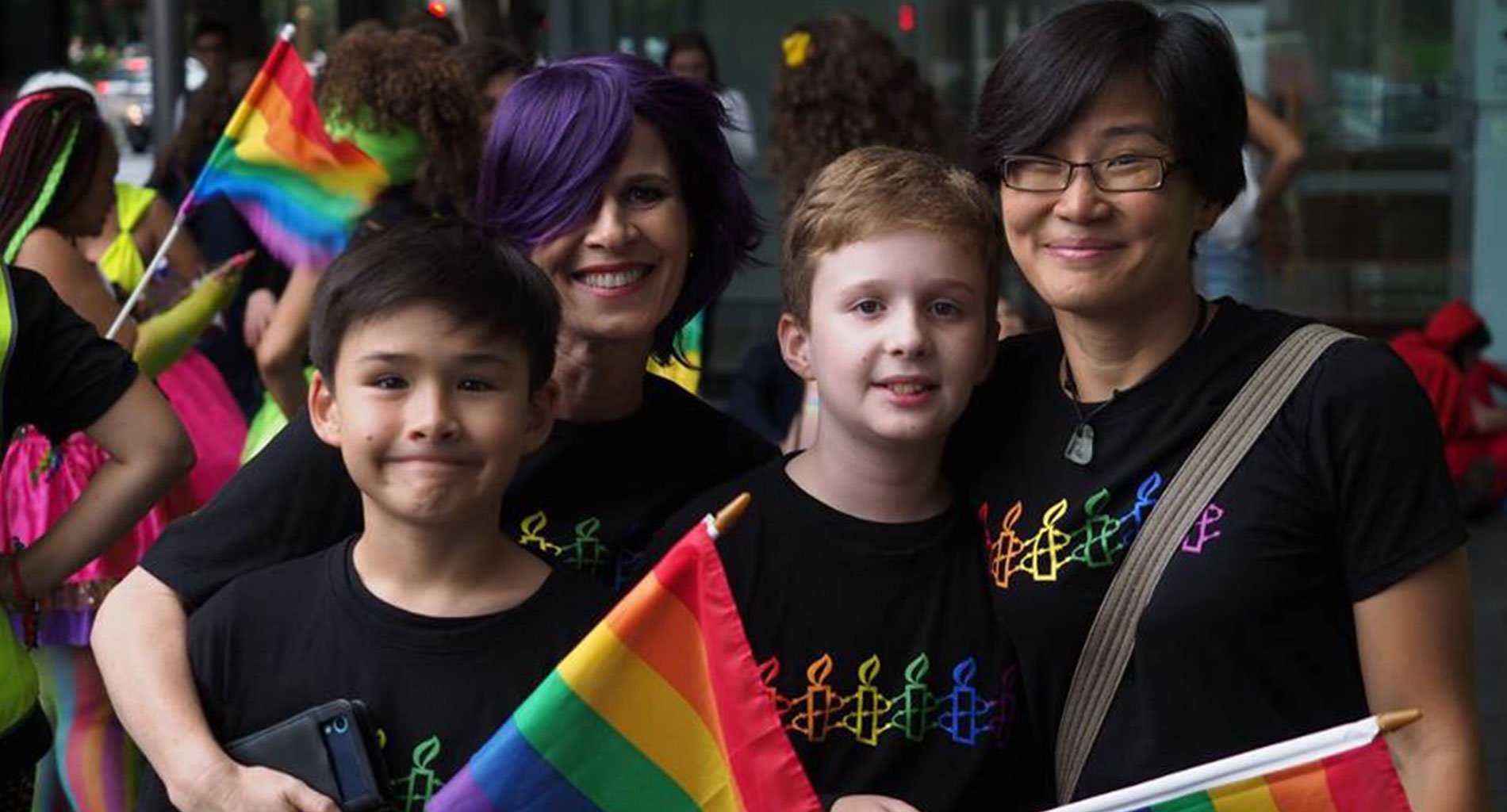
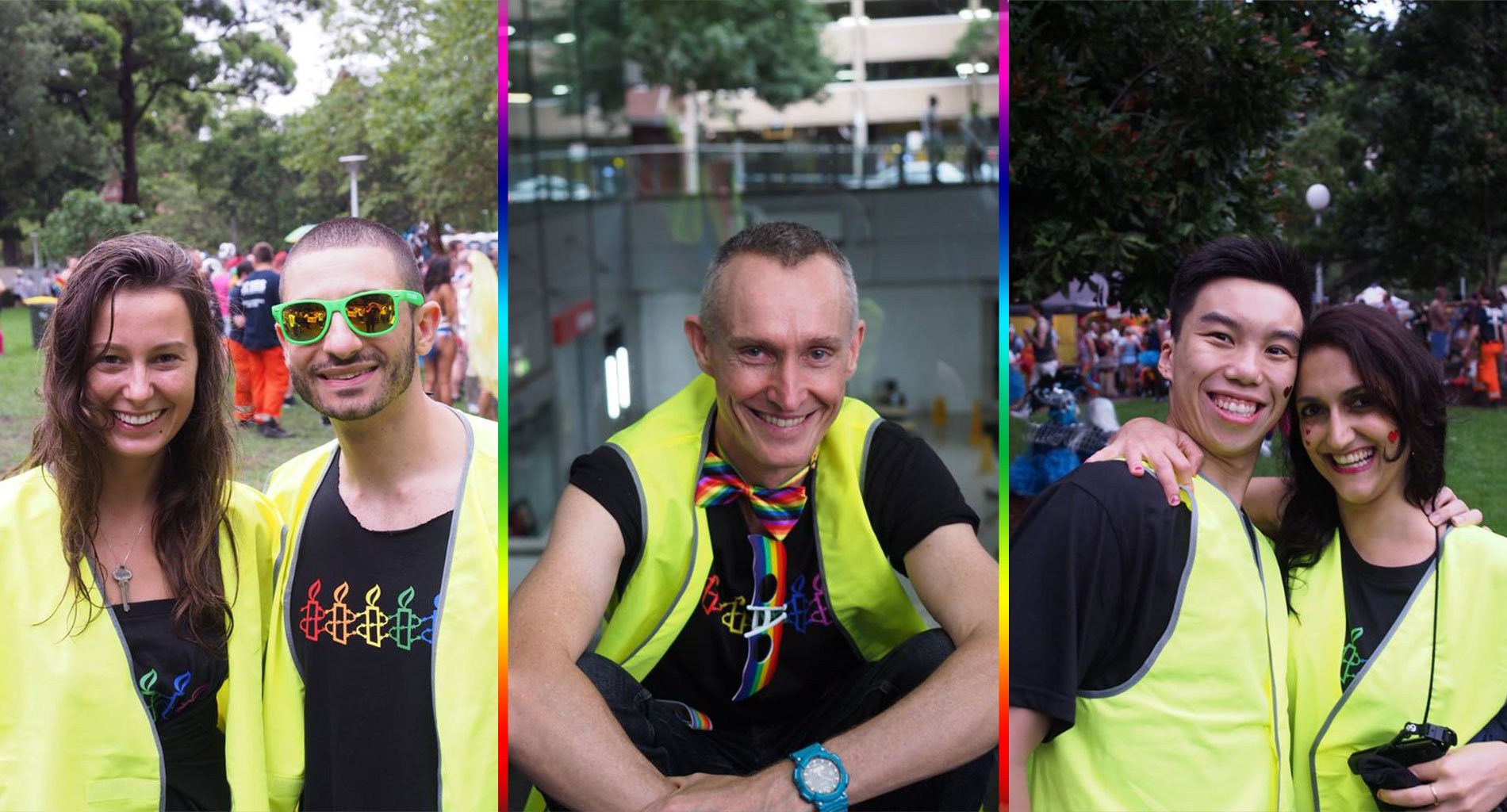
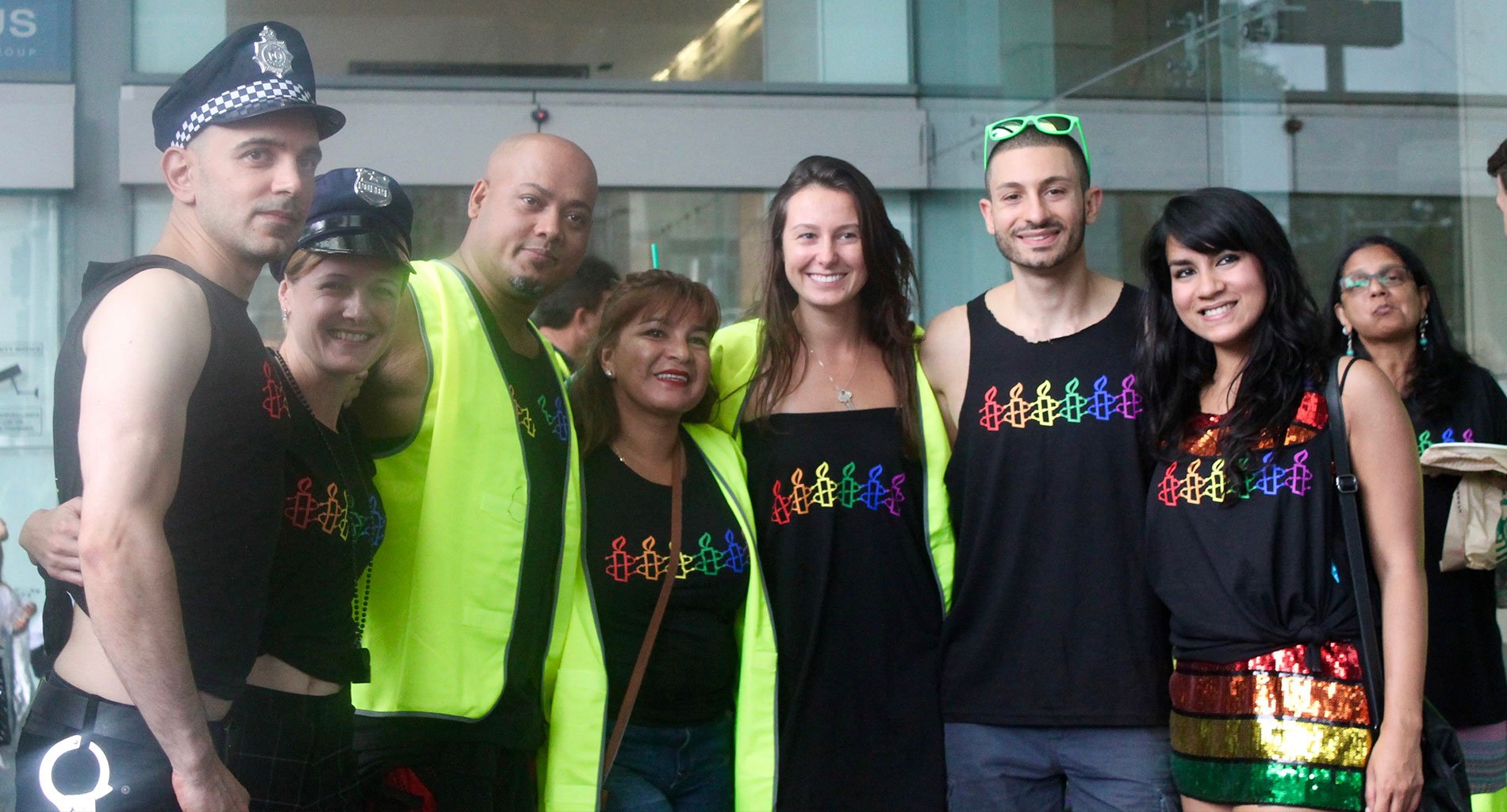
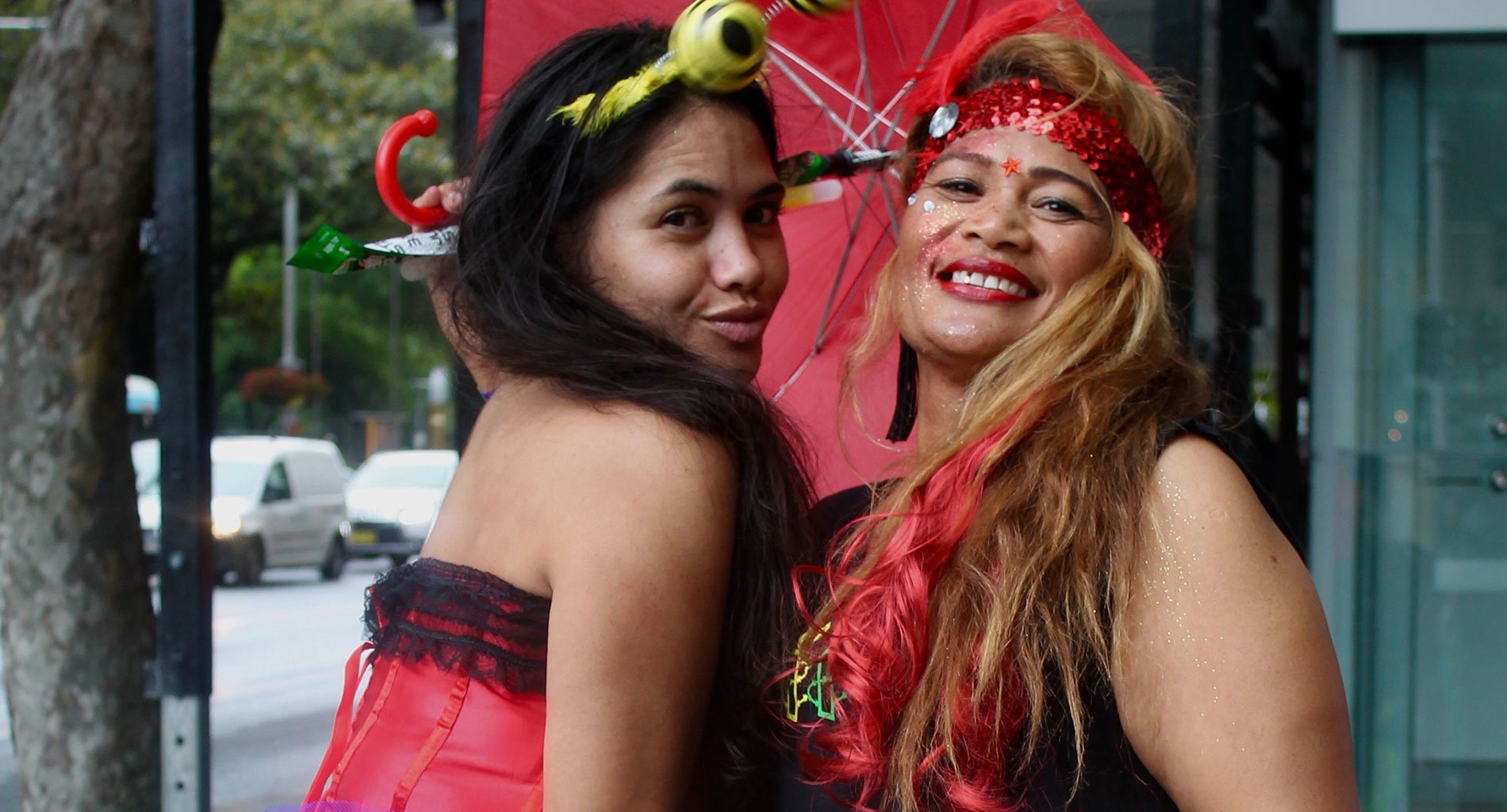
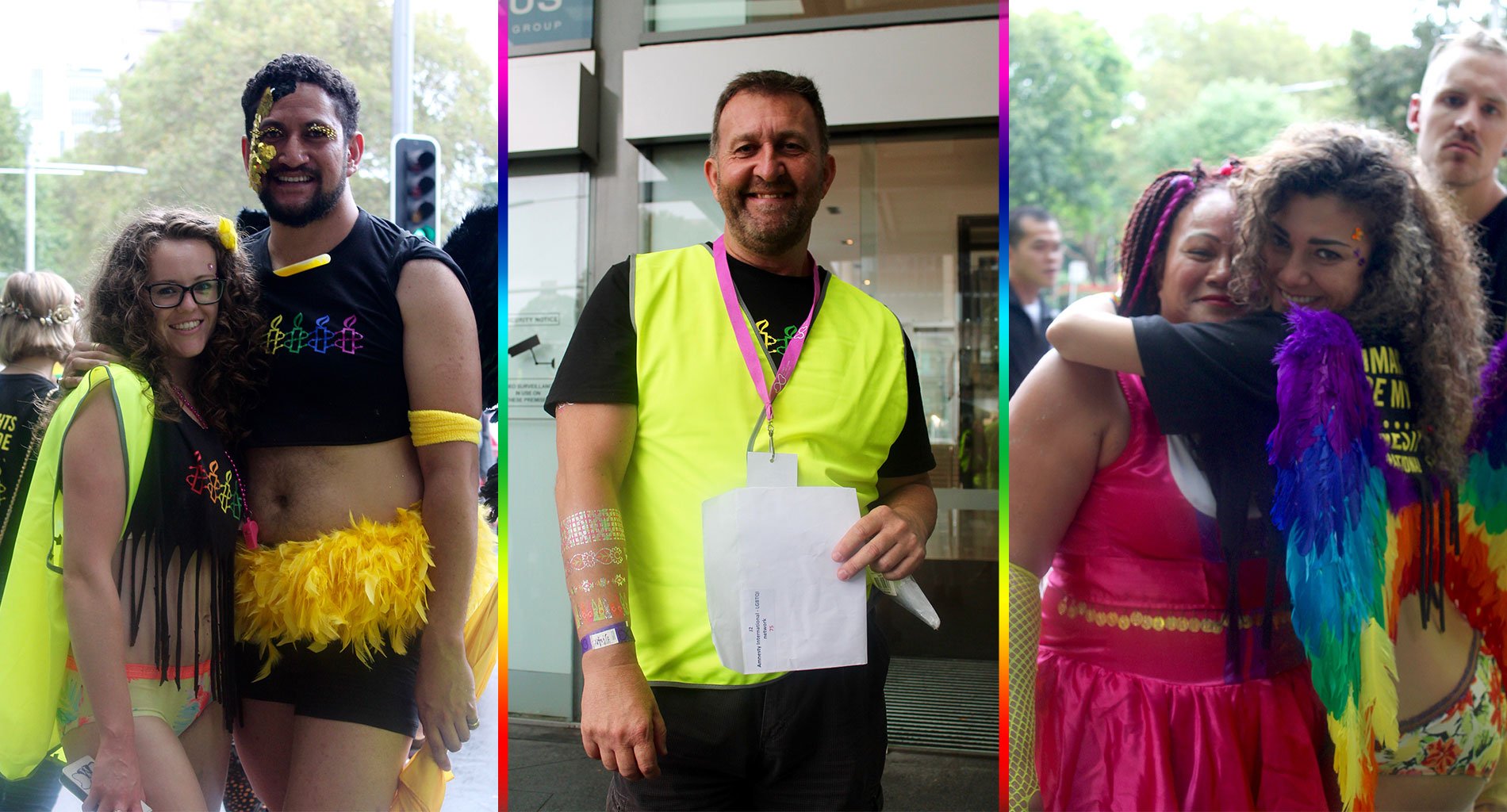
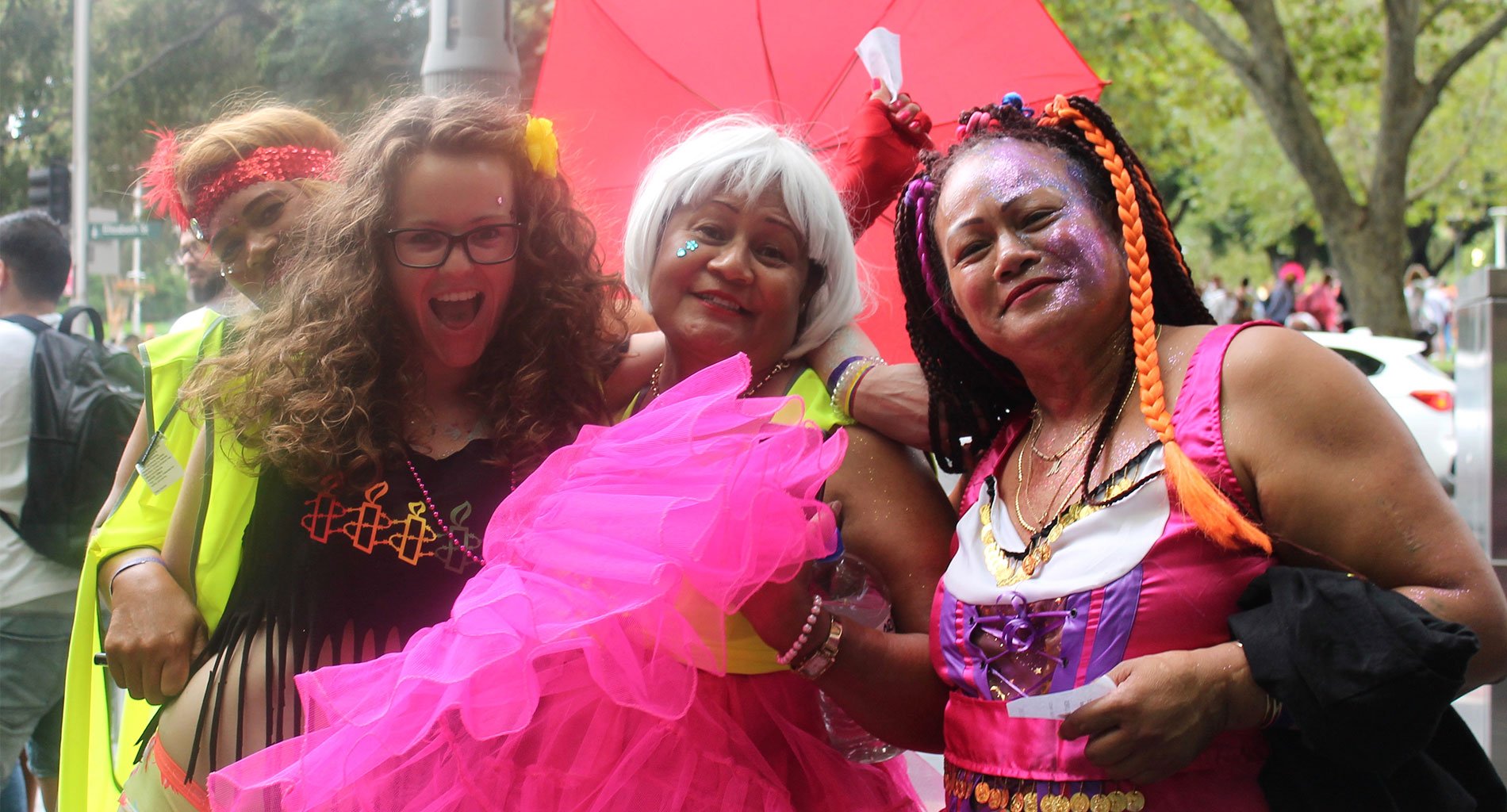
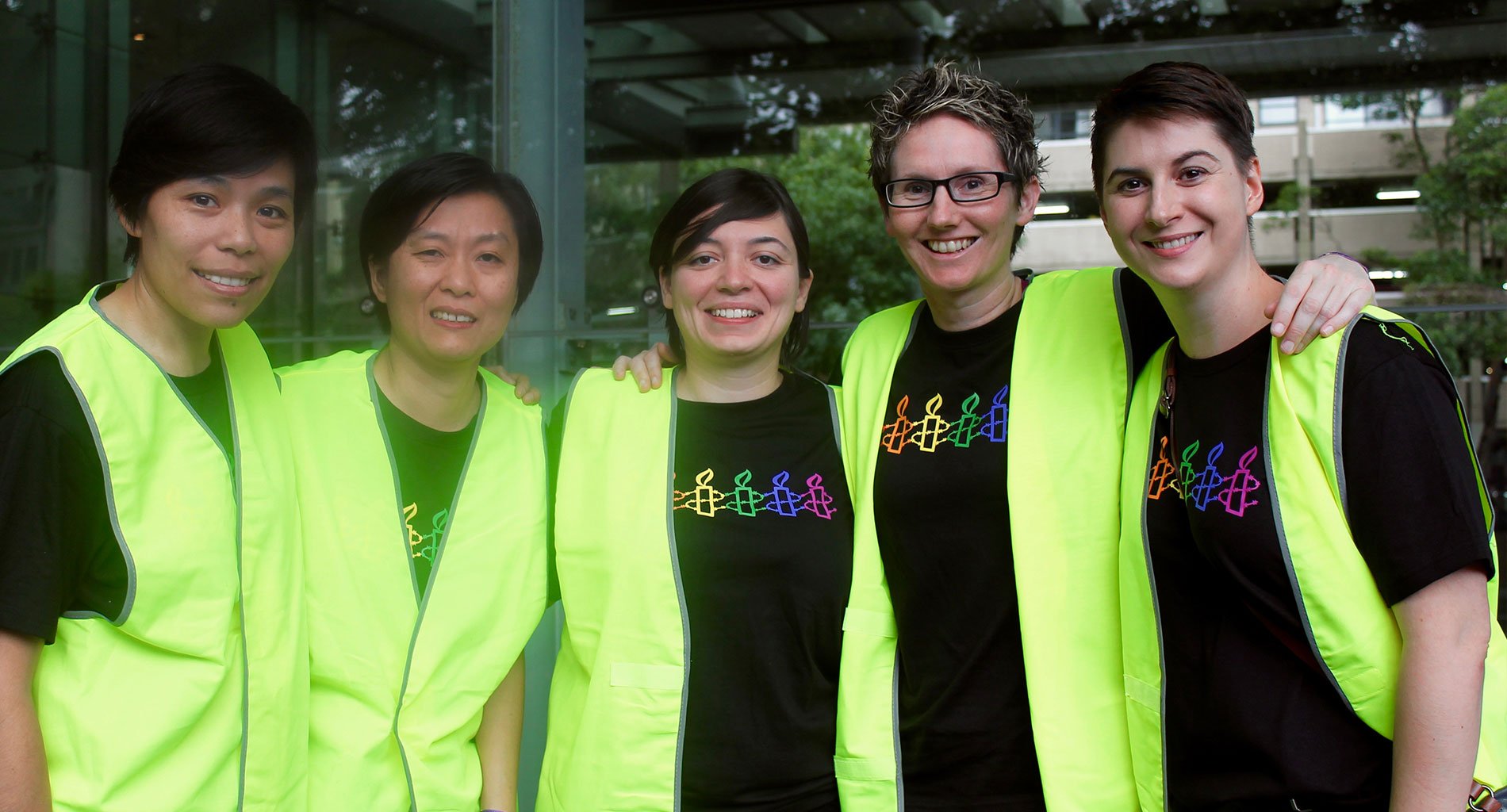
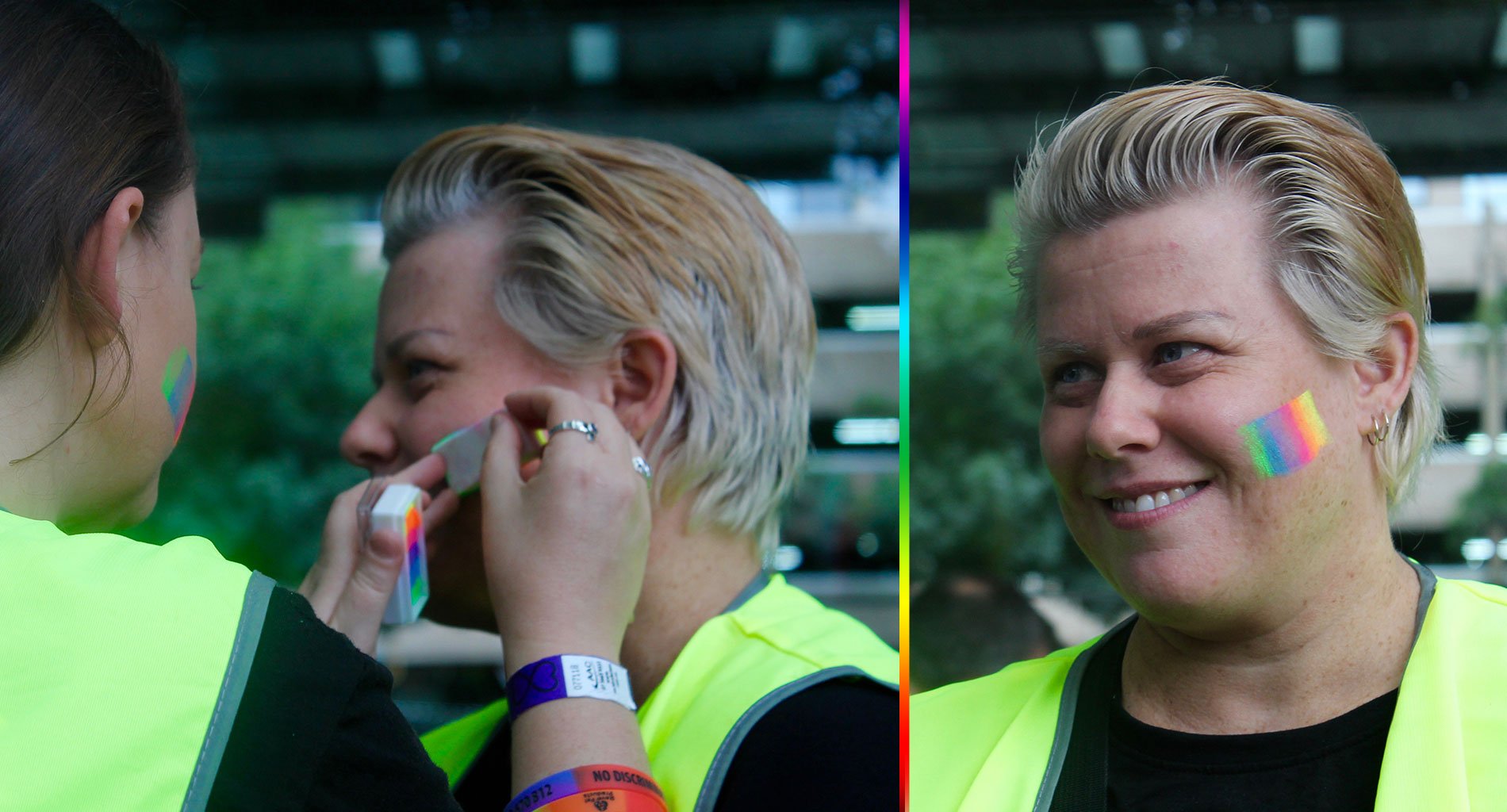
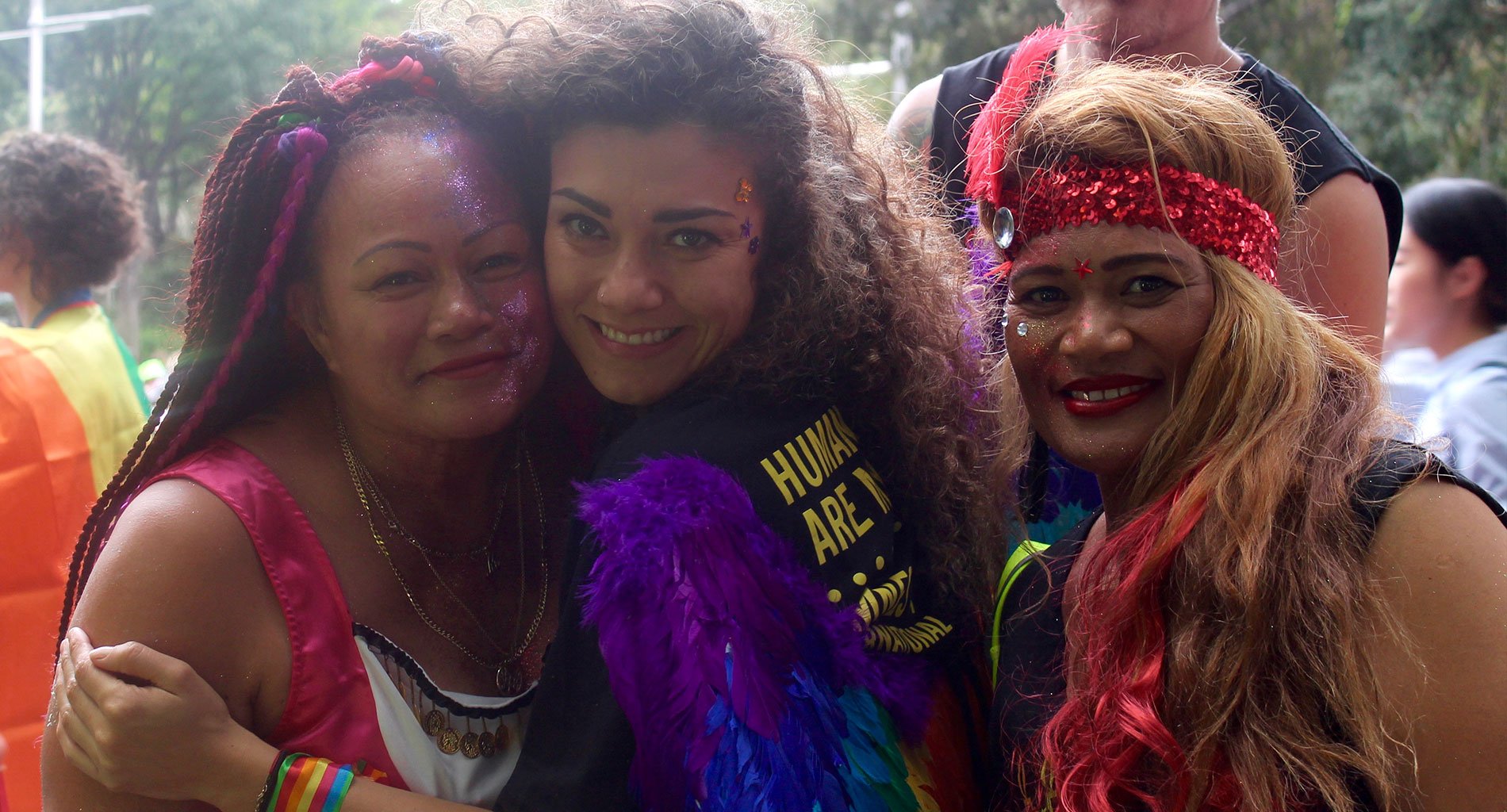
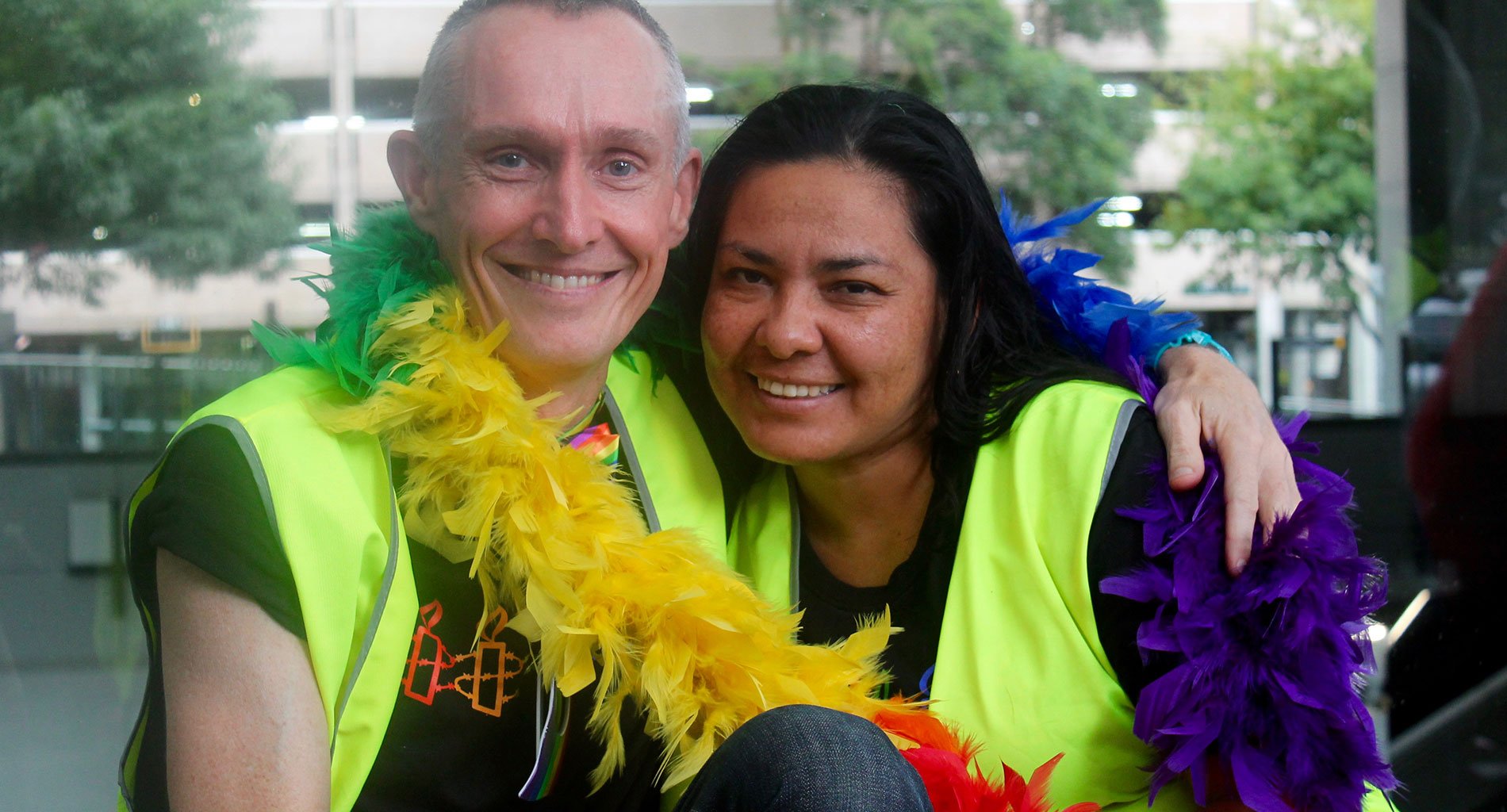
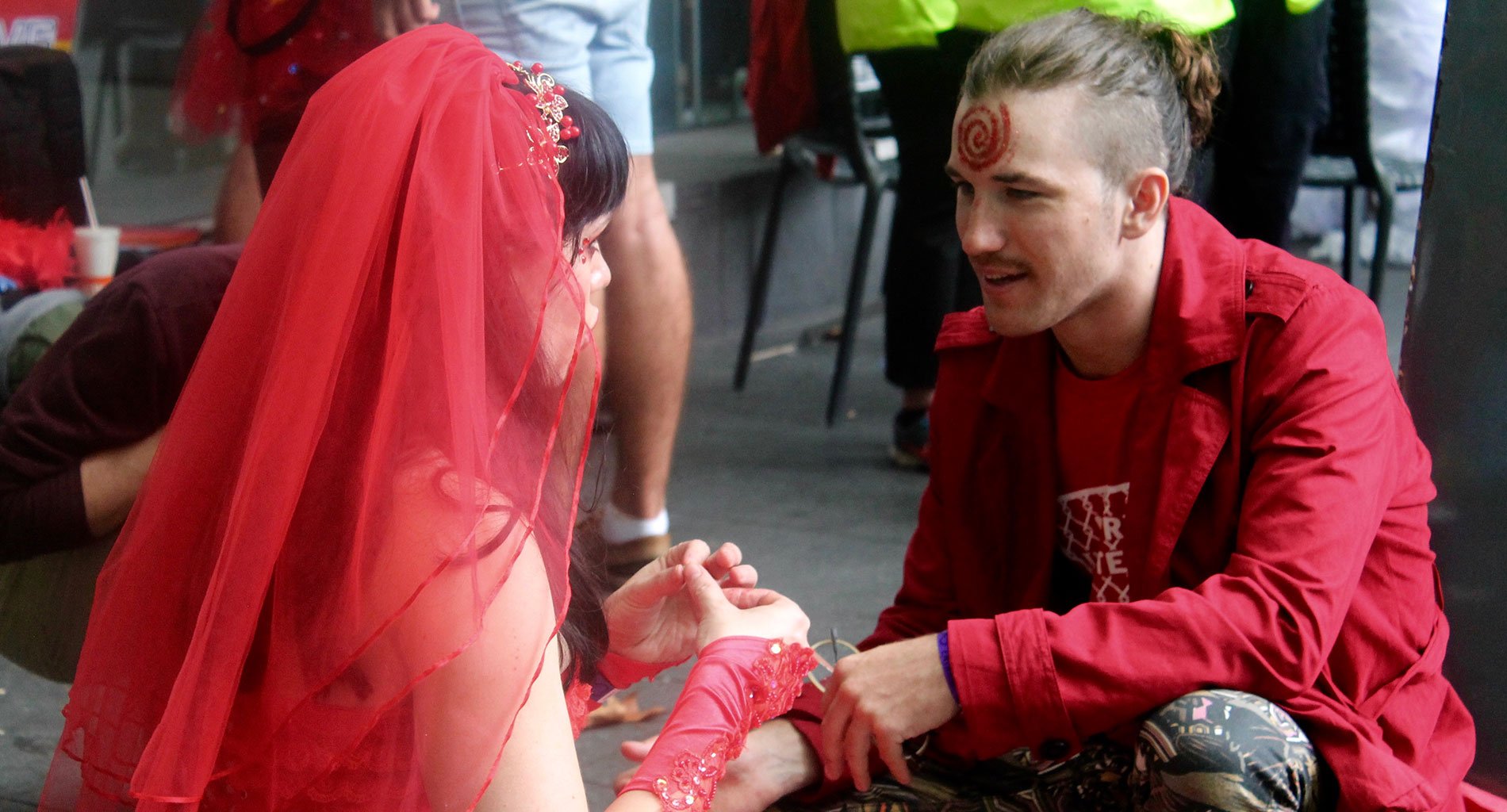
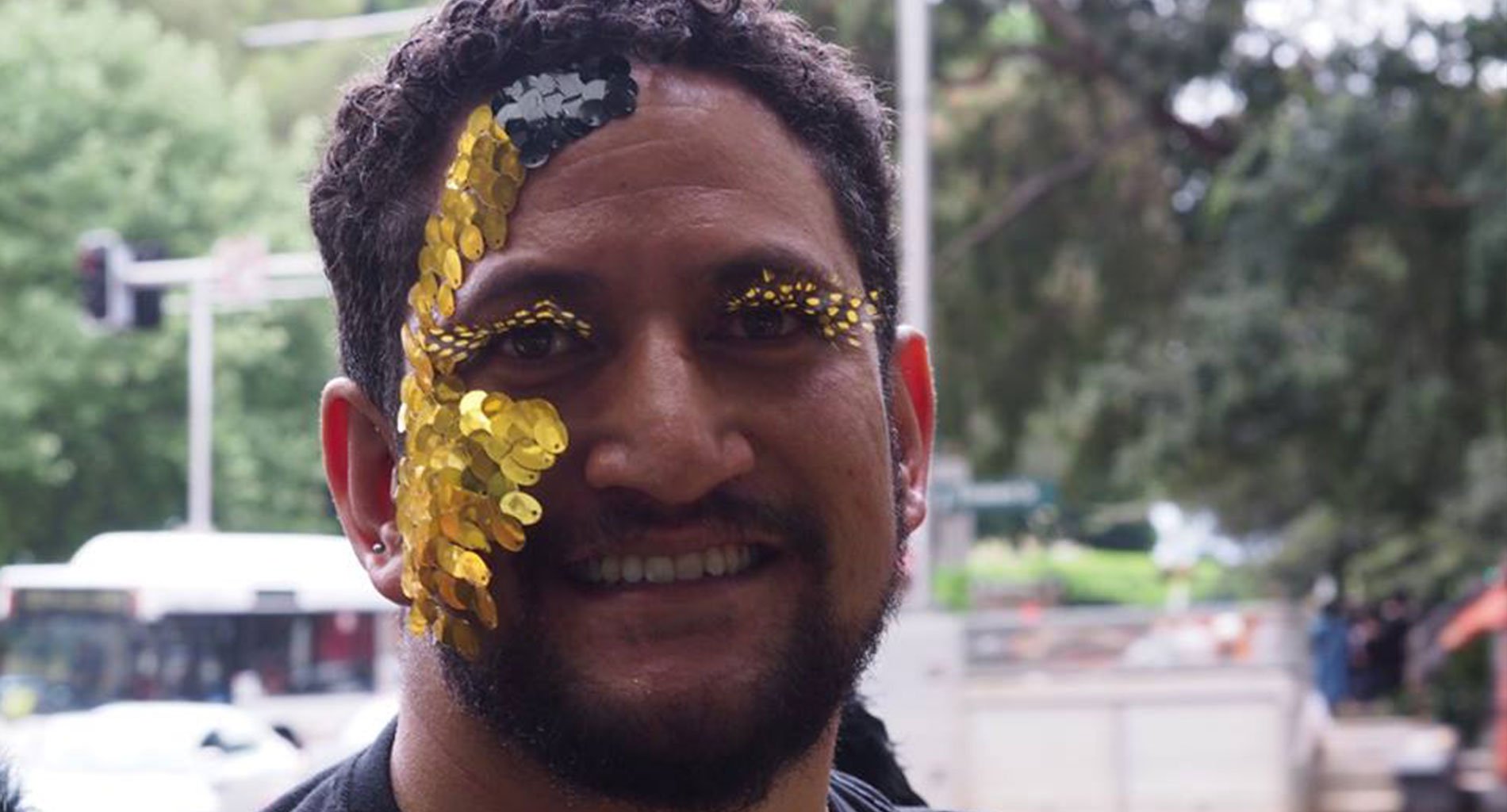
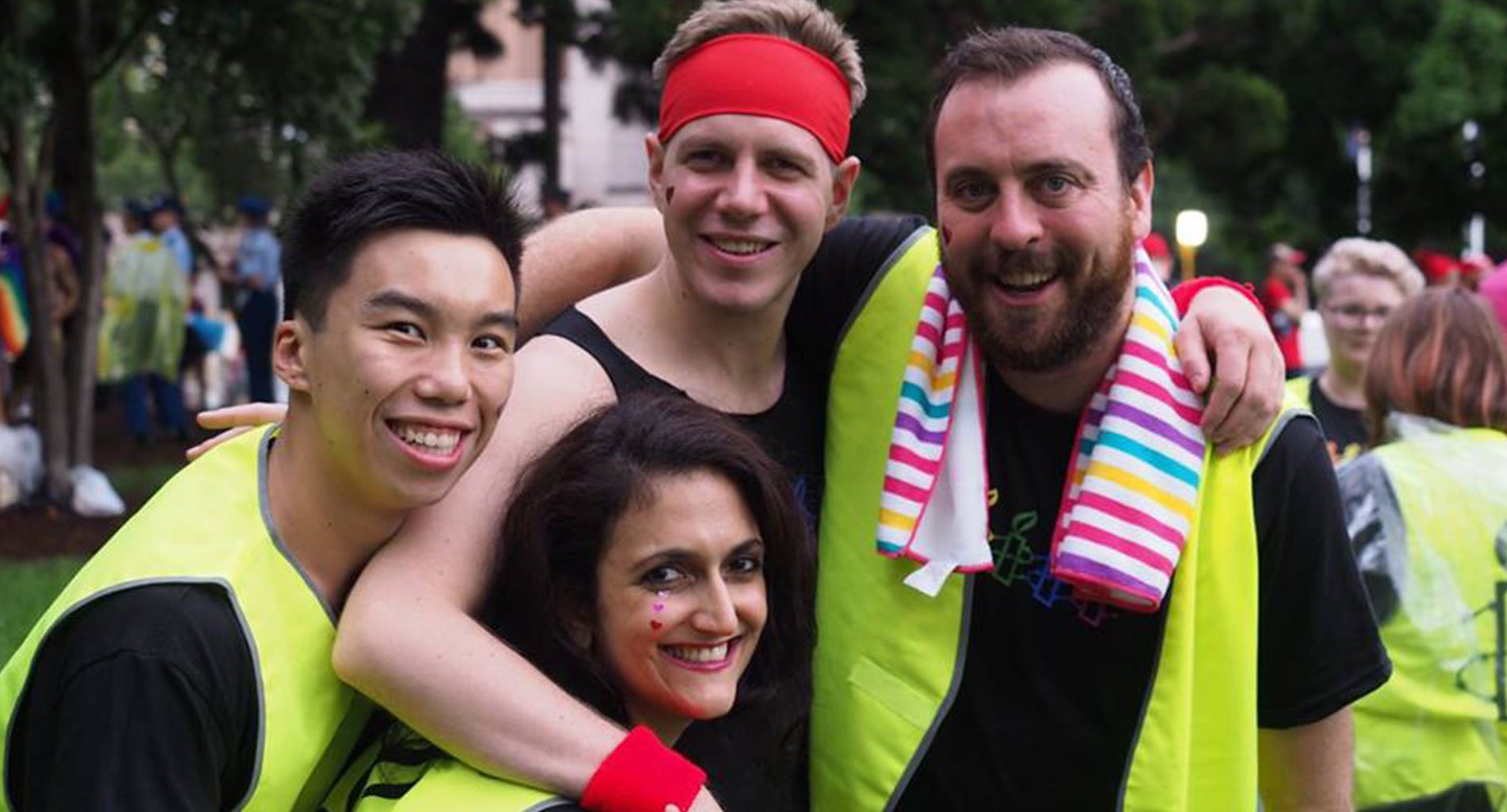
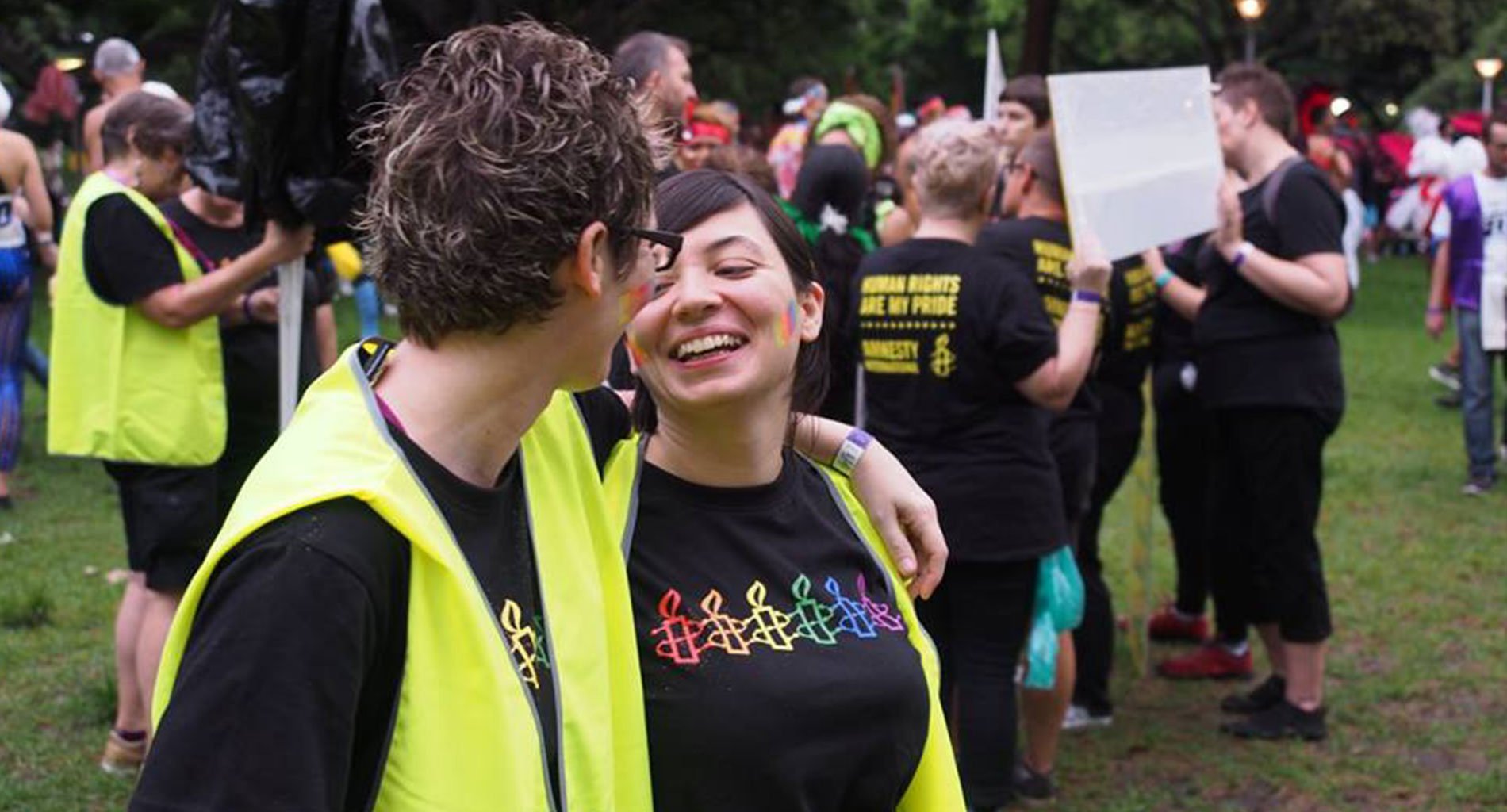
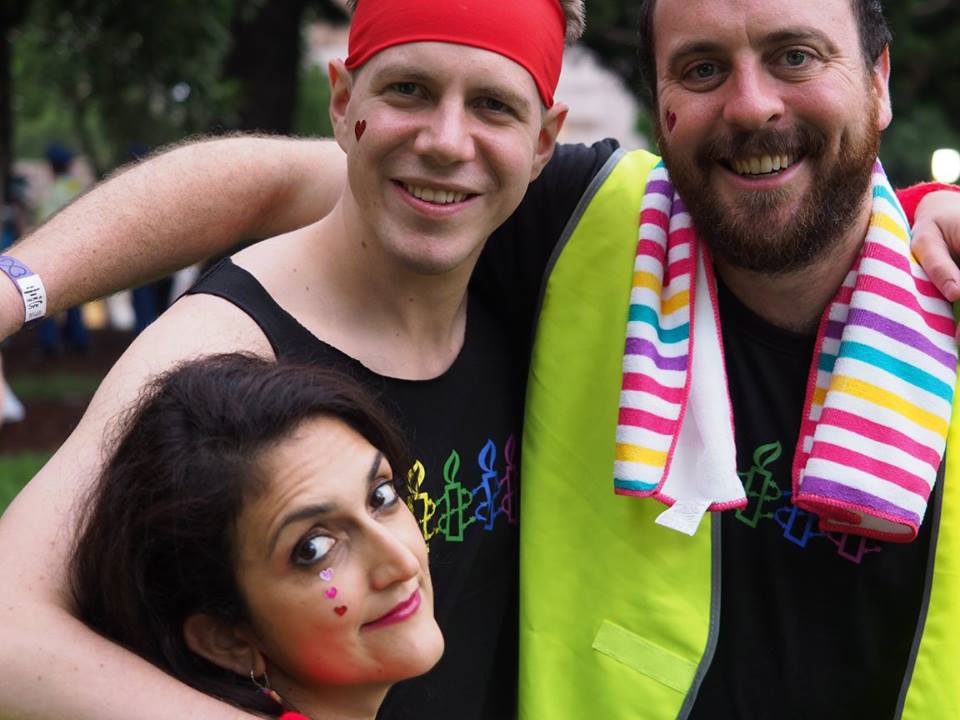
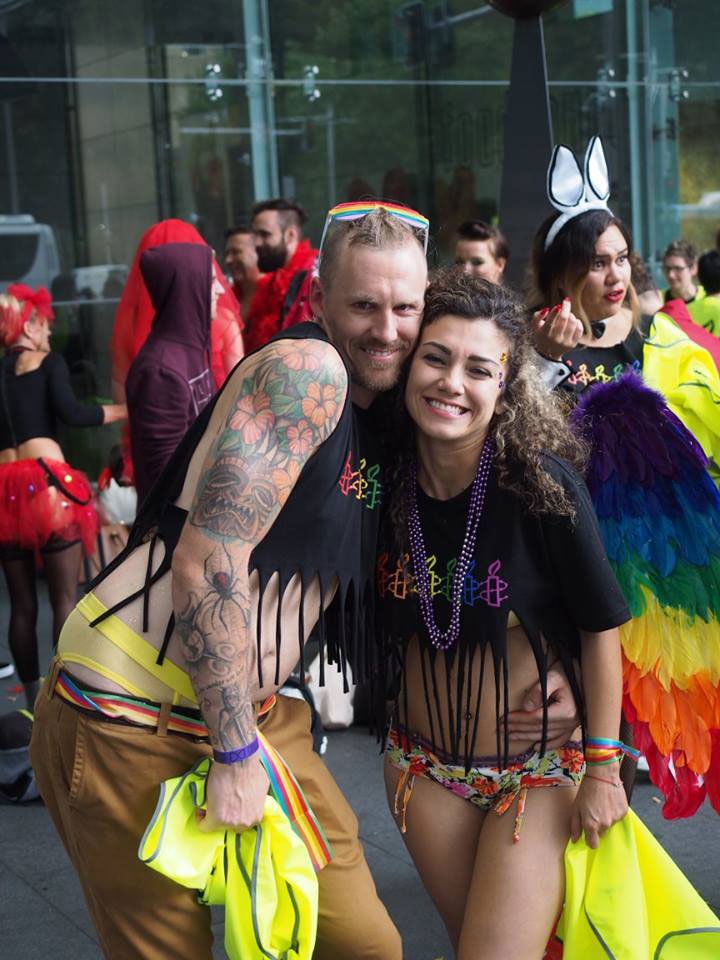
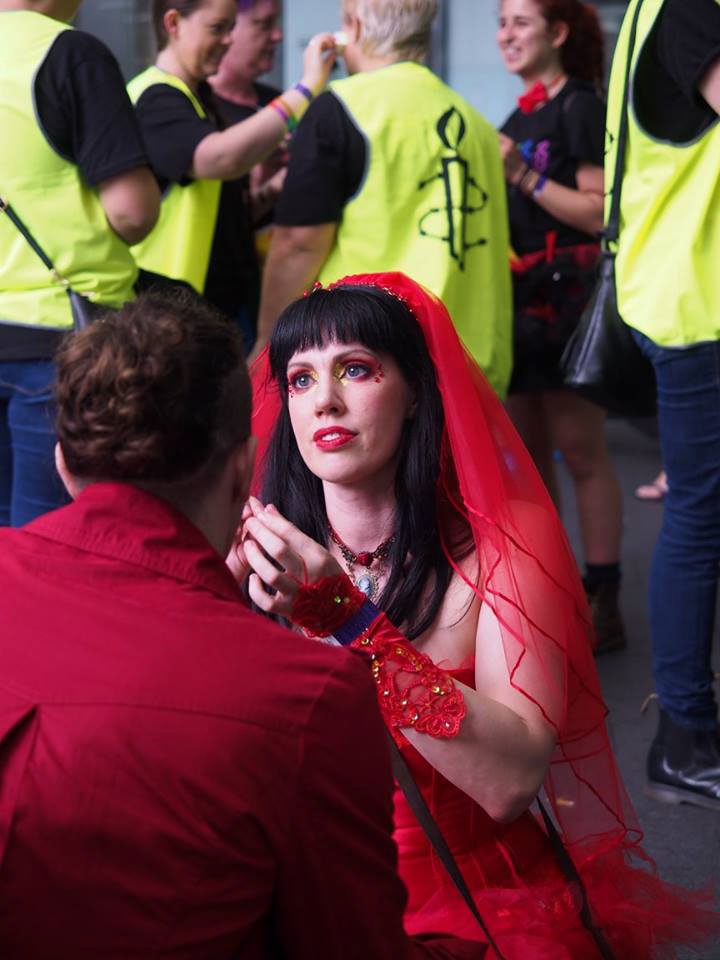
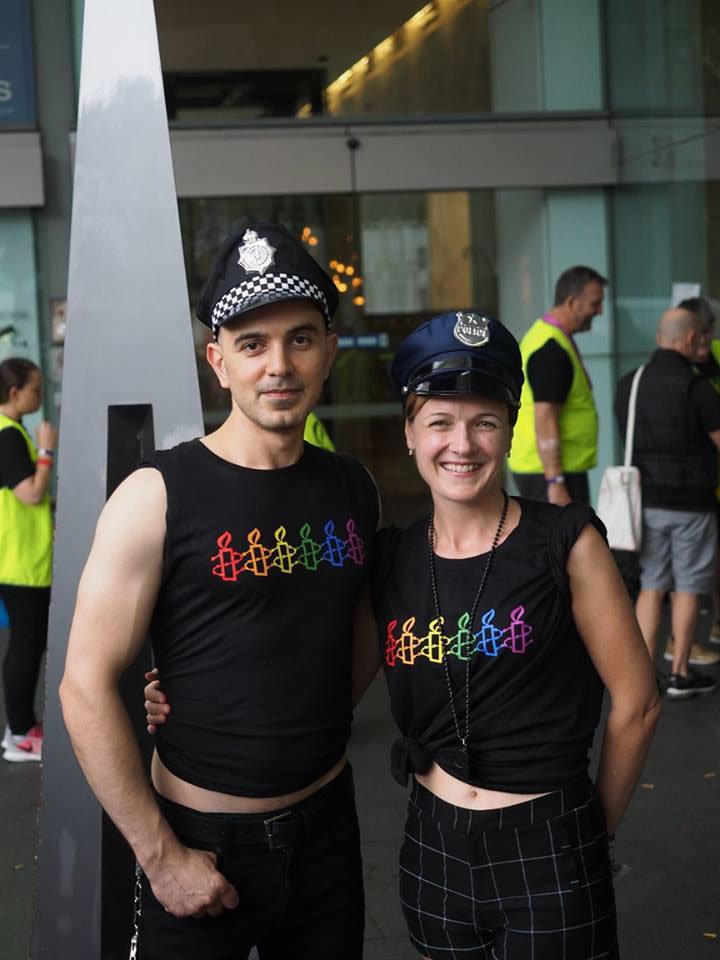
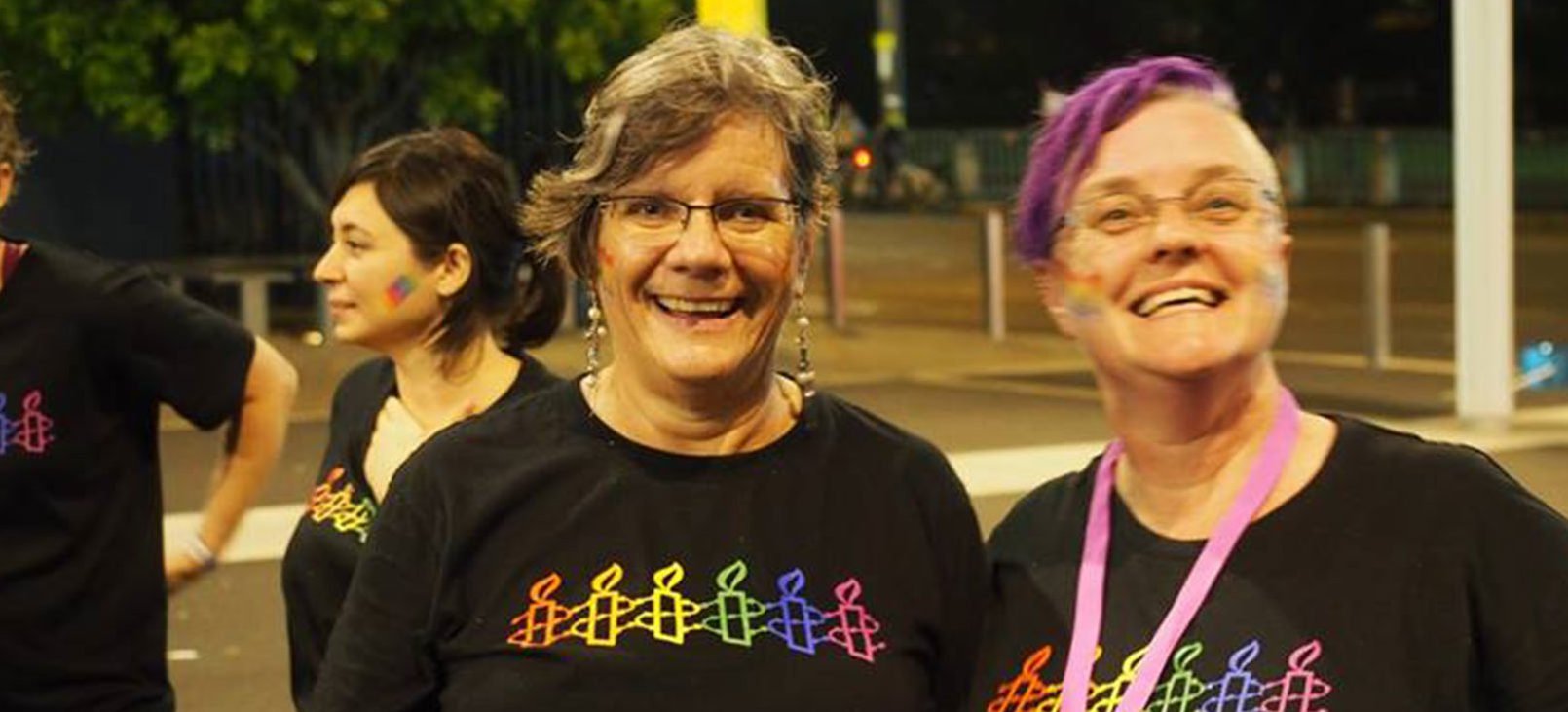
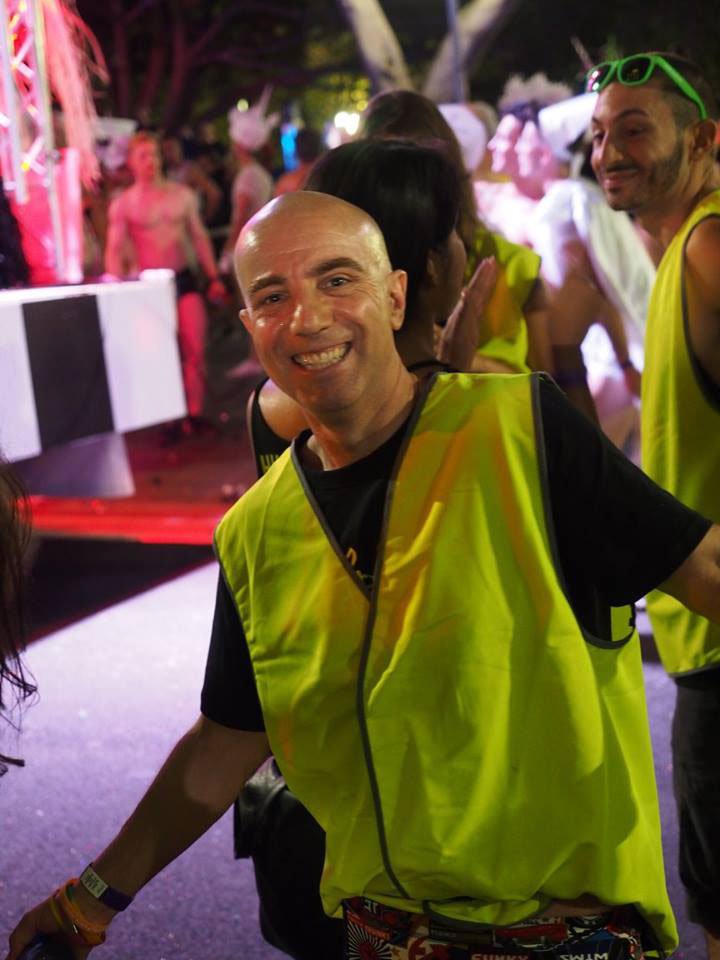
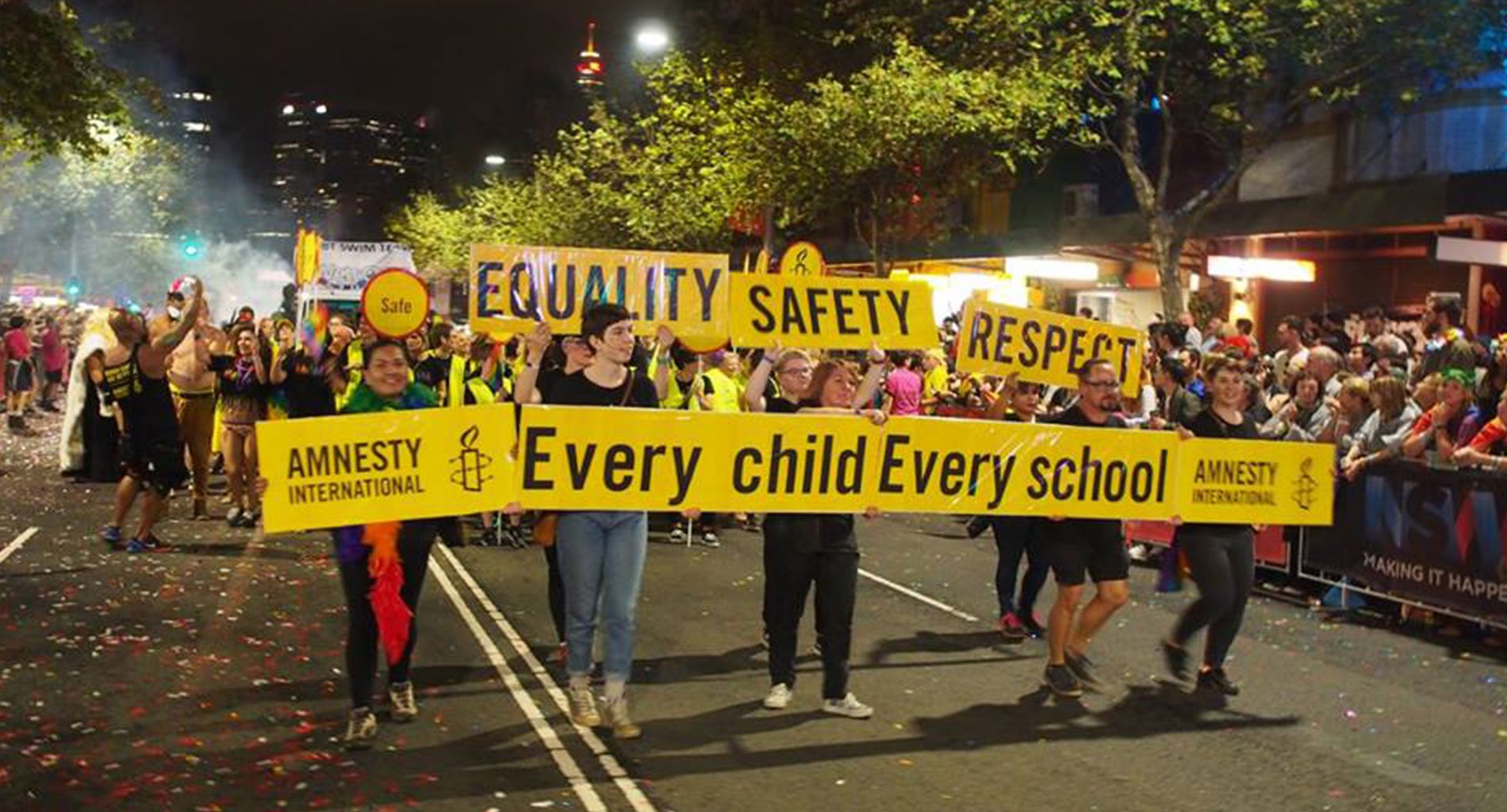
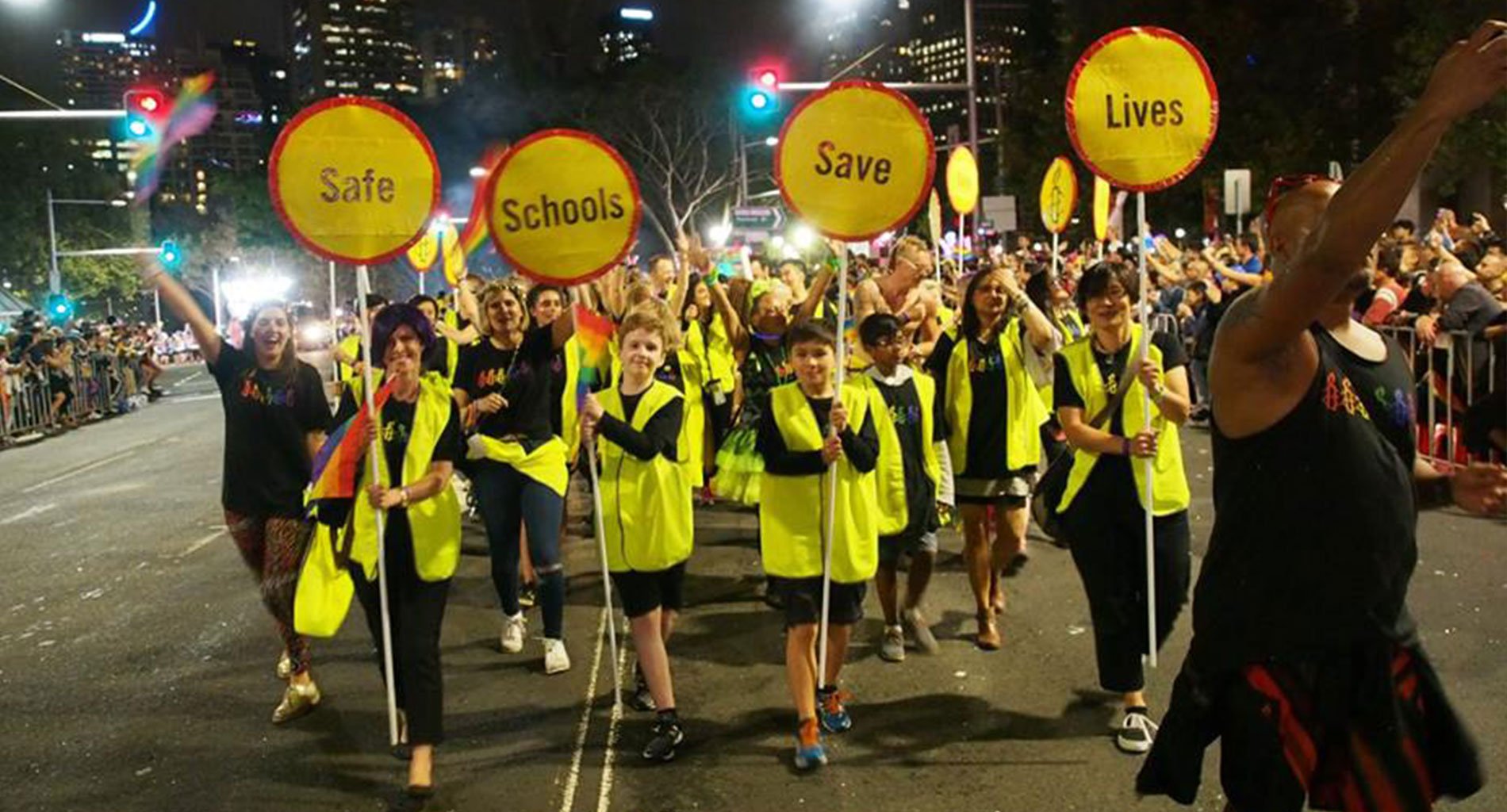
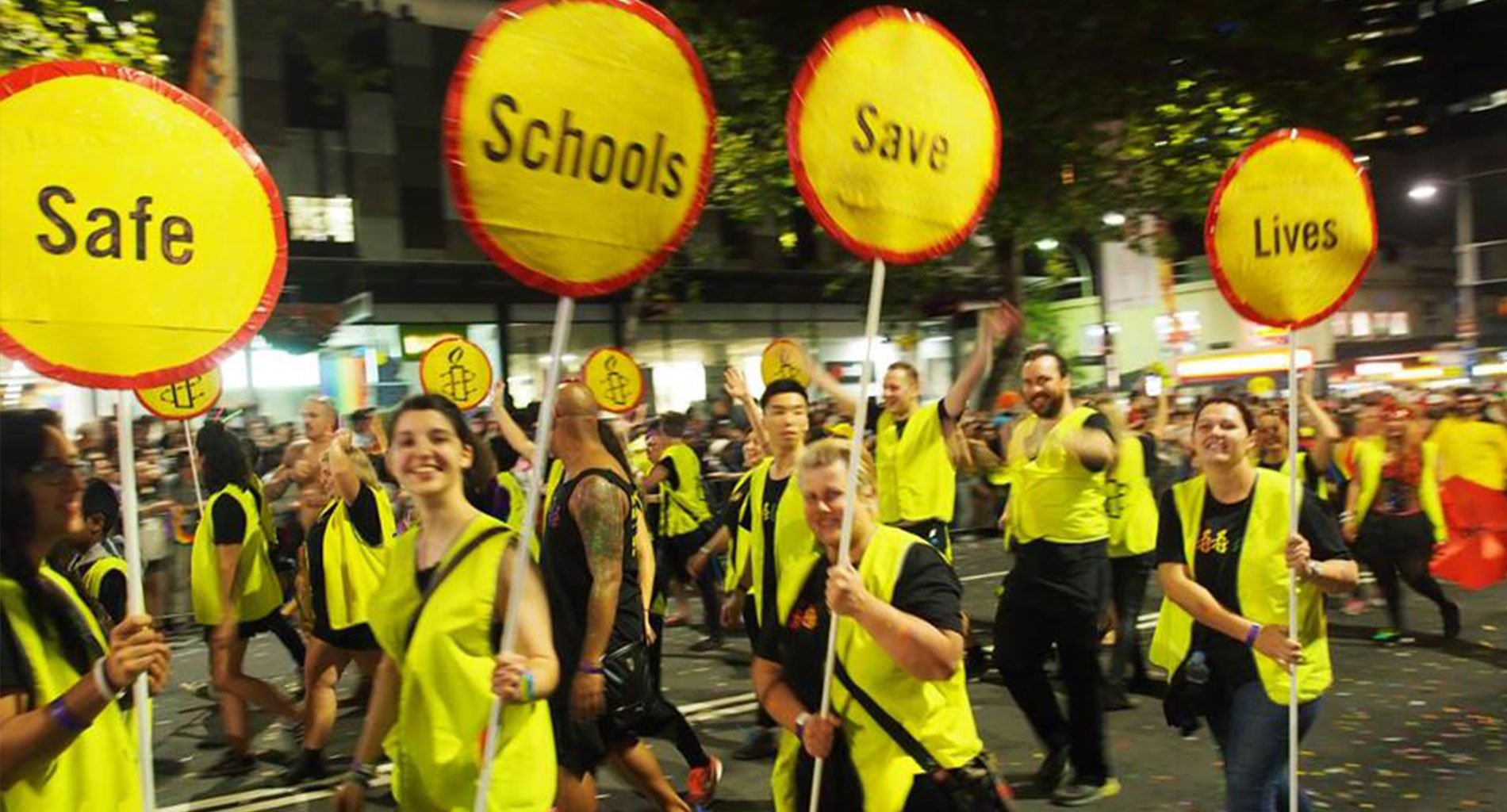
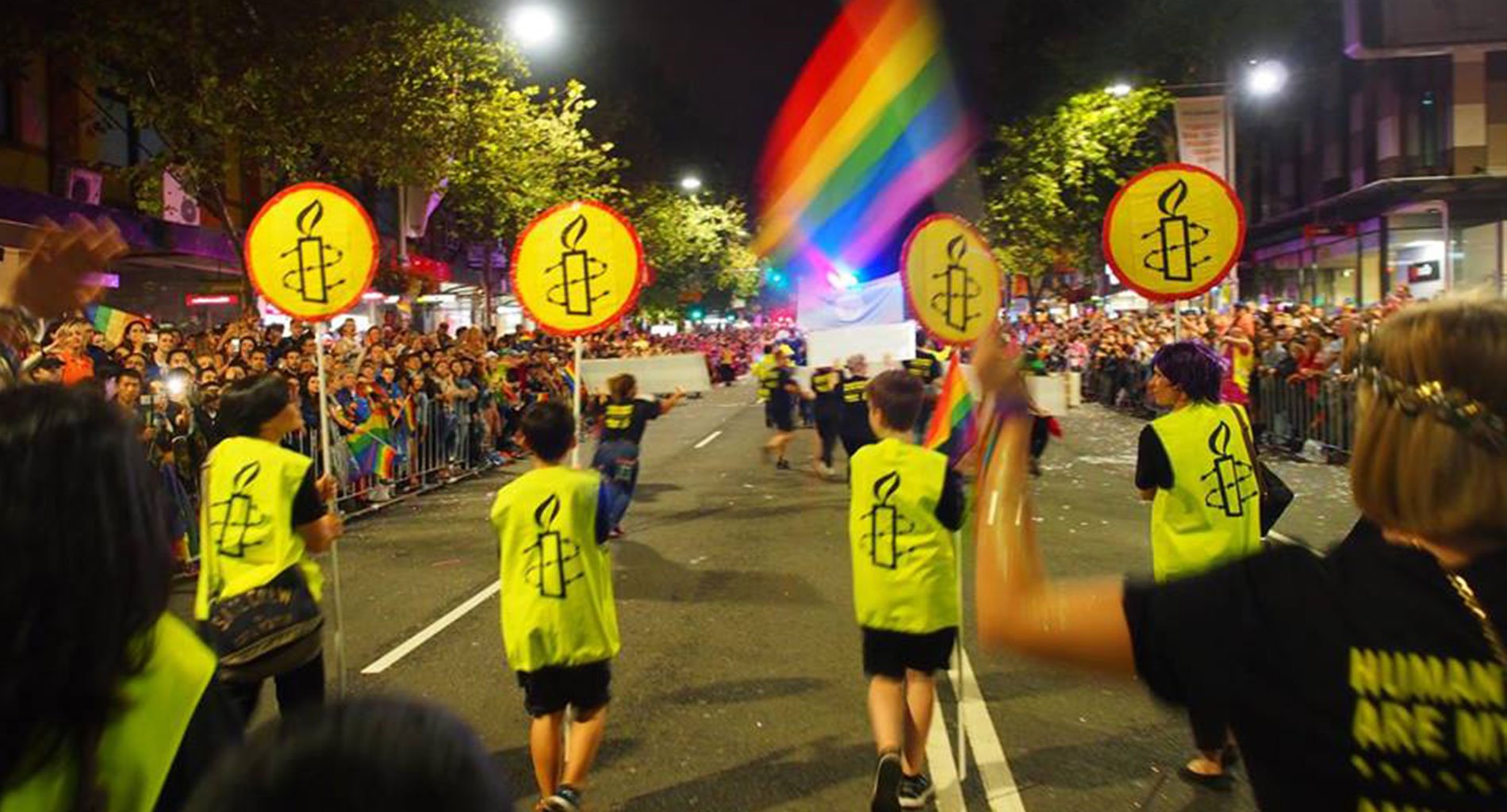
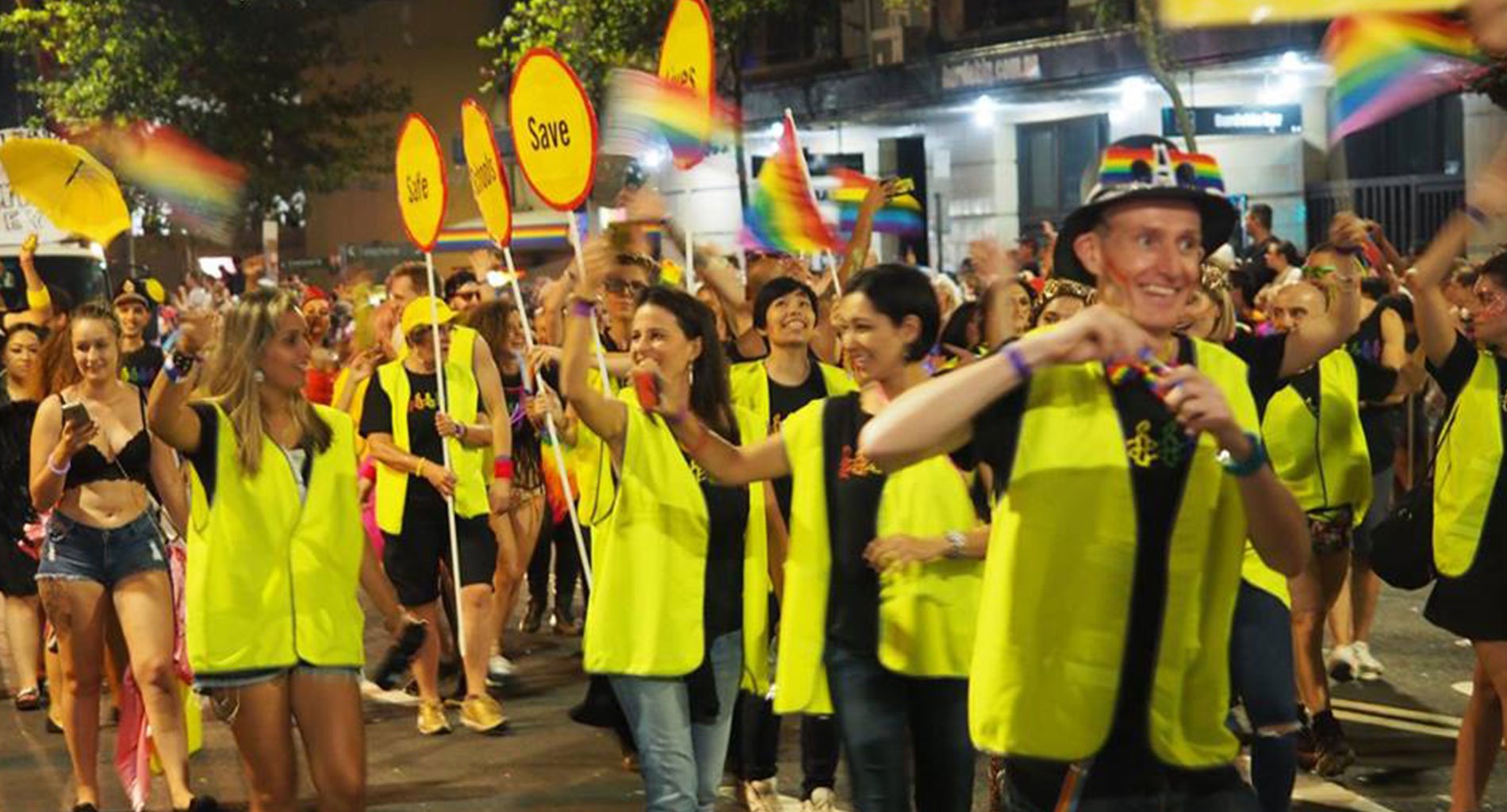
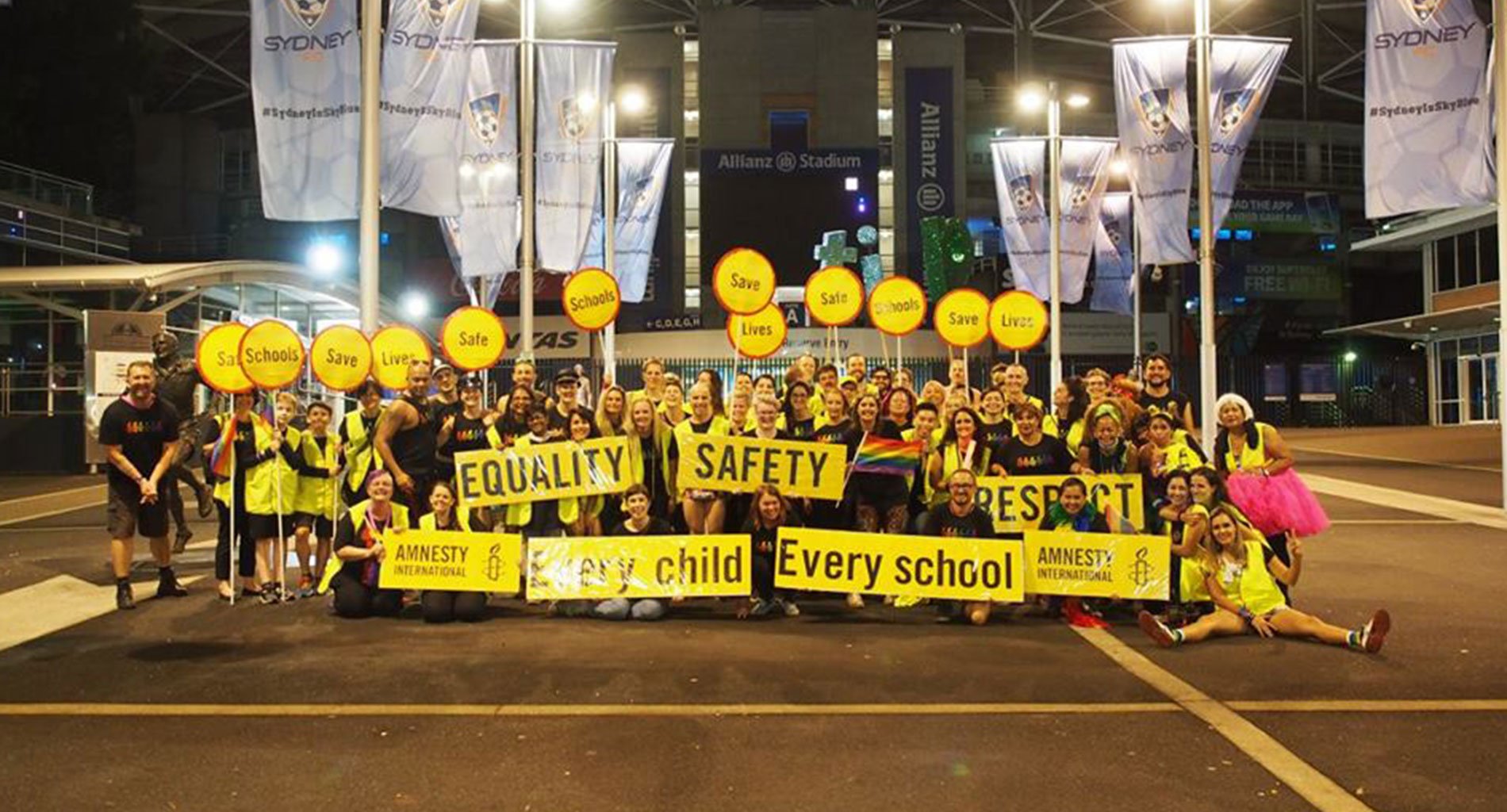
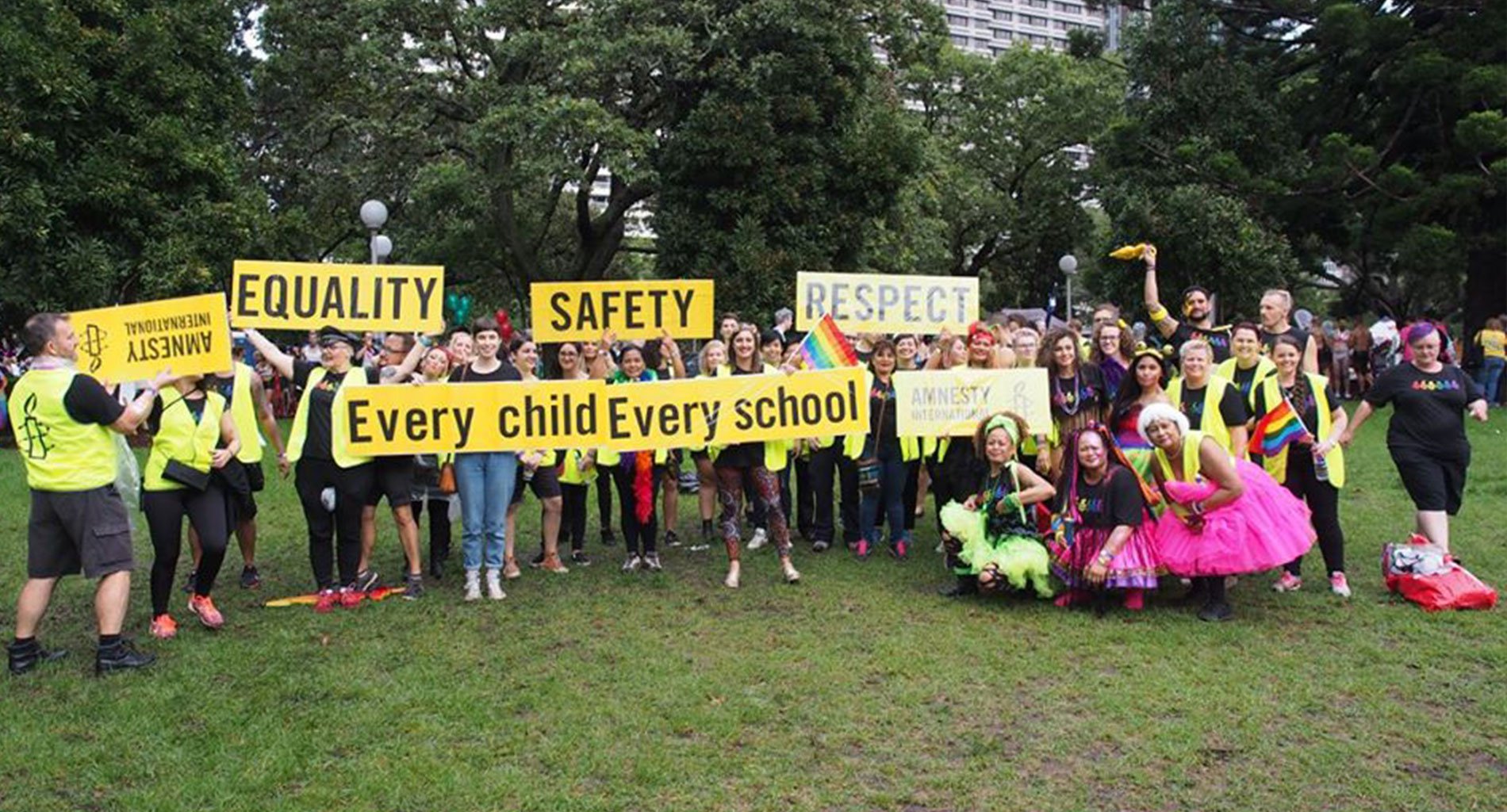
NSW LGBTQI Network at the 2017 Mardi Gras Parade. © Cosmo Price
The NSW LGBTQI Network © Cosmo Price

Members of the NSW LGBTQI network presented to the board on the important work they are doing; local campaigns here in Australia, supporting urgent actions, running events, MP engagement and much more. Network members emphasised the importance of consultation and involvement of LGBTQI people in the work of AIA.

We also welcomed our new Head of External Affairs, Dermot Ryan. It’s great to have Dermot join our Senior Leadership Team.

The Chairs and Directors’ Forum will be held in Colombo, Sri Lanka from 30 April – 2 March, where all sections will come together to discuss our progress toward our international strategic goals. We will also consider the International Board’s proposal to reform our international governance, and other resolutions being put to the August International Council Meeting. AIA will be running a national engagement process on these resolutions which will be advertised via the Leader. If you would like more detail at this time please contact the National Board member and chair of the International Issues Committee, James Milsom at james.milsom@amnesty.org.au.

The Board of AIA is committed to an international governance model which is efficient, transparent, diverse, and enables us to be a strong voice for human rights across the world. We are looking forward to engaging with our colleagues around the world to find the right model for Amnesty internationally.

We are excited to have started our journey toward reaching our 2020 vision and we are looking forward to our next steps!

Regards,
Gabe Kavanagh
Good news: Mother to be released from US immigration detention

Sara Beltran Hernandez, a mother who fled violence in El Salvador only to be detained in the United States for 15 months, has been released from detention to be with her family and to seek treatment for a brain tumor.

What happened?

Sara is a 26-year-old mother of two who fled to the US to escape gang and domestic violence in El Salvador. Despite having a claim to asylum, she was locked up for 15 months.

Sara reports that a gang leader and gang members in El Salvador had sent her death threats. Sara also says that she suffered serious physical and psychological domestic violence, and was sexually abused.

Despite her claim to asylum, she was held at a US Immigration and Customs Enforcement (ICE) detention centre in Dallas, northern Texas, since arriving at the US-Mexico border on 4 November 2015.

To make matters worse, Sara was in urgent need of medical attention for a brain tumour during her detention. According to her lawyer, Sara collapsed in February 2017 and was taken to a hospital by staff. She later reported suffering from convulsions and nosebleeds, head pain, and trouble thinking clearly. She had still not received surgery.

The right to seek asylum in the US

Under US law and international law, people going to the US can seek asylum if they fear for their safety in their home country, and their human rights must be protected while their claims are being reviewed.

How did Amnesty respond?

Amnesty sent a letter to the authorities emphasising that detention should only be used by immigration officials as a last resort, and that parole should be granted to people who are suffering from medical emergencies and who pose no flight risk or threat to public safety. The letter pointed out that Sara fits these parameters and should be released from detention immediately.

Amnesty International then mobilisedour 1.2 million members across the US to flood the authorities with phone calls asking for Sara to be freed. People like you spoke up for her rights. And when you raised your voice, you shut down three Immigration and Customs Enforcement phone lines.

On 2 March, an immigration judge granted Sara Beltran Hernandez bond, allowing for her release. She is now permitted to live with her family in New York where she can seek medical treatment while her asylum claim is processed.

Following her release, Sara shared this message:

“I want to thank Amnesty International activists like you for taking action on my behalf. I truly appreciate your support and your actions made a difference. Because of you, I can now get the medical care I need and be reunited with my family who I have not seen in over 15 months. Thank you.”

What’s next?

While we welcome the release of Sara, Amnesty International is seriously concerned for the safety of people seeking asylum in the face of President Trump’s aggressive new immigration orders.

President Trump has just signed a new Executive Order which reinstates harmful measures that discriminate against nationals, including refugees, from six Muslim-majority countries. It also temporarily stops refugees from any country from resettling in the US.

It is time for the President to stop abusing his power, to uphold the US’s commitments to the world’s most vulnerable refugees and to end the discriminatory travel ban.

The war in Syria turns another year older, but is the world any wiser?

For the millions of people who have suffered, and continue to suffer as crimes against humanity go unpunished in Syria, today marks the sixth anniversary of the first major protests that sparked the conflict.

Six years. Six years of living in fear of death by constant bombardment from air strikes, deliberate attacks on civilians, homes, markets, places of worship, schools and hospitals. Six years of extrajudicial executions, enforced disappearances, torture, ill-treatment and mass hangings.

According to the UN special envoy to Syria, the death toll since the beginning of the crisis has surpassed 400,000 – meaning at least one in every 100 Syrians has been killed as a result of the conflict.

More than 20 percent of the Syrian population now live as refugees outside their country, while half of the population still living inside of Syria is in need of life-saving humanitarian assistance. This year must be this war’s last.

“At least one in every 100 Syrians has been killed as a result of the conflict”

Crimes against humanity are being committed every day of this war

Crimes against humanity and war crimes committed by all parties to the conflict in Syria have been widely documented by Amnesty International and other human rights organisations, as well as UN agencies, since the beginning of the crisis.

However, these crimes continue to go unpunished in Syria.

Peace talks have stalled over the years as the UN Security Council has been heavily politicised and crippled in its inability to act. For six years Russia, with the support of China, has blocked Security Council decisions by using its veto power to prevent resolutions from being passed, which would sanction the Syrian government. This behaviour prevents justice from being served and emboldens all parties to the conflict in Syria to act with indifference to international law.

Six harrowing years on, there is no excuse for allowing such horrific crimes that are continuing to be committed in Syria to go unpunished.

Earlier this year Amnesty International published a report called, Human slaughterhouse: Mass hangings and extermination at Saydnaya prison, Syria, prompted an intense reaction in the global media and political spheres.

Given the report’s shocking findings about mass hangings and extermination since 2011, Syrian President Bashar al-Assad claimed Amnesty’s report was circulating “fake news”. There is sadly nothing fake about these findings of the brutal slaughter of Syria’s own people.

The onslaught of Aleppo

On 16 December, 2016 bombardment of an area in East Aleppo packed with civilians began  – hours after a truce had been declared  – prompting worldwide condemnation and cries that a war crime had been committed. It was a crucial impasse and moral imperative to safely evacuate all people from East Aleppo before the entire area was annihilated.

Amnesty International immediately took action and our supporters in Australia gave generously to the appeal for the people of Aleppo. People such as seven-year-old Bana, who tweeted from rebel-held eastern Aleppo throughout the onslaught. “Tonight we have no house, it’s bombed and I got in rubble. I saw deaths and I almost died,” was her last tweet before her family’s escape.

The eventual ceasefire deal, which saw the evacuation of over 35,000 of civilians from the danger-zone, was the result of sustained worldwide campaigning which led to the UN Security Council finally passing a resolution which allowed UN monitors immediate access to Aleppo to ensure the safe evacuation of civilians under threat.

What’s happening in Syria now?

The UN General Assembly has adopted a resolution giving the people of Syria a glimmer of hope that justice is possible. It called for the establishment of an independent body to assist in the investigation and prosecution of the most serious crimes committed under international law in Syria since March 2011.

The resolution sent a powerful signal in bypassing a deadlocked UN Security Council, which has proven incapable of ending impunity for human rights violations in Syria. The independent body now awaits necessary funds from UN member states to be secured before becoming operational.

“How many more children need to be caught up in the crossfire and denied the right to education?”

As for the immediate fate of this war, Syrian peace talks involving the armed opposition and Russia, Iran and Turkey are scheduled to take place in Kazakhstan again this week following a meeting in Astana on 14-16 February.

The ceasefire has been repeatedly violated however, while the war against jihadist groups such as Islamic State  – which are not included under the ceasefire  – has raged on.

Enough is enough. How many more years can the people of Syria continue this way? How many more children need to be caught up in the crossfire and denied the right to education?

How you can help

With the Syrian war now in it’s seventh year the safety of refugees fleeing for their lives is only getting worse. The global rhetoric of national security and closing the doors on refugees plays into the hands of the politics of fear. The revised Executive Order announced by the Trump Administration on the 6 March is callous, cruel and discriminatory, not to mention illegal under international human rights law.

The USA has a long history of welcoming refugees and plays a crucial role in global resettlement – now as the world faces more people displaced than ever before – is it not the time to turn their backs on this commitment.

Amnesty International Australia are joining our global movement of over 7 million supporters in calling for not only global condemnation, but for this Executive Order to be repealed.

Will you join us say no to this latest travel ban?

European Court of Justice rules no violation in dismissal of women for wearing headscarves at work

In response to the ruling by the Court of Justice the European Union that two employers did not break EU anti-discrimination law when they dismissed two women from their respective jobs in France and Belgium for wearing headscarves, John Dalhuisen, Director of Amnesty International’s Europe and Central Asia programme said:

“The disappointing rulings by the European Court of Justice give greater leeway to employers to discriminate against women – and men – on the grounds of religious belief. At a time when identity and appearance has become a political battleground, people need more protection against prejudice, not less.”

“At a time when identity and appearance has become a political battleground, people need more protection against prejudice, not less.”

John Dalhuisen, Director of Amnesty International’s Europe and Central Asia programme

“The court did say that employers are not at liberty to pander to the prejudices of their clients. But by ruling that company policies can prohibit religious symbols on the grounds of neutrality, they have opened a backdoor to precisely such prejudice. It is now for national governments to step up and protect the rights of their citizens.”

Background

On 12 June 2006, G4S Secure Solutions NV (G4S), a private undertaking in Belgium, dismissed Samira Achbita, who had been working as a receptionist since February 2003, because she informed the company of her intention to start wearing the headscarf in the workplace. Employees in G4S were subjected to an unwritten, and from the following day, a written prohibition on religious and philosophical symbols in the work place.

In another case, on 22 June 2009, Micropole SA, a private undertaking based in France, dismissed Asma Bougnaoui, who had been working as a design engineer for the company since 15 July 2008, because she wanted to continue wearing the headscarf when providing services to the company’s clients. Micropole SA pointed out in the letter of dismissal that employees had to respect a policy of ‘neutrality’ vis-à-vis its clients.

Amnesty International, together with the European Network Against Racism, submitted to the Court that both the measures imposed by G4S Solutions NV and Micropole SA on their employees constitute discrimination based on religion or belief.

Syria: Justice, truth and reparation

As war crimes and crimes against humanity continue to go unpunished in Syria, an Amnesty International campaign marking the sixth anniversary of the crisis calls on world leaders to take immediate action to deliver justice, truth and reparation to the millions of victims of the conflict.

The Justice for Syria campaign calls on governments to end impunity and make accountability a reality for the Syrian people by supporting and funding the investigative mechanism on Syria voted for by the UN General Assembly in December 2016 and by enforcing universal jurisdiction to investigate and prosecute, in their own courts, suspected perpetrators of war crimes and crimes against humanity in Syria.

“Six harrowing years on, there is no excuse for allowing the horrific crimes under international law that are being committed in Syria to go unpunished,” said Samah Hadid, Director of Campaigns at Amnesty International’s Beirut Regional Office.

“Governments already have the legal tools at their disposal to end the impunity that has allowed hundreds of thousands of Syrians to be killed and millions more displaced. It is time to put those tools into action.”

“Six harrowing years on, there is no excuse for allowing the horrific crimes under international law that are being committed in Syria to go unpunished.”

Samah Hadid, Director of Campaigns at Amnesty International’s Beirut Regional Office

All states are permitted to exercise universal jurisdiction over crimes under international law, like war crimes or crimes against humanity. In other words, universal jurisdiction provides for the ability to investigate and prosecute individuals suspected of responsibility for war crimes and crimes against humanity, torture, genocide, and enforced disappearances in Syria, regardless of where the crime was committed or the nationality of the suspect or victim.

Today, more than 147 countries have provided for universal jurisdiction over one or more crimes under international law. Currently, European countries including France, Germany, the Netherlands, Norway, Sweden and Switzerland are in the process of investigating crimes committed in Syria.

The resolution adopted by the UN General Assembly in December 2016 has also given the people of Syria a glimmer of hope that justice is possible. It called for the establishment of an independent international mechanism to assist in the investigation and prosecution of the most serious crimes under international law committed in Syria since March 2011.

The resolution sent a powerful signal by bypassing a deadlocked UN Security Council, which has proven incapable of ending impunity for crimes under international law or human rights violations in Syria. The mechanism now awaits necessary funds from UN member states to be secured before becoming operational.

“By adopting this resolution, the international community has sent a message of hope to the people of Syria: a promise that the world has not left them behind, that those responsible for their suffering will not go unpunished,” said Samah Hadid

“It is now imperative for governments that voted for this mechanism to take the necessary steps to secure the funding and co-operation needed to allow this mechanism to deliver justice for victims of the conflict in Syria.”

Background

According to the UN special envoy to Syria, the death toll since the beginning of the crisis has surpassed 400,000 – meaning at least one in every 100 Syrians has been killed as a result of the conflict.

More than 20% of the Syrian population live as refugees outside their country, while half the population living inside of Syria is in need of humanitarian assistance.

Crimes against humanity and war crimes committed by all parties to the conflict in Syria have been widely documented by Amnesty International and other human rights organizations, as well as UN agencies, since the beginning of the crisis.

These crimes include extrajudicial executions, torture and cruel treatment, and deliberate attacks on civilians, homes, medical facilities and civilian infrastructure, as well as indiscriminate and disproportionate attacks, enforced disappearances, extermination, and hostage taking.

NSW LGBTQI network make magic at Mardi Gras

By Lizzi Price

The LGBTQI network is still shaking off the glitter from the parade that brought the Mardi Gras season to a close. As always, a whole bunch of people worked really hard to make the day a success.

Fair Day — 19 February

Fair Day is always our busiest activism day of the year. This year we added another 20 people to our email list, spoke to several people interested in joining the group, sold some of our gorgeous rainbow t-shirts and got 700 actions signed. We’re pretty happy with that!

Following on from Amnesty’s input to the Senate Inquiry into the proposed marriage equality bill, we continued our work on marriage equality with a lovely ‘Love letters to your MP’ campaign. This is an ongoing campaign for people to write to their MP about why marriage equality matters. Lets hope that 2017 is the year we get equality with our fellow Australians.

Send your love letter

Parade Day — 4 March

The parade is our annual opportunity to give our group visibility and recruit new members. Every time we march, we let the world know that LGBTQI rights are human rights. In Australia and around the world, Amnesty’s support of LGBTQI human rights sends a powerful message to LGBTQI people who are fighting for equality, a message that we are born free and equal, in dignity and rights.

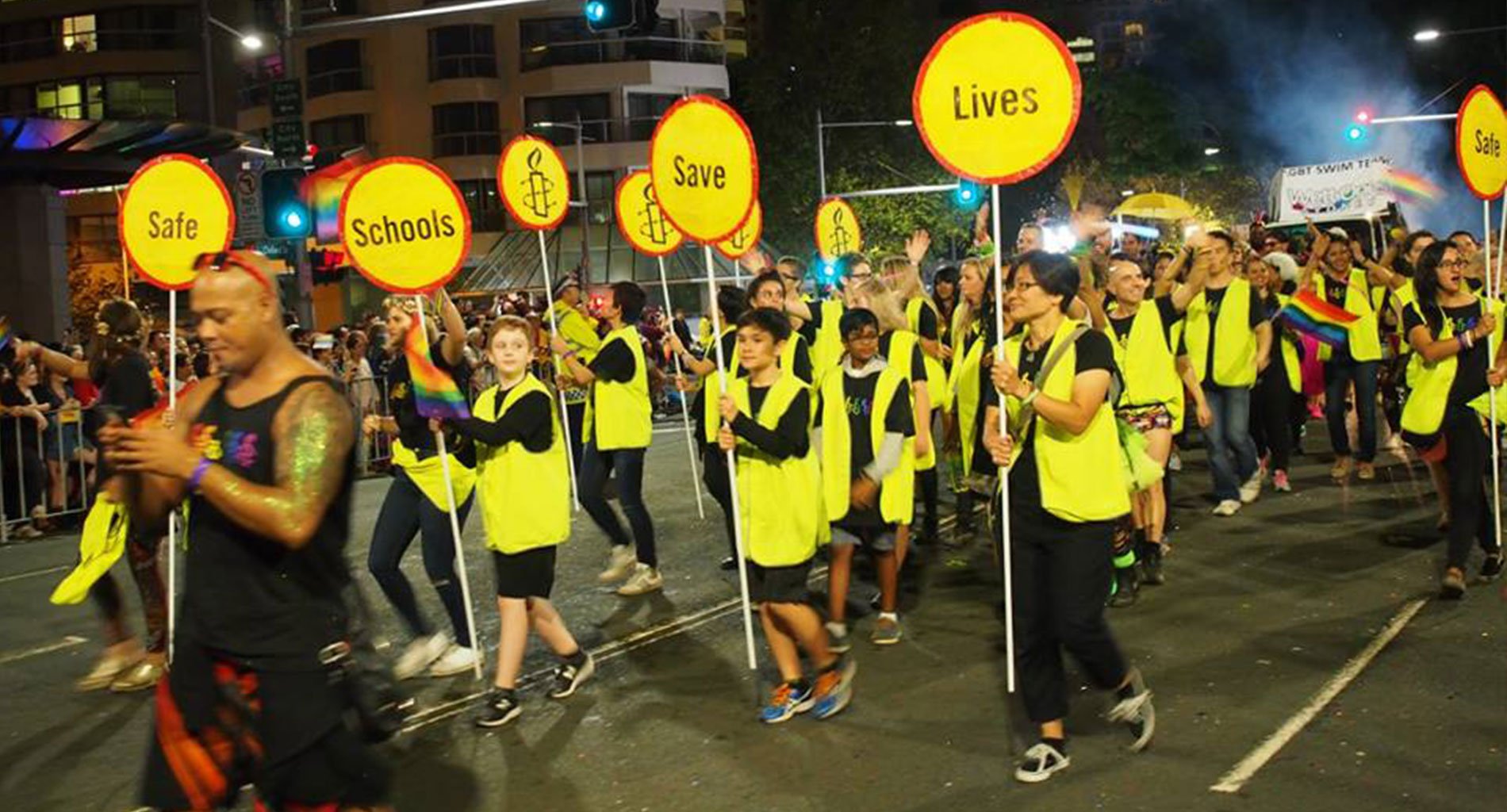
Our float message: ‘Equality, Safety, Respect: Every Child, Every School’ came in response to the alarming level of bullying faced by LGBTQI young people in school and the profound impact that this treatment has on their wellbeing and ability to access their right to an education (as described in article 26 of the Universal Declaration of Human Rights). The float got a fantastic response, but it was the young people in the crowd that will stay in my memory. So many young people were literally jumping and screaming with excitement and joy to see Amnesty supporting their right to a safe education.

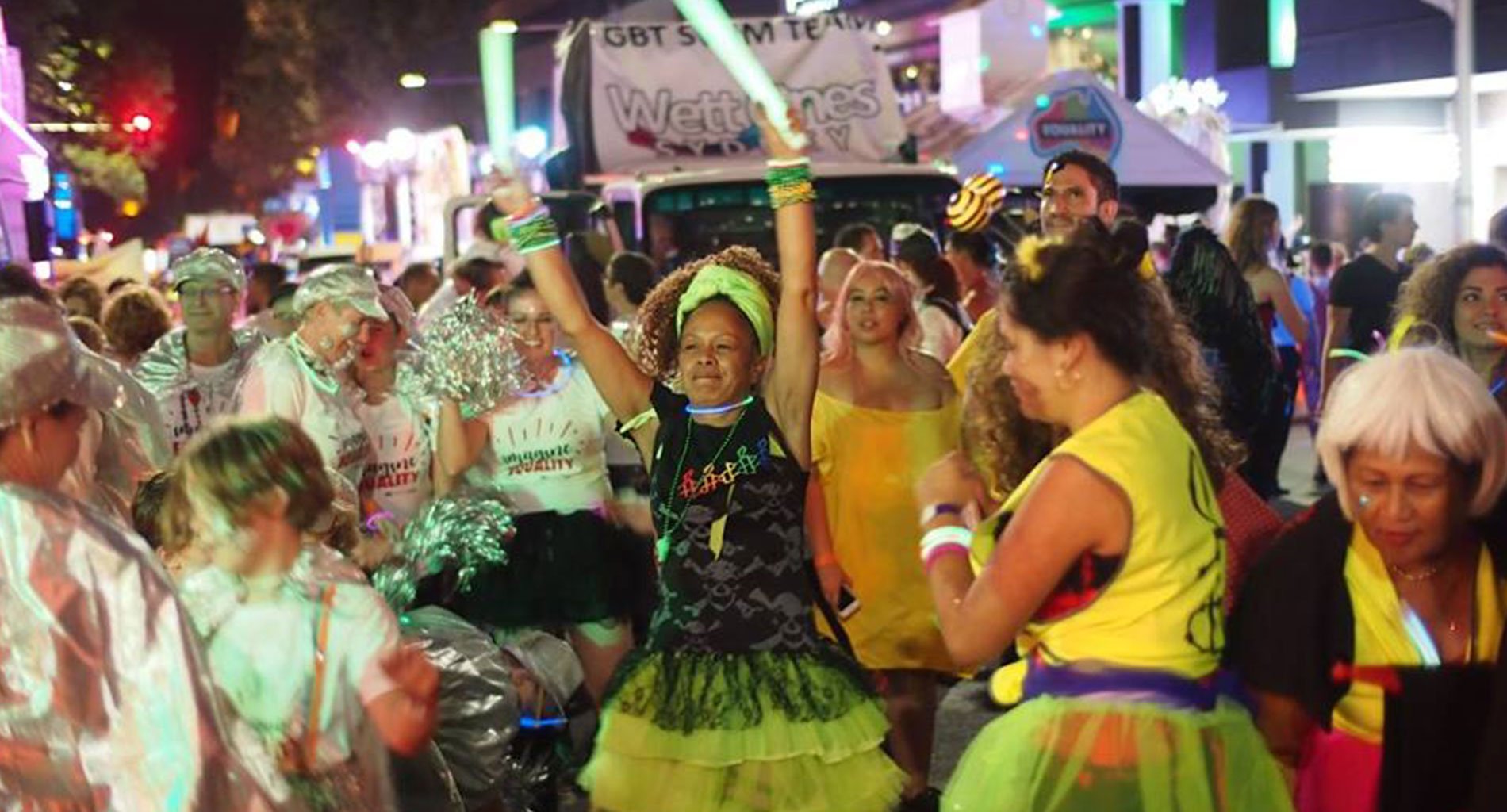
Over the next few months we will continue to find glitter in odd places and keep planning our next events and campaigns. Click the arrow below to scroll through photos of the event, and find out more about joining the NSW LGBTQI Network here.

Keep up to date with our refugee campaign

Our refugee campaign is a major focus for Amnesty International Australia for the next few years. We already have a whole bunch of resources on the website of actions you can take, from holding film nights to talking to your MPs.

If you’d like to keep up to date with the campaign – apart from looking out for new items on the website of course – you can join our monthly webinars. These have been going for quite a while but we are rejuvenating the content. There will now be quarterly updates from the national campaign project team, a regular workshop for new skills (or a refresher!) and a showcase of some of the innovative refugee events our action groups hold. The webinars are interactive sessions, so you can ask all those questions you might have about Amnesty’s campaign as well as hear what other groups are doing around the country.

Register for the next
monthly webinar on April 5

Check out all the other training available

As part of the revitalised campaign, we‘ll also be producing an extensive toolkit for you with extra resources like tips on how to avoid burnout or easy ways to hold conversations about refugee issues – watch this space!

On that campaign team – there is a national project team of staff from the campaign, community organising, activism and other Amnesty teams who meet frequently to keep each other informed and plan new strategies. We also have a refugee advisory group with two reps from the activism and community organising teams plus two volunteers, one from NSW and one from WA. This group meets every few weeks and additionally we have been working on developing resources, toolkits and strategy guidance for groups which will be up on the website at the end of the month.

In addition to the monthly webinars you can stay up to date by joining the Amnesty Refugee Activist Facebook group. Resources for your activism and news updates are posted there in real time.

We look forward to talking to you soon!

Glyn Mather and Ashley Macmillan
AIA Refugee Advisory Group

My life as a Rohingya: An unrecognised existence

By Imran Mohammad

The world has just begun to recognise the Rohingya people. Despite being born in Myanmar (formerly Burma), we are known as ‘stateless’ people, meaning we do not belong anywhere on this earth. It is so easy to be labelled stateless, however the impact on our lives is heartbreaking.

Being stateless has left me and my family with nothing. We live in fear from the day we are born until the day we die. We are stripped of our independence and even when we finally escape, we end up in exile. It is our own country that puts us into this position, making us suffer horrors which other humans could only struggle to comprehend.

As the media is not allowed to visit our state, I would like to draw the world a picture of why we, the Rohingya people, feel invisible amongst our fellow humans.

Life in Myanmar

The Rohingya people do not live their lives freely. All of my thoughts are controlled by the system and I have to do what is expected of me – no independence or diversity allowed.

We have been marginalised by those we could be living beside in harmony. Our self-worth is taken away by restricting our basic rights, such as the right to pray as a community and to marry freely. We believe we are worthless because this is what we have been told – what our parents and grandparents have been told.

As such, we are restricted from receiving an education. No schools are allowed to teach the Rohingya language and we have never been permitted to record it, so it is a verbal language only. However, the Rohingyas are creative and resilient. Some prioritise getting their children an education by paying enormous amount of money to those in power.

We believe we are worthless because this is what we have been told – what our parents and grandparents have been told.

Those of us who are educated are still barred from any kind of government job. We can find other jobs with fake documents, but have to pay a huge amount of money to represent ourselves as a ‘valid’ citizen of Myanmar. If we get caught, we lose our lives.

We still don’t have electricity in our villages and we can barely access the Burmese mobile network coverage. Fortunately, we can get Bangladesh phone network in order to correspond with our families all over the world. We still can’t open a bank account and I can remember that my parents used to bury their money and valuable belongings in the backyard.

Our communities are being destroyed because of the system in which we are living in. The authorities have created spies from our people, giving them a lot of power in exchange for turning against their own community.

Whenever the authorities receive any ‘suspicious’ information, they come and count everything we have. The knives, chickens, cows, goats and of course, the family members, too. If someone is not there during the counting, they will be exempt from the family list and are longer able to stay in Myanmar. They simply cease to exist and can never come home again.

Whenever the authorities receive any ‘suspicious’ information, they come and count everything we have… If someone is not there during the counting, they will be exempt from the family list and are longer able to stay in Myanmar. They simply cease to exist and can never come home again.

Because of these violations to our human rights, we flee from our country and try to reach nearby countries like Bangladesh, Malaysia, Thailand and Saudi Arabia.

I escaped from my country at the age of 16, as I was threatened to be killed. My father had a shop and always had to pay bribes to the Buddhist police and the locals. One day my father couldn’t pay the money and they threatened to kill his children. One night they came to our house my father told us to leave. He told me to flee my country but didn’t tell me why. But I knew that they were looking for me. All of a sudden my whole world changed. I couldn’t even hug my mother for the last time which left my chest empty, heartbroken and changed me forever.

All of a sudden my whole world changed. I couldn’t even hug my mother for the last time which left my chest empty, heartbroken and changed me forever.

Stateless Rohingya in Bangladesh and Malaysia

I have many relatives in Bangladesh and l lived there for a while before I finally moved on in my journey. Even here the Rohingya people remain in fear as they have no legal rights. They arrange their daughters’ marriages to Bangladeshi men, or get stuck after putting their trust in corrupt travel agents who had promised to relocate them.

There are also thousands of Rohingya who are living in Malaysia. Most of them came by boat and some of them entered by plane somehow. The majority hold a refugee card and are working in construction, although they have no work permit and get paid very little. With what little money they do earn, they try to send some home to their loved ones. Sadly it hardly ever arrives.

With what little money they do earn, they try to send some home to their loved ones. Sadly it hardly ever arrives.

I was a young man and had lots of young Rohingya friends who were born in Malaysia. They were treated like strangers among the Rohingya but could also never say that they were Malaysian. I was able to feel their indescribable pain as they couldn’t find a sense of belonging anywhere.

I will not lose faith

I managed to come to Australia after crossing so many rivers and oceans in 2013. I was imprisoned in many detention centres in many countries. Finally, I thought I would see an end to my stateless life in Australia but it has been reinforced to a greater extent.

I know how it feels to be humiliated every single day and to be treated like an animal, although I have done nothing wrong. Despite all of this, I have not lost faith in this world and humanity. The world is a gift to all of us and I will continue to fight to preserve this present with my dignity and humanity.

Despite having experienced all these sufferings, I have become such a strong man because I have found the meaning of liberty in the state of my mind. This is where my actual freedom is and I have a complete control over it and it is untouchable. My heart is full of hope and love as I have experienced them throughout my hardships

Best regards,

Imran
Manus Island, Papua New Guinea

Palestinian security forces violently suppressed peaceful Ramallah protest


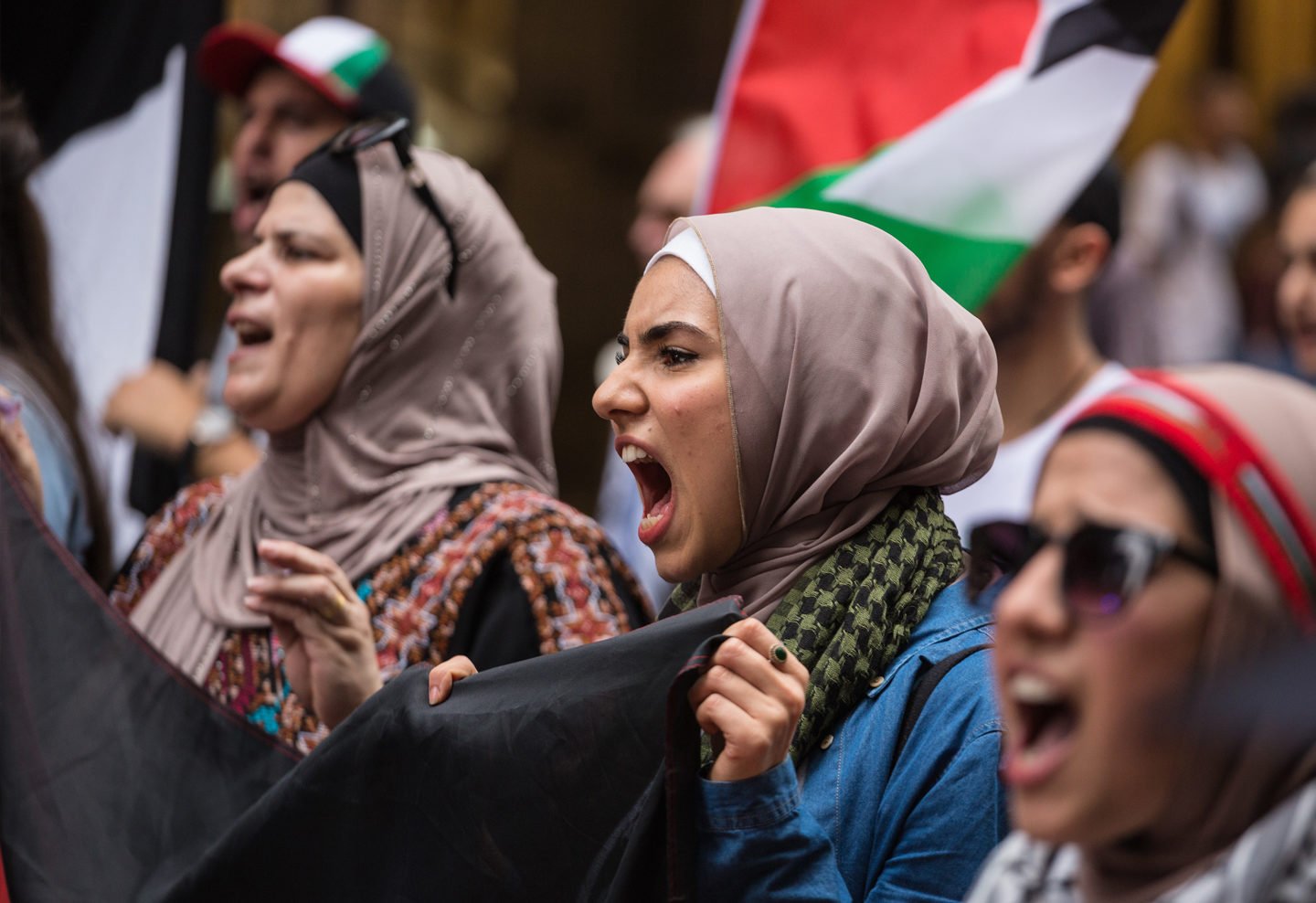
Photographic evidence and witness testimony gathered by Amnesty International at the scene suggest that Palestinian security forces used excessive force to violently suppress a peaceful protest outside of the Ramallah District Court in the West Bank on 12 March 2017.


Ten minutes after the protest against the prosecution of six Palestinian men, including slain activist Basil al-Araj, began outside the courthouse in al-Bireh area, Amnesty International researchers witnessed heavily armed security forces arriving, carrying batons and shields. They immediately began to charge towards the protesters, violently striking them with the wooden batons, using pepper spray and firing tear gas into the crowd. At least 21 people (13 men and eight women) were injured, including four journalists covering the event. Seventeen were hospitalized.


“There can be no justification for violently storming a peaceful protest. Video evidence obtained by Amnesty International shows Palestinian security forces resorting to brutal and alarming means to crush the protest in flagrant violation of their obligations to uphold and protect the rights to freedom of expression and peaceful assembly,” said Magdalena Mughrabi, Deputy Regional Director for the Middle East and North Africa.


Following a public outcry, Prime Minister Rami Hamdallah yesterday announced the formation of a committee to investigate the actions of the police at the courthouse.


“The Palestinian authorities must ensure that the investigation announced into this incident is independent, impartial and thorough and that all those found to be responsible are held accountable for their actions,” said Magdalena Mughrabi.


International human rights standards require that police and security forces avoid using force to disperse a peaceful assembly.


Heavy beatings, tear gas


Amnesty International staff present at the scene observed no violence from protesters prior to police attacking them with batons, tear gas and pepper spray. Those injured suffered bruises from heavy beatings with wooden batons or after being struck by tear gas canisters. Four journalists from Wattan TV, Roya TV, and Palestine Today were also beaten in what appeared to be a deliberate attempt to prevent them from covering the protest. No injuries were reported among members of the security forces.


Khader Adnan, a protester who was hospitalized for his injuries, told Amnesty International: “I was standing peacefully when tens of baton-wielding soldiers attacked me and beat me to the ground. Once I fell down… one of them stepped on my head while others continued to beat me, ripping my clothes. I have injuries on my back, my shoulders, and my leg.”


He was taken to the Criminal Investigations Department with six others where he says he was verbally abused before five of them were released. The other two remained in detention.


Farid al-Atrash, a lawyer, human rights defender and the head of the Bethlehem office of the Palestinian Independent Commission for Human Rights, who was present at the protest said he was beaten to the ground with wooden batons. He told Amnesty International he also witnessed police officers beating the father of Basil Al Araj, a Palestinian man who was killed by Israeli soldiers last week. “I tried to protect him when I was attacked by the officers; they hit me to the ground and beat me on my legs,” he said.


“What did we do?”


Bassem Tamimi, a well-known Palestinian activist from Nabi Saleh and former prisoner of conscience was also injured in the demonstration. “I can’t believe they did this to us. I was speaking to the head of the police unit there… telling him we will disperse in 15 minutes. We were almost done when I saw a large crowd of police begin to swarm us and attack in a vicious manner. They used wooden clubs and started to hit people left and right, I walked back when they shot a [tear-gas] canister directly into my lower back, hitting my tailbone. I didn’t expect [them to behave like] this.”


Bassem Tamimi’s wife, Nariman, also an activist from Nabi Saleh, was beaten after she intervened to tell security forces to stop beating and dragging a young man. “What did we do? We did nothing wrong! My shoulder and arm are now injured. I didn’t believe they would do something like this,” she said.


One eyewitness, Hafez Omar, said the protesters were standing peacefully when the police told them to leave the area. When they refused, the police started pushing them and beating them with batons. He witnessed two other men being beaten before the police dragged him and beat him with batons on his arms, back and legs.


Six Palestinians prosecuted


Between 100 and 150 people had gathered outside the courthouse in al-Bireh to protest against the prosecution of six Palestinian men accused of possessing firearms. Four of the men – Haitham Siyaj, Muhammad Harb, Muhammad al-Salameen and Saif Idrisi – are currently held without charge or trial in administrative detention by Israeli authorities. The fifth man, Basil al-Araj, was killed by the Israeli military last week. The sixth man, Ali Dar al-Shaikh was not arrested by Israel and was present at the court yesterday.


In a media interview on Monday, a spokesperson for the Palestinian authorities’ security forces, Adnan al-Dmeir, accused the protesters of being “mercenaries” and “foreign agents” who he said were seeking to “spread chaos”.


In the rare cases where Palestinian authorities have taken steps to ensure accountability in the past, they have resorted to disciplinary measures rather than criminal prosecutions to hold police or security forces to account even in cases where the use of force was abusive or arbitrary.


“The Palestinian authorities must ensure that the security forces’ use of force is not excessive, abusive, arbitrary or otherwise unlawful. Anyone suspected of responsibility for arbitrary or abusive use of force must be prosecuted in a fair trial,” said Magdalena Mughrabi.


“Given the Palestinian authorities’ poor record of bringing security forces to justice after violent crackdowns on protests, it is even more crucial for the authorities to send a clear message that use of excessive force will not be tolerated and that violations will not go unpunished.”

Australia: Back independent investigation into abuses in Myanmar

Ahead of the United Nations Human Rights Commission’s debate on the situation of human rights in Myanmar, Amnesty International is urging the Government of Australia to back an independent international investigation into the situation in Rakhine state.

“The apparent campaign of violence that Myanmar security forces have waged against Rohingya people since last October demands a credible investigation and accountability for those responsible. Only an international investigation will prevent impunity, ensure justice for victims and survivors, and identify causes of the violence,” said Steph Cousins, Amnesty International’s Advocacy and External Affairs Manager.

Today’s discussion at the Human Rights Council is a chance for Australia to demonstrate leadership in advocating that widespread abuses against the Rohingya people not be swept under the carpet.

Steph Cousins, Amnesty International’s Advocacy and External Affairs Manager

“Australia has so far said little on the record about these events. Today’s discussion at the Human Rights Council is a chance for Australia to demonstrate leadership in advocating that widespread abuses against the Rohingya people not be swept under the carpet.

“In light of the Government’s bid for a seat on the Human Rights Council, this is an opportune moment to take a stand against impunity in the face of grave violations. Australia should set an example for nations in the region to respond decisively when neighbours abuse human rights.”

Tens of thousands of Rohingya people have been affected by the violence in Rakhine state. According to reports by Amnesty International as well as the UN Special Rapporteur on Human Rights in Myanmar, women and girls have been raped, hundreds of people forcibly disappeared and an unknown number killed. UN figures estimate more than 92,000 Rohingya have been forced to flee their homes, including 69,000 who have fled across the border to Bangladesh.

“The widespread and systematic nature of the violence may amount to crimes against humanity.”

Steph Cousins.

“The widespread and systematic nature of the violence may amount to crimes against humanity,” said Steph Cousins.

“We have seen before the terrible consequences of humanitarian crises in the Asia Pacific region, where there is a continuing lack of safe and legal avenues for refugees to seek protection. As part of a broader effort to support its neighbours in addressing root causes of displacement, it is crucial that Australia speak up and do the right thing today.”