Cruel migration detention regime exposes hypocrisy of European Commission

Recommendations by the European Commission to detain almost all irregular migrants before returning them to their home countries, with no limitations on where they can be apprehended, have laid bare the cruelty and hypocrisy of European Union (EU) Commissioners’ migration policies.

“Detention of irregular migrants, some of the most vulnerable people in Europe, should be a last resort.”

Iverna McGowan, Director of Amnesty International’s EU Institutions Office.

“Detention of irregular migrants, some of the most vulnerable people in Europe, should be a last resort. Instead the European Commission is pushing EU governments to round them up through almost any means necessary – whether that means through terrifying night raids, or asking social workers and doctors to cooperate in finding them. That children are included in this wide detention regime is truly shocking,” said Iverna McGowan, Director of Amnesty International’s EU Institutions Office.

“Commissioners’ recent attempts to distance themselves from the despicable migration policies of the Trump administration now ring extremely hollow. If there were any doubts remaining about the hypocrisy of the European Commission’s stance on migrants, today’s announcements ought to quash them.”

Background

The Recommendation released yesterday provides guidance on how provisions of the Return Directive should be used to reinforce national administrative processes for returns. It recommends that EU member states should by 1 June 2017 undertake a number of measures, including:

  • Increasing and mobilising law enforcement and immigration authorities, if necessary on a “24/7” basis, which encourages night raids
  • Coordinating with medical, judicial, detention authorities, guardianship systems and social services to swiftly implement returns
  • Providing in national legislation for a maximum initial period of detention of six months and for the possibility of prolonging this to 18 months
  • Ensuring national legislation does not preclude placing minors in detention or prohibits return decisions being issued to unaccompanied minors

Door left open to future Bali Nine-type executions

The Australian Government has failed to commit to reforms that would prevent a future Bali-Nine situation.

Today Australia handed down its response to the report of the Parliamentary inquiry into the role Australia can play to abolish the death penalty worldwide.

“It is extremely disappointing that the Government did not take this opportunity to ensure a Bali Nine-type situation never happens again.”

Guy Ragen, Government Relations Adviser at Amnesty International Australia.

“It is extremely disappointing that the Government did not take this opportunity to ensure a Bali Nine-type situation never happens again”, said Guy Ragen, Government Relations Adviser at Amnesty International Australia.

The Parliamentary Committee recommended that the Australian Federal Police should be required to withhold giving information to other countries in relation to drug crimes unless they can obtain a guarantee the death penalty will not be applied.

“The Government had an opportunity to accept this recommendation and ensure that never again would information from Australian law enforcement facilitate the use of the death penalty”, said Guy Ragen.

“Unfortunately, the Government didn’t pick up this recommendation.”

“This is unfortunate, particularly as Australia has made a number positive commitments in response to the inquiry. The Government’s announcement that Australia is going to have a strategy to guide its advocacy against capital punishment in our region and around the world is strongly welcomed.”

“The death penalty is always wrong. It is a cruel and inhuman punishment. As a nation, we recently marked 50 years since the last execution in Australia. But this response leaves open the door for information from Australian law enforcement being used to see people – Australians included – executed overseas.

“As a country, we have to ask ourselves if this is consistent with our principled opposition to the death penalty.”

“As a country, we have to ask ourselves if this is consistent with our principled opposition to the death penalty.”

Good news: Death row prisoner Shahrul Izani Suparman pardoned

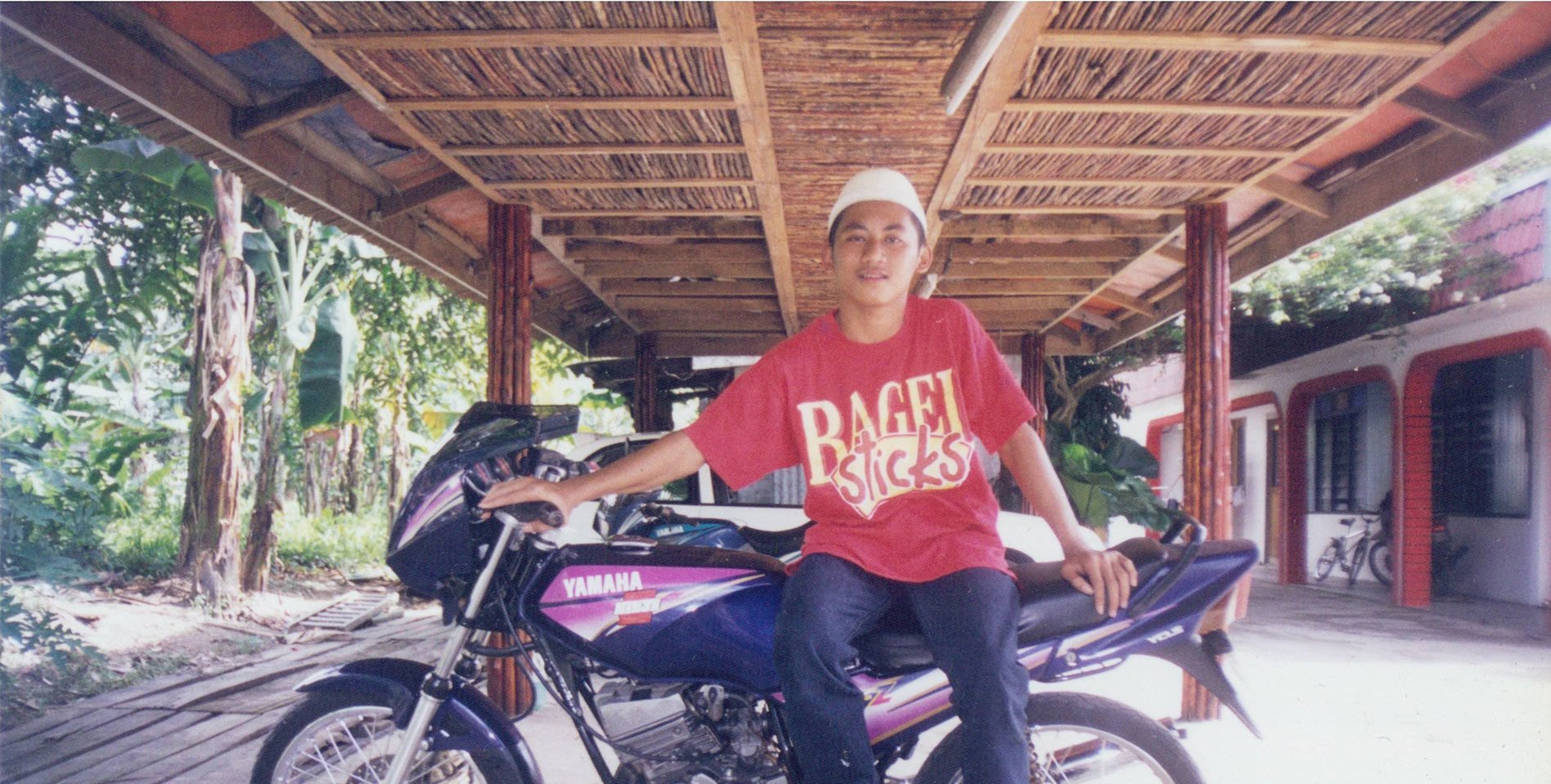
Good news has come through from our Amnesty colleagues in Malaysia today – Shahrul Izani Suparman, who was sentenced to death in 2009 for drug trafficking, has been officially pardoned.

Shahrul was found in possession of cannabis in 2003, when he was just 19 years old. After spending more than six years in detention awaiting trial, Shahrul was convicted of drug trafficking and mandatorily sentenced to death by the Shah Alam High Court on 28 December 2009.

Before being confined to a solitary cell like other death row prisoners, Shahrul underwent rehabilitation programs, including religious classes and later used these learnings to teach his fellow inmates.

Amnesty International Malaysia has been campaigning for Shahrul’s clemency for the past four years and he was selected as a global case for Amnesty International’s World Day Against Death Penalty in 2015.

“I was informed that the key factor to why Shahrul was pardoned was because of YOU”

Shamini Darshni Kaliemuthu

“Last year, Amnesty supporters’ petitions and birthday cards totalling 10,505 got the attention of the Selangor state’s Chief Minister and the Sultan,” said Shamini Darshni Kaliemuthu, Amnesty International Malaysia’s Executive Director.

“I was informed that the key factor to why Shahrul was pardoned was because of YOU: The Sultan was informed that Amnesty International had taken an interest, and because of this, there was global attention to Shahrul’s story.

“His family have asked me to pass on their deepest gratitude to Amnesty, and for all the actions that you have taken for such an encouraging result.”

After 11 years in solitary confinement Sharul and is back with the general prison population and scheduled for release in 2030. The Selangor state Sultan has asked him to re-apply for clemency in four years as he stands a chance to be released early on good behaviour.

Amnesty International opposes the death penalty unconditionally. It is the ultimate cruel, inhuman and degrading punishment. Please take action below to stop The Philippines from re-introducing the death penalty. 

UN: Veto by Russia and China “shameful”

Russia and China have again abused their veto power at the United Nations Security Council today, following a vote on a draft resolution that would have helped ensure accountability for the use and production of chemical weapons by all parties to the conflict in Syria, said Amnesty International.

“By vetoing this resolution Russia and China have displayed a callous disregard for the lives of millions of Syrians. Both states are parties to the Chemical Weapons Convention– there is simply no excuse for their vetoes today,” said Sherine Tadros, head of UN office in New York for Amnesty International.

“For six years Russia, with the support of China, has blocked Security Council decisions that would have punitive consequences for the Syrian government. This behavior prevents justice and emboldens all parties to the conflict in Syria to act with indifference to international law. The message coming from the international community is that when it comes to Syria, there are no red lines.”

“By vetoing this resolution Russia and China have displayed a callous disregard for the lives of millions of Syrians.”

Sherine Tadros, head of UN office in New York for Amnesty International

Russia has now used its veto power seven times on draft resolutions on Syria since the start of the crisis. Today’s draft proposed sanctions on designated individuals linked to the production of chemical weapons in Syria, as well as an embargo on any materials that could be used to produce chemical weapons. The draft was a follow-up to the September 2013 resolution 2118 on chemical weapons in Syria, that was co-authored by Russia and the USA, and that imposes measures under Chapter VII of the UN Charter on the “unauthorized transfer of chemical weapons, or any use of chemical weapons by anyone in the Syrian Arab Republic”.

In August 2015, the Security Council also unanimously adopted resolution 2235 which led to the Joint Investigative Mechanism (JIM) that aimed at identifying those responsible for chemical attacks in Syria. Since then, the mechanism has identified the Syrian government as well as the armed group calling itself the Islamic State, as having carried out chemical attacks.

“Russia’s shameful vote today is yet another example of how it uses its veto power to make sure its ally, the Syrian government, evades consequences for its war crimes and crimes against humanity. It is of monumental importance for the newly appointed UN Secretary General, as well as  Security Council members, to speak out forcefully when states fail to vote in favour of draft resolutions aimed at preventing or ending war crimes. The Security Council is being transformed into an instrument for political posturing between the permanent members and the people of Syria are paying the ultimate price,” said Sherine Tadros.

Welcome news: Committee decides Racial Discrimination Act should not be watered down

At a time when racist attacks and hateful speech are on the rise around the world, Amnesty International strongly welcomes the Parliamentary Joint Committee on Human Rights’ decision not to water down the Racial Discrimination Act.

Late last year, Prime Minister Malcolm Turnbull had announced that the Federal Government had set up a parliamentary inquiry to determine whether the Racial Discrimination Act (RDA) – specifically 18C and 18D of the Act – limit free speech.

“The Committee’s decision not to recommend changes to sections 18C and 18D of the Racial Discrimination Act shows a rare glimpse of bipartisan leadership to uphold human rights in this country,” said Stephanie Cousins, Advocacy and External Affairs Manager at Amnesty International Australia.

“Watering down the Racial Discrimination Act would have emboldened those who seek to offend and humiliate other people right at the time we need to come together and denounce such treatment”

Stephanie Cousins

18C and 18D of the Racial Discrimination Act offer recourse to culturally and linguistically diverse people and groups, including Aboriginal and Torres Strait Islander people, who continue to suffer racial abuse, vilification and the harmful long term psychological and health effects that result from it.

A rise in racism-related violence

“We’ve seen a rise in racist attacks in the UK and the US, given licence by the hateful rhetoric of their respective governments,” said Stephanie.

“Here in Australia, our government should be doing all it can to protect the one-in-five Australians who endure racism. As the Committee has accepted, watering down the Racial Discrimination Act would have emboldened those who seek to offend and humiliate other people right at the time we need to come together and denounce such treatment.”

Racism has severe impacts on affected communities, contributing to poor mental health, self-harm, suicide, school attendance and workplace productivity.

“Amnesty International welcomes the Committee’s recommendations that all leaders and politicians condemn racially hateful and discriminatory speech when it occurs in public, and that the Australian government invest more in strengthening and developing education programs to address racism in Australian society. These recommendations are needed now more than ever,” said Stephanie.

What is section 18C and section 18D?

The RDA is a law passed in 1975 by the Whitlam government to make sure everyone in Australia was treated equally and given the same opportunities – regardless of their background.

The Act was last updated in 1995 after three major national inquiries – the Royal Commission into Aboriginal Deaths in Custody the National Inquiry into Racist Violenceand the Australian Law Reform Commission Report into Multiculturalism and the Law – found a strong link between racist conduct in public and racially-motivated violence.

At the core of the changes made in 1995 is Section 18C, which makes it unlawful for someone to “offend, insult or humiliate” a person based on the colour of their skin or their cultural background. It also provides recourse for victims of racism to make a complaint to the Australian Human Rights Commission (AHRC), which then tries to resolve the complaint before it goes to court.

The lesser known Section 18D, brought in at the same time, exempts artistic works, academic and scientific debate and “fair and accurate” reporting of any events or matters of public interest made “reasonably” and in “good faith”.

For more info on the Racial Discrimination Act, read our handy ‘2 minute guide’.

A ‘fine balance’

The importance of protection from racism appears to have been echoed by the Australian Government yesterday, when Minister for International Development and the Pacific, Senator Concetta Fierravanti-Wells, told the UN Human Rights Council in Geneva that Australia is one of the most “socially cohesive nations on earth” with a “unique model for tolerance, respect, inclusion and integration.

Amnesty believes the Racial Discrimination Act as it stands has managed a fine balance for over 20 years between the right to live free from racism and the right to free speech. The Act provides important protections against harmful racist speech and an avenue for people to make a complaint if they believe they have been subjected to such treatment.

As Amnesty pointed out to the inquiry Committee, 98 percent of the complaints conciliated by the Australian Human Rights Commission result in an outcome that is satisfactory to both parties and very few cases have actually proceeded to court. The Committee has made a number of recommendations regarding the complaints handling procedure at the Human Rights Commission, which we are in the process of reviewing.

“It is paramount that the independence of the Commission is not infringed by any of these amendments,” said Stephanie.

While welcoming the Committee’s decision not to recommend amendments to the Racial Discrimination Act, we believe the Inquiry missed an opportunity to address the genuine threats to freedom of expression and a free press in Australia.

“The Freedom of Speech inquiry should have been an opportunity to look at the laws on Australia’s books that really do restrict freedom of expression – such as our counter-terror laws which criminalise the reporting of special intelligence operations; or our border security laws which criminalise service providers from blowing the whistle when they see abuses against asylum seekers on Manus Island and Nauru. If the government is serious about protecting free speech, let’s talk about reforming these laws,” said Stephanie.

“That the committee did not recommend any changes to the Racial Discrimination Act shows there is no compelling argument to amend section 18C. We urge the Prime Minister to put this question to rest once and for all.”

Yemen: Huthi forces recruiting child soldiers for front-line combat

New evidence has emerged of how the Huthi armed group is actively recruiting boys as young as 15 to fight as child soldiers on the front lines of the conflict in Yemen.

Amnesty International has spoken to the families of three boys targeted this month by the appalling practice which violates international law. The families also confirmed the recruitment of a fourth local boy.

Family members and an eyewitness told Amnesty International that the four boys, aged between 15 and 17, were recruited by fighters of the Huthi armed group, also known as Ansarullah locally, in the capital, Sana’a. They only found out that their children had been taken away after being alerted by local residents, who described seeing them and as many as six other children boarding a bus at a local Huthi centre in mid-February.

“It is appalling that Huthi forces are taking children away from their parents and their homes, stripping them of their childhood to put them in the line of fire where they could die.”

Samah Hadid, Deputy Director at Amnesty International’s Beirut regional office

“It is appalling that Huthi forces are taking children away from their parents and their homes, stripping them of their childhood to put them in the line of fire where they could die,” said Samah Hadid, Deputy Director at Amnesty International’s Beirut regional office.

“This is a shameful and outrageous violation of international law. The Huthis must immediately end all forms of recruitment of children under 18 and release all children within their ranks. The international community should support the rehabilitation and reintegration of demobilized children into the community.”

The families of the four boys taken in mid-February later received news that their children were at an unnamed location on the Yemeni-Saudi border.


RECRUITMENT METHOD AND INCENTIVES

Interviewees have described how Huthi representatives run local centres that hold activities such as prayers, sermons and lectures where young boys and men are encouraged to join front-line battles to defend Yemen against Saudi Arabia.

According to an eyewitness, two of the four boys were recruited by a local Huthi representative after they were sent to a Quranic school near Sana’a for an initial religious induction in January, before they were returned to their families, who had not been aware of their whereabouts. One father said that his son told him the curriculum included the history of world wars and what was described as the Saudi Arabia-led coalition’s war on the Yemeni people.

Some family members said that there had been an increase in child soldier recruitment in their neighbourhoods due to the fact that many children no longer attend regular schools. The war has taken its toll on the economy and many families can no longer afford the transportation costs needed for the children to get to classes. In many places, classes are no longer running. Some teachers are on strike because they no longer receive their salaries.

According to one family member, the Huthis have imposed recruitment quotas on local representatives, which are sometimes accompanied by threats if results are not delivered.

One family member whose 16-year-old brother was taken said about the boys who are recruited: “They’re just excited to shoot Kalashnikovs and guns and wear military uniforms. They [the Huthis] have been saying that there are so few fighters [at the front line], they are going around taking one [recruit] from each family. If the son dies at the front line, a monthly salary and a gun are given to the father to keep them quiet.”

Many families fear reprisals against their children who have been taken by the Huthis or against other children or family members if they dare speak out about the recruitment.

One father said, “Many children [are recruited] but people don’t dare to talk or follow up. They’re afraid of being detained.”

Two of the interviewees told Amnesty International that the Huthis promise monetary incentives to families to appease them, pledging 20,000 to 30,000 Yemeni riyals (approximately 80 to 120 US dollars) per child per month if he becomes a martyr at the front line. The Huthis also honour the families by printing out memorial posters for their boys to be put up locally as a tribute to their contributions to the war efforts. Two of the interviewees highlighted that children who are recruited are usually from poorer backgrounds.

The names of child soldiers, family members and other interviewees, as well as the exact dates of the boys’ recruitment, have been withheld to protect their security.


BACKGROUND

As of February 2017, UN agencies have been able to document nearly 1,500 cases of children recruited by all parties to the conflict since March 2015. Human Rights Watch previously documented the recruitment, use and training of child soldiers by the Huthis in May 2015.

In 2012 Huthi leader Abdel Malik al-Huthi met with the UN Special Representative for Children and Armed Conflict, Leila Zerrougui, and pledged to work towards ending the recruitment and use of child soldiers. However, during its last six field missions to Huthi-controlled Yemen, between January 2015 and November 2016, Amnesty International has observed the use of armed children at checkpoints. Some were carrying books in one hand and a Kalashnikov in the other.

For the last few years, several parties to the conflict in Yemen have been listed in the annual report of the UN Secretary-General on children and armed conflict as actors that had violated children’s rights in conflict, including through recruitment and use of child soldiers. This includes the Huthis, al-Qa’ida in the Arabian Peninsula (AQAP), several divisions of the Yemeni armed forces and certain pro-government militias.

The Saudi Arabia-led military coalition was also listed as an actor that had violated children’s rights in conflict until former UN Secretary-General Ban Ki-moon removed it as a result of direct diplomatic pressure from Saudi Arabia. The removal flies in the face of clear evidence of the coalition violating the rights of children during the conflict in Yemen.

According to the annual report of the Secretary-General on children and armed conflict issued in April 2016, since the start of the conflict in Yemen in March 2015, 60% of the children killed and injured were killed or injured by actions attributed to the Saudi Arabia-led coalition and 20% by actions attributed to the Huthis. Amnesty International has repeatedly documented violations of international human rights and humanitarian law by coalition members during the conflict, including against children. This includes air strikes on schools and the use of internationally banned cluster munitions which have killed three children and maimed nine.

The recruitment or use of children under 15 by parties to a conflict is a war crime according to the Rome Statute of the International Criminal Court and customary international humanitarian law. Commanders who knew or should have known of such violations and took no effective action can be held criminally liable as a matter of command responsibility.

Yemen is a party to the Convention on the Rights of the Child and its Optional Protocol on the involvement of children in armed conflict, which prohibit recruitment and use in hostilities of children. The Optional Protocol sets 18 as the minimum age for any participation in armed conflict by armed forces or non-state armed groups.
Dozens arrested as the fate of the Dakota Access pipeline now in the court’s hands

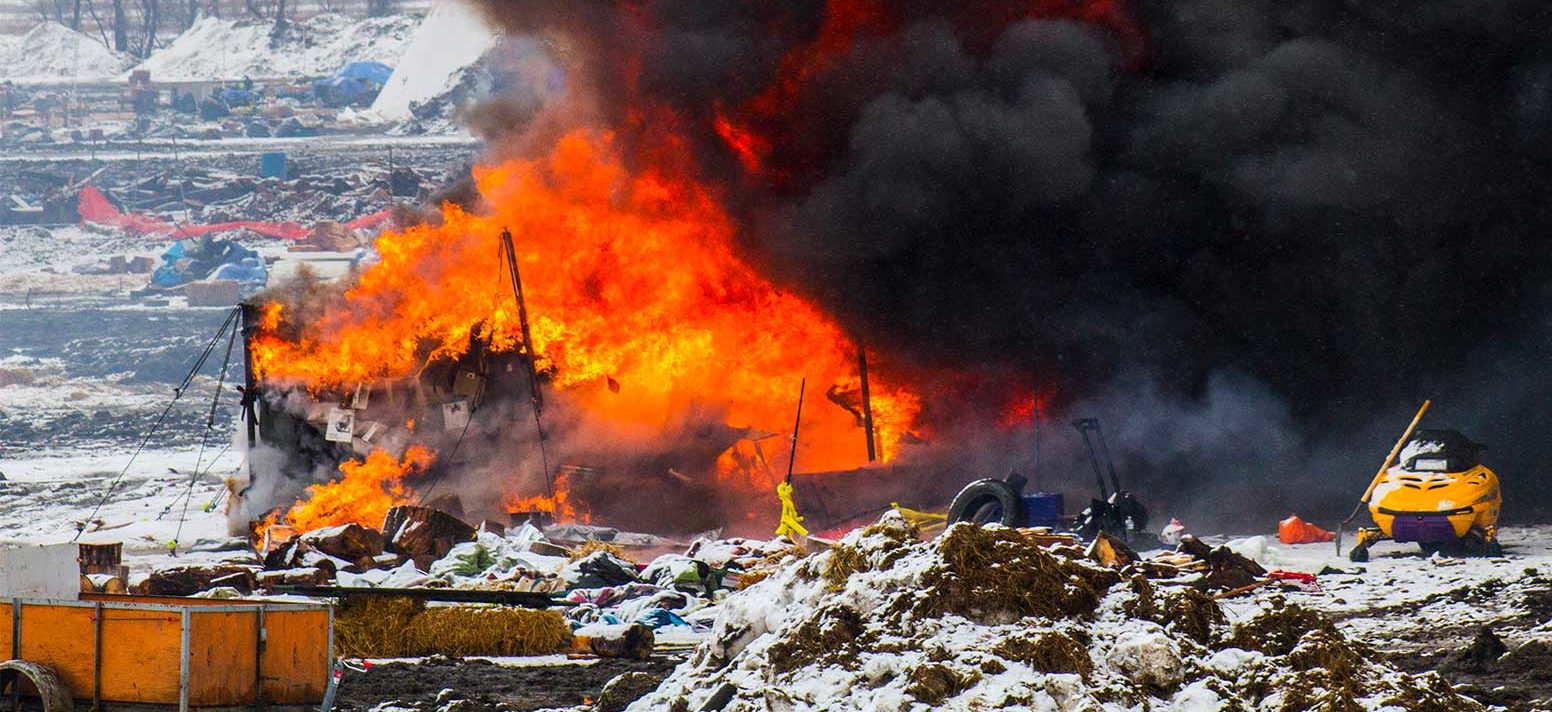
In the early afternoon on Thursday 24 February, the Oceti Sakowin camp in North Dakota was officially shut down, with dozens arrested in a final stand against the Dakota Access Pipeline project.

Many protesters left peacefully on the evacuation deadline of Wednesday afternoon, some lighting ‘ceremonial’ fires in their wake. Those who stood their ground were met with bulldozers and heavily armed officers in riot gear.

Officials said that 46 individuals were arrested in the clear-out of the camp.

“A veterans’ group occupying a tent refused to leave voluntarily, saying they would not be violent, but they would only go with passive resistance, therefore law enforcement had to carry them out,” the North Dakota Joint ­Information Centre told the US’ ABC News.

The Standing Rock Sioux Tribe and thousands of others had been protesting the portion of the $3.8b pipeline, set to stretch underneath Lake Oahe in North Dakota, which they say will contaminate drinking water and damage sacred burial sites.

‘We stand in solidarity’

Amnesty International USA was highly active on this case, sending multiple letters to the authorities and urged the acting Secretary of the Army to halt construction of the Dakota Access Pipeline until the Army’s environmental impact review was completed and the consent of the Tribe was sought.

Tammy Solonec, Indigenous Rights Manager at Amnesty International Australia said: “We are very concerned to see the latest developments in the USA against the wishes of the Native Americans and without their free, prior and informed consent.”

“The issue has a strong resonance for Aboriginal and Torres Strait Islander people, and we stand in solidarity with the traditional owners.”

The last hope of The Standing Rock Sioux is a case filed in federal court against the Army Corps of Engineers, to which 34 Indian tribes, The American Civil Liberties Union and other organisations have come out in support of. The lawsuit seeks to halt further drilling and until the corps has assessed the full environmental impact.

American Indian activist Chase Iron Eyes said: “The battleground has shifted to the legal courts and the court of public opinion.”

Big news: Northern Territory Government funds new approach to youth justice

Channeling one of the calls from our Community is Everything campaign, the NT Government has announced $18.2 million dollars in new funding including for community organisations to run diversion programs that help keep kids out of the justice system.

In the wake of a horrific exposé last year of conditions for children in Don Dale Detention Centre, Amnesty called on to governments to dramatically increase funding for such programs, including Indigenous-led programs in particular. This recent announcement is a great first step to help keep children safe in the NT and we welcome it.

Dylan Voller strapped to a chair in Don Dale Detention Centre
© ABC 4 Corners

What happened?

In July 2016, the whole country bore witness to footage of human rights abuses against children at Don Dale Detention Centre aired in an exposé by ABC’s 4 Corners. The program highlighted the depth of the youth justice crisis in the Northern Territory and immediately sparked a Royal Commission into the Protection and Detention of Children.

How did Amnesty respond?

In the immediate aftermath of the exposé, Amnesty International called for an independent investigation and measures to prevent children in the justice system from harm. Our local activist group in Darwin led a vigil at Don Dale Detention Centre, and we were prominent in the media with calls for territory and federal governments to take action. 

One of our calls was for the Federal Government to improve independent oversight by ratifying the Optional Protocol to the Convention Against Torture (which was recently done – win!).

In the lead up to the Northern Territory election in August, we supported the calls of local Aboriginal organisations and the Making Justice Work coalition, that whoever came to power must act swiftly to protect children from further harm and ensure that the justice system better supports children to keep them out of detention.

We also reiterated that the Northern Territory Government should “heed the calls of the local Making Justice Work coalition to urgently prioritise reducing the number of children it currently imprisons. This coalition has drawn on local expertise to set out priorities to make this happen. These include:

  • bail support and accommodation to stop young people from being locked up without trial
  • better resources for diversion programs as an alternative to detention
  • Early intervention and primary prevention to support children and their families to succeed.”

Since then, we have welcomed the appointment of the NT’s first-ever Youth Justice Minister and offered them our expertise and recommendations around Indigenous-led solutions for brighter futures. We also welcomed a ban on the indefensible use of restraint chairs on children in detention in the territory.

What’s next?

Amnesty volunteers and staff at the launch of the Community is Everything campaign and report on high rates of detention of indigenous youth in Australia. © AI/Richard Wainwright

We have made a submission to the NT Royal Commission which highlights some of the challenges the new Northern Territory and the Federal government must address. We have met with the new government and will continue to do so to offer our expertise. Our local groups will continue to build relationships with key decision-makers in the Northern Territory, and we will continue to support the work of local Aboriginal organisations to secure further positive changes.

While there is a lot of work still to be done and some of that work must await the report of the Royal Commission, the announcement of this crucial funding demonstrates the desire of the new government to ensure that children reach their full potential.

We need to see this type of approach across all states and territories. We need to see more support for Indigenous-led solutions to help children to thrive.

The Royal Commission is due to hand down its final report on 1 August 2017, which will be a critical time to ramp up pressure on the Prime Minister to ensure that a national strategy is developed to end the over-representation of Aboriginal and Torres Strait Islander children in detention right across Australia. This is an issue that demands national leadership, much more support for Indigenous-led solutions and a plan for lasting change.

Pakistan: Wave of violence shows a horrific disregard for human life

A bomb attack in Lahore that killed eight people is the latest in a wave of violence that shows a horrific disregard for human life.

Over the past fortnight, a series of bomb attacks claimed by a slew of armed groups has claimed the lives of more than 120 people and injured several more, raising concerns about the protection of human life.

“All those suspected of responsibility for this horrific wave of violence must be brought to justice in fair trials before ordinary civilian courts and without recourse to death penalty,” said Nadia Rahman, Amnesty International’s Pakistan campaigner.

“Pakistan’s authorities have a responsibility to protect the lives of everyone in the country, and they must do so while upholding international law and standards. Resorting to cruel and inhumane methods will not address the root causes of the problem and risks perpetuating a cycle of violence.”

The bomb attack in Lahore comes a week after more than 80 people were slain at the famed shrine of Lal Shahbaz Qalandar in Sehwan, Sindh. Cities attacked earlier include Lahore, Quetta, Peshawar, and Dera Ismail Khan.

After the Sehwan attack, the Pakistan authorities claimed to have killed 100 “terrorists”. No details have been disclosed about any criminal investigation, who was targeted, what their involvement was in the attacks, and why they were not brought to justice in fair trials.

“The victims of these attacks deserve true justice, not a campaign of violent revenge in their name.”

Nadia Rahman, Amnesty International’s Pakistan campaigner.

“The victims of these attacks deserve true justice, not a campaign of violent revenge in their name,” said Nadia Rahman.

The Lahore bombing comes as Pakistan’s military announced a fresh offensive, “Operation Radd ul-Fasaad”, and the paramilitary Rangers force was given special powers to operate in Lahore and other parts of Punjab.

Amnesty International calls on the authorities to ensure that any security operations adhere to Pakistan’s obligations under international law.

The organization has documented crimes under international law and human rights violations under paramilitary troops in Karachi, including where people were subject to arbitrary detention, torture and other ill-treatment, denied access to lawyers, medical support, and guarantees of a fair trial.

“The injustices we saw in Karachi must not be revisited on people in Lahore or other parts of the country,” said Nadia Rahman.

Pakistan’s parliament is currently debating proposals to revive the mandate of military courts to try civilians, after a two year mandate lapsed on January 7.

Amnesty International considers that the criminal jurisdiction of military courts, in Pakistan and in any other country, should be limited to trials of members of the military for breaches of military discipline; it should not extend to crimes under international law or human rights violations.

In accordance with international law, Amnesty International opposes the use of military courts to try civilians and, along with other organizations, has documented a catalogue of human rights violations flowing from them, including coerced confessions, opaque processes, executions, and unfair trials.

“Every government has a responsibility to protect people’s lives and take necessary measures to provide for their security, but military courts are not the solution,” said Nadia Rahman.

“The only way to tackle with attacks on human rights is with justice, truth and reparation, not further human rights violations.”

“The only way to tackle with attacks on human rights is with justice, truth and reparation, not further human rights violations.”

LGBTQI youth in schools: What more needs to be done for students?

In a blow to the rights of LGBTQI students in the US, President Trump has revoked landmark guidance from the former Obama administration, which allowed transgender students to use the bathroom matching the gender they identify with.

“Reversing this guidance tells trans kids that it’s OK with the Trump administration and the Department of Education for them to be abused and harassed at school for being trans,” said American Federation of Teachers President Randi Weingarten.

Access to education is a human right and in a perfect world, LGBTQI youth would receive all the support needed to successfully access and participate in school without harassment, bullying, or feeling unsafe. Unfortunately there is still much to be done for LGBTQI equality in schools, around the world and here at home.

What’s happening in our schools?

According to the Australian Human Rights Commission, “80 per cent of homophobic bullying involving LGBTI young people occurs at school and has a profound impact on their well-being and education.”

One heart-breaking example is the story of Tyrone Unsworth from Brisbane. According to a BBC report, Tyrone did the best he could to ignore the bullying he experienced at the hands of his schoolmates  who perceived him as gay.

Homophobic taunts turned to physical abuse leaving young Tyrone hospitalised, according to reports. He was too afraid to return to school and soon after took his own life in November 2016 at the age of 13.

A 2010 study conducted by Australian Research Centre in Sex, Health and Society at La Trobe University found that 61 per cent of young LGBTQI people reported verbal abuse because of homophobia and transphobia. 18 percent reported that the abuse was physical.

In response to the overwhelming need, the Safe Schools Coalition of Australia was founded in September 2015. Safe Schools developed support and programs for students, teachers, communities, and school administrators that are easily accessible.

However, the implementation of such an important program came with scrutiny from conservative Christian groups and conservative MPs. Those against the Safe Schools Coalition of Australia said the program highlighted sexual issues inappropriate for youth.

The program came under review following Cory Bernardi’s comments that it “indoctrinates kids with Marxist cultural relativism.”

Despite the backlash, the Safe Schools Coalition of Australia continues to do great things for LGBTQI students. They offer free resources and support to schools concerning safer, inclusive environments for students.

What can schools do to help our LGBTQI youth?

Firstly, it’s vital that schools have a policy against homophobia and transphobia, as these are effective in preventing LGBTQI teens from physical and verbal abuse, as well as self-harm and suicide.

“LGBTI young people at schools where protective policies are in place are more likely to feel safe compared with those in schools without similar policies (75 per cent compared with 45 per cent),” according to the Australian Human Rights Commission.

“They are almost 50 per cent less likely to be physically abused at school, less likely to suffer other forms of homophobic abuse, less likely to self-harm and less likely to attempt suicide.”

Going further, having teachers and school administrators be active allies and spread awareness about LGBTQI people in their classrooms creates a more welcoming environment. Promoting awareness through the Safe Schools resources is just one effective way to do this.

School clubs such as Gay Straight Alliance Clubs (GSAs) also help students learn key aspects concerning diversity. GSAs are also useful for school system administrators and mentors to get a better understanding about how LGBTQI youth are treated.

One study published in the International Journal of Child, Youth, and Family Studies (2014), found that schools with GSAs for three or more years reduced homophobic bullying and suicide by 50 per cent.

The fight to ensure LGBTI support in our school systems is ongoing and ever changing. The first step is to recognise the issue and then take action. Reach out to your community’s school and ask if policies are in place for LGBTQI students. You can also become a line of support for LGBTQI students through volunteering.

You can also help raise awareness of the issue by volunteering or enlisting other community members for support. After all, securing a student’s academic future while ensuring a safe environment to succeed is the goal of any community. Many people may want to ignore the issue, but creating a discussion is often the best way to overcome obstacles. Stay up to date on current legislation too, since the battle for equality in schools continues to be an uphill battle.

By Vera Marie Reed

If this article has raised concerns about bullying or suicide for you or someone you know, please access help:

Kids Helpline: 1800 55 1800 or online at www.kidshelpline.com.au (24hrs/7 days)

Qlife: 1800 184 527 or online at www.qlife.org.au (3pm-midnight everyday)

Lifeline: 13 11 14 or online at www.lifeline.org.au (24hrs/7 days)