10 advocates on what we all need to know about gender-based violence in Australia

During the 16 Days of Activism Against Gender-Based Violence, millions of people around the world take action for the elimination of violence against women. Gender-based violence is one of the most widespread human rights abuses in the world, and it remains rife in Australia.

But everyday, advocates take a stand against gender-based violence. They take to the streets, campaign to change laws, policies, and culture, and so much more – all to ensure that women and girls, and everyone ,everywhere, can live free from violence.

To mark the 16 Days, Amnesty International spoke to 10 advocates about what we all need to know about violence in Australia, and actions everyone can take to end violence.

Lula Dembele

“Respect is sharing power. Respect is valuing difference equally.

I think so much of what we are trying to achieve through cultural change to end violence against women and girls is about addressing the structural imbalances of power, who is seen and heard. Who is deemed credible, who gets to make decisions, who controls resources.”

When we stop devaluing ‘others’ as less than, stop creating in/out groups to find our sense of belonging based on superiority, then we will create true equality.

Lula Dembele is a victim survivor and gender equity advocate.

Antoinette Braybrook

“Aboriginal and Torres Strait Islander women experience family violence at vastly disproportionate rates.”

We want governments to invest in Aboriginal women, our solutions and our self-determination. This will ensure that we, together with our children, families and communities, can thrive in culture and identity.

Antoinette Braybrook is an Aboriginal woman who was born on Wurundjeri country. Antoinette’s grandfather and mother’s line is through the Kuku Yalanji. Antoinette is the CEO of Djirra, an Aboriginal Community Controlled Organisation which provides culturally safe and specialist legal and non-legal support to Aboriginal and Torres Strait Islander people who experience family violence. Antoinette is also the Co-Chair of the Change the Record Campaign, and the Co-Chair of Change the Record and the National Family Violence Prevention and Legal Services Forum.

On 25 November 2021, Change the Record launched a roadmap for a dedicated First Nation Women’s National Safety Plan – written by Aboriginal and Torres Strait Islander women, for Aboriginal and Torres Strait Islander women.

Add your voice to the call for a First Nation Women’s National Safety Plan today.

Maria Dimopolous

“We need to reject outright this persistent idea that an automatic inherent vulnerability attaches itself to any discussion around family and domestic violence and migrant and refugee women!

It’s about eliminating the structural and systemic barriers that limit the options for migrant and refugee women.

It’s about the homogenising of complex and intersectional experiences… it’s this that need to be urgently addressed!”

Maria Dimopolous is an expert on the intersections of diversity, gender equality and the law.  Maria is also a recipient of an Amnesty International Human Rights Award for her work on the legal and human rights of women from CALD backgrounds.

Dr Judy Tang

“There is so much work to be done and actioned in the space of women’s rights – the time for talk is well and truly over.

It’s not acceptable that Australian women on average make $300 less than men.”

It’s not acceptable that 1 in 3 women in Australia experience physical or sexual violence. The time to demand better is now.

Dr Judy Tang is an adviser from Amnesty International’s Australia Refugee Advisory Group and a Commissioner at  the Victorian Multicultural Commission.

Women With Disabilities Australia (WWDA)

“Across Australia, efforts to address violence against women primarily focus on intimate partner violence. While addressing this form of violence is essential, it too often is at the exclusion of other forms of gender-based violence that don’t fit neatly within this terminology.

Women with disabilities also experience violence from people such as carers, parents, children, and support workers. They also experience violence within institutions like aged care residential settings, hospitals, mental health institutions, prisons, and group homes.

Today, WWDA is calling for recognition, prevention, and resourcing to address the specific forms of gender-based violence women, girls, feminine-identifying and non-binary people with disabilities experience.

The fifth National Plan to Reduce Violence against Women and their Children must address ALL forms of gender-based violence, including those specific to women with disabilities.

Forced sterilisation – when sterilisation has been performed without that individual’s informed consent – is an act of gender-based violence, a form of social control, and a clear and documented violation of the right to be free from torture. In the context of settler-colonial Australia, forced sterilisation has been used as an ongoing weapon of genocide against First Nations women and those with uteruses, upholding racially violent ideas around eugenics.

We know that perpetrators are rarely held accountable and that both disabled and First Nations people with uteruses who have experienced this violent abuse of their rights are rarely, if ever, able to obtain justice.

Successive Australian Governments have not acknowledged this pervasive practice, have not expressed regret, and have not offered redress to the women, girls and gender diverse people with uteruses affected.”

Women With Disabilities Australia aims to improve the rights, safety and well-being of everyone that we represent. WWDA is run by and for women, girls, feminine identifying and non-binary people with disabilities.

For the 16 Days of Activism this year, WWDA is calling for action to #SmashTheAbleism and end all forms of violence against women, girls, feminine identifying and non-binary people with disabilities.

Rida Aleem Khan

There is an increasing need to highlight the voices of tribal women of our world. And tribal Pakistani women, tribal Muslim women and tribal women in multicultural Australia deserve recognition & respect.

Rida Aleem Khan is a Founder of the South Asian Women Network And Allies (SAWNAA).

Eloise Layard

“Most LGBTQ+ people are in safe, healthy and happy relationships. Unfortunately, we know that for some in our communities, this isn’t the case.

ACON stands strong in our mission to change the structures in our society that permit violence against LGBTQ+ people, and to ensure those experiencing violence have access to supports and safety; through our advocacy, programs, and community resources like SayItOutLoud.org.au. 

I think so much of what we are trying to achieve through cultural change to end violence against women and girls is about addressing the structural imbalances of power, who is seen and heard. Who is deemed credible, who gets to make decisions, who controls resources.

Underpinning this must be an intersectional approach that truly values our differences equally, rather than a focus on sameness or making people conform in order for their opinions and experiences to be valid.

We can all take a stand against cisgenderism and heteronormativity, which drive violence against people in our communities. Get involved by listening to the voices of LGBTQ+ people, especially Sistergirls and Brotherboys, speaking up when you see discrimination, and asking your government representatives what they are doing to prevent and respond to gendered violence against LGBTQ+ people.”

Eloise Layard is the Program Coordinator on Sexual, Domestic and Family Violence at ACON.

Check out Say It Out Loud, an initiative of ACON to encourage LGBTQ+ communities to have healthy relationships, get help for unhealthy relationships, and support their friends.

Sienna Aguilar

“As someone who facilitates spaces for social change advocates, I’ve learned that we need to keep shifting gears and grow communities that care.

When we care as a collective, we can fully name the truth and impact of gender-based violence, across our communities and in all its forms.

We can value the care work of healing from intergenerational trauma, and tend to our relationships with each other and the land. When we embed care into our systems, we can build futures safe and equal for the next generations.”

Sienna “Shenna” Aguilar (she/her) is a social ecologist and facilitator of The Shift to gender equality network

Shamreeza Riaz

Shamreeza Riaz’s mother Ami

“I want to express my gratitude to a woman who never have been to school even a single day and devoted her entire life for girls’ education.

Yes, that’s my mother. Who supported my five sisters, including me, in a male dominated patriarchal society and empowered us. Thank you, Ami, for gender equality and so much bravery.

Today, I am human rights activist, lawyer, legal researcher and an active member of my community just because of you.”

Shamreeza Riaz is a human rights activist and legal researcher.

By working hand in hand with human rights advocates like these, and pressuring the people with the power to make a difference, together we can make the world a place where everyone can be free from violence and discrimination. Learn more about our women’s rights campaign here.
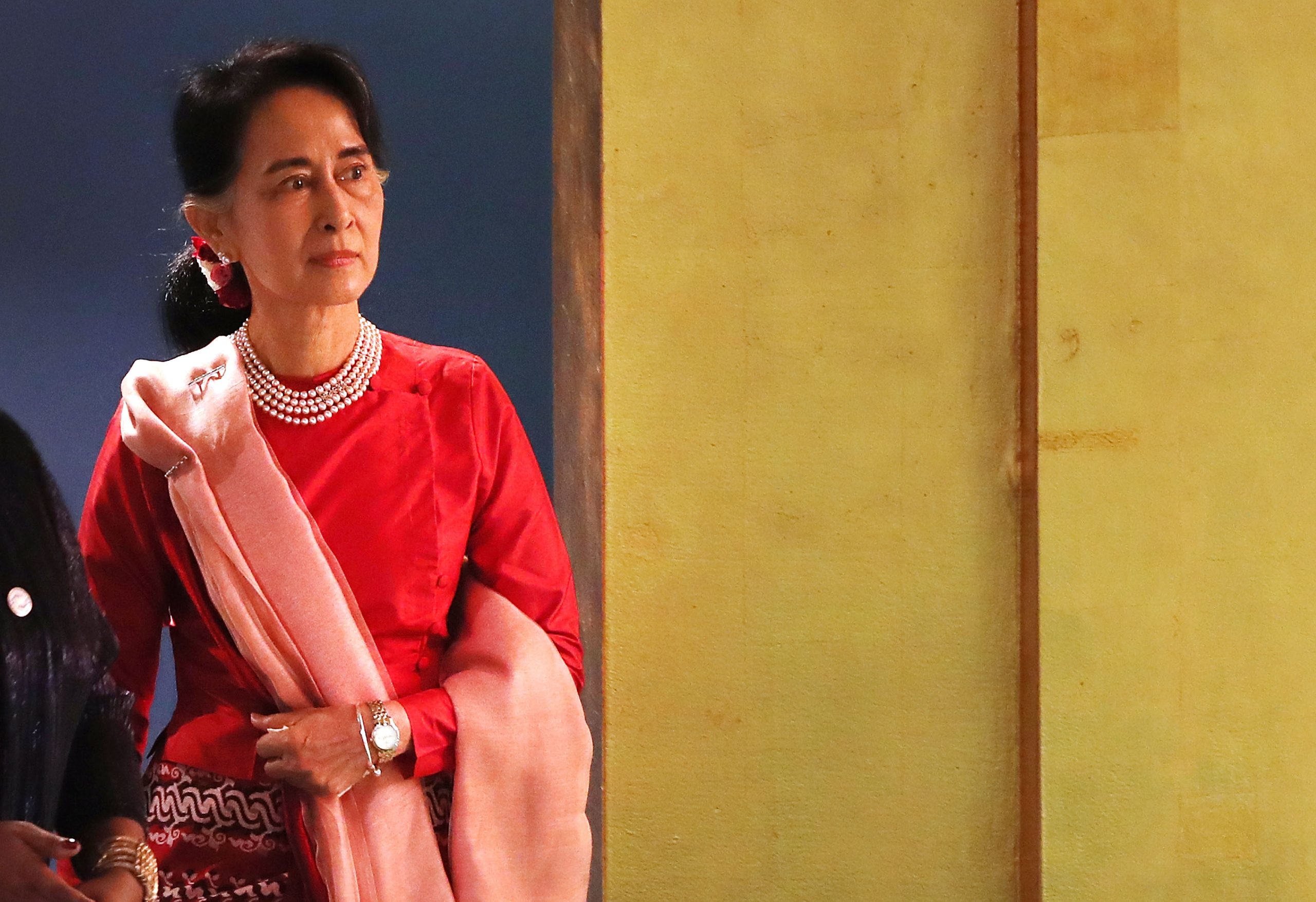
Myanmar: Unbridled destruction of freedoms as Aung San Suu Kyi sentenced

In response to the sentencing of Aung San Suu Kyi to four years in prison, Amnesty International’s Deputy Regional Director for Campaigns Ming Yu Hah said: 

“The harsh sentences handed down to Aung San Suu Kyi on these bogus charges are the latest example of the military’s determination to eliminate all opposition and suffocate freedoms in Myanmar. The court’s farcical and corrupt decision is part of a devastating pattern of arbitrary punishment that has seen more than 1,300 people killed and thousands arrested since the military coup in February. 

“There are many detainees without the profile of Aung San Suu Kyi who currently face the terrifying prospect of years behind bars simply for peacefully exercising their human rights. They must not be forgotten and left to their fate. 

“As violence escalates, displacing tens of thousands of people and setting up a humanitarian crisis in the middle of an ongoing pandemic, the situation in Myanmar today is alarming in the extreme. Without a decisive, unified and swift international response this can and will get worse.   
 
“The international community must step up to protect civilians and hold perpetrators of grave violations to account, and ensure humanitarian and health assistance is granted as a matter of utmost urgency. The country’s healthcare system is in tatters, the economy is on a precipice, and food shortages loom. The world cannot sit back and defer to ASEAN — states must act now to ensure an end to unlawful killings, arbitrary detention, torture and other gross violations, and to the decades-long pattern of impunity that has led us to where we are today. 
 
“It is shameful that ASEAN has yet to fully implement its emergency consensus after more than half a year. Other than blocking military leader Min Aung Hlaing from attending a handful of meetings, ASEAN has remained shockingly weak as the Myanmar military continues to crush peaceful dissent, sow destruction, and wipe out freedom of expression.” 

Background 

Myanmar’s de facto leader State Counsellor Aung San Suu Kyi was arrested on 1 February, along with other elected officials, activists and members of the Union Election Commission.  

The guilty sentences handed down on 6 December were for incitement against the military under Section 505 (b) and for alleged breaches of COVID-19 measures under Section 25 of the Natural Disaster Management Law. She is facing a total of 11 criminal cases, including under Section 67 of the Telecommunications Law, and the Export and Import Law (related to the possession of walkie talkie devices in her home). She has also been accused of violating Section 55 of the Anti-Corruption Law and the Official Secrets Act. All of her hearings have been closed to the public. 

On 24 April, the ASEAN held an emergency summit on Myanmar in Jakarta. A Five-Point Consensus was reached at the summit, which was attended by Myanmar’s commander-in-chief Senior General Min Aung Hlaing, who has been barred from more recent sessions.  

The Consensus called for an immediate cessation of violence in Myanmar, constructive dialogue among all parties, the appointment of a special ASEAN envoy to facilitate dialogue, the provision of humanitarian assistance, and a visit by the envoy to Myanmar. More than seven months on from the summit, it is clear that this approach has failed to yield truly meaningful results. ASEAN’s special envoy has been blocked from visiting Suu Kyi, who is being held at an undisclosed location in the capital Naypyidaw. 

The military has continued to kill protesters, bystanders and other civilians, and arrest, detain, prosecute and imprison activists, human rights defenders, media workers, medical workers, artists, political opponents, and critics of the military for exercising their rights to freedom of expression, association and peaceful assembly. According to the Assistance Association for Political Prisoners Burma (AAPPB), as of 3 December, the military has killed more than 1,300 people and arrested more than 10,000. 

Afghanistan: Survivors of gender-based violence abandoned following Taliban takeover – new research

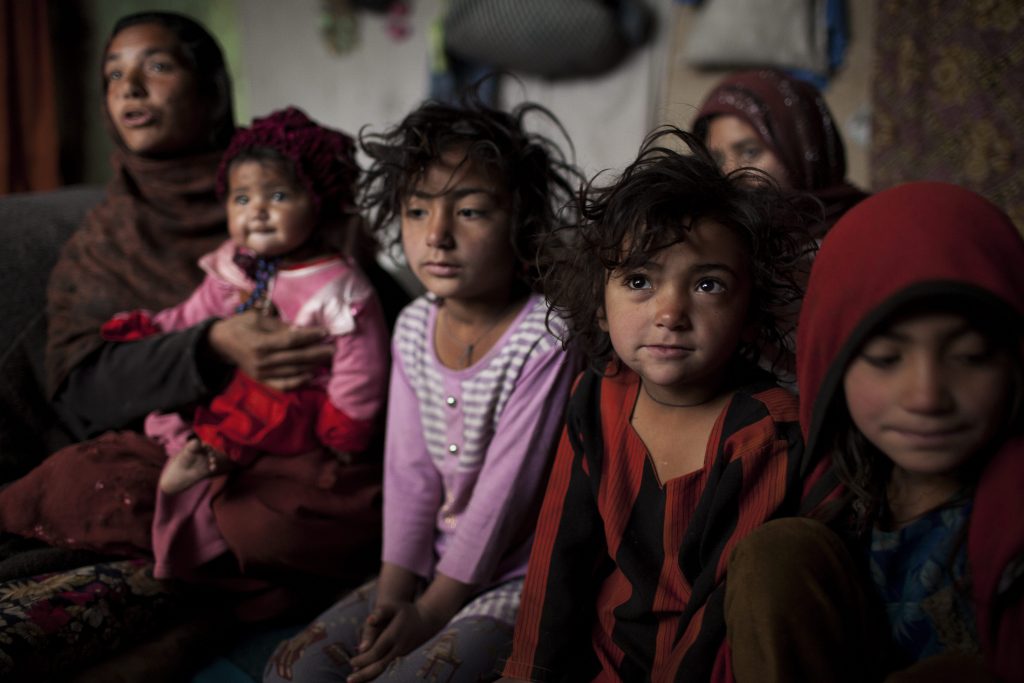
Essential services for women and girl survivors of gender-based violence in Afghanistan have been decimated following the Taliban’s takeover of the country, Amnesty International said today.

In 26 new interviews, survivors and service providers told Amnesty International that the Taliban closed shelters and released detainees from prison, including many convicted of gender-based violence offences.

Many survivors – as well as shelter staff, lawyers, judges, government officials, and others involved in protective services – are now at risk of violence and death.

“Women and girl survivors of gender-based violence have essentially been abandoned in Afghanistan. Their network of support has been dismantled, and their places of refuge have all but disappeared,” said Agnès Callamard, Amnesty International’s Secretary General.

“It defies belief that the Taliban threw open prison doors across the country, with no thought of the risks that convicted perpetrators pose to the women and girls they victimized, and to those who worked on survivors’ behalf.

“To protect women and girls from further violence, the Taliban must allow and support the reopening of shelters and the restoration of other protective services for survivors, reinstate the Ministry of Women’s Affairs, and ensure that service providers can work freely and without fear of retaliation.”

Amnesty International is calling on the international community to provide immediate and long-term funding for such protective services, evacuate survivors and service providers facing imminent danger, and urge the Taliban to uphold their obligations to women and girls, particularly those who survive or are at risk of gender-based violence.

On 26 and 29 November, Taliban spokesperson Suhail Shaheen told Amnesty International via telephone: “There is no place for violence against women and girls, according to the rules of Islam… The women facing domestic violence can be referred to the courts, and the courts will hear their cases… and their grievances will be addressed.”

Amnesty International interviewed survivors and individuals involved in protective services in the provinces of Badghis, Bamiyan, Daikundi, Herat, Kabul, Kunduz, Nangarhar, Paktika, Sar-e Pul, and Takhar.

Collapse of the system

Before the Taliban’s takeover, many women and girl survivors had access to a nationwide network of shelters and services, including pro-bono legal representation, medical treatment, and psychosocial support.

Survivors were referred into the system from provincial and capital offices of the Ministry of Women’s Affairs and the Human Rights Commission, as well as from shelters, hospitals, and police stations across the country.

The system was far from perfect, but served thousands of women each year in Afghanistan, where nine out of 10 women experience at least one form of intimate partner violence in their lifetime, according to UNAMA.

According to service providers, the most common cases of gender-based violence involved beating, rape, other forms of physical and sexual violence, and forced marriage. Survivors often needed urgent medical treatment.

One service provider who was based in Nangargar said: “[The cases] were very extreme. We had a case where a man took the nails off his wife’s fingers… [One] man took a crowbar and peeled off his wife’s skin… There was one woman who faced a lot of abuse from her family. She couldn’t even use the bathroom anymore.”

As the Taliban took control of Afghanistan, the system of protective services collapsed. Shelters were closed, and many were looted and appropriated by members of the Taliban. In some cases, Taliban members harassed or threatened staff.

As shelters closed, staff were forced to send many women and girl survivors back to their families, and other survivors were forcibly removed by family members. Other survivors were forced to live with shelter staff members, on the street, or in other unsustainable situations.

Zeenat* was regularly beaten by her husband and brother before she took refuge in a shelter. When the Taliban arrived, she and several other women fled. They are now in hiding. She said: “We came only with the clothes we were wearing. We don’t have a heater, and we go to sleep hungry… My brother is my enemy, and my husband is my enemy. If he sees me and my children, he’ll kill us… I am sure they are looking for me because they know the shelter has closed.”

One shelter director, currently in hiding with some survivors from her shelter, told Amnesty International: “We don’t have a proper place. We can’t go out. We are so scared… Please bring us out of here. If not, then you can wait for us to be killed.”

Perpetrators freed

As the Taliban advanced, they also systematically released detainees from prisons, many of whom had been convicted of gender-based violence offenses. Testimony from witnesses and others with first-hand knowledge, as well as credible media reporting, indicate that members of the Taliban were responsible. A Taliban spokesperson denied this to Amnesty International, insisting the previous government had opened prisons. 

A legal professional who specializes in gender-based violence said she had been involved in the conviction of more than 3,000 perpetrators of gender-based violence in the year preceding the Taliban’s takeover.

She said: “Wherever [the Taliban] went, they freed the prisoners… Can you imagine? More than 3,000 released, in all the provinces of Afghanistan, in one month.”

Amnesty International also received credible reports that survivors have also been transferred by the Taliban into the detention system, including to Pul-e-Charkhi prison, near Kabul.

Protectors now in need of protection

Many working within the system of protective services said that although they faced significant risks before the Taliban’s takeover, their lives are now in greater danger, and they are in desperate need of protection.

One service provider who was based in Badghis explained: “All of these women who worked on this [the support system] – now we need a shelter… We live each day in anxiety and fear.”

A service provider who was based in Nangarhar said: “I am getting threats from the Taliban, ISIS, perpetrators and the family members… on a daily basis.”

Another service provider who was based in Bamiyan said: “I was getting three calls each day from men who had escaped the prison. After I received a call from the Taliban as well, I switched to a new number.”

These women were devastated to see the system they had painstakingly built collapse. A former judge told Amnesty International: “For 20 years, I was working to build everything from scratch – pushing, running, from this office to that office. I was trying to convince everyone, so that we have a framework in place to protect women… It takes a lot of courage, a lot of sacrifice and energy to build something from nothing – and then it becomes nothing again.”

“We are not safe anywhere anymore”

There is nowhere to turn for women and girls who have faced violence since the Taliban’s takeover. One psychologist who worked with gender-based violence survivors in Kabul told Amnesty International: “The Taliban doesn’t have any procedure of how to deal with these cases.”

A prosecutor for cases involving gender-based violence explained: “In the past, women could go to the Ministry of Women’s Affairs. They could go alone and report their case. But now that women are not allowed to go anywhere without a mahram [male guardian], this will make it really complicated.”

Fariha* was regularly beaten by her husband and his relatives. She said: “[My husband] would pick up whatever he could find, and he would hit me with it… Whenever he beat me, his family would get together and watch… It happened almost every day… The first time he beat me with a wire… I had bruises all over my body. My hands and my nails were scratched, all of them. After that, he beat me from my waist down only. He’d tell me, ‘I will hit you in these places [your genitals and buttocks] that won’t be seen’.” 

Fariha was nine months pregnant when she spoke to Amnesty International, and desperately seeking a safe place to live. She added: “Before, there was a shelter, and I went to that place. I requested that they take me in. They said it’s not running now, and we can’t accept any new cases… There are no options for me.”

Adilia* was forced to marry an 80-year-old man at age seven. She said: “I spent a year living with him, and he beat me every single day, saying, ‘Why are you not getting pregnant?’”

Adilia fled, but was remarried and regularly subjected to beating and other forms of violence and abuse by her second husband and his relatives. When she spoke with Amnesty International, she had recently been transferred to one of the few shelters still in operation in Afghanistan.

She said: “We are very scared now… For how long are we going to stay? The Taliban came to the shelter at 12am, at 1am, and many times during the day. We told [them] this is a safe place for us, but they wouldn’t believe us… We are not safe anywhere anymore.”

Methodology

From 26 October to 24 November 2021, Amnesty International conducted telephone interviews with six survivors and 20 individuals involved in the system of protective services, including shelter directors and staff, prosecutors, judges, psychologists, doctors, and representatives of the Ministry of Women’s Affairs.

Amnesty International also interviewed 18 local activists, journalists, representatives of NGOs and the United Nations, and other experts on gender-based violence in Afghanistan.

Indonesia: Immediately release Papuan students charged with treason

Eight Papuan students who have been detained and charged with treason by police for peacefully expressing their political opinions on 1 December must be immediately released, Amnesty International Indonesia and Amnesty International Australia said today. 

Police often arrest Papuans for peaceful political expression on 1 December, as it is a date that many Papuans consider their Independence Day. This year, 34 people were arrested, 19 protesters were injured, and protests in two cities were forcibly dispersed.

“No one should be detained simply for peacefully expressing their political opinions,” Amnesty International Indonesia executive director Usman Hamid. “Papuans in particular are often detained and charged by law enforcement for this reason. Moreover, Papuan protesters are frequently attacked by counter-protesters under the police’s watch.  Repressive actions such as these will only create further distrust among Papuans and make improving the human rights situation in the region even more difficult.” 

“We call on Indonesian authorities to release all Papuans detained simply for exercising their right to freedom of expression,” Amnesty International Australia National Director Sam Klintworth said. “The Australian government must exercise due diligence on its assistance to Indonesian security forces to ensure that it is in compliance with human rights standards.”

Background

At least eight people were detained in the city of Jayapura, Papua on 1 December for displaying the Morning Star flag, a symbol of Papuan independence. They remain in police custody and have been charged for treason under Articles 106 and 110 of the Indonesian criminal code. 

Meanwhile, at least 19 people were detained in Merauke regency, Papua on 30 November in relation to a video of spiritual and indigenous community leader “Mama” Paulina Imbumar, in which she declared her intention of raising the Morning Star flag in Merauke on 1 December.

Paulina and her 16 followers were released without charge on 1 December. However, two members of video advocacy initiative Papuan Voices, who recorded and uploaded the video, remain in custody and have not been charged.

Merauke police chief Sr. Adj. Comr. Untung Sangaji was trained by Australian Federal Police and has been scrutinized for alleged human rights abuses in Aceh and Papua provinces.

In Dekai district, Papua seven people were arrested on the morning of 1 December. They were falsely accused of attending a Morning Star flag raising ceremony.  The three children were released in the afternoon, while the four adults were released the following day.

Also on 1 December, protesters in Ambon, Maluku were forcibly dispersed by Indonesian police, during which 19 of them were injured from beatings. In Bali, protesters were forcibly dispersed and physically attacked by counter-protesters who used racist language, injuring 13 people.

As of November 2021, there are still at least six Papuan prisoners of conscience behind bars solely for peacefully exercising their right to express political views.

Amnesty International does not take on any position regarding political status within Indonesia, including calls for independence. However, the organization believes that the right to freedom of expression includes the right to peacefully advocate for referendums, independence, or other political positions.

Activist Resources: GameOver

It’s time to accept the New Zealand offer!

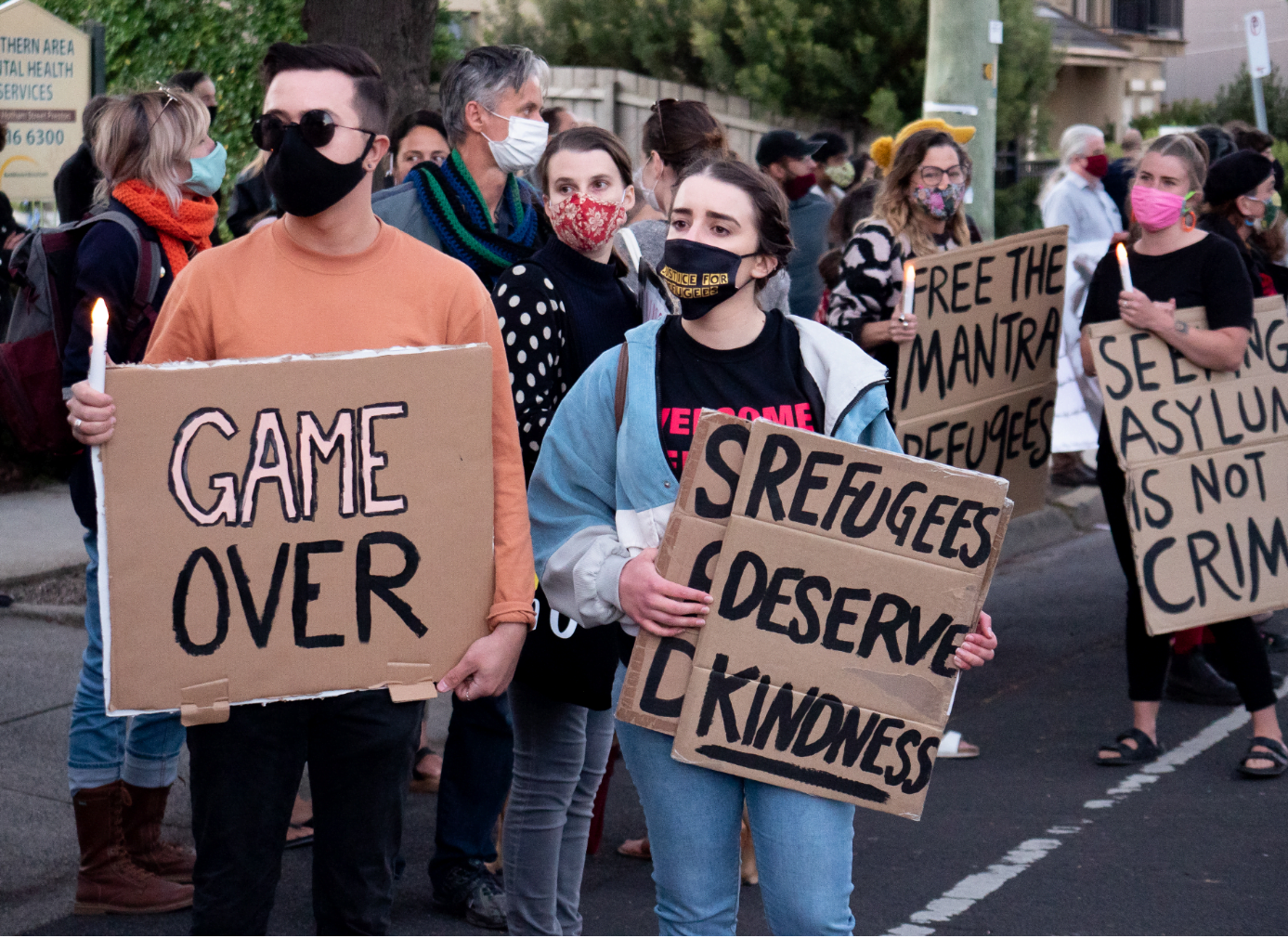
The #GameOver campaign has been at the forefront of fighting for the Australian Government to accept New Zealand’s long standing resettlement offer. We’ve stood together and demanded the Australian Government treat refugees and people seeking asylum with respect. After years of work, we acknowledge that it is easy to despair – but we are making progress, and we’re so close to achieving our goal.

Stand with us in one final push.

Because you didn’t give up, we’ve seen the release of more than 100 refugees from the Park Hotel APOD, Kangaroo Point Hotel APOD and the Northern APOD located at Darwin International Airport.

Earlier this year, off the back of our advocacy efforts with Craig Foster and Sonny Bill Williams in New Zealand, Home Affairs Minister Karen Andrews stated that the Australian Government was now in negotiations with their New Zealand counterparts regarding the New Zealand resettlement offer.

Because we kept going, the Australian Government has gone from outright refusal, to consideration, and now negotiation. These are all huge wins for people power, and highlights that when we stand up collectively and demand change, we can make a difference.

While we’re moving in the right direction, more than 200 refugees and people seeking asylum still remain trapped offshore in Papua New Guinea and Nauru. In Australia, approximately 100 refugees are detained in detention centres and APODS, whilst more than 1000 people are living in the community, with no certainty regarding their futures.

We’re calling on the Australian Government to commit to resettling all refugees and people seeking asylum who have been detained in Australia’s offshore processing regime, starting with accepting the New Zealand offer of resettlement.

We’re so close to ensuring refugees and people seeking asylum find safety. Join us and let’s make it a reality.

How can we win this campaign?

Together – Amnesty Action Groups, networks, activists, refugees with lived experience, partners and staff will demand safe pathways for people still held indefinitely offshore or in limbo on the mainland. We have two aims,

– Release refugees from detention immediately – end detention both on and offshore

– Ensure safe and permanent resettlement for people seeking asylum – including safety net support in the community

With this final push to call #GameOver, we need groups and communities across the nation to put pressure on those in power by asking the Home Affairs Minister Karen Andrews to accept the New Zealand offer and get people to safety.

What can I do?

Meet with your MP or Senator

People in the community taking the time to communicate to their MP is powerful. We can’t stress enough how important it is that politicians hear from their constituents. A large  group of people contacting their local MP will have more impact than any single expert. That is the power our collective voices can bring and the impact you can achieve, regardless of how much you know about an issue. You can use this resource pack to guide and help you plan your meeting with your MP or Senator. Check out who to target here!

Download the Game Over resource pack for template letters and extra resources to reach out to your MPs and Senators.

Useful Resources and Contacts

Join the National Refugee Network Facebook Group. The National Refugee Network meet on the third Thursday of the month.  

Useful upcoming training – see more on our Activism Planner

Contact national_refugee_network@amnesty.org.au for more information

China: WTA’s decision should push for effective investigation of sexual violence

Responding to the Women’s Tennis Association (WTA)’s decision to halt all competitions in China, Doriane Lau, Amnesty International’s China researcher said:

“Amnesty International shares the WTA’s concern about the state censorship around allegations made by Peng Shuai and the related online discussion. The Chinese government has a track record of silencing women who make allegations of sexual violence. 

“The WTA’s decision to suspend tournaments in China after insufficient answers on the freedom of movement, well-being, and safety of tennis player Peng Shuai shows that they are taking their due diligence responsibilities seriously. The move, along with messages of support from some of the tennis world’s biggest stars, have also sent authorities in China a much-needed message that their attempts to sweep these allegations under the rug will not go unchallenged. 

“The international community should continue to urge the Chinese government to investigate all allegations of sexual violence promptly and effectively. They should also ask the Chinese government to ensure that the survivors have a platform to express themselves freely and without any adverse consequences.” 

Background 

The Women’s Tennis Association CEO and Chairman announced in a statement on 1 December the “immediate suspension” of all WTA tournaments in China. The statement said the WTA could not ask its athletes to compete in China when Peng Shuai was not allowed to communicate freely and has “seemingly been pressured to contradict her allegation of sexual assault.” 

On 2 November Peng Shuai made a post on the Chinese social media website Weibo in which she accused retired Chinese Vice Premier Zhang Gaoli of coercing her into sex. The post and reference to her on Chinese social media were swiftly cut.  

Her communications with the outside world since then have been extremely limited, including an email she supposedly sent to tennis authorities – released by the TV channel CGTN on – in which she says allegations of sexual assault are “not true” and that “everything is fine”. She also appeared in a video call with an official from the International Olympic Committee (IOC). 

China has a history of releasing forced “statements” on behalf of human rights activists. For example, state TV aired the “confessions” of Chinese human rights lawyers Wang Yu and Jiang Tianyong when they were in detention. 

Saudi Arabia: Grand Prix must not deflect attention from dismal human rights record

Responding to Saudi Arabia’s hosting of a Formula One Grand Prix this weekend, Heba Morayef, Amnesty International’s Regional Director for the Middle East and North Africa, said:

“Over the last few years, the Saudi Arabian authorities have invested heavily in PR stunts to rebrand their image and attempt to deflect attention from their brutal crackdown on activists and human rights defenders. Although we saw a brief lull in executions and prosecutions of activists during Saudi Arabia’s presidency of the G20 summit, that ended immediately after the event when the authorities ramped up their repression once again. 

“The Saudi Arabia authorities need to realize that the best PR comes from respecting human rights. If the authorities want to be perceived differently, they should immediately and unconditionally release all those incarcerated for peacefully expressing their views, lift all travel bans and impose a moratorium on the death penalty. Foreign governments wishing to deepen their relations with Saudi Arabia should urge the authorities to address their egregious human rights record. 

“Any company holding major events in Saudi Arabia must identify, mitigate or prevent any human right abuses that it may cause, contribute to or be directly linked to through its operations, products and services, including Formula 1 and its Grand Prix races.”

Background

In December 2020, shortly after the end of the G20 Summit hosted by Saudi Arabia, the Saudi Arabian authoritiesresumed their crackdown on freedom of expression, targeting human rights defenders as well as anyone who has expressed views critical of the government. After an 85% fall in recorded executions in 2020, at least 40 people were put to death between January and July 2021 – more than during all of 2020.  On 15 June, Saudi authorities executed Mustafa al-Darwish, a young man who was arrested in 2015 for allegedly participating in anti-government protests in the Eastern Province, following a grossly unfair trial.

Amnesty International has documented the cases of at least 64 individuals prosecuted for exercising their rights to freedom of expression, association and assembly between 2013 and 2021; To date, 39 remain imprisoned, while others were conditionally released only recently after serving their sentences or are awaiting trial for charges related to their expression and human rights work. They include human rights defenders, peaceful political activists, journalists, poets and clerics. Their conditions of release include years-long travel ban sentences.

How we could have avoided the Omicron variant: Fair and equal access to vaccines around the world

Amnesty’s latest report on Covid-19 vaccines reveals how big pharma companies and a handful of rich countries are driving vaccine inequality and fuelling an unprecedented human rights crisis. Some companies have almost exclusively delivered to rich countries, putting profit before people, while governments like Australia’s have bought up available vaccine doses at rates far greater than what is needed to fully vaccinate their populations. 

It has now been two years since the emergence of Covid-19, and 7.71 billion Covid-19 vaccine doses have been administered globally. This corresponds to 53.3% of the world population having received at least one dose. 

While over half of the world has received vaccinations, only 5% of people in low-income countries had received their first dose by 22 November.

The latest variant of concern, Omicron, is a stark reminder that we won’t beat this pandemic until everyone has access to the vaccine. What could be an extraordinary feat for humanity – countries working closely together to reach herd immunity everywhere and get us all out of the pandemic – is in fact the clearest and starkest indication of vaccine inequality. 

The vaccine rollout, which was heavily skewed to wealthy countries who have hoarded the vaccines, has now left low and middle income countries with more severe outbreaks, mainly affecting those living in poverty. 

Put simply, access to a Covid-19 vaccine could mean the difference between life and death. 

A double dose of inequality: Big pharmaceuticals’ monopoly

Amnesty’s new report ‘A Double Dose of Inequality: Pharma companies and the Covid-19 vaccines crisis’ focuses on six leading vaccine developers, Astrazeneca, BioNTech, Johnson & Johnson, Moderna, Novavax and Pfizer.

Companies have played a decisive role in restricting fair access to a life-saving health product. Amnesty has assessed each company’s human rights policy, pricing structure, records of intellectual property, knowledge and technology-sharing, allocation of available vaccine doses and transparency. 

“We have all the tools to tame this pandemic everywhere in a matter of months. It comes down to a simple choice: to share or not to share.” 

Director General of the World Health Organization, Dr Tedros Adhanom Ghebreyesus

The report finds that vaccine developers have monopolised intellectual property and blocked technology transfers.

However, the blame does not solely rest with companies. Governments like Australia have been buying up available vaccine doses at rates far greater than what is required to fully vaccinate the population. By the end of 2021, Australia will have nearly 20 million surplus Covid-19 vaccine doses. 

Combined, this has meant predictable – and artificial – vaccine scarcity for the rest of the world. As a result, millions are dying.

The vaccine crisis is a human rights issue

Governments have an obligation to ensure that health facilities, goods, and services, including medicines, are available, accessible, acceptable and of good quality – to everyone, without discrimination, irrespective of where they live or their income

Access to Covid-19 vaccines that are safe and effective is therefore an essential element of the right of everyone to the highest attainable standard of physical and mental health.

Pharmaceutical companies have a responsibility to respect all human rights wherever they operate in the world. This requires companies to avoid causing or contributing to human rights abuses through their own business activities this includes providing remedies for any actual abuses that they have caused. 

“A global pandemic of this scale and human cost, with no clear end in sight, requires a concerted, principled and courageous response … based on a bedrock of human-rights based principles including international solidarity, cooperation and assistance.” 

UN Human Rights experts, 9 November 2020

In addition, they are required to prevent any human rights abuses that are linked to their operations, products or services even if they have not directly contributed. 

For pharmaceutical companies developing and manufacturing vaccines in the context of the global health crisis, this means that all decisions and actions related to the vaccine roll-out should be rigorously assessed through proactive, ongoing human rights due diligence. 

Vaccine manufacturers should directly address gaps in policy and practice by developing and implementing policies that aim to make Covid-19 vaccines available, accessible, and affordable. They should remove all obstacles that prevents countries from having access to covid-19 vaccines. 

Failures to take the steps needed to ensure fair and comprehensive vaccine roll-out may result in companies causing or contributing to human rights harms. 

How governments and companies have failed

As of December  2021, Covid-19 has led to over 5.2 million deaths and 262 million cases worldwide.

Countries with wide access to vaccines, such as Australia, have been able to lift restrictions sooner, while countries that have limited to no access to Covid-19 vaccines have faced increasingly severe outbreaks of cases. 

This serves as a reminder that governments have not taken the necessary steps to ensure Covid-19 vaccines are available, accessible, affordable and good quality for everyone without discrimination. 

The failure of businesses to take all steps at their disposal to achieve fair global access to Covid-19 vaccines means that these companies have fallen short of their human rights responsibilities. 

Vaccine developers have also played a key role in creating unequal access to vaccines by refusing to acknowledge intellectual property as a barrier, failing to sufficiently and quickly share technology and knowledge needed to increase supply, and failing to provide vital information about contracts, pricing, and dose allocation. 

These actions have created obstacles to fair access to Covid-19 vaccines, causing wealthier countries to have greater access to the vaccine. 

Amnesty is holding governments and companies to account

96% of people in low-come countries remain unvaccinated. This is an unprecedented human rights crisis fuelled by the greed of big pharma companies and wealthy countries.

Amnesty is calling on governments and pharmaceutical companies to deliver 2 billion vaccines to low and lower-middle income countries, in order to fully vaccinate an additional 1.2 billion people. 

  • Companies must distribute 50% of their production to low and lower-middle income countries, whilst countries like Australia must urgently redistribute hundreds of millions of surplus vaccines currently in their stocks
  • Companies need to commit to sharing their vaccine know-how while ceasing their lobbying efforts against initiatives seeking to increase supply of Covid-19 vaccines and promote their fair distribution

What you can do to help

Sign our petition which calls on the Australian Government to redistribute excess vaccine doses and help bring an end to global vaccine inequality now.

We all have the right to live happy and healthy lives. The vaccine crisis is an unprecedented human rights issue which has had an immediate impact on the future and our world. Learn more about how Amnesty will continue to challenge injustice through our coronavirus pandemic campaign.  

Explainer: Why intersectionality is important for women’s rights

What is intersectionality?

Intersectionality is a way of examining how different forms of oppression overlap and interact to create complex experiences of discrimination. This can be by understanding how one person’s gender, race, ability, sexuality, age, class or immigration status makes their experience different to someone else’s. 

Intersectionality goes further than acknowledging that these different forms of oppression exist, and examines how, together, they create particular patterns of discrimination in a person’s life.

Using an intersectional framework allows us to see how particular people are left out by policy, campaign and advocacy work, by understanding how certain services may not be accessible, or available to people who face intersecting oppression. 

Intersectionality is just a metaphor for understanding the ways that multiple forms of inequality or disadvantage sometimes compound themselves, and they create obstacles that are not often understood within conventional ways of thinking

Kimberlé Crenshaw

The history of intersectionality

The framework of intersectionality was created by lawyer and academic, Kimberlé Crenshaw, in 1989 when she published a paper titled “Demarginalizing the Intersection of Race and Sex.”

The paper examined three legal cases which dealt with subjects facing both racial discrimination and sex discrimination. In each case, Crenshaw argued that the “single-issue” analysis of the law did not take into account how its subjects were affected by both sex and racial discrimination together – meaning the women involved in each case were only able to claim discrimination as either women or due to their race, but not as both.

Photograph of Kimberlé Crenshaw © Mohamed Badarne

These cases pointed to a broader problem within the law which didn’t reflect how the experiences of black women differed from both white women, and black men. 

Since then, intersectionality has been used more broadly to understand how different systems have impacted marginalised identities.

Why is intersectionality important for women’s rights?

The experiences of women differ vastly across the country. Intersectionality provides an important way to understand human rights, and the ways in which different people are excluded from access to vital services. 

Aboriginal and Torres Strait Islander women face the intersection of colonisation, racism, and gendered violence, and face significantly higher rates of violence than non-Indigenous women.

Women with disability are twice as likely to experience violence from a current or previous partner than other women.

LGBTQIA+ women face a lack of inclusive services, and can be excluded from resources offered to their cisgender and heterosexual counterparts. 

Older women are the fastest-growing group of homeless people in the country. Domestic violence is the largest cause of homelessness for Australian women, and it is difficult for many women experiencing domestic violence to leave the situation, partly because of a significant lack of social housing available for women to access.

Many workplaces also lack paid family and domestic violence leave entitlements, meaning it is often a financial burden on women to leave violent partners.

Responses to domestic violence and policies surrounding reproductive rights, including the funding and delivery of services, too often do not consider the experiences and expertise of people facing intersecting discrimination. Without an intersectional approach to policy-making an advocacy, we risk excluding marginalised groups from access to important human rights.

How can we use intersectionality to improve women’s rights?

Advocacy, policy changes and efforts to improve access to human rights must all take an intersectional approach to providing services to marginalised groups. Put simply, this approach means listening to the groups affected by discrimination and the solutions they already have to resolving these problems.

Amnesty is calling on the Australian government to:

  • Commit to funding and resourcing service providers and family violence and women’s legal services, including specialist services for Aboriginal and Torres Strait Islander women, multicultural and migrant women, trans women and gender diverse people.
  • Commit to funding Aboriginal and Torres Strait Islander-led organisations to develop Indigenous-led solutions to violence against women and invest in Indigenous-led solutions, and to a dedicated National Safety Plan led by and for First Nations women.

What you can do

  • Join us in sending an email calling for the Australian government to commit to increase their investment in specialist service providers, and to a National Safety Plan led by and for First Nations women, so everyone can live free from violence. Together, we can pressure our leaders and challenge injustice.
  • Learn more about our women’s rights campaign. All around the world, including Australia, women are denied their human rights on the basis of their sex and gender.
  • Learn more about the 16 Days of Activism, an annual international event raising awareness of women’s rights. In 2021 it runs from 25 November to 10 December.

Submission: QLD Criminal Law (Raising the Age of Responsibility) Amendment Bill 2021

Amnesty International Australia has made a submission to Queensland’s inquiry into the Criminal Law (Raising the Age of Responsibility) Amendment Bill 2021.

The age of criminal responsibility is the age in which a child is considered by law to have understood that their actions were wrong and can face criminal charges. All Australian states and territories have this age set at only 10 years old. This means that across Australia, police have the power to arrest, strip-search and imprison children who are only 10 – that’s typically a child in year three or four at primary school.

The Queensland Government must do all it can to keep children out of prison. This doesn’t mean children who commit crimes aren’t held responsible, but alternatives – such as diversion programs – must be investigated and resourced.

In it’s submission, Amnesty has recommended the Queensland Government adopt the following measures:

  • Immediately raise the minimum age of criminal responsibility to at least 14 years old;
  • That the presumption of doli incapax be abolished , and alternatives such as ‘developmental immaturity’ be enshrined in legislation;
  • Increase the allocation of funding to Indigenous community-led and controlled organisations to support culturally appropriate, place-based, Indigenous designed and led preventative programs to address the needs of children under 14 years at risk of entering the justice system. This funding should be allocated to Indigenous-led organisations and programs in proportion to the over representation of Aboriginal and Torres Strait Islander children in the justice system;
  • Invest in the creation of Aboriginal and Torres Strait Islander judicial resources and provide funding for psychologists to train and undertake neurocognitive testing for children who display risk factors for future offending when in contact with police, doctors or schools; and
  • Legislate so that children cannot be held in police watch houses overnight.