Philippines: Credible investigations needed

Responding to comments from the Philippines’ Senate on Amnesty International’s latest report, “If you are poor, you are killed”: Extrajudicial executions in the Philippines’ “War on Drugs”Champa Patel, Director for Southeast Asia and the Pacific said:

“Amnesty International continues to call on the Senate Committee on Justice and Human Rights to re-open its enquiry on extrajudicial executions in the context of the so-called war on drugs.”

“Any steps towards credible investigations that will see accountability of those involved in the serious crimes documented in our latest report will be a positive move.” Champa Patel, Director for Southeast Asia and the Pacific

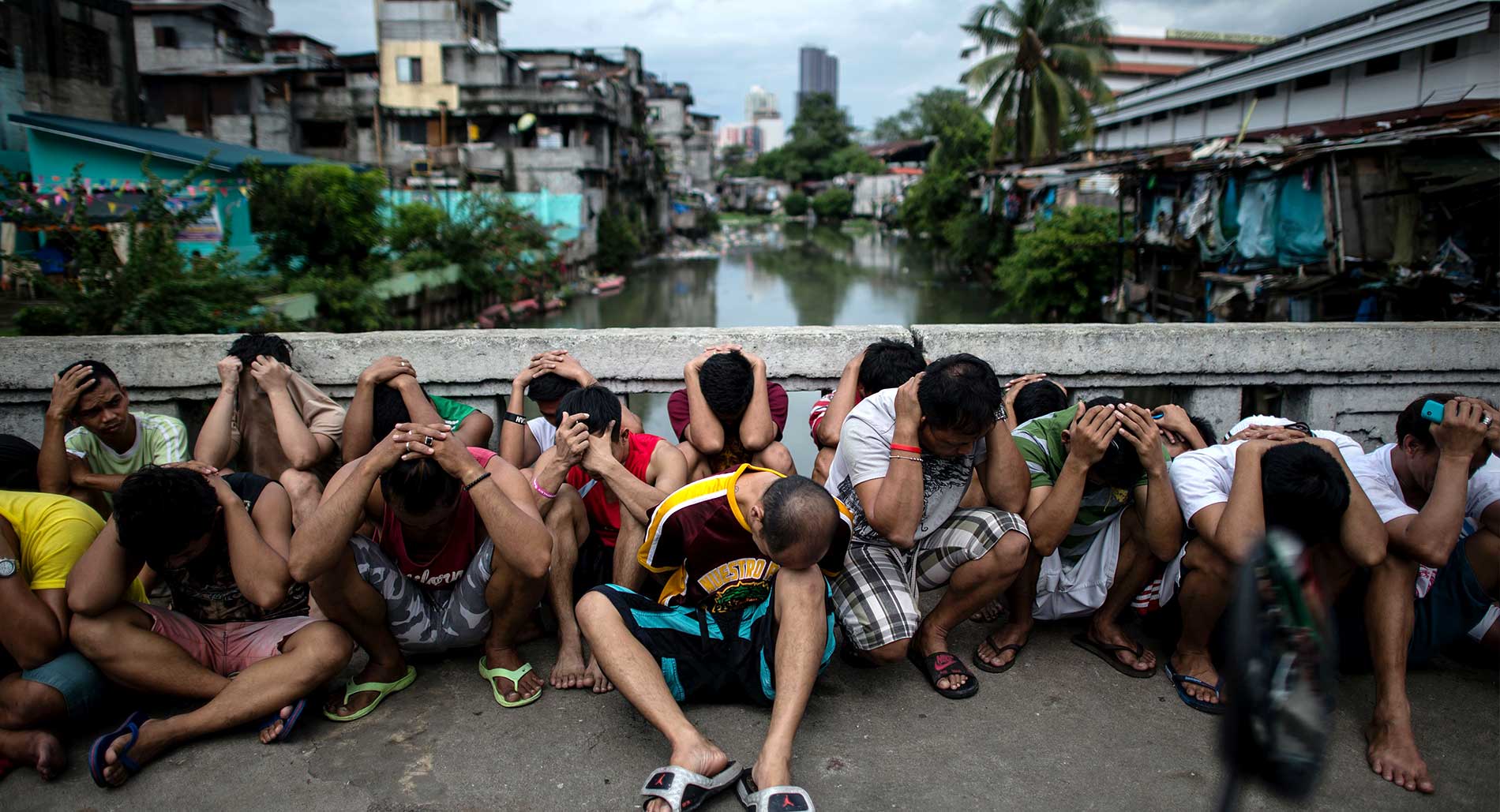
“In the Philippines, what we found are patterns of human rights violations – deliberate and widespread killings, which appear to be systematic, planned and organized by authorities in the anti-drug campaign. And that these may constitute crimes against humanity.

“Our conclusions are based on interviews with 110 people, including witnesses and family members of those who have been killed, and a large variety of documents, including police reports. These were corroborated by a police officer and two paid killers.

“The report is publicly available and we welcome scrutiny of the facts by the senate and other interested parties. Amnesty International would also be glad to meet with the authorities and discuss further our recommendations and findings.”

Refugee should be protected not arrested

Loghman Sawari, the 21 year-old Iranian refugee who fled Manus Island to escape Australia’s cruel detention regime, has been forcibly returned to Papua New Guinea.

Graham Thom, Refugee Coordinator at Amnesty International said: “Upon arrival, this young man must be immediately provided with medical care and trauma services. He must not be arrested, mistreated or imprisoned.”

“Amnesty International has grave concerns about Loghman Sawari’s wellbeing, following reports he was allegedly beaten and forcibly removed from Fiji this morning in a distressing and aggressive manner.

“What we need to see now is the Australian Government step up and immediately bring him to safety here in Australia. His case is extreme and he simply cannot be sent back to languish in Australia’s cruel facilities on Manus Island.

“The Australian Government forced him into this position, they’ve pushed him to his limits and now they must take responsibility to provide him with the protection he needs.

“As the US deal continues to be uncertain, the plight of those on Manus Island and Nauru has become more desperate. Australia cannot expect others to clean up the mess it created by these cruel policies; it must accept responsibility for refugees on Nauru and Manus and bring them all here to safety immediately.”


Background

Loghman Sawari made headlines when he said in a video last week that he was fleeing Manus Island, in Papua New Guinea, where he had been confined for more than three years.

On 28 January, he traveled to Fiji, where he is seeking asylum on the grounds he fears persecution if he goes back to Papua New Guinea.

“This is the end for me,” said Loghman Sawari in the video, seeking to escape the cruel, inhumane and degrading treatment he suffered there, including beatings, imprisonment, living on the street and poor health.

“Loghman is a young man who fled persecution in Iran. He has been found to be a refugee. Australia didn’t respect his rights, and now Fiji is failing to do so. He came to Fiji seeking protection.

“He is entitled to a fair assessment of his claim. That process must run its course. At a time when the US and Australia are turning their back on refugees, this is a time for Fiji to show that it is different,” said Kate Schuetze,  Amnesty International’s Pacific Researcher.

50 years ago Australia held its last legal execution

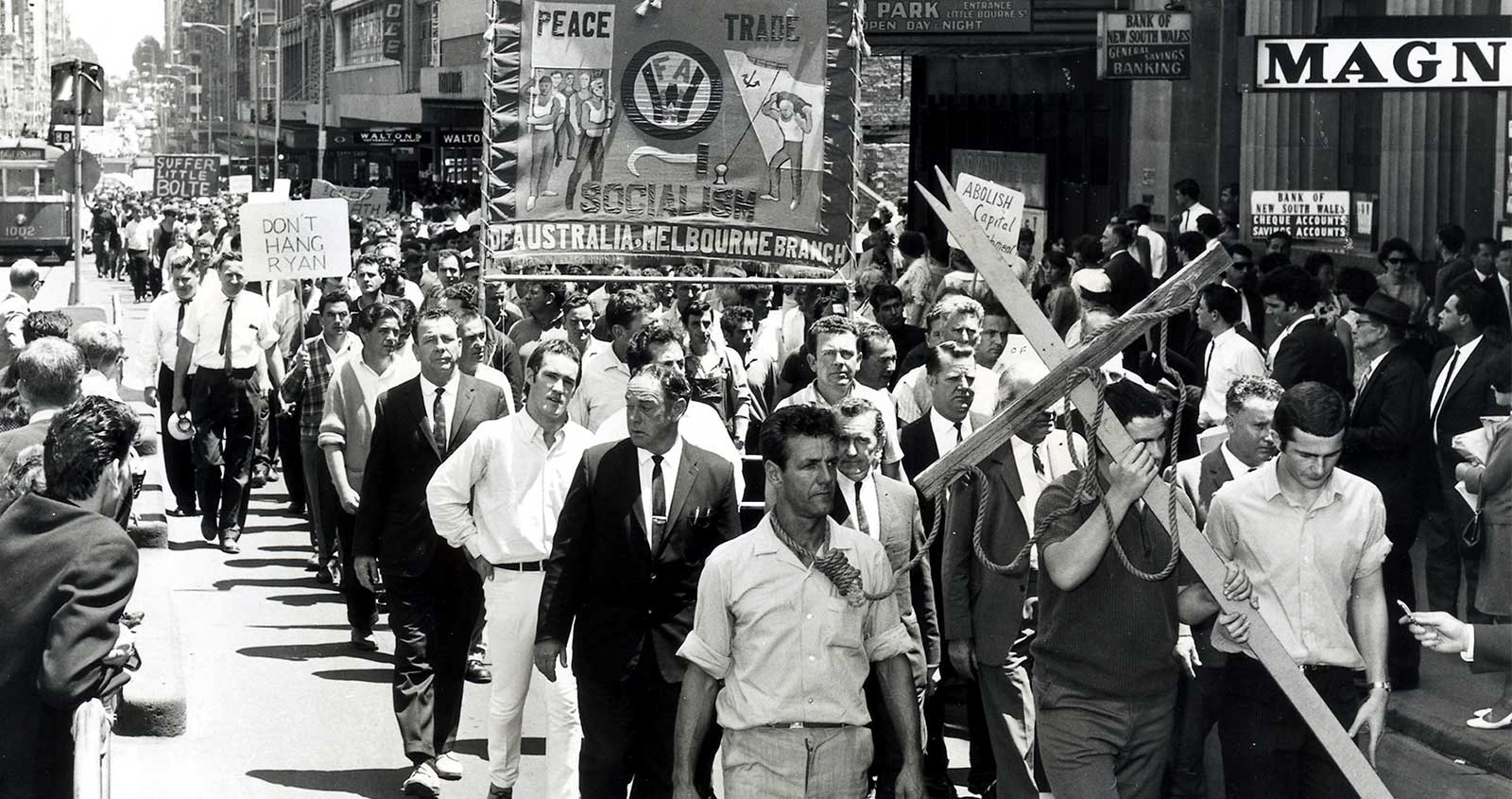
At 8 am on 3 February 1967, Australia held its last execution. Ronald Ryan was led to the gallows and hung to death at Pentridge Prison, Melbourne. He was charged with killing a prison guard during an escape attempt. The emotion and anger over the execution contributed to Australia become an abolitionist county 18 years later. Sadly, it’s not the case for many of our neighbouring countries.

We all suffer as we bear witness

Brian Morley, a young journalist who didn’t have a strong view either way on capital punishment, was one of the 11 official witnesses to Ryan’s execution. In an emotional and chilling audio account to the ABC he said: “and it was just then I knew that they were going to kill him and the hangman leapt for the lever, and I couldn’t take it anymore, I closed my eyes.”

Mike Richards, author of The Hanged Man: The Life and Death of Ronald Ryan wrote in The Age how Ryan’s death deeply affected those who witnessed it. Former Pentridge prison governor Ian Grindlay, who stood beside Ryan as he was hung, “was deeply affected by the execution and his health suffered badly because of it. A devout Catholic, he would say a prayer for Ryan every day of his life until his own death in 1984,” wrote Richards.

Author and broadcaster Wendy Harmer remembered as a 11-year-old child the day Ryan was executed. In her personal story in The Daily Telegraph,  she wrote of the humanity that’s at stake when we talk of reintroducing the death penalty anywhere in the world.

“Be thankful you can no longer be able to pull the lever or load the gun yourself. Be grateful you never have to look into the eyes of a condemned man. Many a brave soul has been undone by the experience. Ask yourself why.”

Enough is enough says Australia

The days and hours leading up to Ryan’s execution saw waves of people marching in the streets in protest. At 8 am, across Australia, people held three minutes of silence as Ronald Ryan was hung.

The abolitionist movement had gained momentum, and in 1973 the federal parliament passed the Death Penalty Abolition Act 1973. State parliaments had been removing death penalty from their books since 1922 and in 1985, NSW became the last state to do so, making Australia an abolitionist country in law.

“Be grateful you never have to look into the eyes of a condemned man. Many a brave soul has been undone by the experience”

Wendy Harmer

In 1990, Australia confirmed its opposition to the death penalty by ratifying the Second Optional Protocol to the International Covenant on Civil and Political Rights. This is a binding international commitment to never have capital punishment in their laws again.

And finally in 2010, the federal parliament passed the law that stops any state or territory from reintroducing capital punishment.

Global trend against the death penalty

Australia is one of 141 countries who are abolitionist in law or practise. There are 104 countries who have completely removed capital punishment from their laws, the most recent being our close neighbour Nauru.

This leaves a minority of 57 countries around the world who retain the death penalty. In our region this includes countries such as, China, Singapore, Malaysia and Japan – all of which have executed people in the past few months.

But what is one of our close neighbours thinking?

For 50 years, Australia has not executed anyone and capital punishment is no longer on our books. Yet one of our close neighbours, the Philippines, are considering reneging on their international commitment to never sentence anyone to death, let alone actually execute them.  

The Philippines have not executed anyone since 2000 and abolished the death penalty in 2006. This is now in jeopardy after a draft proposal to reinstate the death penalty was introduced into the Philippines Congress last December.

The Philippines Government have vowed to push this draft law over the line, which would be a devastating blow for human rights. Join us now to stop this happening.

Urgent change needed as youth justice reaches tipping point in Victoria

Urgent action is needed by the Victorian Government as youth justice reaches a tipping point following months of tension mounting from children detained in adult and youth justice detention.

Amnesty International is calling on the Victorian Government to respond to the disturbing report on the ABC’s 7.30 program.

“Revelations that a 16-year-old boy has a fractured vertebrae and injuries to his head after being assaulted by other inmates while detained at maximum security adult facility Barwon Prison raise serious human rights concerns,” said Roxanne Moore, campaigner at Amnesty International.

Leading up to this incident, lawyers for the boy had requested a transfer, fearing his safety after allegations that a staff member had assaulted him.

“It is very clear that adult prisons are no place for children. The Victorian Government must immediately transfer all children from Barwon prison to a safe and appropriate facility.”

Roxanne Moore, campaigner at Amnesty International.

“It is very clear that adult prisons are no place for children. The Victorian Government must immediately transfer all children from Barwon prison to a safe and appropriate facility. These serious allegations of assault must be immediately and independently investigated, and those perpetrators brought to account,” said Roxanne Moore.

The Victorian Government has continued to keep children in adult prison, despite Supreme Court and Court of Appeal rulings in December last year that this was illegal. This practice also breaches the Convention on the Rights of the Child.

After last year’s explosive revelations about conditions in Don Dale in the Northern Territory and Cleveland in Queensland, Amnesty International is extremely alarmed at the heavy-handed approach by the Andrews Government to children in youth detention.

“The Victorian Government should be making evidence based decisions rather than knee-jerk reactions that put children at further risk.”

Roxanne Moore

“The Victorian Government should be making evidence based decisions rather than knee-jerk reactions that put children at further risk, like sending adult prison guards into youth detention centres, reportedly with batons and pepper spray. These are children who need our support to rehabilitate for a brighter future, not to be institutionalised for a life of crime,” said Roxanne Moore.

The Government has also announced a new $250 million dollar high security youth prison.

“We know detention isn’t an effective way to turn kids’ lives around. Instead of building more prisons, the Government should be resourcing community programs that address the underlying causes of offending for children,” said Roxanne Moore.

“The Victorian Government has a choice to make. The easy option is to impose a more and more draconian response to youth justice. But we know this does not work. It will breach the rights of children and lead Victoria down a very dark path.

“Instead, Amnesty International is calling on the Victorian Government to make the right choice and show leadership.”

Celebrating Human Rights Day in Northcote

The Amnesty Northcote local action group celebrated World Human Rights Day on 10 December in Melbourne style with arts, music and great food. The evening featured works on human rights issues by poets, rappers and songwriters.

Jane Hunt, former CEO of Women Fitted for Work, was one of the judges in the performance competition on the night. She said:

“As someone living in Northcote, Melbourne, I know that locals here really care about human rights. These issues might seem far away from us, but it is something we do care about and there is a desire to make a positive difference.”

Jane gave a moving human rights speech on the night, and attendees signed petitions and drafted letters seeking to have Fomusoh Ivo Feh and Ilham Tohti released from prison.

The talented poet and actor Leo Taylor won first prize in the performance competition. Leo is 74 years of age and has been a professional actor since 1969 working in Australian and European television. His winning entry was a rap entitled “Something’s Goin On” about the unjust death of a young Indigenous man:

SOMETHIN’S GOIN ON
Johnny’s got no rich relations, Johnny is a poor man’s son
Johnny’s luck is on vacation,
run Johnny run Johnny run Johnny run
who’s gonna bail Johnny outta gaol, what’s he done to deserve it
who’s gonna bail sweet Johnny outta gaol,
he’s earned his time now let him serve it
and it’s one law for the rich, another for the poor
if you happen to be black you don’t matter any more
there’s somethin goin on but you mustn’t call it war
better hide the baby while they’re breakin down the door
run Johnny run Johnny run Johnny run
run Johnny run Johnny run my son
who’s gonna save Johnny from the grave, what’s he done to deserve it
who’s gonna save sweet Johnny from the grave,
he’s earned his time now let him serve it
and it’s one law for the rich, another for the poor
if you happen to be black well I hope you’re keeping score
there’s somethin goin on but you mustn’t call it war
people talking justice hey you’ve heard it all before
run Johnny run Johnny run Johnny run
run Johnny run Johnny run my son
now Johnny boy is dead, there’s a bullet in his head
what’s he done to deserve it
sweet Johnny boy is dead, there’s a bullet in his head
he’s earned his time and now he’s served it
and it’s one law for the rich another for the poor
if you happen to be black can you take it anymore
there’s somethin goin on but you mustn’t call it war
and the winner is the man who is quickest on the draw
run Johnny run Johnny run Johnny run
run Johnny run Johnny run my son
Johnny’s got no rich relations, Johnny is a poor man’s son
Johnny’s luck is on vacation
run Johnny run Johnny run Johnny run……
© Leo Taylor

Leo said that the inspiration for the sung poem was David Gundy, a young Indigenous man shot dead by NSW police in 1989. Leo said:

“David’s story is essentially the same as the one in the poem – it’s about the mentality that resulted in his death. I write songs and poems… often concerning what I see as social injustice.”

Gurmeet Kaur, a former Afghan refugee from London, took 2nd prize with her poem titled “Refugee Crisis” about the refugee experience. Celine Yap of folk duo Littlefoot fame won 3rd prize for her song about a Tamil refugee. Yap is a passionate campaigner for the rights of refugees hosts a radio program for asylum seekers.

A woman playing guitar at a Northcote local group event.
© Private

The judges had a difficult time choosing the prize winners as there were so many talented performers sharing important human rights stories.

The event was also a great opportunity to build the Northcote group’s local support base. The local action group in Northcote is relatively new, and are actively looking for new volunteers for lots of fun awareness raising events in 2017. The 2017 group calendar is already full with ideas for cheese and wine nights, an art human rights show and a bike ride or walk from Northcote high street to Edinburgh gardens to end violence against women – so if you are reading this and thinking “I am ready to stand up and do something for human rights” and live in the area, come join us in Northcote.

With thanks,

Tina Pigliardo and Eleanor Bonikowski
Co-convenors – Amnesty Northcote Local Action Group
Email us at aianorthcote@gmail.com

Who are the Northcote Local Action Group?

We are the primary representatives of Amnesty International in our local community. We stand up for Human Rights. The purpose of Amnesty is to protect individuals wherever justice or freedom is denied. We promote the values of the Universal Declaration of Human Rights.

We like to get involved locally to raise awareness for national campaigns through events such as performance evenings (music, poetry, art and film) and talks by representatives in the human rights community, lobbying MPs, and involvement in human rights petitions. Performance art in whatever form is a great medium for people to come together and better understand current human rights issues and also a fun way to take action and stand up for human rights. The Universal Declaration of human rights looks after us all no matter who we are or where we live. Everyone has these rights – our rights are part of what makes us human and no one should take them away from us.

Community is Everything: what’s on and coming up

In brief…

  • The Australian Government has extended the Royal Commission into Youth Detention in the Northern Territory by four months. The Commission will now report in August.
  • December’s COAG meeting saw some promising words on Indigenous kids in prison. However we’re yet to see any concrete action from our pollies. Before the next COAG:

remind them what they can do for Indigenous kids

  • Also in December we handed over a petition with more than 40,000 signatures calling on Senator George Brandis to immediately ratify the Optional Protocol to the Convention Against Torture (OPCAT). With continuing reports that the government is “on the cusp” of ratifying OPCAT, we will continue the push in 2017.
Activists hand over more than 40,000 signatures calling on George Brandis to ratify OPCAT. © Private

Wrapping up 2016

At the 9 December COAG (Council of Australian Governments) meeting, the Prime Minister and all state and territory leaders committed to taking swift action once the NT Royal Commission on youth detention and child protection gives their report in August. The PM also singled out the over-representation of Indigenous children as something of critical importance to come out of the Commission.

State leaders also agreed to “refresh” the Closing the Gap targets. As we’ve been campaigning for justice targets to be included in the Close the Gap framework we’re very interested in what this will entail. Agreeing to refresh these targets, while not a guarantee for inclusion of justice targets, is moving in the right direction.

While we didn’t see significant outcomes at the COAG meeting, Indigenous youth justice is now at the centre of talks – something almost unthinkable 12 months ago.

Your activism and lobbying efforts undoubtedly contributed to this huge development. In the past three months alone, Amnesty activists met with:

Activists meet with PM Malcolm Turnbull. © Private
  • Prime Minister Malcolm Turnbull
  • Mike Baird (then NSW State Premier)
  • Emma McBride (NSW Federal MP)
  • Linda Burney (NSW Federal MP)
  • Lisa Baker (WA State MP)
  • Cathy O’Toole (QLD Federal MP)
  • Terri Butler (QLD Federal MP)
  • Rebekha Sharkey (QLD Federal MP)
  • Ross Hart (TAS Federal MP)

New year, new action

Amnesty activists and groups took part in Aboriginal and Torres Strait Islander events for 26 January across the country. From marching in record-breaking Invasion Day rallies, to celebrating the survival and resilience of Indigenous people and culture at festivals like Yabun, we’re engaging with allies across the country.

It was particularly great to see such strong momentum to #ChangeTheDate of Australia Day this year. The City of Fremantle led the charge, with activists having a great time at  ‘One Day in Fremantle’, an alternative festival celebrating survival with world-class musicians, arts workshops and cultural activities. Some Amnesty staff also chose to work on 26 January in solidarity with Indigenous people.

Tell me about the next steps of the campaign…

Amnesty activists at the Sydney Invasion Day rally in 2017. © Private
  1. Royal Commission

The Royal Commission into youth detention in the Northern Territory is a crucial opportunity to end the over-representation of Indigenous kids in the justice system. We are currently planning how to mobilise Australians from all walks of life to push for change when the Commission’s report is handed down on 1 August. We will be seeking your input for the plan over the next few months!

  1. Referendum anniversary

27 May 2017 marks the 50th anniversary of the landmark 1967 Constitutional referendum, where Australians voted to include Aboriginal and Torres Strait Islander people in the census and allow the Commonwealth to create laws for them.

In the meantime, keep doing what you’ve been doing so well – building relationships with politicians and potential allies, signing up people to the campaign and keeping the issue in the spotlight.

Want to get more involved in the campaign? Get in touch with the CIE activist advisory group at cie.group@amnesty.org.au or speak to your Community Organiser.


Global refugee protection under threat if world leaders emulate Trump travel ban

World leaders must repudiate US President Trump’s blatantly discriminatory travel ban and step up efforts to resettle the most vulnerable refugees fleeing war and persecution globally.

“The chaos and global condemnation unleashed by President Trump’s travel ban should be a warning to any government tempted to follow suit. Amnesty International continues to condemn in the strongest possible terms President Trump’s indefinite ban on Syrian refugees and his blanket ban on the arrival of people from six other predominantly Muslim countries,” said Audrey Gaughran, Director of Global Issues at Amnesty International.

“Not only are these measures devastating for the thousands of women, men and children directly affected, but they could spell disaster for the international protection system as a whole.”

“Not only are these measures devastating for the thousands of women, men and children directly affected, but they could spell disaster for the international protection system as a whole.”

Australia must speak up about the Philippines’ ‘war on drugs’

Warning: This video contains footage some viewers may find distressing.

A longstanding relationship between two countries means being able to stand up for what’s right. Australia has to be prepared to deliver difficult messages, not becoming indulgent of, or indifferent to, murder on a mass scale, like what we’re seeing in the Philippines.

Ever since President Rodrigo Duterte swept to power at the end of June last year, more than 1000 people have been killed on average each month, most often in extrajudicial executions. The victims are usually people suspected of using or selling drugs. Their names appear on unverified “drug watch lists” that, through hearsay and rumour, are drawn up by local political bosses, often turning into “hit lists” as they are handed down to the police and through them to killers on their payroll.

Far from proving to be the champion of the poor he styled himself as, Duterte has overwhelmingly targeted the impoverished in his “war on drugs”. The families who arrive each day at morgues to identify their loved ones, or who search the streets to find their bullet-ridden bodies abandoned next to a cardboard sign denouncing them as “pushers”, come primarily from the Philippines’ urban slums.

For the police, these slums are rich with opportunity. As an anti-drugs police officer told Amnesty International, there are anti-drug units that get up to $US300 ($400) for each person they kill. During raids, they further enrich themselves by snatching possessions from the dead while planting “evidence”.

In falsified police reports, they claim with striking consistency that the alleged drug offender violently resisted arrest, therefore the killing was justified. Witnesses instead describe people being killed in cold blood while pleading for their lives.

“Another revenue stream for the police comes from funeral homes: the police receive a cut for each body they bring certain funeral homes”


Another revenue stream for the police comes from funeral homes. As our investigation, “If you are poor, you are killed: Extrajudicial executions in the Philippines’ ‘war on drugs’ “, established, the police receive a cut for each body they bring certain funeral homes. Even as poor families sink deeper into debt, borrowing sums for the burial, the police profit from murder.

Where the police aren’t prepared to act in an official capacity, often because they fear a killing might generate suspicion, they either assume disguises or contract out the killings. Borne on a motorcycle, a pair of killers approach a target, gun them down and speed away. This way, anguished relatives cannot identify the killers to file a complaint and the police face no questions about their conduct and no paperwork to fill in or reports to falsify.

Business has been ‘rampant’

After Duterte came to power, business has been “rampant”, a paid killer told us. They average three or four “orders” a week, whereas they had one or two a month before Duterte. A paid killer said that he and his colleagues receive their orders from a serving police officer, who pays them 5000 pesos ($US100) for a “user” and twice or three times as much for a “pusher”.

These same police –  who shoot first and ask questions later, falsify their reports, steal from their victims, take payments for each target they kill and pay others to kill on their behalf – may still be receiving extensive assistance and support from their Australian counterparts.

“A paid killer said that he and his colleagues receive… 5000 pesos ($US100) for a ‘user’ and twice or three times as much for a ‘pusher'”

As Fairfax Media’s Lindsay Murdoch reported in November, Australia continues to provide “comprehensive training”, including in counter-terrorism, critical incident management, surveillance techniques and equipment. Julie Bishop’s Department of Foreign Affairs and Trade has sedulously maintained silence on this arrangement, even as the Foreign Affairs Minister has appealed to the Philippines to put an end to the killings.

In November 2015, during Prime Minister Malcolm Turnbull’s first visit to Manila, Australia and the Philippines jointly signed a “comprehensive partnership” agreement. The agreement proudly states that the two countries’ relationship is “grounded in shared values of democracy, respect for human rights and adherence to the rule of law”.

Those words have now been made a mockery. President Duterte has repeatedly expressed his contempt for human rights, even threatening to kill people who stand up for them. Far from enforcing law and order, his police have turned into a criminal enterprise that profits from the murder of the poor.

Few countries have closer relations with the Philippines. Over the course of their 70-year relationship, Australia and the Philippines trade on preferential terms, with almost all their goods flowing through each other’s borders without incurring duties. There are more than 280 Australian companies in the Philippines, investing more than half a billion dollars and employing more than 40,000 people there.

“To date, more than 7000 people have been killed, including young children”

When the Philippines has suffered natural disasters, Australia has stepped in to offer humanitarian assistance. The two countries have defence agreements that stretch back to the Second World War.

Australia has leverage here. It should use it to urge the Philippines to put an end to the organised and widespread extrajudicial executions that may amount to crimes against humanity.

Bishop said in December last year that Australia is willing to assist the Philippines government to support improvements in humane, voluntary and heath-focussed drug policies as an alternative to the “drug war”. No less importantly, Australia should step up its diplomatic pressure on President Duterte to respect human rights.

To date, more than 7000 people have been killed, including young children. Already impoverished families have been further marginalised. Throughout the country’s poorest neighbourhoods, people fear that, regardless of whether they are involved in drugs, it will be their home raided and they or their loved ones killed.

The Australian government should recall the principles it said would guide its relationship with the Philippines. Support for human rights and the rule of law must not be cast aside now, when it is most needed.

Matt Wells and Rawya Rageh are senior crisis advisers at Amnesty International and wrote If you are poor, you are killed.

This article first appeared in The Sydney Morning Herald
The US War on Muslim refugees

By Salil Shetty, Secretary General at Amnesty International

The gloves are off. With the Executive Order on “Protecting the Nation from Terrorist Attacks by Foreign Nationals,” President Donald J. Trump has declared war on Muslim refugees around the world.

With the stroke of a pen, the President has – among other actions – banned Syrian refugees from the USA and has also effectively prevented anyone (including refugees) from Iran, Iraq, Libya, Somalia, Sudan and Yemen from entering the USA. These seven countries have two main things in common: they are predominantly Muslim, and they are the countries from where the majority of people seeking asylum from serious human rights violations like persecution or torture are trying to escape.

Were it not so disturbing and dangerous, this Executive Order would be pathetic in its absurdity.

It is ludicrous because there is no data to support the view that refugees – Muslim or otherwise – pose more risk of committing acts of terrorism than citizens. A refugee is not a person who commits acts of terrorism. It is someone fleeing people who commit acts of terrorism. Under international law, perpetrators of these crimes are automatically disqualified from refugee status. Additionally, the US Refugee Admissions Program puts refugees through the most rigorous and detailed security screenings of any category of persons – immigrant or visitor – to enter the USA.

“Were it not so disturbing and dangerous, this Executive Order would be pathetic in its absurdity”

The Executive Order is preposterous in its irrationality. But no one should be laughing about it.

This is a deeply frightening document. Faced with a global emergency in which 21 million people have been forced to flee their homes, one of the wealthiest and most powerful countries on earth responds by obliterating one of their only avenues for hope: “resettlement.” This is a process whereby vulnerable people (such as survivors of torture, or women and girls at risk) trapped in dire circumstances in countries like Lebanon, Jordan, Kenya, and Pakistan, are allowed to move to a country such as the USA. In sum, this Executive Order abandons host countries and punishes the most vulnerable among an already vulnerable group.

Does the Executive Order explicitly ban Muslim refugees?

No. But the anti-Muslim rationale is brazen. All the countries subject to these severe restrictions are predominantly Muslim. With this action, President Trump has sent a clear message that the USA needs to be protected from Muslim people, and that they are inherently dangerous.

Also, the text identifies one of the exceptions to the new restrictions as people with religious persecution claims, but only if they are part of a religious minority. A plain reading of this provision is that the Trump administration will resettle Christians fleeing predominantly Muslim countries. This provision cloaks religious discrimination in the language of religious persecution. It is even conceivable that this favoured treatment could accentuate a risk to Christian minorities in some countries where they face discrimination and violence on grounds of allegedly belonging to a foreign or American religion.

All in all, this Executive Order would function admirably as a recruitment tool for armed groups such as the Islamic State – groups keen to show that countries like the USA are inherently hostile to Muslim people.

Make no mistake: people will lose their lives because of this Executive Order. Countries hosting large numbers of refugees, feeling aggrieved and abandoned by the international community, will begin or increase their forcible expulsions of refugees. Vulnerable women, men and children who would otherwise be able to move to the USA, and who are trapped in unbearable situations, will “choose” to return home to a risk of torture or death.

“All in all, this Executive Order would function admirably as a recruitment tool for armed groups such as the Islamic State – groups keen to show that countries like the USA are inherently hostile to Muslim people”

It is important to remind ourselves who these people are. In 2016, 72 percent of the refugees resettled to the US were women and children. In my view, the term “refugee” doesn’t do justice to the people who have braved deadly seas, deserts, and human-caused dangers, in the hopes of restarting their lives in peace. I have had the privilege of meeting some of these people, and have always been humbled by their resilience in the face of almost unimaginable adversity. Any country, including the US, would benefit from welcoming them.

Your gloves may be off, Mr. President. But – in solidarity with the 21 million refugees in the world today, and the countless people and organizations who work alongside and for people seeking protection – so are ours.

This story was originally published in IPS


Cuban graffiti artist El Sexto released from maximum-security prison

On 21 January Danilo Maldonado Machado (also known as ‘El Sexto’) was released from El Combinado del Este, a maximum-security prison on the outskirts of Havana.

Danilo Maldonado was arrested at his home in Havana the morning of 26 November 2016, hours after the announcement of Fidel Castro’s death. That same day, a Cuba-based newspaper had reported that he’d graffitied the words “He’s gone” (Se fue) on a wall in Havana.  

Danilo was detained for almost two months and his family believes he was accused of damage to state property but have not seen official documents specifying these charges

Following his release, his fiancé, Alexandra Martínez told Amnesty: “I want to officially confirm that Danilo has been released and was able to travel outside of Cuba. He is currently in Miami. I want to thank you and everything Amnesty International has done for Danilo’s freedom. Without your help, who knows where he would be right now. Thank you, thank you, thank you.”

“Danilo’s release is great news but he should have never been jailed in the first place. Peacefully expressing an opinion is not a crime,” said Erika Guevara-Rosas, Americas Director at Amnesty International.

“I want to thank you and everything Amnesty International has done for Danilo’s freedom. Without your help, who knows where he would be right now. Thank you, thank you, thank you”

Alexandra Martínez

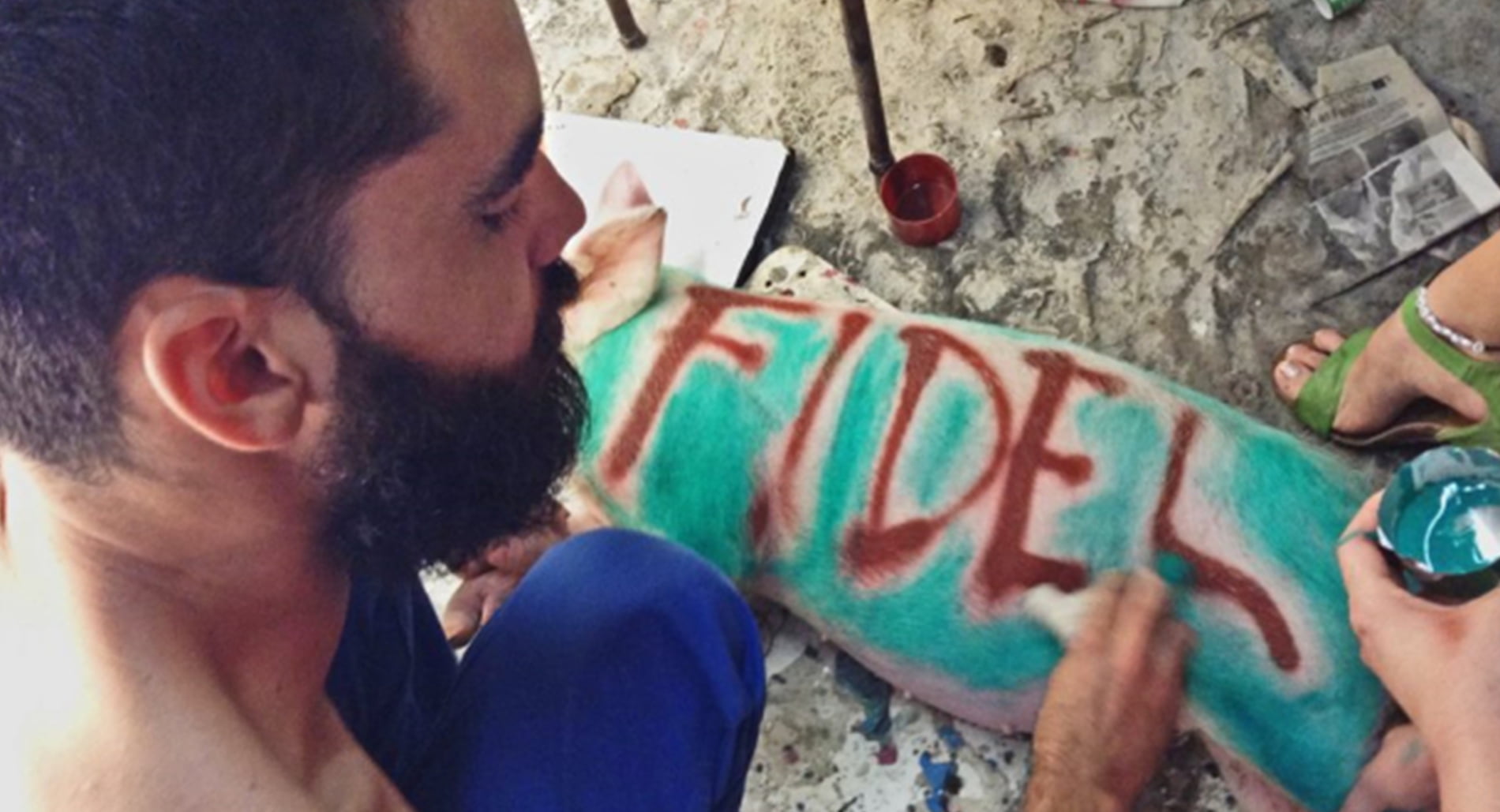
Previously, Danilo Maldonado Machado had spent almost 10 months in prison following accusations of “aggravated contempt”. He arrested in Havana while travelling in a taxi on 25 December 2014. Officers opened the taxi’s boot and found the two pigs with “Raúl” and “Fidel” painted on their backs.

He was accused of “disrespecting the leaders of the Revolution”. Danilo intended to release the pigs at an art show on Christmas Day. He was never formally charged nor brought before a court during the time he spent in detention.

Amnesty International considered him a prisoner of conscience, detained solely for peacefully exercising his right to freedom of expression.