Philippines: The police’s murderous war on the poor

Acting on instructions from the very top of government, the Philippines police have killed and paid others to kill thousands of alleged drug offenders in a wave of extrajudicial executions that may amount to crimes against humanity.

Read the report 

Amnesty International’s investigation,“If you are poor you are killed”: Extrajudicial Executions in the Philippines’ “War on Drugs” details how the police have systematically targeted mostly poor and defenceless people across the country while planting “evidence”, recruiting paid killers, stealing from the people they kill and fabricating official incident reports.

“This is not a war on drugs, but a war on the poor.”

Tirana Hassan, Amnesty International’s Crisis Response Director.

“This is not a war on drugs, but a war on the poor. Often on the flimsiest of evidence, people accused of using or selling drugs are being killed for cash in an economy of murder,” said Tirana Hassan, Amnesty International’s Crisis Response Director.

“Under President Duterte’s rule, the national police are breaking laws they are supposed to uphold while profiting from the murder of impoverished people the government was supposed to uplift. The same streets Duterte vowed to rid of crime are now filled with bodies of people illegally killed by his own police.”

Incited by the rhetoric of President Rodrigo Duterte, the police, paid killers on their payroll, and unknown armed individuals have slain more than a thousand people a month under the guise of a national campaign to eradicate drugs. Since President Rodrigo Duterte came to office seven months ago, there have been more than 7,000 drug-related killings, with the police directly killing at least 2,500 alleged drug offenders.

Amnesty International’s investigation, documents in detail 33 cases that involved the killings of 59 people. Researchers interviewed 110 people across the Philippines’ three main geographical divisions, detailing extrajudicial executions in 20 cities across the archipelago. The organisation also examined documents, including police reports.

Extrajudicial executions are unlawful and deliberate killings carried out by officials, by order of a government or with its complicity or acquiescence. Extrajudicial executions violate the right to life as enshrined in both Philippine and international law.

Killing unarmed people and fabricating police reports

The report documents how the police, working from unverified lists of people allegedly using or selling drugs, stormed into homes and shot dead unarmed people, including those prepared to surrender.

Fabricating their subsequent incident reports, the police have routinely claimed that they had been fired upon first. Directly contradicting the police’s claims, witnesses told Amnesty International how the police conducted late night raids, did not attempt an arrest, and opened fire on unarmed persons. In some cases, witnesses said, the police planted drugs and weapons they later claimed as evidence.

In one case in Batangas City, a victim’s wife described how the police shot dead her husband at close range as she pleaded with them for mercy. After her husband was dead, the police grabbed her, dragged her outside and beat her, leaving bruises.

In Cebu City, when Gener Rondina saw a large contingent of police officers surround his home, he appealed to them to spare his life and said he was ready to surrender. “The police kept pounding [and] when they go in he was shouting, ‘I will surrender, I will surrender, sir,’” a witness told Amnesty International.

The police ordered Gener Rondina to lie down on the floor as they told another person in the room to leave. Witnesses then heard gunshots ring out. A witness recalled them “carrying him like a pig” out of the house and then placing his body near a sewer before eventually loading it into a vehicle.

When family members were allowed back in the house six hours after Gener’s death, they described seeing blood splattered everywhere. Valuables including a laptop, watch, and money were missing, and, according to family members, had not been returned or accounted for by police in the official inventory of the crime scene.

Gener’s father, Generoso, served in the police force for 24 years before retiring in 2009. He told Amnesty International he was “ashamed” of his son’s drug use. He also professed support for the government’s anti-drug efforts. “But what they did was too much,” he said. “Why kill someone who had already surrendered?”

Other people Amnesty International spoke to similarly described the dehumanization of their loved ones, who were ruthlessly killed, then dragged and dumped.

“The way dead bodies are treated shows how cheaply human life is regarded by the Philippines police.”

Tirana Hassan

“The way dead bodies are treated shows how cheaply human life is regarded by the Philippines police. Covered in blood, they are casually dragged in front of horrified relatives, their heads grazing the ground before being dumped out in the open,” said Tirana Hassan.

“The people killed are overwhelmingly drawn from the poorest sections of society and include children, one of them as young as eight years old.”

In the few cases where the police have targeted foreign meth gangs, they have demonstrated that they can carry out arrests without resort to lethal force. The fact that poor people are denied the same protection and respect has hardened perceptions that this is a war on the poor.

An economy of murder

The police killings are driven by pressures from the top, including an order to “neutralize” alleged drug offenders, as well as financial incentives they have created an informal economy of death, the report details.

Speaking to Amnesty International, a police officer with the rank of Senior Police Officer 1, who has served in the force for a decade and conducts operations as part of an anti-illegal drugs unit in Metro Manila, described how the police are paid per “encounter” the term used to falsely present extrajudicial executions as legitimate operations.

“We always get paid by the encounter…The amount ranges from 8,000 pesos (US $161) to 15,000 pesos (US $302)… That amount is per head. So if the operation is against four people, that’s 32,000 pesos (US $644)… We’re paid in cash, secretly, by headquarters…There’s no incentive for arresting. We’re not paid anything.”

The chilling incentive to kill people rather than arrest them was underscored by the Senior Police Officer, who added: “It never happens that there’s a shootout and no one is killed.”

The experienced frontline police officer told Amnesty International that some police have established a racket with funeral homes, who reward them for each dead body sent their way. Witnesses told Amnesty International that the police also enrich themselves by stealing from the victims’ homes, including objects of sentimental value.

The police are behaving like the criminal underworld that they are supposed to be enforcing the law against, by carrying out extrajudicial executions disguised as unknown killers and “contracting out” killings.

More than 4,100 of the drug-related killings in the Philippines over the past six months have been carried out by unknown armed individuals. “Riding in tandem”, as the phenomenon is known locally, two motorcycle-borne people arrive, shoot their targets dead, and speed away.

Two paid killers told Amnesty International that they take orders from a police officer who pays them 5,000 pesos (US $100) for each drug user killed and 10,000 to 15,000 pesos (US $200-300) for each “drug pusher” killed. Before Duterte took power, the paid killers said, they had two “jobs” a month. Now, they have three or four a week.

The targets often come from unverified lists of people suspected to use or sell drugs drawn up by local government officials. Regardless of how long ago someone may have taken drugs, or how little they used or sold, they can find their names irrevocably added to the lists.

In other cases, their names could be added arbitrarily, because of a vendetta or because there are incentives to kill greater numbers of people deemed drug users and sellers.

Possible crimes against humanity

The Philippines is a state party to the Rome Statute of the International Criminal Court. In October 2016, the Prosecutor of the International Criminal Court, Fatou Bensouda, issued in a statement expressing concerns over the killings and indicating her office may initiate a preliminary examination into possible crimes under the Rome Statute.

Amnesty International is deeply concerned that the deliberate, widespread and systematic killings of alleged drug offenders, which appear to be planned and organized by the authorities, may constitute crimes against humanity under international law.

“What is happening in the Philippines is a crisis the entire world should be alarmed by. We are calling on the government, from President Duterte down, to order an immediate halt to all extrajudicial executions. We are also calling on the Philippines Department of Justice to investigate and prosecute anyone involved in these killings, regardless of their rank or status in the police or government,” said Tirana Hassan.

“The Philippines should move away from lawlessness and lethal violence and reorient its drug policies towards a model based on the protection of health and human rights.

“We want the Philippines authorities to deal with this human rights crisis on their own. But if decisive action is not taken soon, the international community should turn to the Prosecutor of the International Criminal Court to carry out a preliminary examination into these killings, including the involvement of officials at the very top of the government.”

3.4 million actions in Write for Rights 2016

Every year write for rights gets bigger and better, and in 2016, Amnesty activists across the globe collected an astounding 3.4 million actions (and counting). Here in Australia, we gathered a phenomenal 125,000 actions! A massive thank you to all of you who helped us reach this staggering figure.

We’d like to give a big shout out to everyone who held events, wrote letters, took action online and participated in the global day of action on instagram and twitter. Your participation makes a real difference in the lives of the people we write for.

We smashed targets

The Braidwood action group with local Country Women's Association volunteers. © Private
The Braidwood action group with local Country Women’s Association volunteers. © Private

Setting and reaching for targets can be difficult but when it comes to campaigns like write for rights we need to collect large volumes, we need to aim high! Reaching the exact target is not what is important, striving for it is and we did that in spades.

In 2016 all of the action centres across the country set targets of how many actions they could collect as well as choosing to pick one of the 9 cases to prioritise. What results we saw! All across the country action centres broke through their goals. NSW raised the bar by absolutely smashing their target of 3000 actions to collect a staggering 4535. This was all made possible because of the hard work of action groups setting both group and personal targets. Dorothy Bennett  long term activist and volunteer in the ACT collected an astounding 543 actions. Thanks Dorothy and all the activists like you across the country your hard work and commitment saves lives.

The Mt Lawley group in action. © Private

Event highlights

Over 50 events were held across the country for write for rights in 2016. Action groups got really creative hosting literary evenings, letter writing marathons, making quilts and partnering with key organisations and speakers. Actions groups also successfully engaged with local media this year including the Alice Springs group who got an excellent write up of their event in the Centralian Advocate.  Here is just a snapshot of some of the amazing work from across the country.

WA

John Kinsella reading his poetry. © Private

The Mount Lawley group with support from Melville group and Women’s group members held 4 stalls at the Inglewood Night Markets over the write for rights period collecting a fantastic 528 actions.

Sophie Hartley Community organising assistant put on a fantastic end of year event focused on WA’s priority case of Maxima Acuna. with amazing speakers poet and author John Kinsella, Uranium free WA campaigner for the conservation council Mia pepper and director of UWA publishing Terri-ann White; many who attended this event wrote personal  handwritten letters.

ACT

Queensland activists. © Private

Braidwood action group in partnership with the local Country Women’s Association volunteers participated in the local quilt festival and made an amazing quilt for Annie in Malawi. The quilt was displayed at the market in festival week, and will be sent to Annie.

QLD and TAS

Both the QLD and TAS action centres took the opportunity to use their end of year celebration on Human RIghts day to take action for Write for Rights.

NSW

Write for Rights in Parramatta, NSW. © Private

The Parramatta action group held a fantastic event focused around NSW priority case Eren Keskin.  Over 200 people attended their event including a large representation from the Turkish disapora. A friend of Eren Keskin spoke.

Manly action group exceeded their target of 180 actions collecting a whopping 667 actions. Using their 30th anniversary as a way to launch the campaign, the group held a fantastic event at the local library which attracted new faces. The group also managed to get a story in the local paper.

NT

Representing in the NT! © Private

The Alice Springs group held a very successful  W4R’s marathon at the Watertank cafe in Alice. The group collected a  fantastic 80 actions including a handwritten letter from famous actor Sam Neil.

What is NAIDOC Week?

NAIDOC Week is one of the best opportunities to celebrate Aboriginal and Torres Strait Island culture, talent and resilience.

NAIDOC week, which is celebrated annually in the full first week of July, stands for ‘National Aboriginal and Islanders Day of Observance Committee’. The week began in the 1957 when Aboriginal organisations, state and federal governments and a number of church groups came together to support its formation.  However, its roots can be traced back to the 1920s and the 1938 Day of Mourning march and conference.

It’s a week when Australia celebrates Aboriginal and Torres Strait Islander peoples, cultures and communities and recognises the valuable contributions that Aboriginal and Torres Strait Islander people make to our country. Amnesty activists across the country get out into communities during NAIDOC week to support community events, celebrate culture and build valuable relationships.

The National NAIDOC Committee has announced the 2017 National NAIDOC theme – ‘Our Languages Matter’.

“The 2017 theme aims to celebrate the essential role that Indigenous languages play in both cultural identity, linking people to their land and water, and in the transmission of Aboriginal and Torres Strait Islander history, spirituality and rites, through story and song,’ the Committee says.

Check out the NAIDOC week events calendar to find out what’s happening in your city.

How Amnesty’s groups celebrated NAIDOC week in 2016

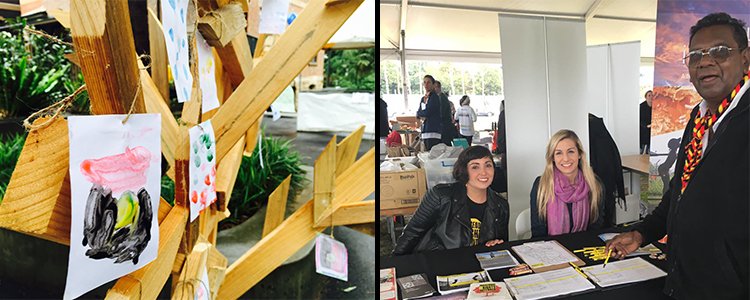
In NSW, the Redfern Amnesty group held a stall at the NAIDOC Week celebrations where they encouraged young attendees to paint a picture to contribute to their Healing Tree.

Amnesty’s National Annual General Meeting was held at Tandanya Gallery, which is Australia’s oldest Aboriginal-owned and managed Arts Centre. Here, delegates from around the country came together with the local Kaurna community to to learn a Kaurna phrase “Ngadlu naalityangka kumangka yuwanthi”, which roughly translates as “We stand together as one”.

A 'Healing Tree' (left) displays handwritten message; and Hayley, Kate and Cedric pose together at the NAIDOC Opening Ceremony in WA (right).
Members of the WA Indigenous Rights group Hayley and Kate joined Cedric Jacobs at the NAIDOC Opening Ceremony. © AI

The ACT Indigenous Rights group launched with the nation’s first ‘Community is Everything’ photo exhibition, showcasing the stories of Indigenous kids and the success of Indigenous-led community solutions.

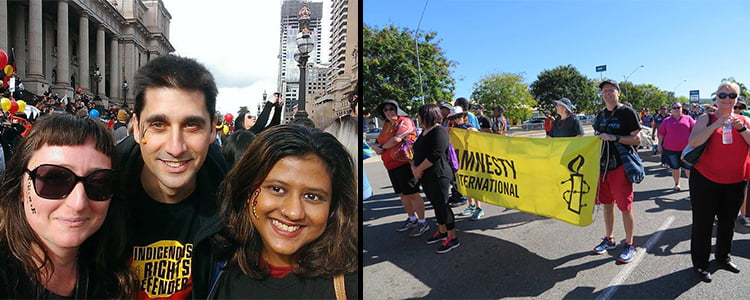
Amnesty supporters pose for a photo together (left); Amnesty supporters hold an Amnesty yellow banner during a march (right).
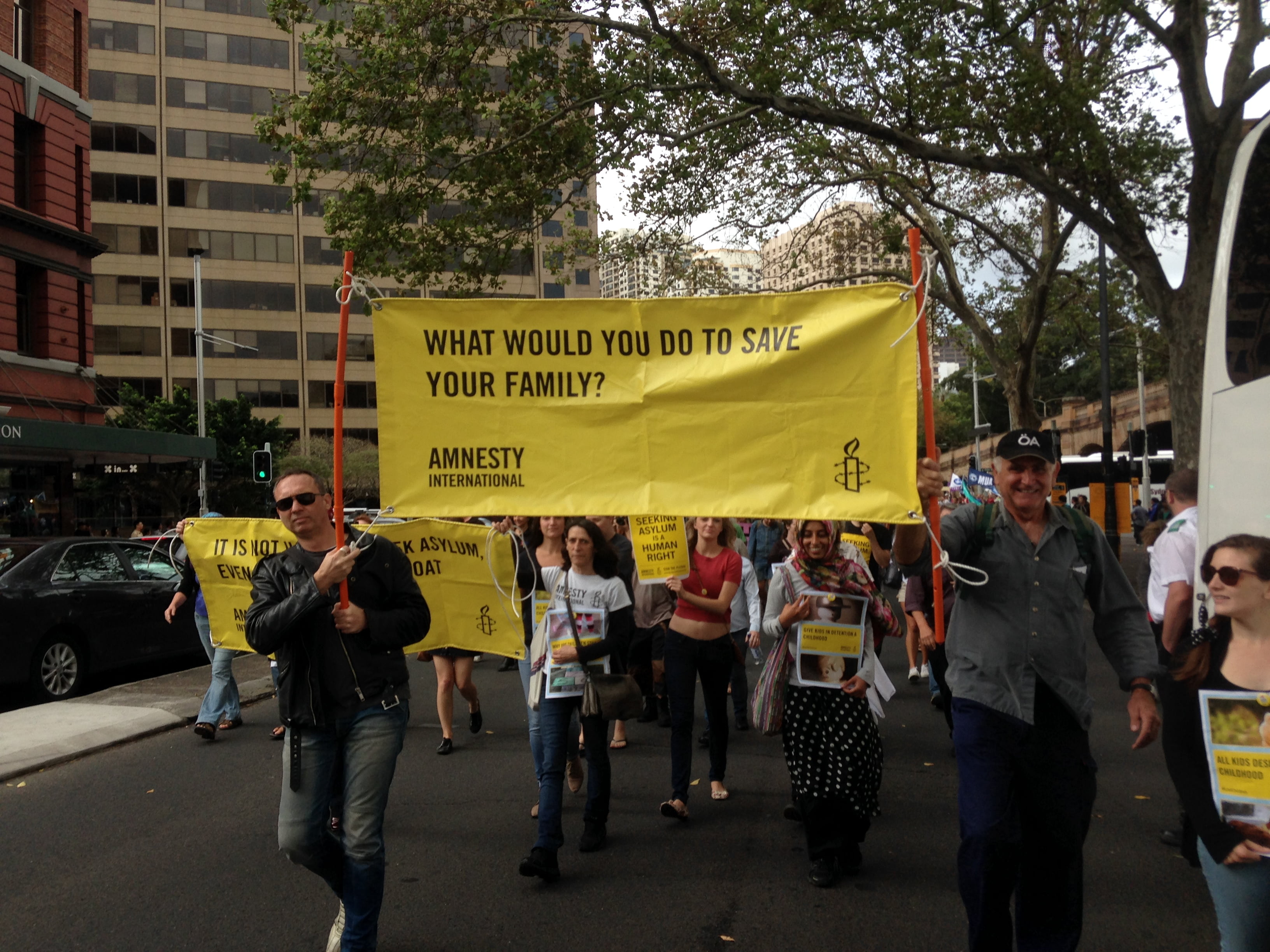
Victorian Action Centre staff along with Rebecca Langley from the CIE Advisory Group and the Branch President, Marcio, at the NAIDOC Week March in their area. QLD activists in Townsville, Jenny, Jeanie and Paul, are pictured below behind the Amnesty banner getting ready for their NAIDOC Week parade.

In South Australia, the Unley group held a stall at NAIDOC week celebrations and Meaningful Movies also hosted a film screening of Star Stories of the Dreaming.

Check out the Amnesty events page to see what’s coming up in 2017 or see other ways you can celebrate the day.

Australian government to support Trump’s “extreme vetting”

Sir Mo Farah perhaps worded it best when he said: “The Queen made me a knight, Donald Trump made me an alien,” in response to a US ban on refugees from predominantly-Muslim countries.

In a move President Trump claimed was “extreme vetting” to “keep terrorists out”, the new US President signed an executive order to stop all refugee arrivals into the United States for four months – and Syrians indefinitely.

This is devastating news for the adults and children fleeing danger in countries such as Iran, Iraq, Syria and Somalia and has been met with disbelief, chaos and extreme distress. Thousands of protesters marched across the US over the weekend in opposition to the order.

While other world leaders showed their solidarity, Prime Minister Turnbull and senior members of his cabinet have refused to condemn Trump’s actions. Foreign Minister Julie Bishop went as far as to say the Australian Government will support Donald Trump’s “strong immigration and border protection policies.”

“While we’re seeing global condemnation by many world leaders, our Prime Minister has once again failed to live up to values of decency and a fair go for all, instead taking Australia’s well-trodden path of supporting cruel and inhumane policies,” said Dr Graham Thom, Refugee Coordinator at Amnesty International Australia.

“The Australian Government once again needs reminding that this is about vulnerable people who are seeking safety. Hateful xenophobic rhetoric both at home and overseas must be condemned by all politicians, not supported.”

Refugee resettlement deal now uncertain

Amnesty International is calling on the government to define details of the agreement with the USA to resettle refugees from Nauru and Manus Island, following news of the suicide attempt of a refugee teen on Nauru.

Mr Turnbull told reporters in Port Lincoln on Saturday: “You will have seen the executive order that has been published today and we are very confident and satisfied that the arrangement, the existing arrangements will continue.”

However, Thom says vague statements aren’t enough.

“The people on Nauru and Manus Island have suffered enough at the hands of Australia’s deliberately cruel policies, the vague state of the arrangement and lack of information being provided to them in the current turmoil is deeply distressing,” said Thom.

Photo from Dulles International Airport of Muslim Ban Protest © Geoff Livingston/Flickr

“The mental health and wellbeing of the people on Nauru and Manus Island is paramount and Prime Minister Turnbull must immediately provide clarity and commit to finally resolving the unsustainable situation that is offshore detention and immediately get the people off the islands.

Amnesty International is making the following calls to the Australian Government:

  • Show global leadership by publicly and strongly speaking out against President Trump’s discriminatory refugee ban
  • Define details of the agreement with the USA to resettle refugees from Nauru and Manus Island
  • Help the people who Trump has rejected by increasing Australia’s annual humanitarian intake to 30,000 people

The Australian Government must condemn not support Trump’s hateful actions

The Australian Government’s refusal to condemn President Trump’s hateful actions, effectively blocking tens of thousands of people seeking safety, must be called out for what it really is – shameful, Amnesty International said.

According to media reports, in response to Trump’s Executive Order banning entry to the USA for refugees from war-torn countries such as Syria, Prime Minister Turnbull and senior members of his cabinet have refused to condemn Trump’s actions, with Foreign Minister Julie Bishop going so far as to say the Australian Government will support Donald Trump’s “strong immigration and border protection policies.”

“While we’re seeing global condemnation by many world leaders our Prime Minister has once again failed to live up to values of decency and a fair go for all, instead taking Australia’s well-trodden path of supporting cruel and inhumane policies.”

Dr Graham Thom, Refugee Coordinator at Amnesty International Australia

“Australia’s shameful response beggars belief. While we’re seeing global condemnation by many world leaders our Prime Minister has once again failed to live up to values of decency and a fair go for all, instead taking Australia’s well-trodden path of supporting cruel and inhumane policies,” said Dr Graham Thom, Refugee Coordinator at Amnesty International Australia.  

In light of the Australian Government’s pitiful response, Amnesty International calls on the Government to condemn President Trump’s Executive Order for what it is – a cruel, inhumane and deeply misguided decision. A clear violation of international law.

“We believe that the Australian Government once again needs reminding that this is about vulnerable people who are seeking safety. Hateful xenophobic rhetoric both at home and overseas must be condemned by all politicians, not supported,” said Graham Thom.

Amnesty International is making the following calls to the Australian Government:

> Show global leadership by publicly and strongly speaking out against President Trump’s discriminatory refugee ban

“Donald Trump’s Executive Order barring the world’s most vulnerable people from seeking safety is hateful politics, blatant discrimination on the basis of nationality and religion,” said Graham Thom.

“Australia has proudly maintained a non-discriminatory migration program over the last 40 years, has provided additional places for Syrian and Iraqi refugees in response to the ongoing crisis and will continue to increase its humanitarian program over the next two years. Yet in the face of a government that has chosen to do the exact opposite it has gone silent.”

“Today’s refugee situation is a global challenge where all governments must step up. Failing to speak out due to the fact that Australia is relying on the USA to sort out the mess that is Australia’s offshore detention system is disgraceful.

“Deliberately cruel policies and shirking responsibility for some of the world’s most vulnerable people will not solve this global situation and supporting it shows just how out of step the Australian Government is with global needs.”

> Define details of the agreement with the USA to resettle refugees from Nauru and Manus Island

“Prime Minister Malcolm Turnbull must immediately provide details of exactly what will or will not go ahead with the arrangement with the USA,” said Graham Thom.

“The people on Nauru and Manus Island have suffered enough at the hands of Australia’s deliberately cruel policies, the vague state of the arrangement and lack of information being provided to them in the current turmoil is deeply distressing.

“The mental health and wellbeing of the people on Nauru and Manus Island is paramount and Prime Minister Turnbull must immediately provide clarity and commit to finally resolving the unsustainable situation that is offshore detention and immediately get the people off the islands.

“The fairest and quickest way to do that remains bringing them to Australia immediately to process their asylum claims and welcome refugees into our community.”

> Help the people who Trump has rejected by increasing Australia’s annual humanitarian intake to 30,000 people

“Trump’s hateful actions are devastating for the adults and children fleeing danger in countries such as Iran, Iraq, Sudan, Syria, Libya and Somalia. These men, women and children are the victims of the same terror President Trump claims he wants to fight against,” said Graham Thom.

“Now more than ever before Australia must step up, fill the gaps and play our part in sharing this global responsibility.

“The Australian Government must offer safety to more people by increasing our annual refugee intake to a minimum of 30,000 people.”

Trump’s policy decisions blocking refugees puts hateful rhetoric into action

In reaction to President Trump’s Executive Order to effectively prevent refugees from seeking resettlement in the USA, Salil Shetty, Secretary General at Amnesty International said:

“President Trump’s Executive Order effectively blocking those fleeing war and persecution from war-torn countries such as Syria, from seeking safe haven in the USA are an appalling move with potentially catastrophic consequences.

“Some of our worst fears about the Trump administration have already been realised. With the stroke of a pen, President Trump has put his hateful xenophobic pre-election rhetoric into action by singling out people only of the basis of their religion.

“These men, women and children are the victims of the same terror President Trump claims he wants to fight against. The irony beggars belief.

Salil Shetty – Secretary General at Amnesty International

“These men, women and children are the victims of the same terror President Trump claims he wants to fight against. The irony beggars belief. It is particularly ironic that the USA has directly contributed to the instability in many places which is forcing people to flee.

“Denying protection to people in need is not the answer to the worst refugee crisis since World War II. Instead of slamming the door in the face of those who have no choice but to flee their homes, the Trump administration should remember that the USA is a country also built largely by migrants and refugees.

“This callous and deeply misguided decision could also set an appalling precedent at a time when countries are looking for ways to close off refugee flows.”

5 things you won’t believe could get you locked up around the world

Here at Amnesty International Australia, we’re outraged on a daily basis by countless cases of men and women being arrested for doing things that we take for granted – like tweeting about the government or sharing thoughts about a human rights issue.

Our human rights are universal and when they’re blatantly violated, we’ve got something to say about it.

We take a look at five things that you or someone you know could have done recently that could land you in jail in certain parts of the world – and the individuals who risked imprisonment to stand up for their rights.

Egyptian photojournalist Mahmoud Abu Zeid, known as Shawkan, in court on 10 May 2016. © Ayman Aref Saad
  1. Taking a photograph

Photojournalist Shawkan has been imprisoned for over three years in Egypt just for documenting the news. He was covering a sit-in in Cairo in August 2013 when security forces stormed in. “It was like a Hollywood movie,” he wrote later. “There were bullets, tear gas, fire, police, soldiers and tanks everywhere.” When they realised Shawkan was a journalist, photographing the violence that resulted in over 1000 deaths, officers forcefully arrested him. We have been taking action for Shawkan since, to make sure justice is served.

  1. Posting on Facebook

Bangladeshi student Dilip Roy
Dilip Roy © Private

Don’t like a decision your government has made? You’d probably shoot out a Facebook message to your friends expressing your opinion without thinking twice, however that same act landed Bangladeshi student Dilip Roy in prison last year.

Police arrested Dilip for two Facebook posts criticising the Prime Minister’s support for a new coal-fired power plant. Environmental activists like Dilip believe the plant could damage the country’s mangrove forest. Dilip spent more than two months in jail without charge over these posts, but was later granted bail thanks to the 2,000 Amnesty International Australia supporters who took action for his freedom.

  1. Forwarding an SMS joke

Fomusoh Ivo Feh was arrested on 13 December 2014 in Limbe, Cameroon after sending a sarcastic text message about Boko Haram to his friends. As a student studying in Buea, a town in South West Cameroon, Fomusoh Ivo would often joke around. He sent his school friends a silly bad taste message which read ‘Boko Haram is recruiting young people from 14 years old, with a GCE O level’. One of his friend’s uncle saw the SMS and showed it to the police who arrested Fomusoh. On 14 January 2015, Fumosoh was transferred to the main second prison of Cameroon which houses suspected terrorists. Fomusoh is being tried by the military tribunal and is facing death penalty under Cameroonian anti-terror law
Fomusoh Ivo Feh © Amnesty International

Fomusoh Ivo Feh, a young student from Cameroon is now residing in prison because he forwarded on a harmless text message. Ivo received a text from a friend which read: “Boko Haram recruits young people from 14 years old and above. Conditions for recruitment: 4 subjects at GCE, including religion”. His friend’s message was a comment on how difficult it is to find a job in Cameroon – even in an armed group –without being highly qualified.

Ivo forwarded the message to a friend, who sent it to another friend in secondary school. A teacher saw the text and showed it to the police. Ivo, his friend and the young student were all arrested and sentenced to 10 years in prison for “crimes” related to terrorism. Amnesty supporters have been speaking up for Ivo since then in the hopes that he will be set free.

  1. Waving a flag

Johan Teterissa © Amnesty International

You read that correctly: you could be imprisoned for waving a flag. In 2007, primary school teacher Johan Teterissa led a group of 22 people in a peaceful protest in front of Indonesia’s president. They performed a traditional war dance before unfurling a “rainbow” flag – a historical symbol of independence for the people of Maluku province. Following an unfair trial and torture, all the men were convicted of “rebellion”. Johan, as the leader of the protest, was sentenced to life in prison. This was later reduced to a 15-year sentence, which we are asking to be immediately dismissed.

  1. Suffering a miscarriage

A woman's silhouetted shadow against a wall
© leminuit

Having a miscarriage can be an extremely traumatic experience, but to make matters worse, it can even land you in prison in some parts of the world. In March 2014, then 25-year-old Belén went to a state hospital in San Miguel de Tucumán in northern Argentina, complaining of severe abdominal pains. Belén was told that she was in fact 22 weeks pregnant and experiencing a miscarriage. Medical staff who later found a foetus in a hospital bathroom, reported Belén to the police, claiming that she had induced an abortion. Belén was arrested and subsequently held in pre-trial detention for more than two years.

In July last year, Amnesty handed more than 120,000 petitions from supporters across the globe to local authorities, urging for Belén to be released. In August, she finally walked free. “Belén’s release is extremely positive and long-awaited news,” said Mariela Belski, Executive Director at Amnesty International Argentina. “Belén should have never been held behind bars in the first place, having a miscarriage is not a crime.”

Nobody should face prison for suffering a miscarriage, sharing political views or peacefully protesting. Want to speak up for people whose freedom is on the line?

Visit our Individuals at Risk page

What Trump’s global gag actually means for women’s rights

The image of a group of men in suits making decisions about the rights of women is becoming an emblematic sign of the backlash against our human rights, particularly those related to women’s bodily integrity and reproductive and sexual freedoms.

Just two days after the massive demonstrations for equality and against discrimination that took place in cities across the USA and around the world, President Donald Trump decided to put the rights of women at risk by reinstating the so-called “global gag rule”. The rule blocks US federal international funding for non-governmental organisations that provide abortion counselling or referrals, advocate to decriminalise abortion or expand abortion services – even though the US does not fund these services itself.

The global gag rule – also known as the Mexico City Policy – was first instated by Ronald Regan’s administration in 1984, and has been traditionally rejected by Democrat administrations only to be reinstated by Republican Presidents.

President Tump is now following a worrying tradition that has a dangerous impact on the sexual and reproductive rights, health and life of women and girls across the world, particularly those who are most at risk of human rights abuses. The gag rule during both Reagan and Bush’s administration was a barrier to comprehensive sexual and reproductive health in many parts of the Global South.

Trump’s version of the Gag rule expands the policy to all global US health funding, not just the US family planning funding through US foreign aid. This means that organizations working on other health issues, such as malaria, HIV/AIDS or maternal heath must make sure that their programs do not involve any abortion referral or information.

Many women´s rights organizations have conducted extensive research into the impact of the global gag rule. They found that the rule imposed significant cuts in funding for programs that provide family planning, HIV/AIDS treatment, emergency contraception, and other reproductive health-care services, alongside abortion services and information, particularly in Africa and Latin America.

The effects of the gag rule

A 2006 study by the Association for Women’s rights in Development (AWID) on the status of funding for women’s rights – “Where is the Money for Women´s Rights?”, also found that the women´s rights groups felt the gag rule affected women in particular ways, including by violating their rights to freedom of speech, association, and their ability to participate in the strengthening of their civil societies and democratic institutions.

This disastrous US policy also prevented health providers from complying with basic medical ethics. In countries where abortion was legal, for example, they could not provide the full range of legal reproductive health care nor could they refer or counsel parties as required by medical ethics. As a direct result, the Global Gag Rule will imperil women’s health and lives both in countries where abortion is legal, as well as where it is illegal.

In 2011, a Stanford University study found that organizations in Sub-Saharan Africa that refused to sign the global gag rule lost USAID funding, and as a result abortion rates increased in these countries to more than twice the rate prior to the Bush’s administration.

Evidence from countries where abortion services are safe, legal and accessible, shows that abortion related deaths and complications are greatly reduced. However, the global gag rule has thwarted in the past the efforts of abortion reform advocates to change restrictive laws.

The consequences of unsafe abortions has been particularly acute in Latin America and the Caribbean, the region with the highest rates of unsafe abortions, according to the World Health Organization data.

“The Global Gag Rule will imperil women’s health and lives both in countries where abortion is legal, as well as where it is illegal”

The Guttmacher Institute calculates that between 2010 –2014, an estimated 6.5 million induced abortions occurred each year in Latin America and the Caribbean, and according to the Center for Reproductive Rights, more than an estimated 2,000 Latin American women die every year from unsafe abortions.

Abortion is completely banned in seven countries in the region – Chile, the Dominican Republic, El Salvador, Haiti, Honduras, Nicaragua and Suriname – even when the health or life of a woman or girl depend on it. Legal abortion upon request during the first trimester is available in Cuba, Mexico City, and Uruguay.

In most other countries in the region, even when legal, accessing life-saving abortions is incredibly difficult as some health professionals will refuse to practise them on ideological grounds.

The consequences of criminalising women who seek an abortion are well known: high maternal mortality and morbidity rates due to unsafe abortions that disproportionately affect women and girls living in poverty. Many women are forced to spend years behind bars after being accused of having an abortion.

Persistent gender discrimination and inequality in most countries across Latin America and the Caribbean is at the root of women and girls’ inability to exercise their human rights.

Discriminatory stereotypes remain deeply rooted in a patriarchal culture which still relegates women to the sphere of social reproduction – a culture widely promoted, in great part, by religious organisations including the Catholic Church and evangelical churches.

In past years, a second stronghold of opposition to women’s rights progression in the region has come from the United States.

“With the reinstatement of the global gag rule, the future for women and girls and their real chances of being able to exercise their human rights are tragically uncertain”

The increasing influence of anti-abortion groups within the Republican Party has created a drift towards anti-abortion policies in some states. This has affected pro-choice and women’s rights organisations both directly, by the imposition of the gag rule, and also indirectly, through the legitimacy and strength given to anti-abortion discourses and proposals.

Latin American politicians have not been indifferent to these trends and have thus sought the support of US conservative forces and anti-abortion groups to strengthen their chances of winning office by negotiating the rights of women and proposing policies and legislation to criminalise abortion and further restrict women´s sexual and reproductive rights.

While discrimination against women is evident in almost all areas of life, it is in the area of sexual and reproductive health that it reaches shocking levels. It is the regulation of women’s sexuality and reproduction that most clearly reveals harmful gender stereotypes and bias.

Unfortunately, in this adverse regional context, and with the reinstatement of the global gag rule, the future for women and girls and their real chances of being able to exercise their human rights are tragically uncertain.

Today more than ever, a strong stand against these clear violations of women’s human rights needs to prevail. It is time to unite in action against discrimination and violence.

This article was originally published by IPS.

We will fight Trump’s effort to close U.S. borders

U.S. President Donald Trump has issued several executive orders related to immigration, including constructing a wall on the border with Mexico, building more detention centers, and stripping sanctuary cities of federal funding.

Protect communities’ safety

“We will fight this dangerous move with everything we’ve got,” said Margaret Huang, executive director of Amnesty International USA.  “This wall would say that those from outside the United States, especially from Latin America, are to be feared and shunned – and that is just wrong.”

“Our members and supporters will demand that Congress protect people seeking asylum, including those fleeing violence in Latin America. We won’t let President Donald Trump create refugee camps along the U.S./Mexico border like the ones we’ve seen in Greece, Australia, and other countries.”

“Sanctuary city policies help protect people’s human rights in part by ensuring that the proper authorities are empowered to do their job. Local law enforcement should be working with communities to protect their safety and not acting as immigration agents.”

Humanitarian crisis

Amnesty International’s “I Welcome” campaign protects the rights of refugees and people seeking asylum by documenting human rights abuses and pressing governments to do their fair share to address this humanitarian crisis. In the U.S., Amnesty International is working to protect refugee resettlement programs and access to asylum at the U.S southern border, in particular the harsh practice of automatically detaining children and their mothers who are seeking asylum and other practices that undermine meaningful access to protection.

President Trump is also reportedly planning on signing executive orders regarding refugees, travel bans from Muslim-majority countries, and national security issues this week. Amnesty International will continue to monitor these and will have experts available.

Edward Snowden: ‘Your support keeps me company during the fight’

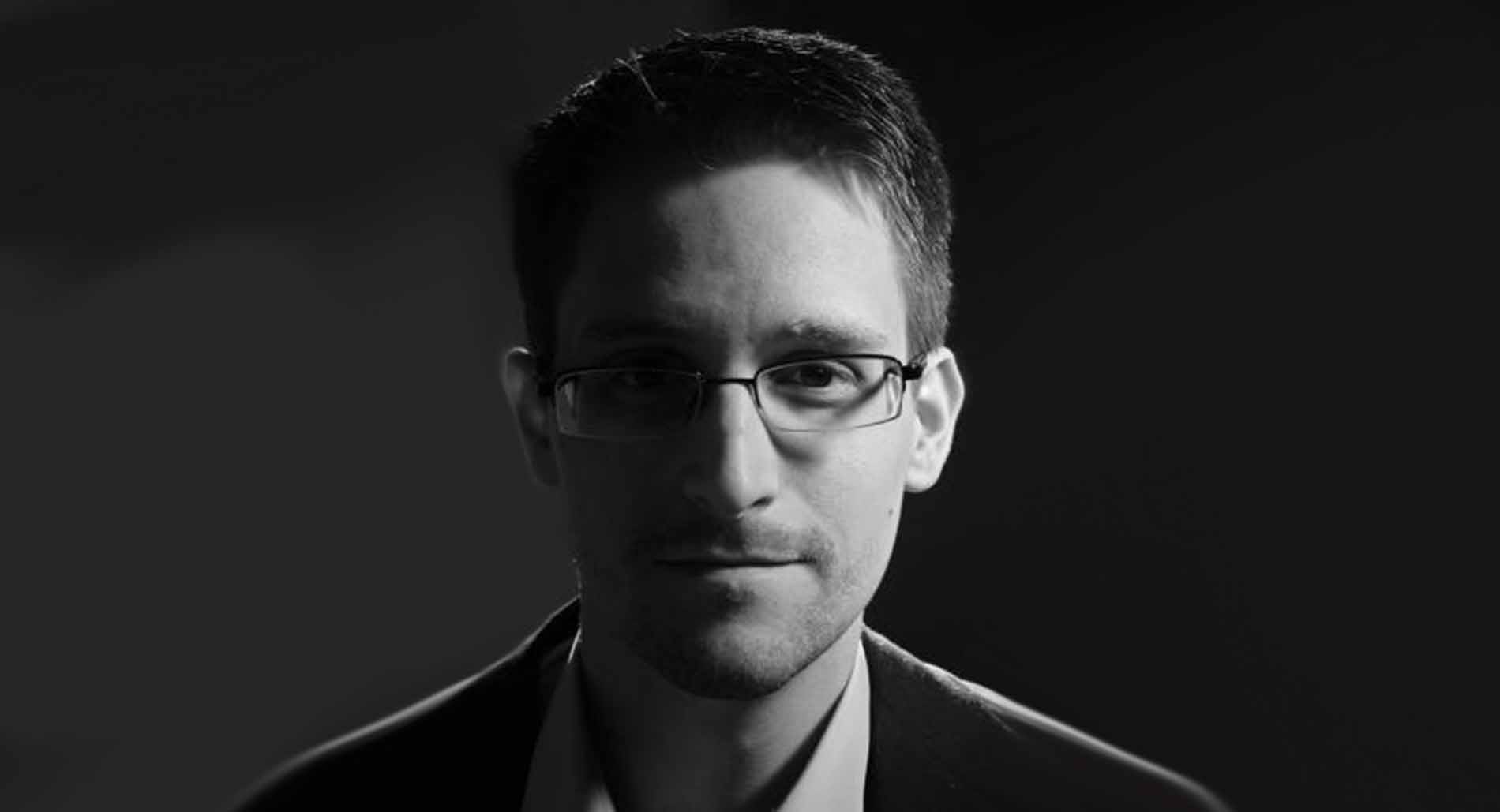
Whistleblower and human rights hero Edward Snowden thanks the more than 1 million supporters who raised their voices for him.

“I want to thank you, humbly and with a full heart, for your unwavering advocacy and support. More than a million of you came together to say in one voice that the truth matters. My gratitude is beyond expression.

Though the powers of our day may keep me from home for a few more years, your support keeps me company during the fight. With each action, you are authoring a story of how ordinary people, good and gracious, come together in the United States and around the world to change our collective future. There is no honor greater than standing shoulder-to-shoulder with your generous spirit.

“There is no honor greater than standing shoulder-to-shoulder with your generous spirit”

Edward Snowden

It is this same spirit that set free Chelsea Manning, who will finally come home from seven long years in prison for the crime of telling the truth. It will be the force that preserves our civil liberties, not just over the next four years, but for the enduring generations. It is the force that inspires me to never give up, and ask you to commit to the same.

In that unstoppable spirit, I invite you to stand with me one more time to protect the values that represent the real greatness of our age. Make no mistake, my friends: There is injustice in this world, but it will not last forever.

We will make sure of it.”

— Edward Snowden

A balloon bearing the effigy of Edward Snowden is attached to a Statue of Liberty replica © cyril marcilhacy/Cosmos

On 13 January 2017 our partners, the Pardon Snowden campaign, handed more than 1.1 million signatures to the US White House calling on President Obama to use the presidential pardon for Edward Snowden. Amnesty supporters from 110 countries worldwide stood up for Snowden as part of our Write for Rights campaign, tweeting, writing letters, and signing our petition. Thousands wrote solidarity messages as well.

Although Obama did not, in the end, pardon Snowden, he did decide to free Chelsea Manning – a huge victory for those defending the rights of whistleblowers everywhere.