‘Why I didn’t celebrate Australia Day’

For me, like many other Aboriginal and Torres Strait Islander people, “Australia Day” is not a day of celebration.

Before I understood the date’s significance, I went to Triple J Hottest 100 parties and barbeques with Australian flags. But then I learned that 26 January marked the beginning of massacres, oppression, the stealing of my people’s children and land.

I want to celebrate this country, but it should be on a date that includes everyone. Changing the date would acknowledge Australia’s harmful past and invasion’s ongoing legacy – but also that we are moving forward, together, towards a fairer and more just Australia.

It’s not only me that wants this change. Indigenous people have been protesting Australia Day for at least 79 years, and many non-Indigenous people have stood beside us, as proud allies. We yarned with nine other Australians, from all walks of life, who didn’t wave the Australian flag this 26 January.

Trials, Ngarrindjeri musician from A.B. Original

© AB Original
© AB Original

Australia Day for millions of Australians means barbecues, lamingtons and being proud of your country. All of these things are great at the appropriate time.

Australia Day for Indigenous people is an entirely different conversation and that’s the one we wanted to continue, and in a lot of places, start.

The date January 26 to us as young black men stands for the celebration of dispossession and death of so many of our ancestors.

If a holiday that started 80 years ago is more important than acknowledging and respecting the people that were here over 60,000 years ago and their position on it, then we’ve still got a long way to go.                                               

In short, celebrating Australia is not the problem; just the date it currently falls on.

“If a holiday that started 80 years ago is more important than acknowledging and respecting the people that were here over 60,000 years ago and their position on it, we’ve still got a long way to go”

Trials

Amrita, Bundjulung / Ngapuhi woman and professional dancer

Amrita © Private
Amrita © Private

I am always open about my stance on 26 January. Over the years it has come with some really intense feedback … to ‘get over’ things, that I am whinging. People think I am personally shaming them or tearing their country or Australian-ness down. Some question heritage, others hurl abuse.

I take all this on – I love my country and I celebrate it daily, just as much as I commiserate. I’ve had a well of feelings around what it means to be in this country and be present. I choose to know my history, to check my privilege.

To quote Nakkiah Lui, “I pay these respects today (and tomorrow and everyday) and acknowledge the Aboriginal people here, because our words have meaning and power. They have the ability to change things, have conversations, to start the process of healing – they can change time in the future and dates. They cannot and will not erase the past.”

Join me to march. Don’t be shamed if you’re non-Indigenous; I will hold you, and stand by you standing by me.

Rodney Dillon, Palawa man and Indigenous Rights Advisor, Amnesty International

Rodney Dillon. © Wayne Quiliam

All Indigenous people have badly suffered the consequences of colonisation. That’s why 26 January is a hard day for all of our mob. Aboriginal people always feel sad on Australia Day – it marks the end of freedom for our people.

I want us all to talk about invasion, rather than settlement, and get to the truth of our history. Survival for us is about taking steps to address the consequences of invasion that we still face today.

We’ve got health issues, substance abuse, too many of our people are being sent to prison… Invasion was the start of these problems. There will be lifetimes, even generations, that will keep feeling them.

We can’t celebrate on that day because even now, more than 200 years later, the lessons haven’t been learned and the same mistakes are still being repeated.

Natalie Amiel, Uni Student, Melbourne

Natalie Amiel © Private

Australia Day should support diverse lives and culture. On 26 January, these celebrations condone genocide, racism and destruction of Indigenous lives and culture.

As a young person who grew up in this country, I want to feel proud on Australia Day. I want to celebrate an inclusive society surrounded by my friends and family.

This is not an option on 26 January; it is a day of mourning, not joy. I am a descendant of WWII Holocaust survivors, and I cannot imagine enduring celebrations of my ancestors’ torture, yet Indigenous people go through this on a yearly basis.

As a proud Australian, I want to celebrate this country on a day that means something positive for ALL of us – not just a lucky few.

“As a proud Australian, I want to celebrate this country on a day that means something positive for ALL of us – not just a lucky few”

Natalie Amiel

Jarrod McKenna, Teaching Pastor at Westcity Church/Co-founder of First Home Project

Invasion Day 2017
© Warriors of the Aboriginal Resistance

Changing the date is an opportunity for Australia to own what’s wrong and take another step in making things right.

Last time Noongar elder Reverend Sealin Garlett preached in our church he shared how his people’s pain is compounded by others celebrating 26 January. Afterwards I chatted to a tradie who was deeply impacted by the sermon.

He shared, “Everything changes when you see it through their eyes … I thought racism was saying horrible things, but I’ve had a hard heart. I haven’t cared. I thought it was political. But it’s really about the suffering of my brothers and sisters.”

In Australia, the new energy and feeling around changing the date is what we in the God-bothering business might call “a come to Jesus moment”. As a nation, we are being invited to journey from apathy to empathy. In renouncing indifference and white supremacy, Australia has nothing to lose and everything to be liberated from.

Katie, Pre-service Teacher, Fremantle

Katie © Private

I used to celebrate Australia Day, with a flag, and watching the fireworks down on the Perth foreshore. Then it started dawning on me how wrong it was to celebrate the day that the Aboriginal peoples of this country were invaded.

“People say that Aboriginal people should ‘get over it’, that ‘it was years ago’. But we aren’t asked to forget our history – why don’t we get over our war veterans and their struggles?”

Katie

This was the day that massacres, abuse, being locked up, and genocide began. People say that Aboriginal people should “get over it”, that “it was years ago”. But we aren’t asked to forget our history – why don’t we get over our war veterans and their struggles? I can’t do that – all my grandparents were part of the World War II and my grandfather was killed by a roadside bomb.

This year I was excited to be able to celebrate in Freo (Walyalup) on a date chosen through consultation and consensus.


Luke Pearson, Gamilaroi man and founder of @IndigenousX

Luke Pearson © Private

Even in 1938, on the first Day of Mourning, Australia Day was referred to as the “anniversary of the whitemen’s seizure of our country”, and nothing about that sentiment has really changed that much in the decades following. It is the plain and simple truth of what 26 January represents, regardless of how you phrase it.

The Australia Day website claims that “On Australia Day we come together as a nation to celebrate what’s great about Australia and being Australian.” What’s so great about the 26 January that it would make us “come together as a nation”? What about that day says “what’s great about Australia and being Australia”?

If we want to see Australia as a colonial outpost for the British then maybe that day makes sense, but if we want to regard Australia as a ‘vibrant multicultural nation’, and if we want to regard Indigenous peoples as a core part of the modern Australian identity then it makes absolutely no sense whatsoever to have Australia Day on that date.

Daniel, Barista/Uni Student, Southern Perth

Daniel © Private
Daniel © Private

When I first moved to Australia from Mexico, as a small boy, I took for granted the simple narrative of Australia Day. It was not until I was in higher education that a thought experiment was offered to me: imagine that Australia was invaded and that a majority of your fellow countrymen, loved ones and friends were killed; and then imagine the invaders celebrating the day of invasion. Horrible, is it not?

Yet Australia Day is exactly that, celebrating the day the British invaded the land of Indigenous Australians. Australia Day is not inclusive, it celebrates the triumph of imperialism whilst rejecting the guilt that the day represents; the guilt of displacement and disempowerment of the Indigenous Australians.

It follows that if we are to have an inclusive Australia Day that the date must be changed. In what form though, I do not know.

Tracey, Community Organiser, Brisbane

I grew up celebrating Australia Day, never really thinking about what it meant to our Aboriginal and Torres Strait Island peoples.

Tracey copy; Private
Tracey © Private

But over the past 10 years I have learned a lot about Australia’s violent history, which includes genocide, slavery, dispossession and loss of self-determination.

The 26th of January marks the day these atrocities began. This date should be remembered so that these acts are not committed again, but it shouldn’t be a day of celebration.

I think we need to #ChangeTheDate so that Australia Day can be truly inclusive. It’s time we recognise and accept that 26 January will never be celebrated by the First Peoples of this country, it is a day of mourning and loss.
Agree? Find a Survival Day
event near you.

New Approach to Justice in WA Launched

The Social Reinvestment WA campaign was launched today, outlining a new approach to justice in Western Australia that would promote community safety, social wellbeing and inclusive justice for all people.

A coalition of organisations, including Amnesty International, Social Reinvestment WA is the leading advocate in tackling the overrepresentation of Aboriginal and Torres Strait Islander people in the criminal justice system.

‘Tough On Crime’ approach does not make community safer

“The current ‘tough on crime’ approach is based on the false claim that it makes our community safer,” said Daniel Morrison, Social Reinvestment WA co-chair.

“WA imprisons over 6,000 people a year and yet crime rates have increased. Imprisoning people in such massive numbers is doing nothing to make communities safer.

“The only way to reduce crime is to address social and economic disadvantage, which we know is the main cause of offending. We need to be tough on the causes of crime, and tackle the underlying causes of offending.”

“It costs an average of $334 per day to imprison an adult, but just $46 a day to supervise an adult in the community. Community approaches are not only more effective, they are also far less expensive.”

“In WA, Aboriginal and Torres Strait Islander people make up only 3 per cent of the overall population, but 40 per cent of adults and 75 per cent of children behind bars. Our approach to this issue needs to be evidence based and responsive, not sensationalised or reactive.”

‘Community safety, social wellbeing’

Social Reinvestment co-chair Glenda Kickett said, “we need to work for healthy families, we need to put into practice smart justice, we need to create safe communities.

“We need to see immediate reform of the ineffective laws and policies, like imprisoning people for unpaid fines, that cement a cycle of costly imprisonment at the expense of children, families, and community safety.

“We need to identify those communities that are most in need, and provide them with effective and culturally competent programs and services.

“WA can be a leader in promoting community safety, social wellbeing and inclusive justice for all people.”

Glenda Kickett is a Noongar woman who currently works for the Australian Childhood Foundation, lectures at the University of Western Australia, and is the chairperson of NAIDOC Perth. Daniel Morrison is a Noongar Yamatji man, and the CEO of the Aboriginal Alcohol and Drug Services. They both serve as co-chairs of Social Reinvestment WA.

Women’s March: ‘We’ve shown we’re a force to be reckoned with’

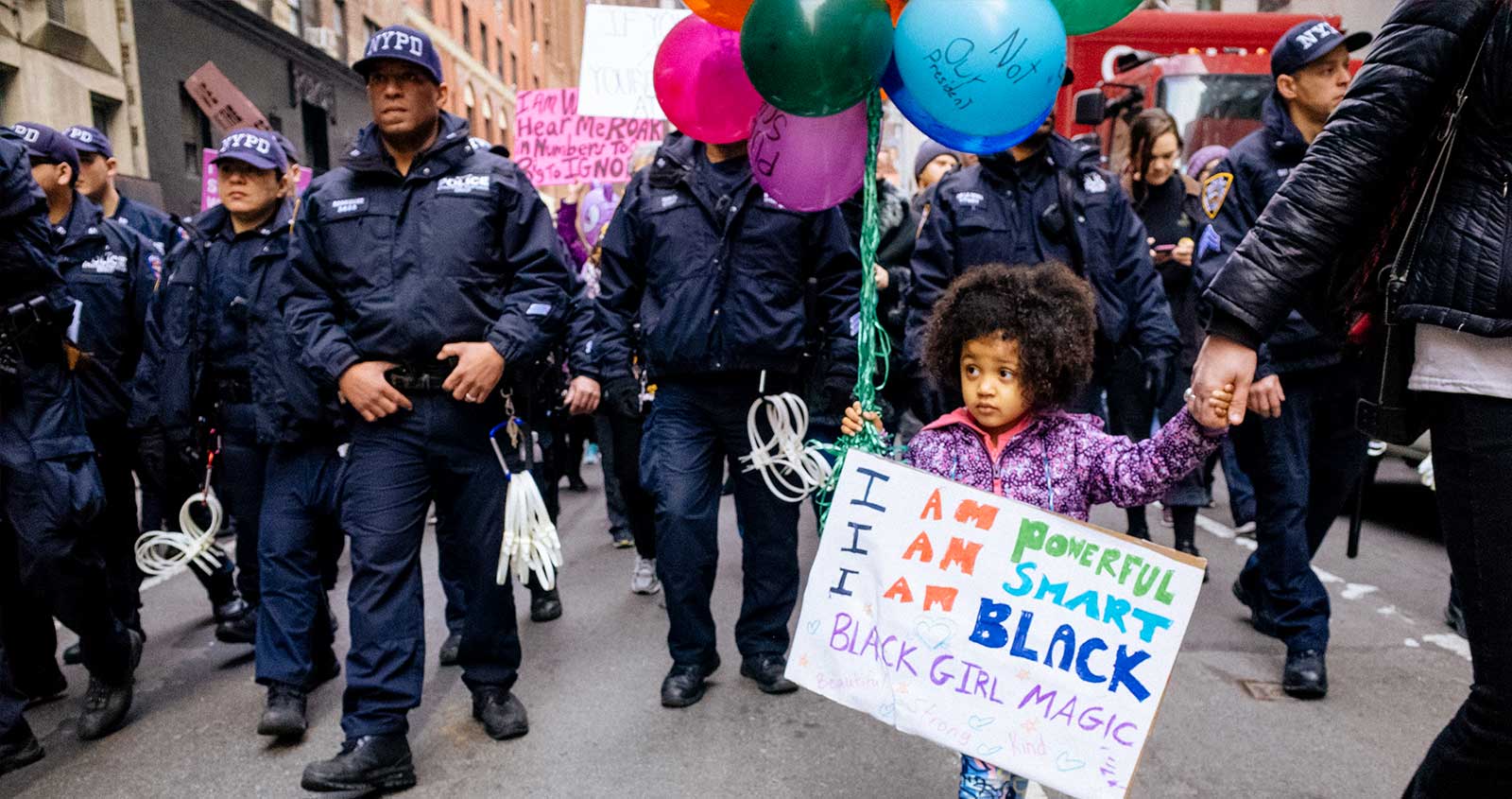
Millions of women, men, children and pets around the world took to the streets over the weekend to voice their opposition to the hateful rhetoric of President Donald Trump and to stand up for gender equality.

Over 600 rallies in 60 countries took place to coincide with Trump’s first day in office. In Washington DC alone, an estimated 500,000 people attended The Women’s March on Washington, which Amnesty International co-sponsored.

“We’re proud to stand with people from all across the country to declare that women’s rights are human rights and to demand that the new administration and Congress protect everyone’s human rights,” said Margaret Huang, executive director of Amnesty International USA.

Our own National Director Claire Mallinson braved the chilly conditions to join the march in London and in Australia and New Zealand, thousands marched through the capital cities, including an estimated 3,000 who marched through Hyde Park in Sydney.

Women’s March New York City © mathiaswasik/Flickr

Sydney Women’s March organiser Mindy Freiband told ABC: “We are marching today in solidarity with woman all over the world against sexism, bigotry and racism.”

Claire Mallinson, London © Amnesty International

While the A-listers gave the Trump Inauguration a wide berth, their numbers were strong in support of the cause. In New York, actresses Helen Mirren, Cynthia Nixon and Whoopi Goldberg joined the crowd of protesters, while in Washington, America Ferrera, Scarlett Johansson and Madonna (rather controversially) spoke out for women’s rights.

Hannah Harborow, Campaigns Manager at Amnesty International Australia said: “Once again, we’ve shown the world we’re a force to be reckoned with – that we’re strong, independent and equal. And no one, especially President Trump, can stand in our way.

“We will keep demanding an end to violence, abuse, exploitation and control until the day comes we are not only seen, but live, as equals.”

Want to keep the momentum going? Here are 10 actions you can take in 100 days.

Have your say: Did you March?


Why we’re needed more than ever under Trump’s administration

By Margaret Huang, executive director at Amnesty International USA

On the 20th of January, the eyes of the world will be on Washington, DC as a new U.S. president takes the oath of office. Donald J. Trump and his administration will assume responsibility for upholding the laws of the land – including the United States’ obligations to protect human rights at home and abroad.

However, if Trump implements his campaign rhetoric of fear and hate in US policies, there is a real risk that the vast power of the U.S. government could have devastating impacts on people’s human rights. Trump’s campaign proposals – including creating a Muslim registry and barring entry to the United States based on religion – recall shameful chapters of U.S. history like the imprisonment of Japanese Americans during World War II. In his speeches, he showed disdain for women and people of color, people with disabilities, and attempted to intimidate critics and journalists.

Since his election, Trump has also nominated cabinet appointees whose past records and testimony raise concerns about the administration’s future policies. Rex Tillerson, the potential Secretary of State, was reluctant to criticise human rights violations in a range of countries, including those with whom he has had a history of close business ties as CEO of ExxonMobil.

“In his speeches, he showed disdain for women and people of color, people with disabilities, and attempted to intimidate critics and journalists”

Senator Sessions, the nominee for Attorney General, has repeatedly opposed policies that would protect the rights of women, people of color, and the LGBTI community.

Leaders must be held accountable

The scapegoating and fear-mongering shown during his campaign has no place in the United States or anywhere else in the world. Amnesty International has worked to hold world leaders – including every U.S. president – accountable for upholding human rights for over its 55-year history. Donald Trump will be no exception.

As president, Trump must unequivocally abandon his hateful statements and publicly reject racism and discrimination. Failing to do so would not only have consequences for those in the U.S., but for people all over the world.

“Amnesty International has worked to hold world leaders — including every U.S. president — accountable for upholding human rights for over its 55-year history. Donald Trump will be no exception”

Trump will be taking office in the midst of one of the largest refugee crises in generations. More people are fleeing violent conflict than at any other time since WWII. Millions have been forced from their homes upon fear of death if they return. The United States must share in the responsibility of protecting refugees.

Trump has repeatedly resorted to false assertions about people seeking asylum, which are based on ugly and demonstrably bogus stereotypes. He must renounce this language and honor U.S. commitments to refugees.

Should the U.S. turn its back on refugees other countries around the world will cite this as an excuse for shirking their obligations under international law. The result would be the continued global tragedy of having 21 million refugees with nowhere to go, including the prolonged human misery of women, men and children living in camps without schools, jobs, and adequate food and medical care.

Attacks on human rights defenders on the rise

Trump is also taking office at a time when attacks on human rights defenders are on the rise. From Moscow to Cairo, from Standing Rock to Hong Kong, those who stand up for their rights are being persecuted, arrested and attacked.

“It is absolutely crucial the U.S. government respect, protect and fulfill the human rights of all people, without discrimination of any kind”

Trump’s vicious repudiation of those who disagree with him are an ominous sign. As president, he must leave these intimidating tactics behind and commit to respecting and protecting the rights of peaceful dissidents and human rights defenders -– including those who may criticise him – in order to protect the right to free expression.

The international human rights obligations that the president is duty-bound to uphold are significant and cannot be dismissed. It is absolutely crucial the U.S. government respect, protect and fulfill the human rights of all people, without discrimination of any kind.

We have seen what happens when world leaders disregard these obligations and act without conscience. Should that happen again in the USA, it would only further embolden other leaders’ belief that their own human rights abuses can continue unchecked. It is time for all of us to stand together and demand that President Trump and his administration respect human rights for all.

Show your solidarity this Survival Day

Australia Day is not a celebration for all Australians. Aboriginal and Torres Strait Islander peoples mark this day as Survival Day. Since colonisation, Aboriginal and Torres Strait Islander peoples have been subjected to government-sanctioned violence, policies that removed children from families, the removal of people from their lands and the denial of self-determination.

This year on Survival Day, let’s stand in solidarity with Aboriginal and Torres Strait Islander peoples and recognise the survival and resilience of the oldest living culture in the world.

We encourage our staff and supporters to support local Survival Day events. Contact event organisers and volunteer your time. Participate in a local event, or if appropriate, host a Community is Everything stall at one. Better yet, bring your family and friends along

check out Survival Day events around the country

“26 January is a hard day for all of our mob. Aboriginal people always feel sad on Australia Day; it marks the end of freedom for our people,” says Amnesty International’s Indigenous Rights Advisor and Palawa man, Rodney Dillon.

Over the last 12 months we have seen a strong push around the country to #changethedate. Examples include the change.org petition calling on Triple J to move the date of the Hottest 100 countdown. The Saturday Paper has a changedate petition calling on musicians, artists, families and businesses to not celebrate Australia Day. The Fremantle Council are hosting a community event on 28 January instead of the 26th. And artists, AB Original released the song titled January 26 – you can vote for it here for the hottest 100 to support a date change by triple j. These moves are positive steps towards finding an alternative date that unites all Australians in celebration.

“26 January is a hard day for all of our mob. Aboriginal people always feel sad on Australia Day; it marks the end of freedom for our people.”

Rodney dillon, palawa man and Indigenous Rights Advisor

The impact of colonisation is still felt by Aboriginal and Torres Strait Islander peoples today, including through poorer outcomes in health and education, and an over-representation in the justice system. Aboriginal and Torres Strait Islander people and communities have effective solutions to many of the issues that their communities are faced with. It’s time our government listen and learn from communities who are doing great work.

There are signs of progress. Youth justice is finally on the political agenda! Let’s continue our work together to ensure that 2017 is the year that meaningful action is taken.

It’s time to stand together and show our support this Survival Day.

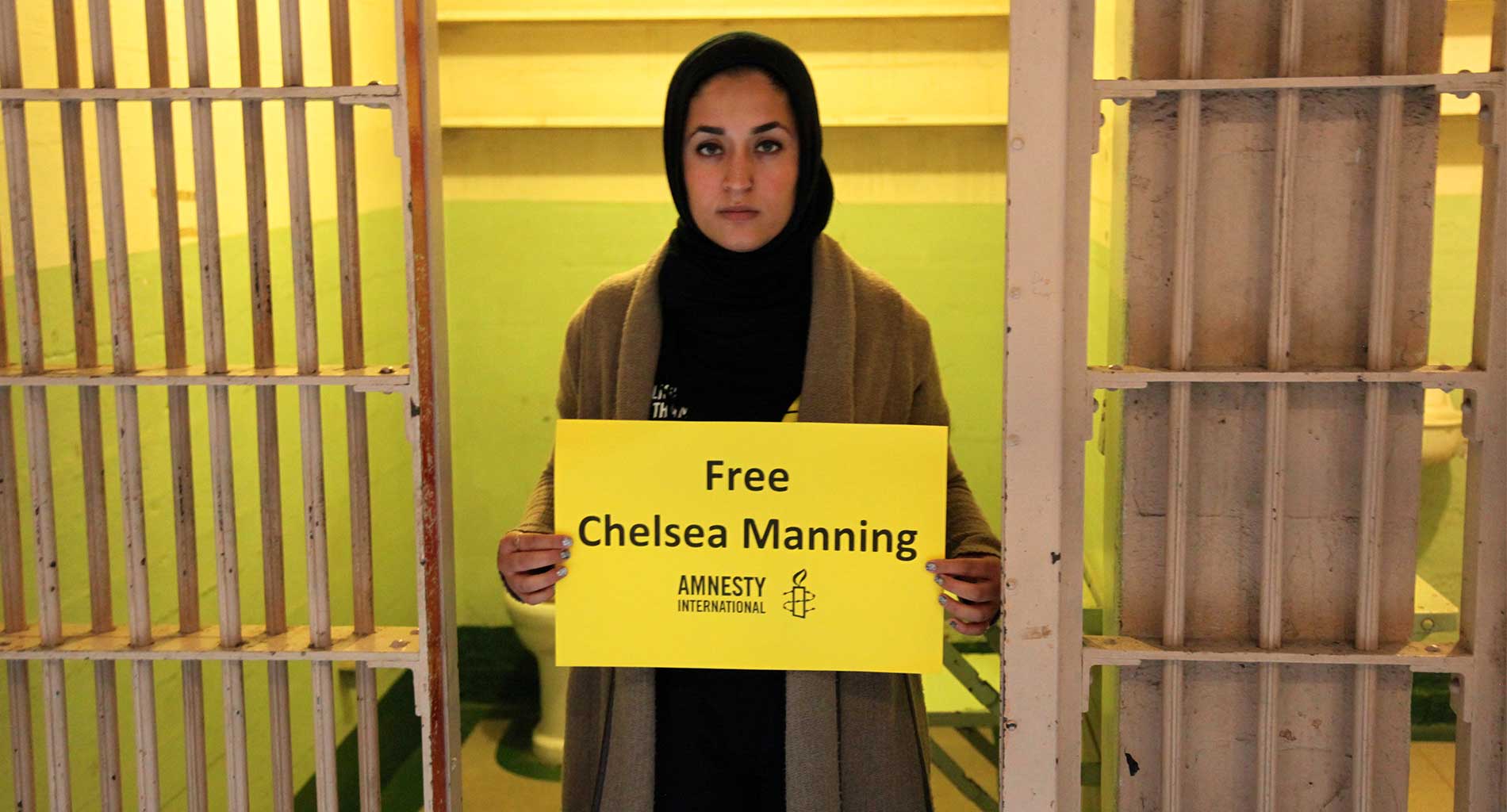
Chelsea Manning: ‘Why speaking out is worth the risk’

In the final days of his term, President Obama commuted the sentence of WikiLeaks source Chelsea Manning. Manning had been serving a 35-year sentence in a maximum security prison after releasing documents to the website WikiLeaks which revealed potential human rights violations by the U.S. military. In 2015, she told us why speaking out against injustice can be a once-in-a-lifetime opportunity.

Why did you decide to leak documents about the wars in Iraq and Afghanistan?

These documents were important because they relate to two connected counter-insurgency conflicts in real-time from the ground. Humanity has never had this complete and detailed a record of what modern warfare actually looks like.

Once you realise that the co-ordinates represent a real place where people live; that the dates happened in our recent history; that the numbers are actually human lives – with all the love, hope, dreams, hatred, fear, and nightmares that come with them – then it’s difficult to ever forget how important these documents are.

“Every now and then you come across a significant choice. Do you really want to find yourself asking whether you could have done more, 10-20 years later?”

What did you think the consequences might be for you personally?

In 2010, I was a lot younger. The consequences felt very vague. I expected the worst possible outcome, but I didn’t have a strong sense of what that might entail. But I expected to be demonised and have every moment of my life examined and analysed for every single possible screw-up that I’ve ever made – every flaw and blemish – and to have them used against me in the court of public opinion. I was especially afraid that my gender identity would be used against me.

What was it like to feel the full force of the US justice system and be presented as a traitor?

It was particularly interesting to see the logistics involved in the prosecution: the stacks of money spent; the gallons of fuel burned; the reams of paper printed; the lengthy rolls of security personnel, lawyers, and experts – it felt silly at times. It felt especially silly being presented as a traitor by the officers who prosecuted my case.

I saw them out of court for at least 100 days before and during the trial and developed a very good sense of who they were as people. I’m fairly certain that they got a good sense of who I am as a person too. I remain convinced that even the advocates that presented the treason arguments did not believe their own words as they spoke them.

“The numbers are actually human lives – with all the love, hope, dreams, hatred, fear, and nightmares that come with them”

Many people think of you as a whistleblower. Why are whistleblowers important?

In an ideal world, governments, corporations, and other large institutions would be transparent by default. Unfortunately, the world is not ideal. Many institutions begin a slow creep toward being opaque and we need people who recognise that. I think the term “whistleblowers” has an overwhelmingly negative connotation in government and business, akin to a “tattle-tale” or “snitch”. This needs to be addressed somehow. Very often policies that supposedly protect such people are actually used to discredit them.

What would you say to somebody who is afraid to speak out against injustice?

First, I would point out that life is precious. In Iraq in 2009-10, life felt very cheap. It became overwhelming to see the sheer number of people suffering and dying, and the learned indifference to it by everybody around me, including the Iraqis themselves. That really changed my perspective on my life, and made me realise that speaking out about injustices is worth the risk.

Second, in your life, you are rarely given the chance to really make a difference. Every now and then you do come across a significant choice. Do you really want to find yourself asking whether you could have done more, 10-20 years later? These are the kinds of questions I didn’t want to haunt me.

Protecting Australians from racial discrimination

Did you know that there is a Federal Inquiry into Freedom of Speech in Australia? This was announced by the government last year after a case from Queensland failed under section 18c of the Racial Discrimination Act.

The terms of reference of the inquiry, rather than focusing on the serious threats to freedom of expression in Australia like our secrecy laws, looks at whether protections under the Racial Discrimination Act should be amended or repealed, and the Human Rights Commission’s role in conciliating these claims.

Amnesty International made a submission to the Inquiry on 23 December 2016, making a number of recommendations, including keeping current protections in the Racial Discrimination Act and setting out what we need to do about the more pressing threats to freedom of expression in Australia.

What is freedom of expression?

Freedom of expression is a fundamental human right. It is essential to, and interrelated with, the realisation and exercise of all human rights. Every human being has the right to hold opinions, receive information and express themselves freely. You can get the lowdown on freedom of expression here.

How is freedom of expression at risk here?

In the last three years the Australian government has been chipping away at our freedom of expression and access to information.

First it was our national security laws: journalists and others face significant prison terms for reporting on special intelligence operations under the ASIO Act.

Then the Border Force Act gave the government power to prosecute and imprison doctors, nurses and child welfare professionals who speak out about rights abuses in immigration detention. Now medical professionals are excluded, however other detention centre staff and service providers are still being silenced.

Under mass metadata surveillance laws, telecommunications companies are now required to store their customer’s metadata for two years and provide it to a wide range of government agencies without a warrant. That means your phone and internet records – including the numbers you dial and the emails you send and receive, the date and time – are being surveilled by numerous government departments.

Finally, governments around the country are cracking down on Australians’ right to have their say through peacefully protesting.

Does the Racial Discrimination Act threaten freedom of expression?

No. Freedom of expression has to be balanced with other human rights, like the right to live free from racial discrimination. Governments may impose some restrictions on certain forms of speech, as long as they are necessary to ensure respect for the rights of others or for the protection of certain specified public interests.

Currently, section 18C of the Racial Discrimination Act makes it unlawful for a person to offend, insult, humiliate or intimidate someone publicly including through words and writing, because of their race, colour or national or ethnic origin. The courts have interpreted this to be a high threshold – you can’t win a case based on “hurt feelings”, there has to be “profound and serious effects”. We think the courts have got the balance right.

Why is it important to protect people from racial hatred?

Racism has serious consequences.

Racism impacts upon health, particularly mental health and suicide rates, as well as school attendance, reduced productivity in the workplace, and social and economic participation. A high profile example was when footballer Adam Goodes had to take time off to recover from the racism he experienced.

With many people living in Australia experiencing racial discrimination, mainly through racist verbal abuse, and three out of four Indigenous people regularly experiencing racism – the stakes for amending section 18C are high. Amending the RDA may expose vulnerable communities to further harm.

What did Amnesty International’s submission say?

Amnesty International recommends that the Federal Government improve freedom of expression by amending laws to protect whistleblowers and media on national security issues and immigration detention concerns, as well as requiring a warrant for the release of metadata, and to work with States and Territories to ensure that the right to peaceful assembly is protected.

In the submission, we noted that the way courts have interpreted sections 18C and 18D of the RDA strike the balance well by protecting our freedom of expression as well as protecting people from racial hatred. The courts have done so for over 20 years.

We recommended that Australia move towards a Human Rights Act where competing human rights such as these can be clearly balanced through a legislative framework.

We also recommended that the Australian Human Rights Commission continues to maintain a fair and effective complaints resolution process and human rights education for people who experience discrimination or vilification.

Finally, we recommended that all political party leaders work together to set the standard of respect for culturally and linguistically diverse groups in Australia.

What can you do?

Talk to your friends and family about this important issue, why the RDA is so important, and why Australia needs to lift it’s game on protecting freedom of expression by reforming secrecy and surveillance laws.

Let these key members of the Committee conducting the inquiry know that freedom of speech and the Racial Discrimination Act are important to you:

What happens next?

Amnesty will give evidence to this inquiry at hearings in Sydney at 11am AEST on 1st February 2017. Tune in here to listen and please tweet your thoughts to help us put the pressure on.

The Committee is then due to report by 28 February 2017. After that the Government will decide whether or not to pursue legislative or policy changes.

We’ll keep you updated as the situation develops.

Vacancy: National Board of Amnesty International Australia

Vacant position as director

The National Board of Amnesty international Australia (AI Australia) is looking for a director to fill a vacancy.

Background

AI Australia has a board of 14 directors, seven elected at its AGM (including the 4 office bearers), and an additional seven elected one each by its regional branches.

There is a vacancy in one of the non-office bearer AGM-elected roles. The person appointed will serve until the next AGM, in July 2017, when the vacancy will be filled by election.

Requirements

There are at least four substantial board meetings each year, and in addition most directors serve on between one and three committees, which meet by teleconference. Much of the work is conducted by email, and it is expected that all directors deal with matters arising from those emails promptly.

Attributes

Specific

In addition to the attributes sought from and expected of all directors (see below), the board is seeking for this particular role someone with a strong background in finance, financial strategy and financial governance.

General

All the directors have a commitment to Amnesty International and its human rights work.

Board capabilities, required for all directors, include all the following:

1. A governance outlook. Directors must:

  • Act honestly, in good faith and in the best interests of AI Australia as a whole
  • Be independent in judgment and action
  • Make available adequate time to fulfill their duties
  • Make known conflicts of interest or benefits received from being a director in line with AI Australia policy
  • Disclose any matters that may impact on insurance policies or other undertakings of AIA in relation to directors
  • Maintain confidential all material and discussion so identified
  • Act in solidarity with decisions made by the Board
  • Fulfill to the best of their abilities any office bearing position they hold; and
Katerina Barbour and Gabe Kavanagh of the Amnesty International Australia board. © SaltyDingo

Directors must act in accordance with AI Australia policy and protocols. The Roles and Responsibilities of office holders are detailed in the Board Charter.

Directors must demonstrate a willingness to act in compliance with their statutory and common law duties set out in the Constitution and Board Charter (these duties are generally described in the section below on Key statutory and common law duties of directors).

2. Director skills and knowledge, specifically:

  • Strategic analysis and planning
  • People and communication skills
  • Finance and risk analysis
  • Knowledge of director and company legal duties
  • Team work, and
  • Knowledge of and experience in civil society, and especially in activist organisations and/or social change movements.

Selection Criteria

  • A person recommended for appointment will have been able to demonstrate:
  • A commitment to human rights outcomes;
  • A strong background in finance, financial strategy and financial governance;
  • An understanding of Amnesty International, and of AI Australia’s, vision and objectives;
  • Knowledge of the internal operations of large organizations;
  • Commitment to transparency and accountability to stakeholders;
  • The ability and willingness to devote the necessary time and effort consistently and in a team context;
  • Capacity and willingness to discharge all the responsibilities of a director of AI Australia.

Desirable:

  • Currently practising as a certified practicing accountant, chartered accountant or public accountant.

While a person may not be a member of AI Australia upon application, they must be a member of AI Australia before they can be appointed.

Expressions of Interest

Expressions of interest should be in a single document, and include:

  • A statement of how you match up to the selection criteria; and
  • A CV which covers your professional and Amnesty International background relevant to the role and the selection criteria.

Expressions of Interest close Friday 3 February 2017 and should be sent to exec.admin@amnesty.org.au marked ‘Expression of Interest – Confidential’.

It is expected that candidate interviews will be conduct in early February and that the appointment will be made by mid-February 2017. All candidates will be advised of the outcome.

Questions

For further information regarding the role and our expectations, please contact the President, Gabe Kavanagh, at gabe.kavanagh@amnesty.org.au.

Good news: Obama commutes sentence of WikiLeaks source Chelsea Manning

With less than a week left in his term, President Obama commuted the sentence of Chelsea Manning today. Manning had been serving a 35-year sentence in a maximum security prison after releasing information pointing to potential crimes by the U.S. military.

Manning, who has been in jail for nearly seven years, will be freed on 17 May this year. Amnesty International has campaigned for her release for several years and just last week we called on President Obama to leave a human rights legacy by granting clemency for Chelsea Manning, closing Guantánamo Bay, pardoning Edward Snowden and finally releasing Native American activist Leonard Peltier.

“Chelsea Manning exposed serious abuses, and as a result her own human rights have been violated by the U.S. government for years,” said Margaret Huang, executive director of Amnesty International USA.

“President Obama was right to commute her sentence, but it is long overdue. It is unconscionable that she languished in prison for years while those allegedly implicated by the information she revealed still haven’t been brought to justice.”

“Instead of punishing the messenger, the U.S. government can send a strong signal to the world that it is serious about investigating the human rights violations exposed by the leaks”Erika Guevara-Rosas, Americas Director at Amnesty International

Manning was not able to present evidence that she had been acting in the public interest along with other due process issues at trial and was held in pre-trial detention for 11 months in conditions that the UN Special Rapporteur on Torture deemed to be cruel, inhuman and degrading. Manning was put in solitary confinement after a suicide attempt while serving her sentence.

Additionally, Manning, who began her gender transition following her sentencing, has been denied critical and appropriate treatment related to her gender identity at various points during her incarceration.

Manning’s sentence of 35 years was much longer than other members of the military convicted of charges such as murder, rape and war crimes, as well as any others who were convicted of leaking classified materials to the public.

“Instead of punishing the messenger, the U.S. government can send a strong signal to the world that it is serious about investigating the human rights violations exposed by the leaks and bringing all those suspected of criminal responsible to justice in fair trials,” said Erika Guevara-Rosas, Americas Director at Amnesty International.

Amnesty International Australia welcomes the news and is calling upon President Obama to use his executive powers during his remaining days to pardon whistleblower Edward Snowden.

EU: Orwellian counter-terror laws stripping rights

Sweeping new laws are driving Europe into a deep and dangerous state of permanent securitization, Amnesty International said on the publication of a comprehensive human rights analysis of counter-terrorism measures across 14 EU member states.

Dangerously disproportionate: The ever-expanding national security state in Europe reveals how a deluge of laws and amendments passed with break-neck speed, is undermining fundamental freedoms and dismantling hard-won human rights protections.

“In the wake of a series of appalling attacks, from Paris to Berlin, governments have rushed through a raft of disproportionate and discriminatory laws,” said John Dalhuisen, Amnesty International’s Director for Europe.

“Taken alone these individual counter-terrorism measures are worrying enough, but when seen together, a disturbing picture emerges in which unchecked powers are trampling freedoms that have long been taken for granted.”

The report, based on more than two years’ research across 14 EU member states, as well as analysis of initiatives at international and European levels, reveals the extent to which new legislation and policies intended to address the threat of terrorism have steamrolled rights protections.

In several countries, counter-terrorism measures have been proposed or enacted that have eroded the rule of law, enhanced executive powers, peeled away judicial controls, restricted freedom of expression and exposed everyone to unchecked government surveillance. The impact on foreigners and ethnic and religious minorities has been particularly profound.

The new normal: Emergency laws and emergency-like measures

In several countries, constitutional amendments or legislation will make it easier to declare a formal state of emergency or grant special powers to security and intelligence services often with little or no judicial oversight.

For example, new legislation in Hungary provides for sweeping executive powers in the event of a declared emergency including the banning of public assemblies, severe restrictions on freedom of movement and the freezing of assets. Vaguely defined provisions grant powers to suspend laws and fast-track new ones and deploy the army with live firearms to quell disturbances.

Poland’s new counter-terrorism law permanently cements draconian powers – which include discriminatory targeting of foreign nationals

In France a state of emergency has been renewed five times standardising a range of intrusive measures, including powers to ban demonstrations and conduct searches without judicial warrants.

Temporary emergency measures, such as administrative orders controlling movement in the UK and France, have increasingly become embedded in ordinary law.

Poland’s new counter-terrorism law permanently cements draconian powers – which include discriminatory targeting of foreign nationals.

Some states have misused counter-terror laws to target human rights defenders and political activists. The use of emergency laws by French police to put environmental activists under house arrest ahead of the UN Climate Conference in Paris in 2015 is a stark example.

Surveillance states

Many EU countries have joined the ranks of “surveillance states” as new laws allowing indiscriminate mass surveillance have been passed giving intrusive powers to security and intelligence services.

Mass surveillance powers have been granted or otherwise expanded in the UK, France, Germany, Poland, Hungary, Austria, Belgium, and the Netherlands, among others, allowing the mass interception of and possible access to the data of millions of people.

Unsupervised targeted surveillance has also been massively expanded. Poland’s 2016 Counter-terrorism Law permits covert surveillance measures targeting foreign nationals, including wire-tapping, monitoring of electronic communications, and surveillance of telecommunications networks and devices without any judicial oversight for three months.

David Miranda, a Brazilian national who was assisting with the journalistic investigation into Edward Snowden’s surveillance revelations, was stopped under terrorism powers while transiting through the UK in 2013. He was detained, searched and interrogated for nine hours on suspicion of involvement in “espionage” and “terrorism.” His mobile phone, laptop, external hard drive and other materials were confiscated.

Thought crimes

In a modern twist of the Orwellian “thought crime”, people can now be prosecuted for actions that have extremely tenuous links to actual criminal behaviour. With counter-terror measures focusing ever more on prevention, governments have invested in “pre-crime” initiatives and become increasingly reliant on administrative control orders to restrict people’s freedom of movement and other rights.

This has led to many people being placed under curfew, given travel bans or electronically tagged without ever being charged with or convicted of any crime. In these cases evidence is often kept secret, meaning that those accused of “pre-crimes” are not able to adequately defend themselves.

Targeting of refugees and minority groups

Migrants and refugees, human rights defenders, activists and minority groups have been particularly targeted by new powers, with profiling, often based on stereotyping, leading to the outright misuse of laws that define terrorism very loosely.

Many EU member states are attempting to draw links between the refugee crisis and the threat of terrorism. In November, a Hungarian court sentenced Ahmed H – a Syrian national residing in Cyprus – to ten years in prison for committing an “act of terror”.

“Our lives have been turned upside down. I try to be both mother and father to my daughters but it is very hard. We miss Ahmed and we are scared for him”

This “act of terror” consisted of throwing stones and speaking to a crowd through a megaphone during clashes with border police. In reality he had travelled to help his elderly parents on their journey fleeing Syria to Europe. Whilst he admitted stone throwing, footage shows that he had also been trying to calm the crowd.

Ahmed’s wife, Nadia, told Amnesty International: “Our lives have been turned upside down. I try to be both mother and father to my daughters but it is very hard. We miss Ahmed and we are scared for him.”

A chilling effect

Fear of being labelled a security threat or an “extremist” has had a chilling effect, shrinking space for free expression. In Spain, two puppeteers were arrested and charged with “glorification of terrorism” after a satirical performance during which a puppet held a banner with a slogan which was deemed to support an armed group.

In France a similar offence – “apology of terrorism” – has been used to charge hundreds of people, including children, for “offences” such as posting comments on Facebook that do not incite violence.

In 2015 French courts handed down 385 sentences for “apology of terrorism”, a third of which were against minors. Definitions of what constitutes “apology” are extremely broad.

In Spain a popular musician was arrested and detained incommunicado for a series of tweets including a joke about offering former King Juan Carlos a cake bomb as a birthday gift.

Discriminatory measures have had a disproportionate and profoundly negative impact on Muslims, foreign nationals or people perceived to be Muslim or foreign. Discriminatory action by the state and its agents is increasingly seen as “acceptable” in the national security context.

“Whilst the threat posed by terrorism is very real and must always be responded to resolutely, the role of governments should be to provide security for people to enjoy their rights rather than restricting people’s rights in the name security,” said John Dalhuisen.

“EU governments are using counter-terrorism measures to consolidate draconian powers, target groups in discriminatory ways and strip away human rights under the guise of defending them. We are in danger of creating societies in which liberty becomes the exception and fear the rule.”