Holding on to hope for human rights

I am not a natural optimist. I have to work hard to be hopeful, especially when it comes to human rights, because it seems that most of the time, when we talk about human rights, what we’re really talking about is human rights abuse. It’s hard to engage with trauma every day and not get despondent.

It’s difficult to believe that things will get better when all around us we see things getting worse. Yet every now and then, when I least expect it, small things arise that remind me that though the path we’re on seems long and difficult, we are making progress, even if it is slow.

Amnesty branded pens and badges
© Amnesty International

I had one such moment recently while I was volunteering at an Amnesty stall. We were invited to a multicultural festival that had been organised in response to the recent rise in public xenophobia. We were told the festival was about celebrating diversity and inclusion, and asked to make our stall interactive and provide children’s activities.

Being low on volunteers, we chose to place rugs in front of our stall with pencils and images for children to colour in. Throughout the festival there was face painting, a magic show, a smoking ceremony, dancing, craft, fire circus, and a multitude of other exciting events and activities. Given the variety of children’s activities, I didn’t expect that our stall would be too popular. However, I had clearly underestimated the appeal of a free badge.

From the very beginning of the event, we were inundated. Children came to ask for a badge, then came back to ask for badges for their friends. Small children, too young to talk, gripped the edge of the table with tiny hands, pulled themselves up onto tip-toes, stretched their arms as far as they could to point in the direction of the pile of badges and looked at us expectantly.

Small children, too young to talk, gripped the edge of the table with tiny hands, pulled themselves up onto tip-toes, stretched their arms as far as they could to point in the direction of the pile of badges and looked at us expectantly.

Between collecting petition signatures and chatting to people about human rights, I looked out at the diverse sea of children happily running around, mashing the rainbow of homemade Play-Doh into one ambiguous colour, sitting still as statues while their faces were painted, and sprawled on mats focused intently on the vital task of colouring outside the lines. I was heartened to be surrounded by such diversity and joy.

Syrian refugee children making the 'peace' sign with their hands. © Flickr/Trocaire
© Flickr/Oxfam International

Then a friend leaned over from her stall, pointed to a group of children, and said to me, ‘See those kids? They’re Syrian refugees. They’ve only been in the country two or three weeks.’ That’s when it hit me. The boundaries these children cross are not just in colouring books. These children took their first steps in the debris of war. They learned to walk fleeing armies and bombs. They’re part of the largest refugee crisis since world war two, and here they were, resettling into childhood in the winter sunshine.

These children took their first steps in the debris of war. They learned to walk fleeing armies and bombs. They’re part of the largest refugee crisis since world war two, and here they were, resettling into childhood in the winter sunshine.

It’s easy to feel hopeless when we think of the mammoth task of social change. Constantly coming up against governments who are closing borders and locking refugees and asylum seekers out gets exhausting. However, we must remember that every action has the potential to change the world, to save a life. It wasn’t governments who first chose to increase their intake of refugees. It was people who demanded it.

The children collecting badges were too young to really understand what ‘I ❤️ human rights’ means, but they know what it means to have to flee their homes to survive. Now, thanks to people all over the world who stand in solidarity with them, those children also know what it means to be welcomed into a new community.


By guest blogger Ruby Lee
Good news: Dolma Tso walks free

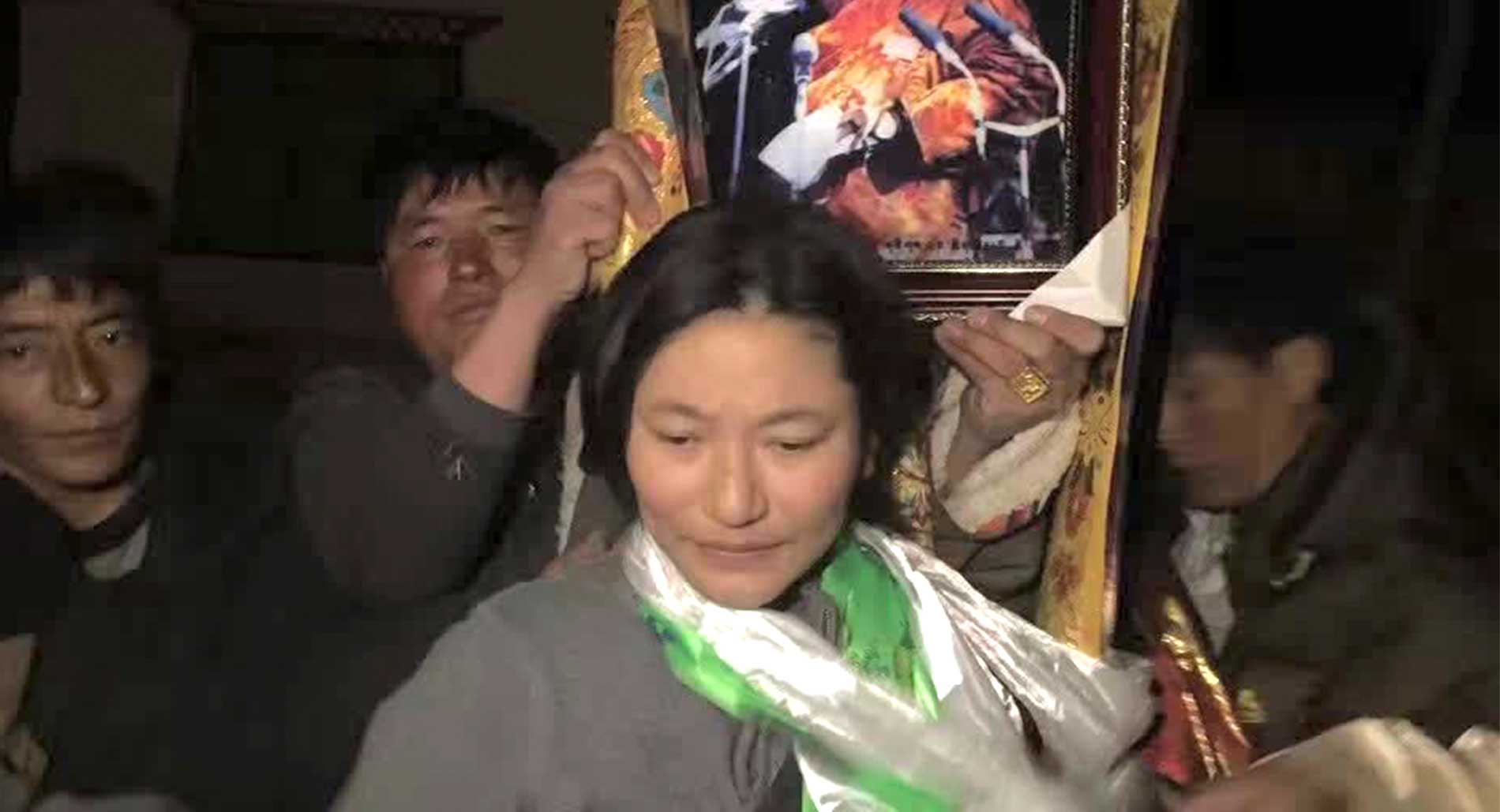
Dolma Tso, a 30-year-old Tibetan woman who was imprisoned in 2013 for helping a neighbour, walked free from detention unharmed in December 2016.

Dolma Tso. © Private

In 2013, Dolma Tso moved the body of her neighbour, Kunchok Tseten after he had set himself on fire. The Chinese authorities have a policy of immediately seizing the body of people who have committed self-immolation and not returning it to their relatives. For this act, Dolma was arrested and sentenced to three years in Chengdu Women’s Prison in south-west China.

During her 11 months’ pre-trial detention, other detainees witnessed police abusing Dolma, including tearing her earlobe, piercing a sharp pencil into her wrist, and shaving off her hair.

In 2015, Dolma was at risk of undergoing a forced medical procedure that would put her health at risk, and her family’s request to see her condition for themselves were denied.

Our response

Amnesty International called on the authorities to immediately:

  • ensure Dolma was not tortured, including not being subjected to any forced medical procedures,
  • ensure Dolma had regular, unrestricted access to her family and lawyers, and
  • ensure that any penalty imposed was not disproportionately severe.

Thanks to the Amnesty supporters who took action for Dolma, the operation didn’t go ahead and Dolma left prison unharmed.

Dolma’s brother, who lives in Australia, said:

“Thank you for taking action on behalf of my sister Dolma Tso. Because of the actions taken by supporters, the Chinese government could not proceed with a medical surgery that they intended against my sister’s wishes.”

Read about more of our recent wins

Submission: Marriage equality bill inquiry

A Select Committee has been set up to inquire into the government’s draft Marriage Amendment (Same-Sex Marriage) Bill. If passed by the Parliament this Bill would change the definition of marriage from being a union of a man and a woman, to “a union of 2 people”.

Amnesty International Australia unequivocally opposes discrimination in civil marriage laws on the basis of sexual orientation, intersex status or gender identity. Love does not discriminate, and neither should our laws!

Amnesty’s submission to the inquiry outlines our position in support of marriage equality and its basis in international human rights law. We argue that there are a number of problems with the Bill in its current form. First of all, the bill exempts religious ministers from solomnizing same-sex or otherwise non-heterosexual marriages. While we do not oppose religious ministers from refusing to solemnize marriages that do not accord with their faith, this should apply to all marriages – not just LGBTQI ones. So we’ve recommended that exemption be amended.

Second, the bill exempts civil marriage celebrants from solemnizing same-sex or otherwise non-heterosexual marriages, and third, it exempts religious organisations from supporting LGBTQI marriages. These parts of the Bill are plainly discriminatory and should not be supported by the Parliament.

We argue there is now an urgent need for the Australian Parliament to legislate to remove discrimination from the Marriage Act. LGBTQI Australians have waited too long to be treated as equals and for their relationships to be treated with respect.

We recommend that the Bill is amended and introduced to the Parliament for a vote at the earliest possibility.

Read our submission

What Sir David Attenborough can teach us about refugees

If Sir David Attenborough were to narrate a documentary on the human species, he would observe a notable pattern of migration. “Human beings,” he would state, “have been constantly on the move since they first set foot on Earth. In recent years, these migrations have dramatically increased in number, the cause consistently being violent unrest within the natural habitat.”

Sir David Attenborough © Flickr/Photographer unknown

Sparked by the flood of displaced persons after the Second World War, the then-new intergovernmental body known as the United Nations deemed it essential to include Article 14 in its Declaration of Human Rights (1948) which declares, “Everyone has the right to seek and to enjoy in other countries asylum from persecution.” Almost seven decades later, the universality of this human right remains unchanged and as relevant as ever.

2016 was a tumultuous year in the global political sphere. Late October saw the dismantlement of the Calais ‘Jungle‘, a French refugee encampment, along with any hopes for the refugees reaching the United Kingdom.

Exacerbated by rapid climate change, the number of displaced Nigerians continues to increase in the face of Boko Haram insurgents – a civil conflict which no longer seems of interest to Western media.

In the northern hemisphere, Turkey and the European Union are at loggerheads over Turkey’s potential EU membership. Turkey hosts over 3 million refugees and has been stopping refugees from squeezing through Europe’s borders. These events highlight the plight that asylum seekers, refugees – and article 14 – find it difficult to properly settle down in any given country.

Solidarity shines through

Nevertheless, human solidarity shines through the cracks of a seemingly-failing global system. The United Nations Refugee Agency (UNHCR) sends emergency aid into Nigeria, Iraq, Europe, the Congo, Syria, South Sudan, and Central Africa, refusing to allow the world to forget. In response to a united human cry, grassroots organisations have cropped up, such as Guerilla [sic] Kitchen, which turns rejected produce into meals for refugees. “A place where the lost and weary,” Sir David Attenborough would narrate, “can come to momentarily rest and find welcome.”

© Flickr/Elisa Finocchiaro

Closer to home

Refugee rights have become a taboo subject within the Australian government. It’s no secret that Australia continues to break international law in its indefinite lock-up of asylum seekers in detention centres, and in its recent pledge to never accept asylum seekers arriving by boat.

Immigration Minister Peter Dutton has even gone so far as to say that Malcolm Fraser’s government had made “mistakes” in accepting Lebanese refugees during the 1970s.

It is imperative to remember that refugee rights are human rights and thus are applicable regardless of nationality, race, religion, gender or sexuality.

“Refugee rights permit individuals the freedom and dignity to move around the world and find home”

The UN Declaration of Principles on Tolerance highlights: “Education is the most effective means of preventing intolerance.” It cannot be only left-winged politicians leading change but the drive to respect refugee rights needs to come from the bottom up – through education and through discussion.

Open discussion is essential, such as that provoked by the film Constance on the Edge, which follows the life of Constance, a Sudanese refugee living in Wagga Wagga. It presents a frank insight into the life of a human individual who also happens to be a refugee. Her integration into the Wagga Wagga community would not have been possible without refugee rights.

Refugee rights permit individuals the freedom and dignity to move around the world and find home. David Attenborough finds beauty in every creature. Here we have seven million to admire.


Emma Hartley is a runner-up in the Amnesty blogging competition. She is an undergraduate student studying international relations and human rights at ANU. She has a passion for politics – although is more in-tune with French politics than any of the goings-on up on the hill at Canberra. She also enjoys reading, long walks, and tea – preferably all at once.

Tirana takes a closer look at #FortressEurope

Midnight 14th September 2015

Hungary closes it’s border with Serbia, thousands of refugees are trapped at the crossing.

“All I see is this never-ending razor wire fence. I take a photograph and I Tweet #FortressEurope.”

Meet Tirana Hassan, our Crisis Response Director.

When a crisis occurs, like the refugee emergency in Europe or the civil war in Syria, Tirana heads to the crisis zone at a moment’s notice.

Your support means we can.


How the world has changed thanks to Edward Snowden

Thanks to the documents Snowden released, the world is now a different place. Here’s how…

In June 2013, whistleblower Edward Snowden revealed the first shocking evidence of global mass surveillance programs. We’ve since learned that the USA’s National Security Agency (NSA) and the UK’s Government Communications Headquarters (GCHQ) have been monitoring the internet and phone activity of hundreds of millions of people across the world.

1 We know A LOT more about what governments are doing

For example, we know that companies including Facebook, Google and Microsoft were forced to hand over customer data under secret orders from the NSA. And that the NSA recorded, stored and analysed ‘metadata’ relating to every single telephone call and text message transmitted in Mexico, Kenya and the Philippines.

2 There has been huge public opposition to government mass surveillance

In our poll of 13 countries across every continent, we found that 71 per cent of people are strongly opposed to their governments spying on the internet and phone activity. More than 450 organisations and experts across the world have signed up to ‘necessary and proportionate’ principles on how to apply human rights to communications surveillance. And more than 80,000 people signed Amnesty’s global petition to ban mass surveillance.

3 Judges have ruled aspects of these programs to be illegal

In the UK, the legal body that oversees the secret services declared aspects of the sharing of intercepted communications between the USA and the UK to have been unlawful before December 2014. And in the USA, a court of appeal ruled in May 2015 that the bulk collection of US phone records was illegal.

4 Technology companies and software engineers are building privacy into software

Several major companies including Apple, Google and Whatsapp have improved the default security and encryption provided to users. Greater consumer pressure has pushed the industry to strengthen its approach to protecting users’ privacy.

“The hard truth is that the use of mass surveillance technology effectively does away with the right to privacy of communications on the internet altogether” UN expert on counter-terrorism and human rights

5 Global experts are speaking out against the status quo

A number of international bodies have warned that mass surveillance poses a threat to our human rights. The UN expert on counter-terrorism and human rights said: “The hard truth is that the use of mass surveillance technology effectively does away with the right to privacy of communications on the internet altogether.” What’s more, after overlooking privacy issues for decades, the UN created a new privacy watchdog, or ‘Special Rapporteur’. This expert will focus on privacy issues both online and offline, including surveillance.

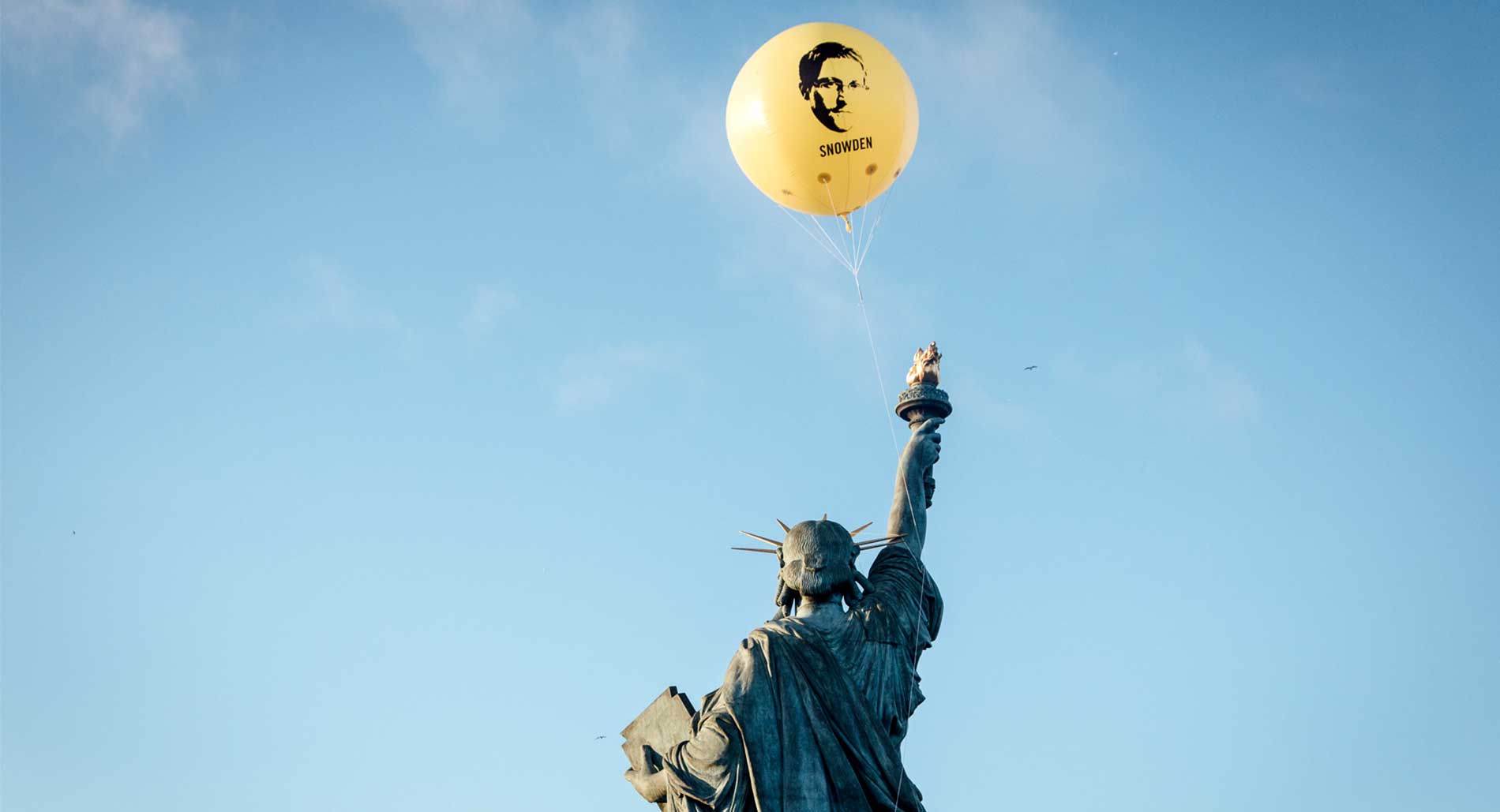
A balloon bearing the effigy of whistle blower Edward Snowden is attached to the Statue of Liberty replica in Paris. © Christophe Da Silva / Hans Lucas

6 Companies are standing up to governments

For example, ten of the world’s largest tech companies, including Apple, Facebook, Google, Microsoft, Twitter and Yahoo, have launched a campaign calling for an end to the bulk collection of personal data.

7 There is increased scrutiny of the laws underpinning mass surveillance

In the UK, a government committee has called for an overhaul of the laws governing intelligence agencies, so that the whole process would be more transparent. Over in the USA, the government has passed the USA Freedom Act, which attempts to end government bulk collection of US phone records.

Thank you to the 1 million+ people (precisely 1,101,252) from 110 countries who supported the campaign to pardon Snowden. In response, Snowden took to Twitter to say: “The world’s top human rights groups just delivered over one million signatures to Obama. For once, I have no words.”

Malawi: Killing of man with albinism underscores justice failures

In response to the killing on 10 January 2017 of Madalitso Pensulo, a 19-year-old man with albinism in Mlonda Village under the Sabwe Traditional Authority in Thyolo District, Amnesty International’s Regional Director for Southern Africa, Deprose Muchena, said:

“Malawian authorities must promptly and thoroughly investigate the horrific killing of Madalitso Pensulo, and take immediate steps to address the poor policing and failures in the criminal justice system which have led to a climate of impunity for crimes against people with albinism.

“Police and other law enforcement officials should step up their efforts and promptly bring the suspected perpetrator, who is known by the Mlonda Village community, before a competent court of law in a fair trial. The message must be sent that attacks on people with albinism will not be tolerated.”

“People with albinism are living in fear within their own communities.”

Deprose Muchena, Regional Director for Southern Africa

“This latest killing highlights the urgent need for Malawian authorities to ensure an effective criminal justice system to bring suspected perpetrators of past related crimes to justice. They must ensure a coordinated security strategy that protects all people with albinism in Malawi, and put an end to their abduction and killing.”

Please donate now to support this urgent work

Guantánamo Bay: 15 years of injustice

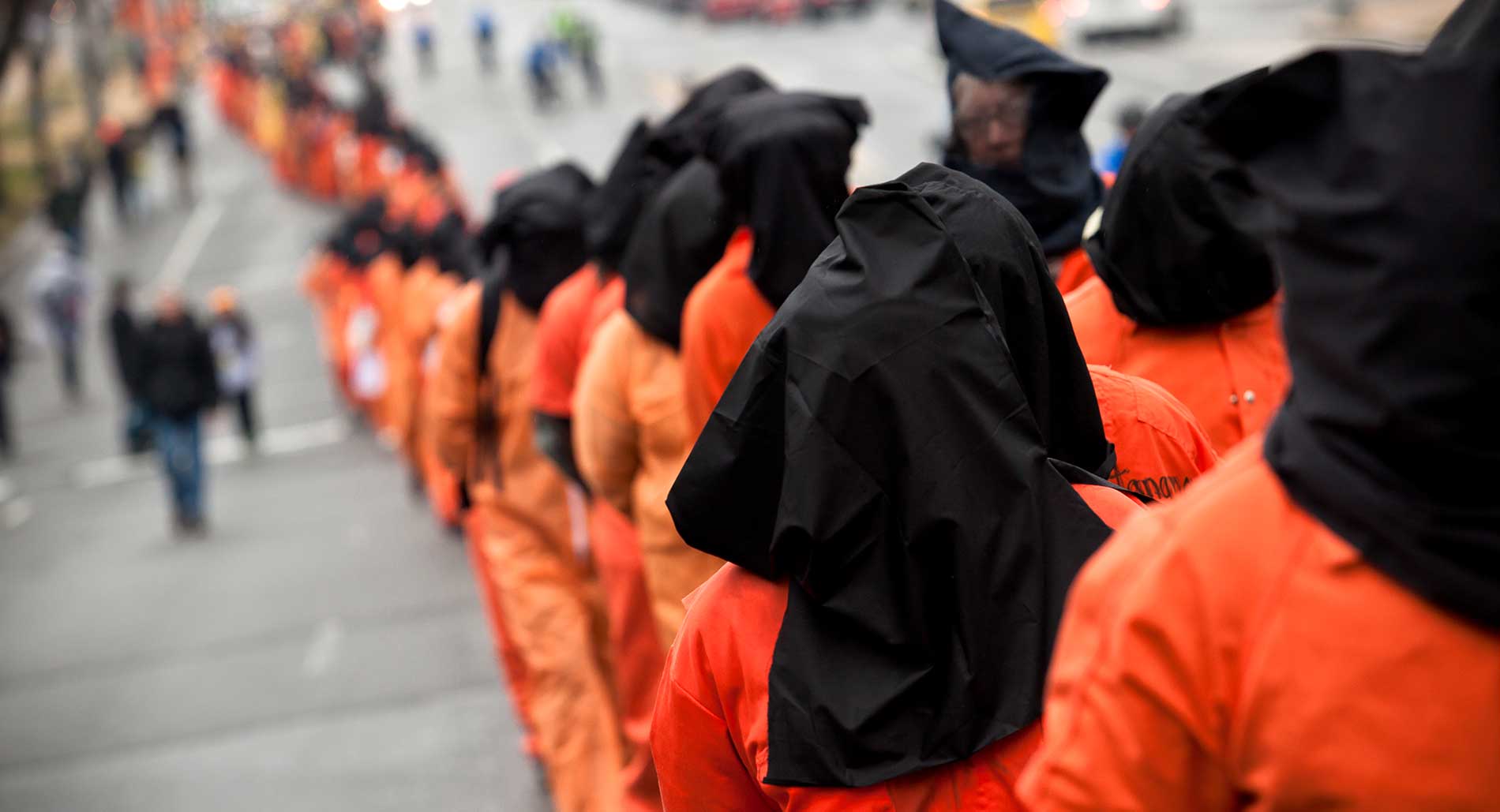
January 11, 2017 marks 15 years since detainees were first transported to Guantánamo Bay detention centre – the symbol of torture and indefinite detention without charge or trial. We’re calling on Obama to close its doors for good.

Throughout these 15 years, the USA has proclaimed itself to be a global human rights champion – even as it resorted to torture and enforced disappearance at Guantánamo and elsewhere.  

The Guantánamo naval base is about to get a new Commander-in-Chief, President-elect Trump. Trump indicated before the election that he would keep the detention facility there open and “load it up with some bad dudes”.

At the beginning of his presidency, President Obama signed an executive order committing his administration to ending the detentions by 22 January 2010 at the latest. President Obama leaves office on 20 January. This is his chance to leave a human rights legacy. Call on Obama to close Guantanamo now.

What is Guantánamo?

In the wake of terrorist attacks in the USA on 11 September 2001, President George Bush declared a ‘war on terror’. He argued that the need to counter terrorism and keep people safe overrode the obligation to respect human rights.

Guantánamo Bay was established by the United States in January 2002 as a place for the U.S. authorities to hold people perceived to be ‘enemy combatants’ in this war on terror. The first detainees were transferred to the prison camp, on 11 January 2002.

“Myself, my son Mohammed and my wife Asma thank all Amnesty International members for supporting me and for supporting human rights… I will never forget their help”

Sami al-Hajj, a cameraman with Al Jazeera television, detained at Guantánamo for six years

Guantánamo is based in Cuba, as the US government sought to hold detainees in a place neither US nor international law applied. The facilities at Guantánamo have become emblematic of the gross human rights abuses perpetrated by the U.S. government in the name of terrorism.

Shaker Aamer was one of the first detainees to arrive at Guantánamo Bay in 2002. He was detained in Afghanistan in November 2001 where, according to his account, he was working for a Saudi charity.

After 13 years in Guantánamo without charge or trial, Shaker Aamer was finally released and returned to his family in the UK in October 2015. He had been cleared for transfer in 2007.

Guantanamo Camp X-Ray. U.S. Army Military Police escort a detainee to his cell in Camp X-Ray at Naval Base Guantanamo Bay, Cuba.
U.S. Army Military Police escort a detainee to his cell at Naval Base Guantanamo Bay. © Shane T. McCoy

In 2008, Sami al Hajj, a Sudanese cameraman for al-Jazeera, was released from Guantánamo. He was held by the U.S. government without charge for over six years. Sami al Hajj has said that while in custody he was subjected to a range of torture and ill-treatment, including beatings and denial of prescribed medication for cancer.

Amnesty International activists worldwide wrote letters to U.S. authorities on behalf of Sami al Hajj. “Myself, my son Mohammed and my wife Asma thank all Amnesty International members for supporting me and for supporting human rights… I will never forget their help,” said Sami al-Hajj.

In 2017 there are 55 people still held at Guantánamo – 45 of them detained without charge or trial. The 10 others have faced or are facing military commission proceedings that do not meet international fair trial standards. Six are currently facing the possibility of the death penalty after such unlawful trials.

The tale of David Hicks

Adelaide-born David Hicks was captured in 2001 by U.S. forces in Afghanistan, where he had joined an Al-Qaeda training camp. He was illegally detained without fair trial in Guantánamo Bay for over five years.

During this time, Hicks claims he suffered torture and other cruel and degrading treatment at the hands of U.S. officials, consistent with the allegations of many others either detained or connected with the facility.

Hicks was convicted in 2007, after pleading guilty to material support for terrorism. He was transferred to Australia to serve nine months of a seven-year sentence. In 2015, the Court of Military Commission Review overturned his conviction. He later penned his memoir: Guantanamo: My Journey, detailing the abuses he received in the detention centre.

What we’re doing

Since the first person was transferred to Guantánamo Bay, we have been campaigning for all detainees be charged with a recognisable criminal offence and given a fair trial – or immediately released.

Through our campaigning, we were able to bring David Hicks home. Now, Amnesty continues to call on President Obama, in the short time left before he leaves office, to meet the promise he made to end the detentions at Guantánamo Bay forever.