6 really practical ways to protect your privacy online

Here are some top tips and tools to protect your privacy and guard against identity theft, financial fraud and your personal pics and messages getting into the wrong hands.

Before we start, a word of caution. If you’re a journalist or activist, or if you believe you might be personally targeted for electronic surveillance, you need a comprehensive digital security plan. Please consult a digital security expert and do not rely on any one app to protect your information.

  1. Update your apps, computer and phone

When you receive a notification to update the software on any of your devices, you should almost always do it straight away. Nearly all updates include things called security patches: they close holes in the software that make it easy for someone to hack into your software – and once they do they can often get access to everything on your phone or computer. Software can be very complex and security holes are discovered all the time, so keep an eye on those updates.

The best thing to do is to turn on automatic updates for your apps and operating system. Your can do this in the settings of your app store, phone and computer.

  1. Use strong and different passwords (and remember them!)

You’ve heard this a million times but can you remember 30 different complicated passwords? Of course not, nobody can. You still need to do it however, as large data breaches happen all the time. If your password is stolen and you use the same one for other services, those other accounts will also be at risk.

So here are a few tips for picking passwords and making sure you don’t forget them:

A simple rule for passwords is that the more complex they are, the harder they are to crack: so mix lower case and upper case characters and include numbers and/or symbols like “!” and “&”.

You can also use a passphrase – so your password could be “pigeons go 2 school every day!!” or whatever else makes sense to you as long as it’s not something too common like “keep calm and carry on”.

A simple rule for passwords is that the more complex they are, the harder they are to crack: so mix lower case and upper case characters and include numbers and/or symbols like “!” and “&”.

Use a password manager: these are programs that generate strong passwords for different websites and store them. Some of them sync across computers and phones so you have them everywhere. This way you don’t have to remember all these complicated passwords.

Choose a very strong password for your primary email and remember it. Your primary email is particularly important as it’s normally used to recover your other accounts if you forget your passwords. It also means it can be used to change the passwords on your other accounts.

Also check haveibeenpwned.com, which can show you if your information was stolen in many of the large data breaches.

  1. Set up two-factor authentication

Two-factor authentication is an extra step you need to log-in to your account. In most cases, it’s very simple and you only need to do it when you use a new device or once every few weeks. A very common form is a text message with a six-digit code you receive by SMS on your phone after entering your password.

Some websites don’t have https at all; it’s 2016 and one has to wonder why. If one of your favourite sites is one of those, you can write to them and ask what they’re waiting for.

This makes it much harder to access your accounts as, even if someone managed to steal your password, they would also need to have your phone to be able to log in to your account.

Many popular services have two-factor authentication, including Gmail, Outlook, Facebook and Twitter.

  1. Use HTTPS

The link in the address bar of your browser starts with either “http” or “https”. The first one means that the connection between you and the website is open, i.e. anyone who taps into your internet connection can see everything you’re writing or looking at. This is bad.

Some websites have https as a default, others as an option. You can usually tell that you’re on an https site by a lock icon in the address bar; if there is a lock but it’s crossed it means there is something wrong with the encryption and your connection might not be protected. Some websites still don’t have https at all. If one of your favourite sites is one of those, you can write to them and ask what they’re waiting for.

You can also download HTTPS Everywhere, a browser extension that helps you encrypt your web browsing.

For most people, WhatsApp is a good enough alternative as it has strong end-to-end encryption by default

  1. Chat on Signal

Signal Private Messenger has been described as the “gold standard” of instant messaging apps and its encryption technology as “best-in-breed”. It’s recommended by Edward Snowden and used by Hillary Clinton’s campaign team. Signal is developed by a non-profit organization and is open source, which means security experts can test it for “backdoors”.

The Signal Protocol, which is the bit of Signal that does the encryption, is so well-regarded that WhatsApp, Facebook Messenger and Google Duo all use it for their end-to-end encryption.

Naturally, people tend to use the platform that most of their friends and family are on. For most people, WhatsApp is a good enough alternative as it has strong end-to-end encryption by default.

  1. Meet on Jitsi Meet

Jitsti Meet is an easy to use video conferencing service that runs in the browser. It’s end-to-end encrypted as well and you can use it for several person video conferences. It has all the regular features, like screen sharing, chat and a notepad to share notes with everyone in the conference call.

Amnesty activists around the world shine a light on Australia’s offshore policy

Amnesty activists from around the world will be gathering at Australian embassies and iconic locations to express outrage at Australia’s cruel approach to people seeking protection. Join us.

When is the Action?

The Global Week of Action for Refugees follows the release of our latest report from Nauru, taking place from 28 November to 1 December.

How can you support the action and join activists in solidarity from the global movement?

  1. Organise an activity at an iconic location in your region. People in Canberra, for example, will be gathering out the front of parliament house during the last federal parlamentary sitting week.
  2. Download some of the posters here for to use at your gathering. We want key decision-makers to know you’re standing in solidarity with all of our supporters around the world.
  3. Take photos of your gathering! We’ll be collecting these from around Australia and the world., and send them out in our media release and on social media. Let’s show our leaders that we want to see real change for refugees.
  4. Send your photos to us! We’ll be publishing them in our media release and on social media to show leaders just how many of us are willing to stand up against Australia’s cruel approach to refugees. Send your pics in the highest resolution you can to us at activism@amnesty.org.au.

Let’s show Australia’s leaders that the tides have turned; it’s time for real change.

Queensland Government commits to a Human Rights Act

Queensland human rights advocates have had many reasons to celebrate this year. The QLD Government has made progress on youth justice, LGBTI rights, reproductive rights and more. Most recently the QLD Government announced plans to introduce a Human Rights Act.

Essentially, a Human Rights Act means that the government need to take human rights into account when making all major decisions that could have an impact on human rights.

This is a massive victory for human rights and for those who have been campaigning on this issue for a long time. It’s shameful that Australia is the only Western country not to have a national Human Rights Act. So far it’s been up to states and territories to take the responsibility to protect our rights, but only ACT and Victoria have Human Rights Acts in place.

The push for a Human Rights Act in QLD picked up speed after the 2015 state election. At the end of 2015, a Human Rights Act inquiry launched and Queenslanders were able to voice their views. Several Amnesty International groups wrote their own submissions to the inquiry, while hundreds of other organisations and individuals gave their support.

In Townsville, our Amnesty group convenor Peter Hanley spoke to a panel of State MPs on behalf of Amnesty. He gave testimony about the importance of human rights and why they need to be protected.

Also this year, Amnesty released it’s report on QLD’s youth justice system. To reduce the number of Indigenous kids in prison, we need a Human Rights Act.

This victory is the result of coordinated research, lobbying and activism from many organisations. Queenslanders came together to hold leaders to account and won. There’s still a lot of work to do to make the Act a reality, and Amnesty is ready for the challenge. Stay tuned for how you can help!

Pollies promoting human rights in Parliament

It’s been over 100 days since the election and we’ve been working hard to kick start our Amnesty International Parliamentary Group in the 45th Parliament. This Amnesty group has members from across the political spectrum working together to promote human rights in the Australian Parliament.

The Amnesty International Parliamentary Group has been around since 1973 and was the first Amnesty Parliamentary group of its kind anywhere in the world. It has been recognised in every Australian Parliament since. There are now heaps of groups – but ours is still one of the most active.

The group has four Co-Chairs: Mr Trent Zimmerman MP; Mr Andrew Giles MP; Senator Janet Rice; and Mr Andrew Wilkie MP. They’re a great bunch of leaders and we’re pretty stoked to be working with them in the 45th Parliament!

Left to Right: Trent Zimmerman MP; Andrew Wilkie MP, Senator Janet Rice and Andrew Giles MP.

This year they’re working to advance Australia’s advocacy against the death penalty; promoting human rights in the Philippines where some 3,000 people have been murdered in extrajudicial killings this year; and standing up for the rights of individuals at risk of serious human rights abuses by getting involved in Write for Rights.

Who are the Amnesty Parliamentary Group Co-Chairs?

Trent Zimmerman MP is the Liberal Member for North Sydney, and is a passionate defender of individual rights and freedoms, multiculturalism and equality. Trent has been involved in community and public service since a young age, and was formerly a councillor on North Sydney Council. He’s also the first openly gay MP in the Australian House of Representatives and a strong supporter of marriage equality. In his powerful first speech to the Parliament earlier this year he spoke eloquently of the continued discrimination LGBTQI Australians face:

“While we have made great strides, discrimination remains and too many people are prepared to peddle prejudice. Our laws still deny access to marriage, our society’s ultimate expression of love and commitment.”

Trent Zimmerman, MP

Most recently, Trent moved a private members motion on behalf of the Amnesty Parliamentary Group calling for an end to capital punishment on World Day Against the Death Penalty just a couple of weeks ago. 

Andrew Wilkie MP is the Independent Member for Denison in Tasmania, and he’s not afraid to speak up about human rights in the halls of power. Andrew was an army officer and an intelligence analyst before he resigned from the Office of National Assessments intelligence agency in protest of Australia’s involvement in the Iraq War. In 2004, he published Axis of Deceit, a book detailing his reasons for opposing the Iraq War. Andrew has been a key member of the cross-bench to promote human rights issues in parliament since his election as an Independent in 2010.

Senator Janet Rice is the Greens spokesperson for LGBTIQ, Transport, Forests, and Agriculture. Janet is a climate scientist, environmentalist, and a founding member of the Greens in Victoria. She grew up and lives in the multicultural western suburbs of Melbourne, has worked with and supported people with disabilities and is passionate about safer pathways for refugees. A fierce advocate for a smarter transport system, Janet started Ride to Work Day while working for Bicycle Victoria – and she walks the talk; riding her bike almost everywhere.

Andrew Giles MP is the Labor Member for Scullin in Victoria and Shadow Assistant Minister for Schools. Andrew joined Labor at a young age and has been involved in politics ever since. He is a lawyer by training and worked as a solicitor before entering Parliament in 2013, including acting for refugees on the Tampa. In Parliament he’s been a passionate defender of human rights. In the 1990s, Giles played guitar in an indie rock band called Ether, along with James Cecil, who went on to play in bands such as Architecture in Helsinki!

Throwback to Amnesty in Parliament in 1983

In 1983 – think Flashdance and Billie Jean – Amnesty International was busy celebrating our 25th birthday. The Amnesty International Parliamentary Group at the time had four patrons: Prime Minister Bob Hawke, Opposition Leader John Howard, Leader of the Australian Democrats Don Chipp and National Party Leader Ian Sinclair. On 28th May each of the patrons got together with the ACT Amnesty Group to hold a candle lighting ceremony in the Parliament to commemorate the occasion.

Prime Minister Bob Hawke said at time time:

Amnesty took as its symbol the candle surrounded by barbed-wire in recognition of the truth of the ancient Chinese proverb, “Better to light a candle than curse the darkness”. Here today, in lighting this candle, a ceremony which I perform on behalf of all Australians, we remember the fate of those who are not fortunate enough to live in a country where their rights and freedoms are respected. We support the work which Amnesty has done for a quarter of a century on their behalf, and I invite the Leader of the Opposition to join with me in our expression of support for Amnesty’s continuing efforts.

Time to reach out to your local MP?

Pollies aren’t passionate about human rights by osmosis. They need constituents banging on their door asking them to make human rights a priority.

Now that the dust has settled from the Federal election, now is the time to reach out to your local member of parliament and tell them that human rights matter to you. Find out more about how to engage your local MP here.

Iraq: Investigate reports of torture and killings

The Iraqi authorities must urgently investigate reports that fighters wearing Iraqi Federal Police uniforms tortured and extrajudicially executed residents in villages they captured south of Mosul.

Researchers from Amnesty International visited several villages in the al-Shura and al-Qayyara sub-districts of Ninewa governorate, south-west and south of Mosul, and gathered evidence indicating that up to six people were extrajudicially executed in late October, apparently due to suspicions they had ties to the armed group calling itself the Islamic State (IS).

“Without effective measures to suppress and punish serious violations, there is a real risk that we could see war crimes of this kind repeated in other Iraqi villages and towns during the Mosul offensive.”

Lynn Maalouf, Deputy Director for Research

“Men in Federal Police uniform have carried out multiple unlawful killings, apprehending and then deliberately killing in cold blood residents in villages south of Mosul. In some cases the residents were tortured before they were shot dead execution-style,” said Lynn Maalouf, Deputy Director for Research at Amnesty International’s Beirut Regional Office.

“Deliberately killing captives and other defenceless individuals is prohibited by international humanitarian law and is a war crime. It is crucial that the Iraqi authorities carry out prompt, thorough, impartial and independent investigations into these crimes under international law, and bring those responsible to justice. Without effective measures to suppress and punish serious violations, there is a real risk that we could see war crimes of this kind repeated in other Iraqi villages and towns during the Mosul offensive.”

The killings took place against the backdrop of armed confrontations in the al-Shura sub-district on 21 October between IS and Iraqi forces. As the area was largely depopulated and Iraqi forces suffered at least one fatality that morning, it appears that Iraqi forces were presuming that only IS fighters had remained behind.

As well as launching an investigation, Amnesty International calls on the Iraqi authorities to guarantee that witnesses to these crimes and their families are protected from any revenge attacks or intimidation.

A number of Iraqi forces participating in the conflict against IS, including army units, fighters from two local Tribal Mobilization militias and members of federal and local police, are believed to have been present in, or passed through, the villages while the torture and extrajudicial executions were taking place. Some reports suggest that a senior commander of the “Operations to Liberate Ninewa” may have been in the vicinity at the time.

According to information obtained by Amnesty International, on the morning of 21 October around 10 men and a 16-year-old boy, mainly from the villages of Na’na’a and al-Raseef, were tortured and otherwise ill-treated after they handed themselves over to a small group of men wearing Federal Police uniforms, in an area known as Nus Tal. They had waved a white cloth and lifted their shirts to show that they were not wearing explosive belts and did not pose a threat.

Shortly afterwards, reinforcements arrived and the men were taken on foot to an open desert area, about a kilometre away between the town of al-Qayyarah and the al-Shura sub-district, identifiable by a broken-down caravan. Fighters dressed in Federal Police uniforms beat the group with cables and rifle butts, punched and kicked them, and pulled their beards – even setting one man’s beard alight.

The victims were made to lie on their stomachs and shots were fired between their legs, as they were insulted, often using sectarian language, and accused of being members of “Daesh” (the Arabic acronym for IS).

Ahmed Mahmoud Dakhil and Rashid Ali Khalaf from the village of Na’na’a, as well as a third man from the village of Tulul Nasser, were then separated from the larger group. Men in Federal Police uniforms then subjected them to particularly brutal beatings before shooting them dead. Their decomposing remains were found in the same area some five days later. Rashid Ali Khalaf’s head had been severed from his body.

Another villager from al-Raseef, Hussein Ahmed Hussein, was last seen alive on 21 October. He was being handcuffed and led away by a group of men in Federal Police uniforms, near the caravan, after being beaten with rifle-butts, punched and insulted. His body was discovered nearby a week later.

“When the Mosul military operation began, Prime Minister Haider al-Abadi made clear that violations by Iraqi armed forces and its allies would not be tolerated. Now is the time for him to prove just that.”

Retreating IS fighters forcibly moved hundreds of women, children and older men from the villages of Na’na’a and al-Raseef to Hamam Alil in an apparent attempt to use them as human shields. IS fighters made public announcements ordering the villages’ residents to leave their homes using the local mosques’ loudspeakers, on 19 October. However, some younger men apparently managed to stay behind, hiding in unfinished or abandoned buildings.

Hussein Dakhil was among the few who defied IS’s orders. Two days later, on 21 October after government forces arrived in the village, he was found dead with two bullet wounds, to the chest and chin, shortly after leaving a house near the Mishraq Sulphur Company building in the Shura sub-district, which IS fighters had set fire to before leaving the village. He was blindfolded with his torso exposed, suggesting that he had been detained before being extrajudicially executed.

On that same day, another man, Bashar Hamadi, was also apparently shot dead as he ran towards forces that included men in Federal Police Uniform, while pulling up his clothes to show that he had no explosives. According to information received by Amnesty International, he was shot from about 50 metres away and left on the ground. His body was found about a week later.

All those killed were buried without autopsies after their corpses were found.

“When the Mosul military operation began, Prime Minister Haider al-Abadi made clear that violations by Iraqi armed forces and its allies would not be tolerated. Now is the time for him to prove just that,” said Lynn Maalouf.

“The Iraqi authorities must immediately investigate these alarming reports of extrajudicial executions and torture. They must remove from active duty all individuals who are suspected of committing war crimes and other serious human rights

violations, pending the outcome of judicial investigations.”

Background

This is not the first time Amnesty International has documented extrajudicial executions by men in Iraqi Federal Police uniform. On 27 May 2016, during operations to retake Falluja and surrounding areas, at least 16 men and boys from the Jumaili tribe were shot dead near Sijir, after handing themselves over to fighters, some of whom were wearing Federal Police uniforms.

The Federal Police is part of the Ministry of Interior, and has been involved in counter-insurgency efforts.


Join us: Hike the Homelands

Hurry - there are only 2 spots left!

I’m Julian, Indigenous Rights Campaigner at Amnesty International and I want to tell you about my own personal highlight of the year.

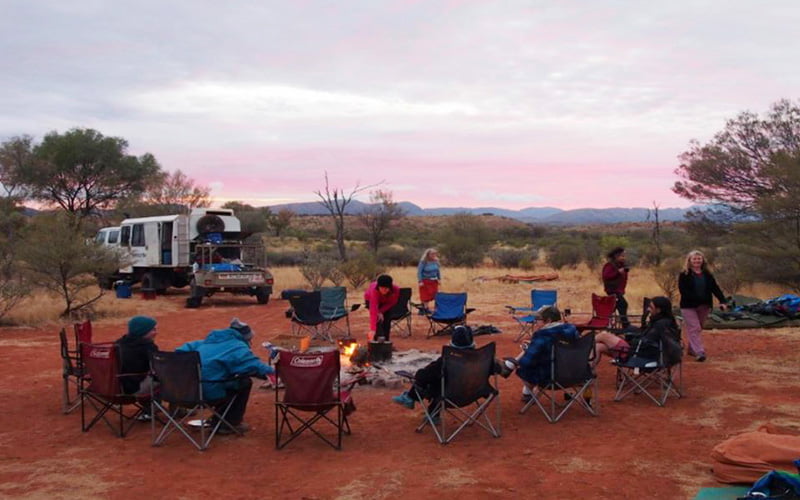
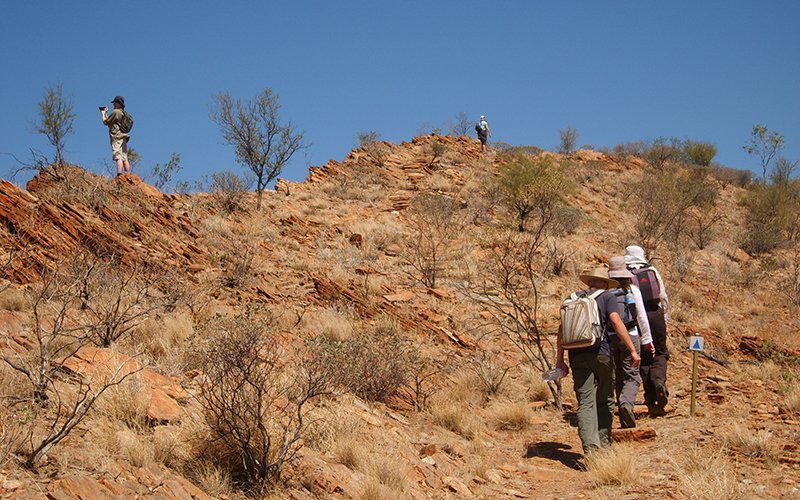
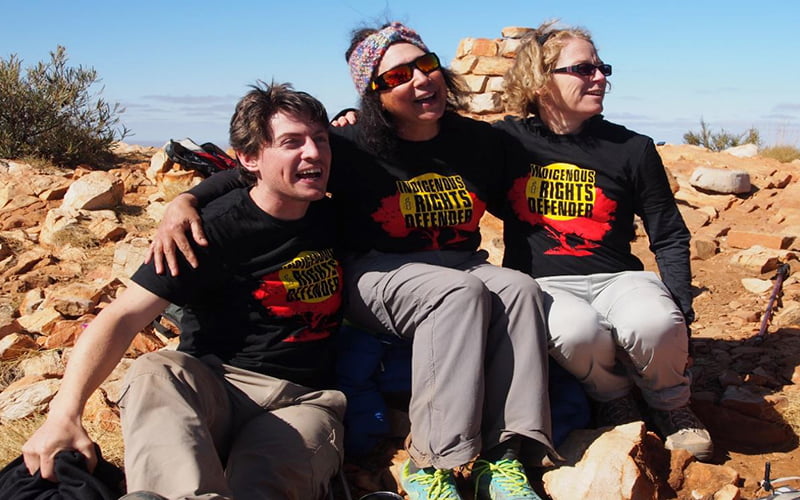
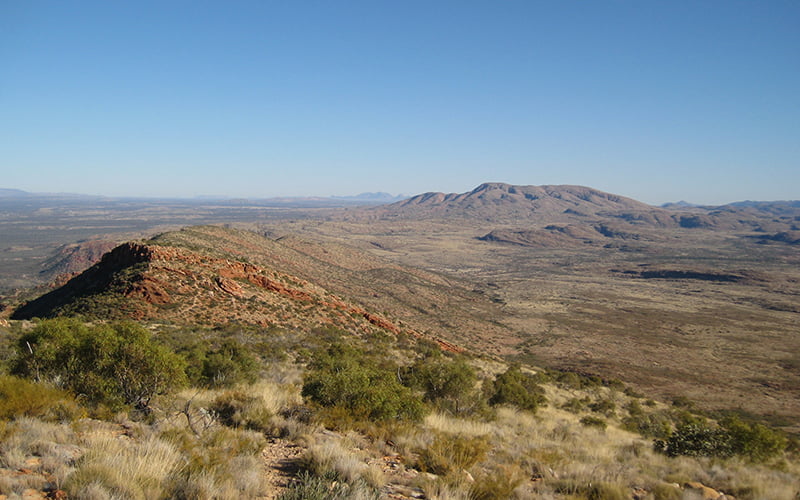
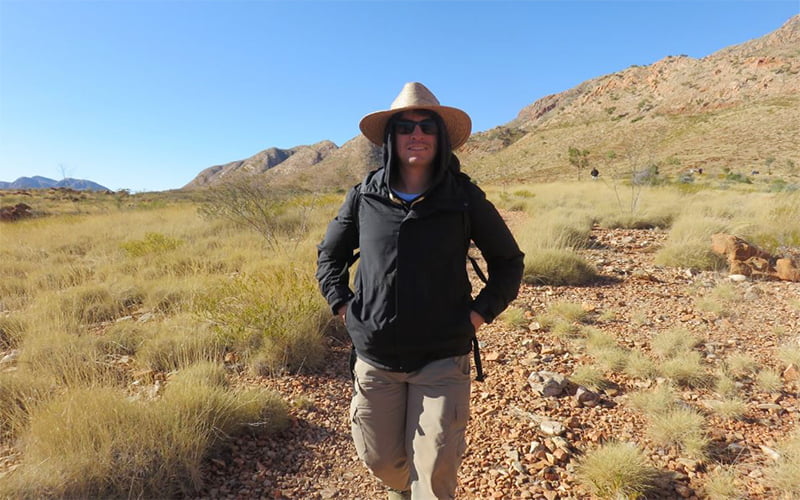
Over seven beautiful days and pink-skied nights I trekked the Larapinta Trail, “Tyerretye” and experienced our rugged Central Australian landscapes in a unique and intimate way. I met new, now lifelong friends. We encouraged each other up steep inclines and swum together in Ormiston waterhole. Sounds majestic, doesn’t it? It was. And we did it for human rights, because if there’s ever going to be a reason to do such a thing, why not make it something big?

On the trek I met wonderful individuals from right around Australia and New Zealand. On the final day I saw how these people had become a close-knit group of friends – doing it for human rights.

I want to personally invite you to break the mould in 2017, deepen your connection with the beautiful Australian outback, and make a genuine difference. Join us and ‘Hike the Homelands’ for human rights.


The power of the people

have personally seen the power of the work that we at Amnesty International do together, locally and globally – holding governments to account for human rights violations and fighting for a brighter tomorrow through impartial, credible research and fearless advocacy.

I’ve seen this in our five-year indigenous rights campaign, Community is Everything. We’re tirelessly working to end the over representation of Aboriginal and Torres Strait Islander young people in the justice system, and we’ve had some significant wins so far. In fact, just a couple of months ago, the QLD government introduced legislation to remove 17-year-olds from adult prisons – a meaningful stride in the right direction.

This work can only continue through the support and generosity of ordinary people who care about justice and aren’t afraid to take action for change.

On this adventure you will gain a better understanding of Amnesty’s work to protect the rights of Aboriginal communities that call the Central Australia home, while also helping to fight human rights injustices throughout the world. 

Register your interest now

The adventure starts Monday, 24 July 2017, so now’s the time to join us!

Will you join us?

Get in touch

PH: 1300 905 188    E:  info@inspiredadventures.com.au

Hike the Homelands booked out early last year, so contact us today to avoid missing out.

My top three moments:

  1. Learning about Arrernte culture while dining on traditional bush foods under the stars.
  2. Taking in the majestic views from the peak of Mt Sonder (Rwetyepme).
  3. Getting to know my fellow trekkers and hearing their inspiring fundraising stories.


Iran: Musicians campaign to free jailed artists

Amnesty International and renowned Iranian music band Kiosk are calling on artists and members of the public around the world to join a #FreeArtists campaign to demand that Iran immediately and unconditionally release jailed artists, including a musician and a filmmaker who are on hunger strike in Tehran’s Evin Prison.

The brothers, musician Mehdi Rajabian and filmmaker Hossein Rajabian, are currently serving three-year prison terms. They were convicted in 2015 after a blatantly unfair trial before a Revolutionary Court of charges that included “insulting Islamic sanctities” and “illegal audio-visual activities”. On 28 October 2016, they began their second hunger strike in protest against their imprisonment.

A third artist Keywan Karimi has also been sentenced to six years’ in prison for “insulting Islamic sanctities”, also related to his artistic work and is at imminent risk of imprisonment.

“Expressing yourself through art is not a crime.”

Philip Luther, Amnesty International’s Research and Advocacy Director for the Middle East and North Africa. 

“Expressing yourself through art is not a crime and it is outrageous that the Iranian authorities have resorted to locking up artists and musicians simply for their artistic work. Mehdi and Hossein Rajabian are prisoners of conscience who shouldn’t be forced to spend a single minute behind bars. The Iranian authorities must order their immediate and unconditional release,” said Philip Luther, Amnesty International’s Research and Advocacy Director for the Middle East and North Africa.

“Their imprisonment is yet another nail in the coffin for freedom of expression in Iran. The human right to liberty is sadly so undervalued by the Iranian authorities that they are prepared to condemn individuals to years in jail just to silence artistic voices that they deem as ‘anti-Islamic’ and ‘anti-revolutionary’.”

The brothers have put their health at risk by going on hunger strike as a last resort to demand their freedom. They have said they will refuse intravenous drips until they are released from prison.

Since his hunger strike, Mehdi Rajabian has coughed up blood twice and says that he was punched in the stomach by a prison doctor after being taken to the prison clinic. Amnesty International is also demanding that the Iranian authorities ensure both brothers have access to a qualified health professional.

Outrageous lifetime ban of refugees rejected by Labor

Amnesty International welcomes the news that the Australian Labor Party has unanimously rejected Immigration Minister Dutton’s outrageous and unnecessary proposal for a lifetime ban on people seeking asylum.

“It is encouraging to see the Labor party step up at this time and make the right decision to reject this callous and cruel legislation,” said Dr Graham Thom, Refugee Coordinator at Amnesty International Australia.

“The proposed lifetime ban of refugees has been laid out and seen for what it really is – yet another layer of cruelty in Australia’s already deliberately abusive policy, designed to cause even more suffering to people who are simply looking for a safe place to rebuild their lives.”

Amnesty International is now strongly urging the Senate crossbench to follow the ALP’s lead and reject the bill to ensure this cruel proposal has no future.

“Instead of focusing on short-term punitive measures which blatantly disregard the Australian Government’s responsibility to provide safety and protection for people who need it, the quickest and fairest way to look after the 2000 men, women and children on Nauru and Manus Island is to bring them to Australia for processing and settlement,” said Dr Graham Thom.

The next crucial step for all parties is to look towards humane solutions – solutions that both reduce deaths at sea and eliminate abusive treatment of refugees – one shouldn’t come at the expense of the other.” 

Afghanistan: A welcome step towards accountability

In response to the announcement by the United Nations that it will investigate last week’s US-led airstrikes in Kunduz province, in which more than 30 civilians were killed, Champa Patel, Amnesty International’s South Asia Director said:

“The horrific events in Kunduz last week are the latest in a growing list of incidents which have resulted in Afghan civilians being killed or injured in attacks that appear to have violated international humanitarian law.”

“We hope that this UN investigation into the circumstances surrounding the bombing represents a step towards truth and justice for the victims and their families.”

“If the investigation ultimately does show that the attack violated international humanitarian law, it is critical that US/NATO forces are held accountable. If there is evidence of war crimes, those responsible must be prosecuted in fair trials.”

Background:

‘Left in the Dark’, a 2014 report by Amnesty International, detailed the failures of accountability for US military operations in Afghanistan. The report, based on interviews with 125 Afghan victims, their family members and eyewitnesses to the attacks, detailed 10 different incidents that ended with the deaths of at least 140 civilians, including at least 50 children. Among the incidents was a late-night raid on a home in February 2010 in Paktia province that left two pregnant women, two criminal justice officials and a teenage girl dead.

The US armed forces have launched their own investigation into the airstrikes in Kunduz.

Iraq: Kurdish authorities bulldoze homes and banish hundreds of Arabs from Kirkuk

Kurdish authorities have carried out a wave of attacks, demolishing the homes and driving out hundreds of Arabs from Kirkuk, as apparent revenge for an attack carried out by the armed group calling itself the Islamic State (IS) on 21 October, said Amnesty International in a new briefing.

The briefing, ‘Where are we supposed to go?’: Destruction and forced displacement in Kirkuk, highlights how hundreds of Sunni Arab residents, including many who fled fighting and insecurity in nearby governorates, have been expelled from Kirkuk. Many have been ordered to return to their places of origin or have been confined to camps after being suspected of assisting IS to co-ordinate the attack.

“The authorities in Kirkuk are undeniably facing a serious security threat, but that cannot justify bulldozing people’s homes and forcibly displacing hundreds of Arab residents. Many of those affected are people who have already been forced to leave their homes because of the violence engulfing the country. Now they are being forcibly displaced or made homeless yet again,” said Lynn Maalouf, Deputy Director for Research at Amnesty International’s Beirut regional office.

“Deliberate destruction carried out without military necessity is a war crime. Ordering the displacement of civilians … also is a war crime.”

Lynn Maalouf, Deputy Director for Research

In the aftermath of the surprise IS attack on eight different locations across Kirkuk on 21 October, many said they were ordered to leave the area and had their identity cards confiscated. Among those affected are an estimated 250 families who had previously been displaced from other governorates of Iraq and had sought safety and shelter in Kirkuk.

At least 190 families were also forcibly displaced by Kurdish Peshmerga and Asayish forces from the Qotan and Qoshkaya villages in the Dibis district of Kirkuk governorate. Most were moved to camps for internally displaced people or sought shelter with relatives in nearby villages. IS forces had attacked a power station in Dibis on 21 October killing 12 guards and employees.

“Forcibly evicting and displacing Sunni Arab residents of Kirkuk is unlawful and cruel. Kurdish authorities must immediately put an end to unlawful destruction of civilian property and forced displacement,” said Lynn Maalouf.

“Deliberate destruction carried out without military necessity is a war crime. Ordering the displacement of civilians – unless necessary for their own security or for reasons of imperative military necessity – also is a war crime.”

The briefing, based on interviews with community leaders, internally displaced people, residents, activists, and local politicians, is supported by photographic evidence of destruction and statements from officials.

“Muhayman”, whose name has been changed to protect his identity, a 40-year-old father of 10 from a village south-west of Kirkuk, has been forcibly displaced twice by Kurdish forces, first in 2015 and most recently on 25 October 2016. He described to Amnesty International how men in military uniform came to the Manshiya area of the Wahed Huzairan neighbourhood of Kirkuk city and ordered residents to leave by morning. Early the next day they were forcibly evicted and bulldozers demolished homes late into the night.

“I was ordered by Peshmerga out of my own village, so I built a home here… Now we are homeless again, and we are all sheltering with my brother. Where are we supposed to go?”

The neighbourhood, which had consisted of hundreds of houses, was razed to the ground leaving only around 10 homes standing, he said.

“Now we are homeless again, and we are all sheltering with my brother. Where are we supposed to go?”

A father of 10 from a village south-west of Kirkuk

“Ahmed” a resident of Kirkuk city, whose home was demolished on 25 October described chaotic scenes as residents rushed to save their possessions while tractors and bulldozers rolled into the neighbourhood. He said one of his neighbours was so distressed he shot himself after his home was demolished. Other residents interviewed by Amnesty International corroborated this account.

One man who fled from Diyala to Kirkuk in August 2014 with his family said security forces openly blamed him for the IS attack.

“We give martyrs to fight Daesh [Arabic acronym for IS] and you bring them here and harbour them in these houses,” they told him.

He was forced to go back to Diyala together with his relatives despite the well-documented pattern of unlawful killings and abductions of Sunni Arabs at the hands of militias there.

Publicly, the Governor of Kirkuk has committed not to return internally displaced people to areas still under IS control or where clashes are ongoing such as Mosul and the surrounding areas. International law and standards dictate that the return of displaced people to their homes must be voluntary.

Amnesty International has documented the repeated forced displacement and destruction of Arab homes and villages by Peshmerga forces, which continue to prevent residents of Arab villages and Arab residents of mixed Arab and Kurdish towns from returning to their homes.

“Instead of flouting international law by arbitrarily uprooting civilians from their homes, the Kurdish and Iraqi authorities should be offering protection to those who have already been displaced or are seeking shelter from the fighting. And they should facilitate the voluntary and safe return of those who wish to return to their homes,” said Lynn Maalouf.

Background

Kirkuk has been under the de facto control of the Kurdistan Regional Government since Iraqi government forces retreated from northern Iraq in June 2014 when IS captured large swathes of the country.

Attempts to forcibly return Sunni Arab internally displaced people and residents pre-date the IS attack on 21 October but have intensified since then.