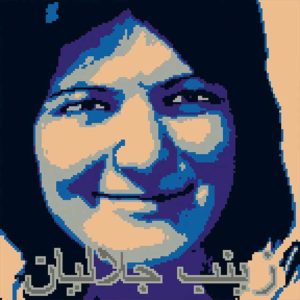
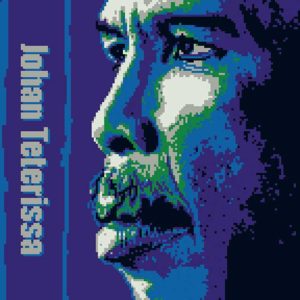
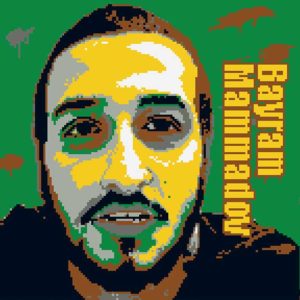
In a first for Amnesty’s Write for Rights campaign, we’ve joined forces with acclaimed contemporary artist Ai Weiwei, to bring you this unique set of portraits.
Click through the gallery below to see the 12 Ai Weiwei portraits.
Ai Weiwei was the perfect fit for this campaign. In 2015, he was joint recipient of Amnesty’s Ambassador of Conscience Award. As an activist artist who has faced the consequences of speaking up for justice through his artwork, he has a great deal in common with the people whose rights we are writing for this year.
You can read about our 2016 cases and take action on our Write for Rights page.
Ai Weiwei
Ai Weiwei has first-hand experience of the Chinese authorities’ heavy handed tactics used to crack down on political dissenters. In 2009 he was briefly detained and severely beaten by security officials. Again in 2011, following persistent harassment from the authorities, Ai Weiwei was detained for 81 days without charge. His wife and several members of his studio staff were also detained.
During his 81 days in detention, Ai Weiwei was under constant guard:
“They kept close watch over me 24 hours a day. I had to submit a formal request for every action – every need.”
He later recreated a full-size replica of his cell as an artwork exhibited around the world, and he continues to speak out for individuals whose freedom of expression is at risk.
Learn how you too can raise awareness of the individuals in our Write for Rights campaign.
Further reports obtained by Amnesty from inspection by the DJAG Ethical Standard Unit of the Cleveland Youth Detention Centre in Townsville and Brisbane Youth Detention Centre between 2010 – 2015 also highlighted potential abuses of human rights of children. The abuses include potential unnecessary and excessive use of force in these facilities, and other control and resistant measures such as handcuffs, docs, and invasive search practices that may amount to torture or other ill-treatment. The reports also showed high rates of children self harming in these facilities.
This review is an important opportunity to further investigate this evidence. The review is a critical step towards ensuring children are protected and treated in accordance with their rights in the Queensland youth justice system. Importantly, the review is crucial for addressing issues faced by Aboriginal and Torres Strait Islander children in Queensland.
Read the full submission and recommendations here.
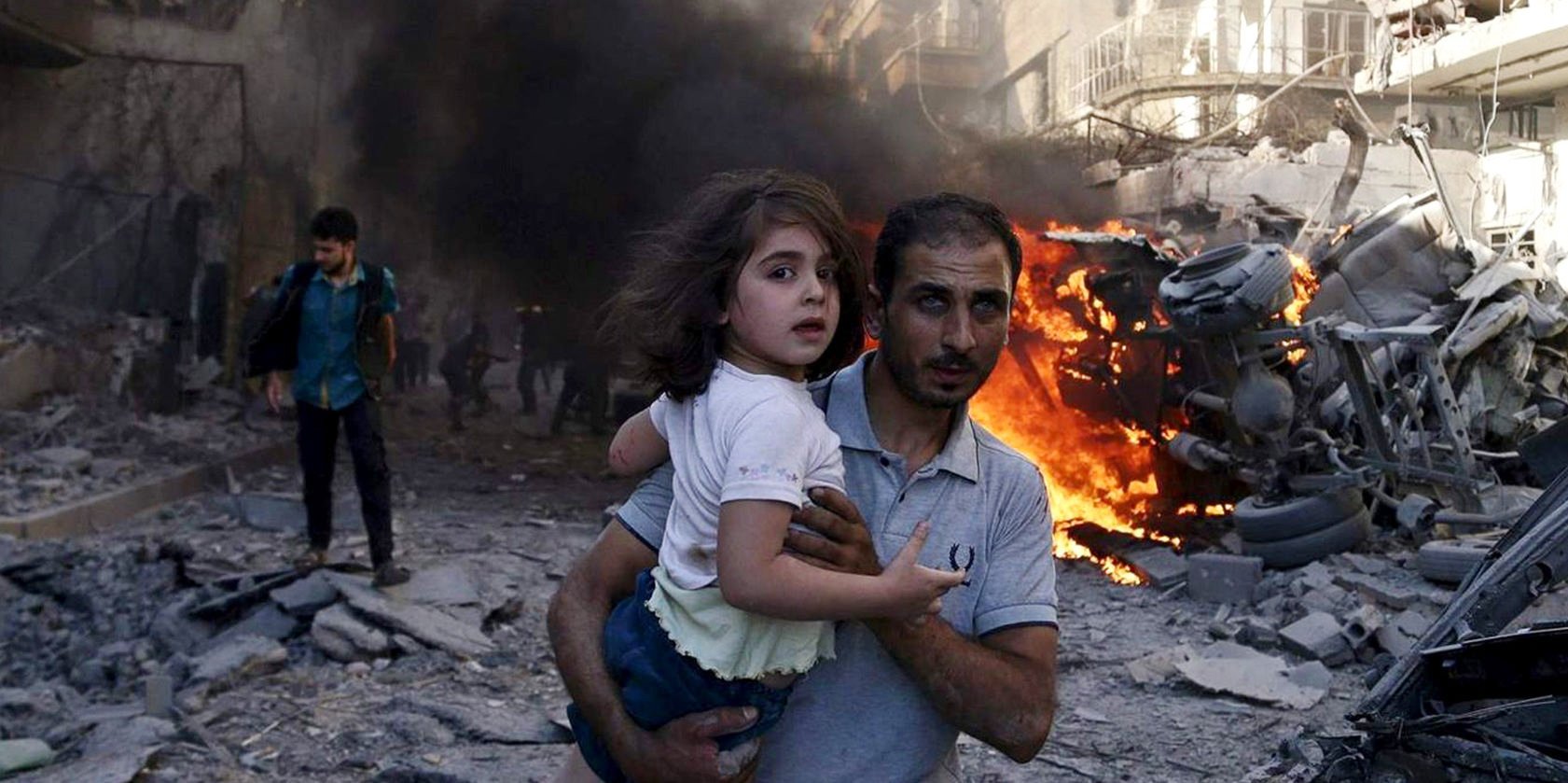
US-led Coalition forces carrying out air strikes in Syria must conduct thorough investigations into reports of civilian casualties from its operations and disclose their findings. Eleven Coalition attacks examined by Amnesty International appear to have killed some 300 civilians during two years of strikes targeting the armed group calling itself Islamic State (IS).
So far the US authorities have provided no response to a memorandum Amnesty International sent to the US Department of Defense on 28 September 2016 to raise questions about the conduct of Coalition forces in Syria. The memorandum compiles and analyzes information from various sources, including eyewitnesses to attacks, which suggests that US Central Command (CENTCOM), which directs Coalition forces in Syria, may have failed to take necessary precautions to spare civilians and carried out unlawful attacks that have killed and injured civilians.
“We fear the US-led Coalition is significantly underestimating the harm caused to civilians in its operations in Syria,” said Lynn Maalouf, Deputy Director for Research at Amnesty International’s Beirut regional office.
“Analysis of available evidence suggests that in each of these cases, Coalition forces failed to take adequate precautions to minimize harm to civilians and damage to civilian objects. Some of these attacks may constitute disproportionate or otherwise indiscriminate attacks.
“It’s high time the US authorities came clean about the full extent of the civilian damage caused by Coalition attacks in Syria. Independent and impartial investigations must be carried out into any potential violations of international humanitarian law and the findings should be made public.”
Amnesty International has reviewed publicly available information from local human rights organizations and monitoring groups as well as media reports, and where feasible it has interviewed eyewitnesses, carried out analysis of satellite imagery, photographs and video evidence, to piece together as much detail as possible about the circumstances of 11 US-led Coalition attacks in which evidence suggests as many as 300 civilians were killed. To date CENTCOM has only acknowledged one single such death in these attacks.
Research and documentation by leading human rights and monitoring organizations including the Syrian Network for Human Rights, Airwars, the Syrian Observatory for Human Rights and the Violations Documentation Center indicates that the total number of civilians killed by Coalition forces in Syria since operations began could be as high as 600 or more than 1,000.
Civilians killed, including children
Among the most recent incidents highlighted in the memorandum are three US-led Coalition attacks in June and July 2016 on the Manbij area of Aleppo governorate, in northern Syria. Together the three attacks are suspected to have killed more than 100 civilians in the villages of al-Tukhar, al-Hadhadh and al-Ghandoura.
The attack on al-Tukhar on 19 July is believed to have caused the greatest loss of civilian life of any single US-led Coalition attack. At least 73 civilians were killed, including 27 children, and some 30 were injured.
CENTCOM is investigating the attack. In its memorandum to the US authorities Amnesty International asked serious questions about who the intended targets were and the measures taken to verify intelligence or check whether civilians were present in the vicinity.
Due to the presence of populated civilian homes adjacent to the target, it should have been clear that the attack would pose a significant risk to civilians
Air strikes just over a week later on 28 July killed at least 28 civilians, including seven children, in al-Ghandoura village 25km north west of Manbij. The strikes hit a public market which appears in a video clip that Amnesty International was able to geo-locate in al Ghandoura’s main street. The video-clip and other photographs show the bodies of many of the children killed.
A US-led Coalition attack which struck two houses where civilians were sheltering in the village of Ayn al-Khan, near al-Hawl in al-Hasakah governorate in northern Syria in the early hours of 7 December 2015, killed 40 civilians, including 19 children, and injured at least 30 others according to local human rights organizations. One media report suggests an unknown number of IS fighters were also killed in the attack.
“Everyone but me was killed”
Amnesty International was able to speak to one survivor from the attack who described how he was awoken by a huge explosion and ran out to dig through the rubble for survivors.
“The house shook and began to crumble. The windows shattered…I ran outside and saw my neighbour’s house completely destroyed. I could hear people calling out from beneath the rubble,” he said.
As he helped to dig out survivors a helicopter gunship launched a second attack.
“At this point I had a two-month-old baby boy in my arms whom I had rescued. The hit caused me to fall and drop him… I fell into the hole made by the air strike. That was what saved me… My mother, aunt, wife and children – a daughter who was four years old and a son who was two and a half were all killed. The woman and her son who I’d rescued were killed. Everyone but me was killed,” he said.
He also said that a commander from the Kurdish People’s Protection Unit (YPG) forces who villagers spoke to after the attack told them the YPG had warned Coalition forces of civilians in in the area.
At this point I had a two-month-old baby boy in my arms whom I had rescued. The hit caused me to fall and drop him…
The attack is believed to have been targeting a group of IS fighters who had moved into a house on the edge of the village five days earlier and were later joined by more fighters.
Despite evidence indicating multiple civilian casualties were caused, CENTCOM has not acknowledged responsibility, although it admits it carried out air strikes in the vicinity at around the same time. It is unclear whether the investigation promptly set up by CENTCOM has reached any findings.
In another attack on 11 August 2015 an air strike hit a building in Atmeh in Aleppo governorate which was being used by an armed group to produce mortars, but also destroyed two adjacent civilian homes, killing eight civilians. Six children aged between four and 17 years old were killed. There are conflicting reports about whether or not 10 fighters were also killed in the attack. CENTCOM has admitted carrying out the strike but denied there were any civilian casualties.
Children buried beneath rubble
Satellite images obtained and reviewed by Amnesty International indicate that the two civilian houses were completely destroyed in addition to the building being used by the armed group.
Talha al-Amouri an eye-witness told Amnesty International that his sister-in-law, mother of five of the children killed, was eight months’ pregnant at the time of the attack and had a stillbirth as a consequence of it. He said he and his brother had gone to a nearby shop a short distance away and returned to find children buried beneath the rubble.
“How could they have known that there was an ammunitions factory but not that there were homes with civilians nearby?” he said.
Although this attack was directed at a legitimate military target it also destroyed neighbouring homes and killed eight civilians and therefore may amount to a disproportionate attack.
“Due to the presence of populated civilian homes adjacent to the target, it should have been clear that the attack would pose a significant risk to civilians, including from secondary explosions. The US authorities should have taken steps to minimize that risk, including by issuing a warning, if feasible, or delaying the attack until civilians could be adequately protected, or cancelling it if it was likely to be disproportionate,” said Lynn Maalouf.
Mosul civilians must be spared
As the military campaign to re-take the city of Mosul in northern Iraq from IS enters its second week, fears for civilians there are running high. US-led Coalition forces are providing air and ground support for the operation.
“Given the likely increase in air strikes by the US-led Coalition as part of the Iraqi offensive to recapture Mosul, it is even more pressing that CENTCOM be fully transparent about the impact of their military actions on civilians. And it is crucial that they adhere scrupulously to international humanitarian law, including by taking all feasible precautions to spare civilians and to minimize harm to civilian homes and infrastructure,” said Lynn Maalouf.
More than 200 Syrian civilians are believed to have been killed in Coalition attacks during the campaign in Syria to oust IS from Manbij, which is far smaller than Mosul.
Amnesty International’s previous research on Pakistan and Afghanistan has also found that the US military has failed to effectively investigate possible violations of international humanitarian law and to acknowledge responsibility for civilian casualties.
The failure to adequately and transparently investigate reports of civilian casualties and of violations of international humanitarian law falls short of international standards and contrasts starkly with commitments by President Barack Obama in a July 2016 Executive Order to address civilian casualties from US military operations. The lack of acknowledgment, apology or compensation is also at odds with this Executive Order, which committed the USA to strengthening post-strike investigations and offering condolence and compensation.
Over the last two months, the South Australia/Northern Territory Branch has been hard at work with partner organisations to put together a Schools Congress that teaches students about racism and cultural safety.
The Branch has been working with Reconciliation South Australia and ActNow Theatre on the Schools Congress titled “Generation of Change”, which was an excellent opportunity for students to learn about, discuss and take action on issues involving racism.
This year’s program included a full day of action focused on addressing, preventing and building resilience against racism. The Congress was for Aboriginal and Non-Aboriginal students who were interested in collective action to improve cultural safety.
Amnesty introduced concepts such as human rights, the Declaration of Human Rights, and taking action in a simple way to the children attending the Congress. Our role was to support the children in learning and understanding what these concepts mean, and inspiring them to create change within their communities.
We worked to draw the connection between the concept of human rights and the broader topic of racism, to explain the way that racism can compromise those fundamental freedoms. We also gave an overview of what Amnesty does to protect human rights, and got to hear some amazing stories about the creative ways that school groups engage with our campaigns.
This year’s partnership with Reconciliation SA and ActNow Theatre has been an outstanding success. We’re stoked that we were able to be involved in this program and look forward to continuing our partnership for the next three years.
We’re also pleased and grateful to have the opportunity to connect with future generations. Their action, their voice and their commitment to human rights is something to be incredibly proud of.
We started the Joondalup group in January this year, and we have been focused on recruiting new members to help us achieve our first and priority goal: making Joondalup a Refugee Welcome Zone.
We held our first big event in September at the Currambine Community Centre, hosting a viewing of Cast from the Storm with guest speaker Ibrahim Kebe, a former refugee from Sierra Leone. This was our first real opportunity to make a connection with our community and start conversations about refugees – a subject that, we feel, has been avoided in Joondalup for a long while.
Co-convener Bahaval and I are passionate about standing up for the human rights of refugees, and we want our community to open their hearts and join us in the spirit of welcome. Many of the people who attended our event were interested in the issues discussed and enquired about how to help or join our group. We’ve even had coverage in the Joondalup Times.
The event was a success, and we’re excited for our little group to flourish and grow. We’re excited that there is support in community – not just for our group, but for better treatment of refugees in Australia. We have a lot of plans to keep building our presence in Joondalup over the summer. Keep an eye out!
Tassie should be proud of the hundreds of people who came from near and far for the Bring Them Here rally in Franklin Square. Colourful banners and signs were held high, calling on the Federal government to close the processing centres on Manus and Nauru, and bring the refugees and asylum seekers to Australia.
Hobart #BringThemHere refugee rally. copy; Zainab Clark
Placards cried out for compassion toward all of those who have risked their lives and the lives of their loved ones to escape war and hardship. Organisers from various refugee action groups and politicians from across the political divide gave rousing speeches, and after the rally people were queuing to sign petitions and pledges for Free the Children Nauru and Amnesty.
We gathered hundreds of signatures in support of refugees and we’re proud to be able to help bring these voices to the Federal government.
It’s really looking like the tides are turning. Last week was enormous for refugees and we saw a government under huge pressure, and on the defensive.
The week started with a harrowing 4 Corners Episode, ‘The Forgotten Children’ featuring never seen before interviews of children on Nauru and our very own Anna Neistat — Amnesty International’s Senior Director for Research — talking about her findings from her recent research trip to the island. It was a devastating glimpse into the conditions faced by refugees and asylum seekers on Nauru.
Anna Neistat is one of the few people who has managed to enter the remote and secretive island to investigate human rights abuses. She says:
“On Nauru, the Australian Government runs an open-air prison designed to inflict as much suffering as necessary to stop some of the world’s most vulnerable people from trying to find safety in Australia.”
After mounting pressure in the media, by a High Court challenge from Doctors for Refugees and loads of civil society organisations, the government backed down and lifted the restrictions on health care workers speaking out about what they see on Manus and Nauru.
This is a great step. It means these health professionals will be able to blow the whistle on abuse they witness without the threat of a two year jail term hanging over their head. Unfortunately for other staff including teachers, lawyers, social workers and security staff this threat remains very real.
Between this announcement and countless media interviews, Anna was in Canberra with our National Director Claire Mallinson meeting with politicians from all sides to discuss the report findings and policy solutions to help end the abuse.
To cap the week off, Anna spoke at an event in Melbourne called Courageous Conversations. It was live streamed on our national Facebook page and viewed by 3,600 people! You can watch it here:
Meanwhile, the resource page is updated with all you need to continue campaigning in your community. The pressure is building in the media, and we know the real clincher will be when the majority of Australians stand together to say they will not accept continued abuse of refugees at the hands of our government.
Your work reaching out to people in your community and educating them is more important now than ever. Thank you.
Today marks 100 days since the new Turnbull Government Ministry was sworn in. That’s plenty of time to show us its human rights credentials, so we asked Amnesty supporters around the country to rate the Turnbull Government’s leadership in defending human rights.
The results are in – and you’re not impressed
Nearly 5,000 Amnesty supporters responded to our survey, and a whopping 98 per cent rated the Turnbull Government’s commitment to defending human rights as “low” or “very low”.
Not a single survey respondent rated the Turnbull Government’s treatment of people seeking asylum as positive. Not one. A staggering 91 per cent said the government’s leadership in protecting the rights of asylum seekers is “very poor”. This is hardly surprising, given growing evidence of Australia’s shocking abuse of people seeking asylum and refugees on Nauru and Manus Island.
@Malcolm.Turnbull.PM. Be brave enough to change. Bring them here quickly. The only reasonable solution.
One supporter said: “I cannot be proud to be Australian while our Government is so despicable in its treatment of asylum seekers. You, Prime Minister have it in your power to end their suffering and to make them safe. Please end the awful purgatory that is their existence. This situation goes against everything that I understood that makes Australia unique and generous”.
Another from Turnbull’s own electorate said: “Surely you know better than to support the appalling situation on Manus and Nauru! Bring the refugees to Australia and let them stay.”
Indigenous and LGBTQI rights
Amnesty supporters were also damning of the government’s leadership advancing the rights of Aboriginal and Torres Strait Islanders and lesbian, gay, bisexual, transgender, queer and intersex people. Only 3 per cent of Amnesty supporters feel the government is showing positive leadership on the rights of Aboriginal and Torres Strait Islander peoples, and only 2.3 per cent rate said the same for its advancement of LGBTQI rights. Not a great result.
No, Malclolm Turnbull, changing the definition of marriage does not ‘affect every Australian’. Stop standing in the way of my human rights.
You can see Amnesty’s emoji rating of the government’s performance on human rights the past 100 days here. Fortunately, there is some good news – with the government continuing to advocate globally for an end to the death penalty; and the Prime Minister establishing the Royal Commissioninto the Protection and Detention of Children in the Northern Territory, after shocking abuses of kids at Don Dale Youth Detention Centre were aired on Four Corners.
Where to from here?
Amnesty supporters are calling for the Turnbull government to lift it’s game. Out of a long list of human rights priorities, our supporters highlighted three in particular for the Turnbull government to focus between now and the end of the year:
Here are just some of the messages Amnesty supporters wanted to relay to the Prime Minister:
“Read the documents we have signed on International Human Rights conventions and make them compulsory reading for everyone in the Parliament.”
“Malcolm, Mal, mate, seriously you can do so much better than this. Be a leader and pull your party into line.”
“Mr Turnbull, show the courageous leadership I believe you are capable of. Leave a positive legacy instead of the current path of a reduction of human rights.”
“Please show strong leadership on fair treatment of refugees, addressing climate change, marriage equality and protecting human rights of all, especially Indigenous peoples and other minority and vulnerable groups.”
“For the sake of basic human decency please bring offshore asylum seekers to Australia and please take the issues of family violence and the treatment of Indigenous people seriously.”
Take action
Amnesty will continue pushing the government to make these things happen. You can help by reaching out to your local MP and telling them how much human rights matter to you.
The Northern Territory Government should be commended for its move to better protect the human rights of children detained in the Territory.
Brutal restraint chairs will no longer be able to be used against children in the NT, under the Youth Justice Legislation Amendment Bill 2016 introduced into NT Parliament yesterday.
The Bill specifies that the only ‘approved restraints’ under the Youth Justice Act are handcuffs, ankle cuffs and waist-restraining belts. The Commissioner of Correctional Services must consent to the use of the approved restraints.
New Regulations will provide that restraints are to be used as a last resort, once other methods of de-escalating behaviour have been exhausted.
Consultation
The NT Government also announced it will develop a new Youth Justice Act, based on the findings of the NT Royal Commission and extensive consultation.
“All around the NT – in fact all around the world – people were horrified by the Guantanamo-Bay-like images of Dylan Voller shackled to a restraint chair,” said Julian Cleary, Indigenous Rights Campaigner at Amnesty International Australia.
“We commend the NT Government for never again allowing the use of this chair against children.
“We also look forward to the new NT government consulting with Aboriginal organisations about a contemporary Youth Justice Act. We hope to see a new approach of supporting Indigenous led-programs that help children thrive in their communities, rather than setting them up to fail in the quicksand of the justice system.”
Federal approach needed from PM Turnbull
Amnesty International calls on Prime Minister Malcolm Turnbull to take note of these efforts to protect children in detention, and to adopt an approach that protects children from abuse and harm nationally.
A further concrete step Mr Turnbull could make is ratifying the Optional Protocol to the UN Convention Against Torture. This would provide for independent inspections of prisons all over Australia, ensuring an end to the secrecy of abuses against children and adults in detention.
Tech companies like Snapchat and Skype’s owner Microsoft are failing to adopt basic privacy protections on their instant messaging services, putting users’ human rights at risk.
Facebook/WhatsApp, Apple top privacy ranking of messaging apps
Only 3 of 11 tech firms examined provide end-to-end encryption by default on all their messaging apps.
Tech companies like Snapchat and Skype’s owner Microsoft are failing to adopt basic privacy protections on their instant messaging services, putting users’ human rights at risk.
Amnesty’s new ‘Message Privacy Ranking’ assesses the 11 companies with the most popular messaging apps on the way they use encryption to protect users’ privacy and freedom of expression across their messaging apps.
“If you think instant messaging services are private, you are in for a big surprise. The reality is that our communications are under constant threat from cybercriminals and spying by state authorities. Young people, the most prolific sharers of personal details and photos over apps like Snapchat, are especially at risk,” said Sherif Elsayed-Ali, Head of Amnesty International’s Technology and Human Rights Team.
“If you think instant messaging services are private, you are in for a big surprise.”
Sherif Elsayed-Ali, Head of Amnesty International’s Technology and Human Rights Team
Amnesty International has highlighted end-to end encryption, a way of scrambling data so that only the sender and recipient can see it, as a minimum requirement for technology companies to ensure that private information in messaging apps stays private. The companies that ranked lowest on the scorecard do not have adequate levels of encryption in place on their messaging apps.
“It is up to tech firms to respond to well-known threats to their users’ privacy and freedom of expression, yet many companies are falling at the first hurdle by failing to provide an adequate level of encryption. Millions of people are using messaging apps that deny them even the most basic privacy protection,” said Sherif Elsayed-Ali.
‘Message Privacy Ranking’ ranks technology companies on a scale of one to 100 based on how well they do five things:
Recognize online threats to their users’ privacy and freedom of expression
Apply end-to-end encryption as a default
Make users aware of threats to their rights, and the level of encryption in place
Disclose details of government requests to the company for user data, and how they respond
Publish technical details of their encryption systems
Tencent, Blackberry and Snapchat score less than 30/100
Chinese firm Tencent came bottom, scoring zero out of 100, ranked as the company taking least action on messaging privacy, and the least transparent. It was followed by Blackberry and Snapchat scoring 20 and 26 respectively. Despite Microsoft’s strong policy commitment to human rights, it is still using a weak form of encryption on Skype, scoring 40 and leaving it four places from the bottom. None of these companies provide end-to-end encryption of their users’ communications.
Snapchat, a US-based company used by more than 100 million people every day, also scored badly. Although it has a strong policy commitment towards privacy, in practice it does not do enough to protect its users’ privacy. It does not deploy end-to-end encryption, for example, and is not transparent in informing users about the threats to their human rights or its use of encryption.
Facebook, Apple lead the way
No company provides watertight privacy, but Facebook, whose apps Facebook Messenger and WhatsApp together have 2 billion users, has the highest score with 73 out of 100. Facebook is doing the most out of the 11 companies assessed to use encryption to respond to human rights threats, and is most transparent about the action it’s taking.
“Activists around the world rely on encryption to protect themselves from spying by authorities, and it is unacceptable for technology companies to expose them to danger by failing to adequately respond to the human rights risks.”
Sherif Elsayed-Ali
However, despite including end-to-end encryption as an option with its new “secret conversation” feature, Facebook Messenger’s default mode uses a weaker form of encryption, which means Facebook has access to all the data. WhatsApp uses end-to-end encryption by default and notably provides clear information to users about encryption within the app.
Apple scored 67 out of 100, providing full end-to-end encryption in all communications on its iMessage and Facetime apps. But Apple needs to do more to make users aware that SMS messages are less secure than iMessages. The company should also adopt a more open encryption protocol that allows for full independent verification.
End-to-end encryption: a basic protection few firms provide
Instant messaging services like WhatsApp, Skype and Viber are used by hundreds of millions of people every day. This includes human rights activists, opposition politicians and journalists living in countries where their work could put them in grave danger.
With large data breaches occurring all too frequently and governments’ mass surveillance operations unabated, the strongest encryption as well as transparency about who has access to message data, is key to protecting them. Yet only three firms, Apple, Line and Viber scored full marks for providing end-to-end encryption by default on all their messaging apps.
“Most technology companies are simply not up to standard when it comes to protecting their users’ privacy. Activists around the world rely on encryption to protect themselves from spying by authorities, and it is unacceptable for technology companies to expose them to danger by failing to adequately respond to the human rights risks,” said Sherif Elsayed-Ali.
“Activists around the world rely on encryption to protect themselves from spying by authorities, and it is unacceptable for technology companies to expose them to danger by failing to adequately respond to the human rights risks.”
Sherif Elsayed-Ali
“The future of privacy and free speech online depends to a very large extent on whether tech companies provide services that protect our communications, or serve them up on a plate for prying eyes.”
Amnesty International is calling on companies to apply end-to-end encryption to messaging apps as a default. This would help protect the rights of everyday people, as well as peaceful activists and persecuted minorities all over the world by enabling them to exercise their freedom of speech. It is also calling on technology companies to publish full details of the policies and practices they have in place to meet their responsibility to respect the rights to privacy and freedom of expression.
The Myanmar government must urgently lift restrictions that are preventing access to humanitarian aid in Rakhine and Kachin states.
The intensification of the conflict in Kachin State and the eruption of violence in northern Rakhine State, where a major security operation has led members of the Rohingya and Rakhine communities to flee their homes, have aggravated what was already a serious humanitarian situation in the country.
“The Myanmar authorities must immediately lift restrictions that are preventing the United Nations and other humanitarian agencies from reaching people in need,” said Rafendi Djamin, Amnesty International’s Director for South East Asia and the Pacific.
“Both Rakhine and Kachin States already had tens of thousands of people been displaced by violence in recent years. The events of the past few weeks has aggravated that situation, and put more lives at risk.”
Kachin State
Fighting in Kachin state earlier this month led to the death of a child and two others being injured. In recent weeks, hostilities have seen the Myanmar military resorting to airstrikes and shelling.
“All parties to the armed conflict have an obligation to allow and facilitate delivery of impartial humanitarian assistance for civilians in need. Blocking such aid is a violation of international humanitarian law.”
Rafendi Djamin Amnesty International Director for South East Asia and the Pacific.
Amnesty International has learned from credible sources that the authorities have not allowed UN and humanitarian agencies to deliver aid to people displaced in non-governmental controlled area since April 2016.
The organization is concerned by reports that the authorities may instead require people displaced to cross conflict lines in order to receive aid.
“All parties to the armed conflict have an obligation to allow and facilitate delivery of impartial humanitarian assistance for civilians in need. Blocking such aid is a violation of international humanitarian law. Civilians cannot be put in a position where they have no other option but to put their lives in harm’s way to access much needed aid. The authorities must ensure free and unimpeded access for humanitarian organizations delivering aid and emergency assistance to all civilians who need it,” said Rafendi Djamin.
According to the UN Office for the Coordination of Humanitarian Affairs (UNOCHA) there are currently approximately 87,000 displaced people in Kachin State, many of them in areas beyond government control.
Fighting resumed there in June 2011 after a 17-year ceasefire between the Myanmar army and the Kachin Independence Army broke down.
Rakhine State
An attack on three police outposts on 9 October triggered fresh concerns about violence and displacement in Rakhine State. Authorities responded by launching a major security operation to capture the perpetrators, tightening the already severe restrictions on movement that existed in the area.
According to local sources, members of both the Rohingya and Rakhine communities have fled their homes in fear. However, the severe isolation of norther Rakhine State and restrictions on independent journalists and monitors makes it extremely difficult to assess the scale of the displacement, or verify reports coming out of the region.
Amnesty International is deeply concerned that UN agencies and other humanitarian organizations have not been given authorization to access the affected populations to assess their needs and provide assistance.
“Local sources are telling us that Rohingya villagers are unable to access medical care. The Myanmar authorities must ensure that the human rights of these communities are respected, including ensuring that they have effective access to health care and other services,” said Rafendi Djamin.