Refugee Crisis: ‘Leaders’ Summit’ fails to show leadership on refugees

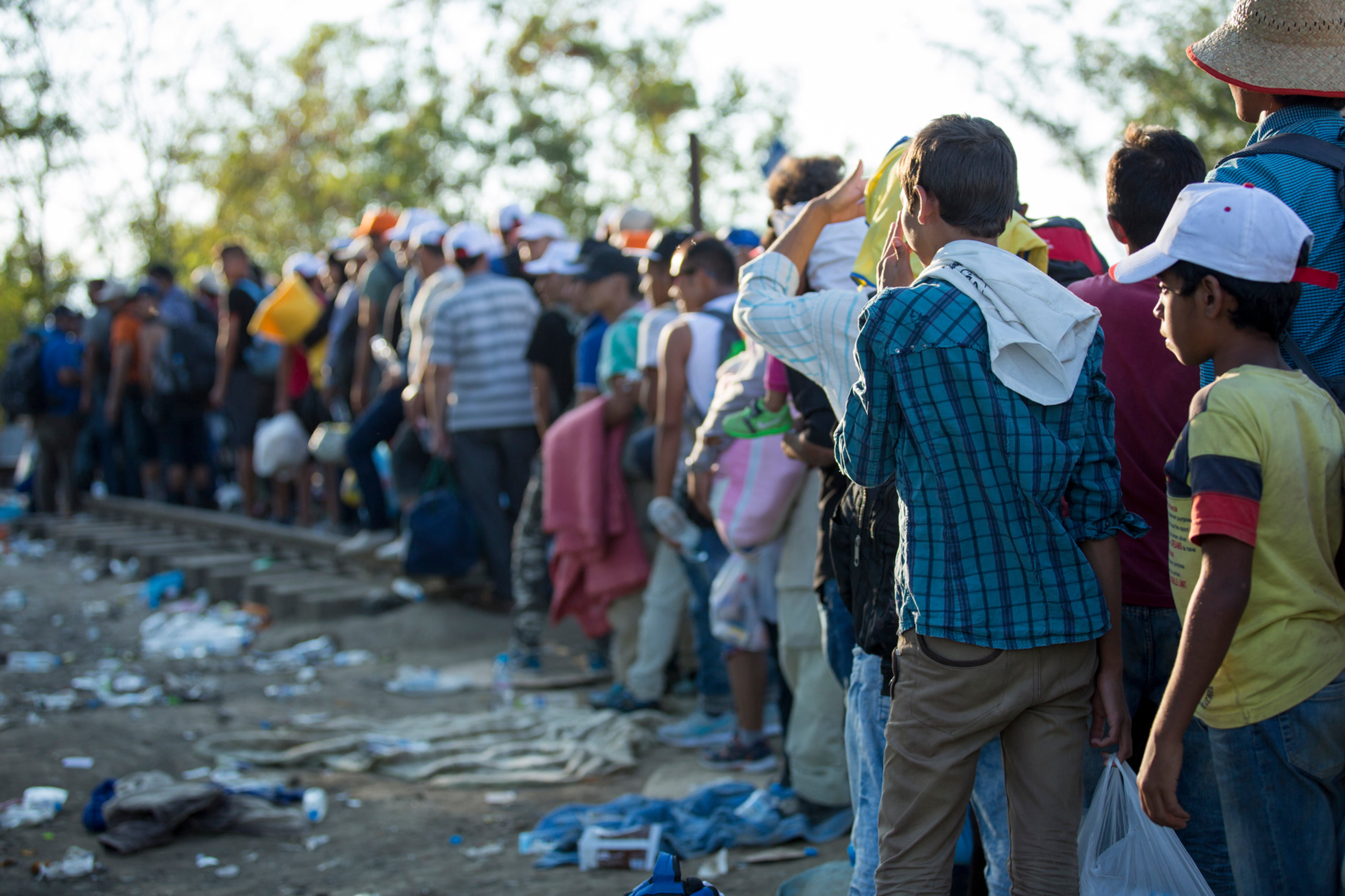
The outcome of President Obama’s Leaders’ Summit on Refugees in New York marks a small step forward but falls far short of what is needed to address the global refugee crisis.

Leaders at the summit increased commitments on resettlement, humanitarian funding, refugee education and access to work. The pledges – which pale in comparison to what is needed – come after the UN Summit for Refugees and Migrants ended in abject failure earlier this week.

“This week’s summits only served to expose the leadership crisis. With few exceptions, many world leaders failed to rise to the occasion, making commitments that still leave millions of refugees staring into the abyss,” said Salil Shetty, Secretary General of Amnesty International.

“With few exceptions, many world leaders failed to rise to the occasion, making commitments that still leave millions of refugees staring into the abyss.”

Salil Shetty, Secretary General of Amnesty International.

“Wealthy countries cannot only commit money and walk away. The 360,000 resettlement places offered globally need to be seen in the context of more than 20 million refugees worldwide, with half of them in just 10 countries. And those countries that are amongst the world’s worst abusers of refugee rights, such as Australia and EU states, cannot be allowed to tout small offers of help as a generous response to the crisis.”

States attending the summit committed to increase funding by US$4.5 billion over 2015 levels. Ahead of the Summit the White House also announced that 51 US companies committed to donating, investing or raising more than US$650 million to aid the refugee crisis. This includes a US$500 million donation by investor and philanthropist George Soros.

“It speaks volumes that one individual has pledged more than more than China, the world’s most populous and second wealthiest country, which pledged US$300 million,” said Salil Shetty.

“Until more countries, especially wealthy ones, take in a significantly greater and fairer share of the world’s refugees, they will remain on the wrong side of history.”

Salil Shetty

“The commitment to take some refugees in is a small step forward, but the absence of a desperately-needed global system for sharing responsibility after two major summits means states have missed a rare opportunity to take a giant leap towards solving the crisis.

“While world leaders smile for the cameras, this week’s meagre summit outcomes do not let them off the hook. Until more countries, especially wealthy ones, take in a significantly greater and fairer share of the world’s refugees, they will remain on the wrong side of history.”

“My heart is exhausted”: A mother’s story of death row in Saudi Arabia

Ali al-Nimr was just 17 when he was arrested on 14 February 2012, a few months after taking part in anti-government rallies in Saudi Arabia. He was sentenced to death, despite being a minor when he was arrested and following a deeply unfair trial based on “confessions” he says were obtained through torture.

He now awaits his execution. His mother, Nassra al-Ahmed, tells their story.

When I first heard the verdict to execute my little boy, I felt as if a thunderbolt was hitting my head. It rendered me bereaved and rid of the most cherished and beautiful things I have.

His absence has exhausted my heart. My eyes shed tears automatically, yearning for him. I am overtaken by missing his angelic features. His smile never leaves my mind and memories prompt me to weep each time I see one of his pictures.

Everything that was beautiful

Before Ali’s arrest, my family led a normal life. He was a nice beautiful child who never ceased to become even more beautiful as he grew up. His beauty was prompted by his kind heart, love of others and beautiful morals. He loved everything that was beautiful; Allah, virtue, nature, sea, sun, trees and animals.

There is no place in Ali’s heart for despair. He has always been optimistic and smiling. He enjoyed reading and photography, and spent most of the day keeping, cleaning and feeding birds. He didn’t like to keep them inside the cage – he used to set them free to fly around the yard without anyone annoying them.

There is no place in Ali’s heart for despair. He has always been optimistic and smiling.

Nassra al-Ahmed

His father used to take him on his commercial travels and soon realized his son’s passion for travel and knowledge. He was always asking questions about the origins of the differences in food and costume between different peoples. He would even wonder about the differences between faiths. He used to say: “Christians worship God, Muslims worship Allah, so why are they different from each other?”

Ali al-Nimr
© Private

Bitter taste of prison

I wept and cried when he was taken, but never expected that I would go on crying and weeping for four long years. He was taken from the warmth of our home and forced to be detained in the freezing cold of dark prisons. He was absented from his house and loved ones to taste the bitter insipid taste of life in prison cells.

No situation was more painful than when I saw my son in prison. I was yearning to see him, but I had to turn my face because I did not recognize him. He did not have his shape, or his voice, because he had been tortured.

No situation was more painful than when I saw my son in prison. I was yearning to see him, but I had to turn my face because I did not recognize him. He did not have his shape, or his voice, because he had been tortured.

NASSRA AL-AHMED

He didn’t need to tell me what had happened because his face, hands, feet and body spoke on his behalf. Wounds and swollen bruises were clearly visible on his body. He was weak and wasted as well as very evidently yellowish and frail. All of this was a result of being kicked and beaten.

Generosity, passion and kind heart

With Ali’s absence, I miss many things and many things in life miss him as well. They miss his presence and generosity. Everything in the house misses his touch, passion and kind heart.

Every time I weep, I imagine Ali wiping my tears and patting me on the head, telling me: “Don’t cry mom, do not make my heart sad”. I used to wait for daylight at night, but now I can no longer tell days from nights; they have both collapsed into darkness. I have headaches each night and insomnia has taken control to the extent that I now hate the time night falls.

Ali is life, and life cannot flourish without him; he brings life to space and pulse to time. He is the light without whom life is not beautiful in our eyes.

Ali is life, and life cannot flourish without him; he brings life to space and pulse to time. He is the light without whom life is not beautiful in our eyes.

NASSRA AL-AHMED

Hope and freedom

I plea to all people of humanity to appeal to the officials to release my son. He should be free to live the life he aspires for as a young man full of ambition and the desire to give. At the least, they should give him a retrial that is public and fair and in accordance with international standards. It should be based on evidence rather than trumped-up charges.

I am more than sure that my son is innocent. And I still have rigorous hope that never wanes despite the difficulties and challenges. This hope shall materialize; Ali will regain his freedom and he shall emerge more optimistic and giving than ever before.

Despite everything, Ali’s morale is high, thank God. He says: “I am a man who lives on hope. Should it materialize, I will be thankful to Allah. If it does not, I will live happily on such hope.” Likewise, I, his mother, live on hope, for what my son believes is the sound choice, so that life can go on.


Egypt: Are human rights abuses worse than ever?

On 25 January 2011 thousands of Egyptians gathered in Tahrir Square to demand dignity, social change, freedom, and democracy.

Four years on, after what seemed like a successful uprising, many believe that Egypt is worse than ever.

What happens when peaceful protest becomes illegal?

In 2013, Egypt’s interim government established an anti-protest law preventing people protesting without prior authorisation. This crackdown on dissent has so far led to the arrest of up to 41,000 political protesters.

In January 2014, 18-year-old Mahmoud Mohamed Ahmed Hussein was arrested for wearing a t-shirt with the words “Nation without Torture Campaign” printed on it. Following his arrest, Hussein was tortured with electric shocks to his back, hands and testicles, and forced to confess to terrorism-related activities. He remains in jail without charge or trial.

The Muslim Brotherhood and the Al Jazeera Three

Australian Al Jazeera journalist Peter Greste spent 400 days in a Cairo prison amid false allegations of aiding the Muslim Brotherhood, a religious and political group declared a terrorist organisation by Egypt. Although Greste is now free, he was recently re-tried in absentia and found guilty, alongside his colleagues Egyptian Baher Mohamed and Canadian Mohamed Fahmy. The trio have been sentenced to between three and three and a half years in prison. Their only crime – reporting the news.

The trio have been sentenced to between three and three and a half years in prison. Their only crime – reporting the news.

The AJ3 staff and their lawyers state there was no evidence against them and their sentences are an attack on freedom of the press in Egypt. This unjust verdict sends out the dangerous message that reporting the news and telling the truth in Egypt is not legal and will land you in jail.

When the AJ3 were jailed in 2013, the #FreeAJstaff campaign went viral around the world. However, when Greste was released and deported back to Australia and Mohamed and Fahmy were released on bail, human rights abuses in Egypt began to garner less attention from the international community. Now the AJ3 are back in the spotlight, so are human rights abuses in Egypt. Only now, more international pressure must be placed on the Egyptian Government to uphold the basic human rights of its citizens and ensure freedom of the press.

Egypt, terrorism, and the media

Two weeks ago President Abdel Fattah el-Sisi signed a controversial anti-terrorism bill that will have far-reaching implications for journalists and the media in Egypt. The bill has been established to stop all media channels from contradicting the government’s version of any ‘terrorist’ attack. Exorbitant fines, starting at $25,000, can be imposed on anyone who strays from official statements in their reporting.

Exorbitant fines, starting at $25,000, can be imposed on anyone who strays from official statements in their reporting.

The legislation offers additional protection concerning the legal ramifications for military and police officers who have used force on citizens. The laws vastly expand Sisi’s power and effectively ban the rights to freedom of expression. There is currently no evidence that the Muslim Brotherhood in Egypt has targeted civilians using deadly or serious violence, these are empty allegations. The ‘terrorist’ label has ensured no peaceful Brotherhood activities can take place and is adversely affecting the health, education and safety of Brotherhood members.

What needs to happen?

The first step to fixing the situation in Egypt would be to create an appropriate balance of powers by ensuring a fair and just legal system, independent from the military. With over 41,000 Egyptian ‘dissenters’ detained and sentenced over the last two years, the integrity of judges and public prosecutors has now been thrown into question.

Unfortunately, we can expect more devastating violence from both sides if the government continues to silence the people of Egypt. Sisi should remove the anti-protest laws and allow for freedom of expression, peaceful assembly and association throughout Egypt. The international attention shown throughout the #FreeAJstaff campaign should continue to mount pressure on the Egyptian authorities until the widespread attack on civil liberties in Egypt has ceased.

How do you think Egyptian’s can best voice their opinion without harming their safety and future in the country? Share your thoughts and support for those who have been rendered voiceless in the comments section below.

Feature written by Jessica Rose Heron, an Amnesty International Australia Intern.

Ending the death penalty: global update

Guy Ragen represented AIA at this year’s World Congress Against the Death Penalty. Here’s what he learned.

Every three years, the global movement for the death penalty’s abolition comes together at the World Congress Against the Death Penalty. This year’s Congress was held in Oslo, Norway in late June, and I was lucky enough to represent Amnesty International Australia.

Over 1300 delegates, from all over the world – including parliamentarians, government officials, lawyers, civil society workers, campaigners, former death row prisoners, and those whose family and friends have been the victims of capital punishment – attended. The end result was this declaration.

Amnesty has been campaigning against the death penalty since 1977, and I know a lot of our activists have spent years campaigning on what is such a fundamental human rights issue – so I thought I’d share a few thoughts from the Congress.

Now is a pivotal time in the abolition movement. In the past year, there has been some really positive developments, with Mongolia and Fiji joining the ranks of abolitionist countries. Yet, executions spiked to a 25 year high. Meanwhile, there are some very concerning signs in the Philippines that the death penalty will be re-introduced. And, of course, Indonesia executed four more people last week.

On the positive side, Australia is genuinely now seen as a leading voice in the abolitionist movement. Australia co-sponsored the Congress with Norway, and was named in numerous plenaries, and in passing conversations with people, as being the most pro-active voice outside Europe right now.

That didn’t come about from nowhere. While the campaign to save Myuran Sukumaran and Andrew Chan from the firing squad ended tragically, the huge and inspiring outpouring of support from Australians – many of them Amnesty activists – clearly led to the Australian government re-thinking its role. The strong, and long, campaign from our activists has definitely been heard in Canberra.

And, more quietly, it’s what the Government Relations Team and Rose from the Campaigns team have been working on for the past 15 months. We’ve been repeatedly meeting the Department of Foreign Affairs and Trade, and have made numerous policy suggestions which the government has taken on board.

It also means our diplomats all over the world are constantly lobbying countries with the death penalty to make change. While you may not see a lot of public statements from Australia about individual cases Amnesty is working on, we are constantly in contact with our government and know they are very active behind the scenes (including in Indonesia right now).

What’s next?

Later in the year we’ll see the UN General Assembly hold its vote calling for a worldwide moratorium on the death penalty. Australia is again leading the way with Norway in co-authoring the text of the resolution, and trying to rustle up as many supportive votes as possible.

One thing which was very clear at the Congress is that there is no global abolition movement without Amnesty. The work activists, campaigning long and hard for individual cases, and our annual statistics, really do form the bedrock of the international movement. Despite setbacks, the global momentum is still towards abolition.

On a personal note, it’s an enormous privilege to represent Amnesty Australia at an international event, and meet Amnesty activists and staff from Europe, SE Asia, North Asia, Africa, the Middle East and North America (there were around 30 Amnesty sections in attendance) – and is something that isn’t possible without our supporters. So, thank you!

Prime Minister Turnbull fails to step up and do our fair share

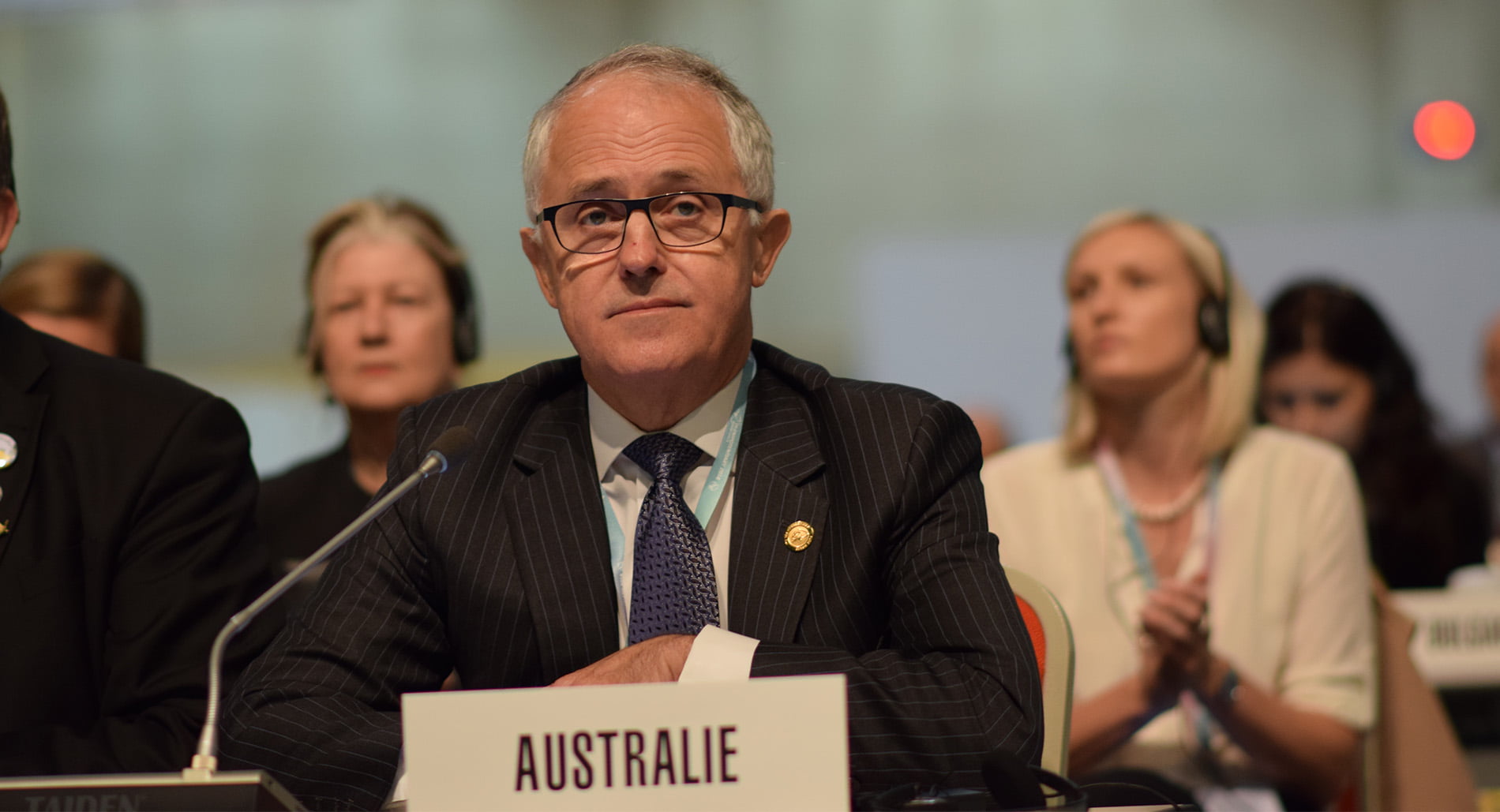
Commitments made by Prime Minister Malcolm Turnbull at the Obama Summit in New York last night are far from enough when it comes to stepping up and helping the world’s most vulnerable people.

Responding to Prime Minister Turnbull’s announcement last night that Australia’s humanitarian intake will remain at 18,750, Ming Yu Hah, Refugee Campaigner at Amnesty International Australia said:

“Let’s be clear about this, very little of what the Australian Government has announced is new.”

“Let’s be clear about this, very little of what the Australian Government has announced is new.”

Ming Yu Hah, Refugee Campaigner at Amnesty International Australia

“Of course we welcome making permanent a move that allows more people to settle in safety and rebuild their lives, however, this was a critical opportunity for change, and the Australian Government has shirked its fair share of responsibility at a time of record global displacement.

“To ensure the 1.2 million most vulnerable refugees are cared for, the Australian Government should have committed to an annual minimum of 30,000 people.

“The Government should have been looking at how much, not how little, Australia can do to help people who need urgent protection.”

“The Government should have been looking at how much, not how little, Australia can do to help people who need urgent protection.”

Ming Yu Hah

Amnesty International strongly criticises the Australian Government for failing to use this opportunity to commit to immediately transferring people from Nauru and Manus Island and bringing them to Australia for processing and settlement.

“What Prime Minister Turnbull failed to explain at the summit is that the Australian Government’s current approach to border protection depends on the intentional abuse of thousands of men, women and children.”

“The fact that Prime Minister Turnbull again stood on the world stage championing a deliberate system of cruel treatment for thousands of refugees rather than committing to bringing them to safety, is shameful,” said Ming Yu Hah.

India: Kashmiri human rights activist re-arrested

Kashmiri human rights activist Khurram Parvez has been detained a second time, after a court ordered his release from administrative detention on Tuesday.

“Detaining a person right after he is released, without any intention to charge him or bring him to trial, amounts to using a revolving door of persecution,” said Aakar Patel, Executive Director, Amnesty International India.

“This kind of arbitrary use of the law suggests that the Jammu and Kashmir police are determined to lock up Khurram Parvez at any cost.”

The activist was first arrested on 16 September and placed in administrative detention in a jail in Kupwara, over 100 kilometres from his home in Srinagar, for allegedly posing an imminent threat of ‘breach of peace’. The detention order was based on a police report which claimed that policemen had seen Khurram Parvez on 15 September standing outside a mosque inciting people to shout slogans and march towards a government building. His wife has denied the claim, saying that they were at her parents’ house in another part of the city at the time.

“This kind of arbitrary use of the law suggests that the Jammu and Kashmir police are determined to lock up Khurram Parvez at any cost.”

Aakar Patel, Executive Director, Amnesty International India.

On Tuesday, a court in Srinagar ordered Khurram Parvez to be released after ruling that the executive official who ordered the detention had not followed necessary procedures, including by failing to adequately explain the grounds for his detention. As soon as Khurram Parvez was released, however, he was again detained and later transferred to a police station in Srinagar. According to media reports, the police are holding him in administrative detention under the Jammu and Kashmir Public Safety Act, and are likely to move him to the Kot Balwal jail in Jammu, about 300 kilometres from Srinagar. Senior state police officials have not responded to queries about the case.

Administrative detention laws such as the Jammu and Kashmir Public Safety Act allow for people to be detained without charge or trial. These laws have often been used to hold individuals in arbitrary detention on vague grounds for long periods of time, ignoring regular criminal justice safeguards.

Khurram Parvez uses a prosthetic leg. His left leg was amputated due to a landmine injury in 2004.

Amnesty International India calls on authorities in Jammu and Kashmir to immediately release Khurram Parvez, or charge him with a recognizable criminal offence and prosecute him in a fair trial. Pending his release, he must be protected from torture or other ill-treatment, given access to his family and lawyers, and provided adequate medical care.

Background

Khurram Parvez is the Programmes Coordinator of JKCCS (Jammu Kashmir Coalition of Civil Society), as well as the Chairperson for the Asian Federation against Involuntary Disappearances, a collective of 13 non-governmental organizations from ten Asian countries. JKCCS has extensively documented and litigated on human rights violations in Jammu and Kashmir.

Over 80 people have been killed and thousands injured in Jammu and Kashmir in recent months, following protests and violent clashes after a leader from the Hizbul Mujahideen armed group was killed in July. Security forces have used arbitrary and excessive force in response to the protests and hundreds of people have been blinded or otherwise injured, by pellet-firing shotguns.

On 13 September, the UN High Commissioner for Human Rights reiterated a request, first made in July to Indian and Pakistani authorities, for access to all parts of Kashmir to look into allegations of human rights violations. India’s Ministry of External Affairs has denied the request.

On 14 September, Khurram Parvez was stopped at Delhi’s International Airport and prevented from travelling to the UN Human Rights Council Session in Geneva. He was not given any official explanation by the immigration officer, only that he needed approval by the Intelligence Bureau before travelling.

Right to freedom of movement

Indian courts have ruled that the right to travel abroad flows from the right to life and personal liberty guaranteed under Article 21 of the Indian Constitution. In March 2015, the Delhi High Court declared a travel ban against a Greenpeace activist to be illegal, and observed: “The state may not accept the views of the civil right activists, but that by itself, cannot be a good enough reason to do away with dissent.”

The International Covenant on Civil and Political Rights (ICCPR), to which India is a state party, states that “everyone shall be free to leave any country, including his own.” Restrictions to this right must be provided by law and be necessary and proportionate for specified aims under international human rights law.

The UN Human Rights Committee, which oversees the implementation of the ICCPR, has said that restricting the movement of journalists and others seeking to travel abroad, including to attend human-rights-related meetings, violates their freedom of expression.

Syria: ‘Horrific’ attack on UN aid convoy is a flagrant violation of international law

Last night’s attack on a UN/Syrian Arab Red Crescent aid convoy, intended for 78,000 people in Aleppo, is a flagrant violation of the most fundamental principles of international humanitarian law.

Witnesses in Syria have told the organization that the convoy, along with the Syrian Arab Red Crescent warehouse where it had docked, were bombed intensively for two hours on Monday evening, heightening the suspicion that Syrian government forces deliberately targeted the relief operation.

“A sustained attack on a humanitarian convoy and workers, horrific enough in any circumstances, will in this case also have a disastrous impact not only on those desperate civilians for whom the assistance was intended, but for life-saving humanitarian operations throughout Syria,” said Philip Luther, Research and Advocacy Director for the Middle East and North Africa at Amnesty International.

“If the convoy was – as it appears – deliberately attacked, this would be yet another war crime committed by the Syrian government. It illustrates how civilians in Syria are paying with their lives for five years of total impunity for systematic war crimes and crimes against humanity. Until the international community shows that it is serious about bringing perpetrators to justice, these appalling crimes will continue on a daily basis.”

“Until the international community shows that it is serious about bringing perpetrators to justice, these appalling crimes will continue on a daily basis.”

Philip Luther, Research and Advocacy Director for the Middle East and North Africa at Amnesty International.

The UN aid chief, Stephen O’Brien, earlier said that the convoy was travelling with all the necessary permits, and that all parties in the conflict had been notified of its route. The UN has announced a temporary suspension of all aid convoys in Syria following the attack. Around 20 civilians were killed in the attack, according to the International Committee of the Red Cross.

Witnesses interviewed by Amnesty International said a variety of aircraft, including helicopters and Russian-made fighter jets, took part in the bombardment, in the town of Urum al-Kubra in the west of Aleppo governorate. Twenty-one of the 31 trucks in the convoy had been partially or completely destroyed.

“The explosions focused only on the vicinity of the Red Crescent centre, which is far from any military presence. I couldn’t initiate a search and rescue operation until the bombing stopped… it kept going for at least two hours,” a rescue worker in Urum al-Kubra told Amnesty International.

“I couldn’t initiate a search and rescue operation until the bombing stopped… it kept going for at least two hours.”

Witness

Abu Haytham, a media activist, said he heard a warplane in the area but had never imagined that the Syrian Red Crescent building would be targeted. When he arrived at the site after the bombardment, many trucks were aflame and the building had been destroyed.

“I saw the bodies of men on the ground,” he said. “I was told they were truck drivers and volunteers who had been unloading the trucks. The trucks had the logo of UNHCR. The aid included medicine, food and other desperately needed items.”

Amnesty International urges other countries to see through Turnbull’s deception on refugees

Ahead of the Leaders Summit, hosted by US President Barack Obama in New York tomorrow, Amnesty International is urging other countries to reject the model of abuse that Australian Prime Minister Malcolm Turnbull is championing and instead call on Australia to do its fair share.

“Instead of doing its fair share for the world’s most vulnerable people, the Australian Government is trapping thousands on remote islands and then promoting these abusive practices as a solution to the world.”

Dr Graham Thom – Refugee coordinator, Amnesty International Australia

Ahead of the Leaders Summit, hosted by US President Barack Obama in New York tomorrow, Amnesty International is urging other countries to reject the model of abuse that Australian Prime Minister Malcolm Turnbull is championing and instead call on Australia to do its fair share.

Dr Graham Thom, Amnesty International Australia’s refugee coordinator, who is currently in New York for the UN and Leaders Summits, said:

“Today’s refugee situation is a global challenge where all governments must step up. It is absolutely shameful to see our Prime Minister stand on the world stage and champion the systematic abuse of thousands of women, children and men on remote islands as a model others should follow.

“It is absolutely shameful to see our Prime Minister stand on the world stage and champion the systematic abuse of thousands of women, children and men on remote islands as a model others should follow.”

Dr Graham Thom

“Prime Minister Turnbull says world leaders should look to Australia’s border control policies for inspiration, yet he fails to explain that Australia’s definition of “border control” equates to the Government building a deliberate system of cruel treatment for refugees, and flouting international law.

“This is completely the wrong pathway for the world to follow at a time with record global displacement. Cruelty and shirking responsibility will not solve this global situation and it shows just how out of step Prime Minister Turnbull is with global reality.

“The purpose of these two summits in New York is for key leaders to agree on innovative, visionary and practical ways forward to address the global refugee situation. At the very heart of any solution is each government doing their fair share, there is simply no other way for this global challenge to be resolved.”

“At the very heart of any solution is each government doing their fair share, there is simply no other way for this global challenge to be resolved.”

Dr Graham Thom

Amnesty International is strongly calling on the Australian Government to step up at the Leaders Summit tomorrow and urgently change direction. First by immediately committing to getting people off Nauru and Manus Island and bringing them to Australia for processing and settlement.

The human rights organisation is also calling on Australia to step up its humanitarian refugee intake to an annual minimum of 30,000 people.

Dr Graham Thom added: “Australia is one of the richest countries in the world, yet our government is failing to play a fair part in providing sanctuary for those fleeing conflict and persecution and this urgently needs to change.”

“International law makes it plain that everyone is entitled to seek asylum in other countries. Championing this abuse is as unsustainable as it is cruelly unfair.”

The unjust legacy of Egypt’s darkest day

Two years on from Egypt’s Rabaa massacre many ordinary Egyptians still live in the shadow of what happened that day. Amnesty International campaigner Nadine Haddad describes the violence and its aftermath.

1,000 people dead

As you walk through the bustling traffic in Cairo’s Rabaa al-Adawiya Square today, you would never know the bloodiest incident in Egypt’s recent history had taken place there exactly two years ago, on 14 August 2013, when the dispersal by security forces of two sit-ins in Cairo and other protests across Egypt left up to 1,000 people dead in a single day.

The government has recently renamed the square after Egypt’s public prosecutor, Hisham Barakat, who was assassinated in Cairo in a car bomb on 29 June. To some, he represented the state protecting its citizens, but to many others he was a symbol of repression covering up for security forces’ abuses and ordering the detention of thousands incarcerated in the authorities’ mounting crackdown on dissent over the last two years.

The only commemorative sculpture in the square – erected after the massacre – is of two angular arms, representing the police and army, protecting a silver orb, representing the Egyptian people.

There is nothing that evokes the blood, death and flames, so prominent that day, except for the memories which resurface as you walk around.

Sniper fire

This July, I revisited the Rabaa al-Adawiya medical center, which overlooks the square, for the first time since I witnessed the massacre. Today, the outer walls that had been blackened after the security forces had set the building alight are clean. The blood has long since been scrubbed off the inner walls, floors and spiraling staircase. It looks and feels just like any medical center. Doctors and patients quietly go about their business.

On 14 August 2013, you had to cross through sniper fire just to reach or leave the center. Inside, were scenes of emergency and chaos. There was a shortage of hospital beds and medical equipment. Many of the injured lay on any available space of floor, even alongside bodies of the dead.

I’ll never forget the man who risked his life crossing sniper fire just to deliver a small plastic bag full of medicines as supplies ran out.

Nadine Haddad, Amnesty International campaigner

I’ll never forget the man who risked his life crossing sniper fire just to deliver a small plastic bag full of medicines as supplies ran out. Or the woman, fully covered in a black niqab, sitting on the hospital floor by a pool of blood next to her dead husband who had been shot in the head. The stench of death was everywhere.

Second anniversary of the violence

Today, many ordinary Egyptians are still living in the shadow of what happened in Rabaa that day. It proved a turning point, a day in which the full ferocity of the security forces was laid bare.

Sara, a petite 25-year-old student, was a participant [protesting] at the Rabaa sit-in. Her last memory of her father, Mohamed al-Sayed, a 58-year-old medical doctor, is of four masked burly men shoving him into the back of a car outside their house and speeding away as they shot at family and neighbors trying to chase after them, two weeks after the Rabaa incident. She has not seen him or heard his voice since.

“Where is my father?” she asks. “Where is the law in this country? What is the evidence against him?”

In Sara’s hometown of Zagazig, north of Cairo, she says it took three days for the police to file a formal report of her father’s disappearance. A complaint by the family to the Public Prosecutor’s Office has yielded no results. Through informal sources, she’s discovered that her father is likely to be in a military prison somewhere.

As the two-year anniversary of her father’s disappearance approaches, Sara says: “I don’t feel like I’m alive. He was the soul of our family, and he’s been taken away.”

Mohamed al-Sayed joins a growing list of people arrested and detained incommunicado for prolonged periods, under conditions of enforced disappearances, in the two years since Egypt’s former president Mohammed Morsi was ousted from power by the military.

No accountability

The police and army opened fire and used excessive force to disperse the sit-in of Morsi supporters four times in July and August 2013. The Rabaa massacre on 14 August 14 was Egypt’s darkest day.

In the two years since then, not a single security officer has been held accountable for the hundreds of deaths and injuries that day. The public prosecutor and a national fact-finding committee appointed by the government to investigate the killings failed to uphold justice; they put the blame on protesters for violence and shielded the security forces from any criticism.

The police and army opened fire and used excessive force to disperse the sit-in of Morsi supporters four times in July and August 2013. The Rabaa massacre on 14 August 14 was Egypt’s darkest day.

Nadine Haddad, Amnesty International campaigner

Instead, the authorities have accelerated their crackdown arresting thousands, who either support the Muslim Brotherhood, which has since been declared a terrorist organization by the state, or former president Morsi. The crackdown has also targeted journalists, rights defenders, students, perceived government opponents and others just caught in the wrong place at the wrong time.

More than 22,000 people have been detained since July 2013. At least 124 have died in detention, either after torture and other forms of ill-treatment, or because of the very poor detention conditions and lack of access to medical care in prison.

Meanwhile, Egypt’s criminal justice system has become another tool for repression by prosecuting and trying people in grossly unfair mass trials in which judges sentence hundreds of people – often supporters of the Muslim Brotherhood – to death or life imprisonment.

Metwally Ali-Sayed, whose two sons were shot dead by security forces during the Rabaa sit-in, is demanding justice for their killing and all others who died.

“They don’t even treat us like…human beings,” he says.

So far, the spiralling human rights crisis in Egypt has been met with an almost deafening silence from the international community. Instead, many of Egypt’s international allies have sought to strengthen trade and business ties with President Abdel-Fattah el-Sissi’s government; some have resumed arms exports in recent months and signed new sales.

Respect for human rights is fundamental for the future stability and prosperity of Egypt. Countries must take strong and coordinated action at the United Nations, including at the upcoming September session of the Human Rights Council, to publicly condemn the deterioration of the human rights situation in the country. All states, including the U.S., U.K. and France, must immediately suspend the transfer of all arms that could be used in internal repression.

This collective failure to act in the face of the bloodiest and most repressive days in Egypt’s recent history is an affront to justice and humanity, an insult to the memory of those who died and willful blindness to a situation that will only get worse if left unchecked.

This story was first published by newsweek.com
India: Kashmiri human rights activist held in administrative detention

Kashmiri human rights defender Khurram Parvez must be immediately released from administrative detention unless he is charged with recognizable criminal offences.

The 39-year-old, who is the coordinator of the Jammu Kashmir Coalition of Civil Society Organisation (JKCCS), a prominent human rights organization, was arrested from his Srinagar residence and detained by the state police on Thursday evening, a day after he was prevented from traveling to the ongoing UN Human Rights Council in Geneva.

“Preventing a well-known activist from traveling abroad for human rights advocacy, and then locking him up on spurious grounds, is a shameful attempt to suppress a peaceful dissenting voice from Kashmir,” said Aakar Patel, Executive Director at Amnesty International India.

“Preventing a well-known activist from traveling abroad for human rights advocacy, and then locking him up on spurious grounds, is a shameful attempt to suppress a peaceful dissenting voice from Kashmir.”

Aakar Patel, Executive Director at Amnesty International India

“The JKCCS has been consistently working on several human rights issues including mass graves, torture and extrajudicial executions. Khurram Parvez has a right to raise these important human rights concerns abroad, but his attempt to exercise this right is now being painted as an imminent crime.”

Khurram Parvez’s lawyers told Amnesty International India that the police had said he would be placed in ‘preventive detention’ for five days under Sections 107 and 151 of the Code of Criminal Procedure, but had not provided any other reasons. These provisions authorize administrative detention in cases of imminent ‘breach of peace’ or disturbance of ‘public tranquillity’. The detention can be extended indefinitely.

“Khurram Parvez has a right to raise these important human rights concerns abroad, but his attempt to exercise this right is now being painted as an imminent crime.”

AAKAR PATEL

The Supreme Court has described administrative detention legislation as ‘lawless laws’.

On 14 September, Khurram Parvez was stopped at the Delhi airport and prevented from travelling to Geneva, despite having a valid visa and necessary documents. He said that he was not given any official written explanation for why he was not allowed to travel, but was verbally informed that it was on the instruction of India’s Intelligence Bureau.

The spokesperson of the Jammu and Kashmir police said that he did not have any information about the arrest. The Director-General of Police, Jammu and Kashmir, did not respond to text messages and telephone calls.

The day before his arrest, Khurram Parvez told Amnesty International India, “They are aware that I have been collecting information at the grassroots as a part of the documentation work that JKCSS has been doing on the present situation in Kashmir.”

Administrative detention laws allow for people to be detained without charge or trial. Under international law, administrative detention is only permitted in exceptional circumstances and when subjected to stringent safeguards. In India, these laws have often been used to detain individuals on vague grounds, ignoring regular criminal justice safeguards.

Amnesty International India opposes all systems of administrative detention.

Background

Indian courts have ruled that the right to travel abroad flows from the right to life and personal liberty guaranteed under Article 21 of the Indian Constitution. In March 2015, the Delhi High Court declared a travel ban against a Greenpeace India activist to be illegal, and observed: “The state may not accept the views of the civil right activists, but that by itself, cannot be a good enough reason to do away with dissent.”

The International Covenant on Civil and Political Rights (ICCPR), to which India is a state party, states that “everyone shall be free to leave any country, including his own.” Restrictions to this right must be provided by law and be necessary and proportionate for specified aims under international human rights law.

The UN Human Rights Committee, which oversees the implementation of the ICCPR, has said that restricting the movement of journalists and others seeking to travel abroad, including to attend human-rights-related meetings, violates their freedom of expression.

Over 80 people have been killed and thousands injured in Jammu and Kashmir in recent months, following protests and violent clashes after the killing of a leader of the Hizbul Mujahideen armed group in July. Security forces have used arbitrary and excessive force in response to the protests. Hundreds of people have been blinded or otherwise injured by pellet-firing shotguns. Scores of people have been placed under administrative detention under the Jammu and Kashmir Public Safety Act.

On 13 September, the UN High Commissioner for Human Rights reiterated a request first made in July to Indian and Pakistani authorities for access to all parts of Kashmir in order to look into allegations of human rights violations. India’s Ministry of External Affairs has denied the request.