Report: Heads held high

When Aboriginal and Torres Strait Islander children are strong in their identity and culture, and have the support of their communities, they can face even the toughest challenges. But many Indigenous children have been disconnected from their culture and too frequently end up in detention, away from their community.

Despite comprising only 6% of the population of 10 to 17 years-olds, Indigenous children make up over half of the youth detention population in Australia. Nationally, Aboriginal and Torres Strait Islander children are 24 times more likely to be incarcerated than non-Indigenous children. Recent media coverage of the abuse of Indigenous children in the Northern Territory’s youth detention centre has brought international attention to the broader injustices facing Indigenous children in the Australian justice system.

In August 2016, we launched our report, Heads held high: Keeping Queensland kids out of detention, strong in culture and community.

In this report, the third in a series of reports for the Community is Everything campaign, Amnesty International documents similar concerns about the condition and treatment of Aboriginal and Torres Strait Islander children in detention in Queensland.

The report also considers the wider human rights implications presented by the over-representation of Aboriginal and Torres Strait Islander children in Queensland’s youth justice system. Indigenous children in Queensland are 22 times more likely to be detained than non-Indigenous children. Aboriginal and Torres Strait Islander children make up about 8% of all 10 to 17 year-olds in Queensland but 65% of the youth detention population on an average day.

Read the report

Indigenous-led solutions: Mona Horsemanship Program

Indigenous programs are key to Indigenous success. This Indigenous-led community program is making a difference for their kids in Mt Isa.

© WAYNE QUILLIAM / AI

The Mona Horsemanship Program is just one of the many Indigenous-designed and led community programs that nurture kids’ potential and provides a successful alternative to children’s prisons. Now, these Indigenous leaders are asking for the government’s support in keeping their program going.

Patrick Cooke, Angela and David Sammon, and Rex Ah-One began Mona Aboriginal Corporation’s cultural horsemanship program in response to a lack of culturally appropriate healing programs. Their program focuses on restoring pride to Indigenous young people with spiritual guidance and support from Elders and program mentors.

A boy rides a horse with co-founder David Sammon as part of Mona’s Cultural Horsemanship program on Flora Downs Station, near Mount Isa, June 2016. © Wayne Quilliam

“What’s missing in a lot of children’s lives is getting back to country and back to culture. A lot of non-Indigenous programs lack the cultural connectivity,” says Patrick Cooke, Chairperson of Mona Corp and Aboriginal man from the Mount Isa region.

“What’s missing in a lot of children’s lives is getting back to country and back to culture. A lot of non-Indigenous programs lack the cultural connectivity.”

Patrick Cooke, Chairperson of Mona Corp

The Cultural Horsemanship Program runs for 15 weeks and teaches children and young people respect, mechanical training and skills, meal preparation, fencing and yard building, animal husbandry, cultural education and skills such as hunting and gathering.

After an initial trial in 2012, a program evaluation showed clear indicators of success, including cost-effectiveness and behavioural changes.

Nivea’s story

16-year-old Aboriginal, Torres Strait and South Sea Islander girl, Nivea*, had been having a hard time at home.

“I didn’t really have anyone to look up to once Mum moved away,” she said. “I was hanging around the wrong crowd, going to parties… I didn’t really like drinking but that’s what they did for fun.”

“I didn’t really have anyone to look up to once Mum moved away. I was hanging around the wrong crowd, going to parties… I didn’t really like drinking but that’s what they did for fun.”

Nivea, a young Aboriginal, Torres Strait and South Sea Islander girl

Nivea ended up with a warning from police after being with her friends when they were stealing. But her situation turned around once she started going out on country with the Mona team.

“It’s been way better – I get in less trouble… I come out here to the station to work with them. You have to get up early but it’s better. You learn all this new stuff and meet new people.”

The Mona Horsemanship Program has helped kids in the Mt Isa community. © Wayne Quilliam

Curtis’ story

17-year-old Curtis* had a difficult time after leaving boarding school but found strength at Mona.

“Every time I come out bush it’s just good – it gets me away from all the bad stuff. When you are out bush you got nothing to do but working… most boys don’t get into mischief out here because they’re away from town.”

“When you are out bush you got nothing to do but working… most boys don’t get into mischief out here because they’re away from town.”

17-year-old Curtis

Mentor at Mona, Warumugu man Mark Johnny, says he saw a lot of change in Curtis through the program. “I reckon it’s a good project getting young people doing something like this – working in their own country and land or even working for someone on another land, the same time they can learn the cultural side of the land, how to look after it, and how to work properly.”

In the future, Curtis wants to do stock work and be a manager. “I mainly look up to David [Sammon], he takes a lot of young fellas out bush and helps them out.”

Funding desperately needed

Since 2013, Mona Corporation has repeatedly sought funding but to no avail. The program remains unfunded.

“Tomorrow another kid will commit suicide, another child will go to jail, another generation will be lost. If we could save the life of one child, that’s a generation,” says co-founder, Jingili Mudburra woman Angela Sammon.

“Our kids should be shining, they should be walking with their heads held high.”

“Our kids should be shining, they should be walking with their heads held high.”

Angela Sammon, mona corporation co-founder

Patrick Cooke says he hopes the program can help the next generation: “Our way forward from this is about empowering our youth of today, for tomorrow. It’s about building the capacity, not only of youth but of families, to strive toward the future.”

We’re calling on the Queensland Government to fund more Indigenous-designed and led programs for kids at risk of being sent to prison.

Read more in our latest research report.

Indigenous-led solutions: Boxing with Wayne Parker

Uncle Wayne Parker, an Aboriginal man from Mount Isa, is making a difference for young people in his community through a backyard boxing program in Townsville.

© WAYNE QUILLIAM / AI

He’s just one of the many Indigenous leaders all over Australia – in urban, regional and remote communities – who knows the way forward for Indigenous kids. With Indigenous-designed and led community programs, kids can grow up in an environment that nurtures their potential rather than being trapped in the justice system.

Wayne Parker understands the battle that many young Indigenous people are going through today.

“I was one of those street kids, born and bred in Mount Isa”, he says. “I had a violent relationship with my old man.”

“I was stealing cars and getting into drugs… I’ve moved on from all of that. I’ve been sober for 25 years. It’s a long, hard, rocky road to recover from.”

“I was stealing cars and getting into drugs… I’ve moved on from all of that. I’ve been sober for 25 years. It’s a long, hard, rocky road to recover from.”

Wayne Parker

Boxing helped Wayne to turn his life around, and to deal with his trauma.

“I’ve been involved in boxing for over 30 years now and it’s done a lot for me. It helped me find my feet as a young man and feel accepted.”

“That’s why I’m so passionate about helping these kids today – I’ve actually lived that life and I’ve recovered from it.”

Wayne runs a boxing program in his backyard for local kids. Through the training and mentoring, Wayne helps these children to learn about their identity, discipline, and to gain confidence and respect for themselves.

“The key thing is for them to have respect for themselves. Once they have that, we can help them build a bigger and better future for themselves.”

“The key thing is for them to have respect for themselves. Once they have that, we can help them build a bigger and better future for themselves.”

Wayne Parker

In Wayne’s experience, a lot of young people have lost their way, their connection with culture and community, and do not respect the law.

“Culture has to play a key part in this,”says Wayne. “A lot of them are chroming and sniffing, getting up to mischief… but once we hit home with them about culture, they have a lot more respect for themselves and for the law.”

12-year-old Wayne Parker Junior loves boxing with his grandad. © Wayne Quilliam

12-year-old Wayne Parker Junior says that he loves boxing with his grandad. “He teaches me new things every time we train, it keeps me fit and healthy, it’s a family sport and it runs through our blood. I want to be a national boxer.”

Wayne has designed a program, YOUFLA, based on his many years of training and mentoring Indigenous young people. YOUFLA would see children out on country, connecting with culture, as well as learning practical farming, like mustering and fencing, and life skills. Wayne is currently seeking funding to run a pilot of his YOUFLA program.

“What’s happening in the community affects all of us, and it’s been happening for years and generations. We all have to pull together.”

“What’s happening in the community affects all of us, and it’s been happening for years and generations. We all have to pull together.”

Wayne Parker

Now Indigenous leaders like Wayne need support to make their solutions a reality.

We’re calling on the Queensland Government to fund more Indigenous-designed and led programs for kids at risk of being sent to prison.

Read more in our latest research report.

Bangladesh: Halt imminent execution of Mir Quasem Ali after unfair trial

The Bangladesh authorities must halt the imminent execution of a senior political leader who has been sentenced to death following a deeply flawed trial.

“The people of Bangladesh deserve justice for crimes committed during the War of Independence. The continued use of the death penalty will not achieve this. It only serves to inflame domestic tensions and further divide a society riven by violence,” said Champa Patel, Amnesty International’s South Asia Director.

“The people of Bangladesh deserve justice for crimes committed during the War of Independence. The continued use of the death penalty will not achieve this.”

Champa Patel, Amnesty International

The Bangladesh Supreme Court today upheld the conviction and death sentence against Mir Quasem Ali, a key financier of the Jamaat-e-Islami party, after rejecting his review appeal. It follows an International Crimes Tribunal (ICT) judgement – a Bangladeshi court examining war crimes during Bangladesh’s 1971 War of Independence – that found Mir Quasem Ali guilty of committing crimes against humanity in November 2014.

Last week a group of UN experts urged the Bangladeshi government to annul the death sentence against Mir Quasem Ali and grant him a retrial, noting how the proceedings had reportedly been “marred” by “irregularities”.

Amnesty International and other leading human rights organization have raised serious fair trial concerns about the ICT proceedings. These include denying defence lawyers adequate time to prepare their cases, and arbitrarily limiting the number of witnesses they could call on.

“The ICT proceedings have been marred by fair trial issues from the start. The death penalty is a cruel and irreversible punishment that will only compound the injustice of the proceedings.

Champa Patel, Amnesty International’s South Asia Director.

“Those who suffered through the horrific events of 1971 deserve better than a flawed process. All executions must be halted immediately as a first step towards abolition of this punishment,” said Champa Patel.

The organisation also fears for the fate of Mir Ahmed Bin Quasem, Quasem Ali’s son and a member of his legal defence team. Mir Ahmed Bin Quasem was arrested without a warrant by men in plainclothes on 9 August. He has been held incommunicado ever since, and has not been charged with any crime.

“On the International Day of the Disappeared, the Bangladesh’s authorities must promptly, thoroughly, and effectively investigate the enforced disappearance of Mir Ahmed Bin Quasem,” said Champa Patel.

Background

The ICT is a Bangladeshi court set up by the Government in 2010 to investigate mass scale human rights violations committed during the Bangladeshi 1971 Independence War. Amnesty International welcomed the Government’s move to bring those responsible to justice, but insisted that the accused should receive fair trials without recourse to the death penalty. The proceedings of the Tribunal in previous cases were marked with severe irregularities and violations of the right to a fair trial.

Five people sentenced to death by the ICT have so far been executed since 2013. In 2016, Amnesty International has recorded a total of eight executions in Bangladesh, including the hanging on 10 May of Motiur Rahman Nizami who had been sentenced to death by the ICT.

Amnesty International opposes the death penalty in all cases without exception regardless of the nature or circumstances of the crime; guilt, innocence or other characteristics of the individual; or the method used by the state to carry out the execution. The organization campaigns for total abolition of capital punishment.

Art is our artillery

An unstoppable movement built on the backs of passionate activists and volunteers.

Our passionate volunteers are a vital part of our grassroots movement. While our researchers and campaigners hit the ground running in some of the most dangerous parts of the world, our army of activists are always striving to raise awareness and create change within their local communities.

Amnesty volunteers using art to light the dark side of humanity

ARTillery is just one of Amnesty’s many unique action groups. These are a group of passionate volunteers drawn together by their drive to defend the rights of vulnerable people all around the world.

The team is made up of people who love art with an array of skills which are used as artillery in fighting human rights abuses globally.

What They Do

ARTillery engage with the local community to create awareness, open up a dialogue and encourage people to take action on different national and international human rights issues. This can be through spoken word and poetry nights, live music events, art exhibitions and public installation projects that touch on campaigns close to the heart of Amnesty International’s work.

What have they been up to?

ARTillery often stage creative actions to get local communities thinking about human rights.

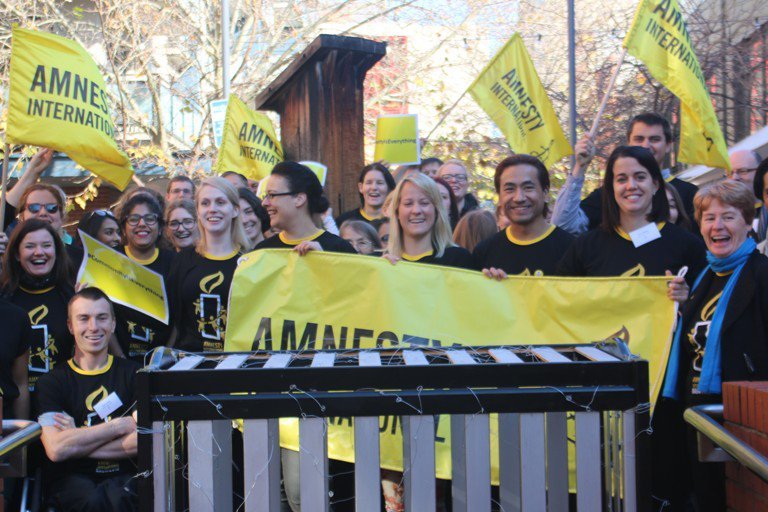
The creative volunteers took the opportunity to breathe some life into Amnesty’s National Annual General Meeting by organising a stunt to remind everyone what our grassroots movement is all about.

The group created a mock crib with bars just like a prison cell. The prison cell symbolised the overrepresentation of Indigenous kids in detention, who are 24 times more likely to end up in prison than their non-Indigenous friends.

Activists mock up a prison cell in artistic protest
ARTillery in action at NAGM 2016. © Amnesty International

The crib was carried throughout the streets of the community to demonstrate our solidarity with Indigenous people all across Australia.

Community members were invited to join in or ask questions which is a wonderful step towards raising public awareness of human rights abuses in our own backyard.

Find out how you can get involved

Learn more about our work with Indigenous communities. Or if you’d like to get creative with your local ARTillery group, send an email to Anna, Amnesty’s national artillery coordinator at artillery@amnesty.org.au.

Egypt: Refusal to release survivor of torture and disappearance an outrageous blow

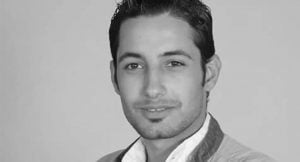
The Egyptian authorities’ refusal to release Islam Khalil who was tortured and subjected to enforced disappearance for 122 days is another alarming setback for human rights in Egypt, said Amnesty International.

Islam Khalil
Islam Khalil © Amnesty International

Islam Khalil was transferred to the Second Raml Police Station in the coastal city of Alexandria in preparation for his release yesterday after a court ordered his release on bail of 50,000 EGP (approximately US$ 5,630) on 21 August 2016. However instead of releasing him, the police officers beat him repeatedly until he fainted and brought fresh charges against him including the accusation that he physically assaulted a police officer yesterday.

“The police officers’ refusal to comply with the court order demanding Islam Khalil’s release from custody shows the Egyptian authorities’ shocking disregard for rule of law. It also sends a chilling message that they have no intention of reversing the spike in enforced disappearances which has seen hundreds vanish for periods up to seven months at the hands of the state since early 2015,” said Magdalena Mughrabi, Deputy Director of Amnesty International’s Middle East and North Africa Programme.

“The police officers’ refusal to comply with the court order demanding Islam Khalil’s release from custody shows the Egyptian authorities’ shocking disregard for rule of law.”

Magdalena Mughrabi, Amnesty International

“Islam Khalil shouldn’t even be behind bars in the first place, yet instead of releasing him immediately, state security forces have fabricated new charges against him and subjected him to severe beatings and injuries. His case highlights how crucial it is for Egypt’s authorities to stamp out the use of enforced disappearances, torture and all other forms of ill-treatment.”

“They must urgently release Islam Khalil now and open an investigation into his allegations of torture and other ill-treatment and bring those responsible to justice.”

Magdalena Mughrabi, Amnesty International

It appears that the Egyptian authorities are refusing to release Islam Khalil in retaliation for national and international campaigning efforts on his behalf. According to his brother, Islam Khalil was beaten with pipes all over his body until he became unconscious, by police officers who threatened: “Is this whole noise to pressure for your release? We will not release you unless you are dead”. He suffered injuries on his face, hands, and head. He is now in solitary confinement awaiting questioning by a prosecutor and has been denied access to his family and lawyer.

“Is this whole noise to pressure for your release? We will not release you unless you are dead.”

Alleged threat by an Egyptian police officer

Islam Khalil was forcibly disappeared for 122 days in 2015 after being abducted alongside his brother and father from his home by agents from Egypt’s National Security Agency. He was held blindfolded and handcuffed in solitary confinement and was beaten, given electric shocks and suspended by his wrists and ankles for hours at a time. He has been denied access to a doctor, his family and a lawyer.

In a detailed report published in July 2016 Amnesty International highlighted that hundreds of people have been subjected to enforced disappearances since early 2015, claiming that enforced disappearances have become a ‘state policy’ in Egypt.

Islam Khalil’s case was featured in an Amnesty International video issued together with the report.

France: Upholding burkini ban risks giving green light for abuse of women and girls

Failure to overturn the ban on the burkini would be a missed opportunity to end an assault on women’s freedoms of expression and religion as well as the right to non-discrimination, as France’s highest administrative court considers a challenge to the ban.

“The case being considered today offers an opportunity for the French justice system to overturn a discriminatory ban that is fuelled by and is fuelling prejudice and intolerance.”

John Dalhuisen, Amnesty International

“French authorities should drop the pretence that these measures do anything to protect the rights of women. Rather, invasive and discriminatory measures such as these restrict women’s choices, violate their rights and lead to abuse.”

In recent weeks several French mayors have adopted local decrees regulating the use of beachwear. Some of the decrees have referenced manifestly specious security, hygiene and public order concerns as justification and others have even purported to be aimed at protecting women’s rights. However, the rhetoric around their adoption has universally focused on the negative stereotyping of an already stigmatized minority.

“These bans do nothing to increase public safety, but do a lot to promote public humiliation. Not only are such bans in and of themselves discriminatory, but as we have seen, their enforcement leads to abuses and the degrading treatment of Muslim women and girls,” said John Dalhuisen.

“Not only are such bans in and of themselves discriminatory, but as we have seen, their enforcement leads to abuses and the degrading treatment of Muslim women and girls.”

John Dalhuisen, Amnesty International

“If the French authorities were genuinely committed to protecting freedom of expression and women’s rights these abusive bans would be immediately and unconditionally lifted.”

Background

The State Council is currently considering an appeal against a decision by a lower court upholding a ban on the the full-body swimsuit by the town of Villeneuve-Loubet.

The ruling will set a legal precedent for municipalities across the country.

Many local decrees ban the wearing of any form of beachwear that is contrary to hygiene and to the principle of “laicité”. Some of the decrees also state that, in view of the existing terrorist threat, wearing specific forms of dress that ostensibly manifest religious beliefs could breach public order.

The bans on burkinis are the latest in a series of restrictive laws against cultural or religious clothing in France. In 2004 a law on religious symbols banned any visible religious symbols in state schools. In 2011, a law banned the concealment of the face in public spaces. Those laws are indirectly discriminating against Muslim women.

Nauru: Australia’s shame and a warning for Europe

“I have lumps in my breasts, in my throat, and in my uterus…” – Halimeh spoke softly, but as she quickly uttered these words, I noticed an immense sadness in her dark brown eyes. We were sitting on the rocks near the ocean, wary of wild dogs barking nearby, and melting in the scorching heat of this remote Pacific island. I could feel her fear, so common for any woman in her 30s who checks her breasts in the morning and knows something isn’t right.

Halimeh fled Iran three years ago, after she said several of her friends got executed there, because they converted to Christianity, something that she wanted to do as well. She aimed for Australia—a country where she was hoping to find peace and freedom from religious persecution.

Instead, after a gruelling journey through Malaysia and Indonesia, a dangerous ocean crossing on a smuggler’s boat, and six months in immigration detention on Australia’s Christmas Island, she got sent to Nauru—a tiny, remote island state where Australia has been for years banishing asylum seekers trying to reach its shores.

Like many people around the world, I was repulsed by the sheer scale and inhumanity of the abuses and neglect documented in the Guardian’s recent “Nauru Files” exposé.

But for me the leaks struck a particular chord since I had only last month witnessed these patterns of horrendous abuse with my own eyes. It brought back the thoughts about Halimeh and the other 57 people I interviewed during the week I spent on the island. Women, men and children with personal stories to make even the most emotionless readers shudder; people who fled wars, who lost family members and friends, who were tortured by repressive regimes, and who are now stuck on Nauru, in anguish and despair about their future.

Like many people around the world, I was repulsed by the sheer scale and immaturity of the abuses and neglect documented in the Guardian’s ‘Nauru Files’ expose.  But for me the leaks struck a particular chord because I witnessed these patterns of horrendous abuse with my own eyes.

More than 1,200 women, men and children from countries such as Iran, Iraq, Pakistan, Somalia, Bangladesh, Kuwait, Afghanistan, spent months or years in appalling conditions in a detention camp funded by Australia. They lived in crowded, mouldy tents, where guards conducted regular, prison-like searches, and limited their showers to two minutes, before forcing them out.

With no prospect of leaving this impoverished island – which is smaller than many airports I have travelled through – these hundreds of people are effectively facing a future of indefinite, arbitrary detention. As a result, they are breaking down physically and emotionally. Although I’ve worked in most of the conflict zones around the world over the last 15 years, I have never seen such high rates of mental trauma, self-harm, and suicide attempts—among children as well as adults.

Health problems are simply not being addressed—I spoke with people who suffered several heart attacks, major complications from diabetes, kidney diseases, untreated broken bones, and infections. In most cases, they only got blood tests and Panadol.

More than 1,200 women, men and children from countries such as Iran, Iraq, Pakistan, Somalia, Bangladesh, Kuwait, Afghanistan, spent months or years in appaling conditions in a detention camp funded by Australia.

Halimeh told me that in 2014 she was sent to Melbourne, and spent four months there, between an immigration detention camp and a hospital. “My doctor said I need surgery for my breasts,” she said, her gaze fixated on the ocean in front of us. “He said I cannot go back [to Nauru], but the immigration decided to bring me back anyway.” Her condition continued to deteriorate – in 2015 they sent her to Papua New Guinea for an endoscopy and a colonoscopy, confirmed some of her medical problems… and sent her back to Nauru again.

Now the lumps are growing and she has a worrisome discharge from her breasts—but Australia is denying her treatment or even a proper check-up.

As unthinkable and inhumane as it sounds, this neglect appears to be part of the strategy. Australian politicians have been adamant that they will never allow the refugees sent to Nauru to settle in Australia. “I feel they keep us as hostages” Halimeh said. “They make us suffer as an example to others who might think of fleeing to Australia.”

as remote as Nauru is, it’s actually much closer than one might think—right-wing European politicians have been touting the “Australian model” of offshore asylum processing as a solution to the European refugee “crisis”.

What’s worse, as remote as Nauru is, it’s actually much closer than one might think—right-wing European politicians have been touting the “Australian model” of offshore asylum processing as a solution to the European refugee “crisis”. Under the same pretext of “saving lives,” European countries are already closing borders, striking deals with states, such as Turkey, that cannot offer refugees adequate protection, and outsourcing their responsibilities.

The latest detailed exposure of what this “Australian model” is like in reality, which has received extensive coverage in Europe, is significant. For hundreds of refugees in Australia’s offshore prisons, it brings renewed hope that Australia will finally fulfil its international obligations and allow them to settle in a place where they can get the assistance they need and the protection they deserve.

For Halimeh, it means she might still get vital surgery and treatment before it’s too late. And for any European state contemplating similar measures, it is a clear warning of just how wrong things go when fear and populist agendas are allowed to trample core humanitarian values and the international right to seek asylum.

This article first appeared in The Guardian.

Greece: Chaos and squalid conditions face record number of refugees

Weak coordination and severe shortages in facilities and staffing are creating dreadful conditions for the hundreds of refugees and migrants arriving every day on the Greek island of Lesvos, which is seeing the highest number of arrivals in Greece.

Dramatic increase in arrivals

Overloaded, under-resourced authorities are failing to cope with the dramatic increase in the number of people arriving on the island (33,000 since 1 August) and must rely on local volunteers, NGO activists, the UN Refugee Agency (UNHCR) and tourists to step into the massive breach. The vast majority are fleeing conflict in Afghanistan, Iraq and Syria – 90% of those arriving in 2015 according to UNHCR.

“The arduous odyssey faced by people fleeing conflict does not end on Greece’s shores. Forced to walk long distances in searing heat and stay in squalid camps or out in the open, refugees and asylum seekers see little alternative but to continue their journey, contributing to the disaster we’ve seen on the Macedonian border in recent days,” said Gauri van Gulik, Amnesty International’s Deputy Director for Europe and Central Asia.

Worst refugee crisis since WW2

“This is not just a Greek tragedy, but a Europe-wide crisis. It is unfolding before the eyes of short-sighted European leaders who prioritize securing borders over helping survivors of conflict. The world is seeing the worst refugee crisis since the Second World War. What Europe’s borders need is not fences but safe entry points for refugees, and facilities to receive them with dignity.”

On 24 August, police on Lesvos told Amnesty International that they estimate that more than 33,000 refugees and migrants had arrived on the island since 1 August. Hundreds more are arriving every day – 1,450 on the night of 10-11 August alone.

While Kos, Chios and other Greek islands in the Aegean have also received refugees and migrants crossing over via Turkey, Lesvos has received the highest number: more than 93,000 already in 2015, more than seven times the 12,187 arrivals in all of 2014. More than 160,000 migrants and refugees have entered Greece as a whole so far this year, compared to 45,412 in all of 2014.

Overcrowded, squalid conditions

Amnesty International observed very poor, unsanitary conditions and overcrowding at the Moria immigration detention centre on Lesvos, including overflown toilets, lack of sheets and blankets, filthy and old mattresses and broken beds. Police on Lesvos said they lack the funds to improve conditions.

A refugee from Afghanistan told Amnesty International:

“Words cannot describe [the conditions] … it smells … there is no soap, no clothes and everything is broken. … There is nothing for the small children, not even milk … [the police] shout a lot … Yesterday morning they cut the electricity and until lunch time we had no electricity and it was smelling a lot in our rooms [so we slept outside]…”.

People waiting outside the overcrowded centre for space to free up have been staying in tents, underneath nets from olive groves, or enduring 35-degree heat with no shelter at all.

Syrian refugees housed in tents in a car park

Syrian refugees arriving on Lesvos are being sent to the separate Kara Tepe camp, where they wait one to two days for documents that allow them to travel onwards to Athens. Kara Tepe is an informal, unmanaged camp set up by the local mayor on a car park.

Intended for 500 people, it is very overcrowded with more than 1,500 people staying there at a time. There are not enough tents, toilets or showers. Food is distributed by police and NGOs, with little coordination from Greek authorities. It falls to the NGO Médecins Sans Frontières to clear the garbage and clean and maintain the toilets and showers.

Migrants and refugees forced to walk for miles

With only four buses available to transport the hundreds of people coming ashore every day, most have to walk the up to 70 km journey from the island’s northern shores to the reception centre in the capital, Mytilene.

Amnesty International witnessed more than 100 mainly Syrian and Afghan refugees, including families with small children and elderly people, walk to the point of collapse in temperatures above 35 degrees Celsius. In the absence of help from the authorities, locals, tourists and activists gave them water and food.

Syrian refugees told Amnesty International how arduous the journey was for families and the elderly:

“There are women with babies and there is no bus … We are young and we will make it but what about them?” Syrian refugees on the journey from the shores of Lesvos to the capital, Mytilene

Understaffing prolongs ordeal

Once they arrive in the island’s capital Mytilene, people wait to be registered by the coastguard. Amnesty International witnessed lines of around 200 people waiting in welting heat. There are neither interpreters to help the coastguard process arrivals nor enough volunteer doctors to examine any beyond the most urgent cases.

Members of the Greek Coastguard told Amnesty International they have only 10 staff to register the hundreds of refugees arriving daily, though they receive support from NGOs who provide information and medical assistance.

Island refugee crisis demands emergency plan

Amnesty International is calling on Greek authorities, with urgent EU financial and logistical support, to set up an emergency response to manage the crisis on Lesvos and other Greek islands. Authorities need to urgently open the new First Reception Centre in Moria.

“The economic and refugee crises are converging on Lesvos and the other islands of the Aegean, with refugees and migrants paying the price,” said Gauri van Gulik.

“Announced EU funds can help Greece respond, but it is becoming clear that Greece also needs operational support to put these funds to use. Even more importantly, Europe needs to relieve pressure off Greece in the longer term by providing more safe and legal routes into Europe for those who need protection. As long as it fails to do so, Europe is directly responsible for what is unfolding on Lesvos and other frontline points of the refugee crisis.”


Syria: 10-year-old girl to receive urgent surgery following evacuation from besieged Madaya

A 10-year-old Syrian girl seriously wounded by sniper fire from a Syrian government forces checkpoint in Madaya was successfully evacuated on 13 August for urgent surgery following international pressure.

According to the Syrian Red Crescent, Ghina Ahmad Wadi and her mother were escorted from the besieged town to Damascus on 13 August. The move follows appeals by the girl’s UK-based aunt, supported by Amnesty International and others.

“This is clearly a very welcome move that could prove to be a lifeline for Ghina, a brave young girl who was caught in the wrong place at the wrong time. It is appalling that she was left to suffer for days on end before being granted this vital reprieve,” said Magdalena Mughrabi-Talhami, Deputy Middle East and North Africa Programme Director at Amnesty International.

“This is clearly a very welcome move that could prove to be a lifeline for Ghina, a brave young girl who was caught in the wrong place at the wrong time.”

Mughrabi-Talhami, Amnesty International

“Amnesty International has information about many other civilians in Madaya who are critically ill or injured – in some cases for up to two months – and in need of urgent medical attention immediately.

“All parties to Syria’s armed conflict must protect civilians and ensure humanitarian aid, including critical medical supplies, are allowed into Madaya and other besieged areas as a priority. They must allow and facilitate, where possible, the evacuation of civilians who wish to leave.”

Shot by a sniper

Ghina Ahmad Wadi, was shot in the leg by a sniper on 2 August at the Abdel Majed checkpoint when she was on her way to buy medicine for her mother. She was shot in her left thigh, causing a complex bone fracture and a severing of a nerve. Her eight-year-old sister who was with her was also injured.

Madaya is besieged by Syrian government forces in alliance with Hezbollah fighters, and Ghina’s family appealed to the Syrian authorities to allow her to be evacuated to a hospital in Damascus or in Lebanon – a request which had been denied for almost two weeks.

…Ghina’s family appealed to the Syrian authorities to allow her to be evacuated to a hospital in Damascus or in Lebanon – a request which had been denied for almost two weeks.

A doctor working at a field hospital in Madaya told Amnesty International that the girl urgently needs surgery that is not available in Madaya, which has been under a tight government siege since July last year. Instead, Ghina had only been provided with sedatives – including morphine – which ease her extreme pain for only 10 to 15 minutes at a time.

“Children should have no part in this terrible war… I know Ghina’s just one among many thousands of children in Syria who’re going though things they shouldn’t have to, but she can be helped relatively easily and we need to do all we can to make that happen,” Ghina Ahmad Wadi’s aunt, Fadah Jassan, who lives in the UK, previously told us.