PM puts detention of Indigenous children on the national agenda

Prime Minister Malcolm Turnbull has said that addressing the over-representation of Indigenous children in Australia’s detention centres nation-wide is a “top priority” as he finalises the terms of the Royal Commission into the abuse of children in detention in the Northern Territory.

He has also committed to making sure that issues of youth detention child protection are on the next agenda for the Council of Australian Governments (COAG).

What happened?

The Four Corners exposé of horrific abuse at Don Dale youth detention centre in the Northern Territory has helped to highlight the significant over-representation of Indigenous children in detention in Australia. The boys on Four Corners showed great courage in sharing their stories, and now we need to show them that we stand with them.
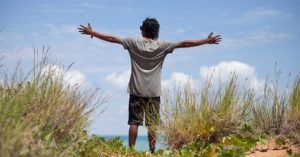
Indigenous man throws his hands wide
© Ingetje Tadros/Utopia

Within hours of the footage going to air, Malcolm Turnbull called a Royal Commission into the situation in the Northern Territory. This is a great start, but we must demand more – not only for Dylan Voller and the other boys who were brutalised at Don Dale, but for all of the kids who are still trapped in the system.

In response to the Four Corners segment, Indigenous people and their supporters across the country pointed out that this is a national issue that demands national leadership. All children in detention must be protected, and more importantly, we need to put a stop to so many Indigenous children ending up in detention in the first place.

It’s not just #DonDaleKids…

Local and national Indigenous organisations have been working on this issue for many years, however progress has been difficult without national leadership. The government needs to hold the states and territories to account, and work with them to ensure that Indigenous children are supported in the community rather than detained in prisons. So the PM putting this on the COAG agenda is a hugely important step!

Malcolm Turnbull:

What I intend to do is at the next COAG meeting, is make sure that these issues of youth detention child protection are on the agenda for COAG because it is obviously an issue that applies in every jurisdiction…clearly concerns have been raised about what is happening in other jurisdictions, in Victoria where you are, in NSW and Queensland and Western Australia and so forth.

But I think it’s important that the Heads of Government – the Chief Ministers and Premiers, discuss that at the next COAG.

What did Amnesty do?

Amnesty supporters across the country did some great work in the lead-up to the 2016 federal election calling for COAG to implement national justice targets. Building on these foundations and in the wake of the Four Corners episode on abuse in detention, supporters and staff around the country have reinforced their calls for national action to stop the abuse of children in detention.

We’ve been working to keep the focus on the bigger picture, which is that too many Indigenous kids are in detention too often and for too long – an issue that national leadership has so far failed to address.

We’ve continued to call on the government and opposition to introduce national justice targets.

Politicians have let Amnesty’s Government Relations team know that our voices are being heard.

Politicians have let Amnesty’s Government Relations team know that our voices are being heard.

Individuals and local groups across the country have mounted pressure on the government to tackle this issue, and the Four Corners episode shining a national spotlight on the issue was a real tipping-point for decision-makers.

Where to from here?

The Royal Commission into abuse in the Northern Territory is an important announcement to ensure that no kids in the NT have to go through the disgusting abuse that those boys went through. Having youth detention on the COAG agenda to elevate this issue to the national priority it deserves to be is a hugely important step to protect children across Australia.

Now we need to make sure that ending the abuse stays on the agenda. State and federal governments need to work together on a national plan to end the over-representation of Aboriginal and Torres Strait Islander children in detention within a generation.

We need to keep the pressure on our Federal MPs, so that the courage that it took these children to speak out against their horrific abuse in detention can lead to lasting national change.
Self organising: group success in Margaret River

The Margaret River local group just had their council unanimously pledge their support for the ‘No Business in Abuse’ campaign. Read more about their inspiring organising!

So what happened?

On 7 May, the Amnesty Margaret River group set up a pop-up internet stall outside Settlers Tavern in Margaret River. Over the next seven Saturdays, they aimed to collect 1,000 signatures for their No Business in Abuse pledge, which commits organisations to reject doing business that profits from practices which violate the rights of asylum seekers. They partnered with GetUp to work on this campaign in the lead-up to World Refugee Day, which celebrates the positive contribution refugees have made to Australian society.

The group aimed to deliver their pledges to the Augusta-Margaret River Shire at their council meeting on 22 June.

With this plan in place, the group hit the ground running, collecting 102 signatures at their first pop-up stall. They posted the pledge on their facebook page, invited community members along to the council meeting, and collaborated with a number of other local and regional organisations in order to amplify their voices. Their partner groups included the Uniting Church, Tige Le House, the Margaret River professional social workers collective, the Margaret River Environment Centre and the Margaret River chamber of Commerce.

Rod Whittle, a committed long-term Amnesty member of over 23 years, led the delegation to the council meeting to deliver the signatures alongside the Margaret River group convenor. Rod spoke passionately about the “overwhelming evidence which indicates severe and systematic abuse of asylum seekers. And the human rights abuses which are occurring within Australia’s immigration processing system, raising real and increasing public concern about conditions and procedures”.

Cathie Lambert also spoke passionately:

“We cannot claim to be a Welcome Refugee Zone while staying silent to the abuse that asylum seekers are facing daily in our detention centres.”

Pam Townsend, Ian Earl and Rod reminded the council that “The immigration system is administered in contravention of the obligations of all business enterprises to respect fundamental human rights as set out within the UN Guiding Principles on Business and Human Rights. The preamble to the United Nations Universal Declaration of Human Rights calls on ‘every individual and every organ of society’ to promote and respect human rights. Local councils are important institutions in our community, and should lead by example in encouraging responsible business practices and the adherence to human rights standards. By adopting the resolution, Council will demonstrate it endorses principled business practices that respect basic rights.”

And they made a difference!

The shire council agreed with these statements, and passed a unanimous ‘yes’ vote to the No Business in Abuse pledge. The shire pledged to reject doing business with companies that profit from Australia’s detention regime, and agreed in principle not to make a profit out of the detention of refugees. They agreed to only support and contract companies, institutions and organisations that refuse to profit from the system of offshore detention and practices that violate the rights of asylum seekers.

Rod, Pam, Ian, Cathie and the whole Margaret River group did a fantastic job getting this motion passed, which will make a real change in their community.

You can read more about the No Business in Abuse pledge and find out how to get involved here.

Refugees in Kakuma watch Team Refugees compete at Rio Olympics

Refugees are proudly cheering on Team Refugees at screenings of the Olympic Games at Kakuma Refugee Camp in Kenya thanks to a FilmAid project, supported by Amnesty International.

For the first time ever, a refugee team is competing at the Olympic Games under the Olympic flag. 10 refugee athletes are acting as a symbol of hope for refugees worldwide and bringing global attention to the magnitude of the refugee crisis, by taking part in the Olympic Games in Rio.

FilmAid, along with other key partners such as UNHCR and Amnesty International wanted to enable the refugee community in Kakuma, many of whom wouldn’t normally have the ability to watch the global event, to watch their team compete live with the rest of the world. Refugees now have a place as they support their team.

Michelle Kagari, Amnesty International’s Deputy Regional Director for East Africa, the Horn and the Great Lakes, said:

“These two brief weeks will be a source of hope and inspiration to these athletes, and millions of other refugees watching around the globe. This Olympics welcome is a great first step that the rest of humanity should follow to bring refugees out of the cold and keep their hopes alive.”

“This Olympics welcome is a great first step that the rest of humanity should follow to bring refugees out of the cold and keep their hopes alive.”

Michelle Kagari, Amnesty International

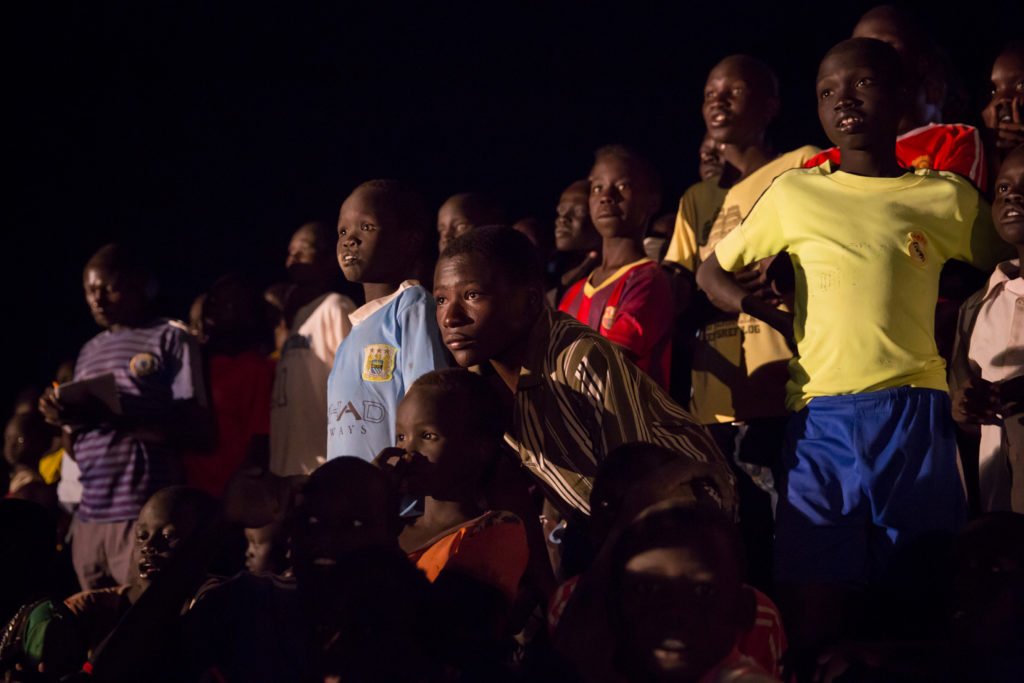
 a group of young people standing together at night time look eagerly past the camera
Refugees watch the Olympics at Kakuma Refugee camp. FilmAid international broadcasts the 2016 Rio Olympic games at Kakuma refugee camp in Northern Kenya. © Amnesty International / Richard Burton

Magu Ngumo, Creative and Content Director, FilmAid said:

“FilmAid has been working in Kakuma for over a decade, but I’ve never seen the young people so full of pride.

“Screening the Olympics in Kakuma is a chance for young refugees to see the athletes and themselves represented, not just as victims of war and disaster, but as individuals who have dreams, and the strength and desire to live those dreams.”

Magu Ngumo, FilmAid

The live stream began with the Olympics opening ceremony on August 5th and continue until August 21st 2016.

7 things you may not know about prison for Queensland kids

Amnesty has published new research that shines a light on kids in Queensland’s justice system. Campaigner Roxanne Moore lays down seven things you may not know about kids, courts and prisons in Queensland.

1. There’s evidence of abuse in Queensland children’s prisons

Amnesty’s research report details how keeping kids in communities gives them the best chance for a healthy, happy future.

The abuse in Don Dale detention centre, Northern Territory, received widespread coverage in July, however Amnesty has also uncovered incidents of abuse in Townsville and Brisbane youth detention centres.

Under freedom of information laws, we uncovered abuse at Cleveland detention centre, Townsville, and a Brisbane detention centre, including:

  • staff stripping the clothes off children at risk of self-harm
  • use of prolonged isolation, including eight Aboriginal kids held up to 22 hours a day for 10 days
  • the handcuffing of kids during physical exercise and family visits
  • the use of dogs to intimidate children.
  • Four incidents of kids suffering fractured wrists from control and restraint techniques.

Just this week, new footage emerged of a 17-year-old boy being hooded in a Brisbane adult prison.

2. 17-year-olds in Queensland can be sent to adult prisons

On the point of a 17-year-old being in an adult detention centre: in Queensland 17-year-olds are tried as adults and sent to adult prisons.

This is despite the fact that you’re technically still a child – without even the right to vote. Queensland is the only place in Australia to do this.

In Queensland, 17-year-olds are tried as adults and sent to adult prisons. Queensland is the only place in Australia to do this.

Adult prisons are different to children’s prisons. You have less rights and privileges, including basics like owning a toothbrush, or access to education and family.

It’s a breach of children’s rights and needs to stop immediately.

3. Queensland locks up more 10 and 11-year-olds than anywhere else in Australia

Did you know that in Australia, kids as young as 10 are sent to prison? This flies in the face of international standards – kids must be at least 12 before being sent to prison.

Queensland locks up more children aged 10 or 11-years-old than any other state or territory. And, 71 per cent of kids aged 10 to 12 in Queensland detention were Aboriginal and Torres Strait Islander.

Queensland locks up more children aged 10 or 11 years old than any other state or territory.

There’s stacks of evidence that detention for kids is harmful. If we want to help these kids, then a much better option is providing community-based support that helps them deal with issues in their lives.

4. 83% of all children in detention in Queensland are on remand

‘On remand’ means a child is locked up before their trial or sentencing. This happens if a police officer or magistrate decides that a child should not be given bail. Bail is an agreement that, as long as you follow certain conditions, you can stay out of prison until you are found guilty and sentenced.

With 83 per cent of children in Queensland prisons being on remand, it’s clear that the bail system isn’t working properly. It’s also worrying that so many of them are Aboriginal and Torres Strait Islander children – 61 per cent of kids on remand.

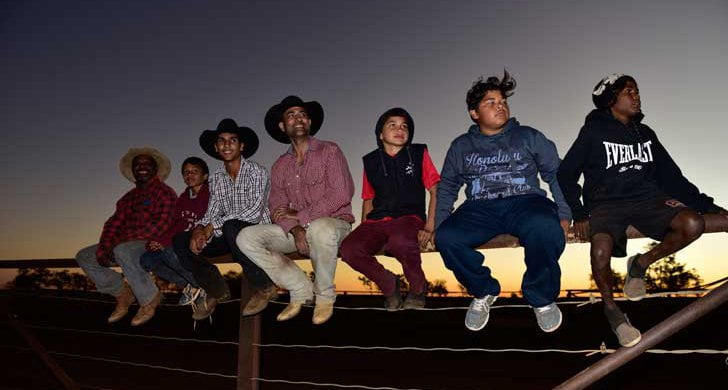
Aboriginal and Torres Strait Islander children with the Mona Aboriginal Corporation’s mentors
Aboriginal and Torres Strait Islander children with the Mona Aboriginal Corporation’s mentors, Mount Isa, June 2016. Patrick Cooke, Angela and David Sammon, and Rex Ah-One began the program in response to a lack of culturally appropriate healing programs. © Wayne Quilliam

Detention should always be a last resort for children. The Human Rights Committee has said that “pre-trial detention of juveniles should be avoided to the fullest extent possible.”

The Queensland government needs to look into why this is happening. We have figured out a few reasons including:

  • kids needing better access to lawyers, including culturally appropriate lawyers
  • need for more bail accommodation that’s safe and culturally appropriate
  • increasing delays in court proceedings.

5. 65% of kids in Queensland prisons are Indigenous

Aboriginal and Torres Strait Islander children make up 8 per cent of the total youth population, but about two thirds of kids in prison (65 per cent). This means that one in every 68 Indigenous kids in Queensland will be sent to detention.

If you’re an Indigenous girl in Queensland, you are 33 times more likely to be sent to prison than a non-Indigenous girl. Between 2014-2015, 71 per cent of all girls in Queensland detention were Indigenous.

If you’re an Indigenous girl in Queensland, you are 33 times more likely to be sent to prison than a non-Indigenous girl.

These kids don’t start on an even playing field. Indigenous kids are born with a higher chance of experiencing racism, trauma and violence, to abuse substances, be absent from school or removed from their families, and to have a disability or mental illness. These factors make Aboriginal and Torres Strait Islander kids far more likely to end up in prison.

6. Aboriginal and Torres Strait Islander communities hold the answers

Our research shows that there are many Aboriginal and Torres Strait Islander leaders fighting for change in their communities and for a brighter future for their kids.

Indigenous kids need Indigenous support. Having Aboriginal and Torres Strait Islander run programs means that the people delivering the services understand what these young people are going through, and are able to reconnect them with their culture, identity and community so that they are stronger going forward in their lives.

Indigenous kids need Indigenous support.

Aboriginal and Torres Strait Islander led programs are working to pull Indigenous kids out of the quicksand of the justice system.

7. But only two out of the 16 funded diversionary or prevention programs in QLD are Indigenous-led

If we want to change the status quo, if we want a fair and equal country, then the first step is our government to start listening to the many courageous Indigenous people out there.

If we want to change the status quo, if we want a fair and equal country, then the first step is our government to start listening to the many courageous Indigenous people out there.

Take Randall Ross, who is passionate about keeping kids strong with cultural roots, but now needs financial support. Or the Mona Horsemanship program, which is helping Mt Isa kids lead healthy lives, but needs help building their administrative capacity.

Change is possible – we just need both sides of politics to recognise the power of Indigenous-led solutions in addressing the over-representation of Aboriginal and Torres Strait Islander children in the justice system.

For a full list of recommendations to the government, read Amnesty International’s research report, Heads held high”: Keeping Queensland kids out of detention, strong in culture and community.


‘It was normal journalism’: Peter Greste explains how it all began

Australian Al Jazeera journalist Peter Greste along with his colleagues, Egyptian Baher Mohamed and Canadian Mohamed Fahmy, were imprisoned in Cairo amid false allegations of aiding the Muslim Brotherhood. In his book Freeing Peter, Greste recounts the 400 days he spent in prison just for doing his job and the events that led to his release.

When I arrived in Egypt, I’d had no trouble going through the airport. I didn’t apply for a press accreditation card, as it took two weeks to process, hardly worth the effort for a three-week stay. You only needed it to attend government news conferences, which we were able to receive live on local TV anyway, so there was no need to go in person.

Although not getting accreditation could have drawn attention, the reports we were doing were neutral and balanced. They weren’t especially focused on politics; we did a few stories about social issues, looking at normal people and normal life. Having been a foreign correspondent for twenty years, I knew what the safe ground for reporting was, and we didn’t go anywhere near the edge.

Having been a foreign correspondent for twenty years, I knew what the safe ground for reporting was, and we didn’t go anywhere near the edge.

Because of the political climate, we didn’t use big TV cameras in public, only small, high-definition handicams. If we were doing a stand-up, we would rehearse it first and do it in one take without attracting attention. But we weren’t hiding – we were in a well-known hotel with plenty of surveillance. We were specifically trying not to bring ourselves into conflict with local authorities.

Things changed on December 24, when there was a bomb blast at the Mansoura police station, to the north of Cairo, which killed and injured a number of police officers. The government accused the Muslim Brotherhood of being behind the blast, and for the first time declared it a terrorist organisation. Our report was very critical of the attack and included interviews with wounded police, as well as strong statements from the government. It was normal journalism.

Two days later there was a second bomb attack, this time in Cairo, and the government began a crackdown, with police arresting anyone they believed to be Brotherhood supporters. Following Friday prayers that week, there was a big protest against the crackdown. We covered the demonstrations, and filmed another about the impact of a government decision to ban all charities with links to the MB.

On December 29 we had a fairly quiet day, editing a story about commuters. I went for a walk around the neighbourhood, and was back at the hotel getting ready for a dip in the pool when there was a staccato knock on my door. It was odd. Anyone from AJE would call my mobile rather than come to my room, and the knock seemed quite forceful for the hotel staff. There was an authoritative, demanding loudness to it, an unexpected urgency.

Anyone from AJE would call my mobile rather than come to my room, and the knock seemed quite forceful for the hotel staff. There was an authoritative, demanding loudness to it, an unexpected urgency.

Slightly annoyed, I called out for whoever was there to wait, and there was a harder second knock. I went to the door and cracked it open. A bunch of men thrust it wide, six or eight of them, and bustled me backwards down the corridor into the bedroom. ‘Who are you?’ I shouted. ‘What the hell is going on?’ ‘Are you Mr Peter Greste?’ the smallest of them asked aggressively. Still backpedalling, I said, ‘Why? What does it matter?’

When he repeated his question I nodded, but continued asking why they were there. Another man had a video camera, which he was hosing around, pushing it at my face. I repeatedly asked for ID, saying, ‘Who are you? Where is your identification? Are you the police?’ I tried to hold my nerve and appear assertive, but it wasn’t working. They didn’t respond. A uniformed hotel security guard was the only one who was identifiable, and I asked him, again without getting a response, what was happening. Eventually one of the men grunted, ‘Interior Ministry.’ That was all they would tell me.

I briefly contemplated making a run for it – images of Matt Damon as Jason Bourne in my head – bolting off into the streets and leaving behind my overweight pursuers. But I realised that if I had to throw a punch I’d probably break my hand on someone’s chin.

They held me in my room for a few minutes while they gathered my computer, cables and other electronic equipment, as well as my notebooks, phone, wallet and passport, and put them in a rucksack. ‘You’re coming with us,’ a small man said. ‘Not until you tell me who you are and why you’re here,’ I said. ‘We are the police. You will come with us.’ ‘Where is your warrant and ID?’ I insisted. ‘Am I under arrest?’ Finally he said that he had a warrant but it was in Arabic, so there was no point showing me. They demanded that I open the safe.

I refused; I had about $US 8000 in it, cash to pay for my $US 250-a-night hotel bill plus expenses. It was standard to use cash in Egypt, but I wasn’t going to let these men take some extra holiday money courtesy of AJE. When they ordered the hotel security guard to get a master key to the safe, I yielded and opened it. To my surprise they didn’t pocket the money, and didn’t even count it. They let me take it.

But they wouldn’t tell me where we were going. I put on a black fleece jacket and my Akubra hat, and let them escort me in the lift to the ground floor. We crossed the large, covered concourse linking the two towers of the Marriott, where there were scenes of a normality I found surreal: glamorous couples sitting in bars, people smoking shisha pipes outside in the cool winter night.

Experience in Africa and South America had taught me that the best defence in these situations is a kind of feigned nonchalance. If they thought I’d nodded off, they might get tired of their silly little game and send me back up to my room.

Experience in Africa and South America had taught me that the best defence in these situations is a kind of feigned nonchalance. If they thought I’d nodded off, they might get tired of their silly little game and send me back up to my room.

Beneath the hat my mind was racing. I guessed we were waiting for Mohamed Fahmy. If they wanted to talk to me, surely they’d want to talk to him as well, since he was the senior producer in our team.

Then, after an hour or so, I heard his voice. The questions soon dried up, and after another hour or so we were handcuffed together and taken from the hotel to a van, the cameraman still filming us. We set off with Fahmy holding his shoulder and struggling with pain. He winced and groaned with every bounce of the vehicle.

We’d had no further opportunity to talk to Marwa beyond Fahmy’s last words as we left: “Call Al Jazeera!”

This extract was taken from Freeing Peter: How an Ordinary Family Fought an Extraordinary Battle, Penguin, $27.95.

Queensland youth justice system needs Indigenous-led solutions

A new Amnesty International report, to be launched today at Queensland Parliament House, has found that, while the Queensland Government has recognised the need for reforming its youth justice system, serious concerns remain.

Queensland leads the country in locking up 10- and 11-year-olds and detaining children on remand, the majority of them Aboriginal and Torres Strait Islander children. This flies in the face of international laws and standards

“Decades of harsh policies have seen too many kids, especially Indigenous kids, trapped in the criminal justice system,” said Claire Mallinson, National Director of Amnesty International Australia.

“Decades of harsh policies have seen too many kids, especially Indigenous kids, trapped in the criminal justice system.”

Claire Mallinson

“Amnesty has supported the Queensland government’s recent positive reforms to the youth justice system. These have been a big step in the right direction, but our research shows more should and can be done.”

The findings

One of the most striking findings of the research is that a shift to supporting Indigenous-led initiatives could make the biggest difference in keeping kids out of the justice system and fostering safer communities.

Currently only two of the 16 organisations contracted to work with youth justice clients are Indigenous-led organisations.

Currently only two of the 16 organisations contracted to work with youth justice clients are Indigenous-led organisations.

This is despite Indigenous children overall in Queensland being 22 times more likely to be locked up than non-Indigenous children, with Indigenous girls detained at 33 times the non-Indigenous rate.

Queensland also has the highest rate in Australia of holding children on remand – on any given day, as many as 83 percent are being held in children’s prisons without bail, whether prior to court proceedings or prior to sentencing. Two thirds of them are Indigenous.

Under international law, children should be released from pre-trial detention as soon as possible, and children should only ever be detained as a last resort.

In addition, Queensland is the only state to lock up 17-year-old teenagers in harsh adult prisons.

“The recommendations in this research report offer an opportunity for a new approach,” said Claire.

“The recommendations in this research report offer an opportunity for a new approach.”

Claire Mallinson

“Queensland is fortunate to have many trailblazing Indigenous leaders. Their work connects kids to culture, keeps them out of children’s prisons and in their communities.”

“All sides of politics should harness Indigenous innovation and expertise to create a stronger and safer Queensland for everyone. This is an opportunity to break with the past that has failed so many kids.”

The desperate survival methods used by prisoners in Syria

More than 17,000 people are estimated to have died in Syrian prisons and detention centres since 2011. Those who survived were forced to take unimaginable measures to come out alive.

All the quotes below are taken from interviews with former detainees in early 2016.

Not disclosing medical conditions

“In the ‘welcome party’, they were asking all of us if we were sick or not. At that time, I thought it would be good to tell them that my kidney had been damaged, so they would treat me well. They first asked my friend, and he said, “Yes, I have breathing problems – I have asthma”. The guard said, “OK, you are a special case”. Then they started beating him until he died, right there in front of me. When my turn came, I told them I was completely alright and I had no problems with my health.”

They first asked my friend, and he said, “Yes, I have breathing problems – I have asthma”. The guard said, “OK, you are a special case”. Then they started beating him until he died, right there in front of me.

Staying neutral

“I had to sit there and watch the guards beat the male detainees for an hour. They beat them with different objects, a green hose, a silicone bar, and an iron bar that had a ball with spikes at the top. I cried the first three times when they made me watch but the guards hit me. We had to stay completely neutral the entire hour. I would tell myself that it’s not real, it’s just a scary movie that would last for fifteen minutes and then it’s over.”

I would tell myself that it’s not real, it’s just a scary movie that would last for fifteen minutes and then it’s over.

Keeping warm

“In the winter it became very cold, so we would join the blankets together and make like a cocoon, to save the heat. We wore the clothes we were arrested in, so you ended up wearing whatever you had on when you were arrested. So if you were arrested in the summer, you were in for a lot of trouble.”

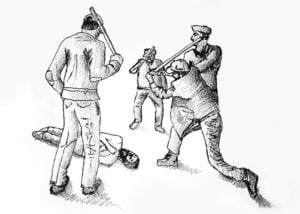
A drawing of guards beating a lying down man.
The “welcome party” guards in Syria give prisoners on arrival. © AI

Becoming a family

“The other prisoners become more than brothers. You will never have this kind of closeness in your life. You might never agree if you were outside, you might hate each other, but inside you are family. One guy will be secular, and another guy a very devout Sunni Muslim, and they will become the best of friends. We would share everything – we would share clothes, help someone if he was crying or losing his mind.”

Forgetting

“The only way to stop time in prison is to think of your family and your friends. But you learn to let that go. I started to forget. I lost any memory of the faces of my friends at university. And then I lost all of the faces from the last few years. I kept going back, and back, until I was only able to remember the face of my mother, as she was when I was younger.”

I started to forget. I lost any memory of the faces of my friends at university. And then I lost all of the faces from the last few years.

Eating everything

“At the beginning, they gave us a box of oranges and a box of cucumbers. We started opening the oranges, and dropped the peels on the ground. The other prisoners ran and attacked them. They thought the orange peels were so delicious – they were the prize! We would become like them, but then it was a real shock. We started eating the shells of eggs, too, to get the calcium. We would put rice, soup, orange peel and egg shells into one piece of bread. That way you would feel you had a meal. It was disgusting to combine it all, but somehow it helped.”

We would put rice, soup, orange peel and egg shells into one piece of bread. That way you would feel you had a meal. It was disgusting to combine it all, but somehow it helped.

Taking turns to be tortured

“The guard would always ask us to send five people to be tortured, and we organized ourselves so that the very young and the old wouldn’t have to go. We made a group of about 20 of us, who were stronger. Three of us almost always went. I went because I needed to scream. I felt worried, because I had become numb and stopped feeling the pain, stopped feeling any emotions. It sounds strange, but I would volunteer for the beating so that I could feel something again.”

Trading food

“It all started with one guy who was sitting in the cell, crying, crying, crying. He told me he had lost the hope that he would ever leave. He said, “I’m not angry, I’m just starving. I’m thinking only of food.” I tried to figure out how to help him. We were in a real battle of survival. If I gave you my food, then I might die. And if you give me your food, then you could die.

We were in a real battle of survival. If I gave you my food, then I might die. And if you give me your food, then you could die.

“I ended up giving him my piece of bread that day, and half of my portion of rice. This is where the trade started. I said that the price of my half piece of bread was a whole piece of bread, but he could pay it in installments, over the course of four days. We were all starving and miserable, but this activity helped us survive. It meant that we could spread out the food, depending on who was suffering the most, and it made our minds active. We were always planning something, fighting back, being human. Before, our brains were only thinking: eat, eat, eat, eat. After, we were thinking of cooperating, working together.”

France: Reaction to court decision to overturn burkini ban

John Dalhuisen, Amnesty International’s Europe Director resposded to the decision of France’s highest administrative court to overturn the ban on the burkini on a French beach.

“By overturning a discriminatory ban that is fuelled by and is fuelling prejudice and intolerance, today’s decision has drawn an important line in the sand,” he said.

“By overturning a discriminatory ban that is fuelled by and is fuelling prejudice and intolerance, today’s decision has drawn an important line in the sand.”

John Dalhuisen, Amnesty International

“French authorities must now drop the pretence that these measures do anything to protect the rights of women. Rather, invasive and discriminatory measures such as these restrict women’s choices and are an assault on their freedoms of expression, religion and right to non-discrimination.”

“These bans do nothing to increase public safety, but do a lot to promote public humiliation. Not only are they in themselves discriminatory, but as we have seen, the enforcement of these bans leads to abuses and the degrading treatment of Muslim women and girls,”

Thailand: Fatal bomb attacks disregard basic right to life

A series of apparently coordinated blasts at tourist spots in southern Thailand overnight are reprehensible acts of violence that must be thoroughly investigated, with those responsible brought to justice.

At least four people were killed in the blasts and dozens more were injured as a series of bombs exploded in the resort town of Hua Hin and several others in Phuket, a popular tourist destination, as well as in Trang province.

“Nothing can justify intentionally carrying out indiscriminate attacks, which disregard the basic right to life. These acts of violence show utter contempt for human rights,” said Champa Patel, Senior Research Advisor for Amnesty International’s Southeast Asia and Pacific Regional Office.

“Those behind the attacks must be brought to justice through fair trials. Amnesty International calls on Thai authorities to ensure their response is in accordance with their obligations under international human rights law.”

Champa Patel, Amnesty International

So far no group has claimed responsibility for the attacks.

Syria: Fresh chemical attack on Aleppo a war crime

The Syrian city of Aleppo has been hit by a suspected chlorine attack, which would amount to a war crime if confirmed, and constitutes an alarming sign that Syrian government forces are intensifying their use of chemical weapons against civilians.

The attack on a residential neighbourhood in a part of Aleppo controlled by armed groups is the third reported use of chemical weapons in northern Syria in just two weeks and has reportedly killed at least four people. Amnesty International has confirmed at least 60 others, mostly children, sought medical care after showing symptoms characteristic of a chlorine attack.

“This attack in Aleppo is yet another flagrant violation of international humanitarian law and signals a distressing pattern in the use of chemical weapons by regime forces,” said Magdalena Mughrabi, Amnesty International’s Deputy Director of the Middle East and North Africa Programme.

“This attack in Aleppo is yet another flagrant violation of international humanitarian law and signals a distressing pattern in the use of chemical weapons by regime forces.”

Magdalena Mughrabi, Amnesty International

The latest attack comes as Russia announced a three-hour daily ceasefire on the city, as humanitarian aid is desperately needed in some areas.

“We call for the immediate cessation of air raids on civilian targets in Aleppo. It is imperative that chemical attacks and other war crimes end now. We also call for the unrestricted free flow of aid to the tens of thousands of people trapped in the city’s east,” said Magdalena Mughrabi.

“We call for the immediate cessation of air raids on civilian targets in Aleppo. It is imperative that chemical attacks and other war crimes end now.”

Magdalena Mughrabi, Amnesty International

“Three hours a day to deliver aid is grossly inadequate given the magnitude of the humanitarian crisis in eastern Aleppo and the perilous and time-consuming nature of such deliveries.”

Amnesty International spoke to a doctor in Aleppo who said that of the 60 injured in the latest attack, 40 were children.

“They were all suffering from the same symptoms, mainly coughing and shortness of breath. I could easily smell chlorine on people’s clothes,” he said.

“We will soon run out of medical supplies if the frequency of attacks continues like this.”

A doctor in Aleppo

In July, Syrian armed forces backed by Russian air power encircled eastern Aleppo, which has been held by armed groups since 2012. The government siege essentially cut some 250,000 people off from basic food, medicine and fuel supplies that keep ambulances and hospital generators running.

Russia has carried out airstrikes over Syria since September last year in support of the government forces.

Yesterday’s attack occurred in the al-Zibdiye neighbourhood of Aleppo one kilometre away from the frontline.

Armed groups this week broke the Syrian government forces’ siege but this was followed with intensified bombing of the city by government and Russian forces.

Armed groups this week broke the Syrian government forces’ siege but this was followed with intensified bombing of the city by government and Russian forces.

Two barrel bombs allegedly containing chlorine gas were dropped on 1 August in two residential neighbourhoods in the city of Saraqeb in Idleb province, reportedly injuring at least 28 civilians.

This attack comes almost exactly a year after the UN Security Council passed a resolution to establish a mechanism to investigate chemical attacks in Syria and identify their perpetrators. If it is confirmed that bombs dropped yesterday contained chlorine it will underline the extent to which government forces – as well as other parties to the conflict – are continuing to flagrantly violate international humanitarian law with impunity.

Media reports on 2 August said another chemical attack had been launched in Aleppo. The Chemical Weapons Convention prohibits the development, production, stockpiling, transfer and use of chemical weapons and requires States Parties to destroy chemical weapon stockpiles. The use of prohibited weapons such as chemical weapons is a war crime under customary international law.

Syrian government forces are suspected of carrying out dozens of horrific attacks with chlorine and other chemical weapons on opposition-held areas since 2012, killing hundreds and inflicting terrible injuries on others. All such attacks are prohibited by international humanitarian law.

In September 2013, after hundreds of people died in alleged sarin gas attacks on Ghouta, outside Damascus, Syria acceded to the Chemical Weapons Convention and President al-Assad pledged to destroy the country’s stockpile of prohibited chemical agents.

However, a year later, in September 2014, the Organisation for the Prohibition of Chemical Weapons (OPCW) fact-finding mission found “compelling confirmation” that a toxic chemical was used “systematically and repeatedly” as a weapon in villages in northern Syria earlier last year.