Oman: Journalists detained for reporting on corruption

Oman’s authorities have carried out a string of journalist arrests in recent weeks signalling a growing crackdown on freedom of expression in the country.

Three journalists from Azamn daily newspaper have been detained in connection with an article highlighting allegations of corruption in the Omani judiciary published on 26 July. The most recent arrest of the Deputy Editor in Chief, Youssef al-Haj, took place yesterday. Shortly afterwards, Oman’s Ministry of Information ordered the shutdown of the newspaper and its online news site.

“It appears that the journalists from Azamn are being punished for carrying out their legitimate journalistic work. Criticizing the judiciary or reporting allegations of suspected corruption is not a crime. If they are being detained solely in connection with their journalistic work, Oman’s authorities must immediately release them,” said Magdalena Mughrabi, Deputy Director of Amnesty International’s Middle East and North Africa Programme.

“Criticizing the judiciary or reporting allegations of suspected corruption is not a crime.”

Magdalena Mughrabi, Amnesty International

“The arrests appear to signify a worrying escalation of the authorities’ clampdown on freedom of expression. The message to journalists in Oman is clear: criticizing the judiciary is off limits.”

It is unclear whether the detained journalists have been charged or the nature of charges they may face.

“The message to journalists in Oman is clear: criticizing the judiciary is off limits.”

Magdalena Mughrabi, Amnesty International

The article in question, published in Azamn newspaper on 26 July, accused the Head of Oman’s Supreme Court and the Chairman of the Judicial Council of intervening in the outcome of verdicts on behalf of influential officials.

Two days later, the Editor in Chief of the newspaper Ibrahim al–Maamari was summoned by the authorities and detained for questioning. Oman’s Ministry of Information warned that the publication could be shut down if it continued to report on corruption allegations.

The following week, on 3 August, Azamn journalist, Zaher al-Abri, was detained.  Since then, Youssef al-Haj, Deputy Editor in Chief, published a series of articles based on exclusive interviews with the Vice-President of Oman’s Supreme Court, Ali al-No’mani, confirming allegations of corruption made in the earlier article. The latest of these articles was published on 9 August and Youssef al-Haj was arrested the same day at noon. His brother later confirmed that he had received a call from Youssef al-Haj, stating that he was being held at the headquarters of the Police Special Section in Muscat (al-Qism al-Khas) and would be transferred to a police hospital due to ill-health.

Oman’s state news agency published a statement, citing an unnamed government source, describing the articles about corruption as “a flagrant violation of the limits and ethics of freedom of expression” warning that the articles were damaging to one of the country’s most important institutions.

“If Oman’s authorities wish to show they have even the most basic understanding of freedom of expression, instead of unlawfully detaining journalists they should be working to ensure that all journalists are free to carry out their legitimate work without fear of reprisal or harassment,” said Magdalena Mughrabi.

“If Oman’s authorities wish to show they have even the most basic understanding of freedom of expression, instead of unlawfully detaining journalists they should be working to ensure that all journalists are free to carry out their legitimate work without fear of reprisal or harassment.”

Magdalena Mughrabi, Amnesty International

In an earlier incident involving journalist arrests, al-Mutasam al-Bahlani, Editor in Chief of the e-magazine “al-Falaq”, was detained on 25 July in connection with tweets he had posted about Oman’s Renaissance Day. He was released two days later on 27 July.

Dangers of revoking citizenship

Amnesty Australia’s Government Relations Adviser, Guy Ragen, and Legal Governance Manager, Katie Wood, appeared before the Parliamentary Joint Committee on Intelligence and Security to discuss the Australian Citizenship Amendment (Allegiance to Australia) Bill 2015.

Amnesty Australia has made a submission on the Australian Citizenship Amendment Bill 2015, recommending the rejection of the Bill in its current form.

What does the Bill do?

If passed, the Bill will make a number of changes to how dual citizens can lose their Australian citizenship, including being stripped of citizenship automatically on suspicion of certain crimes – without trial, and without being convicted of that crime.

What are the dangers of revoking citizenship?

Amnesty Australia is concerned the proposed Bill could endanger an a person’s right to a nationality, fail to afford due process and a presumption of innocence and, if applied retrospectively, the existing human rights concerns will be amplified.

When a government introduces legislation that impacts on human rights, they need to strike a balance to ensure that any response is proportional – this Bill dramatically oversteps that balance. Situations could arise where the Australian Government strips citizenship from someone who has no idea they hold citizenship of another country, and has indeed never even visited that country.

Taking away a person’s citizenship is one of the most severe actions a country can take against one of its own citizens. A government should not be able to do it automatically, without trial or conviction. Under international law, Australia must provide people with a fair trial and the right to be presumed innocent.

What needs to happen?

If the Bill is to be passed, Amnesty International recommends that at a minimum, the Australian Parliament:

  • amend the Bill to only allow the loss of Australian citizenship after a fair trial and criminal conviction in a court of law
  • ensure the legislation adheres to Australia’s international legal obligations, preserving the principle that stripping citizenship is both an extraordinary measure and a last resort
  • reject the retrospective operation of the legislation
  • reject any effort to expand the legislation to cover sole nationals (an individual must never be rendered stateless by the withdrawing of Australian citizenship).

5 things you have helped us achieve in 2016 so far

When you’re bombarded by daily news of conflict, terror, unfair imprisonment and the mistreatment of refugees, it’s sometimes hard to keep a positive outlook and believe that you can help change things for the better.

But, by looking further than the attention-grabbing headlines, you’ll see that progress is happening all around the world thanks to people like you who are taking a stand for human rights.

We take a look back at the significant wins you have helped us achieve for human rights in the first half of 2016.

A group of children sitting on a fence.
The proposed changes to NT bail laws would have disproportionately affected Indigenous children, who make up 95% of kids locked up in the NT. © Rusty Stewart/AI

1. Damaging Northern Territory Laws defeated

The Northern Territory government was seeking to rush through some changes to the law which would make pre-trial prison the default for children charged with crimes who have been found guilty of certain offences in the past. This would have meant a presumption of jail, rather than bail, for kids as young as 10.

Our supporters in the Northern Territory sprang into action. They reached out to MP Larisa Lee — a key decision-maker in this case — urging her not to support the changes. Larisa responded that based on the concerns that had been raised with her by the community, she would not support the changes.

There were two more independent MPs whose position on the motion wasn’t yet clear. Just before the Bill was about to be debated, our supporters got in contact with these independents to make sure that they wouldn’t support these changes.

In the end, the government did not try to pass the laws. We have it on good authority that this was because they knew they didn’t have the numbers to support the move.

Read more about the NT bail laws.

Yecenia Armenta Graciano.
Yecenia Armenta Graciano. © BRITO

2. Mexican torture survivor Yecenia Armenta released from prison

In 2012, Yecenia Armenta Graciano was was beaten, near-asphyxiated and raped by police during 15 hours of torture. She was forced to “confess” to involvement in the murder of her husband.

Amnesty supporters from all over the world sent 300,000 letters, petitions and emails to Mexican authorities urging them to release her immediately. Over 11,000 of these came from Australia.

After four years of being unjustly locked up in prison, Yecenia was able to walk free. She is now part of a brave group of women running a national campaign in Mexico focused on “breaking the silence” about the sexual violence and torture they have suffered.

Read more about Yecenia’s story.

Phyoe Phyoe Aung and her husband, Lin Htet Naing
Phyoe Phyoe Aung and her husband, Lin Htet Naing. © BayBay

3. Myanmar student activist Phyoe Phyoe Aung released

On 10 March 2015, Phyoe Phyoe Aung and 50 other students were arrested by police for their peaceful demonstrations.

Phyoe Phyoe Aung was charged with a range of offences including taking part in an unlawful assembly and inciting the public to commit offences against the State. She faced up to nine years’ imprisonment.

Amnesty International has campaigned heavily for Phyoe Phyoe Aung’s release. In Australia, almost 30,000 people signed our online petitions calling in Myanmar’s then-President Thein Sein to release Phyoe Phyoe Aung.

This year, their demand for her freedom was finally heard. Phyoe Phyoe Aung and many other people charged for peaceful activism in Myanmar have been able to walk free.

Read more about Phyoe Phyoe Aung’s release.

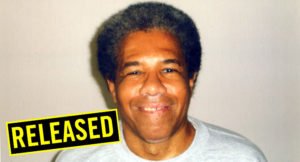
Albert Woodfox
Albert Woodfox © www.angola3.org

4. Albert Woodfox released

In 1971, Albert Woodfox, Herman Wallace and Robert King (known as The Angola Three) were jailed following a conviction for armed robbery. In 1973, Woodfox and Wallace were sent into solitary confinement after being convicted of murdering prison guard Brent Miller.

Woodfox and Wallace always maintained their innocence. Evidence against them was weak, and no fingerprints belonging to either man were found at the crime scene.

Woodfox spent almost all of his 43 years in prison confined to a tiny cell — 6ft by 9ft — for 23 hours a day.

For five years, our global movement generated more than 650,000 actions on behalf of the Angola Three. Almost 18,000 Australians emailed the Attorney General of Louisiana calling on him to release Albert Woodfox.

Their efforts made a difference; Albert Woodfox was released in February. On Albert’s release, Jasmine Heiss, Senior Campaigner at Amnesty USA said: “… this belated measure of justice, on Woodfox’s 69th birthday, is something he has been seeking for more than half his life.”

Read more about Albert and the Angola Three.

Hand holding "Open your Eyes" sign
© Amnesty International

5. Syrian refugee M.K. released from airport detention in Turkey

In 2012, the Syrian crisis forced M.K. to flee his homeland and seek refuge in Jordan. Last November, he made his way to Turkey in the hopes of re-settling there with his sisters. Upon arriving at the Turkish airport on November 9, authorities detained M.K for allegedly using false identification. He remained there in a small airport room for four months.

Detaining M.K. in this small space for such a long time was cruel and inhumane. The lights were constantly on, which caused M.K.’s eyes a great deal of pain. He had limited access to medical care, despite repetitive requests for help, and he feared the imminent deportation back to war-torn Syria.

M.K. was the subject of an Amnesty International Urgent Action, which was sent out globally. In Australia, over 800 of our Online Urgent Action Network members sent emails to Turkish authorities calling on them to release M.K. and to grant him a protection visa.M.K. was finally released on 29 March 2016. On his release, M.K. thanked all of the Amnesty International supporters who sent appeals on his behalf and said he was very happy to finally be free.

Read more about M.K.’s release.

Iran: Women’s rights activists treated as ‘enemies of the state’ in crackdown

Iranian authorities have intensified their repression of women’s rights activists in the country in the first half of this year, carrying out a series of harsh interrogations and increasingly likening any collective initiative relating to women’s rights to criminal activity.

The organization’s research reveals that since January 2016 more than a dozen women’s rights activists in Tehran have been summoned for long, intensive interrogations by the Revolutionary Guards, and threatened with imprisonment on national security-related charges. Many had been involved in a campaign launched in October 2015, which advocated for increased representation of women in Iran’s February 2016 parliamentary election.

“It is utterly shameful that the Iranian authorities are treating peaceful activists who seek women’s equal participation in decision-making bodies as enemies of the state. Speaking up for women’s equality is not a crime. We are calling for an immediate end to this heightened harassment and intimidation, which is yet another blow for women’s rights in Iran,” said Magdalena Mughrabi, Interim Deputy Middle East and North Africa Programme Director at Amnesty International.

“Speaking up for women’s equality is not a crime.”

Magdalena Mughrabi, Amnesty International

“Rather than addressing Iran’s disturbing record on women’s rights the Iranian authorities have once again opted for repression, accusing women’s rights activists of collusion in western-orchestrated plots in a bid to maintain their discriminatory practices towards women.”

The women summoned for interrogation were given no reason for the summonses they received, but once inside the interrogation room they were bombarded with accusations of espionage and collusion with “foreign-based currents seeking the overthrow of the Islamic Republic system”. Amnesty International understands that the Revolutionary Guards subjected the women to verbal abuse, including gender-related slurs. The activists were not allowed to be accompanied by their lawyers during the interrogations, which lasted in some cases up to eight hours.

Amnesty International understands that the interrogations focused, in particular, on two local initiatives: a website called “Feminist School”, which posts reports and articles on issues related to feminist theories and practices and the state of women’s rights in Iran and globally; and the Campaign to Change the Masculine Face of Parliament, launched ahead of the February 2016 parliamentary elections in Iran to push for the increased presence of pro-women’s rights candidates in parliament.

Members of both initiatives have been pressured to close or suspend their activities and practice heightened self-censorship. In its final statement, the Campaign to Change the Masculine Face of Parliament explained how its achievements in terms of generating a five-fold increase in the number of women seeking candidacy, highlighting the demands of women for equality, and naming and shaming candidates with a history of making sexist remarks, have attracted the wrath of security bodies, leading to repeated summons, threats, prolonged interrogations, and the opening of new national security-related cases against the campaign’s active members. The Feminist School website has not been updated since the middle of February 2016.

The latest target of this intensified crackdown is the renowned women’s rights magazine Zanan-e Emrooz (Today’s Women) which announced it was suspending its activities on 26 July.

The latest target of this intensified crackdown is the renowned women’s rights magazine Zanan-e Emrooz (Today’s Women) which announced it was suspending its activities on 26 July.

“The Iranian authorities should be under no illusion that harassing women’s rights activists by carrying out interrogations and forcing them to close their publications silently will go unnoticed. They should be supporting women’s rights activists, not persecuting them,” said Magdalena Mughrabi.

“They should be supporting women’s rights activists, not persecuting them.”

Magdalena Mughrabi

The renewed assault on those working on women’s rights has been manifested most extremely by the arbitrary arrest and detention, since 6 June, of Dr Homa Hoodfar, a Canadian-Iranian national and prominent anthropology professor renowned for her decades of academic work on women’s issues. Except for one brief meeting with her lawyer, Dr Homa Hoodfar has been held largely incommunicado since her arrest and is currently held in Tehran’s Evin Prison.

She had worked with WLUM (Women Living Under Muslim Laws), an international feminist network whose stated aim is to strengthen women’s struggles for equality and their rights in Muslim contexts.

The Prosecutor General of Tehran stated in a media interview on 24 June that Dr Homa Hoodfar’s “criminal” case is in connection with “her entry into fields concerning feminism and national security offences”. Days earlier, media outlets affiliated with the Revolutionary Guards ran articles claiming that Dr Homa Hoodfar was “the Iran agent of a feminist network building operation” and the Campaign to Change the Masculine Face of Parliament was “her latest project”.

The articles also claimed that her work with WLUM to promote feminism and women’s equality in Muslim countries and enhance women’s bodily autonomy was aimed at “disrupting public order” and “prompting social-cultural changes that can ultimately pave the ground … for a soft overthrow”.

“It is appalling that the Iranian authorities are equating Dr Homa Hoodfar’s valuable work relating to feminism and women’s rights in Muslim contexts with national security offences. This distressing development highlights the absurd and chilling extremes to which Iran’s authorities are willing to go to crush those who challenge state-sanctioned discrimination,” said Magdalena Mughrabi.

“It is appalling that the Iranian authorities are equating Dr Homa Hoodfar’s valuable work relating to feminism and women’s rights in Muslim contexts with national security offences.”

Magdalena Mughrabi

“The Iranian authorities must release Dr Homa Hoodfar immediately and unconditionally and stop their relentless harassment of all women’s rights activists in the country.”

Tens of thousands of Amnesty International members and supporters have called for her immediate and unconditional release as she is a prisoner of conscience held solely for the peaceful exercise of her right to freedom of expression.

Background

Women in Iran are subject to pervasive discrimination both in law and practice, including in areas concerning marriage, divorce, child custody, freedom of movement, employment, and access to political office. Women and girls are inadequately protected against domestic and other violence, including early and forced marriage and marital rape. Compulsory “veiling” (hijab) laws empower police and paramilitary forces to target women for harassment, violence and imprisonment regularly.

The Guardian’s damning ‘Nauru files’ on refugee abuse

Responding to The Guardian’s “Nauru files” leak today, Amnesty International’s Senior Director for Research Anna Neistat said:

“This leak has laid bare a system of ‘routine dysfunction and cruelty’ that is at once dizzying in its scale and utterly damning for the Australian authorities who tried so hard to maintain a veil of secrecy.

“When Amnesty International and Human Rights Watch went to Nauru against the odds and saw with our own eyes the appalling and systemic abuses taking place, the Australian government tried to roundly deny our findings.

“The exposure of just how appalling the conditions on Nauru are – and the impact of this on refugees – has to end the government of Australia’s denials.

“The exposure of just how appalling the conditions on Nauru are – and the impact of this on refugees – has to end the government of Australia’s denials.”

Anna Neistat, Amnesty International

“Australia’s offshore processing of refugees must end, and all of the refugees and asylum seekers on Nauru and Manus Island must be resettled immediately and given the medical and psychological support they need. It is clear from these documents, and our own research, that many have been driven to the brink of physical or mental breakdown by their treatment on Nauru.

“It is clear from these documents, and our own research, that many have been driven to the brink of physical or mental breakdown by their treatment on Nauru.”

Anna Neistat, Amnesty International

“The Australian government has engaged in one of the most successful mass cover-ups I’ve witnessed in my career of documenting human rights violations. They’ve repeatedly said this kind of abuse has not been going on. They’ve been lying.”

Ethiopia: Dozens killed as police use excessive force against peaceful protesters

At least 67 people were killed and hundreds more injured when Ethiopian security forces fired live bullets at peaceful protesters across Oromia region over the weekend, according to credible sources.

Thousands of protesters turned out in Oromia and Amhara calling for political reform, justice and the rule of law. The worst bloodshed – which may amount to extrajudicial killings – took place in the northern city of Bahir Dar where at least 30 people were killed in one day.

“The security forces’ response was heavy-handed, but unsurprising. Ethiopian forces have systematically used excessive force in their mistaken attempts to silence dissenting voices,” said Michelle Kagari, Amnesty International’s Deputy Regional Director for East Africa, the Horn and the Great Lakes.

“Ethiopian forces have systematically used excessive force in their mistaken attempts to silence dissenting voices.”

Michelle Kagari, Amnesty International

“These crimes must be promptly, impartially and effectively investigated and all those suspected of criminal responsibility must be brought to justice in fair trials before ordinary civilian courts without recourse to death penalty.”

Information obtained by Amnesty International shows that police fired live bullets at protesters in Bahir Dar on 7 August, killing at least 30. Live fire was also used in Gondar on 6 August, claiming at least seven lives.

No deaths were reported from the Addis Ababa protests, but photos and videos seen by Amnesty International show police beating protesters with batons at Meskel Square, the capital’s main public space.

In Oromia and Amhara, hundreds were arrested and are being held at unofficial detention centres, including police and military training bases.

“We are extremely concerned that the use of unofficial detention facilities may expose victims to further human rights violations including torture and other forms of ill-treatment,” said Michelle Kagari.

“We are extremely concerned that the use of unofficial detention facilities may expose victims to further human rights violations including torture and other forms of ill-treatment.”

Michelle Kagari, Amnesty International

“All those arrested during the protests must be immediately and unconditionally released as they are unjustly being held for exercising their right to freedom of opinion.”

Background

The protests in Oromia are a continuation of peaceful demonstrations that began in November 2015 against a government master plan to integrate parts of Oromia into the capital Addis Ababa. Deaths were reported in multiple towns in the region, including Ambo, Adama, Asassa, Aweday, Gimbi, Haromaya, Neqemte, Robe and Shashemene.

The protests in Amhara began on 12 July 2016 when security forces attempted to arrest Colonel Demeka Zewdu, one of the leaders of the Wolqait Identity and Self-Determination Committee, for alleged terrorism offences.

Wolqait is an administrative district in Tigray Region that was part of Amhara Region before the ruling Ethiopian People’s Revolutionary Democratic Front (EPRDF) came to power 1991. It has been agitating for reintegration into Amhara for the last 25 years.

Pakistan: Attack on Quetta hospital ‘abhorrent disregard for the sanctity of life’

An apparently pre-planned suicide attack, which killed at least 63 people and wounded more than 50 others in a hospital in Quetta, south-western Pakistan, today is the latest in a series of horrific attacks by armed groups targeting ordinary people in Pakistan.

“This is an absolutely senseless targeting of dozens of people, including patients and mourners. It has led to a devastating loss of life, and is an example of the string of attacks in recent years in Pakistan on schools, hospitals and other ‘soft targets’, which must cease immediately,” said Champa Patel, Amnesty International’s Director for South Asia, South East Asia and Pacific Regional Offices.

“A full, independent and transparent investigation must be carried out into how and why this bombing took place, and whoever is responsible should be brought to justice as soon as possible in fair trials, without recourse to the death penalty.”

“A full, independent and transparent investigation must be carried out into how and why this bombing took place, and whoever is responsible should be brought to justice as soon as possible in fair trials, without recourse to the death penalty.”

Champa Patel, amnesty international

Eyewitnesses report that the bomb exploded at the entrance to the emergency department of the Civil Hospital in Quetta. Mourners, many of whom were lawyers, had gathered to accompany the body of Bilal Anwar Kasi, the President of the Balochistan Bar Association who was killed by unidentified gunmen earlier in the day. There have been no credible claims of responsibility for the attack so far.

Thailand referendum marred by rights violations

Thailand’s referendum on a draft constitution takes place this Sunday against a backdrop of pervasive human rights violations that have created a chilling climate.

In the context of the referendum, the authorities have arbitrarily arrested scores of people, have cancelled or disrupted peaceful assemblies and took off the air a television station in recent weeks, marking just the most recent undue restrictions on the rights to freedom of expression, peaceful assembly and association.

11 arrested for criticising constitution

“If people cannot speak their minds freely or take part in political activities without fear, how can they meaningfully engage in this referendum?” said Josef Benedict, Amnesty International’s Deputy Director for South East Asia and the Pacific.

“What we are seeing are not temporary measures that create peace and order as the authorities have argued, but a constant criminalisation of peaceful dissent designed to silence views that the authorities do not like. Immediate and long overdue steps must be taken to lift restrictions and guarantee rights.”

“Immediate and long overdue steps must be taken to lift restrictions and guarantee rights.”

Josef Benedict, Amnesty International

In a recent illustrative case, last week 11 people were taken into military custody after being accused of distributing letters criticizing the draft constitution. They have since been handed over to the police and informed that they will be tried in a military court for sedition, criminal association and violating Thailand’s referendum act.

“All people who have been detained or convicted solely for peacefully expressing their views on the draft constitution should be immediately and unconditionally released and have any criminal charges expunged,” said Josef Benedict.

“All people who have been detained or convicted solely for peacefully expressing their views on the draft constitution should be immediately and unconditionally released and have any criminal charges expunged.”

JOSEF BENEDICT, AMNESTY INTERNATIONAL

Excessive, unnecessary and unjustifiable restrictions

Since announcing its three-part “road map” following the May 2014 coup, the Thai authorities have put in place a series of undue restrictions that are contrary to the country’s obligations under international human rights law.

Initially cast as temporary measures, they have become entrenched practices that are excessive, unnecessary and unjustifiable.

“At a time when the Thai authorities should be facilitating a space for a free and informed public debate, they have continued with a root and branch onslaught against the peaceful exercise of the rights to freedom of expression, association and peaceful assembly,” said Josef Benedict.

In an open letter sent to Prime Minister Prayut Chan-O-Cha on 25 July, Amnesty International called for the dropping of charges against all those facing prosecution for exercising their rights to expression, assembly and association.

The organization highlighted four laws and decrees that the Thai authorities must immediately review to ensure they are in accordance with international human rights law and standards:

  • Head of NCPO Order No. 3/2558 (2015), which among other things prohibits “political gatherings of five or more persons” and provides for criminal penalties of up to six months imprisonment for non-compliance. The Order also allows appointed military officers to detain people without charge or trial in unofficial places of detention for up to a week without judicial oversight.
  • The Constitutional Referendum Act (2016), which governs the administration of the 7 August referendum and provides for up to 10 years’ imprisonment for “anyone who disseminates text, pictures or sounds that are inconsistent with the truth or in a violent, aggressive, rude, inciting or threatening manner aimed at preventing a voter from casting a ballot or vote in any direction or to not vote.” This provision has been applied by the government in a broad and arbitrary manner to target those opposing the draft Constitution.
  • NCPO Announcement 39/2557 (2014), which restricts the political activities of a wide range of individuals, including politicians and civil society representatives, after their release from detention.
  • NCPO Announcement 41/2559 (2016), which empowers the independent National Broadcasting and Telecommunications Commission (NBTC) to shut down television or radio stations for violations of NCPO orders. Authorities recently used this decree to shut down Peace TV, a television station affiliated with a political party that has opposed the draft constitution.

“A chilling climate of fear”

Over the past week, at least three university events organized to discuss the referendum were cancelled under apparent pressure from the authorities. A university professor was also told by the Election Commission to stop expressing his views on the draft constitution.

These cancellations follow a pattern of government obstruction of public events deemed critical of the draft constitution and the referendum process.

While the Prime Minister has claimed that the authorities do not “intend to infringe upon anyone’s rights”, he and others have contradicted this encouraging sentiment.

On 19 April, Prime Minister Prayut Chan-O- Cha said of critics of the draft constitution:

“They have no rights to say that they disagree…I don’t allow anyone to debate or hold a press conference about the draft constitution. Yet they still disobey my orders. They will be arrested and jailed for 10 years.”

“I don’t allow anyone to debate or hold a press conference about the draft constitution. Yet they still disobey my orders. They will be arrested and jailed for 10 years.”

Prime Minister Prayut Chan-O- Cha

A day earlier, Deputy Prime Minister Prawit Wongsuwan was reported as saying: “You can dislike [the draft constitution] but don’t express it [to the public] and keep it inside your head. Those wearing ‘Vote No’ or ‘Vote Yes’ T-shirts will have them taken off.”

Amnesty International calls on the Royal Thai Government to respect and protect human rights by creating an environment in which individuals and groups can freely and confidently share ideas and express their opinions on the upcoming referendum and any subsequent stage in its plans for political transition.

“Gen. Prayut’s actions have spoken louder than his words. Instead of fulfilling his commitment to respect people’s rights and allow them to speak freely, the authorities have now created a chilling climate of fear,” said Josef Benedict.

NT Government must protect children still at risk

The Giles Government must tell the public what steps it has taken to protect children from further abuse in juvenile detention, not only in Darwin but Alice Springs, since the furore around the Northern Territory detention system erupted 11 days ago.

While the announcement of the Royal Commission is a welcome step, the process so far has done little to immediately help the children still locked up in the Northern Territory.

Brutal culture

Amnesty International understands that 39 children remain in detention in the Northern Territory. Almost all children in NT detention are Indigenous.

“What is being done – right now- to protect these children from further abuse?” asked Rodney Dillon, Indigenous Rights Adviser at Amnesty International Australia.

“We have seen how dangerous the detention culture is for children, a culture that sees nothing wrong with using teargas on kids and laughing about it.

I’m worried about the impact on children still in detention. These children need protection right now.

Rodney Dillon, Amnesty International

“That brutal culture goes right through the system – from the MPs at the top who voted in May for the use of restraint chairs, down to the staff member who threatens to ‘pulverise’ a child in his care. That culture won’t have changed overnight, and I’m worried about the impact on children still in detention. These children need protection right now.”

Action needed

Since the Four Corners program aired, the NT Government announced it was reviewing, then banning, restraint chairs, 10 weeks after legislating to confirm the legality of their use.

The Government also briefly considered moving children from the current Don Dale detention centre, the former Berrimah Prison once described as being fit only for bulldozing. It has also announced it will build a purpose-built facility to house juveniles.

The children in Don Dale detention centre should be urgently moved to a more appropriate facility, in consultation with local Indigenous health and legal organisations.

The children in Don Dale detention centre should be urgently moved to a more appropriate facility, in consultation with local Indigenous health and legal organisations.

Prevention is the answer

“It shouldn’t be that hard to provide family support, social services and rehabilitation for just 40 kids and families. These children have problems, of course. They needed help, but they were let down. Most children would not end up in detention if these families and their communities had been supported, before children got to the point of committing offences. Prevention is the answer,” said Rodney Dillon.

The Federal Government, too, must not use the machinations of the Royal Commission as an excuse to stall any longer in enacting urgent change to protect these children.

Malcolm Turnbull and the Federal Government have had an option open since 2009 that could put a stop to abuses in detention across Australia: ratifying the Optional Protocol to the Convention Against Torture. After ratification, independent monitoring of all places of detention becomes mandatory, so the type of conditions suffered by the Don Dale children could not go unreported.

“It is not good enough that all levels of Government have claimed ignorance of detention abuse for so long; But, now that there is no hiding from the shameful truth, we must see real and urgent action, without waiting for the Royal Commission to have impact.”

Rodney Dillon, Amnesty International

“It is not good enough that all levels of Government have claimed ignorance of detention abuse for so long; But, now that there is no hiding from the shameful truth, we must see real and urgent action, without waiting for the Royal Commission to have impact,” said Rodney Dillon.

Background

The NT Government has chosen not to fund youth services and programs which would work with children and young people to give them every chance of success.

As the NT News recently observed, this government allocated $1.2 million towards youth justice programs in 2016/17, down from the $2 million spent in 2015/16.

A $3 million funding cut in 2012 forced the closure of a youth drop-in centre and the end of night-time activities run by local Aboriginal organisations in Alice Springs.

While they cut services that give kids a safe, supportive space, a sense of purpose and hope for the future, the NT government is investing heavily in ensuring these children sink further into the quicksand that is the justice system.

While they cut services that give kids a safe, supportive space, a sense of purpose and hope for the future, the NT government is investing heavily in ensuring these children sink further into the quicksand that is the justice system.

Instead of investing in helping to pull them out of this quicksand, the government is planning to build a bigger sandpit.

In the recent budget, they allocated an extra $2.5 million to “meet demand” at the Don Dale Youth Detention Centre and $4.5 million in operational funding for the Territory’s prisons to cater for “increased prisoner numbers.”

China: Assault on human rights lawyers and activists escalates with convictions after sham trials

The Chinese authorities must end their relentless suppression of human rights lawyers and activists, after a prominent lawyer became the latest to be convicted after an unfair trial.

On Thursday, Zhou Shifeng was sentenced to seven years in prison after being found guilty of “subverting state power”, following a trial that lasted less than a day at Tianjin No.2 People’s Court in north east China.

On Wednesday this week, democracy activist Hu Shigen was sentenced to seven-and-a half-years for “subverting state power”, and on Tuesday activist Zhai Yanmin was given a three-year prison sentence, suspended for four years, after being convicted of the same charge.

“This wave of trials against lawyers and activists are a political charade. Their fate was sealed before they stepped into the courtroom and there was no chance that they would ever receive a fair trial,” said Roseann Rife, East Asia Research Director at Amnesty International.

“Their fate was sealed before they stepped into the courtroom and there was no chance that they would ever receive a fair trial.”

Roseann Rife, Amnesty International

“The Chinese authorities appear intent on silencing anyone who raises legitimate questions about human rights and uses the legal system to seek redress.” The convictions are the first against individuals caught up in an unprecedented crackdown, which began in July 2015 and saw 248 human rights lawyers and activists targeted.

The three men sentenced this week were held in pre-trial detention for more than a year, denied defence lawyers of their choice and their families were not allowed to attend the trials. Chinese state television also broadcast “confessions” from Zhai Yanmin and Zhou Shifeng ahead of their trials. Amnesty International has documented a pattern of such tactics being used against detained rights lawyers and activists.

The three men sentenced this week were held in pre-trial detention for more than a year, denied defence lawyers of their choice and their families were not allowed to attend the trials.

A further 14 individuals targeted in the crackdown are still awaiting trial, with 10 facing state security charges, which are often levelled against human rights activists and dissidents.

“The authorities are using vague legal provisions as a weapon to give their politically-motivated assault the veneer of legitimacy. When state security laws are open to such rampant abuse, the law needs to change,” said Roseann Rife.

The authorities are using vague legal provisions as a weapon to give their politically-motivated assault the veneer of legitimacy.

Roseann Rife, Amnesty International

On Monday, mainland Chinese and Hong Kong media outlets reported that lawyer Wang Yu had been released on bail. Her detention last year signalled the launch of the crackdown. She could still face prosecution for the charge under which she was detained, “subverting state power”.

Hong Kong broadcaster Phoenix TV announced that Wang Yu had been granted bail in a segment showing her, filmed in an undisclosed location, denouncing her past work, and stating that the law firm she was working for had been used by “Western forces” to smear the Chinese government.

Her comments were similar in content to those made in an interview with the Hong Kong newspaper South China Morning Post by legal assistant Zhao Wei, after she had been similarly released on bail after a long period of detention. Zhao Wei’s husband has not been able to contact her since her supposed release.