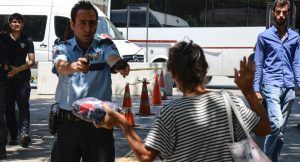
Human rights in Turkey are in peril following a bloody coup attempt on Friday 15 July, which resulted in the deaths of at least 208 people and almost 8,000 arrests.
Several government officials have suggested reinstating the death penalty as punishment for those found responsible for the failed coup, and the organisation is now investigating reports that detainees in Ankara and Istanbul have been subjected to a series of abuses, including ill-treatment in custody and being denied access to lawyers.
“The sheer number of arrests and suspensions since Friday is alarming and we are monitoring the situation very closely. The coup attempt unleashed appalling violence and those responsible for unlawful killings and other human rights abuses must be brought to justice, but cracking down on dissent and threatening to bring back the death penalty are not justice,” said John Dalhuisen, Amnesty International’s Director for Europe and Central Asia.
“The coup attempt unleashed appalling violence and those responsible for unlawful killings and other human rights abuses must be brought to justice, but cracking down on dissent and threatening to bring back the death penalty are not justice.”
john dalhuisen, amnesty international
“We urge the Turkish authorities to show restraint and respect for the rule of law as they carry out the necessary investigations, granting fair trials to all those in detention and releasing anyone for whom they do not have concrete evidence of participating in criminal acts. A backslide on human rights is the last thing Turkey needs.”
Although exact figures are unclear, Turkish authorities report that 208 people were killed and more than 1,400 injured across Istanbul and Ankara on Friday night when a faction of the military attempted to seize power, raiding TV stations and firing on the parliament and presidential buildings. Those killed include 24 people described by authorities as ‘coup plotters’, some of whom were reportedly lynched while unarmed and trying to surrender. Civilians were also killed when they took to the streets following a call for protest from President Tayyip Erdogan, facing down tanks and helicopters.
In the days following the coup attempt the Turkish government has made sweeping purges within the army, judiciary and civilian branches of the ministry of interior: 7,543 ‘coup plotters’ have been detained, 318 of whom have been placed in pre-trial detention. 7,000 police have been suspended and 2700 judges and prosecutors have been removed from their posts, representing just under a fifth of the judiciary. 450 members of the judiciary have been detained.
Statements by the President and government officials that the death penalty could be brought in retrospectively as a punishment for those found to be responsible for the coup attempt are a significant concern, as this would violate human rights conventions to which Turkey is a party, and protections within Turkey’s constitution.
“Mass arrests and suspensions are deeply worrying in a context of increasing intolerance of peaceful dissent on the part of the Turkish government, and there is a risk that this crackdown will be extended to journalists and civil society activists. In recent months political activists, journalists and others critical of public officials or government policy have been frequently targeted and media outlets seized,” said John Dalhuisen.
“Mass arrests and suspensions are deeply worrying in a context of increasing intolerance of peaceful dissent on the part of the Turkish government, and there is a risk that this crackdown will be extended to journalists and civil society activists.”
john dalhuisen, amnesty international
“It is more important than ever for the Turkish government to respect human rights and the rule of law in ways the coup plotters did not.”
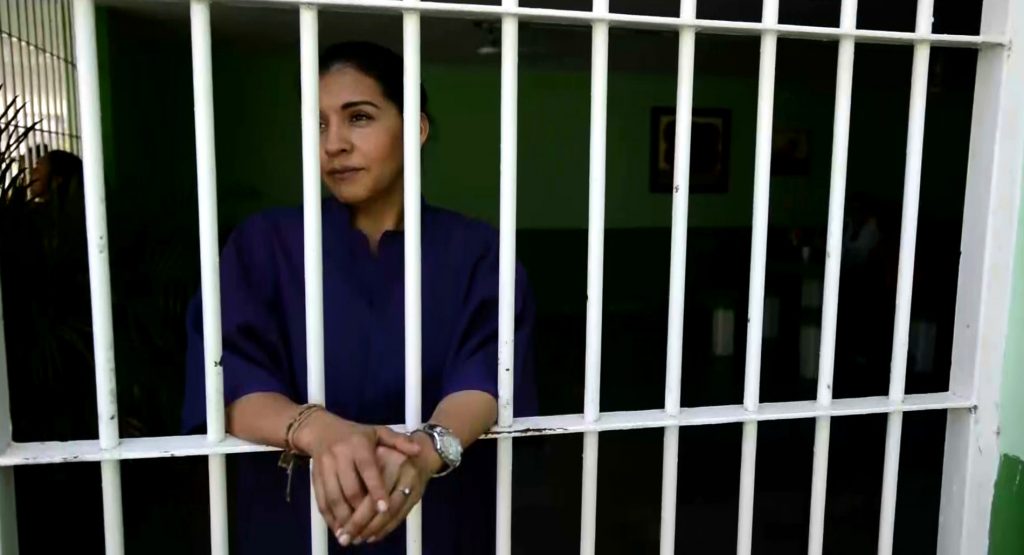
Verónica Razo, a Mexican 37-year-old mother of three is terrified of sleeping. Every night, when she lies in her bed in a small cell in Morelo’s federal prison, an hour outside the capital, Mexico City, her mind replays the scariest 24 hours of her life.
On 8 June 2011 federal police raped, suffocated and electrocuted her in a warehouse in Mexico City. She was tortured so badly that she almost died as a result. Police wanted her to say that she belonged to one of the brutal criminal gangs causing mayhem across the country. She has been behind bars since then.
Verónica’s story should be an exception; a terrible aberration; the result of a few “bad apples” within Mexico´s security forces.
Tragically, it is not.
A groundbreaking report published by Amnesty International details the harrowing testimonies of 100 women who have been arrested by Mexico´s police or military, the majority during the current President Enrique Peña Nieto took office in December 2012.
Of these 100 women; 97 said they were physically abused, 72 said they had been sexually abused, and 33 said they had been raped. As happened to Veronica, many of them were tortured to force them to “confess” to being part of a drug cartel or kidnapping ring.
Of these 100 women; 97 said they were physically abused, 72 said they had been sexually abused, and 33 said they had been raped.
We visited the only federal prison for women in Mexico to conduct interviews for this report; and the appalling stories of abuse just kept coming.
A housewife who was kidnapped from the street as she was on her way to buy groceries by unknown men, later identified as members of the security forces; a mother arrested as she walked to pick up her children from school; and a young woman who witnessed her husband being tortured to death by police officers, are among the stories of terror documented by Amnesty International
The fact that torture is incredibly common in Mexico is hardly big news anymore. According to a recent investigation by Amnesty International, criminal complaints of torture at a federal level doubled between 2013 and 2014. Since 2014 the authorities have not been able to provide updated figures.
According to a recent investigation by Amnesty International, criminal complaints of torture at a federal level doubled between 2013 and 2014.
But our most recent report takes these early findings to a whole new, and highly sinister level. Rape and other forms of sexual violence are routinely being used to torture women into confessing to crimes. These confessions boost prosecution figures and create the illusion that the authorities are doing something to tackle the security crisis currently enveloping Mexico. While these revelations are shocking, they should not come as news to the Peña Nieto administration.
Just two months ago a video was leaked to the Mexican press that provoked a public scandal. It showed police and military officials asphyxiating a woman with a plastic bag and interrogating her while she screamed in pain.
In an unprecedented move, the head of the Army took to the airwaves to publicly condemn the acts and apologize. The head of the Federal Police followed suit. The video brought a stark fact into the public domain: that torture continues to be a key strategy in Mexico’s fight against drug cartels and organized crime.
The video also shows us the human cost of this approach – two unbearable minutes of a woman’s excruciating suffering. Perhaps worse is that we do not know what happened once the camera was switched off. We do not know what else this woman was forced to endure.
On paper, Mexico might win a gold star as prize pupil in the international human rights system. There is almost no major human rights treaty that it has not ratified. Yet impunity for human rights violations is almost absolute; despite thousands of complaints of torture and other ill-treatment filed each year, the perpetrators go unpunished.
Mexico’s Federal Attorney General could not point to even one charge laid against torturers in either 2014 or 2015. And when we asked how many soldiers had been suspended for sexual abuse or rape since 2010, the army could not name one.
When women are tortured or ill-treated they are specifically at risk of forms of violence that target them because of their gender. Severe beatings; threats of rape against women and their families; asphyxiation; electric shocks to the genitals; groping of breasts and pinching of nipples; rape, including with objects, fingers and firearms – these are just some of the forms of violence meted out to women and documented by Amnesty International.
When women are tortured or ill-treated they are specifically at risk of forms of violence that target them because of their gender.
In addition, being a woman from a disadvantaged background makes you an easy target for abuses. The police and soldiers seem to take advantage of the fact that when women are living in poverty, they do not have the means to question the authorities. For example, a young sex worker and single mother-of-two told Amnesty International that all she had done was “go out to work to survive” one night when she was arrested by Federal Police in 2014. She was beaten and abused, and later accused of a serious crime.
A number of the women we spoke to had been raped by individuals belonging to the Navy. Mexico’s marines participate in public security operations and are generally seen as an elite force. However our research found that arrests carried out by the Navy had the highest rates of rape. In 2011, it was marines who subjected Denise Blanco and Korina Utrera to a 30-hour ordeal involving rape and ritual humiliation as a punishment for being lesbians. The couple remain in prison on charges of organized crime and drug offences.
In 2011, it was marines who subjected Denise Blanco and Korina Utrera to a 30-hour ordeal involving rape and ritual humiliation as a punishment for being lesbians. The couple remain in prison on charges of organized crime and drug offences.
So what must the government do to eradicate these hellish practices? Evidence suggests that training actually has very little impact. In fact the Navy, Army and Federal Police informed Amnesty International of literally hundreds of trainings directed at their agents in recent years on “women’s rights and a gender perspective.”
While this is discouraging, Amnesty International believes the situation can, and must, change. We also believe that the best way to stem the tide of abuse is to make sure there are consequences for those who perpetrate it.
The government already has the tools with which to do this. On 9 September 2015 it established a small taskforce within the Ministry of the Interior to focus on the issue of sexual torture of women. The taskforce was intended to coordinate different government institutions on the issue, allowing real progress in the investigation of cases. However it has remained largely dormant since its creation.
This taskforce, named the Official Mechanism on Sexual Torture against Women, must kick started into life and urgently given the resources it needs to start delivering results.
If the taskforce is not empowered to do its work, it will fail. But with tales of horror continuing to emerge from Mexican prisons; that cannot be allowed to happen. This nightmare must stop.
A new report published today reveals how members of the indigenous Tharu community in Nepal’s Tarai plains were subjected to arbitrary arrests, torture and other ill-treatment at the hands of the police in connection with the killings of eight security personnel and a child in Tikapur, Kailali district, on 24 August 2015.
The report follows interviews that Amnesty International conducted with detainees at Dhanghadi jail, Kailali. The detainees were arbitrarily arrested and charged with murder, attempted murder, and robbery in the days following the killings.
“The Tharu community has long suffered marginalisation and the denial of their human rights in Nepal. These cases are, sadly, not an aberration but form part of a longstanding pattern of police abuse against the Tharu community,” said Champa Patel, Amnesty International’s South Asia Director.
“These cases are, sadly, not an aberration but form part of a longstanding pattern of police abuse against the Tharu community.”
champa patel, amnesty international
On the day of the killings, police fired tear gas into crowds of thousands of Tharu protestors, who had taken to the streets against federal boundaries proposed by the government during negotiations for a new constitution and to demand a separate, autonomous province. In response, some of the protestors attacked the police, killing eight of them. The police killings triggered a wave of reprisal attacks against the Tharu community.
Torture and other ill-treatment
The detainees interviewed by Amnesty International were subjected to arbitrary arrests. While in custody, 18 of the 19 detainees the organization spoke to said they had been tortured from the moment the police took them into custody.
One of the prisoners interviewed by Amnesty International said that he was beaten immediately upon arrest. He was detained for seven days at the district police office and once police beat him until he fell unconscious. He was eventually revived with water.
Another person interviewed said he was beaten with bamboo sticks, boots, hands, lathis (bamboo-made police batons), plastic pipes, and he added, with “whatever came to their hand.”
The police, he claims, were intoxicated at the time, with their breath and gait betraying signs of heavy alcohol consumption. They “did not behave as men,” he said. One of the policemen chewed tobacco and spat it in his face.
They “did not behave as men,” he said. One of the policemen chewed tobacco and spat it in his face.
A third man interviewed attested to the policemen drinking and singing. While they were beating him, he said, they were singing, apparently taking pleasure in inflicting suffering.
A fourth detainee said that he was blindfolded by the police while in detention, and then told to run as they threatened to shoot him dead.
Coerced confessions
All detainees said they were then forced to sign “confessions” admitting to their alleged crimes, without even being allowed to read the document.
Ram Prasad Chaudhary, a detainee who was subjected to extensive torture, said that the police used force to hold his hand and secure a signed “confession”.
Another detainee said that police beat him and near-strangled him until he signed a document.
The detainees were only informed that they had been charged with murder, attempted murder and robbery when they arrived in court to hear the charges read against them.
Denial of medical treatment
Only Ram Prasad Chaudhary was able to secure a medical examination after telling the court that he had sustained injuries as a result of torture. However, he was denied medication for his typhoid.
The rest of the detainees were denied of their right to receive the health care and treatment they may require.
Recommendations
Amnesty International calls on the Nepali authorities to carry out prompt, independent, impartial and effective investigations into the allegations of torture and other ill-treatment, coerced confessions and arbitrary arrests.
The organisation also calls on the Nepali authorities to provide redress to the victims of torture and other ill-treatment in line with international law and standards. This includes an acknowledgment of the harm inflicted to them, as well as rehabilitation, compensation and guarantees of non-repetition.
“These are merely the first steps that Nepal’s authorities must take to begin effacing the shame of this episode. What these allegations underscore is the urgent need for structural reforms to be introduced to once and for all put an end to torture and other police abuse,” said Champa Patel.
Authorities must investigate the gruesome attack on Saturday on a woman with albinism and bring those suspected of the crime to justice, following the latest in a series of such attacks.
According to media reports, unidentified men targeted 51-year-old woman in Chitipa District in the northern region, chopping off her right hand with a machete after forcing their way into her home in the early hours of 16 July 2016.
“The authorities’ inaction puts people with albinism in Malawi at constant risk of violent attack,” said Muleya Mwananyanda, Amnesty International’s Deputy Director for Southern Africa.
“The authorities’ inaction puts people with albinism in Malawi at constant risk of violent attack.”
Muleya Mwananyanda, Amnesty International
“Just last month, the Malawian authorities assured Amnesty International that they are stepping up their efforts to prevent and punish these superstition-based attacks. It is time to go beyond words and to take effective measures to protect this vulnerable group.”
The report shows that women and children with albinism are particularly vulnerable to killings, and are sometimes targeted by their own close relatives.
Iran’s authorities are callously toying with the lives of prisoners of conscience and other political prisoners by denying them adequate medical care, putting them at grave risk of death, permanent disability or other irreversible damage to their health.
The report, Health taken hostage: Cruel denial of medical care in Iran’s prisons, provides a grim snapshot of health care in the country’s prisons. It presents strong evidence that the judiciary, in particular the Office of the Prosecutor, and prison administrations deliberately prevent access to adequate medical care, in many cases as an intentional act of cruelty intended to intimidate, punish or humiliate political prisoners, or to extract forced “confessions” or statements of “repentance” from them.
“In Iran a prisoner’s health is routinely taken hostage by the authorities, who recklessly ignore the medical needs of those in custody. Denying medical care to political prisoners is cruel and utterly indefensible,” said Philip Luther, Director of Amnesty International’s Middle East and North Africa Programme.
“In Iran a prisoner’s health is routinely taken hostage by the authorities, who recklessly ignore the medical needs of those in custody.”
Philip Luther, Amnesty International
“Prisoners’ access to health care is a right enshrined in both international and Iranian law. When depriving a prisoner of medical care causes severe pain or suffering and it is intentionally done for purposes such as punishment, intimidation or to extract a forced ‘confession’, it constitutes torture.”
The report details 18 appalling cases of prisoners who have been denied medical care in some form and are at risk of suffering permanent damage to their health.
The report provides a deeply disturbing image of the Office of the Prosecutor, which in Iran is responsible for decisions concerning medical leave and hospital transfers. The Office of the Prosecutor often refuses to authorize hospital transfers for sick prisoners even though the care they need is not available in prison, and denies requests for medical leave for critically ill prisoners against doctors’ advice.
Amnesty International’s research found that in some cases prison officials had also violated prisoners’ rights to health, or were responsible for torture or other ill-treatment. In several cases, they withheld medication from political prisoners or unnecessarily used restraints such as handcuffs and leg shackles on political prisoners, interfering with their medical treatment, bruising their hands and feet or causing them discomfort and humiliation.
Prisoners interviewed by Amnesty International also said that prison doctors were sometimes complicit in the abuse. They said some prison doctors consistently downplayed or outright dismissed their health problems as “figments of their own imagination” and treated serious conditions with painkillers or tranquillizers.
Prisoners interviewed by Amnesty International also said that prison doctors were sometimes complicit in the abuse.
The report reveals that women political prisoners, at least in Tehran’s Evin Prison where the clinic is entirely staffed by male doctors and nurses, face additional barriers to accessing medical care. On several occasions women prisoners, who experienced health problems, were denied emergency medical tests or other treatment because it was deemed inappropriate for them to be treated by male medical staff. Women were also subjected to sexual slurs and harassment for failing to comply with strict veiling regulations.
“The Iranian authorities and in particular the prosecution authorities have displayed a chilling ruthlessness in their attitude towards sick prisoners. They are toying with individuals’ lives with devastating, lasting consequences to their health,” said Philip Luther.
They are toying with individuals’ lives with devastating, lasting consequences to their health.
“Iran’s authorities must immediately stop using the denial of medical care as a form of punishment or coercion and ensure all people in custody are able to access adequate health care without discrimination.”
Treatment withheld to extract ‘confessions’
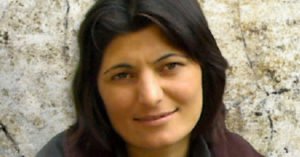
Zeynab Jalalian, an Iranian Kurdish woman serving a life sentence in connection with her alleged membership of a Kurdish opposition group, is at risk of going blind because her treatment has been withheld. Her family believe she was injured when interrogators repeatedly hit her head against the wall, fracturing her skull causing a brain haemorrhage and vision impairment. She urgently needs an eye operation but the authorities have repeatedly refused to authorize her transfer to a hospital. Intelligence officers have told her she would first have to provide “confessions”.
“They said that if she did so, they would not only reduce her sentence but also take her to a doctor,” her sister, Deniz Jalalian, told Amnesty International.
“Making medical care conditional on obtaining a statement of ‘repentance’ or a ‘confession’ is not only a shameful exploitation of a prisoner’s poor health but also a clear violation of the absolute prohibition of torture and other ill-treatment,” said Philip Luther.
Denial of timely specialized medical care outside prison
Prisoner of conscience Omid Kokabee, a 33-year-old physicist serving a 10-year sentence for refusing to work on military projects in Iran, complained of kidney problems for nearly five years but the authorities ignored his repeated requests for medical care. In April 2016, he was diagnosed with advanced kidney cancer and had to undergo emergency surgery to remove his right kidney.
“He had been waiting for a long time to be transferred to a hospital… but the officials wouldn’t agree to it. Prison doctors never even examined him, and kept prescribing painkillers for him,” a family member said.
A photograph which recently emerged showing Omid Kokabee chained to his hospital bed when he was hospitalized on a previous occasion in 2015 caused an outcry on social media.Afshin Sohrabzadeh, an Iranian Kurdish political prisoner serving a 25-year prison sentence, was also repeatedly denied the specialized treatment he urgently needed for an intestinal cancer which resulted in severe and frequent gastrointestinal bleeding. The authorities also made his medical leave conditional on an extortionate bail amount.
“If you cannot provide a property bond for your medical leave that is not a problem. We will send your body to a mortuary and your mother and father can go and pick it up,” Afshin Sohrabzadeh was apparently told.
“If you cannot provide a property bond for your medical leave that is not a problem. We will send your body to a mortuary and your mother and father can go and pick it up.”
On 25 June 2016 he was finally granted temporary medical leave. However, he remains unable to fund his treatment because the intelligence authorities have confiscated his national identification documents, preventing him from applying for government-subsidized health care.
The case of Afif Naimi, a prisoner of conscience and one of seven imprisoned leaders of Iran’s Baha’i community serving a 10-year prison term, is another shocking case. He suffers from a severe blood clotting disorder, which requires regular, specialized medical care not available in prison. The condition can be fatal if left untreated. He has been deemed unfit for imprisonment by medical professionals several times but despite this the Office of the Prosecutor has refused to release him on medical grounds. While in prison, he has suffered recurrent bleeding and loss of consciousness, resulting in his frequent hospitalization.
Hunger strikes
Many political prisoners suffering from health conditions have felt that they have had no choice but to go on hunger strike to compel the authorities to provide them with medical care. Hunger strikes are usually greeted with indifference but in some cases the authorities have eventually granted the hunger striker short-term medical leave, then forced them to interrupt their treatment by returning them to prison after a brief period against medical advice. In some cases prisoners were punished for going on hunger strike. Prisoner of conscience Alireza Rasouli, who is serving a three-and-a-half-year prison sentence, was sentenced to three additional years after he was convicted of national security charges such as “spreading propaganda against the system” including through staging hunger strikes. He suffers from a bone disease in his leg, which has deteriorated because it was left untreated, causing him severe pain and restricting his ability to move. He now requires surgery outside of prison to prevent potentially permanent joint damage.
Amnesty International is calling on the Iranian authorities to immediately stop denying prisoners access to adequate medical care, in line with their international obligations. The authorities must investigate the prosecution authorities and all other officials – including medical staff – who may be involved in deliberately denying medical care to prisoners.
Amnesty International Australia’s annual Media Awards for 2016 have now been launched, recognising excellence in reporting on human rights issues in the Australian media.
Journalists, photographers, cartoonists and their editors and producers are invited to enter stories broadcast or published between 1 August 2015 and 1 August 2016.
Previous winners of the awards, now in their third year, have included journalists from the ABC, The Sunday Telegraph, The Australian, The Guardian, Al Jazeera, The Sydney Morning Herald, Brisbane Indigenous Media Association, and Australian Regional Media.
Eighteen distinguished industry professionals will be judging the six categories. Judges include Sky News Political Editor David Speers, radio host Angela Catterns, Huffington Post Political Editor Karen Barlow, NITV Supervising Producer Catherine Liddle, Fairfax cartoonist Cathy Wilcox and photojournalist Daniel Berehulak.
The media awards ceremony will be held in Sydney on 8 November, hosted by Channel 10 news anchor and Walkley Award winner Hugh Riminton.
Around the world, journalists play a vital role in uncovering abuses and corruption, often putting their own lives at risk to report on issues that would otherwise remain hidden from the public. The Amnesty International Australia Media Awards acknowledge the courageous work of journalists and photojournalists who work across all media types.
Upholding human rights and the rule of law is the job of elected governments. The coup plotters in Turkey forgot this; it is crucial that President Erdogan and the authorities do not.
Investigations and accountability should now begin, but this is no time for further rights regression in Turkey. Fair trials must be ensured and there must be no return to the death penalty in the country, which would deliver justice for no-one.
We condemn the recent executions of three men in Bangladesh and urge authorities to immediately impose a moratorium on executions with a view to the abolition of the death penalty.
Mercy petitions rejected
Two men – Mohammed Shahidul and Saiful Islam – were hanged just after midnight on Wednesday 13 July in Chittagong Central Jail. They had been convicted of murdering an auto rickshaw driver and stealing his vehicle in 2004. Also on 13 July another man, Maku Robi Dass, was hanged in Sylhet Central Jail after he had been convicted of murder in 2003. In both cases, the executions were carried out after the High Court upheld the death sentences on appeal and their mercy petitions were rejected by the President.
In 2015, at least four people were executed in Bangladesh, three of whom had been sentenced to death by the International Crimes Tribunal (ICT), a Bangladeshi court looking into war crimes and crimes against humanity committed during the 1971 Independence War. In 2016, one other person convicted by the ICT – Motiur Rahman Nizami – has been executed. The ICT trials have been marred by irregularities and do not meet international fair trial standards. By the end of 2015, there were at least 1,425 prisoners on death row in Bangladesh.
No evidence executions deter crime
The continued use of executions in Bangladesh is deeply troubling. Amnesty International opposes the death penalty in all cases and under any circumstance, regardless of the nature or the circumstances of the crime. The death penalty is the ultimate cruel, inhuman and degrading punishment and is a clear violation of the right to life.
By carrying out executions, Bangladesh is going against the clear global trend of moving toward abolition of the death penalty. In 2015, the majority of the world’s countries had removed the death penalty fully from national law. In total, 140 countries worldwide are abolitionist in law or practice.
By carrying out executions, Bangladesh is going against the clear global trend of moving toward abolition of the death penalty.
While Amnesty International opposes the death penalty unconditionally, it is important to note that there is no credible evidence showing that the threat of execution is an effective tool to prevent crime. Studies have consistently failed to show that the death penalty is more of a deterrent to crime than other forms of punishment.
Amnesty International urges the Bangladeshi authorities to immediately impose a moratorium on executions with a view to the full abolition of the death penalty, and to commute all death sentences in the country.
Amnesty International utterly condemns the despicable attack in Nice, which has left over 80 dead and many more injured. No one has claimed responsibility for the attack, which President Hollande has described as being of a “terrorist nature”.
Amnesty International’s Europe Director, John Dalhuisen said:
“We are all deeply shocked by the appalling attack in Nice. We grieve with those who lost loved ones, and stand united with those opposing terror with freedom, fairness and the respect for human rights.”
South Sudanese security forces are deliberately blocking people from leaving the country in violation of their right to freedom of movement.
The organisation has received reports from two charter companies that National Security Service officers have ordered them not to carry South Sudanese nationals, particularly men. It has also been told by an NGO that one of its South Sudanese staff was prevented from boarding a flight to Entebbe, Uganda.
“This arbitrary conduct by the South Sudanese security forces is totally unacceptable. South Sudan must respect people’s right to freedom of movement, including the right to leave their own country,” said Elizabeth Deng, Amnesty International’s South Sudan Researcher.
“It is absolutely critical that both parties to the conflict do not obstruct safe passage of civilians fleeing to places of refuge both inside and outside of the country.”
“It is absolutely critical that both parties to the conflict do not obstruct safe passage of civilians fleeing to places of refuge both inside and outside of the country.”
Thousands of South Sudanese people have reportedly gathered at the country’s southern border seeking to enter into Uganda, but they are also being prevented from crossing over.
Background
Juba International Airport was reopened on Tuesday after a ceasefire was announced to end days of fighting between rival armed forces loyal to President Salva Kiir and First Vice-President Riek Machar, which left hundreds of people dead and thousands displaced.
Charter and evacuation flights have been leaving since the airport reopened, but commercial flights have only resumed today.