Media Awards: Meet the 2021 Radio Finalists

The Amnesty International Australia Media Awards recognise the important work of media professionals operating in Australia to expose human rights abuses around the world.

With the impending announcement of this year’s winners on the 18th November – meet the finalists in the Radio category and their entries to this years’ awards. In no particular order:

“Her name was Mhelody Bruno”, Elise Kinsella and Andy Burns, ABC – Background Briefing and Regional Investigations

Photo of ‘Her Name was Mhelody Bruno’ on ABC- Background Briefing

“Her Name Was Mhelody Bruno” is a radio documentary that looks at the manslaughter death of transgender woman Mhelody Bruno and what has been described as the “miscarriage of justice” that followed. Ms Bruno was holidaying in Australia when she was strangled to death by a man she was dating. Rian Toyer told the District Court of NSW that her death was accidental and Ms Bruno had been strangled as part of a consensual erotic asphyxiation practice gone wrong. He was initially handed a non-custodial sentence by the Judge. But this ABC investigation exposed a raft of critical evidence that the police and prosecutors never presented to the Court.

The judges’ comments:

“‘Her name was Mhelody Bruno’ is a completely original documentary that uncovers new evidence in a case that otherwise would not have gained media attention… The documentary is incredibly accessible and told in a narrative arc that is easy to follow and compelling listening. It’s beautiful (and devastating) audio storytelling. By incorporating interviews with Mhelody’s friends and family Elise has given transgender issues a real life face in Mhelody.”

“The Wait”, Mozhgan Moarefizadeh, Nicole Curby, Michael Green, Bec Fary & Miles Martignoni, The Guardian – Full Story

Photo of “The Wait” on The Guardian – Full Story

“The Wait” is a five-part podcast series about the situation facing refugees living without rights in Indonesia. “The Wait” walks a unique and delicate line, presenting rigorous in-depth reporting while placing authority in Moarefizadeh’s hands. As co-host of the series she is the central protagonist, as well as reporter, interpreter, and expert.

The judges’ comments:

“‘The Wait’ is exceptional in its storytelling – sharing personal experiences in people’s first language with interpretation. It digs into the complexity, the lack of human rights and incredible hardship experienced by those stuck in Indonesia through a diversity of voices. Nicole’s relationship with Mozhgan and in turn Mozhgan’s ability to build trusting relationships with refugees and asylum seekers who share their stories has been invaluable to the podcasts success.”

“Afghanistan Interviews”, Sally Sara, ABC Radio – The World Today

Photo of “Afghanistan Interviews” on ABC – The World Today

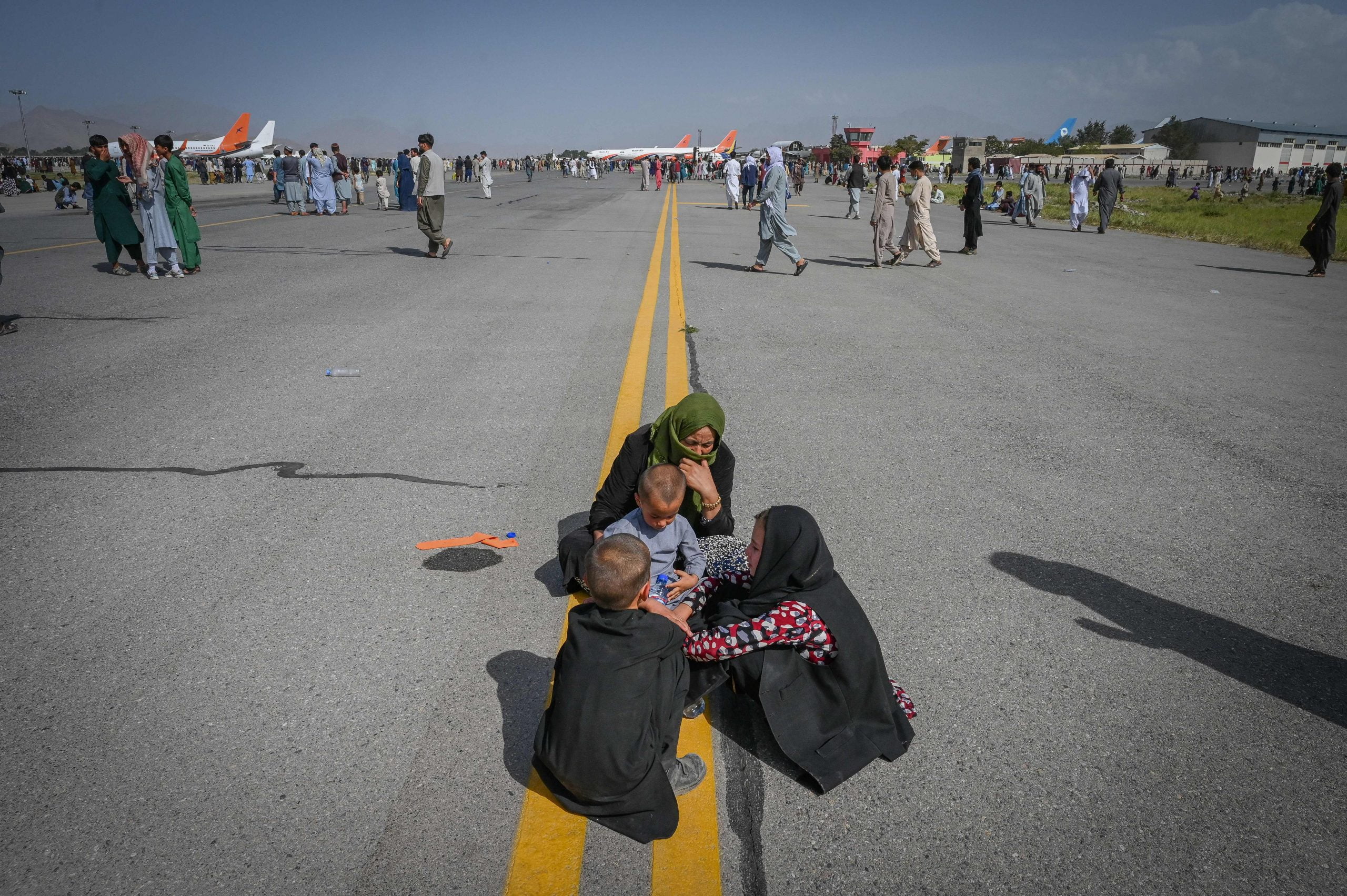
“The World Today” provides insightful interviews following the fall of Kabul. The interviews are conducted with an Afghan contractor, who worked on an Australian aid project; Admiral Chris Barrie, Former Chief of the Defence Force; and a US Marine who was embedded with a platoon at Patrol Base Sangin Fulod.

The judges’ comments:

“Brilliant interviews covering the Taliban taking back Afghanistan and the Australian government’s response. They demonstrate a diverse range of views that provide incredible depth and insight on the situation in Afghanistan from three important angles – the Afghan contractor, the former ADF Chief and the US Marine vet. Sally’s use of audio from ten years prior when she was embedded with marines in Afghanistan works perfectly.”

Thanks to this years’ Radio judges

  • Martin Walters, 2Ser
  • Alexandra Barwick, ABC Radio Alice Springs

Follow the Media Awards

Winners of this years’ Media Awards will be announced in an online ceremony on the 18th November. To find out more about the Awards you can follow the coverage on our social channels, or follow updates on our website.

Qatar: One year to make good on promises to migrant workers as progress stagnates

With just one year to go until the 2022 FIFA World Cup, time is running out for Qatar to deliver on its promise to abolish the kafala sponsorship system and better protect migrant workers, Amnesty International said today. In Reality Check 2021, a new analysis of Qatar’s progress towards overhauling its labour system, the organization found that progress has stagnated over the last year and old abusive practices have resurfaced, reviving the worst elements of kafala and undermining some of the recent reforms.

The daily reality for many migrant workers in the country remains harsh, despite legal changes introduced since 2017.

Amid mounting scrutiny of Qatar’s human rights record as the World Cup approaches, Amnesty International is calling on the Qatari authorities to take urgent action to ramp up the reform process before it is too late. 

“The clock is ticking but it’s not too late to turn the ink on paper into real action. Now is the time for Qatari authorities to be bold and fully embrace their programme of labour reforms; any progress to date will be wasted if Qatar settles for weak implementation of policies and fails to hold abusers to account,” said Mark Dummett, Amnesty International’s Global Issues Programme Director.

The clock is ticking but it’s not too late to turn the ink on paper into real action. Now is the time for Qatari authorities to be bold and fully embrace their programme of labour reforms

Mark Dummett, Amnesty International’s Global Issues Programme Director

“Apparent complacency by the authorities is leaving thousands of workers at continued risk of exploitation by unscrupulous employers, with many unable to change jobs and facing wage theft. They have little hope of remedy, compensation or justice. After the World Cup, the fate of the workers who remain in Qatar will be even more uncertain.”

By August 2020, Qatar had passed two laws to end restrictions on migrant workers leaving the country and changing jobs without their employer’s permission. If properly enforced these had the potential to strike at the heart of the kafala system, which continues to bind migrant workers to their employers, but workers told Amnesty International they still face significant hurdles in changing jobs and pushback from disgruntled bosses.

Jacob (not his real name), a migrant worker who has been in Qatar for more than five years, said: “Change came on paper but [not] on the ground…When you go inside the company and among the workers [you see that] only a very small change has happened. It is still appalling.”

Workers still tied to jobs they want to leave

Qatar has made a number of positive reforms to benefit migrant workers since 2017. These include a law regulating working hours for live-in domestic workers, labour tribunals to facilitate access to justice, a fund to support payment of unpaid wages, and a minimum wage. It has also ratified two key international human rights treaties, albeit without recognizing the right of migrant workers to join a trade union.

But a failure to implement means exploitation continues.

For example, although Qatar has repealed the requirement to obtain an exit permit and No-Objection Certificate (NOC) for most migrant workers, allowing them to leave the country and move jobs without seeking their sponsors’ consent, a de facto NOC process has emerged and problematic elements of kafala remain in place. This includes the ability of abusive employers to block migrant workers’ job transfer and control their legal status.

Aisha, who works in the hospitality sector, described being threatened by her employer when she refused to sign a new contract with him and requested to change employers instead. She was told she had to pay 6,000 QR (US$1,650) – more than five times her monthly salary – for an NOC, or else be sent home. Although the change in law should have allowed Aisha to change jobs freely, the complaint she submitted to the Ministry of Administrative Development, Labour and Social Affairs (MADLSA) was rejected.

“The whole situation had a big impact on me but also on my family because as a main breadwinner it is not easy to handle this situation. Sometimes I feel I do not want to wake up in the morning,” Aisha told Amnesty International. 

While the NOC has been abolished in law, organizations supporting migrant workers and embassies in Doha noticed that the failure to include one or another form of written approval from the current employer appears to increase the chance of a job transfer request being rejected. This in turn has given rise to an “NOC trade” which has become a lucrative business for some abusive employers.

Other abusive practices include withholding salaries and benefits to make it harder for workers to leave their jobs. Migrant workers are also still dependent on their employers to enter and stay in Qatar, giving rise to the use of ‘absconding’ charges and cancellation of resident permits which abusive employers use to control their workforce.

Exploitation on a massive scale continues

In its analysis, Amnesty International also found that late payment and non-payment of wages and other contractual benefits remain some of the most common forms of labour abuse facing migrant workers in Qatar. Yet their access to justice remains scarce and workers are still prohibited from organizing themselves to collectively fight for their rights.

In August 2021, Amnesty International documented the Qatari authorities’ failure to investigate the deaths of thousands of migrant workers despite evidence of links between premature deaths and unsafe working conditions . Despite introducing some new protections for workers, major risks remain – for example, the new regulations do not include mandatory rest periods proportionate to the climate or kind of work undertaken – and authorities have done little to investigate the scale of unexplained deaths.

“Qatar is one of the richest countries in the world, but its economy depends on the two million migrant workers who live there. Each of them has a right to be treated fairly at work, and to obtain justice and compensation when they face abuses,” said Mark Dummett.

“By sending a clear signal that labour abuses will not be tolerated, penalizing employers who break laws and protecting workers’ rights, Qatar can give us a tournament that we can all celebrate. But this is yet to be achieved.”

Amnesty International is also calling on the World Cup organizer, FIFA, to live up to its responsibilities to identify, prevent, mitigate and remedy human rights risks connected to the tournament. This includes risks to workers in industries like hospitality and transport, which are expanding massively to facilitate the delivery of the games. It also needs to use its voice, both publicly and privately, to call on the Qatar government to fulfil its programme of labour reforms before the opening match of the World Cup.

Australia must hold Modi to account on tech surveillance

As Indian Prime Minister Narendra Modi prepares for the keynote address the Australian Strategic Policy Institute’s Sydney Dialogue today, Amnesty International Australia has called on Prime Minister Scott Morrison – who will also address the conference – not to trade away human rights in dealings with India.

Recent research from Amnesty Tech revealed that extensive surveillance of Hyderabad in India is putting human rights at risk. As part of the ongoing Ban The Scan campaign to ban intrusive facial recognition technology Amnesty found that the Indian authorities have begun construction of an ominous ‘Command and Control Centre’ (CCC), intended to connect the state’s vast facial recognition-capable CCTV infrastructure in real time.

“This is just one example of Narendra Modi’s government crackdown on civil society groups – including Amnesty International – and Australia has an obligation to hold our trade partners to the same standards our citizens expect, including not using technology to spy on people who defend human rights,” Amnesty International Australia campaigner Nikita White said.

Indian diaspora group The Humanism Project is also concerned about the chilling effect of crackdowns on the community in Australia and New Zealand.

“In addition, there has been an increase in online attacks targeted at Indian academia and civil society groups who are critical of the Modi government in the region. Such surveillance technology therefore raises security concerns for civil society groups and human right activists in Australia. PM Morrison therefore has an obligation to the Australian people to question PM Modi on the Indian state’s use of technology to spy on people who defend human rights,” The Humanism Project Co-Founder Dr Haroon Kasim said.

Authorities in India have a lengthy record of using facial recognition technology in contexts where human rights are at stake, with recent examples including enforcing COVID-19 lockdown measures, identifying voters in municipal elections, and policing protests. The rights of Muslims, Dalits, Adivasis, Transgender communities, and historically disadvantaged sections of society, are particularly at risk by mass surveillance.

Amnesty International is calling for a total ban on the state and private sector use, development, production, sales, and export of facial recognition technology for mass surveillance purposes

Qatar: One year to make good on promises to migrant workers as progress stagnates

With just one year to go until the 2022 FIFA World Cup, time is running out for Qatar to deliver on its promise to abolish the kafala sponsorship system and better protect migrant workers, Amnesty International said today. In Reality Check 2021, a new analysis of Qatar’s progress towards overhauling its labour system, the organization found that progress has stagnated over the last year and old abusive practices have resurfaced, reviving the worst elements of kafala and undermining some of the recent reforms.

The daily reality for many migrant workers in the country remains harsh, despite legal changes introduced since 2017.

Amid mounting scrutiny of Qatar’s human rights record as the World Cup approaches, Amnesty International is calling on the Qatari authorities to take urgent action to ramp up the reform process before it is too late. 

“The clock is ticking but it’s not too late to turn the ink on paper into real action. Now is the time for Qatari authorities to be bold and fully embrace their programme of labour reforms; any progress to date will be wasted if Qatar settles for weak implementation of policies and fails to hold abusers to account,” said Mark Dummett, Amnesty International’s Global Issues Programme Director.

“Apparent complacency by the authorities is leaving thousands of workers at continued risk of exploitation by unscrupulous employers, with many unable to change jobs and facing wage theft. They have little hope of remedy, compensation or justice. After the World Cup, the fate of the workers who remain in Qatar will be even more uncertain.”

After the World Cup, the fate of the workers who remain in Qatar will be even more uncertain.

Mark Dummett, Amnesty International’s Global Issues Programme Director

By August 2020, Qatar had passed two laws to end restrictions on migrant workers leaving the country and changing jobs without their employer’s permission. If properly enforced these had the potential to strike at the heart of the kafala system, which continues to bind migrant workers to their employers, but workers told Amnesty International they still face significant hurdles in changing jobs and pushback from disgruntled bosses.

Jacob (not his real name), a migrant worker who has been in Qatar for more than five years, said: “Change came on paper but [not] on the ground…When you go inside the company and among the workers [you see that] only a very small change has happened. It is still appalling.”

Workers still tied to jobs they want to leave

Qatar has made a number of positive reforms to benefit migrant workers since 2017. These include a law regulating working hours for live-in domestic workers, labour tribunals to facilitate access to justice, a fund to support payment of unpaid wages, and a minimum wage. It has also ratified two key international human rights treaties, albeit without recognizing the right of migrant workers to join a trade union.

But a failure to implement means exploitation continues.

For example, although Qatar has repealed the requirement to obtain an exit permit and No-Objection Certificate (NOC) for most migrant workers, allowing them to leave the country and move jobs without seeking their sponsors’ consent, a de facto NOC process has emerged and problematic elements of kafala remain in place. This includes the ability of abusive employers to block migrant workers’ job transfer and control their legal status.

Aisha, who works in the hospitality sector, described being threatened by her employer when she refused to sign a new contract with him and requested to change employers instead. She was told she had to pay 6,000 QR (US$1,650) – more than five times her monthly salary – for an NOC, or else be sent home. Although the change in law should have allowed Aisha to change jobs freely, the complaint she submitted to the Ministry of Administrative Development, Labour and Social Affairs (MADLSA) was rejected.

“The whole situation had a big impact on me but also on my family because as a main breadwinner it is not easy to handle this situation. Sometimes I feel I do not want to wake up in the morning,” Aisha told Amnesty International. 

While the NOC has been abolished in law, organizations supporting migrant workers and embassies in Doha noticed that the failure to include one or another form of written approval from the current employer appears to increase the chance of a job transfer request being rejected. This in turn has given rise to an “NOC trade” which has become a lucrative business for some abusive employers.

Other abusive practices include withholding salaries and benefits to make it harder for workers to leave their jobs. Migrant workers are also still dependent on their employers to enter and stay in Qatar, giving rise to the use of ‘absconding’ charges and cancellation of resident permits which abusive employers use to control their workforce.

Exploitation on a massive scale continues

In its analysis, Amnesty International also found that late payment and non-payment of wages and other contractual benefits remain some of the most common forms of labour abuse facing migrant workers in Qatar. Yet their access to justice remains scarce and workers are still prohibited from organizing themselves to collectively fight for their rights.

In August 2021, Amnesty International documented the Qatari authorities’ failure to investigate the deaths of thousands of migrant workers despite evidence of links between premature deaths and unsafe working conditions . Despite introducing some new protections for workers, major risks remain – for example, the new regulations do not include mandatory rest periods proportionate to the climate or kind of work undertaken – and authorities have done little to investigate the scale of unexplained deaths.

“Qatar is one of the richest countries in the world, but its economy depends on the two million migrant workers who live there. Each of them has a right to be treated fairly at work, and to obtain justice and compensation when they face abuses,” said Mark Dummett.

“By sending a clear signal that labour abuses will not be tolerated, penalizing employers who break laws and protecting workers’ rights, Qatar can give us a tournament that we can all celebrate. But this is yet to be achieved.”

Amnesty International is also calling on the World Cup organizer, FIFA, to live up to its responsibilities to identify, prevent, mitigate and remedy human rights risks connected to the tournament. This includes risks to workers in industries like hospitality and transport, which are expanding massively to facilitate the delivery of the games. It also needs to use its voice, both publicly and privately, to call on the Qatar government to fulfil its programme of labour reforms before the opening match of the World Cup.

Three months on from the fall of Kabul, the Australian Government’s lack of commitment is shameful

Today marks three months since the Taliban returned to power in Afghanistan. Since that time the reports of horrendous conditions being endured by those still trapped have been endless. The recent Senate Committee heard that more than 100,000 people have asked for help from Australia. Apart from a wholly inadequate 3,000 places taken from the existing humanitarian quota, the response from the Australian Government has been deafening silence unlike Australia’s previous responses to humanitarian crises in Syria, the Balkans, Tiananmen Square and following the Vietnam war.

Amnesty International Australia calls on Immigration Minister, Alex Hawke, to publicly commit to doing more to help those living through what the United Nations World Food Programme has described as among the world’s worst humanitarian crises “if not the worst” and “a countdown to catastrophe.” Millions could starve as supplies run out and the economy collapses.

We once again ask Minister Hawke to:

  • Commit to taking in at least an additional 20,000 people from Afghanistan trying to flee danger – many other countries such as the US, UK and Canada have committed to so much more
  • Announce immediately major improvements to the Community Support Program (CSP), which allows communities to sponsor refugees and welcome them into their neighbourhoods – the United States’ recent announcement that it will introduce affordable, additional private sponsorship to respond to the Afghan crisis, has seen Australia left wanting
  • Give those from Afghanistan on temporary visas in Australia the reassurance they need that they will never be sent back to Afghanistan, by granting them permanent visas

Speaking to the conditions in Afghanistan today, Hazara woman and founder of the Asia Pacific Network of Refugees, Najeeba Wazefadost, said: My organisation has been working night and day trying to get supplies into Afghanistan – everything from food, to nappies and baby formula. The situation is absolutely dire. There must be more Australia can do to help.”

Zaki Haidari, a Hazara refugee from Afghanistan currently living in Australia on a temporary visa, said: “Refugees were forced to leave Afghanistan fearing for their lives from the Taliban – the same group that controls the country now. It is not safe for us to return, and it is not safe for our families to remain in Afghanistan. Our fears grow day by day for their safety. 

“We have been living in limbo for the past nine years with no hope for our future, apart from the hope of one day being reunited with our wives, kids and loved ones. We are urging the Australian government to stop this uncertainty and long emotional suffering; provide us with  permanent protection and allow us to sponsor our families and loved ones.”

Amnesty International’s refugee adviser, Dr Graham Thom, said: “The scale of the tragedy unfolding in Afghanistan cannot be underestimated. Day after day, the situation gets worse for countless thousands of people, and yet there has been effectively radio silence from the Australian Government since the last Australian flight left the airport in Kabul. Why are we leaving it up to other countries to do all the heavy lifting? Our response has been woefully inadequate.”

Amnesty’s lead campaigner to improve CSP, Shankar Kasynathan, said: “There is an obvious and immediate response Minister Hawke can make today – announce significant improvements to the Community Support Program. His Department has recommended it, Australian communities want it and he himself has said there will be changes. With the situation so dire in Afghanistan, now is the time to act and bring more refugees to safety here in Australia.”

AGs stop shortchanging our kids and raise the age to 14

Amnesty International today welcomed a commitment by States and Territories to work on a proposal to raise the age of criminal responsibility, but criticised a lack of leadership by not committing to a minimum age of criminal responsibility (MACR) of 14.

“This is not the compromise they think it is,” Amnesty International Australia Indigenous Rights Campaigner Maggie Munn said. “It’s great that they understand there is widespread support for raising the age, but it’s weak to continue to delay this reform further.”

“It’s a kick in the guts to the kids languishing in detention and everyone who has campaigned for the chance for our kids to live happy and healthy lives free of the criminal justice system.

“The best evidence available led the Committee on the Rights of the Child to recommend 14 as a MACR in 2019 – and here we are two years later talking about raising the age to 12 – it’s devastating the Attorneys-General think so little of our kids and their futures.

“We hope the States and Territories with courage and the best interests of Australian children at heart continue to introduce their own legislation with haste, as the ACT has done. There’s no need to yoke themselves to this interminable process – they can act now and raise the age to 14.”

BACKGROUND

The age of criminal responsibility is the age in which a child is considered by law to have understood that their actions were wrong and can face criminal charges. All Australian states and territories have this age set at only 10 years old. This means that across Australia, police have the power to arrest, strip-search and imprison children who are only 10 – that’s typically a child in year three or four at primary school. Many Australians are actually unaware of the current age a child can be held criminally responsible for their actions; two thirds of Australians believe it to be 14
Australia’s current treatment of children under criminal law violates their human rights under the Convention of the Rights of the Child. It also disproportionately impacts Indigenous kids, perpetuating cycles of racism and reoffending. Australia has also faced repeated criticism from the Committee on the Elimination of Racial Discrimination for not raising the age.

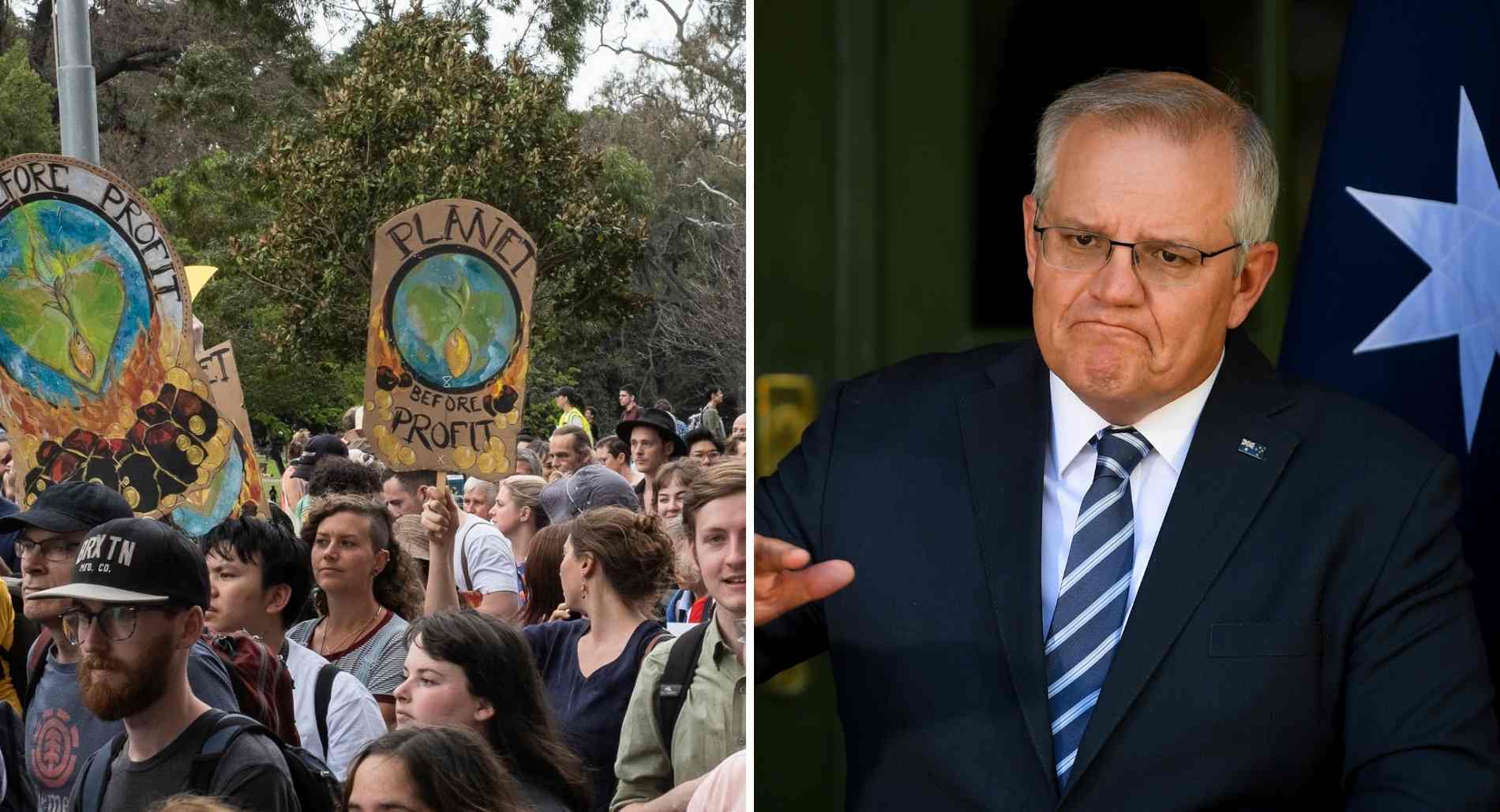
COP26: Leaders’ catastrophic failure on climate shows they have forgotten who they should serve and protect – humanity at large

Leaders have catastrophically betrayed humanity at large by failing to protect people most affected by the climate crisis and instead caving into the interests of fossil fuel and other powerful corporations, Amnesty International said today as the climate conference, COP26, concludes for another year.  Following two weeks of negotiations by world leaders in Glasgow, Amnesty’s Secretary General, Agnès Callamard, said:

“The United Nations Climate Change Conference has failed to deliver an outcome that protects the planet or people. Instead it has betrayed the very foundations on which the United Nations was built – a pledge first not to countries, nor states, but to the people. Throughout their negotiations, our leaders have made choices that ignore, chip away or bargain away our rights as human beings, often discarding the most marginalised communities around the world as expendable collateral damage.

“Their failure to commit to maintaining the global temperature rise at 1.5°C will condemn more than half a billion people, mostly in the global south, to insufficient water and hundreds of millions of people to extreme heatwaves. Despite this disastrous scenario, wealthy countries have failed to commit money towards compensating communities suffering loss and damage as a result of climate change. Neither have they committed to providing climate finance to developing countries primarily as grants, a decision that threatens poorer countries – the least equipped to cope with the climate crisis – with unsustainable levels of debt.

“It is bitterly disappointing to see the many loopholes in the COP26 agreement which bow to the interests of fossil fuel corporates rather than our rights. The agreement fails to call for the phasing out of all fossil fuels and all fossil fuel subsidies – demonstrating the lack of ambition and bold action needed at this critical time. In addition, the focus on carbon offsetting by rich countries, without even putting in place adequate environmental and human rights protection measures, ignores the threat to Indigenous peoples and communities who risk being evicted from their land to make way for these schemes. It is a hollow and unacceptable substitute for real zero emissions targets. 

“The decisions made by our leaders in Glasgow have grave consequences for all of humanity. As they have clearly forgotten the people they serve, the people must come together to show them what can be achieved. Over the next 12 months, we must stand together to call on our governments to take ambitious action on climate change that puts people and human rights at its centre. If we do not put our hearts and minds into solving this existential threat to humanity, we lose everything.”

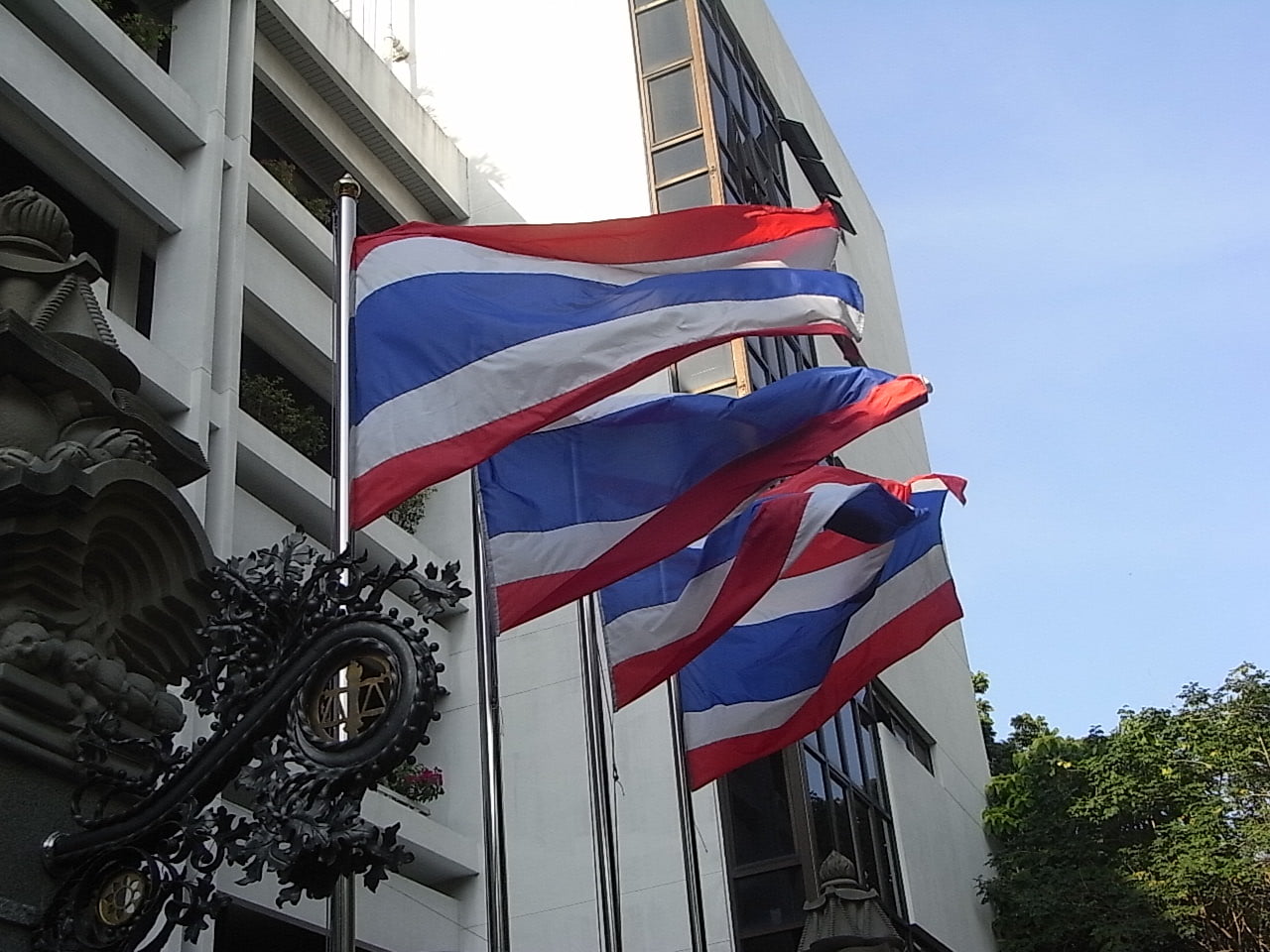
Thailand: Court ruling is ‘dangerous warning’ on freedom of expression

Responding to a Thai Constitutional Court ruling that the calls for reform by three prominent activists during 2020 protests were attempts to overthrow the monarchy, Emerlynne Gil, Amnesty International’s Deputy Regional Director for Research, said:

“While this ruling carries no sentence or fine, the sweeping implications represent a dangerous warning to hundreds of thousands of Thais who want to express their opinions or legitimate criticisms of public figures or institutions, whether in person or online. It could also pave the way for serious charges against the three individuals and many others, including life in prison or the death penalty.” 

“If this ruling was meant to instill fear in the people and prevent them from further discussing these kinds of issues, then it has backfired. We see an avalanche of hashtags, tweets and other outpouring on social media immediately after the ruling came out. More than 200,000 Thais have signed a recent petition to abolish Article 112, the lèse majesté law of the Thai Criminal Code.” 

While this ruling carries no sentence or fine, the sweeping implications represent a dangerous warning to hundreds of thousands of Thais who want to express their opinions or legitimate criticisms of public figures or institutions, whether in person or online.

Emerlynne Gil, Amnesty International’s Deputy Regional Director for Research.

“Ironically, the ruling came on the same day as Thailand’s rights record was under the spotlight at the United Nations Human Rights Council’s Universal Periodic Review in Geneva. In previous years, Thailand has always rejected recommendations made by other countries at the UPR to abolish the lèse majesté provision in the Criminal Code. This signals to the international community that Thailand has no intention whatsoever to take measures so that its laws would be consistent with international human rights law, especially when it comes to upholding the right to freedom of expression.” 

“This ruling casts a shadow of gloom as Thailand opens its borders to international tourists. It is duplicitous for the government to appear welcoming of foreign tourists to spend their holidays in the country, while keeping Thai people in a stranglehold and suppressing their rights.” 

Background: 

On 10 November, a judge at Thailand’s Constitutional Court said speeches made in August 2020 by activists Anon Numpa (37), Panusaya Sithijirawattanakul (23) and Panupong Jadnok (24), had “hidden intentions” and represented an attempt to topple the monarchy.  

The speeches were made at the start of mass protests in the country last year that made unprecedented calls for reforming the powerful institution, including reviewing its finances. They gave way to broader discussion and broke with a taboo about discussing the royal institution openly.  

The court said they were not calls for reform and said that the King and the Nation are united as one and “the King cannot be violated.” It also ordered them and other related groups in their network to cease similar actions. There is no penalty related to the ruling, but analysts believe it could set a precedent that would allow prosecutors to bring new charges against the three, including sedition and treason.

It is illegal in Thailand to criticize the monarchy, and offenders face sentences of up to 15 years per count. All three of the activists are already facing charges for lèse majesté or “insulting the monarchy”, under Article 112 in the criminal code. At least 151 people are also staring down similar charges after participating in the youth-led protest movement, including 13 children.  

Ethiopia: Survivors of TPLF attack in Amhara describe gang rape, looting and physical assaults

  • Women raped at gunpoint, robbed and assaulted
  • Lack of medical care after TPLF fighters damaged and looted hospital
  • Abuses committed as Tigray conflict has spilled over into Amhara region

Sixteen women from the town of Nifas Mewcha in Ethiopia’s Amhara region told Amnesty International they were raped by fighters from the Tigray People’s Liberation Front (TPLF) during the group’s attack on the town in mid-August 2021.

Survivors described being raped at gunpoint, robbed, and subjected to physical and verbal assaults by TPLF fighters, who also destroyed and looted medical facilities in the town. Fourteen of the 16 women Amnesty International interviewed said they were gang raped.

The TPLF took control of Nifas Mewcha, in Amhara’s Gaint District, for nine days between 12 and 21 August 2021, as part of an ongoing offensive into parts of the Amhara and Afar regions. Regional government officials told Amnesty International that more than 70 women reported to authorities that they were raped in Nifas Mewcha during this period.

“The testimonies we heard from survivors describe despicable acts by TPLF fighters that amount to war crimes, and potentially crimes against humanity. They defy morality or any iota of humanity,” said Agnès Callamard, Amnesty International’s Secretary General.

The testimonies we heard from survivors describe despicable acts by TPLF fighters that amount to war crimes, and potentially crimes against humanity. They defy morality or any iota of humanity

Agnes Callamard, Amnesty International Secretary General.


“TPLF fighters must immediately stop all human rights abuses and violations of international humanitarian law, including sexual and gender-based violence. The leadership must make clear that such abuses will not be tolerated and remove suspected perpetrators from their ranks.”

Gang rape and physical assaults

Amnesty International used secure video call applications to individually interview 16 survivors of sexual and gender-based violence in Nifas Mewcha.

The organization also interviewed the head of Nifas Mewcha hospital, as well as local and regional government officials with knowledge of the assault and its aftermath.

According to a local government desk officer for Women, Children and Youth Affairs, 71 women reported that they were raped by TPLF fighters during the period in question; the Federal Ministry of Justice puts the number at 73.

Survivors told Amnesty International that the attacks began as soon as the TPLF took control of the town on 12 August 2021. The women all identified the perpetrators as TPLF fighters based on their accents and the ethnic slurs they used against victims, as well as their overt announcements that they were TPLF.

Bemnet, a 45-year-old Nifas Mewcha resident, told Amnesty International that four TPLF fighters came to her house on the evening of 14 August and demanded she make them coffee, before three of them gang raped her. She said:

“I suspected their intentions, and I sent away my daughters to stay away from the house. [The soldiers] told me to bring them home. I told them they won’t come. Then they started to insult me. They were saying ‘Amhara is donkey’, ‘Amhara is useless’. One of them told the others to stop insulting me. He said, ‘she is our mother; we don’t have to harm her’. They forced him to leave the house and three of them stayed back at my home. Then they raped me in turns.”

Gebeyanesh, a 30-year-old food seller in the town, told Amnesty International: 

“It is not easy to tell you what they did to me. They raped me. Three of them raped me while my children were crying. My elder son is 10 and the other is nine years, they were crying when [the TPLF fighters] raped me. [The fighters] did whatever they wanted and left. They also assaulted me physically and took shiro and berbere [local food items]. They slapped me [and] kicked me. They were cocking their guns as if they are going to shoot me.”

Hamelmal, 28, sells enjera in the town. She told Amnesty International that four TPLF fighters raped her during the night of 13 August at her home, while her daughter watched: 

“I have children, 10- and two-year-old girls. I was scared they might kill my daughter. I said, ‘don’t kill my children, do whatever you want to me.’ The youngest was asleep, but the older [one] was awake and saw what happened. I don’t have the strength to tell you what she saw.”

Dehumanizing verbal assaults

TPLF fighters also subjected the women to degrading ethnic slurs, such as ‘donkey Amhara’, and ‘greedy Amhara’. In some cases, the TPLF forces told women they were raping them in revenge for the rape of Tigrayan women by Federal government forces. Amnesty International previously documented widespread rape and sexual violence by government-allied troops and militias in Tigray.

Hamelmal, who said she was raped by four TPLF fighters, told Amnesty International:

“The one who raped me first is their superior. He was saying ‘Amhara is a donkey, Amhara has massacred our people (Tigrayans), the Federal Defense forces have raped my wife, now we can rape you as we want’.”

Meskerem, age 30, who told Amnesty International that three TPLF fighters raped her and beat her with the butts of their guns, said:

“They were insulting me, calling me ‘donkey Amhara, you are strong, you can carry much more than this’. I was unconscious for more than an hour.”

Stealing from rape victims

Amnesty International heard that, after raping the women, TPLF fighters then looted their homes. Survivors, many of whom live hand-to-mouth by working in low-paid and informal jobs, running small businesses or engaging in sex work, described fighters stealing food, jewelry, cash and mobile phones.

Meskerem, who sells kollo [a local cereal-based food], told Amnesty International that: “Four of the soldiers came to my restaurant and they ate and drank whatever was in the house. Then two of them raped me. They also took my ring and necklace.” 

Frehiwot said she was gang raped several times by TPLF fighters between 12 and 20 August, and that one fighter stole her phone and cash. 

Tigist said the TPLF fighters who raped her on 12 August also destroyed her shop items and took her jewelry:

“They took my property. After they drank the beer, they broke the beer bottles in four caskets. They also broke the two caskets of soft drink and took my gold necklace. They also took my beddings. Now I am not able to [run] my business as before since I lost all I had. I am only selling coffee… I am also a sex worker. But it has become difficult for me to trust anyone after what they did to me.”

Health impact

Fifteen of the 16 rape survivors Amnesty International interviewed described suffering physical and mental health problems as a result of the attacks. They described a variety of symptoms including back pain, bloody urine, difficulty walking, anxiety and depression.

While two of the women have sought basic private medical treatment since the rape, damage and looting to the town’s hospital and health station by the TPLF attack has meant that none of the survivors interviewed has been able to access comprehensive post-rape care, including emergency contraception, post emergency prophylaxis for HIV and sexually transmitted infections, assessment and treatment of injuries, or focused therapy for mental health care. An NGO that normally provides such services told Amnesty International that it cannot access the area due to security concerns prompted by the government’s hostile public statements about international humanitarian organizations.

Bemnet, who has a pre-existing medical condition as well as back pain and other symptoms as a result of the rape, said: “I am just relying on God to save me.”

Selamawit, a 20-year-old domestic worker, told Amnesty International that three TPLF fighters raped her on 12 August. She said she is now pregnant due to the rape, but wasn’t able to access any medical services.

Many of the survivors told Amnesty International that they have developed anxiety and depression since the rape.

Amhara regional government officials told Amnesty International that Nifas Mewcha residents, including 54 rape survivors, had received livelihood support since the attack. They also said they are preparing to restock medical equipment and other supplies to looted hospitals and facilities in the region, and to provide counselling and psychosocial services for the survivors.

“The Ethiopian government must speed up efforts to fully support the survivors of sexual violence and the conflict’s other victims. As an urgent first step, it must facilitate immediate and unhindered humanitarian access to all areas of northern Ethiopia impacted by the conflict,” said Agnès Callamard.

“The government must also ensure allegations of all sexual violence are promptly, effectively, independently and impartially investigated. They must bring those suspected of criminal responsibility to justice in open, accessible civilian courts in full compliance with international standards for fair trial without recourse to the death penalty and reparations for the survivors.”

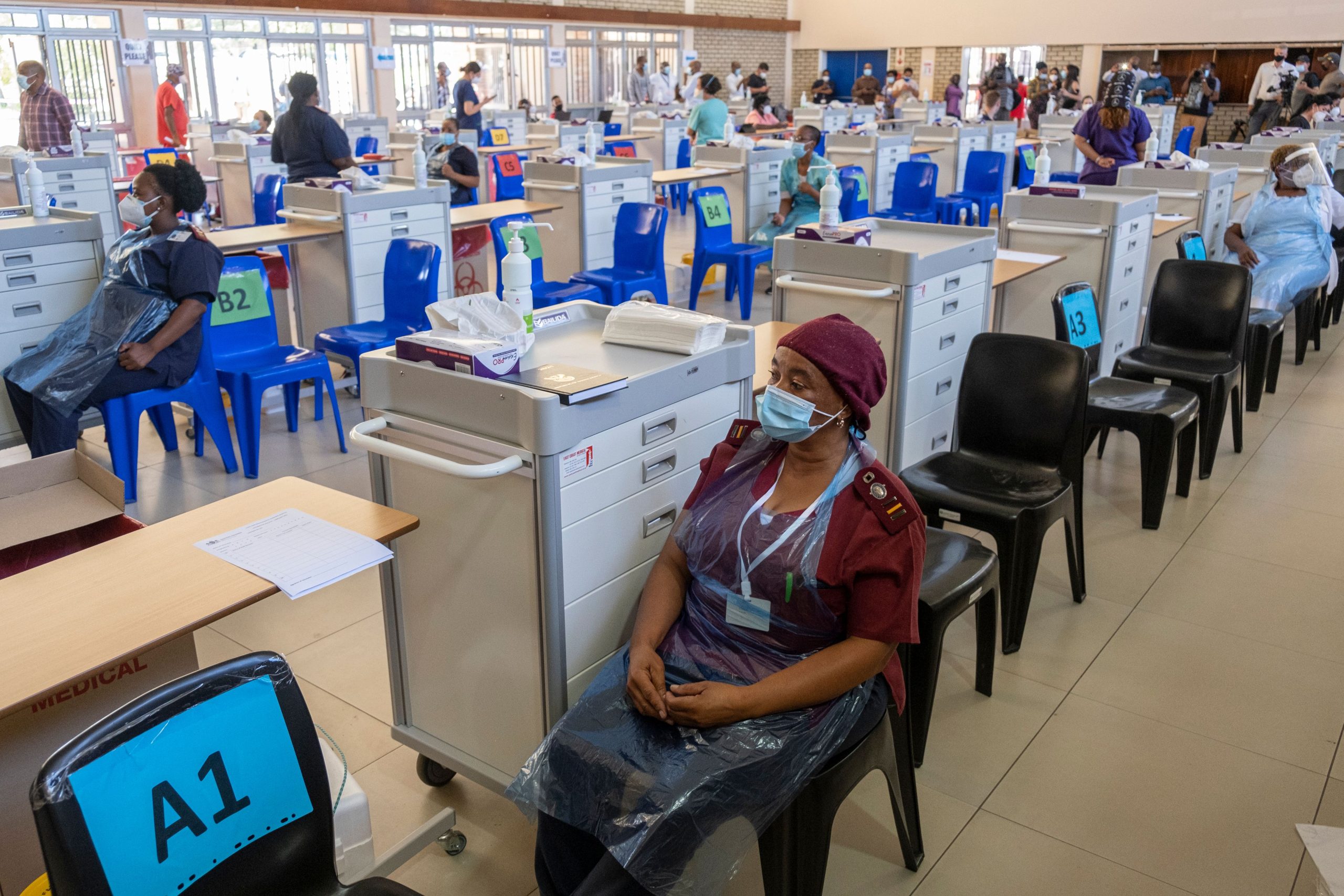
COVID-19: Human rights and vaccination

In an unprecedented global health crisis, COVID-19 has led to the deaths of millions of people around the world. It has highlighted and magnified inequalities, and disproportionately affected marginalised populations. It has also led to government measures that threaten a range of human rights including restrictions on freedom of movement. In this context it is essential that extraordinary global efforts to develop, manufacture and distribute vaccines for COVID-19 are conducted in ways that respect human rights.

Where do our human rights come from?

The right to the highest attainable standard of physical and mental health is found in several international human rights treaties, including the Universal Declaration on Human Rights (UDHR) and the International Covenant on Economic, Social and Cultural Rights (ICESCR). Australia is a signatory to both these treaties and is legally bound to uphold the right to health.

Why vaccines?

The best evidence available shows that mass vaccination is the only way to achieve herd immunity against COVID-19 and its variants – this is where enough people have developed protection from transmission and infection so that all people benefit, including those who have not been immunised.

Vaccine mandates

While there are legitimate public health reasons to aim for as many people as possible to be vaccinated, governments must not impose blanket vaccination mandates and should seek to ensure that vaccination is with full consent. Not doing so has the potential to infringe upon human rights for two key reasons:

  1. All individuals have the right to prior, free and informed consent for any medical procedure including vaccination. This means people have the right to choose whether or not they wish to be vaccinated.
  2. Blanket mandates do not take into account specific contexts and the circumstances faced by particular populations. As a result, blanket mandates can have a discriminatory and disproportionate impact upon some groups, such as Indigenous communities who may not trust health authorities due to historical marginalisation and abuses in clinical studies.

For these reasons, governments should focus on increasing voluntary uptake, rather than imposing mandates on COVID-19 vaccines. To achieve this, governments should provide accurate and evidence-based information, in formats that are accessible to everyone, about the availability, necessity and effectiveness of vaccinations.

Are all vaccine mandates unlawful?

International human rights law allows for certain rights to be limited under specific circumstances where it is provided by law, and it is necessary and proportionate to a legitimate aim, such as the protection of public health. This means that there are some limited exceptions that may allow governments to impose targeted vaccine mandates under particular circumstances. These requirements include situations where people are not forced to be vaccinated, but their employment, freedom of movement or entry to certain venues may be contingent upon an immunisation requirement. In these cases, additional human rights, such as the right to decent work, also are at stake and need to be taken into account accordingly.

How do we know which mandates are lawful?

The Siracusa Principles on the Limitation and Derogation of Provisions in the ICCPR provide specific guidance on when and how restrictions to human rights may be implemented.

Any potential vaccine requirement must reflect the following principles:

  • pursues a legitimate aim, like preventing disease or injury. Any requirement needs to be a necessary, proportionate and a reasonable measure to achieve this aim, using an evidence-based rationale that explains why the aim cannot be achieved with less restrictive measures. The onus is on governments to show that there are no less restrictive means available to achieve the set aim;
  • exists under a limited scope and time and does not have a discriminatory effect on groups that experience historical and structural discrimination;
  • subject to periodic review, with an accessible independent process that regularly reviews the effectiveness of the measures in place, ensuring they are based on the most advanced, up-to-date, accepted and verifiable science available. Reviews should allow for opportunities to revise the policy or implementation plan, while allowing freedom to challenge and receive a remedy for any abusive application, including the potential harmful effect on other rights; and
  • contain accessible and sufficient information to enable individuals and communities to regulate their conduct accordingly, allowing for reasonable exceptions to avoid negative impacts on other human rights without involving punitive measures such as fines for non-compliance.

Adequate opt-out options such as medical exemptions, or alternate solutions to mitigate or eliminate these risks should also be provided. Additionally, for a requirement to be reasonable, governments must ensure that vaccines are widely and readily accessible for those who would be affected by a requirement, free at point of care and that there are no barriers that could impede access.

What about private businesses?

While businesses have a responsibility to respect all human rights, governments have an obligation to regulate private actors and ensure their actions do not infringe on people’s rights. Therefore, any restriction laid out by private actors would also need to be in accordance with the parameters laid out for governments.

Moreover, it is the role of governments to monitor and regulate potential restrictions. Within this context, it is necessary to consider the nature of the business and the impact that any vaccine requirement would have on other human rights. For example, there is a significant difference between restricting access to essential services such as supermarkets or pharmacies, as opposed to hospitality or entertainment venues.

Furthermore, businesses should consider whether less restrictive alternatives such as personal protective equipment, physical distancing or testing could meet the objective, and whether they could be provided as options instead of a vaccine requirement.

A Human Rights Act

Human rights protect us all, ensuring every single person in our society is treated fairly and justly. Australia is the only liberal democracy without a bill of rights or an equivalent law that protects the rights of all people. Currently, all human rights protections are found in a range of legislation which are complex, decentralised and sometimes only implied.

We envision an Australia where everyone is treated with equality, justice, dignity and respect, no matter who you are or what you believe. Implementing a Human Rights Act enshrined in law would make a real and meaningful improvement to human rights protection and have the additional benefit of untangling the current spaghetti bowl of legislation.

A Human Rights Act would ensure that these inherent rights are balanced and considered with the protection of public health.