Viet Nam: The secretive world of torturous ‘prisons within prisons’

A new report published by Amnesty International today casts a rare light on the torture and other harrowing treatment of prisoners of conscience locked up in Viet Nam’s secretive network of prisons and detention centres. The organisation has urged Australia to press Viet Nam to protect these prisoners’ rights.

Prisons within Prisons

Prisons within Prisons: Torture and ill-treatment of prisoners of conscience in Viet Nam details the ordeals endured by prisoners of conscience in one of the most closed countries in Asia, including prolonged periods of incommunicado detention and solitary confinement, enforced disappearances, the denial of medical treatment, and punitive prison transfers.

“Viet Nam is a prolific jailer of prisoners of conscience; this report offers a rare glimpse at the horror that those prisoners face in detention,” said Rafendi Djamin, Amnesty International’s Director for South East Asia and the Pacific.

“Viet Nam is a prolific jailer of prisoners of conscience; this report offers a rare glimpse at the horror that those prisoners face in detention.”

Rafendi Djamin, Amnesty International

“Viet Nam ratified the UN Convention against Torture in 2015. This in itself is not enough. In order to meet its human rights obligations, the authorities must introduce reforms in line with international law and ensure accountability for torture and ill treatment.”

Amnesty International has called on the Australian Government to press Viet Nam to release prisoners of conscience; pending release, to hold prisoners in conditions that meet international standards; and allow access to medical care, family, lawyers and diplomatic representatives.

“Viet Nam ratified the UN Convention against Torture in 2015. This in itself is not enough.”

Rafendi Djamin, Amnesty International

The report is based on one year’s research – including more than 150 hours of interviews with 18 former prisoners of conscience, who spent between one month and a decade in incarceration.

Five of these men and women described to Amnesty International how they spent lengthy periods of time in solitary confinement in dark, fetid cells without access to fresh air, clean water and sanitation. Some were frequently beaten in clear contravention of global and national prohibitions on torture.

In June, Amnesty International was given a guided tour of a women’s prison facility in Bắc Giang province, a rare occurrence in a country that does not generally permit access to these facilities.

Enforced disappearances, and other acts of torture and other ill-treatment

For many of the former prisoners, their ordeal began from the moment that they were picked up by Vietnamese authorities. Four people told Amnesty International they were subjected to enforced disappearances.

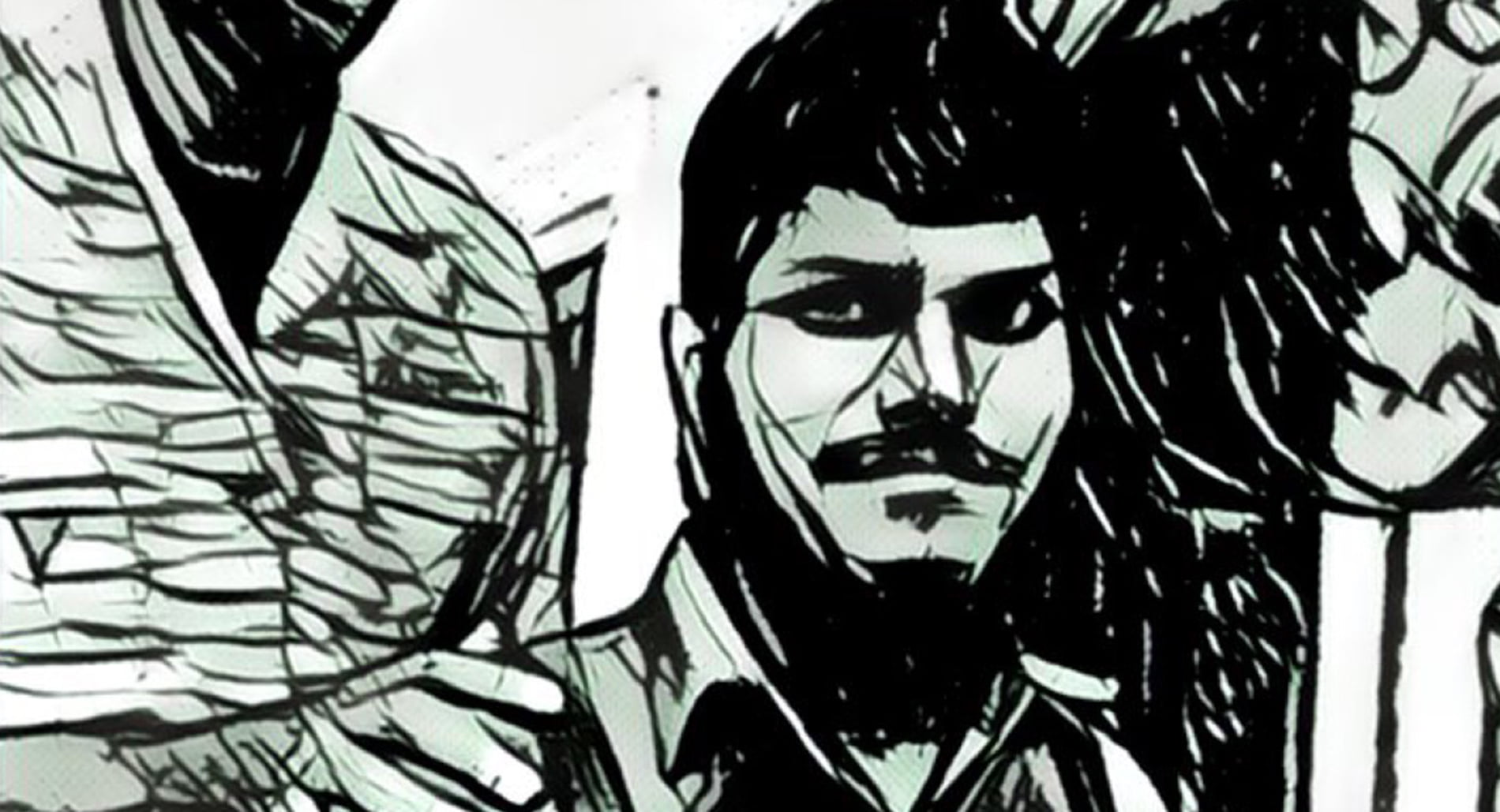
‘Dar’, an ethnic Montagnard, was arrested for organizing peaceful demonstrations over religious freedom and human rights. For the first three months following his arrest, his family believed that he had been killed by the authorities, and his body dumped in the jungle. He was tried and convicted without legal representation and without his family present.

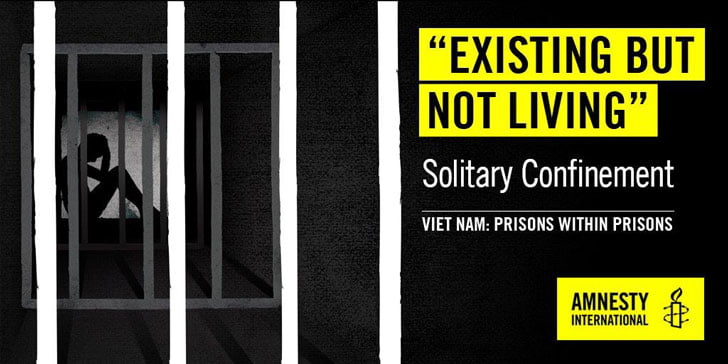
During the first 10 months of Dar’s five-year detention, he was kept in solitary confinement in a tiny cell, in total darkness and complete silence. For the first two months, he was hauled from his cell each day to be interrogated and beaten.

The beatings were carried out with sticks, rubber tubes, punches and kicks. The authorities used electric shocks and lit a piece of paper and ran it along the length of his leg, burning his skin. They asked him to assume painful stress positions for eight hours at a time.

On one occasion, he was hung from the ceiling by his arms for 15 minutes while the police beat him. The police officers would sometimes resume their beatings in the middle of night, when they stormed into his cell, apparently drunk.

For many of the former prisoners Amnesty International spoke to, the torture and ill-treatment was especially intense during pre-trial detention, as authorities aimed to extract a “confession”.

Incommunicado detention and solitary confinement

Every former prisoner of conscience that Amnesty International spoke to was subjected to a lengthy period of incommunicado detention – ranging from a month to two years. The right to access lawyers, medical professionals and family members is an important safeguard against torture and ill treatment, and critical to the right to a fair trial.

Two of the former prisoners were not told that their mothers had passed away, and were denied the chance to attend the funeral or mourn with their families.

Tạ Phong Tần, who was imprisoned for her blogging and advocacy activities, told Amnesty International that during her four years in prison, only her sister was allowed to visit her. After being denied access twice, on 30 July 2012 Tần’s mother Đặng Thị Kim Liêng self-immolated in front of a government office in protest, dying as a result of her burns.

While their relatives were being kept away, the prisoners were sinking deeper into isolation.

While their relatives were being kept away, the prisoners were sinking deeper into isolation.

Phạm Văn Trội, another former prisoner of conscience, was cast into solitary confinement for over six months after he complained about fumes from a nearby brick kiln. He told Amnesty International that he was haunted by the thought that others might have died in the cell where he slept.

Abuse and denial

When prisoners have not been kept in isolation, they have been left vulnerable to abuse by other prisoners.

A number of former prisoners of conscience said they were cramped into small cells, where other prisoners known as “antennae” were believed to have colluded with prison authorities and incited to attack them. This kept them under the constant threat of imminent violence.

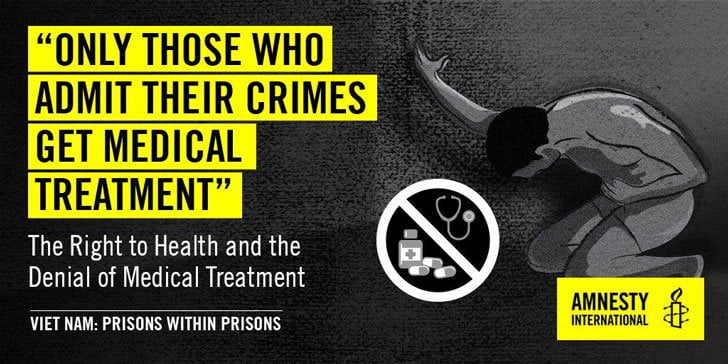
Withholding or denying medical treatment for periods of months and even years is another punitive measure prisoners described to Amnesty International. Interviewees also alleged that they were drugged by prison staff.

Chau Heng, a Khmer Krom land rights activist, told Amnesty International that during four months’ incommunicado detention prior to his trial, he was not only beaten unconscious several times, but also injected with unknown drugs at least twice – causing memory loss, rendering him unconscious and unable to speak or think clearly.

When he was taken to see the prison doctor, he opened his mouth to gesture that he could not speak. “The doctor hit me in the mouth with a round piece of hard rubber. He knocked my teeth out, including a wisdom tooth. I lost so much blood I passed out again.”

“The doctor hit me in the mouth with a round piece of hard rubber. He knocked my teeth out, including a wisdom tooth. I lost so much blood I passed out again.”

Chau Heng, a Khmer Krom land rights activist

“Viet Nam’s authorities should seize the moment as the country’s amended penal and criminal procedures codes are being reviewed. Now is the time to make good on their international obligations, by bringing to book those responsible for torture and other ill-treatment, and ensuring this appalling practice ends,” said Rafendi Djamin.

Viet Nam: The secretive world of torturous ‘prisons within prisons’

A new report published by Amnesty International today casts a rare light on the torture and other harrowing treatment of prisoners of conscience locked up in Viet Nam’s secretive network of prisons and detention centres. The organisation has urged Australia to press Viet Nam to protect these prisoners’ rights.

Read the report

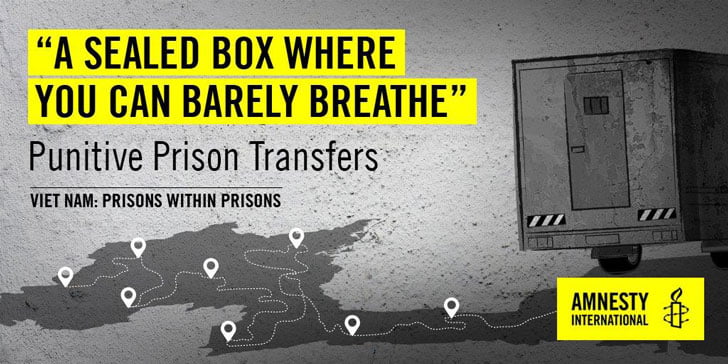
text "a sealed box where you can barely breathe - prison transfers - veit nam: prisons within prisons" overlain a grea icture of the back of a van on the map ot veit nam
© Amnesty International

Prisons within Prisons

Prisons within Prisons: Torture and ill-treatment of prisoners of conscience in Viet Nam details the ordeals endured by prisoners of conscience in one of the most closed countries in Asia, including prolonged periods of incommunicado detention and solitary confinement, enforced disappearances, the denial of medical treatment, and punitive prison transfers.

“Viet Nam is a prolific jailer of prisoners of conscience; this report offers a rare glimpse at the horror that those prisoners face in detention,”

said Rafendi Djamin, Amnesty International’s Director for South East Asia and the Pacific.

“Viet Nam ratified the UN Convention against Torture in 2015. This in itself is not enough. In order to meet its human rights obligations, the authorities must introduce reforms in line with international law and ensure accountability for torture and ill treatment.”

Amnesty International has called on the Australian Government to press Viet Nam to release prisoners of conscience; pending release, to hold prisoners in conditions that meet international standards; and allow access to medical care, family, lawyers and diplomatic representatives.

The report is based on one year’s research – including more than 150 hours of interviews with 18 former prisoners of conscience, who spent between one month and a decade in incarceration.

Five of these men and women described to Amnesty International how they spent lengthy periods of time in solitary confinement in dark, fetid cells without access to fresh air, clean water and sanitation. Some were frequently beaten in clear contravention of global and national prohibitions on torture.

In June, Amnesty International was given a guided tour of a women’s prison facility in Bắc Giang province, a rare occurrence in a country that does not generally permit access to these facilities.

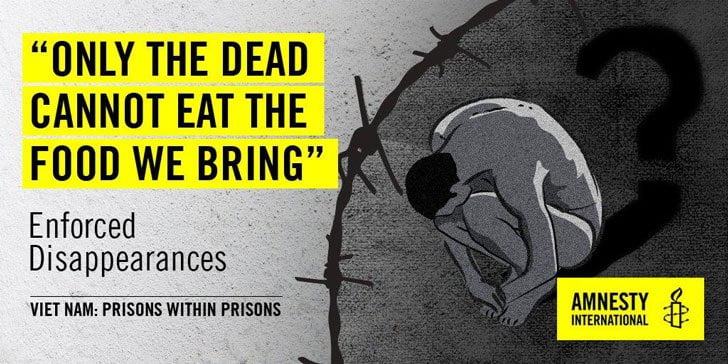
ext "only the dead cannot eat the food we bring - enforced disappearances - veit nam: prisons within prisons" over an illustration of person curled into foetal position surroundd by barbed wire
© Amnesty International

Enforced disappearances, and other acts of torture and other ill-treatment

For many of the former prisoners, their ordeal began from the moment that they were picked up by Vietnamese authorities. Four people told Amnesty International they were subjected to enforced disappearances.

‘Dar’, an ethnic Montagnard, was arrested for organizing peaceful demonstrations over religious freedom and human rights. For the first three months following his arrest, his family believed that he had been killed by the authorities, and his body dumped in the jungle. He was tried and convicted without legal representation and without his family present.

During the first 10 months of Dar’s five-year detention, he was kept in solitary confinement in a tiny cell, in total darkness and complete silence. For the first two months, he was hauled from his cell each day to be interrogated and beaten.

The beatings were carried out with sticks, rubber tubes, punches and kicks. The authorities used electric shocks and lit a piece of paper and ran it along the length of his leg, burning his skin. They asked him to assume painful stress positions for eight hours at a time.

On one occasion, he was hung from the ceiling by his arms for 15 minutes while the police beat him. The police officers would sometimes resume their beatings in the middle of night, when they stormed into his cell, apparently drunk.

For many of the former prisoners Amnesty International spoke to, the torture and ill-treatment was especially intense during pre-trial detention, as authorities aimed to extract a “confession”.

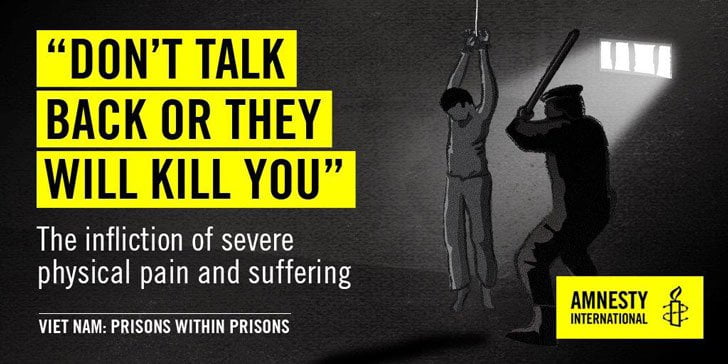
text "don't talk back or they will kill you -the infliction of severe physical pain and suffering - veit nam: prisons within prisons" over an illustration of a man hanging by his wrists
© Amnesty International

Incommunicado detention and solitary confinement

Every former prisoner of conscience that Amnesty International spoke to was subjected to a lengthy period of incommunicado detention – ranging from a month to two years. The right to access lawyers, medical professionals and family members is an important safeguard against torture and ill treatment, and critical to the right to a fair trial.

Two of the former prisoners were not told that their mothers had passed away, and were denied the chance to attend the funeral or mourn with their families.

Tạ Phong Tần, who was imprisoned for her blogging and advocacy activities, told Amnesty International that during her four years in prison, only her sister was allowed to visit her. After being denied access twice, on 30 July 2012 Tần’s mother Đặng Thị Kim Liêng self-immolated in front of a government office in protest, dying as a result of her burns.

While their relatives were being kept away, the prisoners were sinking deeper into isolation.

Phạm Văn Trội, another former prisoner of conscience, was cast into solitary confinement for over six months after he complained about fumes from a nearby brick kiln. He told Amnesty International that he was haunted by the thought that others might have died in the cell where he slept.

ext "existing but not living - veit nam: prisons within prisons" over an illustration of a prison cell
© Amnesty International

Abuse and denial

The doctor hit me in the mouth with a round piece of hard rubber. He knocked my teeth out, including a wisdom tooth. I lost so much blood I passed out again.

Chau Heng, torture survivor

When prisoners have not been kept in isolation, they have been left vulnerable to abuse by other prisoners.

A number of former prisoners of conscience said they were cramped into small cells, where other prisoners known as “antennae” were believed to have colluded with prison authorities and incited to attack them. This kept them under the constant threat of imminent violence.

Withholding or denying medical treatment for periods of months and even years is another punitive measure prisoners described to Amnesty International. Interviewees also alleged that they were drugged by prison staff.

Chau Heng, a Khmer Krom land rights activist, told Amnesty International that during four months’ incommunicado detention prior to his trial, he was not only beaten unconscious several times, but also injected with unknown drugs at least twice – causing memory loss, rendering him unconscious and unable to speak or think clearly.

When he was taken to see the prison doctor, he opened his mouth to gesture that he could not speak.

“The doctor hit me in the mouth with a round piece of hard rubber. He knocked my teeth out, including a wisdom tooth. I lost so much blood I passed out again.”

“Viet Nam’s authorities should seize the moment as the country’s amended penal and criminal procedures codes are being reviewed. Now is the time to make good on their international obligations, by bringing to book those responsible for torture and other ill-treatment, and ensuring this appalling practice ends,” said Rafendi Djamin.

graphic with text "only those who admit their crimes get medical treatment - The right to healthand the denial of medical treatment - veit nam: prisons within prisons" over an illustration of a man clutching his stomach and ame medical symbols
© Amnesty International

Amnesty International statement on Dallas shootings

“Last night’s shootings are a devastating reminder that gun violence in the U.S. is a human rights crisis that impacts everyone. Our thoughts are with the victims and their families,” said Margaret Huang, Amnesty International USA interim executive director.

“Killings both by and of police demand justice. The right to life is universal and everyone – both civilians and officers alike – should be able live free from fear and feel safe in their communities.”

“We must remember that the public’s response to the deaths of Alton Sterling, Philando Castile and Jerry Williams have been overwhelmingly peaceful. Last night’s tragedy should not affect the ability and the safety of those who will continue to exercise their right to protest peacefully. We call on law enforcement officers to facilitate that right.”

Community is Everything mid-year update

Activists across the country are campaigning hard to end the over-representation of Indigenous kids in our justice system and the impact is clear.

Thanks to the dedicated and hard work of activists like you, this month we took some great steps closer to addressing the over-representation of Indigenous kids in the justice system. Activists have made their voices heard and politicians are starting to listen.

Queensland

In Queensland, activists have been emailing, calling and meeting with MPs in support of changes to the Youth Justice Act. Thanks to their hard work, the two Bills passed!

The Townsville group did a fantastic job of keeping a community forum on safety focused on solutions and the best interests of children. The impact of all of this hard work is plain to see; Amnesty was mentioned twice in the debates as the Bills passed.

These Bills will mean that we can better protect children. Among other things, the changes will:

  • End the automatic transfer of 17-year-old kids on youth charges to adult prisons;
  • Get rid of military-style boot camps;
  • Reintroduce youth justice conferencing where the offender, victim and the community can listen, understand each other and heal; and
  • Protect children’s privacy by closing their court hearings.

This is a big win for the campaign and for activists who have worked so hard on the ground.

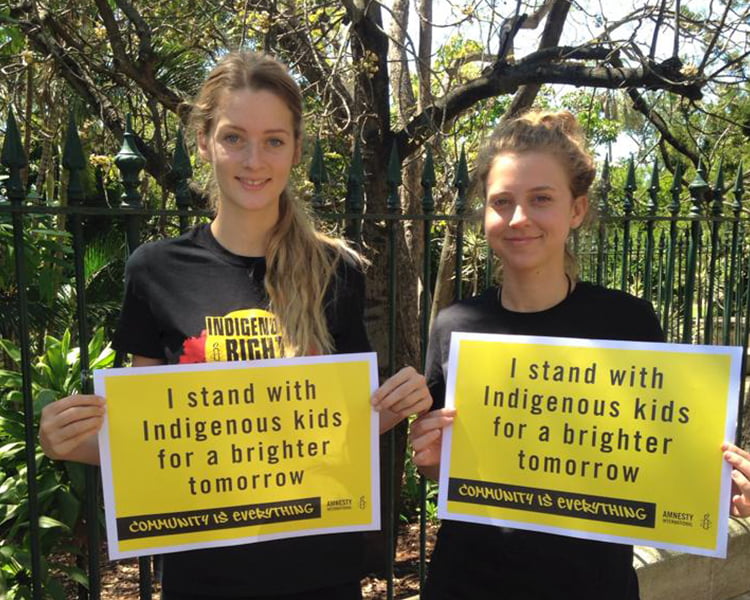
Activists hold placards declaring that they stand with Indigenous kids for a brighter tomorrow
Activists urge Queensland lawmakers to pass the Youth Justice Act © Amnesty International

Northern Territory

In the Northern Territory, activists have been lobbying cross-benchers to stop changes to the Bail Act. And they did it!

The proposed changes meant that children would be held in prison while awaiting trial if they had previously been charged with offences like property crime and petty theft.

It has been amazing to see how many activists stepped up to campaign against the changes. The Northern Territory has not typically been a place where we have had lots of action groups, but clearly we have lots of engaged activists passionate about making the justice system fairer for all kids.

These activists have had a large hand in making sure this Bill did not get passed.

There are challenges ahead in the lead up to the Northern Territory election in August. With law and order shaping up as an election issue, we could see a similar Bill introduced if the current government is re-elected. So we will be counting on all of our NT supporters to make their voices heard again in the coming months.

Across the country

At a national level, emails, letters and actions from our supporters over recent months have called on the government and opposition to introduce national justice targets.

Politicians fed back to Amnesty’s Government Relations team that your voices are being heard. The Australian Labor Party, who have a policy to enact justice targets, have indicated that they really welcome the depth of support this issue has in the community. This shows the value of making sure politicians are aware of when we support an action they are taking — not only do we need to change minds, but we also need to let our politicians know when they’re on the right track. We’ll need your support to keep up the pressure on Australia’s new government after the election.


There are a lot of exciting things going on in this movement. If you want to be a part of it, join our monthly Community is Everything catch ups and find out what you can do to make a difference.

Amnesty International Statement in Response to Shooting of Philando Castile

“Once again another horrifying video has emerged that begs for answers, and once again we are calling for a thorough, impartial and independent investigation,” said Jamira Burley, campaign manager with Amnesty International USA.

“The laws that govern when police can use lethal force need to be reformed and they need to be reformed now. International law is clear that lethal force must only be used as a last resort against an imminent threat of death or serious injury. Philando Castile should not have had to fear for his life during a traffic stop. How many more wrenching videos do we need to see before there is real change?”

AIUSA released a report last year finding that all 50 states fail to meet international standards for the use of lethal force. More on AIUSA’s work on this issue can be found here.

China: End lawyers’ repression on anniversary of crackdown

Chinese authorities must end their ruthless assault against human rights lawyers and activists, Amnesty International said ahead of the first anniversary of the start of an unprecedented crackdown.

At least 248 human rights lawyers and activists were targeted during the nationwide sweep which began on 9 July 2015. One year on, 17 individuals caught up in the onslaught remain detained, eight of whom could face life imprisonment after being charged with “subverting state power”.

Chinese authorities must end their ruthless assault against human rights lawyers and activists.

Lawyers detained

At least 248 human rights lawyers and activists were targeted during the nationwide sweep which began on 9 July 2015. One year on, 18 individuals caught up in the onslaught remain detained, nine of whom could face life imprisonment after being charged with “subverting state power”.

“Human rights lawyers have faced the full wrath of China’s secretive machinery of repression. The detained lawyers must be released and this systemic assault against individuals defending the rights of Chinese people must end,” said Roseann Rife, East Asia Research Director at Amnesty International.

“President Xi Jinping has the gall to claim the Chinese government upholds the rule of law even when lawyers face life in jail for trying to do just that.”

“President Xi Jinping has the gall to claim the Chinese government upholds the rule of law even when lawyers face life in jail for trying to do just that.”

The authorities have used an armoury of repression in an attempt to break the lawyers. Most of those detained in the crackdown were denied legal counsel and contact with their family, a clear violation of their rights.

Isolation of lawyers and activists

Missing lawyers and activists – including prominent Beijing lawyer Wang Yu whose vanishing marked the start of the crackdown – were placed under a form of secret detention known as “residential surveillance in a designated location”. This allows the police to hold suspects for up to six months outside of the formal detention system, without access to anybody outside, and places suspects at great risk of torture and other ill-treatment.

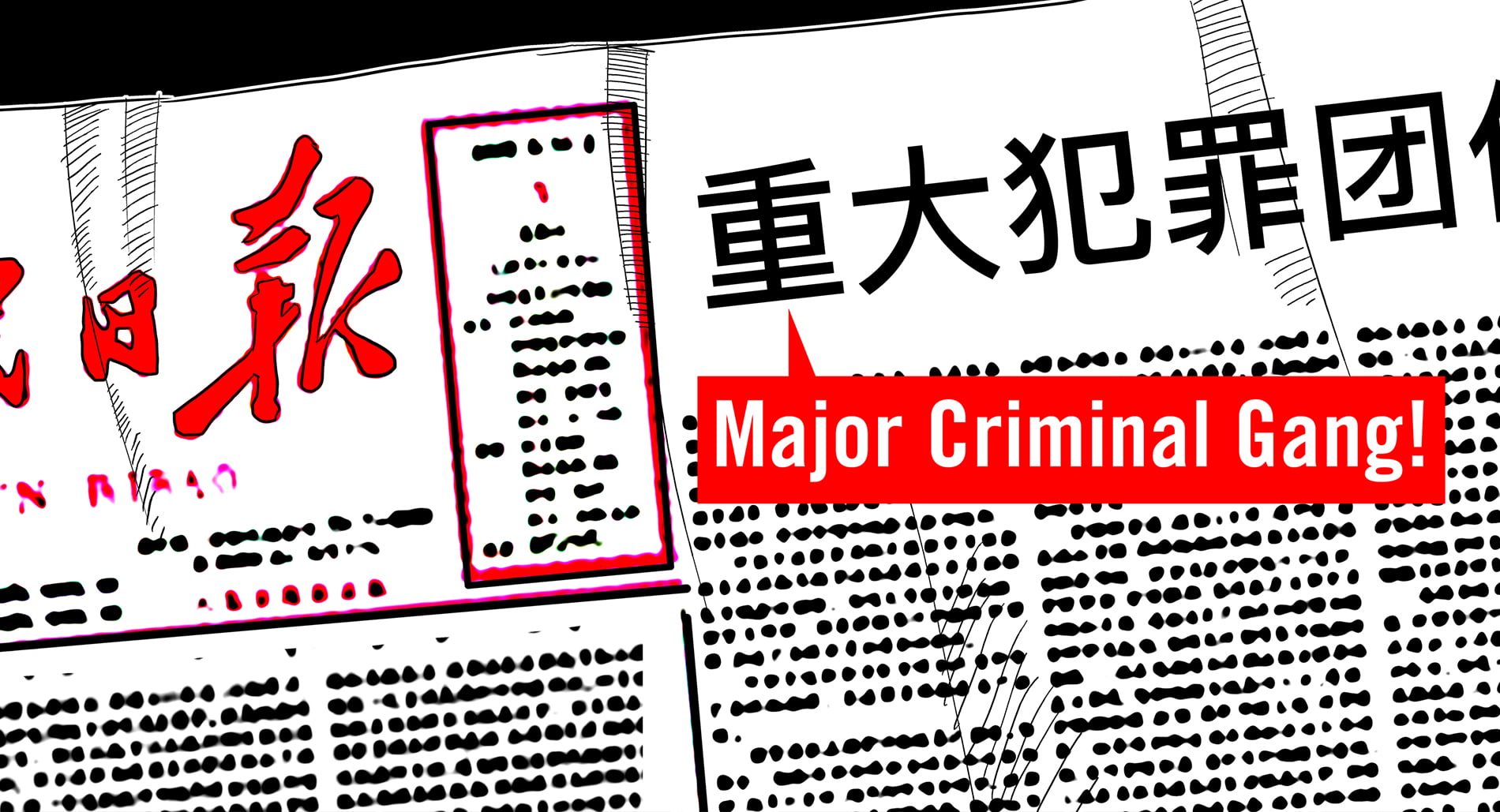
The authorities were also swift in unleashing a propaganda war in state media, accusing the Fengrui law firm in Beijing, which has worked on many sensitive cases, of being at the centre of “a major criminal gang”. Four lawyers from the firm, including Wang Yu, remain in detention on state security charges.

Illustrations of eight lawyers who were detained or went missing in July 2015 as part of a nationwide crackdown in China
© badiucao

Wang Yu’s husband and fellow lawyer, Bao Longjun, faces up to 15 years in prison for “inciting subversion of state power”. The couple’s teenage son, Bao Zhuoxuan, remains under close police surveillance after he was captured across the border in Myanmar in October 2015. Bao Zhuoxuan was attempting to leave China after being previously blocked from studying abroad. There has been a clear pattern of the authorities using family members as leverage against suspects, a clear violation of international law.

“These are dark days for human rights in China. The authorities have used every repressive and dirty trick in the book to crush this respected group of lawyers, who they apparently see as a threat to the power of the Communist Party,” said Roseann Rife.

“These are dark days for human rights in China.”

“Lawyers play a crucial role in protecting human rights and the rule of law, and the authorities must stop arresting them by the dozens and misusing state security laws against them.”

New repressive laws

The crackdown against human rights lawyers is part of a calculated operation by the Chinese government to suppress civil society. New or proposed laws give the authorities unchecked powers to target individuals and organizations that are seen to criticize the government and its policies.

A new Anti-Terrorism Law, passed in December 2015, includes virtually no safeguards to prevent those who practice their religion or criticize government policy from being prosecuted for “terrorism” or “extremism” offences. A new Foreign NGO law will severely restrict legitimate activities and ultimately stifle civil society.

Background

The crackdown against lawyers began in the early hours of 9 July 2015, when prominent Beijing lawyer Wang Yu went missing after she sent panicked phone messages to friends. The messages stated her internet and electricity had been cut off, and that people were trying to break into her home.

In the following days hundreds of lawyers and activists across the country were targeted with dozens of individuals taken away by police. All had supported victims of human rights abuses in China and represented these victims in the legal process.

One year since China’s crackdown on human rights lawyers

It’s been one year since China began its assault on human rights lawyers and activists across the country on 9 July 2015. In all, 248* lawyers and activists were questioned by police, detained or charged.

We look back on the key events as they unfolded, from the height of the crackdown in July last year, to reactions from the international community as the extent of the sweep became clear, and to the subsequent release of some of those affected this year.

9 July 2015

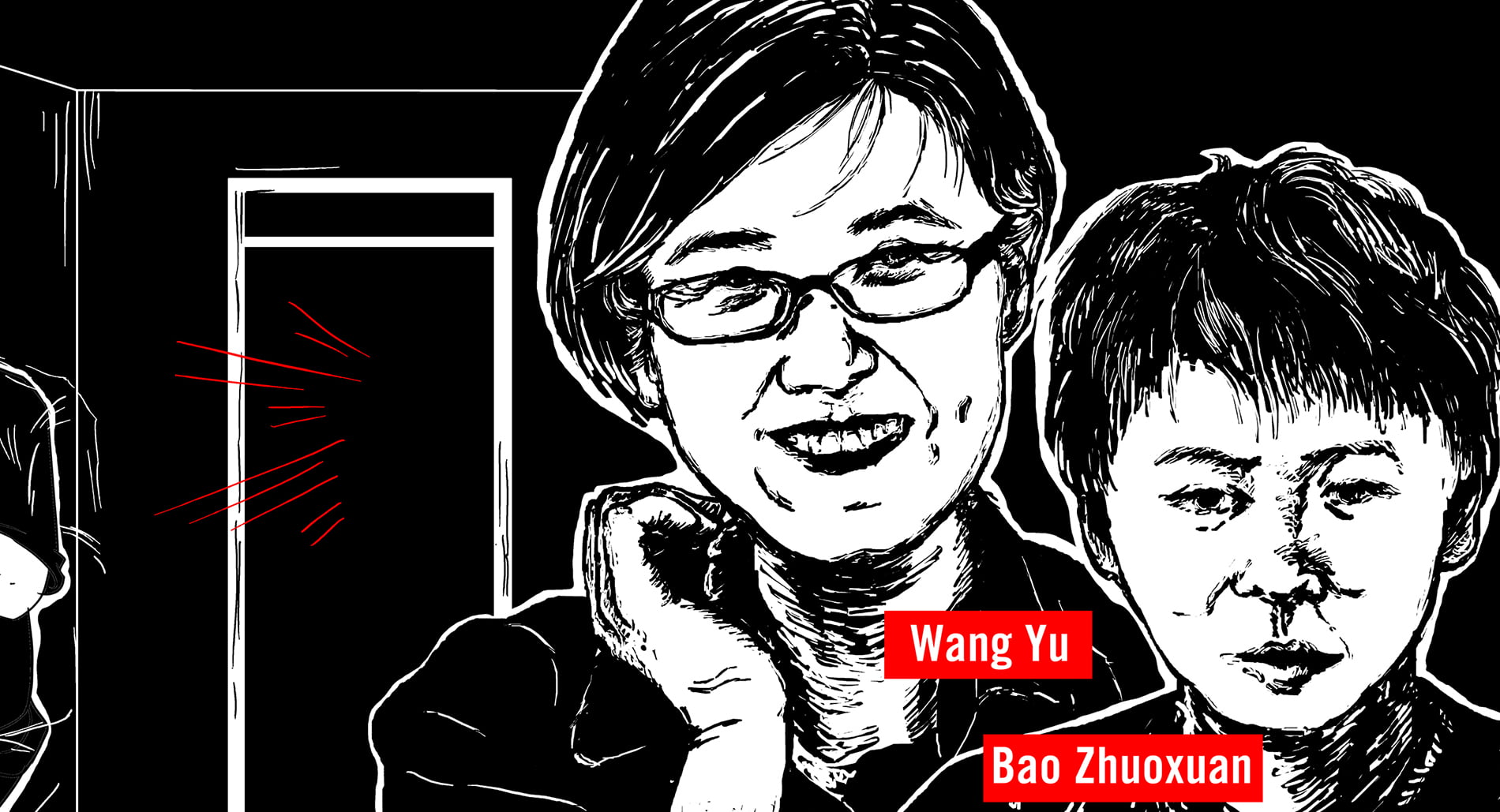
Illustration of Wang Yu and Bao Zhuoxuan
© Amnesty International

Prominent human rights lawyer Wang Yu goes missing in the early hours after sending panicked phone messages to friends. The messages state that her internet and electricity have been cut off, and that people are trying to break into her home. Her husband Bao Longjun and their 16-year-old son, Bao Zhuoxuan, are also missing. Wang Yu works at Beijing Fengrui, a law firm that handles many sensitive human rights-related cases.

A group of more than 100 lawyers and activists sign a joint statement condemning her disappearance.

10 July 2015

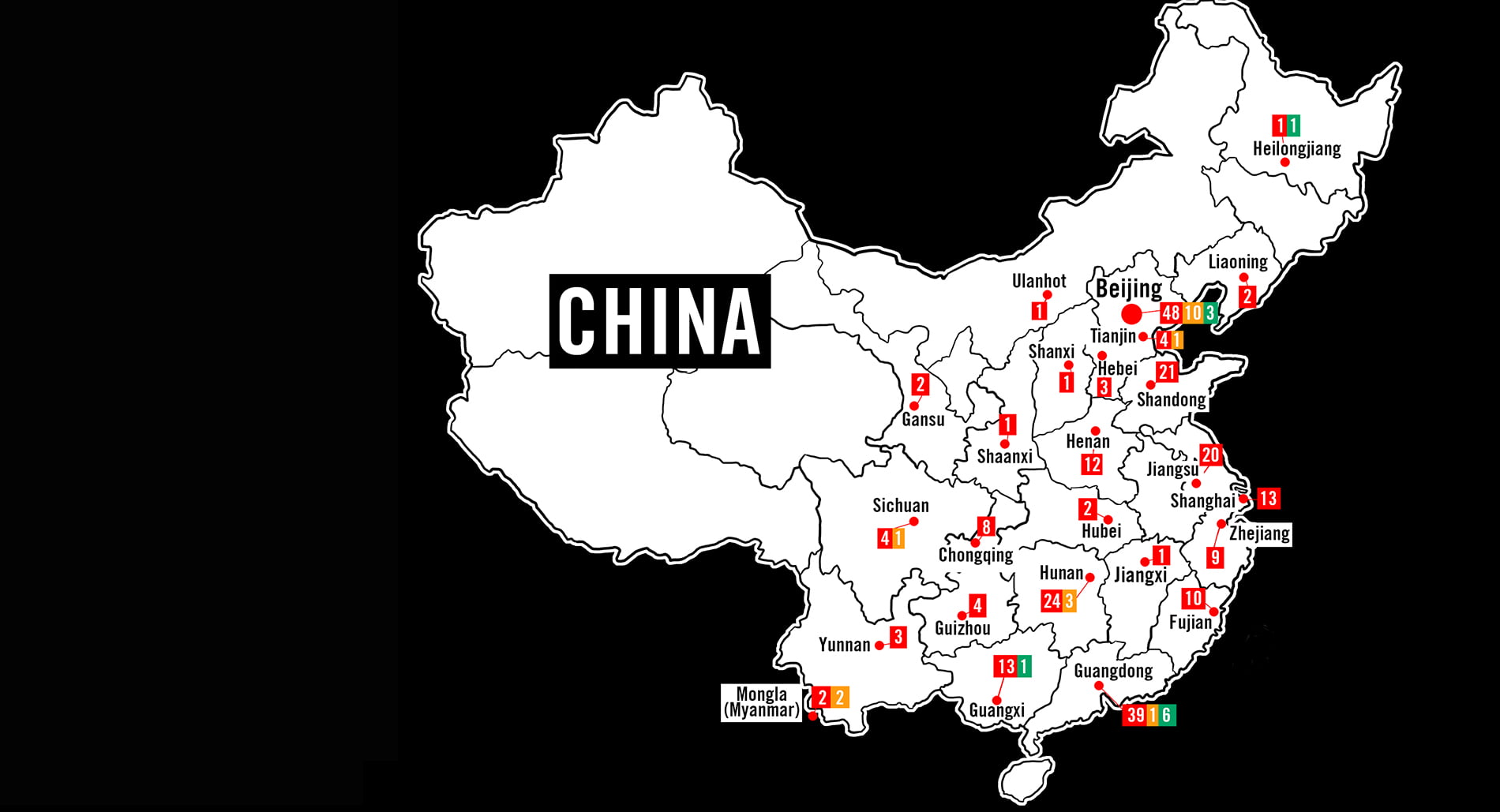
Illustrative map of China
© Amnesty International

Public security officers across the country begin detaining and questioning what would eventually be hundreds of lawyers and activists, including 14 employees of Beijing Fengrui.

11 July 2015

Well-known Guangzhou-based lawyer Sui Muqing is held at an undisclosed location on suspicion of “inciting subversion of state power”, a serious criminal offense that carries a potential 15-year jail term.

12 July 2015

Illustration of Chinese newspaper headline: "Major criminal gang!"
© Amnesty International

The People’s Daily, the official newspaper of the Chinese Communist Party, describes the crackdown as an operation to destroy a “major criminal gang”.

7 August 2015

Chinese authorities notify Wang Yu’s lawyers that she is being held at an unknown location on suspicion of state security charges

14 and 26 September 2015

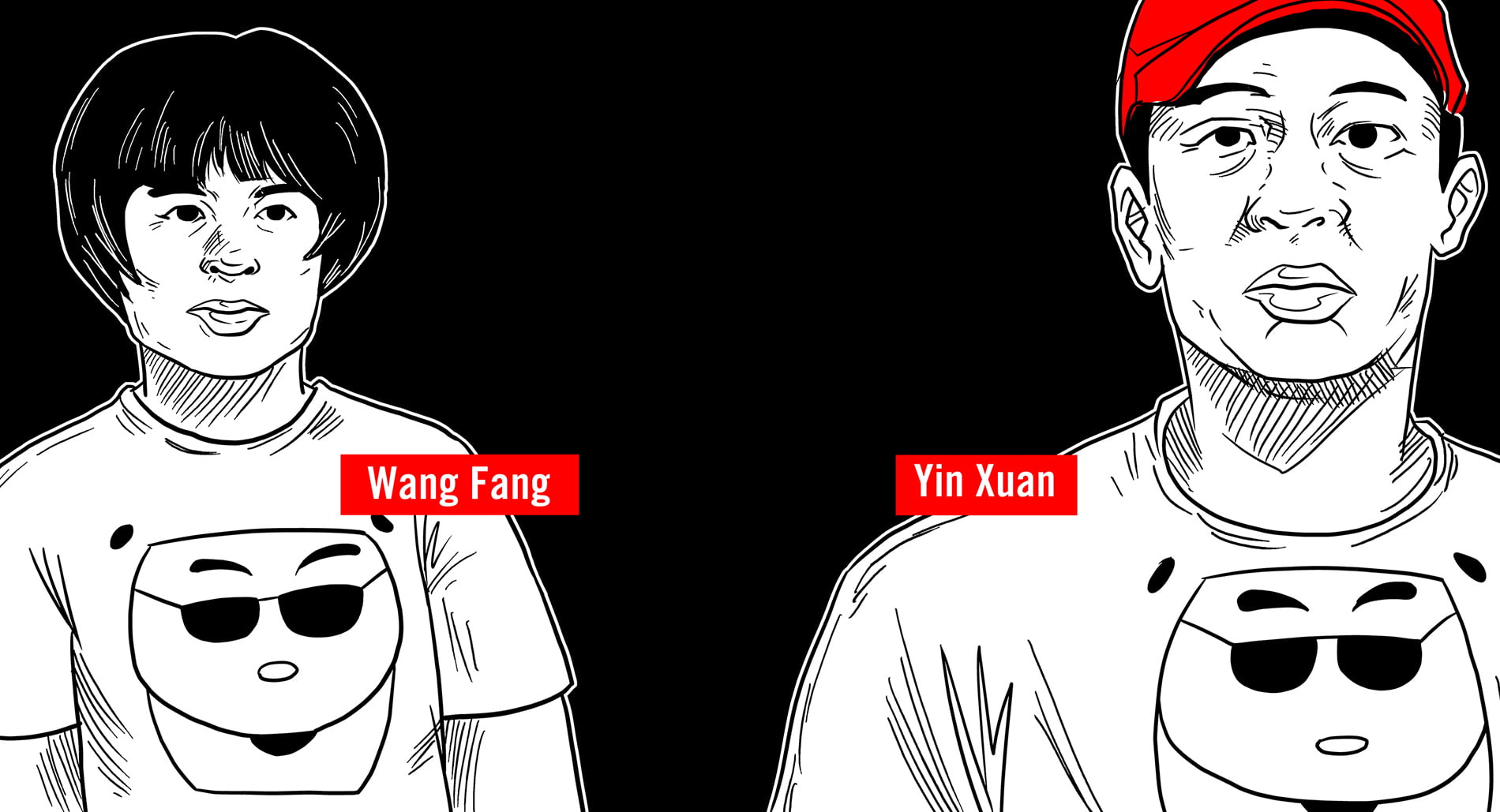
Illustration of Wang Fang and Yin Xuan
© Amnesty International

Rights activists Wang Fang and Yin Xu’an are arrested on suspicion of “picking quarrels and provoking trouble”, a catch-all charge often used to silence critics, after they posted online photos of themselves wearing T-shirts with activist Wu Gan’s image to protest his detention.

6 October 2015

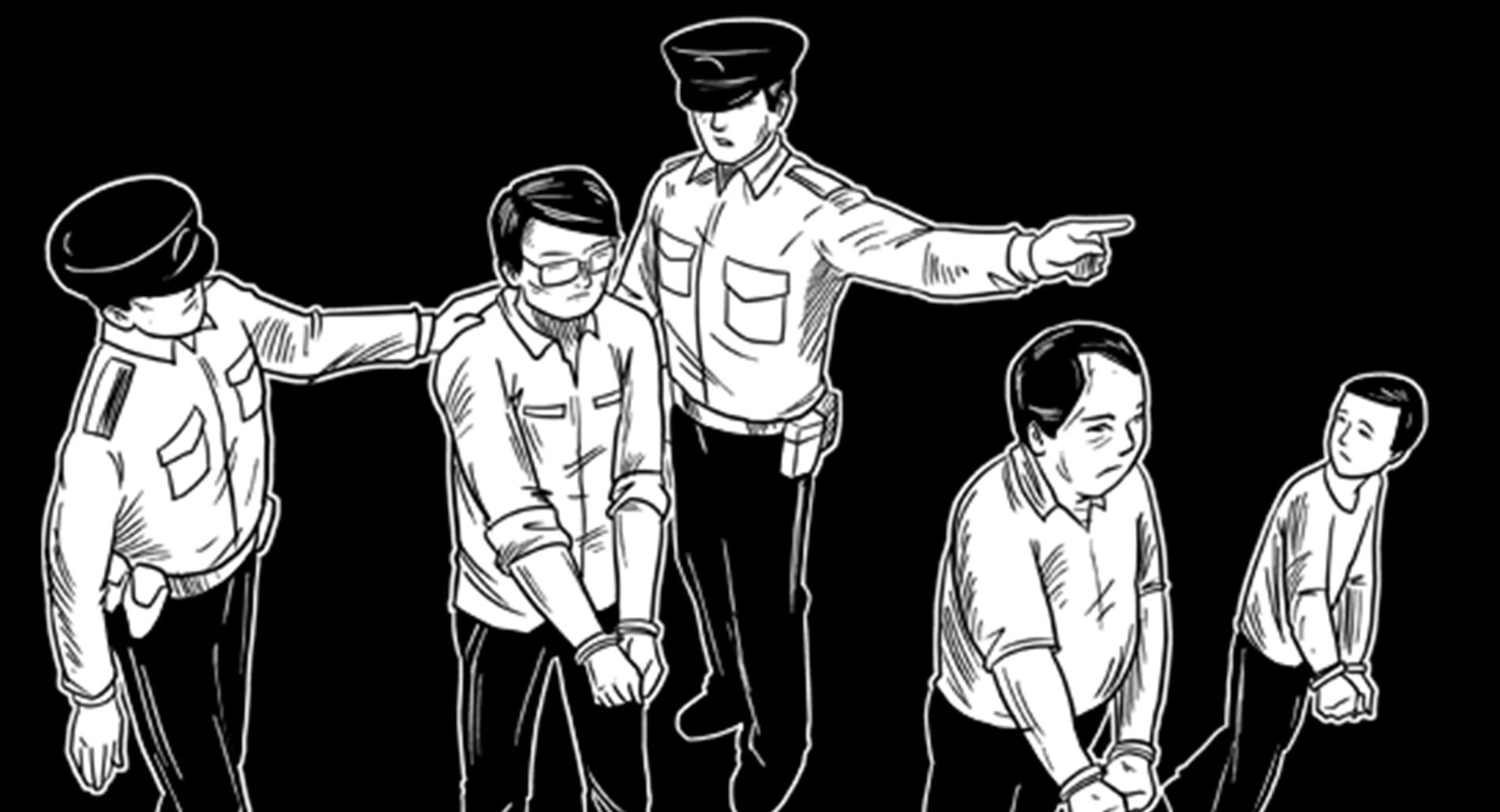
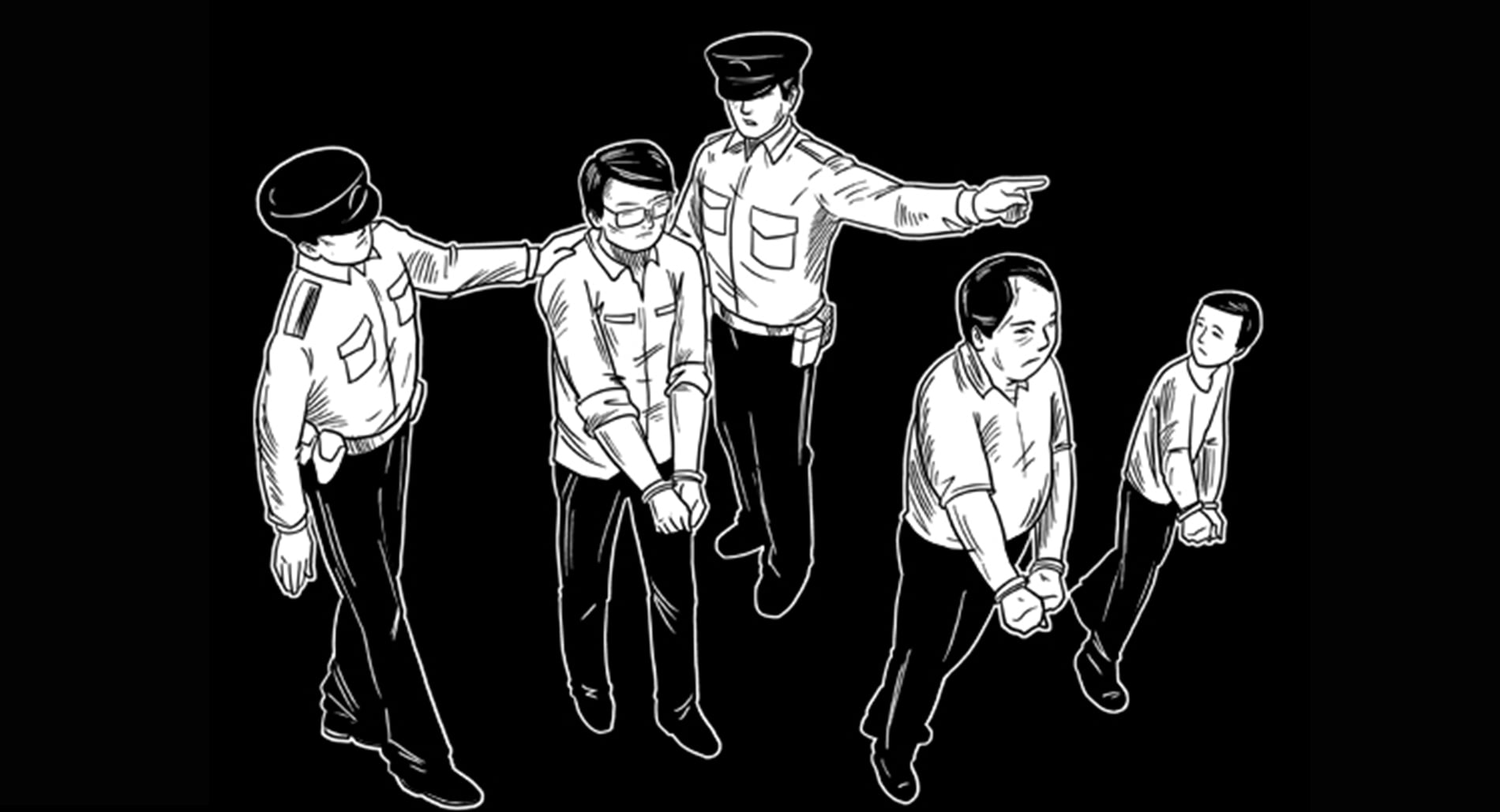
Illustration of Chinese police and prisoners of conscience
© Amnesty International

Bao Zhuoxuan, the teenage son of Wang Yu, attempts to flee China to study abroad, but is taken away by uniformed officials in the border town of Mongla, Myanmar along with Xing Qingxian and Tang Zhishun, two activists accompanying him.

9 December 2015

The UN Committee against Torture (CAT) voices concern over China’s crackdown on human rights lawyers and activists, saying it is “unprecedented”.

8 – 9 January 2016

A total of 13 lawyers and activists, including some previously detained, are formally arrested on state security charges.

10 January 2016

Prominent lawyer Sui Muqing is released, the first lawyer among those targeted to be granted bail.

16 February 2016

UN Human Rights Chief Zeid Ra’ad Al Hussein says he has raised concerns with China on the “worrying pattern” of arrests and intimidation of lawyers and critics in the country.

10 March 2016

12 countries release a joint statement at the UN Human Rights Council expressing concern over the deteriorating human rights situation in China as a result of the ongoing crackdown. They highlight that many individuals affected have been denied access to lawyers or visits by family members.

April 2016

Paralegal Gao Yue and lawyer Li Shuyun are released on bail.

4 May 2016

Activists Xing Qingxian and Tang Zhishun are arrested for helping Wang Yu’s son Bao Zhuoxuan “illegally cross national borders”. They could face seven years in jail for the offense.

As of 24 June 2016

A total of 18 human rights lawyers and activists remain detained and under arrest.

*All figures are correct to the best of Amnesty International’s knowledge, however as verification is difficult, not all information may be up to date. For latest information of the crackdown, please refer here.

So who are they?

The human rights lawyers and activists caught up in China’s crackdown have been referred to in Chinese state media as part of a “major criminal gang”, troublemakers or otherwise had their characters assassinated. Many of them face charges of trying to subvert state power. To their friends and families however, they are mothers and fathers, daughters and sons, brave enough to be involved in human rights cases stigmatized by authorities. We put a face to a few of them.

Wang Yu and husband Bao Longjun

Described as “courageous and fearless” by those who know her, prominent Chinese human rights lawyer Wang Yu’s activism was triggered by a personal experience of injustice.

Facts can’t be easily turned around, how can we allow the truth to be covered up!

In 2008, Wang Yu was assaulted in the northern city of Tianjin for demanding to board a train for which she held a valid ticket. She lodged a police report but was subsequently imprisoned for two-and-a-half years. While jailed, she witnessed the mistreatment and torture of prisoners. This sparked a tireless career defending key human rights cases the Chinese government considered “sensitive”, including defending high profile Uighur scholar Ilham Tohti and taking on the case of human rights activist Cao Shunli who died in detention after being denied adequate medical help.

“She (Wang Yu) is the bravest and the most upright and selfless human right lawyer.”

Wang Quanping, lawyer

Also a human rights advocate, Wang Yu’s husband Bao Longjun kickstarted his activism during her imprisonment working to secure her release. After Wang Yu’s release in 2011, both became active representing some of the most sensitive legal cases in China.

Both are being detained on charges relating to state security and denied access to lawyers and family members.

Wang Quanzhang

Like Wang Yu, Wang Quanzhang is a lawyer at the Beijing Fengrui law firm and has defended human rights cases considered sensitive by the Chinese government, including practitioners of Falun Gong, a spiritual movement persecuted and outlawed in China. He has also taken up cases involving members of the New Citizens’ Movement, a loose network of grassroots activists that were persecuted beginning in 2014.

“For the past half year, we have fruitlessly explored all legal channels in search of a remedy. It’s so easy for you (Chinese authorities) to create an unjust case; for us to pursue this through legal channels is like trying to ascend to the heavens.”

Li Wenzu, wife of Wang Quanzhang

For representing such ‘pariah’ cases, he has seen his fair share of intimidation, including being expelled from a courtroom while representing Falun Gong clients and being beaten by police.

On 10 July last year, he was taken away by security officers during a roundup of Beijing Fengrui staff. He was placed under residential surveillance and subsequently formally arrested in January this year on the charge of “subverting state power”. Like Wang Yu and Bao Longjun, he has been denied access to lawyers and family members since being detained.

Li Heping

A lawyer with Beijing Global Law Firm, Li Heping has, like many of those affected in China’s crackdown, accepted cases considered sensitive and which many would not touch in mainland China. This has included defending Christians, Falun Gong adherents, well-known dissident and human rights attorney Gao Zhisheng and blind activist Chen Guangcheng.

“He’s no hero, he’s just an ordinary person. What exactly has he done? While the whole of China’s judicial system is dealing in the lives of ordinary citizens, he chose to say “no”.”

Wang Qiaoling, wife of Li Heping

For his work in human rights, he has been recognized by the U.S. Congress-funded National Endowment for Democracy and the Council of Bars and Law Societies of Europe. He too was caught up in last year’s widespread sweep. Placed under residential surveillance after being taken away on 10 July, he was formally arrested on 8 January this year. A month after his arrest, Li Heping’s attorneys were informed that he dismissed them, although they have been unable to verify this with him personally.

Zhao Wei

Harbouring a desire to help the vulnerable, 25-year-old Zhao Wei got involved in campaigning on social issues while a journalism student in eastern China. Her blossoming interest in human rights issues in China spurred her to join Beijing Global Law Firm after graduation and she worked as a legal assistant to detained human rights lawyer Li Heping.

“She has no army, neither is she calling for an insurrection. At most, she’d made some remarks about freedom of speech, how can this be subverting state power?”

Ren Quanniu, Zhao Wei’s lawyer

She was detained by Chinese authorities on 10 July last year, the same day Li Heping was taken away, and was formally arrested on 8 January on the charge of “subverting state power”. Since then, Chinese authorities have attempted to obstruct Zhao Wei’s lawyer from carrying out his work. Requests made by her lawyer and family to prison authorities to investigate reports that Zhao Wei could have been sexually harassed in detention have also gone unanswered.

Syria: Abductions, torture, killings by armed groups

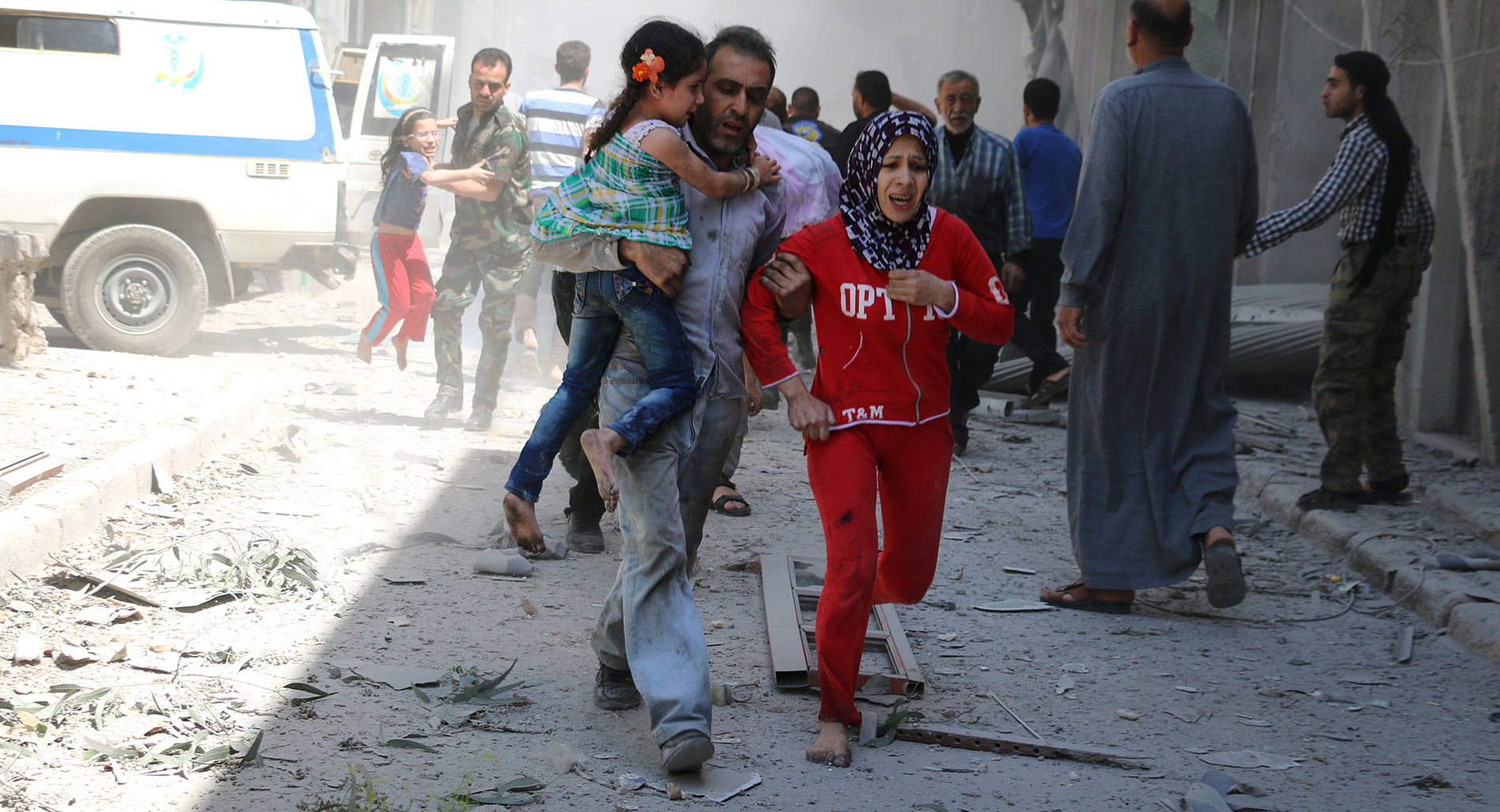
Armed groups operating in Aleppo, Idleb and surrounding areas in the north of Syria have carried out a chilling wave of abductions, torture and summary killings, said Amnesty International in a new briefing published today.

The briefing Torture was my punishment: Abductions, torture and summary killings under armed group rule in Aleppo and Idleb, Syria offers a rare glimpse of what life is really like in areas under the control of armed opposition groups. Some of them are believed to have the support of governments such as Qatar, Saudi Arabia, Turkey and the USA despite evidence that they are committing violations of international humanitarian law (the laws of war). It also sheds light on the administrative and quasi-judicial institutions set up by armed groups to govern in these areas.

War Crimes

“This briefing exposes the distressing reality for civilians living under the control of some of the armed opposition groups in Aleppo, Idleb and surrounding areas. Many civilians live in constant fear of being abducted if they criticize the conduct of armed groups in power or fail to abide by the strict rules that some have imposed,” said Philip Luther, Director of the Middle East and North Africa Programme at Amnesty International.

“In Aleppo and Idleb today, armed groups have free rein to commit war crimes and other violations of international humanitarian law with impunity. Shockingly, we have also documented armed groups using the same methods of torture that are routinely used by the Syrian government.

“In Aleppo and Idleb today, armed groups have free rein to commit war crimes and other violations of international humanitarian law with impunity.”

Philip Luther, Amnesty International

“States that are members of the International Syria Support Group including the USA, Qatar, Turkey and Saudi Arabia, which are involved in negotiations over Syria, must pressure armed groups to end such abuses and comply with the laws of war. They must also cease any transfer of arms or other support to groups implicated in committing war crimes and other gross violations.”

The briefing features abuses committed by five armed groups which have exercised control over parts of the governorates of Aleppo and Idleb since 2012. They include the Nour al-Dine Zinki Movement, al-Shamia Front and Division 16, which joined the Aleppo Conquest coalition of armed groups (also known as Fatah Halab) in 2015. They also include Jabhat al-Nusra and the Ahrar al-Sham Islamic Movement in Idleb, which both joined the Army of Conquest coalition, similarly in 2015.

Some non-state armed groups such as Jabhat al-Nusra, the al-Shamia Front and the Ahrar al-Sham Islamic Movement have established their own Shari’a (Islamic law) “justice systems” in areas they control, as well setting up unofficial prosecution offices, police forces and detention centres. They have also appointed judges, some of whom have no knowledge of Shari’a. Some groups, such as Jabhat al-Nusra and the Ahrar al-Sham Islamic Movement, have applied a strict interpretation of Shari’a and imposed punishments amounting to torture or other ill-treatment for perceived infractions.

Abductions

The briefing documents 24 cases of abduction by armed groups in Aleppo and Idleb governorates between 2012 and 2016. Victims included peaceful activists and even some children, as well as minorities targeted solely because of their religion.

It also features five cases, from 2014 and 2015, of people who alleged they were tortured by Jabhat al-Nusra and the Nour al-Dine Zinki Movement after their abduction.

“Ibrahim” (not his real name), a political activist abducted by Jabhat al-Nusra in April 2015 in Aleppo, said he was tortured continuously during the three days he was held. He believes he was targeted for organizing peaceful protests in support of the 2011 uprising.

“I was taken to the torture room. They placed me in the shabeh position, hanging me from the ceiling from my wrists so that my toes were off the ground. Then they started beating me with cables all over my body… After the shabeh they used the dulab [tyre] technique. They folded my body and forced me to go inside a tyre and then they started beating me with wooden sticks,” he said. He was later released, abandoned on the side of a road.

“They folded my body and forced me to go inside a tyre and then they started beating me with wooden sticks.”

a political activist abducted by Jabhat al-Nusra

In another shocking case, “Halim”, a humanitarian worker, was abducted by the Nour al-Dine Zinki Movement in July 2014 while supervising a project in a hospital in Aleppo city. He was held incommunicado for around two months before being forced to sign a “confession” under torture.

“When I refused to sign the confession paper the interrogator ordered the guard to torture me. The guard used the bisat al-rih [flying carpet] technique. He placed my hands above my head, and forced me to lift my legs in a perpendicular position. He then started beating me with cables on the soles of my feet. I couldn’t bear the pain so I signed the paper,” he said.

Human rights activists, minorities, children targeted

Several of the journalists and media activists working to report on abuses told Amnesty International they were abducted because they had criticized the conduct of armed groups in power. Many were later released, apparently after public pressure on the armed group which had abducted them.

“Issa”, a 24-year-old media activist, said he stopped posting anything on Facebook that might put him at risk after receiving threats from Jabhat al-Nusra.

“They are in control of what we can and cannot say. You either agree with their social rules and policies or you disappear. In the past two years, I was threatened three times by Jabhat al-Nusra for criticizing their rule on Facebook,” he said.

“You either agree with their social rules and policies or you disappear.”

A media activist

“Imad”, another media activist, described how Jabhat al-Nusra raided Radio Fresh, a radio station in northern Idleb governorate, in January 2016, abducted two of its broadcasters and held them for two days simply for playing music which they deemed offensive to Islam.

In Aleppo, media activists said they received verbal and written threats from the al-Shamia Front and the Nour al-Dine Zinki Movement for criticizing these armed groups or accusing them of corruption on Facebook.

Lawyers, political activists and others have also faced reprisal attacks from the al-Shamia Front, Jabhat al-Nusra and Ahrar al-Sham Islamic Movement because of their activities, perceived religious beliefs and political opinions. “Bassel”, a lawyer in Idleb, was abducted from his home in Ma’rat al-Nu’man in November 2015 for criticizing Jabhat al-Nusra.

“I was happy to be free from the Syrian government’s unjust rule but now the situation is worse. I publicly criticized Jabhat al-Nusra on Facebook… The next morning Jabhat al-Nusra forces took me from my home,” he said.

“I publicly criticized Jabhat al-Nusra on Facebook… The next morning Jabhat al-Nusra forces took me from my home.”

He was held in an abandoned home for 10 days and eventually released after captors forced him to give up his profession, threatening that if he failed to do so he would never see his family again. One political activist abducted at an Ahrar al-Sham Islamic Movement checkpoint and held in a detention centre run by them, told Amnesty International she was stopped for not wearing a veil and was suspected of being affiliated to the Syrian government.

Children still missing

Amnesty International also documented the abduction of at least three children – boys aged 14, 15 and 16 – by Jabhat al-Nusra and the Ahrar al-Sham Islamic Movement in Idleb and Aleppo between 2012 and 2015. As of 28 June, two of them remain missing.

Members of the Kurdish minority in Sheikh Maqsoud, a predominantly Kurdish neighbourhood in Aleppo city, were also among those abducted as well as Christian priests targeted on account of their religion.

“All armed groups, in particular those in Aleppo and Idleb, must immediately and unconditionally release any person held solely on account of their political opinion, religion or ethnicity,” said Philip Luther.

“Leaders of armed groups in northern Syria have a duty to end human rights abuses and violations of international humanitarian law, including war crimes. They must speak out and publicly condemn such acts, and send a clear message to their subordinates that such crimes will not be tolerated.”

Summary killings

The briefing also contains evidence of summary killings carried out by Jabhat al-Nusra, the al-Shamia Front and their affiliated “courts”, or the Supreme Judicial Council, a body in Aleppo governorate recognized by several armed groups as the sole judicial authority there.

Among those killed have been civilians, including a 17-year-old boy accused of being gay and a woman accused of adultery, as well as captured members of Syrian government forces, of pro-government shabiha militias, and of the armed group calling itself Islamic State and other rival groups. In some cases armed groups carried out summary killings in front of crowds. The deliberate killing of people held in captivity is prohibited by international humanitarian law and amounts to a war crime.

“Saleh”, who was held by Jabhat al-Nusra in December 2014, said he saw five women who a guard told him were accused of adultery and would “only be forgiven by death”. He later saw a video showing Jabhat al-Nusra fighters carrying out a public, execution-style killing of one of the women.

According to the Unified Arab Code, a set of Shari’a-based legal codes followed by the Supreme Judicial Council and the “court” run by al-Shamia Front, certain crimes such as murder and apostasy are punishable by death.

“Passing sentences and carrying out summary killings without a judgement from a regularly constituted court with full judicial guarantees is a serious violation of international law and amounts to a war crime,” said Philip Luther. Over the past five years, Amnesty International has extensively documented war crimes and crimes against humanity on a mass scale committed by Syrian government forces. The organization has also documented serious violations, including war crimes, by the group calling itself Islamic State and other armed groups.

“Passing sentences and carrying out summary killings without a judgement from a regularly constituted court with full judicial guarantees is a serious violation of international law and amounts to a war crime.”

Philip Luther, Amnesty International

“While some civilians in areas controlled by armed opposition groups may at first have welcomed an escape from brutal Syrian government rule, hopes that these armed groups would respect rights have faded as they have increasingly taken the law into their own hands and committed serious abuses,” said Philip Luther.

“It is critical that Russia and the USA, and the UN Special Envoy to Syria, prioritize detention by government forces and abduction by armed groups during their ongoing talks in Geneva. For its part the UN Security Council must impose targeted sanctions on leaders of armed groups who are responsible for war crimes.”

Maldives: Halt plans to carry out first execution in more than six decades

We urge the Maldives authorities to immediately halt plans to carry out the execution of Hussain Humaam Ahmed (Humaam) and to commute his, and all other, existing death sentences in Maldives.

Early in the morning of 24 June 2016, the Maldives Supreme Court upheld the death sentence against Humaam for the murder of MP Afrasheem Ali in 2012. His execution could be imminent as the current government under President Abdulla Yameen has pledged to hang death row inmates within 30 days of the Supreme Court upholding guilty verdicts.

If Humaam is sent to the gallows, it would be the first execution in Maldives for more than 60 years. The current government began taking steps to resume executions in 2014, when it introduced regulations to change the method of execution to lethal injection and remove the power of clemency from the President.

If Humaam is sent to the gallows, it would be the first execution in Maldives for more than 60 years.

After failing to source the chemicals needed for lethal injections, the government of Maldives then decided to change its method of execution to hanging, as announced by the ex-Home Minister Umar Naseer. The regulations were amended on 29 June to reflect this decision.

Under the regulations, the victim’s family (of the crime) has the power to pardon the accused in a death penalty case. The father and brother of Afrasheem Ali asked the Supreme Court on 23 June to delay the implementation of the death sentence of Humaam, citing an “incomplete investigation” into the circumstances of his murder. The Court, however, refused to accept the letter since it had been submitted outside of normal working hours and upheld the death sentence for Humaam on 24 June.

According to international human rights standards, people charged with crimes punishable by death are entitled to the strictest observance of all fair trial guarantees and to certain additional safeguards. However, concerns about the unfairness of the proceedings against Humaam, several of which have been documented in a report by the NGO Maldives Democracy Network, have not been addressed.

These include:

  • Despite Humaam retracting a pre-trial confession to Dr Afrasheem’s murder, which he has insisted was made due to fear for the safety of his family members, the trial court took into account this “confession” in its guilty verdict. This violates Article 14 (3) (g) of the International Covenant on Civil and Political Rights (ICCPR), to which Maldives is a state party and which states that no one should be compelled to testify against himself or to confess guilt, as well as Article 52 of the Maldivian Constitution, which only allows statements made in court as admissible evidence.
  • Humaam and his family maintain that he has a mental disability and have requested an independent psychiatric evaluation to assess his mental health status. As far as his legal team and family are aware, no such evaluation has taken place nor were the findings of it provided in court. International law prohibits the use of the death penalty against people with mental disabilities. Furthermore, his family believe that his mental disability directly affected his capacity to support his legal representatives in the overall effectiveness of his defence. At points during the proceedings Humaam told the court that he did not want a legal representative and denied his own retraction of the self-incriminating statement he made in pre-trial detention.

Humaam’s death sentence constitutes an emblematic example of concerns Amnesty International and other organizations have been documenting on the use of the death penalty in the Maldives. According to statistics from the Maldives Correction Services, a total of 17 prisoners are currently under sentence of death in the country. Of these, at least five were convicted and sentenced to death for crimes committed when they were below 18 years of age. International customary law and two international treaties to which the Maldives is a state party prohibit the use of the death penalty against juvenile offenders.

According to statistics from the Maldives Correction Services, a total of 17 prisoners are currently under sentence of death in the country. Of these, at least five were convicted and sentenced to death for crimes committed when they were below 18 years of age.

Amnesty International is further concerned at media reports indicating that retracted statements were admitted as evidence at trial and that the proceedings were unfair in other cases of those currently facing the death penalty, claims that do not appear to have been adequately investigated by the authorities. The imposition of the death penalty where the proceedings do not adhere to the highest standards of fair trial constitutes arbitrary deprivation of life.

In addition to Humaam’s case, the Supreme Court has recently finalised hearings in two other murder cases and is expected to deliver its final verdicts soon, potentially opening the door for further executions if found guilty. It is alarming that President Yameen has claimed that the resumption of executions is necessary to maintain public safety and law and order. Studies have consistently failed to show that the death penalty is more of a deterrent to crime than other punishments.

Amnesty International opposes the death penalty in all cases without exception, regardless of the nature or circumstances of the crime. A resumption of the death penalty in Maldives would be a seriously regressive step for human rights. The world is moving away from the death penalty – today, 140 states are abolitionist in law or practice, and a majority of the world’s countries (103) have now abolished the death penalty fully from their legal books.

Amnesty International urges the Maldives authorities to immediately:

  • Halt any plans to resume executions and establish an official moratorium on all executions, with a view to abolishing the death penalty;
  • Immediately commute the death sentence against Humaam and all other prisoners under sentence of death, including those imposed for crimes committed when the prisoners were below 18 years of age;
  • In view of the concerns raised about his retracted statement and his mental disability and its potential impact on his ability to defend himself, give serious and thorough consideration to whether Humaam should be given a retrial that fully complies with international law and standards on fair trial standards without, resorting to the death penalty;
  • Amend national legislation to remove provisions that are not in line with international law and standards and abolish the death penalty for all crimes.

Refugees and migrants fleeing sexual violence, abuse and exploitation in Libya

Horrifying accounts of sexual violence, killings, torture and religious persecution reveal the shocking range of abuses along the smuggling routes to and through Libya.

The organisation spoke to at least 90 refugees and migrants at reception centres in Puglia and Sicily, who had made the journey across the Mediterranean from Libya to southern Italy in the past few months, and who were abused by people smugglers, traffickers, organized criminal gangs and armed groups.

“From being abducted, incarcerated underground for months and sexually abused by members of armed groups, to being beaten, exploited or shot at by people smugglers, traffickers or criminal gangs – refugees and migrants have described in harrowing detail the horrors they were forced to endure in Libya,” said Magdalena Mughrabi, Interim Deputy Director of the Middle East and North Africa Programme at Amnesty International.

“Their experiences paint a terrifying picture of the conditions many of those who come to Europe are so desperate to escape.”

“Their experiences paint a terrifying picture of the conditions many of those who come to Europe are so desperate to escape.”

magdalena Mughrabi, Amnesty International

Hundreds of thousands of refugees and migrants – mostly from Sub-Saharan Africa – travel to Libya fleeing war, persecution or extreme poverty, often in the hope of settling in Europe. The International Organization for Migration (IOM) estimates there are over 264,000 migrants and refugees currently in Libya. According to UNHCR, there are around 37,500 registered refugees and asylum-seekers, half of them Syrians.

“No one should have to face abduction, torture and rape in Libya to seek protection. The international community should be doing their utmost to ensure refugees do not need to flee to Libya in the first place. The EU, and indeed governments around the world, should dramatically increase the number of resettlement places and humanitarian visas to vulnerable refugees facing severe hardships and few prospects in the neighbouring countries they first fled to,” said Magdalena Mughrabi.

Despite the formation of a UN-backed Government of National Accord fighting continues in parts of Libya including in Benghazi, Derna and Sirte.

“The Libyan authorities must take urgent steps to restore the rule of law and protect the rights of refugees and migrants. The internationally-backed Government of National Accord has made commitments to respect and uphold human rights – they have a duty to hold those responsible for these abhorrent crimes accountable.”

“The Libyan authorities must take urgent steps to restore the rule of law and protect the rights of refugees and migrants.”

MAGDALENA MUGHRABI, AMNESTY INTERNATIONAL

Amidst the lawlessness and violence that continue to plague the country, a lucrative people-smuggling business has been established along routes running from southern Libya to the Mediterranean coast in the north where boats bound for Europe depart. At least 20 of the people Amnesty International spoke to also described abuses suffered at the hands of the Libyan coastguard and in immigration detention centres inside Libya. Amnesty International spoke to refugees and migrants who described facing abuse at every stage of the journey, from their arrival in Libya until they reached the northern sea coast. Others had lived in Libya for years but wanted to escape because of harassment or abuse by local gangs, police or armed groups. Amnesty International documented abuses by smugglers, traffickers and armed groups in Libya in its 2015 report Libya is full of Cruelty. The latest testimonies show that one year on, refugees and migrants continue to be subjected to horrifying abuse.

Horrors along the journey

The majority of people Amnesty International spoke to reported being victims of human trafficking. They were held by smugglers as soon as they entered Libya or sold on to criminal gangs. Several described being beaten, raped, tortured, or exploited by those who held them captive. Some witnessed people being shot dead by smugglers, others saw people left to die as a result of illness or ill-treatment.

“When you [arrive in] Libya, that’s when the struggle starts. That’s when they start to beat you,” said Ahmed, an 18-year-old from Somalia describing his arduous journey through the desert from Sudan to Libya in November 2015. He said the smugglers refused to give them water as punishment and even shot at them when they begged for water for a group of Syrian men travelling with them who were gasping with thirst.

“The first Syrian died, he was young, maybe 21 years old. After this they gave us water, but the other Syrian man also died…he was only 19,” he said, adding that the smugglers seized the belongings of the dead men and did not allow them time to bury them.

Paolos, a 24-year-old Eritrean man who travelled through Sudan and Chad and arrived in Libya in April 2016, told how the smugglers abandoned a disabled man in the desert along the way, as they crossed the Libyan border heading to the southern town of Sabha.

“We saw them throw one man [out of the pick-up truck] into the desert. He was still alive. He was a disabled man,” he said.

Sexual violence along the smuggling route

Amnesty International spoke to 15 women most of whom said they lived in perpetual fear of sexual violence along the journey to the Libyan coast. Many said rape was so commonplace that they took contraceptive pills before travelling to avoid becoming pregnant as a result of it. Medical staff as well as psychologists and social workers in three reception centres visited by Amnesty International in Sicily and Puglia confirmed that women reported a high level of sexual violence during the journey. At the reception centre in Bari, staff also confirmed that many migrant and refugee women were taking contraceptive pills ahead of the journey out of fear of rape. In total, Amnesty International collected 16 accounts of sexual violence from survivors and eyewitnesses.

According to testimonies, women were sexually assaulted either by the smugglers themselves, traffickers or members of armed groups. Attacks took place along the smuggling route and while women were being held in private homes or abandoned warehouses near the coast waiting to board boats to Europe.

A 22-year-old Eritrean woman told Amnesty International that she witnessed other women being sexually abused, including one who was gang-raped because the smuggler wrongly accused her of failing to pay his fee.

“Her family couldn’t pay the money again. They took her away and she was raped by five Libyan men. They took her out late at night, no one opposed it, everyone was too afraid,” she said.

“They took her out late at night, no one opposed it, everyone was too afraid.”

A 22-year-old Eritrean woman

Ramya, 22, from Eritrea said she was raped more than once by the traffickers who held her captive in a camp near Ajdabya, in northeastern Libya after she entered the country in March 2015.

“The guards would drink and smoke hashish [cannabis] and then come in and choose which women they wanted and take them outside. The women tried to refuse but when you have a gun pointed at your head, you don’t really have a choice if you want to survive. I was raped twice by three men…I didn’t want to lose my life,” she said.

“The women tried to refuse but when you have a gun pointed at your head, you don’t really have a choice if you want to survive.”

Ramya, 22, from Eritrea

Antoinette, a 28-year-old woman from Cameroon said of the traffickers who held her captive in April 2016: “They don’t care if you’re a woman or a child…They used sticks [to beat us] and would shoot in the air. Maybe because I had a child they didn’t rape me but they raped pregnant women and single women. I saw this happen.”

Abducted, exploited and extorted

Many said the smugglers held them captive to extort a ransom from their families. They kept them in deplorable and often squalid conditions, deprived them of food and water and would beat, harass and insult them constantly.

Semre, 22, from Eritrea, said he saw four people including a 14-year-old boy and a 22-year-old woman die from illness and starvation while he was held captive for ransom. “No one took them to the hospital so we had to bury them ourselves,” he said. His father eventually paid the traffickers in exchange for Semre’s freedom but instead of releasing him they sold him on to another criminal group.

“No one took them to the hospital so we had to bury them ourselves.”

Semre, 22

Others recounted how they were repeatedly beaten by those who held them captive and those who could not pay were forced to work for free to pay off the debt.

Abdulla, a 23-year-old Eritrean man, said the traffickers would torture and beat people to force them to pay, particularly while forcing them to speak to their families to pressure them into paying.

Saleh, 20, from Eritrea, entered Libya in October 2015 and was immediately taken to a storage hangar in Bani Walid run by traffickers. During the 10 days he was held there, he witnessed how one man who couldn’t pay dying after being electrocuted in water. “They said that if anyone else couldn’t pay, their fate would be the same,” he said.

Saleh escaped but eventually ended up at another camp run by traffickers in Sabratah, close to the sea.

He said: “We didn’t know what was happening…They said they would keep us there until our family was able to pay…The people in control forced us to work for free, in houses, to clean, any jobs. They didn’t give us proper food. Even the water they gave us was salty. There were no proper bathrooms. Many of us got skin problems. The men would smoke hashish and would beat you with their guns and anything they could find. They used metal, rocks. They had no heart.”

“The men would smoke hashish and would beat you with their guns and anything they could find. They used metal, rocks. They had no heart.”

Saleh, 20

Sexual abuse and religious persecution by armed groups

The rise of powerful armed groups in recent years, including some which have pledged allegiance to the armed group calling itself Islamic State (IS) and aim at imposing their own interpretation of Islamic Law, has put foreign nationals – particularly Christians – at an increased risk of abuse and potential war crimes. Amnesty International spoke to people who said they were abducted by IS for several months.

Amal, a 21-year-old Eritrean woman, described how the group of 71 people she was travelling with was abducted by an armed group they believed to be IS near Benghazi while they were on their way to Tripoli in July 2015.

“They asked the smuggler why he was helping Christians. He pretended that he didn’t know we were Christians so they let him go. They separated us into Christians and Muslims and then they separated the men and women. They took [the Christians] to Tripoli and kept us underground – we didn’t see the sun for nine months. We were 11 women from Eritrea,” she said.

“Sometimes we didn’t eat for three days. Other times they would give us one meal a day, half a piece of bread.”

“Sometimes we didn’t eat for three days. Other times they would give us one meal a day, half a piece of bread.”

Amal, 21

She also described how they were pressured into converting to Islam and beaten with hoses or sticks when they refused.

“Sometimes they would frighten us with their guns, or threaten to slaughter us with their knives,” she said.

“Sometimes they would frighten us with their guns, or threaten to slaughter us with their knives.”

Amal, 21

When the women finally succumbed and agreed to convert, she said they suffered sexual violence. The men considered them their “wives” and treated them as sexual slaves. She said she was raped by different men before being assigned to one man who also raped her.

In another case, in 2015 Adam, 28, a man from Ethiopia living in Benghazi with his wife, was abducted by IS simply because he was a Christian.

“They kept me in a prison for one and half months. Then one of them felt sorry for me after I told him I have a family and he helped me memorize the Quran so they would let me go…They killed many people,” he said. He was eventually able to escape after seven months in captivity.

The IS claimed responsibility for the summary killings of 49 Copts in three separate incidents in February and March 2015.

“The lawlessness and proliferation of rival armed groups and militias increases the risks faced by refugees and migrants in Libya. The Government of National Accord must put a halt to abuses by its own forces and allied militias. And it must ensure that no one, including members of armed groups, can continue to commit serious abuses, including possible war crimes, with impunity,” said Magdalena Mughrabi.

“The international community must also support the International Criminal Court, which continues to have jurisdiction over Libya, to investigate war crimes and crimes against humanity. And all parties to the conflict should cooperate with the ICC investigation.”

As well as the persistent threat from armed groups, foreign nationals in Libya also face widespread racism and xenophobia as public sentiment remains hostile. Many refugees and migrants interviewed reported being physically assaulted, threatened with knives and guns or robbed of their possessions at gunpoint or beaten on the streets by criminal gangs.

Saving lives at sea

On 28 June the European Council endorsed a decision to extend Operation Sophia, the naval operation in the central Mediterranean, for a further year, maintaining its primary function of tackling smugglers and adding to its tasks training of and information sharing with the Libyan coastguard as well as monitoring the implementation of the arms embargo on Libya.

“The EU should focus less on keeping migrants and refugees out and more on finding safe and legal ways for those trapped in Libya to access a place of safety. The priority should be saving lives, this means deploying enough resources in the right places to prevent further tragedy,” said Magdalena Mughrabi.

“The EU should be tackling abuses by smugglers but should not be seeking to trap people in a country where their lives and rights are so obviously at risk.”

“The EU should be tackling abuses by smugglers but should not be seeking to trap people in a country where their lives and rights are so obviously at risk.”

Magdalena Mughrabi

Background

According to IOM, most foreign nationals residing in Libya originate from Niger, Egypt, Chad, Ghana and Sudan. The majority of those transiting through the country and then crossing to Italy by boat are from Eritrea, Nigeria, Gambia, Somalia and Côte d’Ivoire. The main transit point for people from West Africa entering Libya is the south-western city of Sabha. Those entering via Sudan from Somalia, Eritrea and Ethiopia come through Kufra, and then travel onto Ajdabiya in the north eastern part of the country. Most boats heading to Europe depart from north-western Libya. Before departure, foreign nationals are held in houses and farms until more people are gathered for the journey.

Some of the abuses documented by Amnesty International against refugees and migrants in Libya amount to human trafficking. Trafficking people constitutes a human rights abuse as well as being a crime in most national criminal law systems. It includes the transfer of persons through threat, the use of force or coercion such as abduction, fraud or deception. Its disruption and prosecution with the end of bringing perpetrators to justice is an obligation under international human rights law. By contrast, smuggling does not involve coercion; it is consensual. While smuggling can involve the commission of criminal offences, it is not in itself a human rights abuse.