Malaysia: Police must be held accountable for death in custody

The Malaysian authorities’ failure to hold anyone accountable for the death in custody of N. Dharmendran raises serious questions about their commitment to ending serious human rights violations.

The statement followed a decision by the Lumpur High Court on Wednesday to acquit four police officers accused of torturing a man, N. Dharmendran, to death in 2013 while in police custody. According to the judge, the prosecution had failed to prove the case against the four men beyond reasonable doubt.

“The Malaysian police continue to evade accountability, even for the most egregious violations. This is merely the latest in a series of horrific cases where the police has operated above the law, with no consequences for their actions,” said Josef Benedict, Deputy Director for South East Asia and the Pacific.

“The Malaysian police continue to evade accountability, even for the most egregious violations.”

josef Benedict, amnesty international

Amnesty International has also monitored other cases in Malaysia where the police have not been held accountable for deaths in custody.

Despite findings of police responsibility by the Coroner’s court in the cases of Karuna Nithi and C. Sugumar, and the Malaysian Enforcement Agency Integrity Commission (EAIC) in the case of Syed Mohd Azlan Syed Nur, no one has been charged or held to account. In April, the EAIC, who had investigated the case, concluded that the same police officers from the Serious Crimes Division (D9) acquitted today were also responsible for N. Dharmendran’s death by torture.

A pathologist’s report concluded that N. Dharmendran sustained 52 bruises on his body, as a result of excessive physical force being used, triggering an “acute massive loss of blood” and sending the victim into “hypovolemic shock.” When the pathologist examined N. Dharmendran’s body, he found staple wounds on each ear.

“The photographs of N. Dharmendran’s body, which were shared by the EAIC investigators, chillingly testify to the torture he was subjected to. It is an absolute travesty that even with such overwhelming evidence, no one is held responsible and justice continues to be denied,” said Josef Benedict.

“It is an absolute travesty that even with such overwhelming evidence, no one is held responsible and justice continues to be denied.”

JOSEF BENEDICT, AMNESTY INTERNATIONAL

At a press conference in April, the EAIC shared photographs of N. Dharmendran when he was arrested and after his death. Upon being taken into custody, for allegedly attempting to murder two people, he appeared healthy. The later set of photographs showed his body disfigured by torture.

“It is high time that Malaysian authorities wake up to such flagrant human rights violations. They must finally establish an independent police oversight body to impartially, efficiently, thoroughly, and transparently investigate human rights violations. For far too long, the families and victims of police violations have failed to receive justice and reparations,” said Josef Benedict.

Background

N Dharmendran was detained for attempted murder involving firearms and was remanded without the presence of a lawyer. He was kept in lockup for 10 days. Four police were charged with the murder of N. Dharmendran on 5 June 2013. On 12 December 2014, the High Court acquitted the four policemen from the murder charge. However, on 26 February this year, the Appeals Court overturned the High Court’s acquittal of the policemen over N. Dharmendran’s murder and returned the case to the High Court.
Indonesia: Prisoners of conscience held thousands of miles from home

On 29 June 2007 Johan Teterissa and 22 other men were arrested and subsequently jailed for taking part in a peaceful demonstration during a government-organised National Family Day event attended by the then President Susilo Bambang Yudhoyono in Ambon, the capital city of Maluku province, eastern Indonesia.

Amnesty International believes they should not have spent a single day in prison and calls on the Indonesian authorities to immediately and unconditionally release Johan Teterissa and all other prisoners of conscience (POCs) in Indonesia.

During the ceremony in 2007, Johan Teterissa led other activists, most of whom were teachers or farmers, onto the ceremonial area and performed a traditional “cakalele” war dance. At the end of the dance the activists unfurled the “Benang Raja”, a banned regional flag. Police and presidential guards beat Johan Teterissa and the 21 other activists on arrest. Police, including officers from the anti-terrorist unit Detachment 88 (Densus 88), allegedly tortured them during their detention and interrogation. To date, no independent investigation has been carried out into these reports of torture and no police officers have ever been held to account.

Johan Teterissa and other activists were charged with “rebellion” (makar) under articles 106 and 110 of the Indonesian Criminal Code (KUHP), provisions which are often used by the Indonesian authorities to imprison peaceful activists. Amnesty International considers Johan Teterissa and all those arrested with him as prisoners of conscience, imprisoned solely for peacefully exercising their rights to freedom of expression and assembly. The current revision of the Indonesian Criminal Code is a timely opportunity for the Indonesian authorities to repeal or else amend Articles 106 and 110 so that these articles are no longer used to criminalise the rights to freedom of expression, association and peaceful assembly.

Amnesty International considers Johan Teterissa and all those arrested with him as prisoners of conscience, imprisoned solely for peacefully exercising their rights to freedom of expression and assembly.

In March 2009, Johan and dozens of prisoners of conscience were transferred to prisons on Java Island, over 2,500km away from Maluku province, their place of origin. Amnesty International believes that holding prisoners so far away from their families, making visits almost impossible, is unnecessary and cruel on both the prisoners and their families. At least 11 prisoners of conscience from Maluku are still detained in Java and pending their release they should be transferred to Ambon where they can have more regular contact with their families. The journey from Maluku is long, arduous and expensive making it almost impossible for families to visit them. In June 2016, NGOs organised and facilitated official visits enabling family members to travel from Maluku to visit the prisoners in Nusakambangan Island in Central Java, Porong and Madiun, both in East Java for the first time since their transfer in 2009.

Under Principle 19 and 20 of the UN Body of Principles for the Protection of All Persons under Any Form of Detention or Imprisonment, a detained or imprisoned person has the right to be visited by family and be moved to a place of imprisonment or detention “reasonably near his usual place of residence” if requested. Rule 59 of the Standard Minimum Rules for the Treatment of Prisoners (the Nelson Mandela Rules) states that “Prisoners shall be allocated, to the extent possible, to prisons close to their homes or their places of social rehabilitation.”

Regular visits and contact with the outside world, in particular with family members is not only a primary safeguard against torture and other ill-treatment, it also respects the prisoners’ right to family and private life and contributes towards a prisoners’ general well-being.

Regular visits and contact with the outside world, in particular with family members is not only a primary safeguard against torture and other ill-treatment, it also respects the prisoners’ right to family and private life and contributes towards a prisoners’ general well-being.

Background

The Indonesia authorities have continued to use the “rebellion” laws to imprison political activists in Maluku and Papua for peacefully expressing their views. In January 2015, nine political activists were sentenced to between one and four years for planning to commemorate the anniversary of the Republic of South Maluku (RMS) movement’s declaration of independence and carrying the “Benang Raja” flags. In April 2016 Steven Itlay was charged with “rebellion” under Article 106 of the Indonesian Criminal Code (KUHP) for participating in a joint prayer, gathering in the backyard of the GKII Jemaat Gologota Church in Utikini village, Kuala Kencana district, Papua province. At least 29 prisoners of conscience from Maluku and 27 in Papua remain behind bars serving sentences of up to 20 years.

In May 2015, President Joko Widodo took steps which seemed to signal a move away from the repressive policies of past administrations. These included the release of five political activists, who were imprisoned following unfair trials based on forced confessions made as a result of torture or other ill-treatment, and a pledge to grant clemency or an amnesty to other political activists detained throughout the country. In November 2015 the Indonesian authorities released prisoner of conscience Filep Karma who had spent more than a decade in prison for his peaceful political expression.

In November 2008, the UN Working Group on Arbitrary Detention (WGAD) declared Johan Teterissa’s detention to be arbitrary on the grounds that he was imprisoned for the exercise of his rights to freedom of expression and peaceful assembly – rights which are guaranteed in the International Covenant on Civil and Political Rights (ICCPR), to which Indonesia is state party, and in the Indonesian Constitution.

Suspend Saudi Arabia from UN Human Rights Council

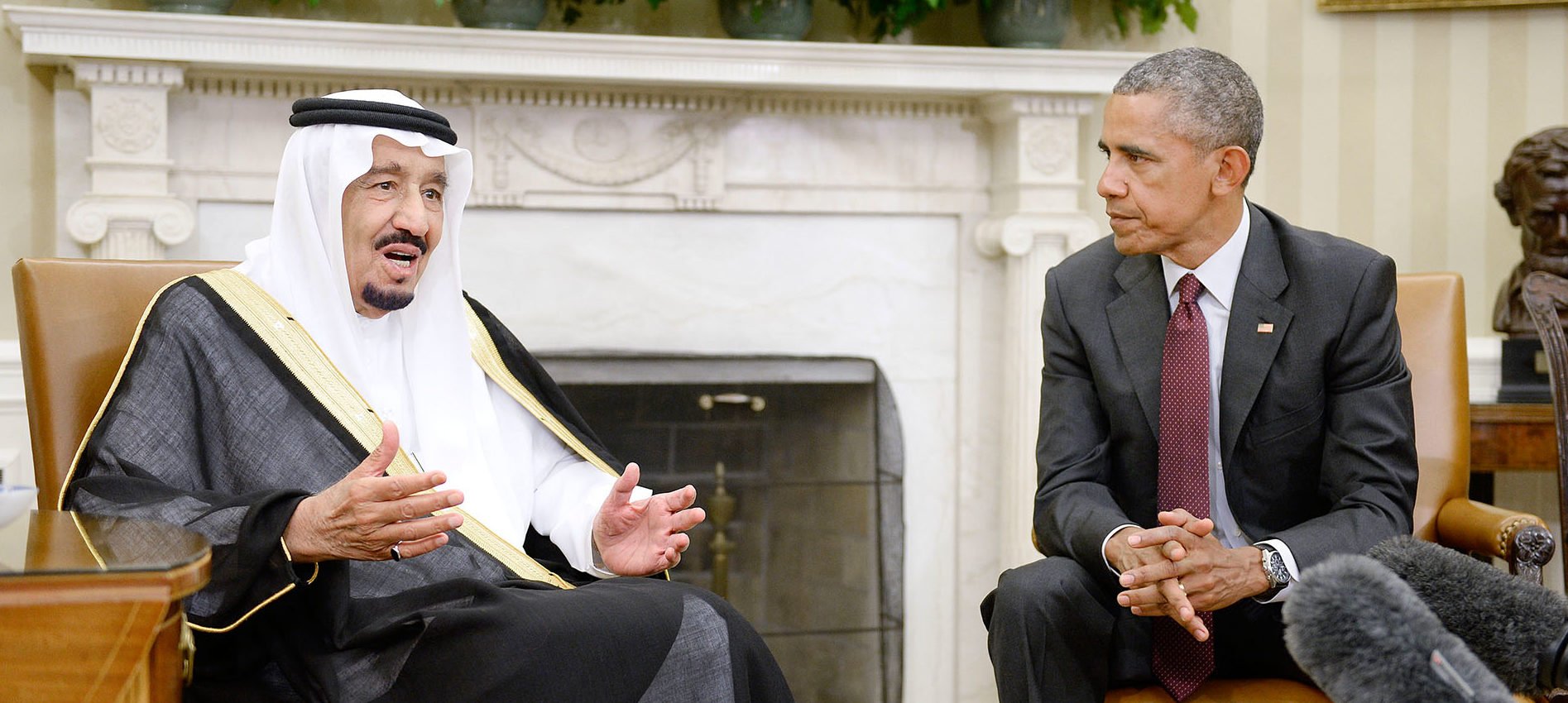
Saudi Arabia has committed “gross and systematic violations of human rights” abroad and at home, and used its position on the UN Human Rights Council to effectively obstruct justice for possible war crimes.

Credibility of UN Human Rights Council at stake

Amnesty International and Human Rights Watch said in a joint statement that Saudi Arabia should be stripped of its rights of membership in the Human Rights Council until it ends unlawful attacks by the military coalition it leads in Yemen and these are credibly and impartially investigated.

Amnesty International is urging the Australian Government to call on the UN General Assembly to suspend Saudi Arabia’s membership of the world’s top human rights body.

Amnesty International is urging the Australian Government to call on the UN General Assembly to suspend Saudi Arabia’s membership of the world’s top human rights body.

“The credibility of the UN Human Rights Council is at stake. Since joining the Council, Saudi Arabia’s dire human rights record at home has continued to deteriorate and the coalition it leads has unlawfully killed and injured thousands of civilians in the conflict in Yemen. To allow it to remain an active member of the Council, where it has used this position to shield itself from accountability for possible war crimes, smacks of deep hypocrisy. It would bring the world’s top human rights body into disrepute,” said Richard Bennett, Head of Amnesty International’s UN Office.

Strong evidence of war crimes in Yemen

“The strong evidence of the commission of war crimes by the Saudi Arabian-led coalition in Yemen should have been investigated by the Human Rights Council. Instead, Saudi Arabia cynically used its membership of the Council to derail a resolution to establish an international investigation, by garnering support for their rival, toothless resolution backing a national Yemeni inquiry. Nine months on, that inquiry has failed to credibly investigate allegations of war crimes and other serious violations.”

“The strong evidence of the commission of war crimes by the Saudi Arabian-led coalition in Yemen should have been investigated by the Human Rights Council.”

Richard Bennett, Amnesty International

“As a member of the Human Rights Council Saudi Arabia is required to uphold the highest standards of human rights. In reality, it has led a military coalition which has carried out unlawful and deadly airstrikes on markets, hospitals and schools in Yemen. The coalition has also repeatedly used internationally banned weapons in civilian areas. At home it has carried out hundreds of executions, put children on death row after grossly unfair trials, and ruthlessly repressed opposition and human rights activists.”

Saudi Arabia’s harsh crackdown on all forms of dissent at home has continued unabated throughout its current membership of the Council, including through the use of grossly unfair trials at a special counter-terror court and long prison terms for peaceful dissidents and human rights defenders. More than 350 people have been executed since Saudi Arabia was elected to the Council, with 2015 seeing more recorded executions than any other year since 1995.

“Saudi Arabia must release all prisoners of conscience immediately and unconditionally, and end its shameful reliance on the death penalty,” said Richard Bennett.

“Saudi Arabia must release all prisoners of conscience immediately and unconditionally, and end its shameful reliance on the death penalty.”

RICHARD BENNETT, AMNESTY INTERNATIONAL

Saudi Arabia evading accountability

In recent weeks, Saudi Arabia has evaded accountability by pressuring the UN to remove the military coalition it leads in Yemen from a list of states and armed groups that violate children’s rights in armed conflict. Saudi Arabia threatened to disengage from the UN, withdraw its financial support including humanitarian projects, and to take its close allies with it.

Key allies of Saudi Arabia, including the USA and UK, have failed to halt transfers of arms for use in Yemen despite mounting evidence of war crimes.

“What’s particularly shocking is the deafening silence of the international community which has time and again ceded to pressure from Saudi Arabia and put business, arms and trade deals before human rights despite the Kingdom’s record of committing gross and systematic violations with complete impunity,” said Richard Bennett.

Amnesty International and Human Rights Watch are calling on UN member states to vote to suspend Saudi Arabia from the Council. They are also calling for an independent, impartial international inquiry into violations of international humanitarian law in Yemen.

Amnesty International and Human Rights Watch are calling on UN member states to vote to suspend Saudi Arabia from the Council. They are also calling for an independent, impartial international inquiry into violations of international humanitarian law in Yemen.

Background

General Assembly Resolution 60/251, which created the Human Rights Council, provides that “the General Assembly, by a two-thirds majority of the members present and voting, may suspend the rights of membership in the Council of a member of the Council that commits gross and systematic violations of human rights.” In 2011, Libya was the first and only country suspended.

The Human Rights Council is meeting from 13 June to 1 July. Its next session will be from 13 to 30 September.

Singapore: End harassment of peaceful protesters

The conviction of Singapore blogger and political activist Han Hui Hui, for her role in a peaceful demonstration in 2014, is just another illustration of the authorities’ clampdown on critics and dissent in the country.

Amnesty International calls on the authorities to immediately halt the use of restrictive laws to undermine the enjoyment of the rights to freedom of expression and peaceful assembly which are maintaining a climate of intimidation and self-censorship in Singapore.

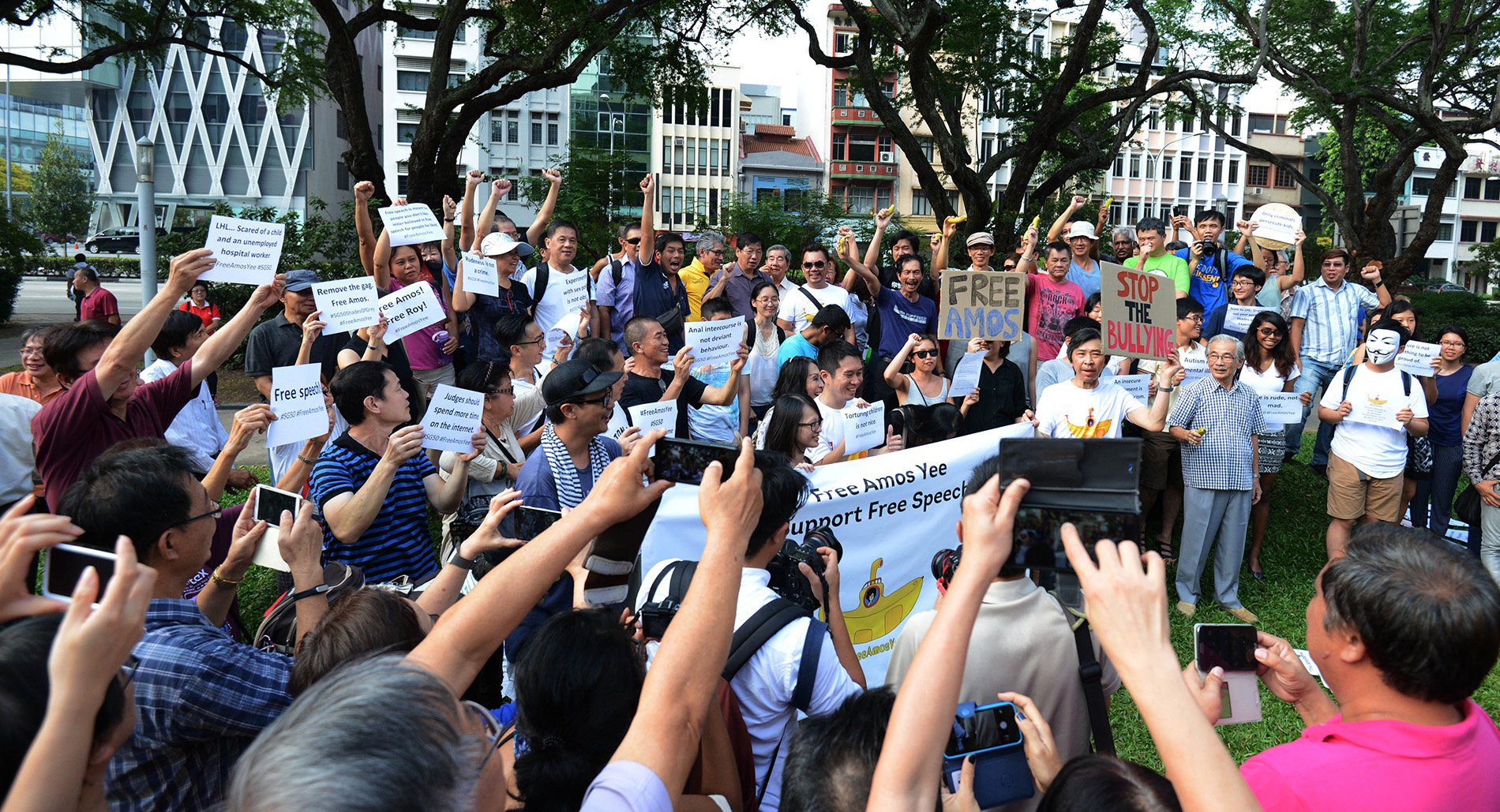
On 27 June 2016, Han Hui Hui was found guilty of illegal assembly and causing a public nuisance and fined SGD $3,100 (USD $2,281) for leading a peaceful protest that took place on 27 September 2014 in Hong Lim Park, the only space where people are able to assemble and demonstrate without a police permit. Two others, Low Wai Choo and Koh Yew Beng were also found guilty of illegal assembly and fined $350 each.

Han Hui Hui was charged in October 2014 under section 143 of the Penal Code and section 290 of the Public Nuisance Act for her participation in a peaceful protest that called on the Singaporean government to return Central Provident Fund savings to members. Following the protest, Han Hui Hui and several other participants were investigated by police for allegedly overstepping the parameters set by the National Parks Board, by marching and encroaching on another event taking place at the park at the same time.

Amnesty International believes the charges against Han Hui Hui may be politically motivated. Under Singaporean law, she is now barred from running in the general elections in 2020, as her fine is over SGD $2000 (USD $1471).

Amnesty International believes the charges against Han Hui Hui may be politically motivated.

The organisation believes that Han Hui Hui, Low Wai Choo and Koh Yew Beng, as well as Roy Ngreng and Chua Siew Leng, who pleaded guilty to the same charges for incidents that occurred in 2015, have been criminalized for the legitimate exercise of their right to peaceful assembly.

Amnesty International calls on the Singapore authorities to quash the convictions and sentences of Han Hui Hui, Low Wai Choo and Koh Yew Beng, as they arise solely from the peaceful exercise of their rights to freedom of expression and peaceful assembly. The authorities must also amend all laws which unduly restrict these rights and bring them into strict compliance with international human rights law.

Background

In the past few months, political activists, bloggers and the LGBTI community have faced reprisals for the legitimate exercise of their rights to freedom of expression, peaceful assembly and association in Singapore.

On Friday 24 June 2016, the UN Human Rights Council adopted the outcome of the Universal Periodic Review of Singapore. Amnesty International regrets the government of Singapore’s rejection of recommendations on the rights to freedom of expression and assembly. Cases highlighted during the session by Amnesty International and related to the right to freedom of expression included the prosecution of 17 year old blogger Amos Yee.

Malaysia: Drop charges against lawyer N. Surendran

The Malaysian authorities must immediately and unconditionally drop all charges that have been brought against N. Surendran, a lawyer and opposition lawmaker, solely for criticising a court verdict in 2014 concerning his client, the de facto opposition leader and prisoner of conscience, Anwar Ibrahim.

On 24 June 2016, the High Court of Kuala Lumpur found the Sedition Act to be constitutional, and that sedition charges brought against N. Surendran are still valid. This decision sets a dangerous precedent not only for the continued use of the Sedition Act against government critics, human rights defenders and activists, but also raises concerns on the right of individuals to legal representation and defence. N. Surendran’s lawyers filed their appeal against the decision of the High Court on 27 June 2016 to the Court of Appeal.

Amnesty International believes that the criminal charges brought against N. Surendran are politically motivated, prevent him from carrying out his work independently, and amount to harassment and intimidation. According to international human rights standards, governments should ensure that lawyers are able to perform their professional functions without intimidation, harassment, hindrance or improper interference.

According to international human rights standards, governments should ensure that lawyers are able to perform their professional functions without intimidation, harassment, hindrance or improper interference.

The organisation is also concerned about increasing attempts by the authorities to silence lawyers expressing critical views and opinions about the government. More recently, on 31 March 2016, police hauled up four lawyers Karen Cheah, Charles Hector Fernandez, Francis Pereira and Shanmugan Ramasamy to record their statements. This was carried out due to a motion that was tabled at the Annual General Meeting of the Malaysian Bar, calling on Attorney General Mohamed Apandi Ali to resign over his handling of a corruption case involving Prime Minister Najib Razak and his alleged link to financial scandals.

By prosecuting lawyers that call for accountability of the government or are simply carrying out their professional duties, the Malaysian government is undermining the rule of law. Lawyers, like other individuals are entitled to freedom of expression, belief, association and assembly. In particular, they have the right to take part in public discussion of matters concerning the law, the administration of justice and the promotion and protection of human rights, to join or form local, national or international organizations and attend meetings, without suffering restriction by reason of their lawful action or their membership in a lawful organization.

Lawyers, like other individuals are entitled to freedom of expression, belief, association and assembly.

Ever since 2013, critics of the Malaysian government have faced an unprecedented crackdown on dissent. In 2016 alone 21 individuals have been either arrested, investigated, charged or detained under the Sedition Act for a wide range of acts, from sharing caricatures of the Prime Minister to Twitter comments on royalty.

The Malaysian authorities’ relentless use of the Sedition Act amounts to a serious assault on freedom of expression that has had a chilling effect on public debate in the country.

Amnesty International calls on the Malaysian authorities to immediately end continuing harassment and intimidation of lawyers, drop all charges against lawyers, human rights defenders and other individuals prosecuted under the Sedition Act, and to quash all convictions under the Act.

Background

In August 2014, two separate sedition charges were brought against N. Surendran, both connected with critical comments made in connection with Anwar Ibrahim’s criminal appeal of his sodomy charge. The first was related to a press statement he issued claiming the decision of the Court of Appeal in this case was ‘flawed, defensive and insupportable’, while the second was for commenting on the court decision on a Youtube video. This is the first incident of a lawyer being prosecuted under the Sedition Act 1948 when carrying out his duties in providing legal representation to his client.

The deadly side of the Rio 2016 Olympics

There’s a darker side to the glitz and glamour of this year’s host city.

Rio’s preparations for this summer’s Olympics risk unleashing a new wave of police violence against favela residents and protestors.

On 5 August 2016, almost 12,000 of the world’s best athletes will congregate in Rio de Janeiro to compete in a dazzling spectacle. It’s been 7 years since Rio was awarded the Games, promising a safe city for all. And yet, in those same 7 years, Rio’s security forces have killed over 2,500 people in the city. Amidst the glitter and fanfare, will anyone remember them?

As the Games draw closer, security forces continue to take lives across the city. Over 100 people have been killed by police in Rio de Janeiro state so far this year. The majority: young black men.

“In 2015, at least 307 people were killed by police in Rio.”

Amnesty International

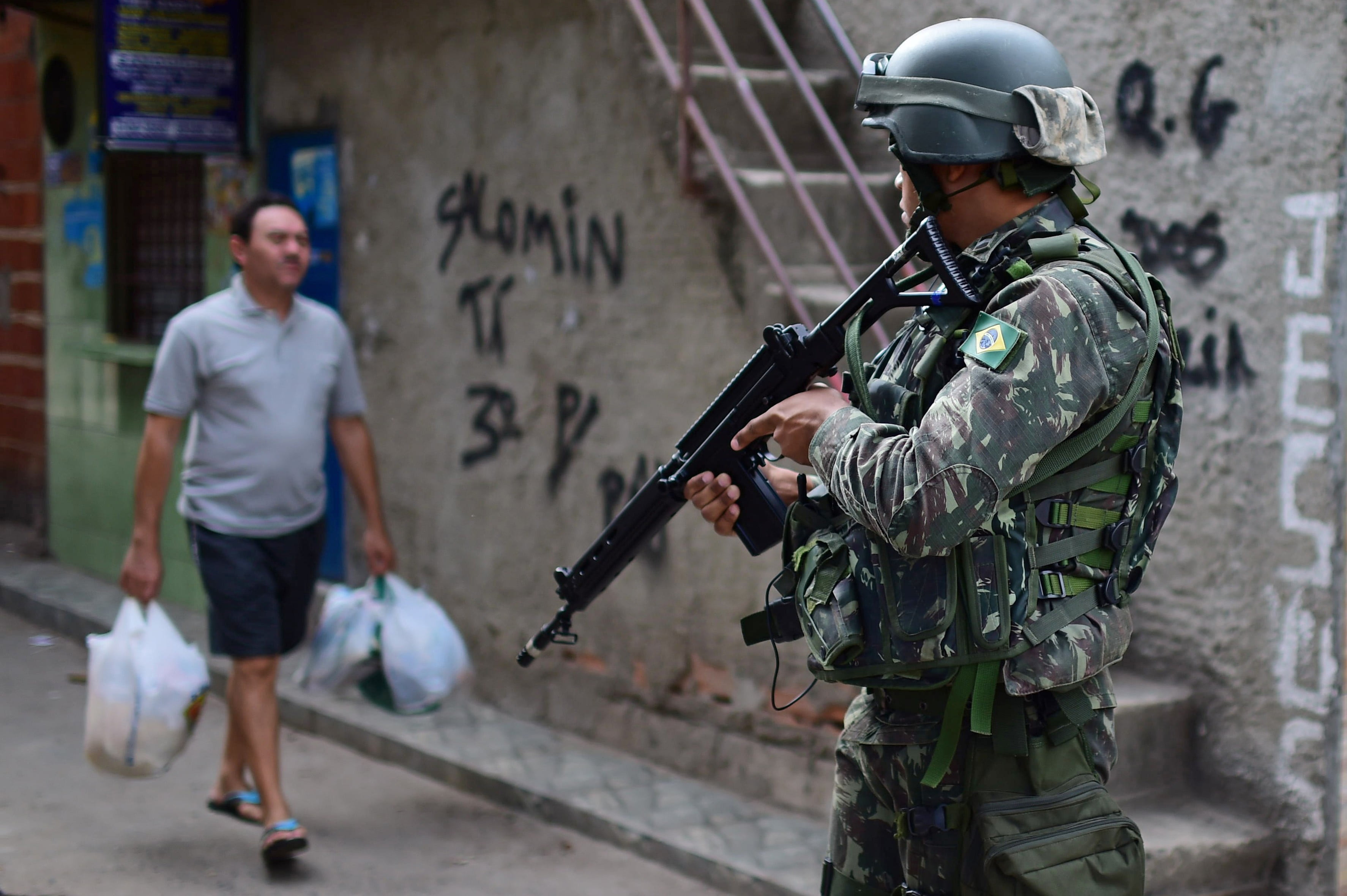
a man in miltary uniform standin in the street with a large gun
© Christophe Simon/AFP/Getty Images

When the world is watching

We’ve seen this before. In 2014 – the year that Brazil hosted the FIFA World Cup – police killings in Rio de Janeiro state shot up by 40%. Police and military forces were deployed as part of ‘public security’ plans. As tensions rose, they repressed protestors with brutality and unleashed lethal violence in favelas. ‘Shoot first, ask questions later’. No one was held to account; security forces got away with murder.

Right now, these same kinds of ‘public security’ plans are being put in place for the 2016 Games. As the world turns its attention to Brazil, those in charge of ‘security’ must play a fair game and put an end to police violence on Rio’s streets.

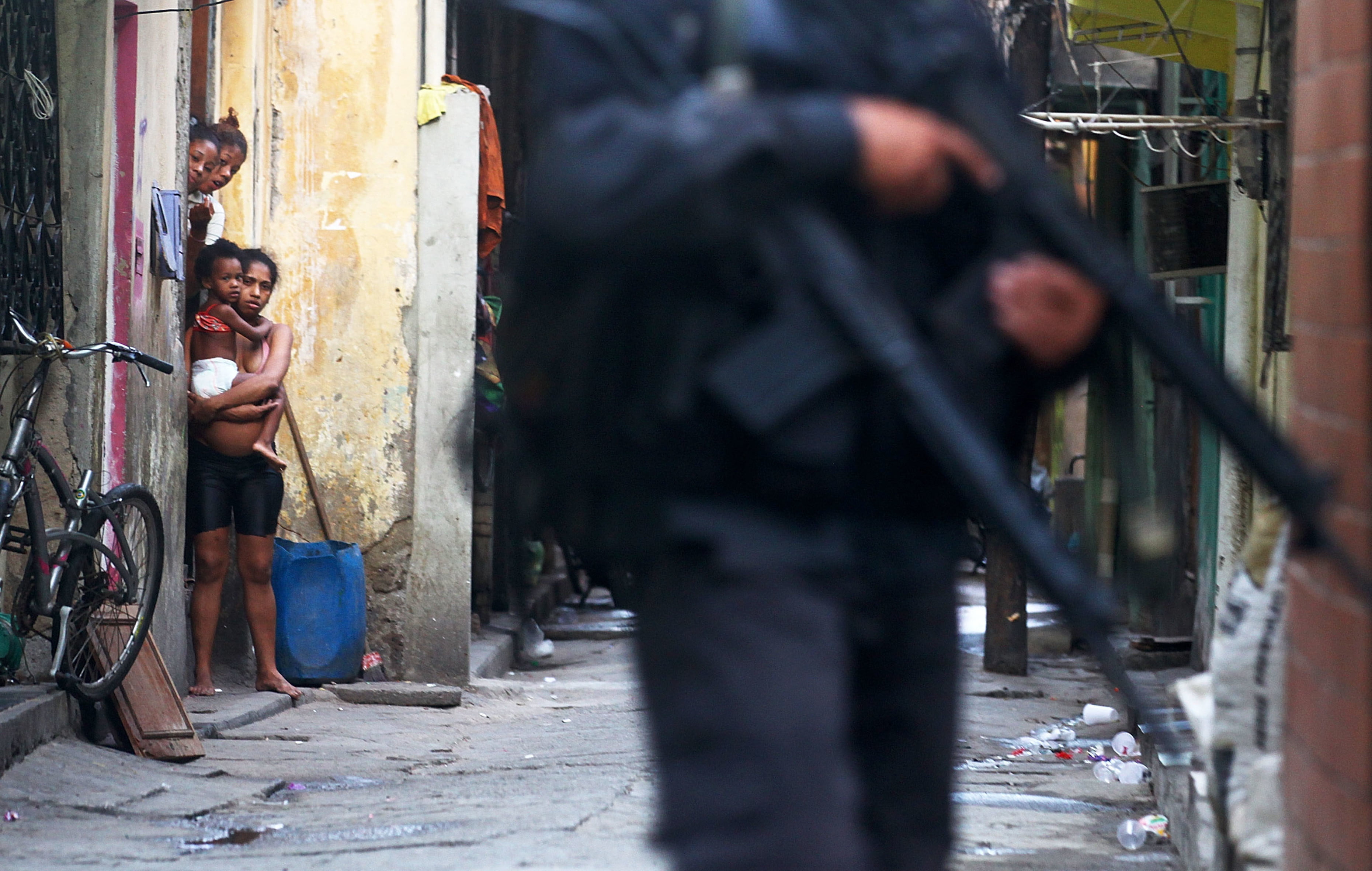
a person in dark police uniform patrols a street with a large gun, onlookers peer from doorway in the background
© Mario Tama/Getty Images

Young, black and living in terror of police

Brazil has, in absolute numbers, the highest number of homicides in the world – some 60,000 murders a year. But thousands of those killings are carried out by the police, with almost no accountability whatsoever. That their victims are largely young black men from poor areas is met with indifference by many. Years of violence and a history of racism have produced negative stereotypes that stand in the way of justice. The security forces are getting away with the murder of thousands of young black men.

Shot by soldiers on the way home

On 13 February 2015, Vitor Santiago, 30, kissed his mother goodnight and headed out to watch the football with some friends in a bar near his house in Mare favela, Rio. It was almost carnival and spirits were high as he drove home with his friends in the early hours.

Suddenly, there were soldiers everywhere, and a military checkpoint ahead. With no warning, gunfire rained down on the friends’ car. Victor was hit by two bullets that pierced his lung and struck his spine.

Vitor fell into a coma. Today, he is paralysed from the waist down. There’s been no effective investigation into the shooting that cost him his mobility and a leg, and no one has been brought to justice.

Reject dangerous migration response plan, more than 100 NGOs tell EU leaders

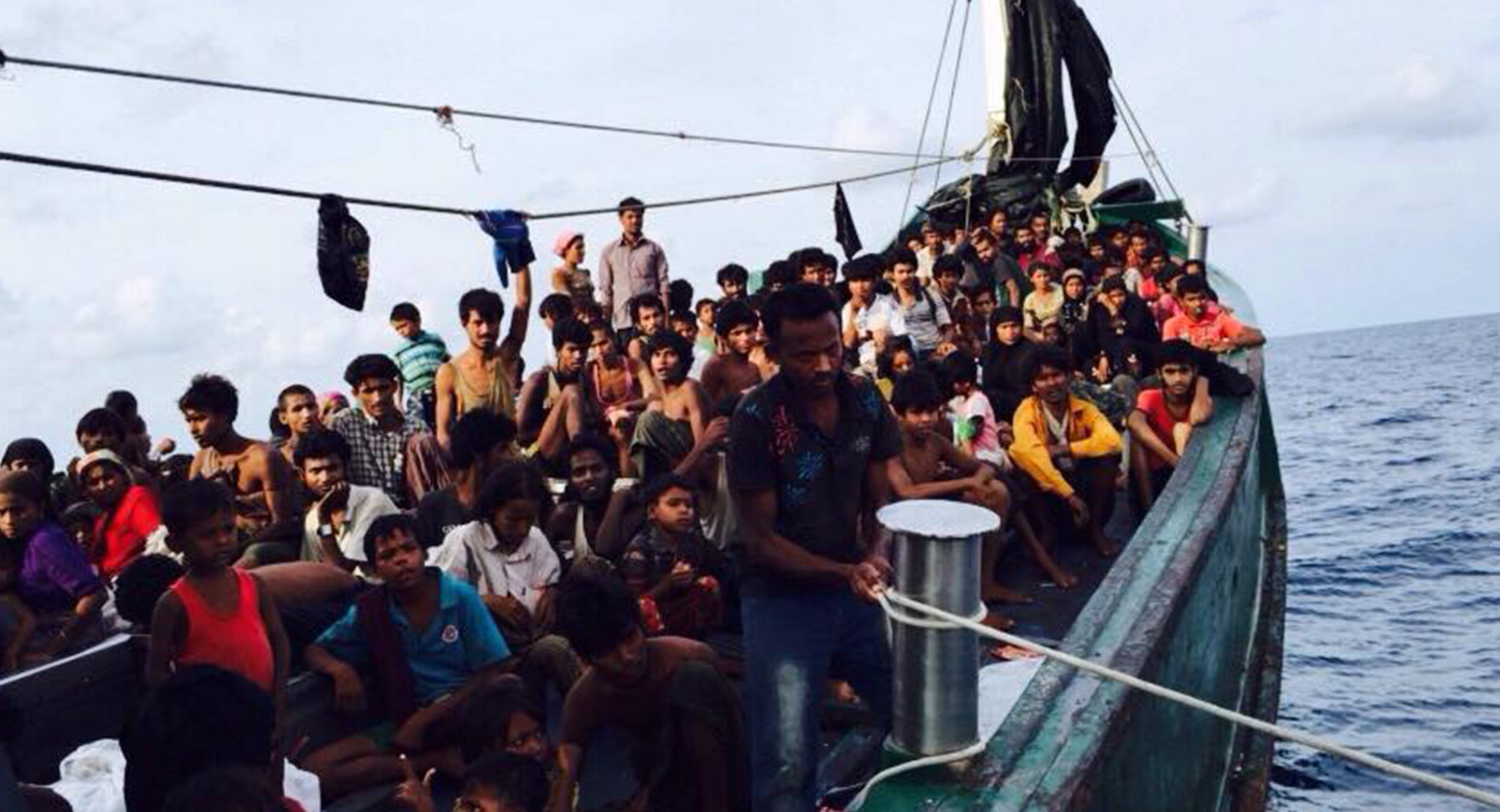
The European Union (EU) is set to open a dark chapter in its history unless it rejects the European Commission’s proposal on migration, a coalition of more than 100 NGOs – including Amnesty International – have warned.

EU leaders must reject proposal

Shifting towards a foreign policy that serves the single objective of curbing migration, the EU and its member states risk further undermining their credibility and authority in the defence of human rights, the organisations say. They call on European leaders to reject the Commission proposal that would cement this approach, making deterrence and return of people the main objective of the EU’s relationship with third countries.

The plan proposes using aid, trade and other funds to encourage countries to reduce the number of migrants reaching EU shores. It was put forward by the Commission at the beginning of June and will be discussed by European heads of state and government at the EU summit in Brussels this week. It is inspired by the EU-Turkey deal which has left thousands of people stranded in Greece in inhumane and degrading conditions. Children are particularly affected, with many hundreds of unaccompanied children being held in closed detention facilities or forced to sleep in police cells.

Children are particularly affected, with many hundreds of unaccompanied children being held in closed detention facilities or forced to sleep in police cells.

According to the coalition of 104 human rights, humanitarian, medical, migration and development agencies, Europe risks torpedoing its human rights foreign policy, and undermining the right to asylum internationally. There are no safeguards envisaged to ensure that human rights, rule of law standards and protection mechanisms are in place when the EU strikes deals with governments it deems useful for stopping migration to Europe. This leaves a very real risk of breach of international law which forbids pushbacks to places where people are at risk of rights violations. “Responsibility and liability for human rights violations do not end at Europe’s borders,” the statement reads.

Deterrence strategies ineffective

Also, the proposal discussed ignores all the evidence that deterrence strategies aimed at stopping migration are ineffective. The EU’s current approach will not only fail to ‘break the business-model’ of smugglers but will increase human suffering as people will be forced into taking more dangerous routes to reach Europe.

The NGO coalition is very concerned that the proposal will result in a wholesale reorientation of Europe’s development aid towards stopping migration. “This is an unacceptable contradiction to the EU’s commitment to use development cooperation with the aim of eradicating poverty,” the statement reads.

“This is an unacceptable contradiction to the EU’s commitment to use development cooperation with the aim of eradicating poverty.”

The organisations warn that striking ‘migration management’ agreements with countries where grave human rights violations are committed will be counter-productive in the longer term. Such deals will be “undermining human rights around the globe and perpetuating the cycle of abuse and repression that causes people to flee,” they say.

The NGOs call on the European leaders to reject the Commission proposal on migration. Instead, European countries should develop a sustainable long-term strategy for migration management. “The EU, a project built on the rubble of a devastating war, is about to embark on a dark chapter of its history,” the organizations warn in their joint statement.

Japan: Authorities deceiving the public by resuming executions

The Japanese authorities are attempting to avoid public scrutiny by carrying out its first execution this year while the country’s attention is focused elsewhere.

Tsukasa Kanda executed

Tsukasa Kanda, 44, was hanged in the early hours of Thursday morning at Nagoya detention centre. He was convicted in 2009 of robbery and homicide.

The execution took place when the national political and media attention is on the government’s controversial plans to extend Japan’s military role.

“With the country looking the other way, Japan’s authorities decided it was politically convenient to resume executions. To take a man’s life in this way is the politics of the gutter,” said Hiroka Shoji, East Asia Researcher at Amnesty International.

“The government is avoiding a full and frank debate on the use of the death penalty because the arguments it puts forward do not stand up to scrutiny.”

Death penalty does not deter crime

The Japanese government continues to argue the death penalty acts as a “general deterrence”, yet at the same time has acknowledged there is a lack of “scientific” evidence to substantiate this claim.

There is simply no credible evidence that the threat of execution is more of a deterrent to crime than a prison sentence. This fact has been confirmed in multiple studies carried out by the UN and in many regions around the world.

“The Japanese government are deceiving the public with this latest execution. State-sanctioned killing is not a solution to tackling crime, it is the ultimate violation of human rights,” said Hiroka Shoji.

Global trend toward abolition

Japan was one of only 22 states to carry out executions in 2014, compared to 41 countries 20 years ago. 140 states have now abolished the death penalty in law or practice. Japan and the USA remain the only members of the G8 that carry out executions, yet even in the USA there are signs that the use of the death penalty in the country is declining.

“Japan is isolated and out of step with the vast majority of countries that have abandoned this ultimate, cruel, inhuman and degrading punishment.

Hiroka Shoji, Amnesty International

“Japan is isolated and out of step with the vast majority of countries that have abandoned this ultimate, cruel, inhuman and degrading punishment,” said Hiroka Shoji.

“The government has a choice between continuing to take Japan down a regressive path, or ending executions and demonstrating it values human rights.”

129 prisoners on death row in japan

The execution is the 12th to be carried out under the current government which took office in 2012. Three people were executed in 2014 and 129 people currently languish on death row in the country.

Executions are shrouded in secrecy with prisoners typically given only a few hours’ notice, but some may be given no warning at all. Their families are usually notified about the execution only after it has taken place.

The lack of adequate legal safeguards for death row inmates in Japan has been widely criticized by UN experts. This includes defendants being denied adequate legal counsel and a lack of a mandatory appeal process for capital cases. Several prisoners with mental and intellectual disabilities are also known to have been executed or remain on death row.

Several death row prisoners have stated that they had “confessed” to the crime following torture or other ill-treatment during prolonged periods of interrogation, without a lawyer, while in police custody. In some cases, these “confessions” were admitted as evidence at trial and form the basis of their conviction.

Amnesty International opposes the death penalty in all cases without exception, regardless of the nature or circumstances of the crime, the guilt, innocence or other characteristics of the offender or the method used by the state to carry out the execution. The death penalty violates the right to life and is the ultimate cruel, inhuman and degrading punishment.

Myanmar: Investigate violent destruction of mosque buildings

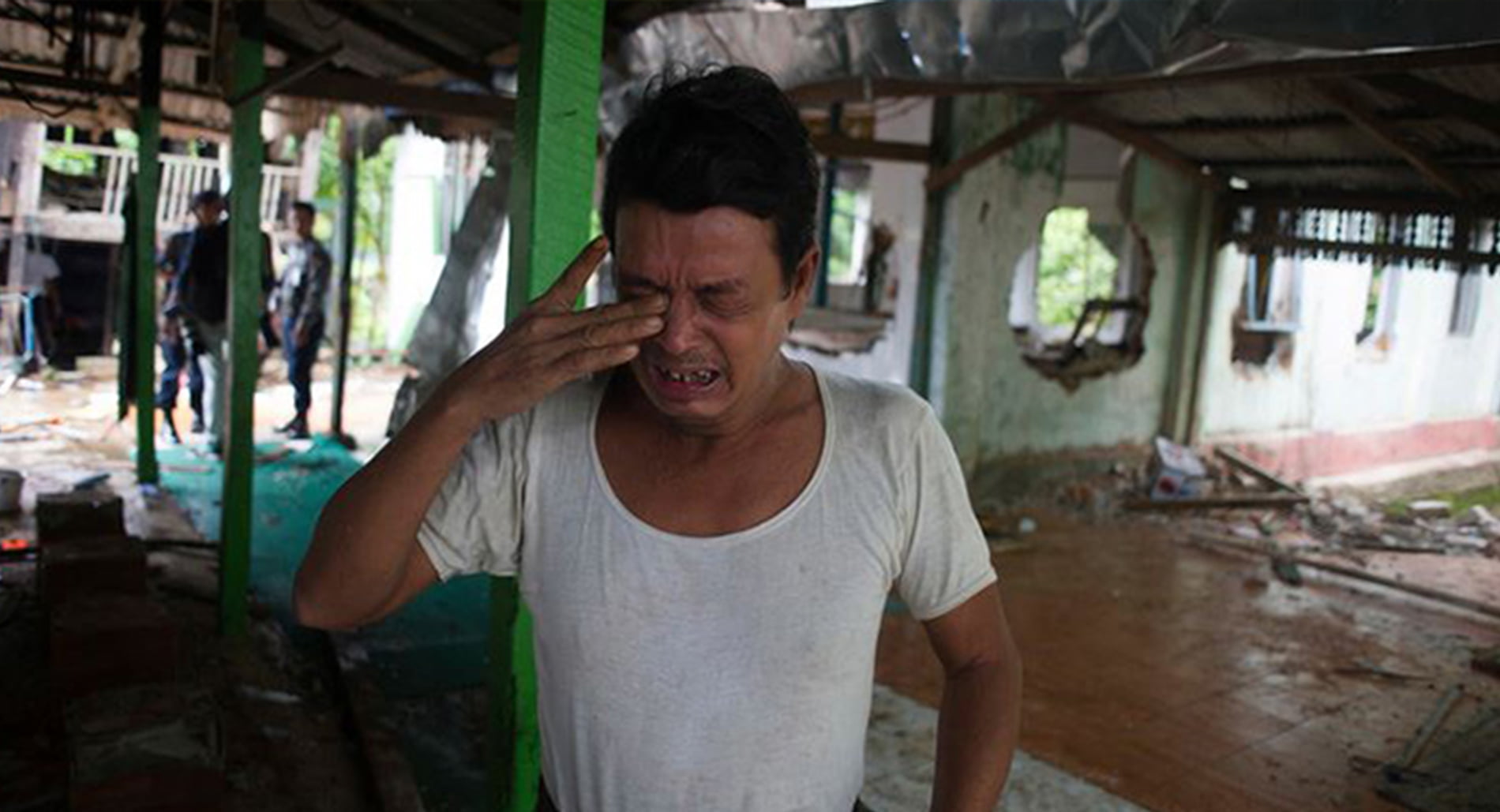
The Myanmar authorities must undertake a prompt, independent, thorough, transparent and impartial investigation into the violent destruction of buildings in a mosque compound on June 23 in Bago Region in central Myanmar.

Incident must be taken seriously

“The authorities must take swift action to show that it is treating such incidents against Muslims and other religious minorities seriously. This incident must be immediately and independently investigated and those suspected of involvement must be brought to justice and victims receive effective remedies including reparations,” said Rafendi Djamin, Amnesty International’s Director for Southeast Asia and the Pacific.

“The authorities must take swift action to show that it is treating such incidents against Muslims and other religious minorities seriously.”

Rafendi Djamin, Amnesty International

On 23 June, an unidentified mob partially destroyed a mosque and other buildings in the mosque compound in Thuyethamain village, Bago Region. According to information received by Amnesty International, the attack erupted after a dispute about a building under construction in the mosque compound.

Villagers afraid to return home

One Muslim man was injured during the attack, and is currently receiving treatment for head injuries in hospital. The authorities have since taken control of the scene, however some Muslim villagers fled in fear, and are afraid to return to their homes.

“Failure to investigate and hold those suspected to be responsible to account would send a worrying message that attacks against religious minorities can continue to go unpunished,” said Rafendi Djamin.

“Failure to investigate and hold those suspected to be responsible to account would send a worrying message that attacks against religious minorities can continue to go unpunished.”

Rafendi Djamin, Amnesty International

The past years in Myanmar have seen a disturbing rise in religious intolerance, often fuelled by hard-line Buddhist nationalist groups, directed particularly at Muslims. Such sentiments were stoked in the past when the former government failed to effectively investigate similar instances of violence.

“The new government must condemn this attack, and other attacks on religious minorities, and make it clear that such violence is a criminal offence and will not be tolerated. It must also condemn unequivocally all incitement to hatred, violence and discrimination and take concrete action to protect the rights of all people in Myanmar regardless of their religion,” said Rafendi Djamin.

UK vote to leave EU: Time to focus on what unites us

Responding to the UK’s referendum vote in favour of leaving the EU, Kate Allen Amnesty’s UK Director, said: “People will want reassurance that their rights will be safeguarded and the government has a duty to publicly commit to protecting those rights”.

“Whether the UK is a member of the EU or not, it remains beholden to an international human rights system, whose norms it should continue to uphold and whose mechanisms it should continue to respect.

“Even as it negotiates its exit, the UK government should be looking to preserve the strong rights protections that originated in EU law – particularly in areas such as non-discrimination, the right to privacy and worker’s rights.

“Whether the UK is a member of the EU or not, it remains beholden to an international human rights system, whose norms it should continue to uphold and whose mechanisms it should continue to respect.”

“The Brexit debate was sadly contaminated by unpleasant xenophobic undertones: wherever it is that the UK is now heading, these sentiments and this kind of politics should have no place.

“The challenge now, is to focus on what unites us rather than what divides us and universal human rights are central to that.”