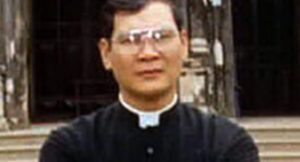
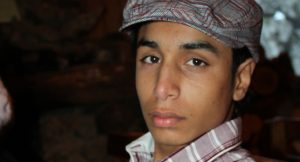
Vietnamese human rights defender and Catholic priest, Father Nguyen Van Ly, has been released from prison – months ahead of his expected release date.
What happened?
In March 2007, pro-democracy activist Father Nguyen Van Ly was sentenced to eight years in prison for “conducting propaganda” against the state. Accusations against Father Ly included his involvement in the pro-democracy movement Bloc 8406, which he co-founded, and other banned political groups.
Father Ly has experienced terrible health while in prison, including suffering a stroke in November 2009, which left him paralysed on one side of his body. Prior to this he had been held in solitary confinement at Ba Sao prison camp where he was denied adequate medical care.
After much international pressure and negotiations with his family, the authorities released Father Ly temporarily in March 2010 for him to obtain proper medical assistance. After 16 months in care, and the diagnosis of a brain tumour, he was taken back to prison by ambulance to resume his sentence.
Father Ly, now 65, was originally set to be released in August but instead walked free on May 20, 2016.
Father Ly, now 65, was originally set to be released in August but instead walked free on May 20, 2016.
How did Amnesty respond?
In Australia we have been working for Father Ly since 2003, supporting his advocacy for peaceful political reform and calling for his immediate release. Globally, countless Amnesty supporters took action for Father Ly – particularly when he had a stroke and was in need of urgent medical care.
Amnesty Action groups signed up to work for his case over the years, collecting petitions and writing letters on his behalf. School children wrote solidarity cards and messages of support for Father Ly and Australian politicians raised his case in parliament and when talking with Vietnamese officials. We would like to thank everyone who took action on behalf of Father Ly – your efforts were greatly appreciated not only by Father Ly but those close to him.
Severe restrictions on freedom of expression, association and peaceful assembly continue in Vietnam. The media and the judiciary, as well as political and religious institutions, remain under state control.
More than 80 prisoners of conscience remain imprisoned there in harsh conditions, after unfair trials. They include bloggers, political activists, religious followers and advocates for human rights and social justice. The authorities attempt to prevent the activities of independent civil society groups through harassment, surveillance and restrictions on freedom of movement. In the last year, bloggers and activists have been subject to an increase in harassment, short-term arbitrary detentions and physical attacks by security officers.
What next?
Amnesty welcomes the release of father Ly, and continues to campaign for the release of others, who like Father Ly, should never have been detained for peaceful activism.
If you would like to be kept in touch with our human rights work please join our mailing list.
The shooting of students peacefully protesting in Port Moresby, the capital of Papua New Guinea, is a disgraceful attack on the rights to freedom of peaceful assembly and expression.
Amnesty International has received information that there are 38 people injured, including four in critical condition. Three people are still being assessed in emergency.
“The shooting of students peacefully protesting is reminiscent of the worst excesses of repressive regimes in the region,” said Rafendi Djamin, Amnesty International’s Director for South East Asia and the Pacific.
“Papua New Guinea’s authorities must establish a prompt, impartial and independent investigation to determine who is responsible for the unnecessary and excessive use of force.”
Rafendi Djamin, Amnesty International
“Papua New Guinea’s authorities must establish a prompt, impartial and independent investigation to determine who is responsible for the unnecessary and excessive use of force.”
What happened
The Papua New Guinea police opened fire today on a group of students at Papua New Guinea University who were peacefully protesting against the alleged corruption of Prime Minister Peter O’Neill.
Several eye-witnesses have come forward to say they saw students beaten and shot at, including one case where a student was shot in the head.
In a statement, Prime Minister O’Neill blamed the violence on the students who had set out from their university for a peaceful protest at parliament. Before any investigation has taken place, he has denied that the police targeted the students, claiming that their only response was the use of tear-gas and “warning shots.”
“Prime Minister O’Neill’s reaction has been completely inadequate. He should ensure an investigation worthy of its name takes place into reports of excessive use of force. Instead, he has prejudged the outcome, blamed the students for what happened to them, and sought to evade accountability,” said Rafendi Djamin.
Prime Minister O’Neill told parliament that an investigation into the shootings at Papua New Guinea University will take place. It is not clear who will carry out the investigation, when it happen, or whether it will be independent of any government or police interference.
“It is not good enough for the authorities to investigate themselves,” said Rafendi Djamin. “The Papua New Guinea government is trying to absolve the police of all responsibility for the unlawful use of force.”
“It is not good enough for the authorities to investigate themselves. The Papua New Guinea government is trying to absolve the police of all responsibility for the unlawful use of force.”
Rafendi Djamin, Amnesty International
Claims by the Papua New Guinea authorities directly contradict several first-hand accounts reported of the violence.
Outside Papua New Guinea General Hospital, families and friends of students who were attacked were peacefully protesting the shootings. Hospital officials have said that they heard shooting outside the hospital.
“The police must exercise restraint and respect the right to peaceful protest. Firearms must only be used when strictly unavoidable in order to protect life,” said Rafendi Djamin.
Background
Since May, Prime Minister O’Neill’s government has been the focus of sustained student protests over allegations of corruption. O’Neill is accused by PNG’s Taskforce Sweep of allegedly authorising payments for fraudulent legal bills amounting to $30 million AUS.
The students have used peaceful methods, including protests and a boycott of classes.
Prime Minister O’Neill has lashed out at the students for taking part in the peaceful protests, deriding them as poor performing students and warning that they will have to “face the consequences” in terms of their academic prospects.
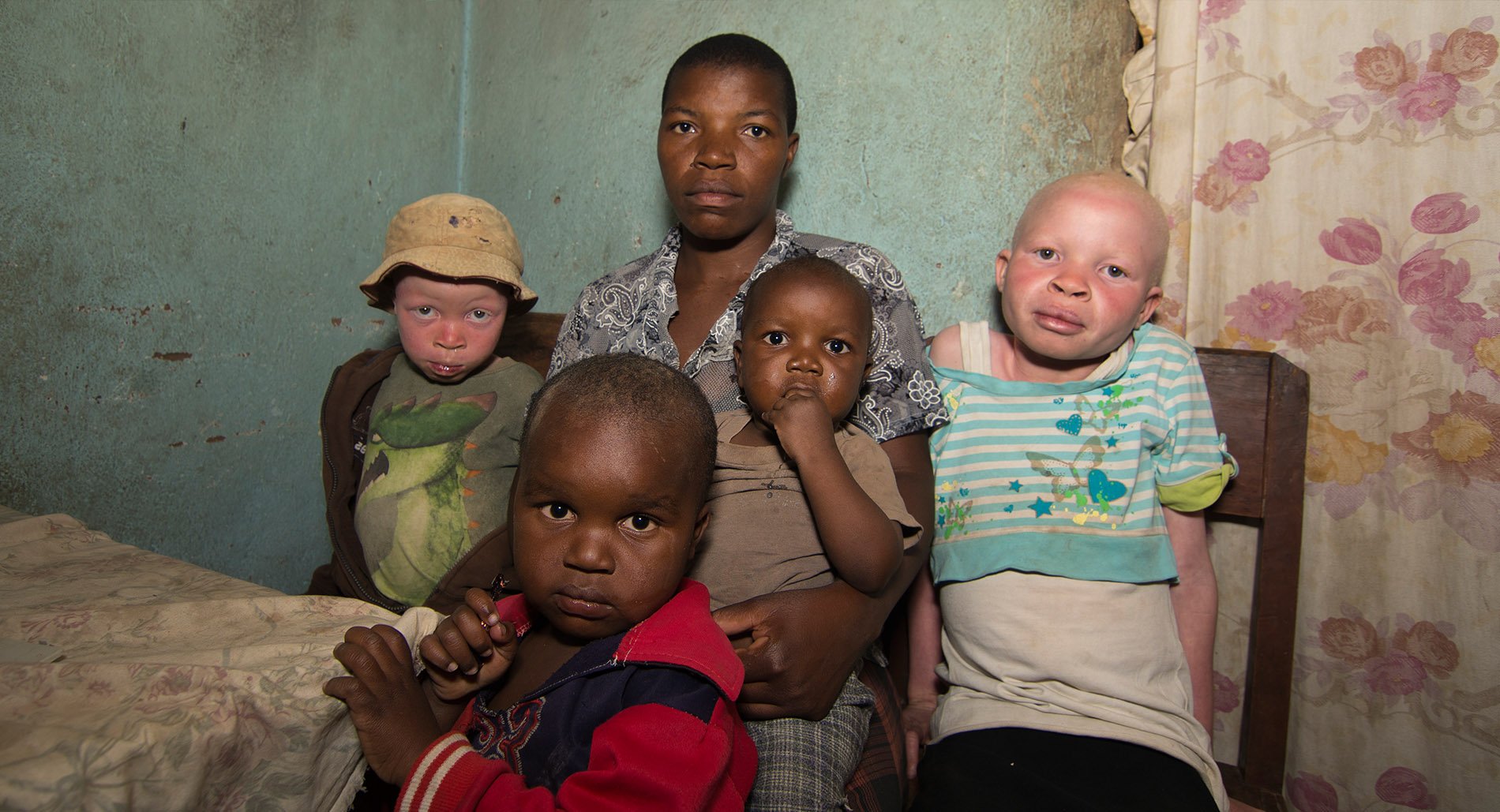
A surge in killings of people with albinism, whose body parts are used in ritual practices, has exposed a systematic failure of policing in Malawi and left this vulnerable group living in fear.
“The unprecedented wave of brutal attacks against people with albinism has created a climate of terror for this vulnerable group and their families who are living in a state of constant fear for their lives,” said Deprose Muchena, Amnesty International’s Director for Southern Africa.
“Malawian authorities have dismally failed them, leaving this population group at the mercy of criminal gangs who hunt them down for their body parts.”
Deprose Muchena, Amnesty International
Since November 2014, at least 18 people have been killed and at least five have been abducted and remain missing. Their bones are believed to be sold to practitioners of traditional medicine in Malawi and Mozambique for use in charms and magical potions in the belief that they bring wealth and good luck.
The macabre trade is also fuelled by a belief that bones of people with albinism contain gold.
Amnesty International believes that the actual number of people with albinism killed is likely to be much higher due to the fact that many secretive rituals in rural areas are never reported. There is also no systematic documentation of crimes against people with albinism in Malawi.
As well as extreme forms of violence, the report also finds that people with albinism in Malawi experience widespread societal discrimination including verbal abuse and exclusion from accessing basic public services. They are discriminated against in the education system and many die from skin cancer because of lack of access to preventative resources such as sunscreen and information about the condition.
Killings and abductions
There has been a steep upsurge in killings and abductions of people with albinism since November 2014. Women and children with albinism are particularly vulnerable to killings, sometimes targeted by their own close relatives.
The bloodiest month recorded by Amnesty International was April 2016 when four people with albinism were murdered. These include:
Whitney Chilumpha, who was just under two years old when she was snatched while sleeping with her mother in their home. Pieces of her skull, some teeth and clothing were found days later on a nearby hill. Five men, including Whitney’s father, were arrested on suspicion that they had been involved in her murder.
On 30 April, Jenifer Namusyo, a 30 year-old woman, was found dead. She had been stabbed in the back, abdomen and elbow and her breasts and eyes had been removed. Days earlier 17 year-old Davis Fletcher Machinjiri was abducted by a group of men who trafficked him to Mozambique where they killed him and chopped off both his arms and legs and removed the bones.
The body of Enelesi Nkhata, a 21 year-old woman, was found by farmers buried in a shallow grave on 14 April 2016. She had been tricked by a relative into believing that he had found her a job in another district only to be stabbed in the chest and have her arms and legs cut off. At least 10 men, including her relative, were arrested for her murder.
One woman told Amnesty International:
“Most people who attack [people with albinism] are close relatives…I met one mother in Chitipa who was hiding her children out of fear. As a result, the children were not going to school.”
At least five people who were abducted are still missing. Two-year-old Iblah Pilo, was abducted at night in January 2015. His mother woke up to the cry of the child but could not save him. His great aunt told Amnesty International:
“We are worried that we do not know where Iblah is or where to find his grave. We want the truth to come out. This child must be the last to go missing.”
toddler Iblah Pilo’s great aunt
Even the dead are not left in peace with the Malawi Police Service recording at least 39 cases of illegal exhumation of the bodies of people with albinism or of people in possession of bones and other body parts taken from corpses. Amnesty International is concerned that some of these cases may in fact be cases of actual killings rather than mere grave robberies.
“Malawians need to reflect on a fresh understanding of the hardships experienced by this vulnerable group and ensure that people with albinism are accepted,” said Boniface Massah, Director of the Association of People with Albinism in Malawi.
Systematic failure of policing
According to the Malawi Police Service, at least 69 crimes against people with albinism have been documented since November 2014. However Amnesty International has found that the police lack adequate training and skills needed to investigate such crimes.
The Malawi Police Service lacks resources, such as transport, to respond in a timely way to reported crimes and maintain visible policing in districts reporting high numbers of attacks.
In addition, there are fears that some police officers carry the same prejudices against people with albinism that exists within the wider Malawian society and fail to take human rights abuses against people with albinism seriously.
The Director of Public Prosecutions admitted to Amnesty International that the police prosecutors do not know all the relevant laws to deal with crimes against people with albinism.
There has been one case where the public took the law into their own hands and resorted to mob violence against suspected perpetrators. In March 2016 a mob burnt to death seven men in the Nsanje district bordering Mozambique after being suspected of trafficking body parts of people with albinism.
The authorities must take immediate steps to prevent, and publicly condemn mob justice attacks, as well as ensure that incidents of mob justice attacks are promptly, thoroughly, impartially and transparently investigated and that suspected perpetrators are brought to justice.
Living in fear
The increase in attacks and widespread discrimination coupled with ineffective policing has meant that many of Malawi’s population of between 7,000 and 10,000 people with albinism live in constant fear.
One woman told Amnesty International that the attacks have changed her life. “When I was growing up I believed that I could do anything. Now I am very sensitive. I cannot take a lift from strangers. In the past I was moving about without fear. After 5.30pm I have to go home. I don’t feel safe.”
One 37 year-old man told Amnesty International:
“People tell me in my face that they will sell me. One time someone said I was worth MK6 million (US$10,000). I felt pained by the remarks that a price tag can be put on me.”
a woman in malawi
Exclusion and abuse within their own villages and communities is also a problem for people with albinism who are called names and threatened. Women with albinism are called Machilitso (cure) – feeding into the belief that having sex with a person with albinism can cure HIV. One woman told Amnesty International: “Without being brave you may end up throwing away the child because of the abuse and insults.”
Amnesty International is calling on the government of Malawi to adopt specific measures to protect the rights to life and security of people with albinism by providing increased levels of visible policing in rural districts and taking action when attacks against this population group occur.
All reports of crimes against people with albinism should be revisited, and thoroughly, impartially, independently and transparently investigated and suspected perpetrators brought to justice, in particular cases of people found with human bones.
“The time has come for the government of Malawi to stop burying its head in the sand and pretending that this problem will just go away. Talking will not end these attacks. Concrete action is urgently required,” said Deprose Muchena.
“Police have a duty to protect all people against crime. Failure to effectively investigate crimes against people with albinism promotes a climate of impunity, an environment where horrific killings can continue.”
Deprose Muchena, amnesty international
Background
Malawi experienced a sharp increase in human rights abuses against people with albinism including abductions, killings and grave robberies by individuals and criminal gangs since November 2014.
At least 18 people were killed and five abducted and are still missing.
According to Malawi Police Service, at least 69 cases involving crimes related to people with albinism have been reported since November 2014.
People with albinism are being targeted for their body parts, due to the belief that the parts have magical powers that bring good luck.
Malawi has a population of about seven to ten thousand people living with albinism.
An Egyptian military court has sentenced eight individuals, all civilians, to death and another 18 to lengthy prison terms, after a grossly unfair military trial that relied on “confessions” extracted under horrific torture including defendants being whipped with a burning cloth.
Affront to justice
“This verdict is an affront to justice and must be quashed immediately,” said Magdalena Mughrabi-Talhami, Amnesty International’s Regional Deputy Programme Director for the Middle East and North Africa.
“Sentencing to death men who were tortured into ‘confessions’ is an egregious injustice, even by the degraded standards of Egypt’s justice system. They must receive a fair trial before an ordinary civilian court that meets international standards and excludes torture-tainted evidence, without the recourse to the death penalty.”
“Sentencing to death men who were tortured into ‘confessions’ is an egregious injustice, even by the degraded standards of Egypt’s justice system.”
Magdalena Mughrabi-Talhami, Amnesty International
The 26 convicted defendants were facing charges that included belonging to a banned group – namely the Muslim Brotherhood – possession of firearms and explosives and obtaining classified military information without authorization. Nineteen of the defendants were present in court, with the remaining seven tried and convicted in absentia. Of the eight sentenced to death, six were present. Under Egyptian law, the President has to ratify executions within 60 days of the verdict.
Forced disappearances and torture
Egyptian security forces arrested the 19 defendants between 28 May and 7 June 2015 and held them incommunicado in military intelligence detention centres, under conditions of enforced disappearance, for up to 46 days. During this time, military intelligence officers subjected the defendants to electric shocks including in the genitals, whipping, burning and suspension by the wrists which were handcuffed behind their backs.
Lawyers and family members told Amnesty International that the defendants bore torture marks all over their bodies including bruises and burns, as well as injuries to the hands as a result of torture. According to lawyers who were present at the trial, all the defendants told the court about the torture and other forms of ill-treatment and requested that the court formally refer them to a forensic authority to authenticate their claims. This request was ignored.
“The Egyptian military has an appalling record of sentencing people to death and executing them on the basis of ‘confessions’ extracted under torture. This flies in the face of both Egyptian and international law. The authorities must halt the execution of these six men,” said Magdalena Mughrabi-Talhami.
“The Egyptian authorities must conduct an independent investigation into the incommunicado detention and torture of the defendants and bring those responsible to justice.”
“The Egyptian authorities must conduct an independent investigation into the incommunicado detention and torture of the defendants and bring those responsible to justice.”
Magdalena Mughrabi-Talhami, Amnesty International
Families searching for loved ones
The families of the men told Amnesty International during the period when their relatives were subjected to enforced disappearance they had searched police stations, prisons, and prosecutor offices but the authorities denied they were in custody. The families also sent telegrams by post to the Public Prosecutor, the Minister of the Interior and the Minister of Justice but received no response.
Amnesty International found that 18 of the defendants were held incommunicado in the Military Intelligence headquarters in Nasr City, Cairo, while one defendant was held in the notorious al-Azouly military prison inside al-Galaa Military camp in Ismalia.
Most of the families only found out that the detainees were in military custody on 10 July, when they saw a Ministry of Defence video on television declaring that they arrested “the most dangerous terrorist cell” in Egypt. The video included footage of detainees “confessing” to belonging to banned groups and attacking military institutions.
Amnesty International has seen the eight-page testimony of the intelligence officer who prepared the case. The court asked the officer 68 questions including about the circumstances of the arrest of the defendants, evidence against the defendants and their relationship with each other. The military intelligence officer responded to at least 60 of the questions saying either “I don’t remember” or “everything is documented in the official investigations of the case”.
Background
Egyptian courts, civilian and military, handed down hundreds of death sentences to defendants convicted of “terrorism” and other charges related to the political violence that followed former President Mohamed Morsi’s ousting in July 2013. Those executed included prisoners sentenced after grossly unfair trials. At least seven men were executed last year in relation to political violence; one on 7 March after an unfair trial. Six men executed on 17 May had been sentenced to death after a grossly unfair trial before a military court, despite evidence that military intelligence officers tortured them to force them to “confess” to capital offences and falsified their arrest dates in official documents.
Amnesty International opposes the death penalty in all cases without exception, regardless of the nature or circumstances of the crime; guilt, innocence or other characteristics of the individual; or the method used by the state to carry out the execution. On 6 April, Amnesty International launches its 2015 Annual Death Penalty report providing an overview of death penalty developments and statistics from across the globe.
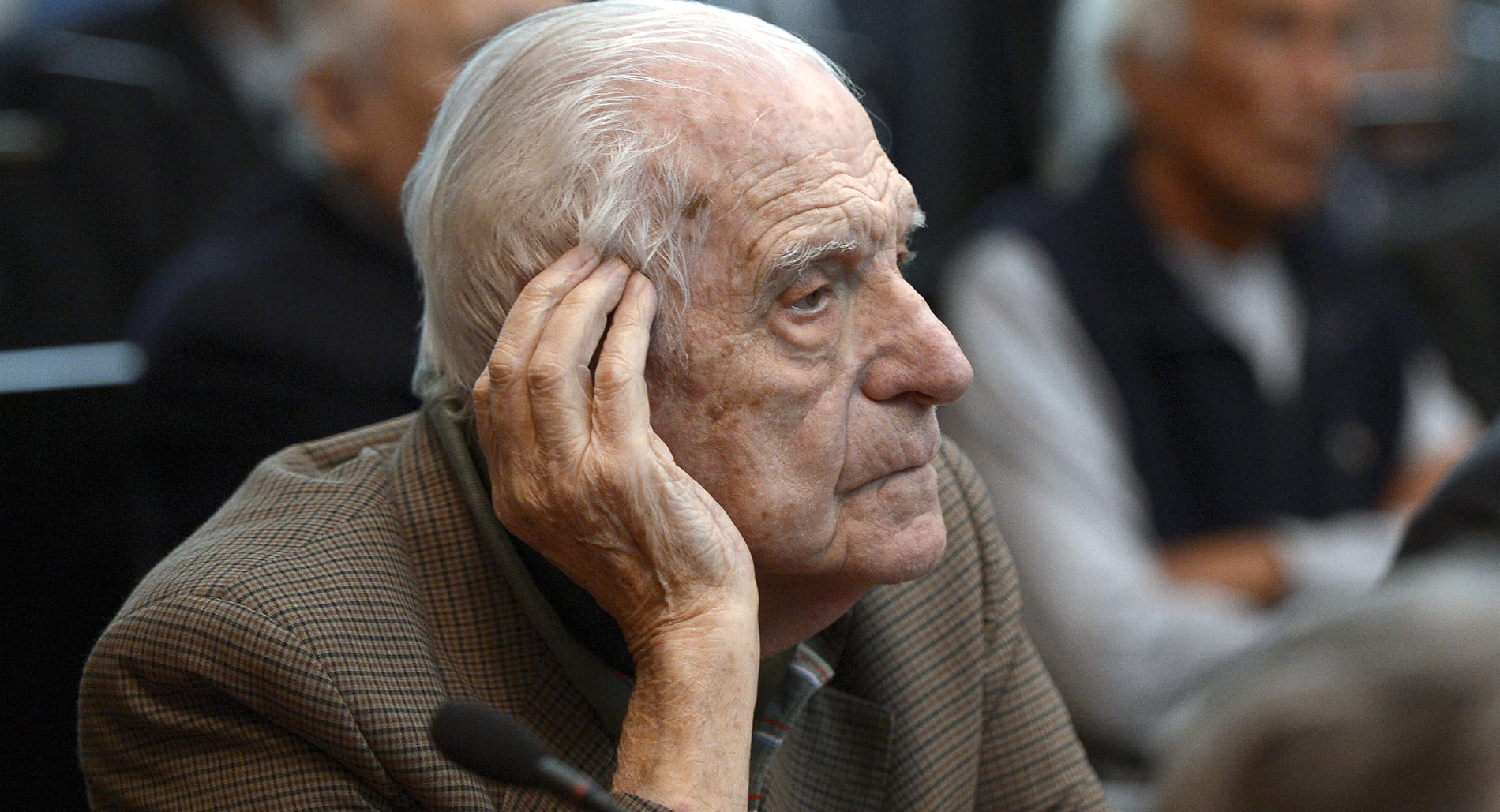
The sentencing of a former Argentinean military leader for his role in hundreds of enforced disappearances in the context of a region-wide intelligence operation must open the door to further investigations to bring all those responsible to justice.
Former de facto President Reynaldo Bignone was sentenced to 20 years in prison by a court in Buenos Aires. Fourteen other military officers were also sentenced to prison terms.
“This is a day for celebration in South America. This historic ruling sends the important message that justice will always prevail,” said Erika Guevara-Rosas, Americas Director at Amnesty International.
“This is a day for celebration in South America. This historic ruling sends the important message that justice will always prevail.”
Erika Guevara-Rosas, Americas Director
“Today’s ruling must be the first step towards real justice for the many victims of this Machiavellian operation, which left a long trail of suffering and horror throughout Latin America. Governments in countries who had a direct or indirect role in aiding Operation Condor must left no stone unturned to ensure all those responsible face justice so these terrible crimes never happen again.”
“Today’s ruling must be the first step towards real justice for the many victims of this Machiavellian operation, which left a long trail of suffering and horror throughout Latin America.”
ERIKA GUEVARA-ROSAS, AMERICAS DIRECTOR
Operation Condor was a coordinated intelligence plan launched in the 1970’s by the then de facto military governments ruling Argentina, Brazil, Bolivia, Chile, Paraguay and Uruguay. Its aim was to share information about the activities of social activists and political opponents and exchange prisoners, many of whom were tortured and forcibly disappeared.
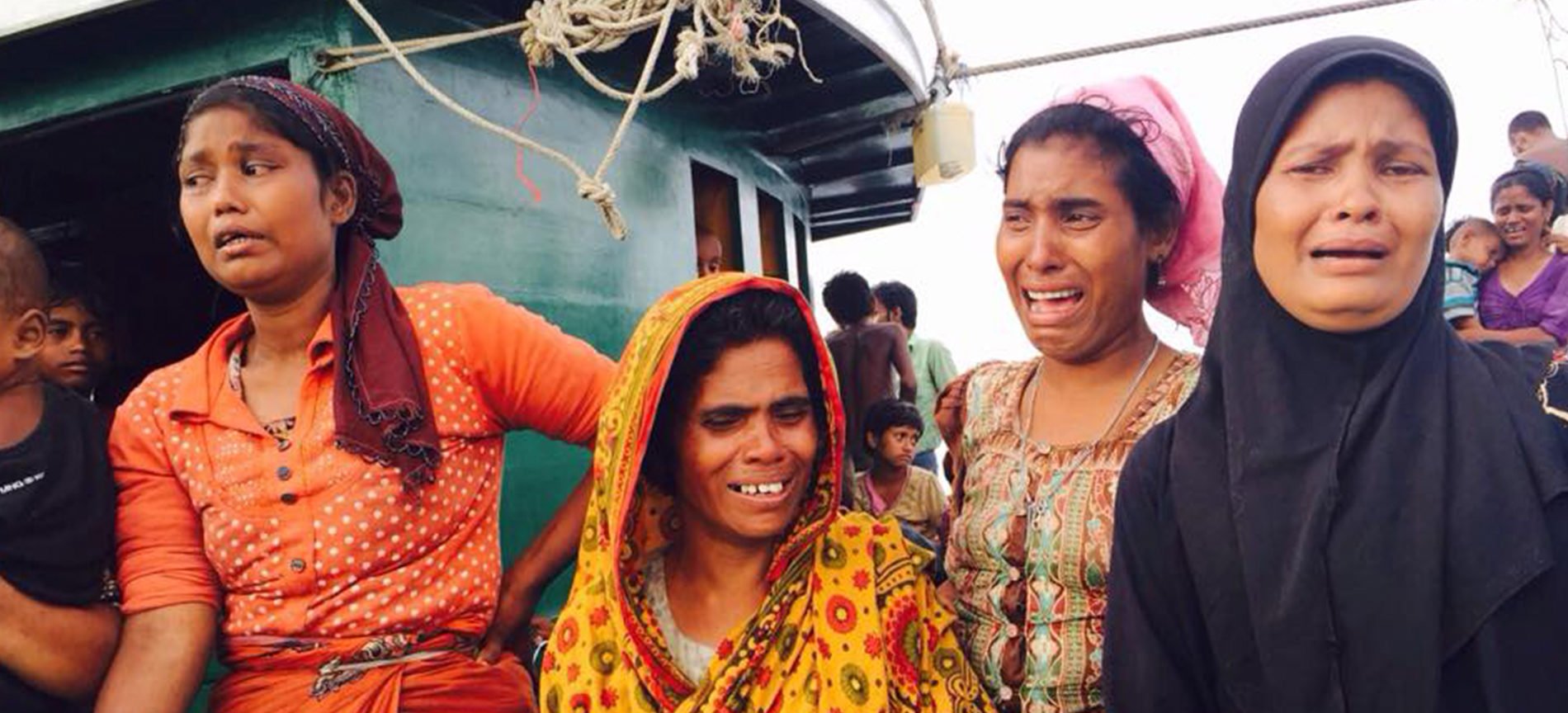
Hundreds of refugees who survived the 2015 boat crisis in South East Asia have been locked up in poor conditions in Malaysia ever since, Amnesty International said, following a visit to the country to investigate the fate of people one year on.
Rohingya refugees are being kept in indefinite detention
Failure to properly investigate criminal gangs responsible for abuse
After harrowing footage of desperate refugees and migrants stranded at sea was beamed around the world last May, Malaysia agreed to accept 1,100 people. Almost 400 of those were identified as Rohingya refugees – people fleeing persecution in Myanmar. One year on, the majority of the Rohingya remain in Malaysia’s Belantik detention centre.
“We went to Malaysia to investigate the fate of the boat crisis survivors and found that, for hundreds of them, the suffering and human rights abuse continue,” said Khairunissa Dhala, a refugee expert at Amnesty International.
“Women, men and children fled from persecution in Myanmar, only to undergo the horror of being abandoned at sea by the unscrupulous gangs who run the sea routes. Malaysia should have been their place of safety – but instead they have spent a year in detention, with no end in sight.”
Khairunissa Dhala, Amnesty International
Bangladeshi trafficking victims
In addition to Rohingya refugees, the boats that arrived in Malaysia were carrying some 700 people from Bangladesh, many likely to have been victims of human trafficking.
In a 2015 investigation into the boat crisis Amnesty International found that hundreds of Bangladeshi survivors who reached Indonesia had likely been trafficked.
Almost all of those from Bangladesh in both Indonesia and Malaysia have since been repatriated. However sources in Malaysia told Amnesty International that 65 people from Bangladesh remain in Malaysia, and are also detained at Belantik.
The criminal gangs responsible for the boat crisis have not been brought to justice. Most of the boats, crammed with men, women and children, were abandoned by their crews, apparently because they believed the South East Asian authorities were about to take action to combat people smuggling and trafficking.
“The Malaysian government must stop criminalising and punishing refugees and migrants – who are most likely victims of trafficking – and carry out independent and impartial investigations to hold perpetrators to account,” KHAIRUNISSA DHALA, AMNESTY INTERNATIONAL
Amnesty International is calling on the Malaysian authorities to immediately release the refugees and migrants, and work with international partners to ensure they are given the protection they are entitled to under international law.
Background
The 2015 Andaman Sea ‘boat crisis’ claimed global attention when dozens of boats carrying thousands of desperate people were abandoned at sea and the governments of Thailand, Malaysia and Indonesia refused to allow them to disembark.
Malaysia and Indonesia eventually accepted a total of three boats carrying more than 2,900 refugees and migrants.
They agreed to provide temporary shelter to the group for a one-year timeframe provided that they would be resettled or repatriated by the international community within that period. To date, approximately 50 Rohingya refugees from the group in Malaysia were put forward for resettlement to a third country.
Amnesty International will publish further details on the situation of survivors of the boat crisis and human trafficking in the coming months.
Saudi Arabia will have put to death more than 100 people in the first six months of this year if it continues to carry out executions at its current pace. At least 94 people have been executed so far this year, higher than at the same point last year.
2015 saw the highest number of executions in Saudi Arabia since 1995
At least 158 people were put to death in Saudi Arabia in 2015, the highest recorded figure in the country since 1995.
“Executions in Saudi Arabia have been surging dramatically for two years now and this appalling trend shows no sign of slowing,” said James Lynch, Deputy Middle East and North Africa Director at Amnesty International.
“The steep increase in executions is even more appalling given the pervasive flaws in Saudi Arabia’s justice system which mean that it is entirely routine for people to be sentenced to death after grossly unfair trials. The Saudi Arabian authorities should end their reliance on this cruel and inhuman form of punishment and establish an official moratorium on executions immediately.”
21-year-old Ali al-Nimr
The case of 21-year-old Ali al-Nimr who was sentenced to death based on “confessions” he says were extracted through torture, provides a glaring example of the arbitrary use of the death penalty after proceedings that blatantly flout international human rights standards.
Today marks two years since Ali al-Nimr, who was arrested after taking part in anti-government protests, was sentenced to death by a special security and counter-terrorism court for a series of offences such as attacking security forces and committing armed robbery. He was just 17 when he was arrested. International human rights law prohibits the use of the death penalty for crimes committed by persons under the age of 18.
“Ali al-Nimr has already spent two years on death row – instead of forcing him to spend a single day longer awaiting execution the Saudi Arabian authorities should quash his conviction and order a re-trial immediately in proceedings that meet international fair trial standards without recourse to the death penalty,” said James Lynch.
Two other young men, Abdullah al-Zaher and Dawood al-Marhoon were sentenced to death a few months after Ali al-Nimr, on a list of similar offences, and also say they were tortured into “confessing”.
A poignant new video experiment breaking down barriers between recently-arrived refugees and Europeans will be launched globally by Amnesty International on 25 May 2016.
The video, Look Beyond Borders, filmed by Amnesty International Poland in Berlin in April 2016, is based on a theory that four minutes of uninterrupted eye contact increases intimacy.
Amnesty International Poland and Polish ad agency DDB&Tribal applied the theory, developed by psychologist Arthur Aron in 1997, to the refugee crisis, sitting refugees from Syria and Somalia opposite people from Belgium, Italy, Germany, Poland and the UK, with overwhelmingly positive results.
“We decided to conduct a simple experiment during which refugees and Europeans sat across from each other and looked each other in the eyes. We recorded these very human encounters and the short film speaks for itself.
“People from different continents who have literally never set eyes on each other before come away feeling an amazing connection,” says Draginja Nadażdin, Director of Amnesty International Poland.
“It takes a heart of stone to watch this video without shedding a tear. Today, when the world appears rife with division and conflict, it is always worthwhile to look at everything from another person’s perspective.
“Today, when the world appears rife with division and conflict, it is always worthwhile to look at everything from another person’s perspective.”
Draginja Nadażdin, Amnesty International
“Too often, what gets lost in the numbers and headlines is the suffering of actual people, who, like us, have families, friends, their own stories, dreams and goals. What if we stopped for just a moment and looked at who they really are?”
“Borders exist between countries, not people. And it is imperative that our governments start putting people before borders and their own short-term political gain.”
“Borders exist between countries, not people.”
DRAGINJA NADAŻDIN, AMNESTY INTERNATIONAL
The film shows natural, spontaneous reactions between people meeting for the first time in a warehouse near Berlin’s old Cold War-era crossing, Checkpoint Charlie. The refugees came from Syria and Somalia and had lived in Europe for less than a year.
“We conducted the experiment in Berlin because the city symbolises the overcoming of divisions. In that sense, the most important thing is to give people time to understand each other better and get to know one another,” said Hanna Waśko, one of the campaign organizers from ad agency Big Picture.
On 19 May, Amnesty International’s Refugees Welcome Index showed that the vast majority of people around the world are taking the refugee crisis personally, with 80% of those surveyed across 27 countries saying they would let a refugee live in their country, 10% in their own home. In Germany, where the video was filmed, 96% said they would let refugees live in their country.
Recognition of Aboriginal and Torres Strait Islander people in the Australian Constitution has been hotly debated for many years, and not everyone is on board with the idea. So, where to from here?
Our Indigenous Rights Team have been following the Constitutional recognition debate closely, particularly the variety of different positions taken by Indigenous people across Australia. This is a quick update on where things are at today.
In December 2015, the Federal Government announced that it had established a Referendum Council to “advise us on progress and next steps towards a referendum to recognise Aboriginal and Torres Strait Islander peoples in the Australian Constitution”. On the release of the 2016 Closing the Gap Report, Prime Minister Turnbull declared that holding a referendum in 2017 is achievable.
However, while there is cross political party support for constitutional recognition and the mainstream media has largely characterised Aboriginal and Torres Strait Islander people as supportive of constitutional change whatever form it may take, things aren’t that straightforward.
There are a wide range of Indigenous views about constitutional reform and the official Recognise campaign, which has been funded to support a ‘yes’ vote on the referendum. There are also growing calls for negotiation of a treaty or treaties with Indigenous Peoples, either instead of, or alongside constitutional change. The State of Victoria has begun a process to look at self-determination, including the possibility of a treaty with Aboriginal Victorians.
Amnesty’s position is that wherever we go from here, the process towards treaty and/or constitutional recognition needs to be shaped by the views of Aboriginal and Torres Strait Islander people.
The Referendum Council met for the fourth time on May 10. Following that meeting, the Council announced that it will commence a consultation process “with three significant meetings with Aboriginal and Torres Strait Islander leaders, including traditional owners and representatives of peak bodies.” They also announced a concurrent “series of Indigenous consultations and community-wide consultations in the second half of 2016”.
Consistent with the right of Indigenous Peoples to Free, Prior and Informed consent, the outcomes of these consultations should determine the path we take as a nation on these issues. We will provide you with another update after those talks take place.
Want to know more?
Here’s some suggested further reading from Julian Cleary, our Indigenous rights campaigner:
Amnesty International has been keeping supporters informed on progress towards constitutional reform. In our last update we shared Amnesty’s submission to the Joint Select Committee on Recognition of Aboriginal and Torres Strait Islander Peoples. The final report of the Committee has now been released. Indigenous Rights Campaigner Roxanne Moore summarises the Committee’s recommendations, some recent developments and next steps.
Thefinal report of the Joint Select Committee on Constitutional Recognition of Aboriginal and Torres Strait Islander Peoples (Committee) was released in June 2015. The Committee has recommended that a referendum be held on whether to recognise Aboriginal and Torres Strait Islander peoples in the Australian Constitution.
In addition, the Committee recommended that:
Parliament dedicate a full day of debate to the Committee’s recommendations, with a view to achieving unity on the way towards a referendum and for Parliament to establish a process to oversee progress towards a successful referendum;
Government hold Indigenous specific constitutional conventions, delegates from which would participate in national, diverse constitutional conventions to build support for a referendum;
the Human Rights (Parliamentary Scrutiny) Act 2011 (Cth) be amended to include the United Nations Declaration on the Rights of Indigenous Peoples; and
the referendum be held when it has the most chance of success.
On the question of what model reform should take, the Committee recommended that:
Section 25 be repealed (prohibits voting based on race); and
Section 51(xxvi) (which currently can be used to adversely discriminate against Indigenous people based on race) be repealed whilst retaining the power of the Commonwealth to legislate for Indigenous peoples.
Parliament considers three options for this reform:
Option 1:
Insert section 51A, which includes language for formal recognition of Indigenous peoples as Australia’s First Peoples, and their languages, relationship to land, and culture, as well as giving the Commonwealth, states and territories the power to make laws for Indigenous peoples.
Insert section 116A, which prohibits governments from discriminating on the grounds of race, colour or ethnic or national original, with the exception of special measures to alleviate disadvantage, discrimination or to provide certain protections.
Option 2:
Insert a new chapter and section 80A, which would include formal recognition of Indigenous peoples as Australia’s First Peoples, and their languages, relationship to land and culture, as well as giving the Commonwealth the power to make laws for Indigenous peoples, but not to discriminate against them.
Option 3:
Insert section 60A, which is essentially the same as Option 2, but extends the power to make laws for Indigenous peoples to all states and territories, and so long as Governments do not discriminate adversely againstIndigenous peoples.
Several polls have been released this year on support for constitutional reform. Recognise released a poll in May finding that 87 per cent of Indigenous people would vote ‘yes’ to recognition in the Australian Constitution. Another poll from grassroots organisation IndigenousX and Celeste Liddle indicated far less support from those Indigenous people surveyed.
Another recent development was a meeting between selected Indigenous and political leaders on 6 July 2015. At the meeting, it was decided that a Referendum Council will be established to deliberate outstanding referendum issues, and there will be a series of community conferences around the country on the topic, for which the Committee will develop a consultation paper. However, recently at the Garma Festival it was reported that the idea to hold Indigenous specific conventions has been rejected by the Prime Minister.
Amnesty International will continue to monitor the progress of this reform and keep supporters informed.
March 2015
What is Amnesty’s position on constitutional recognition for Aboriginal and Torres Strait Islander Peoples? And what are the next steps for moving it towards a referendum?
Indigenous Rights Manager Tammy Solonec summarises Amnesty’s key recommendations in our submission to the Joint Select Committee.
In August and October last year we updated you on two important reports from a Joint Select Parliamentary Committee and a Review Panel about amending the Australian Constitution to recognise Aboriginal and Torres Strait Islander Peoples and remove racist elements. Amnesty has now finalised its submission to the Joint Select Committee.
Amnesty’s submission
Written submission to the Joint Select Committee closed on Friday 30 January. You can now read Amnesty’s full submission here.
Consistent with the right of Indigenous Peoples to free, prior and informed consent, Amnesty believes that high level of support for constitutional recognition and for the proposed wording among Aboriginal and Torres Strait Islander people themselves is a necessary first step.
Amnesty’s submission notes that there are a spectrum of views within the Aboriginal and Torres Strait Islander community about the campaign for constitutional recognition – ranging from strong support to opposition.
Here is a summary of our recommendations for what should be included from a human rights perspective, provided that there is a high level of support from within the Aboriginal and Torres Strait Islander community for constitutional recognition:
Amnesty International recommends:
The repeal of sections 25 and 51(xxvi)
The insertion of a new section 116A with prohibits discrimination on the basis of race, colour or ethnic or national origin
The maintenance of the “peace, order and good governance” power to enable the Commonwealth to make laws with respect to Aboriginal and Torres Strait Islander peoples by inserting a new section 51A into the Constitution which includes a recognition statement that adequately reflects the aspirations of Aboriginal and Torres Strait Islander peoples and is developed in consultation with them
That the proposal of the Expert Panel for a new section 127A which would codify English as the national language of Australia not proceed
Provided there is a high level of support from Aboriginal and Torres Strait Islander peoples for the proposed form of recognition, that adequate support and funding for diverse public awareness and education efforts be provided in order to ensure a successful referendum outcome is achieved.
What’s next?
The Joint Select Committee must release their final report before July 2015. It is anticipated that this report will contain the much anticipated Draft Bill.
Amnesty International will continue to monitor progress and keep you informed.
October 2014
How is the debate on constitutional recognition for Aboriginal and Torres Strait Islander Peoples shaping up? And what are the next steps for moving it forward?
Recently two important reports have been released on just this. Indigenous Rights Manager Tammy Solonec cuts through the legal-ese and summarises the reports’ recommendations for us.
In September we updated you on the growing movement for Aboriginal and Torres Strait Islander Peoples to be recognised in Australia’s Constitution — for current racist elements to be removed, for protections against discrimination to be included, and for proper recognition of their continuing connection to this land and waters.
We told you about a Joint Parliamentary Committee and a Review Panelmapping the steps towards implementing this much-needed constitutional reform.
The Federal Parliament urgently settles the final form of words and concludes debate on the model. To do this they recommend that a Referendum Council of trusted national figures is set up.
The Parliament, state and territory governments and Aboriginal and Torres Strait Islander Peoples publicly re-declare their commitment to constitutional recognition and collaborate towards a referendum.
A referendum is held no later than the first half of 2017.
The Government continues to support and resource Recognise and its partner organisations.
The Parliament amend the Aboriginal and Torres Strait Islander Recognition Act 2013 (for no more than three years) to demonstrate continuing commitment and ensure the Act does not sunset in March 2015.
The report, the second released by the Joint Select Committee, received cross-parliamentary support, and recommended that:
Each House of Parliament set aside a full day of sittings to debate concurrently recommendations of the Joint Select Committee with a view to achieving near-unanimous parliamentary support for and building momentum towards a successful referendum.
Section 25 (disqualification from voting) be repealed.
The Expert Panel’s proposed new section 127A (re languages) not proceed.
Section 51(xxvi) (the race power) be repealed.
Parliament consider three structural options for constitutional recognition of Aboriginal and Torres Strait Islander Peoples, noting the committee’s view that any proposal must preserve both existing Commonwealth laws relying on Section 51(xxvi) and the Commonwealth’s power to make laws with respect to Aboriginal and Torres Strait Islander Peoples.
A referendum to recognise Aboriginal and Torres Strait Islander Peoples in the Constitution take place at or shortly after the next federal election in 2016.
The Aboriginal and Torres Strait Islander Peoples Recognition Act 2013 be extended to align with the proposed timing of a referendum.
Amnesty’s submission
A big thank you to activists who went along to a community hearing on constitutional recognition or sent in a written submission to the Joint Select Committee.
Written submission to the Joint Select Committee close on Thursday 30 October. You can read Amnesty’s full submission here on Thursday 6 November. In the meantime, here is a summary of Amnesty’s recommendations.
Amnesty International recommends:
The allocation of adequate funding for delivery of a public education and awareness campaign outlining the proposed amendments to the Constitution;
That the body of the Australian Constitution be amended to recognise Aboriginal and Torres Strait Islander Peoples, rather than preambular recognition only;
The repeal of sections 25 and 51(xxvi) of the Constitution;
That section 51(xxvi) be replaced by a new section 51A, which recognises Aboriginal and Torres Strait Islander Peoples as the first occupants of Australia and acknowledges their continuing relationship with the land and waters; and
That a new section 116A, which prohibits discrimination on the grounds of race, colour or ethnic or national origin, be inserted.
What’s next?
The Joint Select Committee must release their final report before June 2015. It is anticipated that this report will contain the much anticipated Draft Bill.
Amnesty International will continue to monitor progress and keep you informed.
Legendary folk singer Joan Baez and world-renowned artist Ai Weiwei have been awarded the 2015 Amnesty International Ambassador of Conscience Award at an evening ceremony in Berlin which featured performances from artists around the world.
The Amnesty International Ambassador of Conscience Award recognises those who have shown exceptional leadership in the fight for human rights, through their life and work.
“Artists have supported Amnesty International since the organisation’s very beginnings. Who better to receive this Award today than Joan Baez and Ai Weiwei — two brilliant individuals, who also know what it means to risk punishment for their convictions,” said Selmin Çalýþkan, Secretary General of Amnesty International in Germany.
“Who better to receive this Award today than Joan Baez and Ai Weiwei — two brilliant individuals, who also know what it means to risk punishment for their convictions.”
Selmin Çalýþkan, Amnesty International
Speakers at the Ceremony included rock legend Patti Smith, who praised Joan Baez for her commitment to activism, saying she never assumed to lead but ‘led by example’.
Joan Baez described the day as an “extraordinary celebration” and gave a special message to people around the world who might want to contribute to the struggle for human rights: “Everyone has a constituency. Even if that constituency is just one…. You have to find people to work with you on whatever your passion is. Don’t tolerate injustice.”
“No serious change happens unless people are willing to take a risk,” Joan Baez added.
“No serious change happens unless people are willing to take a risk.”
Joan Baez
Chris Dercon, Director of the Tate Modern in London, accepted the Award on behalf of Ai Weiwei saying:
“Ai Weiwei’s predicament, and the restrictions on his freedom of movement, are all too common for activists, dissidents and even lawyers in China. Pu Zhiqiang for instance, a lawyer who defended Weiwei, faces a possible eight years in prison according to his lawyers after being charged this week with inciting ethnic hatred and ‘picking quarrels and provoking trouble’.”
“Ai Weiwei said to me this award is ‘for those who sacrifice their lives for a better society, for freedom of speech and expression. I am receiving the award for them. There are so many people in far worse situations than me’.”
“Ai Weiwei said to me this award is ‘for those who sacrifice their lives for a better society, for freedom of speech and expression. I am receiving the award for them. There are so many people in far worse situations than me’.”
Chris Dercon, accepting Ai Weiwei’s award on his behalf
Glass vase sculptures, designed by prominent Czech designer Boøek Šípek, were presented to the awardees at the event.
The Ceremony featured musical and theatrical performances from Germany and across the globe including: German songwriter and rapper Clueso; acclaimed actress Lisa Dwan; Academy Award-winning Glen Hansard; soul and blues singer Jo Harman; bestselling concert pianist and composer Gabriela Montero; and American jazz guitarist Kurt Rosenwinkel.
Other guests at the Ceremony included Ensaf Haidar, wife of Saudi Arabian Blogger Raif Badawi. In 2014 a criminal court sentenced Raif Badawi to 1,000 lashes and 10 years in jail. Amnesty International and Ensaf Haidar have organised a rally outside the Saudi Embassy in Berlin for noon on Friday, calling for Raif Badawi’s urgent release.