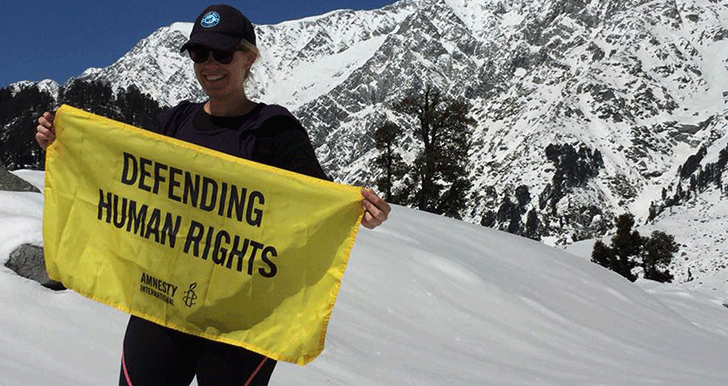
My name is Amanda Atlee, and I have the pleasure of working as the NSW Community Organiser for Amnesty International Australia. In my downtime I convene the Randwick Action Group and take part in the Amnesty NSW Book Club – as you can see I rather like Amnesty!
In 2015, I was searching for a personal challenge and a reason to get fit. The Himalayas have always been on my bucket list, so I signed up for the Hike the Himalayas challenge. Why not have an exciting adventure with other Amnesty activists and raise money to fight for human rights?
How did you find the fundraising aspect?
Raising funds for this challenge was actually easier than I’d expected and a lot of fun. I ended up exceeding my original goal of $4100 – raising a total of $5163 for Amnesty International Australia.
I sold snacks at work (to the demise of my work colleagues’ waistlines) and held a film screening of He Named me Malala. I reached my new goal just a week before I found myself on a plane headed to India.
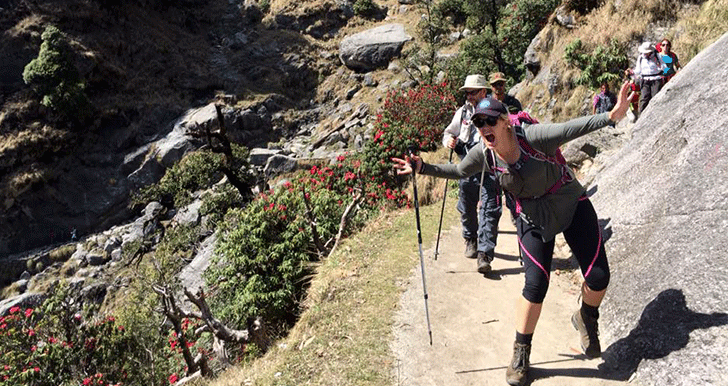
The walk itself was incredible. It’s a really beautiful part of the world, and at times it felt like no one else had ever been there. We trekked through small villages, up and down valleys, and plodded through fresh snow.
We walked for five days up to an altitude of approximately 3500 ft, but thanks to my training I felt prepared for the challenge. Walking through snow was more of a mental challenge than physical and I’m happy I conquered it.
What were the highlights?
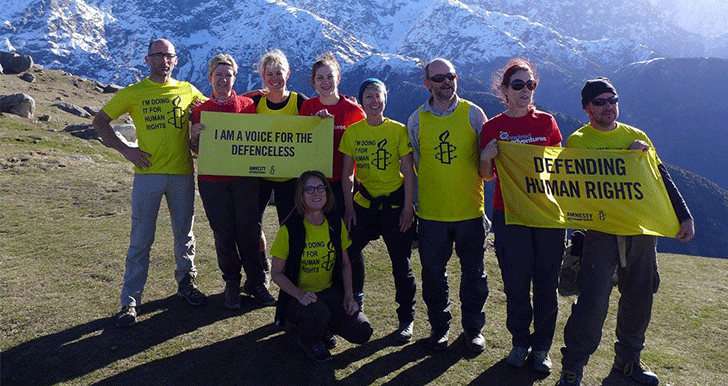
My favourite aspect of the trip was being a part of an incredible team. There were times when we really rallied together to encourage each other and ensure that we all crossed that finish line together.
The people I met as part of this experience were all really passionate about Amnesty International. We shared lots of laughs, food, stories and adventures (and blisters). I feel very lucky to have met them.
It may sound odd but another highlight was being treated with hot chips one afternoon when we reached camp – it had been a long day!
How did you feel when you reached the end?
My initial feeling was excitement for a shower and a real bed! But I also felt really proud, not only of my own achievement but also to be part of the team and to see everyone cross the finish line.
Everyone had their own challenges – physically getting through the trek, mentally believing in ourselves, or raising enough funds for Amnesty.
We conquered all these challenges together and the whole experience is something I will never forget.
Events and challenges are a fun and meaningful way to raise important funds for Amnesty International Australia. Whether it is running City to Surf (Sydney), trekking the Kokoda Trail, discovering the Larapinta Trail or challenging yourself with the Berlin Marathon, Team Amnesty can help!
This blog entry does not necessarily represent the position or opinion of Amnesty International Australia.
The death penalty is always a violation of human rights and state-sanctioned killing can never be condoned under any circumstances.
Thousands of Australians took action to show their opposition to the death penalty last year: politicians across every party spoke out, communities around the country held vigils, and human rights, religious and legal organisations all came out to protest the futile loss of life.
Despite the outpouring of mercy pleas from around the world, Australians Andrew Chan and Myuran Sukumaran were executed by firing squad, as were Raheem Agbaje Salami, Zainal Abidin, Martin Anderson, Rodrigo Gularte, Sylvester Obiekwe Nwolise and Okwudili Oyatanze.
“The anniversary of the executions of Andrew and Myuran, along with the six other men, should remind us that the death penalty is still a global problem that requires action,” said Diana Sayed, Amnesty International’s Crisis Campaign Coordinator.
“When Amnesty International first pledged to eliminate executions in 1977, only 16 countries had abolished the death penalty. Now, after almost four decades of campaigning, 140 countries have abolished it in law or practice with four countries – Fiji, Madagascar, the Republic of Congo and Suriname – abolishing the death penalty last year.”
Diana Sayed, Amnesty International
“Countries like Indonesia that continue to use the death penalty, particularly in cases where the offence does not meet the threshold of being a most serious crime, are out of step with the rest of the world.
“It is an appalling fact that there are hundreds of people still facing the death penalty but change can – and does- happen.”
On Tuesday 19 April the Australian Senate passed a motion calling for the adoption of justice targets to close the gap on the incarceration rates of Aboriginal and Torres Strait Islander people.
Friday 15 April 2016 marked 25 years since a Royal Commission handed down recommendations to reduce imprisonment and prevent Aboriginal deaths in custody.
The following Tuesday, the Australian Senate passed the motion, which called on the Commonwealth and state and territory governments to:
implement in full the recommendations of the Royal Commission into Aboriginal Deaths in Custody.
adopt justice targets in order to close the gap and to change the record on the rates of incarceration of Aboriginal and Torres Strait Islander peoples.
How did Amnesty act?
In the lead up to the anniversary of The Royal Commission and prior to this motion, Amnesty supporters took action in every way possible (email, post, fax, phone, in person and through social media) to say enough is enough: we need national targets to close the justice gap.
Here’s just a taste of some of our powerful activism in the lead up to the anniversary.
Amnesty staff and supporters called their local, state and federal MPs; together we made more than 100 calls to over 75 state and federal leaders.
We collected 12,000 petition signatures and faxed them over to our Prime Minister and state leaders.
Over the last month activists have sent over 80 personal emails/letters to federal MPs asking them to call on Turnbull to implement national justice targets.
Our online activists sent an avalanche of tweets and Facebook messages to MPs for #justicetargets.
The Goulburn Valley (VIC) and Southern Group (TAS) had Letters to the Editors published in their local papers.
All our great momentum added to the national debate led by Indigenous people. Aboriginal and Torres Strait Islander people – and Indigenous-led solutions – dominated the media all week, including on the front page of the Sydney Morning Herald.
About the Royal Commission
The deaths in custody of six children were among the 99 investigated as part of this Royal Commission, with the findings published in 1991.
The fundamental issue identified was that Aboriginal people die in custody at a rate which is totally unacceptable. This occurs because too many Aboriginal people are in custody, too often.
The Royal Commission highlighted that there was an urgent need for governments to work together and negotiate with Indigenous organisations to develop strategies to reduce the involvement of Indigenous kids in the justice system.
Our research shows they haven’t. This is one of the key reasons why we continue to act through our Community is Everything campaign.
What next?
While great steps have been taken, the Senate motion is not binding – our government could still ignore this call.
Our leaders will continue to do nothing, unless we hold them accountable. We are asking Amnesty supporters to keep pushing all of our leaders to set national justice targets as part of the Closing the Gap strategy.
They need to recognise their failure, come to the table at COAG and agree that this is a priority and needs coordinated national action over the next generation to ensure that all kids have the opportunity to reach their limitless potential.
Five media workers from the Unity newspaper in Myanmar have been released following a Presidential pardon. The good news came after months of campaigning for the ‘Unity 5’ from Amnesty members and supporters across the world.
Unity journalists Lu Maw Naing, Yarzar Oo, Paing Thet Kyaw, Sithu Soe and the newspaper’s chief executive officer Tint San had been arrested in 2014 after the newspaper published an article about an alleged secret chemical weapons factory in Pakokku Township, Magway Region.
They were all charged with “disclosing State secrets, trespassing on the restricted area of the factory, taking photographs and the act of abetting” under Myanmar’s draconian Official Secrets Act.
They were sentenced to 10 years’ imprisonment with hard labour, which was later reduced to seven years with hard labour.
“The government should not view the media as an enemy but instead value press freedom.”
Sithu Soe, one of the Unity 5, June 2015
An encouraging message
The five were released from Pakokku prison on 17 April as part of a Presidential pardon which saw the release of 83 prisoners, including prisoners of conscience Amnesty International has campaigned for.
Their release sends an encouraging message about the to ending political arrests and imprisonment in the country.
But there is still more work to do, and Amnesty International will continue to campaign for the release of all remaining prisoners of conscience to ensure that no one is left behind bars.
Dr Glenda Kickett is a Noongar woman in Perth who has a background in developing social work practices and policies that support Aboriginal people. Here she discusses Indigenous children and young people in detention, and the importance of maintaining a strong culture.
The high rates of Indigenous young people in detention is a serious issue in Western Australia, how do we make change?
To keep young Indigenous people out of detention centres, we need more support for families – a holistic service to the families.
If a young person gets into trouble, there must be early-intervention programs they can be referred to that support them, before they actually end up in a detention centre. A lot of children end up in detention centres for little or no reasons, and that’s where the issue is.
Empowering Aboriginal organisations that help families is really important; I think the work has to come from those organisations working with our families from a cultural base.
Can you explain why culture is the key?
Well I believe, from my view as a Noongar person, and also from the work that I’ve done with Aboriginal kids in care, that culture is the base. It’s the glue that ties everything together.
“If you don’t have a strong sense of your culture – where you’re from, who your family is – you don’t have anything.”
Dr Glenda Kickett
You don’t have anything to build yourself on: your confidence, your self-esteem, your identity.
And when you don’t have that, you can lose your way. Not only in the system, but with your own personal and professional development.
The Power of Five – International Women’s Day 2016 video featuring Dr Glenda Kickett.
What do you see as an Amnesty supporters’ role in this issue?
It’s really important to get the message out there − to make it more visual and getting Aboriginal people to talk about the issues and the solutions. The message needs to get out that we can have a voice, and I think Amnesty supporting that is great.
I think we have the solutions here, in our own communities, our own people, our own families. And I really do believe that the work has to be done from that ground level, instead of top-down from government. I think that’s where the change is going to come.
What advice do you have for young people in Australia?
I would say to Australian young people − both Indigenous and non-Indigenous − to not be ashamed to have goals; to not be ashamed to have dreams.
I think it’s really important for them to get the message that they are important, just like anyone else. They can achieve their goals − just set them and work towards achieving them.
2015 saw a rise in the number of people executed – at least 1,634 – the highest recorded by Amnesty International since 1989.
Glimmers of hope
Countries used various methods to kill: hanging, shooting, lethal injection, beheading. They did this with cold efficiency, driving the number of executions up by more than half, compared to 2014.
Nearly 90% of these happened in just three countries: Iran, Pakistan and Saudi Arabia. But these figures exclude China, where numbers remain a state secret.
While this spike in executions cast a long shadow across the year, there were still glimmers of hope. Four countries expunged the death penalty from their law books for good so that today, more than half of all countries in the world have turned their backs on this cruel, inhuman and degrading punishment.
Highest number of executions in 25 years
Amnesty recorded the highest number of executions in a quarter century in 2015. Numbers rose by 54%, with at least 573 more people killed than in 2014.
Amnesty recorded the highest number of executions in a quarter century in 2015. Numbers rose by 54%, with at least 573 more people killed than in 2014.
These figures do not include China, where we believe thousands are executed every year. Amnesty stopped publishing its estimated figures in 2009, challenging the Chinese government to reveal their own figures and demonstrate that they really are limiting their use of the death penalty – something they have claimed to be doing since the country’s highest court began reviewing all death penalty cases in 2007.
China remained the world’s top executioner.
Majority of executions confined to three countries
Of all executions recorded in 2015, 89% were carried out in just three countries: Iran, Pakistan and Saudi Arabia. Pakistan ranked among the top five executioners for the first time since 2008.
The Middle East and North Africa region accounted for the vast majority of all recorded executions thanks largely to Iran and Saudi Arabia. For the second year in a row, both countries carried out the highest number of executions in the region.
Executions in Saudi Arabia shot up by 76% compared to 2014; at least 158 people were put to death in 2015. Meanwhile, Iran executed at least 977 people, mainly for drug-related crimes.
The foundation of justice is a respect for human dignity… under no circumstance is capital punishment acceptable.
Tsakhiagiin Elbegdorj, President of Mongolia
Iran continued to execute juvenile offenders – those aged under 18 at the time of the alleged crime – in violation of international law. Along with Maldives and Pakistan, it also sentenced juvenile offenders to death in 2015.
International law disregarded
Countries continued to flout other aspects of international law, putting to death people with mental or intellectual disabilities, as well as those charged with non-lethal crimes.
Apart from drug-related offences, people were executed for crimes such as adultery, blasphemy, corruption, kidnapping and “questioning the leader’s policies”.
Apart from drug-related offences, people were executed for crimes such as adultery, blasphemy, corruption, kidnapping and “questioning the leader’s policies”.
The number of countries that executed people rose – from 22 in 2014 to 25 in 2015. At least six countries resumed executions: Bangladesh, Chad, India, Indonesia, Oman and South Sudan.
At least 1,998 people were sentenced to death in 2015 and at least 20,292 prisoners remained on death row at the end of the year.
Pakistan executed more people than ever before
Since Pakistan lifted its freeze on civilian executions in December 2014, the country has leapt into an unenviable club of states that execute hundreds of people in a year. Today it rubs shoulders with Iran and Saudi Arabia, and is the third most prolific executioner.
It was an attack on a school in Peshawar, northwest Pakistan, that prompted the government to start executing again – something it had not done since 2008. Initially, the freeze was lifted for those charged with terrorist-related offences, but in March, the government resumed executions for all capital crimes, such as murder and blasphemy.
By the end of 2015, Pakistan had put to death 326 people – the highest number ever recorded by Amnesty. In a country where people are routinely denied the right to a fair trial, and evidence extracted through torture is used to seal convictions, hundreds of people are being sent to their deaths under the pretence of justice being served.
By the end of 2015, Pakistan had put to death 326 people – the highest number ever recorded by Amnesty.
A life cut short
Warren Hill was executed by the US state of Georgia on 27 January. He was killed despite the fact that all the experts who had assessed him, including state experts, agreed that he had an intellectual disability. International law bans use of the death penalty on people with mental or intellectual disabilities.
Still the worldwide trend towards abolition continues
While executions spiked in 2015, they were counterbalanced by a spate of abolitions. Four countries abolished the death penalty for all crimes – the highest number to do so in the space of one year for almost a decade.
Madagascar led the way in January, followed by Fiji in February.
In March, the South American state of Suriname wiped the death penalty from its law books. And in November, Congo introduced a new Constitution that consigned the death penalty to history once and for all for its people.
Mongolia adopted a new Criminal Code outlawing the death penalty for all crimes in December which will enter fully into law in September 2016.
Even the USA, which continued to flout international law by executing people with mental disabilities, nonetheless continued its march towards abolition.
Even the USA, which continued to flout international law by executing people with mental disabilities, nonetheless continued its march towards abolition.
Pennsylvania abolished the death penalty for all crimes bringing the total number of US states that have abolished the death penalty to 18.
The trend is strong
These developments are a clear indication that the trend towards abolition remains strong. Today, 102 countries – half the world – have turned their backs on the death penalty for good.
Add to this countries which have abolished this punishment in practice, as opposed to law, and the total comes to two-thirds of the world.
Those that continue to execute are a tiny minority standing against a wave of opposition. These few countries have a choice to make – stay rooted in a system that values retribution over rehabilitation, or join the well-worn path to abolition and embrace the principle of every individual’s right to life.
A life spared
Anthony Hinton walked free on 3 April after spending 30 years on death row in Alabama for a crime he did not commit. Not only had he been working 15 miles away at the time of the crime, but the gun used to convict him – an old revolver found at his mother’s house – did not match the bullets found at the murder scene.
April marks the tragic death, 48 years ago of Martin Luther King, American civil rights activist and champion of non-violent resistance. Here we remember some of his powerful words.
On justice
“The whirlwinds of revolt will continue to shake the foundations of our nation until the bright day of justice emerges.”
“We want all of our rights, we want them here, and we want them now.”
“Now is the time to make justice a reality for all of God’s children.”
On non-violence
“We must not allow our creative protest to degenerate into physical violence.”
“Here is the true meaning and value of compassion and nonviolence, when it helps us to see the enemy’s point of view, to hear his questions, to know his assessment of ourselves. For from his view we may indeed see the basic weaknesses of our own condition, and if we are mature, we may learn and grow and profit from the wisdom of the brothers who are called the opposition.”
“Every man of humane convictions must decide on the protest that best suits his convictions, but we must all protest.”
“We still have a choice today: nonviolent coexistence or violent co-annihilation. We must move past indecision to action.”
“In spite of temporary victories, violence never brings permanent peace.”
“We adopt the means of nonviolence because our end is a community at peace with itself. We will try to persuade with our words, but if our words fail, we will try to persuade with our acts.”
On peace and revolution
“Oppressed people cannot remain oppressed forever. The yearning for freedom eventually manifests itself.”
“With patient and firm determination we will press on until every valley of despair is exalted to new peaks of hope, until every mountain of pride and irrationality is made low by the levelling process of humility and compassion; until the rough places of injustice are transformed into a smooth plane of equality of opportunity; and until the crooked places of prejudice are transformed by the straightening process of bright-eyed wisdom.”
“We must concentrate not merely on the negative expulsion of war, but on the positive affirmation of peace.”
“The time has come for an all-out world war against poverty. The rich nations must use their vast resources of wealth to develop the underdeveloped, school the unschooled, and feed the unfed. Ultimately a great nation is a compassionate nation.”
“I believe that unarmed truth and unconditional love will have the final word in reality. This is why right temporarily defeated is stronger than evil triumphant.”
“A true revolution of values will lay hand on the world order and say of war, “This way of settling differences is not just.”
“Now let us begin. Now let us re-dedicate ourselves to the long and bitter, but beautiful, struggle for a new world.”
Dr Martin Luther King, Jr., American Baptist Minister, led the struggle against racial discrimination in 1960s USA, inspiring supporters with the power of his rhetoric. He advocated the principle of non-violent protest, affirming that opposition should be tackled with compassion rather than aggression. Born on 15 January 1929 in Atlanta, Georgia, he was assassinated on 4 April 1968. He was awarded the Nobel Peace Prize for his commitment to non-violent struggle in 1964. The civil rights movement in the USA made huge gains for African Americans, but discrimination hasn’t gone away. Albert Woodfox, a former Black Panther activist,was held in solitary confinement in the USA for 43 years, finally walking free this year.
Among the olive groves on some of Greece’s beautiful islands there are barbed wire fences.
At least 6,000 asylum-seekers have been locked up here since a new EU plan kicked in on 20 March. Some have already been deported back to Turkey, while many more anxiously await the same fate.
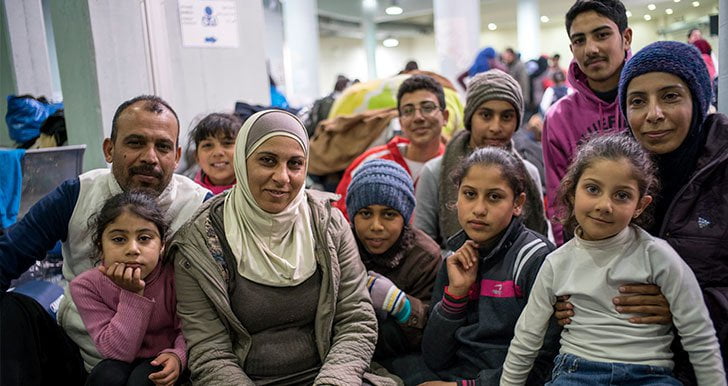
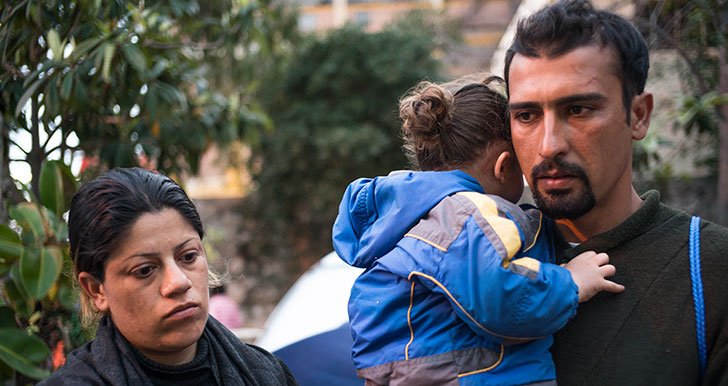
We met some of them recently: six-year-old Sham, whose house in Syria was bombed. Masih, who ran from the Taliban because he’d worked for the UN. And Suzan from Iraq, who very nearly gave birth in a tent in an Athens ferry terminal.
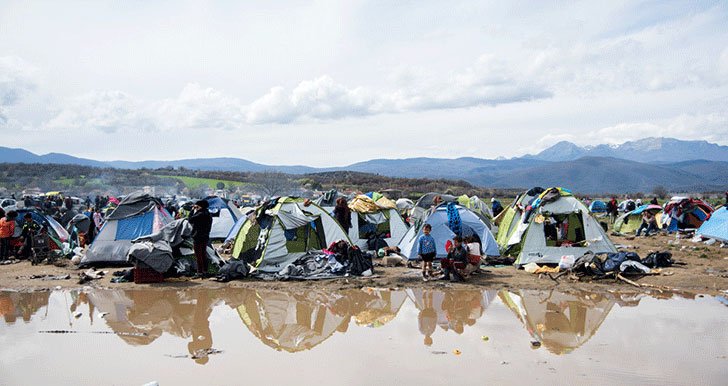
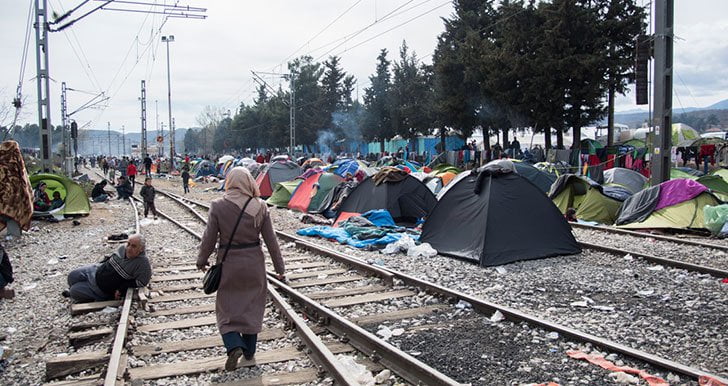
But they aren’t the only ones trapped in Greece. Another 46,000 people are stuck in often filthy, overcrowded sites across the mainland. They’re in limbo because they arrived after Greece’s northern border was shut in early March, and before the EU-Turkey deportation deal came into force.
All are caught up in a crisis that can only be solved by those who caused it in the first place – European governments.
Nowhere to rest
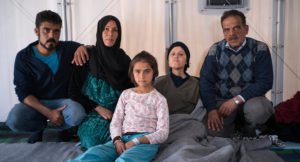
Sham is a slight, six-year-old girl from Syria, one of the youngest in a big, friendly extended family travelling together from Damascus.
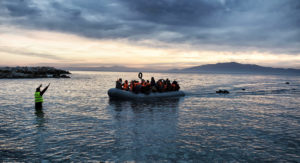
While Sham fled from the bombs that destroyed her house and took the terrifying trip to Europe by rubber boat, European governments decided to turn their backs on people like her. On 8 March, they closed their borders completely.
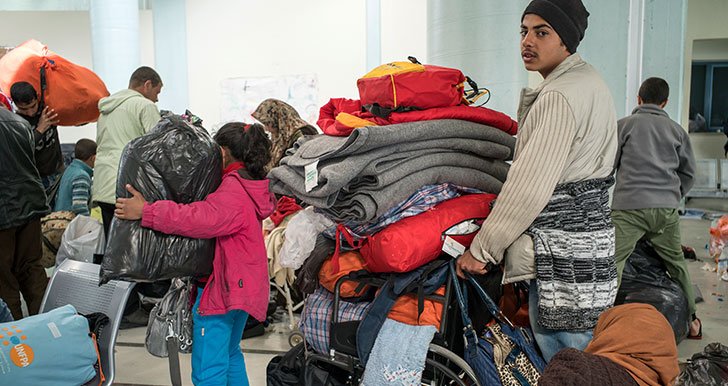
Instead of travelling north to join her dad in Germany, Sham got stuck on the dirty floor of a smelly ferry terminal in Piraeus, the main Athens port.
After everything they’d been through, her beautiful family still smile and joke. But the tears are not far away.
After running around and playing with her cousin, Sham suddenly collapses in tears. “She misses her grandmother in Syria,” her mother Zeinab explains, as she cuddles her daughter and cries a little too. “And we have nowhere to rest.”
One thing is clear: Greece simply can’t care for everyone trapped there. Sham’s family were among thousands forced to sleep on hard floors or in tents outside during freezing cold nights.
When we visited Piraeus in mid-march, there was no hot water, and rubbish was piling up. Doctors reported bed bugs, head lice and allergic reactions from not being able to wash. Kids, including Sham, got fever and diarrhoea.
An impressive volunteer operation was in full flow, as in so many other parts of Greece. Hundreds of people and a few humanitarian organisations were organizing anything from cleaning and hot food to kids’ activities, legal advice and medical help.
But with little or no official state support, they couldn’t control the chaos. By 11 April, there were 4,500 people stuck in a ferry port designed for tourists, not a humanitarian emergency.
The authorities are now pushing refugees to leave Piraeus for camps across Greece. But no one yet knows if the situation there will be any better.
One such camp, Elliniko, used to be Athens’ international airport. “It’s a total mess,” said Masih, 30, from Afghanistan, in his excellent English. He fled after being threatened by the Taliban because he had worked for the UN and NATO.
“Everybody is sleeping on the floor in the old terminal hall,” he said. “The toilet is so dirty. There’s no space for families. I don’t sleep in there – it’s smelly.”
Stressed and frustrated, he says he was the first Afghan to be turned away at Idomeni, Greece’s northern border with Macedonia (the former Yugoslav Republic).
Idomeni was the main gateway to northern Europe for refugees last year. Since the border closed, it made global headlines for being a particularly awful bottleneck. Around 10,000 tired, destitute people are still sleeping rough there in freezing cold, muddy fields.
Masih camped out in Idomeni for eight days, before returning to Athens. “If they don’t open the border I will apply for asylum in Greece,” he says. “I don’t want to go back [to Afghanistan] – it’s not safe.”
Which way out?
But Greece’s asylum was at breaking-point even before the crisis hit. A massive queue means Masih hasn’t even been able to register as an asylum-seeker yet. He lives in terror of being deported.
For others, applying to seek asylum in another country – as part of the EU’s relocation programme – offers a distant glimmer of hope, even if they can’t choose where to go.
Suzan, a Kurdish mother of two little boys, was heavily pregnant and in pain when we met her in Piraeus. She fled Iraq with her husband Abdalsalam, both 27, after his brothers were killed and he received threats.
But instead of reuniting with Suzan’s father in the UK, they got stuck in a flimsy red tent. “We have no home and no country,” said Abdalsalam, his eyes welling up.
Their new baby boy has since arrived safely, and the family has been housed by a local charity while they apply for relocation – one of a few possible ways out of the Greek refugee trap.
Where there’s a will, there’s a way
Relocation sounds good on paper: last September, EU countries pledged to help Greece out by sharing responsibility for 66,400 asylum-seekers. But they’d only accepted 615 people by 11 April, according to the European Commission.
The reason is simple: a complete lack of political will.
If European governments devoted the same amount of effort to protecting human beings as they are to locking people up and deporting them to Turkey, they could easily fix this crisis.
For example, they could offer visas to people like Sham, Masih, Suzan and Abdelsalam, reunite them with relatives already living in other EU countries, or relocate them abroad to process their asylum applications abroad.
Where there’s a will, there’s a way: Portugal, for example, now says it will open its doors to 10,000 refugees – a shining example of what’s possible if governments focus on finding solutions, instead of locking their gates and turning away.
With all eyes focused on the implementation of the recently agreed EU-Turkey deal, the plight of more than 46,000 refugees and migrants stuck in squalid conditions across mainland Greece, is in danger of being forgotten.
Trapped in Greece: an avoidable refugee crisis
According to a new report from Amnesty International, Trapped in Greece: an avoidable refugee crisis, examines the situation of refugees and migrants – the majority women and children –trapped on mainland Greece, following the complete closure of the Macedonian border on 7 March.
“The decision to close the Western Balkans route has left more than 46,000 refugees and migrants in appalling conditions and in a state of constant fear and uncertainty,” said John Dalhuisen, Amnesty International’s Director for Europe and Central Asia.
“The decision to close the Western Balkans route has left more than 46,000 refugees and migrants in appalling conditions and in a state of constant fear and uncertainty.”
John Dalhuisen, Amnesty International
“EU States have only exacerbated this crisis by failing to act decisively to help relocate tens of thousands of asylum-seekers, the majority of whom are women and children, trapped in Greece. If EU leaders do not act urgently to live up to their relocation promises and improve conditions for stranded refugees and migrants, they will face a humanitarian calamity of their own making.
Of the 66,400 asylum-seekers pledged to be relocated from Greece in September 2015, only 615 had been transferred to other EU member states, according to information published by the European Commission on 12 April.
Conditions are inadequate in many of the 31 temporary accommodation sites. The sites, set up by Greece with significant EU assistance, have severe overcrowding, a complete lack of privacy, no heating, as well as insufficient sanitary facilities.
“The conditions here are not good and we are sleeping on the ground; our blankets are soaked with water. There are no bathrooms. This is why people are getting sick,” a Syrian woman who was nine-months pregnant told Amnesty International at a makeshift camp in Idomeni.
“It’s a total mess – there is nothing here… Everybody is sleeping on the floor in the old terminal hall. We don’t even have basic things. There is a toilet but it is so dirty. I don’t sleep in there – it’s too smelly,” an Afghan asylum-seeker staying at the Elliniko temporary accommodation centre, at an unused airport outside Athens, told Amnesty International.
Between 3,000 and 5,000 people daily have been staying at an informal camp in Piraeus port, Athens, with only a few basic services being provided by volunteers, a few humanitarian organisations and the port authorities.
Many of the refugees and migrants interviewed during two research trips, between 8 February 2016 and 13 March 2016, were hoping to continue their journeys onwards to Western Europe to reunite with family members. The majority had little information about their options since the closure of the Macedonian border.
“Why don’t they let us go? They want us to die here? It’s cold and we are [living] on top of each other.” asked a 70-year-old couple from Aleppo, who were camping in Idomeni.
In addition to lacking information on their rights in Greece, refugees and migrants with specific vulnerabilities have gone undetected. Women said that they were not feeling safe and felt at risk of exploitation by men in some of the accommodation sites. Amnesty International also talked to unaccompanied children detained in police stations for up to 15 days until they could be transferred to a shelter for children.
Amnesty International is calling on Greece to urgently improve the country’s asylum system and ensure access to effective protection for everyone trapped in the country. As a priority, it must set up a mechanism for the systematic provision of information and the detection of individuals with special needs.
While EU member states should continue to support Greece so that it can adequately receive arriving asylum-seekers, they must also urgently accept asylum-seekers to their countries from Greece. This must include swiftly relocating large numbers of asylum-seekers through the existing EU emergency relocation scheme.
March was an incredible month for human rights wins – activists were released, unfair laws were changed, and people who committed serious human rights abuses were brought to justice. We’ve picked out 15 successes, wins and pieces of good news, and they were all made possible thanks to your support.
1. Egypt: Teen who challenged torture released after more than two years
20-year-old Mahmoud Hussein (pictured above) was released from prison in Egypt after spending more than two years behind bars for wearing an anti-torture t-shirt. He had been tortured while in detention and forced into signing a confession.
2. Mexico: Marines prosecuted for disappearance
Five Mexican marines were prosecuted for the disappearance of Armando del Bosque Villarreal, who was found dead weeks after his arrest in 2013. The arrests bring a ray of hope to the families of the tens of thousands of people across Mexico whose whereabouts are still unknown.
Mohammed al-‘Ajami, also known as Ibn al-Dheeb, was finally released from prison in Qatar after a four-year ordeal.
He had been charged with “insulting the Emir” after performing a poem to a group of people in his apartment in Cairo, Egypt, where he was studying Arabic literature at the time.
4. Azerbaijan: 10 prisoners of conscience released
Azerbaijan’s President Ilham Aliyev signed a decree ordering the release of 148 prisoners. The prisoners released included human rights and opposition activists, members of a pro-democracy youth movement and a journalist imprisoned on politically motivated charges.
5. Norway: Historic breakthrough for transgender rights
The Norwegian Ministry of Health proposed key legal reforms,which could change the lives of transgender people in Norway for generations. The proposals would allow individuals to self-determine their gender.
6. Central African Republic: Historic step forward for victims of sexual violence
7. Bosnia-Herzegovina: Karadžić found guilty of Srebrenica genocide
Former Bosnian-Serb leader Radovan Karadžić was found guilty of genocide and other crimes under international law. A UN Court convicted Karadžić of genocide in relation to the massacre in Srebrenica, where more than 7,000 Bosnian men and boys were killed. He was sentenced to 40 years’ imprisonment.
Zhang Kai had been offering legal support to a number of churches in Zhejiang province after the authorities began demolishing churches and removing crosses and crucifixes in late 2013.
9. Malaysia: Women’s rights activist acquitted
Activist Lena Hendry was cleared after being charged under a law which criminalizes possessing or showing films not approved by the Film Censorship Board of Malaysia. She had faced up to three years in prison after screening a film on human rights violations in Sri Lanka.
The Azerbaijani authorities released prominent human rights lawyer and vocal government critic Intigam Aliyev. He had been sentenced to seven-and-a-half years in prison on trumped-up charges of tax avoidance, illegal entrepreneurship and abuse of power, amid a crackdown on dissident voices in Azerbaijan.
This article was contributed by a guest blogger. This blog entry does not necessarily represent the position or opinion of Amnesty International Australia.