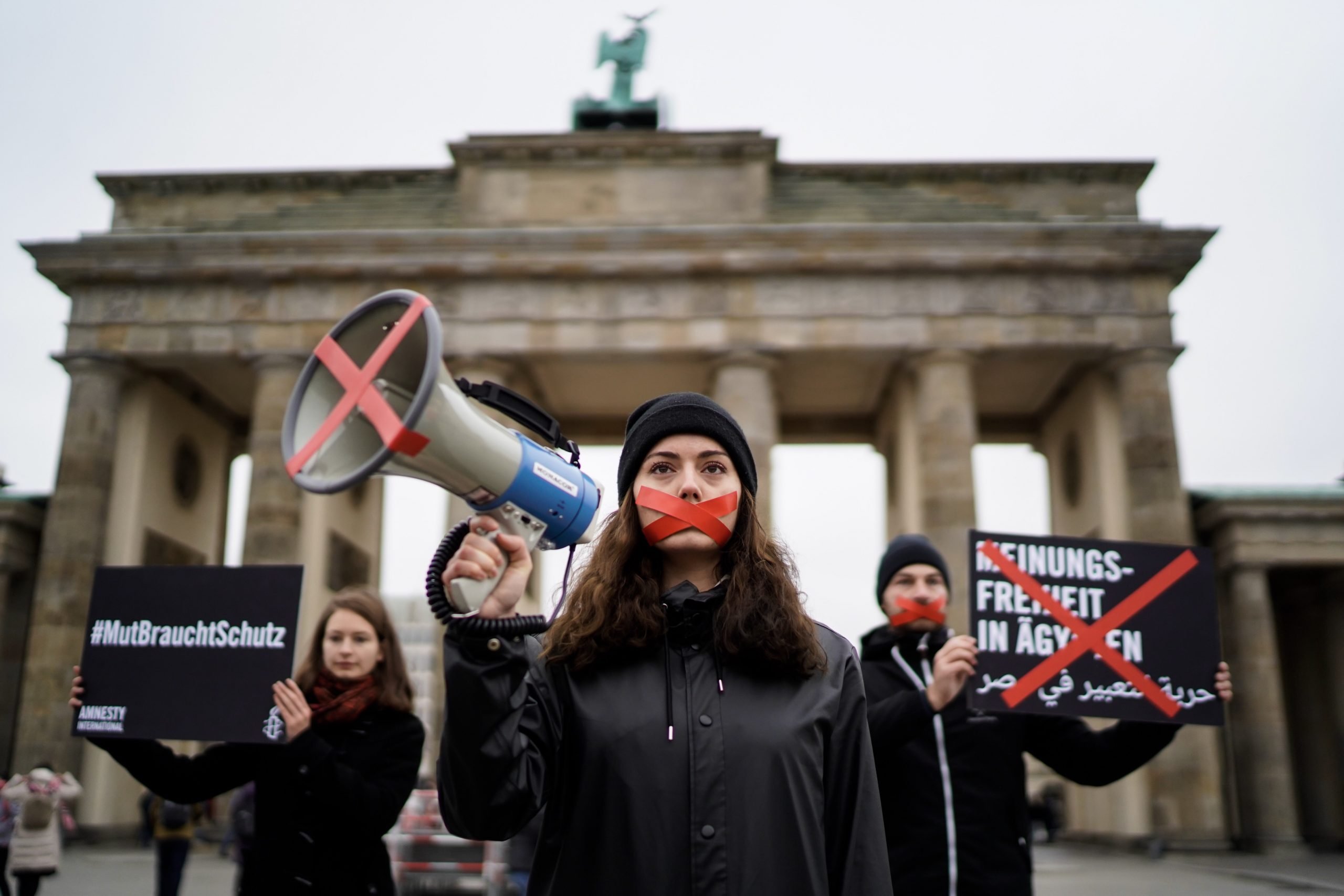
Egypt: Retry 36 men facing execution following unfair trials by emergency courts

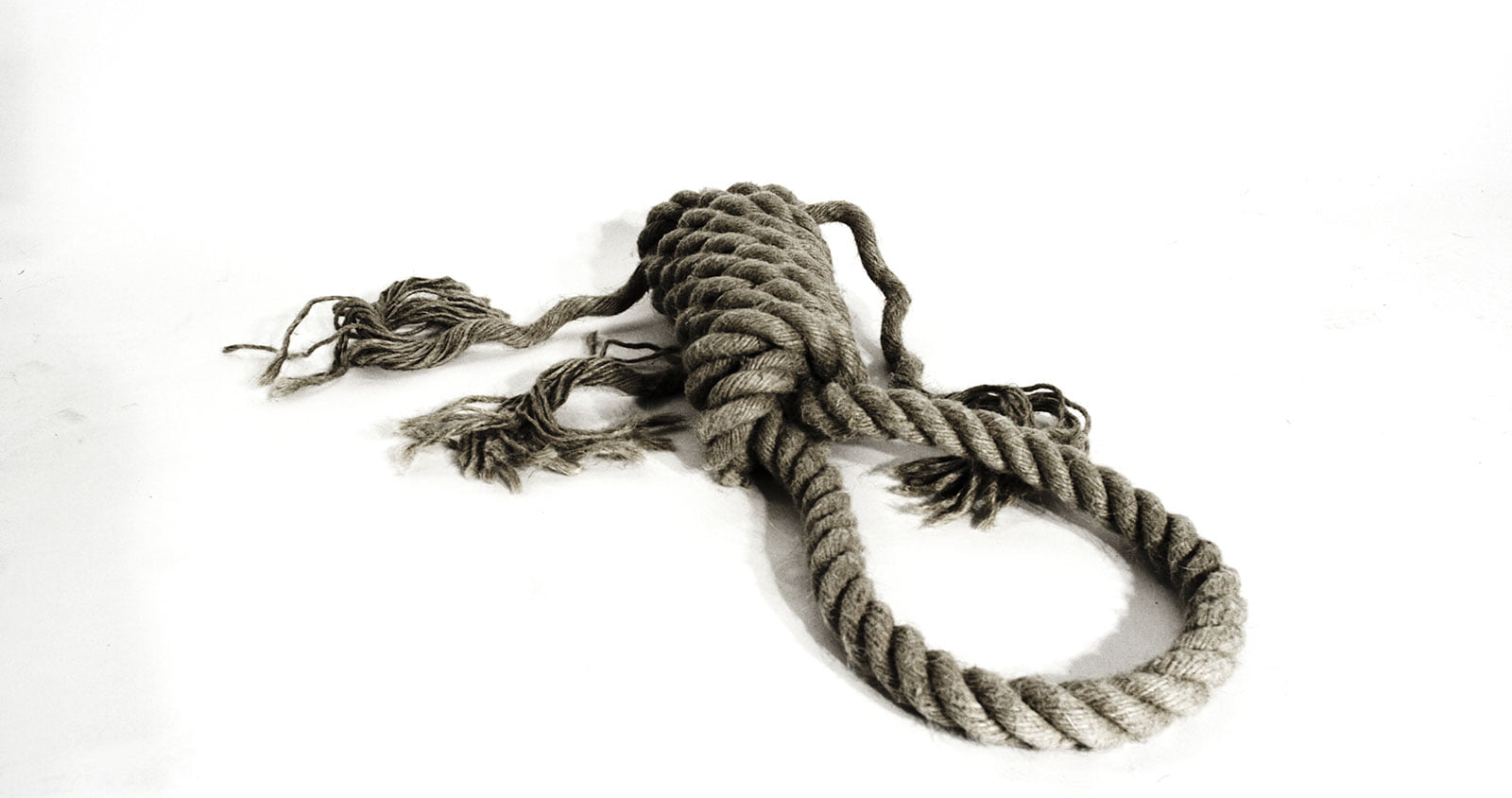
Despite the lifting of Egypt’s state of emergency, at least 36 men remain at risk of execution following convictions by grossly unfair emergency courts, Amnesty International said today. The organization is aware of at least two men who were executed after unfair trials by emergency courts in the past three years and calls for the 36 men to be granted re-trials that meet international fair trial standards without recourse to the death penalty. 

The state of emergency, which came into force in April 2017, allowed for the creation of Emergency State Security Courts (ESSCs), which are inherently unfair. Despite the lifting of the state of emergency, ongoing trials of hundreds of individuals, including human rights defenders and peaceful protesters, are set to continue.   

“The Egyptian president must immediately quash all death sentences passed by emergency courts and order retrials in front of regular courts without recourse to the death penalty. To impose the death penalty in grossly unfair trials where defendants are refused the right to appeal constitutes an arbitrary deprivation of the right to life,” Philip Luther, Amnesty International’s Middle East and North Africa Research and Advocacy Director, said. 

“Chillingly, Egypt has already executed at least 83 people so far this year, some following convictions in proceedings that made a mockery of justice. The Egyptian authorities should immediately establish a moratorium on the use of the death penalty, with a view to abolishing this cruel, inhuman and degrading punishment once and for all.”  

Philip Luther

Egyptian authorities executed Ibrahim Ismail in December 2019 and Moataz Hassan in July 2021. Both were convicted of murder and sentenced to death in two separate trials by ESSCs. Neither man was allowed to lodge an appeal.  

Defendants in ESSC trials are routinely subjected to a number of other violations of fair trial rights, including being denied the right to adequate time and facilities for the preparation of their defence, theright to communicate with counsel of their own choosing and the right to a public hearing. 

Sentenced to death, denied the right to appeal   

Sixteen of the 36 men facing execution were sentenced to death on 29 July 2021 by an emergency court in Rashed. Nine were convicted of murder in relation to an attack on a police bus in al-Behira, located northwest of Cairo, in August 2015 that killed three policemen and wounded others, years before the state of emergency was declared. The remaining seven men were convicted of aiding that murder. The other 22 men sentenced to death were convicted of murder, bombings and membership of terrorist groups by ESSCs between 2019 and 2021.  

In the al-Behira trial, the judge relied only on torture-tainted “confessions” and testimonies by policemen, refused to allow defence lawyers to cross-examine the prosecution witnesses, rejected requests by defence lawyers to examine evidence that may have exonerated the defendants, including their cellular tower data. In addition, the judge acknowledged in the verdict that the defendants’ lawyers were not present during their clients’ questioning by prosecutors. 

Several defendants in the trial said they were tortured while in detention. A source familiar with the trial told Amnesty International that one man who was sentenced to death said he had been beaten and given electric shocks during questioning until he gave a videotaped “confession,” which he later tried to retract.  

Two brothers sentenced to death in the case – Ahmed al-Zarea, 31 and Al-Motaseem al-Zarea, 28 – were held incommunicado from their detention on 31 August and 4 September 2015 respectively until 14 September 2015. A source familiar with their case told Amnesty International that the two brothers were subjected to beatings and electric shocks by policemen from the National Security Agency (NSA), a secretive police agency, during detention.  

NSA officers ignored a judge’s order to release them pending investigations on 26 February 2018 and instead took them to an undisclosed location, thus subjecting them to enforced disappearance. They were taken to a prosecutor on 7 April 2018 and questioned over accusations of “membership in a terrorist group” and “protesting illegally”. They were again placed in pretrial detention until a judge ordered their provisional release on 9 June 2018. The NSA forced them to report to its offices on a weekly basis as part of an extrajudicial probation measure referred to by victims and the NSA as“monitoring”.  

The brothers have been detained separately in the notorious Tora Maximum Security 1 “al-Aqrab” and Maximum Security 2 and banned from receiving family visits. In total, the NSA has accused Ahmed al-Zarea in five separate cases and Al-Motaseem in two separate cases, with all charges related to membership of a terrorist group and illegally protesting. In the only case that moved to trial, two separate courts acquitted Ahmed al-Zarea of all charges. 

Ahmed Al-Zarea and Al-Motaseem Al-Zarea were subjected to a catalogue of horrific violations, including repeated torture, enforced disappearance, prolonged arbitrary detention and grave breaches of their fair trial rights – and now their lives are at risk. The authorities must ensure that ‘confessions’ extracted through torture or coercion are never used as evidence in court and must investigate all allegations of enforced disappearance and torture,” said Philip Luther.  

Background: 

On 25 October 2021, President Abdel Fattah Al-Sisi announced that he would not extend Egypt’s state of emergency, in force since April 2017 following the twin bombing of two churches that left 45 people dead.  

Article 19 of the law governing the state of emergency stipulates that ongoing trials are to continue even after the state of emergency is no longer in force. The president, however, retains the power to authorize, quash or commute verdicts or to order a retrial.  

In September 2021, Egypt launched a five-year national human rights strategy, which stipulates that the right to defence in death penalty cases is deeply connected to the right to life. The strategy also noted the need to implement the constitutional requirement of enabling defendants to appeal against verdicts by all criminal courts. 

Egypt has executed at least 83 individuals so far in 2021, many of whom were convicted in unfair trials. Some were executed in secret, with family members and loved ones deliberately kept uninformed and denied final visits, which contravenes Egyptian law. 
INDONESIA: Authorities must investigate frightening attack on human rights defender’s parents

Responding to an intimidating attack in which threatening packages were hurled at the house of the parents of human rights lawyer Veronica Koman in Jakarta, Amnesty International Indonesia Executive Director Usman Hamid said:

“This is an unconscionable attack that has frightened and traumatized two older people. The authorities must immediately carry out a thorough, transparent, impartial and independent investigation of the incident and ensure the safety of Veronica Koman’s parents.”

“This is not the first time that Veronica’s parents have been targeted. On 24 October, two unidentified men dropped off a package in front of their house, which burst into flames not long after”

“Veronica’s peaceful activism is part of her right to freedom of expression that should be protected by authorities, and not be subject to violence, threats or any other abuse or retaliation.” 

Usman Hamid

“The Indonesia government has the ultimate responsibility to protect human rights defenders like Veronica, particularly to prevent further escalation of attacks, and effectively address human rights abuses committed against them and related to their work and to ensure that they can carry out their work in a safe and enabling environment.”

Background

On the morning of 7 November, two unidentified men on a motorcycle threw three packages into the garage of the house of Veronica Koman’s parents in Jakarta. 

At least two of the packages exploded, scattering bits of paper and red paint in the garage. The other package contained a typed message threatening to attack Veronica and her supporters.

Around the same time, another package was left at the house of one of Veronica’s relatives. The package contained a chicken carcass and a message threatening that anyone who hides Veronica will meet the same fate as the chicken.

The threats come only weeks after two unidentified men on a motorcycle hung a package on the fence of Veronica’s parents’ house. The package then burst into flames. There were no injuries reported in either incident.

Veronica, who lives in Australia, has been active in advocating for Papuan human rights issues since 2015. In 2019, UN human rights experts issued a statement calling on the Indonesian government to protect the rights of Veronica and other activists after she was subjected to online harassment and abuse following her reporting on alleged human rights violations in Papua province.

Singapore: Halt ‘despicable’ and unlawful execution of Malaysian national

Singapore must halt plans to execute a Malaysian man who is due to be hanged next week on drug charges, Amnesty International said today.

Nagaenthran K Dharmalingam is scheduled to be executed on Wednesday 10 November.

“There is still time for Singapore to change course and stop this unlawful execution from taking place. Taking people’s lives is a cruel act in itself but to hang a person convicted merely of carrying drugs, amid chilling testimony that he might not even fully understand what is happening to him, is despicable,” said Rachel Chhoa-Howard, Amnesty International’s Singapore Researcher.

Over the years, medical experts who assessed Nagaenthran have found that he has borderline functioning intelligence and concurrent cognitive deficits. The UN body on the Convention of Rights of Persons with Disabilities (CRPD), to which Singapore is a party, has stated that the imposition of the death penalty on people whose mental and intellectual disabilities may have impeded their effective defence is prohibited.

“We urge the authorities to immediately halt plans to execute NagaenthranThere are grave concerns that there have been multiple violations of international human rights in his case, from the mandatory death penalty to its imposition for drug-related offences and concerns on the fairness of the proceedings, which would render his execution unlawful”

Rachel Chhoa-Howard

“As a petition signed by tens of thousands of people shows, Singapore is once again on the wrong side of history with its draconian drug laws and policies, which have failed to tackle drug dependence in the country. It is high time Singapore halted all executions and abolished this inhumane punishment once and for all.” 

Background

Nagaenthran K Dharmalingam was convicted and sentenced to the mandatory death penalty in November 2010 for importing 42.72 grams of diamorphine (heroin) into the island state in April 2009. His conviction and death sentence were upheld on appeal.

Singapore has some of the harshest drug laws in the world. But since 2013 judges have had more sentencing discretion in cases where the role of the defendant was limited to transportation (“courier”) if the public prosecutor issues a certificate of substantive assistance; or for those with mental or intellectual disabilities that substantially impaired their mental responsibility for their acts and omissions in relation to the offence. In 2015, Nagaenthran applied to be resentenced to life imprisonment. But while he qualified as “courier” the prosecutor did not issue him the certificate of substantive assistance, leading to the confirmation of his mandatory death sentence in September 2017.

Medical experts who have assessed Nagaenthran found that his cognitive deficits “may have contributed toward his misdirected loyalty and poor assessment of the risks in agreeing to carry out the offence”. The Court of Appeal dismissed the concern, stating that his “alleged deficiency in assessing risks might have made him more prone to engage in risky behaviour; that, however, does not in any way diminish his culpability.”

Authorities notified Nagaenthran’s family, who live in Malaysia, of the planned execution by a letter dated 26 October. Because of restrictions in response to the Covid-19 pandemic, Nagaenthran has not been able to see members of his family for over two years. It is only now that up to five family members are allowed to travel and visit the prison. But activists have highlighted how ongoing Covid-19 related restrictions and quarantine requirements have added financial and logistical challenges to an already inherently cruel and painful process.

On 3 November, Nagaenthran’s youngest brother told activists of his concerns about his brother’s mental state and understanding of his imminent execution when he was able to visit him in prison.

Amnesty International opposes the death penalty in all cases without exception. As of today, 108 countries have abolished the death penalty for all crimes and more than two-thirds are abolitionist in law or practice.

Submission: Australia’s engagement in Afghanistan

Amnesty International Australia has made a submission to the Senate Standing Committee on Foreign Affairs, Defence and Trade’s inquiry into Australia’s engagement in Afghanistan. The Submission’s focus was on human rights abuses related to Australia’s participation in the war in Afghanistan, and human rights abuses following the Taliban’s takeover of Afghanistan.

Australia’s 20-year engagement in Afghanistan has impacted on human rights in both Afghanistan and in Australia.

The Brereton Report found evidence of grave human rights violations by Australian special forces soldiers, including the alleged executions of 39 Afghan civilians and prisoners. In Australia, journalists have has their houses and offices searched, and others have been threatened with prosecution, for reporting on these violations.

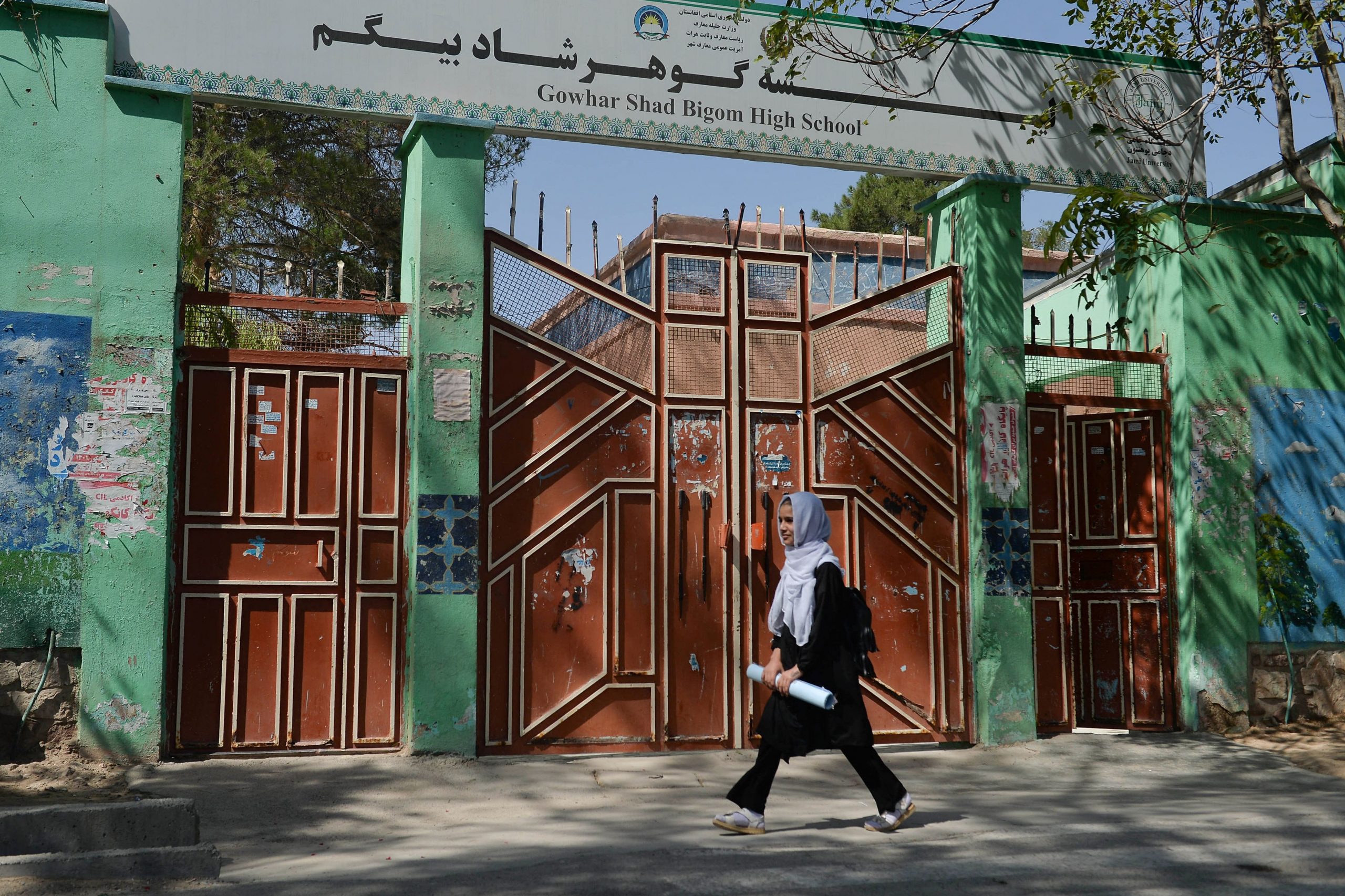
Since the Taliban took over Afghanistan on 15 August 2021, Amnesty International has reported on numerous human rights abuses, including the violent repression of peaceful protests, attacks against human rights defenders and journalists, denying women and girls their right to and education, and the unlawful killing of Hazara people.

In it’s submission, Amnesty recommended the Australian Government:

  • Delivers all recommendations of the Brereton Report as soon as possible,
  • Develops a permanent international crime mechanism resourced to provide effective access to justice,
  • Ensures appropriate compensation is made to all those in Afghanistan affected by breaches of human rights carried out by Australian forces,
  • Includes family representatives and survivors in the design and implementation of further reparation and provides a space for human rights and civil society organisations input into the process,
  • Considers all Afghan women and girls as prima facie refugees, on the grounds of high risk of gender-based persecution upon return to Afghanistan,
  • Suspends visa requirements and/or expedites humanitarian visas to at-risk groups,
  • Allocates at least 20,000 humanitarian places, in addition to the existing program, to those fleeing the Taliban,
  • Reforms the Community Sponsorship Programme, including by making it more affordable and in addition to the government’s humanitarian intake, so that people can sponsor refugees from countries such as Afghanistan,
  • Provides permeant protection visas to those from Afghanistan in Australia on temporary visas,
  • Continues to provide aid to Afghanistan and demands a commitment from the Taliban to uphold human rights treaties,
  • Supports the establishment of a fact-finding mission or similar independent investigative mechanism,
  • Urges the United States to drop the charges against Julian Assange,
  • Responds to the Senate Standing Committee on the Environment and Communications Inquiry into Press Freedom,
  • Enshrines the principle of freedom of the press, and the right to freedom of opinion and expression contained in Article 19 of the ICCPR, in legislation, and
  • Urges the President of the United States to close Guantanamo Bay.

Ethiopia: Sweeping emergency powers and alarming rise in online hate speech as Tigray conflict escalates

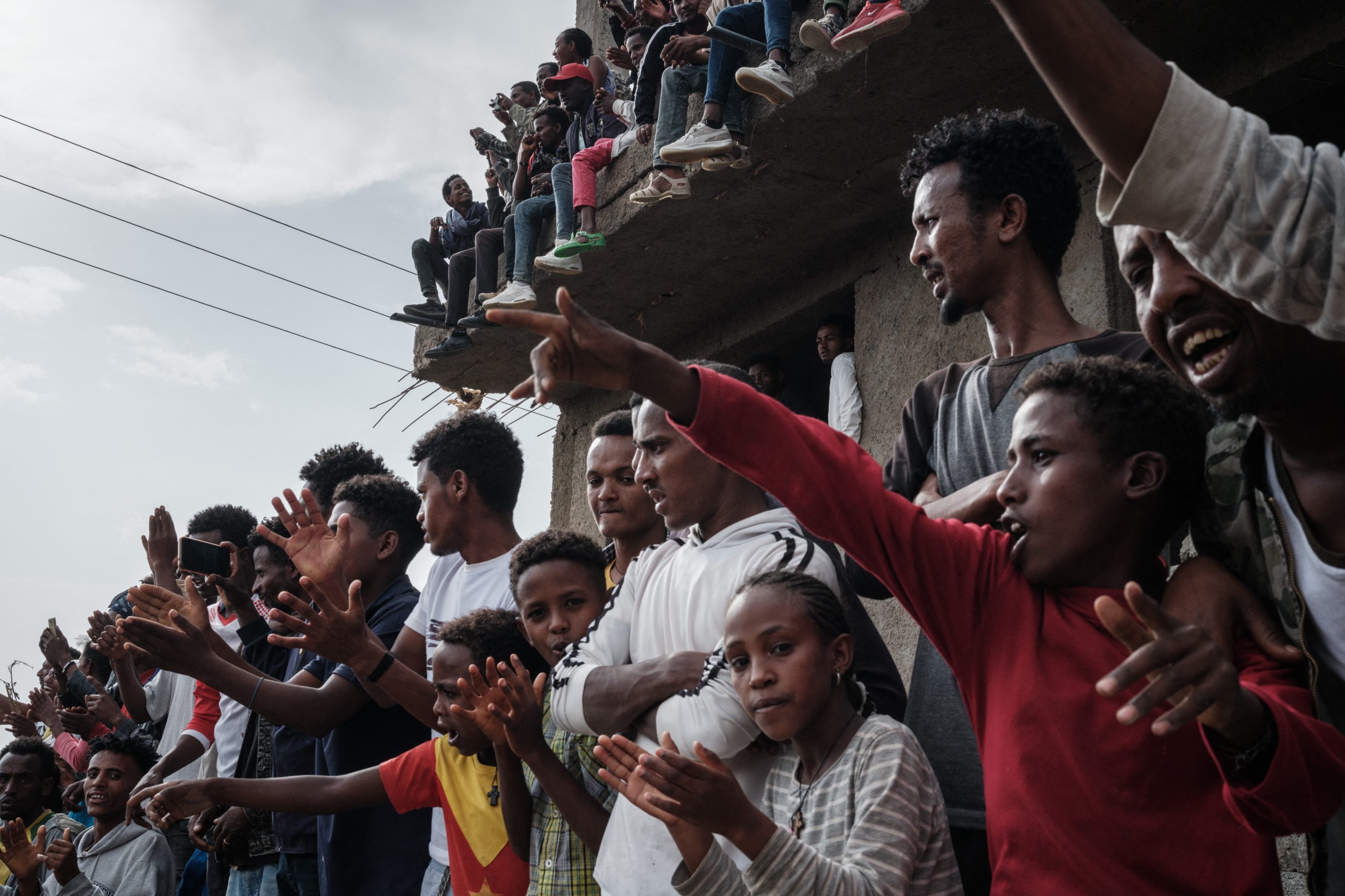
Ethiopia is teetering on the brink of a human rights and humanitarian catastrophe, Amnesty International warned today, amid worrying developments linked to the escalating Tigray conflict.

On 4 November the Ethiopian government granted itself sweeping new emergency powers which arbitrarily restrict human rights and threaten the independence of the judiciary.

Meanwhile there has been an alarming rise in social media posts advocating ethnic violence, and government officials have implored civilians to take up arms against the Tigray People’s Liberation Front (TPLF) and the Oromo Liberation Army (OLA), which have recently joined forces against the central government.

“The dire humanitarian and human rights crisis which began one year ago in Tigray has been spilling into other areas of the country. To stop the situation spiraling out of control, the Ethiopian authorities must urgently take serious action to ensure human rights and international humanitarian law are respected,” said Deprose Muchena, Regional Director for East and Southern Africa at Amnesty International. 

State of Emergency

Ethiopia’s federal parliament adopted a state of emergency on 4 November, exactly a year after armed conflict with the TPLF began.

The emergency proclamation is overly broad, since it extends to the entire country and restricts human rights that cannot be limited or suspended under any circumstances according to international law.

For example, it allows authorities to arrest anyone without a warrant if there is “reasonable suspicion” of cooperation with “terrorist groups”, and to detain them without judicial review for as long as the proclamation is in place, currently for six months.

This could have a particularly worrying impact on human rights defenders and journalists. The emergency proclamation allows for NGO and media outlet licenses to be suspended or cancelled if they are suspected of providing direct or indirect material or moral support to “terrorist organizations” – terms which are ill-defined and open to broad interpretation. 

Earlier this year, Amnesty International documented mass round-ups and arbitrary detentions of Tigrayans, including journalists and a human rights activist, whom the government claimed had ties to the TPLF, which is designated as a terrorist group by the Ethiopian federal government.

The emergency proclamation also allows for the prohibition of any form of expression opposed to “the operation of the Emergency Operation and the purpose of the Proclamation” and poses challenges to the independence of the judiciary.

“The sweeping nature of this state of emergency is a blueprint for escalating human rights violations, including arbitrary detention, particularly of human rights defenders, journalists, minorities and government critics. And it puts detainees at heightened risk of torture and other ill-treatment,” said Deprose Muchena.

Civilians asked to take up arms

In another worrying development, government officials in several Ethiopian regions have recently implored civilians to take up arms to repel the ongoing TPLF offensive.

In the capital Addis Ababa, government officials have asked civilians to organize to safeguard their surroundings, and to register arms or hand them to neighbours if they are unable to use them themselves. Similar calls to arms have been echoed by the Amhara, Oromia and Somali regional governments.

This call to arms puts people’s rights and even lives at risk by encouraging the establishment of untrained and unaccountable militias. Such groups already have committed war crimes in this conflict, including unlawful killings, rape and other sexual violence targeting people on the basis of their ethnicity.

Rise in online hate speech

On 3 November, Facebook removed a post by Ethiopia’s Prime Minister Abiy Ahmed, stating it had violated the platform’s policies against inciting violence.

However, Amnesty International has noted a significant rise in other recent social media posts inciting violence and using ethnic slurs against Tigrayans, some of which have gone unchecked. According to analysis from a local human rights organization, influential people such as journalists and political figures were among those sharing the posts, and social media platforms were slow to remove them. 

“Ethiopian authorities have an obligation to prohibit advocacy of hatred that constitutes incitement to hostility, discrimination or violence. The authorities must urgently denounce any statements, online or otherwise, which advocate violence against a specific ethnic group. Given the rising political and ethnic tension in Ethiopia, social media companies also have a responsibility to rapidly scale up their content moderation efforts, and ensure that the algorithms behind their platforms are not fueling advocacy of violence,” said Deprose Muchena.

Civilians at risk amid escalation

Amnesty International reiterated its call on all parties to the conflict in Ethiopia to respect international humanitarian law and protect civilians. Leaders on all sides must also renounce incitement to violence against individuals based on their ethnicity.

Since the conflict in Tigray began in November 2020, the organization has documented war crimes by Ethiopia National Defence Forces, Eritrean forces, and Amhara forces, and has been documenting an increasing number of allegations of war crimes by the TPLF. The Oromo Liberation Army (OLA) has repeatedly been implicated in serious human rights abuses, mainly attacks targeting ethnic Amhara minorities in Western Oromia.

Violations by the warring parties have included massacres, extrajudicial killings of captives and sexual violence targeting women and girls. Barriers to access for humanitarian organizations to areas affected by the conflict and attacks targeting aid workers and facilities have greatly worsened the dire humanitarian situation resulting from the conflict.

“African leaders and other international actors with influence must make clear to all the parties in Ethiopia that they must step back from the brink, protect civilians, end incitement, allow unhindered humanitarian access and monitoring, and respect human rights,” said Deprose Muchena. 

“The parties must understand that those responsible for war crimes and other violations will be held accountable.”

China: Release jailed Wuhan activist ‘close to death’ after hunger strike

A Chinese citizen journalist jailed for reporting on the early days of the Covid-19 pandemic in Wuhan is at risk of dying if she is not urgently released to receive medical treatment, Amnesty International said today.

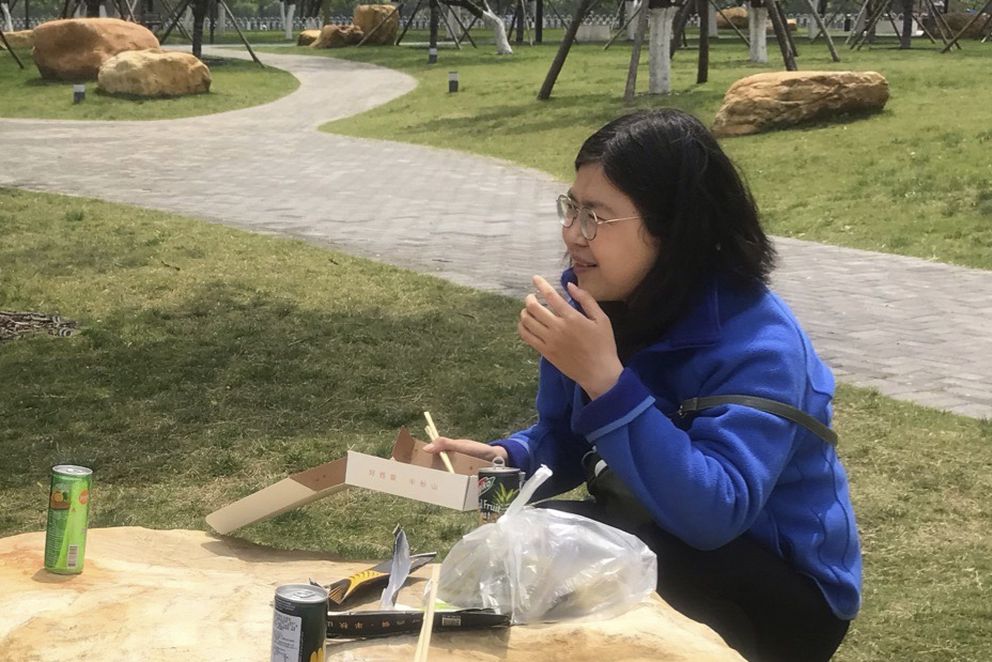
Zhang Zhan, who was sentenced to four years in prison in December for posting on social media about China’s handling of the outbreak, has been on hunger strike in protest at her incarceration. Her family say they do not expect her to live through the winter if she is not released on medical grounds.

“Zhang Zhan, who should never have been jailed in the first place, now appears to be at grave risk of dying in prison. The Chinese authorities must release her immediately so that she can end her hunger strike and receive the appropriate medical treatment she desperately needs,” said Gwen Lee, China Campaigner at Amnesty International.

Zhang Zhan, who should never have been jailed in the first place, now appears to be at grave risk of dying in prison.

Amnesty International China Campaigner, Gwen Lee.

“The Chinese government’s prosecution of Zhang Zhan, simply because she tried to uncover what was happening in Wuhan amid huge government secrecy about the pandemic, is a shameful attack on human rights.”

Zhang Zhan, a former lawyer, travelled to Wuhan in February 2020 to provide on-the-ground information about what was happening there. She posted on social media about how government officials had detained independent reporters and harassed families of Covid-19 patients.

She went missing in Wuhan in May 2020. It later emerged that she had been taken by the Chinese authorities and detained in Shanghai, where she was convicted of “picking quarrels and provoking trouble” after a sham trial.

In June 2020, Zhang Zhan began a hunger strike in protest at her detention. By December, her body was so weak she had to attend her trial in a wheelchair.

Prior to the trial, authorities force-fed her and restrained her for days at a time to prevent her from removing a feeding tube. They also forced Zhang to wear shackles and hand restraints 24 hours a day for more than three months as punishment for her hunger strike.

On 31 July 2021, she was admitted to hospital due to severe malnutrition. However, she was returned to prison and remains on a partial hunger strike despite the grave risk to her health, which continues to deteriorate at a dramatic rate.

Since her trial, the authorities have refused to let her speak to her lawyer or meet her family in person. She has been allowed occasional phone or video calls with relatives, under supervision.

In a Twitter post on 30 October, her brother Zhang Ju wrote: “I don’t think she’s going to live much longer. If she doesn’t make it through the coming winter, I hope the world will remember her as she once was.”

Zhang Zhan is featured in Amnesty International’s 2021 Write for Rights campaign calling for her release.

“Zhang Zhan is a victim of the Chinese government’s zero-tolerance approach to criticism and opposing views. She has been imprisoned solely for peacefully exercising her right to freedom of expression, and she must be immediately and unconditionally released,” Gwen Lee said.

“Pending her release, she must have regular, unrestricted access to her family and lawyers of her choice, and not be subjected further to any ill-treatment. If Zhang Zhan dies in prison, her blood will be on the Chinese government’s hands.”

Citizen journalists were a vital source of uncensored, first-hand information about the Covid-19 outbreak in China. Because they work independently of state-controlled media, citizen journalists face constant harassment for exposing information the Chinese government would rather keep quiet.

There is an alarming pattern of deaths of imprisoned Chinese activists, either in detention or after being belatedly released on medical parole.

In July 2017, human rights activist and Nobel Laureate Liu Xiaobo died in custody after the authorities refused his and his family’s requests to receive treatment abroad for his cancer.

The same year, Chinese writer and government critic Yang Tongyan (pen name Yang Tianshui) died three months after being released on medical parole and undergoing an operation to remove a brain tumour.

Beijing activist and prominent campaigner Cao Shunli died from organ failure after months in custody in March 2014. She was denied appropriate medical treatment while in jail. 

Amnesty Calls on Australia to Support a Ban on Killer Robots

Amnesty International has written to Australia’s Foreign Affairs Minister Marise Payne, calling on the Australian Government to support an international treaty process that would see the prohibition of Autonomous Weapons Systems (AWS).

Over the past five years, talks on the issue of AWS have been advancing at a slow pace. The majority of states support the need to regulate AWS, however Australia continues to fund the development of weapons systems with increasing autonomy using new technology and artificial intelligence, and to argue that there is no need for a legally binding international instrument concerning AWS. These ‘killer robots’ could be used in conflict zones, by police forces and in border control. A machine should not be allowed to make a decision over life and death

The replacement of troops with machines will make the decision to go to war easier. What’s more, machines can’t make complex ethical choices within the context of unpredictable battlefield or real world scenarios; there is no substitute for human decision making.

After eight years of discussions, it is time for states to take meaningful action towards a legally binding law on AWS. The pace of technology development must be matched by the creation of law to tackle the threat posed by killer robots. We call on Australia to join with other nations in supporting the establishment of a legally binding instrument, and a prohibition on AWS that target humans.

Media Awards: Meet the 2021 Cartoon Finalists

The Amnesty International Australia Media Awards recognise the important work of media professionals operating in Australia to expose human rights abuses around the world.

With the impending announcement of this year’s winners on the 18th November – meet the finalists in the Cartoon category and their entries to this years’ awards. In no particular order:

‘“They Don’t Understand the Fear We Have”, Badiucao, Human Rights Watch

“They Don’t Understand the Fear We Have”, Badiucao, Human Rights Watch

Badiucao is a Chinese Australian political cartoonist, artist and rights activist. He is regarded as one of China’s most prolific and well-known political cartoonists. He confronts head on a variety of social and political issues in his work. He was awarded as The 2020 Havel laureates of Human Rights Foundation and CRNI’S Courage In Cartoonist Award 2019. He and his family have been harassed and threatened by Chinese authorities after his Hong Kong exhibition “Gongle” in 2018.

The judges’ comments:

“Badiucao employs a powerful visual style combined with the insight of lived experience and deep knowledge of the subject matter to create a piece of animated work which highlights the predicament of those who speak out against the interference of the CCP in Australian universities. His use of symbolic colour amplifies the effect – the red of China and the red of life and death consequences for dissidents. He “brings us in” to the predicament of a group we in mainstream Australia often perceive as outsiders, and evokes our empathy.”

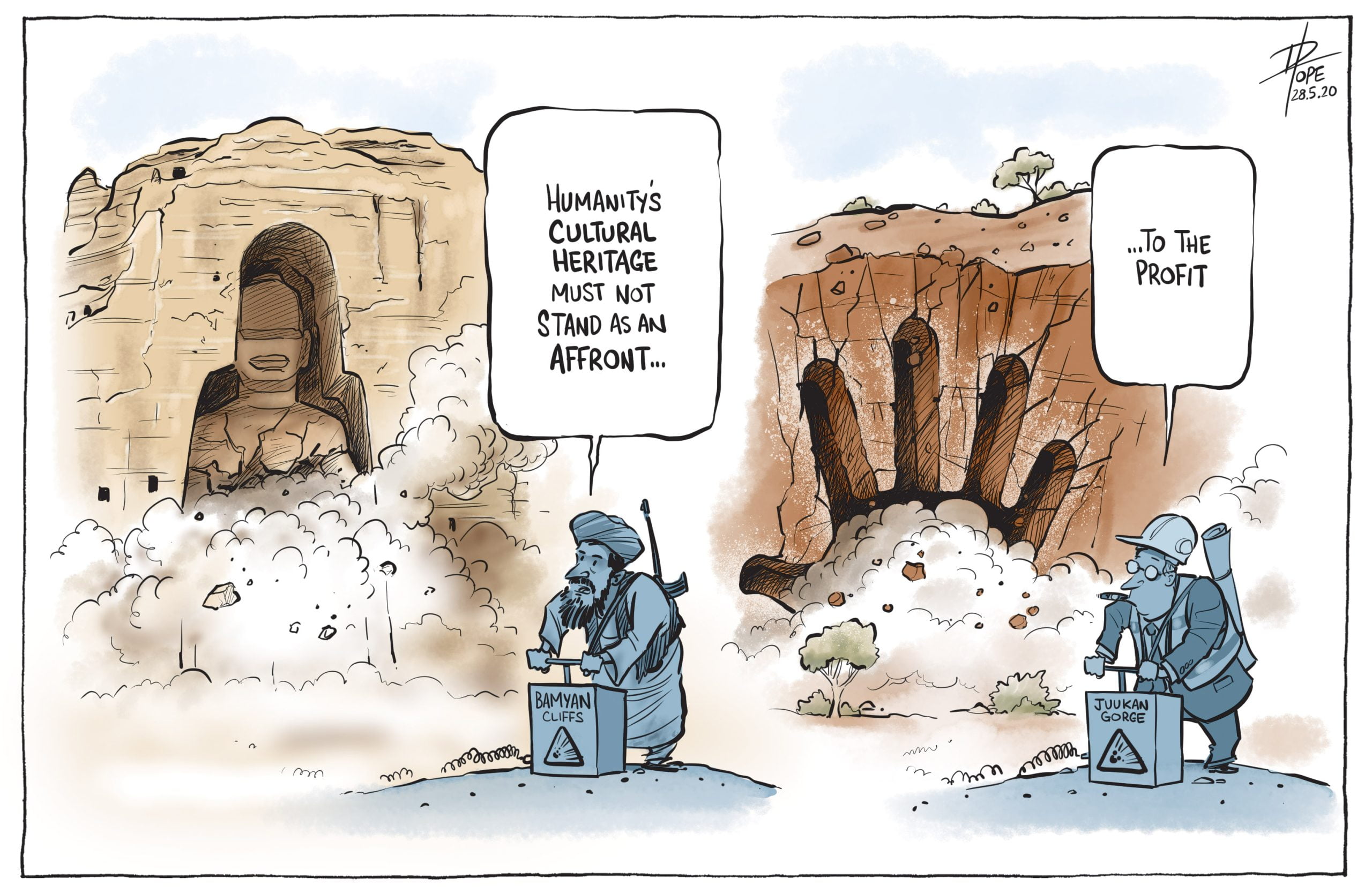
‘Juukan Gorge’, David Pope, The Canberra Times

Juukan Gorge, David Pope, The Canberra Times

David Pope lives in Canberra and draws cartoons for The Canberra Times and Australian Community Media.

The judges’ comments:

“This is such a powerful cartoon, and such a brilliant and apt comparison between two enormously significant cultural icons. While in a sense, these are “things”, not people, being destroyed, either by the Islamist extremist Taliban, or the economic rationalist “extremist” miners (here is the most devastating comparison!), they address the profound issue of cultural destruction, which is as effective a way of oppressing and damaging a people for generations, as removing their children or forbidding their language. As ever, David’s drawing style is accessible, appealing and faultless.”

‘Barred from Coming Home’, Jessica Harwood

Barred From Coming Home, Jessica Harwood

Jessica is an artist and campaigner living on Gadigal land in Sydney. Initially training as a lawyer, Jessica went on to work in the conservation sector and on climate change campaigns, maintaining a freelance illustration and art practice on a part time basis. Her work has been featured on the BBC and ABC, by social movements, charities and businesses. As a communications professional and campaigner, Jessica believes art can change the world for the better. She specialises in turning complex messages into artworks, infographics and ‘info-toons’ to drive people to action, but also enjoys making people snort-giggle with silly cartoons.

The judge’s comments:

“This was a shocking moment in Australia’s recent policy-making, and Jessica captures the essence of what was outrageous, unacceptable and hypocritical about it. Focusing on the Prime Minister’s particular schtick of talking about curry to show his multicultural credibility, it exposes the hollowness of this pretence, and the insensitivity of singling out one group when the impression if not the fact would be that it was a racist policy. Jessica’s anger in this case is well-directed and backed up with a solid case and some pointed wit.”

Thanks to this years’ Cartoon judges

  • Cathy Wilcox, The Sydney Morning Herald
  • Fiona Katauskas, Freelance/Eureka Street
  • Jon Kudelka, The Saturday Paper

Follow the Media Awards

Winners of this years’ Media Awards will be announced in an online ceremony on the 18th November. To find out more about the Awards you can follow the coverage on our social channels, or follow updates on our website.

‘Each-way bet’: Trade Minister declines to co-sponsor waiver on COVID vaccine monopolies

On the eve of an important World Trade Organisation (WTO) meeting on intellectual property this week, the Government has revealed that Australia will not co-sponsor a proposal to waive commercial monopolies on COVID19 vaccines, as Shadow Trade Minister Madeleine King MP and campaigners have urged.

The disclosure came through Senate Estimate proceedings on 28 October, in which Department of Foreign Affairs and Trade (DFAT) First Assistant Secretary James Baxter told Senators that “the Government has decided that, rather than attaching itself” to a specific proposal, “it’s going to focus its efforts… on encouraging the key players to find convergence” and to “encourage both [camps] to show flexibility with a view to ensuring that we can have a consensus outcome”, rather than co-sponsoring the waiver on vaccines monopolies.

The Government’s position has been described by advocates of global vaccine equity as an ‘each-way bet’, arguing that the Australia government must take stronger action to ensure low-income countries can produce and distribute COVID19 vaccines without risk of breaking global trade rules. Dr Patricia RanaldAustralian Fair Trade and Investment Network (AFTINET) Convenor, said: “Australia must use its influence to support the waiver for low-income countries where millions are dying while more infectious variants like Delta develop. Australia still has time to become a co-sponsor to the proposal.”

Dr Deborah Gleeson, Deputy Convener of the Political Economy of Health Special Interest Group of the Public Health Association of Australia (PHAA) said: “Globally, less than 4% of people in low-income countries have been fully vaccinated. This means that the World Health Organisation (WHO) goal of vaccinating at least 40% of the population in all countries by the end of 2021, and 70 % by mid-2022, remains implausible.”

Michele O’Neil, President of the ACTU, said: “The Morrison Government delayed and compromised Australia’s response to the pandemic and our vaccine rollout. It is now condemning vulnerable developing economies to the same fate, rather than taking common sense steps supported by the rest of the international community to keep people safe and prevent unnecessary harm.”

Michelle Higelin, Executive Director of ActionAid Australia, said: “Vaccine inequity is deepening poverty and gender inequality, and winding back decades of progress. We urge the Minister to co-sponsor the TRIPS waiver proposal to support the rapid production and distribution of vaccines across the world.”

Tim O’Connor, Campaigns Manager at Amnesty International Australia said: “Big pharma companies like Pfizer are set to gain more than $36 billion by the end of the year, but the Australian government continues to be a passive bystander at the World Trade Organisation, seemingly unaffected by the thousands of people without access to vaccines who are dying every day. It’s time for the Australian Government to sponsor the TRIPS waiver, bring an end to the vaccine monopoly and ensure equitable access around the world.”

Dr Sandie Cornish, Social Justice Officer at the Australian Catholic Bishops Conference Office for Justice, Ecology and Peace, said: “In the context of a pandemic, and of an international pharmaceutical market marked by oligopoly, governments have a moral responsibility to intervene to ensure just access to vaccines for all, with a fair return for companies. Rent-seeking behaviour in the face of a catastrophic global threat to human life is unconscionable.”

Kate Lee, Executive Officer of Union Aid Abroad-APHEDA, said: “It’s beyond belief at this time of the global COVID-19 crisis, with over 5 million dead already, that the world is being held to ransom by a few countries backing pharmaceutical companies making such mega-profits on the back of the public funding they received. History will and should judge this blatant greed as a crime against humanity. We demand real and equal access to COVID-19 vaccines and other related products technology, so the global south can ramp up their own production. Leadership can fix this. We join the call for Australia to co-sponsor the temporary waiver on patents for COVID vaccines at the World Trade Organisation

The waiver on the Trade-Related Aspects of Intellectual Property (TRIPS) agreement was first proposed by India and South African more than one year ago, and has since gained the support of more than 100 WTO member states, with 64 countries co-sponsoring the proposal to temporarily waiver intellectual property rules that grant pharmaceutical companies a monopoly on COVID vaccine production.

Opponents of the waiver have made a counter-proposal which relies on existing rules for voluntary arrangements between pharmaceutical companies and governments to share intellectual property rights. But this will not work because manufacturers of the most effective mRNA vaccines have refused to make voluntary arrangements with low-income countries, preferring instead to sell limited quantities to high income countries.

Tigray diaspora meets with Human Rights Committee on anniversary of conflict

Members of the Australian Tigrayan diaspora, accompanied by Amnesty International campaigners, will appear before an inquiry by the parliamentary Human Rights Sub-Committee on November 10 to discuss the crisis in the northern province of Ethiopia one year since it began.

The joint delegation will meet MPs from all sides of politics and urge the Australian government to call on the Ethiopian authorities to grant unfettered access to UN investigators and other independent observers to Tigray and honour the promise of granting unhindered humanitarian access to the region. They are also asking the Australian government to work with the international community to support an UN-led investigation into human rights abuses.

“It has been one year of suffering for the Australian-Tigrayan community. Many of us have lost several family members and are fearful for the wellbeing of those we have not been able to contact. We are hoping that the Australian government will play their part in putting an end to the conflict by putting pressure on the Ethiopian government and ensuring justice is served to those who are responsible,” Saron Berhane from the Australian Tigrayan community said.

Daniel Gebru, also from the Tigrayan Australian  community, said: “The last year has been extremely difficult for Tigrayans everywhere. We have been suffering from stress and the anxiety of not knowing whether our families in Tigray are alive or not. My younger brother, an engineer who was working in Humera who I haven’t heard from in over six months, reached out to contact me using a UN workers phone. He sent me a voice message saying that he is struggling to access basic necessities and he can’t support our family around him. This is just one of the millions of stories and Tigrayan lives affected by this conflict. I hope that the international community and the Australian government put pressure on the Ethiopian government to stop the siege and allow access for humanitarian assistance.”

Since the fighting broke out on 4 November 2020, thousands of civilians have been killed, hundreds of thousands of people have been internally displaced within Tigray, and 63,000 refugees have fled to Sudan. Amnesty International and other organisations have documented a string of serious human rights violations that include war crimes and likely crimes against humanity. There are also numerous credible reports of women and girls being subjected to sexual violence, including gang rape by Ethiopian and Eritrean soldiers.

Due to the fighting, aid has not been able to be delivered and thousands are reported to be on the brink of starvation.

We express our disappointment that the Australian government’s response has not matched the severity of the crisis in Tigray

Amnesty International Australia campaigner Nikita White.

“We express our disappointment that the Australian government’s response has not matched the severity of the crisis in Tigray,” Amnesty International Australia campaigner Nikita White said.

“We have been particularly concerned about the use of rape and sexual violence as a weapon of war in the Tigray region. We have urged the Australian government to call on the Ethopian authorities to stop its security forces and allied militia members from commiting sexual violence against women and girls and increase Australia’s aid to support the Tigrayan women who have survived sexual violence.”

Amnesty International continues to call on all parties to the conflict to prioritise the protection of civilians, and to grant access to human rights monitors and humanitarian organisations.