This is how powerful you are
Laos: No progress on case of Sombath Somphone’s disappearance
The Laos authorities must establish an independent commission to uncover the truth about the fate of civil society activist Sombath Somphone, on what is now the third anniversary of his disappearance.
In an open letter to the Lao Prime Minister Thongsing Thammavong, 49 Directors of Amnesty International national offices around the world are highlighting the near complete lack of progress in the case despite a catalogue of evidence.
“Sombath Somphone’s disappearance remains a dark stain on Laos’ human rights record. The Laos authorities’ claim that they are investigating this crime is a lie – they are simply dodging questions and trying to silence civil society’s attempts to raise the case.” Champa Patel, Amnesty International
“Three years is too long for Sombath’s family and his many supporters to wait for the truth. The Laos authorities must once and for all set up an independent commission to genuinely investigate Sombath’s disappearance.”
Read a full copy of the open letter.
Face-to-face fundraising and Amnesty International Australia
Hi. My name is Peter. I manage fundraising here at Amnesty International Australia.
Along with some other charities, Amnesty has been criticised recently for our work with particular fundraising agencies. These agencies have been accused (in one case, rightly) of exploiting their workers.
Let me be clear that this is absolutely not okay.
My colleagues and I take workers rights personally. Workers rights are human rights, so this goes to the heart of what Amnesty is about.
The illegal and unethical practices of one agency were made known to us in 2014. We terminated our contract with that agency within three working days.
At that point, we reviewed all our contracts and strengthened the obligations of our partner agencies. We made it clear that our organisation’s values would be seriously undermined by poor employment practices.
Face-to-face fundraisers have a challenging and important job. As workers, they deserve to be protected. That’s why we’ve been talking to unions, fundraising agencies, other charities, government agencies, the PFRA, and workers themselves about ways to improve the third-party fundraising sector.
As part of this, we’ve already made an application to the Fair Work Commission to get face-to-face fundraisers protected by an industrial award. This will set the benchmark for pay and conditions for all fundraisers working on our behalf in public.
While we progress that work, we’ve actively welcomed guidelines released by the Australian Charities and Not for Profits Commission on ensuring due diligence over all our supply chains. As the guidelines recommend, we’ve been speaking regularly to agencies to make sure they understand our commitment to lawful, ethical employment practices. We require that agencies work with their own advisers to provide us with the necessary assurances that their business models are legal and meet best practice guidelines.
If possible, rather than abandon the third-party fundraising sector (leaving people out of work and charities like ours short life-saving funds), we want to help ensure it’s ethical and sustainable.
Face-to-face fundraising has helped Amnesty build a long-term income base through regular giving. Because of these small, monthly donations, we’ve been able to expand our research and campaigning work on Indigenous rights issues here in Australia, and continue to be a strong voice protecting refugees. In 2016 alone, we, freed more than 650 people from abuse and imprisonment.
Ultimately, we’ll do whatever it takes to ensure a better, fairer deal for the people who fundraise to make our life-saving campaigns possible. Face-to-face fundraisers are passionate about Amnesty’s work. Their pay and conditions need to reflect this.
I very much welcome feedback on this issue. If you have specific questions/concerns, please call our Supporter Relations Team (1300 300 920) or email me direct at peter.thomas@amnesty.org.au
I especially encourage you to get in touch with concerns if you’re a current or former face-to-face fundraiser who has worked on our behalf. As always, your input would be very welcome.
Finally, I offer my personal reassurance to donors and supporters that, on this issue as with everything, we at Amnesty hold ourselves to the highest standards.
For human rights,

Peter Thomas
Chief Operating Officer
Amnesty International Australia
Egypt: Continued detention of photojournalist an affront to press freedom
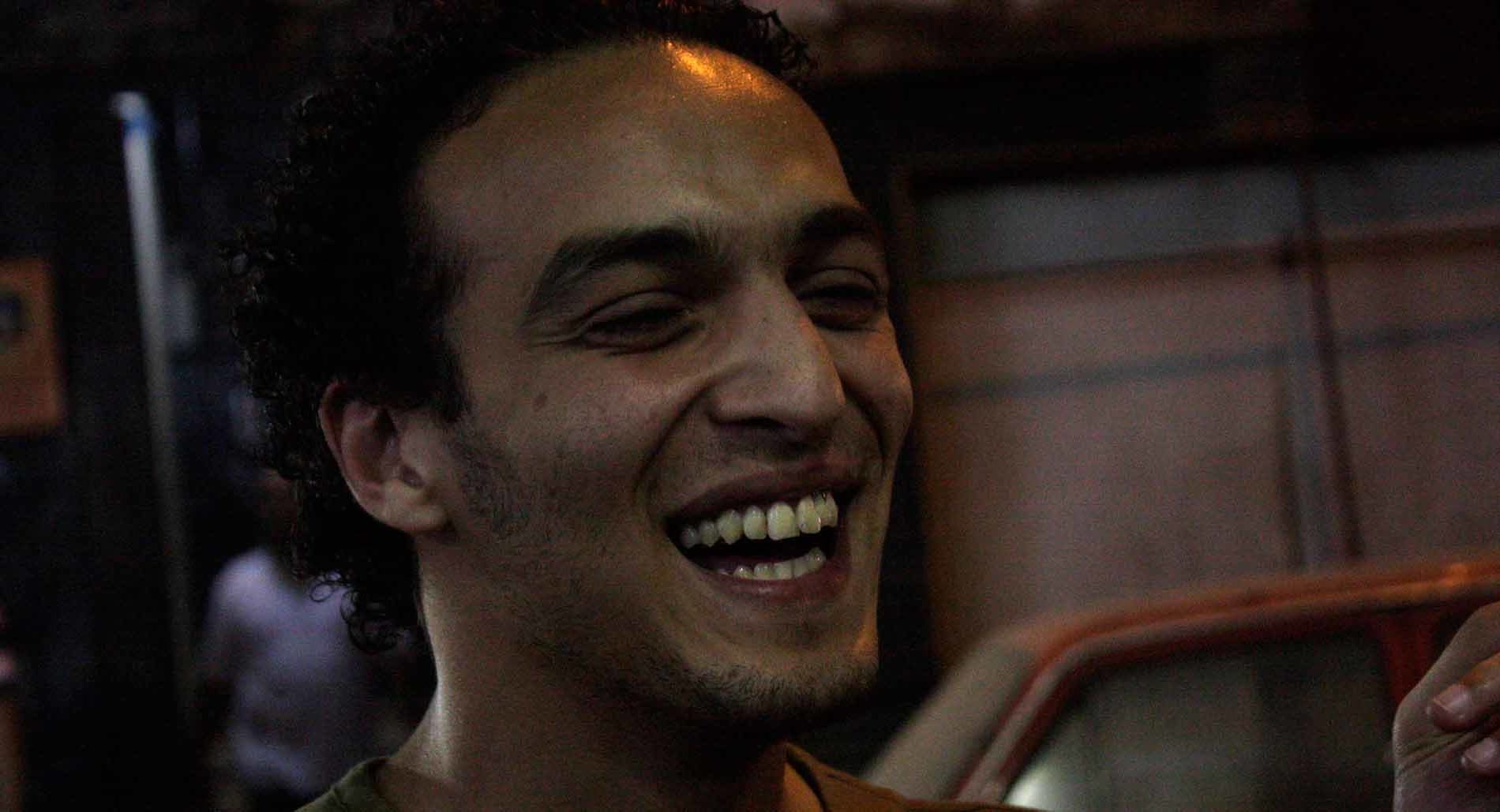
The Egyptian authorities’ continued detention of photojournalist Mahmoud Abu Zeid, widely known as Shawkan, exposes the rank hypocrisy behind their claim to uphold press freedom ahead of the start of the photojournalist’s mass trial with 738 others on 12 December.
In an open letter addressed to the Egyptian Public Prosecutor, Amnesty International has called for Mahmoud Abu Zeid to be released immediately and unconditionally, and for all charges against him to be dropped.
More than two years in detention
“Mahmoud Abu Zeid is a prisoner of conscience who has spent more than two years -848 days- in pre-trial detention solely for peacefully exercising his right to freedom of expression,” said Said Boumedouha, Deputy Middle East and North Africa Director at Amnesty International.
“This 28 year-old-man should be free, not languishing behind bars as his health deteriorates. His journalism is not a crime.”
Denied essential medication
Mahmoud Abu Zeid is suffering from Hepatitis C and has been denied access to essential medication. His lawyers have appealed to the Public Prosecutor at least 17 times for his release on medical grounds, without success.
At a trial scheduled to start on 12 December, the photojournalist risks life imprisonment on trumped-up and politically motivated charges stemming from his work.
Journalism is not a crime
Amnesty International has collected nearly 90,000 signatures worldwide through its petition calling for Mahmoud Abu Zeid’s immediate release. The photojournalist addressed his supporters in a letter written from prison and published in early December.
“You keep me feeling that I’m not alone. You all have become my power and my energy and without all of you I cannot go through with this. KEEP SHOUTING, JOURNALISM IS NOT A CRIME.” Mahmoud Abu Zeid in an open letter to his supporters
Amnesty International’s open letter to the public prosecutor also details how Mahmoud Abu Zeid has suffered torture and other forms of ill-treatment during his detention. It highlights how his detention without trial for two years constitutes a violation of international human rights law, as well as of Egyptian law and of the Egyptian authorities’ professed commitment to freedom of expression.
Routine use of pre-trial detention in Egypt
President Abdel Fattah al-Sisi told the BBC in November “there is a huge space for free media in Egypt and all government entities are being criticised by the national media”. He added “the free media in Egypt today could not be found in any other country”. Yet, there are currently at least 32 journalists being held behind bars in Egypt – including 18 in relation to their work as reporters, according to the Egyptian Press Syndicate.
“Amnesty International has repeatedly expressed its concern over the Egyptian authorities’ routine use of pre-trial detention as a means of punishment contrary to international standards which specify that such detention should be an exceptional precautionary measure,” Said Boumedouha, Deputy Middle East and North Africa Director at Amnesty International, says in the letter.
Freedom of expression hampered
“Mahmoud Abu Zeid is among hundreds of individuals detained on this basis, in cases linked to peaceful freedom of expression and assembly.”
Mahmoud Abu Zeid was arrested in Cairo on 14 August 2013, while photographing the security forces’ violent dispersal of a sit-in during which more than 600 protesters were killed. He is being held in inhuman conditions in Cairo’s Tora prison.
Philippines: positive step to addressing police torture
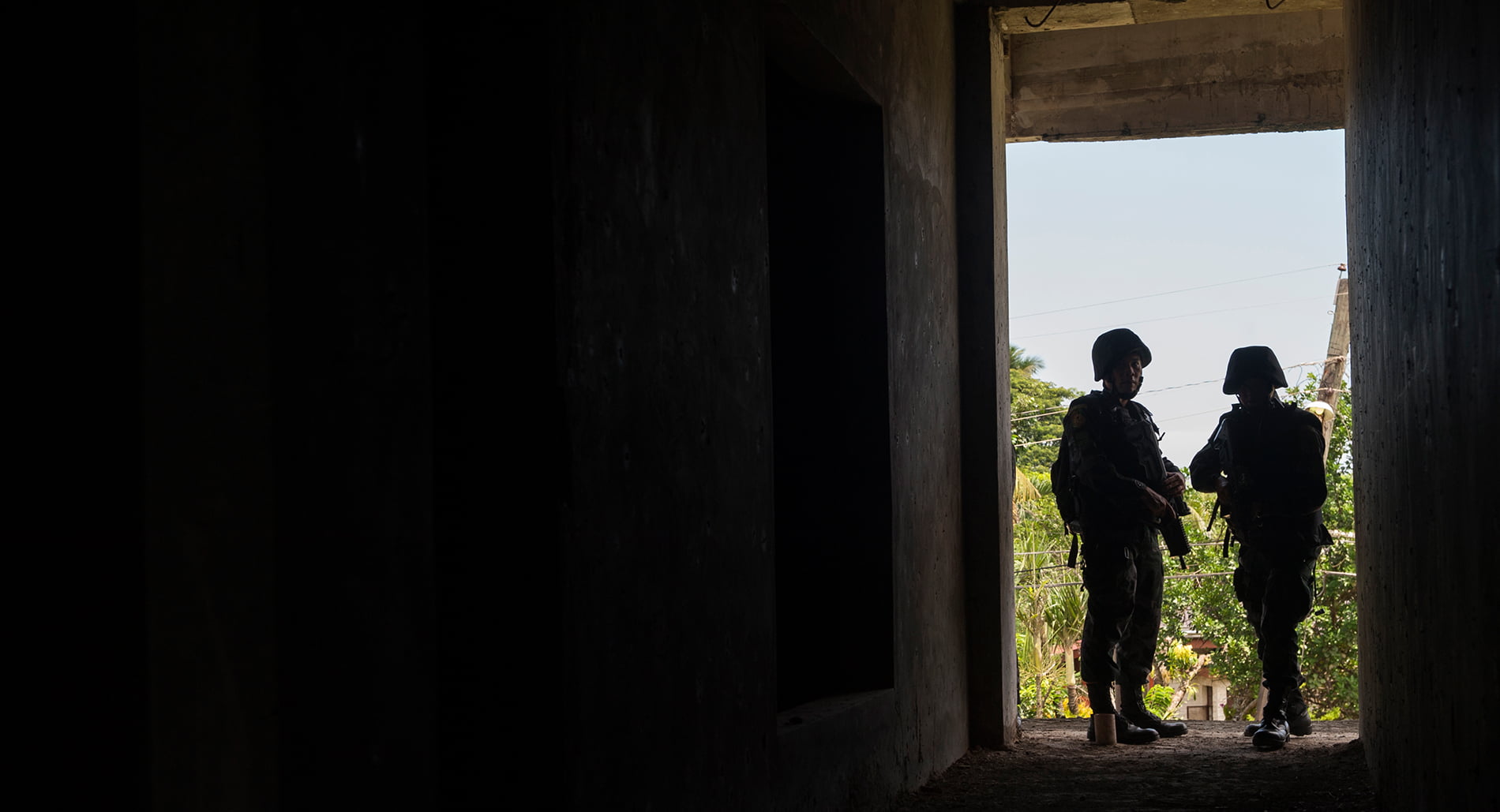
Amnesty International has welcomed the Philippines Senate Committee on Justice and Human Rights convening a second inquiry on Amnesty International’s ‘Above The Law: Torture in the Police’ report, following a resolution passed in January to respond to the evidence included in the report regarding widespread torture in the Philippine National Police.
Zero conviction rate concerning
“Amnesty International welcomes this positive step by the Philippines Senate to convene these hearings towards ending torture in the Philippines. Senator Aquilino Pimentel’s concern about the zero conviction rate on cases of torture, six years after the anti-torture law was passed, and the need to address the weakness within the Philippines justice system is reassuring,’ said Josef Roy Benedict, Amnesty International South East Asia Deputy Director for Campaigns.
“However it is disappointing to hear that the Philippine National Police have yet to review Amnesty International’s report and recommendations a year after it was published. This raises serious questions about their willingness to address and eradicate torture within the police force,” he added.
Recommendations
Amnesty International presented three major recommendations to the committee highlighting prevention of torture, criminal investigation and review of disciplinary and accountability mechanisms.“Amnesty International urges the Senate to expedite the bill for the establishment of a National Preventive Mechanism (NPM) for torture ensuring its functional independence from the government and has the authority to examine detention facilities and have immediate full access to information concerning detainees who are victims of torture,” added Benedict.
“Amnesty International urges the Senate to expedite the bill for the establishment of a National Preventive Mechanism (NPM) for torture ensuring its functional independence from the government and has the authority to examine detention facilities and have immediate full access to information concerning detainees who are victims of torture”
Senator Pimentel confirmed that he will file the NPM bill within the week following his pronouncement that all recommendations forwarded by Amnesty International shall be included in the committee report to be presented at the plenary.
Torture victims discouraged from complaining
“While the NPM is being deliberated at the Senate level, Amnesty International recommends that the Commission on Human Rights immediately reconvene the Oversight Committee provided for in the Anti-Torture Law to oversee its effective implementation. The Senate can push for the regular convening of the committee and ask all relevant authorities to report to it thereby monitoring the progress of all cases filed under the Anti Torture Act and make recommendations to remedy any shortcomings,” explained Benedict.
Amnesty International also reiterated its call in January for the Senate to review all existing oversight mechanisms where complaints about torture can be filed. Currently these processes are complex, confusing and reflect overlapping mandates, discouraging victims of torture to file complaints.
“It is high time to act now before the end of the 16th Congress and the turnover of leadership in May 2016. The opportunity to become a model on torture prevention and investigation in region is ripe,” concluded Benedict.
Amnesty is reuniting families
Today, thousands of mothers, fathers, sons and daughters are kept from loved ones.
People all around the world face human rights violations at the hands of their own government. Often it can be for simple, everyday actions that we take for granted – like voicing their opinions or belonging to a particular group.
Tragically, some of these people will be sentenced to death or left languishing on death row for decades. But together, we can bring them back to their families.
Watch the video above, from December 2014 – which is just as relevant today – to see who was reunited with their families, thanks to the help of Amnesty International supporters.
New counter-terrorism legislation will undermine rights Australians hold dear
The Australian Citizenship (Allegiance to Australia) Amendment Bill 2015, expected to pass the Senate tomorrow, is a flawed Bill that threatens the very human rights and freedoms Australians hold dear.
Under the proposed legislation Australian dual-citizens can lose their citizenship for alleged activities committed overseas, without undergoing a trial or being convicted of any offence.
A severe act
“Stripping citizenship is one of the most severe acts a state can take against an individual, yet this Bill will allow authorities to strip Australians of their citizenship based solely on evidence that would not stand up in court. It flies in the face of one of the most fundamental tenets of law: presumption of innocence until proven guilty beyond reasonable doubt,” said Diana Sayed, human rights lawyer with Amnesty International Australia.
“This is a deeply flawed Bill that contains inadequate safeguards and oversight mechanisms to prevent the removal of citizenship from Australians who are, in fact, innocent of serious terror offences overseas.”
At odds with UN Strategy
Amnesty International’s submission on the Bill acknowledged the parliament’s responsibility to protect national security.
However, the government has not produced any evidence that removing citizenship to prevent people from returning to Australia is a proportionate response that will reduce terrorist activities.
“Australian citizens suspected of terrorist activities should be afforded due process, and, if found guilty in a court of law, face justice for their actions,” said Diana Sayed.
Undermining the presumption of innocence puts Australia at odds with the UN Global Counter-Terrorism Strategy, which says that respect and protection of human rights and the rule of law are a “fundamental basis of the fight against terrorism”.
Liberties must be protected
“In protecting Australia’s national security, the Government must not jeopardise the very laws and liberties that underpin a free society,” said Diana Sayed.
“Stripping citizenship must always be exceptional and a last resort.”
“We remain concerned about further restrictions on freedom that have been proposed by this Government. This Bill is the latest in a long line of legislation to use a perceived threat to national security to steadily erode the rights and freedoms of Australians, with little evidence it will make Australians safer.”
Refugee crisis and freedom of expression must be tackled at ASEAN Summit

Southeast Asian leaders meeting this week in Malaysia must urgently prioritize a coordinated plan to help the thousands of asylum seekers and migrants from Myanmar and Bangladesh who are forced to risk abuse and death at sea.
Looming refugee crisis can’t go ignored
Governments meeting at the Association of Southeast Asian Nations (ASEAN) Summit in Kuala Lumpur from 18-22 November cannot solely focus on economic development while there is a looming refugee crisis and an ongoing clampdown on freedom of expression in the region.
“The global refugee crisis erupted in Southeast Asia in May this year, when thousands of people from Myanmar and Bangladesh were stranded in rickety boats, pushed back from safety on shore, trafficked into forced labour, or killed at sea. ASEAN nations have an important chance at this week’s Summit to agree on urgent action to prevent this tragedy from happening again.” Champa Patel, Amnesty International
“Governments in the region – in particular Indonesia, Malaysia and Thailand – must put in place strong domestic asylum systems, in line with their obligations. Customary international law is clear – people have the right to seek asylum, to have their requests fairly considered and not to be returned to a risk of torture or persecution.
“Those ASEAN member states who have yet not done so should also begin the process of ratifying the 1951 Refugee Convention.”
Freedom of expression
All governments in the region, but especially Malaysia, Thailand, Myanmar, Viet Nam and Indonesia, must respect and protect the right to freedom of expression and repeal or amend laws that violate this right.
In Malaysia, the colonial-era Sedition Act has been used to investigate, charge or imprison hundreds of individuals who have criticized the government or the monarchy. They include opposition politicians, political activists, human rights defenders, academics, journalists, lawyers and others. Political cartoonist Zulkiflee Anwar Ulhaque, also known as “Zunar,” is facing nine charges under the Sedition Act for tweets criticizing the judiciary.
In Thailand, official repression of free speech has dramatically intensified. Prisoners of conscience have been arbitrarily imprisoned, routinely denied bail and tried in often unfair trials in military courts, some without the right to appeal. Authorities are using laws on lèse-majesté (insulting the monarchy) and treason to imprison scores of people for peaceful acts of self-expression.
Persecution of human rights defenders
Human rights defenders continue to face censorship, enforced disappearances and violent attacks. For example, activist Sombath Boongamanong is among those facing military trial, for his criticism of the May 2014 coup.
While historic elections recently took place in Myanmar, there has been an increase in the numbers arrested and imprisoned solely for peaceful dissent during the past year. Weeks before the elections, at least 19 new prisoners of conscience were locked up adding to the scores of people already detained solely for peacefully exercise their rights.
One of them is Phyoe Phyoe Aung, Secretary General of the All Burma Federation of Student Unions (ABFSU) who has been in prison along with scores of other students and protesters since 10 March 2015 after being violently arrested during a student protest against the newly adopted National Education Law.
Activists face regular harrassment
The suppression of peaceful, social and religious activism continues in Viet Nam. Members of activist groups face regular harassment, including surveillance, restrictions on their movement, arbitrary detention, prosecution and imprisonment and physical attacks. Blogger Nguyen Huu Vinh and his colleague Nguyen Thi Minh Thuy remain in pre-trial detention since their arrest in May 2014, in connection with their blogs critical of government policies and officials.
In Indonesia, security forces arbitrarily arrested at least 264 Papuan political activists in May for peaceful protests during President Joko Widodo’s visit to the province. Scores of peaceful pro-independence activists from the Papua and Maluku regions remain imprisoned, some simply for waving a pro-independence flag. Blasphemy laws also continue to be used to repress minority beliefs.
“We continue to call for the immediate and unconditional release of all prisoners of conscience across the region,” said Champa Patel.
“ASEAN leaders must not leave the Kuala Lumpur Summit before there is a commitment to end the ongoing assault on human rights defenders in their countries. These defenders must be allowed to carry out their work without fear of persecution.”
Jails and graveyards: the only places you can speak freely in Myanmar
Undeterred by threats, physical attacks and prison, human rights lawyer Robert Sann Aung has been defending activists in Myanmar for more than 30 years.
After the recent elections in Myanmar, Robert talks to us about his hopes for his country.
President Thein Sein came to power in 2010 after highly criticised elections. What do you think about the much-promoted reforms since then?
Before the 2010 election, it was very difficult to highlight occasions where there had been an abuse of law. But later I was able to speak to the media to show what was happening. I used the media as a weapon. I believe that the media is the only way we can defend ourselves, even against nuclear weapons.
From 2010 to 2012, the human rights situation in Myanmar was a bit better, but after that time the authorities started arresting peaceful protesters again. The supposed reforms that have taken place are just sugar coating. The authorities only use the law to protect their cronies, not civilians.
The supposed reforms that have taken place are just sugar coating.
The President wants the world to believe that no-one is arrested for peacefully expressing their opinions. What is the reality?
The government is playing a game of “run and catch” with people who speak out. They have a law which allows freedom of expression but they also have a law which bans free protest. So they let people run, but then they catch them. They let people speak out initially, but they always jail them eventually.
You can only speak freely in two places: jails and graveyards. You can say what you want, as long as you’re in jail. But you can’t speak freely outside prison.
Do you think the recent elections will herald a new era of freedom?
Most of the election candidates are from the military, so they’re the same as what we have now. Also, at the moment, 25 per cent of the seats in the Parliament are reserved for the military, so even if we have a popular civilian government, they won’t be able to influence the Parliament. If we can change the constitution so the military doesn’t dominate, it will be better for the country.
What can the international community do?
I ask the international community to highlight what is going on in Myanmar. They need to put pressure on the government to change, and also use sanctions, which have been used in the past.
What can Amnesty activists do?
I would love to see an Amnesty office in Myanmar, to help educate people about their human rights – most people don’t even know that they have rights to defend. I ask all Amnesty supporters to keep a close watch on what is going on in my country.
As a lawyer, who are you defending at the moment?
I represent student protesters detained alongside Phyoe Phyoe Aung, who helped organise a march against a new education law in Myanmar. They are facing nine-and-a-half years in prison, which is the standard sentence for political prisoners. Phyoe Phyoe Aung’s soul is full of justice – her father was also a political prisoner. I support the campaign to free her and the other students 100 per cent.