A letter to a Saudi Arabian prison

A letter from Samar Badawi to her imprisoned husband, the Saudi Arabian human rights lawyer, Waleed Abu al-Khair.

Samar is also the sister of imprisoned blogger Raif Badawi.

‘History will exalt those who fought for freedom’

Words are not enough for me to express how proud I am of my husband. How deeply proud I am of the man who believed in me and my cause when I was imprisoned. As my lawyer, he defended me and never left me alone to face those who unjustly attempted to impose their patriarchal authority over me just because I am a woman who dared to speak up. Everyone turned their backs on me except for my husband who remained by my side until he had helped achieve justice for my cause.

He has always been my rock whenever I felt weak, he was my strength and my source of motivation and inspiration.

He taught me that a person is born free and that it is up to him or her to live in freedom or die trying to achieve it. Slavery has no place in his life except when it comes to serving God, the one and only.

Now, he lives in freedom even though he is behind bars with his colleagues Abdullah al-Hamid, Mohammad al-Qahtani and many other activists imprisoned purely for exercising their right to freedom of expression.

My life with him can be described as a wonderful book; resilience is its title, strife and struggle fill its pages, and its conclusion is freedom.

And here I am, my beloved husband, applying what I have learned from the book of our life – for I shall forever be resilient, hanging on whilst you are behind bars. I shall continue my struggle as long as my heart beats, and I shall never give up until I have you back under our roof. I shall forever believe in our freedom which you have spent your whole life defending.

Know then, dear husband, that it is tyranny and oppression that have put you behind bars.

In Saudi Arabia those who chose to rule in the name of Islam and Shari’a law have treated such jurisprudence as mere ink on paper. Those who claim to use religion to protect me are the very people who took away my safety and security, for within the kingdom those meant to be serving justice have decided that oppression should be a cause for celebration.

So a word to them…

To all those rulers and judges who have unfairly imprisoned the free, and enslaved the people, beware of the judgement you will receive from the heavens above. Woe to you who have terrorized the aggrieved out of pride.

To my fellow Saudi Arabians I say that my husband has been imprisoned so that you could live free. He stood up to the tyrants to claim your rights; he faced up to his oppressors telling them he would not tolerate their repression. Remember that history does not forget, it will exalt those who have fought for freedom and cast aside the memory of those who succumbed to a life of humiliation and servitude.

My last words are to my baby daughter, Joud. Do not feel sad because you were born while your father was behind bars. Be proud instead and hold your head high, for the whole world envies you for the father you have – even if his homeland has turned against him.

The future awaits you to continue your father’s struggle so that you make him even more proud than he is now. You will grow up to be a role model yourself, soon to become known as Joud the free, Joud the defiant, Joud the resilient: Joud Waleed Abu al-Khair”,


Your wife,

Samar Badawi
Lost Children: the two-minute version

Eighty-eight children are detained at Australia’s detention centre on Nauru. More than 60 asylum seeker children and their families are detained in Australia and are expected to be sent back to Nauru.

Media are denied access, but evidence shows that:

  • the children live in swelteringly hot, cramped conditions with little privacy and poor sanitation
  • crucial emergency health care for children is not available
  • long-term detention damages the health and development of children – after two years in detention, children display a ten-fold increase in psychiatric disorders, including self-harm and suicidal behaviour
  • lack of child protection on Nauru has resulted in children in detention being sexually and physically assaulted and the police on Nauru do not have the capacity to investigate these crimes.

Why is this happening?

On 23 March 2015, Prime Minister Tony Abbott said: “No one wants to see children in detention. No one wants to see children in detention.”

“No one wants to see children in detention. No one wants to see children in detention.” Prime Minister Tony Abbott

Children are locked up on Nauru as part of the Australian government’s Operation Sovereign Borders policy, which aims to stop asylum seekers arriving by boat to seek protection in Australia.

But the Australian government has admitted publicly that keeping children in detention is not an essential or effective deterrent to asylum seekers arriving by boat.

The Australian government also recognises the terrible damage done to children by detention. The Secretary of the Department of Immigration and Border Protection, Martin Bowles, said: “There is a reasonably solid literature base, which we’re not contesting at all, which associates length of detention with a whole range of adverse health conditions.”[1]

“There is a reasonably solid literature base, which we’re not contesting at all, which associates length of detention with a whole range of adverse health conditions.” Martin Bowles, Department of Immigration and Border Protection

In December 2014, the government even committed to releasing children from detention centres in Australia.

So why won’t the Australian government release children from its detention centre on Nauru?

What can you do?

The asylum seeker children locked up by Australia on Nauru don’t need money. They don’t need toys.

They need freedom to have a happy, safe childhood. Tell the government to give these kids a childhood, not take it away.

Tell the government to give these kids a childhood, not take it away.

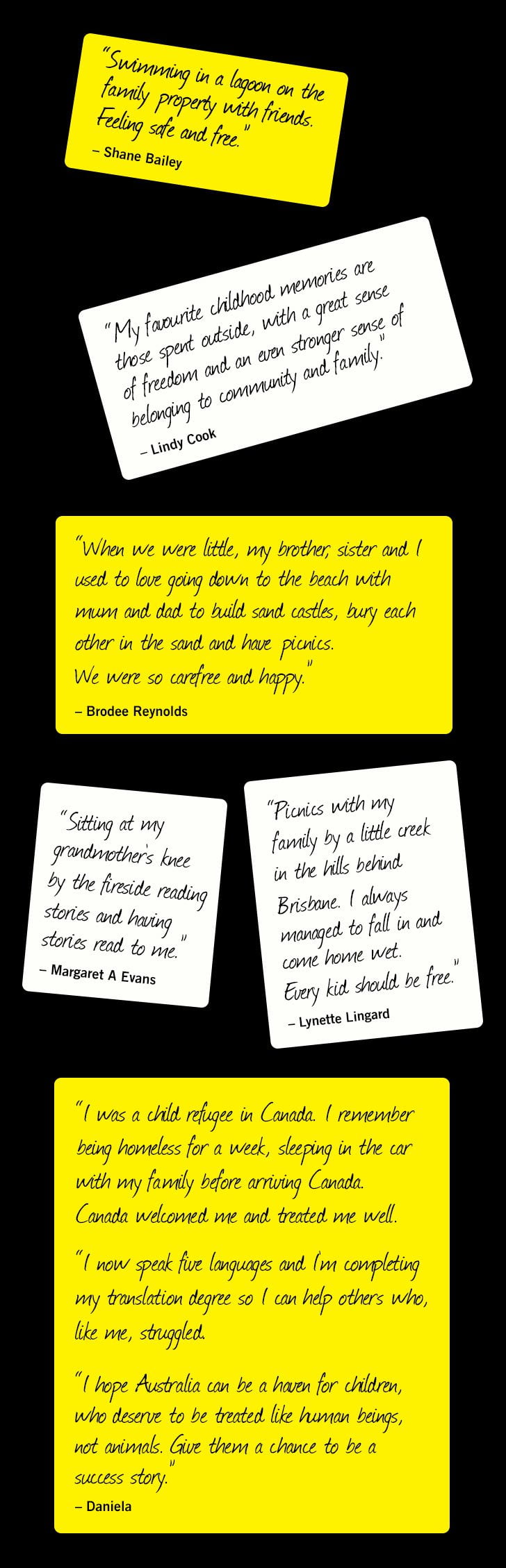
Please #ShareaMemory of your childhood through our Lost Children campaign or post your memory on Twitter, Facebook or Tumblr with the hashtags #LostChildren and #ShareAMemory

We’ll show the government what their child detention policy is destroying when we deliver your memories to the Australian government, along with the call to release all asylum seeker children and their families on Nauru to Australia.

[1] Australian Human Rights Commission, “The Forgotten Children” p. 61

Lost Children: how you can help today

Eight-eight children are detained on Nauru and more are detained in Australia, awaiting their return to Nauru.

How you can help

We’re asking people to share their favourite childhood memories by posting them on Twitter, Facebook or Tumblr with the hashtag #ShareAMemory.

Your memories will be delivered to the Australian government along with the call to release all children on Nauru from detention and give them back the happy childhood they deserve.

A selection of memories already shared

illustratied pinboard with notes on it in black and white, shaing childhood memories form several different people


The ultimate punishment: A beginner’s guide to the death penalty

Amnesty International’s new report Death Sentences and Executions 2014 reveals that an alarming number of countries used the death penalty to tackle real or perceived threats to state security linked to terrorism, crime or internal instability last year.

Here we give a snapshot of the death penalty around the world today.

How widespread is the use of the death penalty?

Fifty-five countries are known to have sentenced at least 2,466 people to death in 2014 – a 28% increase from 2013. This is mainly due to a spike in death sentences in Egypt and Nigeria.

Amnesty International also recorded 607 executions in 22 countries in 2014.

But the real number of people executed is much higher. There are no figures for China, for example, which is believed to execute more people than the rest of the world put together.

Amnesty International also recorded 607 executions in 22 countries in 2014. But the real number of people executed is much higher.

Likewise, many countries, including Belarus, carry out executions in secret, often without informing the detainees’ relatives or lawyers.

In other countries such as Eritrea, Malaysia, North Korea and Syria, little or no information about the use of the death penalty is available due to restrictive state practice and/or political instability.

And how many people are still on death row?

We know that at the end of 2014 there were around 20,000 people on death row across the world.

So the picture is actually pretty bleak…

Yes, but we have also seen some progress. The world is slowly turning away from using the death penalty.

The number of countries imposing death sentences has gone down from 57 in 2013 to 55 in 2014.

Europe and the Americas are near execution-free zones, with the exception of Belarus and the USA.

The number of countries imposing death sentences has gone down from 57 in 2013 to 55 in 2014.

In the USA we have seen a decrease in both the number of sentences imposed and executions carried out, with the state of Washington joining six other US states that have abolished the death penalty for all crimes since 2007.

Only three countries are known to have carried out executions in sub-Saharan Africa; and in the Asia-Pacific region debates on abolition began in Fiji, South Korea and Thailand.

In the Middle East and North Africa, the number of executions recorded by Amnesty International has decreased by approximately 23 per cent compared to 2013.

And in December, the National Assembly of Madagascar adopted a bill to abolish the death penalty.

Why are countries still resorting to the death penalty?

In 2014, we have found that many of the countries that still carry out executions justify their actions as a response to threats – real or perceived – to state security and public safety posed by terrorism, crime or internal instability.

In December 2014, in the wake of the Peshawar school terrorist attack that killed 149 people, mainly children, Pakistan lifted a moratorium on executions first imposed in September 2008. Dozens of people have been executed since then.

Executions for terrorism-related offences also continued to be recorded in China, Iran and Iraq.

Jordan started using the death penalty again and Indonesia moved close to carrying out executions, both justifying their actions as responses to crime.

There’s no “humane” way to execute someone. Many countries still hang, behead or shoot people. In the USA, the use of lethal injection resulted in three “botched executions” in 2014 alone.

Josefina Salomon, News & Features Writer, Amnesty International

Many other countries – including Iran, North Korea, the State of Palestine and Saudi Arabia – continued to use the death penalty as a tool to suppress political dissent.

Aren’t executions carried out in a more humane way nowadays?

There’s no “humane” way to execute someone.

Many countries still hang, behead or shoot people. In the USA, the use of lethal injection resulted in three “botched executions” in 2014 alone.

Isn’t keeping people in prison for life simply too expensive?

This is not true. And even if it was, it would not be a justification for killing people. In the USA, the rigorous trial procedures and lengthy appeals process in capital cases mean that the death penalty costs more than
imprisoning someone for life.

Different US studies have found that capital punishment is between one point five and three times as expensive as life imprisonment.

But to justify judicial killing based on the notion that it will save money is not only morally objectionable – cut-price human rights violations are still human rights violations – it ignores the fact that it has other costs. For example, it risks brutalizing those involved in its application and it deprives the family members of the condemned prisoner of a loved one.

The death penalty also diverts energy and resources that could be used for more constructive solutions to crime, such as improving police investigations or care for crime victims’ families.

But surely the death penalty is a fair punishment for serious crimes such as murder or rape?

The right to life is a human right inherent to all human beings. Crime must be prevented and punished, but in full respect of human rights and dignity. Execution is an irreversible punishment. Last year, 112 people were exonerated in nine countries after the death penalty had been imposed: innocent people who would have been put to death.

In the majority of countries where people were sentenced to death or executed, the death penalty was imposed after proceedings that did not meet international fair trial standards.

In the majority of countries where people were sentenced to death or executed, the death penalty was imposed after proceedings that did not meet international fair trial standards.

In several countries – including Afghanistan, Bahrain, China, Iran, Iraq, North Korea, Saudi Arabia – death sentences were based on “confessions” that were extracted through torture or other ill-treatment.

In addition, people around the world continue to be sentenced to death and executed for non-lethal crimes, including drug related offences, corruption, committing “adultery” while married, “insulting the prophet of Islam”, “witchcraft” and “sorcery”.

Philippines torture survivor Jerryme Corre thanks Amnesty supporters

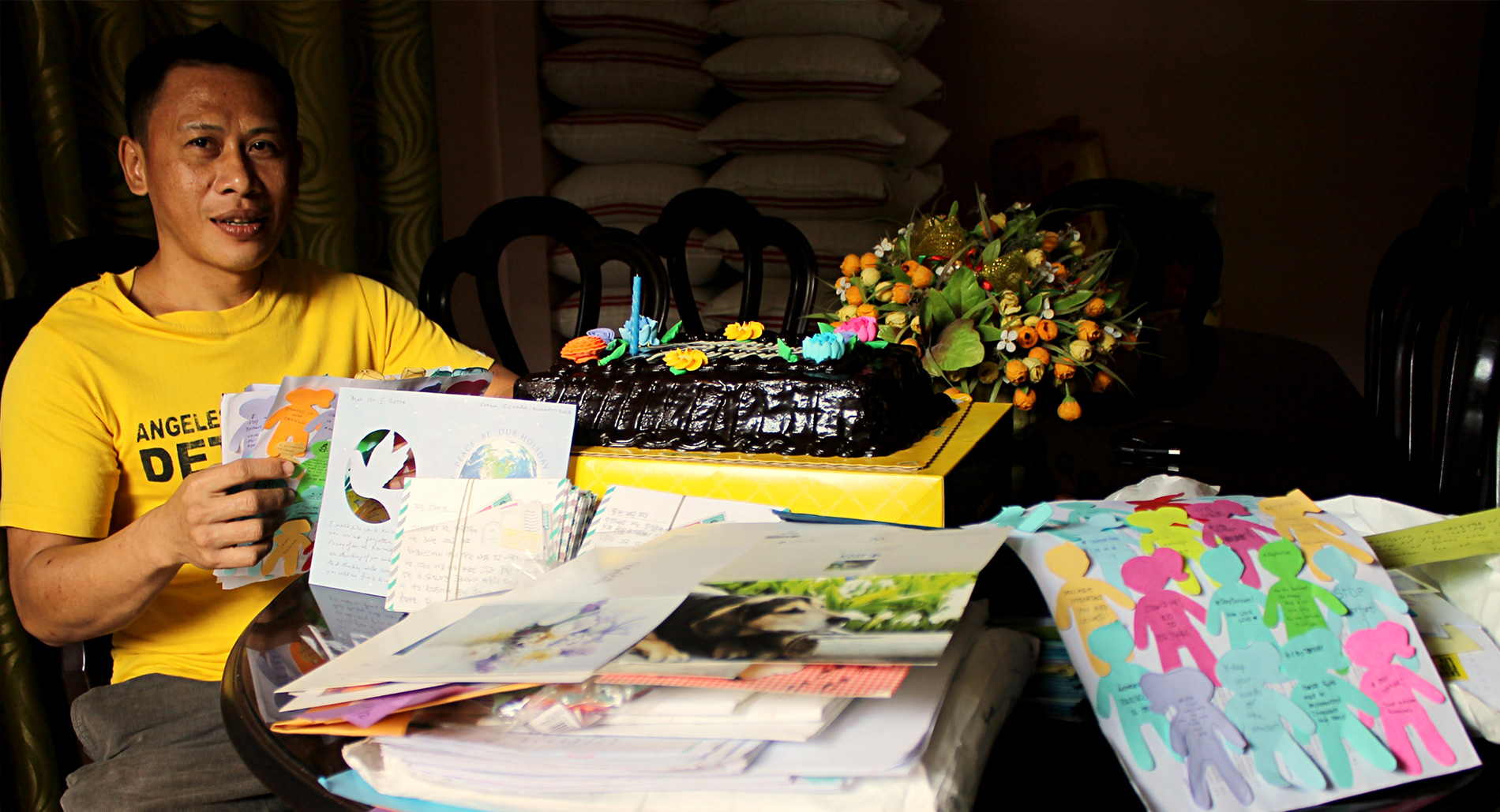
On 16 February, Jerryme Corre celebrated his birthday, joined by his wife and Amnesty Philippines staff at Angeles City Jail. Jerryme has spent the last three years imprisoned there after police allegedly tortured him into a confession.

Gemma Regina Cunanan, Director of Amnesty Philippines, describes the day.

Meeting Jerryme

When Jerryme Corre walked out to meet us on Monday at Angeles City Jail, his smile was wide. Our team from Manila had brought thousands of letters from all over the world – and a cake.

They weren’t the first letters Jerryme had seen from Amnesty activists. In fact, when Jerryme described all the letters he had received from around the world, he seemed unable to contain his happiness. He told us of letters from New Zealand, from Belgium, from Canada, from South Korea, from Spain, from within the Philippines and more.

Strength

Jerryme explained how, without ever knowing him, these people had given him huge comfort and encouragement.

“I can never give enough thanks. These [letters] give me strength. It even changed the course of my case as compared to before. It also gives courage to my wife. We are not alone in this fight. Many people also seek justice for us.”

He told us that after he read the letters, his wife would bring them home, to read and reread. There were times however, that she could not bear to read the letters: they made her cry.

Jeremy Corre reading letters sent to him by Amnesty activists
© Amnesty International

No longer fearful

One thing Jerryme kept repeating was how he had been transformed.

His wife told us, “There was a time when Jerryme felt so hopeless, and we did not know what to do.”

Jerryme had felt scared for his wife because of the police who tortured him. But with Amnesty’s support, Jerryme and his wife had acquired hope and had grown to understand their rights.

Jerryme’s wife summed up their new courage: “We are no longer fearful because we know that Jerryme should never have been tortured.”

The case related to Jerryme Corre’s torture allegations is currently being heard in the Philippines. A verdict could be reached this year. If so, it will be the first time a torture complaint is decided by a Philippines court. It is hoped that Amnesty’s support will help Jerryme continue his fight for justice.

Saudi Arabia: 10 brutal facts beyond the Raif Badawi case

Raif Badawi has made headlines around the world. But his case is just the tip of the iceberg for Saudi Arabia’s human rights record.

It has been over two months since the Saudi Arabian authorities publicly flogged the blogger and activist Raif Badawi, sentenced to 1,000 lashes and 10 years in prison for “insulting Islam” and founding an online forum for political debate.

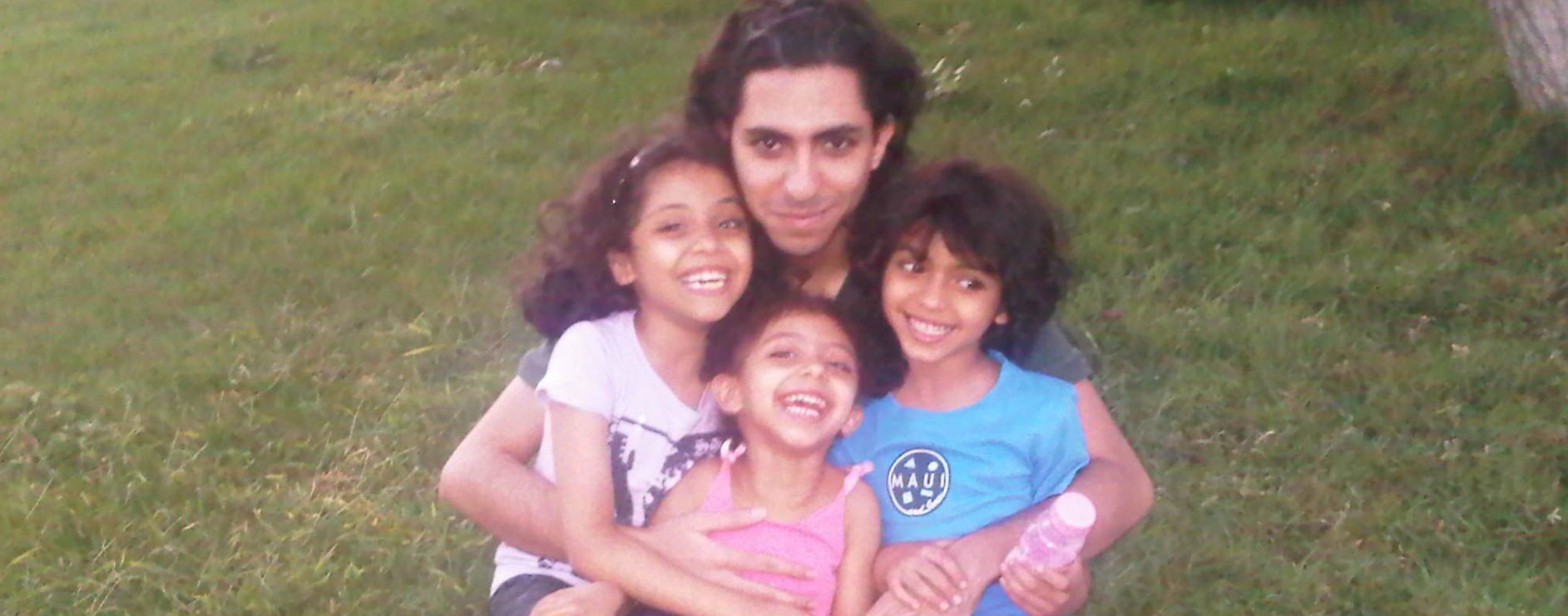
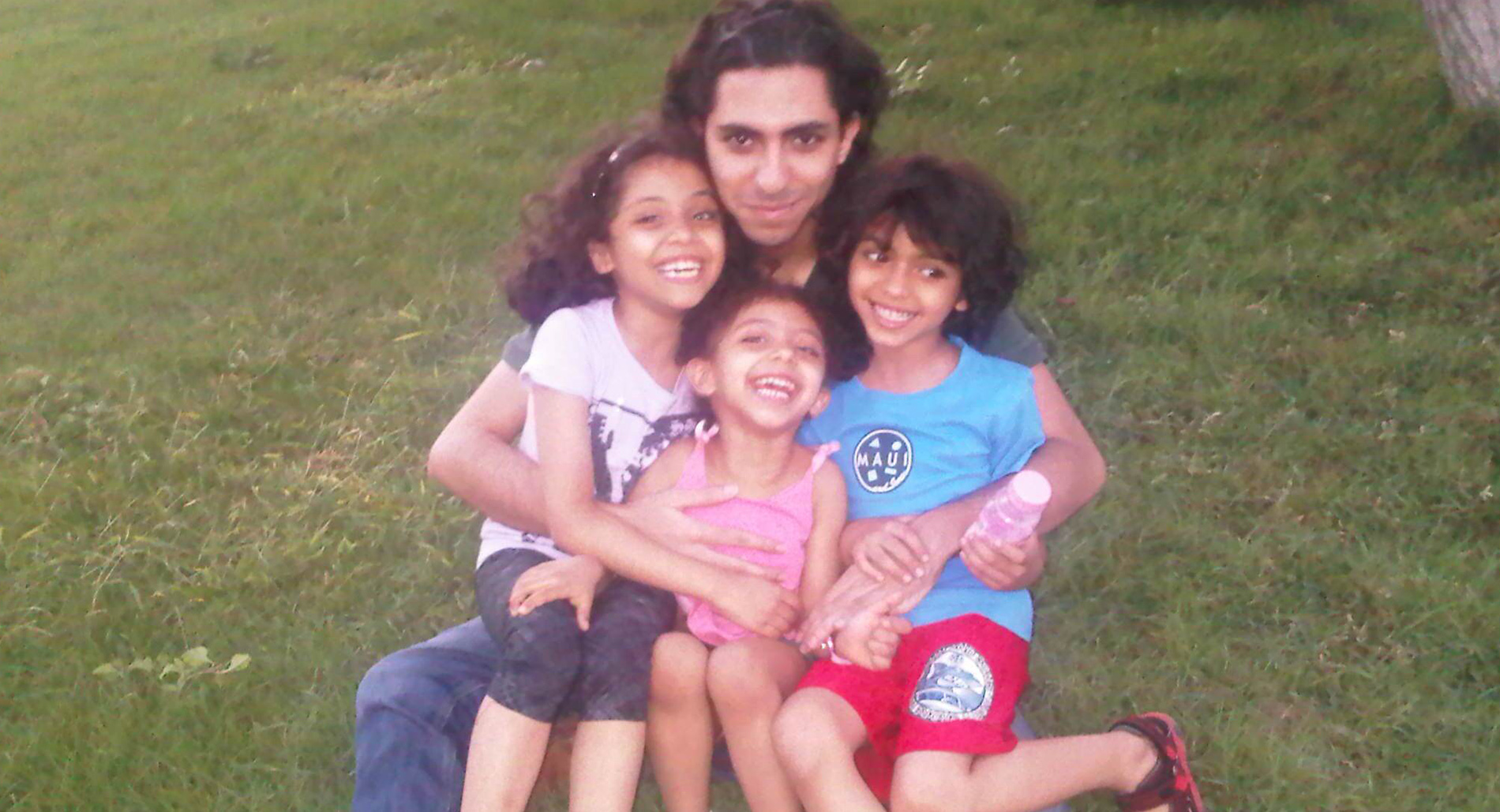
Raif Badawi with his kids
© Private

After his first session of 50 lashes in front of a mosque in Jeddah on 9 January, a doctor advised prison authorities that his wounds had not healed sufficiently for him to undergo the second round of this brutal punishment.

The following Friday, while a medical committee had advised that Raif Badawi should not be flogged because of high blood pressure, another prison doctor insisted that there was nothing wrong with him and that he should be flogged. Then, for five consecutive weeks the Friday floggings were not carried out for reasons that remain unknown. It is anybody’s guess whether the next part of his sentence will be carried out.

However in Saudi Arabia, appalling human rights abuse, such as what Raif Badawi has endured, isn’t isolated. Here are 10 sobering facts from Amnesty International’s research.

1. Cruel, inhuman and degrading punishments

Saudi Arabia’s courts continue to impose sentences of flogging as punishment for many offences, often following unfair trials. Besides Raif Badawi, in the past two years the human rights defenders Mikhlif bin Daham al-Shammari and Omar al-Sa’id were sentenced to 200 and 300 lashes, respectively, and Filipino domestic worker Ruth Cosrojas was sentenced to 300. Amputations and cross-amputations are also carried out as punishment for some crimes.

2. Spike in executions

Saudi Arabia is among the world’s top executioners, with dozens of people being put to death annually, many in public beheadings.

So far this year 40 people have been executed – almost four times the equivalent number for this time last year.

3. Crackdown on activists

Besides Raif Badawi, dozens more outspoken activists remain behind bars, simply for exercising their rights to freedom of expression, association and assembly. The authorities have targeted the small but vocal community of human rights defenders, including by using anti-terrorism laws to suppress their peaceful actions to expose and address human rights violations.

4. No space for dissent

All public gatherings, including demonstrations, remain prohibited under an order issued by the Interior Ministry in 2011. Those who defy the ban face arrest, prosecution and imprisonment on charges such as “inciting people against the authorities”.

5. Systematic discrimination against women

Women and girls remain subject to discrimination in law and practice, with laws that subordinate their status to men, particularly in relation to family matters such as marriage, divorce, child custody and inheritance. Women who supported a campaign against a de facto ban on women drivers face the threat of arrest and other harassment and intimidation.

6. Routine torture in custody

Former detainees, trial defendants and others have told Amnesty International that the security forces’ use of torture and other ill-treatment remains common and widespread, and that those responsible are never brought to justice.

7. Arbitrary arrests and detentions

Scores of people have been arrested and detained in pre-trial detention for six months or more, which breaches the Kingdom’s own criminal codes. Detainees are frequently held incommunicado during their interrogation and denied access to their lawyers. Some human rights activists have been detained without charge or trial for more than two years.

Some human rights activists have been detained without charge or trial for more than two years.

8. Entrenched religious discrimination

Members of the Kingdom’s Shi’a minority, most of whom live in the oil-rich Eastern Province, continue to face entrenched discrimination that limits their access to government services and employment. Shi’a activists have received death sentences or long prison terms for their alleged participation in protests in 2011 and 2012.

9. Mass deportation of migrant workers

According to the Interior Ministry, a crackdown on irregular foreign migrant workers in November 2013 led to the deportation of more than 370,000 people. Some 18,000 were still being detained last March. Thousands of people were summarily returned to Somalia, Yemen or other states where they were at risk of human rights abuses.

10. What happens in the Kingdom, stays in the Kingdom

The Saudi Arabian authorities continue to deny access to independent human rights organisations like Amnesty International, and they have been known to take punitive action, including through the courts, against activists and family members of victims who contact us.

Death penalty: No matter the method, never humane

In less than 40 years, 124 countries have abolished the death penalty – and here’s why the rest should end it too.

Chan and Sukumaran

Marched in handcuffs across the tarmac by a group of heavily armed officers wearing balaclavas and thick helmets, the bare faces of Andrew Chan and Myuran Sukumaran appeared even more tragic.

The blurry images showing them being taken onto the plane headed for Nusakambangan Island Prison highlighted the inhumanity of the fate that Indonesia’s President Joko Widodo is adamant they will face.

After more than 10 years in prison, they are among the next group whom Widodo says will be executed.

Chan, 31, and Sukumaran, 33, were convicted in Indonesia in 2006 for drug trafficking. Their highly-publicised plight represents all that is wrong with the death penalty.

Death penalty in Indonesia

Amnesty International has been campaigning to end the death penalty since 1977. When this campaign began, only 16 countries had ended capital punishment; now 140 countries have abolished the practice.

Despite Widodo’s claims that he’s carrying out executions to serve as a warning about drugs, there is in fact no evidence that the death penalty serves as a deterrent. Nor is it humane.

After a four-year moratorium on the death penalty, Indonesia resumed executions in March 2013.

In Indonesia, death sentences are carried out by firing squad with the prisoner in front of 12 gunmen, three of whose rifles are loaded with live ammunition, while the other nine are loaded with blanks. The squad fires from a distance of between five and 10 metres.

The prisoner has the choice of standing or sitting, and can decide whether to have their eyes covered by a blindfold or hood.

A single shot is fired from each rifle, aimed at the chest. If that does not kill the prisoner, the commander will fire a point-blank shot to the head. No witnesses or family are allowed to be present. According to a Catholic priest who witnessed the executions of two Nigerians in Indonesia in 2008, it took them up to eight minutes to die and they “were moaning in pain”.

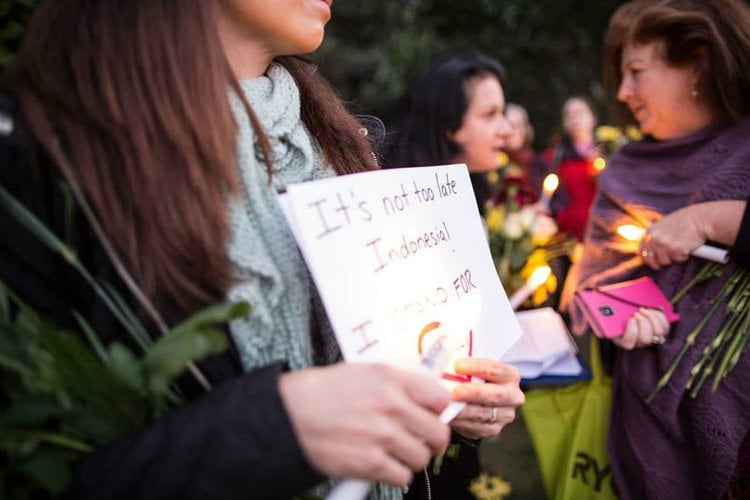
person holding a candle and sign saying 'it's not too late indonesia'
Andrew Chan and Myuran Sukumaran are facing the firing squad in Indonesia. © Amnesty International

Long, slow deaths

A drawn-out death is reflected in many of the stories about executions internationally. In Iran, it took 12 minutes of Alireza M hanging by his neck before he was pronounced dead.

The 37-year-old was hanged in Bojnourd prison in north-east Iran in October 2013 after being convicted of drug offences.

Alireza was found to be alive and breathing in the morgue when his family came to collect the body. The execution had failed. Alireza went on to have his sentence commuted by the Iranian justice system, and was handed a life sentence instead.

After 18-months of no executions, Vietnam resumed using the death penalty in August 2013.

Nguyen Anh Tuan, convicted for murder in 2010, was reportedly executed in the Ha Noi Police prison through lethal injection – the first execution in the country since around January 2012.

“In the last 40 years, more than 140 death row inmates have had their innocence proven. This margin of error alone should be enough to point out the flaws in the system if the method of execution hasn’t.”

Diana Sayed is a human rights lawyer and crisis campaigner for Amnesty International

The European Union export ban on the chemicals needed for lethal injections has meant that Vietnam faces a shortage of drugs needed to carry out executions.

Five Yemeni men in Saudi Arabia were beheaded and crucified publicly in May 2013, with pictures emerging on social media appearing to show five decapitated bodies hanging with their heads wrapped in bags.

Texas, the most-prolific death penalty state in the US, executed its 500th person in June 2013 – a worrying landmark in America’s capital punishment history since state-sanctioned killing resumed in 1977.

Kimberly McCarthy was administered a single, lethal dose of pentobarbital, a barbiturate. She was pronounced dead 20 minutes later.

To date, the US remains one of the top five countries carrying out executions globally.

Even more alarming is that death sentences can be wrong. Just last week the Texas Court of Criminal Appeals issued a stay of execution in the case of Rodney Reed after new scientific evidence came to light that established his probable innocence. He was due to be put to death on March 5.

In the last 40 years, more than 140 death row inmates have had their innocence proven. This margin of error alone should be enough to point out the flaws in the system if the method of execution hasn’t.

This article was first published on Business Insider Australia.


10 myths about the death penalty

In the run up to the release of our death penalty report for 2014, Amnesty International Intern Samantha Bartlett dispels 10 myths surrounding executions worldwide.

Myth 1: Only evil people who have committed horrific crimes are executed

FACT: The death penalty applies to a number of different crimes worldwide, not all of which are horrific. In many countries, such as Iran and Sudan, authorities execute their political opponents. In North Korea, citizens have been publicly executed for communicating with individuals outside of their country.

Regardless of the crime committed, there is more to an individual than their worst offence. Many of the prisoners on death row in the US suffered horrific abuses prior to committing violent crimes; and are a product of their environments.

Research has also consistently shown that individuals are capable of change. Following the 1972 United States Supreme Court decision that the arbitrary application of the death penalty constituted cruel and unusual punishment, 322 death-row prisoners were released. Only 5 of those 322 prisoners murdered again. The vast majority were capable of rehabilitation; and most were incredibly remorseful for their crimes.

These figures strongly suggest the majority of individuals who commit violent crimes are not ‘evil’. It is also evidence that permanent incarceration is suitable punishment for violent crimes, rather than execution.

Myth 2: Only people who are truly guilty receive the death penalty

FACT: No justice system is free from error; and not all individuals who are sentenced to the death penalty are guilty of the crimes for which they have been convicted.

Since 1973, 144 death row prisoners have been exonerated in the US alone. As long as criminal justice systems remain fallible, there is a possibility of executing innocent people.

Myth 3: Death penalty trials are a fair process

FACT: Around the world, many people are still executed after grossly unfair trials and/or after being subjected to torture. The top three executing countries – Iraq, Iran and China – all issue death sentences in unclear circumstances.

In Pakistan, Shafqat Hussain was executed after ‘confessing’ to kidnapping and involuntary manslaughter after nine days of torture. He was arrested at the age of 14.

Myth 4: The death penalty applies to all individuals equally

FACT: People who are convicted of the same crimes are often given different sentences, both across the world and in the same country. Research has consistently shown that individuals are more likely to be given the death penalty if they are poor or belong to a racial, ethnic or religious minority. The reason for this is two-fold: individuals from poorer, marginalised groups have less access to the resources needed to defend themselves; and there is inherent discrimination present in the justice system.

Myth 5: Executions are humane

FACT: All types of execution risk causing the victim extreme pain. This is especially the case for execution by hanging, shooting, stoning and beheading. Even lethal injections, which are meant to be the most humane form of execution, still risk incredible pain, especially if the part of the injection process meant to knock the prisoner out is botched.

Myth 6: The death penalty is an effective deterrent to violent crimes

FACT: There is no convincing evidence that the death penalty is an effective deterrent to crime. Many murders take place when the perpetrators are under great emotional stress, or under the influence of drugs – times when they are not considering the consequences.

Research has consistently shown that the death penalty does not deter crime more effectively than other punishments.

A 1988 United Nations research report found:

“…it is not prudent to accept the hypothesis that capital punishment deters murder to a marginally greater extent than does the threat and application of the supposedly lesser punishment of life imprisonment”.

In Canada, the homicide rate actually fell by 40 per cent in the three decades following 1975, the year before the death penalty for murder was abolished. Research from other countries has failed to show that repealing the death penalty causes an increase in crime rates.

The use of the death penalty cannot be credited with making societies any safer.

Myth 7: The death penalty effectively prevents terrorist attacks

FACT: Individuals who are willing to kill or injure others for the sake of a cause or ideology are unlikely to be deterred by the prospect of execution. In fact, counter-terrorism officials have often pointed out that individuals who are executed may be perceived as martyrs, whose memory may become a rallying point for ideology or organisations. Armed opposition groups have also used the death penalty as justification for retaliation, thereby continuing the cycle of violence.

Myth 8: Execution is cheaper than imprisonment

FACT: At least in the US, enforcing the death penalty is more expensive than imprisoning individuals for life. The judicial process is much longer and more complicated. The California Commission on the Fair Administration of Justice estimated that, in California, death penalty trials cost approximately $1.1 million more than the average murder trial. The Commission estimated that the death penalty system cost California approximately $125 million more per year than the cost of permanent incarceration. This money could be diverted towards early prevention and intervention strategies, which would prevent crimes punishable by the death penalty from occurring and reduce the number of people on death row.

Myth 9: The death penalty offers justice and closure to the victims’ families

FACT: Not all victims’ families are in favour of the death penalty. The international movement against the death penalty involves many individuals who have lost loved ones to violent crime, but for ethical or religious reasons are not in favour of the death penalty. The New Hampshire-based organisation Murder Victims’ Families for Human Rights is helping lead the movement to abolish the death penalty in the US.

Myth 10: The death penalty is fine as long as the majority of the public supports it

FACT: History presents us with numerous examples of human rights abuses supported by the majority at the time – prominently including slavery, lynching and racial segregation. The death penalty is a violation of the right to life, as enshrined in the United Nations Declaration of Human Rights. It is also cruel, inhuman and degrading.

Amnesty opposes the death penalty at all times; regardless of who is accused, the crime, guilt or innocence or method of execution. Even if the majority of the public supports the death penalty, it should not be treated as an acceptable form of punishment under any circumstance.

Submission: Constitutional Recognition of Aboriginal and Torres Strait Islander Peoples

Amnesty International welcomes the opportunity to provide this submission on a referendum to recognise Aboriginal and Torres Strait Islander Peoples in the Australian Constitution.

The Australian Constitution in its current form retains discriminatory clauses which are sources of concern to Australian people and inconsistent with international human rights principles. The Australian Constitution must enshrine the rights of all Australian citizens and utilise language to this effect, including the removal of phrases and sections which run counter to this principle. The repeal of problematic “race” provisions from the Constitution and the inclusion of a new section expressly prohibiting discrimination on the bases of race would ensure the universal human right to be free from racial discrimination is enshrined in the Australian Constitution.

The constitutional reform process represents a critical moment for Australia. Recognition of Aboriginal and Torres Strait Islander Peoples as the first peoples of Australia, alongside acknowledgement of continuing Indigenous cultures, languages and connections to land, may represent an opportunity to bring the Australian Constitution into greater alignment with the United Nations Declaration on the Rights of Indigenous Peoples.

Read the full submission

Which country will be the 100th to abolish the death penalty?

In February 2015 Fiji became the 99th country to abolish the death penalty.

Amnesty International’s Director of Global Issues, Audrey Gaughran, speculates on which country will be next.

Historic milestone

A couple of weeks ago, on 13 February, we woke up to the good news that Fiji had joined the ranks of countries to abolish the death penalty for all crimes. There are now 99 countries who have completely scrapped the ultimate cruel and inhuman punishment from their laws – exactly half of all states in the world.

The historic milestone of 100 death penalty free countries is within close reach. The parliaments in both Suriname and Madagascar have recently approved bills abolishing executions – all that is left is for the countries’ presidents to sign them into law, although it remains to be seen who gets there first.

Fiji

The news from Fiji means that the goal of total abolition of the death penalty is closer than ever. It gives new momentum to a trend that has been evident for decades – the world is consigning capital punishment to the history books.

We hope that either Madagascar or Suriname seize the opportunity to become the 100th death penalty free country as soon as possible – the race to make history is well and truly on.

Fiji last executed in 1964, Madagascar in 1958 and Suriname in 1982.

“The news from Fiji means that the goal of total abolition of the death penalty is closer than ever.”

Audrey Gaughran, Director of Global Issues, Amnesty International

Fiji’s repeal of the death penalty will hopefully trigger similar positive moves in the Pacific region. Nauru and Tonga retain the death penalty in law, although both are abolitionist in practice, not having executed anyone in more than a decade and having an established policy not to do so. Papua New Guinea, also abolitionist in practice, is the only country in the Pacific region that is presently contemplating implementing executions. The last execution in the country was carried out in 1950.

Could Madagascar be next?

In the Americas, Suriname and Guyana are the only countries in South America that retain the death penalty for ordinary crimes.

Suriname’s abolition would bring to 16 the number of countries in the Americas to abolish the death penalty for all crimes and leave Guyana as the only retentionist country in South America.

Sixteen countries in sub-Saharan Africa have abolished the death penalty and progress in the region has been rapid. Madagascar’s National Assembly voted in favour of a law abolishing the death penalty on 10 December 2014. Amnesty International understands that the law now requires only the signature of the president. Several other countries in sub-Saharan Africa are also moving closer to abolition. In 2014 Chad’s government adopted a penal code aimed at abolishing the death penalty, and the law is now awaiting a parliamentary process. Also in 2014, Sierra Leone announced its intention to abolish the death penalty.

Indonesia and Pakistan

Asia has seen some progress towards abolition in recent years, but is also a region where the death penalty continues to be used in ways that are completely contrary to international human rights law. The recent resumption in executions by Indonesia and Pakistan (who have executed six and 18 people respectively already in 2015), have drawn worldwide criticism.

Both countries are threatening to carry out even more executions this year – in Indonesia, all signs are that a further 10 men will be executed by firing squad shortly. This would be a shameful move, and we are working hard to prevent further executions in both countries.

Indonesia and Pakistan should pay heed to developments elsewhere – those countries that retain and use the death penalty are increasingly isolated in a world when the majority support abolition.