Australia still silent as rest of the world comes together to provide further protection for people fleeing Afghanistan

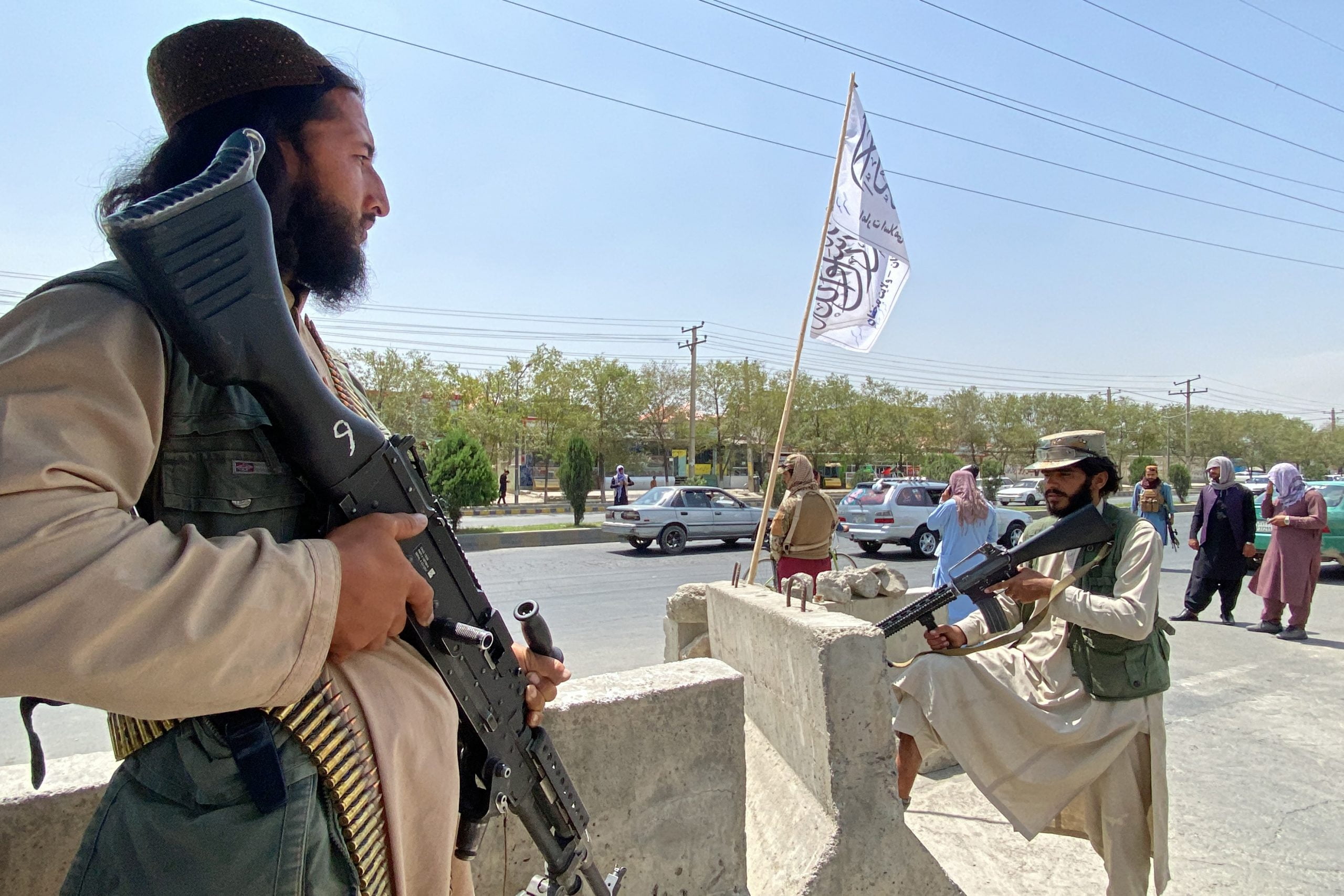
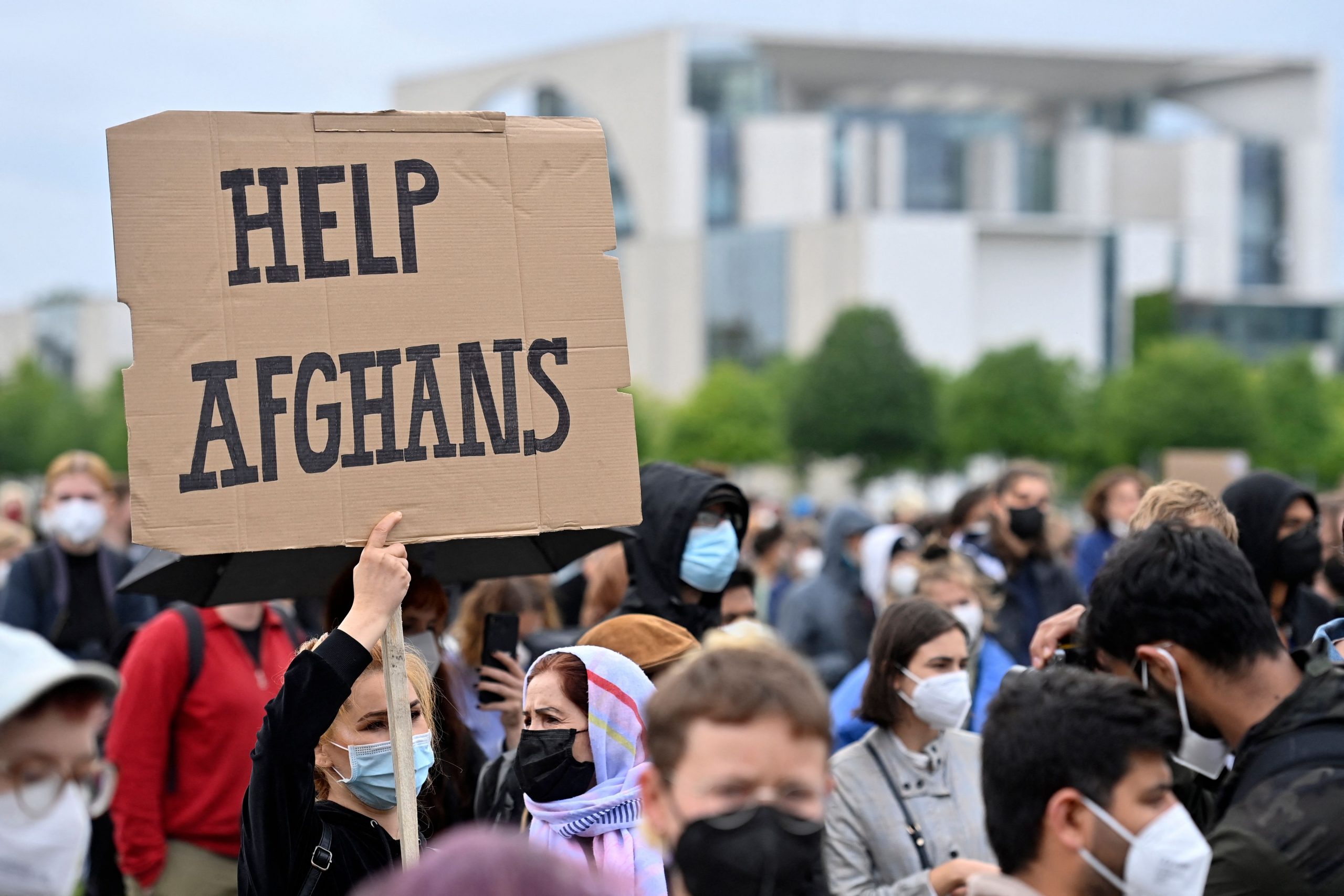
As the European Union hosts the ‘Forum for providing protection to Afghans at risk’ held on 7 October with the UK, USA and Canada also attending, Amnesty International Australia is calling on the Australian Government to provide an update on its efforts to help those still at risk from appalling human rights abuses at the hands of the Taliban.

To date Australia has publicly committed to helping just 3,000 people from Afghanistan fleeing the Taliban. While vague indications have been made that that will be the “floor”, there is still no confirmation of what the total commitment will be. 

When the Syrian crisis escalated in 2015, Australia committed to a humanitarian intake of  12,000 refugees. Canada recently committed to taking 40,000 refugees from Afghanistan and the UK to 20,000. Now the EU and G7 member states are meeting to work out how else they can help, yet the Australian Government’s silence has been deafening since the first few weeks of the crisis unfolded.

Najeeba Wazefadost, a Hazara woman who fled the Taliban when she was 12, said: “While the initial response from the Australian Government was strong, very little appears to have been done in the past few weeks. And when you see how much Europe, the US and Canada are coming together to help even more, it makes you question how much Australia really cares about the plight of those still trying to flee the Taliban.”

Amnesty International Australia has been calling on the Government to:

  • Increase its humanitarian intake to at least 20,000.
  • Announce long anticipated improvements to the Community Support Programme that make it easier for people to sponsor refugees from countries such as Afghanistan.
  • Provide certainty to those from Afghanistan already in Australia on temporary visas that they will be offered ongoing safety and protection in Australia.

“We’ve seen an outpouring of concern for the people of Afghanistan, their fate and their futures. Public support for evacuation and resettlement must now be matched with political commitments. EU countries have an enormous responsibility to Afghans fleeing the Taliban. Evacuation is still possible, and EU countries must do everything they can to bring Afghans at risk to safety via land borders. The lives of the thousands of women and men who worked to promote and defend human rights, gender equality and rule of law, in their country depend on countries stepping up and evacuating people,” said Eve Geddie, Director of Amnesty International’s EU Institutions Office.

Amnesty International has written to countries attending the Forum asking them to step up efforts to secure evacuation of women activists, human rights defenders, civil society activists, academics, journalists, and marginalized groups, and others who are at heightened risk of retaliation from the Taliban.

Amnesty International Australia Refugee Advisor, Dr Graham Thom, said Australia’s silence on the issue of resettlement over the past several weeks is particularly embarrassing given our deep involvement in Afghanistan over the past 20 years.

“When those at risk after the Tiananmen Square demonstrations needed help, Australia stood up, when thousands fled Syria our government stood up – we cannot abrogate our responsibility to people in danger in Afghanistan in their hour of desperate need. New quarantine facilities are coming online, we have communities across Australia telling us they want to help, we have the capacity to take many more than 3000 people.”

Since the Taliban took power in Afghanistan on 15 August they have committed human rights violations with impunity. A recent research briefing by Amnesty International, the International Federation for Human Rights (FIDH) and the World Organisation against Torture (OMCT) documented repression of the rights of women and girls, intimidation of human rights defenders, a crackdown on freedom of expression, reprisals against former government workers and possible violations of international humanitarian law. There have been targeted killings of people who formerly worked for the government, reports of death threats to family members of those who have fled, and – despite the Taliban’s public statements to the contrary – women and girls are being denied access to education and work, and barred from engaging in sport or politics.

Countries have already committed to annual resettlement quotas. Commitments to evacuate Afghans must be additional to this number. Any ‘creative accounting’ to fulfil resettlement numbers with people being evacuated would be unacceptable, as the number of places committed to are already limited.

ENDS

For more information or to arrange an interview, please contact media@amnesty.org.au +61 423 552 208

ABOUT AMNESTY INTERNATIONAL AUSTRALIA Amnesty International is a global movement of 10 million people standing up for justice, freedom and equality. We work to free people unjustly jailed, bring torturers to justice and change oppressive laws. We shine a light on great wrongs by exposing the facts others try to suppress. We lobby governments, and the powerful to make sure they keep their promises and respect international law. Together, our voices challenge injustice and are powerful enough to change the world. st1.amnesty.org.au

Does Australia have a racism problem?

Many Australians pride themselves on living in a multicultural society. According to our Government, we live in the most successful multicultural society in the world. Because of this multiculturalism and this celebration of our multiculturalism, many believe that while racism probably exists, it cannot possibly be a major issue.

What do Australians think?

In its inaugural human rights report, the Amnesty International Human Rights Barometer, 84% of Australians believe in freedom from discrimination and 78% believe in freedom of religion and culture.

Almost two thirds of respondents (64%) said that Australia was a successful multicultural society, while only half of respondents (47%) believed there was a problem with racism and more than a quarter thought we didn’t have a problem with racism at all. Worryingly, 63% of the respondents also said they believed that some ethnic groups and cultures don’t want to fit into the “Australian” way of life. 

It’s clear then that racism not only exists, it is a growing problem in Australia. 

Racism in the last decade

Over the past ten years, racist incidents have been reported in practically all aspects of Australian society from everyday settings such as public transport, to essential institutions such as education and healthcare. One-third of all Australians have experienced racism in the workplace and/or in educational facilities. More than two thirds of students from a non-Anglo background reported facing racism at school.

Just this year, a major survey conducted by the ABC found that a startling 76% of Australians from a non-European background have experienced racial discrimination based on their ethnicity. Understanding the extent of racism in Australia is the first step to eradicating it.  

Which Australians face racism the most?

Indigenous Australians

A significant group that faces shocking rates of racism across Australia are Indigenous Australians. Reconciliation Australia reported that in 2020 52% of Indigenous people had recently experienced an incident of racial prejudice in the previous six months. This figure is an almost 10% increase from 2018.

The Australian government in the 2020 National Agreement on Closing the Gap acknowledged that Indigenous people continue to face ‘entrenched disadvantage… and ongoing institutional racism’. This racism extends beyond racist attacks by other Australians and is often felt in institutional settings such as our justice system, healthcare system and educational facilities.

More than half of Indigenous Australians reported facing discrimination in educational institutions. Institutional racism limits access to essential resources and services, denying individuals opportunities and worsening cycles of disadvantage.

Asian Australians

Throughout the COVID-19 pandemic, Asian Australians have faced severe and growing instances of racism. In February 2020, as the pandemic escalated, anti-Asian racism saw a sudden spike, with the Australian Human Rights Commission receiving the highest monthly number of racial discrimination complaints.

Similarly, 500 incidents of anti-Asian racism were reported to the Asian Australian Alliance, almost 60% of these racist incidents involved physical or verbal harassment, many of these racist attacks occurring in public spaces. In one shocking case of anti-Asian hate, an international student from Hong Kong was punched for wearing a mask. Racial abuse and discrimination against Asian Australians have worsened amidst the pandemic, highlighting pre-existing racist sentiments which lingered in many communities. 

Migrant and refugee communities

Migrant and refugee communities also face intense racial prejudice. Migrants from Middle-Eastern or African countries face negative perceptions and greater stereotyping by the wider community, such racial prejudice sets up significant obstacles for these groups when seeking housing and employment.

Similarly, those who are not fluent in English endure shocking rates of racism; 58% of those from a LOTE background have suffered racial abuse on public transport or on the street, with another 56% facing discrimination in educational settings.

We can see these racist ideas echoed and worsened in the media and in polarising political rhetoric. A key example of this racism was the rhetoric surrounding ‘African Gangs’ in Melbourne. During this period of intense media coverage, South-Sudanese communities reported escalating racial abuse and police profiling. These racist views have tangible and harmful impacts upon migrant communities, and also prevent many migrants from feeling connected and welcomed within Australia. 

Australians of diverse religious and cultural backgrounds

Racial discrimination on the basis of religion and culture is a significant and widespread problem. In the wake of the Christchurch shooting, The Australian Human Rights Commission investigated prejudice against Muslims in Australia. This report found a shocking 80% of Muslim Australians had faced unfavourable treatment based on their ethnicity, race or religion. This racism takes the form of hate, violence or negative comments in public.

The Australian Jewish community also experiences great levels of discrimination; in the years from 2013-2017 there were 673 reported instances of anti-semitism. Similarly, 75% of Hindus have reported being discriminated against on the basis of their religion or culture on public transport or on the street, another 70% reporting discrimination in educational settings.

Australians of diverse religious and cultural backgrounds continue to face the brunt of racism in the Australian community, not only in subtle or covert ways, but blatantly in everyday public settings and institutions.

 What now?

Australia’s Race Discrimination Commissioner described racism as a ‘signficant social and national security threat to Australia’. While it may be a difficult truth to confront, it is clear that Australia has an enduring problem with racial discrimination and abuse. To combat racial abuse, Australians must first acknowledge that racism is a widespread, destructive and systemic problem. 

In order to achieve this, AIA has published a comprehensive guide on what it means to be a genuine anti-racism ally and how we can all advocate for the needs of marginalised people. We want to create safe spaces for people to discuss issues of racism openly and raise awareness of the problem by challenging the injustice of racism and demanding change.

As part of AIA’s anti-racism campaign, we are actively supporting the introduction of a National Anti-Racism Strategy. Such a framework would be an important stepping stone towards eliminating racism and promoting social cohesion.

Closing PNG processing facilities welcome, but 225 people are still trapped offshore – it’s time to accept the New Zealand offer

Amnesty International Australia welcomes the Australian Government’s announcement of the closure of the offshore processing facilities in Papua New Guinea as a step in the right direction.

However for the 125 men who remain in PNG, this is not a solution to the more than eight years that they have spent in limbo. Amnesty International has consistently highlighted the dangers these men have faced on PNG, including recent assaults and their accomodation being ransacked.

Further, the decision to continue offshore processing on Nauru and the potential that those still on PNG could be transferred to Nauru, means the suffering of those trapped – more than 225 people in total – continues. The Australian Government must commit to resettling all refugees and people seeking asylum who have been detained in Australia’s offshore processing regime, starting with accepting the New Zealand offer of resettlement.

Moz Azimitabar, a refugee formerly detained on  PNG, stated: “Transferring genuine refugees who have been tortured by the Australian government for nearly nine years to just another version of limbo is absolutely inhumane. It’s billions in Australian taxpayer dollars spent punishing survivors for a political agenda.”

Dr Graham Thom, Refugee Adviser for Amnesty International Australia, said: “While the decision to bring this sorry chapter in PNG to an end is welcome news, we need to see all those still stuck brought to safety. New Zealand has been offering since 2013 to resettle refugees who remain on PNG and Nauru, and earlier this year Home Affairs Minister, Karen Andrews,  confirmed talks with New Zealand are happening. Now is the time to seal the deal. This suffering needs to finally come to an end.”

Afghanistan: 13 Hazara killed by Taliban fighters in Daykundi province – new investigation

Nine former members of government security forces extrajudicially executed after surrendering. Victims included a 17-year-old girl who was caught in crossfire.

Taliban forces unlawfully killed 13 ethnic Hazaras, including a 17-year-old girl, in Afghanistan’s Daykundi province after members of the security forces of the former government surrendered, a new investigation by Amnesty International has revealed.

The killings happened in Kahor village of Khidir district on 30 August. Eleven of the victims were former members of the Afghan National Defence Security Forces (ANDSF), and two were civilians.

According to eyewitness testimony gathered by Amnesty International, the Taliban extrajudicially executed nine of the ANDSF members after they had surrendered, killings that appear to be war crimes. Two civilians were killed as they attempted to flee, including a 17-year-old girl shot when the Taliban opened fire on a crowd of people.

Amnesty International verified photographs and video evidence taken in the aftermath of the killings, and identified the location of Kahor village, where they happened.

“These cold-blooded executions are further proof that the Taliban are committing the same horrific abuses they were notorious for during their previous rule of Afghanistan”

Agnès Callamard, Amnesty International’s Secretary General

“They repeatedly violate the rights of those they perceive as their adversaries, even killing those who have already surrendered. The Taliban say they are not targeting former employees of the previous government, but these killings contradict such claims.”

“The Taliban must immediately cease these cruel acts of revenge, and ensure employees of the former government and their families can live safely in Afghanistan. The new government must make clear that such grave violations will not be tolerated, and that those responsible will be prosecuted.”

Verifying human rights abuses committed by the Taliban since they took control of Afghanistan in August 2021 has proven difficult, as the group have cut mobile phone service in many regions. Shortly after the fall of Kabul, Amnesty International documented how Taliban fighters massacred nine ethnic Hazara men after taking control of Ghazni province.

Killings in Kahor village

The Taliban took control of Daykundi province on 14 August. An estimated 34 former ANDSF members initially sought safety in Khidir district, and had government military equipment and weaponry with them. They then agreed to surrender to the Taliban as the group established its authority over vast swathes of the region.

Mohammad Azim Sedaqat, who was leading the surrender, arranged to decommission the group’s weapons in the presence of the Taliban. On 29 August, the men negotiated to surrender fully to the Taliban.

On 30 August, an estimated 300 Taliban fighters arrived in convoy close to Dahani Qul village, where the ANDSF members were staying, some with family members. As the ANDSF members attempted to leave the area with their families, one vehicle remained stuck close to Kahor village.

When the Taliban fighters caught up with them, they opened fire on the crowd and killed the 17-year-old girl, called Masuma. One of the ANDSF members then fired back, killing one Taliban fighter and wounding another.

The Taliban continued to shoot as the families fled, killing two ANDSF members fleeing the scene. After nine more ANDSF members surrendered, the Taliban promptly took them to a nearby river basin and executed them.

Videos and photographs reviewed by Amnesty International show the corpses of 11 men lined up, with many showing bullet wounds to their heads. One video shows a body being carried up an incline, believed to be at the river basin near Kahor. Amnesty International has been unable to independently geolocate this video, but its content is consistent with eyewitness testimony describing the location as close to Kahor.

The names and estimated ages of the 11 ANDSF members are: Musa Amiri, 46; Khudad Jawahiri, 33; Esmatullah Zarigh, 34; Noor Ali Ibrahimi, 34; Habibullah, 33; Amanullah, 32; Reza Karimi, 31: Dawran, 26; Dur Mohammad, 41; Abdul Hamid Fahimi, 28: and Reza Joya, 33.

Aftermath of the killings

On 31 August, the day after the killings, villagers took the bodies to Dahani Qul, where they were then brought to family plots for burial. Amnesty International reviewed and verified information confirming the locations of two of the graves, and the identities of the people buried there.

The Taliban then told remaining family members that anyone who had fled should return, and surrender within three days. Interviewees told Amnesty International that one senior Taliban official warned: “I have killed people for the past 20 years. Killing is easy for me. I can kill again.”

On 1 September, Sadiqullah Abed, the Taliban-appointed chief of police for Daykundi province, denied any killings had happened and instead only confirmed that a member of the Taliban had been wounded in an attack in Daykundi.

Background

The Taliban seized power in Afghanistan following the collapse of the government in mid-August 2021. Amnesty International has called for the protection of thousands of Afghans at serious risk of Taliban reprisals, from academics and journalists to civil society activists and women human rights defenders.

In a recent briefing, Afghanistan’s fall into the hands of the Taliban, Amnesty International detailed a litany of human rights abuses committed by the Taliban, including targeted killings of civilians and surrendered soldiers, and the blockading of humanitarian supplies, which constitute crimes under international law.

3 ways you can fight for a free press today

A free press allows journalists, reporters, and other media professionals to tell the world the truth about human rights abuses and put pressure on governments to keep their promises and respect international law. However, in many countries around the world freedom of the press is at risk.

Fighting for a free press means supporting individual journalists as they report on human rights issues , and calling on governments to legislate for protections for media organisations. In some parts of the world it also means fighting against unjust legislation and calling for the release of wrongfully imprisoned journalists. Around the world legislation is frequently used to justify the wrongful imprisonment of journalists who record human rights abuses as they happen.

By protecting those who protect us we can ensure the powerful are always held to account.

Demand the release of wrongfully imprisoned journalists

Journalists, media professionals, writers and activists all play a key part in maintaining freedom of expression and holding the powerful to account. Unfortunately, they often find themselves facing danger for doing their work. Arresting journalists has long been a tactic of authoritarian governments looking to silence critical reporting and to obstruct information from reaching the public.

During the COVID-19 pandemic these arrests have become even more dangerous for journalists, as they are often unable to access important healthcare whilst imprisoned. By following the cases of journalists who are wrongfully detained we can fight for their right to be free.

Demand action for journalists who are currently wrongfully imprisoned.

The case of Zhang Zhan

One case of a journalists who is currently facing wrongful imprisonment is citizen journalist Zhang Zhan, 37, who disappeared in May 2020 after documenting the response of her government to the COVID-19 outbreak in Wuhan.

Previously a lawyer, Zhang Zhan travelled to Wuhan in February 2020 determined to get the truth out about how government officials had detained independent reporters and harassed families of Covid-19 patients. 

After her posts to YouTube suddenly stopped in May 2020, authorities confirmed that she had been detained by police in Shanghai, 640km away. In September 2020, she was sent to court on charges of “picking quarrels and provoking trouble”, a charge that carries a maximum prison sentence of five years. Three months later she was found guilty and sentenced to four years imprisonment.

Zhang Zhan has remained in Shanghai Women’s Prison since March 2021. The authorities continue to refuse her family visits. 

Tell China to free Zhang Zhan immediately.

Fight for protections on social media

Social media can be an important tool for journalists to get information to the public – particularly for citizen journalists. However, in the wrong hands it can be used as a way to target and harass specific reporters. Female media professionals can often face more harassment on social media than their male counterparts, particularly if they also hold other marginalised identities.

Since the release of Toxic Twitter in 2018, Amnesty International has continued to highlight the scale of abuse women face on Twitter, including in Argentina, India, UK and USA. Meanwhile, women have continued to speak out about the abuse they experience on Twitter, and the company’s failure to adequately respond.

By holding Twitter to account we can ensure media professionals and citizen journalists who use social media to report on human rights abuse are protected against harrassment and smear campaigns.

The case of Amal Fathy

One case Women’s rights defender Amal Fathy has been imprisoned in Egypt simply for posting her #MeToo story on Facebook and criticising the government on its women’s rights record. Women should have the right to speak out and share their stories, without threats to their freedom. 

Take action to demand Amal’s immediate release.

Supporting a free press in Australia

You can fight for press freedom in Australia by supporting the media professionals who report on human rights abuses around the world. By supporting the work of media professionals we can send a powerful message that press freedom is worth a fight.

Follow the Media Awards

To support a free press in Australia you can follow the Amnesty International Australia Media Awards and support the hard work of journalists as they fight for human rights around the world. Each year the awards acknowledge those Australian media stories that have presented a fair and balanced report of a human rights issue, highlighted hidden abuses and encouraged an audience’s greater understanding of a human rights issue.

Follow the Amnesty International Australia Media Awards.

20 years of Write for Rights: How your words have the power to change lives

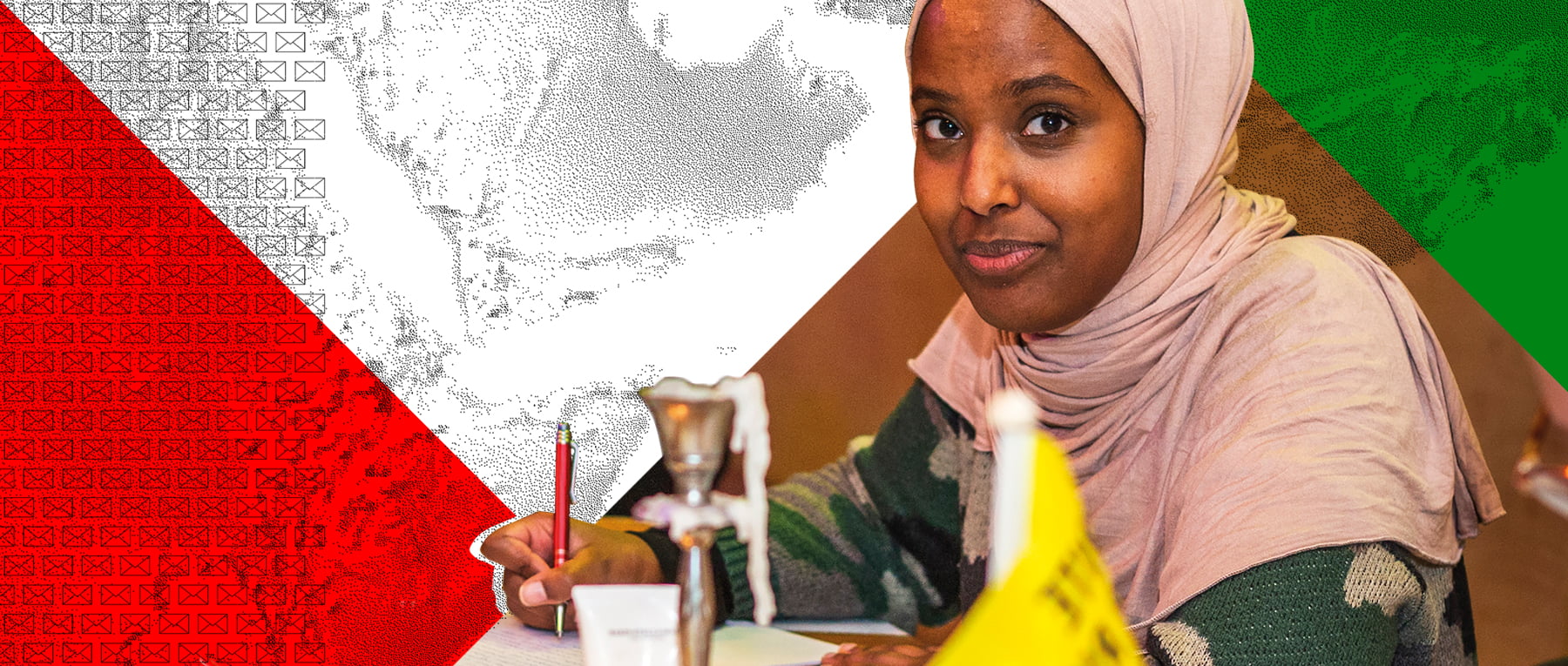
In 2020, Amnesty International Australia supporters took over 185,000 actions as part of Write for Rights, our global letter-writing marathon.

Write for Rights (W4R) brings millions of people together to stand in solidarity with courageous people around the world who are facing human rights abuses. When people unite behind someone whose rights have been wronged, the results can be amazing.

Twenty years of writing for rights

Twenty years ago, a small group of Amnesty activists in Poland held a 24-hour letter writing marathon – the first Write for Rights. The idea took off and today, Write for Rights is the world’s biggest human rights event.

Every year, people from 170 countries get together on 10 December, World Human Rights Day to write letters. Your words can and have freed people from human rights abuses and changed lives. Knowing you are a part of a community of changemakers is powerful tool to have in your hands – as well as a pen.

From 2,326 letters in 1991 to 4.5 million letters, tweets, petition signatures and more in 2020, Write for Rights supporters have united behind a common purpose – backing people no matter where they are in the world. Together, they’ve helped transform the lives of more than 100 people over the years, freeing them from torture, harassment or unjust imprisonment.

Here are some ways your words have had the power to change lives.

1. NGO worker and father of three reunited with family (W4R 2020)

In April 2018, human rights defender Germain Rukuki was sentenced to 32 years in prison in Burundi for campaigning against torture in his home country. He was jailed before getting a chance to hold his youngest child, born just weeks after he was taken. His family fled the country for fear of reprisals.

On 1 July 2021, Germain was finally released thanks in part to the more than 436,000 actions calling for his release. Germain’s wife Emelyne Mupfasoni shared her thanks with all those who took action.

“From the bottom of my heart, I want to thank you all to have mobilized and made it possible for Germain to reunite with us soon.”

Emelyne Mupfasoni

2. Activist freed in Saudi Arabia (W4R 2020)

Nassima al-Sada, a campaigner for women’s freedom, was arrested in 2018 for peacefully defending human rights. While in jail, guards beat her and banned everyone – even her lawyer – from visiting her. But thanks to supporters worldwide who wrote a massive 777,611 letters, tweets and more, Nassima walked free in June 2021, and is back with her family and friends.

Nassima al-Sada
Nassima al-Sada © Private

3. We stood with the Australian LGBTQIA+ community to end conversion practices (W4R 2020)

In Australia, tens of thousands of Amnesty supporters and activists stood with survivors and took action calling on governments to ban conversion practices. On 4 February 2021, Victoria passed world leading legislation to ban harmful conversion practices.

4. One step closer to justice in South Africa (W4R 2020)

Friends Popi Qwabe and Bongeka Phungula were murdered while heading for a night out in May 2017. Until recently, their families had been distressed by irregularities and delays in the police investigation. However, in March 2021, police revived the case after receiving 341,106 petition signatures from Amnesty supporters worldwide.

The police have completed their investigation and handed over the case to the country’s National Prosecuting Authority.

“I feel optimistic. I feel like finally, something is about to change.”

Popi’s sister Thembelihle

5. Iranian women’s rights defender’s case went global (W4R 2019)

In Iran, it’s a crime for women to appear in public with their hair uncovered. Yasaman Aryani, a 24-year-old activist, wanted to change this. With her head uncovered, Yasaman handed out flowers to women on a train in 2019. She’s been sentenced to 16 years in prison for campaigning against forced veiling. 

Around the world, over 1,229,634 people took action for Yasaman in 2019. The Write for Rights campaign brought global attention to her case and her sentence has been reduced on appeal.

Amnesty International will continue to campaign for Yasaman’s release, and the release of all women’s rights defenders imprisoned in Iran.

6. Disability rights protected in Kyrgyzstan (W4R 2018)

In March 2019, Kyrgyzstan ratified of the Convention on the Rights of Persons with Disabilities. When Gulzar Dushenova lost use of her legs in a car accident, she made it her life’s mission to ensure people with disabilities can live with dignity and move around freely.

Amnesty supporters joined with Gulzar and other disability rights advocates to call on the Kyrgyzstan Government to ratify the Convention – sending nearly 250,000 letters to Kyrgyzstan’s Government in support of Gulzar’s mission.

“I am grateful for all the support and solidarity from so many of Amnesty International’s activists who care about our rights despite being from a different country.”

Gulzar Dushenova

7. Chair of Amnesty Turkey released (W4R 2017)

In August 2018, the Chair of Amnesty Turkey Taner Kilic was released after more than a year behind bars. He was imprisoned in June 2017 on suspicion of being a member of a ‘armed terrorist organization’ – an absurd attempt to choke his human rights activism. More than a million people from 194 countries demanded his freedom.

In June 2018, Amnesty International Australia activists in Perth, Adelaide and Melbourne held stunts to mark 365 days of Taner’s imprisonment.

8. Myanmar activist released (W4R 2015)

Student activist Phyoe Phyoe Aung was released from prison in April 2016. She had been jailed in 2015 for helping organise a series of marches against a new law in Myanmar, which students said limited academic freedom. She faced up to nine years’ imprisonment.

Almost 400,000 Amnesty supporters took action for her release as part of W4R 2015. In Australia we contributed over 30,000 actions.

“Thank you very much each and every one of you. Not just for campaigning for my release, but for helping to keep our hope and our beliefs alive.”

Phyoe Phyoe Aung
Phyoe Phyoe Aung (centre) during a protest against the National Education Law in November 2014.
Phyoe Phyoe Aung (centre) during a protest against the National Education Law in November 2014. © Private

9. Finally free in the USA after decades of isolation (W4R 2015)

Albert Woodfox spent over 43 years in solitary confinement in a Louisiana state prison – believed to be the longest anyone has survived in solitary in the USA. In W4R 2015, more than 240,000 action-takers called for Albert’s release. He was finally freed in February 2016.

“I can’t emphasise enough how important getting letters from people around the world is. It gave me a sense of worth. It gave me strength – convinced me that what I was doing was right.”

Albert Woodfox

10. Life spared in Nigeria (W4R 2014)

After 10 years in jail and more than 800,000 messages from activists around the world, Moses Akatugba’s life was spared in June 2015. Falsely accused of stealing three mobile phones, he was tortured and wrongfully sentenced to death when he was just 16. He was granted a full pardon after pressure from Amnesty supporters during W4R 2014 and our Stop Torture campaign.

“Amnesty International members and activists are my heroes” … “While before I felt all hope had gone, the story changed when Amnesty International came in. The messages I received overwhelmed me. I regained hope.” 

Moses Akatugba

11. Students spared prison in Turkey (W4R 2020)

Melike and Özgür were taking part in a peaceful Pride march at their university when they were met with police who used pepper spray, plastic bullets and tear gas on the protesters. They and 17 others were then charged with “unlawful assembly,” “failing to disperse despite being warned” – and faced 3 years in prison.

After 2 years on trial, all 19 were acquitted on 8 October 2021! 445,000 people from over 43 countries demanded their acquittal during W4R 2020.

What now?

We run Write for Rights every year because it works – real change happens because of actions like these. Their words have freed people from human rights abuses and changed lives. Knowing they’re a part of a community this powerful has changed their lives, too.

Join in today, Write for Rights 2021 is here. Write a letter, change a life – including yours.

Reporting back to the Movement

This page covers all the reporting you need whether it’s hearing from our National Board or reading the quarterly Grassroots Report that highlights the wins and lessons of Amnesty’s organising program.

National Board Report

Report from latest Board meetings: Report from National Board meetings held on 12 and 20 August 2022

Quarterly Grassroots Report

This quarterly report is an overview of Amnesty’s national Organising program. It shows how we’re tracking against key goals in the 2025 vision, but it is also a snapshot of some of the most exciting activities and innovations activists have done over the last few months. We want to show key examples of how our grassroots movement has had impact for human rights as a result of their commitment, strategic thinking and hard work.

The purpose of this report is to:

  • enable activists to see their individual contribution and understand their collective impact
  • show transparency
  • share activist-led innovation
  • identify our areas of strength and where we need to improve

If you have any questions or comments please contact the Organising Team at communityorganising@amnesty.org.au.

Download the latest Quarterly Grassroots Report

VIC Activists and Staff at Human Rights Day activities 2021

Activist Census Results

Amnesty International Australia proudly leads one of the longest running studies into organising and action groups through regular activist surveys. Previously called “Group Health Checks”, these surveys have been a vital temperature check for our movement since they began in 2008. Our last Group Health Check was completed in 2018 prior to a governance change and restructure.

While previous years focused on our action groups, this year we have renamed the survey the “Activist Census”, included improved questions and expanded it to all our activist structures, networks and individual activists. These changes strengthen our understanding of the health and sustainability of the movement and identify future possibilities for collaboration and diversification. 

The critical insights offered by this Activist Census are a key tool in informing how AIA can optimise our efforts to ensure our movement is Activated, Empowered and Impactful going forward.


Previous reports

2021 Q4 Grassroots Report

2021 Q3 Grassroots Report

2021 Q2 Grassroots Report

2021 Q1 Grassroots Report

2020 Q4 Grassroots Report

2020 Q3 Grassroots Report

2020 Q2 Grassroots Report

2020 Q1 Grassroots report

2019 Q4 Grassroots report

2018 Q4 Grassroots report

2018 Q3 Grassroots report

2018 Q2 Grassroots report

2018 Q1 Grassroots report

Amnesty calls for Federal inquiry into sportswashing

Amnesty International Australia this week called for a Parliamentary inquiry into the issue of sportswashing in Australia in the wake of the episode of ABC TV’s Four Corners A League of Their Own which examined the lack of transparency in the ownership of Australian football teams.

Sportswashing is when a country tries to use sport – sometimes subtly, sometimes quite blatantly – to try to rebrand itself, using the glamour and prestige of sport to try to create a new image for the country. 

“A parliamentary inquiry into sportswashing in Australia is needed to shine a light on this

practice and to understand what needs to be changed to ensure that sport isn’t being used

as a sinister tool by human rights-violating governments,” Amnesty International Australia National Director, Sam Klintworth, said.

As outlined on Four Corners, five of the twelve A-League football clubs are owned by foreign

companies, including Melbourne City FC. Melbourne City FC is owned by City Group which is majority owned by Mansour bin Zayed Al Nahyan who is a member of the Abu Dhabi royal family and deputy Prime Minister of the United Arab Emirates (UAE).

The UAE has an extremely concerning human rights track record. Among the key areas Amnesty is concerned about include the silencing and imprisonment of political opponents to the ruling family, crackdown on women’s rights and the fact that consensual sex is used to punish same-sex couples, as well as women who give birth outside wedlock.

Melbourne City FC is being used as a vehicle to paint the UAE as a modern, progressive country that has moved beyond its reputation as a human rights violator. Sport is being weaponised against our community. The UAE wants us to believe that because it is involved in something the community loves – football – that it should be trusted. This is not the case, especially when it comes to human rights.

“Amnesty International is not against foreign investment in sport but, we do believe that Australian laws and regulations allow for sporting clubs to become vehicles of foreign governments attempting to improve their reputation. For example: there are no rules that force sporting clubs to declare the source of their foreign investment.”

International Safe Abortion Day: Celebrating a human right

September 28 marks International Safe Abortion Day. It is the first time Australia has celebrated the day with all states upholding the right to safe and legal abortions, with South Australia only decriminalising abortion this year. Internationally however, reproductive rights remain under threat, as evidenced by the US State of Texas’s recent law outlawing abortion after 6 weeks.

What is International Safe Abortion Day?

International Safe Abortion Day takes place on the September 28 every year. Since 1990, the date has been marked in Latin America and the Caribbean to demand the decriminalisation of abortion, to provide safe and affordable abortion services and to end the stigma and discrimination of people who choose to have an abortion. 

In 2011, Women’s Global Network for Reproductive Rights took these goals to a global level for solidarity in recognising that access to reproductive rights continues to be a struggle for people around the world. The day calls for action in fighting for reproductive and abortion rights on a global level.

Is abortion a human right?

Under international human rights law, everyone the right to healthcare, the right to equality and non-discrimination and equal protection under the law, and the right to be free from violence, discrimination, and torture or other ill-treatment.

Amnesty International recognises access to safe abortion as an essential component in ensuring the protection of each of these rights.

Human rights are universal, indivisible and interlinked. This means that sexual and reproductive rights, including the right to abortion, are fundamental to the full realisation of all of our human rights.

The impact of COVID-19 on access to safe abortions

COVID-19 has only highlighted the need for access to safe abortions which are easily accessible, without stigma and affordable. While lockdowns, quarantines and travel bans are essential for reducing the risk of COVID-19, the strain on healthcare systems and limitations on travel have delayed access to safe abortions. 

It is vital that alongside the use of telemedicine and pharmacies as important access points for safe abortions during the pandemic, that clinic-based in-person care remains a priority when it is safe to do so.

A year in abortion rights around the world

Over the last year there have been a number of wins for abortion rights around the globe. 

In October 2020, South Korea’s government announced draft legislation that would permit abortion up until 14 weeks and in some circumstances up to 24 weeks.  

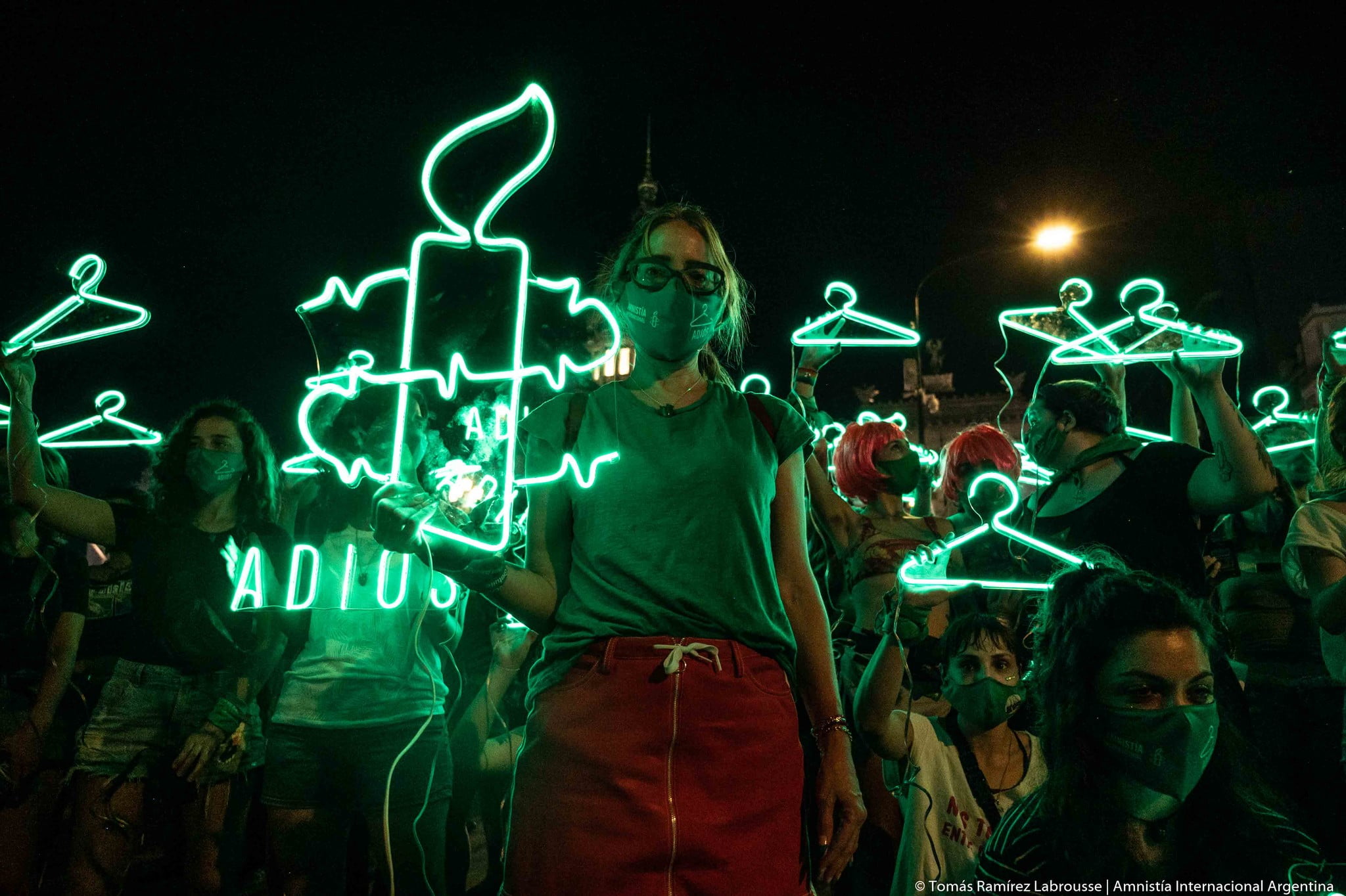
In December 2020, Argentina’s congress legalised abortions up to the 14th week of pregnancy, previously abortions were only permitted in cases of rape or when the pregnant person’s life was at risk.

In February 2021, Thailand’s parliament gave pregnant people full abortion rights in the first trimester of their pregnancy. 

In March 2021, South Australia formally decriminalised abortion. 

In April 2021, Ecuador’s High Court decriminalised abortion in cases of rape, a major step forward in a predominately Catholic country. 

In September 2021, Mexico’s Supreme Court ruled that criminal persecution for accessing abortion was unconstitutional in the northern state of Coahuila. 

However, there is still far to go as in the last year we also saw mass protest sweep Poland after their constitutional tribunal ruled abortions due to foetal defects as unconstitutional. 

In Texas we also saw a new law pass banning abortion after 6 weeks, a date before many people even realise they are pregnant. 

These changes prove there is much work to be done to secure gains in abortion rights legislation to prevent backsliding, and to continue demanding existing laws decriminalise abortion. 

What about abortion rights in Australia?

In Australia the right to abortion is legislated differently in each state and territory. Currently abortion is decriminalised in all states and territories, however each law provides differing level of access to safe abortion.

Abortion was decriminalised in South Australia in 2021, following years of campaigning from people in South Australia.

What is Amnesty is calling for?

Being able to make our own decisions about our health, body and sexual life is a basic human right.

But many pregnant people around the world are still unable to access safe and legal abortions, and have difficulties accessing contraception. In several countries, people who want or need to end pregnancies are often forced to make an impossible choice: put their lives at risk or go to prison. 

Amnesty International recognises abortion, provided in a manner that respects pregnant persons’ human rights, autonomy, dignity and needs, as the right of anyone who can become pregnant.

Instead of viewing abortion access simply as a health issue, or one that affects only certain people, Amnesty recognises that safe abortion access is essential for realizing the full range of human rights and achieving gender, social, reproductive and economic justice.

Amnesty International continues to call for universal access to safe abortions for all people who need them. We are calling on governments to fully decriminalize abortion, and ensure universal access to safe abortion services to all people who need them. This should include removing abortion from criminal laws, and an end to punishment of people who obtain, provide or assist with the provision of abortion.

Read more about Amnesty International’s Abortion Policy here.

38 years on: John Pat Day and the Royal Commission into Aboriginal Deaths in Custody

Rodney Dillon (he/him) is a Palawa man from Tasmania and Amnesty International Australia’s Indigenous Rights Advisor

As a proud Palawa man from Tasmania, the work we’re doing looking at Indigenous incarceration gives me that heartbroken feeling but it has also made me want to do more to stop this pain being felt within my community

It’s heartbreaking to me that I write this in the lead up to a sad anniversary that should have marked the change that’s needed: the death of 16-year-old Yindjibardi boy, John Pat.

Remembering John Pat

John Pat died in a police cell on 28 September in 1983 at Roebourne police station in Western Australia (WA). He was found to have suffered a fractured skull, hemorrhage and bruising and tearing of the brain. In the 38 years since his death, there has been no independent investigation into what led to these kinds of injuries and no official apology to his family.

Since 1991, when the Royal Commission into Aboriginal Deaths in Custody made 339 recommendations aimed at addressing the high number of deaths like John Pat’s, the number of Aboriginal deaths in custody has increased.

Between the Royal Commission and now, more than 470 Aboriginal people have lost their lives in police custody. 

Growing crisis

To put things into perspective: Aboriginal people make up just over 2 percent of the population but over 28 per cent of Australia’s prison population.

These shocking figures are made up of my Aboriginal brothers and sisters in prisons around the country.

The help I can offer, as one person, is minimal because the solutions aren’t simple.

We’re looking into what’s working and what’s not to find ways to push governments to stop the current trend. If you look at a State like WA with the highest Indigenous incarceration rates in Australia – where an Indigenous person is 14 times more likely to be jailed than a non-Indigenous Australian – it’s clear we’re facing a growing crisis in which we could lose a generation of Indigenous Peoples lost to a life locked up.

In the world we live in, if you commit a crime, and face the courts, you’re given a sentence to serve – that’s understandable. What isn’t, is treating kids like they’re adults and reducing education and recreation time when we’re supposed to be focusing on how we can help them get on the right track and stay out of jail. It’s time to raise the age of criminal responsibility.

The Royal Commission into Aboriginal Deaths in Custody told us that incarceration must be used as a last resort for our people, and yet it feels like more and more black kids and adults are being locked up and losing their lives in these places. Join us in our fight to end Aboriginal deaths in custody, hold those responsible deaths in custody to account, and support the families suffering without justice.

What now?

How many more John Pats will it take for us to realise we need to ensure not only that the recommendations of the Royal Commission are carried out in every State and territory, but that we start focusing on how we can stop kids from entering jail in the first place?

It is my hope that working with State, territory and community leaders we will be able to end this vicious cycle that’s been unfolding for years.

To get involved and support Amnesty International’s Indigenous rights work: