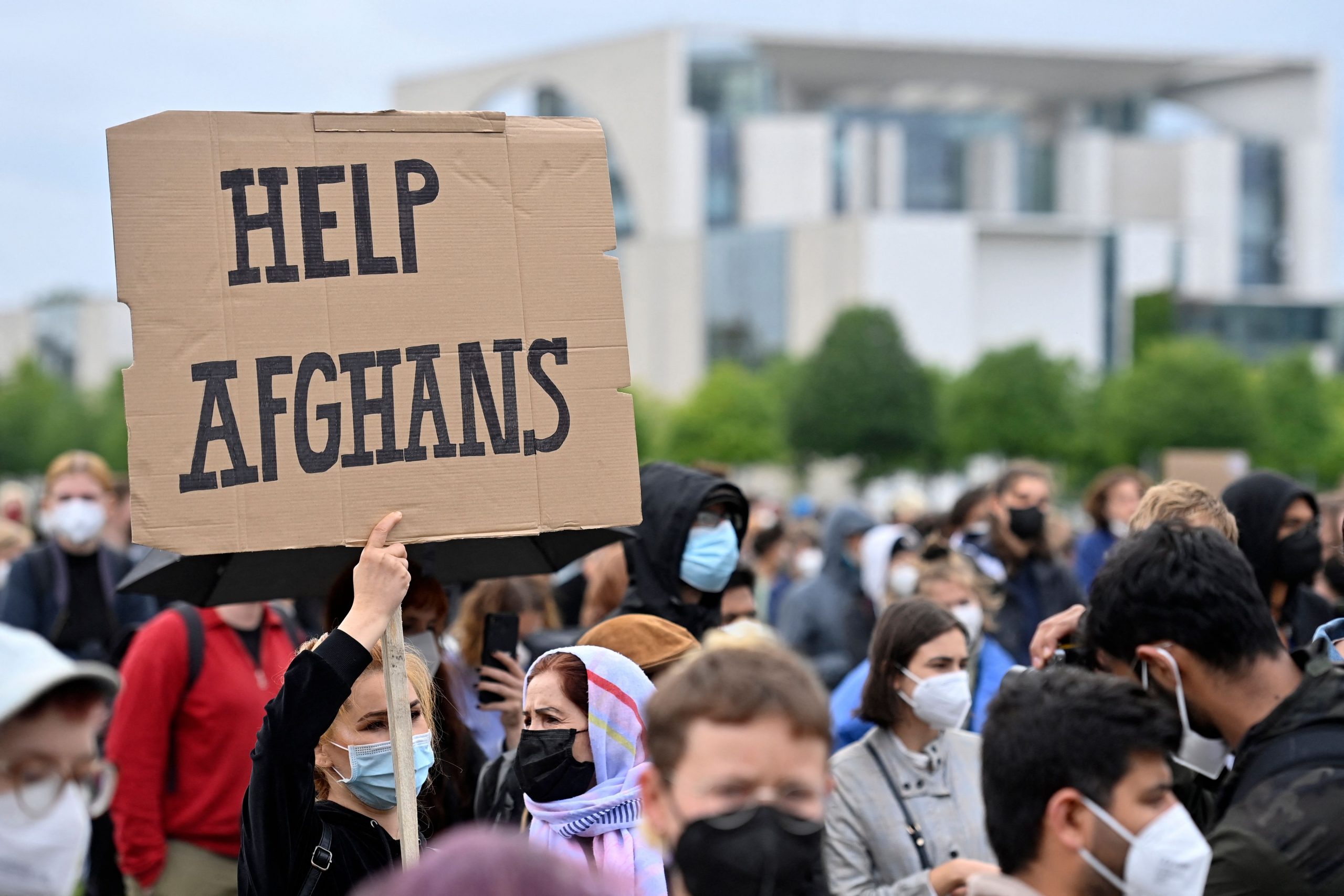
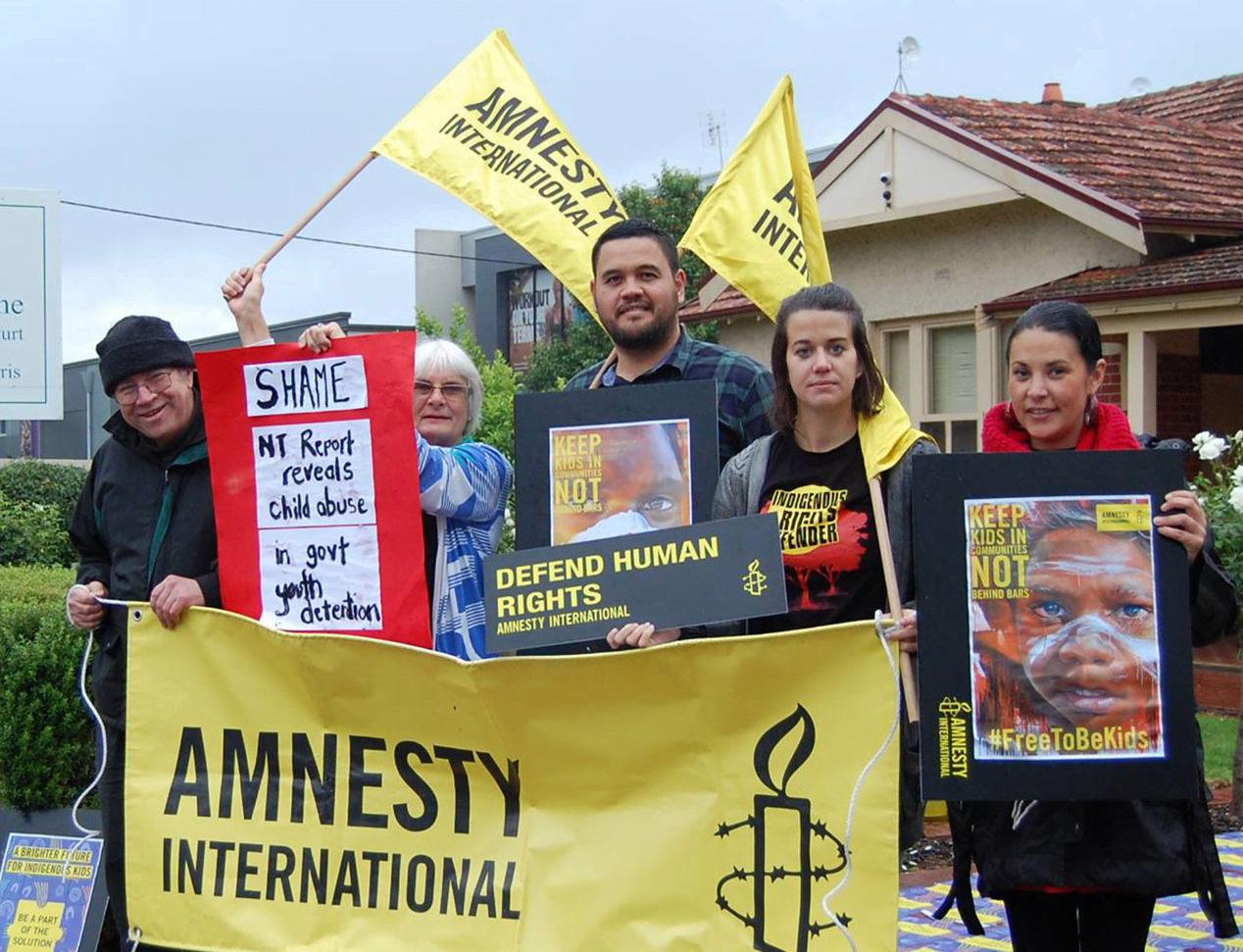
Between 27 September and 1 October, Action for Afghanistan and members of the Australian-Afghanistan community, are holding a week of action to pressure the Australian government to provide safe passage for people fleeing Afghanistan.
In the month since the Taliban took control of Afghanistan the Australian government has only offered 3,000 places in the humanitarian program to people from Afghanistan. They have not made any clear assurances, but has promised that this number is ‘a floor, not a ceiling.’
That’s not good enough. We need to keep up the pressure on the government until they announce real action. This week, over 100 prominent Australians have joined Action for Afghanistan in calling for the government to take action.
Individually we can take action to support these calls, and collectively those actions will pressure our government to act.
Amnesty International Australia, the Refugee Advisory Group, and people from Afghanistan are calling for the Australian government to urgently expand the humanitarian program and provide safe passage to people fleeing Afghanistan.
What the Australian government must do
Expand the humanitarian intake to include people fleeing the Taliban,
The government did this in 2015 when they offered 12,000 additional places in the humanitarian program for Syrian and Iraqi refugees. This offer should match commitments made by the Canadian and UK Governments of 20,000 additional places.
Grant permanent protection visas to all people from Afghanistan in Australia on temporary protection visas,
More than 4,200 Afghan nationals are living in Australia on temporary protection visas. The government has said that none of these people will be returned to Afghanistan “at this stage.” The Government must give these people the assurance that they will not be returned to danger, and grant them permanent protection visas.
Reform the community sponsorship program so that people across Australia can welcome people seeking safety into their community.
Australia’s community sponsorship program should allow Australians to sponsor a refugee to resettle safely in Australia, but the current program is slow and expensive. Reforming the program could allow willing communities in Australia to sponsor families and individuals, providing safe passage to people fleeing the Taliban.
What can you do?
1. Share the calls on social media
Take action on Twitter – it only takes 1 minutes, and it with show both Prime Minister Scott Morrison and Immigration Minister Alex Hawke that there are thousands of Australians who want them to take action.
2. Join an event
Join one several events that are being held throughout the week, including a calling party on Thursday 30 September.
3. Call your MP
Everyday people in the community taking the time to communicate to their MP is powerful.
We can’t stress enough how important it is that politicians hear from people from all walks of life and en masse. A large group of people contacting their local MP will have more impact than any single expert. That is the power our collective voices can bring and the impact you can achieve, regardless of how much you know about an issue.
And all it takes is a 5-minute call. Click on the button below and follow the simple steps to make a call.
There are 120 Amnesty action groups covering the majority of electorates around the country. For Amnesty action groups having an ongoing relationship with your local MP is critical.
As an Amnesty action group, you have the power of representing all the Amnesty supporters in your community which may make your MP more willing to meet with you. If you would like to know how many Amnesty supporters are in your electorate please contact communityorganising@amnesty.org.au.
When the phone is answered, state your name, the suburb you live in to demonstrate that you’re a local constituent and introduce yourself as a member of the local Amnesty group representing Amnesty supporters in your electorate. Explain why you are calling: “I am calling to ask for a meeting with my MP on Afghanistan … ” They may be unable to confirm a meeting over the phone – so be sure to send a follow up email after the phone call to ask for a date and time. If you don’t hear back in the next 7 days, call again.
Check out the MP engagement guide for everything you need to know about meeting your MP.
Freedom of expression is the right to seek, receive and impart information and ideas of all kinds. Freedom of expression is a fundamental human right, however, around the world there are a number of authorities attempting to obstruct it.
Journalists, media professionals, writers and activists all play a key part in maintaining freedom of expression and holding the powerful to account. Unfortunately, they often find themselves facing danger for doing their work. Social media has added a new layer to freedom of expression as citizen journalists use online platforms to document and report human rights abuses.
What is a citizen journalist?
Citizen journalists are individuals who report news through a variety of different public channels without affiliation with any form of media outlet or government. Many citizen journalists post information on social media, including YouTube, Twitter and Instagram, to audiences of various sizes.
In some countries citizen journalists were the only source of uncensored, first-hand information about COVID-19. Citizen journalists were able to hold media and governments accountable for any inaccuracies or a lack of news. However, their work often came at the cost of constant harassment for exposing information the government would rather keep quiet.
The case of Zhang Zhan
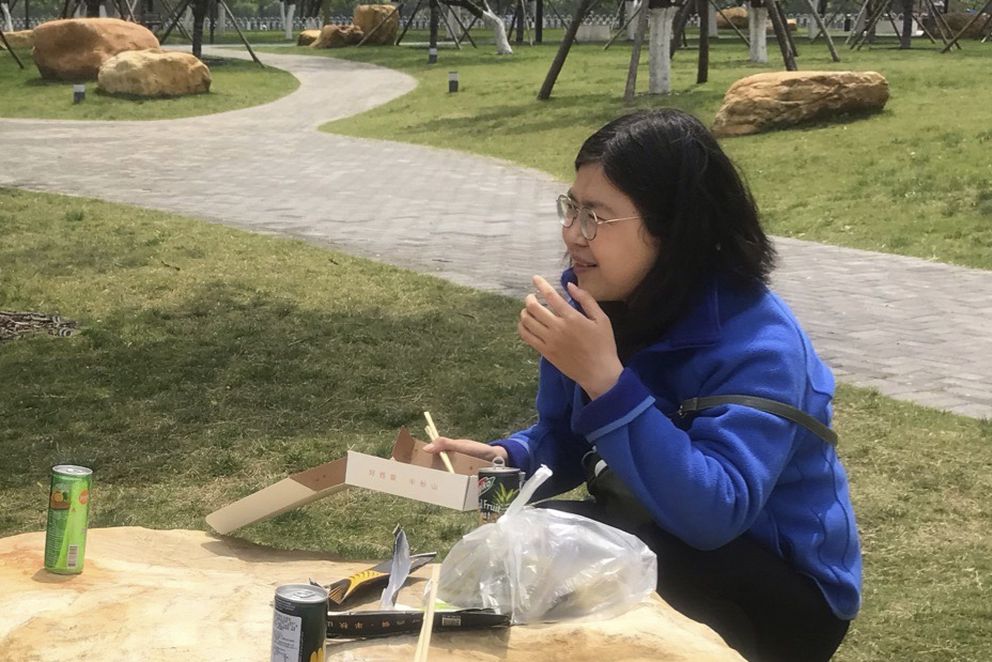
Photograph of Zhang Zhan
Citizen journalist Zhang Zhan, 37, disappeared in May 2020 after documenting the response of her government to the COVID-19 outbreak in Wuhan.
Previously a lawyer, Zhang Zhan travelled to Wuhan in February 2020 determined to get the truth out about how government officials had detained independent reporters and harassed families of Covid-19 patients.
After her posts to YouTube suddenly stopped in May 2020, authorities confirmed that she had been detained by police in Shanghai, 640km away. Following her arrest, she began a hunger strike, to protest her detention. Her hunger strike continues to this day, raising serious concerns over her health if she continues to be imprisoned.
“We should seek the truth and seek it at all costs… Truth has always been the most expensive thing in the world. It is our life.”
Zhang Zhan
In September 2020, she was sent to court on charges of “picking quarrels and provoking trouble”, a charge that carries a maximum prison sentence of five years. Three months later she was found guilty and sentenced to four years imprisonment. On the date of her court hearing, she appeared in a wheelchair.
Zhang Zhan has remained in Shanghai Women’s Prison since March 2021. The authorities continue to refuse her family visits.
Why is Zhang Zhan’s case important?
It is imperative that Zhang Zhan is immediately and unconditionally released from detention. Without access to family and lawyers of her choice, Zhang Zhan remains at risk of further torture and other ill-treatment by the authorities, especially if she continues her hunger strike.
Since the outbreak of Covid-19 in China, numerous articles relating to the virus have been censored, and related social media posts, sensitive hashtags and demands for freedom of expression have all been quickly deleted or censored. Citizen journalists in China are unable to obtain the official accreditation required to report news and face constant harassment and repression for reporting news and disseminating information that is censored by the government.
Over the past few years, civil society groups and human rights defenders (HRDs) in China have been facing an even more restrictive environment – many face prosecution, censorship and constant surveillance just for peacefully defending and exercising human rights.
It is now more important than ever to secure press freedom and ensure human rights defenders are able to challenge injustice.
Action you can take for Zhang Zhan
Tell China to free Zhang Zhan immediately by signing the Amnesty International Australia petition for her release.
Follow the Amnesty International Australia Media Awards as they carry out action for Zhang Zhan and support the rights of journalists, by celebrating the work of Australian journalists. The Media Awards will take place on the 18th November where winners will be announced in the categories of: Photography, Cartoon, Print/Online, Indigenous Issues Reporting, Radio and Television.
Egypt’s National Security Agency (NSA), which specializes in policing terrorism and political cases, is increasingly using a well-honed pattern of unlawful summons, coercive questioning that amounts to cruel, inhuman or degrading treatment or punishment, and excessive monitoring/probation measures against human rights defenders and political activists, in an attempt to harass and intimidate them into silence, destroying lives, Amnesty International said in a new briefing published today.
The briefing “This will only end when you die” documents how the NSA used these measures to control the lives of 21 men and seven women between 2020 and 2021. The activists and human rights defenders said at every summons NSA officers regularly threatened them with arrest and prosecution unless they attended interrogations and raided the homes of those who failed to appear.
At least 20 described how living in constant fear of being detained by the NSA left them anxious and depressed, denied them key rights and severely disrupted their ability to lead a normal life. As a result, many are too scared to express their opinions or participate in political activities and some have been driven into exile.
“This new NSA tactic of persistent intimidation and harassment of activists, lawyers and NGO workers is one that is destroying lives. It prevents them from working, travelling and means they live under constant fear of arrest. NSA officials’ questions and threats reveal one clear objective: to stifle human rights and political activism,” said Philip Luther, Amnesty International’s Research and Advocacy Director for the Middle East and North Africa.
“This is yet another example of how NSA officers abuse their powers, brazenly denying freedoms and basic human rights. Impunity for NSA violations over the years has shown that there is no political will to end these abusive practices. For this reason, Amnesty International is calling on members of the UN Human Rights Council to urgently support the establishment of a monitoring and reporting mechanism on Egypt.”
The measures taken by the NSA against these activists, without judicial orders or legal grounds constitute a violation of international law and standards, as well as the Egyptian constitution and Code of Criminal Procedures.
Abusive interrogations
NSA officers asked those summoned about their human rights or political activities and views, including those they expressed on social media. They were also asked about the activities and operations of opposition groups, political movements or human rights organizations which NSA officers suspected they were affiliated to and instructed to report about them. Those questioned were not allowed to be accompanied by lawyers.
During such interrogations, officers resorted to intrusive questioning about the personal lives and the political activism of those questioned, physical and psychological abuse which could amount to “cruel, inhuman or degrading treatment or punishment”, and unauthorized examination of phones and social media accounts. In most cases documented by Amnesty International, NSA officers threatened those summoned with imprisonment, torture and other physical harm against them and their families, if they refused to disclose information. They were also warned against exercising their rights to freedom of expression, association or peaceful assembly following the interrogation.
One human rights defender, who was summoned to the NSA in 2020, told Amnesty International: “He [NSA officer] asked me about the work of the organization, the director, funding and what I do… He said: ‘Listen… if I find that you are lying to me, you will never see the sun again’.”
Police instructed activists and human rights defenders, all of whom have already been detained for periods of up to three years for peacefully exercising their rights to freedom of expression, assembly or association, to regularly report to NSA offices in police stations or separate NSA premises, where they remained deprived of their liberty for hours or days without legal grounds or oversight from judicial authorities, or the possibility to seek remedy or redress.
These extrajudicial police probation measures, referred to as “monitoring” by NSA officers, amount to an arbitrary deprivation of liberty. They differ from court-mandated probation measures and are indefinite in nature, solely subject to the whims of NSA officers. In many cases those detained were tortured or otherwise ill-treated and their right to work and family life was severely disrupted.
It is impossible to determine the number of people subjected to NSA monitoring, as the practice is carried out without orders by judicial authorities and there are no official written records available. Lawyers interviewed told Amnesty International that many of their clients were released as early as 2015, but increasingly from 2019 were subjected to these practices.
“The countless victims of NSA’s abusive practices are unable to lead their lives with a sense of normality and security under the impact of persistent intimidation and threat of imprisonment. Activists are doubly punished for their lawful activism, having already been subjected to arbitrary detention. Egypt’s President Abdel Fattah al-Sisi and minister of interior must end this extrajudicial harassment of human rights defenders and activists,” said Philip Luther.
International law, the Egyptian constitution and Penal Code all prohibit torture and other ill-treatment as well as arbitrary or unlawful interference with a person’s privacy, family, home or correspondence.
Under the International Covenant on Civil and Political Rights, to which Egypt is a state party, no individual may be subjected to arbitrary arrest or detention and no one may be deprived of his or her liberty except on grounds and procedures established by law. Those detained must be promptly informed of the reasons of their detention and brought before a judge. They must also be able to challenge the lawfulness of their detention and be notified of their rights including the right to remain silent.
No legal redress
Victims found that there are no legal avenues that they could take to challenge these measures, report abuses or to seek justice, placing NSA officers above the legal system. They felt unable to lodge complaints before prosecutors or to publicly denounce their experience for fear of retaliation by NSA officers given well documented complicity by prosecutors in NSA violations. Interviewees repeatedly told Amnesty International that the officers acted with full confidence and boasted that there would be no repercussions for their actions.
A female activist told Amnesty International that she was sexually harassed by a policeman. She said: “When I wanted to file a complaint against the officer that sexually harassed me, I was told: “What do you mean you want to file a complaint? Do you want to go back to prison?” There is no such thing as filing a complaint here.”
The organization had previously documented the systematic failure of prosecutors to investigate allegations of torture and enforced disappearances by the NSA and role in arbitrarily detaining activists and human rights defenders solely on the basis of secret NSA investigation files.
Findings in the report question the seriousness of commitments outlined in Egypt’s national human rights strategy, which was launched in a ceremony attended by President Abdel Fattah al-Sisi on 11 September and vowed to uphold the rights to liberty, privacy and freedom of expression, association and peaceful assembly.
“The relentless harassment of human rights defenders and other activists exposes the Egyptian authorities’ recent adoption of a national human rights strategy to much fanfare as nothing more than a sinister attempt to whitewash their dismal human rights record,” said Philip Luther.
Amnesty International calls on the public prosecutor to open thorough and independent investigations into NSA abusive practices. Those responsible must be promptly held to account regardless of rank, status or position. President Abdel Fattah al-Sisi should instruct the minister of interior to immediately put an end to the extrajudicial harassment and summoning of human rights defenders and other activists, while the minister of interior should publicly denounce this practice.
The United Nations Security Council (UNSC) must extend the UN’s mission in Afghanistan (UNAMA), and the UN must supply the staff and resources it needs to monitor, investigate, and report on human rights abuses on the ground in the country, said Amnesty International, ahead of a 17 September vote on renewing the mission’s mandate, which is due to expire that day.
Present in the country since 2002, UNAMA’s responsibilities include a pivotal role in monitoring the country’s human rights situation and providing oversight through the Office of the High Commissioner for Human Rights (OHCHR).
“The Taliban takeover poses grave risks to vulnerable groups, especially journalists, ethnic minorities, women and girls, and those who worked with the former government, foreign states, and contractors,” said Lawrence Moss, Senior Advocate for Amnesty International at the UN. “It is essential that UN human rights monitors remain on the ground and show support for the rights of Afghans at this perilous time.”
In a resolution adopted on 30 August, the UNSC called on the Taliban to:
Uphold human rights, including those of women, children, and minorities
Ensure the full, equal, and meaningful participation of women in an inclusive political settlement
Adhere to the rule of law
Allow Afghans to travel abroad, leave Afghanistan anytime they want to, and to exit Afghanistan via any border crossing, both air and ground
Respect international humanitarian law, including protection of civilians
“To enforce its own expectations, the Security Council urgently needs the immediate monitoring and reporting function provided by the very mission it established,” said Lawrence Moss. “UNAMA should brief the Council at least monthly on the human rights situation in Afghanistan.”
Amnesty International further calls on the United Nations to supply the additional staff and resources necessary for UNAMA to amplify its human rights monitoring. UNAMA’s international human rights staff are now out of the country, primarily in Almaty, Kazakhstan, and the work of its domestic human rights staff is greatly limited by fear of reprisals. The UN has allowed humanitarian and political staff to remain in Afghanistan, but not its human rights monitors.
“The UN should show support for the people of Afghanistan by returning international human rights monitors to the country, subject to the same security protocols as for humanitarian staff, and the UNSC should demand the Taliban respect the work of the UN’s domestic human rights staff and refrain from any reprisals,” said Lawrence Moss.
Panjshir Valley reports underscore need for human rights monitoring
Alarming reports are emerging from the Panjshir Valley, where fighting between the Taliban and resistance fighters is ongoing. BBC Persian has shared a video which claims to show a wilful killing in the area, while the BBC has further reported that the Taliban have killed civilians. According to sources interviewed by Amnesty International on Sunday 12 September, the Taliban have also been blockading food and essential supplies from entering the region. “An increasingly dire picture is emerging from the Panjshir Valley. This deeply disturbing footage and reports of other human rights abuses in the region underscore the immediate need for the international community to guarantee effective oversight of what’s happening in Afghanistan,” said Lawrence Moss.
Background
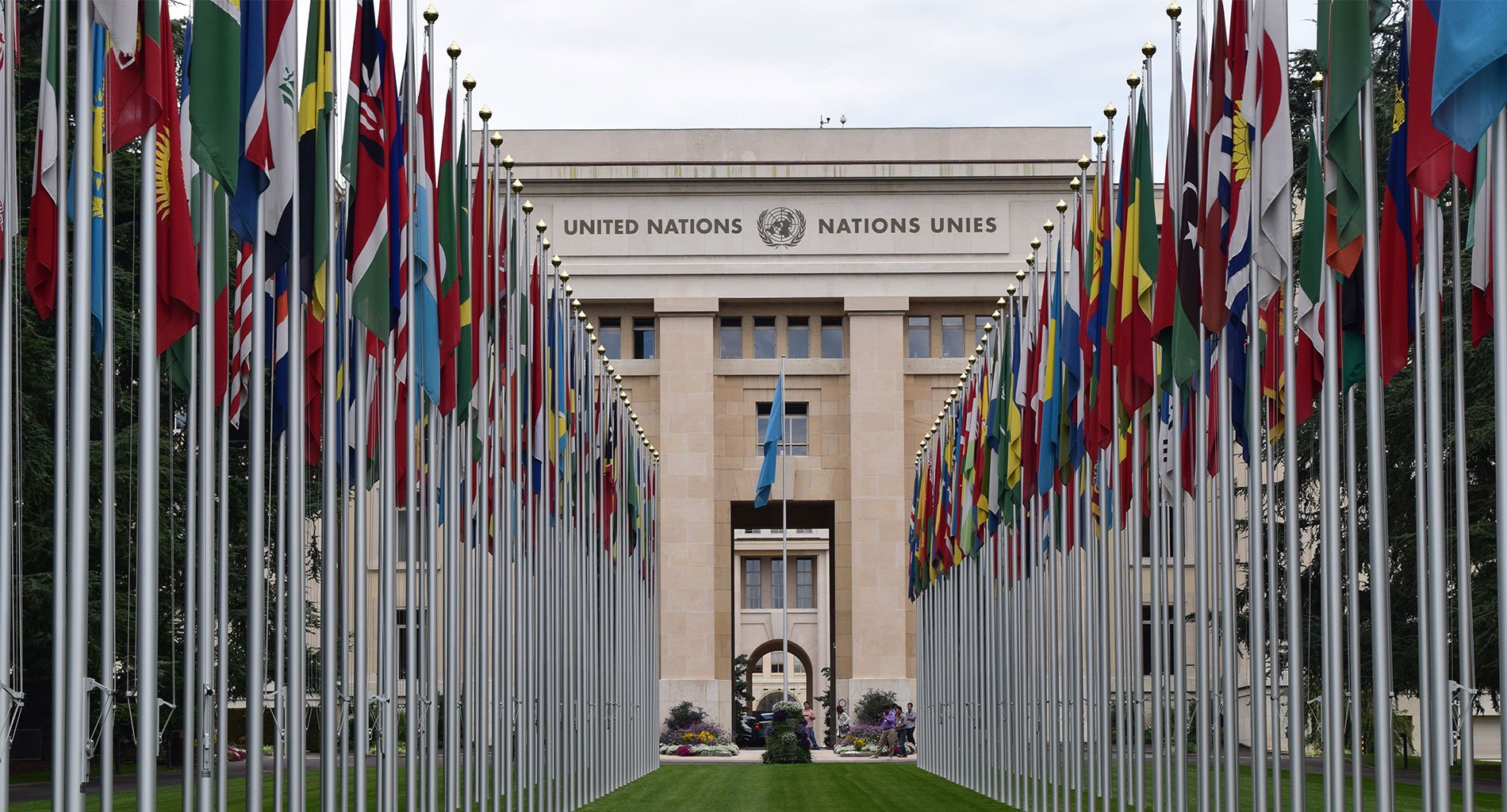
UNAMA’s mandate is reviewed on an annual basis by the UN Security Council – for further information, see here. For further information about its human rights work, see here. Amnesty International is also calling on the UN Human Rights Council (UNHRC) to establish a complementary Fact-Finding Mission or similar independent investigative mechanism for Afghanistan. A special session of the UNHRC in Geneva in August failed to authorize such a mechanism, and Amnesty International has joined more than 50 national, regional, and international organizations to urge UN member states to do so at its 48th regular session, which runs from 13 September – 8 October 2021.
Amnesty International Australia is committed to creating a diverse, inclusive, representative and culturally competent movement. AIA wants to ensure that all our employees, volunteers and activists feel respected and valued and that our movement is respectful and inclusive when conducting its work.
One of the ways we can do this is through ensuring that our language is always inclusive and respectful of members of our movement, our employees and our community.
Inclusive language is language that is free from words, phrases or tones that reflect prejudiced, stereotyped or discriminatory view of particular people or groups. It does not deliberately or inadvertently exclude people from feeling accepted. When you use inclusive language, you put the person first and do not focus on how society defines them by their characteristics.
Inclusive language is a way of showing respect for everyone in our organisation and in the community. Inclusive language enables everyone to feel valued and respected. It also allows people to feel comfortable which then enables them to be more able to contribute their talents to drive organisational performance.
Following months of campaigning, Australian civil society organisations last week welcomed the comments from Trade Minister Dan Tehan that the Australian Government now supports the temporary waiver of monopoly rules on COVID-19 vaccines, treatments and related products proposed by India and South Africa at the World Trade Organisation (WTO). The waiver is key to supporting equitable and affordable access to vaccines for developing countries, and has the potential to save millions of lives.
The Australian Government must now put words into action by working with other supportive countries to promote the passage of the waiver at the WTO TRIPS Council meeting today.
The waiver is needed urgently because WTO rules give pharmaceutical companies 20-year monopolies, meaning the supply and price of vaccines is controlled by a few companies who have already made billions from vaccines largely developed with public funds. Australia has felt the impact of these monopolies too, with both Pfizer and Moderna refusing to share intellectual property to allow local production in Australia. If pharmaceutical companies continue to control vaccine access, millions more will die and more dangerous virus variants like Delta will develop.
The waiver was first proposed in October 2020 to enable increased manufacturing of affordable COVID-19 vaccines in countries like India and South Africa that already produce generic medicines. Since then, support for the waiver has grown, with Australia just one of a handful of countries not in support.
There is widespread support in the Australian community for the waiver. More than 50,000 Australians signed petitions in support, and an Essential Media poll found 62 per cent support for the waiver across Coalition, Labor and Greens voters.
We call on Minister Tehan to make a formal public statement of Australia’s support of the waiver and actively promote the waiver proposal to the few countries which are still blocking it.
The UN Human Rights Council should recognize a safe, clean, healthy, and sustainable environment as a universal human right. With millions experiencing hunger and displacement due to the effects of climate change and environmental degradation, it is clearer than ever that human life and dignity depend on a healthy environment.
The 48th regular session of the Human Rights Council (HRC) begins today in Geneva. Amnesty International is joining more than 1,100 civil society and Indigenous peoples’ groups in calling on member states to adopt a resolution to formally recognize the right to a healthy environment. Member states should also establish a new mandate for a UN Special Procedure on human rights and climate change.
“The dramatic impacts of climate change have exposed, with devastating clarity, how integral a healthy environment is to the enjoyment of all our other rights. It’s easy to take our planet for granted until we see the human cost of its degradation: hunger, displacement, unemployment, homelessness, illness and deaths,” said Agnès Callamard, Secretary General of Amnesty International.
“Governments’ failure to act on climate change in the face of overwhelming scientific evidence may well be the biggest inter-generational human rights violation in history. As the primary global human rights body, the HRC must use all the tools at its disposal to counter the crisis. We call on all states to support recognition of the right to a healthy environment, at the UN and at national level. Those who do not will be on the wrong side of history and standing against the common future of humanity.”
A crucial human right
The right to a healthy environment is legally recognized in more than 80% of UN member states through constitutions, legislation, court decisions and regional treaties. In the view of many it is also implicitly contained in global human rights treaties, though it has not been explicitly recognized by states through the United Nations. A wide range of UN entities and other intergovernmental bodies, as well as NGOs, trade unions and business groups, have voiced their support for global recognition of the right to a healthy environment.
UN recognition would make clear that states have an obligation to protect, respect and fulfil this right. It would encourage the states who do not yet recognize this right in their national laws to do so, and motivate others to strengthen their legislation. It would also support the critical work of environmental human rights defenders, buttressing the legitimacy of their efforts and putting more pressure on states to protect them from threats and attack.
Along with the creation of a Special Procedure on Climate Change and Human Rights, formal recognition would also make it easier for the UN to support states in improving their performance on environmental issues. Currently, UN human rights bodies’ involvement in environmental issues depends on the link between environmental impacts and other rights – for example, they could look at whether the right to adequate housing has been violated through deforestation, or whether the right to health is threatened by failure to tackle air pollution. A universally recognized right to a healthy environment would make it more straightforward for UN human rights bodies to examine states’ compliance with their human rights obligations related to the environment, and to provide support and assistance to states in promoting such compliance.
Research demonstrates that state-level recognition of the right to a healthy environment contributes to improved environmental outcomes, including cleaner air, enhanced access to safe drinking water, and reduced greenhouse gas emissions. It also empowers communities to defend their rights in the face of adverse environmental impacts linked to state and corporate responsibility.
“As the UN Special Rapporteur on human rights and the environment has pointed out, when the UN adopted resolutions recognizing the human rights to water and sanitation in 2010, it spurred many states to include these rights in their national legislation. It also mobilized billions of dollars in increased investment in water infrastructure, dramatically improving the lives of hundreds of millions of people,” said Agnès Callamard.
“Recognizing the right to a healthy environment could spur similar transformative change in state approaches to climate change. We call on all HRC member states to seize this opportunity to scale up the HRC’s work on the climate crisis – one of the most daunting and urgent human rights challenges in history.”
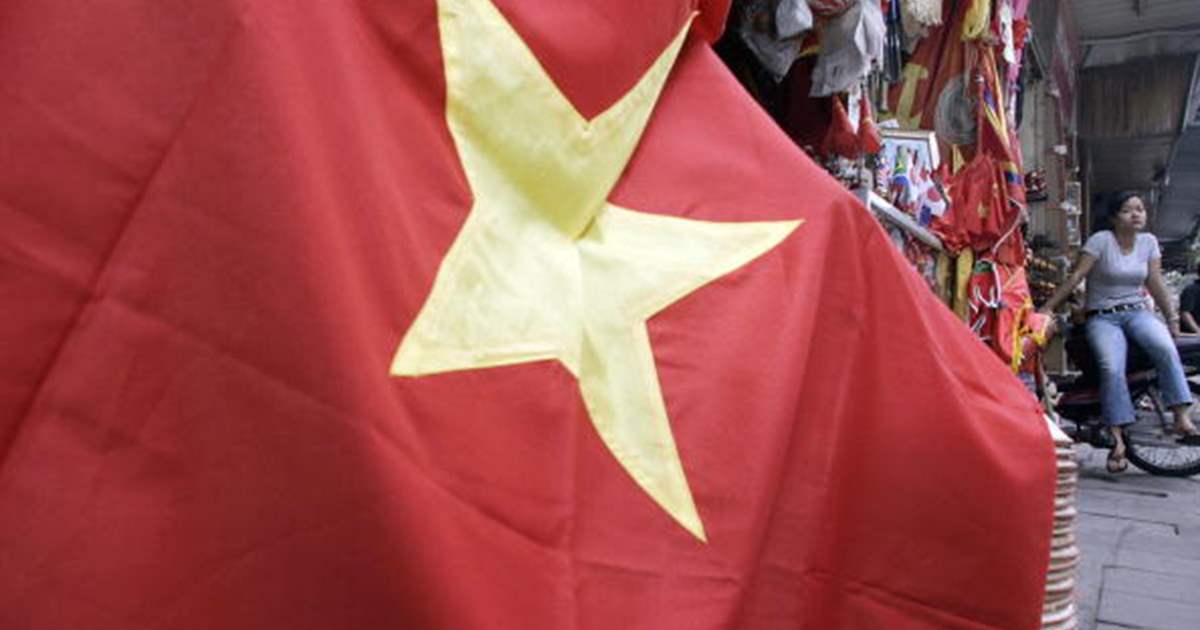
The Vietnamese authorities must take urgent steps to avert a looming humanitarian and human rights crisis on top of the country’s Covid-19 battle, as strict lockdown measures increasingly harm society’s most vulnerable.
Amnesty International’s Deputy Regional Director for Research Emerlynne Gil said today:
“Military-enforced lockdowns are preventing many vulnerable people, especially in Ho Chi Minh City, from accessing enough food to survive during a devastating public health crisis.”
“The government must not allow a two-pronged tragedy of Covid-19 deaths and unendurable hunger to envelop a population where many were already suffering serious economic hardship before lockdowns began.”
“We are alarmed by credible reports that huge numbers of people have received next to nothing in terms of food. If the country is to carry out military-enforced lockdowns, sustenance supplied by the army must reach vulnerable people and meet nutritional needs.”
“Amid this period of intense suffering, police have also fined and arrested people who criticize the state’s handling of the crisis on social media and unleashed a disproportionate criminal crackdown on individuals caught spreading Covid-19.”
“Heavy-handed measures to enforce public health restrictions risk undermining the effectiveness of Viet Nam’s Covid-19 response. Instead of relying on punishment and other coercive approaches, Vietnamese authorities should implement a response rooted in respect for human rights.”
“The Vietnamese authorities must ensure that Covid-19 restrictions are the minimum necessary and proportionate to the aim of protecting public health as defined under international human rights law. Lengthy prison terms for Covid-19 spreaders and lockdowns that prevent people from accessing food clearly do not pass this test.”
Background
Vietnam is battling its deadliest outbreak of Covid-19 since the pandemic began. After initially proving a success story in its response to the pandemic, recording fewer than 1,500 Covid-19 cases and only 35 deaths by the end of 2020, cases have since skyrocketed to over 570,000, with just over 15,000 deaths. The majority of new cases and deaths have been reported in Ho Chi Minh City.
In response, Vietnamese authorities have enacted strict lockdowns in the nation’s hardest-hit regions. On 23 August 2021, officials in Ho Chi Minh City, the nation’s most populous urban area, imposed a severe, military-enforced lockdown that prevents people from leaving their homes even to access food. People must wait for the military to deliver supplies to their homes, a system that has failed to consistently fulfil the right to food for the city’s most vulnerable people, leaving many in a position of severe food shortages and hunger. The restrictions are expected to remain in place until the end of September.
Harrowing images and videos of hardship and suffering – and calls for help – have spread across social media, yet those caught criticizing the government’s handling of the pandemic have faced fines and arrest.
On 2 September 2021, police in Ho Chi Minh City fined Facebook user Nguyen Thuy Duong VND 5 million (approximately $210)after she shared a post online saying the authorities had neglected city residents and allowed them to go hungry during the lockdown. In early August, police arrested 33-year-old Tran Hoang Huan for sharing criticism of the government’s Covid-19 response on Facebook.
Vietnam is a party to the UN International Covenant on Economic, Social and Cultural Rights, which guarantees amongst others the rights to health and to food. The UN Committee on Economic, Social and Cultural Rights’, which monitors states’ compliance with the Covenant, states in its General Comment 14 that any restrictions and limitations on the grounds of public health “must be in accordance with the law, including international human rights standards, compatible with the nature of the rights protected by the Covenant, in the interest of legitimate aims pursued, and strictly necessary for the promotion of the general welfare in a democratic society”. They should be of limited duration, subject to review, and the least restrictive alternative must be adopted where several types of limitations are available. The Committee has also emphasized in the context of the pandemic that authorities must ensure sufficient food supplies reach all those in need.
Amnesty International has written to Australian Trade Minister Dan Tehan, welcoming the Australian Government’s recent commitment to support the waiver on Trade-Related Aspects of Intellectual Property Rights (TRIPS). The waiver, which would help to ensure that COVID-19 medical products, including safe and effective vaccines, can be manufactured quickly and made available and affordable for all now has the support of more than 100 countries.
However, there is still strong opposition to the waiver from key countries like Germany, who continue to advocate for alternative proposals that will not deliver affordable access to vaccines to low income countries where millions are dying and more infectious strains continue to develop. Australia has felt the implications of these current models too, with both Pfizer and Moderna refusing to allow local production in Australia. If rich pharmaceutical companies continue to control vaccine access, millions more will die.
We’ve already seen countries such as the United States, who have indicated their support publicly for the TRIPS waiver, play only a passive role in negotiations, and progress has stalled. Public support alone is not enough. The Australian Government must now put its words into action and work with other supportive countries to help lead the passage of the TRIPS waiver at the upcoming WTO meetings to put people over profits.
Every child deserves to spend their childhood growing and learning and thriving. In this country, every State and Territory Government is responsible for sending children as young as 10 to prison. That must stop now.
Amnesty has been working tirelessly on raising the age of criminal responsibility from 10 to 14, and we have a very real opportunity to put pressure on our governments and demand that they act. We see what happens when children are sent into prison – they are traumatised, harmed, deprived of their childhoods and when they get out, there’s very little support to help them get back on their feet and so they’re increasingly likely to return into the vicious cycle that is the so-called justice system.
It’s our responsibility to fight for better for our children, it’s our responsibility to make sure that these babies get the support that they need and it’s our responsibility to demand that our decision-makers raise the age of criminal responsibility from 10 to 14.
Maggie Munn – Gunggari person, Indigenous Rights Associate Campaigner.
What is Raise the Age?
With the ACT recently committing to raising the age of criminal responsibility from 10 to 14 years old, and with other signs of small steps forward in other some other states, we have a unique opportunity to keep the momentum going and push for other states and territories around the country to raise the age of criminal responsibility from 10 to 14.
Amnesty International Australia is working in partnership with Change the Record to pressure decision-makers to not only Raise the Age of criminal responsibility, but to ensure that it is raised to 14.
Research shows that at this age, children’s brains are still developing and they are not able to navigate criminal responsibility or understand the consequences of their behaviour. Locking up young kids robs them of a childhood and isolates them for society and their community during crucial years of development. This approach doesn’t lead to rehabilitation, in fact, it’s quite the opposite! Children who are arrested before the age of 14, are three times more likely to be criminalised as adults.
Indigenous-led programs like Olabud Doogethu in Halls Creek are having great results. Kids who engage with these programs, and receive the support they need are more likely to thrive with stronger connections to identity, community and support structures.
We need to change the conversation in the community around youth imprisonment.
Australians are growing increasingly supportive of raising the age and funding Indigenous-led programs that act as alternatives to prison and provide kids with what they actually need.
People have hosted film screenings, written to local media, contacted MPs, and more, leading to a visible demonstration of public support and solidarity with RTA campaigners.
2 – Local Mobilisation
The more we mobilise, the more difference we can make.
Collective actions, including holding events, writing letters, signing petitions, sending tweets, and even talking to the media to raise awareness and make a difference.
Engaging the media on the issue of #RaisetheAge to shift the media narrative to be more supportive of community-led alternatives to prisons for young kids.
3 – Engage Decision-Makers
Politicians and decision-makers need to hear our message and see the level of public community support we’ve built to Raise the Age of criminal responsibility from 10 to 14.
Mail letters, call, email and visit your state MP, Attorney-General and Premier.
4 – Campaign Win
By building strong and visible levels of community support and by shifting the narrative around youth imprisonment in the media, State and Territory governments around the country will recognise the need to focus on prevention, not detention. This can be changed by raising the age at which a child can be locked up to at least 14, and by committing funding for more Indigenous-led solutions and alternatives.
“We have the solutions – all the evidence shows that culturally appropriate, community-led justice reinvestment is a much more productive way to manage kids when they get into trouble.”
Rodney Dillon, Indigenous Rights Advisor
Let’s Get To Work
Step 1 – Map Your Community
Make sure to find out which country you are on, who the Elders and Indigenous community leaders in your area are and about the history of the stolen land which you live, work, play and campaign on.
The better understanding you have of your community, the more people you can engage in the campaign and the more influence you’ll have on your state MP. Do some research on what matters to your local community and on how much your community currently supports raising the age from 10 to 14. It will be important to understand if there are already existing groups working on this campaign in your area, so you can collaborate with them.
Access our Skill Up Training Modules on how to map your community, and keep your eyes on the Activism Planner for any relevant training webinars we may run over the next few months. Create a plan to roll out your campaign locally – think about how you will create partnerships, engage with your community and engage with your state MP, Attorney-General and Premier. For some training resources and templates check out our Level 2 and 3 Skill Up Training Modules.
Step 2 – Become a Good Ally and Build Partnerships
Complete our ‘How to be a Genuine Ally’ training module, so you can build culturally sensitive and sustainable relationships with your local Aboriginal and Torres Strait Islander community. Keep your eyes peeled on the Activism Planner for any Ally Training webinars we may run over the next few months.
Do your research on the Indigenous organisations and communities in your area and think about the best way to approach and build relationships. You can access our ‘Partnerships and Community Mapping’ training module on our website here.
Please note: Indigenous communities, particularly remote communities, are living in crisis because of COVID impacts. Please think very carefully about asking them to do more right now.
Sensitively reach out to Indigenous organisations and community leaders in your area. Ask them what you can do to help support their work. If they are unable to engage in our campaign right now, make sure you inform them of what you’re doing. Relationships take time to build and work both ways.
Step 3 – Plan How to Change the Narrative in Your Community
Plan an event that raises awareness and helps change people’s mind on the issue of youth imprisonment. Consider how you would reach new audiences with this event.
Organise a film screening of In My Blood It Runs or Incarceration Nation, or a forum with local Indigenous elders and other experts. Your event will bring the community together to learn more about the issue and shift perspectives.
Contact local media and write a Letter to the Editor for your local newspaper explaining why you think it’s crucial to Raise the Age from 10 to 14.
Step 4 – Build Visible Community Support
We have been building momentum on the campaign to Raise the Age for years. In order to win this campaign, we need to extend beyond our usual allies and show that there is support among a broad section of Australia. Our challenge is to get creative, reach out to new audiences and demonstrate visible public support to force our leaders to act.
Start planning for how you’re going to get your community to demonstrate visible wide-reaching support for raising the age from 10 to 14.
Organise a ‘Postcard Blitz’ with fellow activists and ask members of the community to fill in a postcard to send to their local MP.
Coordinate a ‘Bumper Sticker Blitz’ in your community with fellow activists, where you distribute bumper stickers to supportive individuals, businesses and organisations, and ask them to publicly display them.
Place signs, stickers and other promotions around your community to draw attention to the issue.
Pass around an offline petition to further demonstrate the importance to your community.
Step 5 – Demonstrate Your Community Power
Start planning how you’re going to let vital decision-makers know that there is strong community support for Raising the Age from 10 to 14.
Organise a meeting with your local MP with fellow activists at a peak moment in your grassroots campaign to let them know how supportive the community has been for Raising the Age from 10 to 14.
Engage local media to amplify your local group’s campaign and reach more people.
Research where your local MPs and important decision-makers are going to be, and turn up to ask them questions about their stance on Raising the Age from 10 to 14.
Key Dates
27 October 2021: International Children’s Day
31 October 2021: Incarceration Nation on SBS
26 January 2022: Invasion Day
P.S. We’ll be working towards a peak moment in October around International Children’s Day. You could consider this in your own grassroots campaign planning and potentially organise a peak moment in your plans in October as well. This will help amplify our message!
Host your own online event
Things are different this year with Covid-19, but hosting your own online event is one way to take part in Raise the Age and make a difference during these difficult times!
As always, please submit your event via the Host an Event page. Our supporter care team will be in contact with you and provide you with options for support.
Things to consider: Is this event for your action group? Or your local community? Depending on your audience, there might be different ways to approach your event.
Here’s some tips and tricks for hosting an engaging online event:
Preparation
Click here to learn more about the issue and why we need to raise the age of criminal liability from 10 to 14 years-old.
Click here to learn more about indigenous justice issues.
Sign and share the online petition to show your support for raising the age.
Send and share an online postcard about raising the age that will be sent to decision makers in your area.
Make a plan
Register your event through Amnesty’s online Host an event form.
Book and secure your entertainment, whether this is speakers, musicians, or any other amazing ideas you might come up with.
Schedule in a time for people to write a letter/sign the petition during or before/after the event.
For promotion
Our Activist Communications Team is here to support the promotion of your event. Fill out this brief and let them know the support you need.
Plan your tech
Here is our How-to-Zoom guide with all of the ins & outs of using Zoom.
Consider
Are you involving people from affected communities in organising this event? If so, it might be worth brushing up on the How to be a genuine ally training module.
Can you partner with other groups to host this event?
What will draw people to your event? Will it be an interesting speaker, discussion, or activity?
Who is your likely audience?
What format is best suited for the message you are trying to get across?
Before an Online Event
Revise the How-to-Zoom guide (or instructions of your chosen platform).
Prepare materials, notes or questions so you have them handy during the event.
Send your attendees reminder emails or post reminders in the Facebook event (1 day and 1 hour before the event). Make sure your attendees have the link to access the online event.
Test your camera, microphone, lighting, and backdrop.
Check your internet speed.
Do a full test run on the platform of your choosing.
Acknowledge country, welcome your audience and enjoy your time!
Have one person available to help attendees who are experiencing technical issues or have questions during the event (via chat, email or the Facebook event).
Host an in-person event
You can still run a Raise the Age event if you are allowed to run in-person events in your community! You can:
Hold smaller letter-writing events with friends and family.
Organise a film screening online and get attendees to write a letter before the screening starts.
The options are endless!
Let us know if you’re hosting an event, as we can provide extra support for you.
We can send you letters, petitions, t-shirts, pens and badges
We can provide you access to our professional QR code account so that you can set up your own trackable QR codes linked to the petitions you’re using
If you need help setting up a Zoom meeting/would like access to our professional account, just ask us.
Please just add these into the hosting an event form so the supporter care team can fulfill your resourcing requests.
This event template could be useful for you and your group when planning your event. You can follow the same steps as for an online event, just consider you will be running it in person, so you might need to think of other items such as venues. Follow this guide to make sure your event is COVID safe.
Use the media to get your message out
Reaching out to the media raises awareness of how your group is challenging injustice.
Send a media release
A media release is a relatively old-fashioned way to reach journalists in the most efficient way possible. Here is a template media release you can use, or you can generate your own. To write a media release, use the inverted pyramid – give all the important information in the first paragraph, and add details in subsequent paragraphs. You have to compete for the journalists’ attention, so you should always begin with what is new and with a headline.
Then you can send it to all the relevant media outlets and journalists in your area – TV, radio, online, and newspapers. Always copy in the general contact email address just in case. Send the release about a week before your event.
Follow up the release with a call a couple of days before the event (make sure your event doesn’t coincide with a major deadline for the media outlet). You may want to convince the journalist, in the nicest possible way, why the community would want to know about the event and what the journalist can capture at the event – they’ll want interviews, pictures, and video.
Write a letter to theeditor
A letter to the editor of your local newspaper is a way for the paper to hear from its readers about issues in the community or the wider world. The key, as with the media release, is that you have to really compete for the editor’s attention, so you need to make the letter compelling. Here are some tips on how to write a compelling letter to the editor.
List your event
Listings are an extremely easy way to drum up interest in your event. There are a wide range of listing websites which give you free listings. You simply need a blurb about your event, all the details of how someone can be involved, and an image to go with it.
Let your local ALC know how you went, and fill in the feedback form, so we can continue to support your events to the best of our ability.
Send all your letters and petitions back to the Sydney action centre at: Amnesty International, Locked Bag 23, Broadway NSW 2007, and we’ll post them to the targets, or for solidarity letters to the case.
If you’re planning some grassroots campaign activities and would like physical copies of our postcard action, bumper stickers and corflutes, you can request them through this Event Submission Form. Just let us know what you’ll need in the ‘Do you require materials or other support?’ section.
Campaigning for human rights can be difficult. Burnout and vicarious trauma can happen and it’s important to keep a look out for the signs in yourself and your friends. You can check out our Sustainable Activism & Self Care guide and workshop which you can find here. It examines how we can better take care of ourselves as activists and what you can do to make sure your activism is sustainable!