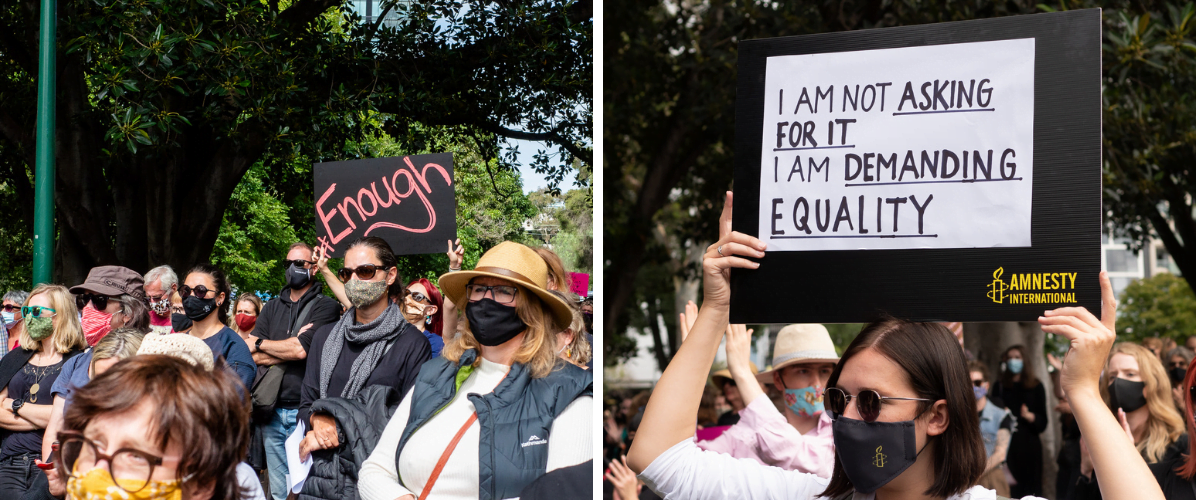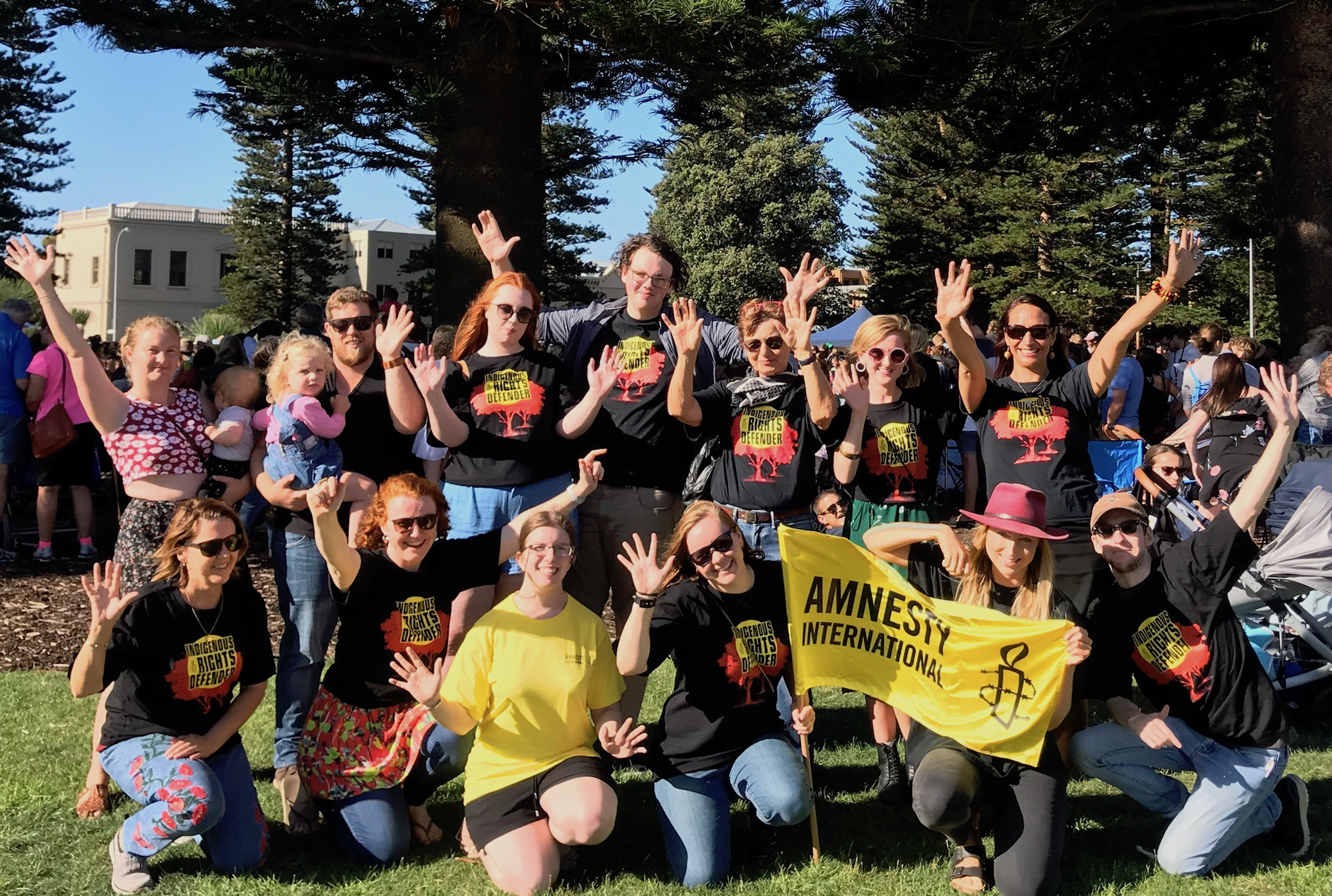
WA Raise the Age 2021 Activist Toolkit

This is our Raise the Age Activist Toolkit for Western Australia. For the national page, click here.

In the words of the late, great Whitney Houston “I believe children are our future, teach them well and let them lead the way. Show them all the beauty they possess inside.” Now more than ever we have a real chance to make a difference in the lives of children in WA. Those babies are our future, and they deserve to have a future of their own.

Raising the age of criminal responsibility is the first step of many to ensuring that Aboriginal and Torres Strait Islander children receive justice, equity and a chance to lead the way. No child belongs in prison, we have a real opportunity to demand that the Western Australian Government raise the age to 14, provide support to the children who are currently inside, and make sure that every child in WA knows that they are loved and safe from a childhood spent in prison. Let’s get out there and fight for justice for these children. 

Maggie Munn – Gunggari person, Indigenous Rights Associate Campaigner.

What is Raise the Age?

Amnesty International Australia is working in partnership with Social Reinvestment Western Australia to pressure decision-makers to Raise the Age of criminal responsibility to 14.

Research shows that at this age, children’s brains are still developing, and they are not able to understand the consequences of their behaviour. Locking up young kids robs them of a childhood and isolates them from society and their community during crucial years of development. This doesn’t lead to rehabilitation – children arrested before the age of 14 are three times more likely to commit offences as adults than children arrested after age 14.

Check out our ‘Raise the Age: Kids belong in community’ report for more information about the issue.

Indigenous-led programs like Olabud Doogethu in Halls Creek are having great results. Kids who complete these programs are  more likely to thrive with stronger connections to identity, community and support structures.

Download an Action Summary

Theory of Change – How Do We Win?

1 – Your Local Actions

We need to change the conversation in the community around youth imprisonment.

Western Australians are growing increasingly supportive of raising the age and to funding Indigenous-led programs that act as alternatives to prison and provide kids with what they actually need.

People have hosted film screenings, written to local media, contacted MPs and more, leading to a visible demonstration of public support and solidarity with RTA campaigners.

2 Local Mobilisation

The more we mobilise, the more difference we can make.

Collective actions, including holding events, writing letters, signing petitions, sending tweets and even talking to the media to raise awareness and make a difference.

Engaging the media on the issue of RTA to shift the media narrative to be more supportive of community-led alternatives to prisons for young kids.

3 – Engage Decision-Makers

Key decision-makers in the West Australian government need to hear our message and see the level of public community support we’ve built to Raise the Age of criminal responsibility from 10 to 14.

Engage with essential State MPs to convince them to either speak out publicly to the media or in Parliament on the issue.

Mail letters, call, email and visit MPs’ offices
Ask MP to give a statement of endorsement
Ask MP to take a photo with your group
Invite your MP to local meeting

4 – Campaign Win

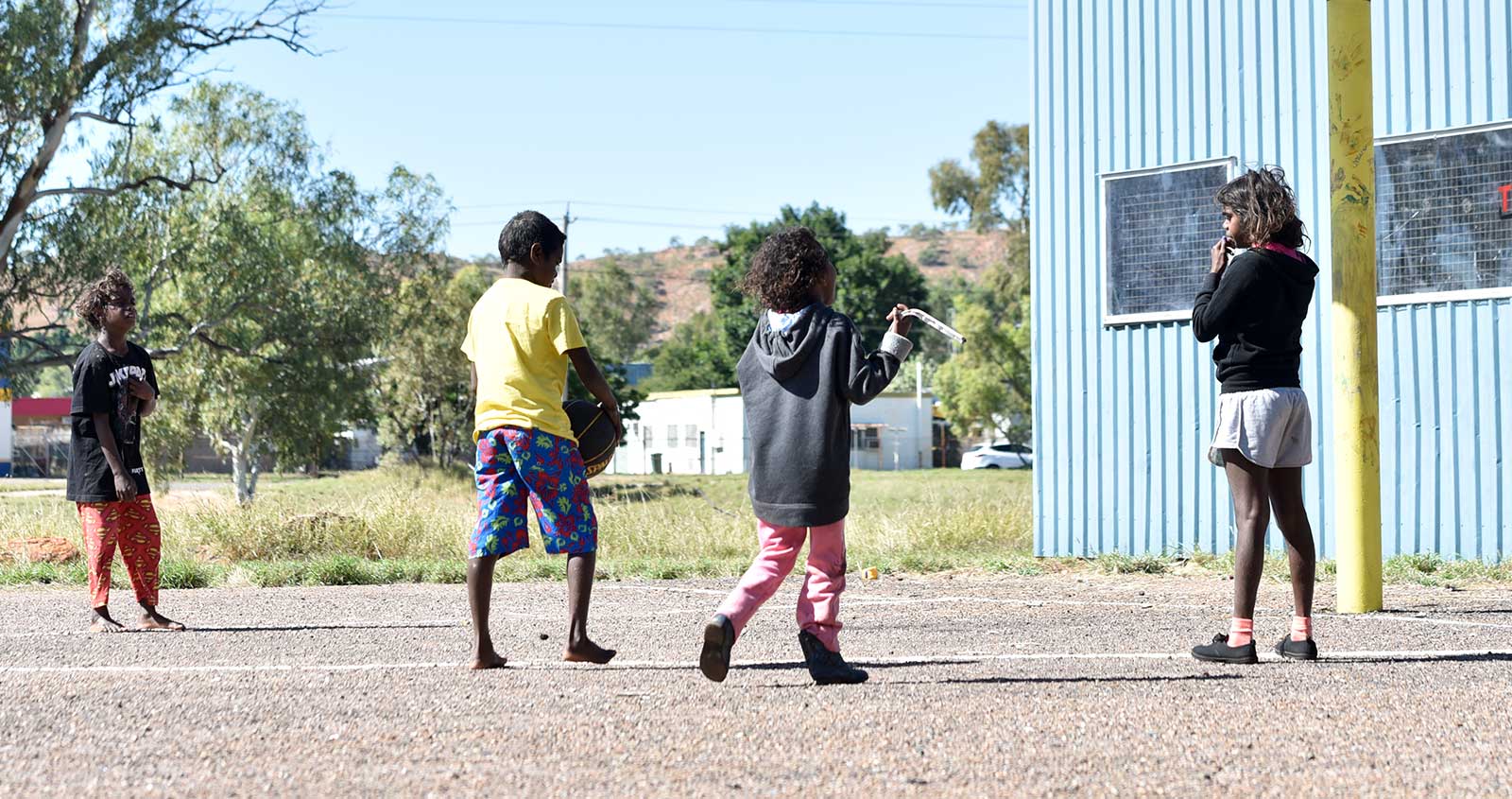
Kids chasing ball

By building strong and visible levels of community support and by shifting the narrative around youth imprisonment in the media, State and Territory governments around the country will recognise the need to focus on prevention, not detention. This can be changed by raising the age at which a child can be locked up to at least 14, and by committing funding for more Indigenous-led solutions and alternatives.

“We have the solutions – all the evidence shows that culturally appropriate, community-led justice reinvestment is a much more productive way to manage kids when they get into trouble.”

Rodney Dillon, Indigenous Rights Advisor


Let’s Get To Work

Step 1 – Map Your Community

Make sure to find out which country you are on, who the Elders and Indigenous community leaders in your area are and about the history of the stolen land which you live, work, play and campaign on.

The better understanding you have of your community, the more people you can engage in the campaign and the more influence you’ll have on your state MP. Do some research on what matters to your local community and on how much your community currently supports raising the age from 10 to 14. It will be important to understand if there are already existing groups working on this campaign in your area, so you can collaborate with them.

Access our Skill Up Training Modules on how to map your community, and keep your eyes on the Activism Planner for any relevant training webinars we may run over the next few months. Create a plan to roll out your campaign locally – think about how you will create partnerships, engage with your community and engage with your state MP and vital decision-makers in WA. For some training resources and templates check out our Level 2 and 3 Skill Up Training Modules.

Step 2 – Become a Good Ally and Build Partnerships

Complete our ‘How to be a Genuine Ally’ training module, so you can build culturally sensitive and sustainable relationships with your local Aboriginal and Torres Strait Islander community. Keep your eyes peeled on the Activism Planner for any Ally Training webinars we may run over the next few months.

Do your research on the Indigenous organisations and communities in your area and think about the best way to approach and build relationships. You can access our ‘Partnerships and Community Mapping’ training module on our website here.

Reach out to those Indigenous organisations and community leaders and engage them in your local campaign. Ask them what you can do to help support their work. If they are unable to engage in the campaign, make sure you inform them of what you’re doing. Relationships take time to build and work both ways.

Step 3 – Plan How to Change the Narrative in Your Community

  • Plan an event that raises awareness  and helps change people’s mind on the issue of youth imprisonment. Consider how you would reach new audiences with this event.
  • Contact local media and write a Letter to the Editor for your local newspaper explaining why you think it’s crucial to Raise the Age in WA from 10 to 14.

Step 4 – Build Visible Community Support

We have been building momentum on the campaign to Raise the Age for years. We now have a critical opportunity in WA to push this across the line. In order to win this campaign, we need to extend beyond our usual allies and show that there is support among a broad section of the WA community – from Butler to Rockingham, from Freo to Mundaring. Our challenge is to get creative, reach out to new audiences and demonstrate visible public support to force our leaders to act.

Start planning for how you’re going to get your community to demonstrate visible wide-reaching support for raising the age from 10 to 14.

  • Organise a ‘Postcard Blitz’ with fellow activists and ask members of the community to fill in a postcard to send to their local MP.
  • Coordinate a ‘Bumper Sticker Blitz’ in your community with fellow activists, where you distribute bumper stickers to supportive individuals, businesses and organisations, and ask them to publicly display them.
  • Place signs, stickers and other promotions around your community to draw attention to the issue.
  • Pass around an offline petition to further demonstrate the importance to your community.

Step 5 – Demonstrate Your Community Power

Start planning how you’re going to let vital decision-makers know that there is strong community support for Raising the Age from 10 to 14.

  • Organise a meeting with your local MP with fellow activists at a peak moment in your grassroots campaign to let them know how supportive the community has been for Raising the Age from 10 to 14.
  • Research where your local MPs and crucial decision-makers are going to be, and turn up to ask them questions about their stance on Raising the Age from 10 to 14.

There are key decision-makers in WA that have significant power and influence to Raise the Age in WA from 10 to 14. They are:

  • State Premier Mark McGowan (member for Rockingham)
  • Minister for Police Paul Papalia (member for Warnbro)
  • Minister for Aboriginal Affairs Stephen Dawson (member for Mining and Pastoral Region)
  • Attorney-General John Quigley (member for Butler)

Key Dates

27 October 2021: International Children’s Day

31 October 2021: Incarceration Nation on SBS

26 January 2022: Invasion Day

P.S. We’ll be working towards a peak moment in October around International Children’s Day. You could consider this in your own grassroots campaign planning and potentially organise a peak moment in your plans in October as well. This will help amplify our message!

Host an in-person event

You can still run a Raise the Age event if you are allowed to run in-person events in your community! You can: 

  • Hold smaller letter-writing events with friends and family.
  • Organise a film screening online and get attendees to write a letter before the screening starts.
  • The options are endless!

Let us know if you’re hosting an event, as we can provide extra support for you. 

  • We can send you letters, petitions, t-shirts, pens and badges
  • We can provide you access to our professional QR code account so that you can set up your own trackable QR codes linked to the petitions you’re using 
  • If you need help setting up a Zoom meeting/would like access to our professional account, just ask us.

Please just add these into the hosting an event form so the supporter care team can fulfill your resourcing requests. 

This event template could be useful for you and your group when planning your event. You can follow the same steps as for an online event, just consider you will be running it in person, so you might need to think of other items such as venues. Follow this guide to make sure your event is COVID safe.

Host your own online event 

On top of joining or hosting an event as part of our National 10 days of Activism, you can also host your own online event. 

Things are different this year with Covid-19, but hosting your own online event is one way to take part in Raise the Age and make a difference during these difficult times!

As always, please submit your event via the Host an Event page. Our supporter care team will be in contact with you and provide you with options for support. 

Things to consider: Is this event for your action group? Or your local community? Depending on your audience, there might be different ways to approach your event.

Here’s some tips and tricks for hosting an engaging online event:

  • Preparation 
    • Click here to learn more about the issue and why we need to raise the age of criminal liability from 10 to 14 years-old.
    • Click here to learn more about indigenous justice issues.
    • Sign and share the online petition to show your support for raising the age.
    • Send and share an online postcard about raising the age that will be sent to decision makers in your area.
  • Make a plan
    • Register your event through Amnesty’s online Host an event form.
    • Book and secure your entertainment, whether this is speakers, musicians, or any other amazing ideas you might come up with. 
    • Schedule in a time for people to write a letter/sign the petition during or before/after the event.
  • For promotion
    • Our Activist Communications Team is here to support the promotion of your event. Fill out this brief and let them know the support you need.
  • Plan your tech
    • Here is our How-to-Zoom guide with all of the ins & outs of using Zoom. 
  • Consider 
    • Are you involving people from affected communities in organising this event? If so, it might be worth brushing up on the How to be a genuine ally training module.
    • Can you partner with other groups to host this event? 
    • What will draw people to your event? Will it be an interesting speaker, discussion, or activity? 
    • Who is your likely audience?
    • What format is best suited for the message you are trying to get across?
  • Before an Online Event
    • Revise the How-to-Zoom guide (or instructions of your chosen platform).
    • Prepare materials, notes or questions so you have them handy during the event.
    • Send your attendees reminder emails or post reminders in the Facebook event (1 day and 1 hour before the event). Make sure your attendees have the link to access the online event.
    • Test your camera, microphone, lighting, and backdrop.
    • Check your internet speed.
    • Do a full test run on the platform of your choosing.
    • Acknowledge country, welcome your audience and enjoy your time!
    • Have one person available to help attendees who are experiencing technical issues or have questions during the event (via chat, email or the Facebook event).

Use the media to get your message out

Reaching out to the media raises awareness of how your group is challenging injustice.

Send a media release

A media release is a relatively old-fashioned way to reach journalists in the most efficient way possible. Here is a template media release you can use, or you can generate your own. To write a media release, use the inverted pyramid – give all the important information in the first paragraph, and add details in subsequent paragraphs. You have to compete for the journalists’ attention, so you should always begin with what is new and with a headline. 

Then you can send it to all the relevant media outlets and journalists in your area – TV, radio, online, and newspapers. Always copy in the general contact email address just in case. Send the release about a week before your event.

Follow up the release with a call a couple of days before the event (make sure your event doesn’t coincide with a major deadline for the media outlet). You may want to convince the journalist, in the nicest possible way, why the community would want to know about the event and what the journalist can capture at the event – they’ll want interviews, pictures, and video.

Write a letter to the editor

A letter to the editor of your local newspaper is a way for the paper to hear from its readers about issues in the community or the wider world. The key, as with the media release, is that you have to really compete for the editor’s attention, so you need to make the letter compelling. Here are some tips on how to write a compelling letter to the editor.

List your event

Listings are an extremely easy way to drum up interest in your event. There are a wide range of listing websites which give you free listings. You simply need a blurb about your event, all the details of how someone can be involved, and an image to go with it.

Let us know how it went!

  • Share your pictures and success via the National Facebook group for activists!
  • Let your local ALC know how you went, and fill in the feedback form, so we can continue to support your events to the best of our ability.
  • Send all your letters and petitions back to the Western Australia action centre at: 49 Colin St, West Perth WA 6005, and we’ll post them to the targets, or for solidarity letters to the case. 
  • Some countries aren’t accepting international post because of COVID-19 so we will hand over your letters as part of our Embassy delivery in 2021 for those countries.

Useful resources

Check the Amnesty website for: 

  • Campaigning for human rights can be difficult. Burnout and vicarious trauma can happen and it’s important to keep a look out for the signs in yourself and your friends. You can check out our Sustainable Activism & Self Care guide and workshop which you can find here. It examines how we can better take care of ourselves as activists and what you can do to make sure your activism is sustainable!

Australia must pursue a strong human rights agenda during visit to key countries in the Indo-Pacific

Amnesty International has written to Foreign Minister Marise Payne and Defence Minister Peter Dutton ahead of their planned meetings with counterparts in Indonesia, India, South Korea and the United States over the next few days.

An important middle power in the Indo-Pacific, Australia is well placed to use its positive relationships with key partners in the region to pursue a strong human rights agenda for the post-pandemic world. For these democracies to become a more positive driving force behind a growing global assault on human rights, leaders must also be prepared to address the human rights violations occurring in their own countries.

Among the key issues Amnesty International Australia is concerned about in the countries the Ministers will visit are support of the TRIPS Waiver on vaccines, prioritising the abolition of the death penalty in the region, discrimination against ethnic groups, religious minorities and LGBTQIA+ people.

Afghanistan: Suppression of protests at odds with Taliban’s claims on human rights

Responding to widespread reports that the Taliban are using unlawful force against peaceful protesters and journalists at gatherings across Afghanistan, including using gunfire to disperse crowds and cables to lash protesters, Samira Hamidi, Amnesty International’s South Asia Campaigner, said: 

“The Taliban have repeatedly insisted that they will respect human rights, yet these claims are completely at odds with what we are currently seeing and hearing in cities across the country.

“Afghans who have taken to the streets, understandably fearful about the future, are being met with intimidation, harassment, and violence – particularly directed at women. Multiple journalists attempting to cover the protests have reported being detained, beaten up and having their equipment confiscated.

“There have already been reports of casualties, and the risk of a major incident is extremely high. We urge the Taliban to de-escalate the tension and allow people to exercise their fundamental right to gather peacefully and protest.

“Journalists must also be permitted to report on the protests without fear of violence. For its part, in ongoing negotiations with the Taliban, the international community must use all leverage to demand that these basic rights are protected.”

Background

According to media reports, peaceful protests in Kabul, Badakhshan and Herat over the past two days have been dispersed by Taliban fighters firing rifles into the air, while some female protesters have reportedly been lashed with cables.

Amnesty International has independently verified videos of Taliban fighters firing guns into the air to disperse protests in Kabul, and also verified videos of violence against women protesters between 4 and 7 September in Kabul committed by the Taliban.

Journalists and cameramen from Afghan media outlets Ariana, Tolo and Etilaat-e- Roz have said that they were beaten up and detained by Taliban fighters while trying to cover protests, before having their equipment confiscated or their footage destroyed. 

Lebanon: General Security must halt imminent deportation of six Syrians

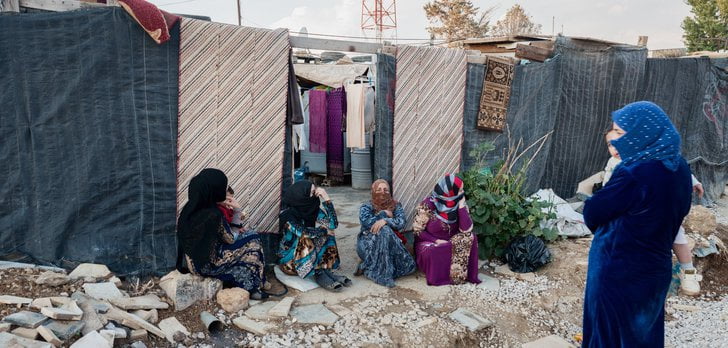
Lebanon’s General Security directorate issued a decision on 5 September to deport six Syrian refugees accused of entering the country irregularly, despite the grave risks awaiting them in Syria.

Heba Morayef, Regional Director for the Middle East and North Africa at Amnesty International, said:

“The Lebanese authorities are well aware of the grim fate which awaits these men back in Syria. In our latest report we documented how the Syrian authorities specifically target people who fled the country, subjecting them to torture, arbitrary detention and enforced disappearance upon their return to Syria. Deporting these men would be a flagrant violation of Lebanon’s international obligations, including under the UN Torture Convention.

“Our message is loud and clear: Syria is not safe for returnees. The Syrian authorities continue to commit appalling human rights violations and atrocities, and sending refugees back to Syria is tantamount to knowingly putting their lives in danger. We urge the Lebanese authorities to stop all forced deportations and respect pledges made on refugee rights, including on legal protection and nonrefoulement.”

As per the Lebanese law, these men should be able to legally challenge their deportation order. They should be allowed to meet their lawyers and to contact their families.

Lebanon is home to over 1 million Syrian refugees, who now make up more than a quarter of the population. In a December 2020 letter to Amnesty International, the General Security Office confirmed that the authorities had deported 6002 Syrians since May 2019, including 863 in 2020.  Deportations were partially halted in 2020 due to the pandemic.

On 28 August, the Lebanese army’s intelligence directorate announced the arrest of six Syrian men outside the Syrian embassy in Baabda, after they received calls from the embassy inviting them to come collect their passports. The men were accused of entering the country illegally and handed over to the General Security directorate. They have not been allowed contact with their lawyers or relatives since their arrest. Their lawyers believe that at least one of them has been subjected to torture. 

Following complaints and several requests, the General Security gave their lawyers an ultimatum: secure the men with visas to a third country within 48 hours or they will be deported to Syria. Their lawyers tried to collect their passports from the embassy, but their requests were refused by embassy staff. The brother of one of the men also attempted to collect a passport today – following the General Security’s instructions that only a relative could do so – but to no avail. Lawyer Mohammed Sablouh has written to the UN Special Rapporteur on torture calling for intervention in the men’s case.

Five of the six men are believed to be from Daraa governorate in southern Syria, where violent clashes between Syrian government forces and armed groups have intensified in recent months. Hundreds have been killed or injured and tens of thousands of civilians have fled the area. Government forces have also placed a deadly siege on Daraa al-Balad.

Syria: Former refugees tortured, raped, disappeared after returning home

Syrian security forces have subjected Syrians who returned home after seeking refuge abroad to detention, disappearance and torture, including sexual violence, Amnesty International said today. In a new report, “You’re going to your death,” the organization documented a catalogue of horrific violations committed by Syrian intelligence officers against 66 returnees, including 13 children. Among these violations, Amnesty International documented five cases whereby detainees had died in custody after returning to Syria, while the fate of 17 forcibly disappeared people remains unknown.  

With a number of states – including Denmark, Sweden and Turkey – restricting protection and putting pressure on refugees from Syria to go home, the harrowing testimony in Amnesty International’s report is proof that no part of Syria is safe to return to. Returnees told Amnesty International that intelligence officers explicitly targeted them for their decision to flee Syria, accusing them of disloyalty or “terrorism.”    

“Military hostilities may have subsided, but the Syrian government’s propensity for egregious human rights violations has not. The torture, enforced disappearances, and arbitrary or unlawful detention which forced many Syrians to seek asylum abroad are as rife as ever in Syria today. What’s more, the very fact of having fled Syria is enough to put returnees at risk of being targeted by authorities,” said Marie Forestier, Researcher on Refugee and Migrants Rights at Amnesty International.  

“Any government claiming Syria is now safe is wilfully ignoring the horrific reality on the ground, leaving refugees once again fearing for their lives. We are urging European governments to grant refugee status to people from Syria, and immediately halt any practice directly or indirectly forcing people to return to Syria. The governments of Lebanon, Turkey and Jordan must protect Syrian refugees from deportation or any other forcible return, in line with their international obligations.”   

Amnesty International’s report documents serious human rights violations committed by the Syrian government against refugees who returned to Syria from Lebanon, Rukban (an informal settlement between the Jordanian and Syrian borders), France, Germany, Turkey, Jordan and UAE, between mid-2017 and spring 2021, based on interviews with 41 Syrians, including returnees and their relatives and friends, as well as lawyers, humanitarian workers and Syria experts.   

Targeted for fleeing the country  

The authorities have targeted returnees to Syria, accusing those who fled the country of treason or supporting “terrorism”. Amnesty documented 24 cases where men, women and children were targeted as a direct result of these perceptions, and subjected to human rights violations including rape or other forms of sexual violence, arbitrary or unlawful detention, and torture or other ill-treatment. In some cases returnees were targeted simply because they came from parts of Syria that had been under opposition control. 

For example, security members arrested Karim* four days after he returned from Lebanon to his village in Homs province. Karim recounted one interrogation which took place during his six-and-a-half months of detention:   

“[An officer] said: ’You came to ruin the country and complete what you started before you left.’ I said that I was coming to my home country, to my village[…]They [security officials] told me that I’m a terrorist because I’m from [a renowned pro-opposition village].    

Karim told Amnesty International that he was tortured during detention:  

“After I was released, I couldn’t see anyone who visited me for five months. I was too scared to speak to anyone. I had nightmares, hallucinations. I was talking during my sleep. I used to wake up crying and scared. I’m disabled because the nerves of my right hand are damaged due to [torture]. Some of the disks of my back are also damaged.”   

Sexual violence  

The punishments for those who fall under government suspicion are brutal. Amnesty International documented 14 cases of sexual violence committed by security forces, including seven cases of rape, committed against five women, a teenage boy and a five-year-old girl. Sexual violence took place at border crossings or in detention centres, during questioning. Testimonies are consistent with well-documented patterns of sexual violence and rape committed against civilians and detainees during the conflict by pro-government forces.   

When Noor* returned from Lebanon she was stopped at the border by a security officer who said:  

“Why did you leave Syria? Because you don’t like Bashar al-Assad and you don’t like Syria? You’re a terrorist … Syria is not a hotel that you leave and return to when you want.”  

The officer subsequently raped Noor and her five-year old daughter in a small room used for interrogation at the border crossing  

Yasmin* returned from Lebanon with her teenage son and three-year old daughter. Security forces arrested them immediately at the border crossing and accused Yasmin of spying for a foreign country. Yasmin and her children were transferred to an intelligence detention centre, where they were detained for 29 hours. Intelligence officers raped Yasmin, and took her son to another room where they raped him with an object.  

The officer who raped Yasmin said:  

“This is to welcome you to your country. If you get out of Syria again and come back again, we will welcome you in a bigger way. We are trying to humiliate you and your son. You will not forget [this] humiliation in all your life.”  

Some families chose for women to return to Syria ahead of their husbands, assuming they would be less likely to be arrested than men – partly because women are not subject to compulsory military service.  

However, Amnesty International documented the arbitrary or unlawful detention of 13 women, some of whom were interrogated about their male relatives, and of ten children, aged between three weeks old and 16 years old, who were arrested along with their mothers. Security forces subjected five children to torture and other-ill treatment. Women are as much at risk as men when they return to Syria, and should therefore be granted the same level of protection.  

Torture and enforced disappearance  

In total, Amnesty International documented 59 cases of men, women and children who were arbitrarily detained after returning to Syria, most frequently following broad accusations of “terrorism”. In 33 cases, returnees were subjected to torture or other ill-treatment during detention or interrogation. Intelligence officers used torture to coerce detainees into confessing to alleged crimes, to punish them for allegedly committing crimes, or to punish them for alleged opposition to the government.  

Yasin* was arrested at a checkpoint just after he crossed the border with Lebanon, and spent four months in prison. He said:  

“I don’t know how much time I spent being tortured in this room[…] Sometimes, when [an agent] hit me, I counted every hit. Sometimes it reached 50 or 60 and I passed out. Once it reached 100.”   

Ismael*, who was detained in four different intelligence branches over three and a half months, said:  

“They electrocuted me between the eyes. I felt my whole brain was shaking[…] I wished I would die. I didn’t know if it was the morning or the night. I wasn’t able to stand on my feet anymore, even to go to interrogation. They had to hold me to take me there and bring me back.”  

Amnesty recorded 27 cases of enforced disappearance. In five cases, authorities eventually informed families that their disappeared relatives had died in custody; five were eventually released; the fate of the other 17 people remains unknown.  

Ola*, who returned from Lebanon with her brother in 2019, said security forces had arrested her brother at the border crossing. In the following weeks, they also visited Ola at her home and interrogated her about her reasons for leaving and returning to Syria.  

“They see us as terrorists because we left to Lebanon,” Ola said.  

Five months later, authorities informed Ola’s family that her brother had died in detention.  

Ibrahim* told Amnesty that his cousin, alongside his wife and their three young children, aged 2, 4 and 8 years old, had been arrested upon returning from France in 2019. At the time of writing, the family has been subjected to enforced disappearance for two years and eight months.  

Amnesty documented 27 cases where returnees were detained as a means of extortion, with families paying on average between 3 and 5 million Syrian pounds (the equivalent of USD 1,200 to USD 27,000) for the release of their relatives  

No part of Syria is safe ​ 

The level of fighting in Syria has decreased significantly in the past three years, with the Syrian government now controlling more than 70% of the country. Against this backdrop, the Syrian authorities have publicly encouraged refugees to return home, while several host countries have begun to reconsider the protection they offer to people from Syria. In Lebanon and Turkey, where many refugees face dire living conditions and discrimination, governments have put increasing pressure on Syrians to return.  

In Europe, Denmark and Sweden have reassessed residency permits of asylum-seekers who come from regions they consider safe for return, including Damascus and the surrounding countryside. It is notable however, that a third of the cases documented in this report involve human rights violations that took place in Damascus or the Damascus area.   

Based on the findings in its report, Amnesty International concludes that no part of Syria is safe for returnees to go back to. In addition, people who have left Syria since the beginning of the conflict are at real risk of suffering persecution upon return, on account of perceptions about their political opinions or simply as punishment for having fled the country. 

“The Assad government has attempted to depict Syria as a country in recovery. The reality is that Syrian authorities are still perpetrating the widespread and systematic human rights violations that contributed to millions of people seeking safety abroad,” said Marie Forestier.  

“We call on Syrian authorities to ensure the protection of returnees and to end human rights violations against them, as well as ensuring the respect, protection and fulfilment of the human rights of all people in Syria. Countries hosting Syrian refugees must continue to provide refuge, and ensure ongoing protection from the Syrian government’s atrocities.”  

*All names have been changed  

5 actions you can take for journalists today

Journalists, media professionals and activists face danger everyday for holding the powerful to account for human rights abuses around the world. No-one should be sentenced to death just for doing their job.

It’s imperative that journalists safely continue to show the world for what it is, without being harassed, imprisoned, or killed. 

Sylvia Liber, Photojournalist and Photography judge for the Amnesty International Australia Media Awards

Here are 5 actions you can take right now to defend the rights of journalists and media professionals:

Call on the Australian Government to prioritise humanitarian visas for Afghans

For two decades, Afghan journalists have put their lives on the line to support Australian men and women. In recent weeks and months, the Taliban has recaptured much of Afghanistan. These people face significant threats to their and their families’ safety from the Taliban. 

Amnesty International Australia, the Refugee Advisory Group, and Afghan diaspora communities are calling for the Australian government to urgently expand the humanitarian program, to provide safe passage. The government did this in 2015 when they offered 12,000 additional places in the humanitarian program for Syrian and Iraqi refugees. Call on the Australian Government to Prioritise Humanitarian Visas for Afghans.

Afghan people climb atop a plane as they wait at the Kabul airport in Kabul on August 16, 2021, after a stunningly swift end to Afghanistan's 20-year war, as thousands of people mobbed the city's airport trying to flee the group's feared hardline brand of Islamist rule.
(Photo by Wakil Kohsar/AFP) (Photo by WAKIL KOHSAR/AFP via Getty Images)

Demand the release of 10 journalists in Yemen

Akram, Abdelkhaleq, Hareth and Tawfiq were just doing their job when they were detained and charged with “spying” and “creating several websites on the internet and social media.” 

They have now been detained, alongside six other journalists, for five years. In December 2020 Amnesty International learned that Tawfiq al-Mansouri had been denied medical treatment while detained. Lynn Maalouf, Amnesty International’s Deputy Regional Director for the Middle East and North Africa, said:

“He should never have been imprisoned in the first place, let alone sentenced to death. Pending his overdue release, al-Mansouri must immediately be granted access to the medical care he so desperately needs by doctors of his choosing. We further call on the Huthi de facto authorities to immediately quash the death sentences issued to the four journalists after an unfair trial, to drop all pending unfounded charges and to release them without delay.”

Lynn Maalouf

Call on the Huthi de facto authorities to immediately quash their death sentences, and release all ten journalists.

Call for an end to the ongoing harassment and arrests of Maria Ressa

In June 2020 a Manila court convicted Maria Ressa and former journalist Reynaldo Santos of cyber libel. Both now face up to six years in prison, and have been ordered to pay nearly USD8000 in damages. Ressa and Santos are being singled out for their critical reporting of the Duterte administration, including ongoing human rights violations in the Philippines.

Since President Duterte came into power in 2016, thousands of poor and marginalised people have been murdered by police and others in extrajudicial killings. Maria and her team at the media outlet Rappler have been tireless in their efforts to investigate and expose this campaign of violence, intimidation and repression — even risking their own safety and freedom to do so.

In February 2019, Maria was arrested and detained overnight on “cyber-libel” charges. In June 2020 she was convicted of these charges which Maria say is an “abuse of power” and “weaponization of the law”.

The ongoing harassment and arrest of Maria is a disturbing attempt to silence independent journalism in the Philippines. Please join us in calling for the Department of Justice to quash the conviction end to politically-motivated prosecutions.

Maria Ressa. © Rappler

Demand the Chinese authorities release Yang Hengjun

Chinese-Australian writer Yang Hengjun has been detained by the Chinese authorities since January 2019. Yang, a prominent writer and blogger, has amassed a large following for his novels and his often outspoken commentary on Chinese public affairs. 

The government has accused him of espionage. For over a year the authorities denied him access to lawyers and to his family. For months following his detention, no one saw or heard from Yang. 

Following public pressure, he was finally allowed to meet with Australian consular staff and his lawyer.

There are grave concerns that he is at risk of torture and other ill-treatment. Yang, who was previously in good health, is now suffering from hypertension, kidney problems, tinnitus and memory loss. 

After a closed trial in May 2021, there has still been no verdict published. Demand the Chinese authorities release Yang Hengjun immediately and unconditionally.

Support Australian journalists by following the Amnesty International Australia Media Awards

The Amnesty International Australia Media Awards are held to recognise excellence in reporting of human rights issues in the Australian media.

Each year the awards acknowledge those Australian media stories that have presented a fair and balanced report of a human rights issue, highlighted hidden abuses and encouraged an audience’s greater understanding of a human rights issue. By following the awards you can support the hard work of Australian journalists as they challenge injustice.

Winners of the 2017 Television Award from “The Feed” SBS VICELAND at the Amnesty International Media Awards. © Joseph Mayers Photography

Lebanon: Authorities violating right to health and endangering lives by failing to provide fuel to hospitals

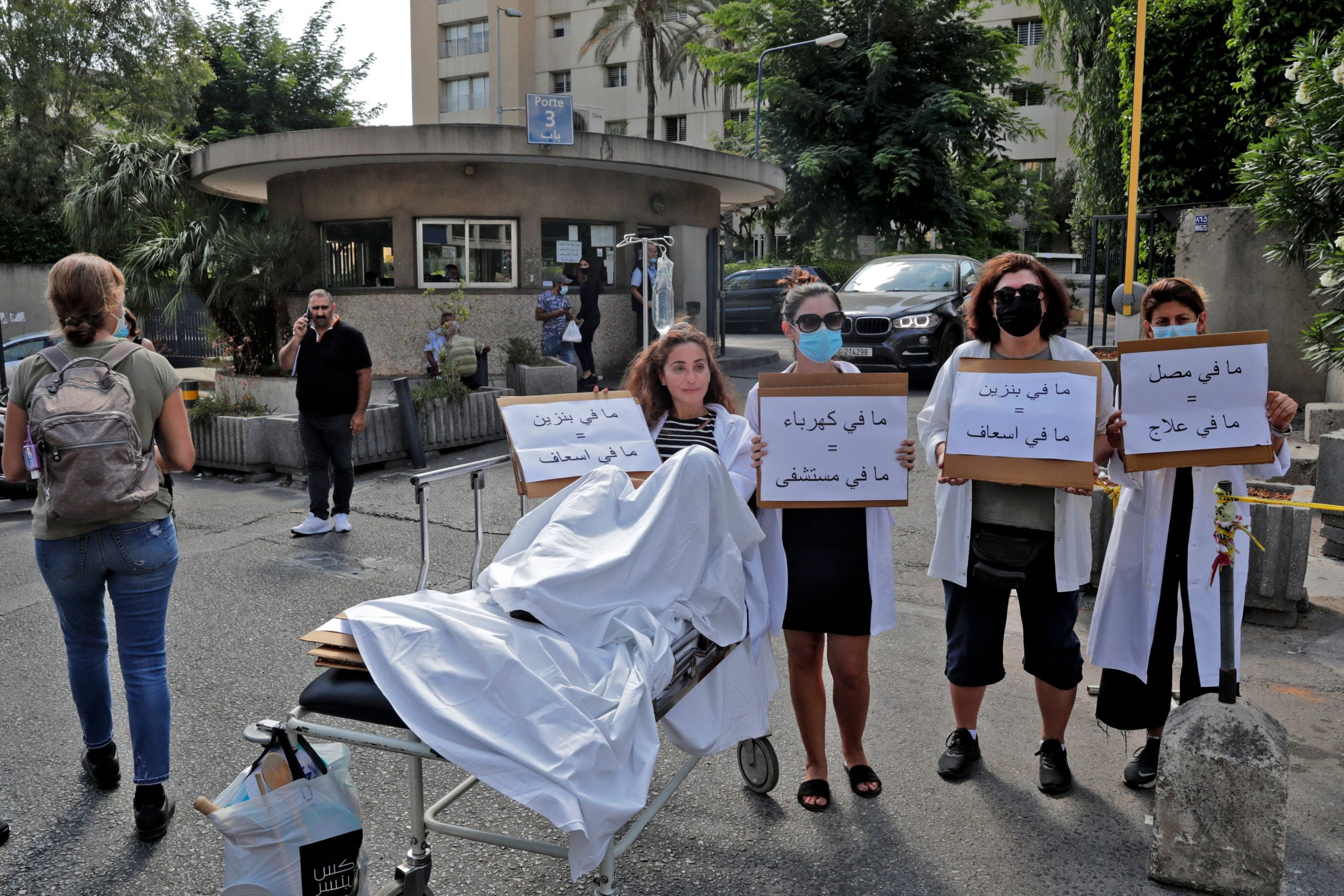
The Lebanese authorities’ failure to resolve a catastrophic fuel crisis has crippled people’s daily lives and left hospitals hanging by a thread, said Amnesty International today. The organization is calling on the authorities to uphold economic and social rights in their response and prioritize the redistribution of fuel to hospitals and other healthcare facilities, which have been on the brink of collapse.

Hundreds of patients, including new-born babies on ventilators and other lifesaving medical devices risk dying if hospitals run out of fuel. With a thriving black market, smuggling and fuel-hoarding diverting supplies away from life-critical services, it is equally imperative for the authorities to take immediate steps to hold perpetrators to account.

“The Lebanese authorities cannot continue to stand by and watch people’s lives being devastated by the fuel crisis leaving it to private initiatives or NGOs to address crucial humanitarian needs. People’s health and lives have been put on the line as hospitals have drastically cut back operations,” said Heba Morayef, Regional Director for the Middle East and North Africa at Amnesty International.

“The authorities must urgently prioritize health facilities and other life-critical services by redistributing seized fuel stocks to them and implementing court orders ordering them to do so. They must also tackle the thriving black market by blocking smuggling channels, seizing illegal hoarded fuel and holding perpetrators to account.”

On 11 August, Lebanon’s Central Bank (BDL) announced it could not continue to subsidize fuel imports, causing gasoline and diesel prices to skyrocket and prompting immediate critical shortages of both on the market. On 22 August, the government announced a 66% increase in gasoline prices – a partial reduction of fuel subsidies – in an attempt to ease the crippling shortages that have brought the country to a standstill.

The shortage of fuel availability on the market has been exacerbated by smuggling of fuel across the border to Syria and hoarding to sell at black market rates. This was confirmed by a BDL communique on 14 August, which stated that BDL had spent more than $828 million on fuel imports in July- enough to cover Lebanon’s power supply for three months. $708 million was allocated for the import of gasoline and diesel and $120 million for the fuel consumption of the state-owned Electricité Du Liban (EDL).  In the same statement, the bank acknowledged fuel had been hoarded and smuggled and was not reaching “households, hospitals and food industries”.

Hospitals grapple with fuel shortage

Throughout August, military and security forces announced they had confiscated millions of litres of gasoline and diesel that had been hoarded or stored in preparation for smuggling. Yet hospital directors at three of Lebanon’s largest hospitals confirmed to Amnesty International the health sector was surviving day to day – unable to secure enough fuel to sustain operations for even for one month.

In August, the American University of Beirut Medical Center (AUBMC), Rafic Hariri University Hospital (RHUH), and Al Makassed Hospital, issued public distress calls appealing to the government and international agencies for fuel. They said that the fuel crisis had severely damaged their operations and placed their patients’ lives at risk. Despite this, the authorities have failed to ensure they have access to sufficient supplies.

Dr Firas Abiad, the Director-General of RHUH, Lebanon’s largest public hospital, explained to Amnesty International that, the hospital used to receive 20 hours of power from the state per day and relied on seven generators during the remaining four hours. Over the past month this has dropped as low as just four hours per day – and at one stage stopped completely leaving the hospital continuously reliant on generators that are not designed to run non-stop. Although they have received some sporadic deliveries of fuel from the army it is not enough to sustain their operations leaving them reliant on donations from UN organizations.

Dr Joseph Otayek, the Director of AUBMC, told Amnesty International that although a judge had ordered 5,000 liters of confiscated fuel to be delivered to the hospital, they have not received any fuel supply from the army or Internal Security. He said the hospital requires 50,000 litres for its daily operations.

On 17 August, Judge Abir Safa had ordered Al Nahr Police Station to deliver 10 thousand liters of fuel confiscated by the authorities to RHUH and AUBMC, 5,000 liters each, at the subsidized price.

“The Lebanese authorities’ failure to comply with a court ruling ordering confiscated fuel to be delivered to all hospitals is shocking. The authorities must do everything within their power to ensure that supplies of fuel seized by security forces are distributed to ahospitals and other critical services to allow them to operate in a sustainable manner,” said Heba Morayef. 

Two senior doctors at RHUH told Amnesty International on 23 August that 10 patients in the intensive care unit and at least 21 newborns living on ventilators and incubators were at risk of dying if hospital operations are interrupted due to fuel shortages.

Dr Firas Abiad said staff were “working in almost war conditions” and many were unable to make it to work due to the gas shortage. “Soon I’ll find myself facing a tough decision: should I close our emergency rooms?” he said.

AUBMC warned in statement on 14 August that in case of a forced shutdown caused by the fuel shortage 40 adult patients and 15 children living on respirators would die immediately, 180 requiring dialysis would die after a few days and hundreds of others in subsequent weeks. The hospital’s director said they “survive on the hope of receiving day-by-day supplies from private donors and companies”.

Dr Mohammed Badr, Director of al-Makassed Hospital in Beirut, told Amnesty International that the hospital had stopped elective surgery three months ago and has been forced to shut two out of three floors, including COVID-19 and paediatric care units and to end free treatment for poorer patients. He said a quarter of hospital staff have been unable to reach the hospital due to the petrol shortage. “We are hitting rock bottom and have been left alone to face this inhumane condition,” he said.

Tackling fuel smuggling and hoarding

The Lebanese authorities’ failure to hold anyone account for the smuggling and flourishing black-market trade which involves hoarding of large quantities of fuel in unsafe conditions has had tragic consequences.

To date, dozens people have been killed or injured due to explosions from dangerously stockpiled fuel in residential areas.

On 15 August, a fuel tank explosion in Tleil village, in the northern district of Akkar, killed at least 31 people and injured dozens with the unofficial death toll still rising.

The explosion occurred after the Lebanese army had begun to distribute fuel they had seized to local residents. The army arrested the owners of the tank and the land and announced a military investigation. On 26 August, the military prosecutor charged three people for hoarding dangerous material and endangering lives.

Amnesty International is calling on the Lebanese authorities to refer the investigation to the civil judicial system to ensure an independent and impartial investigation into the incident.

“It should not take a deadly tragedy like the Akkar explosion for the Lebanese authorities to take action on fuel hoarding. The authorities must investigate the full market chain and hold accountable all those involved in smuggling or hoarding, regardless of rank or status to send a clear message that fuel hoarding will not be tolerated,” said Heba Morayef.

Twelve priorities for the Women’s Safety Summit

The Summit on Women’s Safety is an important opportunity for the Government to show that it is genuinely committed to creating a world where women and children in Australia live free from violence.

Violence against women is one of the most widespread human rights abuses in Australia and indeed worldwide. Aboriginal and Torres Strait Islander women, children and communities continue to experience disproportionately high rates of violence resulting from more than two centuries of colonialism, dispossession and discrimination. Women with disabilities or migrant women, lesbian, bisexual and transgender women are also particularly vulnerable to violence.

Amnesty International joins key organisations around the country in calling on the Government to commit to twelve priorities for the next National Plan to Reduce Violence against Women and Children.

Angelina Jolie and Amnesty International remind the world of its commitment to children’s rights with a book some adults won’t want children to read

Angelina Jolie and Amnesty International have joined forces to create a resource for children and young people to learn about their rights, with the publication of a new book which empowers teenagers to speak out against injustice.

Know Your Rights and Claim Them explains what child rights are, equips young people with the knowledge they need to protect themselves and others, and shows how governments are failing to uphold their commitment to child rights. It was written in collaboration with Professor Geraldine Van Bueren QC, one of the original drafters of the UN Convention on the Rights of the Child.

Angelina Jolie said:

“If governments kept their word, and if all adults respected children’s rights, there would be no need for this book. Children have rights just as adults do and they should have the power and agency to claim them.

“Know Your Rights and Claim Them is the book some adults don’t want children to read, as it will arm them with the knowledge to defend their rights and those of others.

“Governments signed up to protect children’s rights in 1989, yet many of them are still failing to listen to the voices of children. In some countries, girls as young as nine are forced into marriage. Globally, more than 61 million children don’t attend primary schools and, in 2019, one in six children were living in extreme poverty – a number that rose significantly during the pandemic. It’s time to remind the world of its commitment to children’s rights.”

The book is available in bookshops in the UK from today, and available for pre-order in USA, Australia, New Zealand and Greece. With other countries including South Korea, Denmark and Germany following close behind. The authors’ goal is for the book to be published in all languages and countries, empowering many millions of young people to know and claim their rights.

The social and economic effects of the COVID-19 pandemic provide a stark reminder that many human rights issues have a disproportionate impact on young people and when it comes to issues that directly affect them, their voices are rarely heard or listened to. Know Your Rights and Claim Them aims to equip young people with the knowledge they need to stand up and have their say.

The book sets out how the concept of children’s rights came into being through the UN Convention on the Rights of the Child, which was designed to give children the right to a voice and to participate in all decisions that affect them. It also features how-to guides, along with the stories of a number of incredible young activists who are at the forefront of human rights change around the world. Whether campaigning on climate change, demanding access to education, or speaking out against racial discrimination and gun violence, these inspirational young people demonstrate the power of standing up for what we believe in.

Khairiyah Rahmanyah, 19, was born to a fishing family who live close to the sea in southern Thailand. The sea near her home is a rich source of seafood and home to endangered marine species, such as sea turtles and rare pink dolphins. In 2020, when she was 17, Khairiyah launched a campaign against the Thai government’s plan to develop her village, Chana, into an industrial estate. As a result, the government decided to postpone their decision. However, the project has not been dropped, and the fight for her community continues.

“Words cannot explain how I feel to be part of this book,” said Khairiyah, who spent hours picketing, and travelled 1,000 kilometres to Government House in Bangkok to deliver a letter to the prime minister begging him to stop the development.

“I am really proud to be representing the stories of my community. I was born into activism and I have been fighting to protect my community since I was little. It has been painful to live this reality and I want life to be different for the next generation. As children, we must be allowed to learn about our rights and it’s up to adults to encourage, empower and support us.”

Children have a right to life, dignity and health; identity; equality and non-discrimination; a safe place to live; protection from harm; participation (including the right to be heard); bodily integrity; protection from armed violence; justice and liberty; privacy; minority and Indigenous rights; education; play; freedom of thought; and voice and peaceful protest. 

There are about 2.3 billion children in the world, nearly a third of the total human population. Given the devastating impact of the global pandemic on children and young people, it’s never been more crucial to arm them with the knowledge they deserve. This is their right – and it’s time for the world to listen and act.   

Agnès Callamard, Amnesty International’s Secretary General, said:

“We must all tackle the human rights issues of today, with an eye on the future, knowing we are accountable to the world of 2030. Not only must we ask ourselves – ‘how are our actions impacting the children of tomorrow?’ – we need to make sure that children are setting the agenda for the years to come. That can only happen if they know their rights and how to claim them.

“When children don’t, they’re at risk of abuse, discrimination, and exploitation, often at the hands of adults. They’re also at risk of being overlooked, unable to participate in important decisions about the world they live in and the problems they will inherit. Amnesty International is campaigning to ensure children’s rights are a priority for governments across the world.

“That’s why, alongside the book, we have launched an online human rights education course featuring young activists, which will serve as a powerful tool to empower young people and others to claim their rights across the world. When young people are educated about their rights, they are empowered to defend them, to stand up against injustice against themselves and others. Knowledge is key. We will all benefit from a world in which child rights are upheld.”

Know Your Rights and Claim Them will be released in the UK on 2 September 2021, with publication in Australia, Greece, New Zealand and USA to follow in October. The book will be available online and from all good bookshops. Amnesty International’s online human rights education course will be available on 2 September.

Submission: Inquiry into Victoria’s Justice System

Amnesty International Australia has made a submission to Victoria’s inquiry into the justice system. The Submission’s focus was on raising the minimum age of criminal responsibility in Victoria.

The age of criminal responsibility is the age in which a child is considered by law to have understood that their actions were wrong and can face criminal charges. All Australian states and territories have this age set at only 10 years old. This means that across Australia, police have the power to arrest, strip-search and imprison children who are only 10 – that’s typically a child in year three or four at primary school.

The Victorian Government must do all it can to keep children out of prison. This doesn’t mean children who commit crimes aren’t held responsible, but alternatives – such as diversion programs – must be investigated and resourced.

In it’s submission, Amnesty has recommended the Victorian Government adopt the following measures:

  • Immediately raise the minimum age of criminal responsibility to at least 14 years old
  • That the presumption of doli incapax be abolished , and alternatives such as ‘developmental immaturity’ be enshrined in legislation
  • Increase the allocation of funding to Indigenous community-led and controlled organisations to support culturally appropriate, place-based, Indigenous designed and led preventative programs to address the needs of children under 14 years at risk of entering the justice system. This funding should be allocated to Indigenous-led organisations and programs in proportion to the over representation of Aboriginal and Torres Strait Islander children in the justice system
  • Invest in the creation of Aboriginal and Torres Strait Islander judicial resources and provide funding for psychologists to train and undertake neurocognitive testing for children who display risk factors for future offending when in contact with police, doctors or schools.