China: Long-delayed UN report must spur accountability for crimes against humanity in Xinjiang

Responding to the long-awaited release of the UN Office of High Commissioner for Human Rights’ report on serious human rights violations in China’s Xinjiang Uyghur Autonomous Region, Amnesty International’s Secretary General Agnès Callamard said: 

“This 46-page document lays bare the scale and severity of the human rights violations taking place in Xinjiang – which Amnesty International previously concluded amounted to crimes against humanity. There can be little doubt why the Chinese government fought so hard to pressure the UN to conceal it

“The inexcusable delay in releasing this report casts a stain on the OHCHR’s record, but this should not deflect from its significance. It mirrors reporting by Amnesty and other credible organizations documenting patterns of torture or ill-treatment as well as incidents of sexual and gender-based violence. Crucially, it finds that the “‘extent of arbitrary and discriminatory detention of members of Uyghur and other predominantly Muslim groups … may constitute … crimes against humanity.’” 

“Now that the OHCHR has finally made its findings public, it is time for the UN Human Rights Council to set up an independent international mechanism to investigate these crimes under international law and other serious human rights violations in Xinjiang.  

“All member states have a moral obligation to support proposals to discuss the report and establish an investigatory mechanism, or else be left on the wrong side of history. There must be accountability  for the Chinese government’s crimes against humanity, including through the identification and eventual prosecution of those individuals suspected of responsibility.  

“Beijing’s repeated denial of the human rights crisis in Xinjiang rings ever-more hollow with this further recognition of the evidence of ongoing crimes against humanity and other human rights violation in the region.   

“The Chinese authorities must immediately release all individuals arbitrarily detained in camps or prisons, end the persecution of Uyghurs, Kazakhs and other predominantly Muslim minorities in Xinjiang, and immediately allow true unfettered access to independent human rights monitors and investigators.” 

Background 

The OHCHR’s assessment on Xinjiang was released today, almost a year after High Commissioner Bachelet informed the UN Human Rights Council, in September 2021, that it was being “finalized”. 

In May 2022, Bachelet made an official visit to China, including Xinjiang, but she failed to acknowledge serious human rights violations in the country. Her statement at the end of her trip undermined efforts to advance accountability in the region, instead giving the impression she had walked straight into a highly predictable propaganda exercise for the Chinese government.  

She admitted afterwards that she could not speak to any detained Uyghurs or their families while in Xinjiang, and was accompanied by state officials at all times in the region. 

In a draft letter to Bachelet leaked by the media last month, Chinese authorities reportedly urged the High Commissioner “not to publish” her office’s assessment of Xinjiang. 

Bachelet’s mandate as High Commissioner ends on 31 August 2022 after she decided not to seek a second term. 

Since 2017, there has been extensive documentation of China’s crackdown against Uyghurs,

Kazakhs and other predominantly Muslim ethnic minorities in Xinjiang, carried out under the guise of fighting terrorism. In 2021, a comprehensive report by  Amnesty International demonstrated that the systematic state-organized mass imprisonment, torture and persecution perpetrated by Chinese authorities amounted to crimes against humanity.

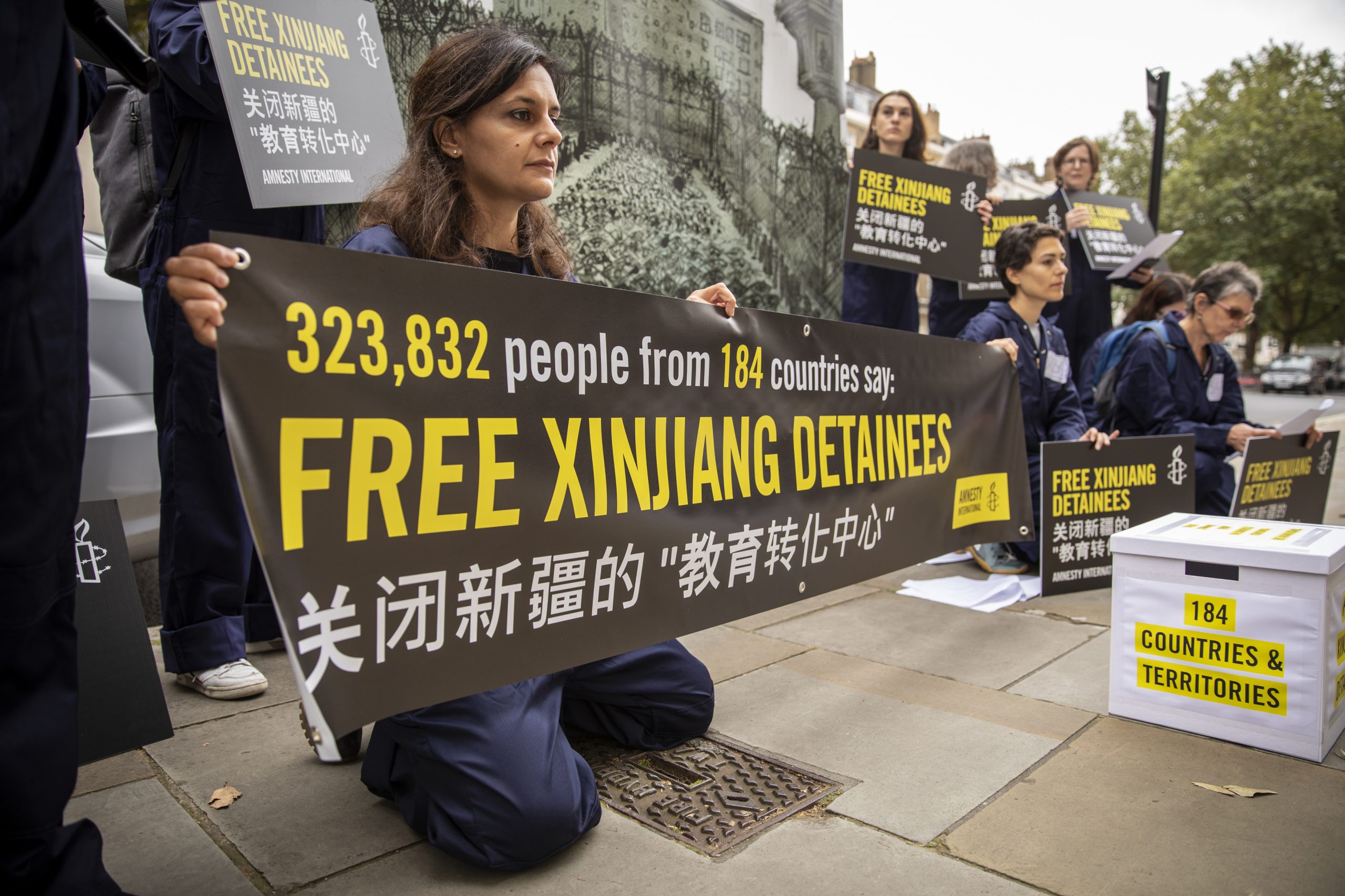
Amnesty International’s Free Xinjiang Detainees campaign has, to date, profiled 120 individuals who are among the perhaps one million or more people in arbitrary detention in internment camps and prisons in Xinjiang.  

Fleeing Afghans unlawfully returned after coming under fire at Iran/Turkey borders 

Iranian and Turkish security forces have repeatedly pushed back Afghans who attempt to cross their borders to reach safety, including by unlawfully opening fire on men, women and children, Amnesty International said today. In a new report, They don’t treat us like humans, the organization also documents numerous instances – mostly at the Iranian border – where security forces have shot directly at people as they climbed over walls or crawled under fences. Afghans who do manage to enter Iran or Turkey are routinely arbitrarily detained, and subjected to torture and other ill-treatment before being unlawfully and forcibly returned. 

Amnesty International researchers visited Afghanistan in March 2022, and conducted interviews in Herat City and Islam Qala border town. They interviewed 74 Afghans who had been pushed back from Iran and Turkey, 48 of whom reported coming under fire as they attempted to cross the borders. None of the people Amnesty International spoke to had been able to register an asylum claim in either country, and the majority were returned to Afghanistan in violation of international law. 

“One year after the end of airlift evacuations from Afghanistan, many of those left behind are risking their lives to leave the country – Afghans who have travelled to the Iranian and Turkish borders over the past year, in search of safety, have instead been forcibly returned under fire. We documented how Iranian security forces have unlawfully killed and injured dozens of Afghans since last August, including by firing repeatedly into packed cars. Turkish border guards have also unlawfully used live ammunition against Afghans, firing into the air to repel people, and also shooting at them in some cases,” said Marie Forestier, Researcher on Refugee and Migrant Rights at Amnesty International. 

“The dangers don’t end at the borders. Many Afghans we spoke to had spent time in arbitrary detention, either in Turkey or in Iran, where they were subjected to torture and other ill-treatment before being unlawfully returned. We are calling on Turkish and Iranian authorities to immediately end all pushbacks and deportations of Afghans, end torture and other ill-treatment, and ensure safe passage and access to asylum procedures for all Afghans seeking protection. Security forces must immediately end the unlawful use of firearms against Afghans at the borders, and perpetrators of human rights violations, including unlawful killing and torture, must be held accountable.” 

Amnesty International also calls on the international community to provide financial and material support to countries which host large numbers of Afghans, including Iran and Turkey. They must ensure that this funding does not contribute to human rights violations – this is critical, as the European Union has already provided funds for Turkey’s new border wall, as well as for the construction of several ‘removal centres’ where Amnesty International documented Afghans being detained. Other countries must also increase resettlement opportunities for Afghans who need international protection. 

A long and risky journey

Hundreds of thousands of Afghans have fled their country since the Taliban took power in August 2021. Afghanistan’s neighbouring countries have closed their borders to Afghans without travel documents, leaving many people with no choice but to travel irregularly. This means entering Iran through informal border crossings – such as through crawling under a fence near an official crossing in Afghanistan’s Herat Province, or climbing over a two-metre-high wall in Nimroz province.  

Those who are not immediately detained by Iranian border guards then travel on to various cities in Iran, or to the Turkish border nearly 2000 km away in north-western Iran. At both the Afghan-Iranian and Turkish-Iranian borders, Afghans are subjected to violent and unlawful pushbacks – from Iran back into Afghanistan, or from Turkey into Iran.  

Amnesty International researchers travelled to Afghanistan and Turkey in March and May 2022. They interviewed doctors, NGO workers and Afghan officials, as well as 74 Afghans who had attempted to cross into Turkey or Iran. Some people had made multiple attempts, and some had travelled in groups; based on their accounts, Amnesty International documented a total of 255 instances of unlawful return between March 2021 and May 2022.  

Killed trying to enter Iran

Amnesty International interviewed the relatives of six men and a 16-year-old boy who were killed by Iranian security forces as they attempted to cross into Iran between April 2021 and January 2022. In total, the organization documented 11 killings by Iranian security forces, though the true death toll is likely to be significantly higher. The lack of comprehensive reporting procedures means there are few publicly available statistics, but humanitarian workers and Afghan doctors told the organization they recorded at least 59 deaths and 31 injuries between August and December 2021 alone.   

Ghulam* described how his 19-year-old nephew was shot and killed in August 2021: 

“He arrived at the wall of the border, climbed it and he raised his head up over the top. They shot him in the head, in the left temple. He fell to the ground on the [Afghan] side of the border.” 

Some of the documented shootings took place inside Iranian territory. Sakeena, 35, told Amnesty International how her 16-year-old son was shot dead as they walked away from the Iranian border:  

“I heard my son screaming for me. He had been hit by two bullets in his ribs. I don’t know what happened after I fainted […] When I gained consciousness, I was in Afghanistan. I saw that my son was dead. I was next to his body in a taxi.”  

Shootings by Turkish security forces

Amnesty International interviewed 35 people who had attempted to cross into Turkey, 23 of whom reported coming under fire. Researchers interviewed one Afghan man who said he had witnessed the killings of three teenage boys by Turkish security forces. Other witnesses described the injury of six men and three boys by Turkish security forces, and Amnesty International interviewed two men who had sustained gunshot wounds at the Turkish border.  

Aref, a former Afghan intelligence officer who fled after receiving death threats from the Taliban, said he witnessed young children being injured by Turkish security forces: 

“They shot directly at us, not in the air (…) I witnessed a woman and two children who were injured. A two-year-old child was shot in the kidney, and a six-year-old child was shot on his hand. I was very scared.” 

None of those killed or injured appear to have represented any imminent threat to security forces or others – let alone a threat of death or serious injury -meaning the use of firearms would have been unlawful and arbitrary. In some cases, Iranian security forces appear to have used firearms in a manner that demonstrated an intention to kill, for example by shooting directly at individuals from close range. 

“Any killings resulting from deliberate and unlawful use of firearms by agents of the state must be investigated as potential extrajudicial executions.”

MARIE FORESTIER, AMNESTY INTERNATIONAL RESEARCHER ON REFUGEE AND MIGRANT RIGHTS

A crisis of systemic impunity for widespread patterns of torture, extrajudicial executions and other unlawful killings prevails in Iran. Amnesty International therefore reiterates its call on the UN Human Rights Council to establish an independent investigative and accountability mechanism to collect and analyze evidence of the most serious crimes under international law committed in Iran, including against Afghans in the context of pushbacks, to enable future prosecutions. 

Detained and tortured

Almost all interviewees who were intercepted once inside Iran or Turkey, and not immediately pushed back, were arbitrarily detained. Detention time ranged from one or two days to two-and-a-half months. Twenty-three people described treatment that would amount to torture or other ill-treatment while in detention in Iran, as did 21 people detained in Turkey.  

Hamid described how Turkish security forces beat him and his friend in detention:  

“One of the policemen beat my friend with the butt of his gun, and then the policeman sat on my friend, as if he was sitting on a chair. He sat there and lit a cigarette. Then he hit me on my legs with his gun as well.” 

Several people Amnesty International interviewed were detained in Iran after sustaining gunshot wounds.  

Amir was injured when a bullet fired by Turkish security forces grazed his head. After being pushed back to Iran, Amir was detained by Iranian security forces who beat him on his head: 

“They would beat me directly on the wound, and it would start bleeding again… One time I said, ‘please don’t beat me on my head,’ and the guard [at the detention facility] said, ‘Where?’ When I showed him, then he beat me in that same spot,” Amir said. 

Eleven Afghans unlawfully returned by Turkish authorities had been detained in one of the six removal centres in Turkey whose construction the EU has partially funded. 

“The European Commission must ensure that migration and asylum related funding to Turkey does not contribute to human rights violations. If the EU continues funding detention centres where Afghans are held before being unlawfully returned, it risks being complicit in these appalling violations,” said Marie Forestier.

Denied international protection

None of the Afghans interviewed by Amnesty International was able to register a claim for international protection, either in Iran or in Turkey. Interviewees said they attempted to tell authorities they would be at serious risk of huan rights violations if returned to Afghanistan, but their fears were dismissed. 

Iranian security forces transferred detainees by bus to the Afghan border, while Turkish security forces usually transferred them back to Iran at irregular crossings. Ten of those deported from Turkey were sent straight back to Afghanistan by plane. Turkey resumed charter flights to Afghanistan in late January 2022. At the end of April, the Turkish migration authority announced on its websites that charter flights had already returned 6805 Afghan citizens.  

All interviewees who had been returned said that Turkish and Iranian authorities coerced them to leave. Amnesty International heard how detainees sobbed and fainted when they heard they were being returned to Afghanistan, and how a man attempted to take his own life by jumping out of a window. 

Eight people detained and then deported on charter flights from Turkey said Turkish authorities pressured them to sign documents stating they were leaving voluntarily. One man said:  

“I told [security forces] that I was at risk in Afghanistan. They didn’t care. They beat me, pushed me to the wall. I fell down on the ground. Two men held my legs and one was sitting on my chest. Two others put my fingers on the paper.” 

This is consistent with previous Amnesty international research on “voluntary” returns from Turkey.  

“The international legal principle of non-refoulement prohibits states from returning anyone to a territory where they are at risk of persecution and other serious human rights violations. We urge the Turkish and Iranian authorities to abide by this obligation and stop forcing people back to danger in Afghanistan,” said Marie Forestier. 

“The international community must also arrange safe passage and evacuations for Afghans who are at risk, and step up with a coordinated response to share the responsibility of hosting Afghan refugees.”  

*All names are pseudonyms 
Eleven human rights milestones for the first 100 days for the Albanese government

Amnesty International Australia has welcomed election pledges from the new Albanese government on key human rights issues and have asked for swift action on eleven key tasks.

“The Albanese Government election policy commitments are simple, achievable steps on the way to a better, fairer country. We want the government to know that our movement and our supporters are watching and will be keeping them accountable to their promises.”

Amnesty International Australia National Director, Sam Klintworth

In the first 100 days in office, Amnesty has tracked the progress of the delivery on the following pledges already made by the ALP in its policy platform, listed in no particular order, as a matter of urgency:

Indigenous justice

  1. Raise the minimum age of criminal responsibility to at least 14 nationally and establish the National Justice Reinvestment Unit, ensuring it is led by First Nations experts;
  2. Establish the process for real time national reporting of deaths in custody;

Update:

  • The Albanese Government has assured their commitment of $79 million towards a National Justice Reinvestment Unit will go ahead. Despite this, while they’ve restated their position that 10-year-old kids don’t belong in prison, they haven’t taken any tangible actions and continue to defer to the process underway at the meeting of state and territory Attorneys-General.

    Along with the Change the Record coalition, we met with Indigenous Affairs Minister Linda Burney, calling on the Labor Government to take national leadership on this issue, and we’ll continue to do so throughout this Parliament.

Women’s rights 

  1. Dedicate full funding for the National Plan to End Violence Against Women and Children as well as initiating a separate, self-determined National Plan for Aboriginal and Torres Strait Islander women;

Update:

  • State, territory and federal ministers have agreed on a ‘pathway’ to finalise the draft national plan to end violence against women and children and enact a gender equality strategy, and have committed to a standalone plan for Aboriginal and Torres Strait Islander family safety. 

    We commend this approach, and will work to ensure it happens as a matter of urgency.

Climate justice

  1. Actively lead on ambitious emissions reduction targets ahead of COP27 and work with Pacific Island Countries to address the climate crisis. As a first step, the Australian Government needs to urgently update Australia’s Nationally Determined Contributions to at least meet the commitment of 43% ahead of COP27;

Update:

  • In June, the Albanese Government officially signed Australia’s updated and strengthened Nationally Determined Contributions (NDC) to the Paris Agreement on Climate of 43 per cent, fulfilling Labor’s election promise. 
  • The new target will see Australia aim for an emissions reduction of 43 per cent below 2005 levels by 2030. An increase from the previous Government’s 26-28 per cent target. 
  • The government has moved to enshrine the new target into law, with it passing through the House of Representatives, and is yet to pass the Senate.

    While we welcome progress, these commitments don’t go far enough. We can not keep global warming below 1.5 degrees if the Government continues to approve new gas and coal projects. Without further action from Australia and the world, we will still face an environmental and human rights crisis. We’ll continue to call on the Albanese Government to be more ambitious, and ensure these targets and a floor, not a ceiling and phase out fossil fuels, key drivers of the climate crisis.

Refugee rights

  1. Abolish Temporary Protection and Safe Haven Enterprise Visas;
  2. Announce a timeframe to expand the Refugee and Humanitarian Program to 27,000 places and further reform the Community Refugee Sponsorship Program to be additional to the humanitarian intake;

Update:

  • The Albanese Government continues to maintain that Temporary Protection and Safe Haven Enterprise Visas will be abolished as a priority. Despite this, we’re still yet to see any proposal, or the lifting of unnecessary travel restrictions in the interim.
  • The new Minister for Immigration, Citizenship and Multicultural affairs, Andrew Giles has engaged deeply with Amnesty, along with the sector and impacted communities, and we welcome that. But, people on these visas have waited 10 years for a solution to their limbo, they can’t afford to wait any longer. 
  • In regards to expanding the Refugee and Humanitarian Program, the Department of Home Affairs recently released a Discussion Paper, to which Amnesty made a submission calling on the Albanese Government to increase the intake to 30,000 places. While Minister Giles is yet to make any formal announcements, Amnesty will continue to engage with all members of Parliament ahead of the October Budget to ensure these commitments become a reality, including additional places for the Community Sponsorship Program.

Human rights for all

  1. Ensure Australia is leading the strengthening of support for the biennial UN vote on the death penalty moratorium due again later this year – through co-sponsoring and building the numbers of co-sponsors for the resolution;
  2. Remove carve-outs that allow religious organisations to sack, expel or deny service to LGBTQ+ people and legislate a national ban on conversion practices;
  3. Actively advocate on behalf of Australians trapped overseas, including Chau Van Kham, Dr Yang Hengjun and Julian Assange;
  4. Improve COVID-19 vaccine production and distribution by co-sponsoring the TRIPS waiver at the WTO and expanding domestic vaccine production through extending the contract with AstraZeneca and CSL; and
  5. Establish a transparent and merit-based appointment process for the Australian Human Rights Commission to ensure its status as an A+ institution is maintained. 

Update:

  • The Albanese Government has committed to maintaining Australia’s role as a leading country when it comes to abolishing the death penalty around the world. Amnesty has met with the Department of Foreign Affairs and Trade to discuss progressing the this year’s Death Penalty Moratorium vote at the UN, in which Australia will co-chair along with Costa Rica. 
  • The Albanese Government has stated they will introduce a Religious Discrimination Bill to Parliament at some point, but in a welcomed move, Attorney-General Mark Dreyfus has committed to amend the Sex Discrimination Act to ensure students and staff in religious schools are protected from discrimination on the basis of their sexual orientation and gender identity. 
  • Despite criticising the previous Government for not doing enough in regards to advocating for Australians trapped overseas, the Albanese Government has done little more to assist Julian Assange. Assange’s extradition was approved by the UK Home Secretary, and despite legal appeals now under way, Prime Minister Albanese maintains that not all diplomacy is best done through a loudspeaker. Fortunately, the Foreign Affairs Minister Penny Wong has taken a different approach to the cases of Chau Van Kham and Dr Yang Hengjun, publicly raising the Australian Government’s concerns with their continued detention. Amnesty will continue to shine a light on these cases, and ensure Australia upholds its commitment to human rights. 
  • While a TRIPS Waiver passed at the World Trade Organisation (WTO) in June , it was not the original waiver proposed by South Africa and India which had the support of over 100 member countries. Instead, lobbied heavily by pharmaceutical companies, wealthy countries banded together and passed a watered down agreement that will do little to increase vaccine access. While the Albanese Government voted for the watered down agreement, Australia never co-sponsored the original waiver, contributing to its failure. Amnesty continues to advocate for a more expansive waiver, and will work to include therapeutics and diagnostics in upcoming discussions at the WTO. 
  • The Albanese Government has committed to ensuring the independence of the Australian Human Rights Commission, with Attorney-General Mark Dreyfus introducing legislation to the House of Representatives that will mean appointments to the Commission are made through a merit-based and transparent process. While still yet to pass through the Senate, these measures show a commitment to transparency and integrity, which will help ensure the Commission maintains its status as an ‘A-status’ institution.

    “Australians have resoundingly voted for a kinder country that puts the climate emergency, First Nations justice and women’s rights centre stage. Amnesty is calling for a national Human Rights Act, to protect the human rights of all Australians, and already has more than 20,000 Australians who have joined this call,” Amnesty International Australia National Director, Sam Klintworth, said.

Include A Charity Week 2022

“Have you got a Will?” …

For many, this is still a pretty confronting and awkward question. The prospect of talking to family and loved ones about your wishes, arranging one with a solicitor, making difficult decisions are just a handful of reasons why more than half of Australian adults do not have a Will in place.

Having a Will that takes care of what matters most to you is incredibly important – it’s more than just a legal document. Organising your Will is a way to ensure that everything you have stood for in your life, everything you believed in and cared deeply about, lives on for the next generation. 

Include A Charity Week (5-11 September) aims to raise awareness of the importance of having a Will, and the significant decision to include a charitable gift in your Will. 

Remembering Amnesty in your Will is a very personal decision. It’s an important and lasting declaration of your values and beliefs that you and your loved ones can be proud of for a long time to come. Your gift can make sure that we have the sustainable support we need to continue to challenge injustice for generations to come. 

“The most important thing I would say is that a gift in your Will to Amnesty International Australia will make an impact. Unfortunately, inequality continues to exist. But importantly, the conversation is much more elevated than it ever was. And that’s because of organisations like Amnesty, that just keep bringing it to the fore.” 

Giles, Amnesty International supporter

Every person who makes this monumental decision builds new opportunities to create systemic nationwide – and worldwide – change. No matter the size of the gift, every Gift in Will is cherished and honoured through the progress we make each day towards a future where human rights are enjoyed by all.

Your vision – for a world where justice, equality, and freedom are enjoyed by everyone – continues when you leave a gift in your Will.

Safewill

Safewill, Australia’s leading online Will writing platform, provides an accessible option for the 52% of Australians who don’t have a valid Will to protect the people and organisations that mean the most to them.

As part of Include A Charity Week 2022, Safewill is proud to offer all Amnesty International supporters the chance to write their bespoke Will absolutely free from 5-11 September.

You’ll be able to complete your own Will online in as little as 20 minutes, and have it reviewed by Safewill’s team to ensure it has been filled out correctly. Plus, you can make unlimited updates to your Will for a whole year completely free of charge. 

To learn more and get started on your Will, head to Safewill between 5-11 September.

Myanmar: Five-year anniversary of Rohingya crisis must mark ‘turning point’ in quest for justice

The five-year anniversary of the Rohingya crisis must mark a turning point in the urgent quest to deliver justice to the victims and hold those responsible to account, Amnesty International said.

On 25 August 2017 Myanmar’s military began carrying out violent operations against the Rohingya population in northern Rakhine State, which resulted in grave crimes under international law, whole villages torched, and forced hundreds of thousands to flee into Bangladesh.

“This solemn anniversary is a haunting reminder that not a single high-ranking Myanmar military official has been prosecuted for the egregious campaign of violence against the Rohingya,” said Amnesty International’s Ming Yu Hah, Deputy Regional Director for Campaigns.

“Amnesty International stands in solidarity with the Rohingya people who are in Rakhine state and the estimated one million refugees living across the border in Bangladesh. Real justice is essential to ending the spiraling cycle of impunity engulfing Myanmar for many years.”

Five years later, Rohingya in Rakhine State still lack freedom of movement and other basic rights such as access to adequate food, healthcare and education, problems compounded by the rising insecurity brought on by the 2021 military coup in Myanmar. Across the border in Bangladesh, Rohingya refugees are living in limbo with neither the opportunity to safely return to their homes in Myanmar nor a way to live peacefully in Bangladesh, where violence has been on the rise in refugee camps.

“We face enormous hardship in the refugee camps. We do not know how we can ever return to our homes. We are neither safe in the refugee camps nor in Arakan [Rakhine State in Myanmar].” 

San thai Shin, a Rohingya refugee in Cox’s Bazar camp, Bangladesh

”Our people are losing their lives to gang violence in the refugee camps, in environmental calamity, or by taking dangerous attempts to migrate to other countries through the deadly seas and other means.”

Importantly, some international justice efforts are moving forward. In July 2022, the International Court of Justice dismissed Myanmar’s objections and decided that it has jurisdiction to continue proceedings instituted by the government of The Gambia against the government of Myanmar in 2019 on the basis of the Genocide Convention.

“The International Court of Justice’s decision is a vital step in ongoing efforts to hold Myanmar’s government to account,” Amnesty’s Ming Yu Hah said.

The International Criminal Court is also investigating crimes committed in 2016 and 2017 against the Rohingya population. Although Myanmar has not ratified the ICC’s Statute, the Court is examining alleged crimes committed partly in the territory of Bangladesh or other states. Amnesty International has called for the United Nations Security Council to refer the full situation in Myanmar to the International Criminal Court Prosecutor, so that an investigation of all crimes committed in Myanmar can be conducted.

An investigation into other crimes in Myanmar is also being conducted in Argentina under the principle of universal jurisdiction, which permits national authorities to investigate crimes under international law committed anywhere in the world on behalf of the international community. The case, which was filed by the Burmese Rohingya Organisation UK (BROUK), hopes to hold senior military leaders to account for alleged responsibility in crimes against the Rohingya people.

These efforts should be supported and other states should also take measures to investigate and prosecute the crimes before their national courts.

“The Association of Southeast Asian Nations must also play a more forceful, decisive and leadership role in standing up for the Rohingya people and pushing for accountability in Myanmar,” Amnesty’s Ming Yu Hah said.

“We reiterate our call on authorities to respect and ensure the participation of Rohingyas in the decisions that affect them in order to protect their human rights.” 

Background:

More than 740,000 Rohingya women, men and children fled northern Rakhine State to neighboring Bangladesh, when in August 2017 Myanmar security forces launched a widespread and systematic assault on Rohingya villages, including extrajudicial killings, destruction of properties and sexual assault. The onslaught came in the wake of a series of what the military claims were insurgent attacks on police posts.

Taking into account previous decades of violence against the Rohingya, an estimated one million Rohingya refugees now live in Bangladesh, while many of their homes in Rakhine State have been destroyed without a trace.

The UN Fact-Finding Mission on Myanmar previously called for Senior General Min Aung Hlaing and other top military officials to be investigated and prosecuted for war crimes, crimes against humanity, and genocide. Min Aung Hlaing assumed the role of Chairman of the State Administration Council following the February 2021 coup.

In a report published earlier this month, since the coup Amnesty International documented the crackdown and arbitrary detention of those who exercise their right to freedom of expression, association and peaceful assembly as well as enforced disappearances, torture and other inhuman treatment in detention.

More than 2,000 people have reportedly been killed since the coup, and Myanmar arbitrarily executed four people after grossly unfair trials, the first use of capital punishment in the country in decades.

A report by Amnesty International published in July showed that the Myanmar military is committing war crimes by laying banned landmines in and around villages in Kayah (Karenni) State, while a report in May showed how the military uses air strikes and shelling as a form of collective punishment against civilians.

People power works, it puts pressure on those in charge to respect international human rights law. We will continue to challenge injustice and stand up for refugee rights. Help us take action to urge Bangladesh’s government and the international community to let Rohingya people speak for their rights.

Raising the Refugee and Humanitarian Intake- Toolkit

The crises that are taking place in countries such as Ukraine, Afghanistan and Myanmar have resulted in more than 100 million people currently displaced around the world. That means that one in every 78 people on earth has been forced to flee their homes.

Despite this harrowing reality, Australia is turning its back. In 2020, the previous Australian Government cut 5,000 places from Australia’s Refugee and Humanitarian Program – bringing Australia’s official intake to just 13,750 places annually. This is one of the lowest levels in 45 years, during a time when the need for resettlement has never been greater.

In contrast, countries such as the United States are committing to resettling 125,000 refugees every year.

Before the election, the Albanese Government committed to increasing the Refugee and Humanitarian Program to 27,000 places annually, as well as making an additional 5000 places available through the Community Sponsorship Program. This is welcomed, but Australia can do so much more.

The new Albanese Government must increase the annual Refugee and Humanitarian Program to at least 30,000 places – prioritising people selected by the United Nations High Commissioner on Refugees, as well as ensuring their promised reforms to the Community Sponsorship Program. They must make this clear in their Federal Budget – due to be handed down this October.

We will be putting pressure on the government between now and the October budget making sure they commit to raising the Refugee and Humanitarian intake. We need your help to do this!

How can you get involved?:

Event Idea: Host a letter writing event, where you all get together and write letters to your local MPs

If you can host events within your community. Please follow these Covid Safe Guidelines and comply with your state’s rules and recommendations.  

Please keep an eye out for these nights and how to join via the Activism Planner. Are you part of our National Facebook Group for activists? Join the group here to be kept in the loop. 

Amnesty resources

  • We can send you Amnesty merchandise such as petitions, t shirts, pens and badges 
  • We can provide you with access to our professional QR code account for you to set up your own trackable QR codes linked to the petitions you’re using.
  • If you need help setting up a zoom meeting/would like access to our professional account, just ask us.

Please add these into the host an event form so the Supporter Care Team can fulfill your resourcing requests. 

This event template could be useful for you and your group when planning your event. You can follow the same steps as for an online event. However keep in mind that you will be running the event in person so you will need to think of other items such as venues. Follow this guide to make sure your event is COVID safe.

Make sure you submit a host an event form, so  we can provide extra support for you. 

Here’s some tips and tricks for hosting an engaging online event:

Preparation 

  1. Keep an eye out for other events you can be involved in/ plan your own event around via the activism planner
  2. Do you have support from your group or network to help you run this event? 
  3. Do you need any extra support or training to help you with the tools you will be using on the nights, such as zoom?

Considerations for your event 

  • Are you involving people from affected communities in organising this event? If so, it might be worth brushing up on the How to be a genuine ally training module.
  • In addition you can consult our Inclusive Language and Events Guide, as well as our Participation Protocol– a guide on how to work with people with lived experience
  • Can you partner with other groups to host this event? 
  • What will draw people to your event? Will it be an interesting speaker, an exciting musician or poet? 
  • Who is your likely audience?
  • What format is best suited for the message you are trying to get across

Make a plan

  • Check out our Events & Tactics Training Guides – Part 1 on Planning and Part 2 on Coordination.
  • Register your event through Amnesty’s online Host an event form.
  • Book and secure your entertainment, whether this is speakers, musicians, or any other amazing ideas you might come up with. 
  • Schedule a time for people to sign a petition during or before/after the event. Or, think about another call to action idea.

For promotion – get your message out!

  • Our incredible Activist Communications Team is here to support the promotion of your event. Fill out this brief and let them know the support you need including social media, local media, promotional resources and more.
  • Brush up on your media skills with this training module
  • A letter to the editor of your local newspaper is a way for the paper to hear from its readers about issues in the community or the wider world. The key, as with the media release, is that you have to really compete for the editor’s attention, so you need to make the letter compelling. Here are some tips on how to write a compelling letter to the editor.
  • Listings are an extremely easy way to drum up interest in your event. There are a wide range of listing websites which give you free listings. You simply need a blurb about your event, all the details of how someone can be involved, and an image to go with it.

Let us know how you went!

  • Share your pictures and success via the National Facebook group for activists and #activist_updates on Slack. 
  • Let your local ALC know how you went, and fill in the feedback form, so we can continue to support your events to the best of our ability.

Useful resources

  • Skill up via our online training modules!
  • Keep track of upcoming opportunities via your Activism Planner.
  • How to make your Virtual Event inclusive.  
  • Campaigning for human rights can be difficult. Burnout and vicarious trauma can happen and it’s important to keep a look out for the signs in yourself and your friends. You can check out our Sustainable Activism & Self Care guide and workshop which you can find here. It examines how we can better take care of ourselves as activists and what you can do to make sure your activism is sustainable!

Good news: Student Ahmed Samir Santawy has finally been released

Ahmed Samir Santawy, a 29 year-old Masters’ Student has been given an presidential pardon after being unjustly imprisoned in Egypt for spreading “false news”. Ahmed, whose research focuses on women’s rights, including the history of reproductive rights in Egypt had been arbitrarily detained since 1 February 2021.

What happened? 

On 4 July 2022, Ahmed was convicted of spreading “false news” and sentenced to three years’ imprisonment. His conviction was based solely on social media posts criticising human rights violations in Egypt and the state’s mishandling of the Covid-19 pandemic.

Ahmed was arrested and disappeared for 5 days, whilst blindfolded he was beaten by police officers whilst blindfolded. 

Amnesty International considered Ahmed a prisoner of conscience, detained only because of his academic interests and research focusing on gender and religion. 

Ahmed was denied contact with lawyers and his family, and there were serious concerns about his wellbeing and health amid COVID-19 outbreaks in Egypt’s prisons.

How did Amnesty respond? 

After his arrest in February 2021, Amnesty started a petition calling on Egyptian authorities to release Ahmed. There was hope for Ahmed when Amnesty supporters around the world took action. Over 10,000 people in Australia signed the petition and almost 5,000 people called the Egyptian embassy, putting pressure on authorities to release Ahmed. 

Freedom of expression in Egypt

In recent years, thousands of real or perceived political opponents have been arrested and kept in prolonged pre-trial detention in Egypt, pending investigations into unfounded terrorism-related and other charges. Those targeted include human rights defenders, activists, lawyers, politicians, protesters, journalists, medical workers and academics.

Criminalising the dissemination of information based on vague concepts such as “false news” is contrary to the right to freedom of expression guaranteed by the Egyptian constitution and international human rights law.

What now? 

People power works, it puts pressure on those in charge to respect international human rights law. We will continue fighting for the release of individuals unjustly jailed around the globe.

No-one should be unjustly arrested and detained. Amnesty will continue to stand up for the right to freedom of expression in Egypt. Help us take action for Haneen Hossam and Mawada el-Adham, they have been sentenced to years in prison for ‘encouraging’ young women to share supposedly ‘indecent’ content on social media.

People like Ahmed have the right to a life lived in freedom and safety. Together we are powerful enough to challenge injustice and ensure everyone enjoys their human rights. Find out more about our individuals at risk campaign work.

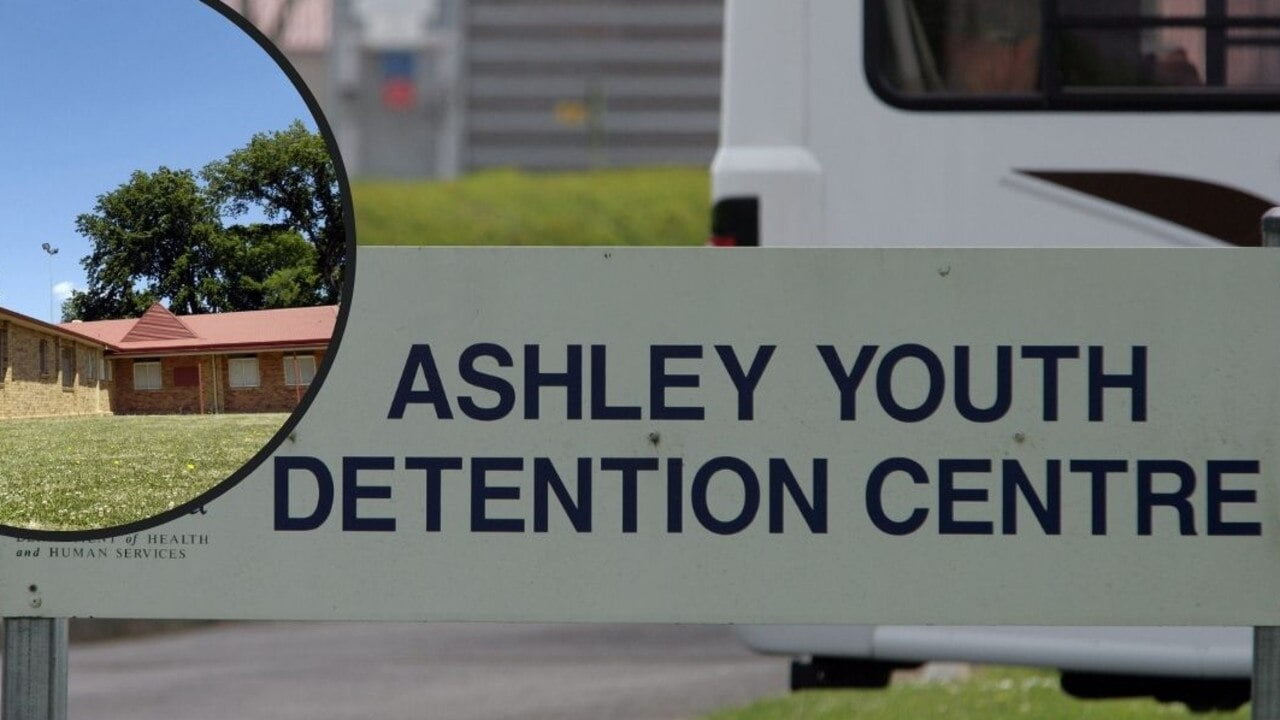
Amnesty International calls for the closure of Ashley Youth Detention Centre in light of the latest evidence of sexual abuse

The harrowing testimonies of child sexual and physical abuse at Ashley Youth Detention Centre that are currently heard at the Tasmanian government’s Inquiry into Child Sexual Abuse in Institutional Settings has shown the need for some decisive actions.

Amnesty International welcomed the Tasmanian government’s announcement last year to close the Ashley Youth Detention Centre in three years. Yesterday’s chilling evidence of child sexual assault has shown we need to act, sooner rather than later.  

We are calling on the state government to:

  • Consider closing the Ashley Youth Detention Centre as a matter of urgency
  • Immediately release the children who are on remand and ensure adequate support is provided
  • Implement Aboriginal-led, trauma-informed diversion programs for Aboriginal children and young people to address factors contributing to offending
  • Ensure those directly involved in the sexual assault and those responsible for this culture of brutality towards vulnerable children are held to account

The latest allegations are part of a broader pattern of horrors that have been taking place behind the locked gates of Tasmania’s only youth detention centre for many decades.

Submission: Australia’s Humanitarian Program 2022-23

Amnesty International Australia has made a submission to the Department of Home Affairs regarding Australia’s Humanitarian Program 2022-23.

Despite there being more people in need of resettlement than at any time since the Second World War, the previous Australian Government slashed the annual humanitarian quota to just 13,750 places.

While Australia has played an important role in resettling vulnerable refugees, we have a responsibility to be doing much more.

In its submission, Amnesty has called on the Australian Government to commit to increasing the Humanitarian Program to 30,000 places, ensuring that where appropriate there is additionality for specific crisis, with a process to respond that is underpinned by the principle of non-discrimination.

Amnesty also called for further reform to Australia’s Community Sponsorship Program so that it is in addition to Australia’s regular Humanitarian Program, among other recommendations.

Event recap: Australian Ice Hockey supports LGBTQIA+ rights

What: #PuckHomophobia Melbourne Mustangs v. Sydney Ice Dogs pride game
When: Sunday, 7 August 2022
Where: O’Brien Ice House, Melbourne, Victoria, Australia

The Melbourne Mustangs Ice Hockey team donned rainbow jerseys at O’Brien Ice House to challenge the Sydney Ice Dogs in the fourth annual Australia Pride Ice Hockey Game for LGBTQIA+ rights. The thrilling, high contact pride game is a partnership between the Melbourne Mustangs and Amnesty International LGBTQIA+ activists that has been running since 2017.

Game day activities focussed on supporting genuine inclusion in sport, welcoming everyone to the sport of ice hockey and eradicating LGBTQIA+ discrimination from the game.

Since the start of the partnership over five years ago, we have seen a real shift in the attitude, behaviour and culture within the club and this hockey community. 

In 2020, a study by Monash University highlights the use of pride games by sporting clubs as prejudice reduction interventions. It found that pride games drastically reduced the use of homophobic language in a range of sports, including ice hockey, community cricket, netball, Aussie rules, field hockey and roller derby. 

There’s a lot we can do as players to challenge homophobia, and there’s definitely been a shift in the way people talk and act within the club.  

Brendan McDowell, Mustangs Captain

Every year, we hear personal stories of how included people feel in this environment – for some people this is their first experience of inclusion and safety within a sporting community.

The recent success of annual pride games has seen two new ice hockey clubs emerge in Australia: the Southern Lights and Harbour Lights. The Harbour Lights has been acknowledged by the National Hockey League in America for their promotion of inclusion and diversity in the sport. 

How pride games are challenging injustice

Pride games provide hope to recent negative developments for inclusion of LGBTQIA+ people in sport. These include:

  • The International Swimming Federation’s exclusionary policy which effectively bans trans women and some intersex women from competing;
  • A recent divisive Bill in Australia that would have excluded trans and gender diverse people, including children under the age of 12, from sport; and
  • Manly players boycotting an NRL match over a pride jersey.

All of these send a dangerous message to LGBTQIA+ people, most alarmingly to LGBTQIA+ children, that they are not welcome. 

It is critical that we have pride games like this, where elite athletes, teams and sporting clubs visibly demonstrate and genuinely commit to everyone being welcomed and safe in the sporting community.

Lucy Kenny, Amnesty Associate Campaigner

Sport is for everyone, and participation in sport is a human right. Together, we can continue to challenge injustice and ensure that LGBTQIA+ people can participate in sport safely and without discrimination. 

Find out more about Amnesty’s LGBTQIA+ rights campaigning work.