Final refugee family trapped in Darwin Airport APOD released into community

The last remaining family held in the Darwin Northern APOD, has finally been released into community detention after more than a year confined to a small, demountable cabin out the back of the Darwin Airport Hotel. 

The family, who received refugee status in 2019, suffered more than six years in limbo on Nauru Island before being medically transferred to Darwin in February 2020. At the airport the elderly parents were forced to sleep in bunk beds in tiny cabins and the family were constantly monitored by up to a dozen guards.

Their release into community detention follows months of protests outside the Darwin Airport by refugee advocates and the community.

Over eight years ago, refugees made the dangerous journey to seek safety in Australia. They sought freedom and safety. Yet, when they arrived here they were met with a Government and a policy that has kept them detained for nearly a decade, both offshore and here in Australia. 

But this week, because Amnesty supporters raised collective voice and keep fighting to challenge injustice, that freedom has finally been granted to some refugees. Yesterday the last remaining family detained in Darwin were flown to Brisbane for release into the community. Today, more refugees were released into the community from Melbourne and Brisbane.

“This is wonderful news for the Maghames family and the community in Darwin who have worked tirelessly for their release. The family have endured severe physical and emotional trauma after spending years in limbo, trapped in detention both here in Australia and on Nauru after fleeing persecution in Iran in 2013. Now finally, the family can start to live something resembling a normal life while awaiting third country resettlement and hopefully that starts with them getting the medical support they so desperately need.”

Dr Graham Thom, Refugee Advisor for Amnesty International

The people in offshore detention don’t stand alone. Amnesty International a movement of people who won’t stop until refugees and asylum seekers in the Australian Government’s care are safe. Find out more about our campaign to bring refugees in offshore detention to safety.

Media Awards: Spotlight on 2017 Radio Winner

Each year the Amnesty International Australia Media Awards acknowledge those Australian media stories that have presented a fair and balanced report of a human rights issue, highlighted hidden abuses and encouraged an audience’s greater understanding of a human rights issue.

With just over a week left before entries close for this year’s 2021 awards, we’re celebrating winners from previous years’ to demonstrate the importance of a free press.

Media Awards’ 2017 Radio Winner 

Winner of the 2017 Amnesty International Media Awards’ Radio Category were Sarah Dingle and Wendy Carlisle for their piece ‘Death In Kalgoorlie’ for ABC Radio National, Background Briefing.

‘Death in Kalgoorlie’ investigates the death of a 14-year-old Indigenous boy who was allegedly run over and killed by a 55-year-old white man driving a ute. Following his death a protest broke out in the main street of Kalgoorlie after the 55-year-old man was charged with manslaughter at a local court.

Under a sign saying ‘Save Our Kids’ people lit torches and left flowers and fixed a cross to a tree.

Sarah Dingle, ‘Death in Kalgoorlie’

Kalgoorlie, also called Kalgoorlie-Boulder, is Australia’s largest outback city located in Wongatha country in Western Australia. Kalgoorlie has a long history of racial tension. At the time of the 1967 Referendum – the vote to include Aboriginal and Torres Strait Islander peoples as part of the population and to allow the Commonwealth  to make laws for them – Kalgoorlie sat within a larger section of Western Australia that held the highest ‘No’ vote in Australia at 29.04%. 

Sarah Dingle and Wendy Carlisle investigate the events that led up to the protest in August 2016, including the mistreatment of Indigenous children in custody, the rise of youth crime rates, lack of support for youth mental health and a lack of acknowledgement of Indigenous culture in local schools.

Afghanistan Crisis: Amnesty calls for United Nations Human Rights Council Investigation

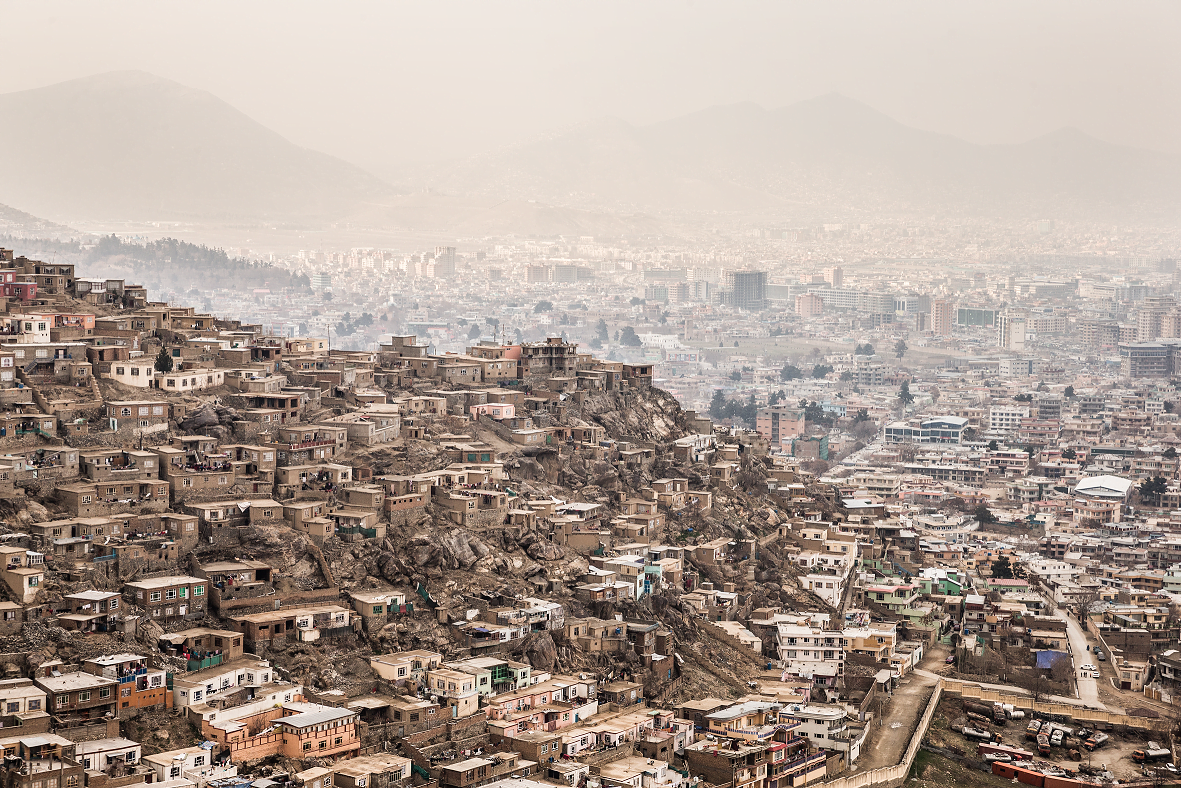
Evidence obtained by Amnesty researchers in Afghanistan has uncovered the brutal murders of nine ethnic Hazara men by Taliban forces. In response, Amnesty has written to the Foreign Affairs Minister Marise Payne, urging Australia to support, and if necessary lead, a United Nations General Assembly resolution for the establishment of a robust investigative mechanism through the United Nations Human Rights Council.

Torture and murder in the context of an armed conflict are violations of the Geneva Conventions, and constitute war crimes under the Rome Statute of the International Criminal Court, which is already considering crimes committed in relation to the conflict in Afghanistan.

Any investigation must be set up with the aim to document, collect and preserve evidence of ongoing crimes and human rights abuses across Afghanistan. This will prove critical to ensure informed decision-making by the international community, and combat the impunity which continues to fuel grave crimes in the country.

At the Olympics our refugees made us proud, now the Australian Government must make us proud and help those trapped in Afghanistan

Shankar Kasynathan, Amnesty International campaigner for an improved Community Sponsorship Programme for refugees, shines a spotlight on Australia’s role on the world stage right now.

Federal Immigration Minister Alex Hawke’s response to the crisis unfolding in Afghanistan is at total odds with what I felt this country was about, just a couple of weeks ago, as we sat around our television sets watching one of our South Sudanese-born heroes, run for us all. 

Initially only confirming that Australia would do the very minimum in not sending people back to danger and potentially death – the principle of non-refoulment in international law – the Minister last night also offered a miserly 3000 humanitarian visas, when we have capacity for many, many more.

During the Olympics our nation stopped for the evening to watch and celebrate the athleticism of a refugee whose family fled war torn Sudan and found safety in Australia. Peter Bol’s achievements on the track in Tokyo were worth celebrating. We were rightly proud of him both as a representative of our Australian Olympic team and also of ourselves as a nation for being the kind of society that provided a safe haven for Peter and his family when they were fleeing danger. 

In the immediate moments after his race, Peter’s plea to all of us was to remember that he is more than a refugee. He too is just human, trying to do the best that he can.  

The irony only weeks later, in reading Minister Hawke’s response to the scale of the tragedy unfolding in Afghanistan, is his apparent inability to recognise our shared humanity. The Minister’s dismissal of whether Australia should be offering more in this dark hour, seemed to be lacking in just that: a basic principle of humanity. The ability to recognise the mass scale of human suffering.   

Today across Australia, we have a vast number of refugees living in our communities – many of them from Afghanistan. Humans, all of them, trying to do the best they can. Some of them are serving in our hospitals, schools and other parts of society, trying to keep our country going through these challenging times. In this way they are not only doing the best they can for themselves, but they are also doing the best they can for the rest of us. They should be celebrated too, for what they give to us as well as what we give to them – just like Peter Bol.

Over the last four years, Amnesty International’s My New Neighbour campaign has been working with communities and diaspora groups across Australia that want to see a better Community Support Program (CSP); one that allows local groups and organisations to sponsor a refugee who can then become part of their neighbourhood. Throughout that time we have learnt one consistent truth across communities small and large:  Australians benefit from and enjoy the strength and connection of “the neighbourhood”, and at the core of that is an empathy that seeds our care for our neighbours.  

For the past 18 months though, the CSP program along with the annual humanitarian intake agreed by the Government has been on hold. When the borders shut in a bid to keep COVID-19 out, refugees along with thousands of Australians were left stranded overseas.

The catastrophic impact of this approach is now unfolding in Kabul. You don’t need to have a daughter, sister, niece, or mother to realise how horrifying it would be to have virtually nothing now standing between you and the Taliban regime with nowhere safe you can turn.

That deep empathy we felt when we celebrated Peter Bol making history in the Olympics, also lends itself to grief and fear when we sit with our Afghan friends in our neighbourhoods and watch this tragedy unfolding. It can also lead to anger. What are we doing to help?

Canada, which has had a successful CSP model in place for years, is stepping up and offering 20,000 additional places to Afghans now desperately seeking refuge. We are calling for our country to do the same – just as we did in the Syrian crisis in 2015. 

The Government must immediately announce an increase to our humanitarian intake and reopen the borders to let refugees in. It must also act to protect Afghan nationals in Australia on temporary visas by extending their visas indefinitely. 

And it must look at ways it can help respond to the humanitarian crisis going forward. A fair community refugee sponsorship program like the one in Canada works and people right around the country are ready to welcome refugees from Afghanistan and elsewhere into their communities. Now is the moment for Minister Hawke to build a fair, just and lasting model of refugee sponsorship that makes sense to us all. He has the power to make this happen now and now is the time we need to see action – and compassion – from our Government.

Australia and its political leaders must not only embrace the contributions of refugees to Australia when it features Olympic stardom. It must also embrace those who have yet to reach these shores, but who desperately need our help. These are our friends, schoolmates and work colleagues of the future, and they need our help now, today. 

When we accept we have a moral responsibility for those we have never met, who are just human and want to do the best they can, then we can feel truly proud as a nation.

Amnesty has been advocating for a road to refuge, in the form of community sponsorship, for almost 4 years. This crisis highlights how our work is challenging injustice and could save lives.

Afghanistan: Taliban responsible for brutal massacre of Hazara men – new investigation

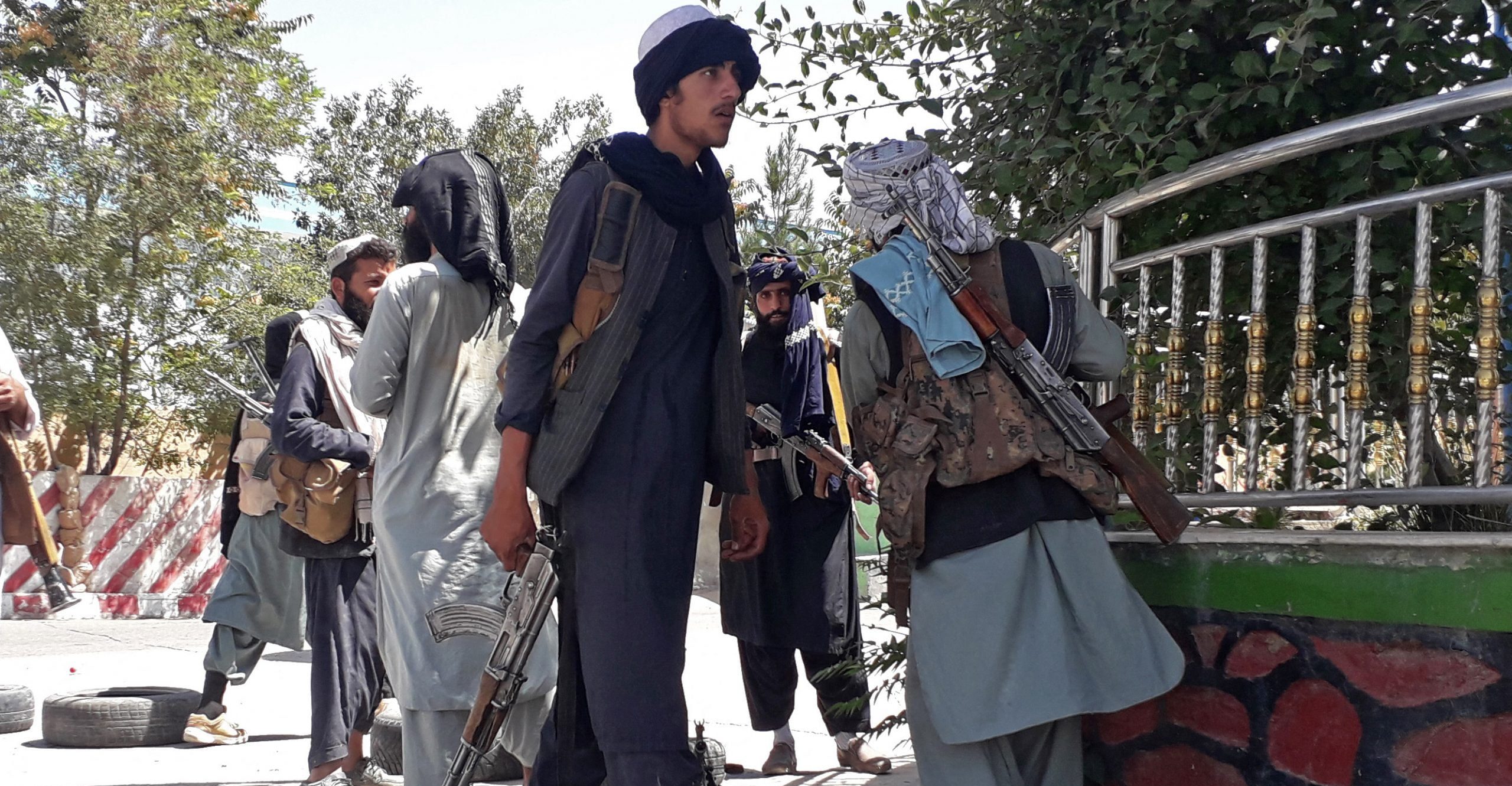
Taliban fighters massacred nine ethnic Hazara men after taking control of Afghanistan’s Ghazni province last month, Amnesty International said today.

On-the-ground researchers spoke to eyewitnesses who gave harrowing accounts of the killings, which took place between 4-6 July in the village of Mundarakht, Malistan district. Six of the men were shot and three were tortured to death, including one man who was strangled with his own scarf and had his arm muscles sliced off.

The brutal killings likely represent a tiny fraction of the total death toll inflicted by the Taliban to date, as the group have cut mobile phone service in many of the areas they have recently captured, controlling which photographs and videos are then shared from these regions.

“The cold-blooded brutality of these killings is a reminder of the Taliban’s past record, and a horrifying indicator of what Taliban rule may bring,” said Agnès Callamard, Amnesty International’s Secretary General.

“These targeted killings are proof that ethnic and religious minorities remain at particular risk under Taliban rule in Afghanistan.

“We urge the UN Security Council to adopt an emergency resolution demanding that the Taliban respect international human rights law, and ensure the safety of all Afghans regardless of their ethnic background or religious beliefs.

“The UN Human Rights Council must launch a robust investigative mechanism to document, collect and preserve evidence of ongoing crimes and human rights abuses across Afghanistan. That will prove critical to ensure informed decision-making by the international community, and combat the impunity which continues to fuel grave crimes in the country.”

Torture and murder in the context of an armed conflict are violations of the Geneva Conventions, and constitute war crimes under the Rome Statute of the International Criminal Court, which is already considering crimes committed in relation to the conflict in Afghanistan.

Tortured and murdered

Amnesty International interviewed eyewitnesses and reviewed photographic evidence in the aftermath of the killings in the village of Mundarakht.

On 3 July 2021, fighting intensified in Ghazni province between Afghan government forces and the Taliban. Villagers told Amnesty International that they fled into the mountains to traditional iloks, their summer grazing land, where they have basic shelters.

There was little food for the 30 families that fled. The next morning, 4 July, five men and four women returned to the village to gather supplies. On their return, they found that their homes had been looted, and that Taliban fighters were lying in wait for them.

One man, 45-year-old Wahed Qaraman, was taken from his home by Taliban fighters who broke his legs and arms, shot him in the right leg, pulled his hair out, and beat his face with a blunt object. 

Another man, 63-year-old Jaffar Rahimi, was severely beaten and accused of working for the Afghan government, after cash was found in his pocket. The Taliban strangled him to death with his own scarf. Three people involved in the burial of Rahimi said that his body was covered in bruises, and that the muscles of his arms had been carved off.

Sayed Abdul Hakim, 40, was taken from his home, beaten with sticks and rifle butts, had his arms bound, and was shot twice in the leg and twice in the chest. His body was then dumped next to a nearby creek. 

One eyewitness, who assisted with the burials, told Amnesty International: “We asked the Taliban why they did this, and they told us, ‘When it is the time of conflict, everyone dies, it doesn’t matter if you have guns or not. It is the time of war.’”

Callous executions

During the two-day killing spree, three other men – Ali Jan Tata (65), Zia Faqeer Shah (23), and Ghulam Rasool Reza (53) – were ambushed and executed as they left the iloks, and attempted to pass through Mundarakht to reach their homes in the nearby hamlet of Wuli.

In Mundarakht, they were stopped at a Taliban checkpoint, where they were executed. Ali Jan Tata was shot in the chest, and Rasool was shot in the neck. According to witnesses, Zia Faqeer Shah’s chest was so riddled with bullets that he was buried in pieces. The men’s bodies were thrown into the creek alongside Sayed Abdul Hakim.

Three more men were also callously killed in their home village. Eyewitnesses told Amnesty International that Sayeed Ahmad, 75, insisted the Taliban would not harm him as he was an elderly man, and that he intended to return to feed his cattle. He was executed with two bullets to the chest and another in his side. 

Zia Marefat, 28, suffered from depression and rarely left his home in Mundarakht. He refused to leave after the Taliban took control of the village on 3 July, but eventually did so after being urged by his mother and others to flee for his own safety. However, as he walked alone to the ilok, he was captured by the Taliban, who killed him with a shot to the temple.

Karim Bakhsh Karimi, 45, who had an undiagnosed mental health condition which caused him to act erratically, did not flee with the rest of the villagers. He was also shot, execution-style, in the head.

Background

The Taliban have seized power in Afghanistan following the collapse of the government in recent days. Amnesty International has called for the protection of thousands of Afghans at serious risk of Taliban reprisals, from academics and journalists to civil society activists and women human rights defenders.
Report: Amnesty International Australia Human Rights Barometer 2021

Australia is the only liberal democracy without a national human rights protection. Our annual Human Rights Barometer report investigates 7 key areas of human rights concern and highlights how a single Human Rights Act will uphold the rights of everyone and provide a mechanism to hold decision-makers to account.

It’s a challenging time for human rights and countless people around the world are still courageously fighting for their rights to be recognised. For many, justice, freedom and equality are still under threat.

In Australia, the major ongoing human rights issues include structural racism and discrimination which our current laws do not, or do not go far enough, to prevent. These issues are complex; many are embedded in Australia’s history, and they often affect the marginalised individuals and communities including, Indigenous people, women, the disabled and the LGBTQIA+ community.

The launch of Amnesty International Australia’s inaugural annual report, the Human Rights Barometer, reveals how Australians are confused about which rights are protected under law. More than half of Australians believe we already have a national Human Rights Act, and when told we’re the only Western liberal democracy without one, 76% said they would support its introduction.

Currently, human rights protections are found in a range of legislation which are complex, decentralised and sometimes only implied. We should not have numerous individual laws, for example on religious freedoms or sexual discrimination to the exclusion of others, as all human rights are intrinsically linked.

We envision an Australia where everyone is treated with equality, justice, dignity and respect, no matter who you are or what you believe. Implementing a Human Rights Act enshrined in law would make a real and meaningful improvement to human rights protection and have the additional benefit of untangling the current spaghetti bowl of legislation.

Key findings from the 2021 Human Rights Barometer:

Racism

  • Racism exists in Australia. While nearly two thirds of respondents (64%) agreed that Australia is a successful multicultural society, 47% believed that Australia has a racism problem and that we should speak out more about it – almost twice as many as those who think we shouldn’t (27%). 
  • Many Australian groups face racism. More than half the respondents believed that Indigenous people and refugees need the most protection (55% and 51%). This was closely followed by ethnic minorities and immigrants at 45% and 44%. 
  • Issues around racism, multiculturalism and discrimination in Australia should be more openly discussed. 63% of respondents believed that some ethnic groups and cultures don’t want to fit into the “Australian” way of life.

With racial inequality firmly in the spotlight, now is the best time for Australia to act. Together, we can build an equal Australia where everyone feels safe and a sense of belonging regardless of race, ethnicity, culture or religion.

Freedom of speech and association

  • Australians support the right to protest. Overwhelming majority of respondents supported the right to vote (86%), freedom of speech (83%) and the right to protest (68%).
  • Many Australians don’t realise that the right to protest is not protected under federal law. 53% of respondents believed freedom of speech to be protected by Australian law. While the High Court has ruled the existence of an implied freedom of political communication, it is not explicitly protected under the Australian Constitution.

Without the right to raise our voices in protest, the world would be a very different place. We need to protect the right to protest so we can continue to create change and make the world fair, free, and just. A federal Human Rights Act in Australia can be used to challenge anti-protests laws in court and protect our human rights. 

Refugees

  • Australians want an end to offshore detention. 62% of Australians do not support the level of expenditure required to detain asylum seekers ($9 billion+ over the past 8 years) and 52% said they support resettling asylum seekers in Australia if they were found to be refugees.
  • There is also support for refugee sponsorship. 55% of Australians support letting communities that have the resources, sponsor refugees and only 18% were against the idea.

By the end of 2025, we aim to raise refugee and humanitarian intake numbers, increase community resettlement, secure the release of those incarcerated on- and off-shore and build safe pathways for refugees into Australia.

A Human Rights Act would ensure all individuals under Australia’s care, regardless of background or identity, have access to basic rights, equal freedoms and dignity.

COVID and human rights

  • Australians largely support lockdown laws despite their impact upon rights. 78% of respondents agreed the they worth it to slow the spread of the virus. 32% saw the various lockdowns and restrictions as limiting their rights, yet of this group, 65% saw these restrictions as ultimately justifiable in stopping the spread of COVID-19.
  • The rights of children during the pandemic are important to 85% of respondents. AIA reported on instances of human rights abuses of children locked in solitary confinement or being held in QLD watch houses throughout the COVID-19 pandemic. These actions harm already vulnerable children and directly breach international law.
  • The flawed vaccine rollout has highlighted an area of human rights. Around 20% of those in support of a national Human Rights Act expressed the protection of most vulnerable groups, such as Indigenous communities and refugees, as the reason underpinning their support.

We have expressed concern over police overreach in the application of public health orders amidst the pandemic. Reports have been raised of discrimination and targeting of vulnerable groups, namely Indigenous, homeless and migrant Australians.

A Human Rights Act would ensure that these inherent rights are balanced and considered with the protection of public health. It could also ensure greater scrutiny and transparency over policing powers to prevent overreach and abuse in the future.

Climate change

  • Climate change affects our children of today. 85% of Australians identified the rights of children as important to them personally, or as of importance for others. This reflects an onus on Australians to safeguard the fundamental rights of future generations.
  • Climate change affects our right to work. The right to work is important to 73% of Australians. Yet, around 40% of world employment is reliant on industries which are susceptible to environmental degradation and climate change.
  • Young people care for climate justice. Majority of young Australians believe climate change is the most important issue facing the global community.

The climate emergency is a human rights crisis. We are working towards a just and sustainable future where there is climate justice for the communities who are most disproportionately impacted by climate change, including the First Nations people and our Pacific neighbours. 

Enshrining Australians’ human rights into law would require the government to act in the fight against climate change and to recognise and protect its most vulnerable citizens’ inherent rights.

Indigenous rights

  • There is a limited awareness of the chasm in experience between Indigenous and non-Indigenous Australians. 36% surveyed believed Indigenous Australians had fewer opportunities, 23% thought they had more and 30% the same.
  • Although, there is recognition of Indigenous Australians as a vulnerable group. 55% agreed that Indigenous Australians were among the more vulnerable in society that needed greater protection of their rights.
  • Australians want justice, freedom and equality. More than 70% of Australians believe freedom from discrimination and equal treatment before the law is one of the most important human rights.

Our vision is to work with Indigenous communities to directly challenge the overrepresentation of Indigenous people in prison, by raising the age of criminal responsibility. We want to put an end to children falling into the quicksand of Australia’s prison system.

A Human Rights Act will ensure there is a comprehensive anti-discrimination legislative framework in place across Australia.

Gender-based abuse

  • 52% surveyed regard women’s rights a marked area of concern for the country’s general population.
  • 22% of supporters of an Australian Human Rights Act feel that a national legal framework would provide an important protection for vulnerable people, including the rights of those who are at risk of gender-based abuse and violence.

Our vision is for Australia to become a nation where women and girls live free of gender-based violence and discrimination – this is a human right. Together, we can pressure our leaders to commit to ensuring women and girls safety, which includes better legal protections and access to justice.

A federal human rights protection would be a valuable and democratically supported strategy for providing a more robust legal framework to protect the rights of those who are at risk of gender-based abuse and violence.

While there’s still work underway to ensure everyone enjoys their human rights, we know there is hope. Our collective voices are powerful enough to change society for the better. With your every action, every contribution, we move closer to a world where human rights are enjoyed by everyone, everywhere.

Amnesty International Australia is leading the way on protecting and defending human rights. Over the next five years, we’ll strive for systemic change on the human rights issues that are vital to our allies, partners and the people of Australia. Our vision is to sustain the ground so many fought hard to and take purposeful action to further advance human rights.  View our Australian campaigns.

Media Awards: Spotlight on the 2017 Indigenous Issues Reporting Winner

Each year the Amnesty International Australia Media Awards acknowledge those Australian media stories that have presented a fair and balanced report of a human rights issue, highlighted hidden abuses and encouraged an audience’s greater understanding of a human rights issue.

With a week left before entries close for this year’s 2021 awards, we’re celebrating winners from previous years’ to demonstrate the importance of a free press.

Media Awards’ 2017 Indigenous Issues Reporting Winner 

Winner of the 2017 Amnesty International Media Awards Issues Reporting category was Calla Wahlquist with ‘The Ms Dhu Inquest’ for The Guardian.

The ‘Ms Dhu Inquest’ reports the days leading up to the death of an Indigenous woman in custody in Western Australia. Calla Wahlquist exposes the mistreatment of Ms Dhu at the hands of police and medical staff, and the failings of both parties to stop her avoidable death. 

Calla Wahlquist also details the responses of the family and community, particularly in response to footage taken of Ms Dhu while she was in custody. Ms Dhu’s uncle, Shaun Harris is quoted in the report:

“[The footage] has got to get out there… To hear her and to see her like that… how can they say that they didn’t think she was in pain, or that she was faking it, when any decent person could see it on the footage?”

Why is the Ms Dhu Inquest still important today?

The death of Ms Dhu highlights the disproportionate rates of incarceration for Indigenous communities. Indigenous Australians make up 3% of the population, and yet make up 36% of the incarcerated female population. In the case of Ms Dhu, she was in custody for unpaid fines, which cost her her life. Police custody should not be a death sentence, and yet in the last 30 years we’ve seen close to 500 black deaths in custody.

It is important we continue to support journalism which holds authorities to account and challenges injustice for Indigenous Australians. Judges of the 2017 Indigenous Issues Reporting category commented on the importance of the media for bringing Indigenous deaths in custody to light,

“[Calla Wahlquist’s] reporting led the way in achieving social justice for the family of Miss Dhu. We can’t undo what happened but her journalism helped to keep it in people’s minds and focused public attention on this appalling death in custody.”

What action can we take?

If you’re an Indigenous child, you’re 24 times more likely to be imprisoned than your non-Indigenous classmates. The criminal age of responsibility means children as young as 10 can be imprisoned. 

We have a responsibility to work together to demand justice for all lives lost in custody, and continue to fight for the lives of children and all those who are trapped in prisons. 

Photographer and Judge of this years’ Photography category for the 2021 Media Awards, Nick Moir says of the importance of the press:

“We are hypocrites when we point the finger and yet our first Australians lay in living standards and high incarceration rates.”

3000 places for people from Afghanistan wholly insufficient

Responding to the announcement that 3000 humanitarian visas will be given to Afghan nationals, Amnesty International Australia Refugee Advisor Dr Graham Thom said: 

“This is a huge crisis which has only just begun – 3000 places is a start but it’s wholly insufficient when we have so many people in urgent, desperate need.

“What’s particularly miserly about this announcement is that these places are not in addition to our existing humanitarian program –  such a dire humanitarian crisis requires additional resources and spaces for the most vulnerable, including human rights defenders, journalists and women and girls.

“We’ve seen Canada and the UK stand up and do their bit by each announcing emergency intakes of 20,0000 places and the Australian Government really has no excuse for its current humanitarian parsimony, especially when we have been so closely involved in Afghanistan over the past 20 years.

“Australia has resettled very few refugees over recent years due to COVID, so we have the capacity to at least match the humanitarian resettlement commitments of Australia’s allies.”

In addition to expanding Australia’s humanitarian intake, Amnesty is also calling on the Australian government to protect Afghan nationals in Australia on temporary visas by granting them permanent visas so they can sponsor their family, as well as ways to respond to the crisis in the longer term, such as a workable and fair refugee community sponsorship program.

Amnesty International Australia Announces Extension For Media Award Entries 2021

Amnesty International Australia has announced an extension to the entry deadline for their Media Awards 2021. Entries will now be open until AEST 11:59pm 25th August 2021.

“With extended lockdowns around the country, now is a hard time for everyone. Because of this added pressure, we’ve decided to extend the deadline for entry to the Media Awards,” Amnesty International Australia Events Coordinator, Robbie Wardhaugh, said.

“We thank the hard-working journalists who keep us informed and hold those in power to account; we’re excited to see their excellent work reflected in this years’ Awards.”

“COVID-19 has highlighted so many of the issues and injustices across the world, exacerbated old divisions and created new ones,” Awards judge and cartoonist, Fiona Katauskas said.

“Governments, political actors and corporations across the world are using this crisis as a distraction. Misinformation is at an all-time high. A free, fact-based press has never been more important.”

The Media Awards are held to recognise excellence in reporting human rights issues in the Australian media and acknowledge the importance of press freedom in protecting human rights.

Media Awards: Spotlight on the 2017 Cartoon Winner

Each year the Amnesty International Australia Media Awards acknowledge those Australian media stories that have presented a fair and balanced report of a human rights issue, highlighted hidden abuses and encouraged an audience’s greater understanding of a human rights issue.

With a week left before entries close for this year’s 2021 awards, we’re celebrating winners from previous years’ to demonstrate the importance of a free press.

Media Awards’ 2017 Cartoon Winner 

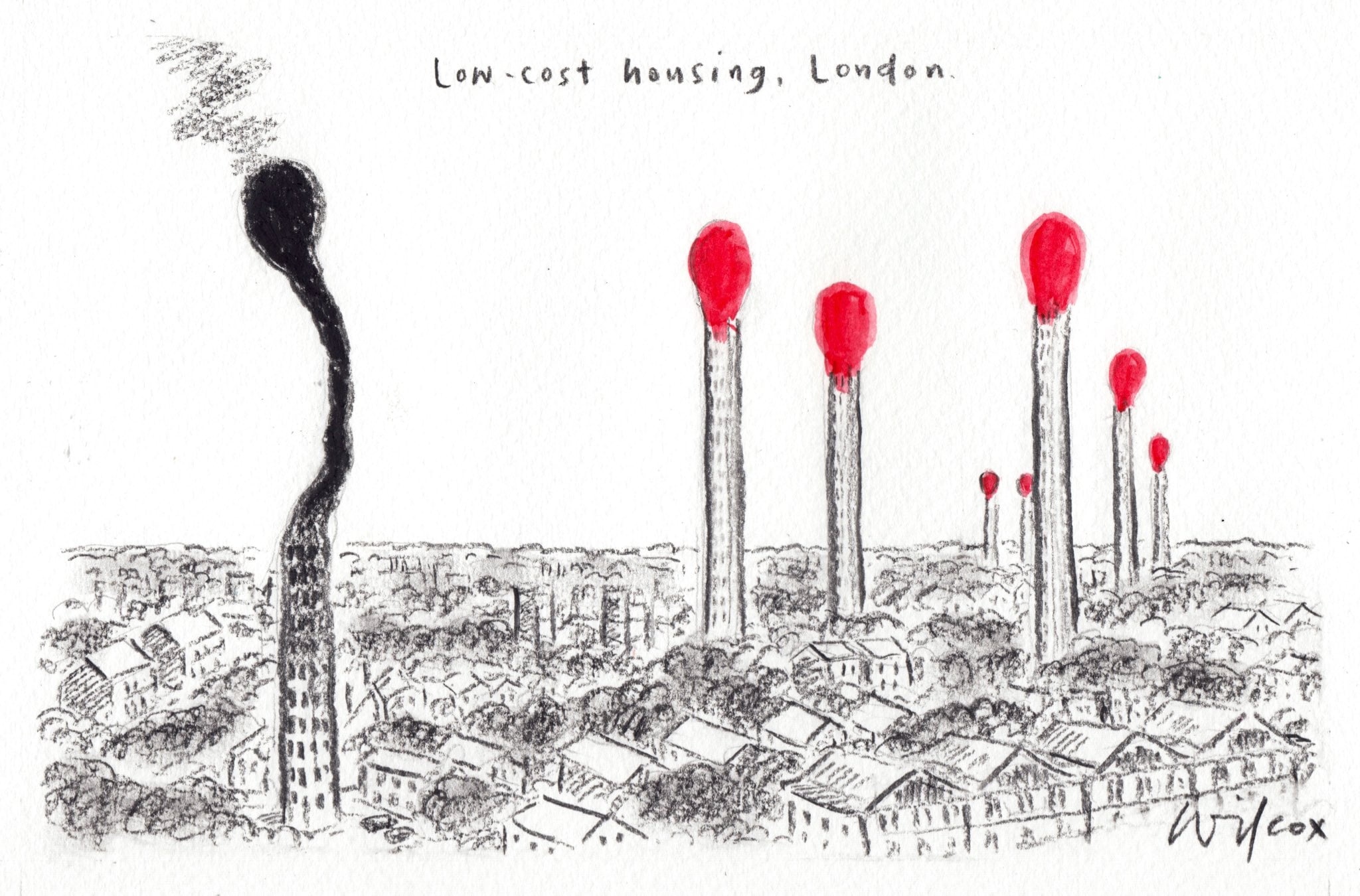
Cathy Wilcox, 2017, ‘Low-cost housing, London’

Winner of the 2017 Amnesty International Media Awards Cartoon category was Cathy Wilcox with ‘Low-cost Housing, London’ for The Age & The Sydney Morning Herald. 

Cathy Wilcox joins the Awards this year as a judge for the same category.

In ‘Low-cost housing, London’, Cathy Wilcox comments on the devastating Grenfell Tower fire – a fire which broke out in June 2017 at Grenfell Tower in London. Grenfell Tower was a building that formed part of Lancaster West Estate, a social housing complex of almost 1,000 homes. The fire claimed the lives of 72 residents and left many without permanent housing. 

What caused the Grenfell Tower fire?

The fire broke out on 14th June, 2017 due to a malfunctioning fridge-freezer on the fourth floor, but quickly spread up to the 24th floor in less than 36 minutes.

The tower underwent a refurbishment in May 2016 to add new exterior cladding, replacement windows and a communal heating system.

The replacement cladding is suggested to be a main cause of the rapid spread of the fire. The cladding was a cheaper alternative called ACM cladding which is made from aluminum sheets and plastic. Another suggested reason for its rapid spread was flammable insulation which pre-dated the refurbishment, and a faulty smoke extraction system. The lack of equipment and building infrastructure needed to support the work of firefighters targeting the blaze is also said to have contributed to the high level of fatalities caused by the fire. Alongside elevators being unfit to assist in helping people escape from the building.

Members of the Grenfell Action Group had been calling for improvements to fire safety measures for years before the Grenfell Tower fire, and had warned their tenant management organisation, Kensington and Chelsea TMO about the possibility of a fire outbreak.

Why is the Grenfell Tower relevant today?

Despite an Inquiry being called into the cause of the fire, in June last year 56, 000 people were still housed in buildings using flammable ACM cladding. 

Right to adequate housing is a human right that must be upheld by governments through legislation, preventative and budgeting measures, particularly to ensure vulnerable groups are housed in places which do not threaten their right to safety.

Climate Change and the Right to Adequate Housing

In Australia a common cause of house destruction is bushfires. In the 2019/2020 bushfires over 3, 094 houses were destroyed. 

Unless we act for climate justice, extreme weather-related disasters and rising seas threaten to destroy homes and ruin people’s ability to earn a living. Unless emissions are reduced significantly, around 600 million people are likely to experience drought and famine as a result of climate change. There’s a direct link between climate change and human rights, including the rights to life, health, food, water and housing.

It is vital that we hold governments to account on providing the right to adequate housing for people around the world.