Pakistan: Drop ludicrous blasphemy charges against eight-year-old boy

Responding to reports that an eight-year-old Hindu boy in Bhong village in Rahim Yar Khan, Punjab has been charged with blasphemy – which can carry a mandatory death penalty – after he was alleged to have urinated in the library of a madrasa (religious school) where religious texts were kept, prompting a mob attack on a local Hindu temple, Rimmel Mohydin, Amnesty International’s South Asia Campaigner, said: 

“Pakistan’s blasphemy laws have long been abused to target minority groups, but this case marks a shocking and extreme departure. As well as ensuring that these ludicrous charges are dropped, Pakistan’s authorities must immediately provide adequate protection for the boy, his family, and the wider Hindu community. Those responsible for the ensuing mob violence must also be held accountable. 

“In the week that marks National Minorities Day in Pakistan, we urge the authorities to urgently repeal this pernicious legislation. Pakistan’s minorities are under sustained attack – little can demonstrate the persecution they face better than an eight-year-old boy being subject to a charge that can carry a mandatory death sentence.” 

According to reports, the boy is currently in protective custody after being released on bail last week, while his family have gone into hiding. Following his release, a local Hindu temple was attacked by a mob, causing members of the Hindu community to flee their homes. Twenty people have so far been arrested in connection with the attacks, and the National Assembly unanimously passed a resolution condemning the attack on the temple. This must lead to meaningful accountability and action. 

Background 

Section 295C of Pakistan’s Penal Code (see page 18 of linked document) carries a mandatory death sentence for blasphemy, though it is not clear under which specific clause the boy has been charged. 

Pakistan’s blasphemy laws are overbroad, vague and coercive, enable abuse and violate Pakistan’s international legal obligations to respect and protect human rights, including freedom of religion or belief and of opinion and expression. See here for further information

Hindus constitute Pakistan’s largest non-Muslim minority, estimated at between two and four per cent of the population. In December 2020, another Hindu temple was set alight in Khyber-Pakhtunkhwa, following authorities halting the construction of a Hindu temple and community centre in the federal capital earlier that year

Activist Communications Team


The Activist Communications Team is a diverse group of activists with a background in communications. We offer support for activist event promotions and assist activists across Australia with content creation and communications dissemination. Our team includes a graphic designer, social media specialist, regional media advisor, editors, event promoters, and communications strategists. We are all committed to human rights work and are eager to help in any way we can!


What are the goals of the Activist Communications Team?  

Our goal is to provide communications support and create successful promotions, so that activists have the tools they need to effectively challenge injustice everywhere.


How can I contact the ACT?

You can request support from any member of the Activist Communications Team by completing & submitting this brief

You can also contact the team via email at activist.communications@amnesty.org.au 


Who are the members of the Activist Communications Team? 

Activist Communications Team Lead- Jillian LaBruzzo
“Hi, my name is Jillian, and I’m the Activist Communications Team Lead. My background is in human rights, politics and communications. I can coordinate with the ACT team to build an effective communications plan. I am always available to help with communications strategising, building event emails and developing newsletters. I can advise on AIA brand and values-based messaging, as well as event promotions planning and acting as a point of reference for any requests that might require social media, content creation, or media. I can be reached at the team inbox, or via my personal email if requested through a content brief.”


Events Promotion & Administration Coordinator- Aakanksha Sahu
“I am Aakanksha Sahu, and I am in charge of administration and events promotions within the Activist Communications Team. My role involves handling logistical/administrative enquiries, as well as managing events promotions online. This includes Facebook marketing on our National Activists page, emails to local supporters in your area, and inclusion onto the People Powered Activist Bulletin, which is managed by our lovely editor Mikaela. I can help direct activists to necessary resources, as well as help them with a promotional plan to suit their needs to increase reach and engagement for their events.”

People Powered Bulletin Editor- Mikaela Leeden 
“As editor-in-chief of Amnesty International’s People Powered Bulletin, I help to highlight the outstanding work of activists around the country and keep our supporters informed about upcoming campaigns, events and opportunities. The People Powered Bulletin is a monthly newsletter that reaches thousands of our activists and supporters throughout Australia and accepts submissions from all our activists. Do you have a campaign you’d like to shine the spotlight on? Upcoming events that you think Amnesty supporters around the country would be interested in? Do you want to uplift people by telling your activism success stories? Contact me today!”

Social Media Specialist- Amin Ali (Remi)
“​My name is Amin Ali (Rémi), from Saudi Arabia & living in Sydney. My role is to assist the AIA Movement with social media needs such as creating and rolling out a social media strategy for, and visual content & moderating the AIA National Facebook Group, including or creating events promotion, creating connection and driving engagement designs for events.”

Regional Media Specialist-  Keely Molony
“I’m here to help you get your message across effectively to your local media outlets and achieve the best media presence possible for future community events and campaigns. Get in touch with me for new media release requests or if you’d like any help with editing or crafting your documents. I’ll also be tracking your media presence, so make sure to keep me updated on your work!”

National Asset Manager- Grace Anderson

“As the National Asset Manager I am your one-stop shop for all things graphics and content. My role is to create content for activists, including, posters, fact sheets, report templates and much more. If you require any visual content for campaigns or events, please feel free to send through a Brief to the Activist Communications Team outlining what you need and by when.”


Before getting in touch with the Activist Communications Team for assistance with promotions, make sure that you’ve submitted a host an event form, for budget approval and support needs. 

Looking for logos or templates? Check out the Brand Activist Resources page

Can’t find what you’re looking for? Contact the Supporter Care Team at activism@amnesty.org.au.

Census: why we need to count all Australians in

There’s a kind of nerdy charm to the Census. Every five years people in Australia take very seriously the opportunity to be counted, to find out who the “average Australian” is, to find out how many people nominate Jedi as their religion.

It’s an essential function of the Australian Bureau of Statistics (ABS) to gather information about us all. It helps State and Federal governments plan for services and for us to understand better the demographic makeup of our cities, regions and remote areas.

But while there have been positive changes to the Census, there are still some glaring ways Australians aren’t being counted in next Tuesday’s Census.

The LGBTQIA+ community for example. There are no questions that encompass sexual orientation, gender diversity, or variations in sex characteristics.

The gender binary is reinforced constantly throughout society today, and particularly in education, so having data that shows the diversity in gender would provide concrete evidence as to why this language is harmful and go a long way to enabling people to express themselves fully and fearlessly.

The fact is that the erasure of these questions from the Census erases the experiences and needs of LGBTQIA+ Australians.

Hannah Wahlsten

It’s well documented that mental health is a significant issue in the LGBTQIA+ community and mental health issues occur at higher rates than the rest of the population. 

Not being able to capture the rainbow community in the Census data has a real and profound effect on being able to access potentially life-saving services.

We need to feel safe with the health professional that we are with and know that we will be safe if we disclose who we are and that they will understand our specific needs 

If the Census asked questions related to sexuality and gender identity, the need for mental health services, as well as other healthcare and social services, that specialise in, and are safe for, LGBTQIA+ experiences, would be legitimised with data as well as the innumerable personal experiences of LGBTQIA+ Australians, and could finally get the funding they deserve. 

It’s not just services such as health and education that rely on Census data – government policy is also often informed by the data the ABS collects. And perhaps even more important than all of this, is the simple fact of visibility.

Let me paint you a picture. You’re young, and slowly realising that the cis/het mould doesn’t fit you right. Schools haven’t given you the support you need to explore this identity and find the vocabulary you’re looking for, and so you’re going at it alone with the aid of your most trustworthy friend: the internet. After Googling, questioning, and Googling some more, you’re feeling like you might have found a label and a community that feels like home. So you Google that, and rather than a Buzzfeed quiz or anonymous blog, you find an ABS website telling you how many people in Australia are just like you. 

It’s broken down by state and you see that you’re really not alone. This vague, anonymous, online community is now so much closer. What you’ve been feeling is real and alive, and it’s been around you all this time. You are counted. When someone questions you, you have a wealth of official data to point to, data which says that we’re all around you, all of you. We’re here and we’re queer and we’re real. That’s what the Census could say, if only we were asked.

If we could break this data down by electorate, people in rural communities in particular would be able to see that they are not the only ones in their region who identify this way, which would help to diminish feelings of isolation. It would also legitimise the need for additional LGBTQIA+ friendly services in small regional towns. 

Someone you know is a member of the LGBTQIA+ community and is or will be affected by this. You may not know who they are, yet, but I’m pretty confident you have a family member, friend, workmate, or gym buddy who has a rainbow identity, and right now they aren’t being counted. They are being told that a big part of their identity, which undoubtedly impacts how they experience the world, is irrelevant, and non-existent. Currently, people you know are in the statistical closet, and they can’t get out unless you join us in telling our Government to #CountUsIn2021.

Hannah Wahlsten is a West Australian-based activist and part of Amnesty International Australia’s Rainbow Network

Media Awards: Spotlight on the 2017 Television Winner

Each year the Amnesty International Australia Media Awards acknowledge those Australian media stories that have presented a fair and balanced report of a human rights issue, highlighted hidden abuses and encouraged an audience’s greater understanding of a human rights issue.

With just over a week left before entries close for this year’s 2021 awards, we’re celebrating winners from previous years’ to demonstrate the importance of a free press.

Media Awards’ 2017 Television Winner 

Winner of the 2017 Amnesty International Media Awards Television category were Elise Potaka, Tim Anastasi and Joel Stillone for their piece ‘Forced to Marry’ for SBS Viceland. 

‘Forced to Marry’ explores the forced marriages of underage girls in Australia, to grooms often twice if not three times their age. 

Article 16(2) of the Universal Declaration on Human Rights (UDHR) says:

Marriage shall be entered into only with the free and full consent of the intending spouses.

In Australia forced marriage was criminalised in 2014, giving police more power to persecute the families and religious leaders engaging in the practice, however, while reporting of forced marriages has increased, convictions are still not common. ‘Forced to Marry’ asks what solutions are out there for girls being forced into marriages by the Australian government, in schools and within the community.

It follows the story of Bee Al Darraj who left her family behind to escape being forced into an engagement, and her connection to her sisters who were forced into marriage at around age 13 to 26 year old and 32 year old men. ‘Forced to Marry’ is an important insight into human rights abuses in Australia and the communities who are affected by them.

Television Judge of the 2021 Media Awards, Stela Todorovic says of the importance of free press:

The world we live in has never been more uncertain and that is why it is more important than ever to secure freedom of press. The pandemic, the vaccine race, the lockdowns. We deserve to know the origins of the pandemic, we deserve to know who is making decisions and what is driving them. We need journalists to dig deep and get to the bottom of what really goes on behind closed doors.”

Stela Todorovic

Submission: Raising the Minimum Age of Criminal Responsibility (ACT)

Amnesty International Australia and Marque Lawyers have made a joint submission to the Discussion Paper released by the ACT Government on how a higher minimum age of criminal responsibility could be implemented in the ACT.

The age of criminal responsibility is the age in which a child is considered by law to have understood that their actions were wrong and can face criminal charges. All Australian states and territories have this age set at only 10 years old. This means that across Australia, police have the power to arrest, strip-search and imprison children who are only 10 – that’s typically a child in year three or four at primary school.

The ACT Government must do all it can to keep children out of prison. This doesn’t mean children who commit crimes aren’t held responsible, but alternatives – such as diversion programs – must be investigated and resourced.

The amendments to youth justice legislation in the ACT that Amnesty International and Marque Lawyers strongly recommends are:

  • That the minimum age of criminal responsibility be raised from 10 to 14 years of age, with no exceptions for young people this age
  • That the presumption of doli incapax be abolished , and alternatives such as ‘developmental immaturity’ be enshrined in legislation
  • That there be increased allocation of government funding to Indigenous community-led and controlled organisations, to support culturally appropriate, place-based, Indigenous designed and led preventative programs to address the needs of Indigenous young people
  • Police powers be revised to reflect the increased minimum age of criminal responsibility

An Addendum to the submission was also provided by the Amnesty’s ACT/SNSW Activism Leadership Committee.

Belarus Explainer: Why is Belarus in the News?

You may have noticed a lot of coverage of Belarus in the last month, particularly after Belarusian Olympic 200m sprinter Krystsina Tsimanouskaya was granted a humanitarian visa to stay in Poland after refusing an order to return home from the Belarusian government. 

August 2020 Protests

In August of 2020, mass protests erupted across Belarus following a heavily contested election result. 

The highly controversial election of August 2020, saw hundreds of thousands of Belarusians become involved in political protests across the nation. President Lukashenka’s regime has governed Belarus for more than 26 years but has recently faced significant resistance from an opposition coalition led by presidential candidate Svyatlana Tsikhanouskaya. In the 2020 election Lukashenka’s government was said to have received 80% of the votes. However, these results were disputed, and there are widespread concerns of electoral fraud. 

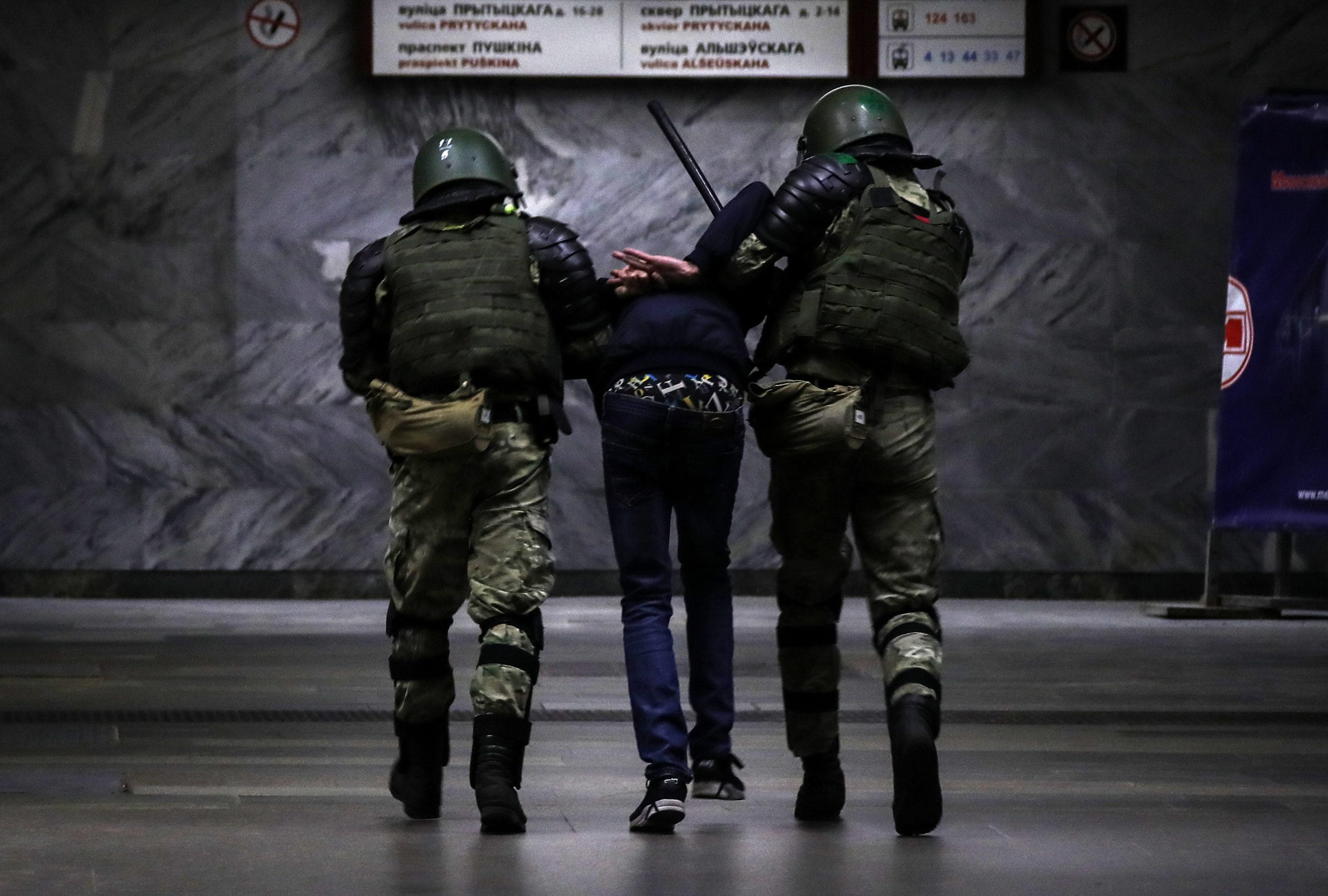
Opposition to Lukashenka and the election remains overwhelmingly peaceful; beyond marches and protests, many demonstrate dissent by singing, performing poetry, picketing or wearing colours of ‘opposition’. Many protesters were actually only mobilised by these shocking reports of violence, torture and arbitrary imprisonment at the hands of government forces.

Freedom of Press Since the Protests

Following the protests there have been increasing efforts from the Belarusian government to curtail opposition and dissent through the targeting of individuals and media outlets. 

Independent journalists have been harassed, arrested, tortured and imprisoned, while media outlets have had their licences suspended or been prevented from carrying out their work. The government has used smear campaigns, political arrests and raids on homes and offices to instil a fear of persecution for many journalists. International outlets have been unable to report uncensored material and internet blackouts have been used to prevent efficient communication.

In May of this year online independent media organisation TUT.by had its licence revoked and was forced to discontinue operating after it was accused of publishing ‘prohibited information’. On May 18th the TUT.by offices were raided by police and several journalists were arrested.

Following the raid Amnesty International’s Senior Campaigner on Belarus, Aisha Jung, said

“This is a cowardly step taken by a government which fears truth and resorts to brutal measures to suppress human rights. It must end its suffocating crackdown on independent voices and immediately reverse the blocking of TUT.by.” 

“The blocking of the TUT.by website is a full-scale assault on the right to freedom of expression and media freedom in Belarus, and leaves a gaping wound in the country’s access to independent sources of information. The scope of this attack cannot be underestimated since about half of Belarusian internet users refer to TUT.by for news, forums and other services.”

Why is a Free Press Important?

Now more than ever, securing a free press is important in Belarus and beyond. By supporting a free press we hold governments accountable and ensure human rights abuses are recorded and challenged. A free press is a vital part of a just and equal society.

Authoritarianism is on the rise, often encroaching on basic human rights, seemingly in the interest of national security. Press freedom has never been more important in delivering verified facts and truth to protect human rights and vulnerable communities around the globe.

Fauziah Ibrahim, Television Judge of the Amnesty International Australia Media Awards 2021

You can support journalists working to maintain a free press by entering the Amnesty International Australia Media Awards 2021, which are held to recognise excellence in reporting of human rights issues in the Australian media.

Each year the awards acknowledge those Australian media stories that have presented a fair and balanced report of a human rights issue, highlighted hidden abuses and encouraged an audience’s greater understanding of a human rights issue.

If you aren’t a journalist, cartoonist, photographer or presenter you can also follow the awards through our social media channels, or nominate your favourite journalists to take part.

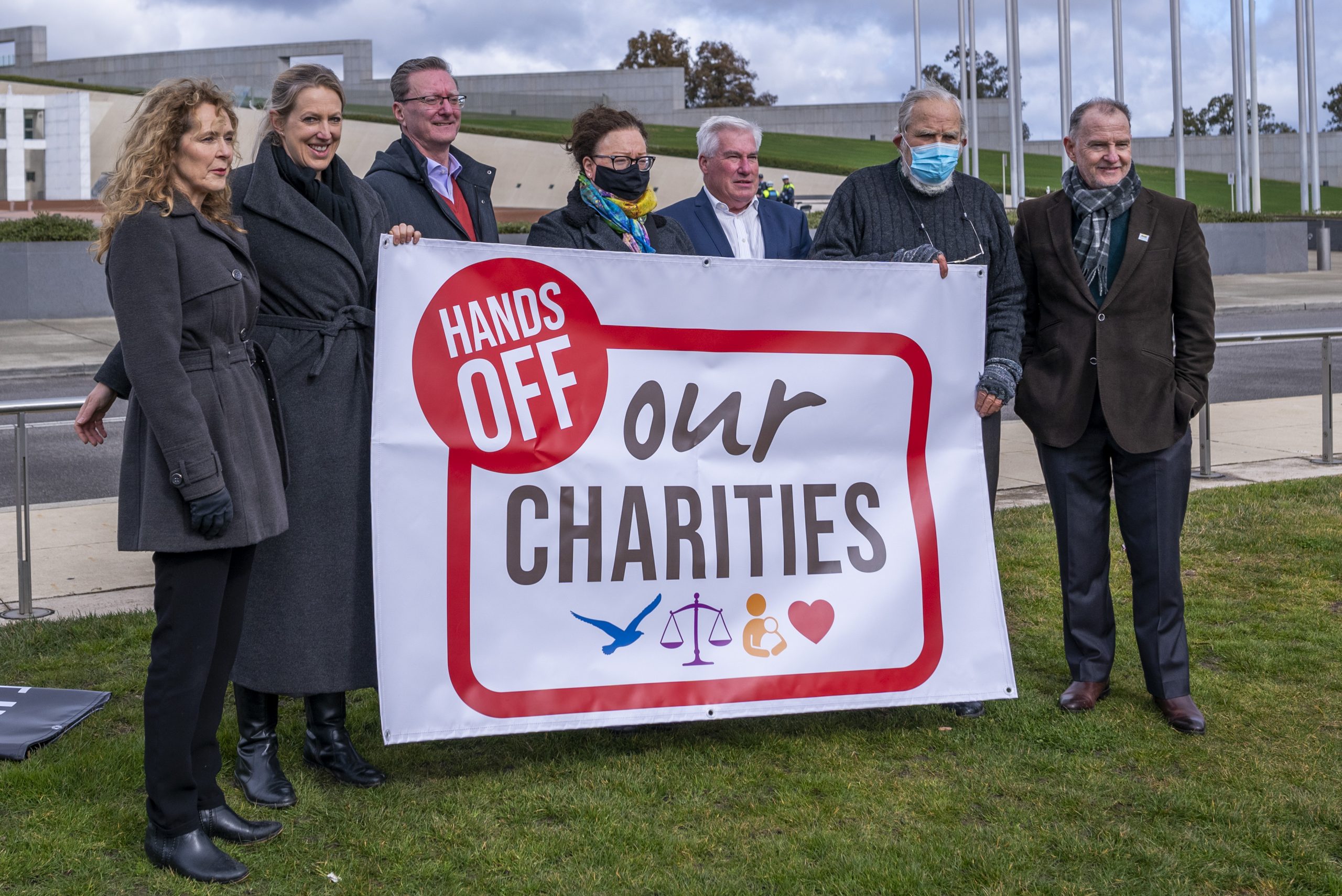
Charities Gather at Parliament House to Condemn New Federal Laws That Shut Them Down for Speaking Out

Morrison Government regulations introduced into the Senate today will silence charities representing millions of Australians

Leaders of Canberra-based charities including Anglicare Australia, St Vincent de Paul Society  National Council of Australia, The Benevolent Society, Alliance for Gambling Reform, the ACT Council of Social Service, Public Health Association of Australia and Catholic Social Services have come together today at Parliament House to call on Prime Minister Scott Morrison to immediately withdraw regulations that target and shut them down for advocating on behalf of the communities they represent on matters of public interest.

They are backed by a broader alliance of Australia’s most well-established and respected charities, including Baptist Care Australia, Save the Children, Oxfam Australia, Amnesty, The Fred Hollows Foundation, Caritas Australia, WWF-Australia, ACOSS and People with Disability Australia.

The Morrison Government’s amendments to Governance Standard 3 of the Australian Charities and Not-for-profits Commission (ACNC) Regulations, sponsored by Assistant Treasurer Michael Sukkar, give the Charities Commissioner extraordinary powers to deregister a charity:

  • for the most minor of offences, for example, if a staff member blocks a footpath at a public vigil
  • where he believes it’s likely that a minor offence may occur in the future 
  • where he believes that something that could be dealt with as a minor offence has occurred, even if no charge has been made by police
  • preemptively, if he believes that the charity lacks “internal control procedures” to prove compliance with the regulations, or that it has not adequately documented these procedures. 

To ensure compliance with these unreasonable laws, charities’ time and donations will be tied up in unprecedented red tape and legal fees, depriving communities of vital support.

At today’s media event, Anglicare Australia Executive Director, Kasy Chambers, said, “Charity is not just about helping people in poverty. It’s about creating a country where poverty doesn’t exist. That’s why we need to be able to stand up for the people we work with.

“But these rules are designed to stop organisations like Anglicare Australia from speaking up for our communities by punishing us – and shutting us down for arbitrary reasons. They are not just an attack on charities. They are an attack on democracy. We’re calling on the Government to withdraw these changes – and put an end to these attacks for good.”

St Vincent de Paul Society National Council of Australia CEO, Toby O’Connor, said, “The administrative burden of monitoring all our activities is enormous and not warranted. Unlawful acts are already covered by existing criminal law. These changes increase red-tape for no good reason.”

Gordon Ramsay, CEO of the Alliance for Gambling reform said, “Especially at the moment, with all of the pressures on our community and the charities sector, these new regulations add nothing of value. Instead they will damage our charities and the people we support. They tighten red tape and controls when we need to focus our energy on working for a stronger community.” 

Dr Emma Campbell, CEO of the ACT Council of Social Service said, “ACTCOSS’s members advocate on behalf of some of the most disadvantaged members of our community. It is important that our charities are protected when they are advocating for vulnerable Australians including Aboriginal and/or Torres Strait Islander peoples, veterans, older people, people with disability and children.

This change to the ACNC regulations is an attack on the charities who fight for Australia’s most vulnerable communities. We will strongly oppose these amendments.”

Lin Hatfield Dodds, CEO of The Benevolent Society said, “The Benevolent Society is strongly opposed to these proposed changes in regulations that limit freedom of speech by people working in the not-for-profit sector.

“We know that positive social change comes when people are heard. Regulations designed to stifle people’s voices stifle our mission to create a just society where all Australians can live their best life. With these regulations in place, the decision of one staff member to attend a rally could undo an entire charitable organisation, putting people out of jobs and leaving clients without support. We shouldn’t have to operate under the weight of such severe consequences. We shouldn’t have to be afraid that our advocacy work for Australians or the decisions of a few could result in deregistration.”

Charities unable to attend the Parliament House event due to COVID restrictions have also voiced their strong opposition to the regulations.

The Reverend Tim Costello AO, chair of the Community Council for Australia and former CEO of World Vision Australia, said, “Charities have always spoken up for their communities, and have done so freely, openly and honestly. They play a vital role in civil society, holding government to account for policies on key issues affecting the lives of millions.

“These regulations will stifle legitimate advocacy by charities and the voices of the people they represent, including the most vulnerable. They have no parallel in business or any other sector of society. Giving the Charity Commissioner power to shutter a charity for a minor offence by a member is the equivalent of the Electoral Commissioner having discretion to de-register the Liberal Party because a Liberal Party member damages someone’s lawn when putting up a sign.

“The laws are antidemocratic and authoritarian. They must be abandoned.”

Dr Cassandra Goldie, CEO of the Australian Council of Social Service, the peak body for the community sector, said: “Our sector is made up of organisations that represent people who are too often left out of public debate and provide support to people in poverty or facing disadvantage. Our shared commitment is to ensure that we live in a fairer and more decent society, where no-one is left behind. To achieve this, it is essential that we can fully participate in public debate and action. 

“It is at the heart of a healthy democracy that communities are free – and encouraged by their governments – to speak up, and act in the interests of people who are less powerful in society. These regulations do exactly the opposite. They fly in the face of the Federal Government’s purported commitment to free speech, and are undemocratic. They single out charities, and are an attack on our ability to perform our vital role in Australian society.” 

Baptist Care Australia Executive Director, Nicole Hornsby, said, “We are concerned that these proposed changes limit the capacity for charities to undertake legitimate and lawful advocacy. The breadth of their application to include such subjective measures as a ‘belief’ that they ‘may’ commit a minor offence is totally unreasonable.”

Save the Children Australia CEO, Paul Ronalds, said: “Advocacy has always been critical for long-lasting change, but the retreat of democracy and increasing political populism worldwide means the role of charities as global advocates and protectors of human rights has never been more important. The changes the Australian Government is proposing are extremely concerning because they threaten to undermine our most effective tool for achieving impact for the world’s most vulnerable children and their families.” 

Amnesty International National Director, Sam Klintworth, said: “It’s chilling to think that if one of our hundreds of thousands of supporters were to be found guilty of a minor civil disobedience offence at a protest for example, that Amnesty International Australia’s existence could be in jeopardy, because that’s exactly the kind of scenario this legislation would allow.

“Organisations like Amnesty exist to hold authorities accountable, and if we’re not able to do the job our supporters want us to, then that augurs badly for the human rights of everyone in this country.”

WWF-Australia CEO, Dermot O’Gorman, said: “This tumultuous period has taught us that in a crisis we are all in this together. Australian charities are doing vital work to care for communities and protect the environment in the face of enormous threats, from climate change to devastating bushfires to the biodiversity extinction crisis. These regulations are ill-conceived, adding unnecessary red tape and making this work more difficult. We urge the Government to reconsider.”

Caritas Australia CEO, Kirsty Robertson, said, “Our supporters expect us to speak up when we see injustice affecting communities in Australia and overseas. These regulations will effectively silence Caritas Australia and our supporters from doing this – how can that be healthy for democracy in Australia?”

Oxfam Australia Chief Executive, Lyn Morgain, said: “Oxfam is deeply concerned about the damage these new regulations could do to our sector and the communities we work to support. There is zero evidence that these new regulations are necessary – with adequate protections against things like fraud already in place.

“If passed, this legislation would mean extra administrative costs for already stretched not-for-profits, which will mean less money to do the work our supporters want us to do and a reduced impact in creating positive social change. We urge Senators to consider the very real impact of this legislation on their own constituents and to act in their best interests.”

The Fred Hollows Foundation CEO, Ian Wishart, said: “Fred Hollows was well known for speaking out and demanding action from our political leaders. It’s a key role of charities to advocate for those who don’t have a voice. These laws limit the ability of charities to raise important issues and hold people in power to account.”People with Disability Australia CEO, Sebastian Zagarella, said: “These proposed laws must not pass. Advocacy is at the core of what we do and we should not have to be afraid our charity will be deregistered for advocating for people with disability.”

Examples of actions and omissions triggering de-registration.

A charity could be deregistered if:

  • It organises a small Palm Sunday vigil where people congregate in front of Town Hall and do not move on when asked to; or an employee of the charity does not move on when asked to.
  • An employee attends a rally organised by another group opposing the high rate of removal of Indigenous children from their families and temporarily obstructs traffic.
  • A staff member erects a temporary placard on the lawns of Parliament House at a rally calling out sexual assault of women, causing minor damage to the turf.
  • Staff lead a group delivering a petition to the office of the Minister for Homelessness calling for him to increase social housing, and the group refuses to leave until they see him.
  • It engages in lawful activity, such as tweeting to promote a rally where farmers plan to peacefully and temporarily gather in the lobby of a multinational fracking company’s office.
  • It sets up an email group for a local community which, without the charity’s knowledge, uses it to plan a peaceful protest involving minor trespass, like blocking the entranceway to a liquor chain store being built in a dry community against the community’s wishes. 
  • It fails to put in place, or document, actions that control how staff and volunteers behave. For example:
  • Members of a church congregation book a room in a church building to plan a peaceful vigil inside the Immigration Minister’s office to support asylum seeker children. The church charity failed to tell the members that the rooms were not to be used to plan peaceful protests involving minor trespass, and could be deregistered. 
  • A charity prints stickers and posters as part of a campaign to raise JobSeeker, and gives them to volunteers, who, without the charity’s knowledge, stick them to stop signs and walls of buildings. The charity failed to tell volunteers not to use them in this way, which involves minor damage to property, and could face deregistration. 
  • A volunteer posts details on a charity’s Facebook page of another organisation’s gathering that has not been authorised by police, and will involve temporarily blocking a road. Since the charity did not tell volunteers to check whether the event was authorised before posting, and did not review the posts, it could be deregistered. 
  • A charity does not have a documented policy on which staff are permitted to use its social media accounts, or a protocol for approval if staff wish to tweet about a peaceful rally, and it therefore may be shut down by the regulator.
Ukraine: Authorities must conduct effective investigation into suspicious death of prominent Belarusian exile

Responding to the death of prominent Belarusian exile Vital Shyshou (Vitaly Shishov), who was found hanged in a park in Kyiv on the morning of 3 August, and whose death is being investigated as a possible murder related his political activism, Marie Struthers, Amnesty International’s Director for Eastern Europe and Central Asia, said: 

“We welcome the launch of an investigation into the tragic death of Vital Shyshou. The circumstances around his death suggest it is linked to the persecution of peaceful protesters by the Belarusian authorities. The Ukrainian authorities must ensure that its findings are made public and if anyone is reasonably suspected of criminal responsibility they must be brought to justice in a fair trial.  

“Many Belarusians and people from other countries in the region escaping political repression have fled to Ukraine. It is critically important that the Ukrainian authorities take tangible steps to ensure their safety. It is equally important that the rest of the world pays attention to the ongoing human rights violations in Belarus. 

“The track record of Ukraine’s law enforcement agencies in investigating murders and attacks on foreign nationals seeking refuge on Ukrainian territory has, up to now, been poor. We hope this case will be different.” 

Background 

Vital Shyshou, the head of the Belarusian House in Ukraine, a non-profit helping people fleeing Belarus out of fear of political reprisals, was found hanged in a park, not far from his place of residence after he went missing during a morning jog. His mobile phone and personal belongings were with him. 

The police have opened an investigation, which is considering the possibility that his death was a case of “murder disguised as a suicide”. According to Shyshou’s colleagues, he had noticed that he was being watched. They also state that they had received warnings of sinister plans by Belarusian security services, which Shyshou brushed aside. 

A number of political exiles have been killed or survived assassination attempts in Ukraine in recent years, including Belarusian journalist Pavel Sharamet (Sheremet) who was killed in 2016, former Russian State Duma Deputy Denis Voronenkov who was killed in 2017, Chechen refugee Adam Osmayev who survived two assassination attempts in 2017 and his wife Amina Okueva, who was killed the same year. The Ukrainian authorities have been heavily criticized by human rights organizations for failing to conduct effective and conclusive investigations. 

Saudi Arabia: Authorities ramp up repression after G20 hiatus

Saudi Arabian authorities have brazenly intensified the persecution of human rights defenders and dissidents and stepped up executions over the past six months, following a lull in prosecutions of activists and a sharp decline in use of the death penalty during Saudi Arabia’s G20 presidency last year, said Amnesty International in a new briefing published today.

Saudi Arabia’s post-G20 crackdown on expression  documents how since Saudi Arabia handed over the G20 presidency, authorities have prosecuted, sentenced or ratified sentences of at least 13 people, following grossly unfair trials before the Specialized Criminal Court (SCC). After an 85% fall in recorded executions in 2020 at least 40 people were put to death between January and July 2021 – more than during the whole of 2020.

“As soon as the G20 spotlight on Saudi Arabia faded the authorities resumed their ruthless pursuit of people who dare to express their opinions freely or criticize the government.  In one case, the Specialized Criminal Court sentenced a humanitarian worker to an outrageous 20 years in prison for a simple tweet in which he expressed criticism of economic policies,” said Lynn Maalouf, Deputy Director for the Middle East and North Africa at Amnesty International.

“The brief respite in repression coinciding with Saudi Arabia’s hosting of the G20 summit last November indicates that any illusion of reform was simply a PR drive.”

In February 2021, Crown Prince Mohammed bin Salman vowed that Saudi Arabia would adopt new laws and reform existing ones to “bolster the principles of justice, enforce transparency” and “protect human rights”. He outlined plans to address four key laws: a Personal Status Law, Civil Transactions Law, Penal Code for Discretionary Sentences and Law of Evidence. The authorities have yet to publish any information about the impact of these promised reforms.

Yet instead of any progress on human rights, the SCC, Saudi Arabia’s notorious counter-terror court, resumed trials, handing down prison terms after grossly unfair trials. In at least three cases, people who had already finished serving lengthy prison sentences for their peaceful activism were either re-arrested, re-sentenced in new cases or had their sentences increased. In June 2021, one young man from the Shi’a minority was executed following the ratification of a death sentence issued three years earlier based on a grossly unfair trial.

Trials before the SCC are intrinsically unfair, with defendants subjected to flawed procedures that violate both Saudi and international law. In many cases defendants are held incommunicado and in solitary confinement for months at a time and denied access to lawyers. The court routinely condemns defendants to lengthy prison terms and even death sentences, following convictions based on “confessions” extracted through torture.

In April 2021 the SCC sentenced humanitarian worker Abdulrahman al-Sadhan to 20 years in prison followed by a 20-year travel-ban, for expressing satirical views of government policies on Twitter. The charges were based on vague counter-terrorism provisions, some of which criminalize peaceful expression.

In another example of the SCC at work, human rights activist Israa al-Ghomgham was sentenced to eight years in prison and an eight-year travel ban in February 2021, for charges related to her peaceful activism and participation in anti-government protests.

Mohammad al-Rabiah, who was arrested in May 2018 for supporting a campaign for women’s right to drive in Saudi Arabia, was also sentenced in April 2021 by the SCC to six years in prison, followed by a six-year travel ban. The charges against him included: “Seeking to disrupt social cohesion and weaken national unity” and “authoring and publishing a book containing suspicious views.”

Even human rights defenders who were released from detention continue to face judicially imposed travel bans and social media bans. The long-awaited releases of prominent women human rights defenders Loujain al-Hathloul, Nassima al-Sada and Samar Badawi in 2021 were marred by restrictive conditions. These included five-year travel bans, and a risk of re-arrest at any moment as their suspended sentences have not been quashed.

All human rights defenders released after serving prison sentences are forced to sign pledges, which often include bans on public speaking, human rights work or use of social media. These conditions are violations of the rights to freedom of expression, association and peaceful assembly.

During 2020, recorded executions in Saudi Arabia dropped by 85%. Immediately after Saudi Arabia’s presidency of the G20 ended, executions resumed with 9 people executed in December 2020 alone. At least 40 people were executed between January and July 2021 – more than the 27 executed in the whole of 2020. In many cases executions took place following convictions in grossly unfair trials, marred by claims of torture during pre-trial detention leading to forced “confessions” which the prosecution systematically failed to investigate.

In June 2021 Mustafa Darwish, a young Saudi Arabian man from the Shi’a minority, was executed following his conviction by the SCC in 2018 on a string of terror-related offences, following a grossly unfair trial. He told the judge in one trial session: “I was threatened, beaten and tortured into giving a confession… I confessed in fear for my life”.

“Saudi Arabia’s plans for limited legislative and human rights reforms mean nothing while executions, unfair trials, and the relentless punishment of human rights defenders, activists and journalists continue. We urge the UN Human Rights Council to establish a monitoring and reporting mechanism on the human rights situation in Saudi Arabia,” said Lynn Maalouf.

“If the Saudi authorities want to show they are serious about respecting human rights, a first step would be to immediately and unconditionally release all human rights defenders detained solely for peacefully exercising their human rights, and ensure their convictions are quashed and all remaining penalties lifted.”

At least 39 individuals are currently behind bars for their activism, human rights work or expression of dissent in Saudi Arabia, according to Amnesty International’s research.

Belarus: Once a showcase of the country’s success, sport is now a battleground for reprisals

Once national heroes, many Belarusian athletes have sacrificed their careers and their freedom by daring to speak out against human rights violations in their country, Amnesty International said today in a new briefing, part of the organization’s #StandWithBelarus campaign. Earlier today Belarusian Olympic athlete Krystsina Tsimanouskaya asked for asylum at the Polish embassy in Tokyo after the Belarusian authorities tried to forcibly return her to homeland. 

Athletes interviewed by Amnesty International said that they had been singled out for punishment because sport is particularly important to the President, Alyaksandr Lukashenka, a keen amateur ice hockey player who until December 2020 personally headed the Belarusian National Olympic Committee. 

“Belarus’s sporting administration has been subject to direct government control under Alyaksandr Lukashenka. Athletes are favored by the state and honoured by society, and it is not surprising that athletes who speak out find themselves a target for reprisals,” said Heather McGill, Amnesty International’s Eastern Europe and Central Asia Researcher. 

In August 2020, more than 1,000 athletes signed an open letter calling for new elections, an end to torture and other ill-treatment, and a stop to arrests of peaceful demonstrators. The government’s retaliation was not long in coming. 

According to the Sports Solidarity Foundation, an NGO set up to support athletes who suffer reprisals because of their political views, a total of 95 athletes have been detained for taking part in peaceful protests, seven of them have been charged with political offences for their peaceful opposition to the government, and 124 have suffered other forms of repression including 35 athletes and trainers who have been dropped from the national team. 

Three times Olympic medalist, Alyaksandra Herasimienia, who has been running swimming training schools for Belarusian children for the last two years after quitting competitive swimming, felt compelled to speak out on social media and was faced with a dilemma: 

“I had the choice to speak out or stay silent. We rent swimming pools from the state to hold our courses. All swimming pools are state-owned in Belarus, and therefore I understood if I spoke out my colleagues would suffer and the children too. At first, I didn’t know what to do, but after a few days I realized that I couldn’t stay silent,” she recalls speaking to Amnesty International. Sure enough, within a matter of days, she lost all her contracts with swimming pools across Belarus. 

Alyaksandra went on to head the Sport Solidarity Foundation which has successfully lobbied the International Olympic Committee to demand the replacement of Alyaksandr Lukashenka as head of the national Olympic Committee and has ensured that a number of international sporting events have not been held in Belarus. 

On 2 April 2021, the Belarusian Investigative Committee announced that it had opened a criminal case against Alyaksandra Herasimienia and her colleague Alyaksandr Apeykin, the Director of the Sport Solidarity Foundation. They have been accused of “inciting actions aimed at damaging the national security of Belarus,” a crime punishable by up to seven years’ imprisonment. 

Yelena Leuchanka, one of the best-known athletes in Belarus, is a two-time Olympic champion basketball player. She felt compelled to speak out about what was happening in Belarus by signing the open letter and posting her opinions on social media. On 30 September 2020 she was arrested at Minsk airport as she was about to leave for treatment of a sporting injury in Greece. She spent 15 days in the notorious Akrestsina detention centre in Minsk and told Amnesty International that her cell was singled out for particularly harsh treatment: 

“On the first night we had mattresses, water and the toilet flushed, but two days later everything kicked off. After breakfast, a guard came in and ordered us to roll up our mattresses…Initially we thought that they had removed the mattresses to air them and to get rid of the fleas and bedbugs, but they never gave them back to us.” 

She spent 15 days in a four-person cell, most of the time with five occupants. Forced to sleep on the metal frames of the beds, they attempted to ease the discomfort with clothing, newspapers and sanitary towels. They were told by the director of the detention centre that it was deliberate “to make sure that they did not want to return.” 

“Belarusian sportspeople have paid a high price for daring to speak out and we call on everybody to show solidarity with them by joining our action. On 9 August, the Belarusian Sport Foundation are launching their on-line marathon in support of Belarusian athletes, and we encourage everyone to stand in solidarity with persecuted Belarusian athletes,” said Heather McGill.