Lebanon: One year on from devastating Beirut explosion, authorities shamelessly obstruct justice

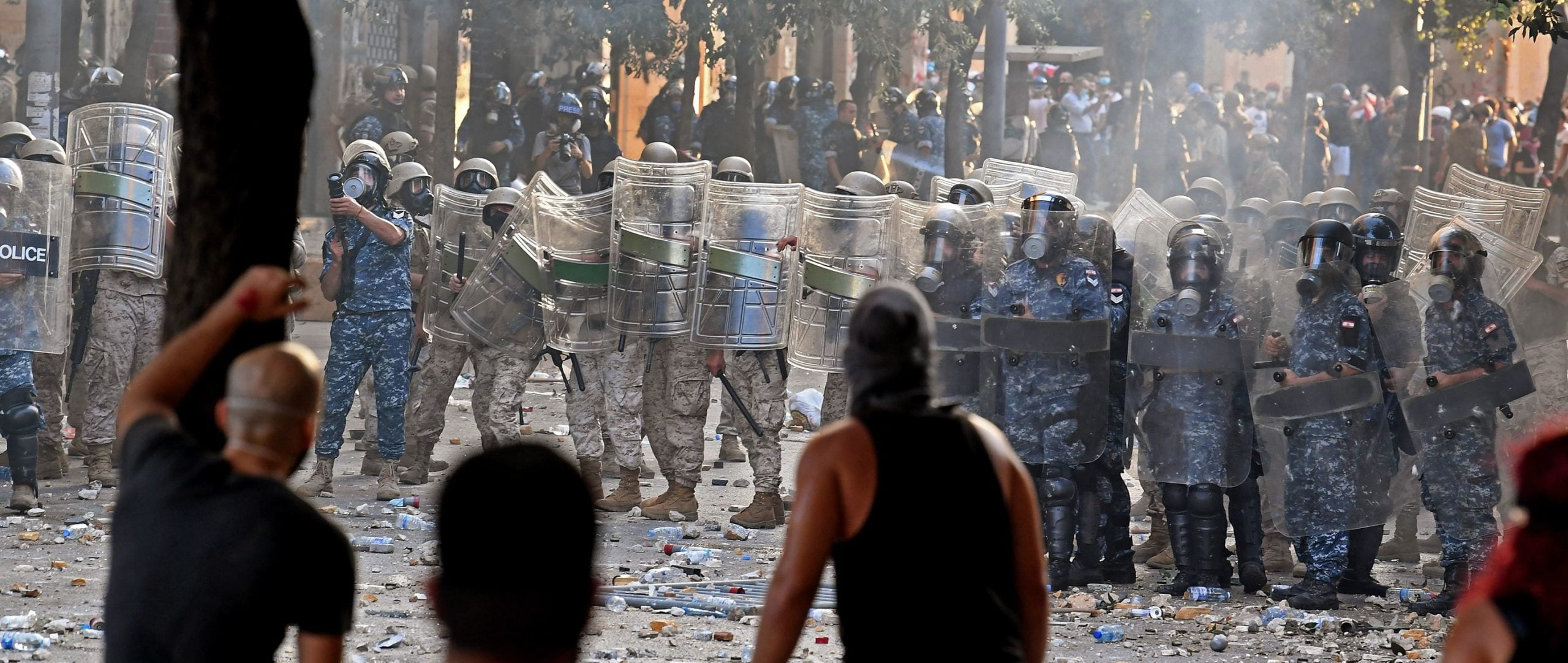
Lebanese authorities have spent the past year shamelessly obstructing victims’ quest for truth and justice following the catastrophic port explosion in Beirut, said Amnesty International ahead of the one-year anniversary of the blast.  

More than 217 people were killed and 7,000 injured when 2,750 tons of ammonium nitrate exploded in Beirut’s port on 4 August 2020. The blast displaced 300,000 people and caused widespread destruction and devastation, damaging buildings up to 20km away. 

Throughout the year, the Lebanese authorities’ relentless efforts to shield officials from scrutiny have repeatedly hampered the course of the investigation. Authorities dismissed the first judge appointed to the investigation after he summoned political figures for questioning, and have so far rejected the new investigative judge’s requests to lift MPs’ immunity and to question senior members of the security forces in connection with the tragedy.  

“The Beirut blast, one of the largest non-nuclear explosions in history, inflicted widespread devastation and caused immense suffering. Lebanese authorities promised a swift investigation; instead they have brazenly blocked and stalled justice at every turn, despite a tireless campaign for justice and criminal accountability by survivors and families of victims,” said Lynn Maalouf, Deputy Director for the Middle East and North Africa at Amnesty International.  

“The Lebanese government tragically failed to protect the lives of its people, just as it has failed for so long to protect basic socio-economic rights. In blocking the judge’s attempts to summon political officials, the authorities have struck yet another blow to the people of Lebanon. Given the scale of this tragedy, it is astounding to see how far the Lebanese authorities are prepared to go to shield themselves from scrutiny.” 

As the first anniversary of the blast approaches, deeply traumatized residents of Beirut are still reeling from its catastrophic impact. 

Mireille Khoury, whose 15-year-old son Elias died of injuries sustained in the explosion, described the horrific events of that day to Amnesty International:  

“The day of 4 August seemed like the end of the world. We thought it was just a fire… I passed out and then woke up to find my house in ruins. My daughter asked me what happened. She was injured and I was injured too. I rushed outside and found my son on the staircase injured and covered with blood… On that day, they ruined our lives,” she said  

“If Lebanese authorities allow this crime to pass without accountability, they will go down in history in the most horrendous manner,” she said, adding that she believes an international investigation is the only means to deliver justice.  

Leaked official documents indicate that Lebanese customs, military and security authorities, as well as the judiciary, had warned successive governments of the dangerous stockpile of explosive chemicals at the port on at least 10 occasions in the past six years, yet no action was taken. The President also stated that he had knowledge of the danger but had “left it to the port authorities to address.”  

Despite this, MPs and officials have been claiming their right to immunity throughout the investigation. This tactic has been used repeatedly in a decades-long context of post-conflict amnesty in Lebanon, effectively shielding suspected perpetrators of serious crimes under international law, and denying thousands of victims any form of acknowledgment, let alone justice. 

Obstruction of justice  

On 10 December 2020, Judge Fadi Sawan, the first investigative judge appointed, charged former Finance Minister Ali Hassan Khalil, former Public Works ministers Youssef Fenianos and Ghazi Zeaiter, and caretaker Prime Minister Hassan Diab, with criminal “negligence.” All refused to appear before the judge. Hassan Diab decried the decision as a violation of the constitution. Ghazi Zeaiter and Ali Hassan Khalil filed a lawsuit with the Court of Cassation to remove Judge Sawan from the investigation, citing immunity for MPs from criminal prosecution.  

In response, Judge Sawan suspended the investigation on 17 December 2020 for nearly two months. Shortly afterwards on 18 February 2021, Lebanon’s Court of Cassation dismissed Judge Sawan. The decision to remove Judge Sawan was received with great anger by the families of victims, who took to the streets condemning political interference in the probe. 

On 2 July 2021, the new judge assigned to the case, Judge Tarek Bitar, submitted a request to parliament to lift parliamentary immunity for MPs Ali Hasan Khalil, Ghazi Zeaiter and Nouhad Machnouk, along with several other high-ranking officials.  

In response, 26 MPs from the blocs of Speaker of Parliament Nabih Berri, Amal Movement, Hezbollah, and Future Movement, signed a petition requesting the launch of a parallel proceedings in an attempt to avoid interrogation by Judge Bitar. Six MPs later withdrew their signatures, following the outcry on social media from victims’ families and civil society activists.  

In a separate move, the Minister of Interior rejected a request by Judge Bitar to question the head of General Security, Abbas Ibrahim, one of the country’s top generals. The judge is appealing the decision. In recent more positive moves, both the Beirut and Tripoli bar associations have lifted immunities from officials who are also lawyers – but parliamentary immunities, to date, remain in place.  

Granting immunity to political officials directly contradicts Lebanon’s obligations under the UN 2016 Minnesota Protocol which aims to protect the right to life and advance justice, accountability for unlawful deaths. The protocol identifies a potentially unlawful death as occurring “where the State may have failed to meet its obligations to protect life”. In such cases, states have a duty to hold perpetrators accountable, and impunity stemming from “political interference” or “blanket amnesties” directly contradicts that duty.  

Amnesty International stands with families of victims in calling on Lebanese authorities to immediately lift all immunities granted to officials, regardless of their role or position. 

In June, Amnesty International wrote to the UN Human Rights Council with a coalition of over 50 Lebanese and international organizations, calling for an international investigative mission, such as a one-year fact-finding mission, into the Beirut blast. The letter highlighted the procedural and systemic flaws which prevent Lebanon from meeting its international obligations to provide redress to victims. 

“The weeks of protests by survivors and families of victims are a stark reminder of what is at stake. Their pain and anger have been exacerbated as, time and time again, authorities obstruct their right to truth and justice,” said Lynn Maalouf. 

“The UN Human Rights Council must heed their call and urgently set up an investigative mechanism to identify whether conduct by the state caused or contributed to the unlawful deaths, and what steps need to be taken to ensure an effective remedy to victims.”
15 lives changed in 2021

Campaigning for people who have been wrongfully imprisoned is at the heart of what Amnesty International does.

We investigate reports of human rights abuses from all over the world, raise awareness of those abuses in the media, and talk to politicians and people with the power to make a difference.

Our compassionate activists and supporters around the world take action – signing petitions, sending emails, organising events and much more – calling for the authorities to release those unfairly detained, and reunite them with their loves ones.

Those actions can change lives. These are just a few of the lives that have been changed in 2020.

Tibetan activist Tashi is finally free

Tibetan language activist Tashi Wangchuk was released from prison in China in January. Tashi spent five years in jail for “inciting separatism” — simply because he campaigned for the Tibetan language to be taught in Tibet’s schools.

People all around the world face human rights violations at the hands of their own government. Amnesty International keeps governments accountable for their actions. Find out more about our individuals at risk campaigns.

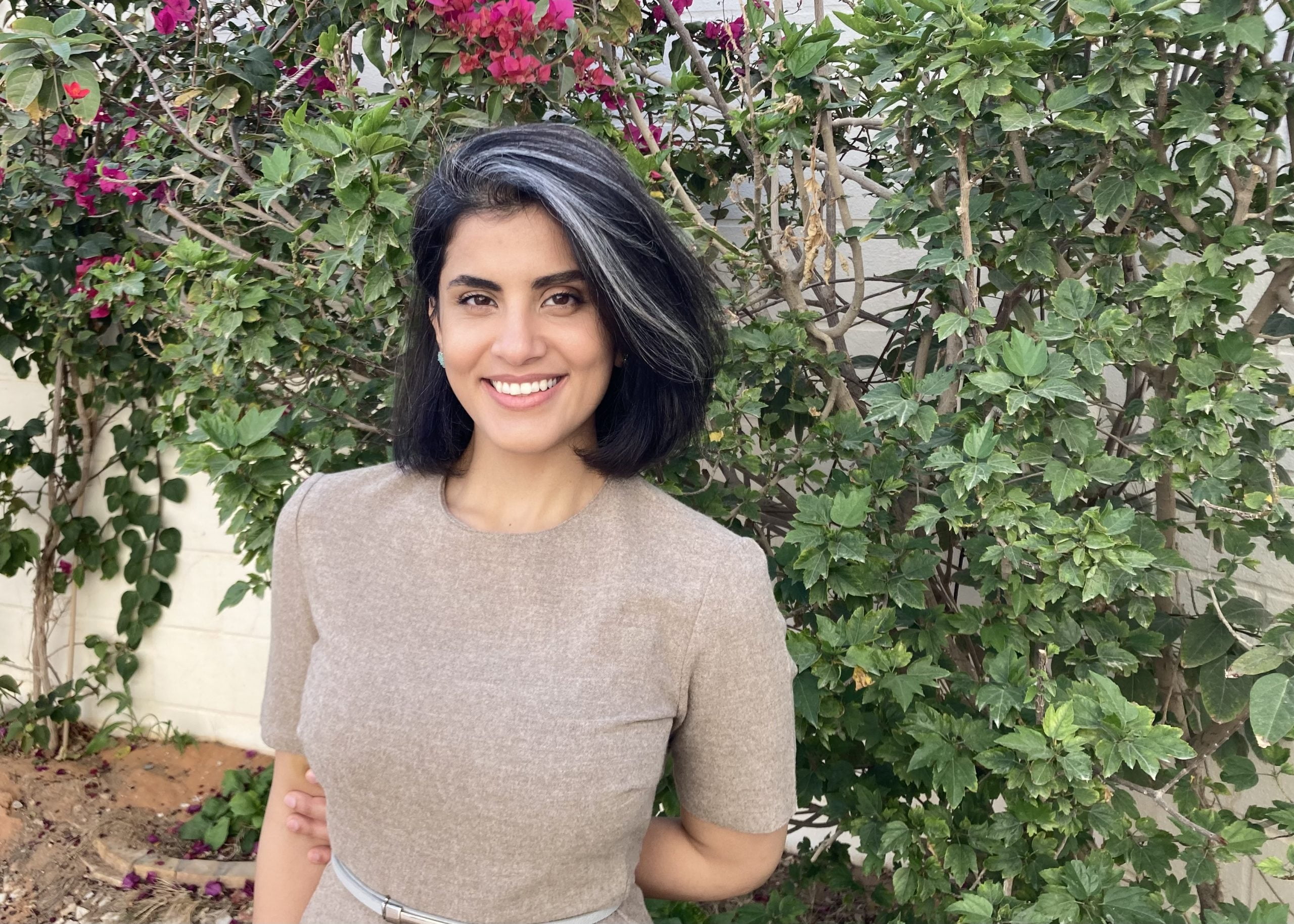
Women’s rights activists Nassima and Loujain released

Saudi Arabian activist Loujain al-Hathloul was released in February, after spending nearly three years in prison. In June, fellow women’s rights activist Nassima al-Sada was also released from prison.

Both were imprisoned for campaigned for women’s rights, including the right to drive, in 2018. Both are now subject to a travel ban meaning the cannot reunite with their families. The authorities must remove their travel ban, and release all peaceful activists from prison.

Learn more about our campaigning work to secure women’s rights.

Journalist Khaled freed in Algeria

Journalist Khaled Drareni, who was serving a three-year prison sentence for covering protests, was released from jail in February.

Yahaya no longer faces the death penalty

In August 2020 23-year-old singer Yahaya Sharif-Aminu was sentenced to death in Nigeria for sharing a song considered ‘blasphemous’. In February, a court declared he’s getting a retrial. Now we need to work together to make sure the retrial is fair, and he doesn’t face the death penalty a second time.

Poet Paing Phyo Min released from prison in Myanmar

Poet Paing Phyo Min released from prison in Myanmar in April. Paing was sentenced to 6 years in prison in 2019 for peaceful satirical performances.

“I just wanted to say as a parent thanks so much for helping my son.”

PAING PHYO MIN’S FATHER’s MESSAGE TO AMNESTY SUPPORTERS.

Solafa and Hossam released in Egypt

In April Egyptian journalists Solafa Magdy and Hossam Al-Sayyad were released from jail, and reunited with their son.

The married couple were imprisoned in November 2019 and accused of accused of “joining a terrorist group and misusing social media platforms”.

Raman and Sofia no longer at risk of torture

Belarussian blogger Raman and his girlfriend Sofia were detained by Belarusian authorities in May, after their Ryanair flight was forced to land in Minsk, Belarus’ capital.

On 25 June Raman and Sofia were moved to house arrest from prison, meaning they are no longer at risk of torture and ill-treatment. Amnesty International will continue to call for their immediate release.

Maura is free after two years in immigration detention

For two years, Maura was locked in an immigration detention facility in California, and at risk of deportation. Maura is a 41-year-old transgender woman originally from Nicaragua who fled to the United States seeking protection from relentless violence and abuse. Maura was finally freed in June.

“I am so, so happy. I still can’t believe it. I thought I was alone in this world. I thought it wasn’t worth it to keep fighting. And then I realized that there were people around the world, who I didn’t even know, very good people who have been very supportive”

Maura’s message to supporters following her release.

Shafqat and Shagufta taken off death row

In June, married couple Shafqat and Shagufta were acquitted by a court in Pakistan, meaning they no longer face the death penalty. Shafqat and Shagufta arrived safely in Europe in August.

They were sentenced to death for sending ‘blasphemous’ texts and spent seven agonising years in prison. Their
lawyer Saiful Malook must be provided with adequate security, as he faces significant security risks because of his work with Shafqat and Shagufta, and others accused of blasphemy.

Navalny recieves health care

Russian opposition activist and prisoner of conscience Aleksei Navalny finally received health care he urgently needed in April. Navalny’s health had seriously deteriorated in following his arrest in January, after returning
to Moscow from Germany, where he had spent time recovering from being poisoned with agent Novichok in August 2020.

“Thanks to the huge support of good people from all over the country and the whole world, we have achieved huge progress”.

Navalny’s message to his supporters.

Amnesty will continue to campaign for Navalny’s immediate and unconditional release.

Germain Rukuki finally free in Burundi

 Burundian human rights defender Germain Rukuki was released on 1 July after serving more than four years in prison. Germain’s release came after an appeal court reduced his sentence from 32 years to just one in June.  Germain was arrested, prosecuted and convicted simply for his human rights work, and should never have been imprisoned in the first place.

This progress only happens because compassionate and courageous people take action. Together, we can pressure the authorities to release those unfairly imprisoned, and reunite them with their families. Take action, and make a difference in someone’s life, today.

Colombia: Violent repression, paramilitarism, illegal detention and torture of peaceful protesters in Cali

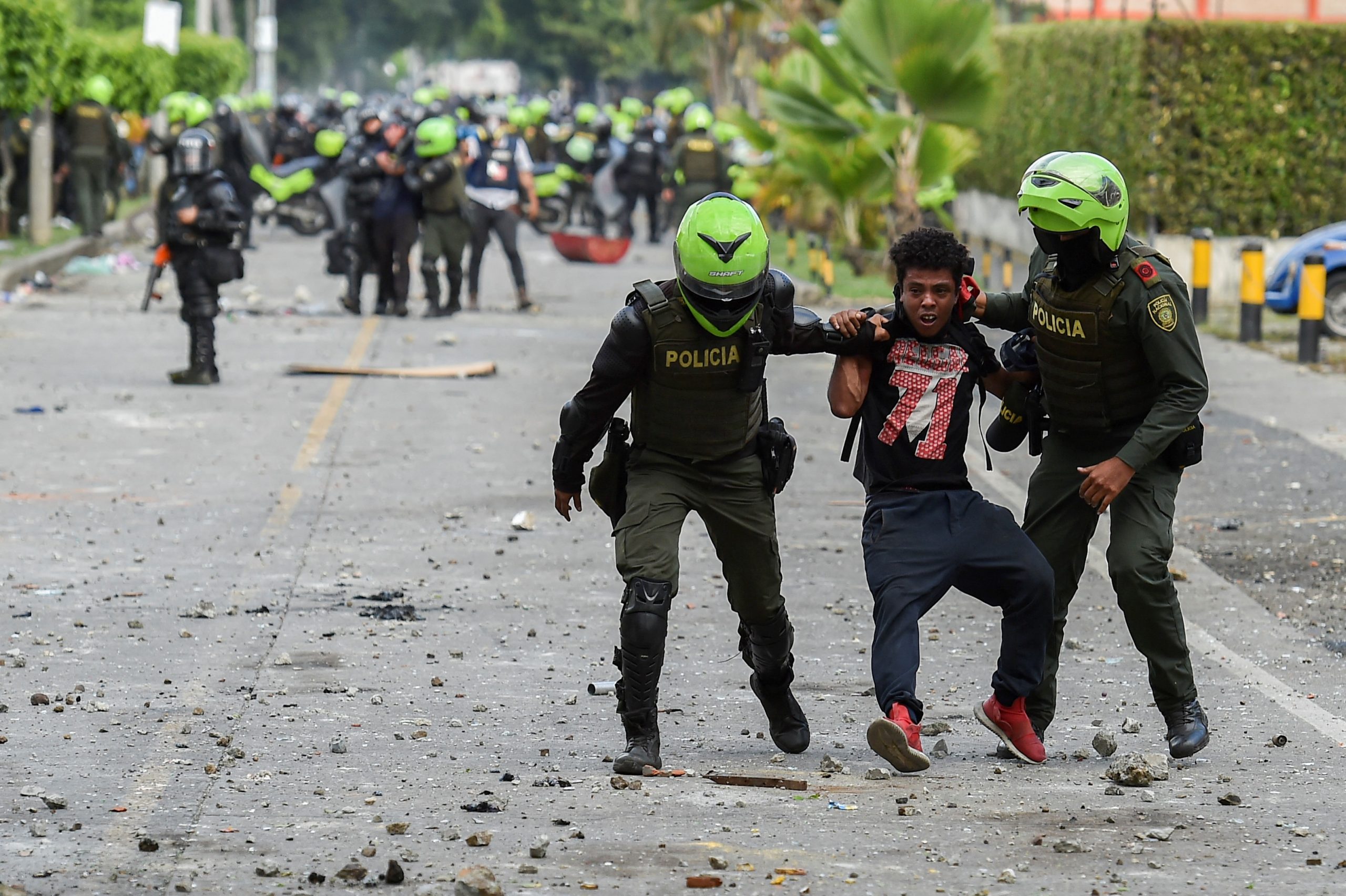
The practices described in the new report Cali: In the epicentre of repression (the report is currently only available in Spanish, this link will be updated when the English version is available) – which include the use of lethal weapons against protesters, excessive and unlawful use of less lethal weapons such as tear gas, unlawful detentions and torture – are representative of hundreds of reports by protesters and human rights defenders and organizations and illustrate the modus operandi implemented throughout the country, Amnesty International said today.

“The Colombian authorities violated the human rights of peaceful demonstrators in Cali, using excessive and unnecessary force to disperse them. Under the pretext of restoring order, terrible injuries were inflicted on hundreds of people and dozens of young people lost their lives. What happened in Cali shows the violent response of the authorities and the true objectives behind this repression: to instil fear, discourage peaceful protest and punish those demanding to live in a fairer country,” said Erika Guevara-Rosas, Americas director at Amnesty International.

The city of Cali, capital of the department of Valle del Cauca, is in one of the regions hardest hit by the internal armed conflict and where various armed groups have proliferated and continue to operate, resulting in thousands of people being displaced and killed. It is the city with the second largest Afro-descendant population in Latin America and is characterized by inequality, exclusion and structural racism. This context contributed to Cali becoming the epicentre of protests and human rights violations during their repression.

Since 28 April, mass demonstrations have taken place in Cali, in the framework of the “National Strike”. It was the city that saw the greatest concentration of the most serious reports of violent repression of young protesters by the security forces and armed civilian groups, and the authorities are continuing to restrict the right to peaceful protest.

Amnesty International carried out an exhaustive digital verification of audiovisual material, which confirmed that National Police officials, in particular members of the Mobile Anti-Riot Squad (ESMAD), used excessive and unnecessary force. The organization also documented acts of urban paramilitarism by armed civilians, who accompanied National Police officials and, acting with their acquiescence and tolerance, attacked demonstrators and human rights defenders. 

The report analyses three cases of human rights violations in Cali. The first took place on 3 May, when, in an incursion called “Operation Siloé”, National Police officers, together with members of ESMAD and the Special Operations Group of the National Police of Colombia (GOES), used lethal weapons, including Tavor 5.56mm rifles, against peaceful protesters. That night, at least three deaths from gunshot wounds were recorded, among them that of the young man Kevin Agudelo, and hundreds of people were injured and several arbitrarily detained. 

The second incident detailed is the attack on 9 May on the Indigenous Minga (a collective of Indigenous Peoples participating in the protest) by armed civilians as National Police officers looked on. On that day, 11 Indigenous people were injured, including the Indigenous human rights defender Daniela Soto.

The third and final case centres on the events that occurred on 28 May, when National Police officials used excessive force in an attack, in coordination with armed civilians, on demonstrators in the neighbourhood around Valle University. On that day, a dozen young demonstrators, including Álvaro Herrera, Noé Muñoz and Sebastián Mejía, were beaten and detained by armed civilians, who then handed them over to the National Police. Álvaro and Sebastián alleged that they were subjected to torture and cruel and inhuman treatment during their unlawful detention.

In the case of Siloé, the unlawful and excessive use of tear gas – including against peaceful protesters who had nowhere to disperse to – involved the use of Venom, a system that is not appropriate for use in law enforcement operations.

The incidents documented were not isolated or sporadic, but rather reflect a pattern of violence on the part of the Colombian authorities, who have responded to the protest with stigmatization, criminalization, unlawful police repression and militarization. When President Iván Duque decreed the use of the military in several cities in the country, including Cali, on 28 May, far from giving a message of dialogue, he fuelled protests by sending military units shaped by more than six decades of armed conflict onto the streets.

In response to the announcement of the 20 July mobilizations and the holding of the National People’s Assembly, made up of people, groups and movements involved in the National Strike, in different cities in the country, including Cali, the Valle del Cauca government issued measures restricting the movement of transport and/or people entering the department between 16 and 22 July, thereby restricting the right to peaceful protest.

The report highlights the recent observations of the Inter-American Commission on Human Rights (IACHR) following its visit to Colombia and calls on the state to comply with its recommendations and cooperate with and not hinder the work of the IACHR’s recently created Special Monitoring Mechanism for Human Rights in Colombia.

The report urges the Colombian authorities to promptly issue an unequivocal order to stop the violent repression by the security forces. This includes a ban on the use of lethal weapons to disperse crowds and the use of tear gas against peaceful assemblies and/or in a way that risks causing excessive and unjustified harm – in accordance with the 30 Rules for the use of chemical irritants in law enforcement published by Amnesty International this week.

Likewise, thorough, independent and impartial investigations must be initiated into human rights violations and crimes under international law committed in the context of the National Strike, specifically, in the city of Cali and the cases detailed in the report, taking into account all chain of command responsibilities within the security forces, as well as the participation of armed civilians with their acquiescence. Impunity must not prevail for these serious crimes.

On 12 July, Amnesty International requested information on the three cases documented in the report from the Minister of Defence, the Director General of the National Police and the Attorney General, with a view to receiving their comments within 10 days and including them in the report. On 23 July investigative judge 158 of the military jurisdiction sent a response regarding investigations initiated in that jurisdiction. As of 23 July, the closing date of the report, no response from the other authorities had been received.

On 19 July, President Duque publicly presented “the process for comprehensive transformation of the National Police” which, he claims, has as its pillars the prioritization of a human rights perspective. Despite this announcement, on 20 July Amnesty International received reports that members of ESMAD used unlawful force during protests in Bogotá, Barranquilla, Cali and Medellín, injuring several protesters.

“Amnesty International hopes that the police reform process announced by President Duque is not merely a paper promise, and that it includes the reforms ordered by the Supreme Court of Justice in September 2020 and a change in the repressive modus operandi of the National Police against the peaceful demonstrations,” said Erika Guevara-Rosas.

Increasing propaganda raises serious concerns for the human rights of Baha’i’s in Iran

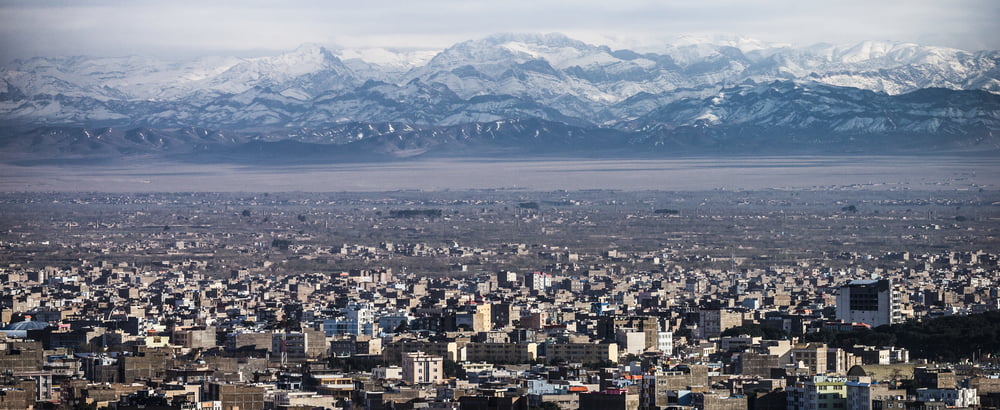
Following the Islamic Revolution of Iran in 1979, members of the Baha’i Faith – the largest religious minority in the country – have been subjected to a relentless campaign of systematic persecution. This persecution has impacted the lives of generations, from young infants to the elderly.

Yet in recent months, the four-decades long state-sponsored campaign of hate speech and propaganda has reached new levels, increasing in both sophistication and scale. This has provoked fresh concerns for the rights of the Baha’i’s in Iran.

Amnesty has joined the Australian Baha’i Community in calling on the Australian Government to demand that Iranian authorities take action to ensure the rights of Baha’i’s are protected.

Refugee, Moz Azimitabar, challenges legality of 14 months in detention in Melbourne prison hotels

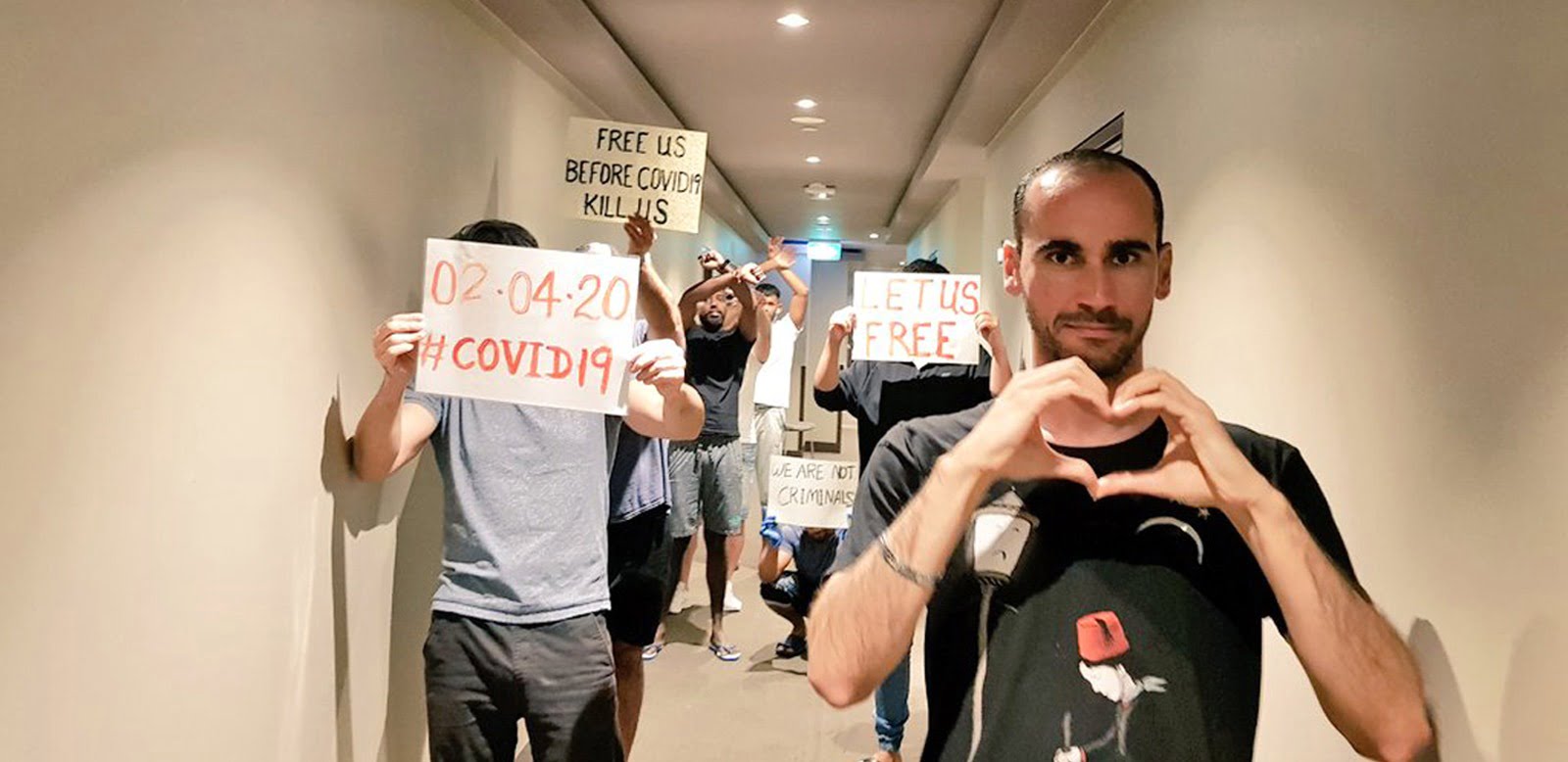
Kurdish-Iranian refugee, Mostafa (Moz) Azimitabar, who was detained offshore and in Australia for almost eight years, is seeking compensation from the Australian Government for his unlawful 14 month detention in two Melbourne-based hotels.

The case before the Federal Court will argue that Moz’s detention in the Mantra Hotel for 13 months and then the Park Hotel was unlawful under the Migration Act as the Government does not have the legislative power to turn such hotels into Alternative Places of Detention (APODs). 

Michael Bradley, managing partner at Marque Lawyers, representing Moz, said: “According to our reading of the Migration Act the Government does not have the power to establish and maintain detention centres in hotels and therefore Moz’s detention for more than a year in the Mantra and the Park Hotel was unlawful.”

Moz was released from the Park Hotel on a temporary final departure visa earlier this year, however his time locked up in the hotels where he was unable to go outside, exercise properly or even open a window, compounded by six years trapped on Papua New Guinea, have taken a terrible physical and emotional toll. 

There are still many asylum seekers and refugees, medically transferred from PNG and Nauru in 2019,  trapped today in similar prison hotels across Australia.

Dr Graham Thom, Amnesty International refugee adviser, said: “Amnesty International is supporting Moz with his legal case against the Commonwealth of Australia. Moz’s detention in the Mantra Hotel and Park Hotel, after he was transferred from Papua New Guinea  to Australia in 2019 on medical grounds, was, we believe, unlawful under the Migration Act. Today, there are many more people still being detained in APODs across Australia. The mental anguish they have endured is inexcusable. This suffering must come to an end and we need to ensure it never happens again.”

The Pegasus Project: Massive data leak reveals Israeli NSO Group’s spyware used to target activists, journalists, and political leaders globally.

The Pegasus Project is a ground-breaking collaboration by more than 80 journalists from 17 media organisations in 10 countries coordinated by Forbidden Stories, a Paris-based media non-profit, with the technical support of Amnesty International, who conducted cutting- edge forensic tests on mobile phones to identify traces of the NSO Group’s spyware.

NSO Group Technologies is an Israeli technology firm whose spyware ‘Pegasus’ enables the remote surveillance of smartphones. Yet Amnesty’s most recent research highlights that the NSO Group’s spyware has been used to facilitate human rights violations around the world on a massive scale. These include heads of state, activists and journalists.

Amnesty has written to Home Affairs Minister Karen Andrews, reiterating that the surveillance industry must no longer be afforded a laissez-faire approach from governments with a vested interest in using this technology to commit human rights violations.

Morrison Government must extend visas to Afghan contractors

Amnesty International Australia and a coalition of international translation, interpreter and human rights groups has written an open letter to Prime Minister Scott Morrison asking for humanitarian protection visas to be extended to contractors as well as employees of Australian Defence and related organisations in Afghanistan.

The letter expresses concerns for Afghans who were employed by Australian Government agencies as private contractors, but were not employed directly by the Australian Government, and who have had their applications for protection visas rejected. 

Others, including interpreters, AusAID contractors, security guards, and Embassy staff, are still waiting for their visas to be processed.

“We’re calling on the Australian government to fast-track protection visas for all locally engaged Afghan civilians that worked with Australian personnel,” Amnesty International Australia National Director, Sam Klintworth, said. 

“Decisions concerning protection visas must be made with regard to the threat to their lives stemming from their involvement with Australia, and not according to their employment status.

“These staff, who have put their lives on the line to support Australian men and women, now fear retaliation from the Taliban and face significant threats to their safety.”

As NATO forces have withdrawn in recent weeks and months, the Taliban has recaptured much of Afghanistan. The United States will finalise its withdrawal by 31 August 2021.

The window in which these people can be safely rescued is closing due to the Australian Government’s decision to withdraw – it is imperative that the Australian Government now acts urgently to secure their safety. Any visas for these staff should be in addition to Australia’s existing humanitarian intake.

Morocco: Authorities must not deport detained Uyghur to China

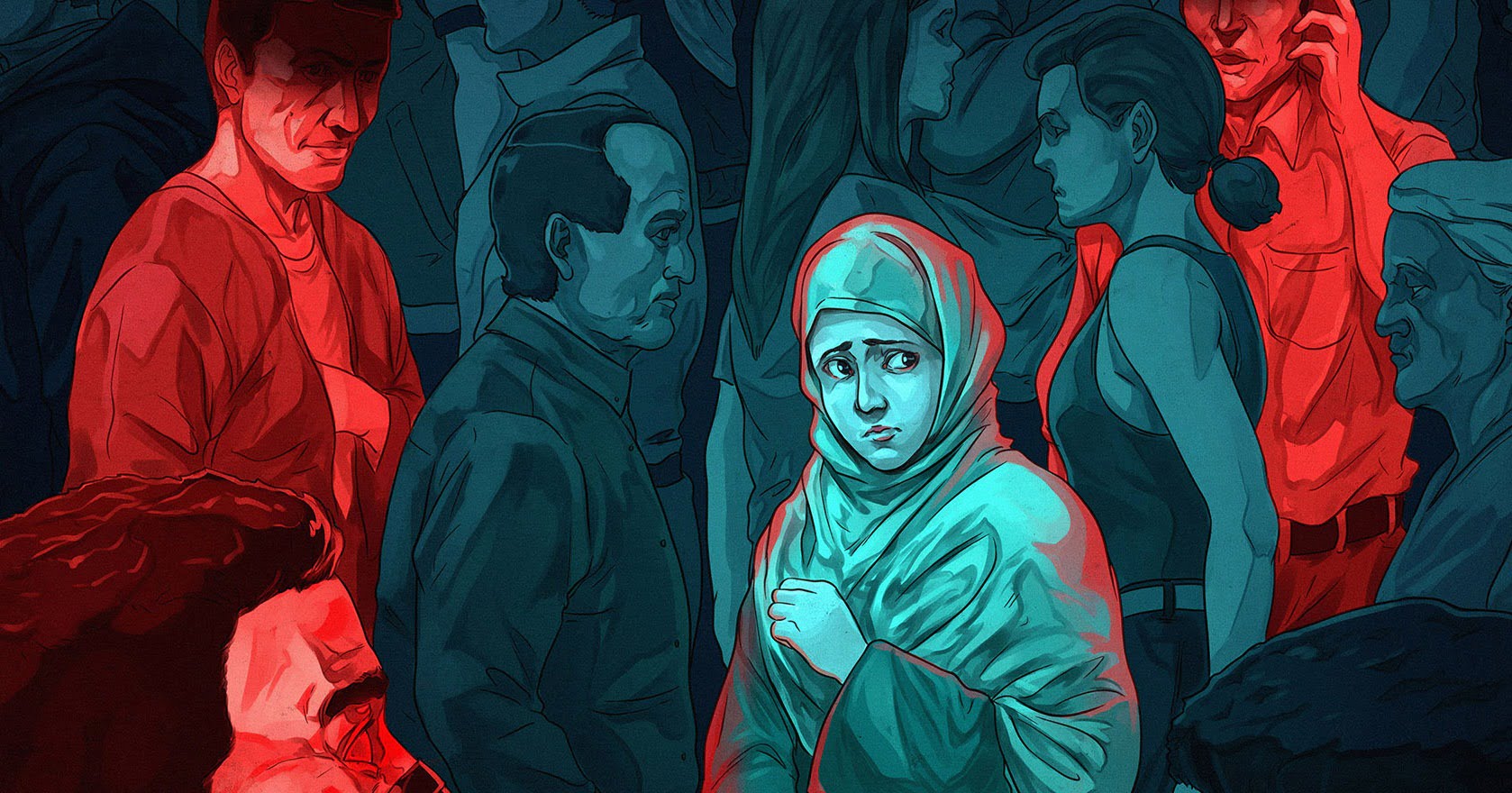
The Moroccan authorities must not deport Idris Hasan, an ethnic Uyghur who has been detained in the country, to China where he is at risk of torture, Amnesty International said today.

Hasan, a 34-year-old father of three, was arrested after flying into Morocco from Turkey last week, and taken to a prison near the town of Tiflet. He telephoned his wife Zaynura last Friday (23 July), and told her that he believed he would soon be deported to China.

Zaynura told Amnesty International: “Hasan said, ‘They took me to prison at the request of China. Please be fast, or they’re going to send me back to China’.”

Hasan, a computer designer, holds Chinese nationality and a Turkish residency permit. He has not been heard from since that Friday, and Amnesty International believes he is at risk of detention and torture if he is forcibly returned to China.

“The Moroccan authorities must ensure Idris Hasan has immediate access to a lawyer, the ability to challenge any removal orders, and allow his family to contact him to ensure his safety,” said Joanne Mariner, Amnesty International’s Crisis Response Programme Director.

“Deporting Idris Hasan to China, where Uyghurs and other ethnic minorities are facing a horrifying campaign of mass internment, persecution and torture, would violate international law. 

“The principle of non-refoulement guarantees that no one should be returned to a country where they would face a real risk of torture or other cruel, inhuman or degrading treatment or punishment, and other serious human rights violations.”

Background

Idris Hasan has been living in Turkey since 2012, with his wife Zaynura and their three children. His wife and children have permanent residency permits in Turkey, but his residency permit is categorized as “humanitarian”.

The Chinese government reportedly considers Hasan a “terrorist”, because of work he has previously done for Uyghur organizations. Chinese law defines “terrorism” and “extremism” in an overly broad and vague manner, and has been used to crack down on Uyghurs and other ethnic minorities.

Last month, Amnesty International published a report revealing how hundreds of thousands of Muslim men and women in China’s Xinjiang Uyghur Autonomous Region are being subjected to arbitrary mass detention, indoctrination and torture.

In the 160-page report, ‘Like We Were Enemies in a War’: China’s Mass Internment, Torture, and Persecution of Muslims in Xinjiang, Amnesty International’s Crisis Response team released dozens of new testimonies from former detainees detailing the extreme measures taken by Chinese authorities since 2017 to essentially root out Islamic religious beliefs and traditions, as well as the cultural practices and local languages of the region’s Muslim ethnic groups.

Carried out under the guise of fighting “terrorism”, these crimes have targeted ethnic Uyghurs, Kazakhs, Hui, Kyrgyz, Uzbeks and Tajiks.

Amnesty International also launched a campaign calling for the closure of the internment camps, with more than 60 detailed casefiles on some of those thought to be currently detained.

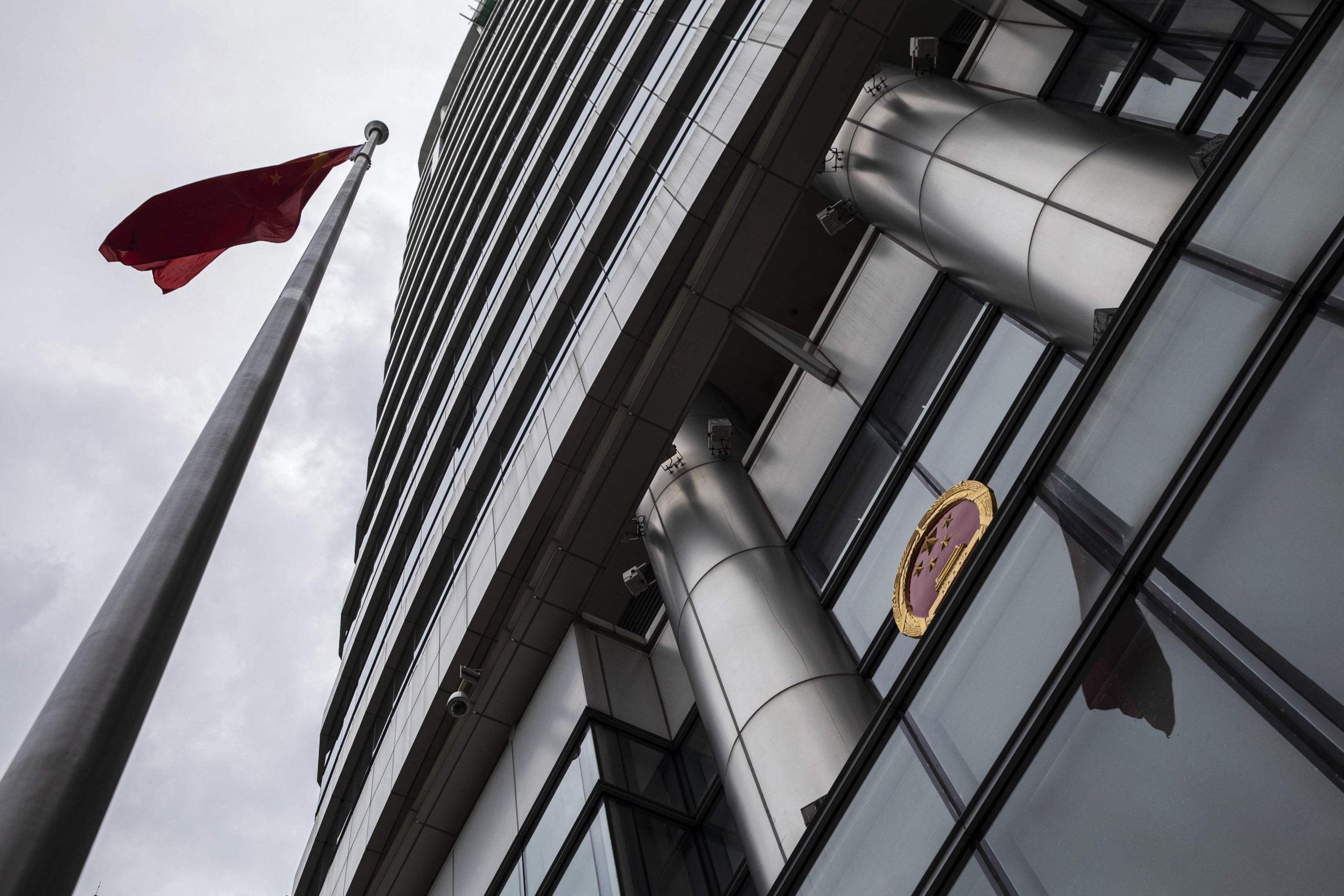
Hong Kong: First national security law conviction is ‘beginning of the end’ for freedom of expression

Responding to the conviction of Hongkonger Tong Ying-kit for “inciting secession” and “acts of terrorism” following the first trial under the city’s 2020 national security law, Amnesty International’s Asia-Pacific Regional Director Yamini Mishra said:

“The conviction of Tong Ying-kit is a significant and ominous moment for human rights in Hong Kong. Today’s verdict underlines the sobering fact that expressing certain political opinions in the city is now officially a crime, potentially punishable by life in jail.

“To convict Tong Ying-kit of ‘secession’ for displaying a flag bearing a widely used political slogan is a violation of international law, under which expression must not be criminalized unless it poses a concrete threat. This feels like the beginning of the end for freedom of expression in Hong Kong.

“People should be free to use political slogans during protests, and Tong Ying-kit should not be punished for exercising his right to free speech. It is particularly clear that he should never have been charged with a ‘national security’ offence carrying a possible life sentence.

“Hong Kong authorities must ensure that any legal provisions aimed at protecting national security, or created in the name of counterterrorism, are clearly and narrowly defined and that their use conforms to international human rights law and standards.”

Background

On 1 July 2020, the first full day of the national security being in force, Tong Ying-kit drove a motorcycle towards a group of police officers while displaying a flag bearing the common protest slogan, “Liberate Hong Kong, revolution of our times”.

A first instance court in Hong Kong today convicted him of “inciting secession” and “acts of terrorism” under the national security law (NSL). Prosecutors said the slogan on the flag signified a desire to overthrow the government and deemed it to “connotate separation from China”.

Tong Ying-kit, who has been remanded into custody since 6 July 2020, is the first person convicted under the national security law and faces a maximum sentence of life imprisonment.

He was denied the right to trial by jury – used in Hong Kong’s common law system for 176 years – after the justice secretary said there was a potential risk to the jurors.

Under international human rights law, displaying political slogans is in principle protected as legitimate expression.

The Hong Kong authorities’ sweeping definition of “national security”, which follows that of mainland China, has been used arbitrarily as a pretext to restrict the human rights to freedom of expression, peaceful assembly, association, fair trial and liberty, as well as to repress dissent and political opposition.

Between 1 July 2020 and 26 July 2021, police arrested or ordered the arrest of at least 138 people in relation to the NSL. As of 26 July 2021, 68 people have been formally charged, of whom 51 are presently in pretrial detention.

An Amnesty International research briefing released last month found that the NSL has decimated Hong Kong’s freedoms and created a landscape increasingly devoid of human rights protections.

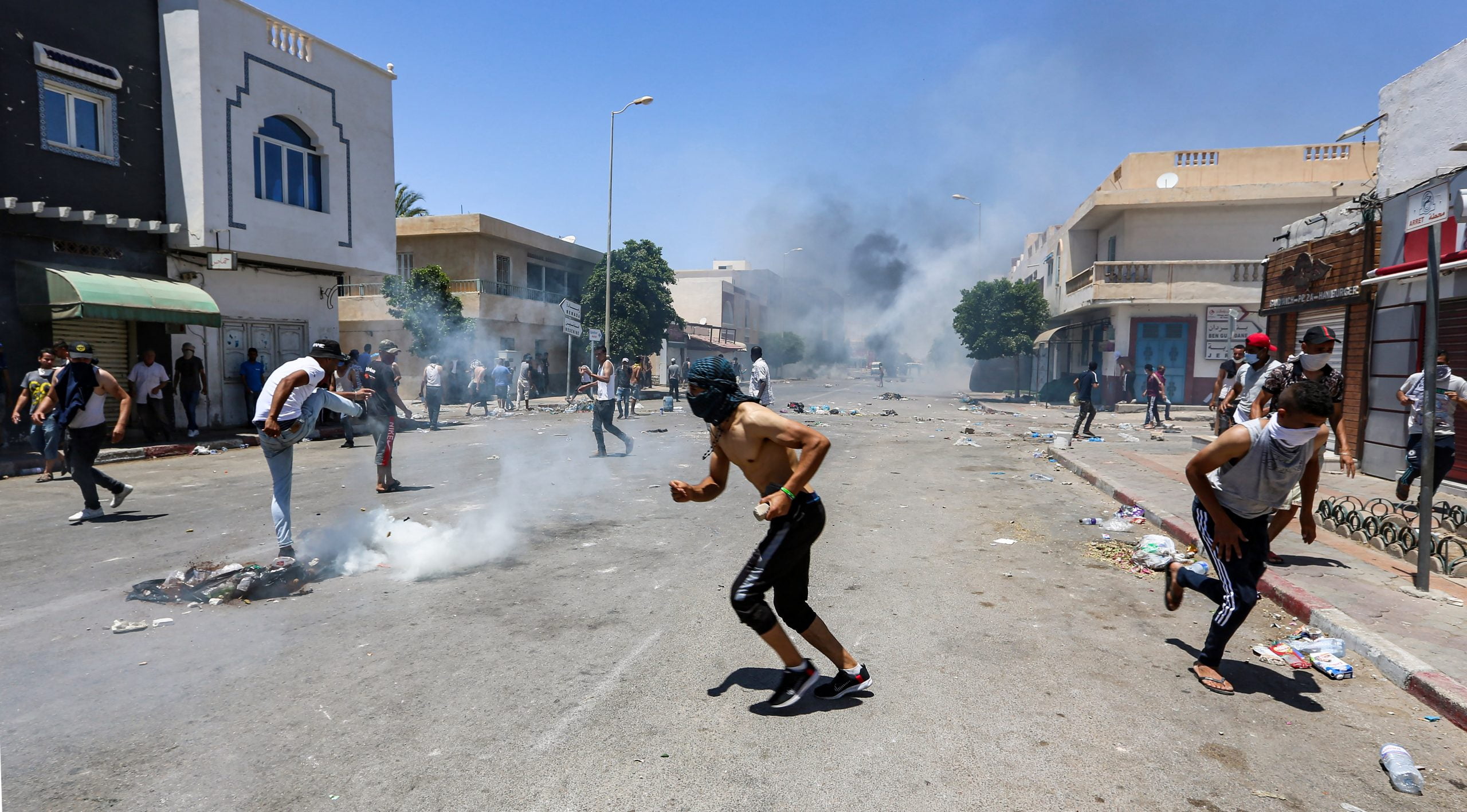
Tunisia: Human rights must be upheld following suspension of parliament

Tunisian President Kais Saied should publicly commit to respecting and protecting human rights, including the rights to freedom of expression, association and peaceful assembly, after he suspended parliament and assumed some judicial powers, said Amnesty International.

Concerns that human rights are at risk have heightened following an alarming raid by security forces on Al Jazeera’s office in Tunis today and the president’s threats during his speech of resorting to heavy-handed force against “those threatening state security”.

“The hard-won freedoms and human rights gains of Tunisia’s 2011 uprising are at risk, particularly in the absence of a Constitutional Court to protect the rights of everyone in the country. President Kais Saied must ensure that any acts he orders are strictly in line with Tunisia’s obligations under international human rights law and most importantly must refrain from political purges,” said Heba Morayef, Amnesty International’s

Regional Director for the Middle East and North Africa.

“The raid on Al Jazeera’s offices is an outrageous assault on the right to freedom of expression and deeply worrying precedent signalling that human rights are in danger during this period.”

In a televised speech late on 25 July after a day of protests, President Kais Saied, who presides over the armed forces, announced plans to temporarily suspend the parliament for 30 days, to lift immunity for its members, and stated that he will personally preside over the public prosecution of parliamentarians. After his announcement, the army moved to block access to the Parliament.

During his speech, the Tunisian President also warned that anyone who “would use a bullet” against the security forces will be met with “a hail of bullets”. Under international law and standards, lethal force can only be used lawfully by security forces when strictly necessary to protect life and must be used proportionately. Tunisian security forces have a dire track record of resorting to unnecessary or excessive force for which they are hardly ever held to account. 

President Kais Said also dismissed Prime Minister Hichem Mechichi, whose government was responsible for a sharp deterioration of human rights in Tunisia. During demonstrations in January 2021, thousands of young people were arrested and protests were violently dispersed by security forces, who also tortured protesters in custody. His government also targeted human rights defenders and activists who voiced critical opinions or participated in peaceful demonstrations. Discontent with the government’s Covid-19 response and vaccine rollout, with the second highest daily deaths per million people rate in the world, led to high participation in the 25 July protests.

On 26 July, Al Jazeera reported that 20 heavily armed plainclothes police officers raided its office in Tunis, expelling all staff, confiscating their telephones and other equipment. Closing television stations or imposing similar arbitrary restrictions on media purely on the basis of their perceived political or other affiliations is a flagrant violation of the right to freedom of expression.

Kais Saied invoked Article 80 of the 2014 Constitution, which according to some interpretations, gives him the right to take exceptional measures in the case of an “imminent threat against the country’s security and independence”. The article requires the president to ensure that the measures will “guarantee, as soon as possible, a return to the normal functioning of state institutions and services,” and assumes the existence of a Constitutional Court to protect human rights. However, successive parliaments have failed to elect the required members to form the Constitutional Court, which is now seven years overdue. 

Amnesty International is particularly concerned by the President’s announcement that he will preside over the prosecution office in judicial affairs related to parliamentarians, after lifting their immunity.

“Judicial independence is one of the cornerstones of a rights-respecting society and should not be trampled on. The concentration of powers in the hands of the executive branch is alarming. Tunisia’s president must uphold all fair trial guarantees for everyone and must not use his judicial powers to settle political scores or to conduct purges of critical voices,” said Heba Morayef.

The International Covenant on Civil and Political Rights, to which Tunisia is a party, prohibits states from suspending certain human rights, even during a state of emergency, including fundamental requirements of fair trials.

Tunisia has been undergoing a shaky democratic transition since it toppled its longtime ruler Zine el Abidine Ben Ali. The country held its second parliamentary and presidential elections since the 2011 Revolution in October and November 2019, which brought President Kais Saied to power and yielded a fragmented parliament, with no party capturing more than 25% of the seats. The Islamist Ennahda party came in first, with 52 out of 217 seats, closely followed by Qalb Tounes party. Since the elections, three heads of government were appointed. For several months, the country has been embroiled in a political crisis and disagreements over power sharing between the President and the head of government, who both exercise executive powers under the 2014 Constitution.