Bangladesh: End crackdown on freedom of expression online

Bangladeshi authorities must end the crackdown on people’s right to freedom of expression online and urgently repeal the draconian Digital Security Act (DSA) unless it can be amended in compliance with international human rights law and standards, Amnesty International said in a new briefing released today. 

The briefing, “No space for dissent” examines cases under the DSA – a law that contains overbroad and vague provisions granting the authorities extensive powers to police the online space – against 10 individuals who have been subjected to a wide range of human rights violations including enforced disappearance, arbitrary detention and torture, simply for criticising powerful people on social media.  

Bangladesh has at least 433 people imprisoned under the DSA as of July 2021, most of whom are held on allegations of publishing false and offensive information online. 

Those targeted include journalists, cartoonists, musicians, activists, entrepreneurs, students and even a farmer who cannot read or write, among others. In one case, writer Mushtaq Ahmed died in prison after languishing there for 10 months without trial on accusations under the DSA. One inmate alleged that he was subjected to torture. 

“The actions taken by the authorities under the purview of the DSA demonstrate just how dangerous it has become to speak out and voice dissenting views in Bangladesh today. These undue restrictions on different forms of expression have sent a chilling effect across Bangladeshi society and have severely curbed the space for independent media and civil society organizations. Bangladeshi authorities must release all prisoners held solely for exercising their right to freedom of expression,” said Saad Hammadi, Amnesty International’s South Asia Campaigner.  

The DSA gives arbitrary powers to law enforcement agencies to conduct searches, seize devices and their contents, and arrest individuals without warrant simply for a comment they may have shared online, in violation of the right to freedom of expression enshrined under the International Covenant on Civil and Political Rights (ICCPR) to which Bangladesh is a party. 

“We remind the Bangladeshi authorities about the recommendations they accepted from several UN member states during the country’s last Universal Periodic Review in May 2018, with regards to taking concrete measures to bring all legislation including the DSA in conformity with the ICCPR,” said Saad Hammadi. 

Tool for repression 

Introduced in October 2018, the DSA is increasingly being used to stifle dissent on social media, websites, and other digital platforms, with punishments that can extend to life imprisonment. The authorities have targeted critical voices under the pretext that they have made false, offensive, derogatory or defamatory statements online.  

Even before its adoption, the UN Special Rapporteurs on freedom of expression and on the situation of human rights defenders raised concerns over the draft of the DSA. Several UN member states at Bangladesh’s UPR recommended the government to amend the DSA “to ensure online freedom of expression”. The government, despite accepting these recommendations, has so far failed to follow through on its promise and continues to crackdown on people’s right to freedom of expression. 

On 26 February 2021, rights activist Ruhul Amin was arrested for a Facebook post criticizing the Bangladeshi government and Prime Minister Sheikh Hasina for the death of Mushtaq Ahmed. He was subjected to intrusive questioning and imprisoned for 45 days before he was eventually released on bail. 

Mushtaq Ahmed was arrested in May 2020 for criticising the Bangladeshi government’s response to the Covid-19 pandemic on Facebook. Denied bail at least six times, he reportedly died of a heart attack in prison on 25 February 2021. 

“Mushtaq Ahmed should not have spent a single minute in prison, let alone his final ones. Many provisions in the DSA are criminalizing conduct that should not constitute an offence in the first place. We urge the authorities to break away from this practice of using the law as a weapon against dissent,” said Saad Hammadi.  

Criminalizing free speech 

Amnesty International has found a concerning pattern in which the authorities are weaponizing sections 25 (Transmission, publication, etc. of offensive, false or threatening data information), 29 (Publication, transmission, etc. of defamatory information), and 31 (Offence and punishment for deteriorating law and order, etc) of the Act to target and harass critical voices. 

The Cyber Tribunal based in Dhaka, which holds trials of cybercrimes including cases filed under the DSA, has recorded 199 cases under trial between 1 January and 6 May 2021. Amnesty International has found 134 of those cases that clearly specified the sections under the DSA. Eighty percent of those cases (or 107 out of 134) were filed under both sections 25 and 29 of the DSA.  

The briefing finds that cases against six out of 10 individuals featured all three of these DSA sections, with sections 25 and 31 used against three other individuals.  

The way in which defamation is criminalized under the Digital Security Act shows the serious shortcomings of a criminal approach to defamation, where the law has been further instrumentalised to silence dissent. Amnesty International calls on the Bangladeshi authorities to ensure that defamation is treated as a matter for civil litigation, not criminal.  

Widespread abuse of DSA 

Cases against eight out of 10 individuals featured in the briefing have been filed by lawmakers, members of ruling Awami League party or law enforcement officials. 

Emdadul Haque Milon, a pharmacist and contractor, said that a local political leader of ruling Awami League party had him detained on 3 March 2020 under the DSA for a Facebook post where he criticised the Bangladeshi government’s invitation to Indian Prime Minister Narendra Modi at the birth centenary of Sheikh Mujibur Rahman, the de facto or first president of Bangladesh. Emdadul Haque Milon alleged that the politician had him detained to stop him from submitting a proposal for a government contract that subsequently went to the politician’s son-in-law. He was eventually released on bail after 23 days. 

A law enforcement official told Amnesty International that it is their responsibility to contain criticism against the government. Yet, international human rights law is clear that criticism of the authorities can never be legitimately punished.  

The Cyber Tribunal in Dhaka has dismissed nearly 50 percent of the cases (or 97 out of 199) during the period under review for lacking merit and evidence. That, however, did not waive the human rights violations that people have suffered including facing detention for various periods even before the cases appeared for trial.  

“The volume of DSA cases turned down by the tribunal demonstrates the way in which powerful people in Bangladesh have weaponized the law to silence dissent. The UN member states that expressed concern over the right to freedom of expression during Bangladesh’s UPR must continue to raise concerns about the ongoing violations being committed under the DSA and work with the authorities at implementing their recommendations to ensure critical voices are no longer silenced,” said Saad Hammadi.
Respect the Right to Protest: Cuba

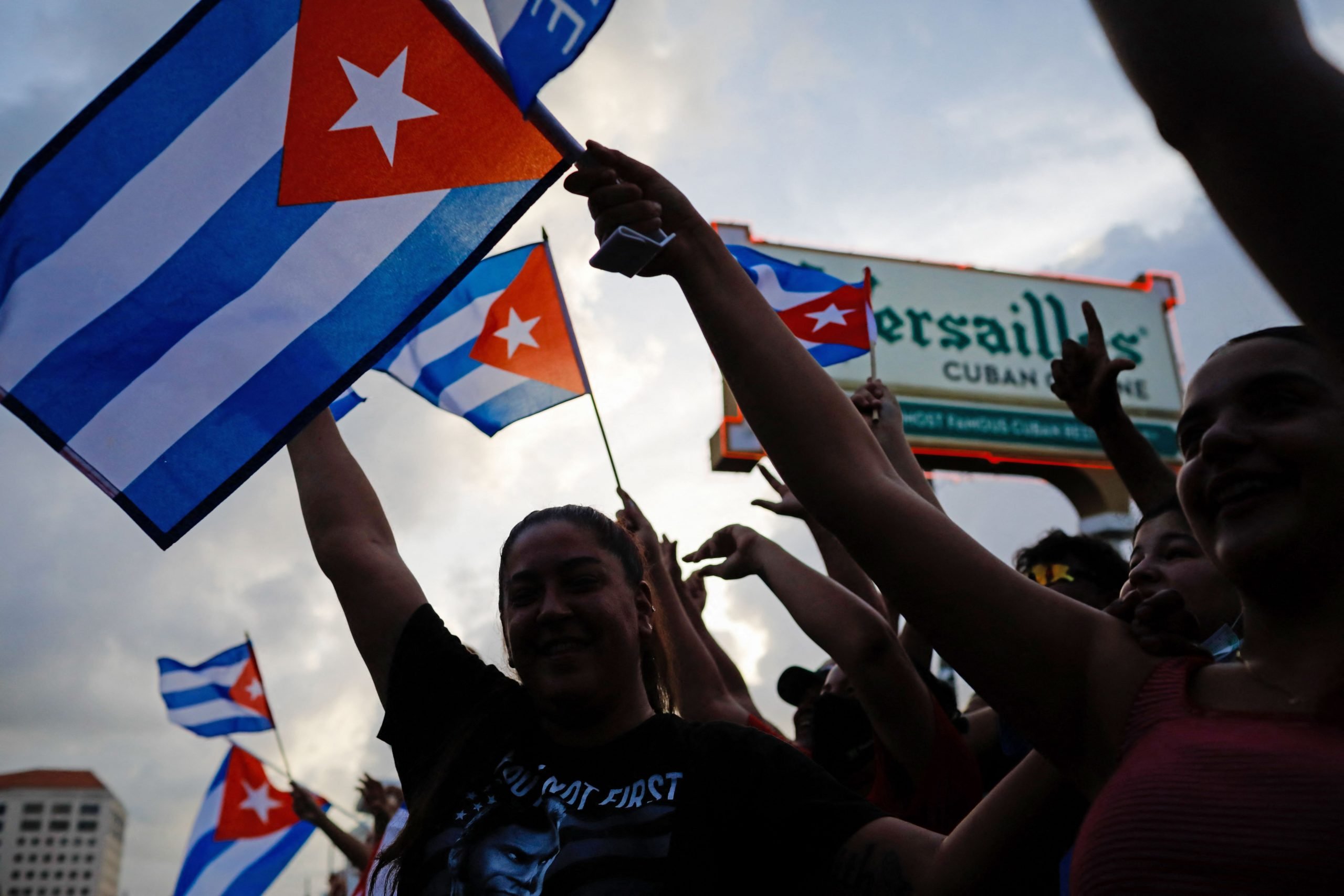
Amnesty International has written to Australia’s Foreign Minister Marise Payne regarding to ongoing protests in Cuba.

Since the beginning of these demonstrations, Amnesty International has received with alarm reports of internet blackouts, arbitrary arrests, and excessive use of force – including police firing on demonstrators. We continue to receive reports that there is a long list of missing persons and of other repressive measures against demonstrators.

Since 2019, the Cuban population has been facing shortages of food, medicine and fuel, a situation that has intensified over the past year, mainly due to COVID-19. These shortages are in part to the longstanding embargo imposed by the United States. The embargo does hinder the Cuban Government’s ability to respond to this crisis, as Amnesty
International has said for decades, and as United Nations experts and others have highlighted. However, the existence of the embargo is no justification for the Cuban authorities’ repressive response to the protests on Sunday.

Amnesty International has also written to representatives at the Cuban and United States Embassies.

LGBTQIA+ Australians have been left out of the 2021 Census

Amnesty International has written to Assistant Treasurer Michael Sukkar MP to convey our dismay over the Australian Government’s decision to not include questions about sexual orientation, gender identity and variations in sex characteristics in Census 2021.

Census 2021 is the Australian Government’s key opportunity to understand what the community needs – particularly in relation to health and mental health services, education, and community and social services. As a result of this decision, the Government cannot understand the needs of LGBTQIA+ people, and the community will miss out on vital services, simply because of their sexual orientation, gender identity and variations of sex characteristics.

This is a matter of serious concern, as it will result in a service gap that constitutes discrimination of the LGBTQIA+ community. Every person is born free and equal in dignity and rights and is entitled to the rights and freedoms in the Universal Declaration of Human Rights without distinction of any kind. With special consideration on the Principles on the Application of International Human Rights Law in Relation to Sexual Orientation and Gender Identity (the ‘Yogyakarta Principles’), it is essential that Governments acknowledge that sexual orientation, gender identity and variations of sex characteristics are integral to people’s dignity and humanity and must not be the basis of discrimination or abuse.

Most LGBTQIA+ Australians will have a horror story about not being able to access health and mental health services, education, and community and social services. Research indicates that LGBTQIA+ people are more likely to experience discrimination, bullying and abuse and are significantly more at risk of suicide, self-harm and mental health impacts as a result. Yet without the necessary data to steer service delivery, the Government cannot ensure the LGBTQIA+ community have access to required services, ensuring that human rights are enjoyed without discrimination.

Judge Announcement: Amnesty International Australia Media Awards 2021

The Amnesty International Australia Media Awards are held to recognise excellence in reporting of human rights issues in the Australian media.

We are delighted to announce the judges for this years’ awards for all six categories.


Indigenous Issues Reporting


Larissa Behrendt, ABC Radio

Distinguished Professor Larissa Behrendt is a Eualeyai/Kamillaroi woman. She is an academic, a lawyer, an award-winning writer and an award winning filmmaker. She is Associate Dean (Indigenous Research) at the University of Technology Sydney and the Director of Research at the Jumbunna Institute. Larissa is the Chair of the Cathy Freeman Foundation, a Trustee of the Australian Museum, a board member of the Sydney Community Fund and a member of the Metropolitan Local Aboriginal Land Council. She is also the host of Speaking Out on ABC Radio National and the ABC local radio network. Her latest novel, After Story, is published by UQP. 

Miriam Corowa, ABC News

Miriam-Corowa

Jodan Perry, SBS

Image of Jodan Perry

Miriam Corowa is a broadcaster, reporter, presenter and producer who has worked in the media since 2000. Pairing an avid interest in Indigenous affairs with general news production, she has worked at both the Special Broadcasting Service and the Australian Broadcasting Corporation across programmes such as World News Australia, Message Stick and currently presents and reports for the ABC’s News Channel. Miriam co-hosted the Weekend Breakfast programme, on the ABC News Channel, from its’ inception in February 2012 until January 2018, and continues to enjoy presenting and reporting for the channel. More recently, Miriam has added hosting the Regional News programme on the ABC News Channel since its’ launch in July 2020. Miriam is a Bundjalung woman, calling the far north coast of New South Wales home.

Jodan Perry is an Executive Producer at NITV News & Current Affairs, and host of Over the Black Dot.


Print/Online Media


Charis Chang, news.com.au

Charis Chang has been a reporter for more than 10 years, beginning her career in newspapers before heading online. In a former life, she was a paralegal and got her start in journalism through covering council meetings and other news for local newspapers in regional NSW, Melbourne, and Sydney including the Manly Daily. She has reported extensively on the environment and climate change, as well as health issues including coronavirus, and has also begun tackling data journalism. Highlights of her career include interviewing prime ministers and covering several federal elections. In 2019, she travelled with the press pack during the election campaign. She has also been involved in campaigns on mental health, organ donation and recycling.

Lisa Davies, The Sydney Morning Herald

Lisa Davies is the Editor of The Sydney Morning Herald. Lisa began her career at the national newswire AAP, and has also worked for the UK’s Press Association in London and The Daily Telegraph newspaper in Sydney. Lisa joined Fairfax Media in early 2012. She has held several senior reporting and editing roles including Deputy Editor, Investigations Editor and Justice Editor. In 2016 she was also Fairfax Media’s Federal Election Editor. Lisa has had a particular focus on crime and court reporting in her career, including travelling to South Africa to cover the Oscar Pistorius murder trial, and publishing a book about the inspiring recovery of Sydney bashing victim, Lauren Huxley.

Josh Butler, The New Daily

Josh Butler is political editor with The New Daily, based in the federal parliamentary press gallery in Canberra. He covers federal politics, COVID, inequality and social media. Josh has previously worked with Network 10 and the Huffington Post.


Radio


Martin Walters, 2Ser

Martin has worked in and around radio broadcasting for over 20 years. After relocating to Sydney from New Zealand he spent a long period with the Community Broadcasting Association of Australia, before joining 2SER 107.3 as Managing Director in 2019. He enjoys the ever-changing atmosphere and vitality of community broadcasting and is a strong believer in the role it plays in fostering meaningful connections, upskilling and empowering volunteers, and elevating the voices of those underrepresented in the mainstream.

Alex Barwick, ABC Radio Alice Springs

ABC Radio broadcaster Alex Barwick is the Drive Presenter in Alice Springs, Northern Territory. She has over 20 years experience in journalism and communications, working with the national broadcaster, freelancing and in the community development sector both in Australia and overseas.


Television


Fauziah Ibrahim, ABC News Breakfast

Fauziah Ibrahim anchors ABC TV’s flagship Weekend Breakfast programme and has over twenty years’ experience of reporting and anchoring for international broadcasters including Al Jazeera, CNBC and the BBC. Fauziah has also produced various long-form documentaries and regularly hosts various events and festivals.

Lindy Kerin, NITV

Lindy Kerin is part of the all Indigenous editorial team at NITV. She is currently the Executive Editor of News and Current Affairs. Lindy worked in strategic communications at the Australian Human Rights Commission with the Aboriginal and Torres Strait Islander Social Justice Commissioner June Oscar AO and was Assistant Director of Media and Communications at the Disability Royal Commission. Previously, she worked with the national broadcaster over 19 years in news and current affairs including the flag ship radio current affairs programs AM, PM and The World Today.

Stela Todorovic, 10 News

Stela Todorovic is a Political Reporter with Network 10 and host of the ‘Women of the House’ podcast, based in the Press Gallery at Parliament House. Fleeing the war in Bosnia, Stela moved to Western Sydney with her mum and dad at the age of 4. As a kid she never understood why she always had to explain to her friends where Bosnia was or what had happened there. So, from a young age she vowed to use storytelling to help give others a voice and bring about change. Stela has always cared about the social issues plaguing low income and migrant communities in Australia.


Photography


Jeff Darmanin, The Daily Telegraph and Sunday Telegraph

Jeff Darmanin is a media industry professional with over 30 years experience as a Photojournalist & Picture Editor working for News Corp.  Jeff covered major events in Australia and around the globe and had the privilege of shooting portrait sessions with some of the world’s most famous and influential people. The coverage of news through images has the ability to raise awareness and emotion like no other medium and Jeff is very proud of his association with this industry. During his time as Pictorial Editor and Director of Photography and Video Jeff was the leader of a large team of Photojournalists and Picture Editors responsible for the gathering of editorial imagery around the country. Jeff then led the picture desk at Diimex. The Digital Image Exchange/ Diimex has been designed to tackle many of the issues plaguing the Photographic and Publishing industry.  In 2016 Jeff re joined New Corp as the Sunday Telegraph Picture Editor and the role has now expanded to Head of Vision, Daily & Sunday Telegraph, Picture Editor at The Saturday & Sunday Telegraphs.

Nick Moir, Sydney Morning Herald

Nick Moir is Chief Photographer at The Sydney Morning Herald. He has been recognised both nationally and internationally for his work on severe weather , bushfires and other extreme environmental phenomena. He has covered events such as the 2004 Tsunami in Indonesia , several US tornado seasons and most major bushfire seasons in NSW. He has four children and lives in Newport with his partner Linda.

Sylvia Liber, Illawarra Mercury

Sylvia Liber has been a passionate visual storyteller at the Illawarra Mercury for over twenty years. As a regional photojournalist, her work days are spent covering a variety of assignments from a simple weather photo to the extremes of the human emotions. To shooting with compassion and care to at times having to shoot with courage and no fear. In recent years, Sylvia has been shooting underwater portraits and is now addicted. It’s capturing these raw and diverse moments that inspire her every day. Some of her most rewarding accolades include winning five Walkley Awards.


Cartoon


Cathy Wilcox, Sydney Morning Herald

Cathy Wilcox, born in 1963, is an Australian cartoonist who lives and works in Sydney. She studied at Sydney College of the Arts then lived in Paris, illustrating English language publications, from 1985-87. She began drawing regularly for the Sydney Morning Herald in 1989. She is a keen observer of society and politics, and has won many awards for her work including three Walkley Awards, several Stanley Awards, the Museum of Australian Democracy’s Political Cartoonist of the Year 2016 and 2020 and a Kennedy Award in 2017. She has illustrated numerous picture books, theatre productions and done a TEDx talk. She is president of the Australian Cartoonists Association, a member MEAA and of Cartooning For Peace, and continues to draw editorial cartoons for Nine Media in the Sydney Morning Herald and The Age.

Fiona Katauskas

I became a cartoonist quite accidentally. Prior to this incarnation, I studied politics at the Australian National University, travelled extensively and worked in overseas aid and human rights. Finding myself made redundant in late 1996, I despaired for a bit (as you do) then, with a bit of hassling from friends who’d been receiving my handmade birthday cards for years, embraced the personal reinvention zeitgeist and took up the pen on a full-time basis in 1997. Since then, my work has appeared in a wide range of publications, including the Sydney Morning Herald, The Age, The Australian, The Australian Financial Review, The Bulletin, The Chaser, Eureka Street and New Matilda. My political cartoons have popped up regularly in the National Museum’s annual Behind the Lines exhibition and Scribe’s yearly Best Australian Political Cartoons anthologies (including the cover of the 2009 edition). I’ve also illustrated loads of books for just about every publisher, designed cards for the Ink Group and t-shirts for Mambo.

Jon Kudelka, The Saturday Paper

Jon Kudelka has been working as a political cartoonist for thirty years. He was a long time contributor for The Australian and is currently drawing for The Saturday Paper and The Hobart Mercury. He’s won two Walkley awards for political cartooning and runs an art gallery in Hobart.

Chile: Amnesty International demands investigations into Carabineros’ former and current General Directors for human rights violations

Amnesty International published a new video today calling on the Chilean National Prosecutor’s Office to investigate the high command of the Carabineros, specifically the former Director General and the current Director General, for widespread human rights violations committed during the period of social unrest that began in October 2019.

Given the imminent closure of the investigation into the attacks that left Gustavo Gatica permanently blind, set for 30 July; the review of the precautionary measures against the Carabinero identified as having shot the tear gas canister that blinded Fabiola Campillai, and the request for an extension of the deadline for the investigation by the Prosecutor’s Office in this case, which will be on 28 July; Amnesty International considers investigations of the full chain of command  to be as necessary as they are urgent.

“It’s disappointing that, after more than 20 months, only small steps have been taken to investigate some of the Carabineros’ strategic commanders, and none in individual cases. There are good reasons to believe that the former General Director and the then-Director of Order and Security – who is now the current Director General – could have consented to the commission of acts of torture and ill-treatment against protesters, including cases as serious as that of Gustavo Gatica or Fabiola Campillai,” said Clara del Campo, campaigner for South America at Amnesty International.

Clara del Campo also stated that the fact that a person is investigated for their alleged responsibility in committing a crime does not nullify the presumption of innocence that everyone enjoys.

“The delay in the investigation into commanders is even more alarming in a context where social protest in Chile endures and continues to be repressed with police violence. The methods and weapons have changed, but the intention to harm the protesters persists. Until there is accountability from the high command, we will continue to lament human rights violations. Impunity fuels repetition.”

In October 2020, Amnesty International published a thorough report, Eyes on Chile: Police violence and command responsibility during the period of social unrest, in which it analyzed the actions of Carabineros officers between 18 October and 30 November 2019. It concluded that serious human rights violations had been committed, including widespread violations of the rights of to personal integrity, because the strategic commanders did not take all the necessary measures to prevent them from happening. In said report, the organization warned that, in order to guarantee the non-repetition of events such as those analyzed in the report, it is not only necessary to judge all those responsible, up to the highest possible level, but also that the Carabineros institution be substantially reformed. Both recommendations remain necessary and urgent.

Pegasus Project: Macron among world leaders selected as potential targets of NSO spyware

New evidence uncovered by the Pegasus Project has revealed that the phone numbers for 14 heads of state, including French President Emmanuel Macron, Pakistan’s Imran Khan and South Africa’s Cyril Ramaphosa, as well as hundreds of government officials, were selected as people of interest by clients of spyware company NSO Group.  

Amnesty International’s Secretary General Agnes Callamard said: 

“The unprecedented revelation that the phones of at least fourteen heads of state may have been hacked using NSO Group’s Pegasus spyware should send a chill down the spine of world leaders.  

“We have long known that activists and journalists are targets of this surreptitious phone-hacking – but it’s clear that even those at the highest levels of power cannot escape the sinister spread of NSO’s spyware. 

“NSO Group can no longer hide behind the claim that its spyware is only used to fight crime – it appears that Pegasus is also the spyware of choice for those wanting to snoop on foreign governments. 

“The damning revelations of the Pegasus Project underscore the urgent need for strong regulation to reign in a wild west surveillance industry. States must implement a global moratorium on the export, sale, transfer and use of surveillance equipment until a robust human rights-compliant regulatory framework is in place. 

“NSO Group must immediately stop selling its equipment to countries with a track record of putting human right defenders and journalists under unlawful surveillance. 

“The Israeli government should also not authorise licenses for the export of NSO Group’s cybersurveillance technology if there is a substantial risk it could be used for human rights violations.” 

Background 

NSO Group’s spyware has been used to facilitate human rights violations around the world on a massive scale, according to a major investigation into the leak of 50,000 phone numbers of potential surveillance targets. These include heads of state, activists and journalists, including Jamal Khashoggi’s family. 

The Pegasus Project is a ground-breaking collaboration by more than 80 journalists from 17 media organizations in 10 countries coordinated by Forbidden Stories, a Paris-based media non-profit, with the technical support of Amnesty International, who conducted cutting- edge forensic tests on mobile phones to identify traces of the spyware. 

Washington Post, part of the consortium, revealed today the phone numbers for 14 heads of state were included in the list as people of interest. It includes the King of Morocco, Mohammed VI, France’s Emmanuel Macron, Iraq’s Barham Salih, South Africa’s Cyril Ramaphosa, Egypt’s Mostafa Madbouly, Pakistan’s Imran Khan, Morocco’s Saad-Eddine El Ohtmani, Lebanon’s Saad Hariri, Uganda’s Ruhakana Rugunda, and Belgium’s Charles Michel. The list contained phone numbers for more than 600 government officials and politicians from 34 countries. 

Amnesty International was unable to conduct forensic analysis on the phones of world leaders to confirm whether they were targeted or if spyware was successfully installed.  

NSO has denied that Macron and Mohammed VI ever appeared on a target list for clients. The company insists that its spyware is only intended for use against terrorists and serious criminals and has reiterated that it will “investigate all credible claims of misuse” and “take strong action” where such allegations prove correct. 

Israeli surveillance giant NSO Group has been bankrolled by major private equity firms Novalpina Capital and Francisco Partners, with numerous investors behind them. Pension firms in the UK and US also have a stake in the company. 

The Pegasus Project: Massive data leak reveals Israeli NSO Group’s spyware used to target activists, journalists, and political leaders globally

NSO Group’s spyware has been used to facilitate human rights violations around the world on a massive scale, according to a major investigation into the leak of 50,000 phone numbers of potential surveillance targets. These include heads of state, activists and journalists, including Jamal Khashoggi’s family.

The Pegasus Project is a ground-breaking collaboration by more than 80 journalists from 17 media organizations in 10 countries coordinated by Forbidden Stories, a Paris-based media non-profit, with the technical support of Amnesty International, who conducted cutting- edge forensic tests on mobile phones to identify traces of the spyware.

“The Pegasus Project lays bare how NSO’s spyware is a weapon of choice for repressive governments seeking to silence journalists, attack activists and crush dissent, placing countless lives in peril,” said Agnès Callamard, Secretary General of Amnesty International

“These revelations blow apart any claims by NSO that such attacks are rare and down to rogue use of their technology. While the company claims its spyware is only used for legitimate criminal and terror investigations, it’s clear its technology facilitates systemic abuse. They paint a picture of legitimacy, while profiting from widespread human rights violations.”

“Clearly, their actions pose larger questions about the wholesale lack of regulation that has created a wild west of rampant abusive targeting of activists and journalists. Until this company and the industry as a whole can show it is capable of respecting human rights, there must be an immediate moratorium on the export, sale, transfer and use of surveillance technology.”

In a written response to Forbidden Stories and its media partners, NSO Group said it “firmly denies… false claims” in the report. It wrote that the consortium’s reporting was based on “wrong assumptions” and “uncorroborated theories” and reiterated that the company was on a “life-saving mission”. A fuller summary of NSO Group’s response is available here

The Investigation 

At the centre of this investigation is NSO Group’s Pegasus spyware which, when surreptitiously installed on victims’ phones, allows an attacker complete access to the device’s messages, emails, media, microphone, camera, calls and contacts.

Over the next week, media partners of The Pegasus Project – including The Guardian, Le Monde, Süddeutsche Zeitung and The Washington Post – will run a series of stories exposing details of how world leaders, politicians, human rights activists, and journalists have been selected as potential targets of this spyware.

From the leaked data and their investigations, Forbidden Stories and its media partners identified potential NSO clients in 11 countries: Azerbaijan, Bahrain, Hungary, India, Kazakhstan, Mexico, Morocco, Rwanda, Saudi Arabia, Togo, and the United Arab Emirates (UAE). 

NSO Group has not taken adequate action to stop the use of its tools for unlawful targeted surveillance of activists and journalists, despite the fact that it either knew, or arguably ought to have known, that this was taking place. 

“As a first step, NSO Group must immediately shut down clients’ systems where there is credible evidence of misuse. The Pegasus Project provides this in abundance,” said Agnès Callamard.

Khashoggi family targeted  

During the investigation, evidence has also emerged that family members of Saudi journalist Jamal Khashoggi were targeted with Pegasus software before and after his murder in Istanbul on 2 October 2018 by Saudi operatives, despite repeated denials from NSO Group. 

Amnesty International’s Security Lab established that Pegasus spyware was successfully installed on the phone of Khashoggi’s fiancée Hatice Cengiz just four days after his murder.

His wife, Hanan Elatr was also repeatedly targeted with the spyware between September 2017 and April 2018 as well as his son, Abdullah, who was also selected as a target along with other family members in Saudi Arabia and the UAE. 

In a statement, the NSO Group responded to the Pegasus Project allegations saying that its “technology was not associated in any way with the heinous murder of Jamal Khashoggi”. The company said that it “previously investigated this claim, immediately after the heinous murder, which again, is being made without validation”.

Journalists under attack

The investigation has so far identified at least 180 journalists in 20 countries who were selected for potential targeting with NSO spyware between 2016 to June 2021, including in Azerbaijan, Hungary, India and Morocco, countries where crackdowns against independent media have intensified.

The revelations show the real-world harm caused by unlawful surveillance: 

  • In Mexico, journalist Cecilio Pineda’s phone was selected for targeting just weeks before his killing in 2017. The Pegasus Project identified at least 25 Mexican journalists were selected for targeting over a two-year period. NSO has denied that even if Pineda’s phone had been targeted, data collected from his phone contributed to his death.
  • Pegasus has been used in Azerbaijan, a country where only a few independent media outlets remain. More than 40 Azerbaijani journalists were selected as potential targets according to the investigation. Amnesty International’s Security Lab found the phone of Sevinc Vaqifqizi, a freelance journalist for independent media outlet Meydan TV, was infected over a two-year period until May 2021.
  • In India, at least 40 journalists from nearly every major media outlet in the country were selected as potential targets between 2017-2021. Forensic tests revealed the phones of Siddharth Varadarajan and MK Venu, co-founders of independent online outlet The Wire, were infected with Pegasus spyware as recently as June 2021.
  • The investigation also identified journalists working for major international media including the Associated Press, CNN, The New York Times and Reuters as potential targets. One of the highest profile journalists was Roula Khalaf, the editor of the Financial Times.

“The number of journalists identified as targets vividly illustrates how Pegasus is used as a tool to intimidate critical media. It is about controlling public narrative, resisting scrutiny, and suppressing any dissenting voice,” said Agnès Callamard. 

“These revelations must act as a catalyst for change. The surveillance industry must no longer be afforded a laissez-faire approach from governments with a vested interest in using this technology to commit human rights violations.”

Exposing Pegasus infrastructure 

Amnesty International is today releasing the full technical details of its Security Lab’s in-depth forensic investigations as part of the Pegasus Project. 

The Lab’s methodology report documents the evolution of Pegasus spyware attacks since 2018, with details on the spyware’s infrastructure, including more than 700 Pegasus-related domains. 

“NSO claims its spyware is undetectable and only used for legitimate criminal investigations. We have now provided irrefutable evidence of this ludicrous falsehood,” said Etienne Maynier, a technologist at Amnesty International’s Security Lab.

There is nothing to suggest that NSO’s customers did not also use Pegasus in terrorism and crime investigations, and the Forbidden Stories consortium also found numbers in the data belonging to suspected criminals.

“The widespread violations Pegasus facilitates must stop. Our hope is the damning evidence published over the next week will lead governments to overhaul a surveillance industry that is out of control,” said Etienne Maynier.

In response to a request for comment by media organizations involved in the Pegasus Project, NSO Group said it “firmly denies” the claims and stated that “many of them are uncorroborated theories which raise serious doubts about the reliability of your sources, as well as the basis of your story.” NSO Group did not confirm or deny which governments are NSO Group’s customers, although it said that the Pegasus Project had made “incorrect assumptions” in this regard.  Notwithstanding its general denial of the claims, NSO Group said it “will continue to investigate all credible claims of misuse and take appropriate action based on the results of these investigations”.

Offshore detention eight years on: 230 people remain trapped on PNG and Nauru and 133 are locked up in prison hotels across Australia

The announcement by the then Rudd Government that those arriving by boat after 19 July 2013 would never be settled in Australia was never backed up with a clear plan as to what would happen to the more than 3,000 asylum seekers sent to Papua New Guinea and Nauru for processing. 

Eight years later 230 people are still trapped offshore with around another 133 locked up in Alternative Places of Detention around Australia. One of those locked up in an Australian hotel for almost two years is Don Khan, 24. Khan says:  “I’m from Myanmar. I’m Rohingya. I left my country in 2013, arriving at Christmas Island in October. I was 17. I was sent to Papua New Guinea detention centre, before coming to Australia because I was very sick in 2019.

“I have been locked up in a hotel in Australia – first at Kangaroo Point in Brisbane, then the Mantra in Melbourne and now the Park Hotel – for almost two years now. This is very hard. For all of us, this is a very hard time. What is our crime? We did not commit any crime. I really worry about what will happen tomorrow – I feel scared. I am human like you, I have family like you. I haven’t seen my family for eight years. Please, give us our rights, give us our freedom.”

Eight years of such suffering could end tomorrow if the Australian Government accepted the offer to take 150 refugees a year, originally made by New Zealand in 2013. That offer is still on the table and with the US resettlement deal, struck in 2016, about to end, this is an obvious solution that  would enable  refugees to finally find safety.

Dr Graham Thom, Amnesty International Australia’s Refugee Adviser, said: “For eight years we have been working to end this nightmare for all those trapped offshore and locked up onshore. It is astonishing that such cruelty and suffering has gone on for so long. What makes it all the more difficult to comprehend is that if the Australian Government had accepted the New Zealand offer way back in 2013, this could have all been over by now. It’s still not too late. Scott Morrison and Karen Andrews can accept that offer today and get those still suffering to safety.” 

Papuan special autonomy law must ensure protection of Indigenous rights and meaningful involvement of Papuan people

Following the Indonesian House of Representatives renewal of the special autonomy law for Papua and West Papua, Amnesty International Indonesia and Amnesty International Australia call on the Indonesian government to ensure that the rights of the Papuan people, particularly that Indigenous communities are protected by the law.

“Despite the protections contained in the previous law, in practice, Indigenous rights in Papua have often been sidestepped in the past 20 years of special autonomy,” Amnesty International Indonesia Executive Director Usman Hamid said. “The government must ensure that the new law will truly protect Indigenous communities. This can only be done if the government involves the Papuan people in the implementation of special autonomy.”

The Papuan special autonomy law was first passed in 2001 in response to growing calls for Papuan self-determination following the fall of former president Soeharto’s New Order regime. The law was meant to give the Papuan people more room to govern themselves while still remaining part of Indonesia. One of the main focuses of the legislation was on the protection of Indigenous peoples. In this regard, the term “Indigenous communities” appeared 62 times in the text of the law.

But in practice, the protections in the special autonomy law, particularly those regarding natural resources, have often been ignored or overruled by conflicting laws. This can be seen by the continuing deforestation in the region. According to data from Forest Watch Indonesia, between 2000 and 2009, the deforestation rate in Papua was around 60,300 hectares per year. Between 2013 and 2017, the rate had more than tripled to 189,300 hectares per year.

The uneven implementation of the law has resulted in widespread dissatisfaction with special autonomy, leading to a number of protests in Papua and other regions in Indonesia over the past year.

These protests were often met by excessive force by Indonesian security personnel. In a demonstration that just took place on July 14, 2021 at Cendrawasih University, Jayapura, there were at least four students who were injured after clashes with security forces. Twenty-three other students were arrested and eventually released. On the morning of July 15, protesters demonstrating in front of the Indonesian House of Representatives building were dispersed by the authorities, and at least 40 protesters were arrested and taken to Jakarta Police headquarters. 

Previously, in another demonstration in Cendrawasih University in September 2020, two protesters were allegedly injured by blows from police officers to the back of their heads and their torsos. In another demonstration in Kendari, Southeast Sulawesi, police used a low-flying helicopter to force protesters to disperse.

Even public discussions about special autonomy were met with repression. When the Papuan People’s Assembly (MRP), an official state institution established by the special autonomy law, sought to hold a public meeting about the implementation of special autonomy in Merauke in November 2020, two MRP members and their staffers were arrested on allegations of treason. They were eventually released without being charged.

“The Indonesian government must ensure that Indigenous Papuans are given meaningful involvement in the special autonomy law,” Amnesty International Australia National Director, Sam Klintworth, said.      

Article 25 of the ICCPR states that every citizen has the right to participate in public affairs. ICCPR General Comment Number 25 of 1996, paragraph 5 further explains this provision by extending public participation to the realm of policymaking and implementation at international, national, and local levels.

The United Nations Declaration on the Rights of Indigenous Peoples also affirms Indigenous peoples’ right to self-government and calls on states to “consult and cooperate in good faith” with Indigenous peoples “in order to obtain their free, prior and informed consent before adopting and implementing legislative or administrative measures that may affect them.” 

“This can only happen if the government upholds the right to freedom of expression and peaceful assembly for all Papuans and stops using treason articles to prosecute peaceful protesters.” 

BACKGROUND

Every individual without exception has the right to freedom of expression and peaceful assembly. The ICCPR explicitly guarantees freedom of opinion and expression, as stated in Article 19, which is further described in General Comment No. 34 to Article 19 of the Covenant. This instrument is binding on all countries that have ratified it, including Indonesia. Referring to the Covenant, political expression is also part of the freedom of expression and opinion whose existence is guaranteed by international human rights instruments.

In the national context, the right to freedom of assembly and expression has also been guaranteed in the Indonesian Constitution, namely Article 28E clause (3) of the 1945 Constitution, as well as Article 24 clause (1) of Law No. 39/1999 on Human Rights.

Amnesty International does not take any position regarding the political status of any province in Indonesia. However, we uphold the principle of freedom of expression, including the right to voice political opinion or views peacefully, as long as they do not contain hatred, discrimination or violence.

Ethiopia: End arbitrary detentions of Tigrayans, activists and journalists in Addis Ababa and reveal whereabouts of unaccounted detainees

Police in Addis Ababa have arbitrarily arrested and detained dozens of Tigrayans without due process, following the recapture of the Tigray region’s capital, Mekelle, by forces from the Tigray People’s Liberation Front (TPLF) that also calls itself Tigray Defence Forces (TDF) on 28 June, Amnesty International said today. The arrests appear to be ethnically motivated, with former detainees, witnesses and lawyers describing how police checked identity documents before arresting people and taking them to detention centres.

Following the withdrawal of the Ethiopian National Defense Force from parts of Tigray and the announcement of a unilateral ceasefire by the Federal government on 28 June, for the last two weeks Tigrayans in Addis Ababa have been arbitrarily arrested and detained. Former detainees told us that police stations are filled with people speaking Tigrinya, and that authorities had conducted sweeping mass arrests of Tigrayans,” said Deprose Muchena, Amnesty International’s Director for East and Southern Africa.

“Amnesty International urges the Ethiopian government to end this wave of arbitrary arrests, and to ensure that all detainees are either promptly charged with internationally recognized crimes and given fair trials, or immediately and unconditionally released. The government must also inform families of the whereabouts of those detained and ensure that they have access to lawyers and their relatives.” 

While some people have been released on bail, approximately hundreds of others remain in detention, and their whereabouts unknown. Amnesty International is not aware of any internationally recognizable criminal charges against those still in detention who were arrested in these cases documented by the organization. 

Ethiopian law requires police to present detainees in court within 48 hours of arrest to review the grounds for arrest. Promptly bringing detainees before a judicial authority is an important safeguard against torture, ill-treatment and enforced disappearance.

Beaten, harassed, arrested

Amnesty International remotely interviewed 14 people in Addis Ababa, including former detainees, eyewitnesses to arrests, and relatives and lawyers of those still in detention.

One man, who was arrested in the Merkato area on Friday 2 July, told the organization that police raided his snooker game business at around 7pm. They began to harass and beat customers and employees and demanded to see their identity documents, before taking five people, all ethnic Tigrayans, to the nearby Woreda 6 police station. Identification cards in Ethiopia identify the ethnicity of the holder. The shopkeeper, who was among those arrested, said:

“They kept us on the open air and it was raining the whole night. We also stayed there the next day on Saturday. More people of Tigrayan origin joined us during the daytime on Saturday. We were 26 Tigrayans arrested in the station that day.”

Nineteen people were released the next day – some after presenting a bond – but the rest were taken to Awash Arba area in Afar Region, 240 kilometers east of Addis Ababa, according to the people Amnesty International has interviewed. The shopkeeper was released on Saturday evening, only to learn that his brother was among those being held at Awash Sebat. He said:

“The next day I was told my brother is also arrested. He called us from Awash Sebat using a phone line of another person. He told us he is taken there by the police with many people. I know some of the people arrested with him.”

Tsehaye Gebre Hiwot, who works at a tyre maintenance shop near Gotera, was arrested by police together with a relative, Haile Girmay, on 3 July. A family member told Amnesty International that she had visited Tsehaye Gebre Hiwot in the nearby police station.

She said: “When I visited him, I saw many other Tigrayan broomsticks and mopper vendors [a business traditionally associated with people of Tigrayan origin] arrested there. They were all speaking in Tigrinya. I don’t know if they are released or taken with him.”

A further nine witnesses told Amnesty International that they had seen dozens of Tigrayans detained in Tekle Haimanot – 5th Police Station, Gerji, Federal Police Remand Centre, and Merkato police stations when visiting detained friends and relatives. One man, who said five of his friends had been arrested in a raid on a dormitory hall on 2 July in Tekle Haimanot, said he saw about 50 Tigrayans in the 5th police station when he visited on 3 July.

Amnesty International also heard of similar pattern of arbitrary arrests targeting Tigrayan residents in Awash Sebat, a town in Afar Region 200 kilometres to the east of Addis Ababa. One witness told Amnesty International that five Tigrayan business owners in the town, including her husband, were arrested on 3 July. She said:

“He and many other Tigrayans in the town were arrested that day. They stayed in the police station of the Federal Police until 7 July before they were transferred to Awash Arba Prison at a place called Berta. They were taken to a court in Awash Arba on 7 July and the court remanded them until 19 July. Then the police took them to the prison. The prison is around 35 kilometers away from Awash Sebat. We visit and deliver them food and clothes in the prison.”

Activists and journalists targeted

Tsegaze’ab Kidanu is an Tigrayan living in Addis Ababa, who has been coordinating humanitarian assistance for people affected by the conflict in Tigray. He is also a volunteer managing media relations for an association called Mahbere Kidus Yared Zeorthodox Tewahido Tigray. On 1 July, a day before his association released a statement on the human rights situation in Tigray, he was arrested at his home.

Tsegaze’ab’s family and lawyer visited him at the Federal Police Remand Centre on 2 and 3 July, but when they returned on 4 July he was not there. According to Tsegaze’ab’s lawyer, they later heard from another detainee that he had been taken to Awash Arba. His lawyer was also never informed of charges brought against Tsegaze’ab.

The lawyer also shared with Amnesty International the names of 24 Tigrayans who were arrested from various neighbourhoods of Addis Ababa, including 22 Mazoria and Tekle Haimanot, between 30 June and 8 July. The lawyer told Amnesty International that one detainee, released on bail on 5 July, was charged of having ‘links with TPLF (the Tigray People’s Liberation Front)’ which is designated as a terrorist group by the Ethiopian government.

Journalists and media workers who have been reporting on the situation in Tigray have also been detained without due process.  On 30 June, police arrested 11 journalists and media workers for Awlo Media and Ethio Forum, You Tube based media who have been covering the conflict and the human rights situation in Tigray, along with their lawyer. A lawyer and family members interviewed by Amnesty International said that they were able to visit the detainees on 1 July, but since 2 July their whereabouts are unknown and they also have no information whether the detainees have been charged with any crime or not. A relative of one detainee said:

“On Friday [2 July], the police told us that they released them early in the morning around 6 pm. But none of them came to their house or called us. When we asked them repeatedly, the police said, we[police] don’t know where they are, don’t ever come again’. We have been looking for them since then.”

“Ethiopian authorities must reveal the whereabouts of detainees to their families and lawyers. Not disclosing the fate or whereabouts of detainees is committing the crime of enforced disappearance. Authorities must also ensure that all detainees are protected against torture and other ill-treatment.” said Deprose Muchena.