Here’s why thousands of people are taking to the streets in Cuba

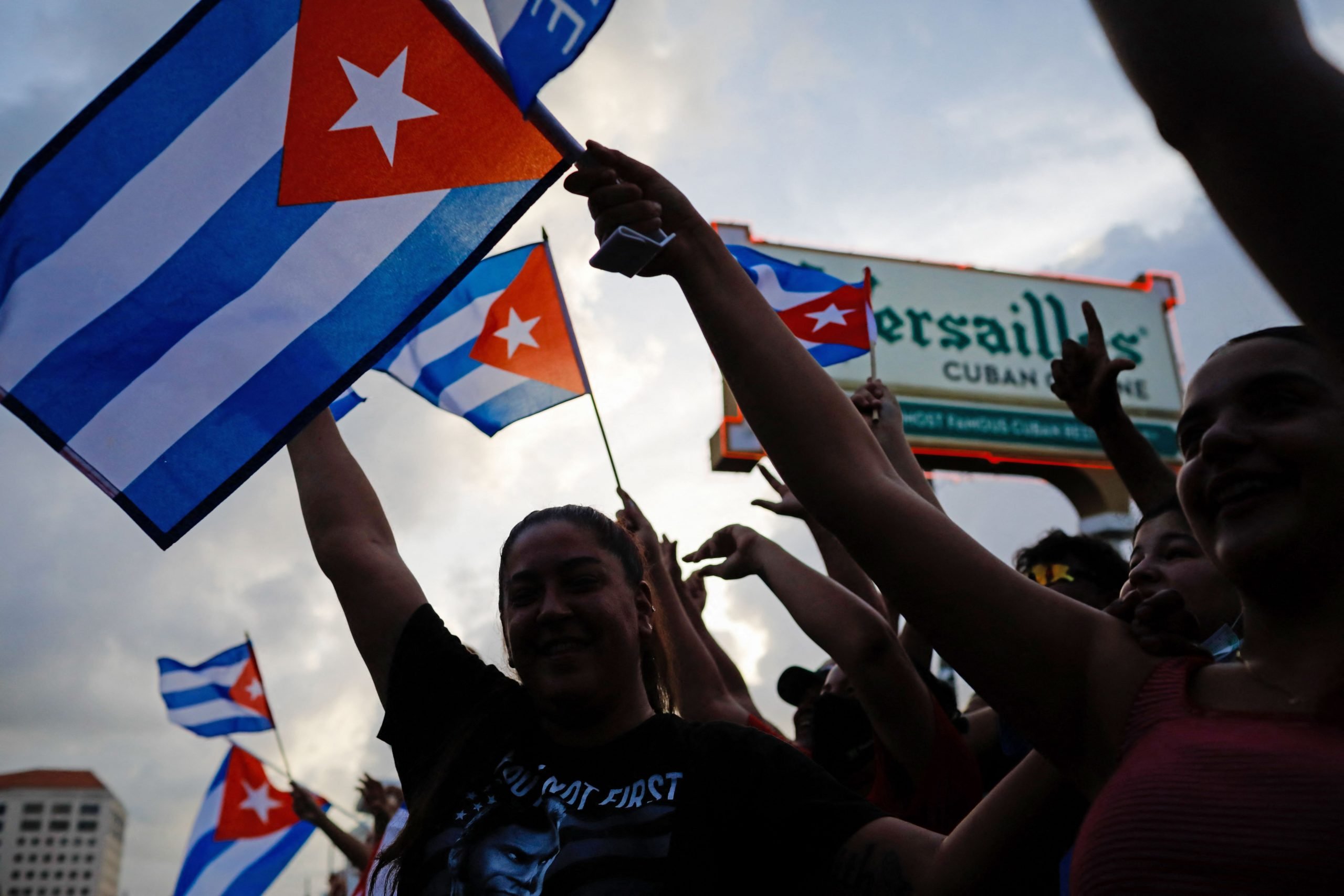
On 11 July thousands of people took to the streets in Cuba to peacefully protest over the economy, shortages of medicines, the response to COVID-19, and harsh restrictions on freedom of expression and assembly.  

Amnesty International is closely monitoring the situation and will be updating this page with the latest information as it emerges. We verify and fact-check each piece of information we receive, but when the information comes from other organizations we clearly specify the source. The Cuban authorities do not allow independent human rights organizations to visit the country, and independent human rights lawyers are prevented from working in the country. 

What we know so far: 

Potentially hundreds of people detained: Human rights lawyers at the NGO Cubalex have produced a working list of 136 people – mostly activists and journalists – who have been detained by the authorities or whose location is unknown following Sunday’s protests. The NGO Prisoners Defenders says it has submitted a list of 187 names to the UN. 

Internet cuts: The United Nations Human Rights Committee has declared that “states … must not block or hinder internet connectivity in relation to peaceful assemblies.” However, network data from Netblocks has reported that several social media and communications platforms, including Whatsapp, Facebook, and Instagram were disrupted in Cuba from 12 July. This is not the first time this has happened. Authorities have almost complete control over the internet in Cuba, and as the country has moved online authorities have controlled and censored the internet. In 2019, during the constitutional referendum, the Open Observatory of Network Interference (OONI) similarly found that independent media had been blocked and that ETECSA, Cuba’s only telecommunications company, had changed its censorship techniques.  

Luis Manuel Otero Alcántara, one of the leaders of the San Isidro Movement, who Amnesty International has named prisoner of conscience three times since March 2020, is among those detained, reportedly at Villa Marista (state security headquarters). Prior to the protests, Luis Manuel had posted a video indicating his intention to join the protests. 

The Committee to Protect Journalists has called on authorities to immediately and unconditionally release all journalists detained during the protests. It said authorities had “intermittently blocked dozens of reporters from leaving their homes” and called on the government to allow the press to cover the protests freely and to stop disrupting internet in the country.

What happened on Sunday? 

The Cuban authorities have used the criminal law to imprison and silence alternative voices in the country for decades. Along with arbitrary dismissals from state employment as a tactic to strip people of their livelihood, this has created a profound climate of fear in Cuba for decades. 

Sunday’s protest seemed to symbolize a breaking of this fear. Many ordinary Cubans protested for the first time in years over the economic situation, exacerbated by the COVID-19 pandemic, lack of medicines and restrictions on freedom of expression. 

The San Isidro Movement is one group, composed of artists, academics, LGBTI people and alternative thinkers who have been generating dialogue over harsh restrictions on freedom of expression in the past months and years. They have been constant targets of the authorities’ repression for this. 

What will happen next and how have the authorities responded? 

While the protests on Sunday were largely peaceful, the authorities deployed police and security forces to disperse and detain protesters. President Díaz-Canel called on “revolutionaries” to confront protesters. Reports of how many are detained range from more than a hundred to thousands. It is reported that at least one person died in the context of the protests. It is unclear if the authorities will release people, or whether the protests will start again. 

The Cuban government has attributed the shortages to the longstanding embargo imposed by the United States. The embargo does hinder or limit the possibility of assistance, as Amnesty International has said for decades, and as United Nations experts and others have highlighted in the past and during the COVID-19 response last year. However, the existence of the embargo is no justification for the Cuban authorities’ repressive response to the protests on Sunday. 

What can you do? 

You can support and take action by: 

a) signing our petition; b) publicly urging the Cuban government to:  

1.    Stop repressing peaceful demonstrators and, instead, guarantee the right to freedom of expression and of peaceful assembly. 

2.    Take steps to address the social demands of the population, given the economic crisis, the shortages of food and medicine, the collapse of the health system – which is not responding to the current COVID-19 crisis – and the accumulation of historical demands for respect of the rights to freedom of expression and peaceful assembly. 

You can do this on social media, tagging them using the handles below: 

Miguel Díaz-Canel, president of Cuba Twitter: @DiazCanelB Facebook: @PresidenciaDeCuba 
Bruno Rodríguez P, minister of Foreign Affairs of Cuba Twitter: @BrunoRguezP Facebook: @CubaMINREX   

Libya: Horrific violations in detention highlight Europe’s shameful role in forced returns

Fresh evidence of harrowing violations, including sexual violence, against men, women and children intercepted while crossing the Mediterranean Sea and forcibly returned to detention centres in Libya, highlights the horrifying consequences of Europe’s ongoing cooperation with Libya on migration and border control, said Amnesty International in a report published today.

‘No one will look for you’: Forcibly returned from sea to abusive detention in Libyadocuments how decade-long violations against refugees and migrants continued unabated in Libyan detention centres during the first six months of 2021 despite repeated promises to address them.

The report also found that since late 2020 Libya’s Directorate for Combatting Illegal Migration (DCIM), a department of the interior ministry, had legitimized abuse by integrating two new detention centres under its structure where hundreds of refugees and migrants had been forcibly disappeared in previous years by militias. At one recently rebranded centre, survivors said guards raped women and subjected them to sexual violence including by coercing them into sex in exchange for food or their freedom.

“This horrifying report sheds new light on the suffering of people intercepted at sea and returned to Libya, where they are immediately funnelled into arbitrary detention and systematically subjected to torture, sexual violence, forced labour and other exploitation with total impunity. Meanwhile, Libyan authorities have rewarded those reasonably suspected of committing such violations with positions of power and higher ranks, meaning that we risk seeing the same horrors reproduced again and again,” said Diana Eltahawy, Deputy Director for the Middle East and North Africa at Amnesty International.

“The report also highlights the ongoing complicity of European states that have shamefully continued to enable and assist Libyan coastguards in capturing people at sea and forcibly returning them to the hellscape of detention in Libya, despite knowing full well the horrors they will endure.”

Amnesty International is calling on European states to suspend cooperation on migration and border control with Libya. This week Italy’s parliament will debate the continuation of their provision of military support and resources to Libyan coastguards.

The report details the experiences of 53 refugees and migrants previously detained in centres nominally under the control of DCIM, 49 of whom were detained directly following their interceptions at sea.

Libyan authorities have vowed to close DCIM centres rife with abuse, but similar patterns of violations have been reproduced in newly opened or re-opened centres. In an illustration of entrenched impunity, informal sites of captivity originally run by non-DCIM affiliated militias have been legitimized and integrated into the DCIM. In 2020, hundreds of people disembarked in Libya had been forcibly disappeared at an informal site, then controlled by a militia. Since then, Libyan authorities have integrated the site into the DCIM, named it the Tripoli Gathering and Return Centre, colloquially known as Al-Mabani, and also put the former director and other staff of the now-closed Tajoura DCIM centre in charge. Tajoura, which was notorious for torture and other ill-treatment, was ordered closed in August 2019, a month after airstrikes that killed at least 53 detainees.

Ongoing abuse in Libyan detention centres

In the first half of 2021, more than 7,000 people intercepted at sea were forcibly returned to Al-Mabani. Detainees held there told Amnesty International they faced torture and other ill-treatment, cruel and inhuman detention conditions, extortion and forced labour. Some also reported being subjected to invasive, humiliating and violent strip-searches.

Tripoli’s Shara’ al-Zawiya centre is a facility which was also previously run by non-affiliated militias and was recently integrated under DCIM and designated for people in vulnerable situations. Former detainees there said that guards raped women and some were coerced into sex in exchange for their release or for essentials such as clean water. “Grace” said she was heavily beaten for refusing to comply with such a demand: “I told [the guard] no. He used a gun to knock me back. He used a leather soldier’s shoe … to [kick] me from my waist.”

Two young women at the facility attempted to commit suicide as a result of such abuse.

Three women also said that two babies detained with their mothers after an attempted sea crossing had died in early 2021 after guards refused to transfer them to hospital for critical medical treatment.

Amnesty International’s report documents similar patterns of human rights violations, including severe beatings, sexual violence, extortion, forced labour, and inhuman conditions across seven DCIM centres in Libya. In Abu Issa centre in the city of al-Zawiya, detainees reported being deprived of nutritious food to the point of starvation.

In Al-Mabani and two other DCIM centres, Amnesty International documented the unlawful use of lethal force when guards and other armed men shot at detainees, causing deaths and injuries. 

“The entire network of Libyan migration detention centres is rotten to its core and must be dismantled. Libyan authorities must close all migration detention facilities immediately and stop detaining refugees and migrants,” said Diana Eltahawy.

Libyan “rescue” missions endangering lives

Between January and June 2021, the EU-backed Libyan coastguards intercepted around 15,000 people at sea and returned them to Libya – more than in all of 2020 – during what they describe as “rescue” missions.

People interviewed by Amnesty International consistently described Libyan coastguards’conduct as negligent and abusive. Survivors described how Libyan coastguards deliberately damaged their boats, in some cases causing them to capsize, leading refugees and migrants to drown on at least two occasions. One eyewitness said after Libyan coastguards caused a dinghy to capsize, they filmed the incident with their phones instead of instead of rescuing all survivors.  Over 700 refugees and migrants drowned along the central Mediterranean Sea route in the first six months of 2021.

Refugees and migrants told Amnesty International that as they attempted sea crossings, they frequently saw aircraft overhead or ships nearby that did not offer them assistance before the Libyan coastguards’ arrival.

Frontex, the European Border and Coast Guard agency, has carried out aerial surveillance over the Mediterranean to identify refugee and migrants’ boats at sea and has operated a drone over this route since May 2021. European navies have largely abandoned the central Mediterranean to avoid having to rescue refugee and migrants’ boats in distress.

Italy and other EU member states have also continued to grant material assistance, including speedboats, to Libyan coastguards and are working to establish a maritime coordination centre in Tripoli’s port, mostly funded by the EU Trust Fund for Africa.

“Despite overwhelming evidence of reckless, negligent and unlawful behaviour by Libyan coastguards at sea and systematic violations in detention centres after disembarkation, European partners have continued to support Libyan coastguards to forcibly return people to the very abuse they fled in Libya,” said Diana Eltahawy.

“It’s well past time for European states to acknowledge the indefensible consequences of their actions. They must suspend cooperation on migration and border control with Libya and instead open urgently needed pathways to safety for the thousands in need of protection currently trapped there.”

Amnesty International Australia Launches Media Awards 2021

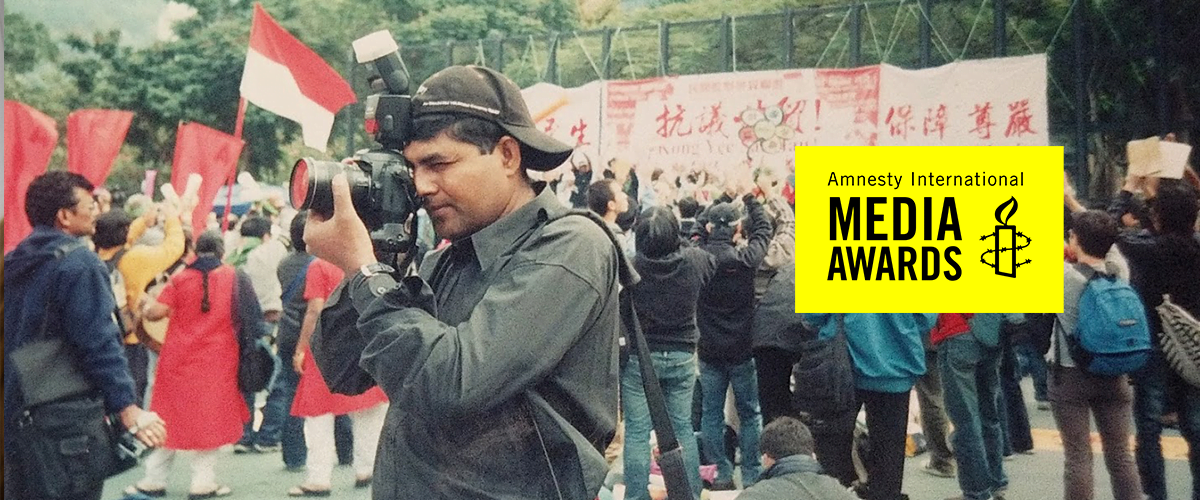
After a hiatus of four years, Amnesty International Australia has announced its prestigious media awards will open for 2021.

Entries are now open in the following categories:

  • Indigenous reporting
  • Print/online
  • Radio 
  • TV/video
  • Cartoon
  • Photography


“We’ve seen, particularly through the COVID-19 pandemic, that press freedom is under threat all over the world,” Amnesty International Australia National Director Sam Klintworth said.

“A free press is vital to hold authorities to account and shed light on human rights abuses and gains too.

“We want to acknowledge the important work that journalists, photographers and cartoonists do to ensure the stories of affected people are brought to the fore, and injustices are challenged.”

The Amnesty International Media Awards are held to recognise excellence in reporting human rights issues in the Australian media and acknowledge the importance of press freedom in protecting human rights.

Each year the awards acknowledge those Australian media stories that have presented a fair and balanced report of a human rights issue, highlighted hidden abuses and encouraged an audience’s greater understanding of a human rights issue.

To enter this year’s awards please visit our website for more information.

Greece: Authorities abusing power to trample on right to protest

Under the guise of the Covid-19 pandemic the Greek authorities have used arbitrary arrests, blanket bans, unjustified fines and unlawful use of force to curb peaceful protest, new research by Amnesty International has revealed.

These disconcerting examples of state overreach took place at a time when people wished to voice their concerns over important issues such as unlawful use of force by police, gender-based violence and the significant problems in Greece’s public health system – hit by many years of austerity policies – at the time of the pandemic. This report focuses on the authorities’ response to several of these protests between November 2020 and March 2021.

“The Greek authorities used shocking tactics to try to scare women’s rights activists, trade unionists, members of political parties, lawyers and others who were participating or called for participation in peaceful protests in November and December 2020 after the country entered its second lockdown. Many were arbitrarily arrested, criminalized and handed unjustified fines in a blatant abuse of power by authorities,” said Kondylia Gogou, Greece Researcher at Amnesty International.

The Greek authorities have a responsibility to facilitate peaceful protest as Amnesty International outlined in November 2020. Restrictions to the right to freedom of peaceful assembly to curb the pandemic are permissible but must be subject to strict criteria, meet the principles of necessity and proportionality and assessed on a case-by-case basis. Governments do not have carte blanche to restrict human rights, even during a pandemic.

“Greek authorities justified blanket bans on protest and other rights violations by citing the threat posed by the Covid-19 pandemic. Ironically, they then implemented these bans by detaining protestors in enclosed spaces, putting them at much higher risk of transmission.”

Curbs on peaceful protests were also codified into law in the months after Greece exited the first lockdown. Legislative reforms regulating demonstrations were introduced in July and September 2020 which allow for counter demonstrations to be prohibited and peaceful assemblies to be dispersed if organizers do not fulfil notification requirements. Legislation on the use of surveillance systems in demonstrations and its implementation also raise concerns including about a chilling effect that the use of cameras by police can have on peaceful demonstrators. These changes will have far-reaching consequences which will last long beyond the end of the pandemic.

Unlawful use of force at protests

Amnesty International found that Greek authorities failed to facilitate the right to peacefully protest, including by introducing blanket bans and dispersing peaceful assemblies through unnecessary and excessive use of force.

Maria* highlighted the sexist and abusive language and treatment that female protesters were exposed to during an attack by the police during a student protest in Ioannina on 17 November 2020: “From the moment this whole attack started, many female (protesters) like me heard  (words such as) ‘Get down little slut because this is where you belong and never get up again’ …”.

Interviewees from a number of protests described how police resorted unnecessarily to the use of water cannon and chemical irritants against peaceful protesters. Some spoke of police hitting them on their heads with batons and using stun grenades in a way that could cause considerable injury including hearing problems.

Serious allegations of torture or other ill-treatment in police custody

Once in police custody some of the individuals interviewed by Amnesty International described being subjected to treatment that may amount to torture or other ill-treatment.

Aris Papazacharoudakis, a twenty-one year old protester said that he was tortured during his questioning by police in relation to clashes and injury of a police officer that took place during a demonstration against police violence on 9 March 2021: “…(T)hey asked me to talk about the place from where they took me (and) where my (political) collective was hosted…, and as long as I did not respond I was beaten up more…They were throwing me from my chair, they were lifting me from my handcuffs (and) I felt that my shoulders would dislocate… It (was) a process of non-stop beating….”.

Golden Dawn

At one protest in Ioannina some protesters said that riot police identified themselves as being members of the far-right Golden Dawn party. In a landmark ruling last October a court found the party’s political leadership guilty of running a criminal organization.

Giorgos* who sustained a series of injuries during a student protest in Ioannina on 17 November 2020 described: “…Some police officers even said ‘I belong to Golden Dawn, you are dead’…At some point, I had fallen on the ground… before I got up, they threw stun grenades right  at us… I gave a mighty scream because the (stun grenade) exploded before my eyes and next to my left ear… (They) threw me on the ground and got me to a spot a little further away behind all  the other students and a little bit away  the cameras and there were five to six police officers who were  beating me up…’”.

“The Greek authorities must halt the criminalization of peaceful assembly and annul any fines given to peaceful protesters, lawyers and women’s rights activists and those other individuals who were arbitrarily arrested prior and during the November and December 2020 demonstrations. Any charges against them for allegedly breaching public health rules must be dropped and prompt and thorough investigations must also be conducted into all the cases of human rights violations Amnesty International has documented,” said Kondylia Gogou.

5 human rights cases you can take action for this July

Rights belong to every one of us – but they are abused and denied every single day. From across the globe into our own backyard, our human rights are under threat. This can feel really overwhelming, and at times, hopeless. But when this happens, we search out the facts. We expose what’s happening on the ground. And we rally people together to pressure governments and those in power to respect our human rights. Here are 5 cases you can take action for now:

Call on Indonesia to release peaceful anti-racism protester, Victor Yeimo

West Papuan Anti-racism protester, Victor Yeimo.

Victor Yeimo leads the West Papua National Committee. It’s the largest and most persecuted non-violent organization fighting for self-determination. He is also the spokesperson of the Papuan People’s Petition, a network of 112 mostly Indigenous groups fighting against the extension of ‘Special Autonomy status’ in West Papua. Victor is being punished for his peaceful, pro-independence activism. Right now, he is being held in solitary confinement, with limited access to his family and lawyer. He has a medical condition that requires regular treatment. He needs our help. Take  action by adding your name now.

Demand Japan stop discriminating against LGBTQIA+ people

Did you know that same-sex marriage is illegal in Japan? Transgender people are even forced to undergo sterilisation, just to have their identity recognised. Across the country, LGBTQIA+ people face discrimination like this throughout their lives. With the Olympics about to begin and all eyes on Japan, now is the time to act. Help put pressure on the Japanese government, by signing the petition now.

Stand with 6 youth environmental activists in Cambodia, imprisoned for their activism

In Cambodia, environmental activists face severe threats and repression from private companies and the authorities – all for protecting the environment, advocating for climate justice, and promoting the rights of Indigenous communities. Long Kunthea, Phuon Keoraksmey, Thun Ratha, Sun Ratha, Ly Chandaravuth and Yim Leanghy are 6 young activists who have been imprisoned for their peaceful activism. Stand with them, and call on the Cambodian authorities to release them now.

Call for Nazanin’s release, so she can be reunited with her family

Nazanin Zaghari-Ratcliffe is a British-Iranian charity worker. She has been sentenced to another year in prison for “propaganda against the system”, after finishing up a 5 year sentence for trumped up national security charges. In 2016, Nazanin and her two-year-old daughter Gabriella were holidaying in Iran visiting her parents. While on their way home, Nazanin was arrested at the airport. Her physical and mental health has suffered, and she has been denied access to healthcare. Call for Nazanin’s immediate release now.

Nazanin hugging her partner while smiling into the camera
Nazanin and her husband Richard.

Tell Minister Worden: Don’t expand Dondale

The number of children in the dangerous Don Dale Youth Detention Centre in Darwin, Northern Territory has skyrocketed due to harmful new bail reforms. Now, Minister Kate Worden has announced that she will spend at least $2.5 million on Don Dale to ‘refurbish’ ‘non-utilised’ parts of the centre so that more children can be imprisoned. Witnesses on the ground have told us that kids need to huddle in corners of their cells to avoid being rained on, and are being forced to stay in their cells for 9-hours a day due to short-staffing. The Royal Commission into youth justice in the Northern Territory recommended that Don Dale close, and be replaced with a smaller, therapeutic facility. That was in 2018. Instead of spending millions on expanding prisons, Minister Worden needs to do everything she can to keep kids out of prison. Join the call to tell the Minister now – Don’t expand Dondale!

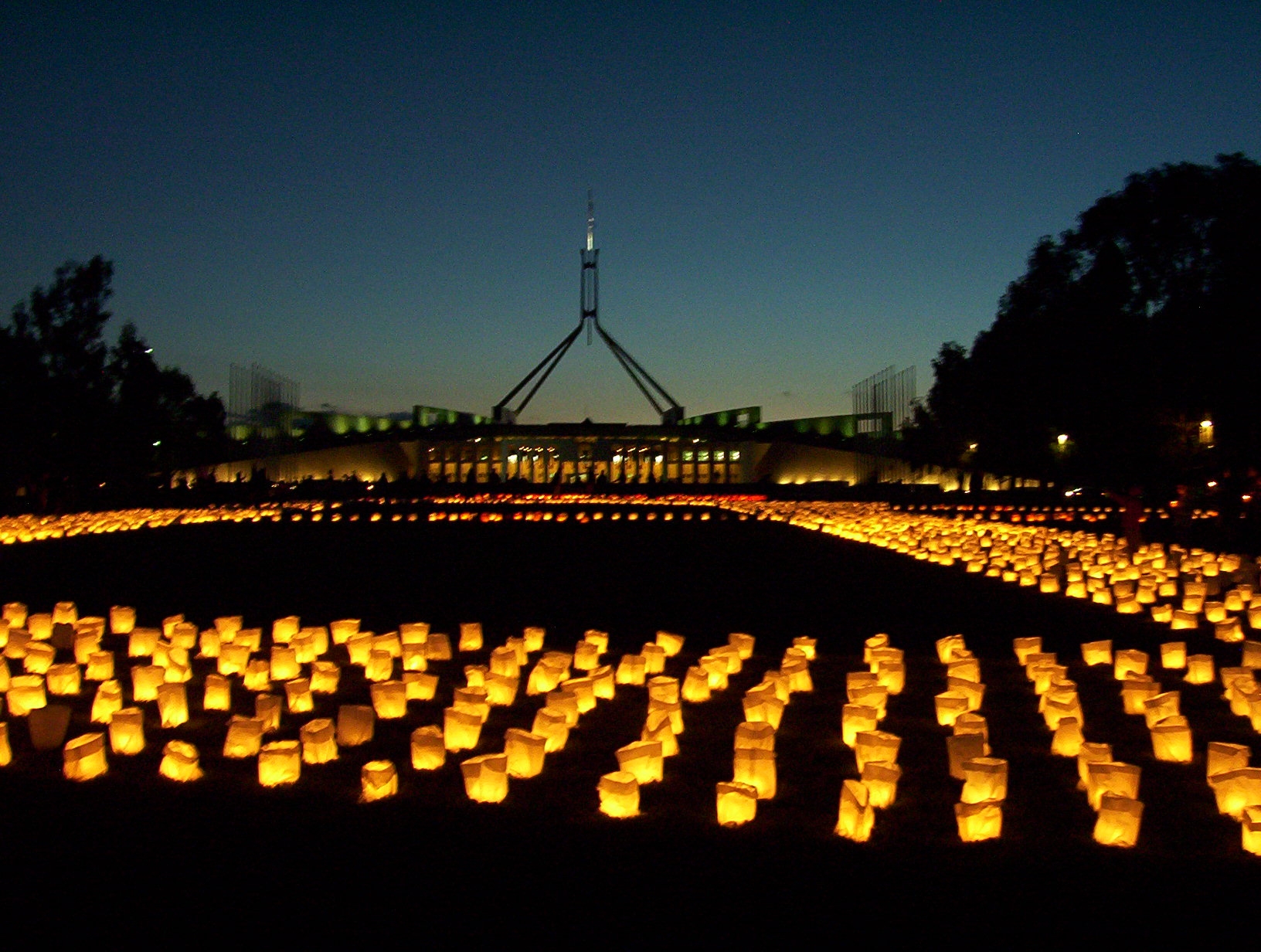
Sign calling for rehabilitation not incarceration at Don Dale vigil.
© Amnesty International


Australia must support the proposal for a temporary Waiver from Certain Provisions of the TRIPS Agreement

Amnesty International has urged the Australian Government once again to support the revised proposal for a temporary Waiver from Certain Provisions of the TRIPS Agreement for the Prevention, Containment and Treatment of Covid-19 with other World Trade Organisation (WTO) member states.

Under current WTO rules, pharmaceutical companies have a 20-year monopoly on COVID-19 vaccines and treatments, and each government must negotiate with them on prices and quantities. Rich countries are first in line. Low-income countries must wait years while the pandemic rages, more infectious strains develop and millions die.

With negotiations now under way before a WTO General Council meeting on July 27 to temporarily change rules and put public health before pharmaceutical profits, Amnesty International Australia National Director, Sam Klintworth, has written to Australian Minister for Trade, Tourism and Investment, Dan Tehan. In the letter, Klintworth has called on Tehan to engage in good faith in the text-based negotiations in support of the revised proposal, with a view to adopting the proposal at the next meeting of the WTO General Council on 27-28 July 2021.

Disappointing response by Government to human rights recommendations made at UN review

The Australian Government’s decision to ignore key recommendations from UN member states aimed at improving its human rights record is extremely disappointing. 

The recommendations, made at the UN Human Rights Council’s review of Australia earlier this year, found that 31 countries called for the Government to raise the minimum age of criminal responsibility, while 47 wanted Australia to stop offshore processing and mandatory detention of asylum seekers and refugees.

Amnesty International Australia is deeply disappointed the Australian Government has rejected both these recommendations and calls on it to immediately review its position.  

National Director, Samatha Klintworth, said: “In 2019-20, 499 children aged between 10 and 13 years were detained by Australia in the youth justice system – 65% of those children detained were First Nations children – even though First Nations children constitute only 5% of the population of that age.

“The Special Rapporteur on the Rights of Indigenous Peoples recently found detention of children as ‘the most distressing aspect of her visit’ to Australia. We must raise our minimum age of responsibility to at least 14.”

Australia’s offshore processing and detention policy is another human rights catastrophe and a clear violation of international law. After eight years and thousands of lives damaged, approximately 230 refugees remain held offshore, with a further 1497 in closed detention and ‘alternative places of detention’ onshore.

Ms Klintworth said: “Australia must stop ignoring the rights of refugees. It must end offshore processing and indefinite detention of refugees and people seeking asylum and offer protection in line with its international human rights obligations and international laws. It must also end mandatory detention for refugees and asylum seekers in Australia.”

Georgia: The authorities’ failure to protect Tbilisi Pride once again encourages violence

Reacting to the news that the office of Tbilisi Pride have been ransacked and activists and journalists attacked, Denis Krivosheev, Amnesty International’s Deputy Director for Eastern Europe and Central Asia, said: 

“The violence against Tbilisi Pride organizers, activists and journalists was as lamentable as it was predictable. The Georgian authorities are responsible for failing to ensure their safety and their rights to freedom of expression and peaceful assembly. Instead of planning for this turn of events and providing a robust response to violence, the government deployed inadequately small numbers of policemen who were only reacting to violent attacks, rather than providing an organized protection for LGBTI activists. 

“The authorities have the nerve to put the responsibility for these homophobic attacks on Pride organizers, by urging them to cancel the event rather than offering protection. They also consistently fail in their duties by not properly investigating incidents of violence and bringing those suspected of responsibility to account.  

“The authorities must put things right this time. They should publicly condemn attacks against LGBTI people and Pride organizers, making clear that such violence is a criminal offence and will not be tolerated. They must promptly investigate such attacks and prosecute those suspected to be responsible in fair trials. Another failure to address homophobic violence will only foster impunity and spread the dangerous message that such attacks will be tolerated, paving the way for further violence against LGBTI individuals, activists and organizations.” 

Background 

Tbilisi Pride march was planned on 5 July 2021 but was cancelled after violent counter-protesters assembled in city centre. Members of a violent homophobic mob climbed onto the balcony of the office of Tbilisi Pride, tearing a rainbow flag apart and breaking the windows before ransacking the building. The staff members of Shame Movement, who were hosting the Tbilisi Pride organizers, were forced to evacuate. According to the media reports, police were present in small numbers and failed to intervene effectively. Dozens of journalists who were planning to cover the Pride and became witnesses were then themselves attacked by the homophobic mob.  

The Interior Ministry said in a statement that it had launched investigations into cases of “interference with journalist’s professional activities” (Article 154 of the country’s Criminal Code) and “violence” (Article 126). Simultaneously, the Ministry called on Tbilisi Pride organizers not to hold the March “in an open public space” because of the “scale” of the ongoing counter-rally. 

Honduras: Conviction of David Castillo is a step towards justice, but full truth must be uncovered

David Castillo, former manager of the company Desarrollos Energéticos, and the person in charge of the Agua Zarca hydroelectric project, was found guilty of participating as co-author in the 2016 murder of Honduran human rights defender Berta Cáceres.  

“The long-awaited prosecution of David Castillo, convicted as co-author of the murder of Berta Cáceres, is an important step towards justice and the result of her family and COPINH’s tireless efforts to secure truth, justice and reparation. However, justice for Berta will never be truly complete until everyone who took part in the crime, including those who planned it, is brought to justice,” said Erika Guevara-Rosas, Americas director at Amnesty International.  

“We urge the prosecutors to keep uncovering the truth. Until all those responsible are held accountable, other human rights defenders in Honduras will continue to lose their lives, for raising their voices and defending the most vulnerable. The Honduran authorities must put an end to impunity.” 

The Sentencing Court has yet to decide on David Castillo’s sentence, pending the resolution of previous appeals filed by his lawyers. According to COPINH, the defence has adopted delay tactics on multiple occasions, slowing the judicial process to date. It took the justice system nearly a year to sentence the seven individuals found guilty of Berta’s murder on 28 November 2018.  

During Castillo’s trial, the court did not consider evidence that Berta’s family lawyers submitted against other people allegedly involved in ordering her murder. The GAIPE, an independent team of international lawyers hired by Berta’s family, exposed serious flaws in the official investigation in 2017. Their report included evidence that would implicate high-level business executives and agents of the state in the crime. 

Human rights defenders in Honduras continue to face attacks with impunity. For instance, four Garífuna activists, members of the Black Fraternal Organization of Honduras (OFRANEH), were victims of an enforced disappearance at the hands of five individuals wearing Police Investigations Directorate (DPI) vests on 18 July 2020. Their whereabouts remain unknown. With 20 killings last year, Honduras is the third world’s deadliest country for human rights defenders, according to Frontline Defenders’ latest report. It is also the most dangerous country for defenders of land, territory, and the environment. Fourteen environmental defenders were killed there in 2019, giving Honduras the highest per capita rate of killings of environmental defenders in the world, according to the 2020 Global Witness report.  

Despite this context, Honduras has not signed the Escazú Agreement, the first environmental human rights treaty in Latin America and the Caribbean, which requires signatory states to protect environmental defenders and entered into force on 22 April 2021. 

“The Honduras government seems to look the other way when human rights defenders are attacked instead of fulfilling its obligation to protect them. Authorities must take this seriously and do whatever is necessary to keep human rights defenders safe from harm, so that a crime like the murder of Berta Cáceres is never repeated,” said Erika Guevara-Rosas. 

Additional Information 

On 2 March 2016, Berta Cáceres, a courageous defender of the environment and Indigenous rights, was shot dead by gunmen in her home in Intibucá, Honduras. She was the coordinator of the Civic Council of Indigenous and Popular Organizations of Honduras (COPINH) and campaigned against the Agua Zarca hydroelectric dam project and the impact it would have on the territory of the Indigenous Lenca People. 

Berta Cáceres and other members of COPINH had faced threats and aggressions before she was killed and were beneficiaries of precautionary measures ordered by the IACHR since 29 June 2009. More recently, on 3 April 2021, COPINH denounced the detention of Bertha and Laura Zúniga, daughters of Berta Cáceres, and Camilo Bermúdez by the Honduran National Police in Santa Rosa de Copan, three days before the trial of David Castillo began. 

Hong Kong: National Security Law has created a human rights emergency

Hong Kong’s National Security Law (NSL) has decimated the city’s freedoms and created a landscape increasingly devoid of human rights protections, Amnesty International said in a new research briefing released today, exactly one year after the Beijing-imposed legislation took effect.

‘In the Name of National Security’ details how the law enacted on 30 June 2020 has given the authorities free rein to illegitimately criminalize dissent while stripping away the rights of those it targets. 

“In one year, the National Security Law has put Hong Kong on a rapid path to becoming a police state and created a human rights emergency for the people living there,” said Yamini Mishra, Amnesty International’s Asia-Pacific Regional Director.

“From politics to culture, education to media, the law has infected every part of Hong Kong society and fomented a climate of fear that forces residents to think twice about what they say, what they tweet and how they live their lives.

“Ultimately, this sweeping and repressive legislation threatens to make the city a human rights wasteland increasingly resembling mainland China.”

Based on analysis of court judgments, court hearing notes and interviews with activists targeted under the NSL, Amnesty’s briefing shows how the legislation has been used to carry out a wide range of human rights violations over the past 12 months.

In this time, the government has repeatedly used “national security” as a pretext to justify censorship, harassment, arrests and prosecutions. There is clear evidence indicating that the so-called human rights safeguards set out in the NSL are effectively useless, while the protections existing in regular Hong Kong law are also trumped by it.

Bail reversal violates right to fair trail

On 1 July 2020, the first full day of the law being in force, police arrested more than 300 protesters, including 10 on suspicion of violating the NSL. Since then, the government has continued to arrest and charge individuals under the NSL solely because they have exercised their rights to freedom of expression, peaceful assembly and association.

Worse still, people charged under the law are effectively presumed guilty rather than innocent, meaning they are denied bail unless they can prove they will not “continue to commit acts endangering national security”.

Consequently, defendants are being held in extended periods of pretrial detention. 70% of those officially prosecuted under the NSL are currently being held in custody after having been denied bail. The presumption of innocence is an essential part of the right to fair trial.


The briefing also outlines how authorities have used the NSL to:

  • Crack down on international political advocacy, arresting or ordering the arrest of 12 individuals for “colluding” or “conspiracy to collude” with “foreign forces” because they were in contact with foreign diplomats, called for sanctions from other countries or called for other countries to provide asylum for those fleeing from persecution. Others were targeted for their social media posts or for giving interviews to foreign media.
  • Expand powers for law enforcement investigators – including giving the Hong Kong Police’s national security unit the ability to search properties, freeze or confiscate assets and seize journalistic materials, such as in the two raids on pro-democracy newspaper Apple Daily during the year. Such unchecked powers leave little room to prevent potential human rights violations during the investigative process.

“The Hong Kong government must stop using its excessively broad definition of ‘endangering national security’ for the blanket restriction of freedoms. As a start, it must drop all criminal charges against those currently facing prosecution for exercising their human rights,” said Yamini Mishra.

“The onus is also on the United Nations to start an urgent debate on the deteriorating human rights situation in China, including with regards to the implementation of the NSL in Hong Kong.”

Background

The NSL was unanimously passed by China’s National People’s Congress Standing Committee and enacted in Hong Kong on 30 June 2020 without any formal, meaningful public or other local consultation. 

The law targets alleged acts of “secession”, “subversion of state power”, “terrorist activities” and “collusion with foreign or external forces to endanger national security”. 

This sweeping definition of “national security”, which follows that of the Chinese central authorities, lacks clarity and legal predictability and has been used arbitrarily as a pretext to restrict the human rights to freedom of expression, peaceful assembly, association and liberty, as well as to repress dissent and political opposition.

The NSL’s arbitrary application and imprecise criminal definitions effectively make it impossible to know how and when it might be deemed as violated, resulting in an instant chilling effect across Hong Kong from day one.

Between 1 July 2020 and 23 June 2021, police arrested or ordered the arrest of at least 114 people under the NSL. As of 23 June 2021, 64 people have been formally charged, of whom 45 are presently in pretrial detention.