Pakistan: Acquittal of couple on death row for sending ‘blasphemous’ texts delivers long-awaited justice

In addition to this release, Pakistani activist M Aman Ullah who now resides in Australia, is available for comment. Aman has worked closely with lawyers for Shagufta and Shafqat and to bring attention to their case on a global stage.
“In Pakistan blasphemy is a criminal offence which carries with it the death penalty. However, often, before that death penalty can even be enacted, vigilantes will take it upon themselves to murder people accused of blasphemy. 
“I was targeted repeatedly in many attempts to criticise the blasphemy law procedure and helping victims of this law. Newspaper editors won’t even publish stories about blasphemy cases our of fear of their own safety. After moving to Australia, I am more open in my work and criticisms of these laws., As a result it is no longer even safe for me to return to Pakistan ever.”

Amnesty International Australia has written to Ministers Payne and Andrews to ask them to call on Pakistani authorities to hat Shafqat and Shagufta are protected where they are currently, until security measures are in place for them to be moved to safety beyond the prison complex, as well as the long-term solution for them to seek asylum in Australia where they have contacts.

Responding to the Lahore High Court’s decision to acquit Shagufta Kausar and her husband Shafqat Emmanuel, a Christian couple who were sentenced to death in 2014 for ‘sending blasphemous texts’, Amnesty International’s South Asia Deputy Director Dinushika Dissanayake said,  

“Today’s decision puts an end to the seven-year long ordeal of a couple who should not have been convicted nor faced a death sentence in the first place. ‘Blasphemy’ cases are often premised on flimsy evidence in environments that make fair trials impossible, underscoring the significance of this verdict. The authorities must now immediately provide Shafqat, Shagufta, their family and their lawyer Saiful Malook with adequate security. 

“This case is sadly emblematic of the harassment, intimidation and attacks that those accused of ‘blasphemy’ routinely face and highlights the urgent need to repeal the law.  We hope that the next step will be to swiftly repeal the country’s blasphemy laws that for too long have been used to target Pakistan’s already beleaguered minorities.”  

Background  

Shagufta and Shafqat were convicted in 2014 after ‘blasphemous’ texts were allegedly sent from a phone registered to the former’s name. They have spent the last seven years in jail waiting to appeal their convictions and death sentences, which are mandatory under Pakistan’s laws. 

Pakistan’s blasphemy laws are overbroad, vague and coercive,  enable abuse and violate Pakistan’s international legal obligations to respect and protect human rights, including freedom of religion or belief and of opinion and expression. They have been used to target religious minorities, pursue personal vendettas and carry out vigilante violence. On the basis of little or no credible evidence, the accused struggle to establish their innocence while angry and violent groups of people seek to intimidate the police, witnesses, prosecutors, lawyers and judges

Hong Kong: People must not be punished for peacefully marking Tiananmen anniversary

The Hong Kong authorities must allow people to peacefully pay their respects to those killed in the Tiananmen crackdown, Amnesty International said ahead of Friday’s anniversary of the 1989 atrocity.   

Hong Kong’s annual Tiananmen vigil on 4 June has been banned on Covid-19 grounds for the second year running, but thousands are still expected to mark the event.Twenty-four activists who participated in last year’s peaceful vigil have since been arrested, and some have been jailed.

“Once again, the Hong Kong authorities are using Covid-19 as a pretext to muzzle the rights to freedom of expression and peaceful assembly. People must not be punished for the simple act of lighting a candle in memory of the victims of the Tiananmen crackdown,” said Yamini Mishra, Amnesty International’s Asia-Pacific Regional Director.

“The arrests and convictions of those who took part in last year’s vigil, which was socially distanced and entirely peaceful, have been a violation of international law. This travesty of justice must not be repeated.”

Every year since 1990, tens and sometimes hundreds of thousands of people have joined a candlelight vigil on 4 June in Hong Kong’s Victoria Park, a large expanse close to the city centre, to remember the protesters killed by Chinese troops in and around Beijing’s Tiananmen Square in 1989.

“For 30 years, Hongkongers have come out in support of the right to peaceful protest in mainland China. Now they are being denied that right themselves,” said Yamini Mishra.

“The Hong Kong authorities must allow people to peacefully mark the horrific events of June Fourth, and they must end their politically motivated prosecutions against those targeted for attending last year’s vigil.”

Background

On the evening of 3–4 June 1989, hundreds – possibly thousands – of people were killed in Beijing when troops opened fire on students and workers who had been peacefully calling for political and economic reforms as well as an end to corruption. An unknown number of people were killed and jailed in similar crackdowns throughout the country. No one knows the exact number of fatalities since the Chinese authorities have stifled and censored discussion of the crackdown for the past three decades.

Hongkongers attending the city’s Tiananmen vigil since 1990 have called on the Chinese authorities to reveal the truth about what happened and take responsibility for the killings.

Media reports have suggested that people who try to attend the banned vigil this year could be arrested for illegal assembly, facing sentences of up to five years in jail, and barred from voting in elections. Some pro-Beijing figures have said participation could violate the city’s draconian national security law, which was adopted shortly after last year’s cancelled vigil.

Authorities arrested 24 people for taking part in the “unauthorized” vigil last year, and four people – Joshua Wong, Lester Shum, Tiffany Yuen and Jannelle Leung – have already been sentenced to jail.

Twenty more, including newspaper owner Jimmy Lai and several members of vigil organizers the Hong Kong Alliance, face trial later this month for participating in the event.

An annual June Fourth vigil in neighbouring Macau has also been banned for the second successive year. However, authorities there – who prohibited the 2020 event solely due to Covid-19 concerns – have this year said the gathering would also “incite subversion”.

Amnesty calls on Australia to work to ensure the UN Committee Against Torture is independent and diverse

In October 2021, the states parties to the UN Committee against Torture will elect five new members.

Amnesty International Australia has written to the Australian Foreign Minister, Marise Payne, calling on the government to nominate and vote in the elections to to take into consideration the following ‘checklist’ for key criteria for membership of the CAT:

  1. Be persons of high moral standing

Candidates must be people of high integrity in their personal and public life. Candidates must not have been involved, by act or omission, in any violation of international human rights law or international humanitarian law. 

  1. Have recognised competence and experience in the field of human rights, in particular in relation to the prevention of torture

Candidates must have demonstrated expertise within a field relevant to the mandate of the Committee, e.g. through past or present professional activities, work-related achievements, or holding of other relevant expert positions. Such experience may relate to prevention of torture or other ill-treatment, monitoring of places of detention, prison and criminal justice systems, experience in the documentation, investigation or prosecution of cases of torture and other illtreatment (accountability), medical or health expertise in the rehabilitation of survivors of torture or other ill-treatment, gender-based forms of torture. Candidates shall also have experience in working in a multidisciplinary environment with a diverse group of stakeholders. 

According to the Convention, consideration should be given to the ”usefulness of the participation of some persons having legal experience.” To ensure a multidisciplinary perspective in the Committee’s work, States shall also consider nominating experts with backgrounds in other fields that are relevant to torture and other forms of ill-treatment. Legal and other expertise in areas of specific relevance to the Convention among others criminal law, asylum, immigration law, extradition law, detention law and standards, including with respect to detention conditions and regimes, juvenile justice, and gender-based violence would be particularly important. 

  1. Serve in their personal capacity and in full independence

Candidates must be independent of all States. States should therefore refrain from nominating candidates who hold any paid or unpaid position within the executive or legislative branch of government, unless situated within an independent authority, or who perform any other functions that could compromise their independence and impartiality (real or perceived). 

  1. Promoting diversity in membership

When nominating candidates to the Committee, States should also give due consideration to a diverse membership with balanced geographical and gender representation. Diversity in the membership could include, in addition to equal gender representation and gender diversity, experts from diverse ethnic, cultural, religious and secular backgrounds, experts from Indigenous communities, and experts with disabilities. Consideration should also be given to the nomination of victims of torture or other forms of ill-treatment. 

Finally, a balance between Committee members from civil law and common law jurisdictions should be sought in order to give representation to “different forms of civilization and the principal legal systems.”

This list was developed by Amnesty International alongside the Association for the Prevention of Torture, Human Rights Watch, the International Commission of Jurists, the International Federation of ACATs, the International Rehabilitation Council for Torture Victims, REDRESS and the World Organization against Torture.

China: ‘Three-child policy’ still a violation of sexual and reproductive rights

Responding to reports that the Chinese government is set to allow married couples to have up to three children, raising it from the current limit of two, the head of Amnesty International’s China Team, Joshua Rosenzweig, said:

“Governments have no business regulating how many children people have. Rather than ‘optimizing’ its birth policy, China should instead respect people’s life choices and end any invasive and punitive controls over people’s family planning decisions.

“Under such a policy, couples could still be penalized for their decisions around childbirth. Raising the limit from two children to three would bring China no closer to meeting its human rights obligations. Everyone, regardless of marital status, should be entitled to sexual and reproductive rights, including whether and when to become pregnant.”

Background

A change in China’s birth policy was deliberated at a Chinese Communist Party Politburo meeting chaired by President Xi Jinping, the state-controlled Xinhua news agency said on Monday.

Under the new policy, married couples would be permitted to have three children. Xinhua reported that plans for “optimising the fertility policy” would include “supportive measures, which will be conducive to improving our country’s population structure”.

China scrapped its decades-old one-child policy in 2016, replacing it with a two-child limit in an attempt to counter the country’s ageing population.

Targeted moves against Platoshkin and Open Russia Movement underscore threat to human rights in Russia

The recent suspended conviction of Russian prisoner of conscience, Nikolai Platoshkin, and the forced dissolution of Otkrytaya Rossiya (Open Russia Movement), underscore the threats to the rights to freedom of expression, peaceful assembly and association in Russia.

Prisoner of conscience, Nikolai Platoshkin joins the ranks of peaceful activists convicted on politically-motivated charges meant to silence dissent. He has been convicted on absurd charges of “incitement to commit mass disorder” and “dissemination of false information.

Otkrytaya Rossiya (Open Russia Movement)  has taken the decision to completely cease its activities and dissolve. According to Open Russia executive director Andrei Pivovarov, the decision to dissolve the movement was made to protect supporters from criminal prosecution given further tightening of the “undesirable organizations” legislation, which is being considered by the State Duma.

These latest attacks on human rights in Russia also comes in the context of the continued imprisonment of prisoner of conscience, Aleksei Navalny.

Amnesty International Australia has written to the Australian government, to urge Foreign Minister Payne to raise these matters with the Russian authorities and stand opposed to this threat to human rights. The international community has the responsibility to reject the continued prosecution and silencing of peaceful activists in Russia and require the immediate and unconditional release of Aleksei Navalny, Nikolai Platoshkin, and others imprisoned under political motivations, and to promote an open civil society that tolerates dissenting voices.

Why are Belarusians protesting?

In August of 2020, mass protests erupted across Belarus following a heavily contested election result. Since then, the governing powers of Belarus have committed shocking violations of human rights in their violent repression of these protests. So what exactly is happening in Belarus and why are human rights activists so concerned?

Why are Belarusians protesting? 
The highly controversial election of August 2020 saw hundreds of thousands of Belarusians become involved in political protests across the nation. President Lukashenka’s regime has governed Belarus for more than 26 years but has recently faced significant resistance from an opposition coalition led by presidential candidate Svyatlana Tsikhanouskaya. In the 2020 election Lukashenka’s government was said to have received 80% of the votes. However, these results were controversial, and there are widespread concerns of electoral fraud

Opposition to Lukashenka and the election remains overwhelmingly peaceful; beyond marches and protests, many demonstrate dissent by singing, performing poetry, picketing or wearing colours of ‘opposition’. Many protesters were actually only mobilised by these shocking reports of violence, torture and arbitrary imprisonment at the hands of government forces. 

What is happening to these protesters? 
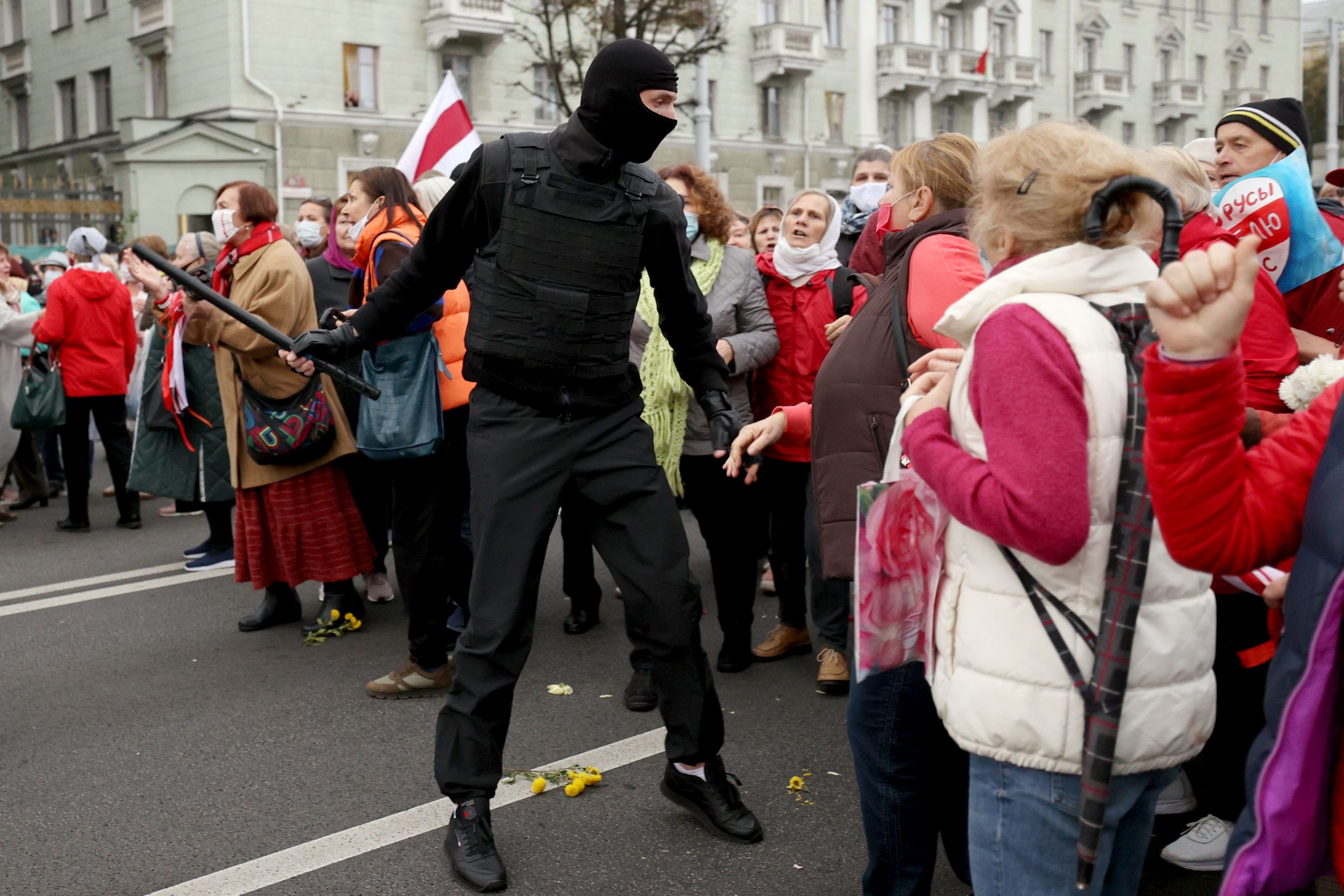
Lukashenka’s regime is engaged in a ‘systematic campaign of intimidation and terror’. While Lukashenka’s reign has been marred by accusations of torture and ill-treatment, these protests were met with an appalling and ‘unprecedented scale of police violence’. Amnesty International has documented horrifying reports of torture, arbitrary detention and police brutality. 

Law enforcement have employed an unlawful and excessive use of force against peaceful protesters, which has resulted in multiple protesters’ deaths. Police have used extensive violence, unlawful weapons and equipment against peaceful civilian protesters, including rubber bullets, stun grenades, chemical irritants and water cannons. An estimated 27,000 protesters were arrested in 2020 alone as a result of these protests. Following arrest, detainees have reported the egregious use of torture and dismal conditions

This assault on protesters and their human rights has spanned across almost every sector of society. Women, children, elderly people and even bystanders have faced violence or ill-treatment at the hands of riot police. Bystanders not even involved in the protests have been beaten or arrested by police. Older protesters have been detained violently and held in horrific conditions. They have been denied medical treatment, despite the fact that many detainees were suffering from cancer, heart or lung conditions. Also, no effort was made to prevent these older detainees from contracting COVID-19. 

The Belarusian authorities have acted inhumanely in their targeting of children. Children have been threatened with arrest and years of detention. Child custody legislation has been weaponized against parents to coerce them to refrain from protesting. On top of this, women face a compounded threat, many female protesters reporting their abuse was worsened by policies targeted towards those who have advocated against gender inequality and by threats of sexual violence. Artists and cultural figures have faced shocking suppression, many enduring arrest and torture as a result of their open opposition to the regime. 

The government has also forced action from institutions and organisations across the nation. Upon instruction by the government, University students have been expelled and even imprisoned for participation in these peaceful protests. Trade unions have also been subject to arrests, unfair dismissals and prosecutions, as part of their efforts to repress dissent. Employees of state enterprises were threatened with dismissal or even criminal sanctions for taking part in strikes or just expressing support for protesters.

In their efforts to quash any and all opposition, Belarusian authorities have blatantly violated international law and infringed upon the inherent human rights of their citizens. The regime is actively and brutally preventing the people of Belarus from accessing their rights to peaceful protest and freedom of assembly in order to maintain power. 

What is NEXTRA and who is Ramen Pratasevich?
Another crucial aspect of the Belarusian crisis was the banning of a popular media outlet, NEXTRA. This crackdown on opposition and the press, is a shocking violation of the freedom of expression and a blatant act of political oppression. 

This repression was escalated in the diversion of a plane flying over EU territory for the purpose of arresting an exiled journalist and editor of NEXTRA, Ramen Pratasevich. It is widely suspected that Belarusian authorities claimed a false bomb threat to land his plane and arrest Pratasevich on trumped-up charges, in an egregious attempt to silence opposition. 

What can be done?
With the newly imposed EU sanctions and President Biden publicly condemning the actions of the Belarusian regime, the international response to this crisis is growing significantly, however human rights abuses continue. Amnesty International calls upon the Belarus government to immediately release Pratasevich and protesters held on arbitrary charges and to respect their citizens right to peaceful assembly and expression. 

Amnesty International Australia has also written to the Australian government, asking Foreign Minister Marise Payne to urge the Belarusian government to immediately end the repression against students, academics and all peaceful protesters.

Lukashenka’s regime and Belarusian law enforcement have acted in flagrant violation of international law and human rights principles. This crisis has seen thousands arbitrarily arrested and abused by police, their human rights cast aside in a brutal campaign to suppress opposition and maintain power.

USA: Texas man executed based on faulty theory

Quintin Jones, a black man, was executed on 19 May 2021. He was on death row in Texas, USA in connection with a murder in 1999 when he was just 20 years old. His execution is a reminder that we must all stand strong against the death penalty, an ultimate violation of human rights.

The sentencing jury was presented with a since discredited theory regarding his “future dangerousness”, which proved to be a key factor leading to his death sentence. His first postconviction attorney filed both the state habeas application and federal habeas petition late, which prevented meaningful review of his case. The victim’s sister and great-nephew called for clemency for Jones. Unfortunately, Texas authorities denied that request.

The faults in Jones’ trial underlines the problems with the death penalty. It is irreversible and mistakes happen. Execution is the ultimate, irrevocable punishment: the risk of executing an innocent person can never be eliminated. Since 1973, for example, more than 184 prisoners sent to death row in the USA have later been exonerated or released from death row on grounds of innocence. Others have been executed despite serious doubts about their guilt.

Amnesty International Australia has written to the Australian government asking Foreign Minister Marise Payne to continue her advocacy to urge the Biden Administration to end the death penalty.

On Amnesty International’s 60th birthday, new poll finds 76% of Australians want a Federal Human Rights Act

As Amnesty International marks 60 years relentlessly challenging injustice and defending human rights, a poll of 1,600 Australians has found 76% of people support the introduction of a National Human Rights Act. 

With many expressing surprise that Australia is the only liberal democracy without such an Act, there is also confusion over what rights are protected here in Australia. 

The strong support for a National Human Rights Act also highlights that most people agree human rights are a fundamental entitlement for everyone and would protect the most vulnerable in society. 

Committing to a Human Rights Act would provide a mechanism to address ongoing systemic racism, tackle climate justice and protect the most vulnerable as we recover from the social and economic costs of the COVID pandemic.

Sam Klintworth, National Director of Amnesty International Australia said: “A discussion around the need for a Human Rights Act seems particularly pertinent today given some of the challenging issues we are facing such as Australians stranded overseas due to Covid-19, the right to protest being suppressed by authorities and police overreach, kids as young as ten – the majority Indigenous – being locked up and the Government’s ongoing cruel policies towards refugees.

“Amnesty International was founded in 1961 on the idea that together ordinary people can change the world. Today Amnesty is a worldwide movement for human rights, calling on the collective power of 10 million people, each one committed to fighting for justice, equality and freedom everywhere.

“As we look back at 60 years of Amnesty defending the human rights of the most vulnerable in our society, the need for protection through a Human Rights Act seems more pressing than ever.”

Myanmar: Cease persecution of journalists

The Myanmar military authorities should immediately drop charges against journalists, said Amnesty International today. This includes those in pre-trial detention, on bail, or those with warrants outstanding on them solely for carrying out their work and the peaceful exercise of their human rights.

“Journalists are at the frontline of the struggle to expose the truth on what is happening in Myanmar today,” said Emerlynne Gil, Amnesty International’s Deputy Regional Director for Research.

“The brazen violence, intimidation and harassment the military authorities are levelling at them only illustrates how powerful exposing the truth can be. Individual journalists can be threatened, arrested, or even meet a worse fate, but Myanmar’s free media as a whole can never be silenced.”

The ongoing persecution, intimidation, harassment and violence faced by journalists in Myanmar constitutes a clear attempt by the military authorities to suppress peaceful dissent and obscure violations committed by security forces in the wake of the 1 February coup. The nationwide crackdown has resulted in widespread denial of the rights to freedom of expression and access to information.  

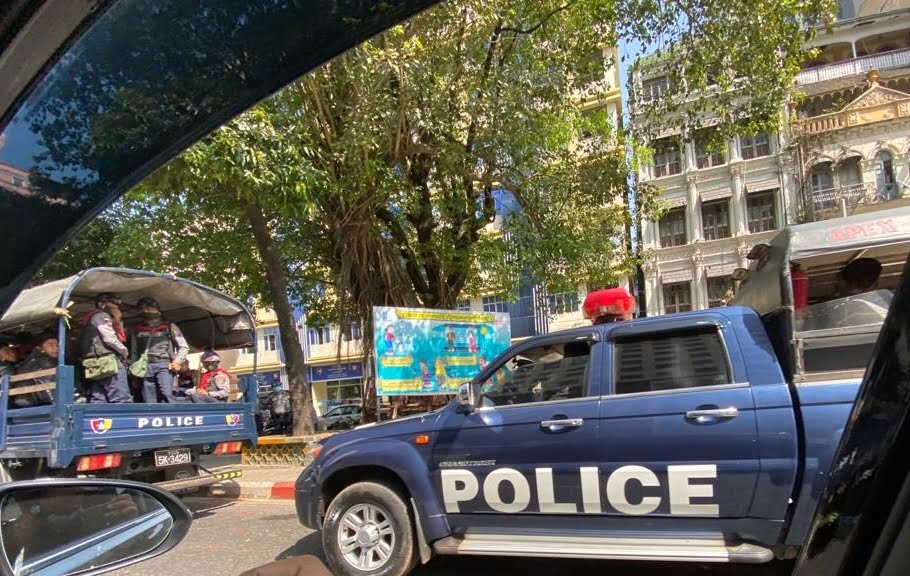
On 24 May, American citizen Danny Fenster became the third foreign journalist arrested and detained since the coup. He was arrested by authorities at Yangon’s Mingalardon Airport while waiting to board a flight to Malaysia. He was reportedly taken to Insein Prison and, as of 25 May, no charges have been made against him. Amnesty International believes that Danny Fenster was arrested for peacefully exercising his human rights. He must be released immediately and unconditionally.

As of 21 May, 88 journalists have been arrested since the 1 February coup, according to the most recent figures from the Assistance Association for Political Prisoners Burma (AAPPB). More than half remain in detention, and 33 are in hiding. Two have been released on bail. Dozens have fled the country or have sought refuge in territory controlled by Ethnic Armed Organizations. Two journalists have been injured by gunshot while covering protests.

“The arrest of Danny Fenster is a reminder of how the media in Myanmar has been targeted for trying to expose the human rights violations committed by the military in this ruthless crackdown,” said Emerlynne Gil.
“Despite the severe communications blackout, what the world knows about the military authorities’ abuses is a credit to the courage of journalists.”

Climate of fear: ‘We don’t want to go back to those days’
The military authorities’ crackdown on the media has resulted in a chilling effect on the press, access to information and other human rights. On 8 march, media outlets Myanmar NOW, Khit Thit Media, Democratic Voice of Burma (DVB), Mizzima, and 7day had their licences revoked, in a ban that affects print, broadcast and digital platforms.

By mid-March 2021, there were no privately-run daily news journals left in circulation in the country, as many suspended operations. Journalists interviewed by Amnesty International voiced concerns that the ongoing crackdown in the wake of the coup heralds a return to the darkest days of censorship, self-censorship and state-sponsored disinformation. “We feel everything is heading back to our childhood days … we don’t want to go back to those days when we had only state-owned media, spreading propaganda,” said one Yangon-based reporter. “It’s really difficult to struggle and to survive as a journalist during this period in Myanmar. It’s not safe – not only for the journalists, but also their families. We are all facing this insecure situation every day. But we keep trying to report as much as we can.”
After an almost five-decade state monopoly on publishing and a heavy censorship regime, in 2012, the press scrutiny and registration department suspended pre-publication censorship. In 2013, Myanmar’s ministry of information began granting licences for privately-owned daily newspapers. 

However, recent actions by the authorities mark a significant step backward for human rights including the right to freedom of expression, and a near-total dissipation of gains made for media freedom over the previous decade of quasi-civilian rule. 

The Myanmar military authorities should ensure the rights to freedom of expression, access to information and media freedom are respect, protected, promoted and fulfilled including by unblocking independent news media websites and social media platforms, and restoring full internet connectivity as a matter of urgency.

Old laws, new amendments
On 3 March 2021, Democratic Voice of Burma (DVB) journalist Min Nyo was arrested while covering anti-coup protests in Pyay, Bago Region in central Myanmar. According to a statement from DVB, Min Nyo was beaten by police during arrest and sustained injuries. He was sentenced to three years’ jail time on 12 May under section 505(a) of the Penal Code. 

This lengthy sentence is the second handed down to a journalist since the coup, after another DVB reporter May Thwe Aung was handed a month’s jail time under Section 188.The majority of journalists have been charged under Section 505(a) of the colonial-era Penal Code, which prohibits the publication or circulation of “statement, rumour or report … with intent to cause, or which is likely to cause, any officer, soldier, sailor or airman, in the Army, Navy or Air Force to mutiny or otherwise disregard or fail in his duty”. 

This broad provision has historically been used by the Myanmar military to target human rights defenders, journalists, and political opponents, punishing those who distributed political pamphlets or sought to report news. 
On 14 February 2021, the Myanmar military authorities announced a series of amendments, including additions to Section 505A. These new provisions criminalize those who cause or intend to cause fear, spread false news, agitate directly or indirectly criminal offence against a Government employee, bringing the maximum sentence up to three years, and introducing fines.

These amendments violate the rights to freedom of expression and peaceful assembly and pave the way for arrest and conviction on the basis of intent. It is not just journalists facing such charges: celebrity influencers, doctors, teachers, and other civil servants suspected of participating in the Civil Disobedience Movement general strike have had warrants issued against them under 505A, and other provisions. 

Section 505A of the penal code, as well as the Peaceful Assembly and Peaceful Procession Law and the Natural Disaster Management Law should be repealed or amended to comply with international human rights standards. The Myanmar military authorities must cease its assault on human rights including the right to freedom of expression and media freedom, ensure people’s rights to access information are upheld, and stop targeting journalists.

Saudi Arabia: Google must halt plans to establish Cloud Region

Amnesty International has today joined with 38 other human rights groups and individuals to call on Google to halt plans to establish a Cloud Region in Saudi Arabia until the company can publicly demonstrate how it will mitigate risks of adverse human rights impacts.

“Saudi Arabia has a dismal human rights record, including digital surveillance of dissidents, and is an unsafe country to host the Google Cloud Platform,” said Rasha Abdul Rahim, Director of Amnesty Tech.

“In a country where dissidents are arrested, jailed for their expression and tortured for their work – Google’s plan could give the Saudi authorities even greater powers to infiltrate networks and gain access to data on peaceful activists and any individual expressing a dissenting opinion in the Kingdom.

“Google must immediately halt any plans to establish a Cloud region in Saudi Arabia until the company can publicly demonstrate how it will prevent potential abuse of its platform.

Background


The Google Cloud Platform is one of the largest data storage and cloud computing services in the world. In December 2020, Google announced an agreement with the national oil and gas company Saudi Aramco, to set up a Google Cloud region in Saudi Arabia and offer Enterprise Cloud services there “with a particular focus on businesses in the Kingdom.” ­­

In January 2021, NGOs Access Now and the Canadian Internet Policy and Public Interest Clinic (CIPPIC) wrote an open letter requesting further information on the human rights due diligence that Google had carried out. In response, Google reiterated its commitment to human rights, stated that an independent human rights assessment for the Google Cloud region in Saudi Arabia was conducted, and that the company took steps to address matters that were identified – but did not specify what those steps were.

Amnesty International and other human rights groups have reported extensively on Saudi Arabia’s human rights abuses, including attempts to spy on its own citizens through illegally accessing their personal information