Victoria can show national leadership on raising the age

Amnesty International Australia has welcomed a Bill before the Victorian State Parliament which seeks to raise the age of criminal responsibility from 10 to 14.

Amnesty International Australia Indigenous Rights Advisor, Rodney Dillon, said:

“This is an important step in the right direction to keep our kids out of jail.

“We’ve known that the report commissioned by the Council of Attorney-Generals, all the child health and rights experts agree and it’s the international standard, so there is no credible argument left against raising the age.

“We all know in our hearts that it’s wrong to lock little kids up, especially when all the evidence shows that diversion and justice reinvestment is what actually prevents youth offending.

Amnesty International Australia has been campaigning for all governments to raise the age of criminal responsibility since 2015. The United Nations Committee on the Rights of the Child issued General Comment 24 in 2019, which encouraged states to raise the age of criminal responsibility to at least fourteen.

Justice for George Floyd: A Year of Global Activism for Black Lives and Against Police Violence

In the world

By: Kristina Roth & Alli McCracken Jarrar

The 25th of May 2020 was a day that changed the world forever.

Officer Derek Chauvin and three other Minneapolis Police Officers tortured and extrajudicially executed George Floyd. Darnella Frazier, a 17-year-old Black woman, filmed the murder, released the video, and the planet erupted with rage at yet another police killing of a Black man in the USA. George Floyd was a father, a brother, a son, a partner, and a friend. His life was cut short, over a call to the police over a potentially fraudulent cash bill. 

The video of George Floyd’s killing by Minneapolis police officers shocked the global conscience, but abusive and excessive policing of Black people by law enforcement officers is as old as policing in the USA itself. In the South, the profession of policing has early roots in the slave patrols created by slave masters who used these brutal patrols to retrieve, beat, punish and often kill their property – Black bodies. 

Systemic, anti-Black racism is at the core of the current US criminal legal system, as is evident in the killings of Black and Indigenous people, who are most significantly overrepresented among other races. In the USA, two different justice systems persist: one where some people get tickets, and some people get murdered for low-level offenses, and melanated people may be perceived as presenting a threat by simply being

George Floyd was one out of over 1,000 lives taken every year at the hands of the law enforcement officers in the United States. He was another person taken from their family by violence that impacts Black, Indiginous, and Brown communities every day. 

George Floyd should still be alive today. 

Police violence is a leading cause of death for young men in the United States. In the USA, about 1 in every 1,000 Black men can expect to be killed by police in their lifetime. Between 2015-2020, 30% of people shot and killed by police were cited as exhibiting signs of mental illness. Despite these dismal rates of violence, most law enforcement officers are not held accountable for unlawful killings, and are able to act with impunity for excessive and sometimes deadly use of force, particularly against Black people. Between 2005 and 2019, only three state or local law enforcement officers were convicted of murder in deadly force cases.

Even in the context of a pandemic, after the murder of George Floyd people spilled into the streets to protest police violence, racial discrimination, and the scourge of white supremacy, including in many countries with colonial foundations.

The United States recorded its largest protests in the history of the country’s existence. People from Indonesia to New Zealand, from Switzerland to Argentina and beyond all took action in different ways, both online and offline, to demand justice for George Floyd, and show solidarity with the rights of Black people to survive interactions with law enforcement and the Black Lives Matter struggle in the United States. 

This movement truly is a global effort: while racism and human rights violations by the police in the United States are horrific, they are global issues that impact every country, and they require a global effort to end them. People have shown up, and the movement won’t be stopped. 

We must not lose sight of the history that persists in the way that law enforcement is carried out today, nor the pain it has caused that has devastated generations of families. 

Despite the settlement in the George Floyd civil lawsuit and the guilty verdict against officer Derek Chauvin, there can be no real justice for this horrific crime. For too many families directly impacted by violence inflicted by law enforcement officers, there can never be justice. States must seek to adopt measures of accountability for violating people’s human rights, and we must look closely at the size and scope of law enforcement in daily life, including situations in which an armed responder too often results in a deadly encounter.

George Floyd’s six-year-old daughter, Gianna, said she knew her father would change the world, and she was right.

We must move forward, with the history that got us here in mind, and work to embrace systems of public safety that respect all people’s human rights to  to life, to be free from discrimination and to equal protection under the law.  

Kristina Roth is the Senior Advocate for the Criminal Justice Program at Amnesty International USA. Alli McCracken Jarrar is Amnesty International’s Campaigner for North America.

At home

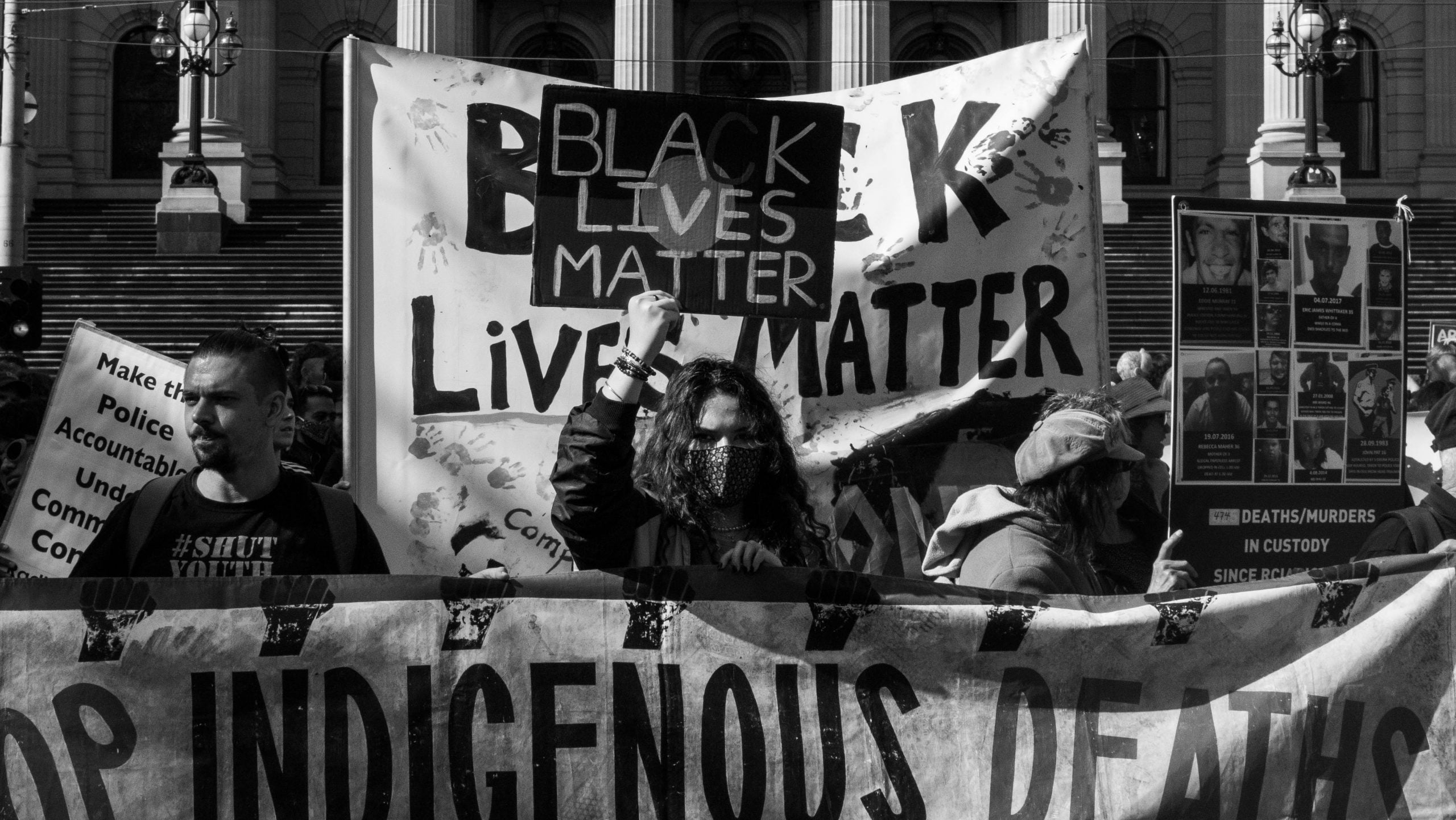
In Australia, George Floyd’s death sparked protests as the nation highlighted the similarly tragic treatment of our First Peoples in the judicial system. People took to the streets in cities across the country to say loud and clear: #BlackLivesMatter.

Since the Royal Commission into Aboriginal Deaths in Custody in 1991, more than 470 people have died in police custody without a single conviction recorded and Indigenous people remain grossly over-represented in Australia’s prison system. Read the media statement here.

Amnesty International Australia continues to call for independent and transparent investigation of such incidents.

“We stand in solidarity with the families of all unarmed people of colour who have died in police custody. To think this is a problem ‘over there’ and that Australia is free of racialised violence, is to fundamentally misunderstand the issues in our back yard.”

Sam Klintworth, National Director, Amnesty International Australia

Amnesty International is calling for bi-partisan support of a National Anti-Racism Strategy and for those responsible for the ongoing deaths in custody of our First Peoples to be held to account.
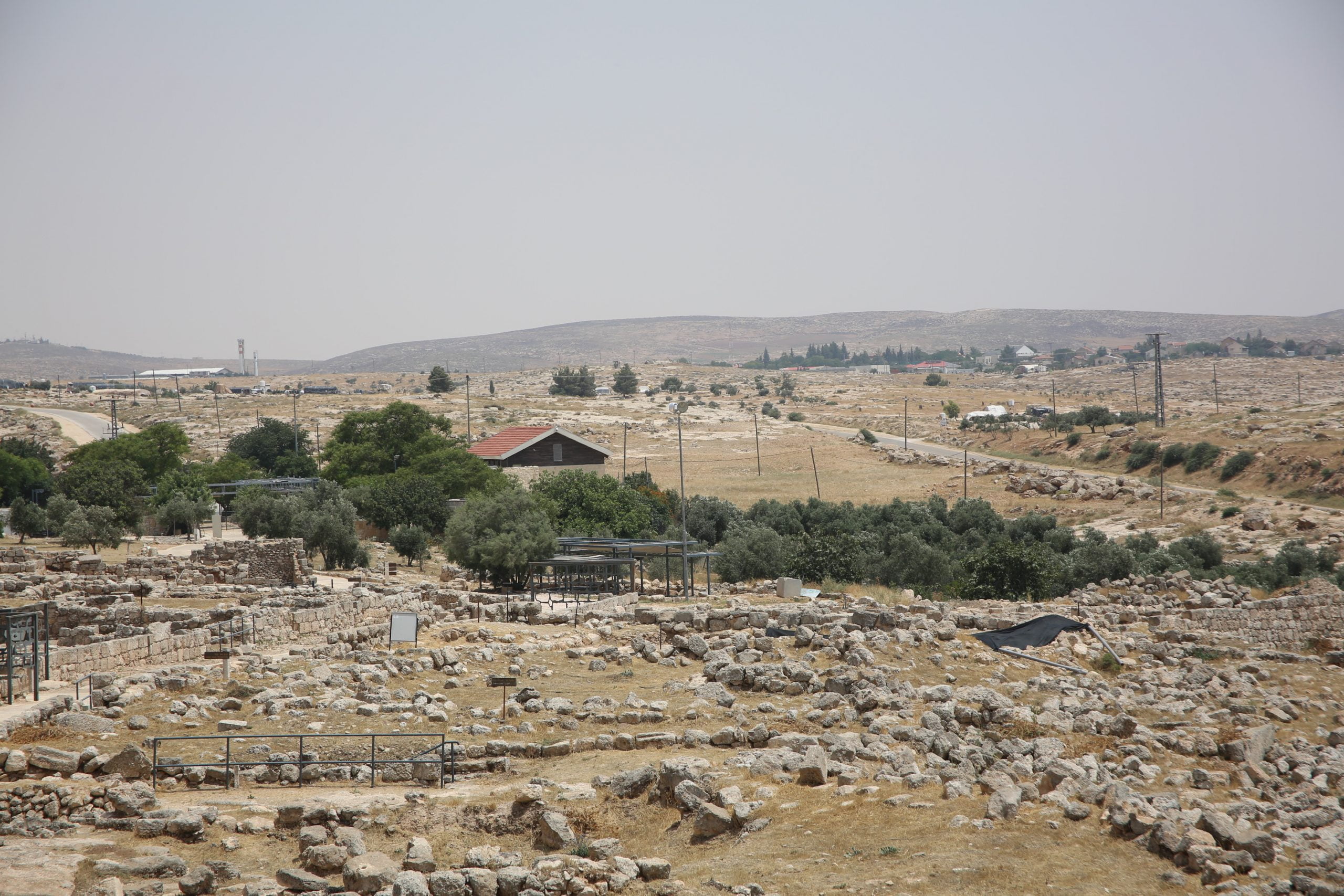
Israel/ OPT: Scrap plans to forcibly evict Palestinian families in Silwan

Ahead of an appeal hearing at the Jerusalem District Court on 26 May over the forced eviction of two Palestinian families in the Batn al-Hawa area of Silwan in occupied East Jerusalem, Amnesty International’s Deputy Director for the Middle East and North Africa, Saleh Higazi said:

“This is yet another illustration of Israel’s criminal policy of forced displacement of Palestinians in motion.

“By continuing to pursue this court case – after the outcry over the planned forced evictions in Sheikh Jarrah in occupied East Jerusalem – Israel is fanning the flames of the latest upsurge in violence and perpetuating the same systematic human rights violations against Palestinians that are at the root of the latest violence.

“For years Israel has sought to expand illegal settlements in the area of Silwan, forcibly displacing more than 200 Palestinians from their homes.

“The recent protests locally and worldwide against forced evictions in Sheikh Jarrah send a clear message that Israel’s land grabs will not go unnoticed. Israel’s authorities must immediately halt plans for forced evictions in Batn al-Hawa in Silwan and any other areas of the Occupied Palestinian Territories. Such forced evictions flagrantly violate the prohibition in international humanitarian law of forcible transfer and amount to war crimes.

“Let us be clear, the USA, UK, EU countries and the international community at large have a responsibility to stop Israel from continuing with its policies of forcible transfer and dispossession. Instead of allowing Israel to trample over Palestinians’ rights with impunity, there must be a concerted effort to address the systematic oppression and dispossession of Palestinians which are among the root causes of these repeated cycles of violence and civilian bloodshed.”

Background:

In 2020, seven eviction rulings were issued by the Jerusalem Magistrate Court ordering the eviction of seven Palestinian families in Batn al-Hawa to be replaced by settlers. Two of the families, the Najah family and the Kayed al-Rajabi family are due to have their appeal cases heard on 26 May.

Ateret Cohanim, a settler organization, has been seeking, with the support of Israeli authorities, to forcibly evict some 100 Palestinian families from the Batn al-Hawa area in Silwan, claiming the land is rightfully owned by a Jewish trust active in the area more than 100 years ago. While Israeli law allows for property to be transferred to Jews, it denies the same right to Palestinians who have been dispossessed of their property following the establishment of the state.

East Jerusalem is part of the occupied West Bank that Israel illegally annexed in 1967 and where Israeli civil law applies, contrary to the provisions of the international law of occupation.

Silwan, home to around 33,000 Palestinians, is located outside the walls of the Old City and its holy sites. Several hundred Israeli settlers now live there as well in heavily protected settlement compounds. Israel has been moving its citizens into the neighbourhood since the 1980s. This has resulted in numerous human rights violations, including the forced eviction and displacement of Palestinian residents.

Australia must support investigative mechanism on Israel/OPT at Human Rights Council Special Session

Amnesty International welcomes the UN Human Rights Council’s decision to hold a special session to address the rapidly deteriorating situation across Israel and the Occupied Palestinian Territories.

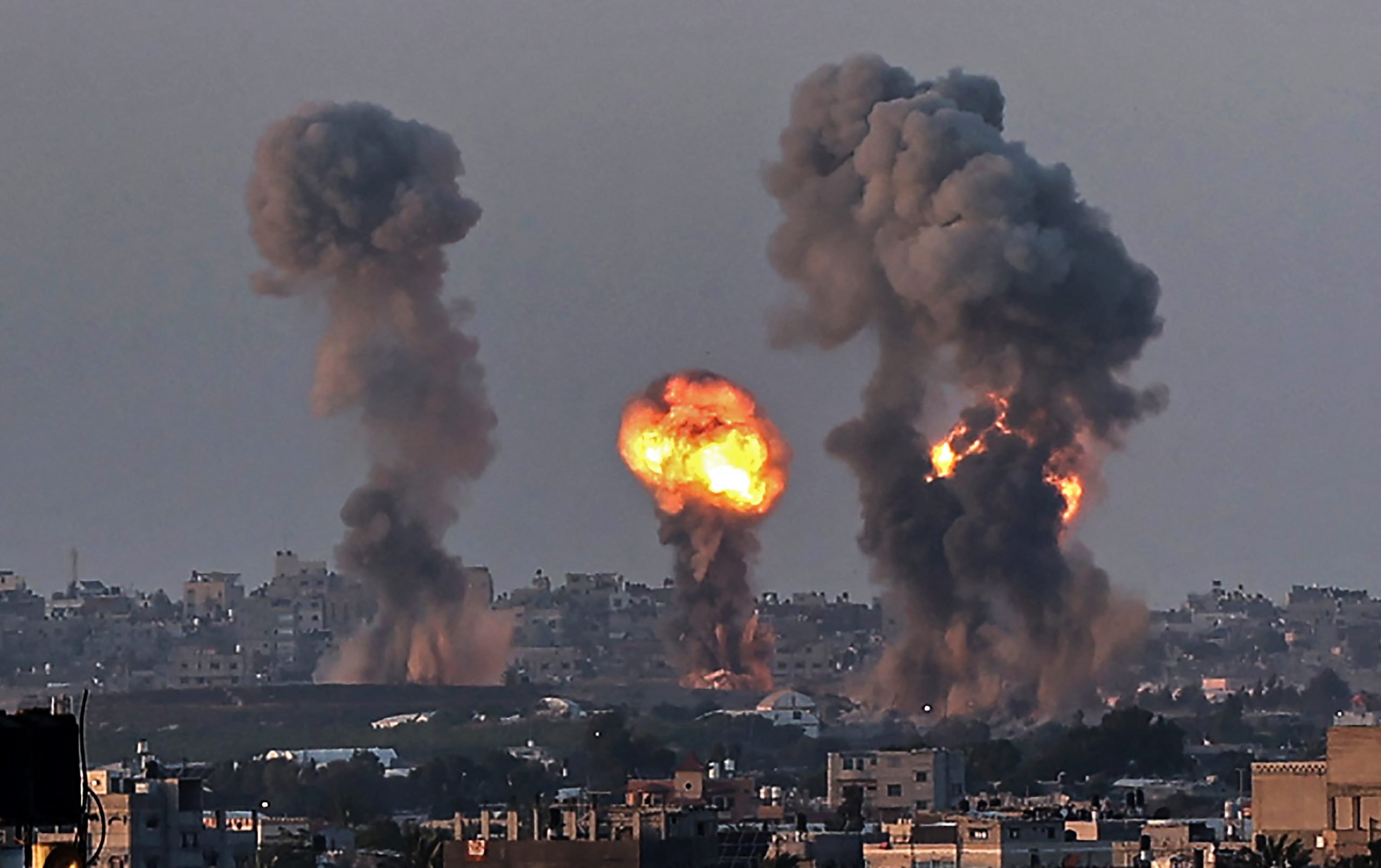
Within a matter of weeks, the situation in Israel and the Occupied Palestinian Territories has escalated from a crackdown by Israeli forces against peaceful Palestinian demonstrators in East Jerusalem to a full-scale armed conflict between Israeli forces and Palestinian armed groups in Gaza. 

As the death toll continues to mount – with more than 230 killed in Gaza and 12 killed in Israel – it is vital that the perpetrators of human rights violations, including unlawful attacks and crimes under international law are not permitted to commit abuses unchecked.

The UN Human Rights Council special session should ensure accountability for violations even given the current ceasefire, and after an end to the current hostilities.

Amnesty International Australia has written to the Australian government, asking Foreign Minister Marise Payne to support an investigative mechanism that can collect and preserve evidence of crimes and violations, and that would support and coordinate with the ongoing investigation by the International Criminal Court.

Australia must help get Shafqat and Shagufta off death row in Pakistan

Amnesty International holds grave concerns for Shafqat Emmanuel and Shagufta Kausar, a Christian couple who were convicted of ‘blasphemy’ in Pakistan and sentenced to  death in 2014. They have been in prison for the better part of eight years waiting for their appeal hearing, when they should not be in jail in the first place.

Shafqat is completely paralyzed from the waist down and must rely on prison guards to perform the most basic tasks like leaving his bed and using the bathroom. He should not be detained in the first place, and if he is not going to be released, prison authorities must ensure provision of adequate health care whether it is available inside or outside the prison.

In our report, As Good as Dead: The Impact of the Blasphemy Law in Pakistan, Amnesty International shows that Pakistan’s blasphemy laws enable abuse and violate Pakistan’s international legal obligations to respect and protect human rights, including freedom of religion or belief and of opinion and expression.

The report also showed how the laws have been used to target some of the most vulnerable people in society, including members of religious minorities. Pakistan’s Supreme Court has acknowledged that “the majority of blasphemy cases are based on false accusations” and are driven by ulterior motives. Amnesty International has found that such motives are rarely scrutinized by the authorities and can vary, from professional rivalry, to personal or religious disputes, to seeking economic gain.

Amnesty International Australia has written to the Australian government, asking Foreign Minister Marise Payne to urge the Pakistani government to:

  • immediately and unconditionally release Shafqat and Shagufta and ensure that they and their lawyers are provided with adequate security upon their release
  • grant Shafqat prompt, regular and unrestricted access to adequate health care, as necessary
  • repeal the blasphemy laws, and
  • abolish the use of the death penalty.

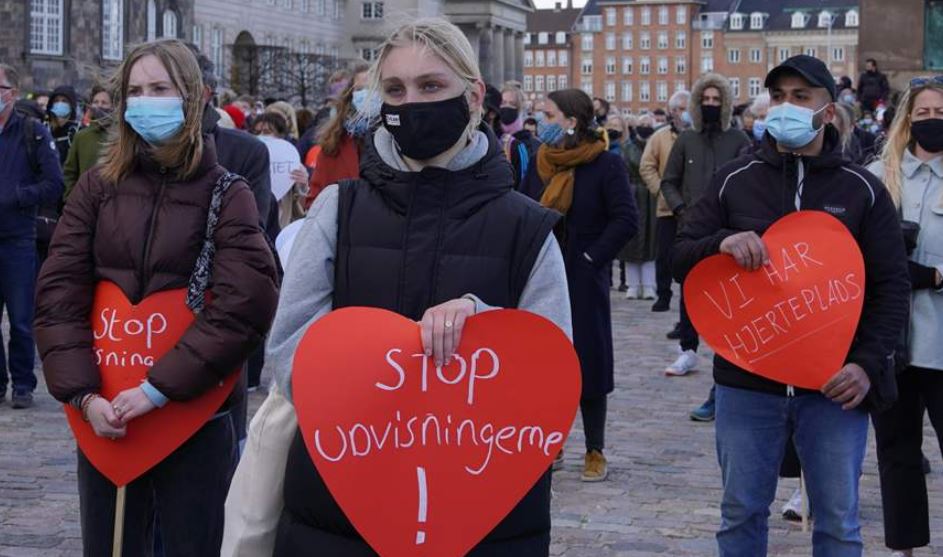
Denmark must not return refugees to Syria

Under international human rights law, the principle of non-refoulement guarantees that no one should be returned to a country where they would face torture, cruel, inhuman or degrading treatment or punishment and other irreparable harm. This principle applies to all migrants at all times, irrespective of migration status.

Amnesty International is deeply concerned about the prospect of the Danish government violating international law by stripping refugees of their residency and returning them to Syria. Anyone returned to Syria are at significant risk of facing torture, enforced disappearance and arbitrary detention.

Amnesty International Australia has written to the Australian government, asking Foreign Minister Marise Payne to urge the Danish Minister of Immigration and Integration, Mr Mattias Tesfaye, to:

  • Revise the assessment that parts of Syria are safe for return
  • Revert the policy of revoking protection for Syrian refugees 
  • Stop the transfer of Syrian refugees to return centres. 
  • Renew the residency of Syrian refugees who sought refuge in Denmark after fleeing the armed conflict.

Belarus: Journalist apprehended in Minsk airport after emergency landing must be released immediately

Reacting to the news that the Belarusian authorities apprehended Raman Pratasevich, former editor-in-chief of the popular opposition Telegram channel NEXTA, after an emergency landing in Minsk of the airplane he took, Marie Struthers, Amnesty International’s Eastern Europe and Central Asia Director, said: 

“The situation here is simple. There is little doubt that the Belarusian authorities used a false bomb threat and a MiG fighter jet to force an airplane flying from one country of the European Union to another to land with the apparent sole purpose of detaining an exiled critical journalist whom they badly wanted silenced.  

“While it sounds like an extraordinary Hollywood plot, it’s not. The reality of this apparent act of air piracy is chilling. The European Union and the rest of the world must react without delay and call for the immediate release of Raman Pratasevich.He should be allowed to leave Belarus and travel to the country of his choice.” 

Background 

On 23 May, Raman Pratasevich, 26, who until September 2020 led the biggest Belarusian opposition Telegram channels NEXTA and NEXTA Live, was detained at Minsk airport after his Lithuania-bound flight made an emergency landing over a purported bomb threat which was promptly reported as false. A MiG-29 fighter jet belonging to the Belarusian Air Forces escorted the civilian plane to the alternate airfield in Minsk.   

Last year, NEXTA and its sister channels were declared “extremist” and subsequently banned in Belarus by the country’s security services, as part of the authorities’ brutal crackdown on peaceful dissent in the country after the widely-disputed results of the 9 August presidential elections. Raman Pratasevich and his associate Stsyapan Putsila were arbitrarily added to Belarus’s list of “individuals involved in terrorist activity.” The two were also charged with “incitement of mass riots”, “gross violation of public order” and “incitement of social hatred” against public officials and law enforcement agents. These crimes carry penalties of up to 15 years in prison. 

Afghanistan: Unravelling of women and girls’ rights looms as peace talks falter

Two decades of hard-won progress by Afghanistan’s women and girls is at serious risk of being unravelled, said Amnesty International, in a statement highlighting the limited involvement of women in the peace talks and the major strides on women’s rights that are now under threat. 

As international troops continue to leave the country ahead of a full withdrawal on 11 September, and with talks between the Afghan government and the Taliban at an impasse, the prospects for Afghanistan’s women and girls are at a critical juncture. A new date for a high-level round of peace talks in Istanbul, postponed since April, is yet to be confirmed.  

“Afghanistan is at a tipping point. As peace talks falter, the conflict continues to take the lives of civilians on an almost daily basis. Taken alongside the forthcoming withdrawal of international troops, Afghanistan is drifting towards an outcome that threatens to undo more than twenty years of progress for women and girls,” said Yamini Mishra, Amnesty International’s Asia-Pacific Director. 

“Now is the time for the Afghan government and its international partners to unequivocally commit and work to ensure that women’s rights and two decades of achievement are not traded off in the peace talks with the Taliban.”  

Under Taliban rule from 1996-2001, Afghan women were subjected to severe restrictions including being banned from working outside the home and appearing in public without a close male relative. Women and girls were further denied access to education and had limited access to healthcare. These restrictions still invariably apply to women in areas currently controlled by the Taliban.  

While much work remains to be done, women’s rights have improved significantly since 2001. There are now 3.3 million girls in education, and women more actively participate in the political, economic and social life of the country. Despite ongoing conflict, Afghan women have become lawyers, doctors, judges, teachers, engineers, athletes, activists, politicians, journalists, bureaucrats, business owners, police officers, and members of the military. 

However, Afghan women still face major obstacles to the full realization of their rights. Violence against women is rife, the participation of women at all levels of government remains limited and, according to UNICEF, 2.2 million Afghan girls still do not attend school. 

In the current peace talks, which began in September 2020, the 21-member Afghan government negotiation team included only four women, with no women represented in the Taliban delegation. In the March peace conference on Afghanistan in Moscow, only one woman was included in the 16-member government delegation.  

“The significant under-representation and frequent side-lining of women throughout these talks is indicative of how far there is still to go. These negotiations will shape the future for women and girls in Afghanistan and their voices must be heard. The Afghan government must ensure inclusive and meaningful participation of women in the talks,” said Yamini Mishra. 

Police overreach on display once again as students take to the streets to protest against climate change

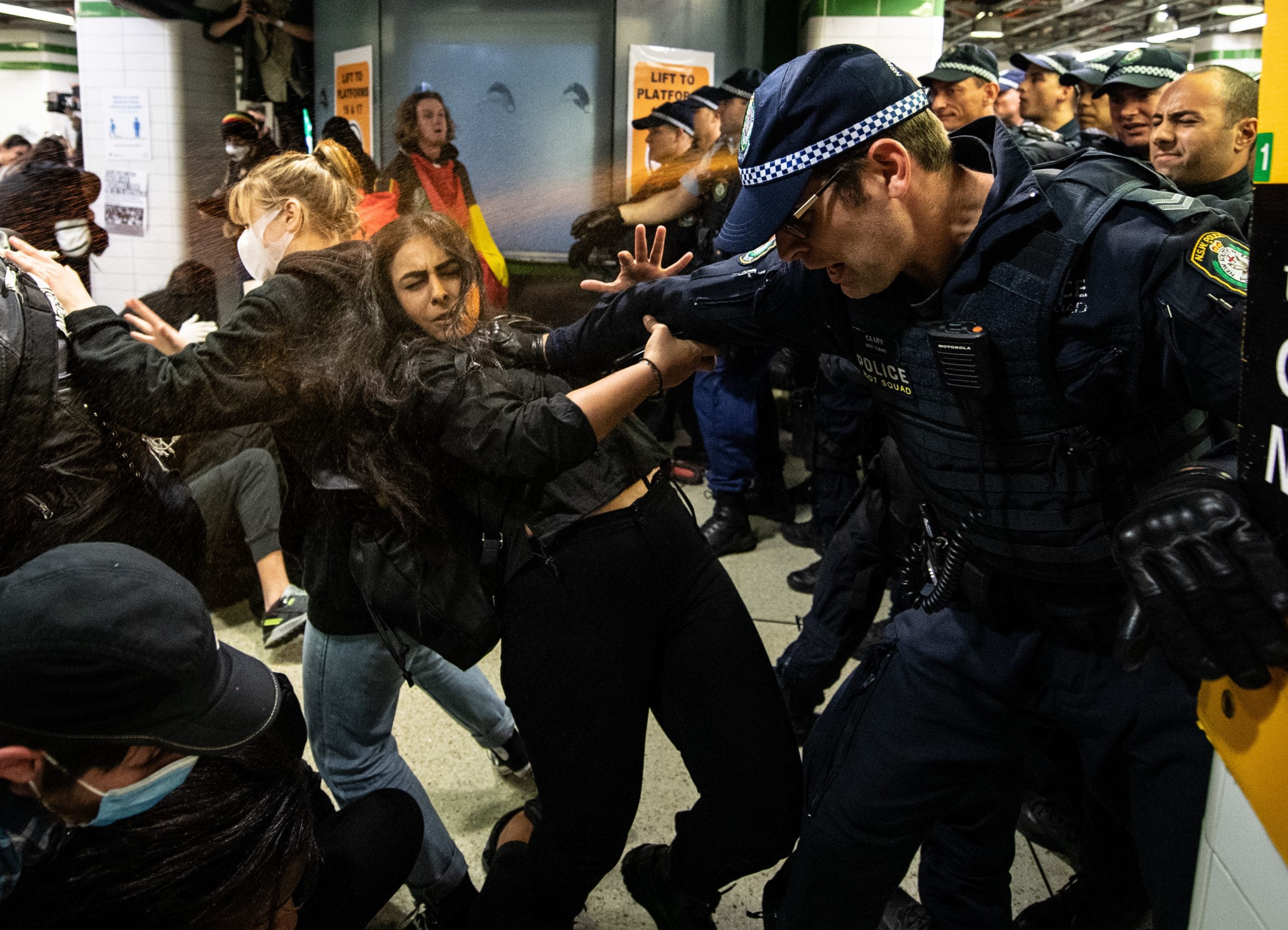
As thousands gathered around the country today to show their anger at the Australian government’s lack of action on climate change, students in Sydney were once again roughly pushed to the ground in a clash with NSW police.

This is not the first time law enforcement officers in NSW have used force while policing peaceful protests. As outlined in Amnesty’s report “Covid 19 Crackdowns – The Policing of Protest in New South Wales during the Pandemic” unnecessary and disproportionate force was used frequently to disperse protests in 2020, including at  protests at the University of Sydney. 

This included mounted police chasing student protesters at a protest on 23 September 2020, police pushing both protesters and bystanders to the ground, and arresting and fining dozens of students and staff for breaches of public health orders. The police’s use of force caused injuries to multiple students and bystanders. 

On 14 October, University of Sydney law Professor Simon Rice was pushed to the ground by police while observing protests. His legs were kicked out from under him by police, and when he tried to get up, he was pushed down a second time, and then arrested. He was also fined $1000. 

This punitive policing of protests continued into 2021. Organisers of the 2021 Invasion Day march told Amnesty International Australia they felt pressured and intimidated by police to call off the march.

Article 19 of the Universal Declaration of Human Rights states: “Everyone has the right to freedom of opinion and expression; this right includes freedom to hold opinions without interference and to seek, receive and impart information and ideas through any media and regardless of frontiers.”

Article 21 of the International Covenant on Civil and Political Rights states: “The right of peaceful assembly shall be recognized. No restrictions may be placed on the exercise of this right other than those imposed in conformity with the law and which are necessary in a democratic society in the interests of …the protection of public health …or the protection of the rights and freedoms of others.”

“The right to peaceful protest on matters such as climate change must be protected, and the NSW police should be helping facilitate that right, not putting protesters at risk of injury,” said Amnesty campaigner, Nikita White. 

Amnesty International Australia is calling for independent investigations for any public assembly during which police resort to the use of force, with a view to establishing responsibilities and accountability of the officers involved. 

To date, there have been no independent investigations into the use of force by New South Wales police at public assemblies in 2020, including into force that caused injuries.

“The NSW Police Force seems to increasingly rely on intimidation tactics and forceful conduct to maintain ‘order’. It is clear that the right to peaceful assembly is at risk,” said Josh Lorschy,  Amnesty Australia’s Youth Advisory Group Representative for NSW

Police overreach as students protest against climate change

As thousands gathered around the country today to show their anger at the Australian government’s lack of action on climate change, students in Sydney were once again roughly pushed to the ground in a clash with  NSW police.

This is not the first time law enforcement officers in NSW have used force while policing peaceful protests. As outlined in Amnesty’s report “Covid 19 Crackdowns – The Policing of Protest in New South Wales during the Pandemic” unnecessary and disproportionate force was used frequently to disperse protests in 2020, including at  protests at the University of Sydney. 

This included mounted police chasing student protesters at a protest on 23 September 2020, police pushing both protesters and bystanders to the ground, and arresting and fining dozens of students and staff for breaches of public health orders. The police’s use of force caused injuries to multiple students and bystanders. 

On 14 October, University of Sydney law Professor Simon Rice was pushed to the ground by police while observing protests. His legs were kicked out from under him by police, and when he tried to get up, he was pushed down a second time, and then arrested. He was also fined $1000. 

This punitive policing of protests continued into 2021. Organisers of the 2021 Invasion Day march told Amnesty International Australia they felt pressured and intimidated by police to call off the march.

Article 19 of the Universal Declaration of Human Rights states: “Everyone has the right to freedom of opinion and expression; this right includes freedom to hold opinions without interference and to seek, receive and impart information and ideas through any media and regardless of frontiers.”

Article 21 of the International Covenant on Civil and Political Rights states: “The right of peaceful assembly shall be recognized. No restrictions may be placed on the exercise of this right other than those imposed in conformity with the law and which are necessary in a democratic society in the interests of …the protection of public health …or the protection of the rights and freedoms of others.”

“The right to peaceful protest on matters such as climate change must be protected, and the NSW police should be helping facilitate that right, not putting protesters at risk of injury,” said Amnesty campaigner, Nikita White. 

Amnesty International Australia is calling for independent investigations for any public assembly during which police resort to the use of force, with a view to establishing responsibilities and accountability of the officers involved. 

To date, there have been no independent investigations into the use of force by New South Wales police at public assemblies in 2020, including into force that caused injuries.

“The NSW Police Force seems to increasingly rely on intimidation tactics and forceful conduct to maintain ‘order’. It is clear that the right to peaceful assembly is at risk,” said Josh Lorschy,  Amnesty Australia’s Youth Advisory Group Representative for NSW

ENDS

For more information or to arrange an interview, please contact Amnesty International Media on +61 423 552 208 or media@amnesty.org.au

ABOUT AMNESTY INTERNATIONAL AUSTRALIA

Amnesty International is a global movement of 10 million people standing up for justice, freedom and equality. We work to free people unjustly jailed, bring torturers to justice and change oppressive laws. We shine a light on great wrongs by exposing the facts others try to suppress. We lobby governments, and the powerful to make sure they keep their promises and respect international law. Together, our voices challenge injustice and are powerful enough to change the world. st1.amnesty.org.au