Morrison’s India repatriation flights a failure

Responding to the news that first repatriation flight from India having a high positive COVID test rate Amnesty International Campaigner Joel MacKay said:

“This is sadly not surprising, but it is entirely a situation of the Morrison Government’s making. Refusing repatriation is lazy policy-making – it’s much easier to leave stranded Australians behind in India than it is to do the heavy lifting to make it safe for them to come home. The Prime Minister is taking the easy way out.

“You can only imagine the heartbreak if you’re lucky enough to be allocated to one of the very few flights back to your home country, only to find that testing positive to COVID throws you on the mercy of a health system utterly failing under the weight of a pandemic out of control.

“As Amnesty has been saying for a year, the Government has an obligation under international human rights law to facilitate the return of its citizens. The Government has had a year to work out an adequate quarantine system where those who are COVID positive can receive high quality care. What good is a quarantine system that can’t house sick people?

“At this rate, all the people who desperately need to return from India won’t be repatriated for at least another four months. Not to mention all those people in other parts of the world who are still struggling to return.

“The increasingly isolationist approach of this Government is very concerning, particularly as it is in danger of breaching international law.”

Amnesty International Australia is calling on the Morrison Government to book extra repatriation flights immediately, expand the national quarantine facility, support the states and territories to expand the hotel quarantine program, and support the TRIPS waiver proposal that will see COVID-19 vaccines distributed to developing nations faster.

Background

Australians returning from India must test negative to COVID-19 before boarding. It has been reported that at least a quarter of the people booked on the first repatriation flight out of New Delhi have tested positive with COVID-19. Including close contacts, 70 – or more than half those booked – have been refused repatriation.

Australia must urge Israel to end brutal repression of Palestinians protesting forced displacement in Occupied East Jerusalem

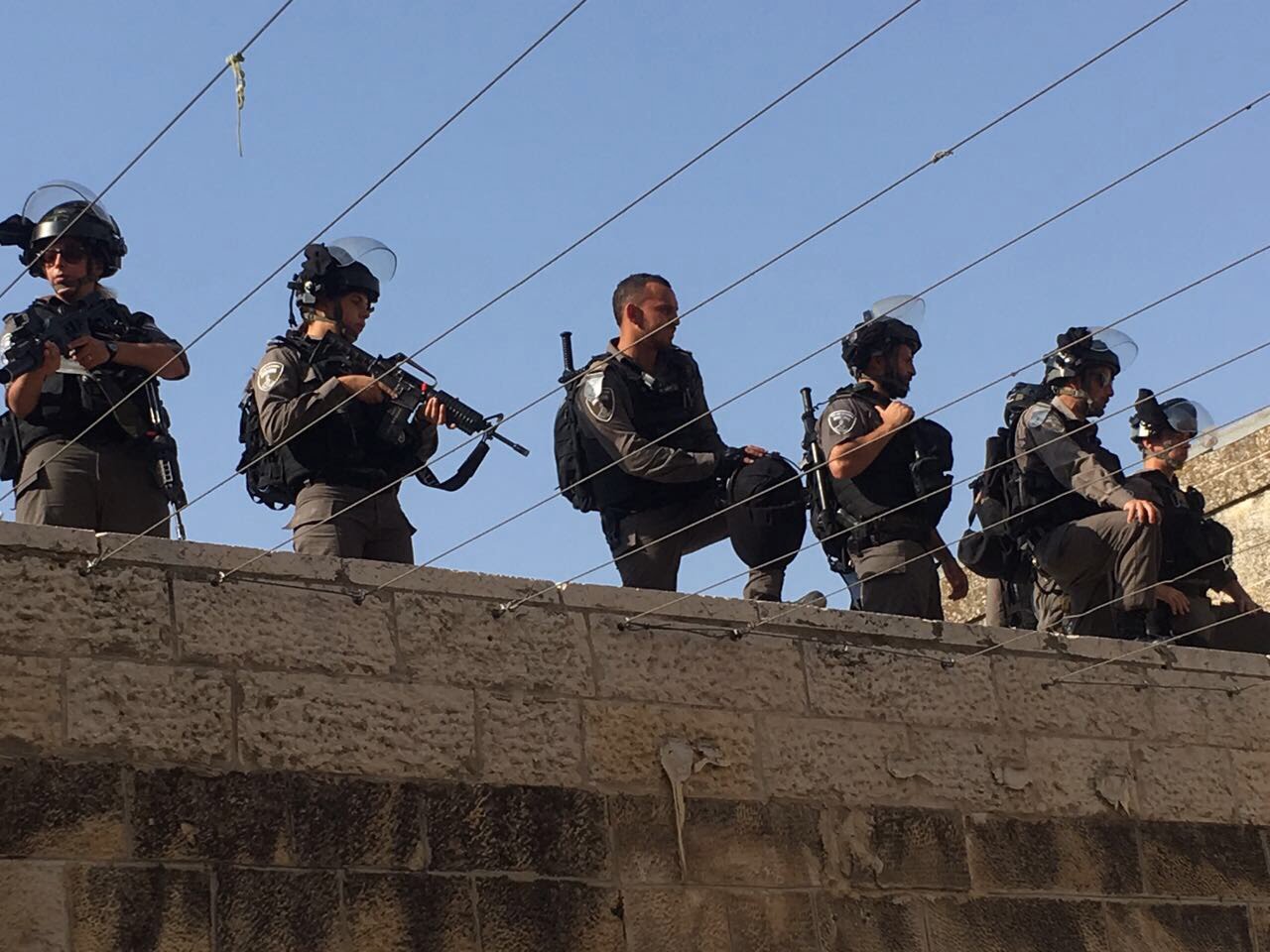
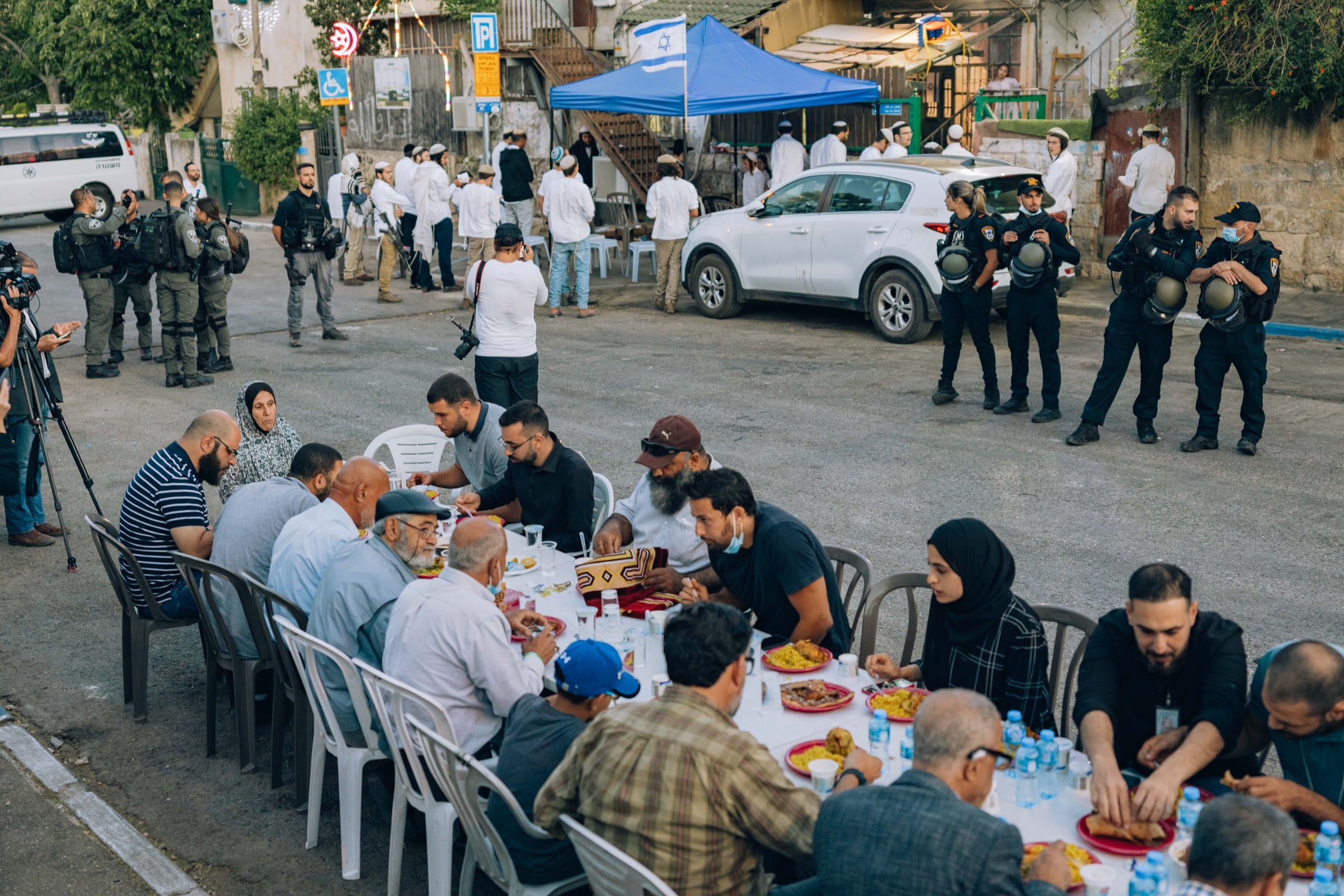
Amnesty International is deeply concerned about recent incidents in which Israeli security forces have used repeated, unwarranted and excessive force against Palestinian protesters in occupied East Jerusalem following four days of violence in which 840 Palestinians were injured. At least 21 Israeli police officers and seven Israeli civilians were also injured, according to Israeli police.

National Director, Sam Klintworth, has written to Australian Foreign Minister Marise Payne, and ask her to call on:

  • Israel to immediately halt forced evictions in the neighbourhood of Sheikh Jarrah and end the ongoing forced displacement of Palestinians from East Jerusalem, and
  • Israel to use all opportunities available to hold Israel accountable for its systematic violations under international law, and
  • United Nations Security Council members to convene an open session and for the Special Coordinator for the Middle East Peace Process to brief member states.

Amnesty International also remains deeply disappointed that the Australian government did not support the investigation of alleged war crimes in Occupied Palestinian Territory by the International Criminal Court (ICC). Australia’s non-recognition of Palestine as a State should not preclude any opportunity for serious allegations to be investigated. The question at hand is not about statehood, it is about the human rights of people in OPT.

Azerbaijan: Authorities using smear campaign to silence women activists

More than two dozen women targeted by government-backed smear campaign

Private photos and intimate conversations made public, and women labelled ‘bad wives’ and ‘bad mothers’

‘This is part of a deliberate strategy to muzzle critics of the Government’ – Natalia Nozadze

Women who have played a prominent role in campaigning for women’s rights in Azerbaijan are being subject to reprisals and threats, Amnesty International said in a new briefing today (12 May).

In the new briefing, Azerbaijan: Gender-based reprisals against women must stop, Amnesty shows how the Azerbaijani authorities have sought to defame and silence women activists.

In the past two years, at least 15 women have been subjected to a range of targeted harassment by the security forces backed by the government – including being blackmailed via their social media accounts; having their private conversations publicised, sometimes material of a sexual nature; and being accused of being “bad wives” or “bad mothers”.

Amina Rustamzade, the wife of activist and former prisoner of conscience Ilkin Rustamzade, attempted to take her own life in July last year following personal attacks on her. A profile of her was advertised on an escort site releasing her contact details, and she has also faced repeated threats to expose details about her private life.

The organisers of this year’s International Women’s Day march in the capital Baku – which was dispersed by security forces – have been targeted. One of the organisers, Gulnara Mehdiyeva, had her social media accounts hacked, and private photos of her surfaced online. Another organiser, Narmin Shahmarzade was also targeted, with her private conversations posted online.

Natalia Nozadze, Amnesty International’s South Caucasus Researcher, said:

“This is part of a deliberate strategy to muzzle critics of the Government and suppress women’s activism.

“By shaming and blackmailing these women activists, the authorities believe they will renounce their lawful activism or pressure their partners to do so.

Amnesty is calling on the Azerbaijani authorities to ensure gender-based violence and discrimination targeting women activists in Azerbaijan is halted immediately. They must conduct a prompt, impartial and effective investigation into each incident, as well as into other violations of their human rights, such as their right to privacy.

Myanmar: Democratic Voice of Burma journalist jailed


Responding to news of the conviction and three-year jail term handed down by a Myanmar court to Democratic Voice of Burma (DVB) journalist Min Nyo for his reporting on the post-coup reality in Myanmar on 12 May, Amnesty International’s Deputy Regional Director for Southeast & East Asia, Emerlynne Gil, said:

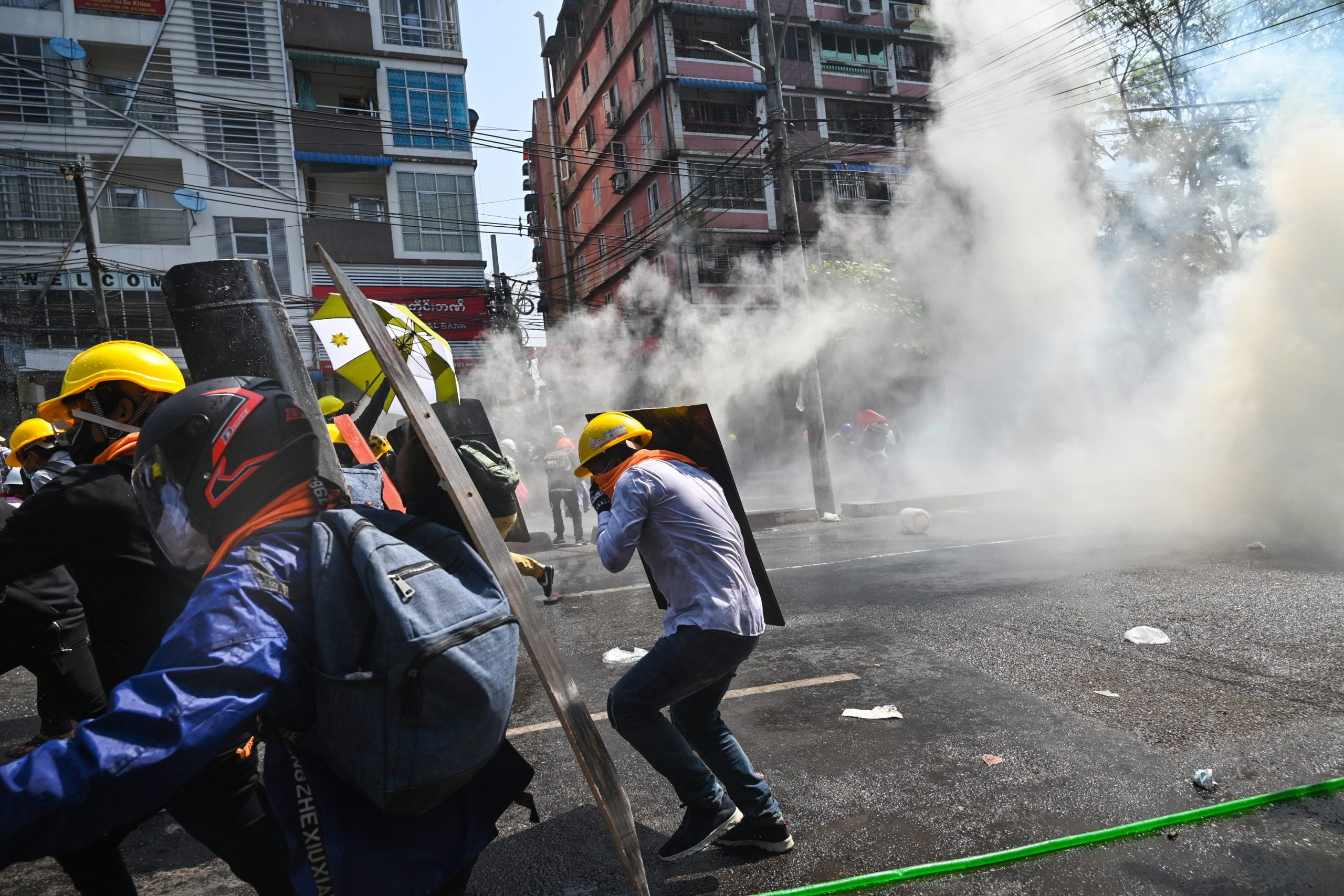
“The conviction and three-year sentence handed down to Min Nyo shows the appalling situation faced by journalists in Myanmar, where they risk life and liberty to shed light on the military’s abuses. The military authorities are ruthless, determined to crush dissent by silencing those who seek to expose their crimes.

“Since the 1 February coup, scores of journalists have been arbitrarily detained, threatened, arrested and even shot at. Journalism in Myanmar has effectively been criminalized and DVB, a publication which began in exile, has been forced underground once more. 

“Min Nyo’s conviction must be quashed, and he should be released immediately – along with all other journalists, activists and human rights defenders imprisoned and detained solely for their peaceful opposition to the military coup.”

Background

On 12 May 2021, DVB reporter Min Nyo was sentenced to three years in prison under Section 505(a) of Myanmar’s Penal Code. He had been arrested in Pyay, Bago Region on 3 March 2021. According to a statement from DVB, he was beaten by police during his arrest and sustained injuries at this time.

Section 505(a) of the colonial-era Penal Code makes it a crime to publish or circulate any ‘statement, rumour or report, with intent to cause, or which is likely to cause, any officer, soldier, sailor or airman, in the Army, Navy or Air Force to mutiny or otherwise disregard or fail in his duty as such”. This law is often used by the military authorities to persecute journalists and activists, in violation of the rights to freedom of expression. 

Since the coup on 1 February, the Myanmar military has revoked the licenses of several media outlets including DVB.

On 9 May, Thai authorities arrested three of Min Nyo’s DVB colleagues in Chiang Mai, northern Thailand, as well as two activists. They had been covering the anti-coup protests in Myanmar until 8 March, when DVB’s TV licence was suspended and they had to flee to Thailand. The five are being detained pending a court decision on their case.

Amnesty International reiterates its call for the Thai authorities to honour their obligations under international law.

Amnesty International opposes refoulement, which is prohibited under international law, in all cases without exception. Non-refoulement is an international legal principle that prohibits the transfer of individuals to another country or jurisdiction where they would face a real risk of serious human rights violations or abuses. It is part of customary international law, making it binding upon all states regardless of whether they ratified the relevant treaties.

Israel: Cycle of impunity leaves civilians once again paying the price amid escalation of hostilities

Israeli forces and Palestinian armed groups in Gaza must not repeat violations of international humanitarian law that led to killing and maiming of civilians and destruction of homes and infrastructure in previous rounds of fighting, said Amnesty International today. 

Since 10 May Palestinian armed groups have fired more than 1,500 rockets striking civilian areas in central Israel and towns near the Gaza border killing and injuring civilians. Israeli forces have carried out air strikes killing and injuring civilians in Gaza. They have also damaged or destroyed at least two residential buildings housing tens of Palestinian families and one office building in Gaza, in targeted attacks amounting to collective punishment of the Palestinian population. In total at least 53 people, including 14 children, in Gaza and seven people in Israel have been killed in the violence.

“The intensification of armed hostilities between Israel and Palestinian armed groups in Gaza raises fears of a further spike in civilian bloodshed and destruction of homes and infrastructure over the coming days. All sides in the conflict have an absolute obligation to protect civilians. They must remember that there is an active investigation before the International Criminal Court and must not assume they will enjoy past impunity for violations,” said Saleh Higazi, Deputy Director for the Middle East and North Africa at Amnesty International. 

“This escalation is reminiscent of horrific hostilities from 2008, 2012, and 2014 where civilians bore the brunt of the suffering, with massive death and destruction in Gaza, which has been under an illegal blockade amounting to collective punishment since 2007.

“Both Israeli forces and Palestinian armed groups have carried out war crimes and other violations with impunity. Israel has a deplorable record of carrying out unlawful attacks in Gaza killing and injuring civilians including war crimes and crimes against humanity. Palestinian armed groups have also committed violations of international humanitarian law with impunity.”

Amnesty International has consistently condemned indiscriminate rocket fire by Palestinian armed groups.

“Firing rockets which cannot be accurately aimed into populated areas can amount to a war crime and endangers civilian lives on both sides of the Israel/ Gaza border,” said Saleh Higazi.

In Israel a 50-year-old Palestinian citizen of Israel and his 15-year-old daughter were killed in a suspected rocket attack in the unrecognized village Dohmosh outside the city of Lydda in central Israel. The community does not have access to shelters, and the alarm system of sirens warning of oncoming projectiles from Gaza does not function in these communities.

Collective punishment

In Gaza, Israeli forces carried out attacks on a number of residential buildings from the early hours of 11 May. One 13-storey high rise residential building – Hanadi Residential Tower – was completely destroyed and reduced to rubble. Civilians had been warned to evacuate the area before it was hit. Al-Jawhara office building was also severely damaged on and Al-Shurouq building was also destroyed and reduced to rubble on 12 May. Other buildings were partially damaged as specific apartments were targeted.

“Deliberate targeting of civilian objects and extensive, unjustified destruction of property are war crimes. Destroying entire multi-storey homes making tens of families homeless amounts to collective punishment of the Palestinian population and is a breach of international law,” said Saleh Higazi.

“Even if part of a building is being used for military purposes Israeli authorities have an obligation to choose means and methods of attack that would minimize risks posed to civilians and their property.”

An attack targeting an apartment on the top floor of the seven- storey “Tiba Apartments” building killed one woman and her son, a 19-year old with special needs, who lived on the floor below. 

An attack on the 14-storey residential tower called “al-Jundi al-Majhoul” killed three Palestinian members of Islamic Jihad. One civilian resident in the building who was woken up by the attack said: 

“The building was shaking crazily… When we got to the windows…we saw everyone looking at us and then people screaming ‘vacate the building immediately’ because it was hit… minutes afterwards I was outside, with people pulling me away from danger … which now feels funny to say, as we have no idea where a safe place would be to seek refuge in.

“So far [the building] hasn’t [ been destroyed], but the terror of the thought alone is enough. We haven’t slept a wink, the strikes have been non-stop. I have a two and a half year old daughter and this is her first war, I was terrified myself and did not know what to do to calm her,” she said, adding “what drives me crazy, is that they can easily just target precisely whoever they want as they’ve done with our building, and yet they choose to level entire buildings to the ground. What does that tell you? I’m sure not an entire building is a security threat.” 

Amnesty International is calling on the international community, UN Security Council members – including the United States – to publicly denounce violations of humanitarian law and pressure all sides to the conflict to protect civilians. The United States needs to stop stalling and allow the UN Security Council to release a strong statement immediately. 

“UN Security Council members must take a strong and public stand and immediately impose a comprehensive arms embargo on Israel, Hamas and other Palestinian armed groups with the aim of preventing further serious violations of international humanitarian law and human rights by the parties to the conflict,” said Saleh Higazi.

“The international community must also press Israel to address root causes of the latest flare up in violence which include longstanding impunity for war crimes and other serious violations of international law as well as Israel’s ongoing illegal settlement expansion, the blockade of Gaza, and the forcible eviction and dispossession of Palestinians such as those in Sheikh Jarrah.”

South Asia: Urgent action needed to combat deadly COVID-19 surge across region

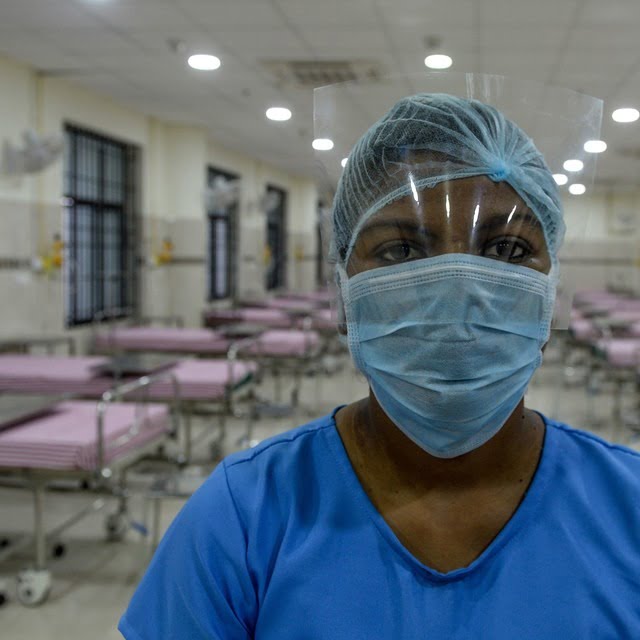
Governments across South Asia must immediately address healthcare shortages and urgently strengthen their healthcare systems to respond to the rapid surge of COVID-19 cases in the region, said Amnesty International.  

With India and Nepal’s healthcare systems reaching breaking point, the human rights organization expressed its concern over the lack of preparedness of other countries in the region for the virus’s latest and most deadly wave. Extremely low vaccination rates across South Asia have also left the region highly vulnerable, with pressing action needed at the global level to ensure more equitable access to vaccines. 

“The human catastrophe that is unfolding in India and Nepal should be a warning to other countries in the region to invest heavily in surge capacity for an emergency response. The virus is spreading and transcending borders at a frightening speed and will continue to hit the region’s most marginalized populations hardest of all,” said Yamini Mishra, Amnesty International’s Asia-Pacific Director. 

“We are at a critical point. Fewer than one in ten of the region’s population has been vaccinated. The decisions taken by governments in South Asia and across the world in the coming days and weeks will be crucial in mitigating the human cost of this latest surge.” 

South Asia, home to a quarter of the world’s population, is fast becoming the new global epicentre of the COVID-19 pandemic. On 6 May, India reported more than 400,000 new cases in one day, taking its total tally of confirmed cases to 21.5 million, though this is likely to be a significant underestimate. As the disease ravages India, several south Asian nations are also facing a resurgence of cases.  

Nepal, which shares a porous border with India, has already started to experience a massive spike in infections. According to WHO figures, daily cases increased 30-fold from 303 to 9,317, or an increase of 2,975%, between 12 April and 12 May. On Tuesday, Nepal recorded another 9,317 cases, bringing its total to 413,111.  

With India stopping exports of oxygen, Nepal is struggling to find alternative supplies. To make matters worse, Nepal is also in the midst of political upheaval, with its Prime Minister having lost a vote of confidence and parties failing to form a government. 

“We have seen how shortages of oxygen, hospital beds, human resources and essential medicines pushed the already under-resourced healthcare response of India over the edge. Now a similar worrying trend is emerging in Nepal,” said Yamini Mishra. 

“This is not the time for Nepal’s politicians to indulge in political wrangling and infighting.  What the country needs right now is unity and leadership to address the growing crisis.” 

After experiencing a second wave last year, Pakistan, Bangladesh, Afghanistan and Sri Lanka are also witnessing a surge with infections picking up sharply. The new Indian variant of coronavirus has been detected in Sri Lanka and Bangladesh, prompting authorities to close borders and ban travellers from India.  

Bangladesh’s nationwide lockdown has struggled to limit public movement or contain the surge in daily infections, which rose to 7,200 in early April, its highest point in the pandemic, before beginning to reduce. The country’s health directorate has expressed concern that mass travel ahead of the upcoming Eid celebrations could lead to a resurgence of infections. Pakistan’s authorities have steadily tightened restrictions on travel in a bid to prevent a surge in COVID-19 cases during Eid. Meanwhile, the Afghan government has so far ignored the advice of its Ministry of Public Health to implement a lockdown.  

Strengthen surge capacity and protect the marginalized 

According to media reports, hospital intensive care units in Pakistan, Bangladesh, Sri Lanka and Nepal are now full or close to capacity. With high rates of poverty, fragile health infrastructures, poor socio-economic conditions, inadequate social protection systems, limited access to water and sanitation facilities and inadequate living space, the new wave puts millions of lives in the region at risk. According to the World Bank, South Asia has 0.6 hospital beds per 100,000 people, against an average of five in high-income countries. 

“The disease has exacerbated an already dire healthcare situation in the region. Now, more than ever, South Asia’s governments should develop mechanisms for building surge capacity to manage patient loads, sustain essential services, and reduce the social and economic impact of pandemic,” said Yamini Mishra.  

“At the same time, States need to focus on protecting the human rights of the marginalized and vulnerable groups at high risk, including daily wage earners, prisoners, refugees and the internally displaced, by ensuring equitable healthcare. They must take effective steps to ensure that health facilities are available, affordable and accessible to everyone without discrimination,” she added. 

International cooperation for equitable access to vaccines 

From late January onwards, countries including Bangladesh, Nepal, and Sri Lanka started receiving vaccine doses through donations from India and other countries, as well as via commercial deals. Amid its current crisis, India temporarily halted exports of vaccines on 24 March to prioritise domestic requirements, leaving the region with a severe shortfall of vaccines. Vaccination rates across South Asia remain extremely low – in Pakistan, only 0.9 percent of the population have received one dose of the vaccine. 

Amnesty International is calling on the international community to show solidarity and fulfil its human rights obligations to provide cooperation and assistance, by providing lifesaving medical tools and removing legal uncertainties and barriers that may impede the production and supply of vaccines as the disease continues to ravage the region.   

“The new surge in cases poses a huge challenge to a region already struggling to vaccinate its population. In this time of crisis, the international community must come together and extend support to South Asian countries by ensuring equitable access to vaccines and prioritizing resource and technology transfer to produce vaccines locally,” said Yamini Mishra. 

Violent clashes in the Occupied Palestinian Territories: what you need to know

Violent clashes between Israeli security forces and Palestinian protesters have erupted in Jerusalem. These protests are a result of the forced and illicit displacement of Palestinian peoples across east Jerusalem. In their brutal repression of such protests, and forced evictions of Palestinian residents, Israeli security forces have violated numerous human rights principles.

With hundreds injured and many displaced, the US, the EU, Russia and the United Nations have all expressed concern over the dire situation, and called for calm amidst the brutal unrest. While conflict is not uncommon for the region, these clashes have been labelled as the ‘worst religious unrest in several years’. Sparking concerns over this violence escalating and further destabilising the region. 

Why are the Palestinians protesting? 

Palestinian protests have been occurring for more than a month, coming to a head in the past four days. These protests initially followed restrictions on Palestinians’ access to the Damascus Gate, and over efforts to block Palestinian celebrations during Ramadan, these restrictions worsening existing religious tensions. 

Currently, Palestinians in occupied east Jerusalem have been protesting the threatened forced evictions of Palestinian residents in Sheikh Jarrah. This forced displacement as part of a legal effort to make way for Israeli settlers. Israel currently has plans to evict four families and has threatened dozens more with eviction. Palestinians in Sheikh Jarrah have held nightly demonstrations and vigils in protest of these proposed evictions. 

Why are these evictions so important? 

This recent bout of violence has brought international attention to Israel’s prolonged efforts to expand Israeli settlements, and sustain an Israeli majority in Jerusalem by forcing Palestinians out of their homes. Israel asserts that all residents of Jerusalem are treated equally before the law. Yet, in east Jerusalem, residents’ rights differ based on whether they are Israeli or Palestinian. Palestinians facing a discriminatory legal system in Jerusalem courts. 

Forced displacement of a population in occupied territory violates international humanitarian law. Saleh Higazi, Deputy Director for the Middle East and North Africa at Amnesty International, said that These forced evictions are part of a continuing pattern in Sheikh Jarrah, they flagrantly violate international law and would amount to war crimes’. The UN has echoed these sentiments, calling on Israel to halt all evictions in occupied Palestinian territory, warning that their actions could amount to war crimes. These evictions are not just important for the human consequences they have upon those being displaced, but are also gravely significant in their open and flagrant violation of international law. 

What conditions are these protesters facing? 

Protesters, and even bystanders, in east Jerusalem, have faced cruel violence and repression. There is evidence of arbitrary and unreasonable use of force against Palestinians. Israeli security forces are employing sound and stun grenades, malodorant water canons and excessive force against protesters on the streets, in mosques and even in their homes. Amnesty International has also noted that many peaceful Palestinian protesters have been detained and arrested arbitrarily.  

On the 7th of May in the al-Aqsa mosque, protesters and worshippers were fired at and blasted with concussion grenades in a shocking escalation of tensions. Eyewitnesses informed Amnesty International of the sheer brutality of the violence. One witness detailing the horrific storming of the mosque, by saying; “Everyone was a target, I want to say that the shooting was random, but that would be a lie. They knew exactly who and where they were aiming their bullets and grenades at.” These attacks are not only cruel and immoral, but also directly and blatantly violate the right to expression and peaceful assembly

What should be done? 

This unrest could hold grave consequences for peace in the Middle East. Violence has spurred more violence, with Palestinian armed groups just yesterday launching rockets and missiles into Israel. 

The blatant disregard for human rights and lives calls for immediate action by the international community. Amnesty International urges nations and the UNSC to openly hold Israel accountable for their violations of international law. In a statement to Amnesty International, Nabil el-Kurd, a resident under threat of displacement, stressed, “Sheikh Jarrah is sending a message to the whole world, including the US Congress, the UK Parliament, the French Parliament, the EU Parliament, the International Criminal Court, that what is happening to us is a war crime. It is not just an eviction, but a war crime.” 

New youth justice laws set NT back decades in addressing Indigenous rights

Amnesty International Australia condemned the Northern Territory parliament’s decision to pass retrograde youth justice amendments which will wind back reforms and increase the number of Indigenous people in Australia’s prisons.

A last minute-amendment was added which allows the granting of bail in “exceptional circumstances”, however it is breathtaking that this legislation was created and passed by the same government which admitted shame at the treatment of children in the Territory’s justice system in the wake of the 2017 royal commission. 

“The Gunner government claims they’re making the community safer, but I can tell you now these laws will make kids much less safe from the systemic racism which means our kids are imprisoned at 25 times the rate of their non-Indigenous peers,” Amnesty International Australia Indigenous Rights Lead, Nolan Hunter, said.

“In fact, under the Gunner government’s leadership, almost 100% of children detained in the Territory’s prisons are Indigenous.

“It does raise the question if a law which almost exclusively applies to Indigenous kids is in fact discriminatory? 

“It’s especially galling that the Northern Territory Police released data earlier this month which showed that kids who go through diversion programs didn’t reoffend – these laws will mean that kids will be refused bail, and therefore access to the very diversion programs that are effective.

“The laws were introduced in a knee-jerk reaction to an entirely confected “crime wave” in a story on A Current Affair which gave the impression of youth out of control in Alice Springs, when in fact, all the data shows that crime is going down in the Territory.

The laws were introduced in a knee-jerk reaction to an entirely confected “crime wave” in a story on A Current Affair which gave the impression of youth out of control in Alice Springs, when in fact, all the data shows that crime is going down in the Territory.

Amnesty International Australia Indigenous Rights Lead, Nolan Hunter.

“Concerningly, we also heard on our recent trip to the Territory that these irresponsible media reports were leading to vigilantism against Indigenous kids.” 

BACKGROUND

The Australian Bureau of Statistics found that there were 693 offenders aged between 10 and 17 years, a decrease of 9% from 2018–19. 

Despite requests from Amnesty International Australia, the Gunner government has failed to produce evidence that these amendments will address recidivism, nor has it provided evidence for the problem this legislation is trying to address. Amnesty International Australia has written to A Current Affair’s producers and Nine CEO Mike Sneesby to express concern that they have breached the Media Entertainment and Arts Alliance with their distorted reporting which will lead directly to children’s lives being harmed by contact with the criminal justice system. We have not received a response.

Thailand: Authorities must not deport Myanmar journalists at grave risk

Responding to news of the arrest of five individuals from Myanmar, including three journalists from the Democratic Voice of Burma (DVB) news outlet, by the Thai authorities in Chiang Mai on 9 May, Amnesty International’s Deputy Regional Director for Campaigns, Ming Yu Hah, said: 

“It is imperative that the Thai authorities do not forcibly return these individuals to Myanmar. To do so would place them at real risk of arbitrary arrest and detention, torture and other ill-treatment, and death. 

“It would also put Thailand in breach of its obligations under the principle of non-refoulement under international law. 

“There have long been credible reports of torture and other ill-treatment in detention in Myanmar. These have intensified since the coup. Several people detained in recent weeks have died in detention in unexplained circumstances.  

“For years DVB has been a leading, outspoken outlet holding the authorities to account. If returned to Myanmar, these journalists will be at exceptionally grave risk. 

“Thailand has long played host to displaced and exiled communities from Myanmar. Whether they are targeted for their brave journalism work, escaping air strikes or evading other forms of attacks by the military, people in Myanmar are fleeing again today. We urge the Thai authorities to give sanctuary to those seeking safety, in line with international law.” 

Background 

According to a statement from DVB’s Editor-in-Chief, Aye Chan Naing, three senior DVB journalist and two activists were arrested by Thai police on Sunday 9 May in Chiang Mai (Thailand). They were reporting the anti-coup protests in Myanmar until 8 March, the day the military authorities revoked DVB’s TV license. Amnesty International has confirmed that the five are currently in police custody. 

Since the military coup on 1 February, the Myanmar military has also revoked media licenses of several other media outlets and dozens of journalists are currently in arbitrary detention, facing charges or fearing arrest. Many more have gone into hiding. 

Amnesty International opposes refoulement, which is prohibited under international law, in all cases without exception. Non-refoulement is an international legal principle that prohibits the transfer of individuals to another country or jurisdiction where they would face a real risk of serious human rights violations or abuses. It is part of customary international law, making it binding upon all states regardless of whether they ratified the relevant treaties.

Here’s why the Istanbul Convention can save lives

The Istanbul Convention was created to help prevent and combat violence against women and domestic violence. It is the gold standard and it can save the lives of millions of women and girls.

Violence against women in Europe, including domestic violence, is rife. One in five women in the EU have experienced some form of physical and/or sexual violence from a current or previous partner from the age of 15.

Lockdowns during the Covid-19 pandemic have exacerbated the exposure of women and girls to abusive partners and family members and revealed the gaps in states’ responses to it.

The Council of Europe Convention on preventing and combating violence against women and domestic violence, also called the Istanbul Convention, is a ground-breaking treaty that provides a clear roadmap on how states can and must work towards a region free from gender-based violence. 

Ironically, Turkey, the first country to sign the Convention on 11 May 2011, has now decided to leave it, with disastrous consequences for millions of women and girls and for organisations providing vital support to survivors of sexual and domestic violence.  

The Istanbul Convention can save lives. Here’s why:

It is the ‘gold standard’ for preventing and combating violence against women and domestic violence.

The Istanbul Convention is the most far-reaching international treaty specifically designed to tackle violence against women and domestic violence. It sets out minimum standards for governments in Europe on prevention, protection, and prosecution of violence against women and domestic violence. 

The Convention includes obligations for states to set up protection and support services to respond to violence against women, such as an adequate number of shelters, rape crisis centres, free 24/7 helplines, psychological counselling and medical care for survivors of violence, among other requirements. It also calls on the authorities to ensure education on gender equality, sexuality, and healthy relationships. 

The Istanbul Convention is a legally binding instrument (State parties to it have an obligation to comply with its provisions). Globally, it is the third regional treaty addressing violence against women and the most comprehensive one after the Inter-American Convention on the Prevention, Punishment and Eradication of Violence against Women (Convention of Belém do Pará) adopted in 1994 and the Protocol to the African Charter on Human and Peoples’ Rights on the Rights of Women in Africa (Maputo Protocol) in place since 2003.

It offers protection to all women and girls without discrimination.

A key element of the Istanbul Convention is theobligation it places on States to implement its provisions without discrimination on any grounds to ensure no one is left behind. Lesbian, bisexual, trans women and intersex people who face deeply rooted prejudices and hostility all over Europe are therefore entitled to protection and redress under this treaty as well as everyone who is subjected to domestic violence.

Significantly, the Istanbul Convention has specific provisions for refugee and migrant women and girls. For instance, it introduces the possibility of granting migrant women who are survivors of domestic violence an autonomous residence permit when their residence status depends on that of their abusive partner. 

It also requests governments to recognise gender-based violence against women as a form of persecution within the meaning of the 1951 Refugee Convention and a criterion to be considered when women and girls seek international protection in Europe. 

It focuses on dismantling prejudices and stereotypes.

Violence against women is deeply rooted in the unequal power relations between women and men in societies. In addition, prejudices, gender stereotypes, and harmful practices perpetuate the idea that women are inferior to men. These are compounded for many women who experience intersectional discrimination on the grounds of, for instance, race, ethnicity, caste, class age, disability, gender identity, sexual orientation, religion, marital status and/or other characteristics. Against these harmful beliefs, the Istanbul Convention sends a clear message: there is no excuse for violence and abuse. Governments should put in place preventive measures to change attitudes and dismantle gender norms shaped by harmful stereotypes, and discriminatory cultural patterns that can in turn result in individuals and societies condoning or accepting violence against women.

The Convention draws on the definition of violence against women as violence directed against a woman because she is a woman or that affects women disproportionately. Although less often, men also experience some forms of violence within the domestic sphere and the Convention encourages governments to recognise this violence and apply its provisions to all victims of domestic violence regardless of their gender or gender identity.

It is a widely accepted human rights instrument

The drafting of the Istanbul Convention was possible following a common understanding among many States and civil society that violence against women in Europe is pervasive and that a set of harmonised measures would ensure that survivors everywhere were able to benefit from the same level of protection. The Convention establishes additional provisions that go beyond national frameworks providing an additional level of protection.

Amnesty International was one of many organisations that participated in the elaboration of the treaty that was opened for signatures on 11 March 2011. It entered into force on 1 August 2014. 

Contrary to what is sometimes perceived, a great majority of the Council of Europe States have endorsed the Convention. It has been signed by more than 40 European states and the EU as a whole and ratified by 34 of them. In 2018 alone the Convention entered into force in nine countries (Croatia, Cyprus, Germany, Estonia, Greece, Iceland, Luxembourg, North Macedonia, and Switzerland) and in 2019 Ireland also ratified the treaty.

There is nothing controversial about the Istanbul Convention

There is ‘no hidden agenda’ to the Istanbul Convention; its sole purpose is to prevent and combat violence against women and girls, and domestic violence. However, misinformation campaigns about the term “gender” and spurious allegations by certain governments and interest groups that the Conventionundermines the notion of the “traditional family” are resulting in a few countries failing to ratify the Convention.

For example, Parliaments in Slovakia and Hungary have rejected initiatives to ratify the Convention and in Bulgaria, the country’s Constitutional Court has ruled that the Convention is not compatible with its Constitution.

In March 2021, Turkey, the first country to sign and ratify the Convention, announced its withdrawal from it, also arguing that it was being used to ‘normalise homosexuality’, which is ‘incompatible with Turkey’s social and family values’. If the Turkish authorities do not reverse it, the decision will take effect on 1 July 2021. Paradoxically, Turkey was a leading supporter of the Convention at the time of its opening for signatures and was instrumental in mobilising other European States to sign up to it.

Turkey’s unprecedented move follows similar threats in Poland where there is a pending request by the Prime Minister to the Constitutional Tribunal to assess the constitutionality of the treaty and a bill in Parliament calling on the President to withdraw Poland from the Istanbul Convention and to create a new convention on the “rights of the family”. 

The Convention is becoming a tool in the hands of interest groups to spread misinformation and demonise gender equality and women’s and LGBTI people’s rights. Contrary to what governments in these countries argue, the real threat to “family values”, which, of course, are held dear by countless LGBTI people, are the perpetrators of gender-based and domestic violence. In 2019, the Venice Commission, an advisory body to the Council of Europe, issued an opinion assessing the constitutional implications of the ratification at the request of the Minister of Justice of Amenia, which provides a very useful analysis debunking many misconceptions about the treaty.  

It ilifesaving instrument that is making a difference

Women’s groups and allies in many countries have successfully campaigned against violence against women using the Istanbul Convention as a benchmark. Ironically, in countries where misinformation about the Convention is being spread – including Turkey and Poland- people have come together to fight for it,prevent violence against women and campaign for gender equality.  

As a result, change is happening. For example, in Finland funding of shelters for survivors of domestic violence was understood to be a state responsibility thanks to the Istanbul Convention, ensuring moreservices and support. Finland and other countries such as Albania, Serbia and Montenegro have set up national helplines coinciding with the entry into force of the Convention. 

In addition, in the past few years, Iceland, Sweden, Greece, Croatia, Malta and Denmark have reformed their laws to ensure that rape is defined as sex without consent, as required by the Convention. In Sweden, the law has so far resulted in a significant increase in convictions and, to a lesser degree, in prosecutions.

The reality is that no country is free from violence against women and there is a long way to go to achieve long-lasting change. But governments that sign and ratify the Convention are implementing measures to stop this and sending a strong message to the world that there is political will to protect women’s rights and save lives.