Afghanistan: Unspeakable killings of civilians must prompt end to impunity

Responding to the bombing of Sayed -ul- Shuhada High School in West Kabul on Saturday afternoon, which killed at least 83 people and injured at least 150, and the bombing of a bus in Zabul Province on Sunday night which has reportedly left at least 11 people dead and dozens injured, Samira Hamidi, Amnesty International’s South Asia Campaigner, said: 

“The appalling scenes in West Kabul and Zabul Province must serve as a wake-up call to the world. These unspeakable crimes brutally highlight the failure of authorities to protect civilians, particularly girls and minority groups. People are being slaughtered on a weekly basis and the bloodshed shows no sign of letting up.  

“Now is not the time for the international community to turn its back on Afghanistan. Targeting civilians, especially children and schools, is a war crime and violation of international humanitarian law. All parties to the peace negotiations must focus their utmost efforts on protecting civilians, upholding human rights for all, and ending impunity for these crimes.” 

End brutal repression of Palestinians protesting forced displacement in occupied East Jerusalem

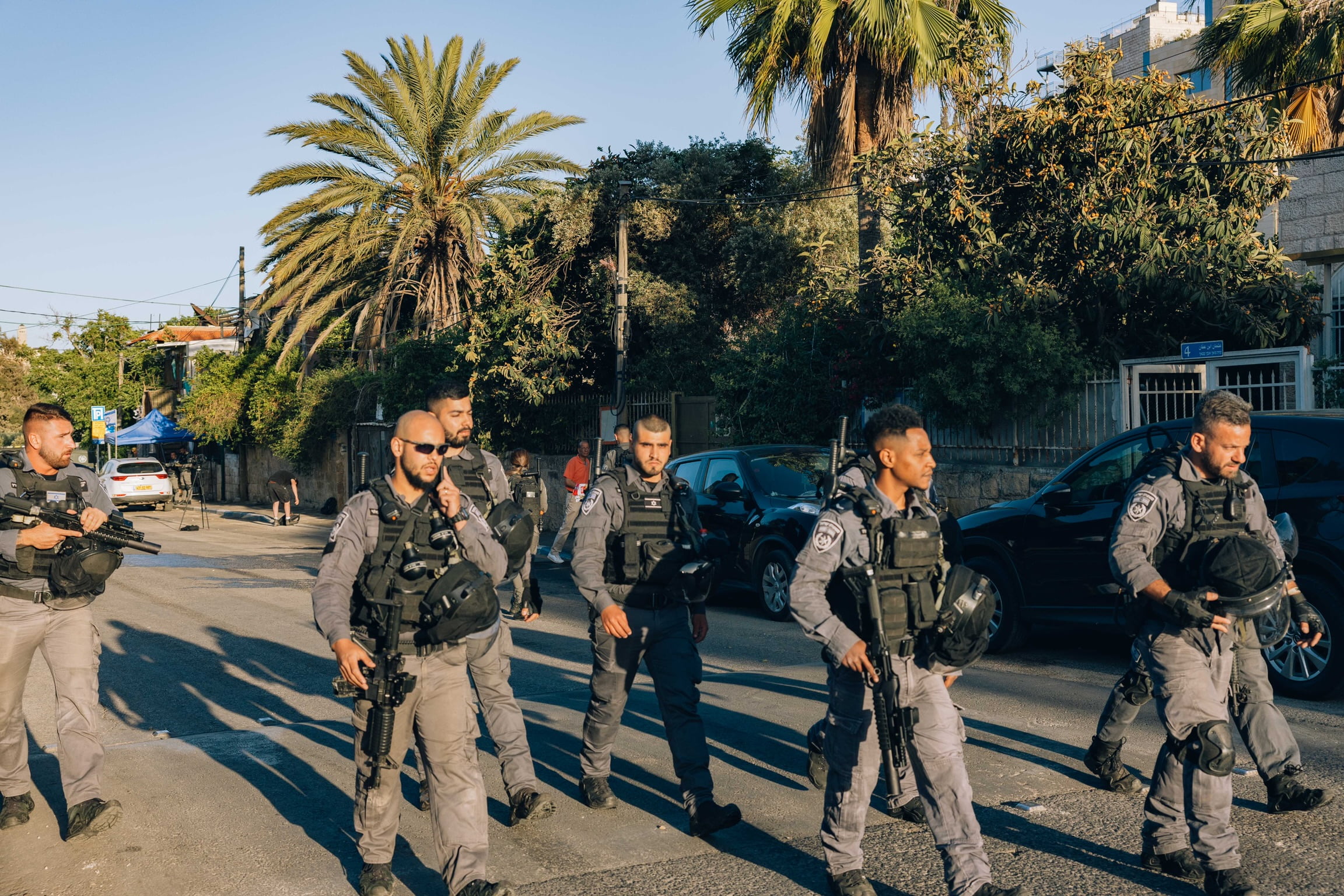
Israeli security forces have used repeated, unwarranted and excessive force against Palestinian protesters in occupied East Jerusalem following four days of violence in which 840 Palestinians were injured, Amnesty International said today. At least 21 Israeli police officers and seven Israeli civilians were also injured, according to Israeli police.

The organization calls on Israeli authorities to immediately halt forced evictions in the neighbourhood of Sheikh Jarrah and end the ongoing forced displacement of Palestinians from East Jerusalem. 

In the latest escalation, Palestinian armed groups have fired rockets and missiles into Israel injuring at least one Israeli and there have been reports of several people killed in Gaza from retaliatory attacks by Israel. 

Amnesty International calls on all parties to respect international humanitarian law and take all feasible precautions to avoid harming civilians.

“Evidence gathered by Amnesty International reveals a chilling pattern of Israeli forces using abusive and wanton force against largely peaceful Palestinian protesters in recent days. Some of those injured in the violence in East Jerusalem include bystanders or worshippers making Ramadan prayers,” said Saleh Higazi, Deputy Director for the Middle East and North Africa at Amnesty International.

“The latest violence brings into sharp focus Israel’s sustained campaign to expand illegal Israeli settlements and step up forced evictions of Palestinian residents- such as those in Sheikh Jarrah – to make way for Israeli settlers. These forced evictions are part of a continuing pattern in Sheikh Jarrah, they flagrantly violate international law and would amount to war crimes.”

Eyewitness testimonies – as well as videos and photographs taken by Amnesty International’s researchers on the ground in East Jerusalem –show how Israeli forces  have repeatedly deployed disproportionate and unlawful force to disperse protesters during violent raids on al-Aqsa mosque and carried out unprovoked attacks on peaceful demonstrators in Sheikh Jarrah.

Since the beginning of Ramadan on 13 April tensions have been steadily rising as Palestinians protested against Israeli restrictions limiting their access to Damascus Gate, a main entrance to the Old City of Jerusalem. On 26 April, Israeli authorities removed the restrictions in response to the continuous demonstrations.  Anger has also been rising over the imminent plans to forcibly evict four Palestinian families from Sheikh Jarrah to make way for Israeli settlers.

Unlawful use of force

Tensions reached boiling point on 7 May, when more than 170 Palestinians were injured as Israeli forces stormed the al-Aqsa mosque compound in dispersing worshippers along with protesters, firing 40mm kinetic impact projectiles (KIPs) and concussion grenades into crowds gathered there for prayers on the last Friday of Ramadan.   

A Palestinian journalist present at the scene described how Israeli forces went on the rampage firing projectiles and tear gas. He also said they stormed the clinic at the mosque and beat protesters. He told Amnesty International: “I’ve been covering events taking place in Jerusalem for the past 10 years… and I’ve never been this scared in my life.  Everyone was a target, I want to say that the shooting was random, but that would be a lie. They knew exactly who and where they were aiming their bullets and grenades at. Most of the people were targeted in their upper bodies (eyes, face, and chest).”

He was also shot in the back while holding up his camera and attempting to leave the area.  

In response, protesters at al-Aqsa threw stones and lit fires as Israeli forces on horseback and in riot gear used stun grenades to repel them.

On 10 May, more than 300 Palestinian protesters were injured when Israeli forces stormed the al-Aqsa compound for the second time in days. A Red Crescent spokesperson told Amnesty International that the violence led to the hospitalisation of at least 250 Palestinians, with seven in a critical condition.

One eyewitness said Israeli forces began breaking windows and firing tear gas and stun grenades, leaving many people inside struggling to breathe.

Another witness on the scene said Israeli forces started firing tear gas from rooftops before more forces stormed al-Haram square from al Magharbeh gate. “They kept moving in pushing people into al-Aqsa mosque, locking [the doors] with metal chains… and then breaking a window to throw in tear gas at people literally locked up with not much room to breathe or get medical assistance… on top of it they started to  shoot rubber bullets at worshippers inside,” he said.

He also reported seeing Israeli forces beating passers-by and stopping cars evacuating the wounded to photograph the injured before letting them go. He himself was shot in the chest while he approached a medic on the scene who had been injured.  

Sheikh Jarrah

Over the past week Palestinians in the Sheikh Jarrah neighbourhood have held nightly demonstrations in response to the imminent threat of forced eviction.  Amnesty International has documented arbitrary arrests of peaceful demonstrators, the use of excessive force, arbitrary use of sound and stun grenades as well as the arbitrary spraying of maloderant (skunk) water canons at demonstrators and homes in Sheikh Jarrah.   

Four Palestinian families in the neighbourhood are under imminent threat of forced eviction after a Jerusalem court rejected their appeal against an eviction order.Nahalat Shimon International, a settler company, has filed lawsuits to seize the homes of dozens of families in Sheikh Jarrah using inherently discriminatory laws, such as the Legal and Administrative Matter Laws as well as the Absentee Property Law of 1950, to confiscate Palestinian land or property and transfer it to settler groups. Forcible transfer of the occupied population is prohibited under international humanitarian law and constitutes a war crimes according to the Rome Statue of the International Criminal Court.

Amnesty International researchers witnessed an unprovoked attack by Israeli forces against a group of peaceful demonstrators in Sheikh Jarrah on 9 May. Israeli forces arrived shortly before iftar, the evening Ramadan meal. After the meal a tens of peaceful protesters formed a circle and began chanting against the imminent plans to evict Palestinian families from their homes. The demonstrators were at least 10 metres away from the Israeli forces who were stationed by a nearby Israeli settlers’ home. A short while later Israeli forces launched a coordinated attack to disperse the crowd of Palestinian protesters. Israeli forces on horseback began to sprint towards the crowd. One man limping in pain said he was trampled on by police horses as he tried to run away from the area. Residents were pushed into the walls of their homes and five men were arbitrarily arrested. 

Israeli forces began to shove and hit the group -including an Amnesty researcher observing the protest. At around 10pm they brought the skunk water canons and sound grenades and began to arbitrarily fire at demonstrators.

Osama Dweik, was arrested during a nightly demonstration in Sheikh Jarrah on 6 May when Israeli police suddenly charged at the group of protesters and immediately detained him. At the police station he saw Israeli police kicking and beating with batons four Palestinians detained during the Damascus Gate clashes and Sheikh Jarrah protests. Seven other people were arrested at Sheikh Jarrah that night alone. 

Gil Hammerschlag, an Israeli activist demonstrating against the forced evictions at Sheikh Jarrah on 7 May, was shoved and kicked by Israeli forces who threw sound grenades at peaceful demonstrators from less than 10 metres away.

On the same day, a middle-aged Palestinian man was left badly bruised in the leg when Israeli forces threw a stun grenade that struck him in the thigh. A photographer also on the scene told how Israeli forces, including police on horseback, charged towards a crowd peacefully chanting after one of the protesters threw a plastic water bottle at them.

“Amnesty International researchers witnessed deplorable conduct by security forces at Sheikh Jarrah including entirely unprovoked attacks on peaceful protesters standing up for rights and calling for respect of international law. Instead of further violating the rights of Sheikh Jarrah’s residents and solidarity activists, Israeli authorities must immediately scrap planned forced evictions,” said Saleh Higazi. 

Amnesty International is calling on the international community to hold Israel accountable for its systematic violations under international law.

“Israel must not be allowed to continue its rampage against Palestinians who are simply defending their right to exist and protesting against their forced displacement. Mere expressions of concerns about Israel’s utter disregard for its obligations under international law are not sufficient.  There must be clear and strong denunciations of the flagrant violations, including forced displacement, the expansion of illegal settlements and the and the brutal repression of people protesting against such grave violations,” said Saleh Higazi. 

“As an immediate step we call on the United Nations Security Council members to convene an open session and for the Special Coordinator for the Middle East Peace Process to brief member states.” 

Nabil el-Kurd, one of the residents under threat of forced eviction in Sheikh Jarrah, told Amnesty International:

“Sheikh Jarrah is sending a message to the whole world, including the US Congress, the UK Parliament, the French Parliament, the EU Parliament, the International Criminal Court, that what is happening to us is a war crime. It is not just an eviction, but a war crime. Remember that. I do not know why the entire world is watching what is happening and letting Israel get away with it. It is time they stopped spoiling Israel.”    
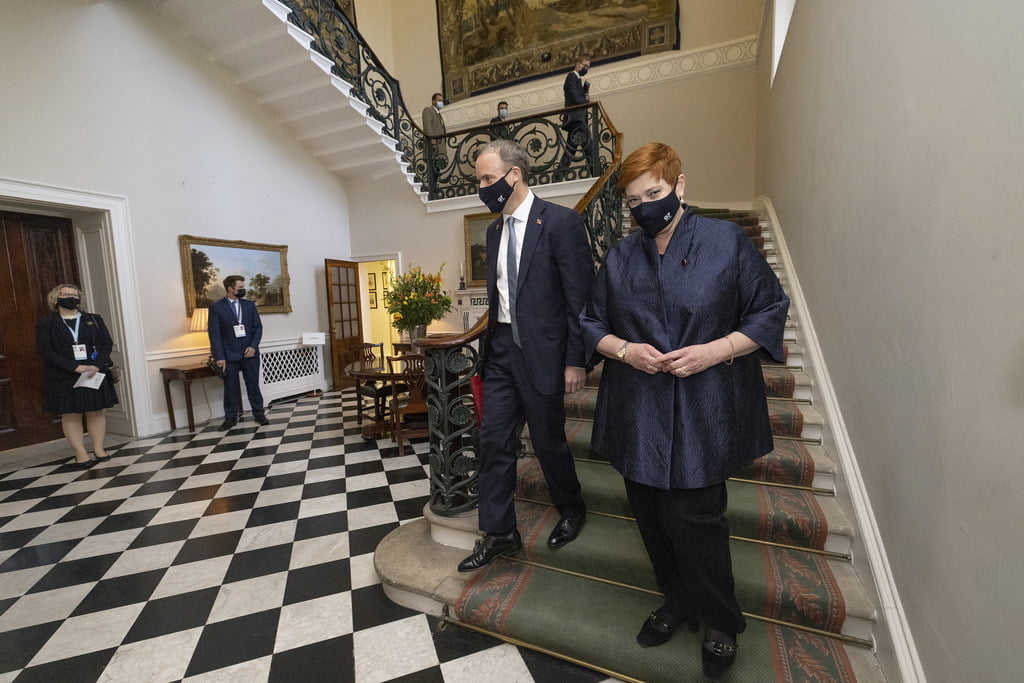
Marise Payne must put human rights at the forefront of her trips to the UK, USA and Switzerland

Australian Foreign Affairs Minister, Senator the Hon. Marise Payne, is currently on a diplomatic trip to the United Kingdom, Switzerland, and the United States of America. Amnesty International is calling on the Minister to use the trips to address ongoing human rights concerns, and work with Australia’s partners to overcome and recover from the COVID-19 pandemic.

In particular, Amnesty International is calling on Minister Payne to raise the issues of:

  • India: overcoming the COVID-19 crisis and looming human rights crisis in India is critical for the health and security for our region.
  • TRIPS waiver proposal: Australia is one of the few remaining blockers of the important TRIPS waiver proposal. This proposal would go a long way towards alleviating the global shortage of COVID-19 vaccines.
  • United States: The Biden Administration has made steps towards championing a human rights agenda, however, Amnesty International remains concerned about the case of Julian Assange, the use of Guantanamo Bay, and the use of the death penalty.
  • Japan: Japan needs to take steps towards the abolition of the death penalty – in practise and in law. Whilst no executions took place in Japan in 2020, the death penalty should never be handed down nor enacted.

Foreign Minister Marise Payne should also use the trip as an opportunity to discuss human rights matters that require a global response, such as: the human rights situation in Xinjiang, Tigray and Myanmar.

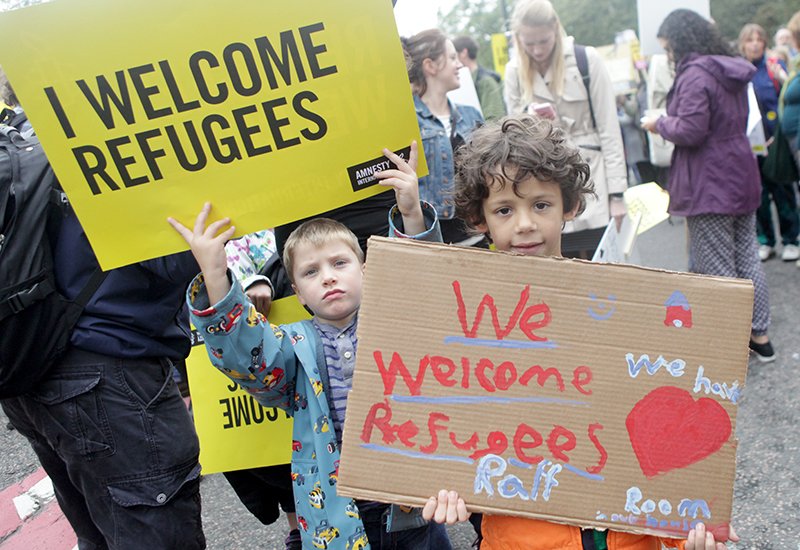
Time to increase the number of refugees allowed to settle in Australia

  • Annual humanitarian intake of refugees should be increased to 20,000 this year, expanding to 30,000 over next three years
  • Refugees settling in Australia via Community Support Program to be in addition to Government intake

Following confirmation the Biden administration will significantly increase the number of refugees admitted to the US each year, Amnesty International Australia is calling on the Morrison Government to follow suit and increase Australia’s annual intake at next week’s Federal Budget.

The United States this week  confirmed it will increase the annual intake from 15,000, set under former President Trump, to 62,500 this year with plans to increase to 125,000 next year. Australia last year reduced its cap on resettling refugees by 5,000 to 13,750 annually due to COVID-19. 

Amnesty is asking the Government to step into line with the US and Canada and show it is committed to alleviating the global refugee crisis by increasing the current annual intake to 20,000 this year, expanding to 30,000 within three years.

More than 80 million people globally were forced to flee their homes due to conflict and persecution by the end of 2019. Among them are over 26 million refugees. These numbers are expected to continue to increase as climate change and conflict continue to cause further displacement.

Dr Graham Thom, refugee coordinator for Amnesty International, said Australia must follow the US lead and do more. “Australia’s support for refugees does not match the severity of the global refugee crisis,” he said. “The cut to our intake last year was a severe blow to the world’s most vulnerable people.” 

In a recent Amnesty survey, the Australian community made it clear it wants to welcome more refugees into their local neighbourhoods and support them as they rebuild their new lives. Almost 40,000 Australians, 40 local governments and more than 100 community groups have pledged their support to engage in an improved community refugee sponsorship program. 

At present the current private sponsorship program, the Community Support Program (CSP), limits widespread community participation. It is too expensive and the amount of refugees allowed into Australia through this program is then counted as part of the overall humanitarian intake. 

As well as increasing the overall cap, Amnesty asks the Government to make those entering via the CSP to be in addition to the overall humanitarian intake. Refugees bring a wide range of skills, experiences and qualifications to the job market. They can contribute to the Government’s Economic Recovery Plan as we emerge from the COVID-19 pandemic.

Repatriation flights welcome, but quarantine system still seriously lacking

Responding to the announcement today that repatriation flights would begin from India to Australia on May 15, Amnesty International Campaigner Joel MacKay said:

“We welcome the fact that the totally unconscionable flight ban from India will be lifted, however, we still have concerns about what is being proposed and how that affects the human rights of Australians trapped in India.

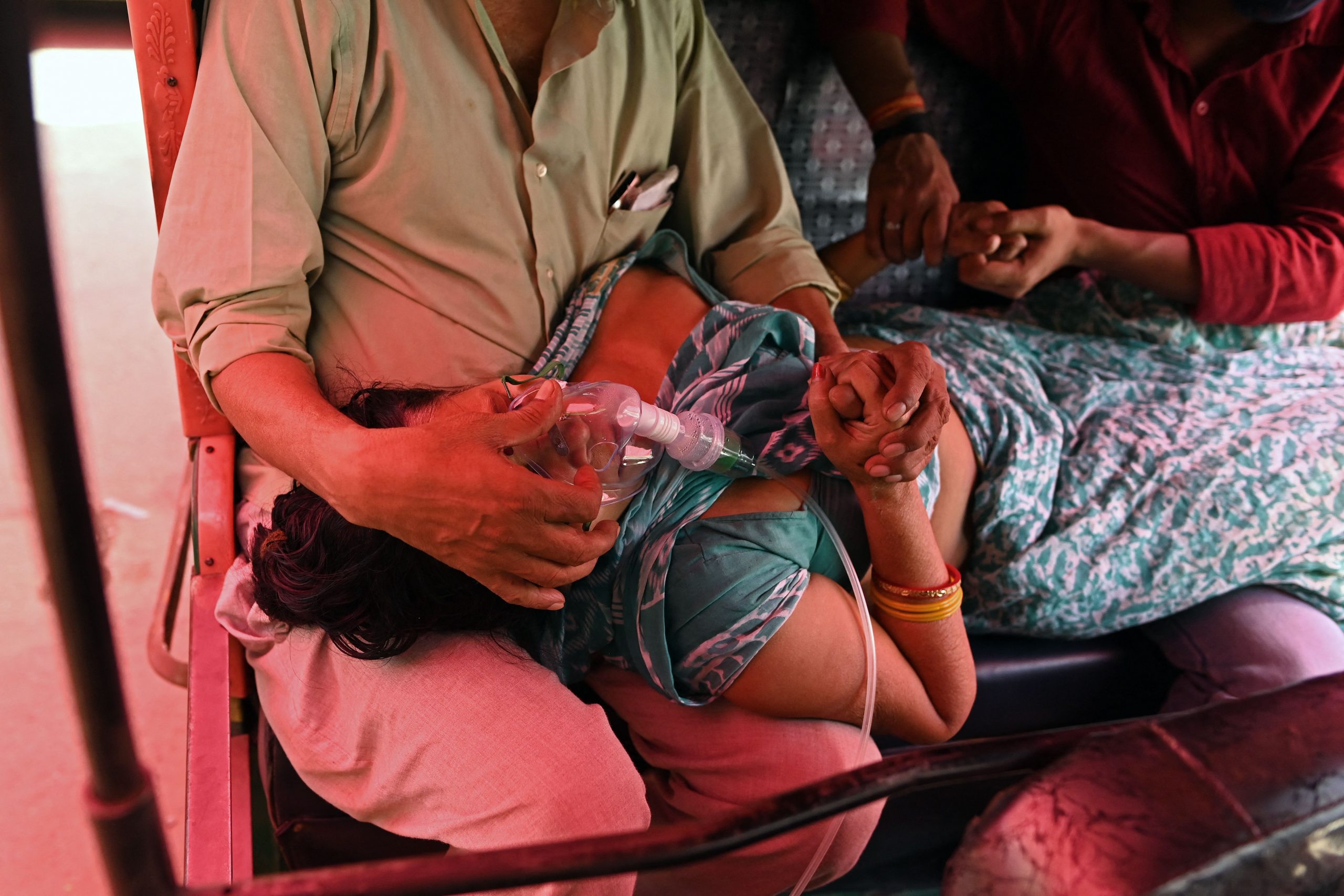
“Under the plan announced today, an Australian must test negative to return home. Considering India’s faltering health system is failing to keep up with the surging cases, this Australian government decision will likely see sick Australians left languishing, unable to access healthcare, along with so many millions of Indians.

“This decision does raise the question, what’s the point of a quarantine system if it can’t house people who are unwell?

“Australians should be brought home where they can safely access the care they need. 

“The fact that only three repatriation flights are scheduled, and commercial flights may still be on hold, emphasises the urgent need to drastically expand the current national quarantine capabilities. New facilities need to be built and more support given to the states so hotel quarantine can cater for more returning Aussies.

“If the government is only going to schedule three repatriation flights every two weeks from India, it would take around three months to get all of the stranded Aussies home — to leave these people in a worsening COVID-19 crisis is a complete failure of the government’s responsibility to protect the rights and safety of its citizens.”

Australia risks becoming isolated on TRIPs

Responding to the announcement that the US, France and Spain have all signalled their intention to support the TRIPS waiver, Amnesty International Campaigner Joel MacKay said:

“Amnesty remains deeply concerned and disappointed that Australia is one of the few countries that are continuing to block this proposal that would allow more countries to manufacture and distribute COVID-19 vaccines and health products.

“The Morrison Government should urgently cease its resistance to the TRIPS Waiver.

“The COVID-19 crisis in India that has led to thousands of deaths and hundreds of thousands of new cases daily is exactly why the Waiver from Certain Provisions of the Agreement on Trade-Related Aspects of Intellectual Property Rights (TRIPS) is needed. Increased local vaccine production could have minimised the crisis that India is currently facing, and would definitely assist in its management.

“Australia remains one of the few countries actively blocking the waiver – Australia is being left behind and isolated on the global stage, and millions of people will pay the price with their lives unless we step up and support the waiver.”

Write for Rights 2020: You’re already changing lives!

In 2020, Amnesty International Australia supporters took over 185,000 actions as part of Write for Rights. Around the world, nearly 4,500,000 actions were taken as part of Write for Rights to challenge injustice. Check out the full report from our International Secretariat here.

Our collective actions are already making a difference and changing lives.

Challeging injustice and changing lives

Melike and Özgür were taking part in a peaceful Pride march at their university when they were met with police who used pepper spray, plastic bullets and tear gas on the protesters. They and 17 others were then charged with “unlawful assembly,” “failing to disperse despite being warned” – and faced 3 years in prison.

After 2 years on trial, all 19 were acquitted on 8 October 2021! 445,000 people from over 43 countries demanded their acquittal during Write for Rights 2020.

On 1 July Burundian human rights defender Germain Rukuki was released after serving more than four years in prison. Germain’s release comes after the appeal court reduced his sentence from 32 years to just one in June. He should never have been imprisoned in the first place – Germain was arrested, prosecuted and convicted simply for his human rights work.

During Write for Rights supporters from around the world took more than 436,000 actions calling for Germain’s freedom. Germain’s wife Emelyne Mupfasoni shared her thanks with all those who took action.

“From the bottom of my heart, I want to thank you all to have mobilized and made it possible for Germain to reunite with us soon.”

Emelyne Mupfasoni

Saudi Arabian women’s rights activist Nassima al-Sada was released from prison on 27 June 2021. She was imprisoned for campaigning for the right for women to drive and to end the repressive male guardianship laws in 2018. Over 40,000 Australians took action calling for her release.

Paing Phyo Min was released from prison in Myanmar on 17 April 2021!  Paing was sentenced to 6 years in prison in Myanmar following his arrest in April 2019 for peaceful satirical performances. 

“I just wanted to say as a parent thanks so much for helping my son.”

Paing Phyo Min’s father

On 19 February Algerian journalist Khaled Drareni, imprisoned for covering protests, was released!

Khaled Drareni following his release. © Getty Images

“I want to thank everyone who supported me and who supported the prisoners of conscience because your support is essential for all of us.”

Khaled Drareni thanking Amnesty supporters following his release.

On Monday 8 March, International Women’s Day, the South African Police Service committed to investigating Popi and Bongeka’s case. The commitment followed a meeting where Amnesty South Africa, along with Popi’s sister Lihle and mother Nomsa, handed over 316,796 actions taken by Amnesty supporters during Write for Rights.

(C) Amnesty International

The direct commander of the police who injured Gustavo Gatica has now been questioned by a court in Chile. Gustavo was blinded after being shot by the police during a protest in November 2019.

The authorities in Pakistan admitted to Idris Khattak’s whereabouts and arranged a meeting between him and his daughter. They have also allowed Idris to be represented by a lawyer of his own choosing. Idris, a human rights researcher, was disappeared in November 2019.

In Australia, tens of thousands of Amnesty supporters and activists stood with survivors and took action calling on governments to ban conversion practice. On 4 February, Victoria passed world leading legislation to ban harmful conversion practices.

Australia writes for rights 

In Australia, activists organised an incredible 60 events, both offline and online. At these events, they sent more than 5,000 letters, solidarity messages and tweets! Activists also held the inaugural 10 Days of Activism, bringing together hundreds of people to hear from speakers, including poets and protesters, about human rights and take action for Write for Rights.

In February 2021, activists in Canberra handed over all the actions taken in Australia to Embassies, and met with Embassy representatives.

Sending solidarity

Supporters also wrote thousands of solidarity messages, which are being posted to people right now, reminding them they’re not alone in their fight for justice

On February 12, Amnesty International Netherlands handed over thousands of solidarity messages for women’s rights defender Nassima to her son Mousa.

Later in February, Amnesty International South Africa also handed over solidarity messages to Popi’s sister Lihle and Bongeka’s cousin Mdu.

On Earth Day 2021, April 22, environmental defender Jani Silva shared her thanks for your continuing solidarity.

“From the bottom of my heart I can say that this campaign is what has kept me alive, because I’ve been very close to death but it’s never happened. In spite of everything, today we are alive and that’s what counts.

Jani Silva

What now?

We will continue to campaign for the immediate and unconditional release of Idris, and all those unfairly imprisoned. We will continue to call for justice for Gustavo and for Popi and Bongeka, for all Australian states to ban conversion practices, and for governments everywhere to combat injustices and respect human rights. 

Want to get involved in a movement that makes a difference? Find out how here.

Statement on Alexei Navalny’s status as Prisoner of Conscience

Following careful evaluation Amnesty International has decided to re-designate Alexei Navalny as a “Prisoner of Conscience”.

In February, Amnesty took an internal decision to stop using the “Prisoner of Conscience” term for Navalny, due to concerns relating to discriminatory statements he made in 2007 and 2008 which may have constituted advocacy of hatred. The Russian government and its supporters used that internal decision, which we had not intended to make public, to further violate Navalny’s rights. That was the height of hypocrisy, coming from a government that not only attempted to kill Navalny by poisoning, but has carried out unconscionable acts over the past two decades, including torture, enforced disappearances and widespread repression of political freedoms in Russia and abroad, as well as war crimes in Syria.

As a result of this episode, Amnesty has commenced a review of its overall approach to the use of the term ‘Prisoner of Conscience’. As an initial interim step, our approach has been refined to not exclude a person from designation as a Prisoner of Conscience solely based on their conduct in the past. We recognise that an individual’s opinions and behaviour may evolve over time. It is part of Amnesty’s mission to encourage people to positively embrace a human rights vision and to not suggest that they are forever trapped by their past conduct. 

Moreover, when Amnesty International designates an individual as Prisoner of Conscience, this in no way involves or implies the endorsement of their views. Amnesty only concurs with opinions that are specifically consistent with the protection and promotion of human rights. Some of Navalny’s previous statements are reprehensible and we do not condone them in the slightest. As a human rights organisation, Amnesty International will continue to fight racism and all forms of discrimination wherever they exist. 

This means that by confirming Navalny’s status as Prisoner of Conscience, we are not endorsing his political programme, but are highlighting the urgent need for his rights, including access to independent medical care, to be recognised and acted upon by the Russian authorities.

Alexi Navalny has not been imprisoned for any recognizable crime, but for demanding the right to equal participation in public life for himself and his supporters, and for demanding a government that is free from corruption. These are acts of conscience and should be recognised as such. 

In contrast, President Putin and the Russian government are restricting political freedom and acting in a brutal repression of anyone who seeks accountability and justice. It is they who are deliberately choosing to act without any trace of conscience.

Amnesty International made a wrong decision, which called our intentions and motives into question at a critical time, and apologises for the negative impacts this has had on Alexei Navalny personally, and the activists in Russia and around the world who tirelessly campaign for his freedom. 

It is Amnesty International’s firm commitment to actively fight injustice and oppression wherever it occurs. The Russian state is condemning Alexei Navalny to a slow death. That must be immediately stopped. 

We continue to call on everyone to campaign with us for Alexei Navalny’s immediate and unconditional release from prison, and for his immediate and unconditional access to independent expert medical care.

Everything you need to know about the TRIPS waiver

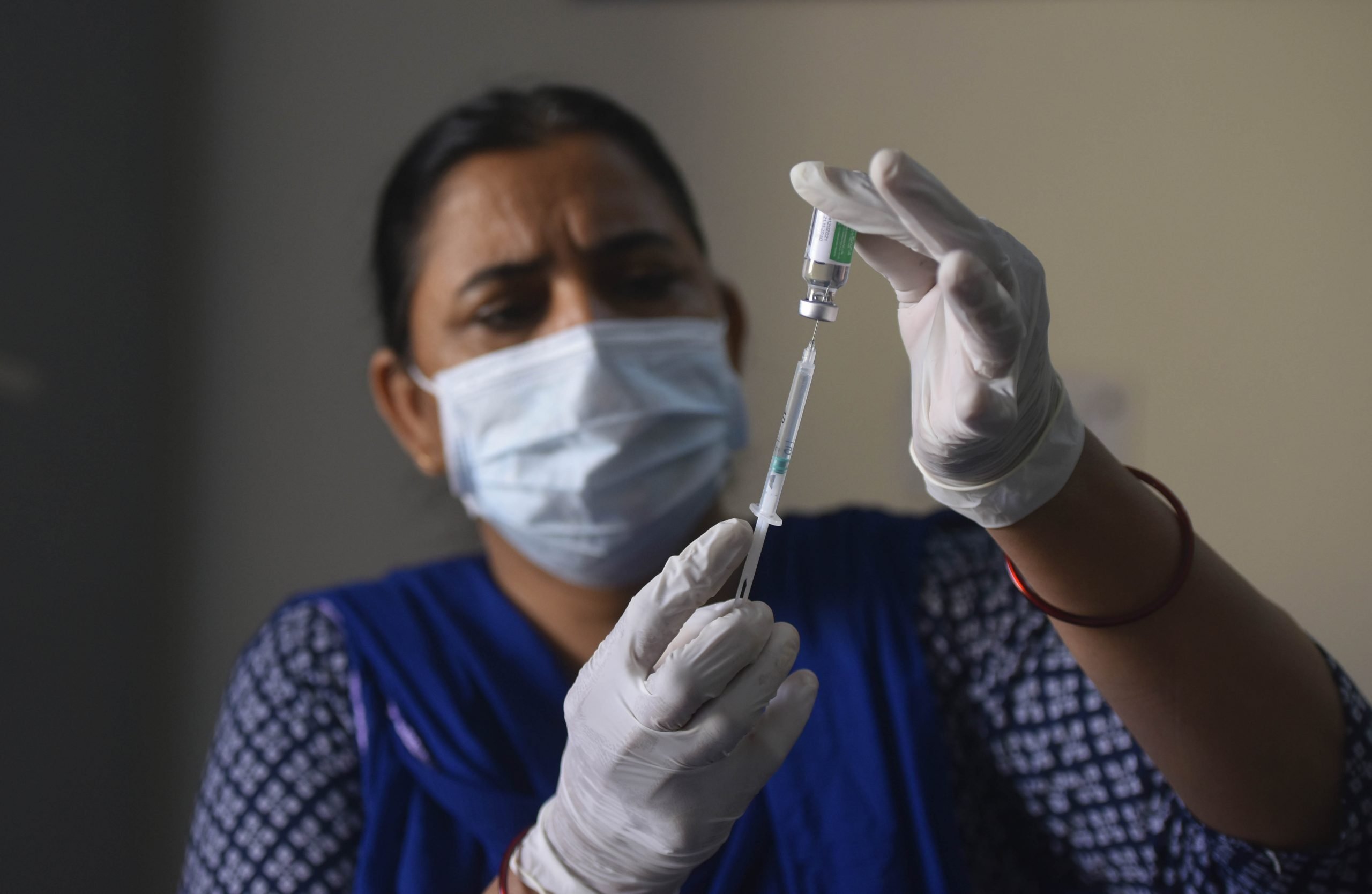
In the coverage of the COVID-19 pandemic and the development of vaccines, you may have heard about a move to waive intellectual property rights – also known as the TRIPS waiver.  Australia is one of the few countries, including the UK and the EU, which haven’t indicated support for the waiver. But it could help countries fast track vaccine production and end suffering like the recent heartbreaking scenes from India and Cambodia.

Significantly the United States today announced it would be supporting the waiver.

What is TRIPS?

The Trade-Related Aspects of Intellectual Property Rights (TRIPS) is an international treaty which regulates intellectual property rights. Multiple provisions of this agreement may cover the manufacturing of COVID-19 vaccines, these conditions creating barriers for poorer nations to access vital medical supplies. Perhaps most significantly, patents on pharmaceutical products and ‘protections of undisclosed information’ prevent smaller companies or nations from developing and manufacturing large quantities of lower-cost vaccines. Large pharmaceutical companies use the provisions of TRIPS to establish themselves as the sole producer and supplier of medicinal products or vaccines. These licensing conditions have already resulted in several vaccine shortages, such as those felt intensely across Europe. The use of TRIPS and pharmaceutical patents mean that large pharmaceutical companies are prioritising secrecy and profits over the right to health. 

Why is it important to waive this agreement?

In October of 2020, India, South Africa, Kenya and Eswatini proposed a temporary waiver on provisions of the TRIPS Agreement due to the ongoing COVID-19 emergency. This waiver would entail the removal of the hefty barriers to research, creation and supply, which are large obstacles to the ‘prevention, containment and treatment’ of COVID-19. 

By waiving such barriers, and allowing lower cost and greater volume supply of COVID-19 vaccines, developing states can more readily protect themselves and their citizens.  The right to health and life should be the most important consideration in these decisions. By removing some of these barriers to the proliferation of medical knowledge, the TRIPS waiver could potentially make the production of life-saving vaccines affordable for developing nations and protect billions of individuals in the most at-risk nations. Ensuring the right to health and life for all, regardless of an individual’s state of origin. 

Individuals across the globe are guaranteed an international system which protects and realises these rights under section 28 of the UDHR. At the outset of this pandemic, the UN General Assembly stressed the need for cooperation in countering the pandemic. However, this has not occurred. We can only expect tangible action if governments ‘recognise their human rights obligations and ensure that those most in need of life-saving vaccines are not left behind’ (Tamaryn Nelson Amnesty International Advisor on the Right to Health). The human rights of vulnerable individuals are compromised in the selfish and inhuman actions of states who neglect to consider, or advocate for the rights and lives of those in other countries. Without this waiver, profits are elevated, at the expense of the right to health and life.

What is Australia’s position on the TRIPS waiver?

On the 1 June 2021, Trade Minister Dan Tehan wrote to Amnesty International Australia to say that the government is “not opposed” to the TRIPS waiver proposal. . With 118 of 164 WTO members supporting a waiver, Australia alongside the UK, EU and other high-income nations is preventing a consensus decision, and blocking an adoption of these vital temporary changes. Also on June 1, it was announced that Australia – along with Japan, Singapore, Brazil, Kore, Norway, the EU, Switzerland and the UK – was ‘expressing doubts’ about moving to text-based negotiations of the proposal and wanted more time to revise it.

Australia claims its participation in the COVAX facility is sufficient, however, COVAX was only ever meant to be an emergency measure.

Despite proclaiming its role as a regional leader in the pacific, Australia continues to act in the contrary; hoarding vaccines and preventing imperative changes to TRIPS. Effectively, denying many of its vulnerable neighbours crucial access to medical treatment. Amnesty International Australia campaigner Joel Mackay said: “It is embarrassing that Australia is blocking the TRIPS waiver proposal that would allow more countries to manufacture and access COVID-19 health products, including vaccines. The Australian Government must stop blocking this important reform”. 

By opposing this proposal, Australia is actively interfering with developing nations’ means to provide low-cost healthcare and infringing upon the human right to health, as well as impinging upon its own capacity to protect its citizens. This decision lacks compassion and reason, Australia itself experiencing the fallout of these vaccine shortages. In opposing the TRIPS waiver, Australia is committing an egregious disservice to itself and the international community.

US support for intellectual property protection waiver for COVID-19 vaccines must spur more countries into action

In response to the announcement by the US government of its support for waiving intellectual property protections for COVID-19 vaccines, Amnesty International’s Secretary General, Agnès Callamard said: 

“Today the United States has taken a bold step for global solidarity. By supporting the waiving of intellectual property protections for COVID-19 vaccines, the Biden Administration has put the lives of people around the world ahead of the profits of a few pharma giants and their shareholders.  

“Other rich states – such as Australia, Brazil, the EU and UK – must now follow suit. Only by sharing knowledge and technology can the production of vaccines be accelerated to reach as many people as fast as possible. The only way to end the pandemic is to end it globally. The only way to end it globally is to put people before profit.” 

Background: 

In October 2020, India and South Africa requested a waiver that would allow countries to neither grant nor enforce patents and other specific intellectual property rights related to COVID-19 products until global herd immunity is achieved. A significant number of lower- and middle-income countries supported this proposal. Most high-income countries opposed it.  

If agreed, the waiver would suspend the implementation, application and enforcement of certain intellectual property rights, such as patents on pharmaceutical products, and facilitate the development and manufacture of more and lower-cost COVID-19 diagnostics, treatments and vaccines. 

While 60 countries are co-sponsoring the waiver proposal and over 100 countries out of the 164 World Trade Organization member states are supportive, a key number of rich states are still opposing it – notably Australia, Brazil, EU, Japan, Norway, Switzerland, and the UK, while others, such as Canada, are staying neutral.  

The People’s Vaccine Alliance today released poll that showed that 69% of the United States public support the measure.  

International human rights standards and trade rules are clear that protecting intellectual property must never come at the expense of public health.  

The WTO’s Trade Related Aspects of Intellectual Property Rights (TRIPS) sets out minimum standards for many forms of intellectual property that are pertinent to pharmaceutical companies, such as copyrights, trademarks, patents, undisclosed information (including trade secrets and test data) and anti-competitive practices.