NT youth need support, not prison

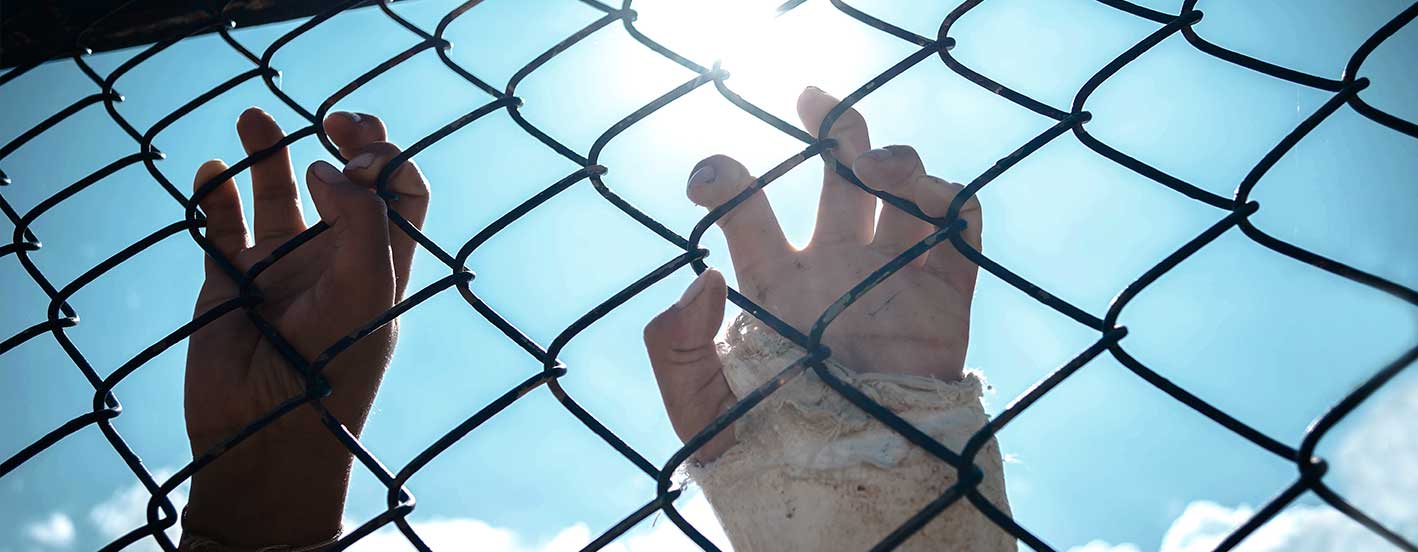
Amnesty International Australia and Balunu Healing Foundation have called on the Northern Territory government to give kids a chance at breaking the cycle of disadvantage and crime by diverting them into culturally appropriate programs that address the underlying intergenerational trauma which too often leads to crime, instead of condemning them to the quicksand of the youth justice system.

Amendments to the youth justice act due to be debated this week in Parliament will prevent kids from accessing Indigenous-led diversion programs which are highly effective in addressing recidivism. The Northern Territory’s own statistics show that more than 70% of children who complete a diversion program do not reoffend within 12 months of completion.

The Northern Territory Police’s own data shows that of the 12 children sent to diversion programs in a recent spate of arrests, none reoffended.

These amendments enforce the systemic racism our people have been battling for the past 230 years – putting little kids in prison instead of helping them deal with the complex issues in their lives simply hardens these children and does nothing whatsoever to address rates of reoffending.

Amnesty International Australia Indigenous Rights Lead, Nolan Hunter

“These amendments enforce the systemic racism our people have been battling for the past 230 years – putting little kids in prison instead of helping them deal with the complex issues in their lives simply hardens these children and does nothing whatsoever to address rates of reoffending,” Amnesty International Australia Indigenous Rights Lead, Nolan Hunter, said.

“If this awful legislation passes, we must at least have a guarantee from Gunner on a provision that ensures kids are bailed to the diversion programs that are effective in keeping them out of prison, and driving down crime rates rather than automatically putting them behind bars.”

The Indigenous-led Balunu Healing Foundation runs programs which work to increase the self-esteem, confidence and emotional and spiritual wellbeing of Indigenous youth to assist them to become strong, balanced individuals who will create strong families and positive pathways for future generations.

“Through deliberate and purposeful programs, Balunu aims to provide hope for Indigenous youth and families by breaking the cycle of disadvantage through good health, education, life skills, opportunity, training, employment and most importantly healing,” Balunu founder David Cole said. 

“We have been providing successful programs since 2006 and more than 800 children have attended our intensive healing camp, and we have delivered therapeutic workshops to more than 4000 people in the community.

“The recent Royal Commission into youth detention highlighted that the Balunu Healing Foundation was the only shining light in their investigation, which is effective in addressing the challenges faced by our youth. Programs like Balunu were a priority in the recommendations, but since then, the Northern Territory government has spent millions of dollars on IT infrastructure and nothing on healing our children,” Cole said.  

Background

Under the Gunner government’s leadership, almost 100% of children detained in the Territory’s prisons are Indigenous and have been since Michael Gunner came to office in 2016. 

The Australian Bureau of Statistics found that there were 693 offenders aged between 10 and 17 years, a decrease of 9% from 2018–19. 

Despite requests from Amnesty International Australia, the Gunner government has failed to produce evidence that these amendments will address recidivism, nor has it provided evidence for the problem this legislation is trying to address.

Families trapped in Darwin’s Mercure Airport Hotel prison must be released

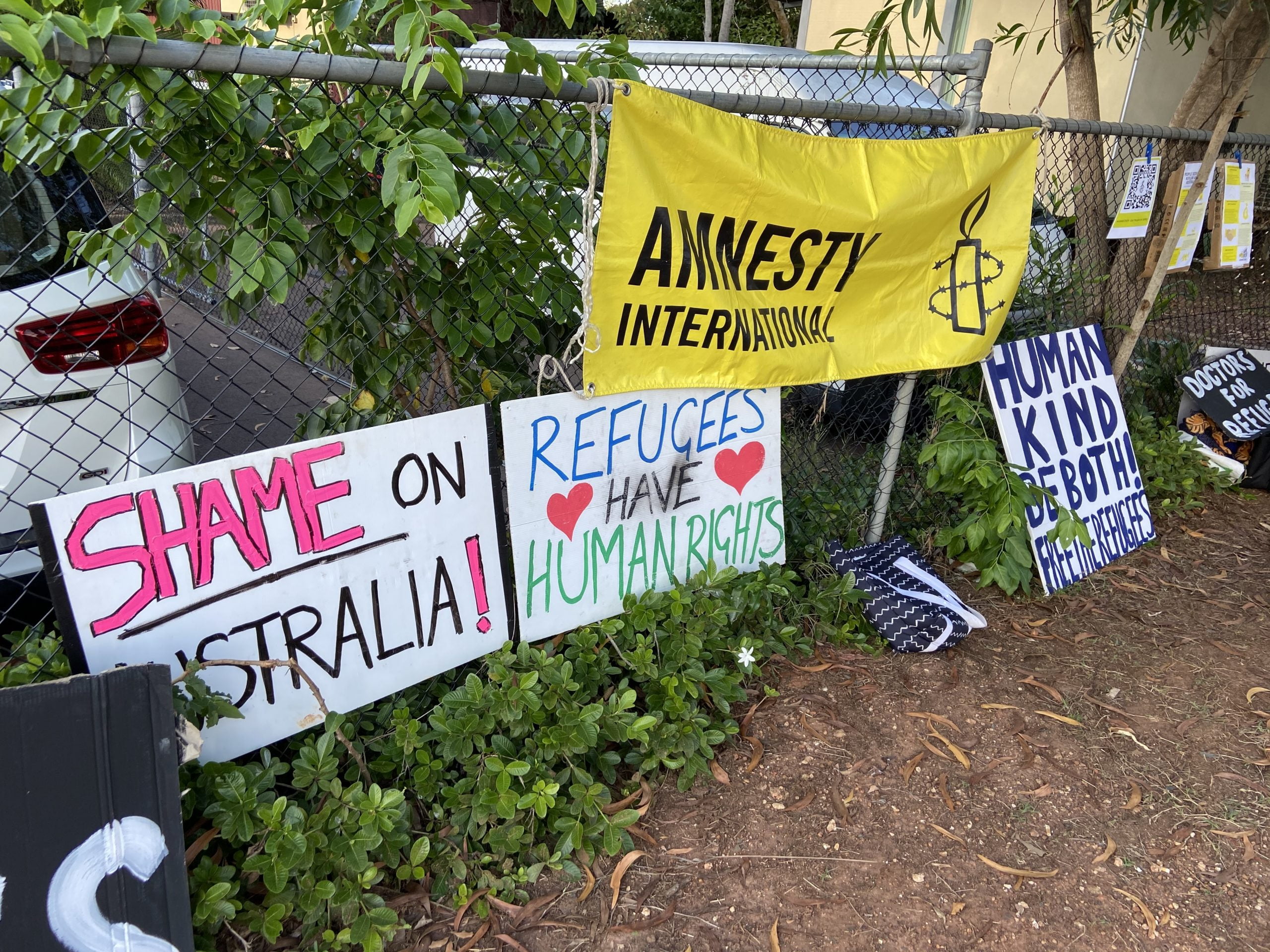
Three families, all recognised as refugees and including four women, must be released immediately into the community to end their physical and mental anguish after eight years trapped by the Australian Government’s cruel offshore detention policy.

The families, who were medevaced to Australia from Nauru where they were detained for more than six years, have now been stuck in the Mercure Airport Hotel in Darwin for more than 15 months. 

After visiting the families, which include four women, former Socceroo and Game Over ambassador, Craig Foster, said: “Seeing these wonderful people, hearing the pain and suffering they have endured for so many years, is truly heartbreaking. We could release them into the community right now while they wait to be resettled in the US. What purpose does it serve to keep them locked up? 

““The four women still detained in Darwin are the only women, of all the women taken offshore eight years ago, who are still in detention, with no clear reason why. We’ve got married couples here who have been forced to sleep on bunk beds in tiny rooms. The mental health impact is all too apparent.

“Their anguish needs to end. After eight years it is time for this shameful chapter in Australian history to end. I implore the Australian Government to do the right thing and set them free.”

Amnesty International refugee coordinator, Dr Graham Thom,  said: “With the Australian Government releasing most of those held in these hotel prisons, including those in Brisbane, Melbourne, and one family from the hotel in Darwin, since the beginning of the year, it is unclear why these three families remain. 

“Many were brought here for medical treatment due to the psychological trauma caused by detention on Nauru and rather than getting treatment the harm has only been exacerbated by indefinite in the Mercure hotel in Darwin.

“Enough is enough, it is time they were released, given proper treatment and allowed to get on with their lives.”

Cambodia: Authorities must avert COVID-19 humanitarian crisis

The Cambodian government must take urgent steps to avert an emerging humanitarian and human rights crisis under the country’s COVID-19 lockdown, said Amnesty International today. 

Since 19 April, a strict lockdown has been put in place in parts of the capital, Phnom Penh, and other cities including Takhmao, Preah Sihanouk and Poipet. On Monday 26 April, the lockdown was extended to 5 May.  

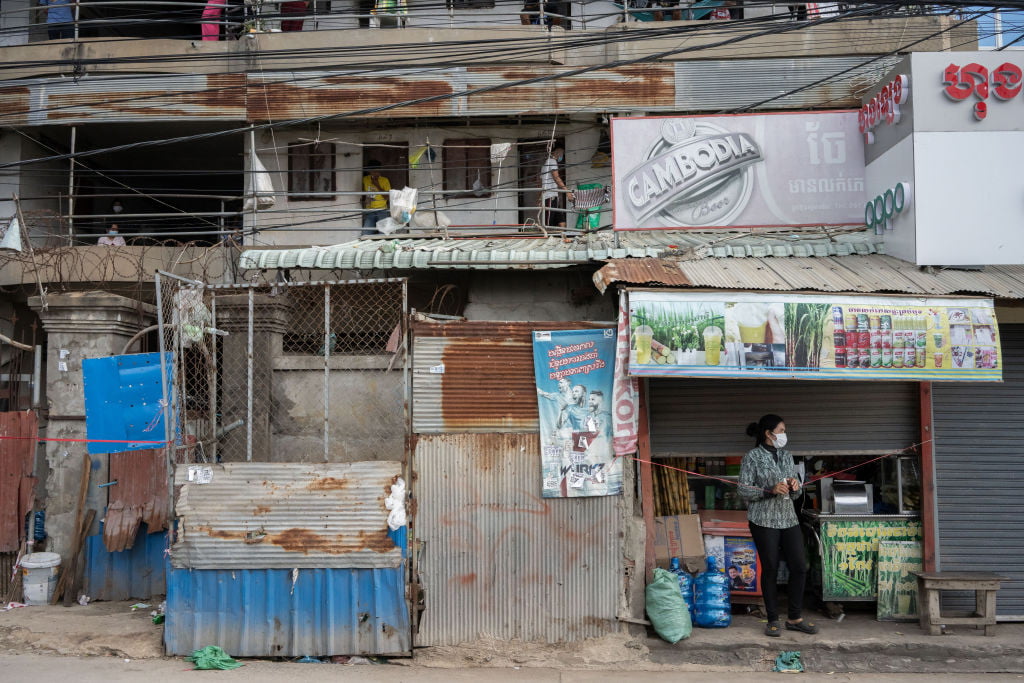
The government has designated areas where there is an especially severe COVID-19 outbreak as “red zones”. People in red zones have been prohibited from leaving their homes even to buy food and other basic necessities. Markets in red zones have been shuttered and mobile food vendors barred, leaving many at-risk residents to go hungry. Some households within these zones have been under lockdown since 9 April. 

In Phnom Penh alone, an estimated 87,349 households comprising 293,791 people are located within red zones. In Preah Sihanouk, the red zones cover 4,886 households amounting to an estimated 23,854 individuals. 

Amnesty International has received alarming reports that even humanitarian NGOs have been barred from distributing food and other essential aid within red zones despite the urgent needs of at-risk residents.  

“The Cambodian government’s outrageous mishandling of this COVID-19 lockdown is causing untold suffering and sweeping human rights violations across the country,” said Yamini Mishra, Amnesty International’s Asia-Pacific Regional Director.  

“Right now, residents of ‘red zones’ and others in Cambodia are going hungry because of fundamentally unreasonable policies. The Cambodian authorities need to urgently change course by working with NGOs and UN agencies to facilitate humanitarian access to red zones. Everyone under lockdown must be provided access to adequate food, water, health care and other essential items.” 

Millions of people in Cambodia are already suffering serious economic hardship after a year of the pandemic. For many, this mismanaged lockdown has brought them to the precipice of a humanitarian crisis, too.

Yamini Mishra, Amnesty International’s Asia-Pacific Regional Director.

“Millions of people in Cambodia are already suffering serious economic hardship after a year of the pandemic. For many, this mismanaged lockdown has brought them to the precipice of a humanitarian crisis, too.   

“The Cambodian government can, and must, take decisive steps to mitigate this disaster. It is also imperative that the UN Resident Coordinator and UN Country Team proactively make every effort to seek approval to deliver emergency assistance to those in need, including in red zones,” said Yamini Mishra. 

Inadequate, politicised distribution of food and essentials 

Plans for a government cash distribution initiative aimed at households living in the most extreme poverty were abruptly cancelled last week. Meanwhile, efforts made by the government to provide food aid have been haphazard and inadequate, and marred by reports of discriminatory distribution affecting individuals who are perceived to be critics of the ruling Cambodian People’s Party (CPP).  

The Ministry of Commerce has launched an online shop promoting the sale of a limited selection of slightly-discounted products for people in red zones. Many of the products are linked to the business interests of senior members of the CPP. This online shop is the only source of food delivery for residents in red zones, many of whom live below the poverty line and cannot afford the products.  

“COVID-19 restrictions and lockdowns can play an important role in safeguarding the right to health. However, restrictions must be carefully crafted and implemented with the minimum impact on human rights and pay special attention to the needs of marginalised groups. Cambodia’s lockdown restrictions must be coupled with a major ramping up of social protection measures and humanitarian assistance. People with no access to food cannot stay home indefinitely.”  

Hungry residents threatened 

Many residents, including those with young children and older family members, have voiced desperation as their food supplies have begun to run out. With markets shuttered and mobile food vendors barred from selling essentials, many are unable to access the basic necessities they require to survive. 

Amnesty International’s Crisis Evidence Lab has reviewed 23 Facebook posts and videos emanating from areas under lockdown. The organization has verified multiple videos showing residents making desperate pleas for assistance within red zones, and others in which local residents can be seen pleading with police for help.  

Amnesty International is concerned that people under lockdown who have sought to voice their concerns publicly have faced reprisals and threats. The organization has received alarming reports that some individuals who posted their concerns and pleas for help on Facebook have been threatened and intimidated by local authorities. 

Some residents who are running out of food have engaged in spontaneous and localised protests against the measures around Phnom Penh. On 20 April Prime Minister Hun Sen warned residents in a speech that the government could deny them food aid if they continue protesting and voicing their concerns. 

“Rather than retaliating against desperate residents for voicing their concerns, the Cambodian authorities need to focus on facilitating access to essential aid and services to those in need.  

“The Cambodian government’s threats and reprisals are seriously exacerbating an already desperate situation. Simple measures, such as enabling mobile food vendors to operate in line with COVID-19 safety measures, could have a massive impact,” said Yamini Mishra. 

On 18 April, Phnom Penh City Hall created a Telegram group to coordinate emergency food requests. By 24 April, the group had reached 48,000 members where people shared thousands of messages with pleas for food and support.  The Phnom Penh authorities have sporadically disabled messaging in the group, apparently in response to the overwhelming number of pleas for help by residents.  

Individuals undertaking mandatory 14-day home quarantine as a result of being in contact with people who tested positive for COVID-19 have also spoken about the desperate circumstances they are facing. Many garment workers have been impacted by COVID-19 clusters affecting garment factories and have spoken out on Facebook. 

One out-of-work construction worker under quarantine in Phnom Penh posted a picture of himself with his infant child on Facebook on 19 April, pleading for help because his family have “no work, no money, no food… Pity the little baby with no milk.”  

Violent crackdown linked to abusive COVID-19 law  

People who break COVID-19 restrictions face severe and disproportionate penalties under Cambodia’s highly problematic new COVID-19 law. 

The Law on Measures to Prevent the Spread of COVID-19 and other Serious, Dangerous and Contagious Diseases (COVID-19 Law) was promulgated on 11 March 2021. It provides for a range of excessive and disproportionate penalties for individuals who break COVID-19 restrictions, including prison sentences of up to 20 years and fines up to 20 million riels (USD $5,000). Under Article 10, for example, disobeying administrative measures is punishable by up to 5 years imprisonment if it is deemed to seriously impact public health.  

According to local human rights group LICADHO, at least 258 people were arrested by the authorities under the COVID-19 Law between 10-25 April and fined, sent to quarantine centers and/or sent to court. Out of this 258 people, LICADHO reports that 83 were charged and jailed. In one such case on 20 April, the Takeo Provincial Court sentenced four young people to one year in prison for gathering, drinking and dancing in violation of COVID-19 restrictions. 

On 23 April, Phnom Penh’s City Hall announced that COVID-19 testing was mandatory for everyone within red zones, and the Ministry of Justice announced that anyone who refused a test would face fines up to 5 million riel ($1,250) under the COVID-19 Law. The next day, photos and videos emerged showing large crowds gathered at testing sites in red zones to be tested, with authorities apparently failing to facilitate physical distancing.  

“Previous epidemics have shown that coercive approaches to enforce public health restrictions are not based in scientific evidence, are contrary to best practice and risk undermining the effectiveness of the response. 

“Instead, Cambodian authorities should implement a response that is rooted in the respect of human rights and that emphasises empowerment and community engagement, including policies that build trust and solidarity”, said Yamini Mishra. 

Police have also used unnecessary and excessive force against those believed to have broken lockdown restrictions. Amnesty International has analyzed videos of police in Phnom Penh threatening and beating people with what appear to be bamboo canes. Phnom Penh governor Khuon Sreng and Phnom Penh Municipal Police spokesperson San Sokseyha both acknowledged the way in which force was used and sought to justify it as necessary to safeguard public health. 

“Authorities in Cambodia clearly need a radical rethink of their COVID-19 suppression efforts. Human rights must be at the core of this revised approach, and meaningful, open cooperation with national and international partners, including humanitarian actors, should be embraced without delay”, said Yamini Mishra. 

Background 

Cambodia has struggled to contain a third wave of COVID-19 having previously avoided a major outbreak since the beginning of the pandemic. A significant outbreak occurred in late February after a group of tourists reportedly bribed their way out of mandatory hotel quarantine.  

According to the United Nations, poverty is forecast to almost double in Cambodia as a result of the COVID-19 pandemic, affecting up to 17.6 per cent of the population. The country has a poorly developed social security infrastructure, leaving those whose income is disrupted, including workers in the garment sector and informal workers, in precarious economic situations. 

The UN Committee on Economic, Social and Cultural Rights’ General Comment 14 states that any restrictions and limitations on the grounds of public health “must be in accordance with the law, including international human rights standards, compatible with the nature of the rights protected by the Covenant, in the interest of legitimate aims pursued, and strictly necessary for the promotion of the general welfare in a democratic society”. They should be of limited duration, subject to review, and the least restrictive alternative must be adopted where several types of limitations are available. 

The right to food is recognised as a human right in several international human rights instruments including the International Covenant on Economic, Social and Cultural Rights, to which Cambodia is a state party. To comply with obligations related to the right to adequate food, states must immediately tackle hunger and progressively ensure that “every man, woman and child, alone or in community with others, has physical and economic access at all times to adequate food or means for its procurement”. 

According to international standards on the use of force, law enforcement officials may only  use force that is necessary and proportionate to achieve a legitimate objective even in times of emergency. Law enforcement officials should not use force to enforce lockdown provisions when people breach them in order to meet their basic needs for survival. 

Moreover, law enforcement officials should in no circumstance resort to the use of force as a means of punishment, including for violations of lockdown regulations. Corporal punishment also violates the right to be free from torture and other ill-treatment and it is absolutely prohibited under international human rights law.   
Death penalty 2020: Despite Covid-19, some countries ruthlessly pursued death sentences and executions

  • Egypt tripled number of yearly executions
  • China pursued the death penalty to crack down on offences related to Covid-19 prevention efforts
  • Former US administration executed staggering 10 people in less than six months in 2020
  • Lowest number of executions recorded in a decade for third consecutive year

The unprecedented challenges of the Covid-19 pandemic were not enough to deter 18 countries from carrying out executions in 2020, Amnesty International said today in its annual global review of the death penalty. While there was an overall trend of decline, some countries pursued or even increased the number of executions carried out, indicating a chilling disregard for human life at a time when the world’s attention focused on protecting people from a deadly virus.

2020 executioners included Egypt, which tripled its yearly execution figure compared to the previous year; and China, which announced a crackdown on criminal acts affecting Covid-19 prevention efforts, resulting in at least one man being sentenced to death and executed. Meanwhile the Trump administration resumed federal executions after a 17-year hiatus and put a staggering 10 men to death in less than six months. India, Oman, Qatar and Taiwan also resumed executions.

“As the world focused on finding ways to protect lives from Covid-19, several governments showed a disturbing determination to resort to the death penalty and execute people no matter what,” said Agnès Callamard, Secretary General of Amnesty International. 

“The death penalty is an abhorrent punishment and pursuing executions in the middle of a pandemic further highlights its inherent cruelty. Fighting against an execution is hard at the best of times, but the pandemic meant that many people on death row were unable to access in-person legal representation, and many of those wanting to provide support had to expose themselves to considerable – yet absolutely avoidable – health risks. The use of the death penalty under these conditions is a particularly egregious assault on human rights.”
 

Covid-19 restrictions had concerning implications for access to legal counsel and the right to a fair trial in several countries, including the USA, where defence lawyers said they were unable to carry out crucial investigative work or meet clients face-to-face.  

Top five executing countries 

China classifies the total number of its executions and death sentences as a state secret and prevents independent scrutiny. Therefore, Amnesty International’s figures for all known executions do not include executions in China. However, China is believed to execute thousands each year, making it once again the world’s most prolific executioner ahead of Iran (246+), Egypt (107+), Iraq (45+) and Saudi Arabia (27). Iran, Egypt, Iraq, and Saudi Arabia accounted for 88% of all known executions in 2020.

Egypt tripled the number of yearly executions and became the world’s third most frequent executioner in 2020. At least 23 of those executed were sentenced to death in cases relating to political violence, after grossly unfair trials marred by forced “confessions” and other serious human rights violations including torture and enforced disappearances. A spike in executions occurred in October and November, when Egyptian authorities executed at least 57 people – 53 men and four women. 

Although recorded executions in Iran continued to be lower than previous years, the country increasingly used the death penalty as a weapon of political repression against dissidents, protesters and members of ethnic minority groups, in violation of international law.

Many countries in the Asia-Pacific region continued to violate international law and standards which prohibit the use of the death penalty for crimes that do not involve intentional killing. Yet, the death penalty was handed down for drug offences in China, Indonesia, Laos, Malaysia, Singapore, Sri Lanka, Thailand and Viet Nam; for corruption in China and Viet Nam; and for blasphemy in Pakistan. In Bangladesh and Pakistan, death sentences were imposed by courts established through special legislation and which usually follow different procedures from ordinary courts. In the Maldives, five people who were below 18 years of age at the time of the crime remained under sentence of death. 

The USA was the only country in the Americas to carry out executions in 2020. In July, the Trump administration carried out the first federal execution in 17 years, and five states put seven people to death between them. 

Executions reach lowest number in a decade

Globally, at least 483 people were known to have been executed in 2020 (excluding countries which classify death penalty data as state secrets, or for which limited information is available – China, North Korea, Syria and Viet Nam). Shocking as this figure is, it is the lowest number of executions recorded by Amnesty International in at least a decade. It represents a decrease of 26% compared to 2019, and 70% from the high-peak of 1,634 executions in 2015.

According to the report, the fall in executions was down to a reduction in executions in some retentionist countries and, to a lesser extent, some hiatuses in executions that occurred in response to the pandemic.

Recorded executions in Saudi Arabia dropped by 85%, from 184 in 2019 to 27 in 2020, and more than halved in Iraq, from 100 in 2019 to 45 in 2020. No executions were recorded in Bahrain, Belarus, Japan, Pakistan, Singapore and Sudan – countries that carried out executions in 2019. 

The number of death sentences known to have been imposed worldwide (at least 1,477) was also down by 36% compared to 2019. Amnesty International recorded decreases in 30 out of 54 countries where death sentences were known to have been imposed. These appeared to be linked in several cases to delays and deferrals in judicial proceedings, put in place in response to the pandemic. 

Notable exceptions were Indonesia, whose 2020 recorded death sentences (117) increased by 46% compared to 2019 (80); and Zambia, which imposed 119 death sentences in 2020, 18 more than in 2019 and the highest recorded in sub-Saharan Africa.

Time to abolish the death penalty

In 2020, Chad and the US state of Colorado abolished the death penalty, Kazakhstan committed to abolition under international law and Barbados concluded reforms to repeal the mandatory death penalty. 

As of April 2021, 108 countries have abolished the death penalty for all crimes and 144 countries have abolished it in law or practice – a trend that must continue.

“Despite the continued pursuit of the death penalty by some governments, the overall picture in 2020 was positive. Chad abolished the death penalty, along with the US state of Colorado, and the number of known executions continued to drop – bringing the world closer to consigning the ultimate cruel, inhuman and degrading punishment to the history books,” said Agnès Callamard.

“With 123 states – more than ever before – supporting the UN General Assembly call for a moratorium on executions, pressure is growing on outliers to follow suit. Virginia recently became the first US Southern state to repeal the death penalty, while several bills to abolish it at US federal level are pending before Congress. As the journey towards global abolition of the death penalty continues, we call on the US Congress to support legislative efforts to abolish the death penalty.

“We urge leaders in all countries that have not yet repealed this punishment to make 2021 the year that they end state-sanctioned killings for good. We will continue to campaign until the death penalty is abolished everywhere, once and for all.”

Australia Must Step Up To Assist India, Stranded Aussies

Amnesty International Australia called on the Australian government to better assist India as it endures a COVID-19  emergency, as well as urgently assisting stranded Aussies.

“Australia has an important role to play in helping our neighbour and ally protect its citizen’s right to health,” Amnesty International Australia National Director, Sam Klintworth said. 

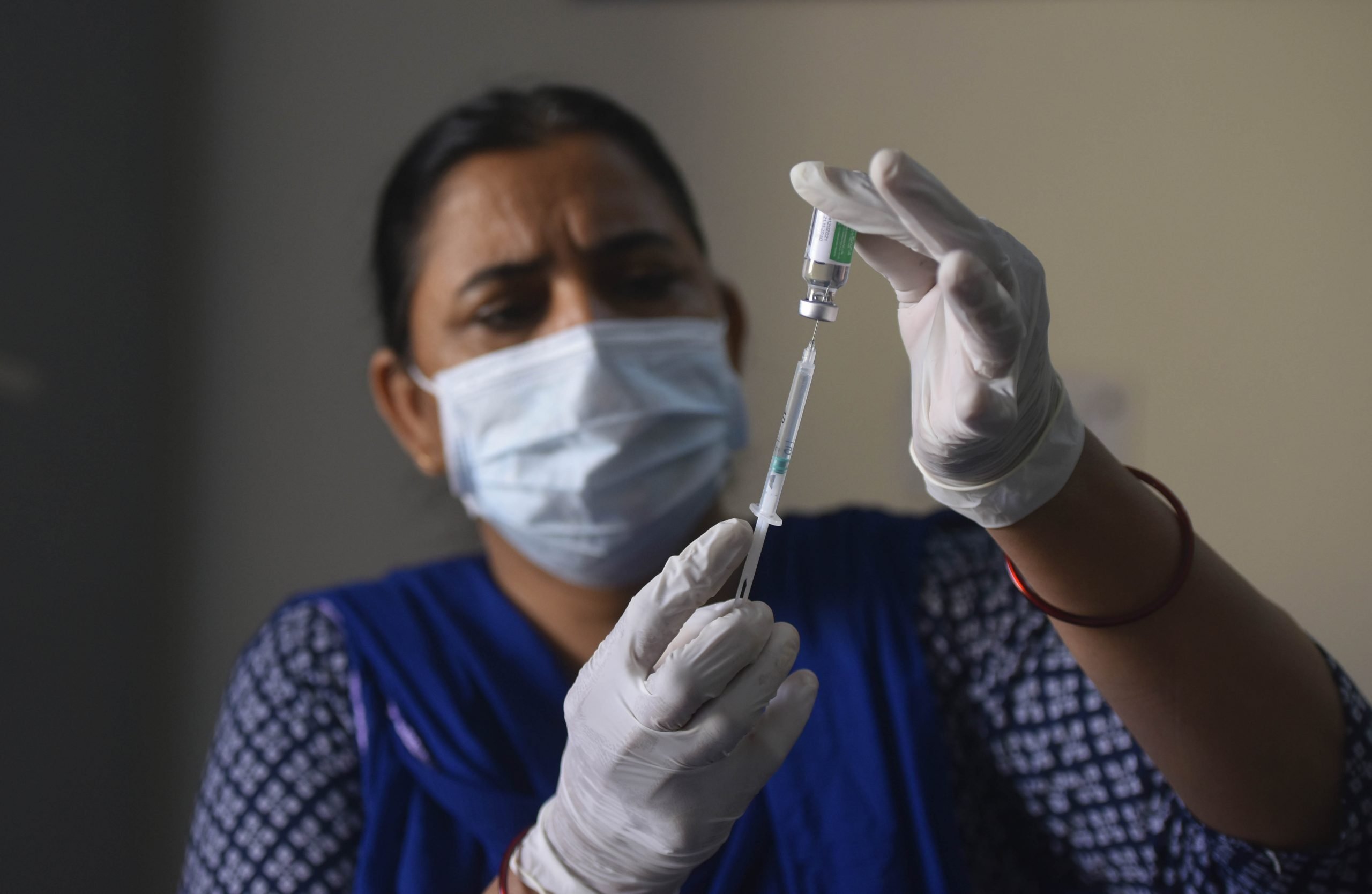
Amnesty is calling for Australia to assist India, especially in addressing equal access to vaccines, as the COVID-19 case numbers skyrocket. High income nations are being vaccinated 25 times faster than low income countries. 

Australia remains one of few the countries holding out support of the World Trade Organisation’s TRIPS waiver which would waive normal intellectual property rights and consequently allow the production of more vaccines, much more cheaply.

Amnesty also reiterated its calls for more Federal quarantine facilities to assist in repatriation of stranded Australians, including those caught up in the crisis in India.

“I am deeply concerned for the approximately 10,000 Australians and permanent residents stranded in India. With borders closing to arrivals, I urge the Australian Government to find a way to bring these people home as soon as possible,” Klintworth said.

“Repatriation flights from India should be increased for the estimated 650 vulnerable cases, and a special stand-alone temporary quarantine facility be built to facilitate their arrival home.”

Twitter/Facebook: allow people in India access to information

Meanwhile, Amnesty has also criticised social media giants Twitter and Facebook for reportedly taking down dozens of social media posts critical of the Indian government’s handling of the COVID crisis.

“Twitter and Facebook must stop taking down posts critical of the Indian government’s mishandling of the COVID-19 pandemic,” Klintworth said.

“Twitter and Facebook’s decision undermines Indian citizens’ freedom of expression and the right to receive and impart information without interference, which is of particular importance during a public health emergency. 

“Social media companies have immense power when it comes to deciding what people can and cannot post about. They therefore have a responsibility to guarantee users’ access to information online and ensure content is not unduly restricted or censored at the whim of governments.”

Background

In a statement on Sunday, India’s Ministry of Electronics and Information Technology said it ordered Twitter, Facebook and others to take down roughly 100 social media posts. A spokesperson from Twitter confirmed the order to block content while Facebook is yet to comment on the issue. 

Twitter did not specify which content it had taken down but media reports suggest the tweets were criticizing the governments’ response to the crisis and included posts by politicians and other public figures.

The companies have agreed to the request but in the past have reposted some content after reviews.

Belarus: Authorities target independent trade unions to root out dissent

The Belarusian authorities are ruthlessly targeting independent trade unions and trampling on labour rights as part of their brutal crackdown on the protest movement, Amnesty International said today. In a new briefing, the organization highlights the reprisals against independent trade unions and their members. These include unlawful dismissals, arrests and criminal prosecution of labour rights activists breaching the government’s international treaty obligations to respect freedom of association and the rights of workers to freely form and join trade unions. 

“Belarus has retained distinctly Soviet features since the break-up of the USSR. This includes the total domination of the economy by the state, which remains the biggest national employer and seeks to exercise effective control over all trade unions. The state-run trade unions, which effectively lack any independence, act more like a branch of government than the protector of workers,” said Heather McGill, Amnesty International’s Eastern Europe and Central Asia Researcher. 

“When mass protests started in August 2020 many workers responded by organizing strikes and walk-outs at state run enterprises. In many instances independent trade unions were formed when pro-government unions failed to support the workers, and these quickly became targets for government repression.” 

The authorities have used every means available to prevent workers from joining the protest movement and setting up independent trade unions. This has included imposing threats, fines, dismissals, and finally, criminal prosecution of trade union members. 

Vadzim Laptsik set up the founding committee of the branch of the Belarusian Independent Trade Union at the Belarusian Metallurgical Factory in Zhlobin, after the plant’s pro-government trade union withdrew its initial support for a strike on 17 August calling for President Alyaksandr Lukashenka’s resignation. 

Speaking to Amnesty International, Vadzim recounts the reasons why the pro-government trade union “betrayed” the strikers. “They [the pro-government trade unions] also hoped that things would change, but later the people with epaulettes arrived – the Ministry of Interior, the KGB – and explained to the [unions] how they should behave. How to save their skins.”  

The independent trade union that Vadzim Laptsik chaired collapsed on 2 November, as the authorities arrested and criminally charged four of the eleven founding members. On 21 January, Vadzim Laptsik was dismissed from his job as a senior specialist at the factory and threatened with criminal prosecution, forcing him to leave Belarus. 

“We call for international solidarity with Belarus’ trade union activists who are paying a high price for defending workers’ rights in their country,” said Heather McGill. 

Myanmar: Human rights must be top priority for emergency ASEAN summit

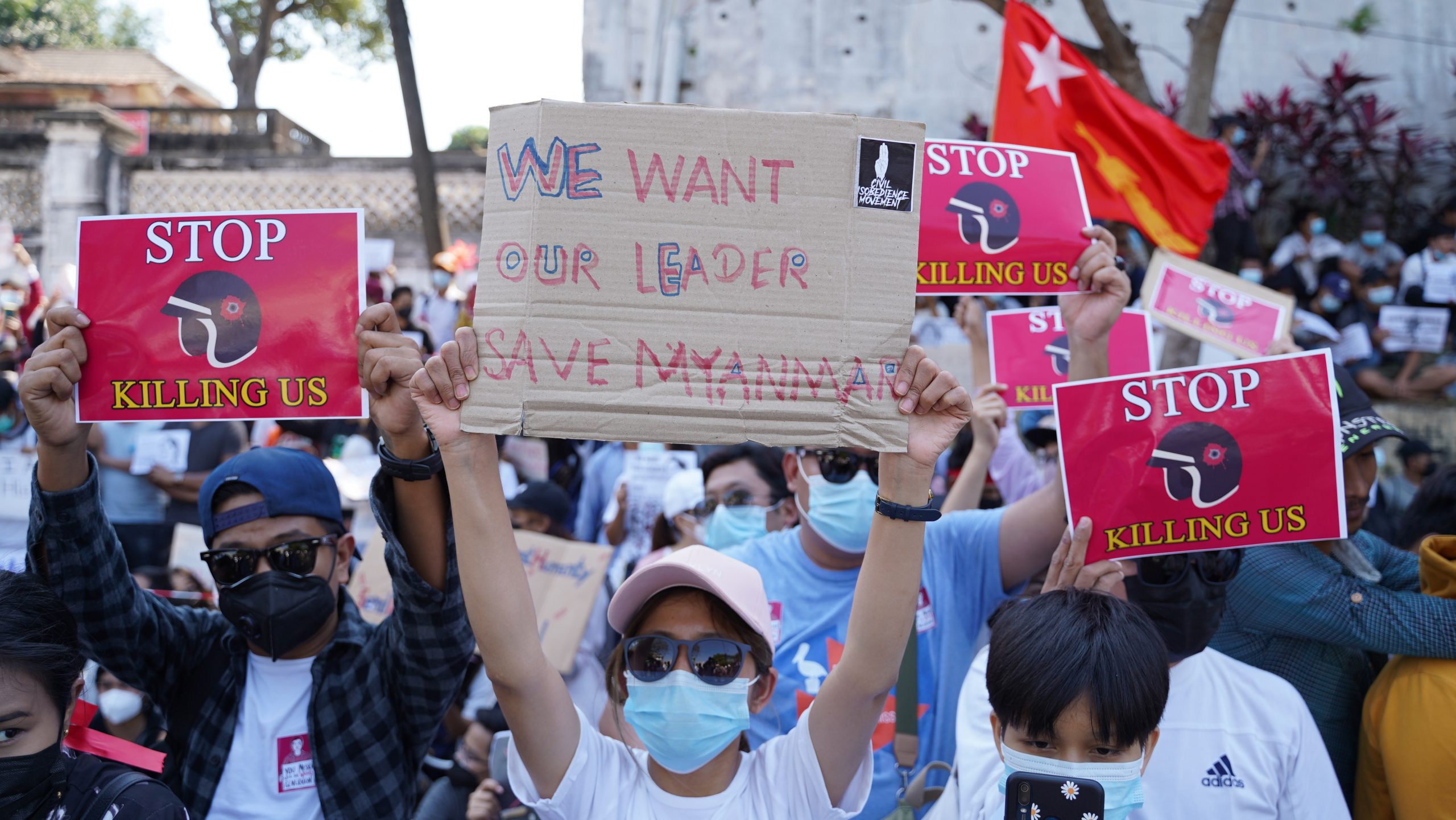
The catastrophic aftermath of the Myanmar coup is the biggest test in the Association of Southeast Asian Nations’ (ASEAN) history, said Amnesty International today, calling on the regional bloc to prioritise protecting the human rights of people in Myanmar and prevent the situation deteriorating into a human rights and humanitarian crisis. 

The organization is also urging the Indonesian authorities and other ASEAN member states to investigate Senior General Min Aung Hlaing on credible allegations of responsibility for crimes against humanity in Myanmar. As a state party to the UN Convention Against Torture, Indonesia has a legal obligation to prosecute or extradite a suspected perpetrator on its territory. 

“The Myanmar crisis trigged by the military presents ASEAN with the biggest test in its history. The bloc’s usual commitment to non-interference is a non-starter: this is not an internal matter for Myanmar but a major human rights and humanitarian crisis which is impacting the entire region and beyond,” said Emerlynne Gil, Amnesty International’s Deputy Regional Director for Research 

The crisis initiated by a murderous and unrepentant Myanmar military has engulfed the country, and will cause severe aftershocks – humanitarian and more – for the entire region, particularly if the military can continue to commit serious violations and crimes with complete impunity. 

Emerlynne Gil, Amnesty International’s Deputy Regional Director for Research 

“The crisis initiated by a murderous and unrepentant Myanmar military has engulfed the country, and will cause severe aftershocks – humanitarian and more – for the entire region, particularly if the military can continue to commit serious violations and crimes with complete impunity. 

“Moreover, the Indonesian authorities are duty-bound to investigate Senior General Min Aung Hlaing and other Myanmar military officials who may join his delegation to Jakarta.  

“The extensively documented allegations against Myanmar’s coup leader, by the UN Fact-Finding Mission on Myanmar, Amnesty International and many others, must be investigated. The Indonesian authorities and other ASEAN member states cannot ignore the fact Min Aung Hlaing is suspected of the most serious crimes of concern to the international community as a whole.” 

ASEAN’s credibility on the line 

In an open letter to ASEAN member states, Amnesty International highlights the fact that hundreds of people have been killed and thousands have been detained in the weeks following the 1 February military coup in Myanmar. The Myanmar military remains unmoved by the various calls from the international community and civil society organizations.  

Myanmar’s economy is on its knees and expected to contract by up to 20%, while food prices increase and banking system disruptions and limited cash availability hinder humanitarian operations. The World Food Programme has warned that up to 3.4 million people in Myanmar face hunger in the next several months.  

“The Myanmar military appears to be operating with the assumption of total impunity. The situation today is the direct result of a broader failure by the international community, including the ASEAN, to hold the Myanmar military to account for its past crimes.  

“If not stopped, the violations committed by the Myanmar military will result in escalating violence and conflict, worsening inequality, hunger and mass displacement, including into ASEAN Member States – all amid the COVID-19 pandemic.. 

“Amnesty International urges the ASEAN and its Member States to work together and take immediate action to protect the people of Myanmar, prioritizing their human rights and to end impunity,” said Emerlynne Gil. 

The need to end impunity 

On 10 March 2021, after examining over 50 clips from the ongoing crackdown, Amnesty International found that the Myanmar military is using increasingly lethal tactics and weapons normally seen on the battlefield against peaceful protesters and bystanders across the country. Many of these killings amount to extrajudicial executions.  

In a statement to the UN Human Rights Council on 11 March 2021, the UN Special Rapporteur on Myanmar, Tom Andrews, noted that the repression of peaceful protests since the coup likely meets the threshold of crimes against humanity.  

In 2018, Amnesty International released a report containing extensive and credible evidence implicating Senior General Min Aung Hlaing and 12 other named individuals in crimes against humanity committed during the ethnic cleansing of the Rohingya population in northern Rakhine State. Thousands of Rohingya women, men and children were murdered – bound and summarily executed; shot and killed while running away; or burned to death inside their homes. Rohingya women and girls were raped in their villages and as they fled to Bangladesh. 

Over the last few years, Amnesty International has also documented war crimes and other serious human rights violations committed by the Myanmar military against various other ethnic minorities in Rakhine, Chin, Kachin and northern Shan States.  

Amnesty International continues to call on all states, including ASEAN Member States, to exercise universal and other forms of jurisdiction to investigate any person who may reasonably be suspected of committing crimes against humanity, war crimes or other crimes under international law in Myanmar. ASEAN should not shield perpetrators from accountability and must put an end to the years of impunity of the Myanmar military. 

“There is sufficient evidence to reasonably suspect that Min Aung Hlaing is responsible for crimes under international law, including torture, and this needs highlighting at every opportunity,” said Emerlynne Gil.  

“The deadly operations by the military since the 1 February coup only magnify the urgency of bringing Min Aung Hlaing and other suspected perpetrators to justice. The Indonesian authorities have an obligation to investigate him and must do so.” 

Background 

In its open letter to ASEAN and member states ahead of the emergency summit, Amnesty International calls on the following: 

To the ASEAN – 

  • Unequivocally condemn all human rights violations in Myanmar and continue to call for the release of all individuals who are arbitrarily detained, and the end of the use of lethal force against children, peaceful protesters and bystanders.
     
  • Direct the ASEAN Intergovernmental Commission on Human Rights (AICHR) to develop a common approach to ensure that all engagement with Myanmar takes into account and addresses human rights concerns, in accordance with the AICHR’s mandate in Section 4.11 of its Terms of Reference. This common approach shall be adopted by ASEAN and shall guide the regional body in all of its engagement in Myanmar, including in relation to the situation in Rakhine State and to repression of opposition to the military coup.
     
  • Support the work of independent international mechanisms, the Office of the High Commissioner for Human Rights, and the UN Special Rapporteur on the situation of human rights in Myanmar to investigate human rights violations in Myanmar.
     
  • Urge the United Nations Security Council to refer the situation in Myanmar as a whole to the International Criminal Court.
     
  •  Support the call for the UN Security Council to impose a comprehensive global arms embargo against Myanmar.
     
  • Support the call for the UN Security Council to impose targeted financial sanctions against officials suspected of responsibility for crimes under international law and serious violations, including in the context of the repression of opposition to the 1 February coup. 

To ASEAN member states – 

  • Refrain from returning any person to Myanmar under the current circumstances, regardless of their immigration status, and continue to halt all deportations and returns until human rights protections can be guaranteed. Returning any person under the current circumstances would constitute a breach of the principle of non-refoulement, which, as part of customary human rights law, prohibits the return of any person, irrespective of migration status, to a state where there are substantial grounds to believe they would face irreparable harm upon return due to serious human rights violations.
     
  • Ensure that any future repatriations or returns of refugees are only conducted when safe, voluntary, and dignified, with explicit human rights protections in place, including the right to citizenship. States should provide an individual assessment for each person to evaluate needs for international protection.
     
  • Exercise universal and other forms of jurisdiction to investigate Senior General Min Aung Hlaing for allegations of committing crimes against humanity, war crimes or other crimes under international law in Myanmar. 

QLD Parliament passes law which promotes systemic racism: NT next

Amnesty International Australia expressed deep concern over the Queensland Government’s youth justice amendments which passed Parliament last night.

The amendments undo years of hard-fought reforms to keep Indigenous kids out of the justice system and their passing is a devastating step backwards in addressing the overrepresentation of Indigenous people in Australian jails.

“With the guilty verdict in the murder of George Floyd this week, the US has finally reckoned with police accountability,” Amnesty International Australia Indigenous Rights Lead, Nolan Hunter, said. “But while this is a welcome step towards justice, in Australia, we have two jurisdictions – NT and QLD – that are essentially stepping away from that progress.

“Instead, they’re doubling down on punitive measures that have the effect not of addressing youth crime, but of punishing Indigenous kids, condemning them to the criminal justice system, and as we’ve seen in the past 30 years since the Royal Commission, there is no accountability in that system.

“The Royal Commission showed us there were systemic issues, but no action has been taken to address those systemic problems, such as not locking kids as young as 10 up, and using very effective, evidence-based and community-led diversion programs.

When are we going to stop picking on black kids in Australia? It has to stop. There are better solutions to these issues, but no-one benefits from kids having their childhoods stolen, because that’s what’s happening in the NT and QLD as we speak.

Amnesty International Australia Indigenous Rights Lead, Nolan Hunter.

“When are we going to stop picking on black kids in Australia? It has to stop. There are better solutions to these issues, but no-one benefits from kids having their childhoods stolen, because that’s what’s happening in the NT and QLD as we speak.”

The Northern Territory currently has proposed amendments which will have similarly dire consequences for Indigenous kids in the Territory.

Amnesty International Australia is calling for an inquiry into these amendments which wind back the reforms made in the wake of 2017’s Royal Commission into the Protection and Detention of Children in the Northern Territory, and are a knee-jerk reaction to a perception of a youth crime wave which is not backed by evidence, which shows youth crime rates in the NT actually decreasing. 

Torture of Syrian refugees in Lebanon: Explained

Since the onset of the Syrian conflict in 2011, millions of Syrians have fled the state out of fear for their safety – an estimated 1.5 million of these refugees have settled in Lebanon. 

However, an Amnesty International investigation into the treatment of Syrian refugees accused of terror-related charges in Lebanon reveals shocking human rights abuses at the hands of Lebanese security forces.  Often held under falsified or politically motivated terror-related charges, men, women, and children have faced torturous conditions which mirror that of Syria’s harshest prisons. Amnesty International Refugee and Migrant Rights Researcher Marie Forestier said: “At every stage, from arrest through to interrogation, detention and prosecution in unfair trials, the Lebanese authorities have utterly disregarded international human rights law”.

What are the major human rights issues?

Arbitrary detention 

Many Syrian refugees have been detained on unnecessary, unfair or disproportionate reasons and subject to cruel, unlivable conditions. Detainees were often not informed of their reason for their arrest and prevented from contacting family members or lawyers.

Accusations of terror-related offences were in many cases based on discriminatory, or trumped-up evidence. Factors such as religious identity, political affiliation and the Syrian regions in which refugees originated from were all used as evidence for a refugees involvement in terrorism. Testimony supplied by unreliable or biased informants was also used as evidence. Mustafa, a refugee from Qusayr, was sentenced to seven years imprisonment for participation in the Arsal battle. Charged three years after the fact, Mustafa said his arrest was based on the testimony of an informant who held a personal grudge against his family. 

Use of torture 

Syrian refugees have also shared horrific accounts of torture in detention and interrogation. Detainees have reported being strapped to foldable boards or suspended with wrists tied behind their backs for hours on end. Many refugees have endured beatings so severe they have fallen unconscious or had teeth broken. Torture has also been used against children, two teenagers facing torture at the ages of just 15 and 16. Coercion and torture have been used to force confessions, which have remained admissible in court. Perhaps the most startling fact is that there have been no investigations into these allegations of torture, even when detainees or their lawyers called attention to the abuse during trial. 

Violations of the right to due process and a fair trial 

As these Syrian refugees reached trial, they continued to face severe and unjust treatment, violating their rights to a fair trial and due process. Many refugees have been tried before military courts, despite this draconian practice being in direct violation of international law. Trial by military court restricts their right to appeal, and prevents individuals from revoking forced confessions obtained through torture.  Long drawn-out court proceedings are also common, many refugees enduring numerous years in detention before their trial even begins. 

In the case of one refugee, Hassan, Amnesty International identified 17 procedural violations present in his trial, including the court’s failure to investigate complaints of torture. Yet, Hassan was still sentenced to life imprisonment. 

Once convicted, Lebanon has also ordered the deportation of refugees back to Syria. By doing so, Lebanon is unlawfully forcing refugees to return to a country where they are highly likely to face prosecution. 

What can be done? 

Lebanon is deliberately neglecting its obligations under the International Covenant on Civil and Political Rights, Universal Declaration of Human Rights and the Convention against Torture, robbing resettled refugees of their access to fundamental human rights. Despite introducing a new anti-torture law in 2017, torture and abuse is still occurring in Lebanon. Few allegations of torture ever reaching the court system. 
Amnesty International has called on the Lebanese government to fully enact this new law, end the practice of trying civilians in military courts and establish an independent body to investigate complaints of abuse. Amnesty International has also recommended that Lebanon acts in line with its current obligations under international law, enhancing its protection of human rights by adopting the Optional Protocol Against Torture.

Asylum seekers in PNG need safety following reports of more attacks

Amnesty International Australia is calling once again for the Australian Government to fulfill its duty of care obligations to asylum seekers left stranded on Papua New Guinea and get them to safety, following reports of yet another attack by gang members in Port Moresby.

The attackers, allegedly carrying pistols and shotguns, targeted approximately 15 asylum seekers, including one family, after overwhelming security guards on Tuesday, April 20. One refugee, who wished to remain anonymous, said that after breaking into their rooms, the gang hit some of the residents before stealing their belongings. Four residents are understood to have sustained serious injuries, most are now without any possessions and they are too terrified to return to their accommodation.

This is not the first time such attacks have occurred. Last year refugees from Manus Island who had been relocated to Port Moresby, said they endured two attacks in one month leaving one refugee with a broken leg and a security guard hospitalised. 

Dr Graham Thom, refugee adviser for Amnesty International, said: “The Australian Government, through its cruel offshore detention policy that has trapped people on PNG and Nauru for coming up to eight years, is responsible for the terrifying situation these asylum seekers now find themselves in. 

“As if years living in limbo, facing riots, detention and deaths was not enough, they also have to endure random attacks from gangs in one of the most dangerous cities in the world. This has to stop and these people must be brought to safety.

“If the Government refuses to bring them to Australia, then we implore Scott Morrison to finally accept the New Zealand offer to settle 150 refugees per year when he meets Jacinda Ardern in a few weeks.”