Viet Nam: Fresh crackdown as National Assembly election looms

The Vietnamese authorities must end their crackdown on independent election candidates and critical voices, said Amnesty International today ahead of the country’s National Assembly elections scheduled to take place on 23 May 2021. 

In recent weeks, authorities have arrested and charged two independent candidates and one medical doctor under Article 117 of the Criminal Code for “making, storing, or spreading information, materials or items for the purpose of opposing the State of the Socialist Republic of Viet Nam”, carrying potential prison sentences of between five and 20 years. 

Amnesty International has also received multiple credible reports of many other individuals across Viet Nam being subjected to harassment and intimidation by police for their involvement in the election and for criticizing government policies, in a worrying trend which could deteriorate further ahead of the election date. 

“The Vietnamese authorities must end this crackdown and allow everyone in Viet Nam to freely exercise their human rights without any fear of reprisals. The recent election of new leadership for the Communist Party of Viet Nam (CPV) should have heralded an improvement on the respect for human rights in Viet Nam, but the indications to date suggest more of the same old violations and abuses,” said Emerlynne Gil, Amnesty International’s Deputy Regional Director for Research.  

“While Viet Nam seeks to put itself forward for election to the UN Human Rights Council, the authorities are engaging in blatant and widespread human rights violations at home.” 

“Viet Nam is obliged to respect, protect, promote and fulfil human rights including the rights to freedom of expression and association, as well as media freedom. Authorities must ensure that election candidates – along with everyone else in Viet Nam – are treated equally and without discrimination. These are basic principles of the international human rights treaties which Viet Nam has voluntarily ratified,” added Emerlynne Gil. 

Bogus charges proliferating ahead of election 

On 27 March, authorities in Ha Noi arrested Le Trong Hung under Article 117, who had applied to be an independent (or ‘self-nominated’) candidate for a National Assembly seat in Ha Noi city. Le Trong Hung is a citizen journalist and a member of Chan Hung TV, a media group which broadcasts Facebook livestreams about social and political issues. According to his family, Le Trong Hung was arrested while walking in his neighbourhood and taken to his home by police who then searched the house. It is unknown where he is currently being detained. 

On 10 March, authorities in Ninh Binh province arrested and charged Tran Quoc Khanh, who had also expressed his intention to run as an independent candidate for election, under Article 117.  

It is unknown if he had formally registered as an election candidate. Prior to the arrest, Mr. Tran Quoc Khanh ran a popular social media account where he frequently commented on contemporary human rights and political issues in Viet Nam. In a livestream on 6 March he discussed critiques of government ministries and called on the Vietnamese government to respect the rule of law. 

On 22 March, police from Nghe An province arrested medical doctor Nguyen Duy Huong for allegedly producing and spreading online content which the authorities said defamed senior leaders of the CPV. Doctor Huong used his Facebook account to write articles commenting on government policies. Although he was not an election candidate, his arrest occurred in the context of a deteriorating crackdown ahead of the election which appears to be targeting journalists and bloggers as well as independent election candidates. 

Amnesty International has repeatedly stated that Article 117 violates Viet Nam’s international human rights obligations and that it should be repealed or substantially amended to comply with the rules set out under Article 19 of the International Covenant on Civil and Political Rights (ICCPR), to which Viet Nam is a state party.  

“These charges are plainly bogus and have no place in a rights-respecting society. Article 117 should be repealed without delay and all three men charged under the provision should be released immediately. Authorities must drop all the charges against them,” added Emerlynne Gil. 

Exemplifying the disproportionate sentences which government critics face under Article 117, on 30 March the People’s Court of Lam Dong Province convicted political activist Vu Tien Chi under Article 117 and sentenced him to 10 years’ imprisonment for a series of Facebook posts critical of the government. 

Intimidation and harassment of activists on the rise 

In addition to these criminal charges, other activists, bloggers and associations have faced an uptick in harassment and intimidation ahead of the election, often in connection with social media posts. According to reports received by Amnesty International, several other independent election candidates have also been subjected to harassment and intimidation by police.  

Additionally, the organization has received credible reports that on 11 March, a human rights defender was arrested in front of her apartment and brought to a police station where she was detained for 15 hours. Police are reported to have interrogated her about her involvement in the upcoming election, and she was asked to sign a statement in which she promised to refrain from nominating herself as an independent candidate.  

On Friday, 26 March she was again summoned to the police station, where she was made to attend a 9-hour “working session” during which police interrogated her about her involvement in human rights work. 

Separately, on 19 March, political activist and citizen journalist Le Van Dung was arrested by police while in a coffee shop near his house in Ha Noi. He was brought to a police station at 2pm and detained there until 5pm the same day. During this brief period of detention, police interrogated him regarding his social commentary on Facebook.  

On 29 March, the Department of Information and Media of Ha Noi gave a Facebook user a financial fine of 7.5 million VND (approximately 325 USD), for allegedly posting “untruthful information about the [National Assembly] election” on Zalo, a local social media platform. 

These actions by the Vietnamese authorities constitute incidences of intimidation and harassment of individuals in retaliation for the peaceful exercise of their human rights, including the rights to freedom of expression and freedom of association. These actions contribute to the creation of a climate of fear in which individuals are deterred from freely exercising their rights. 

“The Vietnamese government’s campaign of intimidation and harassment of election candidates and independent voices must end. Moreover, Viet Nam’s candidacy to the UN Human Rights Council must lead to greater scrutiny of these violations at the international level,” said Emerlynne Gil. 

Background 

Article 4 of the Constitution of the Socialist Republic of Viet Nam states that the CPV is “the leading force of the State and Society”. This provision has long been relied upon to justify an effective ban on any political opposition.  

In practice, those who express dissent or criticism of the authorities are routinely met with repression in Viet Nam. Amnesty International’s December 2020 report, ‘Let Us Breathe! Censorship and Criminalization of Online Expression in Viet Nam’ revealed how this repression often occurs in the online sphere and in retaliation for social media activity. 

Viet Nam announced it will be seeking a seat at the UN Human Rights Council in February 2021. As per the Council’s founding document, General Assembly resolution 60/251, members are elected by UN member states at the General Assembly and “when electing members of the Council, Member States shall take into account the contribution of candidates to the promotion and protection of human rights.” 
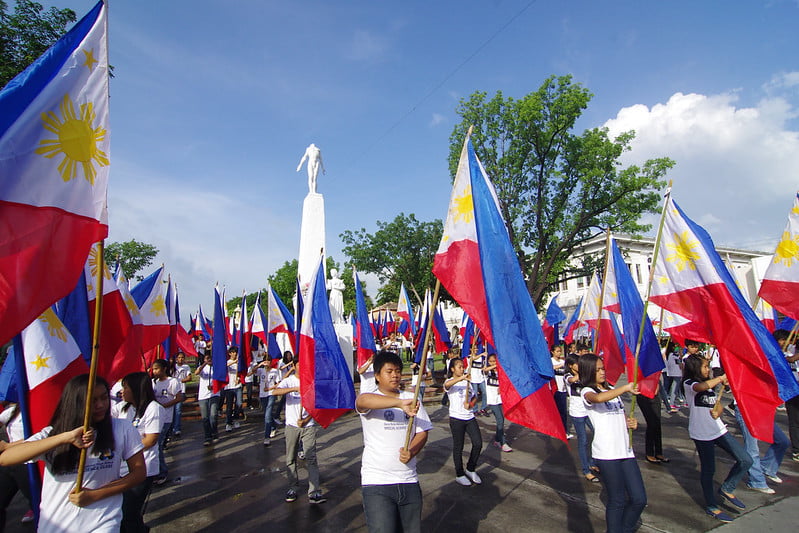
Minister Payne must call out the surge of killings of lawyers and judges in the Philippines

The Philippine justice system is under threat as a result of a deadly surge in killings of lawyers and judges under President Duterte’s administration. The failure of the Philippine government to promote accountability mechanisms to protect the judiciary has facilitated a climate of impunity across the country, and put a vital arm of government under existential threat.

Amnesty International has written to Australian Foreign Minister Marise Payne asking her to put human rights at the centre of the Philippines-Australia Comprehensive Partnership, and call out the Philippines for this gross human rights violations.

A recent investigative report, which included data from the Supreme Court, confirmed that 61 lawyers, judges, and prosecutors have been killed under the Duterte administration since 2016. This number is put into stark relief against the 49 lawyers killed in the 44 years prior, over the span of six presidential administrations. From 2004 to 2021, only seven cases have resulted in charges filed in court, highlighting the stark failings of accountability mechanisms to protect members of the Judiciary. 

 The international community has a responsibility to respond to these human right violations, some of which amount to crimes against humanity. A failure to do so will merely guarantee their continuation. Australia must lead this international action.

There are more than 300,000 Filipino-Australians; the Australian government owes it to them that it is taking all steps appropriate and possible to ensure that their families and friends are safe.

Australia must push for a full-blown investigation into potential war crimes in Tigray region

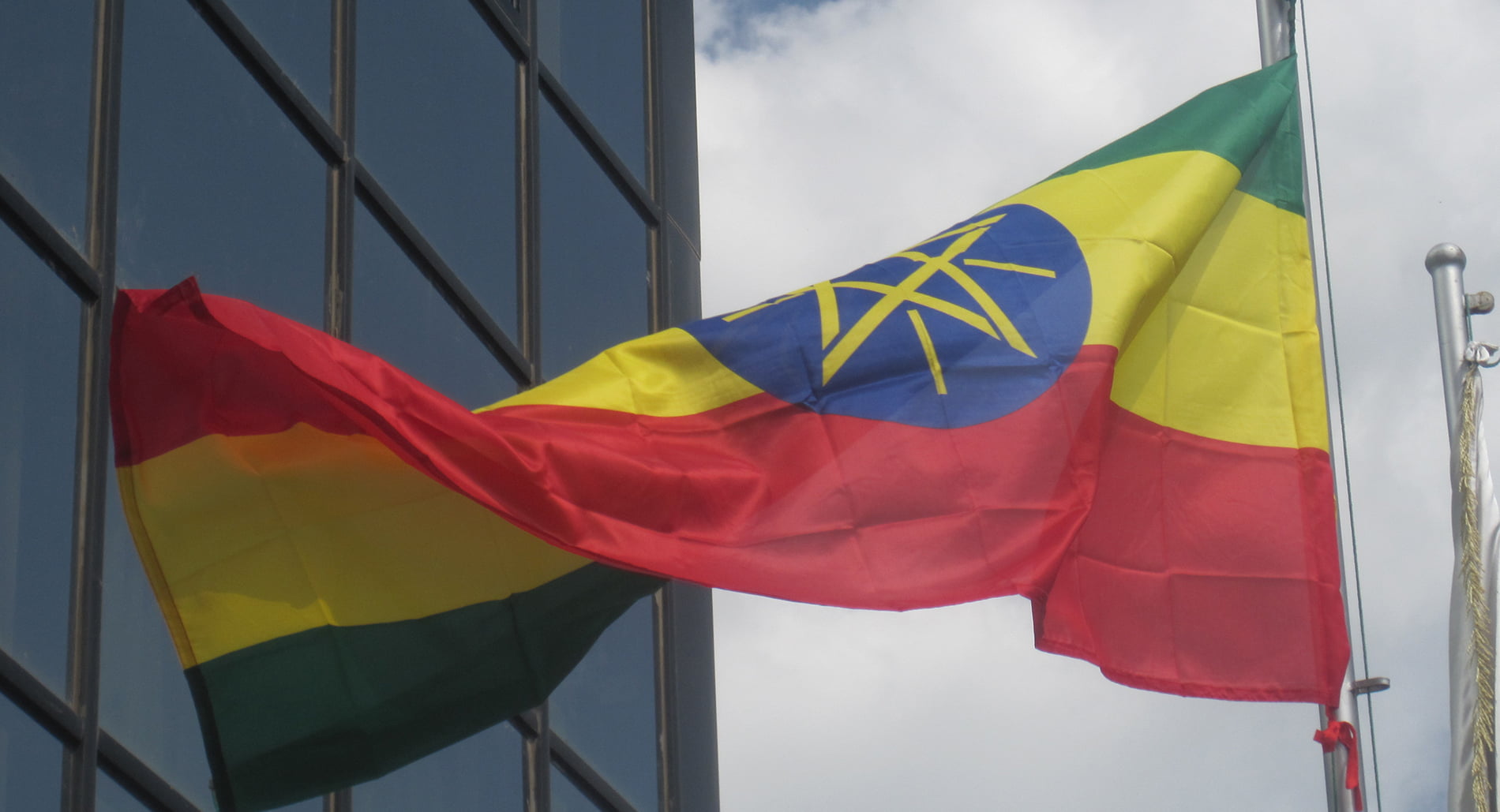
The human rights violations perpetrated by Eritrean armed forces in the city of Axum, Ethiopia, against its civilian population must be scrutinised by the international community. Amnesty International has released a report into widespread looting, deadly indiscriminate shelling of the city, and wanton killing of its civilian population by Eritrean and Ethiopian forces.

The UN Office of the High Commissioner for Human Rights intends to launch a joint investigation with the Ethiopian Human Rights Commission into alleged war crimes in the Tigray region. This not enough.

Amnesty International Australia has called on Foreign Minister Marise Payne to urge the UN Human Rights Council to take urgent action to hold a
special session and launch a full-blown investigation into the situation – to ensure robust monitoring and regular reporting to the international community, and to collect and preserve evidence in a manner that would be appropriate for future use in criminal investigations and prosecutions.

Turkey mustn’t withdraw from the Istanbul Convention: Amnesty International

On 20 March 2021, Turkish authorities issued a Presidential Decree announcing its imminent withdrawal from the 2011 Convention on Preventing and Combating Violence against Women and Domestic Violence, better known as the Istanbul Convention.

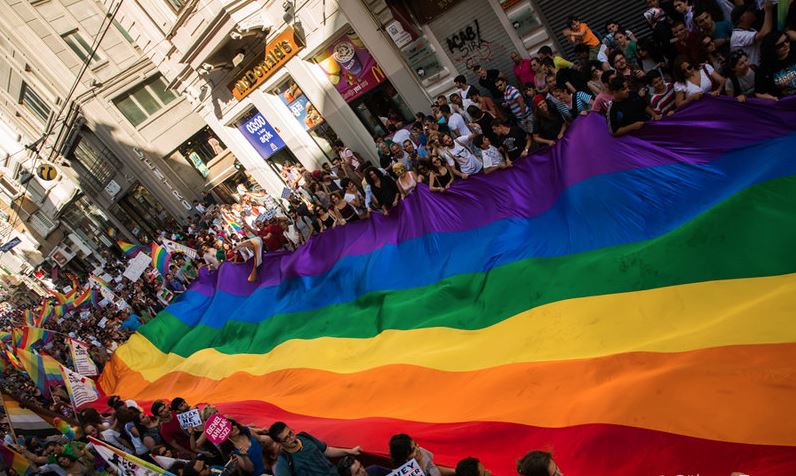
The Istanbul Convention was drafted by the Council of Europe in 2011, designed to provide legal protection for women and promote gender equality through legislation and education. Despite the fact that the text of the convention has not changed since Turkey’s ratification in 2012, newfound resistance has emerged from conservative critics in Turkey, who criticise the agreement for promoting homosexuality and threatening traditional family structures. This decision is an attack on the Turkish LGBTQIA+ community.

To protect the rights and dignity of LGBTQIA+ people, women, and girls, this decision must be met with the censure of the international community. Amnesty International Australia has written to Foreign Minister Payne to ask her to call on the Turkish government to immediately reverse its retrogressive decisions to withdraw from the Convention.

Australian Government must immediately vaccinate all 134 refugees still trapped on Papua New Guinea against Covid 19

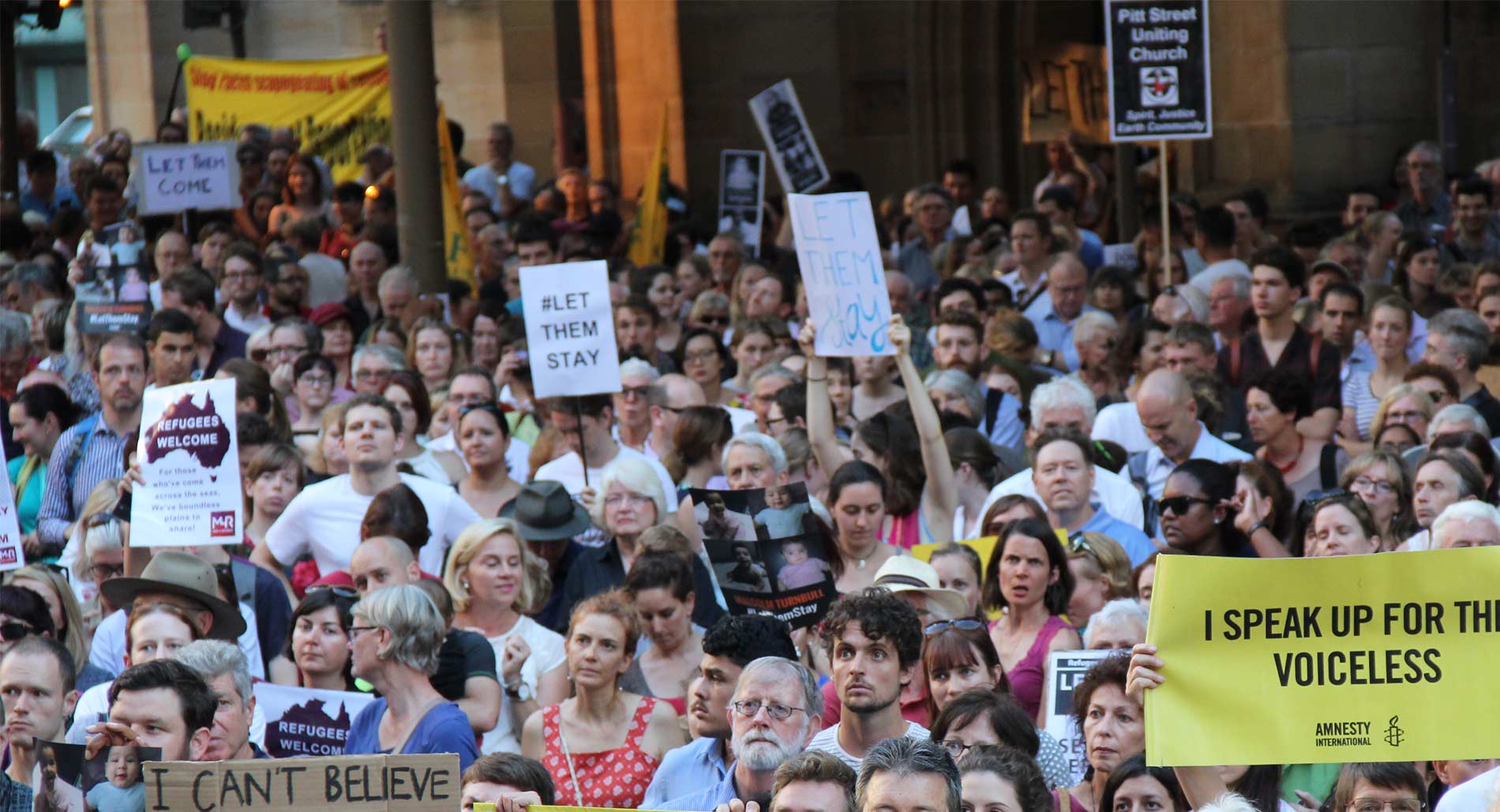
Following ABC Radio National’s report concerning discrimination towards refugees who have tested positive to COVID-19 on Papua New Guinea, Amnesty International and Doctors for Refugees call on the Australian Government to immediately vaccinate all those being held and ensure they are not being discriminated against in any way.

According to the ABC report 14 detainees have tested positive to the virus, although this has yet to be confirmed. Some of those affected are reportedly being denied access to their hotel accommodation and restricted access to casework support. 

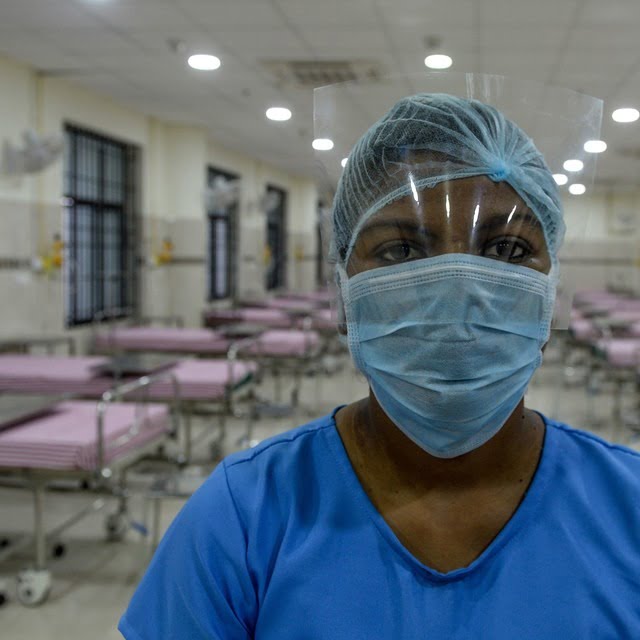
On March 17, Amnesty raised concerns about the situation on PNG and highlighted the lack of an adequate response to the growing Covid-19 crisis. The Australian Government has committed to providing just over 8,000 vaccines to Papua New Guinea’s frontline healthcare workers. The amount of personal protective equipment for health workers is inadequate, some hospitals are full or threatening to be closed to new admissions and misinformation within the community and online about the illness has been rife.

Australia and New Zealand need to urgently step up and provide more assistance.

After eight years trapped offshore, many of the detainees have serious medical conditions that place them in high-risk groups if they were to contract the virus. Additionally, many don’t feel safe seeking medical treatment at the Pacific International Hospital that is contracted by the Australian Government to provide medical services to refugees. 

Amnesty International Australia Refugee Adviser, Dr Graham Thom, said: “The Australian Government has a duty of care to those being detained under its cruel offshore detention policy for the past eight years. The detainees must have access to the COVID-19 vaccination program as a matter of urgency, and the authorities must ensure they are not being targeted or discriminated against in any way throughout this health crisis. We can’t allow the suffering to get worse or for anymore people to lose their lives because of Australia’s cruel offshore detention regime.” 

Dr Barri Phatarfod, president of Doctors4refugees, said: “These individuals are under Australia’s care. They need to be afforded the same care as others in the broader Australian community, as we’ve all been reassured. It is unconscionable that Australia would add to PNG’s current burden with our political agendas. This is a global health crisis where we are in a position to be part of the solution.“

4 things Scott Morrison’s new cabinet can do right now for human rights

In the wake of weeks of shocking revelations about workplace culture and the treatment of women in federal politics, The Morrison Government have reshuffled their cabinet. Among these new ministerial appointments are Senator Michaelia Cash to Attorney General, Peter Dutton MP to Defence, and Karen Andrews MP to Home Affairs. Senator Marise Payne has been dubbed the “Prime Minister for women” by Scott Morrison himself; and Senator Anne Ruston will add women’s safety to her portfolio.

Prime Minister Morrison has stated that these changes will “shake up what needs shaking up”. Here are 4 things the new cabinet can, and should do right now for human rights in Australia:

1. Demand safety for women and girls

Despite improvements in the lives of women and girls as a result of the women’s rights movement, women in Australia continue to experience violence, sexism, and misogyny. In recent weeks, women like Grace Tame, Brittany Higgins and Dhanya Mani have reminded us that there is still so much to do to ensure that survivors of sexual assault have access to justice. Trans women and gender diverse people experience sexual violence at twice the rate of the general population.

Australia has signed up to the Convention on the Elimination of All Forms of Discrimination against Women. This means that it committed to take action, so Australian women can enjoy their fundamental rights and freedoms. It’s clear this isn’t happening. The Australian government isn’t doing enough. Call on our leaders to do more to keep women and girls safe now.

2. Call #GameOver, and bring those detained by Australia’s detention regime to safety now

More than 700 refugees and people seeking asylum were still detained in PNG and Nauru when we launched our #Game Over campaign at the beginning of 2020. Right now, about 250 people remain in PNG and Nauru. Another 150 are detained here in Australia. We’ve already seen more than 100 people released from so-called alternative places of detention (APODs) into the community, so there is no reason for the rest of the people held for eight years in limbo to continue to be detained.

Peter Dutton has said in Question Time, that the NZ solution is ‘still on the table’. That is of course, the Australian Government accepting New Zealand’s long-standing offer of resettlement. Home Affairs Minister Karen Andrews has the ability to immediately resolve the suffering of those trapped in Australia’s cruel offshore detention regime. Demand the Government bring these people to safety now.

People call #GameOver outside Preston’s Mantra Hotel in Melbourne. © Amnesty International

3. #RaiseTheAge of criminal responsibility, once and for all

Across Australia, children as young as 10 are charged, brought before a court, sentenced and locked up behind bars. Instead of putting kids this young behind bars, governments can fund Indigenous-led solutions and community programs which have better outcomes for children and communities.

We can work to keep children out of the quicksand of the youth justice system. Senator Cash must take the opportunity to lead the States and Territories on raising the age of criminal responsibility from 10 to 14. Add your name demanding the Government #RaiseTheAge now.

Fluffy teddy bears in a row, looking out of prison bars
Fluffy toys behind bars, representing the children as young as 10 years old locked behind bars in QLD.

4. Halt the flow of arms and military assistance to members of the Saudi Arabia-led coalition for use in Yemen

Yemen is right now enduring one of the world’s worst humanitarian crises – and Australia is complicit. The government is supplying military exports to both Saudi Arabia and the United Arab Emirates — two countries committing war crimes in Yemen.

Minister Dutton must use Australia’s leverage as an ally to call for the Saudi-led Coalition to fully comply with international humanitarian law in conducting airstrikes, by ensuring that civilians and civilian objects are not targeted. A growing list of countries have already cut off arms supplies to the Saudi-led coalition, because of human rights violations in Yemen. Minister Peter Dutton must ensure Australia does the same. Add your name demanding this now.

© iStock/MicheleAlfieri

New Attorney General, Home Affairs and Defence Ministers have opportunity to lead on raising the age, ending offshore detention, and halting arms-sale to Saudi-led coalition

Amnesty International Australia today congratulated Senator Michaelia Cash, Peter Dutton MP, and Karen Andrews MP on their new ministerial appointments. 

As the new Attorney General, Senator Cash must take the opportunity to lead the States and Territories on raising the age of criminal responsibility from 10 to 14.

“We need to have the courage to make long-lasting systemic change, continuing to delay this vital reform condemns kids as young as 10 to a system they are simply not equipped to pull themselves out of,” Amnesty International Australia National Director, Sam Klintworth, said.

“Children who are locked up are three times more likely to reoffend. And there is a large and ever growing body of evidence to show that diversion programs are much more effective in tackling youth crime.”

Under the previous Attorney-General’s leadership, the last Council of Attorneys-General (CAG) had received a report from a working group on the issue, and in July 2020 resolved to undertake further work regarding the need for adequate processes and services for children who exhibit offending behaviour. That is, it needs to understand the alternatives to prison for children under the age of 14. 

Amnesty is concerned that the cessation of the Council of Australian Governments meetings, and the formation of the National Federation Reform Council has left this work in limbo. The Attorneys-General Minister’s Meetings have been designated as only ‘time-limited and when needed’. It isn’t clear what this means for the ongoing work related to the minimum age of criminal responsibility. 

“If our governments are serious about Closing the Gap targets, there’s no more simple legislative reform that has widespread community support, as well as the support of health and welfare experts around the world than raising the age.”

More than 75,000 people have signed the Amnesty International petition calling on all Australian governments to raise the minimum age of criminal responsibility from ten to at least fourteen.

Meanwhile the incoming Home Affairs Minister Karen Andrews has the ability to immediately resolve the interminable suffering of those trapped in Australia’s cruel offshore detention regime.

“We’ve already seen more than 100 people released from so-called alternative places of detention (APODs) into the community, so there is no reason for the rest of the people held for eight years in limbo to continue to be detained. We urge the minister to take up New Zealand’s offer so we can allow the more than 200 people still languishing offshore to get on with rebuilding their lives.”

Amnesty is also calling on new Defence Minister, Peter Dutton MP, to immediately halt the flow of arms and military assistance to members of the Saudi Arabia-led coalition for use in Yemen.

“Minister Dutton, use Australia’s leverage as an ally to call for the Saudi-led Coalition to fully comply with international humanitarian law in conducting airstrikes by ensuring that civilians and civilian objects are not targeted,” Klintworth said. 

More than 22,000 people have signed Amnesty International’s petition calling for Australia to stop arming the coalition against Yemen.

Forty-seven international organisations call for UN-action on Saudi Arabia

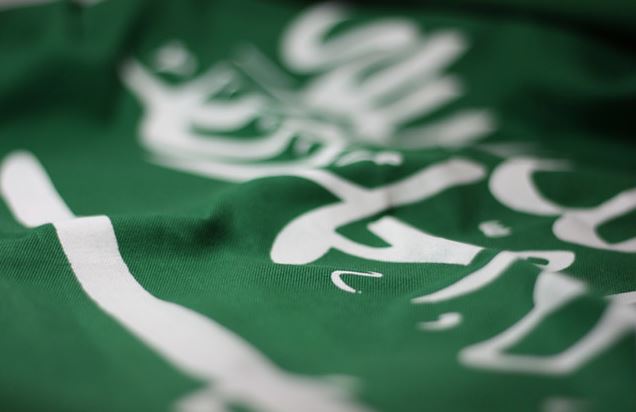
Forty-seven international organisations, including Amnesty International, has written to the Foreign Ministers of Australia, Iceland and Denmark, asking them to lead on a resolution to address the human rights crisis in Saudi Arabia at the 47th session of the UN Human Rights Council.

The letter outlines that the human rights situation in Saudi Arabia has deteriorated, in particular with further harsh prison sentences against human rights defenders and prisoners of conscience.

The Saudi government has failed the litmus test to immediately and unconditionally release all women’s rights activists and human rights defenders; instead they continue to prosecute and harshly sentence them for their peaceful activism.

The organisations state that initiating action on the situation in Saudi Arabia at the HRC’s 47th session would send an important message to the Saudi authorities that positive reforms in relation to some human rights concerns are wholly inadequate as long as it continues escalating its crackdown against human rights defenders and critics, and violating the fundamental freedoms and human rights of its citizens and residents, with impunity. Maintaining the pressure on the authorities for further reforms is vital to ensure that reforms are institutionalized and maintained.

Defeat of Tasmanian Government’s anti-protest laws a win for human rights and the right to protest

Responding to the news that the Tasmanian State Government’s proposed legislation to restrict the right to protest peacefully has been defeated, Amnesty International Australia campaigner, Nikita White, said:

“This is good news for human rights and for Tasmanians. The Bill, under which protesters could have faced up to 21 years in prison, would have unnecessarily restricted Tasmanian’s rights to freedom of peaceful assembly and expression.

“No government should unduly restrict people’s right to peaceful protest with laws that impose harsher penalties on protesters than on those not involved in protest.

“Amnesty calls on all states and territories to take note of this important win in Tasmania, and take it as a warning: the only changes to protest laws should be those that make it easier and freer to peacefully protest anywhere in Australia.”

Belarus: Government’s crackdown on protesters requires urgent international response

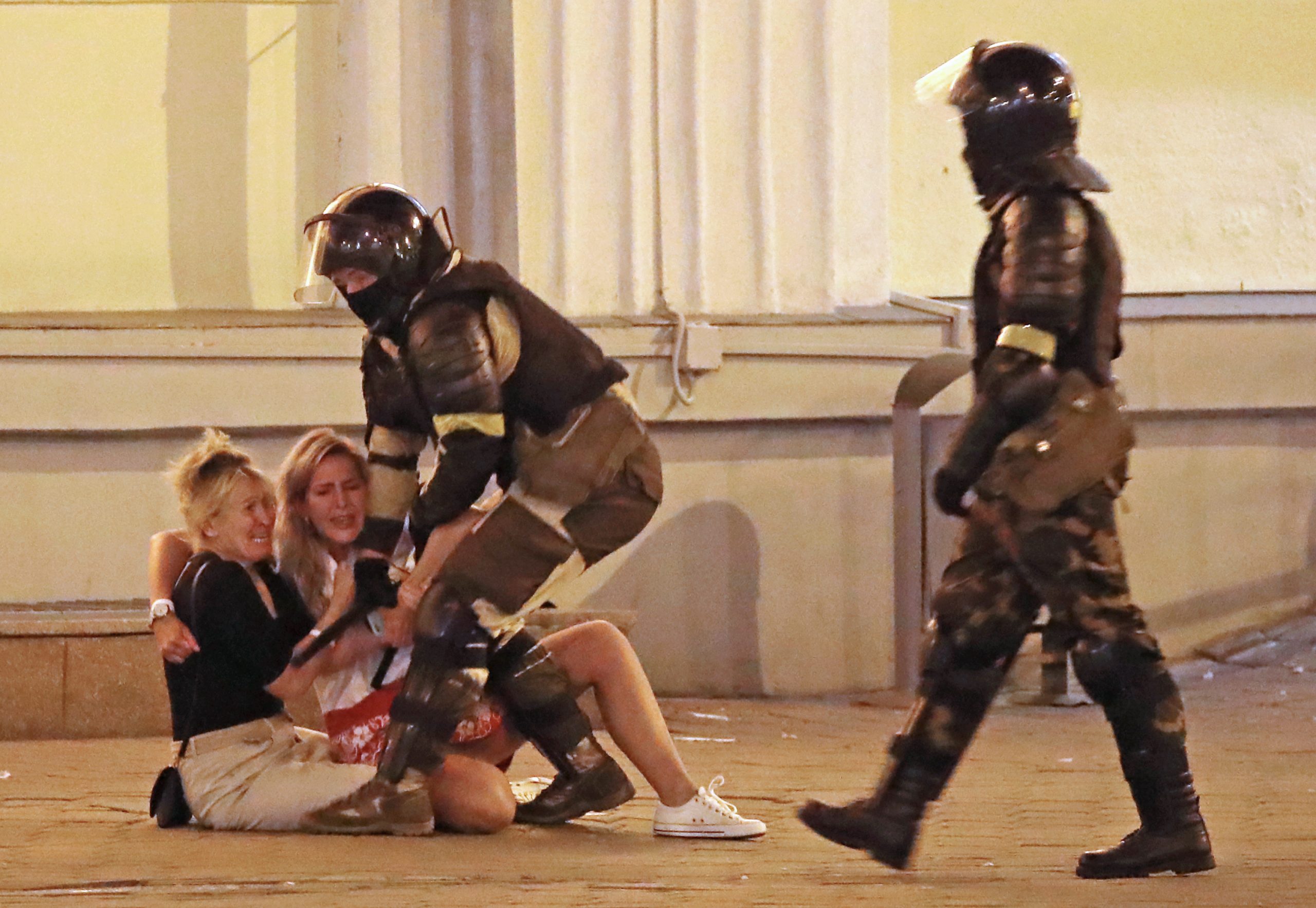
Statements made by the Belarusian authorities ahead of demonstrations planned for 25 March (Freedom Day) raise serious concerns that the police response will yet again be marked by severe violence, Amnesty International said, as it called for international action to protect the rights of peaceful protesters. 

As many journalists who document police crackdowns in Belarus have been imprisoned, Amnesty International is calling on diplomatic representatives in the country to monitor the protests and live-stream events, using their diplomatic immunity to expose expected police violence. The organization also calls on all businesses operating in Belarus to conduct urgent human rights due diligence to ensure they do not cause or contribute to human rights violations in the country. 

“The authorities in Belarus have indicated clearly enough that they are prepared and have every intention of turning Freedom Day protests into yet another scene of appalling violence if they are confronted with protests similar to last year’s. Over the past eight months, the Belarusian government has presided over a human rights crisis marked by mass arbitrary arrests, imprisonment of journalists, unlawful use of force during protests, and torture and killing of peaceful protesters. The message from the top in Belarus is clear: any exercise of the right to freedom of peaceful assembly or expression will be ruthlessly crushed. The world cannot stand by in the face of these threats,” said Marie Struthers, Amnesty International’s Eastern Europe and Central Asia Director. 

“World leaders should urge their diplomatic representatives in Belarus to monitor protests on 25 March and to live-stream events. International representatives can tell the stories for which Belarusian journalists have been imprisoned for sharing. It is essential that the abuses unfolding in Belarus continue to be exposed. 

“We also call on international businesses to ensure they do not become involved in any future human rights violations by the Belarusian authorities, by taking concrete action to mitigate any risks. For example, businesses whose services may be used to restrict the free flow of information in Belarus should take steps to effectively prevent such abuses. If telecom companies are unable to prevent internet or mobile coverage shutdown, they should mitigate adverse impacts to the extent possible, for instance by informing users in advance, limiting the duration and geographic spread of the disruption, and finding ways to reduce impact on the most vulnerable and essential services such as hospitals. 

“Solidarity with the Belarusian people requires firm, targeted action from the international community.”   

Amnesty International is closely monitoring the situation in Belarus. On 25 March Amnesty activists around the world will hold protests outside Belarusian embassies and share messages of solidarity with peaceful protesters. 

Background 

Thursday 25 March, known as Freedom Day, is an unofficial public holiday marking Belarus’ 1918 declaration of independence. This year, it is expected to be marked with nationwide protests. Svyatlana Tsikhanouskaya, Belarus’s exiled leading opposition figure, has called for global solidarity with Belarusians on this day.  

Meanwhile law enforcement and government figures have made alarming statements indicating the possibility of a violent response. Belarus’ Deputy Minister of Internal Affairs Mikalai Karpenkau described the expected protesters as “fascist henchmen” and promised to “deal with them” in a way “already worked out” – a reference to the months-long crackdown which has seen protesters beaten, detained, tortured and arrested en masse. In January, a leaked audio recording appeared to show Karpenkau telling his subordinates to disregard international human rights law when dealing with protesters, condoning shooting protesters in the head and other vital organs with rubber bullets. 

On 9 March, the Chair of the State Security Committee (KDB), Ivan Tsertsel, declared during a meeting with President Alyaksandr Lukashenka that “specific persons” are planning actions “to destabilize” the situation in the country on 25 March. Tsertsel also said that “fugitives” and “foreign special services” were behind the planned protests. Starting in late 2020, Tsertsel was quoted in the media promising “harsh” responses to protests in Spring 2021, also stating that the authorities were preparing “for a hot war.”   

During the crackdown on peaceful protests that started on 9 August 2020, Belarusian police have used rubber bullets, stun grenades, chemical irritants, water cannons and other less lethal weapons against peaceful protesters, resulting in at least four deaths and countless serious injuries. More than 30,000 demonstrators have been detained and scores of women and men have been subjected to torture and other ill treatment. At least one person is known to have died in detention. To date, criminal proceedings have not been instigated against a single police officer in connection with these alleged violations.