Ethiopia: Eritrean troops’ massacre of hundreds of Axum civilians may amount to crime against humanity

Eritrean troops fighting in Ethiopia’s Tigray state systematically killed hundreds of unarmed civilians in the northern city of Axum on 28-29 November 2020, opening fire in the streets and conducting house-to-house raids in a massacre that may amount to a crime against humanity, Amnesty International said today in a new report.

Amnesty International spoke to 41 survivors and witnesses – including in-person interviews with recently arrived refugees in eastern Sudan and phone interviews with people in Axum – as well as 20 others with knowledge of the events. They consistently described extrajudicial executions, indiscriminate shelling and widespread looting after Ethiopian and Eritrean troops led an offensive to take control of the city amid the conflict with the Tigray People’s Liberation Front (TPLF) in mid-November.

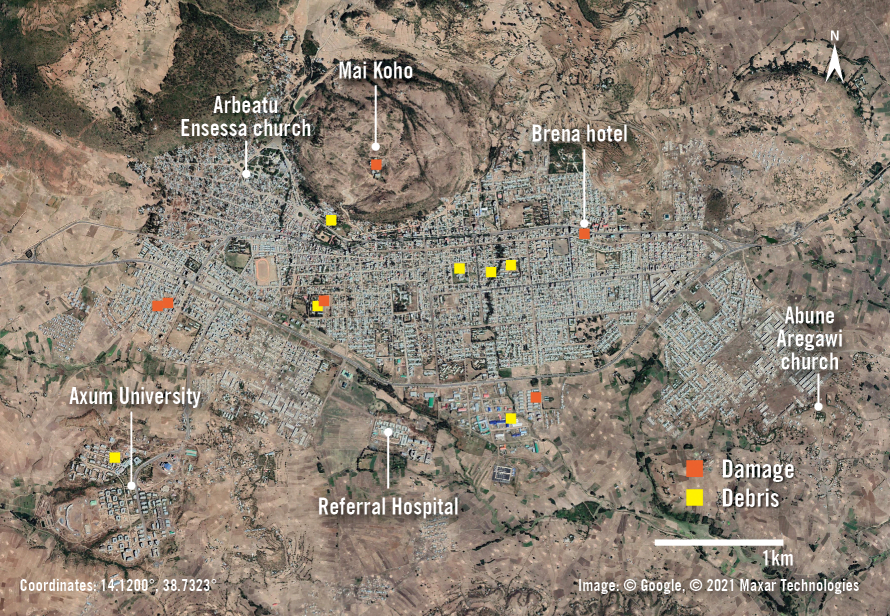
Satellite imagery analysis by the organization’s Crisis Evidence Lab corroborates reports of indiscriminate shelling and mass looting, as well as identifies signs of new mass burials near two of the city’s churches.

“The evidence is compelling and points to a chilling conclusion. Ethiopian and Eritrean troops carried out multiple war crimes in their offensive to take control of Axum. Above and beyond that, Eritrean troops went on a rampage and systematically killed hundreds of civilians in cold blood, which appears to constitute crimes against humanity,” said Deprose Muchena, Amnesty International’s Director for East and Southern Africa.

“This atrocity ranks among the worst documented so far in this conflict. Besides the soaring death toll, Axum’s residents were plunged into days of collective trauma amid violence, mourning and mass burials.”

The mass killings came just before the annual celebration at Axum Tsion Mariam, a major Ethiopian Orthodox Christian festival on 30 November, compounding the trauma by casting a pall over an annual event that typically draws many pilgrims and tourists to the sacred city.

Large-scale military offensive

On 19 November 2020, Ethiopian and Eritrean military forces took control of Axum in a large-scale offensive, killing and displacing civilians with indiscriminate shelling and shooting.

In the nine days that followed, the Eritrean military engaged in widespread looting of civilian property and extrajudicial executions.

Witnesses could easily identify the Eritrean forces. They drove vehicles with Eritrean license plates, wore distinctive camouflage and footwear used by the Eritrean army and spoke Arabic or a dialect of Tigrinya not spoken in Ethiopia. Some bore the ritual facial scars of the Ben Amir, an ethnic group absent from Ethiopia. Finally, some of the soldiers made no secret of their identity; they openly told residents they were Eritrean.

‘All we could see were dead bodies and people crying’

According to witnesses, the Eritrean troops unleashed the worst of the violence on 28-29 November. The onslaught came directly after a small band of pro-TPLF militiamen attacked the soldiers’ base on Mai Koho mountain on the morning of 28 November. The militiamen were armed with rifles and supported by residents brandishing improvised weapons, including sticks, knives and stones.

Sustained gunfire can be heard ringing out across the city in a video recorded early that day from several locations at the bottom of the mountain.

A 22-year-old man who wanted to bring food to the militia told Amnesty International: “The Eritrean soldiers were trained but the young residents didn’t even know how to shoot… a lot of the [local] fighters started running away and dropped their weapons. The Eritrean soldiers came into the city and started killing randomly.”

Survivors and witnesses said Eritrean forces deliberately and wantonly shot at civilians from about 4pm onwards on 28 November.

According to residents, the victims carried no weapons and many were running away from the soldiers when they were shot. One man who hid in an unfinished building said he saw a group of six Eritrean soldiers kill a neighbour with a vehicle-mounted heavy machine-gun on the street near the Mana Hotel: “He was standing. I think he was confused. They were probably around 10 metres from him. They shot him in the head.”

A 21-year-old male resident said: “I saw a lot of people dead on the street. Even my uncle’s family. Six of his family members were killed. So many people were killed.”

The killings left Axum’s streets and cobblestone plazas strewn with bodies. One man who had run out of the city returned at night after the shooting stopped. “All we could see on the streets were dead bodies and people crying,” he said.

On 29 November, Eritrean soldiers shot at anyone who tried to move the bodies of those killed.

The soldiers also continued to carry out house-to-house raids, hunting down and killing adult men, as well as some teenage boys and a smaller number of women. One man said he watched through his window and saw six men killed in the street outside his house on 29 November. He said the soldiers lined them up and shot from behind, using a light-machine gun to kill several at a time with a single bullet.

Interviewees named scores of people they knew who were killed, and Amnesty International has collected the names of more than 240 of the victims. The organization has been unable to independently verify the overall death toll, but consistent witness testimonies and corroborating evidence make it plausible that hundreds of residents were killed.

Burying the dead

Most of the burials took place on 30 November, but the process of collecting and burying the bodies lasted several days.

Many residents said they volunteered to move the bodies on carts, in batches of five to 10 at a time; one said he transported 45 bodies. Residents estimate that several hundred people were buried in the aftermath of the massacre, and they attended funerals at several churches where scores were buried. Hundreds were buried at the largest funeral, held at the complex that includes the Arba’etu Ensessa church and the Axum Tsion St Mariam Church.

Amnesty International’s Crisis Evidence Lab geolocated a video showing people carrying a dead man on a stretcher in Da’Ero Ela Plaza (14.129918, 38.717113), towards Arba’etu Ensessa church. High-resolution satellite imagery from 13 December shows disturbed earth consistent with recent graves around the Arba’etu Ensessa and the Abune Aregawi churches.

Intimidation and looting

In the days following the burials, the Eritrean army rounded up hundreds of residents in different parts of the city. They beat some of the men, threatening them with a new round of revenge killings if they resisted.

Axum residents witnessed a surge in the Eritrean army’s looting during this period, targeting stores, public buildings including a hospital, and private homes. Luxury goods and vehicles were widely looted, as well as medication, furniture, household items, food, and drink.

International humanitarian law (the laws of war) prohibits deliberate targeting of civilians, indiscriminate attacks, and pillage (looting). Violations of these rules constitute war crimes. Unlawful killings that form part of a widespread or systematic attack against a civilian population are crimes against humanity.

“As a matter of urgency, there must be a UN-led investigation into the grave violations in Axum. Those suspected of responsibility for war crimes or crimes against humanity must be prosecuted in fair trials and victims and their families must receive full reparation,” said Deprose Muchena.

“We repeat our call on the Ethiopian government to grant full and unimpeded access across Tigray for humanitarian, human rights, and media organizations.”


NT Senator’s bail motion won’t work: raising the age will

Amnesty International Australia has serious concerns about a motion passed today by Northern Territory Senator Samantha McMahon to “overhaul weak bail laws” in the Territory.

“The Northern Territory Government has already acknowledged and accepted the recommendations of the 2017 Royal Commission into the Protection and Detention of Children, including raising the age of criminal responsibility,” Amnesty International Australia Indigenous Rights Lead, Nolan Hunter, said.

“This motion ignores both the fact that locking kids up traps them in the youth justice system, compounding recidivism, as well as the fact that youth crime in the Northern Territory has actually gone down in the past year.”

The Australian Bureau of Statistics found that there were 693 offenders aged between 10 and 17 years, a decrease of 9% from 2018–19. 

“If Senator McMahon and people of the Northern Territory really want long-lasting and systemic change to address youth offending, then raising the age of criminal responsibility is the only logical, moral and evidence-based solution.

“Our society should be protecting and promoting the safety of children, and all the evidence shows that justice reinvestment programs are what’s effective for children in supporting them to lead healthy lives, free of the quicksand of the justice system.”

QLD: rushing through punitive measures won’t solve youth offending issues

Amnesty International Australia has serious concerns about the Queensland Government’s rushing through the latest in a rollback of youth justice reforms.

Among the “tough on repeat offenders” amendments are the introduction of GPS trackers and seeking to create a presumption against bail. However, data from the Australian Bureau of Statistics shows that youth crime rates have actually decreased.

“It’s nonsensical to introduce these harsh measures when the actual crime statistics show that youth offending is decreasing across the board, including in Queensland,” Amnesty International Australia Indigenous Rights Lead, Nolan Hunter, said.

“Certainly we acknowledge that the community is hurting after the tragic deaths, but as much as the instinct might be to take a punitive approach, all the evidence shows this doesn’t work.

“That there is a youth crime crisis is simply not backed up by any data – quite the opposite is true. What is true though is that Aboriginal kids make up the majority of young people in Queensland youth detention, and there are complex and varied issues that make this so – meaning that a complex and nuanced solution needs to be implemented, not throwing kids into prison or using digital leg irons.”

Amnesty International Australia is also concerned that some of the amendments will contravene international law –– namely the Universal Declaration of Human Rights and the Convention on the Rights of the Child –– if passed.

This latest round of legislative amendments comes after the Queensland Government scrapped bail houses late last year.

“It’s really time that all State and Territory governments listened to the experts and raise the age of criminal responsibility from 10 to 14 – that’s the proven solution to youth offending and recidivism – keeping kids out of the system to begin with.

“There are already very successful Indigenous-led diversion programs which are far more effective in dealing with youth offending than the quicksand of the youth justice system. We as a country have to do better by Indigenous kids.”

Malaysia: Deportation to Myanmar puts lives in danger

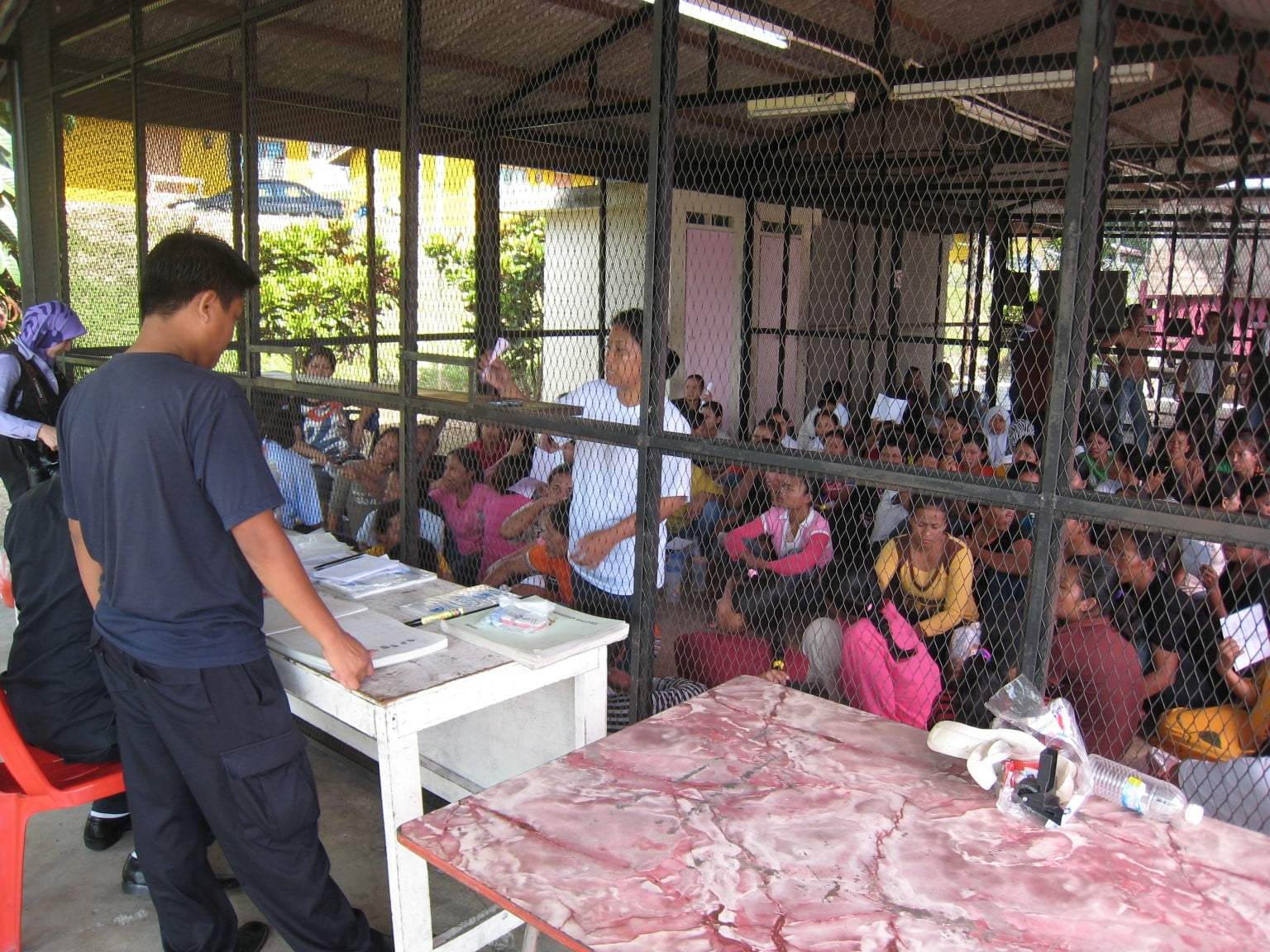
Amnesty International Malaysia is aghast at the Malaysian government’s planned efforts with the Myanmar military to deport 1,200 people back to Myanmar on 23 February 2021.

Mass deportation exercises carried out with little transparency contravenes Malaysia’s obligations to respect and protect the rights of migrants and refugees, and risks endangering their lives. Widespread crackdown on dissidents following the military coup in Myanmar on 1 February puts those due to be deported at further risk of human rights violations.

“The Malaysian Immigration authorities claim their ‘repatriation program’ does not involve refugees or asylum seekers, but how have they determined this if the UN has been prevented from accessing people in immigration detention for over one and a half years?,” asked Katrina Jorene Maliamauv, Executive Director of Amnesty International Malaysia.

“The Malaysian government is recklessly imperilling the lives of over 1,000 Myanmar people by deporting them under a curtain of secrecy to a country in the middle of a coup marred by human rights violations.”

The Malaysian government has not permitted the United Nations High Commission for Refugees (UNHCR) to access immigration detention centres since August 2019. The international body has not been able to visit detention centres to identify asylum seekers and refugees, and facilitate their release, leaving them to languish in captivity. The arbitrary and indefinite detention of migrants, asylum seekers and refugees is in violation of international human rights law.

“The Malaysian government must ensure there is a guarantee of safety for returnees,” said Katrina.

“UNHCR must immediately have full access to the 1,200 people. Prime Minister Muhyiddin Yassin must instruct the immigration department to work closely with UNHCR to ensure not a single person seeking asylum, refugee or anyone who may be at risk of human rights violations is forced to return to Myanmar. To do so would be in violation of the principle of non-refoulement, which applies to Malaysia as part of customary international law.”

The planned deportation once again puts Malaysia’s immigration and refugee policies in the spotlight. The Human Rights Commission of Malaysia (Suhakam) reported in 2018 that conditions in immigration detention centres continue to be cramped, unsanitary, poorly maintained, and lacking in basic facilities such as clean water and food. There have also been first-hand and witness accounts of physical abuse against detainees.
In August 2020, the government acknowledged that 23detainees, including two children, died in immigration detention centres the first half of that year. In October, the government revealed that 756 children were being held in these facilities, in violation of the UN Convention on the Rights of the Child (CRC), which bars the detention of children for immigration offences.

“Given horrific conditions in detention, it is not surprising that some people may feel their only option is to return to Myanmar, even if they face risks there” said Katrina.

“But the options for people and their families cannot be between indefinite detention or putting their lives at risk byreturning to a possibly dangerous situation. Using indirect means to push people back to face the grave human rights violations they escaped by crossing a border to seek safety is essentially ‘constructive’ refoulement.”

Throughout 2020, immigration officials and police have conducted raids against people in migrant communities in Malaysia that have violated their rights and undermined COVID-19 preventative measures.

In addition to this, according to UNHCR, as of early December 2020, 457 persons registered with the organisation were detained in immigration detention, including 62 unaccompanied and separated children. The numbers of individuals unregistered but who may have an asylum claim are currently unknown to UNHCR as they’ve been denied access to detention centres since August 2019.

“The situation of those in immigration detention in Malaysia is horrendous. Beyond granting UNHCR access to those due to be deported, the government must also allow it full access to all those currently in detention facilities. The detention of people solely for immigration control is unjustifiable. We call for the immediate release of refugees, asylum-seekers and migrants detained for this reason. Refugees and asylum-seekers must be afforded additional protections, including full recognition of their right to seek international protection,” said Katrina.


Background
The Malaysian government confirmed plans reported in the media to deport 1,200 people of Myanmar origin on navy ships provided by the country’s military on 23 February. On February 15,the director-general of the Immigration Department, Khairul Dzaimee Daud said the deportation will involve individuals who violated the Immigration Act 1959/63 and Immigration Regulations 1963, including offences such as not carrying identity documents, overstaying and misuse of visit passes. In a 17 February report in Nikkei Asia, the Immigration Department reiterated its plans to proceed with the deportation. The report also cited an unnamed source in the department who acknowledged that, “it would be difficult to distinguish undocumented immigrants from refugees who have lost their UNHCR cards.”

Facebook news ban raises human rights concerns

Responding to Facebook blocking Australian news sites from being shared on its platform Amnesty International Australia campaigner Tim O’Connor said:

“It is extremely concerning that a private company is willing to control access to information that people rely on. 

“Facebook’s action starkly demonstrates why allowing one company to exert such dominant power over our information ecosystem threatens human rights.  

“It’s alarming that community support groups, emergency services and charities have had their content blocked.

“We’re particularly concerned with the effect this is having on people in the Pacific, many of whom rely on getting information and news from Facebook due to the nature of their agreements with telecommunications providers.

“Facebook’s willingness to block credible news sources also stands in sharp distinction to the company’s poor track record in addressing the spread of hateful content and disinformation on the platform.

“Amnesty International calls on Facebook to immediately reverse this decision.”

CDC review: shaming people doesn’t solve intractable issues

“The cashless debit card was always just another paternalistic response to addressing issues that affect Indigenous people in this country. Approaches that have failed to make significant inroads into addressing intractable issues like poverty and discrimination.

“The report into the trial, conducted at great expense, found that people involved in the trial of the CDC felt discriminated against and shamed for receiving welfare payments. 

“Shaming people doesn’t improve anyone’s situation, but condemns them to the same discriminatory treatment they’ve experienced for generations. 

“It’s hard to understand how we will ever get closer to First Nations people having their human rights respected when governments continue to treat us like second-class citizens. The CDC is dehumanising and attempts, unsuccessfully, to treat the symptoms of colonialism and dispossession.

“What we need from Government is to trust Aboriginal and Torres Strait Islanders to know what’s best for us and to support us in community-led solutions.”

Sri Lanka: Government suffocating dissent and obstructing justice for historic crimes says Amnesty report

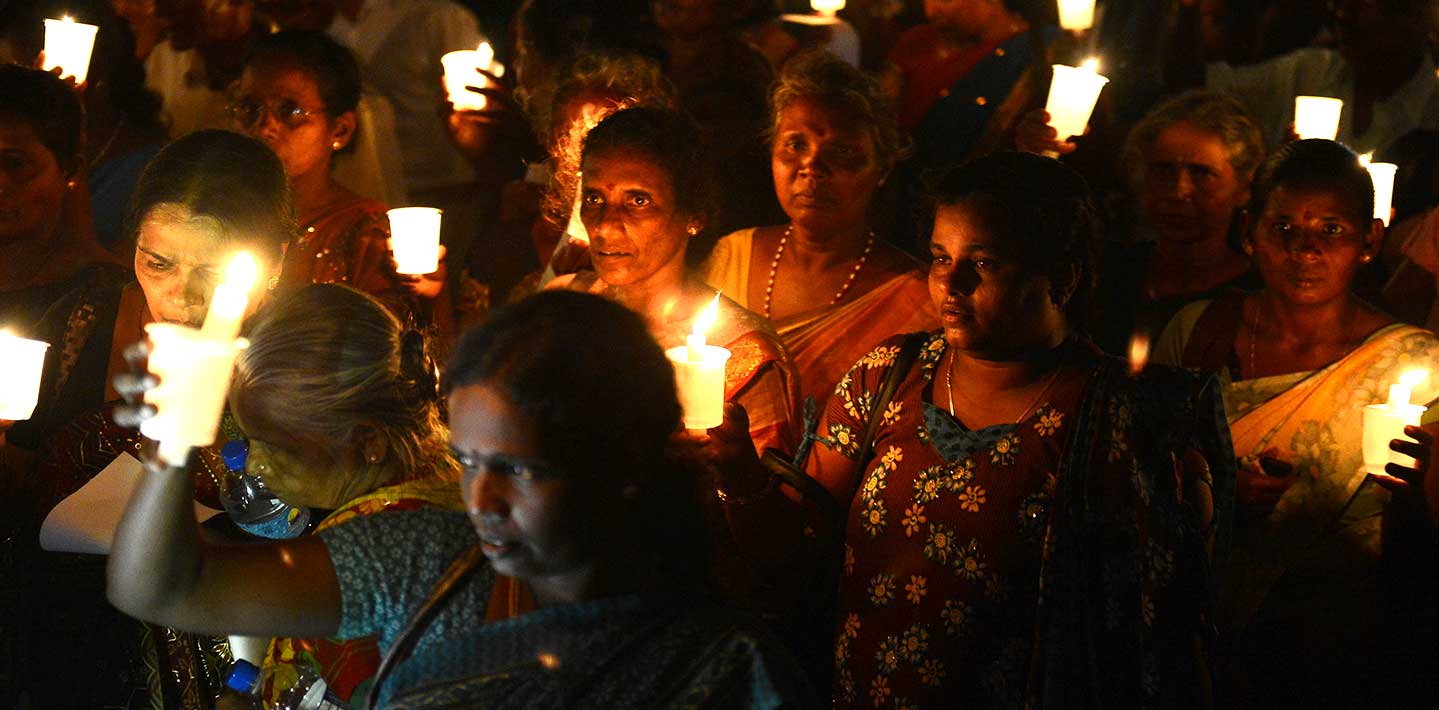
The Sri Lankan Government has launched a renewed crackdown on dissent that is severely curtailing civil society freedom and obstructing efforts to deliver justice for conflict-era crimes under international law, said Amnesty International, in a new report published today.  

The report, Old ghosts in new garb: Sri Lanka’s return to fear, exposes how the Sri Lankan government has targeted human rights organisations, media, lawyers, political opponents, and law enforcement officers in a concerted bid to suppress opposing voices and hamper the transitional justice process for crimes committed during the country’s 30-year armed conflict.  

“Over the past year, the Sri Lankan government has radically transformed the country’s civic space, which is now defined by an increasing hostility and intolerance towards dissenting voices,” said David Griffiths, Director of the Office of the Secretary General at Amnesty International.   

“People from all walks of life have been threatened, intimidated, harassed and jailed, simply for expressing views or doing their jobs in ways that displease the authorities. The Sri Lankan government must cease this campaign against dissent and respect its obligations under international law to protect freedom of expression, peaceful assembly and association, the right to personal security, and freedom from arbitrary detention.” 

Since withdrawing from the UN Human Rights Council-driven justice and reconciliation process for conflict-era crimes in February 2020, the authorities have cracked down on those pursuing justice while deliberately hindering ongoing efforts to secure justice and accountability.  

Amnesty International is calling on the UN Human Rights Council to implement the recommendations of a damning report on Sri Lanka published by the UN High Commissioner for Human Rights last month, when it meets from 22 February to 23 March. This includes more robust monitoring and reporting on the human rights situation, and the collection and preservation of evidence for future prosecutions. 

“The international community must not turn a blind eye to the deteriorating human rights situation in Sri Lanka, which is being abetted by the government’s regressive moves on justice and accountability. The Human Rights Council must take steps to end the cycle of impunity by holding the Sri Lankan government fully to account, and launching a new internationally agreed justice process,” said David Griffiths.  

Justice and Accountability

Amnesty International’s findings reveal a pattern of targeting those who have played an active role in investigating, documenting, litigating, or reporting on human rights violations and abuses, and advocating on behalf of the victims, including at least six incidents where lawyers were targeted. 

The country’s draconian Prevention of Terrorism Act was used, among others, against Hejaaz Hizbullah, a prominent minority rights advocate and lawyer, who has been detained for 10 months, without a shred of evidence of wrongdoing produced before a court. 

Attorney Achala Senevirathne, who appeared on behalf of families of the disappeared in an enforced disappearance case, has been threatened with violence and sexualized abuse not only on social media but also by officials accused in the case. 

Criminal investigators who pursued justice for crimes under international law have also come under increased scrutiny. The former director of the Criminal Investigations Department was demoted and later arrested for allegedly fabricating evidence in a case. He remains in custody and believes he is being targeted in reprisal for leading investigations in cases of abuses allegedly committed by the armed forces. 

Members of the military leadership that were in command during the last phase of the war, when allegations of human rights and humanitarian law violations are widespread, were rewarded with promotions and positions of power under the new administration, including to civilian positions. This has had a chilling effect on victims demanding justice. 

The report also details how legislative amendments brought by government have undermined any credible avenues locally available for justice, and how President-appointed Commissions of Inquiry are attempting to reverse accountability for perpetrators of human rights violations.  

Assault on civic space 

The Sri Lankan government did not waste any time in introducing new instruments and techniques to muzzle dissent.  

State actors have led smear campaigns against NGOs and human rights organisations, while journalists have received death threats and have been summoned for investigations and interrogations after exposing human rights abuses.  

Visits by state security officials to the offices of human rights NGOs have increased over the past fourteen months. Amnesty International recorded 18 such visits in that period, during which officials made enquiries about registration details, staff and donors’ bank details. Some staff members were even visited at their private residences.  

Laws are also being misused to stifle free speech, including the International Covenant on Civil and Political Rights (ICCPR) Act, which was used to arrest and detain Ramzy Razeek for more than five months without charge or proper access to a lawyer, for a Facebook post in which he criticised the forced cremation of COVID-19 victims and called for an ideological struggle using the pen and keyboard as weapons. 

Background 

The report, Old ghosts in new garb: Sri Lanka’s return to fear, is available here

The OHCHR report, published on 27 January 2021, is available to download here.  The Human Rights Council will meet for its 46th session from 22 February to 23 March, during which Canada, Germany, Montenegro, North Macedonia and the UK – the current core group of states leading on Sri Lanka – are expected to present a resolution in follow-up to the OHCHR report. Amnesty International published an assessment of the situation in Sri Lanka, setting out clear expectations for HRC action, in January 2021.

Amnesty urges bold action to clean up the battery industry

Ensuring clean and green battery supply chains must be a priority for businesses and governments during the post-pandemic recovery. Amnesty International has published a set of principles for ensuring that lithium-ion batteries, which power electric vehicles and many electronic devices, and which are essential for tackling climate change, are not linked to human rights abuses or environmental harm. 

Previous Amnesty International research exposed how cobalt mined by children in the DRC could be entering the supply chains of some of the world’s biggest electronic and electric vehicle brands, while in South America, evidence points to lithium extraction posing risks to Indigenous peoples’ water resources and fragile ecosystems. Meanwhile the growing demand for “green” battery technologies poses new risks to the environment, including pollution of mining areas, damage to the ocean floor, and mounting waste due to inefficient design. 

Amnesty International is calling on businesses at all stages of the battery supply chain to do their bit to ensure they are truly powering change. Human rights must be at the core of their operations – this might mean making supply chains more transparent, providing remedy where they have caused harm, or ensuring Indigenous communities are consulted on mining projects that affect them.

Governments also need to show leadership by supporting investments and energy solutions rooted in a just transition. Lack of respect for human rights should be a dealbreaker for any business involved in the battery industry – that means governments need to enforce environmental protection laws, investigate allegations of abuses, and make human rights due diligence a legal requirement.

Amnesty International Australia has written to federal, and state and territory, environment and energy ministers, urging them to adopt the principles. Amnesty International Australia is also urging the federal Foreign Minister to consider applying these principles to bilateral and multilateral arrangements.

Globally, 51 organisations support the principles, including four Australian organisations: Australian Lawyers for Human Rights, Deep Sea Mining Campaign, AID/WATCH, and RMIT Business and Human Rights Centre.

Amnesty tells Australian government to ‘speak out’ about India

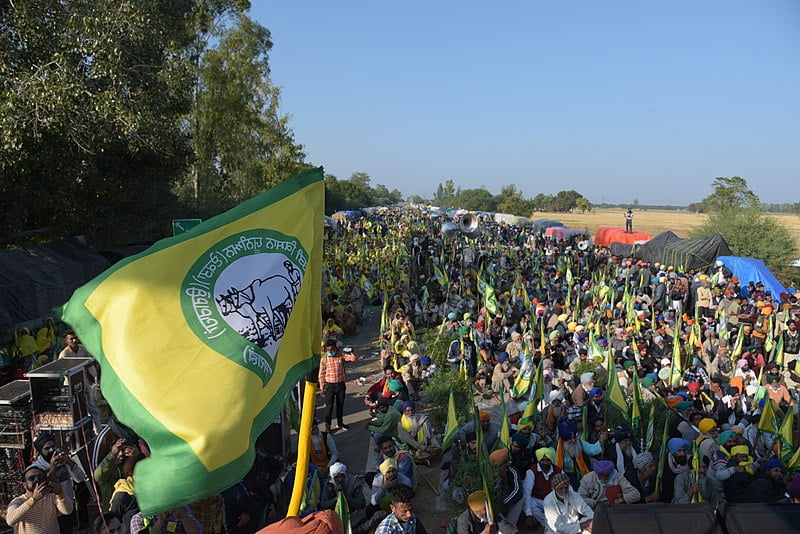
The Indian government must stop its escalating crackdown on protesters, farming leaders and journalists, amid ongoing nationwide demonstrations against three recently introduced farm laws.

Amnesty International is concerned that rather than investigating reports of violence against protesters and bringing suspected perpetrators to justice, the authorities have resorted to hindering access to protest sites, shutting down the internet, censoring social media using draconian laws against protesters who have been peacefully voicing their opposition to the new laws for several months now. In short, Indian authorities are cracking down on human rights rather than upholding and protecting them.

Amnesty International Australia is concerned that despite being in a position to speak out due to Australia’s relationship with India, it is mostly silent on India’s human rights record. Australia and India have a strong relationship, particularly through the Australia-India Comprehensive Strategic Partnership, and the Quadrilateral Security Dialogue. Human rights must be at the centre of such partnerships.

Amnesty International Australia urges Foreign Minister Marise Payne to speak out about the worsening human rights situation in India. Amnesty International Australia has also written to the Minister including recommendations regarding the upcoming session of the United Nations Human Rights Council.

Myanmar: Police deployed machine guns against peaceful protesters, despite denials

A young woman was shot in the head by Myanmar’s security forces during protests, Amnesty International has confirmed after investigating footage showing the attack. This evidence also contradicts Myanmar military claims that security forces were not carrying lethal weapons.

video shared on social media of the shooting, which happened in the capital of Nay Pyi Taw on 9 February, was verified by Amnesty International’s Crisis Evidence experts. According to media reports, the woman has lost significant brain function and has only a slim chance of survival.

The Myanmar military’s ‘True News Information Unit’ said in a statement that security forces only deployed non-lethal weapons. However, images show a member of the police wielding a Myanmar-made BA-94 or BA-93 Uzi clone, a Myanmar-made variant of this sub-machine gun.

In the verified coordinates of the image, the alleged police gunman is standing at or close to the other side of the road from where the woman was shot.   

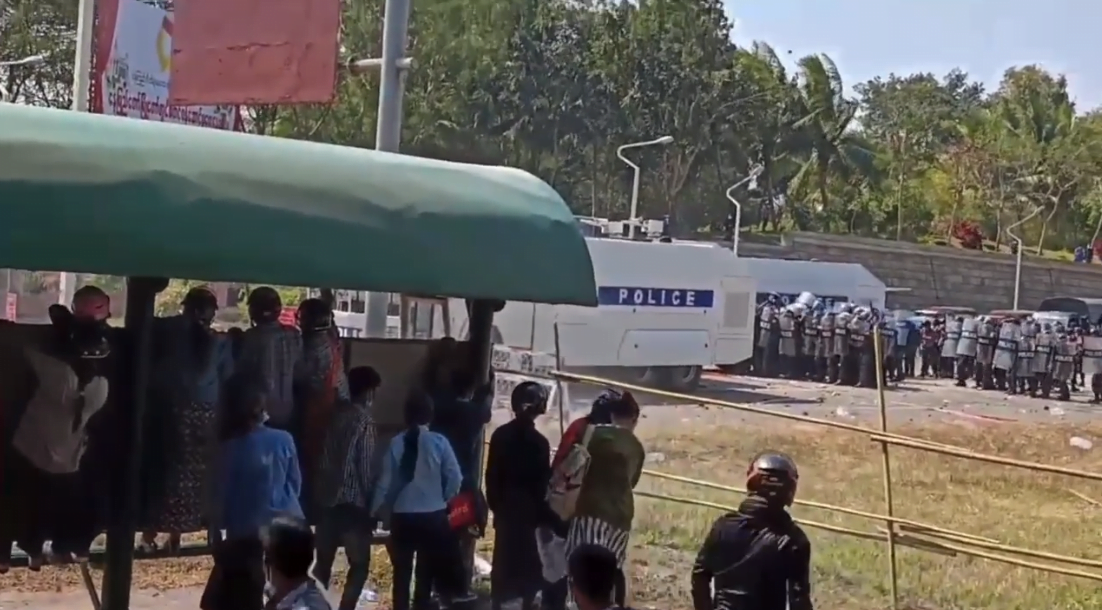
The distressing video captures the exact moment the young woman, named on social media as 19-year-old Mya Thwe Thwe Khaing, is hit in the side of her head by a bullet as she turns away from security forces. She had been sheltering with protesters from water cannons behind a bus stop when she was shot.

“The serious injuries sustained by this young woman were caused by the Myanmar police firing live ammunition directly towards peaceful protesters,” said Sam Dubberley, Head of Amnesty International’s Crisis Evidence Lab.

“The social media materials we have verified show that police recklessly targeted protesters, with no respect for their lives or safety whatsoever. Their abhorrent use of lethal force against protesters is unlawful, and must be independently, thoroughly and promptly investigated.

“The Myanmar security forces’ unnecessary and excessive use of force must stop immediately. As protests continue, it is vital that the people’s right to peacefully express their grievances is respected.”

Deadly crackdown on protests

Earlier this week, tens of thousands of people took to the streets across many cities in Myanmar – including Nay Pyi Taw and the country’s two largest cities, Yangon and Mandalay – to peacefully protest the military coup in the country. They were met with live ammunition, rubber bullets, tear gas and water cannons by security forces as they attempted to disperse protests.

Amnesty International’s Crisis Evidence Lab examined photographs and video shared to social media of the protest in Nay Pyi Taw on 9 February. After the young woman is hit, further gunshots can be heard later in the video, which also captures fire bursts coming from weapons being wielded by police. The location of the shooting was identified as being on Taungnyo Road, just south-east of the Thabyegone Roundabout in Naypyidaw (coordinates: 19.746822, 96.117287).

Further social media posts show the impact that the bullet had on the helmet the woman was wearing, as well as brain scans that appear to show her significant injuries.

“In policing protests, security forces must always respect, protect and ensure the human rights of organizers and participants,” said Sam Dubberley.

“Security forces must also ensure the safety and security of journalists, other protest monitors and members of the public observing the protests or by-standers.

“The failure of Myanmar’s security forces in this basic duty in this instance is deeply disturbing.”

The UN Human Rights Council is scheduled to hold a special session on the situation in Myanmar today (11 February).

The UN Basic Principles on the Use of Force and Firearms by Law Enforcement Officials state that security forces must exhaust all non-violent means before employing force as the last resort. These principles also stipulate that the authorities exercise utmost restraint, and only resort to use of firearms to protect against the imminent threat of death or serious injury and when there is no danger for uninvolved people being killed or injured. Indiscriminate firing into a crowd is always unlawful.