Two men flogged 77 times each in cruel anti-LGBTI punishment

Two men in Banda Aceh were flogged 77 times each on Thursday 28 January for allegedly  partaking in consensual same-sex relations, said Amnesty International Indonesia today. Aceh’s brutal public canings, often in front of large crowds, have continued unabated during the COVID-19 pandemic.

“Flogging constitutes cruel, inhuman and degrading treatment and can amount to torture. No one deserves to be brutalized and humiliated in this way,” Amnesty International Indonesia Executive Director Usman Hamid said. 

The two men were first arrested in November 2020 after local residents reported them to the Municipal Police (Satpol PP) for allegedly having sex in a rented room in Banda Aceh.

“Targeting and criminalizing people because of their real or perceived sexual orientation is inhumane. Nobody deserves this kind of harassment, let alone Aceh’s heinous punishments,” Usman said.

Media reports indicate that the floggings were conducted in front of around 100 onlookers. In one report, the Head of Banda Aceh Municipal Police, Heru Triwijanarko, said that his office is focused on probing people suspected of same-sex relations in the city. 

Hundreds publicly flogged while pandemic rages

According to Amnesty International Indonesia monitoring, Aceh conducted at least 60 public floggings against 254 people in 2020, 52 of which were conducted after the COVID-19 outbreak in Indonesia started. 

“The fact that the flogging was conducted in front of a large crowd of people in the midst of an escalating COVID-19 outbreak shows the distorted priorities of Aceh authorities,” Usman said.

Eight people have been flogged in 2021 already. Besides the two men, four other people were also flogged on Thursday. Two men were flogged 40 times each for consuming alcoholic drinks, while a man and a woman were flogged 17 times each for having sexual intimacy outside marriage.

Aceh is the only province in Indonesia that implements Islamic bylaws. The Aceh Islamic Criminal Code was passed by the Aceh parliament (DPRA) in 2014 and came into effect throughout the province on 23 October 2015. Islamic bylaws have been in force in Aceh since the enactment of the province’s Special Autonomy Law in 2001 and are enforced by Islamic courts. These laws, in some cases, provide for up to 200 lashes as punishment.

Punishable offences include same-sex sexual relations (liwath), premarital sex and other sexual relations outside marriage (“adultery” or zina), consumption of alcohol (khamar), gambling (maisir), “being alone with someone of the opposite sex who is not a marriage partner or relative” (khalwat), committing sexual intimacy outside marriage (ikhtilath), sexual abuse, rape, accusing a person of adultery without providing four witnesses, and intimacy between unmarried couples.

Under international human rights law, all forms of corporal punishment are prohibited. In 2013, the UN Human Rights Committee, which monitors states’ compliance with the ICCPR, asked Indonesia to take practical steps to put an end to corporal punishment and to repeal the provisions of the Acehnese law permitting its use in the penal system.

Further, consensual sexual relationships must not be treated as a criminal offence, nor are they a crime against ‘morality’. The UN Human Rights Committee and other expert human rights bodies have raised concerns about laws criminalizing ‘adultery’ or other consensual sexual relations outside marriage because they violate the right to privacy. 

“We strongly urge both Aceh and central government authorities to take immediate action to halt this cruel practice and revoke the bylaws that allow them to take place,” Usman said.


Human rights must be at the centre of the Malaysia-Australia Comprehensive Strategic Partnership

The Australian government entered into a Comprehensive Strategic Partnership with Malaysia on the 27th of January 2021. This is an elevation to the ‘strategic partnership’ that began in 2015.

Prime Minister Scott Morrison and Prime Minister Muhyiddin Mohd Yassin agreed the Partnership will be underpinned by three areas of cooperation: economic prosperity; society and technology; and defence and regional security and guided by a Plan of Action developed and agreed between both countries.

Amnesty International Australia is concerned that there is no reference to human rights in the partnership agreement.

The human rights situation in Malaysia is concerning – it retains the death penalty, LGBTQIA+ and refugee communities are at risk, and some basic rights are under attack. The Partnership should be used to hold each state accountable to international law and rules on human rights.

Amnesty International Australia has written to Foreign Minister Payne, asking her to put human rights at the centre of the Partnership.

Australian government to “encourage” Hungary to uphold human rights

In December 2020, Amnesty International Australia wrote to Foreign Minister Marise Payne, asking her to pressure the Hungarian government to drop its plans to ban LGBTQI people from adopting children.

Amnesty International is concerned that the (now adopted) measures would further undermine the rights of lesbian, gay, bisexual, transgender, queer and intersex people, including right to a private and family life and the right to protection from discrimination, and negatively affect children’s right to live in a family, to their gender identity, and their parents’ right to impart education according to their religion or belief.

The Department of Foreign Affairs and Trade has responded to Amnesty. The Department said that Australia has raised “its concerns about the impact on human rights and democratic freedoms” of recent constitutional amendments and legislative measures in Hungary.

The Department also said that it will “use opportunities in Canberra and through our Embassy in Vienna (accredited to Hungary) to encourage Hungary to ensure that human rights are upheld”.

Amnesty International will continue to monitor the human rights situation in Hungary, and human rights violations against the LGBTQIA+ community world-wide.

Amnesty to Reynolds: sign the treaty to ban nuclear weapons

To mark the entry into force of the UN Treaty on the Prohibition of Nuclear Weapons, Amnesty International has written to Defence Minister Linda Reynolds asking her to sign the treaty.

The treaty makes it illegal under international law to develop, test, possess, host, use or threaten to use nuclear weapons. Whilst two-thirds of UN member states have signed the treaty, Australia has not.

Australia’s reluctance to sign the treaty is due to the US’ capacity to use its nuclear weapons on behalf of Australia, for its direct or indirect protection.

The use of nuclear weapons is incompatible with the protection of human rights, including the right to peace and the right to life. It is also a threat to people’s right to be free from torture.

Amnesty International Australia has asked Minister Reynolds to sign the treaty to send a strong message to the world that it is the right thing to do to aim for a nuclear-free-world.

Amnesty International Australia has also written to the Shadow Minister for Defence, Richard Marles MP, and the Greens’ spokesperson for Peace and Disarmament, Senator Jordon Steele-John.

Ban dangerous facial recognition technology that amplifies racist policing

Amnesty International today launches a global campaign to ban the use of facial recognition systems, a form of mass surveillance that amplifies racist policing and threatens the right to protest. 

Ban the Scan campaign

The Ban the Scan campaign kicks off with New York City and will then expand to focus on the use of facial recognition in other parts of the world in 2021. Facial recognition systems are a form of mass surveillance that violate the right to privacy and threaten the rights to freedom of peaceful assembly and expression. 

The technology exacerbates systemic racism as it could disproportionately impact people of colour, who are already subject to discrimination and violations of their human rights by law enforcement officials. Black people are also most at risk of being misidentified by facial recognition systems. 

“Facial recognition risks being weaponized by law enforcement against marginalized communities around the world. From New Delhi to New York, this invasive technology turns our identities against us and undermines human rights,” said Matt Mahmoudi, AI and Human Rights Researcher at Amnesty International. 

“New Yorkers should be able to go out about their daily lives without being tracked by facial recognition. Other major cities across the US have already banned facial recognition, and New York must do the same.”

In New York, Amnesty has joined forces with AI for the People, the Surveillance Technologies Oversight Project, the Immigrant Defence Project, the New York Civil Liberties Union, the New York City Public Advocate’s officeThe Privacy NY Coalition, State Senator Brad Hoylman and Rada Studios to campaign for legislation to ban the use of facial recognition technology for mass surveillance by law enforcement in the city.

 “Police use of facial recognition technology places innocent New Yorkers on a perpetual line up and violates our privacy rights. Facial recognition is ubiquitous, unregulated and should be banned.”

Mutale Nkonde, Founder and CEO of AI For the People.

Albert Fox Cahn, Surveillance Technology Oversight Project Executive Director at the Urban Justice Centre, said: “Facial recognition is biased, broken, and antithetical to democracy. For years, the NYPD has used facial recognition to track tens of thousands of New Yorkers, putting New Yorkers of colour at risk of false arrest and police violence.

“Banning facial recognition won’t just protect civil rights: it’s a matter of life and death”

Facial recognition technology can be developed by scraping millions of images from social media profiles and driver’s licenses, without people’s consent. Software then runs facial analysis of images captured on CCTV or other video surveillance to search for potential matches against the database of scraped images. 

While other US cities, including Boston, Portland and San Francisco, have banned the use of facial technology by law enforcement, New York Police Department [NYPD] continues to use the technology to intimidate and harass law abiding residents, as seen during last year’s the Black Lives Matters protests.

Black Lives Matter

On 7 August 2020, dozens of NYPD police officers tried to force their way in to Derrick “Dwreck” Ingram’s apartment in an attempted arrest. They accused Dwreck, a co-founder of the social justice organization Warriors in the Garden, of allegedly assaulting a police officer by shouting loudly into a megaphone at a June protest. 

One officer was caught on camera outside Dwreck’s home holding a document titled “Facial Identification Section Informational Lead Report”, revealing that facial recognition had likely been used to inform Dwreck’s arrest. The document featured Dwreck’s face matched to an Instagram photo.

The NYPD misinformed Dwreck about his rights, threatened to break down his door, attempted to interrogate him without a lawyer, used at least one police helicopter and drones, and stationed dozens of officers in his hallway, on his fire escape, and in tactical positions in and around nearby buildings. The police left only after Dwreck live-streamed the events, a large crowd of protesters gathered, and the media began asking questions. 

Police “Wanted” posters with photos taken without his consent from Dwreck’s private Instagram account, were plastered around Dwreck’s neighbourhood. While the NYPD initially confirmed it had used facial recognition technology, it has yet to adequately disclose documentation in Dwreck’s legal case on the use of facial recognition technology.

“We’re being specifically targeted with this technology because of what we’re protesting and because we’re trying to deconstruct a system that the police are a part of,” said Dwreck Ingram.

The discriminatory impact of facial recognition technology goes far beyond its use by law enforcement to target peaceful protestors. In New York, landlords risk using the technology to spy on Black and Brown communities.

In 2018-19, Atlantic Plaza Towers in Ocean Hill-Brownsville, Brooklyn, a predominately Black and Brown community, successfully challenged the installation of facial recognition cameras in the apartment complex by landlord Nelson Management Group. 

Residents who initially campaigned against the use of facial recognition were threatened by the landlord with print outs of their faces from surveillance cameras and told to stop organizing. Led by Tranae Moran and Fabian Rogers, residents refused to back down. After the tenants took legal action to stop the invasion of privacy and theft of biometric data from anyone who entered the complex, combined with sustained pressure generated by Tranae and Fabian’s community organizing and collaboration with civil society organisations and media, Nelson Management Group announced in November 2019 at a tenants association meeting they would not install facial recognition in the complex. 

Amnesty International’s Ban the Scan campaign launch is accompanied by a website where residents of New York can generate comments on the NYPD’s use of facial recognition via the Public Oversight on Surveillance Technologies (POST) act, and later in the campaign, generate Freedom of Information requests to see where facial recognition technology is being used in their communities.

Right to protest can be balanced with COVID-safe practices

Amnesty International Australia today said police should work with protest organisers to balance the right to protest with COVID-safe practices.

“It’s rank hypocrisy from governments to condemn people for protesting in a COVID-safe manner, while being perfectly content with people hitting the beach, the cricket or the shopping centre in numbers,” Amnesty International Australia campaigner Nikita White, said.

“The well-documented and heavy-handed tactics used by police at Black Lives Matters protests and the University of Sydney last year demonstrated that protesters are treated differently to cricket fans and shoppers when gathering in numbers.

“Police should work constructively with protesters to facilitate a COVID-safe and peaceful environment for people to exercise their rights to freedom of assembly.

“We all know that COVID-19 is still a risk in our community and we need to adhere to public health guidelines, but doing this and respecting the right to protest do not need to be mutually exclusive.”

BACKGROUND

The International Covenant on Civil and Political Rights, to which Australia is a signatory, states that: 

The right of peaceful assembly shall be recognized. No restrictions may be placed on the exercise of this right other than those imposed in conformity with the law and which are necessary in a democratic society in the interests of national security or public safety, public order (ordre public), the protection of public health or morals or the protection of the rights and freedoms of others.

UN: Nuclear powers must sign historic treaty making nuclear weapons illegal

Today is an historic milestone in the campaign to rid the world of nuclear weapons, Amnesty International said, as the UN Treaty on the Prohibition of Nuclear Weapons (TPNW) enters into force. The treaty makes it illegal under international law to develop, test, possess, host, use or threaten to use nuclear weapons, and has been adopted by two-thirds of UN member states. 

None of the world’s nuclear powers have signed the treaty, and Amnesty International is urging these states and others to join the movement to eliminate the most inhumane and destructive weapons ever created.  

“Until now, nuclear weapons have been the only weapons of mass destruction not subject to a global ban treaty, despite the catastrophic harm they inflict. Today’s momentous change in international law – the result of decades of campaigning by civil society – brings us one step closer to abolishing the nuclear threat for good,” said Verity Coyle, Amnesty International’s Senior Advisor on Military, Security and Policing.

“However, it is deeply worrying that none of the states who possess nuclear weapons have joined this treaty. Nuclear deterrence is a strategy based on the threat of killing millions of people and unleashing humanitarian and environmental catastrophe, and it has no place in today’s world.” 

A historic moment 

The Treaty on the Prohibition of Nuclear Weapons was adopted by two-thirds of UN member states in 2017 and enters into force today.  

The treaty prohibits a wide range of actions by states, including developing, testing, producing, manufacturing, transferring, possessing, stockpiling, using or threatening to use nuclear weapons, or allowing nuclear weapons to be stationed on their territory.  

These are commonplace activities – according to the International Campaign to Abolish Nuclear Weapons (ICAN), Belgium, Germany, the Netherlands, Italy, and Turkey collectively host around 150 U.S. nuclear weapons. None of these states have joined the treaty. 

While the Non-Proliferation Treaty (NPT) of 1968 prohibits non-nuclear powers from manufacturing nuclear weapons, it does not impose a general ban on the use or possession of nuclear weapons for all its parties.  

Meanwhile, nuclear powers have not kept to their commitments under the NPT — in 2019, according to ICAN, nine countries spent a total of $72.9 billion on nuclear weapons.  

“TPNW plugs a huge gap in international law, and its entry into force must be met with a change of course by those states who still support, in any form, the use of nuclear weapons,” said Verity Coyle. 

“Ending the threat of nuclear weapons is the responsibility of all governments in accordance with their obligation to ensure respect for international humanitarian and human rights law.” 

A diverse media leads to stronger freedom of expression: Amnesty International

Amnesty International Australia has told a parliamentary inquiry that a more diverse media leads to a better protected and a stronger right to freedom of expression.

The Senate-referred inquiry into the state of media diversity, independence and reliability in Australia to the Senate Environment and Communications References Committee in late 2020.

Amnesty International Australia has recommended that a Federal Human Rights Act that would protect freedom of expression, and in turn increase media diversity in Australia. The submission also included recommendations around media ownership laws and changes to other media regulations.

Submission: Inquiry into Media Diversity in Australia

Amnesty International Australia has submitted to the Senate Standing Committee on Environment and Communications’ inquiry into media diversity, independence and reliability in Australia. Our submission is based on the foundation that a more diverse media leads to a better protected and a stronger right to freedom of expression.

Our key recommendation is to implement a Federal Human Rights Act that would protect freedom of expression, and in turn increase media diversity in Australia.

Release of refugees a win for people power, now they must all be free

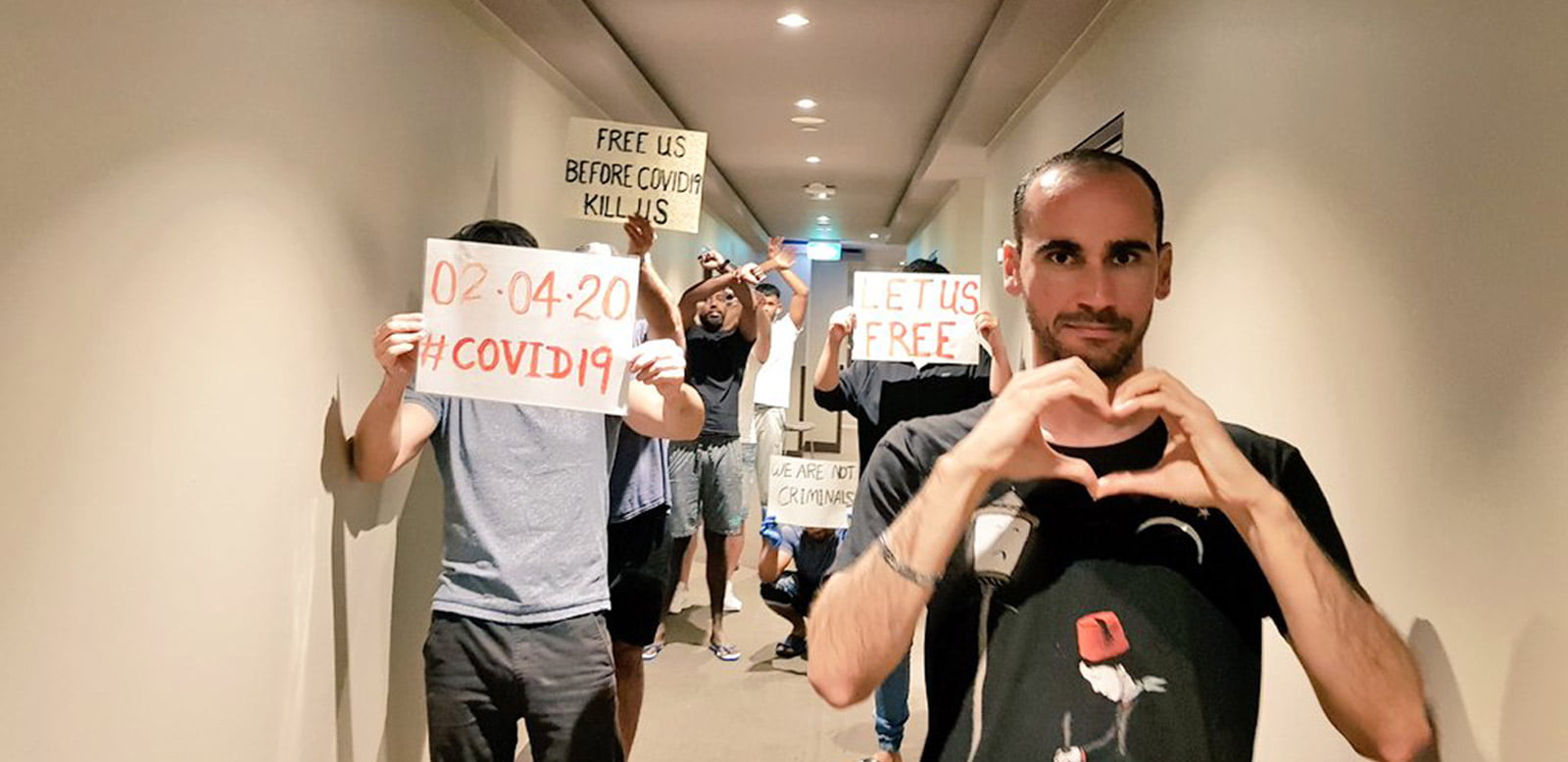
Amnesty International Australia today welcomed the further release of refugees from the Park Hotel, Alternative Place of Detention (APOD), in Melbourne, but said the release showed the policy was arbitrary and cruel. Amnesty redoubled its call for the release of a further 14 people who remain in detention and all those arbitrarily detained.

Among those released is Mostafa “Moz” Azimitabar, a courageous voice of the #GameOver campaign, who was Medevac’d to Australia at the end of 2019 for urgent medical care and has been in detention ever since.

“This is the most beautiful moment of my life… after 2,737 days locked up in detention – I am free.

“Thank you to all of the amazing people who helped me to stay strong.

“If I am able to obtain my freedom, there should be the opportunity for the others seeking asylum to have their freedom as well. Until all of us are free, none of us are truly free.”

Amnesty International Australia Refugee Rights Advisor, Dr Graham Thom, said: “The fact that some of these people have been released today and not seven years ago demonstrates the totally arbitrary and cruel nature of locking innocent people up. The timing is curious, to say the least.

“There are still around 150 refugees and people seeking asylum from Australia’s offshore detention regime detained in APODs and detention centres around Australia, with around 264 still offshore. For them, we must keep up the fight.

“We’re also concerned about what happens to these people when they’re released – they receive no support, and in many cases have complex medical conditions for which they still need treatment.”

“Australia is ultimately responsible for these people, people who were fleeing from some of the most dangerous places on earth. During their detention at the hands of our government their physical and mental health has been seriously damaged. Australia is obliged to help them repair the damage done over the past seven years.

“This is a win for everyone who has worked for the release of these people, all the people who’ve signed petitions, sent messages of support and protested on the street to draw attention to the plight of the innocent people locked up for no reason,” Dr Thom said.

Amnesty International launched the Game Over campaign in 2019 following a visit to PNG to visit Australia’s refugees with human rights advocate Craig Foster. More than 70,000 Australians and hundreds of community organisations have taken direct action to ensure all those detained by Australia’s cruel immigration policies are freed.

The latest releases come as the international community criticised Australia’s offshore processing and mandatory detention regime as the United Nation conducted the third Universal Periodic Review (UPR) of Australia’s human rights record.

Among the countries calling for an end to offshore processing and mandatory detention were Germany, Ireland and Finland.

A final report of recommendations for Australia to improve its commitment to human rights will be delivered by the UN on February 5.